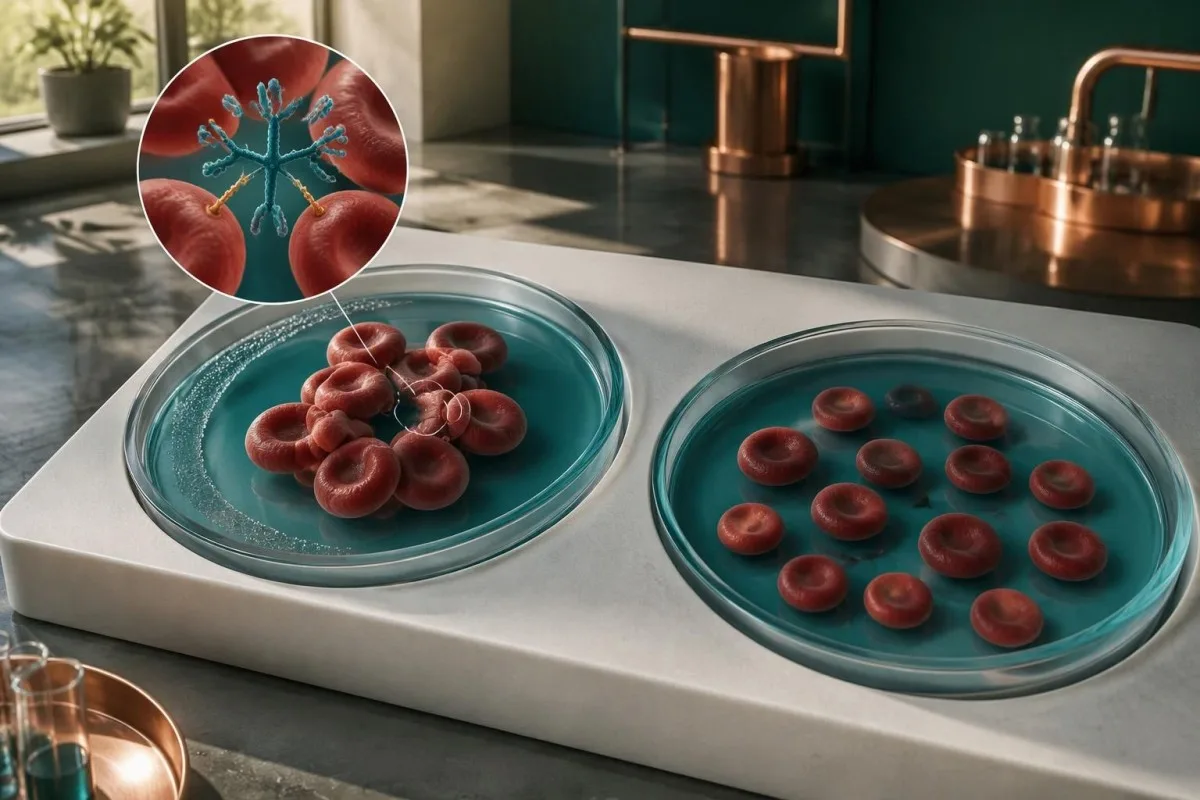
Kõrge külmaglutiniinide tiiter tähendab, et antikehad on tuvastatavad ka pärast märkimisväärset lahjendamist — mitte tingimata seda, et need kahjustavad teie punaliblesid. Oluline on nende aktiivsus temperatuurivahemikus, hemolüüsi tõendid, komplemendi suhtes positiivse testi tulemus ja proovide usaldusväärne käsitlemine.

Peamised järeldused
- Positive result tuvastab külmareaktiivsed antikehad; see ei kinnita iseseisvalt külmaglutiniintõbe.
- Tiiter vähemalt 1:64 temperatuuril 4 °C on tavapäraselt kasutatav diagnostiline komponent, kuid arstid vajavad ka hemolüüsi tõendeid ja sobivat otsese antiglobuliinitesti mustrit.
- Termiline amplituud kirjeldab kõrgeimat temperatuuri, mille juures antikeha reageerib; aktiivsus umbes 30 °C juures või sellest kõrgemal on üldiselt murettekitavam kui aktiivsus, mis piirdub väga külmade laboritingimustega.
- C3d-positiivne otsene antiglobuliinitest toetab komplemendi vahendatud protsessi võimalust, kuid sama muster võib esineda ka väljaspool külmaglutiniintõbe.
- Hemolüüsi hindamine hõlmab hemoglobiini muutuste, retikulotsüütide, LDH, kaudse bilirubiini ja haptoglobiini hindamist, mitte ainult ühele kõrvalekaldele viitavale markerile tuginemist.
- Proovi käsitsemine temperatuuril 37–38°C kuni seerumi eraldamiseni võib külmaglutiniinide määramiseks olla vajalik; enne vastuvõtuaega kontrollige proovivõtulabori juhiseid.
- Infektsiooniga seotud antikehad võivad olla ajutised, kuid kliiniliselt olulise hemolüüsi korral tuleb seisundit hinnata ka siis, kui vallandajaks on infektsioon.
- Kiireloomulised sümptomid on rindkerevalu, hingeldus rahuolekus, minestamine või segasus; uus kollatõbi, tume uriin või kiiresti süvenev väsimus nõuavad viivitamatut arstlikku hindamist.
Kas positiivne külmaglutiniinide test tähendab haigust?
A positiivne külmaglutiniinide test ei tähenda automaatselt külmaglutiniintõbe. Isegi kõrget tiitrit tuleb tõlgendada koos 3 kliinilise leiuga: antikeha temperatuurivahemik, tõendid punaliblede hävimise kohta ja komplementpositiivne otsene antiglobuliinitest.

Külma aglutiniinid on tavaliselt IgM-antikehad, mis seonduvad punalibledega madalamatel temperatuuridel kergemini ja panevad need kokku kleepuma. Testimisel mõõdetakse sageli nende aktiivsust temperatuuril 4°C – palju külmemal kui suurem osa ringlevast verest –, mistõttu silmatorkav laboratoorne reaktsioon võib esineda koos vähese või puuduva kliiniliselt olulise aktiivsusega organismis.
Üksik tulemus, näiteks 1:256 ei näita, kas teil on aneemia, kas antikeha reageerib kehatemperatuuri lähedasel temperatuuril või kas see on pärast haigust ajutine. Meie selgituses positiivsete antikeha tulemuste kohta eristatakse tuvastamist diagnoosist; järgmine kasulik küsimus on, mida näitavad kaasnevad analüüsid.
Kantesti on AI vereanalüüsi analüsaator mis aitab selgitada külmaglutiniinide tiitrit koos seotud laboritulemustega, sealhulgas seda, kas teatatud testimistemperatuur oli 4°C. Meie ettevõtte taust selgitab selle haridusteenuse korraldust; me ei asenda diagnoosi panemiseks vajalikku hematoloogi ja labori hinnangut.
Mida kõrge külmaglutiniinide tiiter mõõdab?
A külmaglutiniinide tiiter on teie seerumi suurim lahjendus, mille puhul tekib endiselt labori määratletud aglutinatsioonireaktsioon. Tulemus 1:512 tähendab, et aktiivsus on tuvastatav ka pärast märksa suuremat lahjendamist kui tulemuse 1:32 korral; kumbki arv ei mõõda otseselt aneemia raskusastet.
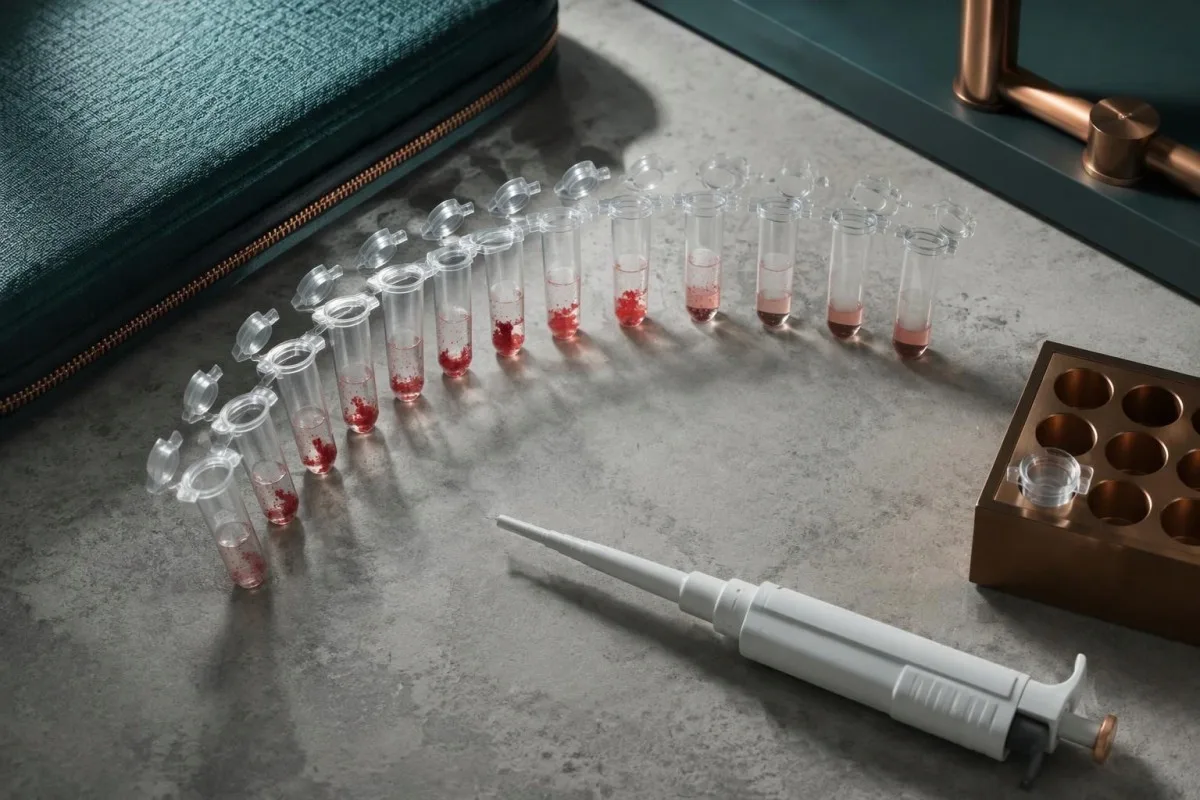
Tiiter vähemalt 1:64 temperatuuril 4°C on külmaglutiniintõve diagnoosimisel sageli kasutatav kriteerium, mitte iseseisev sõeluuringu otsus. Ajakirja Hematology ülevaates käsitletakse seda lävendit koos kroonilise hemolüüsi ja tugeva C3d-positiivsusega otseses antiglobuliinitestis (Berentsen, 2016); pole olemas universaalset tiitrit, mis nõuaks automaatselt erakorralist ravi.
Kahekordse lahjendamise sammud annavad sageli selliseid tulemusi nagu 1:64, 1:128 ja 1:256. Ühe astme erinevus võib kajastada analüüsi varieeruvust, valitud lõpp-punkti või proovi käsitsemist, mitte sisulist bioloogilist muutust; arvuline võrdlus on kõige usaldusväärsem siis, kui sama labor kasutab sama meetodit ja temperatuuri.
Mõned laborid teatavad ainult tulemusest positiivne või negatiivne, teised aga esitavad pöördarvu, näiteks 256, selle asemel et kirjutada 1:256. Meie juhend teemal kvalitatiivsed ja kvantitatiivsed tulemused explains that distinction; ask for the actual dilution, assay temperature and local reference interval before comparing reports.
| Tase | Vahemik | Mida see tähendab |
|---|---|---|
| Low-level activity | Below 1:64 at 4°C | Often incidental when thermal amplitude is narrow and hemolysis is absent; this is not a universal laboratory reference interval. |
| Common diagnostic threshold | At least 1:64 at 4°C | Supports further assessment when hemolysis and a compatible direct antiglobulin test are present; does not confirm disease alone. |
| Higher dilution endpoint | Examples: 1:256 or 1:512 | Shows activity after greater dilution, but does not establish thermal amplitude or predict treatment need. |
| Very high reported endpoint | Example: 1:1024 or higher | Still requires clinical interpretation; no titer-only emergency threshold is established. |
Miks võib termiline amplituud olla tiitrist olulisem
Termiline amplituud is the highest temperature at which a cold antibody reacts under the laboratory's testing conditions. Reactivity around 30°C or above is generally more clinically concerning than reactivity confined to 4°C, because cooler peripheral circulation can reach temperatures at which the antibody becomes active.
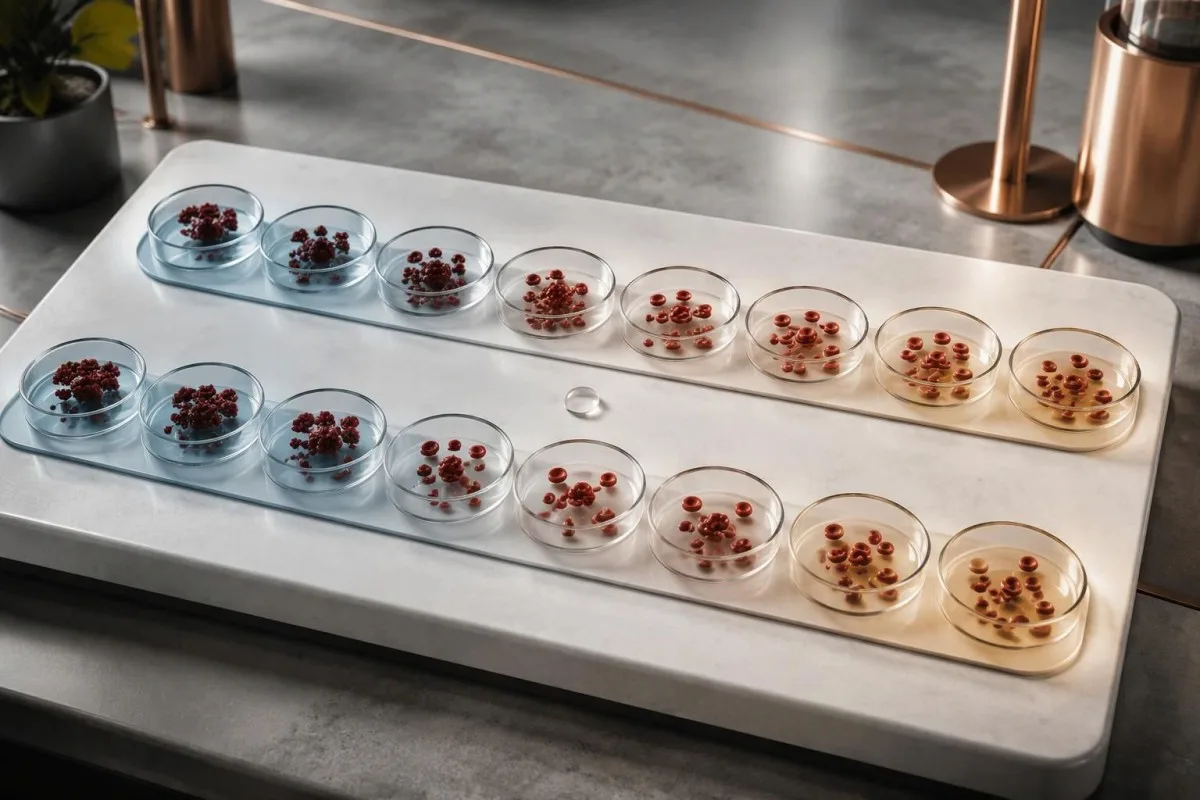
A high-titer antibody active only at 4°C may matter less clinically than a lower-titer antibody that remains active at 30–32°C. The reason is exposure: red cells do not normally circulate at refrigerator temperature, but they can encounter substantially cooler conditions in fingers, toes and other peripheral areas.
Complement can attach while red cells are cool and remain relevant after they return toward 37°C, even when the IgM antibody detaches. This explains why antibody-related injury is not simply a matter of visible clumping; our täiendavate uuringute juhend also distinguishes circulating complement measurements from complement deposited on cells.
Thermal amplitude testing is not standardized into 1 universal patient-facing cutoff, and many routine reports omit it entirely. Specialist laboratories may test several temperatures, such as 4°C, room temperature, 30°C and 37°C; clinicians usually request that additional work when the titer, symptoms and hemolysis results do not fit together.
Millised vereanalüüsi tulemused viitavad tegelikule hemolüüsile?
Hemolysis means red cells are being destroyed faster than expected, and assessment usually combines 5 measurements: hemoglobin, reticulocytes, LDH, indirect bilirubin and haptoglobin. A high cold agglutinin titer without this supporting pattern does not establish a hemolytic disorder.
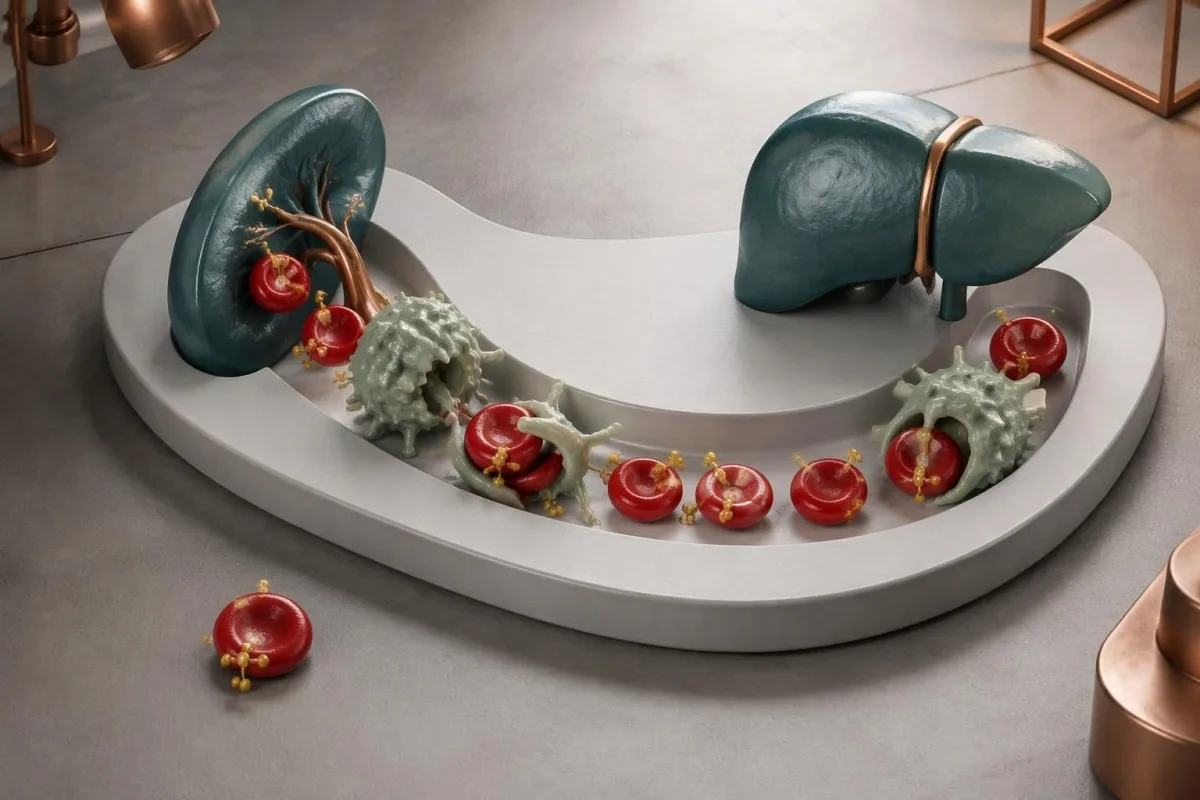
A hypothetical hemoglobin fall from 13.2 to 9.6 g/dL, accompanied by rising indirect bilirubin and LDH, is more concerning than an unchanged hemoglobin with the same titer. Reticulocytes often increase as the marrow replaces lost cells, although an early episode, nutrient deficiency or marrow disorder can blunt that response.
Low haptoglobin supports hemolysis but is not definitive: liver disease can reduce production, while an acute-phase response can raise the concentration despite red-cell destruction. Our explanation of madala haptoglobiini põhjustest covers these exceptions; a result below 1 laboratory's reference limit should be interpreted with the other markers rather than alone.
Kantesti AI helps explain LDH trends, including why a hypothetical rise from 220 to 650 U/L needs the laboratory's reference interval and specimen-quality information. Our LDH interpretation guide describes other sources of elevation; normal hemoglobin also does not exclude compensated hemolysis when the marrow is keeping pace.
Mida tähendab C3d-positiivne otsene antiglobuliinitest?
A C3d-positive direct antiglobulin test, also called a direct Coombs test, detects complement fragments attached to red cells. Cold agglutinin disease typically produces strong C3d positivity with absent or sometimes weak IgG reactivity, but these 2 antibody-testing results are not sufficient without clinical evidence of hemolysis.
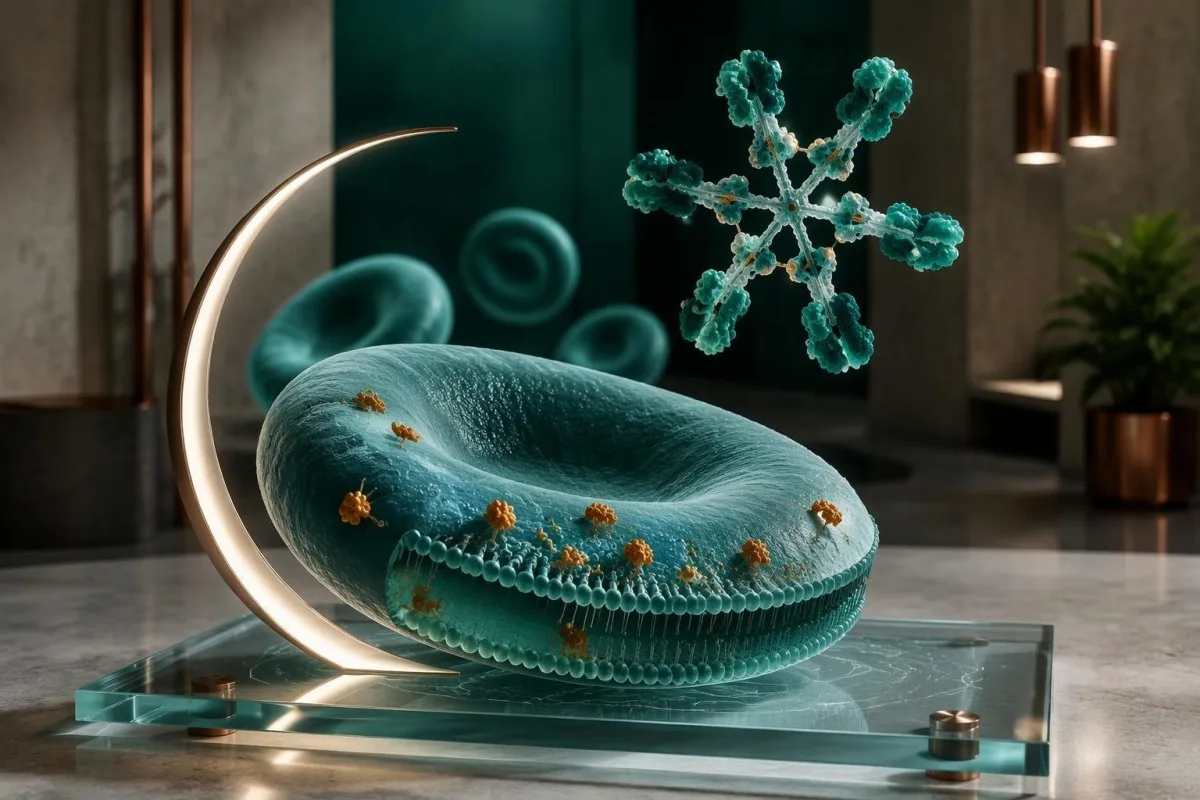
The direct antiglobulin test and the cold agglutinin titer answer kahele erinevale küsimusele: what is attached to your red cells, and what cold-reactive activity is present in your serum? The Blood Reviews international consensus recommends a monospecific direct antiglobulin test as part of autoimmune hemolytic anemia assessment (Jäger et al., 2020).
A report stating only DAT positive may not distinguish IgG from C3d; asking for those 2 components can materially change interpretation. Our guide to a positiivne otsene Coombsi test explains why transfusion-related antibodies, medications and other immune processes can also produce a positive result without proving cold agglutinin disease.
In a child with abrupt post-illness hemolysis, a C3d-positive DAT and a low cold agglutinin titer can raise a different possibility: paroxysmal cold hemoglobinuria. This condition usually involves an IgG antibody assessed by Donath–Landsteiner testing, so a cold agglutinin result below 1:64 should not end the investigation when symptoms suggest significant hemolysis.
Juhuleiuna avastatud antikehad, infektsioonid ja püsiv haigus
Incidental cold antibodies may cause no symptoms, while infection-related antibodies can be temporary and occasionally cause substantial hemolysis. Persistent cold agglutinin disease is usually associated with a clonal marrow B-cell process; these 3 situations require different follow-up rather than the same response to a positive test.
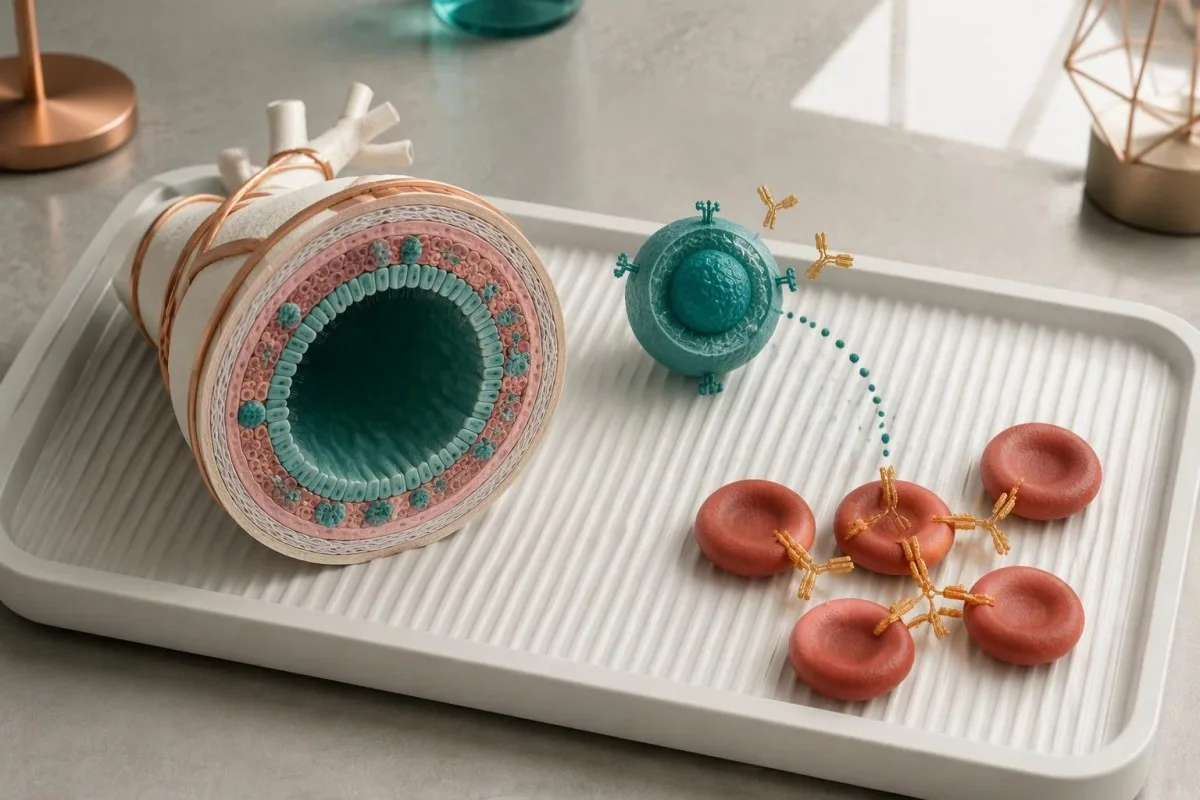
Mycoplasma pneumoniae and Epstein–Barr virus are 2 recognized infection-related associations, but a cold agglutinin test cannot reliably diagnose either infection. Our guide to Mycoplasma antibody interpretation explains why antibody timing and persistence complicate that diagnosis; respiratory symptoms may require pathogen-directed testing rather than inference from the titer.
Recent fever or sore throat changes the questions clinicians ask, not the urgency of genuine hemolysis: a hemoglobin of 8,5 g/dL with new jaundice still requires assessment even if the antibody is expected to be temporary. Our EBV result interpretation explains how VCA and EBNA patterns provide more specific information about exposure timing.
Terminology matters: cold agglutinin syndrome generally describes cold-antibody hemolysis secondary to another condition, while cold agglutinin disease is a distinct, usually persistent disorder. A titer of 1:512 does not identify lymphoma; specialist investigation may find a small marrow clone without overt lymphoma, and incidental antibodies do not automatically justify cancer investigations.
Miks võib proov vajada enne analüüsimist soojendamist
For cold agglutinin titer testing, many specialist laboratories require the specimen to remain at 37–38°C from collection until serum separation. Cooling before separation can allow antibodies to bind the patient's cells, potentially lowering the antibody activity left in the serum and producing a misleading result.
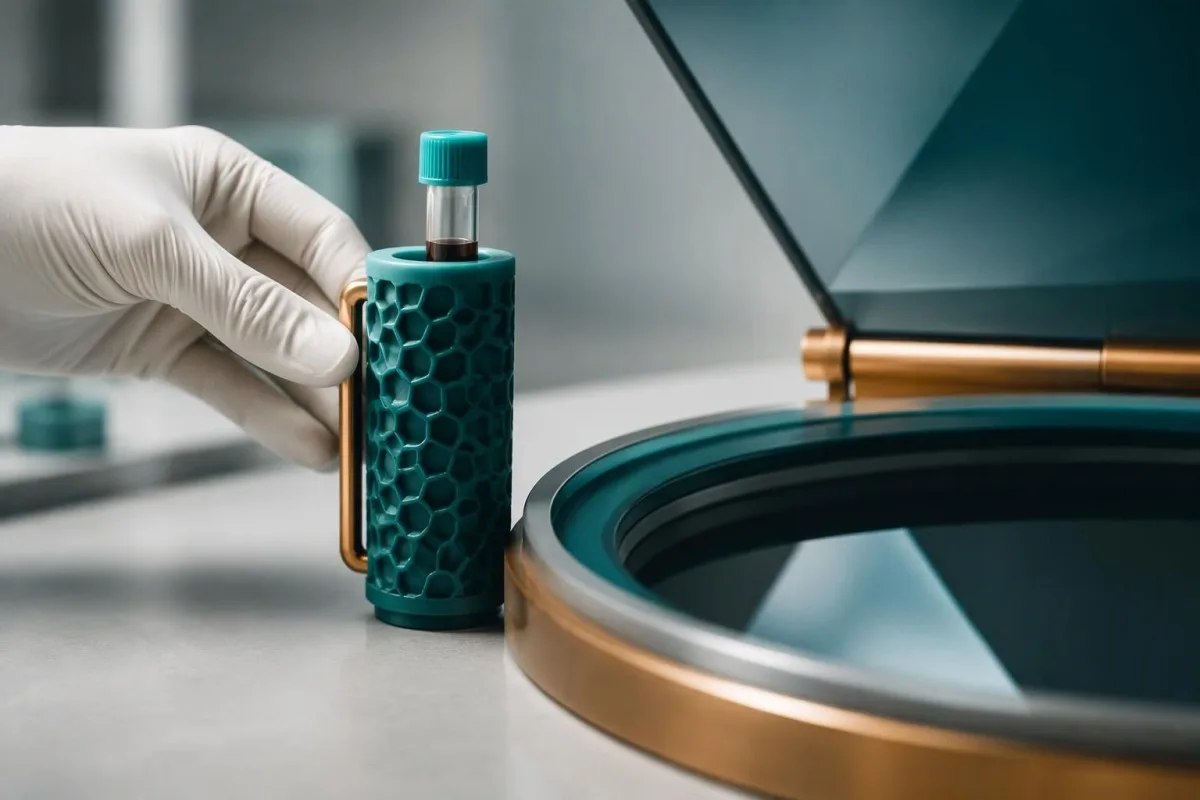
The pre-analytical requirement is different from the assay temperature: serum may be kept near 37°C during preparation and then deliberately tested at 4°C. The Hematology review emphasizes warm collection and separation for cold antibody studies (Berentsen, 2016); the laboratory creates the controlled cooling step only after an appropriate specimen is available.
Warming a specimen after it has already cooled may not fully reverse every earlier problem, so repeating the test can be more useful than interpreting an unexpected low titer. Our repeat specimen guide explains another handling distinction: cells breaking inside a collection tube are not the same as hemolysis occurring inside your body.
Before the appointment, ask 3 praktilist küsimust: which tube is required, how warmth will be maintained and where serum separation will occur. Titer testing, an EDTA specimen for the DAT and a warmed CBC may have different instructions; do not heat, transport or store your own specimen unless the collecting service specifically directs you.
Kuidas külmaglutiniinid võivad CBC tulemusi moonutada
Cold-related red-cell clumping can falsely lower the RBC count and raise MCV or MCHC on an automated complete blood count. A CBC repeated after laboratory warming near 37°C can help identify this artifact, although correcting the numbers does not by itself establish or exclude cold agglutinin disease.
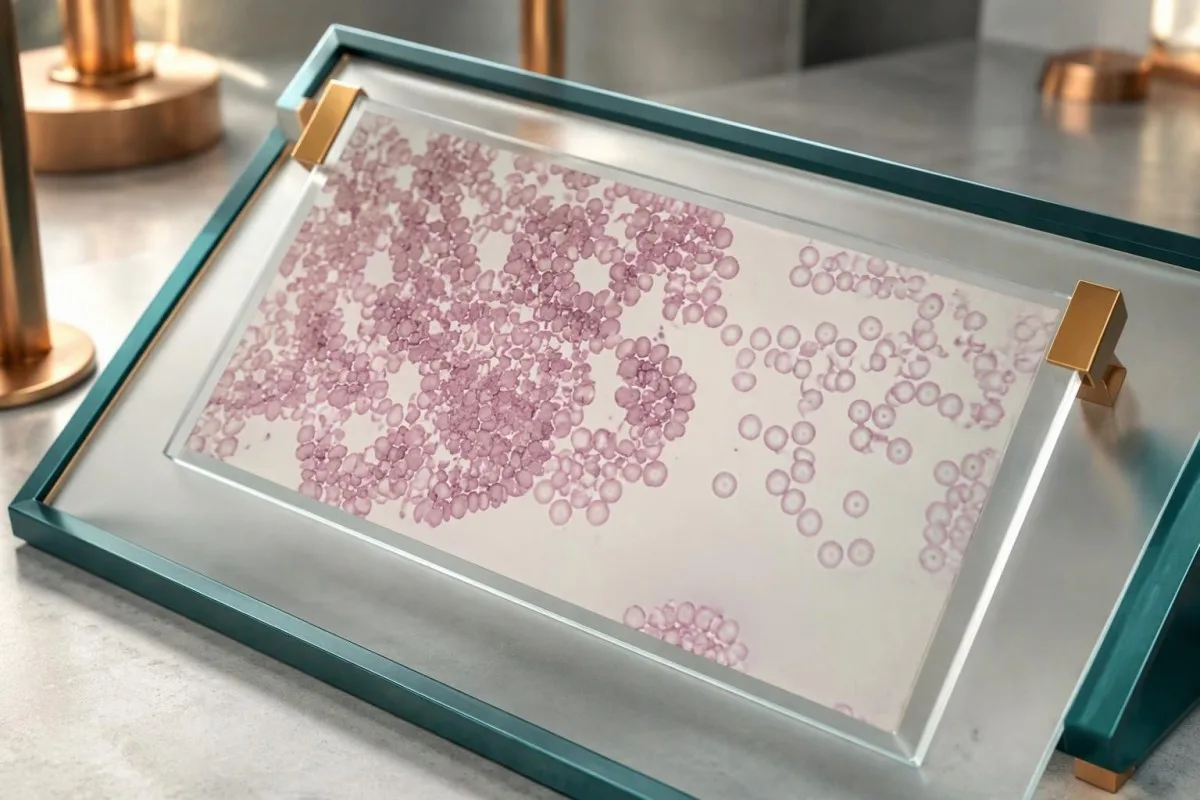
Automated counters may treat a cluster as 1 large particle rather than several separate cells, making the calculated mean cell volume appear high. Hematocrit and derived indices can become internally inconsistent, while photometrically measured hemoglobin is often less affected; the laboratory must still check whether other specimen or instrument issues are present.
Näiteks hüpoteetiline MCHC of 40 g/dL with an analyzer agglutination flag should prompt verification rather than an immediate diagnosis of an unusually concentrated red-cell disorder. Our high MCHC explanation covers this reasoning; genuine anemia can coexist with an artifact, so neither finding should erase the other.
Kantesti on AI vereanalüüsi tulemuste tõlgendamise platvorm that helps explain discrepancies between CBC values and a reported cold agglutinin titer, including whether a result was rerun near 37°C. Our AI-tehnoloogia juhend describes the interpretation process; only the testing laboratory can confirm that warming corrected a measurement error.
Mis kinnitab külmaglutiniintõve diagnoosi?
A cold agglutinin disease diagnosis usually combines chronic hemolysis, a strongly C3d-positive DAT and a cold agglutinin titer of at least 1:64 at 4°C, with assessment for secondary causes. These are linked diagnostic components, not a checklist that an isolated positive report can complete.
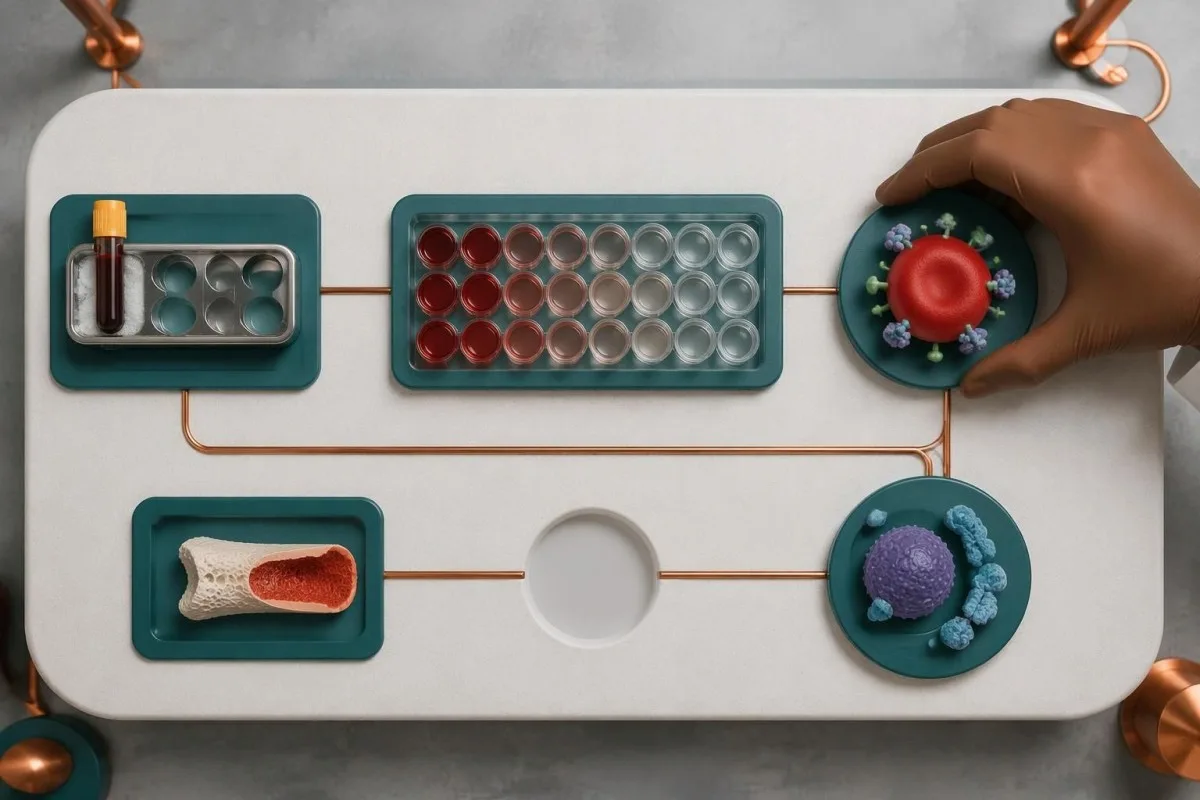
Clinicians first verify the 2 core laboratory patterns—hemolysis and immune attachment to cells—then assess symptoms, duration, medications, recent infections and transfusion history. A broad thermal amplitude can support interpretation when routine results are borderline or discordant; the international consensus treats autoimmune hemolytic anemia as a pattern-based diagnosis (Jäger et al., 2020).
Persistent findings may lead to serum protein electrophoresis, immunofixation and hematology-directed marrow assessment to characterize antibody production. Our guide to immunofixation band results explains why a monoclonal band needs context; even a titer of 1:1024 cannot determine whether a detectable protein represents overt lymphoma or a smaller clonal process.
Kantesti AI can help organize 3 groups of information for the appointment: antibody tests, hemolysis markers and changes over time. It cannot establish whether the specimen followed the warm-handling protocol or replace a specialist's assessment of marrow findings; bring the full report, because an isolated screenshot may omit the method and interpretive comments.
Kolm näidet: sama tiiter, erinevad järgmised sammud
The same cold agglutinin titer can lead to different next steps because clinical significance depends on temperature-dependent activity and red-cell injury. The following 3 examples are hypothetical teaching scenarios, not patient accounts or rules for diagnosing yourself from a single report.
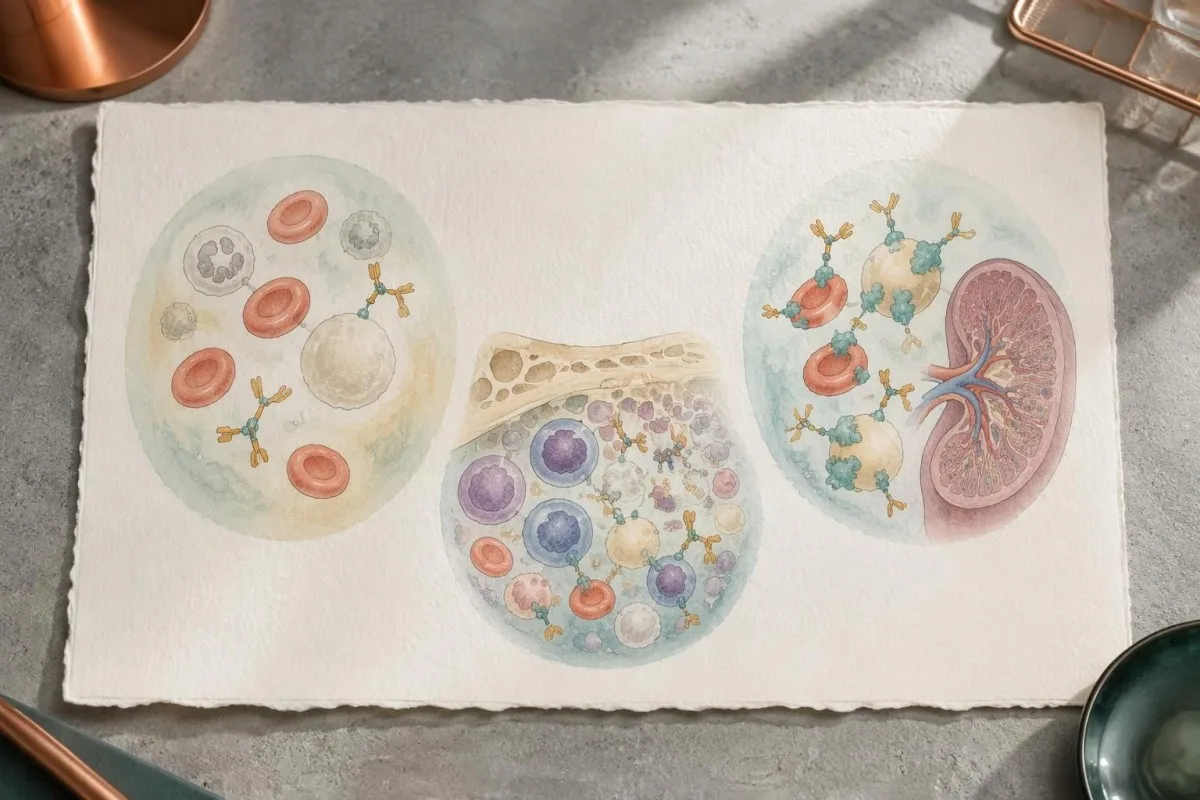
In the first example, an adult has a titer of 1:256 at 4°C, hemoglobin of 14.0 g/dL, normal hemolysis markers and no cold-related symptoms. If specialist testing shows a narrow thermal amplitude, incidental antibodies become more plausible; the useful step is confirming the context and need for follow-up, not assuming that antibody detection requires treatment.
In the second example, a person recovering from a respiratory illness has a titer of 1:256 and hemoglobin that has fallen from 13.5 to 10.2 g/dL, with rising indirect bilirubin. An infection-associated syndrome is possible, but the falling hemoglobin still needs assessment; our polychromasia explanation describes one smear clue to the marrow's replacement response.
In the third example, a person has months of fatigue, a titer of 1:256, strong C3d positivity, low haptoglobin and antibody reactivity at 30°C. Persistent clinically significant cold-antibody hemolysis becomes more likely; hematology assessment addresses diagnosis and treatment need, while the identical titer across all 3 examples shows why the number alone cannot choose the pathway.
Milliste sümptomite korral tuleb kiiresti arstiga ühendust võtta?
Chest pain, breathlessness at rest, fainting or confusion require emergency assessment, regardless of the cold agglutinin titer. New jaundice, dark urine or rapidly worsening fatigue warrant prompt, often same-day medical review; a result below 1:64 does not make these symptoms safe to ignore.
A rapid hemoglobin decline can be more dangerous than a stable low value, because your circulation has less time to adapt. A hypothetical fall from 12 to 8 g/dL over several days deserves prompt assessment even if someone with a long-standing, monitored value near 8 g/dL has fewer symptoms; these examples are not universal transfusion thresholds.
Dark urine can reflect hemoglobin released during marked intravascular hemolysis, but dehydration, liver conditions and urinary causes can produce similar appearances. Our dark urine assessment guide explains the alternatives; dark urine together with jaundice or weakness should not be dismissed because only 1 antibody result is abnormal.
Cold-related blue or purple fingers can occur with agglutination, but persistent discoloration, severe pain or failure to improve after gentle warming needs urgent evaluation for impaired circulation. Clinically significant cold agglutinin disease also carries increased clot risk; sudden breathlessness or 1 newly swollen leg requires assessment rather than attribution to cold sensitivity alone.
Kuidas püsida soojas ja valmistuda kliinilisteks protseduurideks
Keeping the whole body warm can reduce cold-triggered symptoms in clinically significant cold-antibody disorders. Tell the care team before transfusion, anesthesia or a procedure, because laboratory compatibility testing and clinical temperature management may need coordination near 37°C rather than routine handling.

Practical protection includes layers, gloves, warm footwear and avoiding abrupt whole-body cooling; do not test your tolerance with an ice bath or deliberate cold challenge. Reactivity around 30°C does not translate into 1 safe outdoor temperature, because wind, wet clothing, exposure duration and individual circulation change how much peripheral tissues cool.
For transfusion, the laboratory may perform antibody investigation and compatibility testing at 37°C to limit cold-antibody interference while still identifying clinically significant additional antibodies. Our transfusion compatibility guide explains that distinction; a clinical warming device may also be used, but emergency treatment should not be delayed unnecessarily while pursuing perfect routine test conditions.
Isolatsioonis 1:128 titer without hemolysis does not automatically mean you need to avoid all travel, exercise or procedures. The useful precaution is sharing the report and any prior laboratory interference with the treating team; clinical staff—not the patient—should decide whether warmed fluids, a transfusion warmer or additional temperature monitoring are necessary.
Millal on ravi vajalik ja mida jälgitakse?
Treatment is guided by anemia, symptoms, transfusion need and functional impact—not a titer alone. In clinically significant cold agglutinin disease, specialist options include B-cell-directed therapy and complement inhibition; a titer of 1:512 without attributable symptoms or hemolysis does not itself establish a reason to start medication.
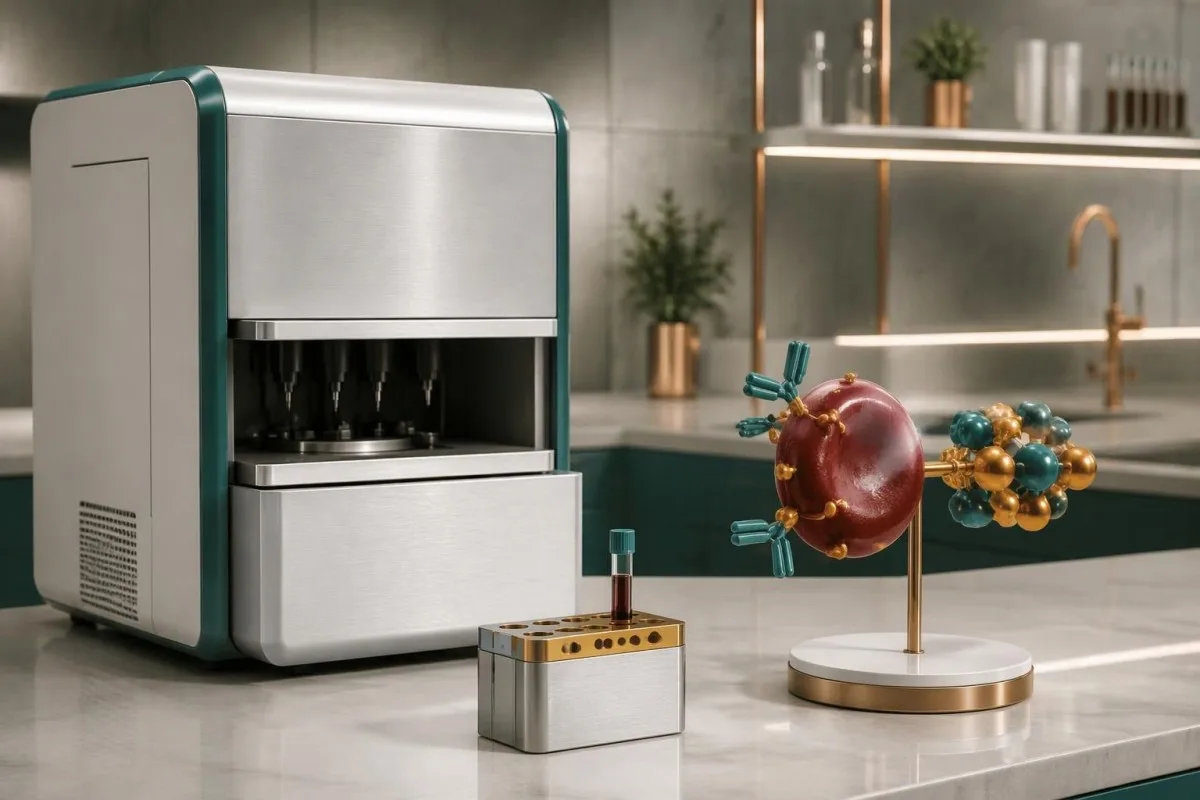
Sutimlimab inhibits C1s, an early classical complement component, and can reduce complement-mediated hemolysis in adults with cold agglutinin disease. It does not remove the IgM antibody, so cold-related agglutination and circulation symptoms may persist even if hemoglobin improves; immunization and infection-risk precautions must follow the product information and the specialist's plan.
B-cell-directed options include rituximab-based treatment, sometimes combined with another agent in selected patients; the appropriate choice depends on goals, comorbidities and treatment tolerance. Corticosteroids, commonly used for warm autoimmune hemolytic anemia, generally perform poorly in cold agglutinin disease; the 2020 international consensus emphasizes distinguishing the subtype before applying a treatment pathway (Jäger et al., 2020).
Kantesti helps explain why a hypothetical hemoglobin improvement from 8.7 to 11.8 g/dL, falling bilirubin and fewer transfusions can matter more than a persistently high titer. Our red-cell monitoring guide explains reticulocytes and related markers; do not change treatment from an AI interpretation, and do not assume anemia means iron deficiency.
Analüüsivastuse ohutu kasutamine: tõendid ja tehisintellekti piirangud
Kantesti on AI laboratoorse testi tõlgendamise teenuses that helps organize cold agglutinin results for discussion, but it cannot independently confirm cold agglutinin disease. A useful interpretation needs 3 information groups: the antibody method and handling, the hemolysis pattern and the patient's symptoms and history.

Keep the complete report rather than only the 1:256 result: the test temperature, reference interval, DAT components and laboratory comments can change its meaning. Useful appointment questions include whether hemolysis is present, whether thermal amplitude testing would help and whether specimen handling was adequate; bring earlier hemoglobin values when available.
The Kantesti technical benchmark listed below concerns 100 000 sünteetilist testjuhtu, not 100,000 patients with cold agglutinin disease. The accompanying validation framework describes an assessment approach, not proof that AI can diagnose this rare condition; our validation and oversight page provides the appropriate context for these research publications and their limitations.
Before sharing 1 report or a series of reports, review consent and remove information you do not need to provide, especially when the results belong to someone else. Our privaatsuse ja andmete juhised explains data-handling considerations; urgent symptoms belong with emergency or clinical services, not in an upload queue awaiting interpretation.
Korduma kippuvad küsimused
Kas positiivne külmaaglutiniinide test tähendab, et mul on külmaaglutiniinide haigus?
Positiivne külma aglutiniinide test ei anna iseseisvalt külma aglutiniinide haiguse diagnoosi. Tiiter vähemalt 1:64 temperatuuril 4 °C on sageli kasutatav diagnostiline kriteerium, kuid arstid hindavad ka kroonilist hemolüüsi ja sobivat otsese antiglobuliinitesti tulemust, mis on tavaliselt tugevalt C3d-positiivne. Juhuslikult esinevad või infektsiooniga seotud antikehad võivad anda positiivse tulemuse. Termiline amplituud ja proovide usaldusväärne käsitsemine aitavad ebaselgeid leide täpsustada.
Kas külmaaglutiniinide tiiter 1 : 256 või 1 : 512 on ohtlik?
Külmaaglutiniini tiiter 1:256 või 1:512 ei ole iseseisev ohupiir. Tulemus näitab, kui palju saab seerumit lahjendada nii, et antikeha aktiivsus jääb analüüsitingimustes tuvastatavaks. Umbes 30 °C juures aktiivne antikeha võib olla kliiniliselt olulisem kui suurema tiitriga antikeha, mis reageerib ainult 4 °C juures. Hindamise kiireloomulisuse määravad sümptomid, hemoglobiinitaseme muutused ja hemolüüsi markerid.
Mis on külmaglutiniinide testi termiline amplituud?
Thermal amplitude is the highest temperature at which a cold antibody reacts under the laboratory's testing conditions. Reactivity around 30°C or above is generally more concerning than activity restricted to 4°C because peripheral circulation can become cool enough for the antibody to act. Thermal amplitude is different from titer, which measures activity after dilution. Specialist laboratories may assess it when routine findings are discordant or the clinical significance is unclear.
Miks tuleb külmaaglutiniinide proov hoida soojas?
Many laboratories require a cold agglutinin specimen to remain at 37–38°C from collection until serum separation. Premature cooling can allow antibody to bind the patient's cells, leaving less detectable activity in the separated serum and potentially producing a falsely low result. This preparation requirement is separate from deliberately testing the serum at 4°C. Confirm the collecting laboratory's instructions rather than attempting to warm or transport the specimen yourself.
Kas infektsioon võib põhjustada positiivse külma aglutiniini testi?
Infektsioonid, sealhulgas Mycoplasma pneumoniae ja Epstein–Barri viirus, võivad olla seotud ajutiselt külmaga reageerivate antikehadega. Tiiter, näiteks 1:256, ei võimalda kindlaks teha, milline infektsioon on olemas või kas see on endiselt aktiivne. Infektsiooniga seotud antikehad põhjustavad mõnikord kliiniliselt olulist hemolüüsi, mistõttu vajavad hindamist ka hemoglobiinitaseme langus või uus kollatõbi. Haigustekitajale suunatud uuringud ja haiguse kliiniline kulg on kasulikumad kui külmaaglutinatsioonide kasutamine infektsiooni diagnoosimiseks.
Kas külmaaglutiniinid võivad põhjustada MCV või MCHC näidu ekslikult kõrgenemist?
Külmaaglutiniinid võivad põhjustada punaliblede kogumikke, mis moonutavad automaatseid CBC mõõtmistulemusi, sealhulgas annavad ekslikult kõrge MCV või MCHC ja ekslikult madala RBC arvu. Näiteks MCHC väärtus 40 g/dL koos aglutinatsiooni märkega peaks ajendama laboratoorset kontrolli, mitte kohest tõlgendamist tegeliku rakuhäirena. Kordusanalüüs pärast proovi soojendamist ligikaudu 37 °C-ni võib häire kõrvaldada. Korrigeeritud CBC ei välista samaaegset hemolüüsi.
Milliste sümptomite korral tuleb pärast positiivset külmaaglutiniinide testi tulemust kiiresti arsti poole pöörduda?
Rindkerevalu, hingeldus rahuolekus, minestamine või segasus nõuavad erakorralist hindamist sõltumata külmaaglutiniinide tiitrist. Uus kollatõbi, tume uriin või kiiresti süvenev nõrkus nõuab kiiret, sageli samal päeval toimuvat arstlikku hindamist. Kiire hemoglobiinisisalduse langus, näiteks hüpoteetiline muutus 12-lt 8 g/dL-ni, on murettekitav, kuigi ükski kindel väärtus ei määra iga inimese puhul, kui kiireloomuline olukord on. Püsiv valulik sõrmede värvimuutus või trombile viitavad äkilised sümptomid vajavad samuti kiiret hindamist.
Saage teada, kuidas lugeda vereanalüüsi tulemusi
Laadige oma laboriaruanne üles ja Kantesti AI selgitab iga biomarkerit sekunditega lihtsas keeles. Kasutusel enam kui 2 miljoni inimese seas kogu maailmas.
Viited
- Klein, T., Mitchell, S., & Weber, H. (2026). Eelregistreeritud, rubriigipõhine automatiseeritud tehniline võrdlus Kantesti vereanalüüsi tõlgendamise mootori kohta 100 000 sünteetilise testjuhtumi peal. Kantesti AI meditsiiniuuringud. DOI
- Klein, T., Mitchell, S., & Weber, H. (2026). Kliinilise valideerimise raamistik v2.0 (meditsiinilise valideerimise leht). Kantesti AI meditsiiniuuringud. DOI
- Berentsen S. (2016). Cold agglutinin disease. Hematology, American Society of Hematology Education Program. DOI
- Jäger U et al. (2020). Diagnosis and treatment of autoimmune hemolytic anemia in adults: Recommendations from the First International Consensus Meeting. Blood Reviews. DOI
- 2+ kuudAnalüüsitud testid
- 127+Riigid
- 100+Keeled
Meditsiinimeeskonnast


E-E-A-T usaldussignaalid
Kogemus
Arsti juhitud kliiniline ülevaade labori tõlgendamise töövoogudest.
Ekspertiis
Laborimeditsiin keskendub sellele, kuidas biomarkerid käituvad kliinilises kontekstis.
Autoriteetsus
Meditsiiniliselt retsenseerinud dr Thomas Klein, kaastöölised dr Sarah Mitchell ja prof dr Hans Weber.
Usaldusväärsus
Tõenduspõhine tõlgendus selgete edasiste sammudega, et vähendada ärevust.






Meditsiiniline lahtiütlus
Käesolev artikkel on mõeldud üksnes hariduslikel eesmärkidel ega kujuta endast meditsiinilist nõuannet. Diagnoosi ja ravivalikute otsuste tegemiseks konsulteeri alati kvalifitseeritud tervishoiutöötajaga.
Avaldatud · Võtke ühendust toimetusega
Avaldanud Kantesti Ltd, registreeritud Inglismaal ja Walesis, ettevõtte nr. 17090423, London, Ühendkuningriik.
