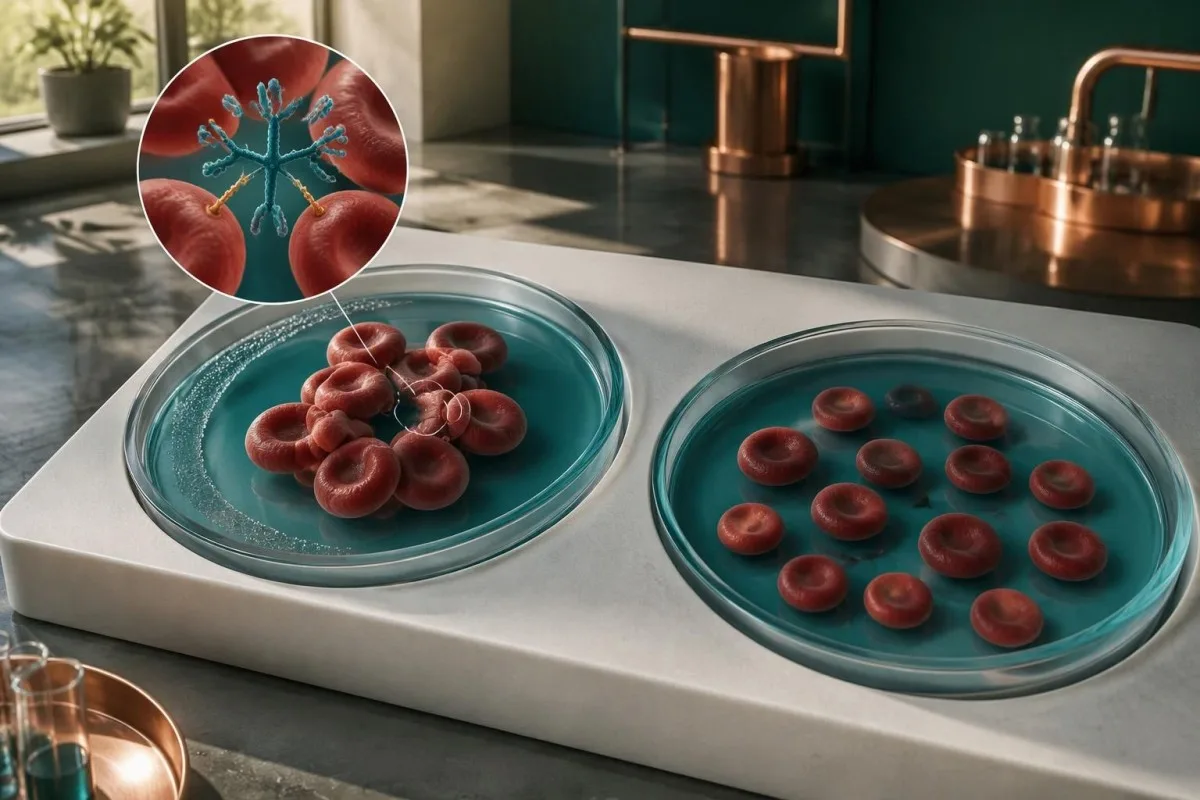
In hege kâlde agglutininetiter betsjut dat antistoffen nei flinke fertinning noch oant te toanen binne — net needsaaklik dat se jo reade bloedsellen skea dogge. It ûnderskied hinget ôf fan it temperatuerberik, bewiis foar hemolyse, in positive komplementtest en betroubere ôfhanneling fan it meunster.

Wichtichste punten
- Positive útkomst spoart kâldreaktive antistoffen op; it stelt op himsels gjin diagnoaze fan kâlde agglutininesykte fêst.
- Titer fan op syn minst 1:64 by 4 °C is in faak brûkt diagnostysk ûnderdiel, mar kliïnten hawwe ek bewiis foar hemolyse en it passende patroan by de direkte antiglobulinetest nedich.
- Termyske amplitude beskriuwt de heechste temperatuer wêrby't in antistof reagearret; aktiviteit om de 30 °C of heger is yn 't algemien mear soarchlik as aktiviteit dy't beheind bliuwt ta tige kâlde laboratoariumomstannichheden.
- C3d-positive direkte antiglobulinetest stipet in komplement-bemiddele proses, mar itselde patroan kin ek foarkomme sûnder kâlde agglutininesykte.
- Beoardieling fan hemolyse kombinearret trends yn hemoglobine, retikulosyten, LDH, yndirekt bilirubine en haptoglobine, ynstee fan op ien ôfwikende marker te fertrouwen.
- Behanneling fan it stekproefmateriaal by 37–38°C oant de skieding fan serum kin nedich wêze foar it testen op kâlde agglutininen; befêstigje de ynstruksjes fan it laboratoarium dat it stekproefmateriaal ôfnimt foar jo ôfspraak.
- Ynfeksjerelatearre antistoffen kinne tydlik wêze, hoewol klinysk signifikante hemolyse noch altyd beoardiele wurde moat, ek as in ynfeksje de oarsaak is.
- Dringende symptomen omfetsje boarstpine, sykheljen yn rêst, flaufallen of betizing; nije geelsucht, donkere urine of fluch slimmer wurdende wurgens freegje om prompt medysk ûndersyk.
Betsjut in positive test op kâlde agglutininen dat der sprake is fan in sykte?
A in positive test op kâlde agglutininen betsjut net automatysk dat jo in sykte troch kâlde agglutininen hawwe. Ek in hege titer moat ynterpretearre wurde yn gearhing mei 3 klinyske befiningen: it temperatuerberik fan 'e antistof, bewiis foar ôfbraak fan reade bloedsellen en in komplement-positive direkte antiglobulinetest.

Kâlde agglutininen binne meastentiids IgM-antistoffen dy't makliker by legere temperatueren oan reade bloedsellen bine kinne en dy gearklontsje litte. By testen wurdt ornaris har aktiviteit by 4°C metten—folle kâlder as it measte sirkulearjende bloed—dat in opfallende reaksje yn it laboratoarium geargean kin mei in bytsje of gjin klinysk relevante aktiviteit yn it lichem.
In inisolearre resultaat lykas 1:256 kin jo net fertelle oft jo bloedearmoede hawwe, oft de antistof by in temperatuer ticht by dy fan it lichem reagearret of oft dy tydlik is nei in sykte. Us útlis fan posityf antistofresultaten makket ûnderskied tusken opspoaren en diagnoaze; de folgjende nuttige fraach is wat de byhearrende testen sjen litte.
Kantesti is in AI bloedtestanalysator dy't helpt om in titer fan kâlde agglutininen te begripen yn gearhing mei besibbe laboratoariumresultaten, ynklusyf oft de opjûne testtemperatuer 4°C wie. Us bedriuwsachtergrûn leit út hoe't dizze edukative tsjinst organisearre is; wy ferfange net de hematologyske en laboratoariumbeoardieling dy't nedich is om in diagnoaze fêst te stellen.
Wat mjit in hege kâlde agglutininetiter?
A titer fan kâlde agglutininen is de grutste ferdunning fan jo serum dy't noch altyd de troch it laboratoarium fêstleine agglutinaasjereaksje jout. In resultaat fan 1:512 betsjut dat de aktiviteit nei in folle gruttere ferdunning noch te detektearjen is as by in resultaat fan 1:32; gjin fan beide getallen mjit streekrjocht de hoemannichte bloedearmoede.
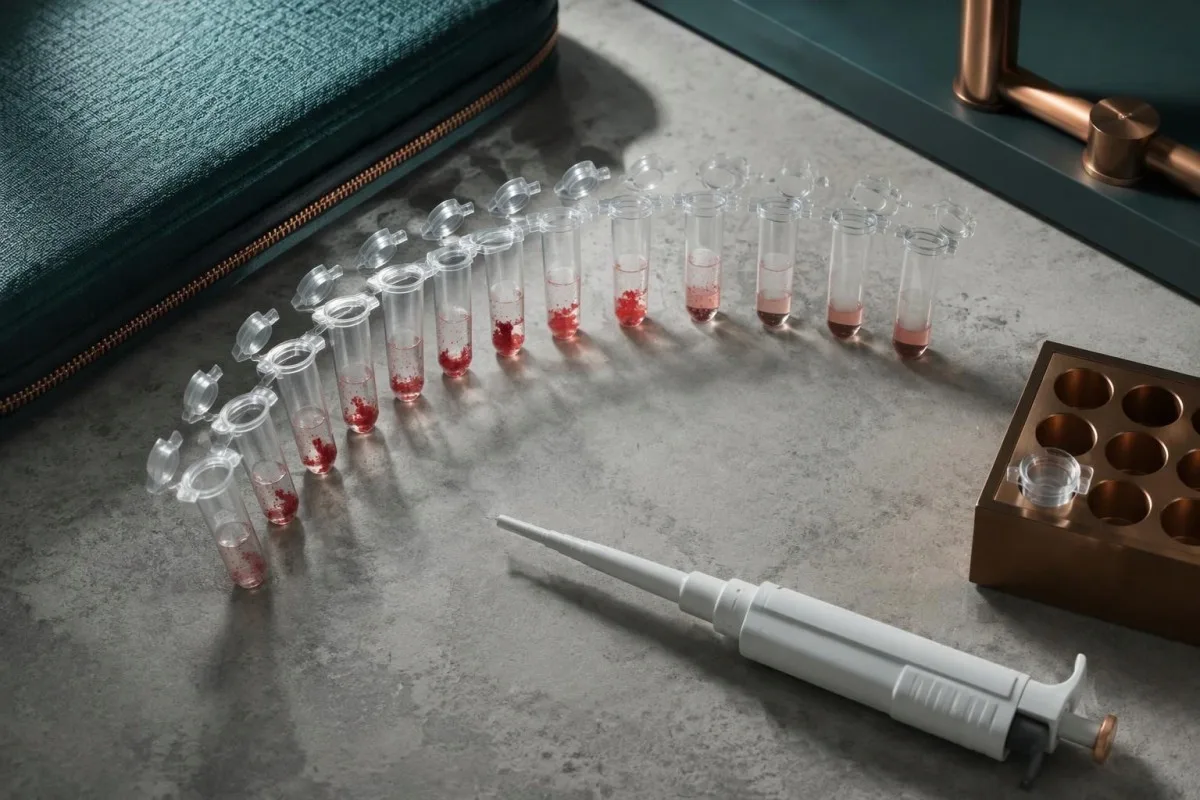
In titer fan op syn minst 1:64 by 4°C is in faak brûkt ûnderdiel fan 'e diagnoaze fan sykte troch kâlde agglutininen, gjin selsstannich skermingsresultaat. De Hematology-beoardieling beskriuwt dizze drompel yn gearhing mei chronyske hemolyse en sterke C3d-posiviteit by direkte antiglobulinetesten (Berentsen, 2016); der is gjin universele titer dy't automatysk needbehanneling fereasket.
By ferdunning yn stappen fan in faktor twa ûntsteane faak resultaten lykas 1:64, 1:128 en 1:256. In ferskil fan ien stap kin komme troch fariaasje yn 'e test, it keazen einpunt of de behanneling fan it stekproefmateriaal, ynstee fan in betsjuttingsfolle biologyske feroaring; in numerike ferliking is it meast betrouber as itselde laboratoarium deselde metoade en temperatuer brûkt.
Guon laboratoaria rapportearje allinnich posityf of negatyf, wylst oare in resiprok getal jouwe, lykas 256 ynstee fan 1:256 te skriuwen. Us hantlieding foar kwalitative en kwantitative resultaten explains that distinction; ask for the actual dilution, assay temperature and local reference interval before comparing reports.
| Nivo | Berik | Wat it betsjut |
|---|---|---|
| Low-level activity | Below 1:64 at 4°C | Often incidental when thermal amplitude is narrow and hemolysis is absent; this is not a universal laboratory reference interval. |
| Common diagnostic threshold | At least 1:64 at 4°C | Supports further assessment when hemolysis and a compatible direct antiglobulin test are present; does not confirm disease alone. |
| Higher dilution endpoint | Examples: 1:256 or 1:512 | Shows activity after greater dilution, but does not establish thermal amplitude or predict treatment need. |
| Very high reported endpoint | Example: 1:1024 or higher | Still requires clinical interpretation; no titer-only emergency threshold is established. |
Wêrom kin de termyske amplitude wichtiger wêze as de titer
Termyske amplitude is the highest temperature at which a cold antibody reacts under the laboratory's testing conditions. Reactivity around 30°C or above is generally more clinically concerning than reactivity confined to 4°C, because cooler peripheral circulation can reach temperatures at which the antibody becomes active.
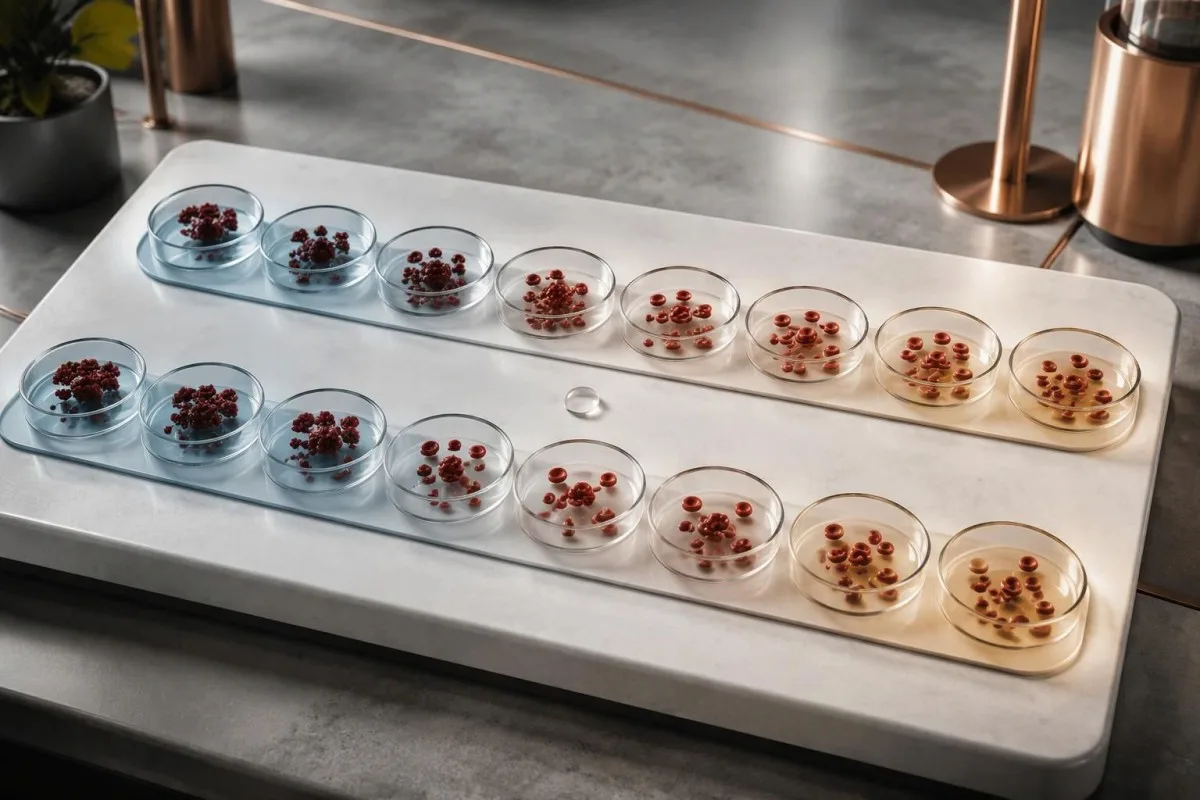
A high-titer antibody active only at 4°C may matter less clinically than a lower-titer antibody that remains active at 30–32°C. The reason is exposure: red cells do not normally circulate at refrigerator temperature, but they can encounter substantially cooler conditions in fingers, toes and other peripheral areas.
Complement can attach while red cells are cool and remain relevant after they return toward 37°C, even when the IgM antibody detaches. This explains why antibody-related injury is not simply a matter of visible clumping; our komplement-testgids also distinguishes circulating complement measurements from complement deposited on cells.
Thermal amplitude testing is not standardized into 1 universal patient-facing cutoff, and many routine reports omit it entirely. Specialist laboratories may test several temperatures, such as 4°C, room temperature, 30°C and 37°C; clinicians usually request that additional work when the titer, symptoms and hemolysis results do not fit together.
Hokker bloedresultaten litte werklike hemolyse sjen?
Hemolysis means red cells are being destroyed faster than expected, and assessment usually combines 5 measurements: hemoglobin, reticulocytes, LDH, indirect bilirubin and haptoglobin. A high cold agglutinin titer without this supporting pattern does not establish a hemolytic disorder.
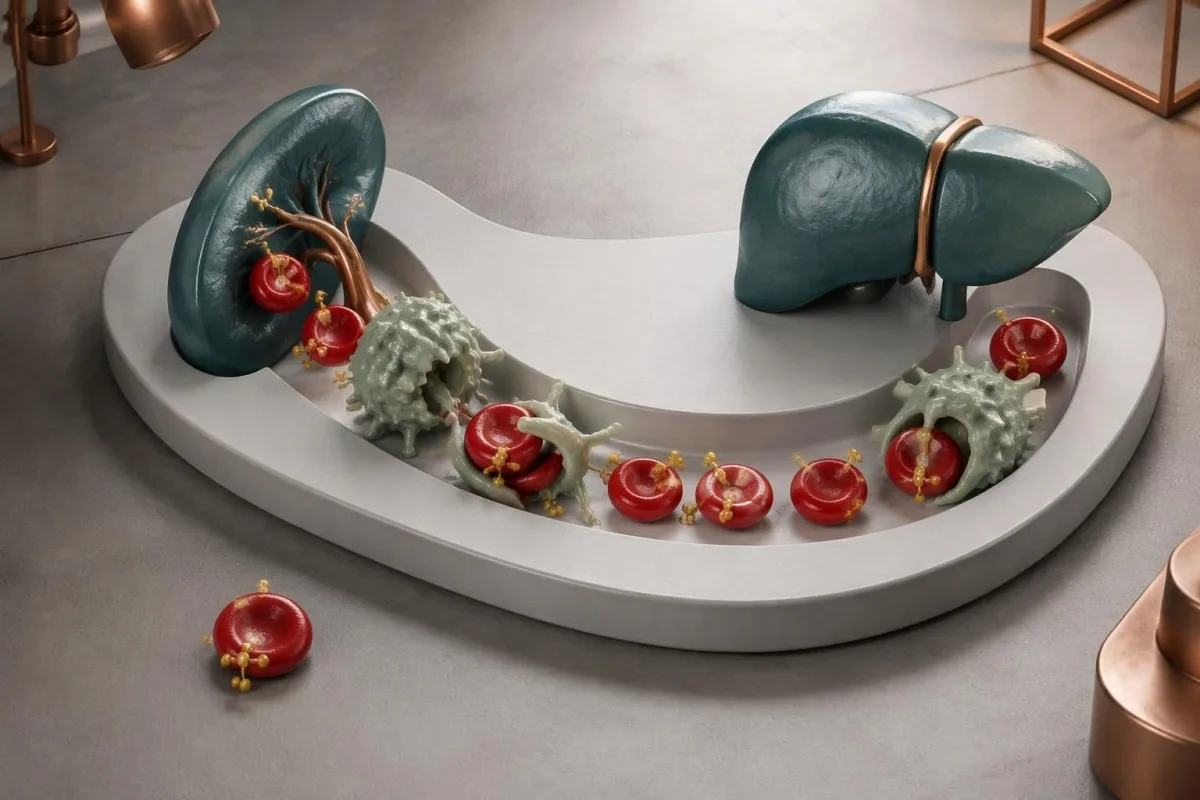
A hypothetical hemoglobin fall from 13.2 to 9.6 g/dL, accompanied by rising indirect bilirubin and LDH, is more concerning than an unchanged hemoglobin with the same titer. Reticulocytes often increase as the marrow replaces lost cells, although an early episode, nutrient deficiency or marrow disorder can blunt that response.
Low haptoglobin supports hemolysis but is not definitive: liver disease can reduce production, while an acute-phase response can raise the concentration despite red-cell destruction. Our explanation of lege haptoglobine oarsaken covers these exceptions; a result below 1 laboratory's reference limit should be interpreted with the other markers rather than alone.
Kantesti AI helps explain LDH trends, including why a hypothetical rise from 220 to 650 U/L needs the laboratory's reference interval and specimen-quality information. Our LDH interpretation guide describes other sources of elevation; normal hemoglobin also does not exclude compensated hemolysis when the marrow is keeping pace.
Wat betsjut in C3d-positive direkte antiglobulinetest?
A C3d-positive direct antiglobulin test, also called a direct Coombs test, detects complement fragments attached to red cells. Cold agglutinin disease typically produces strong C3d positivity with absent or sometimes weak IgG reactivity, but these 2 antibody-testing results are not sufficient without clinical evidence of hemolysis.
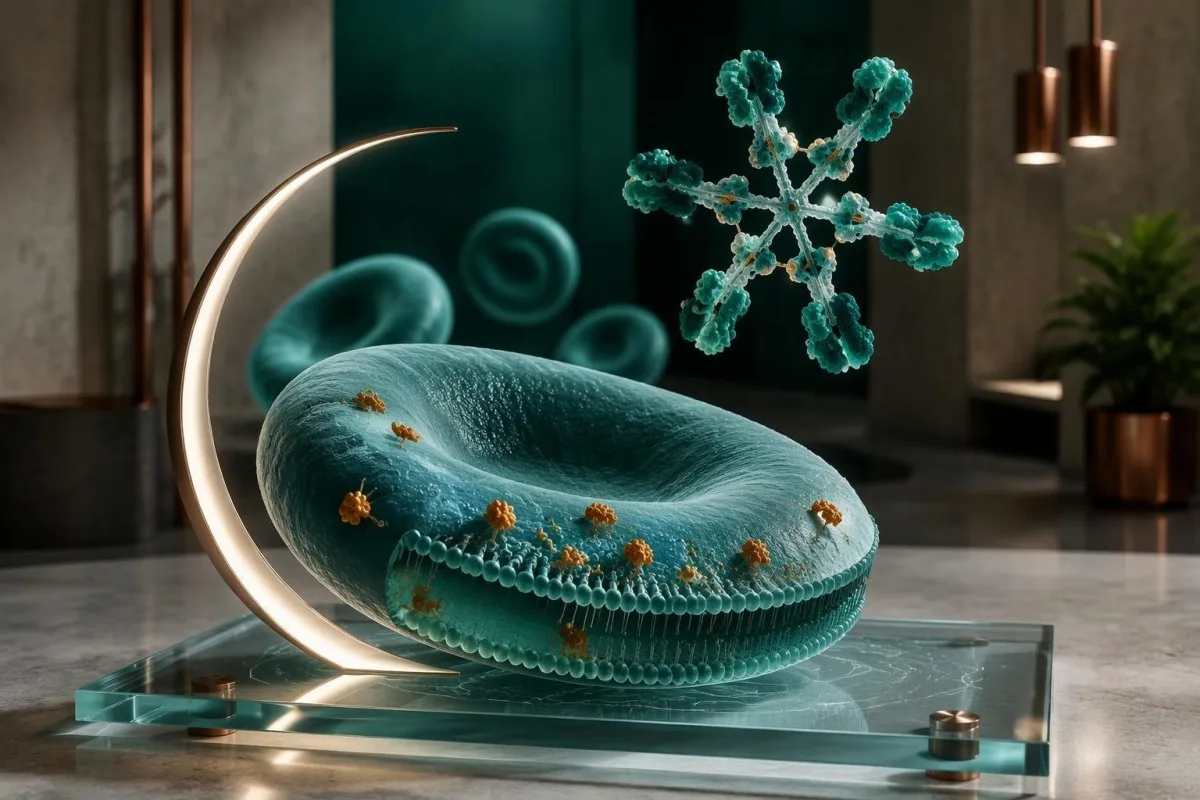
The direct antiglobulin test and the cold agglutinin titer answer 2 ferskillende fragen: what is attached to your red cells, and what cold-reactive activity is present in your serum? The Blood Reviews international consensus recommends a monospecific direct antiglobulin test as part of autoimmune hemolytic anemia assessment (Jäger et al., 2020).
A report stating only DAT positive may not distinguish IgG from C3d; asking for those 2 components can materially change interpretation. Our guide to a posityf direkte Coombs-test explains why transfusion-related antibodies, medications and other immune processes can also produce a positive result without proving cold agglutinin disease.
In a child with abrupt post-illness hemolysis, a C3d-positive DAT and a low cold agglutinin titer can raise a different possibility: paroxysmal cold hemoglobinuria. This condition usually involves an IgG antibody assessed by Donath–Landsteiner testing, so a cold agglutinin result below 1:64 should not end the investigation when symptoms suggest significant hemolysis.
Tafallige antistoffen, ynfeksjes en oanhâldende sykte
Incidental cold antibodies may cause no symptoms, while infection-related antibodies can be temporary and occasionally cause substantial hemolysis. Persistent cold agglutinin disease is usually associated with a clonal marrow B-cell process; these 3 situations require different follow-up rather than the same response to a positive test.
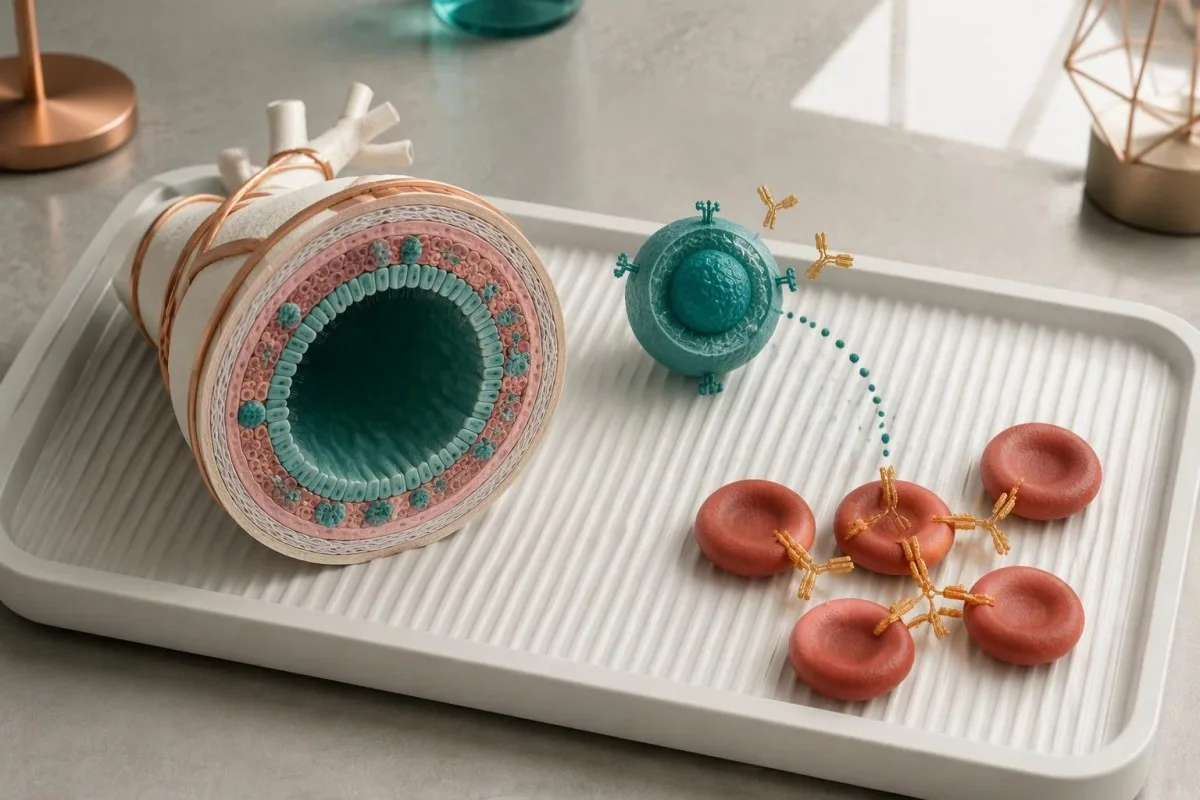
Mycoplasma pneumoniae and Epstein–Barr virus are 2 recognized infection-related associations, but a cold agglutinin test cannot reliably diagnose either infection. Our guide to Mycoplasma antibody interpretation explains why antibody timing and persistence complicate that diagnosis; respiratory symptoms may require pathogen-directed testing rather than inference from the titer.
Recent fever or sore throat changes the questions clinicians ask, not the urgency of genuine hemolysis: a hemoglobin of 8.5 g/dL with new jaundice still requires assessment even if the antibody is expected to be temporary. Our EBV result interpretation explains how VCA and EBNA patterns provide more specific information about exposure timing.
Terminology matters: cold agglutinin syndrome generally describes cold-antibody hemolysis secondary to another condition, while cold agglutinin disease is a distinct, usually persistent disorder. A titer of 1:512 does not identify lymphoma; specialist investigation may find a small marrow clone without overt lymphoma, and incidental antibodies do not automatically justify cancer investigations.
Wêrom kin jo meunster foar it testen ferwaarme wurde moatte
For cold agglutinin titer testing, many specialist laboratories require the specimen to remain at 37–38°C from collection until serum separation. Cooling before separation can allow antibodies to bind the patient's cells, potentially lowering the antibody activity left in the serum and producing a misleading result.
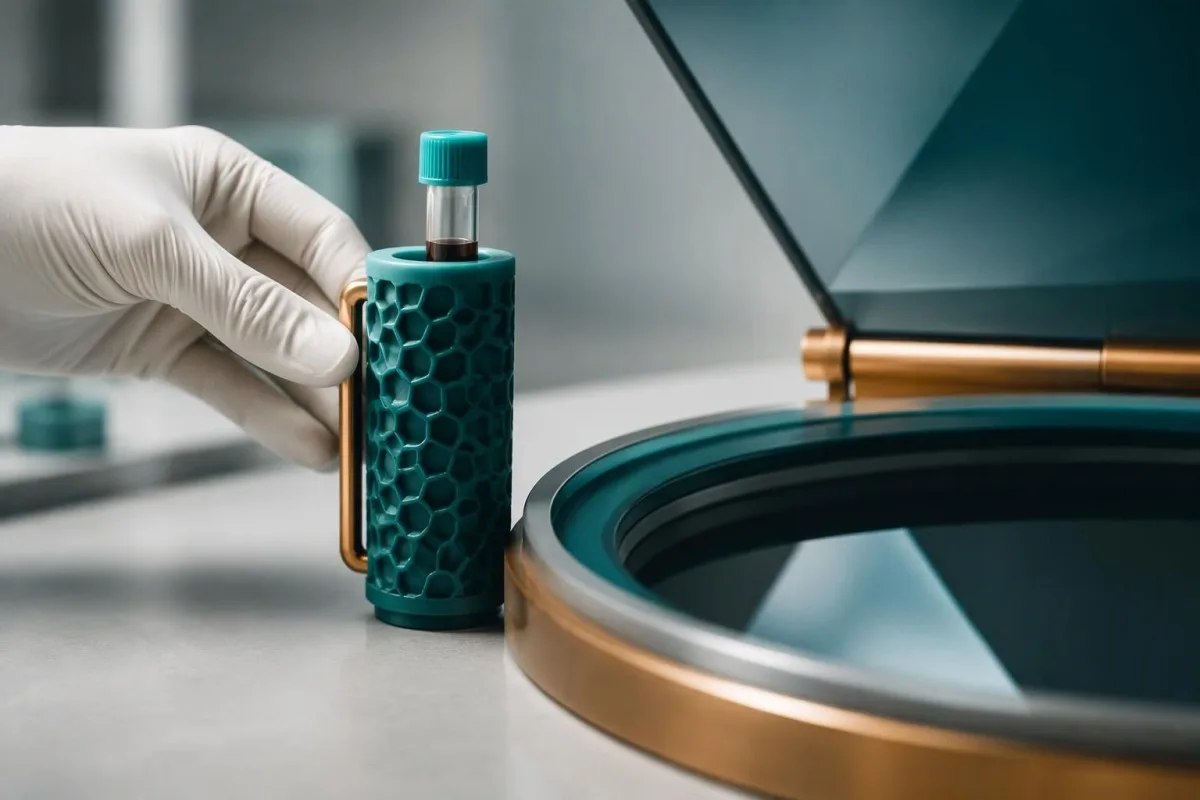
The pre-analytical requirement is different from the assay temperature: serum may be kept near 37°C during preparation and then deliberately tested at 4°C. The Hematology review emphasizes warm collection and separation for cold antibody studies (Berentsen, 2016); the laboratory creates the controlled cooling step only after an appropriate specimen is available.
Warming a specimen after it has already cooled may not fully reverse every earlier problem, so repeating the test can be more useful than interpreting an unexpected low titer. Our repeat specimen guide explains another handling distinction: cells breaking inside a collection tube are not the same as hemolysis occurring inside your body.
Before the appointment, ask 3 praktyske fragen: which tube is required, how warmth will be maintained and where serum separation will occur. Titer testing, an EDTA specimen for the DAT and a warmed CBC may have different instructions; do not heat, transport or store your own specimen unless the collecting service specifically directs you.
Hoe't kâlde agglutininen jo CBC ferfoarmje kinne
Cold-related red-cell clumping can falsely lower the RBC count and raise MCV or MCHC on an automated complete blood count. A CBC repeated after laboratory warming near 37°C can help identify this artifact, although correcting the numbers does not by itself establish or exclude cold agglutinin disease.
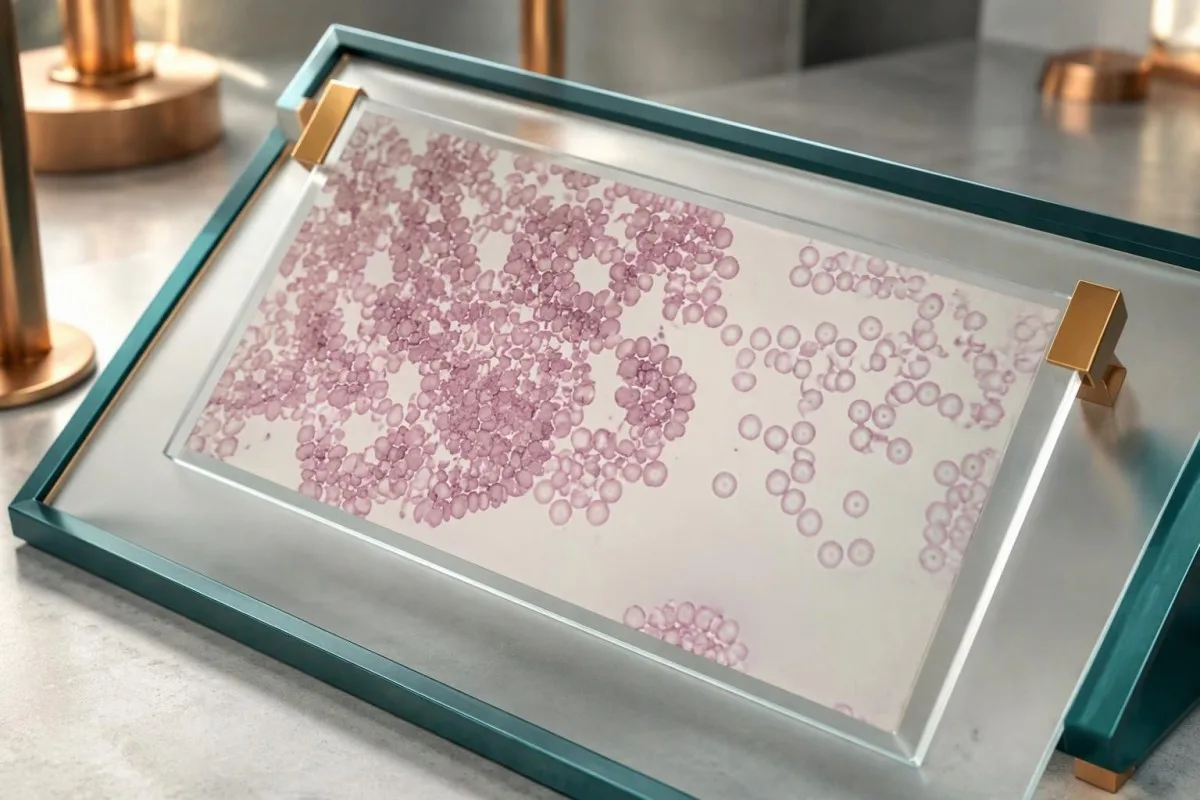
Automated counters may treat a cluster as 1 large particle rather than several separate cells, making the calculated mean cell volume appear high. Hematocrit and derived indices can become internally inconsistent, while photometrically measured hemoglobin is often less affected; the laboratory must still check whether other specimen or instrument issues are present.
Bygelyks, in hypotetyske MCHC of 40 g/dL with an analyzer agglutination flag should prompt verification rather than an immediate diagnosis of an unusually concentrated red-cell disorder. Our high MCHC explanation covers this reasoning; genuine anemia can coexist with an artifact, so neither finding should erase the other.
Kantesti is in AI bloedtest-útslachplatfoarm that helps explain discrepancies between CBC values and a reported cold agglutinin titer, including whether a result was rerun near 37°C. Our AI-technologygids describes the interpretation process; only the testing laboratory can confirm that warming corrected a measurement error.
Wat befêstiget in diagnoaze fan kâlde agglutininesykte?
A cold agglutinin disease diagnosis usually combines chronic hemolysis, a strongly C3d-positive DAT and a cold agglutinin titer of at least 1:64 at 4°C, with assessment for secondary causes. These are linked diagnostic components, not a checklist that an isolated positive report can complete.
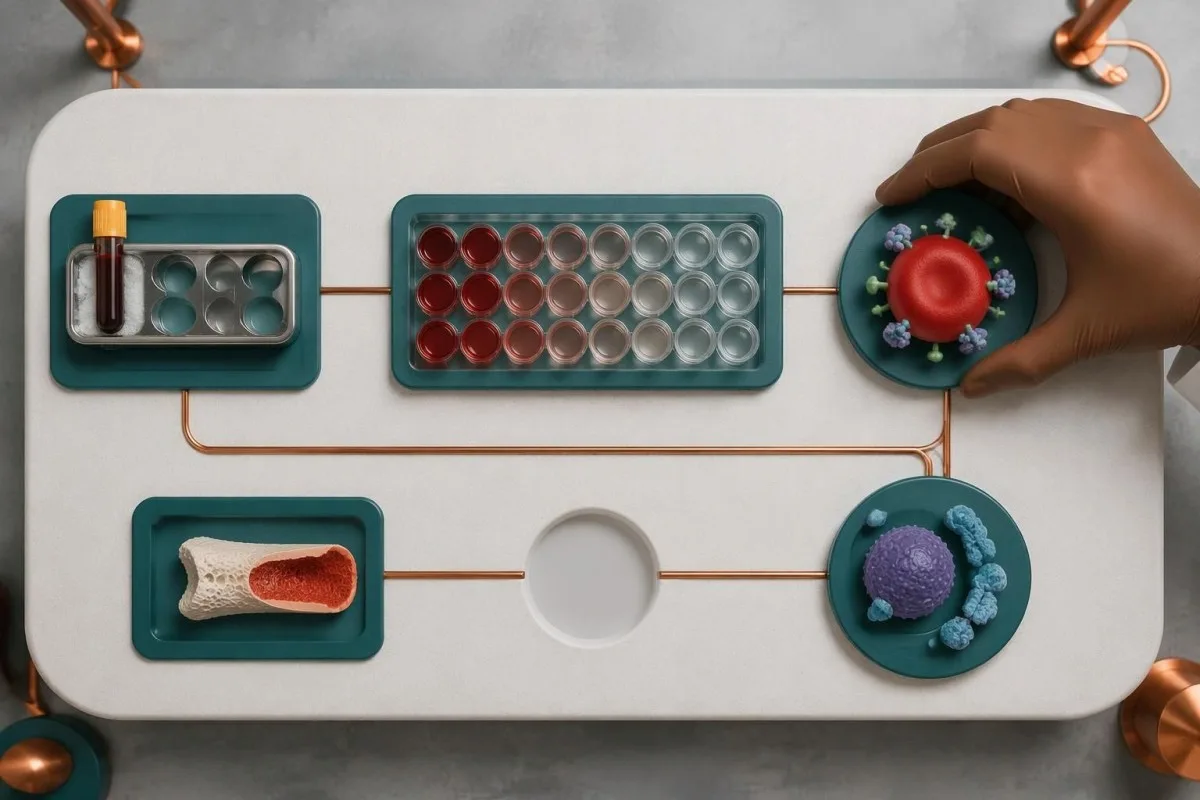
Clinicians first verify the 2 core laboratory patterns—hemolysis and immune attachment to cells—then assess symptoms, duration, medications, recent infections and transfusion history. A broad thermal amplitude can support interpretation when routine results are borderline or discordant; the international consensus treats autoimmune hemolytic anemia as a pattern-based diagnosis (Jäger et al., 2020).
Persistent findings may lead to serum protein electrophoresis, immunofixation and hematology-directed marrow assessment to characterize antibody production. Our guide to immunofixation band results explains why a monoclonal band needs context; even a titer of 1:1024 cannot determine whether a detectable protein represents overt lymphoma or a smaller clonal process.
Kantesti AI can help organize 3 groups of information for the appointment: antibody tests, hemolysis markers and changes over time. It cannot establish whether the specimen followed the warm-handling protocol or replace a specialist's assessment of marrow findings; bring the full report, because an isolated screenshot may omit the method and interpretive comments.
Trije foarbylden: deselde titer, ferskillende folgjende stappen
The same cold agglutinin titer can lead to different next steps because clinical significance depends on temperature-dependent activity and red-cell injury. The following 3 examples are hypothetical teaching scenarios, not patient accounts or rules for diagnosing yourself from a single report.
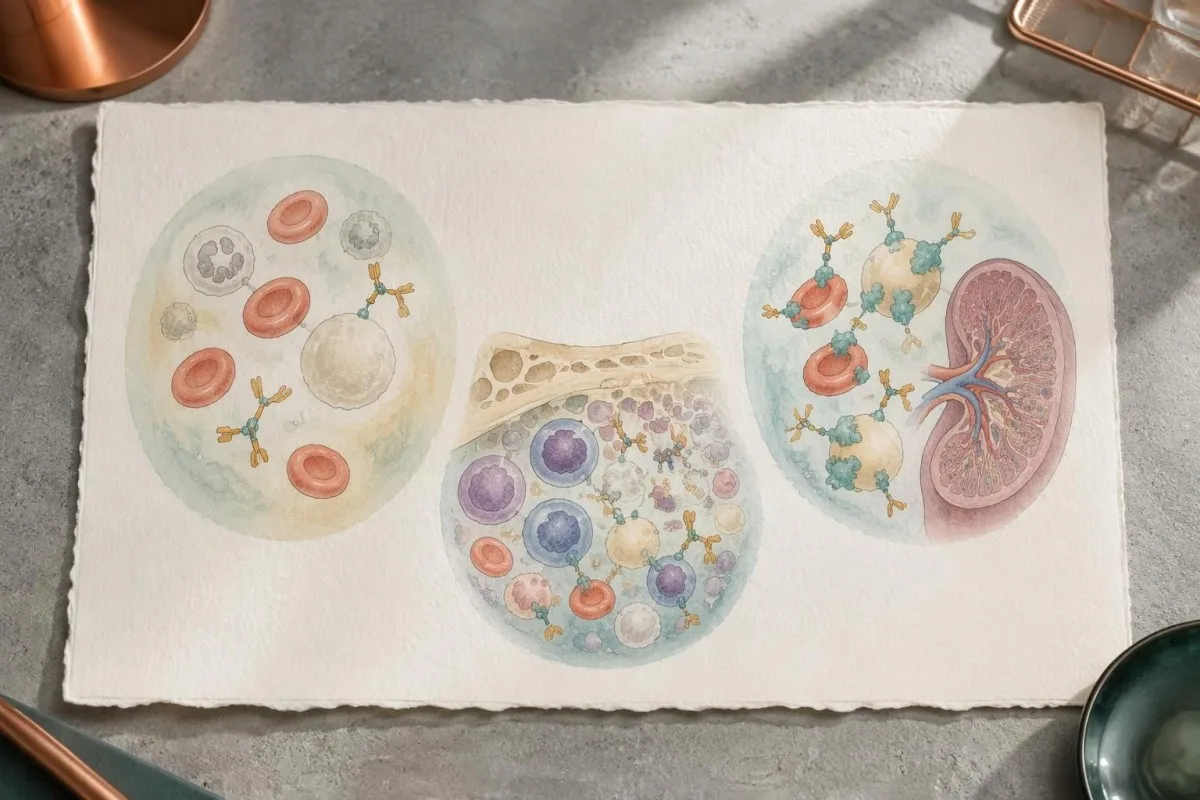
In the first example, an adult has a titer of 1:256 at 4°C, hemoglobin of 14.0 g/dL, normal hemolysis markers and no cold-related symptoms. If specialist testing shows a narrow thermal amplitude, incidental antibodies become more plausible; the useful step is confirming the context and need for follow-up, not assuming that antibody detection requires treatment.
In the second example, a person recovering from a respiratory illness has a titer of 1:256 and hemoglobin that has fallen from 13.5 to 10.2 g/dL, with rising indirect bilirubin. An infection-associated syndrome is possible, but the falling hemoglobin still needs assessment; our polychromasia explanation describes one smear clue to the marrow's replacement response.
In the third example, a person has months of fatigue, a titer of 1:256, strong C3d positivity, low haptoglobin and antibody reactivity at 30°C. Persistent clinically significant cold-antibody hemolysis becomes more likely; hematology assessment addresses diagnosis and treatment need, while the identical titer across all 3 examples shows why the number alone cannot choose the pathway.
By hokker symptomen is fluch medysk ûndersyk nedich?
Chest pain, breathlessness at rest, fainting or confusion require emergency assessment, regardless of the cold agglutinin titer. New jaundice, dark urine or rapidly worsening fatigue warrant prompt, often same-day medical review; a result below 1:64 does not make these symptoms safe to ignore.
A rapid hemoglobin decline can be more dangerous than a stable low value, because your circulation has less time to adapt. A hypothetical fall from 12 to 8 g/dL over several days deserves prompt assessment even if someone with a long-standing, monitored value near 8 g/dL has fewer symptoms; these examples are not universal transfusion thresholds.
Dark urine can reflect hemoglobin released during marked intravascular hemolysis, but dehydration, liver conditions and urinary causes can produce similar appearances. Our dark urine assessment guide explains the alternatives; dark urine together with jaundice or weakness should not be dismissed because only 1 antibody result is abnormal.
Cold-related blue or purple fingers can occur with agglutination, but persistent discoloration, severe pain or failure to improve after gentle warming needs urgent evaluation for impaired circulation. Clinically significant cold agglutinin disease also carries increased clot risk; sudden breathlessness or 1 newly swollen leg requires assessment rather than attribution to cold sensitivity alone.
Hoe't jo waarm bliuwe en jo op klinyske prosedueres tariede kinne
Keeping the whole body warm can reduce cold-triggered symptoms in clinically significant cold-antibody disorders. Tell the care team before transfusion, anesthesia or a procedure, because laboratory compatibility testing and clinical temperature management may need coordination near 37°C rather than routine handling.
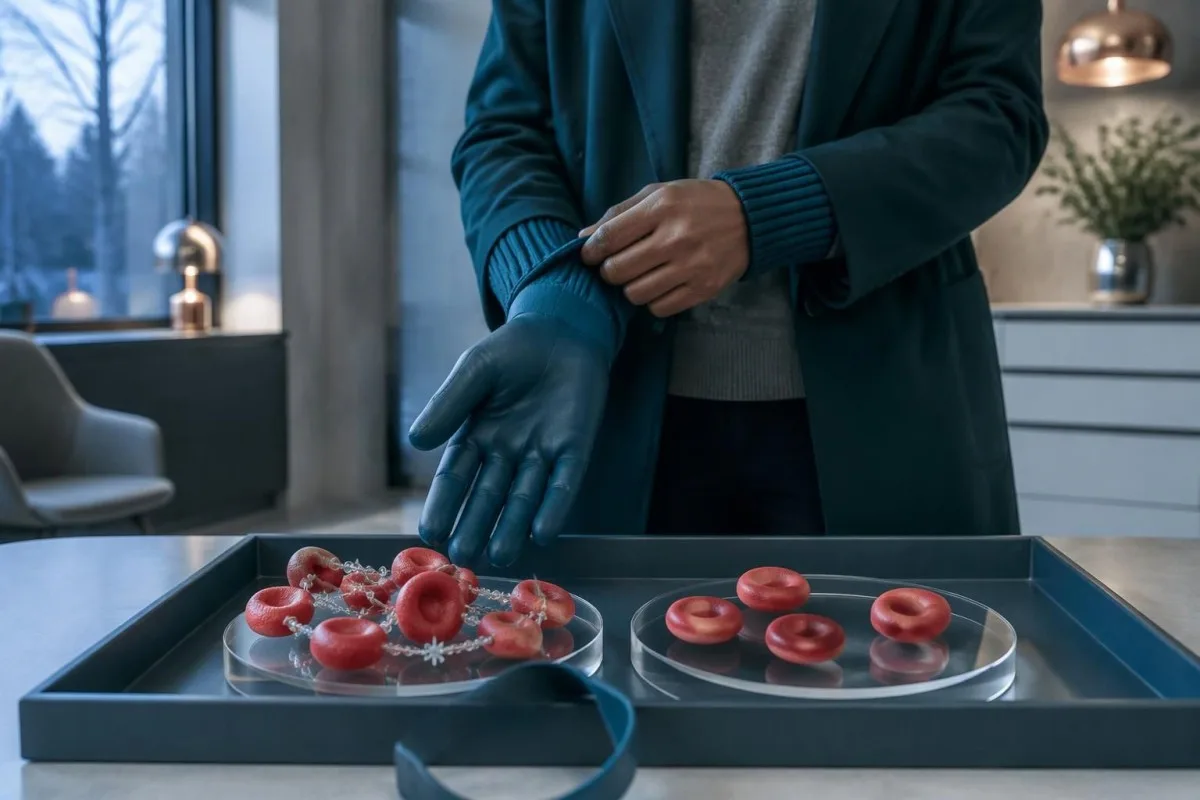
Practical protection includes layers, gloves, warm footwear and avoiding abrupt whole-body cooling; do not test your tolerance with an ice bath or deliberate cold challenge. Reactivity around 30°C does not translate into 1 safe outdoor temperature, because wind, wet clothing, exposure duration and individual circulation change how much peripheral tissues cool.
For transfusion, the laboratory may perform antibody investigation and compatibility testing at 37°C to limit cold-antibody interference while still identifying clinically significant additional antibodies. Our transfusion compatibility guide explains that distinction; a clinical warming device may also be used, but emergency treatment should not be delayed unnecessarily while pursuing perfect routine test conditions.
In isolearre 1:128 titer without hemolysis does not automatically mean you need to avoid all travel, exercise or procedures. The useful precaution is sharing the report and any prior laboratory interference with the treating team; clinical staff—not the patient—should decide whether warmed fluids, a transfusion warmer or additional temperature monitoring are necessary.
Wannear is behanneling nedich, en wat wurdt kontrolearre?
Treatment is guided by anemia, symptoms, transfusion need and functional impact—not a titer alone. In clinically significant cold agglutinin disease, specialist options include B-cell-directed therapy and complement inhibition; a titer of 1:512 without attributable symptoms or hemolysis does not itself establish a reason to start medication.
Sutimlimab inhibits C1s, an early classical complement component, and can reduce complement-mediated hemolysis in adults with cold agglutinin disease. It does not remove the IgM antibody, so cold-related agglutination and circulation symptoms may persist even if hemoglobin improves; immunization and infection-risk precautions must follow the product information and the specialist's plan.
B-cell-directed options include rituximab-based treatment, sometimes combined with another agent in selected patients; the appropriate choice depends on goals, comorbidities and treatment tolerance. Corticosteroids, commonly used for warm autoimmune hemolytic anemia, generally perform poorly in cold agglutinin disease; the 2020 international consensus emphasizes distinguishing the subtype before applying a treatment pathway (Jäger et al., 2020).
Kantesti helps explain why a hypothetical hemoglobin improvement from 8.7 to 11.8 g/dL, falling bilirubin and fewer transfusions can matter more than a persistently high titer. Our red-cell monitoring guide explains reticulocytes and related markers; do not change treatment from an AI interpretation, and do not assume anemia means iron deficiency.
Jo rapport feilich brûke: bewiis en beheiningen fan AI
Kantesti is in AI lab test-ynterpretaasjetsjinst that helps organize cold agglutinin results for discussion, but it cannot independently confirm cold agglutinin disease. A useful interpretation needs 3 information groups: the antibody method and handling, the hemolysis pattern and the patient's symptoms and history.

Keep the complete report rather than only the 1:256 result: the test temperature, reference interval, DAT components and laboratory comments can change its meaning. Useful appointment questions include whether hemolysis is present, whether thermal amplitude testing would help and whether specimen handling was adequate; bring earlier hemoglobin values when available.
The Kantesti technical benchmark listed below concerns 100.000 syntetyske testgefallen, not 100,000 patients with cold agglutinin disease. The accompanying validation framework describes an assessment approach, not proof that AI can diagnose this rare condition; our validation and oversight page provides the appropriate context for these research publications and their limitations.
Before sharing 1 report or a series of reports, review consent and remove information you do not need to provide, especially when the results belong to someone else. Our begelieding oer privacy en gegevens explains data-handling considerations; urgent symptoms belong with emergency or clinical services, not in an upload queue awaiting interpretation.
Faak stelde fragen
Betsjut in positive test op kâlde agglutininen dat ik kâlde agglutininesykte haw?
In positive kâlde-agglutininetest stelt net op himsels de diagnoaze kâlde agglutininesykte. In titer fan op syn minst 1:64 by 4 °C is in faak brûkt ûnderdiel fan de diagnoaze, mar klinisy beoardielje ek chronyske hemolyse en in passende, ornaris sterk C3d-positive direkte antiglobulinetest. Tafallich oanwêzige of mei in ynfeksje ferbûne antistoffen kinne positive resultaten jaan. De termyske amplitude en betroubere ôfhanneling fan it monster helpe om ûnwisse befiningen te ferdúdlikjen.
Is in kâldagglutininetiter fan 1:256 of 1:512 gefaarlik?
In kâldagglutininetiter fan 1:256 of 1:512 is gjin selsstannige gefaargrins. De útslach lit sjen hoe fier it serum ferdûn wurde kin wylst de antykoadyaktiviteit ûnder de omstannichheden fan de test noch waarnimber is. In antykoade dy't aktyf is by likernôch 30 °C kin klinysk wichtiger wêze as in antykoade mei in hegere titer dy't allinnich by 4 °C reagearret. Symptomen, hemoglobineferoaringen en markers fan hemolyse bepale hoe driuwend de beoardieling is.
Wat is termyske amplitude yn in kâldagglutininetest?
Thermal amplitude is the highest temperature at which a cold antibody reacts under the laboratory's testing conditions. Reactivity around 30°C or above is generally more concerning than activity restricted to 4°C because peripheral circulation can become cool enough for the antibody to act. Thermal amplitude is different from titer, which measures activity after dilution. Specialist laboratories may assess it when routine findings are discordant or the clinical significance is unclear.
Wêrom moat in kâldagglutininespesimen waarm hâlden wurde?
Many laboratories require a cold agglutinin specimen to remain at 37–38°C from collection until serum separation. Premature cooling can allow antibody to bind the patient's cells, leaving less detectable activity in the separated serum and potentially producing a falsely low result. This preparation requirement is separate from deliberately testing the serum at 4°C. Confirm the collecting laboratory's instructions rather than attempting to warm or transport the specimen yourself.
Kin in ynfeksje in positive kâldagglutinintest feroarsaakje?
Ynfeksjes, wêrûnder Mycoplasma pneumoniae en it Epstein–Barr-firus, kinne ferbûn wêze mei tydlike kâldreaktive antistoffen. In titer lykas 1:256 kin net fêststelle hokker ynfeksje oanwêzich is of oft dy noch aktyf is. Ynfeksjerelatearre antistoffen feroarsaakje soms klinysk signifikante hemolyse, dus in fallend hemoglobinegehalte of nije geelsucht moat noch altyd beoardiele wurde. Testen rjochte op de sykteferwekker en it klinyske ferrin binne nuttiger as kâlde agglutininen brûke as diagnoaze fan in ynfeksje.
Kinne kâlde agglutininen in falsk ferhege MCV of MCHC feroarsaakje?
Kâlde agglutininen kinne klusters fan reade bloedsellen feroarsaakje dy't automatisearre CBC-mjittingen ferfoarmje, mei ûnder oare falsk hege MCV- of MCHC-wearden en in falsk leech RBC-tal. Bygelyks, in MCHC fan 40 g/dL mei in agglutinaasje-flagge moat oanlieding wêze foar ferifikaasje yn it laboratoarium, yn stee fan direkte ynterpretaasje as in echte ôfwiking fan 'e sellen. In nije mjitting nei ferwaarming oant ticht by 37°C kin de ynterferinsje korrizjearje. In korrizjearre CBC slút tagelyk foarkommende hemolyse net út.
Hokker symptomen fereaskje driuwende soarch nei in positive útslach fan kâlde agglutininen?
Pine yn ’e boarst, sykheljen dy’t lestich giet yn rêst, flaufallen of betizing fereaskje in spoedbeoardieling, ûnôfhinklik fan de titer fan kâlde agglutininen. Nije gielsucht, donkere urine of fluch minder wurdende swakte freget om in rappe medyske beoardieling, faak noch deselde dei. In rappe delgong fan it hemoglobinegehalte, lykas in hypotetyske feroaring fan 12 nei 8 g/dL, is reden ta soarch, ek al bepaalt gjin inkelde wearde foar elkenien hoe driuwend de situaasje is. Oanhâldende pynlike ferkleuring fan ’e fingers of hommelse symptomen dy’t op in bloedklots wize, moatte ek driuwend ûndersocht wurde.
Lit jo bloedtest resultaten útlizze
Laad jo laboratoariumrapport op en de AI fan Kantesti leit elke biomarker binnen sekonden út yn gewoane taal. Brûkt troch mear as 2 miljoen minsken wrâldwiid.
Referinsjes
- Klein, T., Mitchell, S., & Weber, H. (2026). In pre-registered, rubric-basearre automatyske technyske benchmark fan de Kantesti Blood-Test Interpretation Engine op 100.000 syntetyske testgefallen. Kantesti AI Medysk Undersyk. DOI
- Klein, T., Mitchell, S., & Weber, H. (2026). Klinysk Falidaasjekader v2.0 (Medyske Falidaasjeside). Kantesti AI Medysk Undersyk. DOI
- Berentsen S. (2016). Cold agglutinin disease. Hematology, American Society of Hematology Education Program. DOI
- Jäger U et al. (2020). Diagnosis and treatment of autoimmune hemolytic anemia in adults: Recommendations from the First International Consensus Meeting. Blood Reviews. DOI
- 2M+Analysearre tests
- 127+Lannen
- 100+Talen
Oer it medyske team


E-E-A-T fertrouwensignalen
Ûnderfining
Dokter-oandreaune klinyske resinsje fan lab-ynterpretaasje-wurkprosessen.
Ekspertize
Fokus fan laboratoariummedisyne op hoe’t biomarkers har gedrage yn in klinyske kontekst.
Autoriteit
Medysk beoardiele troch Dr. Thomas Klein, mei bydragen fan Dr. Sarah Mitchell en prof. dr. Hans Weber.
Betrouberens
Bewiis-basearre ynterpretaasje mei dúdlike ferfolchpaadkes om alarm te ferminderjen.






Medyske disclaimer
Dit artikel is allinnich foar ûnderwiisdoelen en foarmet gjin medysk advys. Rieplachtsje altyd in kwalifisearre soarchferliener foar besluten oer diagnoaze en behanneling.
Publisearre · Nim kontakt op mei it redaksjeteam
Publisearre troch Kantesti Ltd, registrearre yn Ingelân en Wales, bedriuwsnûmer. 17090423, Londen, Feriene Keninkryk.
