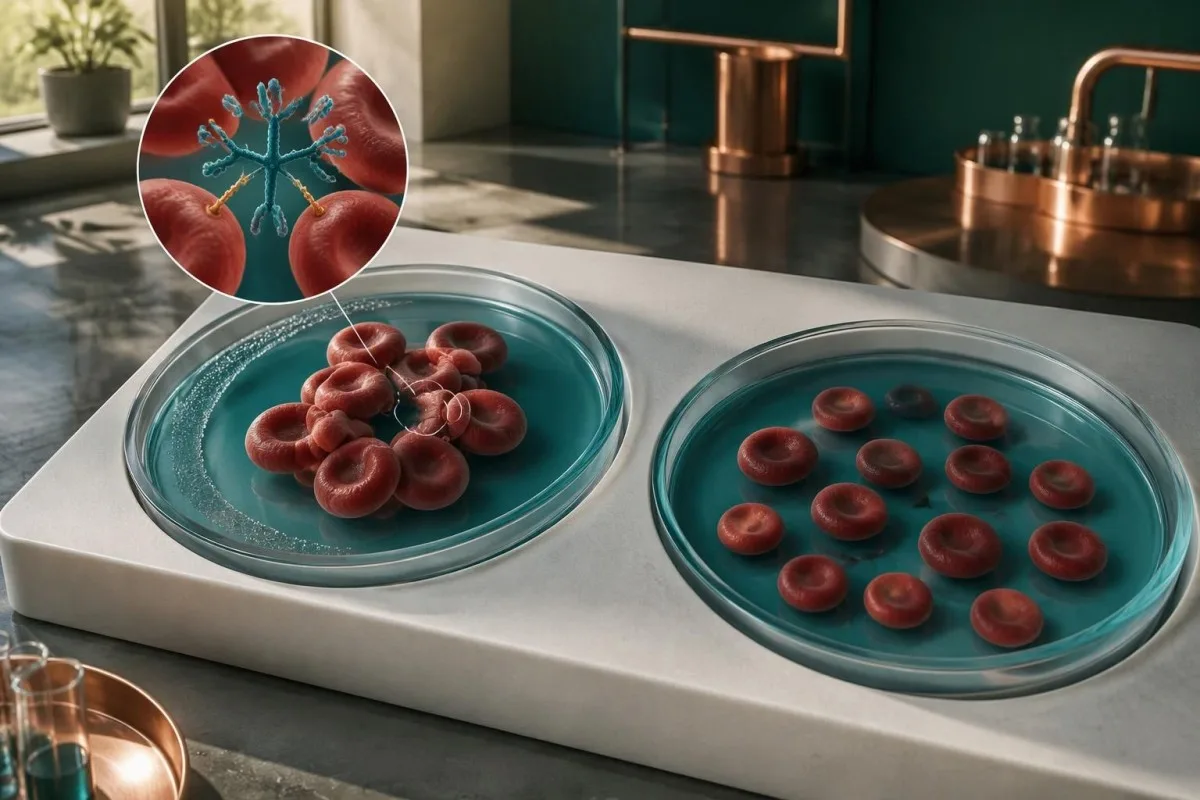
Yüksek bir soğuk aglütinin titresi, antikorların önemli ölçüde seyreltildikten sonra da saptanabilir kaldığı anlamına gelir; bu, mutlaka kırmızı kan hücrelerinize zarar verdikleri anlamına gelmez. Aradaki ayrım; sıcaklık aralıklarına, hemoliz kanıtlarına, kompleman pozitif test sonuçlarına ve numunenin güvenilir biçimde işlenmesine bağlıdır.

Temel çıkarımlar
- Pozitif sonuç soğuğa duyarlı antikorları saptar; soğuk aglütinin hastalığını tek başına doğrulamaz.
- 4°C'de en az 1:64 titre sık kullanılan bir tanı bileşenidir; ancak klinisyenlerin hemoliz kanıtlarına ve uygun direkt antiglobulin testi paternine de ihtiyacı vardır.
- Termal amplitüd bir antikorun reaksiyon verdiği en yüksek sıcaklığı tanımlar; yaklaşık 30°C veya üzerindeki aktivite, genellikle çok soğuk laboratuvar koşullarıyla sınırlı aktiviteden daha fazla endişe kaynağıdır.
- C3d pozitif direkt antiglobulin testi kompleman aracılı bir süreci destekler; ancak aynı patern soğuk aglütinin hastalığı dışında da görülebilir.
- Hemoliz değerlendirmesi tek bir anormal belirtece dayanmak yerine hemoglobin eğilimlerini, retikülositleri, LDH'yi, indirekt bilirubini ve haptoglobini birlikte değerlendirir.
- 37–38°C'de numune işleme serum ayrılana kadar soğuk aglütinin testi için gerekli olabilir; randevunuzdan önce numuneyi alacak laboratuvarın talimatlarını teyit edin.
- Enfeksiyonla ilişkili antikorlar geçici olabilir; ancak tetikleyici enfeksiyon olsa bile klinik açıdan önemli hemoliz değerlendirme gerektirir.
- Acil belirtiler göğüs ağrısı, istirahatte nefes darlığı, bayılma veya kafa karışıklığını içerir; yeni başlayan sarılık, koyu renkli idrar veya hızla kötüleşen yorgunluk için vakit kaybetmeden tıbbi değerlendirme alın.
Pozitif bir soğuk aglütinin testi hastalık olduğu anlamına mı gelir?
A pozitif soğuk aglütinin testi, otomatik olarak soğuk aglütinin hastalığı anlamına gelmez. Yüksek bir titre bile 3 klinik bulguyla birlikte yorumlanmalıdır: antikorun sıcaklık aralığı, alyuvar yıkımına ilişkin bulgular ve kompleman pozitif direkt antiglobulin testi.

Soğuk aglütininler genellikle, düşük sıcaklıklarda alyuvarlara daha kolay bağlanıp hücrelerin kümelenmesine yol açabilen IgM antikorlarıdır. Testlerde etkinlikleri çoğunlukla 4°C'de ölçülür; bu sıcaklık dolaşımdaki kanın çoğundan çok daha düşüktür. Bu nedenle laboratuvarda çarpıcı bir reaksiyon görülürken vücutta klinik açıdan anlamlı etkinlik çok az olabilir ya da hiç olmayabilir.
Şu tür tek başına bir sonuç 1:256 aneminiz olup olmadığını, antikorun vücut sıcaklığına yakın sıcaklıklarda reaksiyon gösterip göstermediğini veya bir hastalık sonrasında geçici olup olmadığını söyleyemez. Açıklamamız pozitif antikor sonuçları saptamayı tanıdan ayırır; bundan sonra sorulması gereken yararlı soru, eşlik eden testlerin ne gösterdiğidir.
Kantesti bir AI kan testi analizörü soğuk aglütinin titresini, bildirilen test sıcaklığının 4°C olup olmadığı da dahil olmak üzere ilişkili laboratuvar sonuçlarıyla birlikte açıklamaya yardımcı olur. Kuruluşumuzu şirket geçmişi bu eğitim hizmetinin arkasındaki kuruluşu açıklar; tanı koymak için gereken hematoloji ve laboratuvar değerlendirmelerinin yerini almayız.
Yüksek bir soğuk aglütinin titresi neyi ölçer?
A soğuk aglütinin titresi serumunuzun, laboratuvarın tanımladığı aglütinasyon reaksiyonunu hâlâ oluşturduğu en yüksek seyreltme oranıdır. 1:512 sonucu, etkinliğin 1:32 sonucuna kıyasla çok daha fazla seyreltmeden sonra bile saptanabildiği anlamına gelir; bu sayıların hiçbiri aneminin derecesini doğrudan ölçmez.
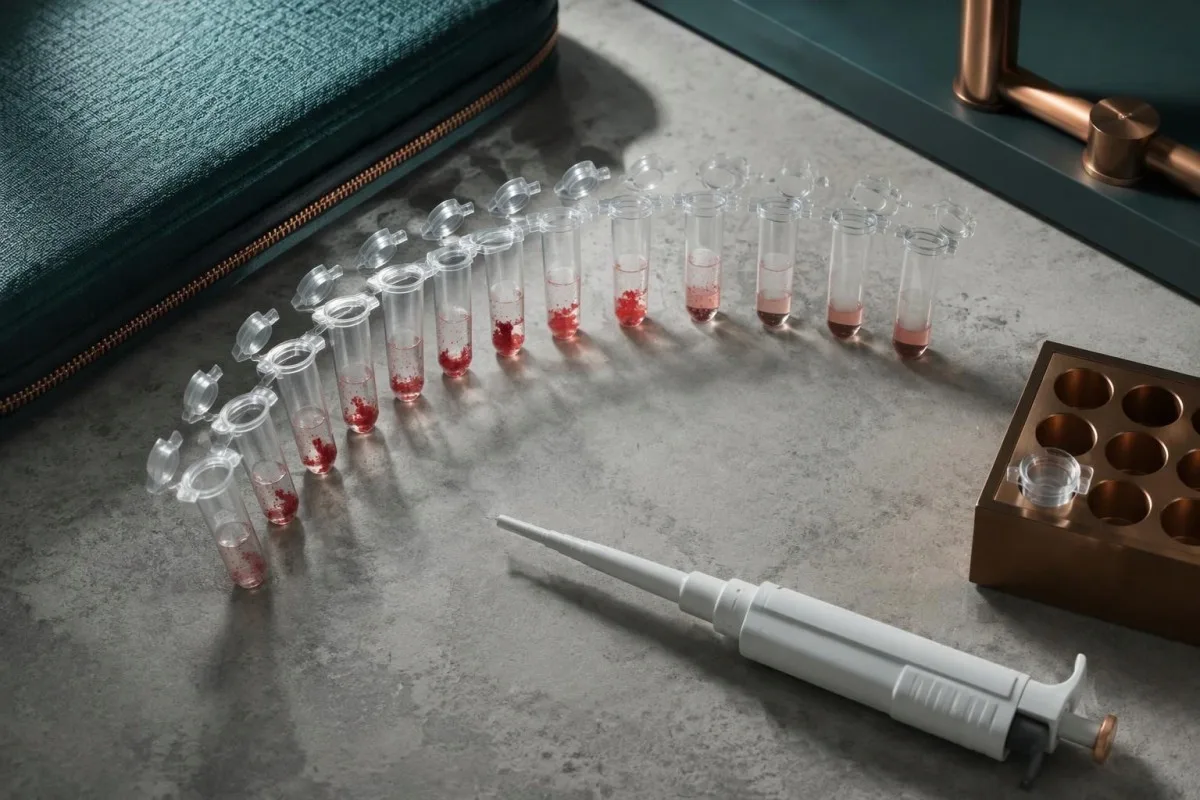
4°C'de en az 1:64 titre soğuk aglütinin hastalığı tanısında yaygın olarak kullanılan bir bileşendir; tek başına kesin bir tarama sonucu değildir. Hematology derlemesi, bu eşik değeri kronik hemoliz ve direkt antiglobulin testinde güçlü C3d pozitifliğiyle birlikte ele alır (Berentsen, 2016); acil tedaviyi otomatik olarak gerektiren evrensel bir titre yoktur.
İkişer kat seyreltme adımlarıyla genellikle şu tür sonuçlar elde edilir: 1:64, 1:128 ve 1:256. Bir adımlık fark, anlamlı bir biyolojik değişimden ziyade test değişkenliğini, seçilen sonlanım noktasını veya numunenin işlenmesini yansıtabilir; sayısal karşılaştırma, aynı laboratuvar aynı yöntemi ve sıcaklığı kullandığında en güvenilir olur.
Bazı laboratuvarlar yalnızca pozitif veya negatif, bildirirken, diğerleri 1:256 yazmak yerine 256 gibi karşılıklı bir sayı verir. Rehberimiz, soğuk aglütinin titerini nitel ve nicel sonuçlar explains that distinction; ask for the actual dilution, assay temperature and local reference interval before comparing reports.
| Düzey | Aralık | Anlamı |
|---|---|---|
| Low-level activity | Below 1:64 at 4°C | Often incidental when thermal amplitude is narrow and hemolysis is absent; this is not a universal laboratory reference interval. |
| Common diagnostic threshold | At least 1:64 at 4°C | Supports further assessment when hemolysis and a compatible direct antiglobulin test are present; does not confirm disease alone. |
| Higher dilution endpoint | Examples: 1:256 or 1:512 | Shows activity after greater dilution, but does not establish thermal amplitude or predict treatment need. |
| Very high reported endpoint | Example: 1:1024 or higher | Still requires clinical interpretation; no titer-only emergency threshold is established. |
Termal amplitüd neden titreden daha önemli olabilir?
Termal amplitüd is the highest temperature at which a cold antibody reacts under the laboratory's testing conditions. Reactivity around 30°C or above is generally more clinically concerning than reactivity confined to 4°C, because cooler peripheral circulation can reach temperatures at which the antibody becomes active.
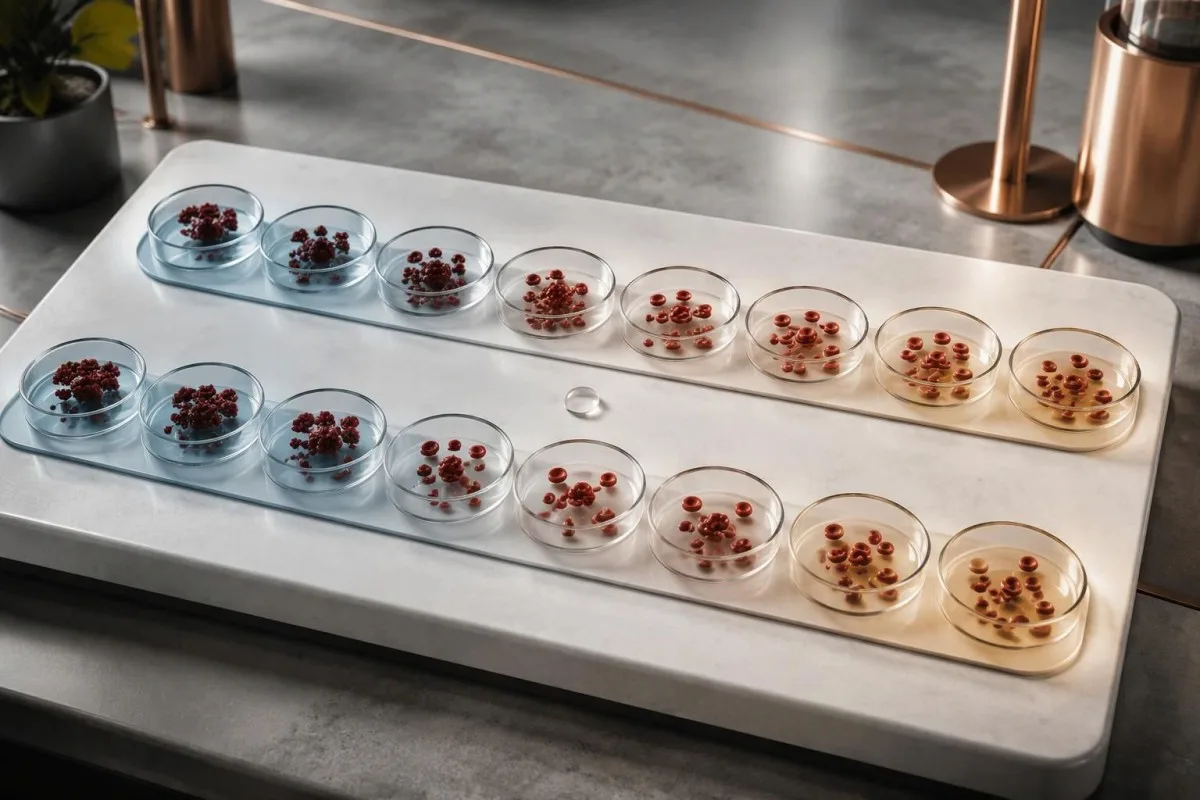
A high-titer antibody active only at 4°C may matter less clinically than a lower-titer antibody that remains active at 30–32°C. The reason is exposure: red cells do not normally circulate at refrigerator temperature, but they can encounter substantially cooler conditions in fingers, toes and other peripheral areas.
Complement can attach while red cells are cool and remain relevant after they return toward 37°C, even when the IgM antibody detaches. This explains why antibody-related injury is not simply a matter of visible clumping; our tamamlayıcı test kılavuzu also distinguishes circulating complement measurements from complement deposited on cells.
Thermal amplitude testing is not standardized into 1 universal patient-facing cutoff, and many routine reports omit it entirely. Specialist laboratories may test several temperatures, such as 4°C, room temperature, 30°C and 37°C; clinicians usually request that additional work when the titer, symptoms and hemolysis results do not fit together.
Hangi kan sonuçları gerçek hemolizi gösterir?
Hemolysis means red cells are being destroyed faster than expected, and assessment usually combines 5 measurements: hemoglobin, reticulocytes, LDH, indirect bilirubin and haptoglobin. A high cold agglutinin titer without this supporting pattern does not establish a hemolytic disorder.
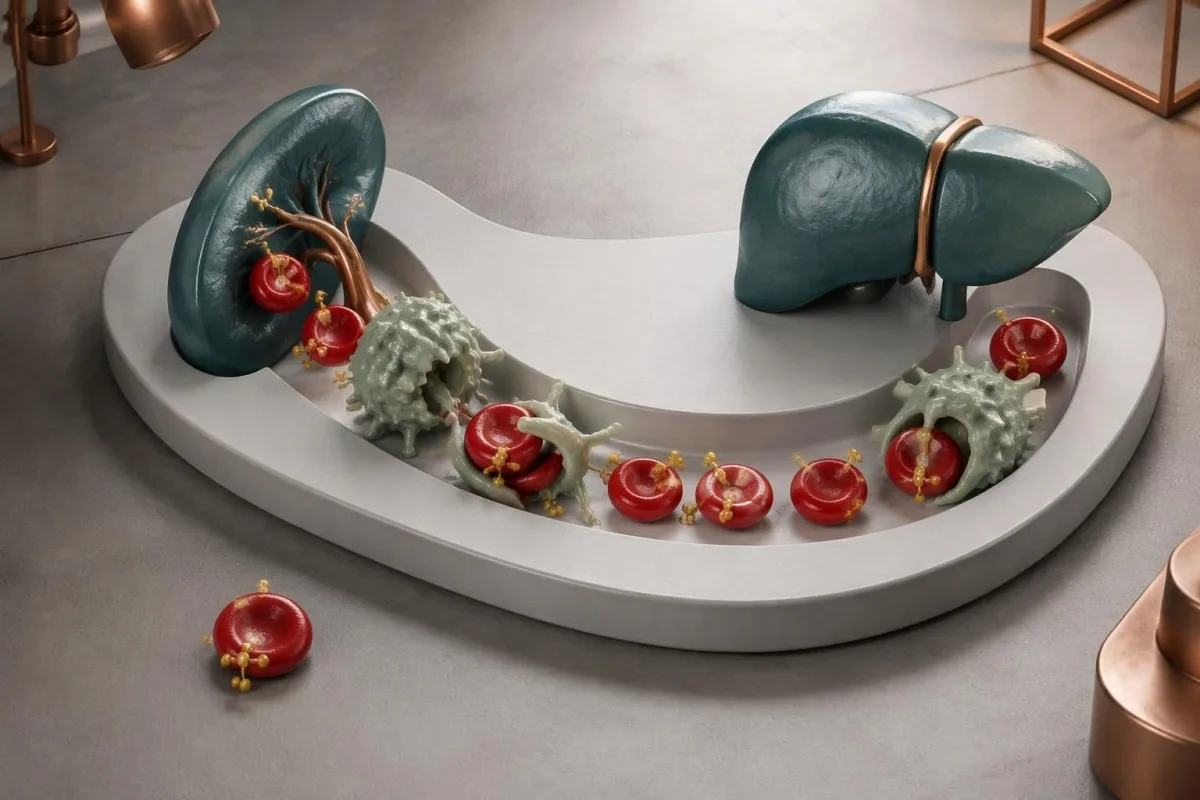
A hypothetical hemoglobin fall from 13.2 to 9.6 g/dL, accompanied by rising indirect bilirubin and LDH, is more concerning than an unchanged hemoglobin with the same titer. Reticulocytes often increase as the marrow replaces lost cells, although an early episode, nutrient deficiency or marrow disorder can blunt that response.
Low haptoglobin supports hemolysis but is not definitive: liver disease can reduce production, while an acute-phase response can raise the concentration despite red-cell destruction. Our explanation of düşük haptoglobin nedenleri covers these exceptions; a result below 1 laboratory's reference limit should be interpreted with the other markers rather than alone.
Kantesti AI helps explain LDH trends, including why a hypothetical rise from 220 to 650 U/L needs the laboratory's reference interval and specimen-quality information. Our LDH interpretation guide describes other sources of elevation; normal hemoglobin also does not exclude compensated hemolysis when the marrow is keeping pace.
C3d pozitif direkt antiglobulin testi ne anlama gelir?
A C3d-positive direct antiglobulin test, also called a direct Coombs test, detects complement fragments attached to red cells. Cold agglutinin disease typically produces strong C3d positivity with absent or sometimes weak IgG reactivity, but these 2 antibody-testing results are not sufficient without clinical evidence of hemolysis.

The direct antiglobulin test and the cold agglutinin titer answer 2 farklı soruya: what is attached to your red cells, and what cold-reactive activity is present in your serum? The Blood Reviews international consensus recommends a monospecific direct antiglobulin test as part of autoimmune hemolytic anemia assessment (Jäger et al., 2020).
A report stating only DAT positive may not distinguish IgG from C3d; asking for those 2 components can materially change interpretation. Our guide to a pozitif direkt Coombs testi explains why transfusion-related antibodies, medications and other immune processes can also produce a positive result without proving cold agglutinin disease.
In a child with abrupt post-illness hemolysis, a C3d-positive DAT and a low cold agglutinin titer can raise a different possibility: paroxysmal cold hemoglobinuria. This condition usually involves an IgG antibody assessed by Donath–Landsteiner testing, so a cold agglutinin result below 1:64 should not end the investigation when symptoms suggest significant hemolysis.
Tesadüfen saptanan antikorlar, enfeksiyonlar ve kalıcı hastalık
Incidental cold antibodies may cause no symptoms, while infection-related antibodies can be temporary and occasionally cause substantial hemolysis. Persistent cold agglutinin disease is usually associated with a clonal marrow B-cell process; these 3 situations require different follow-up rather than the same response to a positive test.
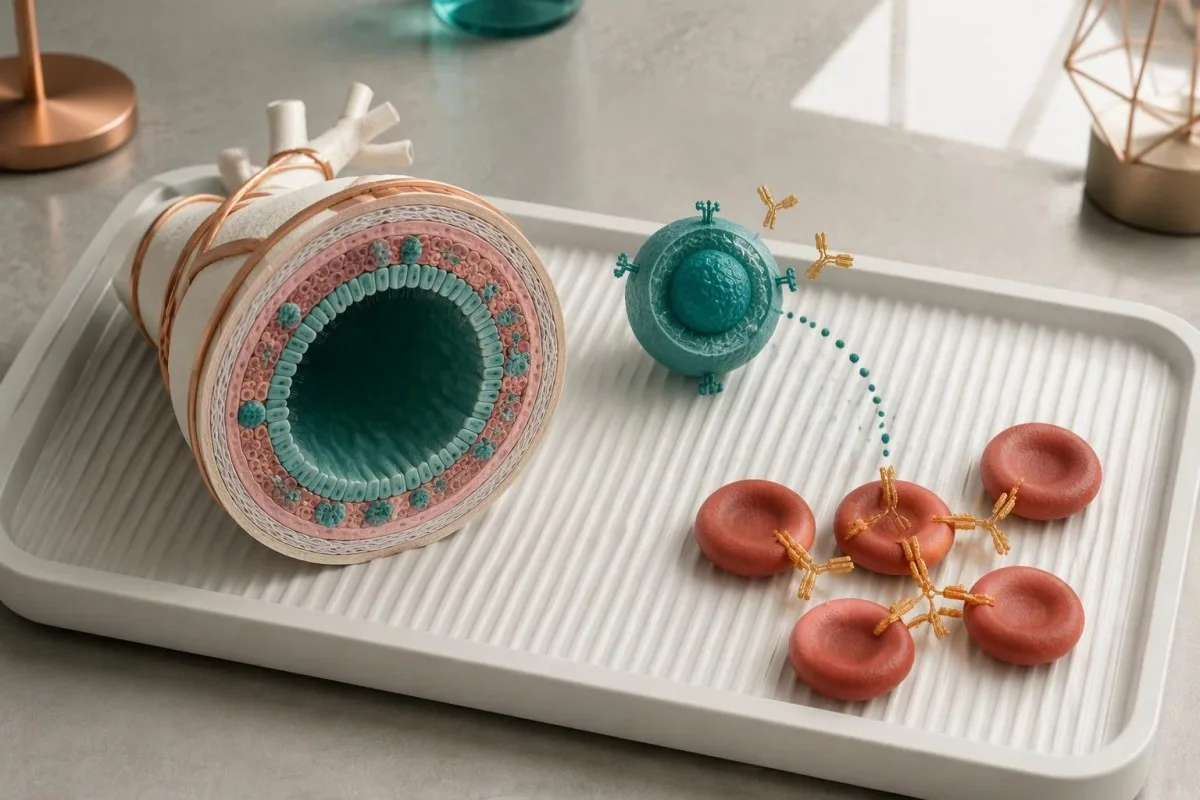
Mycoplasma pneumoniae and Epstein–Barr virus are 2 recognized infection-related associations, but a cold agglutinin test cannot reliably diagnose either infection. Our guide to Mycoplasma antibody interpretation explains why antibody timing and persistence complicate that diagnosis; respiratory symptoms may require pathogen-directed testing rather than inference from the titer.
Recent fever or sore throat changes the questions clinicians ask, not the urgency of genuine hemolysis: a hemoglobin of 8,5 g/dL with new jaundice still requires assessment even if the antibody is expected to be temporary. Our EBV result interpretation explains how VCA and EBNA patterns provide more specific information about exposure timing.
Terminology matters: cold agglutinin syndrome generally describes cold-antibody hemolysis secondary to another condition, while cold agglutinin disease is a distinct, usually persistent disorder. A titer of 1:512 does not identify lymphoma; specialist investigation may find a small marrow clone without overt lymphoma, and incidental antibodies do not automatically justify cancer investigations.
Testten önce numunenizin neden ısıtılması gerekebilir?
For cold agglutinin titer testing, many specialist laboratories require the specimen to remain at 37–38°C from collection until serum separation. Cooling before separation can allow antibodies to bind the patient's cells, potentially lowering the antibody activity left in the serum and producing a misleading result.
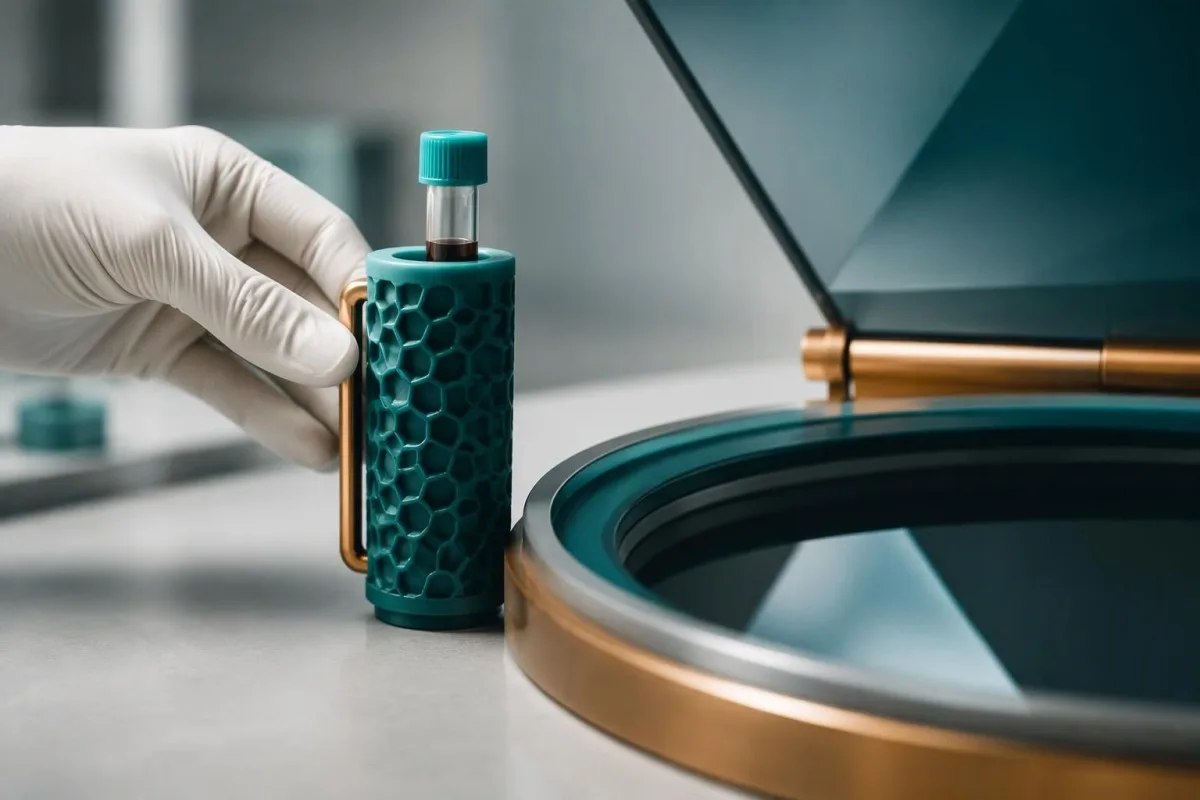
The pre-analytical requirement is different from the assay temperature: serum may be kept near 37°C during preparation and then deliberately tested at 4°C. The Hematology review emphasizes warm collection and separation for cold antibody studies (Berentsen, 2016); the laboratory creates the controlled cooling step only after an appropriate specimen is available.
Warming a specimen after it has already cooled may not fully reverse every earlier problem, so repeating the test can be more useful than interpreting an unexpected low titer. Our repeat specimen guide explains another handling distinction: cells breaking inside a collection tube are not the same as hemolysis occurring inside your body.
Before the appointment, ask ayrılırken 3 pratik soru: which tube is required, how warmth will be maintained and where serum separation will occur. Titer testing, an EDTA specimen for the DAT and a warmed CBC may have different instructions; do not heat, transport or store your own specimen unless the collecting service specifically directs you.
Soğuk aglütininler CBC'nizi nasıl bozabilir?
Cold-related red-cell clumping can falsely lower the RBC count and raise MCV or MCHC on an automated complete blood count. A CBC repeated after laboratory warming near 37°C can help identify this artifact, although correcting the numbers does not by itself establish or exclude cold agglutinin disease.
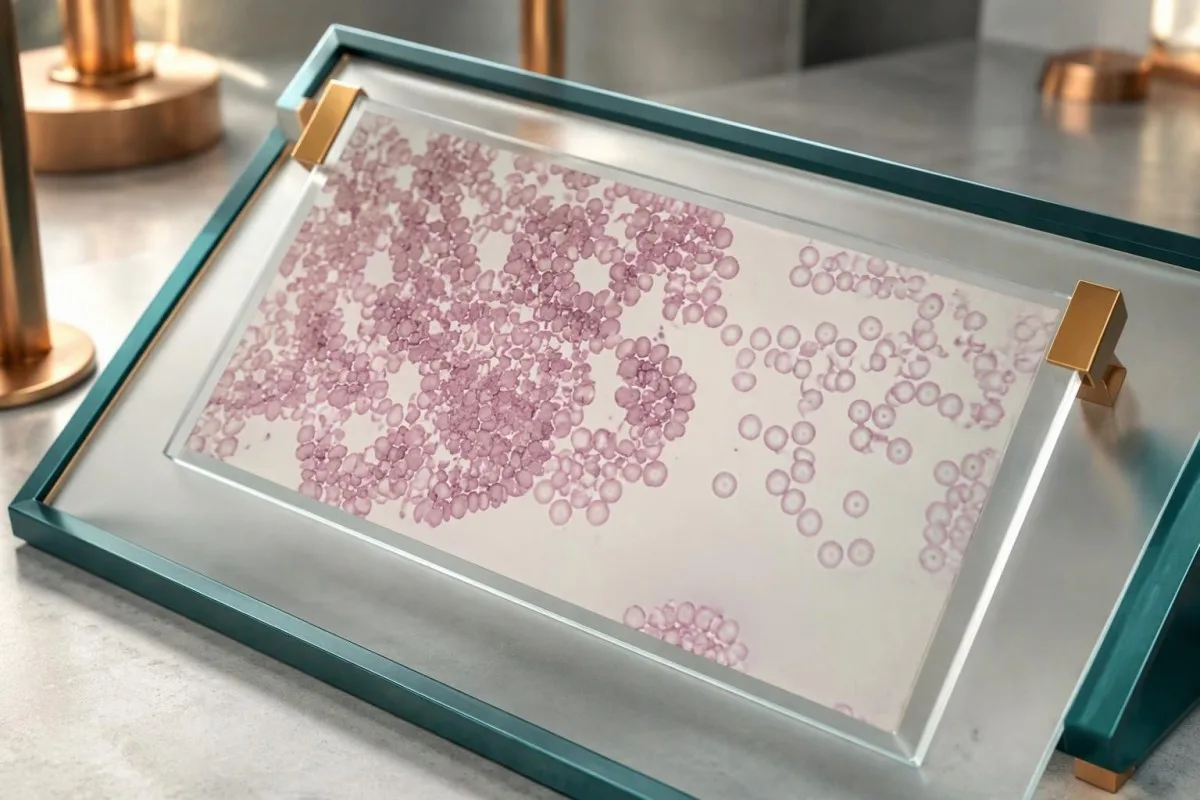
Automated counters may treat a cluster as 1 large particle rather than several separate cells, making the calculated mean cell volume appear high. Hematocrit and derived indices can become internally inconsistent, while photometrically measured hemoglobin is often less affected; the laboratory must still check whether other specimen or instrument issues are present.
Örneğin, varsayımsal olarak MCHC of 40 g/dL with an analyzer agglutination flag should prompt verification rather than an immediate diagnosis of an unusually concentrated red-cell disorder. Our high MCHC explanation covers this reasoning; genuine anemia can coexist with an artifact, so neither finding should erase the other.
Kantesti bir AI kan tahlili yorumlama platformu that helps explain discrepancies between CBC values and a reported cold agglutinin titer, including whether a result was rerun near 37°C. Our Yapay zeka teknolojisi rehberi describes the interpretation process; only the testing laboratory can confirm that warming corrected a measurement error.
Soğuk aglütinin hastalığı tanısını ne doğrular?
A cold agglutinin disease diagnosis usually combines chronic hemolysis, a strongly C3d-positive DAT and a cold agglutinin titer of at least 1:64 at 4°C, with assessment for secondary causes. These are linked diagnostic components, not a checklist that an isolated positive report can complete.
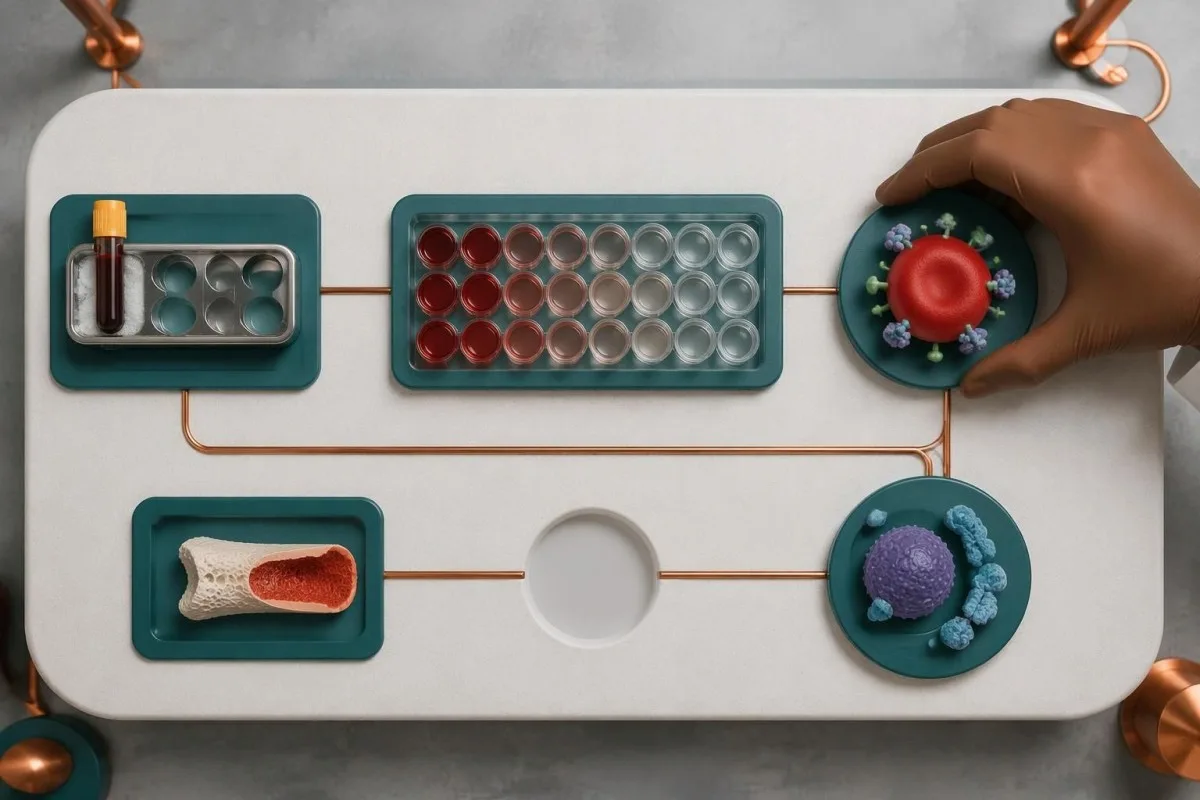
Clinicians first verify the 2 core laboratory patterns—hemolysis and immune attachment to cells—then assess symptoms, duration, medications, recent infections and transfusion history. A broad thermal amplitude can support interpretation when routine results are borderline or discordant; the international consensus treats autoimmune hemolytic anemia as a pattern-based diagnosis (Jäger et al., 2020).
Persistent findings may lead to serum protein electrophoresis, immunofixation and hematology-directed marrow assessment to characterize antibody production. Our guide to immunofixation band results explains why a monoclonal band needs context; even a titer of 1:1024 cannot determine whether a detectable protein represents overt lymphoma or a smaller clonal process.
Kantesti AI can help organize 3 groups of information for the appointment: antibody tests, hemolysis markers and changes over time. It cannot establish whether the specimen followed the warm-handling protocol or replace a specialist's assessment of marrow findings; bring the full report, because an isolated screenshot may omit the method and interpretive comments.
Üç örnek: aynı titre, farklı sonraki adımlar
The same cold agglutinin titer can lead to different next steps because clinical significance depends on temperature-dependent activity and red-cell injury. The following 3 examples are hypothetical teaching scenarios, not patient accounts or rules for diagnosing yourself from a single report.
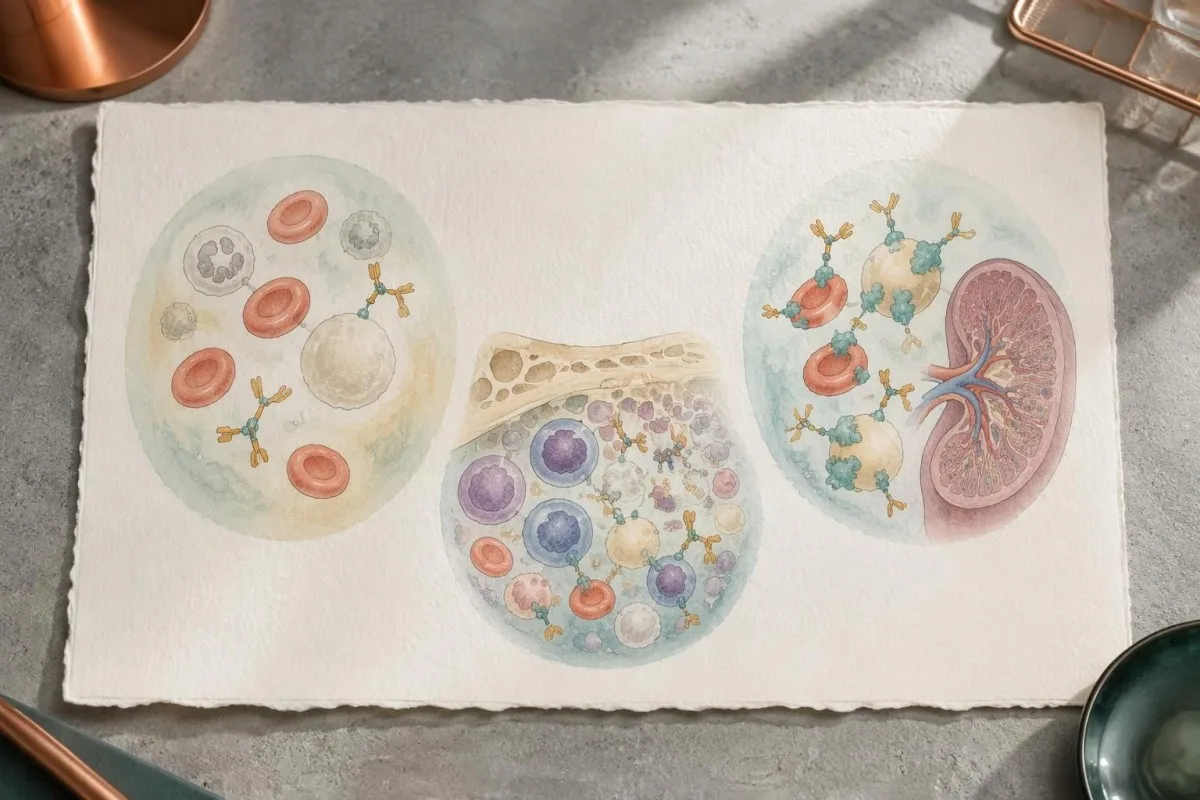
In the first example, an adult has a titer of 1:256 at 4°C, hemoglobin of 14.0 g/dL, normal hemolysis markers and no cold-related symptoms. If specialist testing shows a narrow thermal amplitude, incidental antibodies become more plausible; the useful step is confirming the context and need for follow-up, not assuming that antibody detection requires treatment.
In the second example, a person recovering from a respiratory illness has a titer of 1:256 and hemoglobin that has fallen from 13.5 to 10.2 g/dL, with rising indirect bilirubin. An infection-associated syndrome is possible, but the falling hemoglobin still needs assessment; our polychromasia explanation describes one smear clue to the marrow's replacement response.
In the third example, a person has months of fatigue, a titer of 1:256, strong C3d positivity, low haptoglobin and antibody reactivity at 30°C. Persistent clinically significant cold-antibody hemolysis becomes more likely; hematology assessment addresses diagnosis and treatment need, while the identical titer across all 3 examples shows why the number alone cannot choose the pathway.
Hangi belirtiler için hızla tıbbi değerlendirme gerekir?
Chest pain, breathlessness at rest, fainting or confusion require emergency assessment, regardless of the cold agglutinin titer. New jaundice, dark urine or rapidly worsening fatigue warrant prompt, often same-day medical review; a result below 1:64 does not make these symptoms safe to ignore.
A rapid hemoglobin decline can be more dangerous than a stable low value, because your circulation has less time to adapt. A hypothetical fall from 12 to 8 g/dL over several days deserves prompt assessment even if someone with a long-standing, monitored value near 8 g/dL has fewer symptoms; these examples are not universal transfusion thresholds.
Dark urine can reflect hemoglobin released during marked intravascular hemolysis, but dehydration, liver conditions and urinary causes can produce similar appearances. Our dark urine assessment guide explains the alternatives; dark urine together with jaundice or weakness should not be dismissed because only 1 antibody result is abnormal.
Cold-related blue or purple fingers can occur with agglutination, but persistent discoloration, severe pain or failure to improve after gentle warming needs urgent evaluation for impaired circulation. Clinically significant cold agglutinin disease also carries increased clot risk; sudden breathlessness or 1 newly swollen leg requires assessment rather than attribution to cold sensitivity alone.
Nasıl sıcak kalınır ve klinik işlemlere nasıl hazırlanılır?
Keeping the whole body warm can reduce cold-triggered symptoms in clinically significant cold-antibody disorders. Tell the care team before transfusion, anesthesia or a procedure, because laboratory compatibility testing and clinical temperature management may need coordination near 37°C rather than routine handling.

Practical protection includes layers, gloves, warm footwear and avoiding abrupt whole-body cooling; do not test your tolerance with an ice bath or deliberate cold challenge. Reactivity around 30°C does not translate into 1 safe outdoor temperature, because wind, wet clothing, exposure duration and individual circulation change how much peripheral tissues cool.
For transfusion, the laboratory may perform antibody investigation and compatibility testing at 37°C to limit cold-antibody interference while still identifying clinically significant additional antibodies. Our transfusion compatibility guide explains that distinction; a clinical warming device may also be used, but emergency treatment should not be delayed unnecessarily while pursuing perfect routine test conditions.
İzole 1:128 titer without hemolysis does not automatically mean you need to avoid all travel, exercise or procedures. The useful precaution is sharing the report and any prior laboratory interference with the treating team; clinical staff—not the patient—should decide whether warmed fluids, a transfusion warmer or additional temperature monitoring are necessary.
Tedavi ne zaman gerekir ve neler izlenir?
Treatment is guided by anemia, symptoms, transfusion need and functional impact—not a titer alone. In clinically significant cold agglutinin disease, specialist options include B-cell-directed therapy and complement inhibition; a titer of 1:512 without attributable symptoms or hemolysis does not itself establish a reason to start medication.
Sutimlimab inhibits C1s, an early classical complement component, and can reduce complement-mediated hemolysis in adults with cold agglutinin disease. It does not remove the IgM antibody, so cold-related agglutination and circulation symptoms may persist even if hemoglobin improves; immunization and infection-risk precautions must follow the product information and the specialist's plan.
B-cell-directed options include rituximab-based treatment, sometimes combined with another agent in selected patients; the appropriate choice depends on goals, comorbidities and treatment tolerance. Corticosteroids, commonly used for warm autoimmune hemolytic anemia, generally perform poorly in cold agglutinin disease; the 2020 international consensus emphasizes distinguishing the subtype before applying a treatment pathway (Jäger et al., 2020).
Kantesti helps explain why a hypothetical hemoglobin improvement from 8.7 to 11.8 g/dL, falling bilirubin and fewer transfusions can matter more than a persistently high titer. Our red-cell monitoring guide explains reticulocytes and related markers; do not change treatment from an AI interpretation, and do not assume anemia means iron deficiency.
Raporunuzu güvenle kullanmak: kanıtlar ve yapay zekânın sınırlamaları
Kantesti bir AI laboratuvar testi yorumlama hizmetinde yayımlanır. that helps organize cold agglutinin results for discussion, but it cannot independently confirm cold agglutinin disease. A useful interpretation needs 3 information groups: the antibody method and handling, the hemolysis pattern and the patient's symptoms and history.

Keep the complete report rather than only the 1:256 result: the test temperature, reference interval, DAT components and laboratory comments can change its meaning. Useful appointment questions include whether hemolysis is present, whether thermal amplitude testing would help and whether specimen handling was adequate; bring earlier hemoglobin values when available.
The Kantesti technical benchmark listed below concerns 100.000 sentetik test vakasını, not 100,000 patients with cold agglutinin disease. The accompanying validation framework describes an assessment approach, not proof that AI can diagnose this rare condition; our validation and oversight page provides the appropriate context for these research publications and their limitations.
Before sharing 1 report or a series of reports, review consent and remove information you do not need to provide, especially when the results belong to someone else. Our gizlilik ve veri rehberi explains data-handling considerations; urgent symptoms belong with emergency or clinical services, not in an upload queue awaiting interpretation.
Sıkça sorulan sorular
Pozitif soğuk aglutinin testi, soğuk aglutinin hastalığım olduğu anlamına mı gelir?
Pozitif bir soğuk aglütinin testi, tek başına soğuk aglütinin hastalığı tanısı koydurmaz. 4°C'de en az 1:64 titre, tanıda yaygın olarak kullanılan bir bileşendir; ancak klinisyenler kronik hemolizi ve uyumlu, genellikle güçlü biçimde C3d-pozitif bir direkt antiglobulin testini de değerlendirir. Rastlantısal veya enfeksiyonla ilişkili antikorlar pozitif sonuçlara yol açabilir. Termal amplitüd ve numunenin uygun şekilde işlenmesi, belirsiz bulguların açıklığa kavuşturulmasına yardımcı olur.
1:256 veya 1:512 soğuk aglutinin titresi tehlikeli midir?
1:256 veya 1:512 düzeyindeki soğuk aglutinin titresi tek başına bir tehlike eşiği değildir. Sonuç, test koşulları altında antikor aktivitesi saptanabilir durumda kalırken serumun ne kadar seyreltilebileceğini gösterir. Yaklaşık 30°C’de etkin olan bir antikor, yalnızca 4°C’de reaksiyon veren daha yüksek titreli bir antikordan klinik açıdan daha önemli olabilir. Değerlendirmenin aciliyetini belirtiler, hemoglobin düzeylerindeki seyir ve hemoliz belirteçleri belirler.
Soğuk aglütinin testinde termal amplitüd nedir?
Thermal amplitude is the highest temperature at which a cold antibody reacts under the laboratory's testing conditions. Reactivity around 30°C or above is generally more concerning than activity restricted to 4°C because peripheral circulation can become cool enough for the antibody to act. Thermal amplitude is different from titer, which measures activity after dilution. Specialist laboratories may assess it when routine findings are discordant or the clinical significance is unclear.
Soğuk aglütinin örneği neden sıcak tutulmalıdır?
Many laboratories require a cold agglutinin specimen to remain at 37–38°C from collection until serum separation. Premature cooling can allow antibody to bind the patient's cells, leaving less detectable activity in the separated serum and potentially producing a falsely low result. This preparation requirement is separate from deliberately testing the serum at 4°C. Confirm the collecting laboratory's instructions rather than attempting to warm or transport the specimen yourself.
Bir enfeksiyon, soğuk aglütinin testinin pozitif çıkmasına neden olabilir mi?
Mycoplasma pneumoniae ve Epstein–Barr virüsü de dahil olmak üzere enfeksiyonlar, soğuğa tepki veren geçici antikorlarla ilişkili olabilir. 1:256 gibi bir titre, hangi enfeksiyonun mevcut olduğunu veya enfeksiyonun hâlâ aktif olup olmadığını gösteremez. Enfeksiyonla ilişkili antikorlar bazen klinik açıdan önemli hemolize yol açabilir; bu nedenle hemoglobinde düşüş veya yeni gelişen sarılık yine de değerlendirilmelidir. Enfeksiyon tanısı koyarken soğuk aglütininlerden yararlanmak yerine, etkene yönelik testler ve klinik zaman çizelgesi daha bilgilendiricidir.
Soğuk aglütininler MCV veya MCHC değerlerinin hatalı biçimde yüksek çıkmasına neden olabilir mi?
Soğuk aglütininler, otomatik CBC ölçümlerini bozarak eritrosit kümelenmelerine yol açabilir; bunun sonucunda MCV veya MCHC olduğundan yüksek, RBC sayısı ise olduğundan düşük ölçülebilir. Örneğin, aglütinasyon uyarısı eşliğinde ölçülen 40 g/dL’lik bir MCHC değeri, gerçek bir hücresel bozukluk olarak hemen yorumlanmak yerine laboratuvarda doğrulanmalıdır. Yaklaşık 37°C’de ısıtıldıktan sonra ölçümün tekrarlanması, girişimi düzeltebilir. Düzeltilmiş bir CBC, eş zamanlı hemoliz olasılığını dışlamaz.
Pozitif soğuk aglütinin sonucu sonrasında hangi belirtiler acil tıbbi müdahale gerektirir?
Göğüs ağrısı, istirahatte nefes darlığı, bayılma veya kafa karışıklığı, soğuk aglütinin titresi ne olursa olsun acil değerlendirme gerektirir. Yeni gelişen sarılık, koyu renkli idrar veya hızla kötüleşen halsizlik, çoğu zaman aynı gün içinde olmak üzere, gecikmeden tıbbi değerlendirme gerektirir. Örneğin hemoglobinin 12’den 8 g/dL’ye düşmesi gibi hızlı bir azalma endişe vericidir; ancak herkes için aciliyet düzeyini belirleyen tek bir değer yoktur. Parmaklarda kalıcı ve ağrılı renk değişikliği veya pıhtıyı düşündüren ani belirtiler de acil değerlendirme gerektirir.
Kan tahlili sonuçları ne anlama gelir
Laboratuvar raporunuzu yükleyin; Kantesti'nin AI'ı her biyobelirteci saniyeler içinde sade bir dille açıklar. Dünya genelinde 2 milyondan fazla kişi tarafından kullanılıyor.
Referanslar
- Klein, T., Mitchell, S. & Weber, H. (2026). Kantesti Kan Testi Yorumlama Motoru Üzerinde 100.000 Sentetik Test Vakasında Önceden Kaydedilmiş, Rubrik Tabanlı Otomatik Teknik Kıyaslama. Kantesti AI Tıbbi Araştırma. DOI
- Klein, T., Mitchell, S. & Weber, H. (2026). Klinik Doğrulama Çerçevesi v2.0 (Tıbbi Doğrulama Sayfası). Kantesti AI Tıbbi Araştırma. DOI
- Berentsen S. (2016). Cold agglutinin disease. Hematology, American Society of Hematology Education Program. DOI
- Jäger U et al. (2020). Diagnosis and treatment of autoimmune hemolytic anemia in adults: Recommendations from the First International Consensus Meeting. Blood Reviews. DOI
- 2 milyondan fazlaAnaliz edilen testler
- 127+Ülkeler
- 100+Diller
Sağlık ekibi hakkında


E-E-A-T Güven Sinyalleri
Deneyim
Hekim liderliğinde laboratuvar yorumlama iş akışlarının klinik incelemesi.
Uzmanlık
Klinik bağlamda biyobelirteçlerin nasıl davrandığına odaklanan laboratuvar tıbbı.
Otorite
Dr. Thomas Klein tarafından tıbbi açıdan incelenmiş; Dr. Sarah Mitchell ve Prof. Dr. Hans Weber'in katkılarıyla hazırlanmıştır.
Güvenilirlik
Alarmı azaltmaya yönelik net takip yollarıyla kanıta dayalı yorumlama.






Tıbbi sorumluluk reddi
Bu makale yalnızca eğitim amaçlıdır ve tıbbi tavsiye niteliği taşımaz. Tanı ve tedavi kararları için her zaman yetkin bir sağlık hizmeti sağlayıcısına danışın.
Yayınlanmış · Yayın ekibiyle iletişime geçin
Kantesti Ltd tarafından yayımlanmıştır; İngiltere ve Galler'de kayıtlı, şirket no. 17090423, Londra, Birleşik Krallık.
