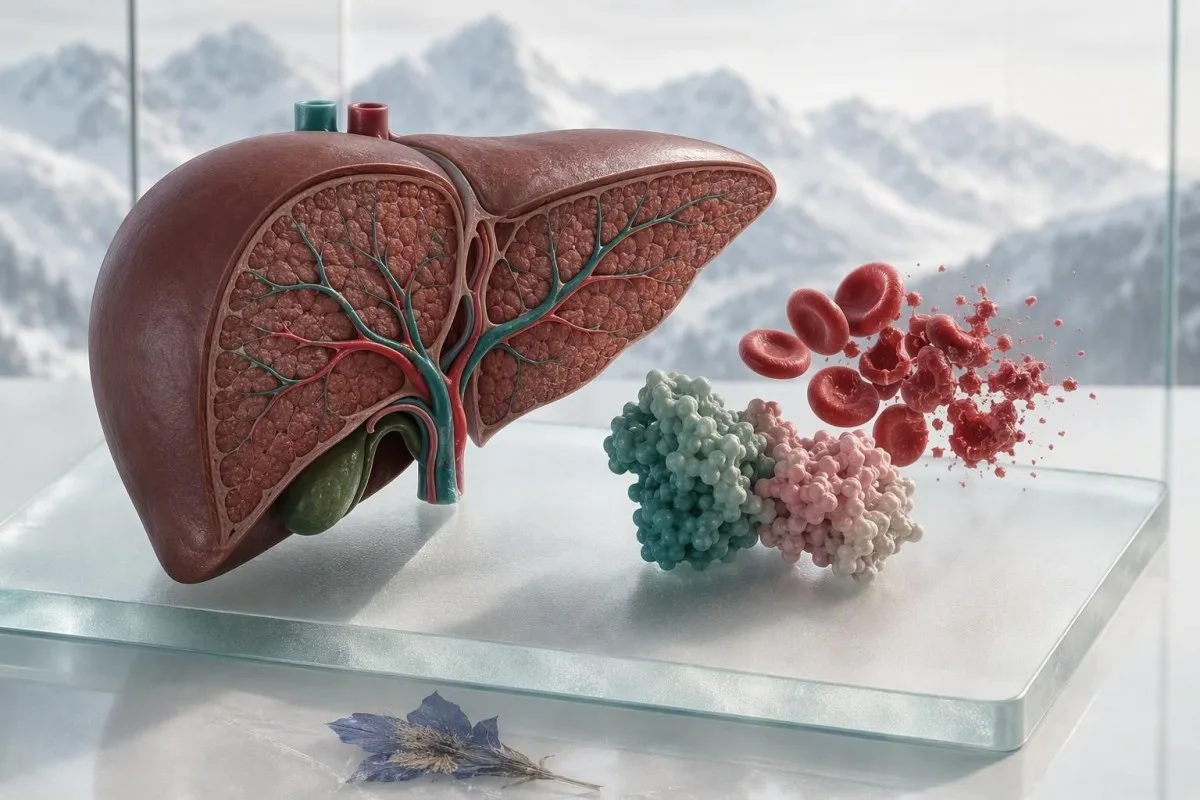
Keputusan rendah dapat mencerminkan pemecahan sel darah merah, tetapi juga dapat mencerminkan penurunan produksi hati, kekurangan bawaan, latihan baru-baru ini, atau cara spesimen ditangani. CBC, retikulosit, bilirubin, LDH, dan tes antiglobulin langsung yang menyertainya memutuskan penjelasan mana yang sesuai.


- Arti haptoglobin rendah tidak secara otomatis hemolisis; sintesis hati yang rendah dan anhaptoglobinemia bawaan dapat menghasilkan hasil yang sama.
- Corak hemolisis biasanya menggabungkan haptoglobin rendah dengan LDH yang meningkat, bilirubin tidak langsung di atas sekitar 1,2 mg/dL, dan retikulositosis.
- Respons retikulosit di bawah kira-kira 2% selama anemia bertentangan dengan penghancuran sel darah merah perifer yang cepat, kecuali produksi sumsum ditekan.
- Konteks hati penting karena hepatosit membuat haptoglobin; albumin rendah, INR yang berkepanjangan, dan bilirubin yang meningkat dapat menjelaskan nilai yang rendah tanpa hemolisis.
- Pengujian DAT mendukung hemolisis imun hanya ketika ditafsirkan dengan gambaran klinis; DAT negatif tidak mengecualikan setiap mekanisme imun.
- Masa senaman boleh menurunkan haptoglobin secara sementara selepas aktiviti ketahanan, terutamanya apabila darah diambil dalam tempoh 24 hingga 48 jam.
- Ketiadaan warisan paling biasa berlaku dalam sesetengah populasi Asia Timur dan boleh menyebabkan keputusan yang sangat rendah atau tidak dapat dikesan secara berterusan dalam kalangan orang yang sihat.
- Semakan segera sesuai untuk air kencing berwarna seperti cola gelap, jaundis, sesak nafas semasa rehat, sakit dada, kekeliruan, atau hemoglobin yang jatuh dengan cepat.
Apa arti sebenarnya dari hasil haptoglobin rendah
Haptoglobin rendah bermakna hanya sedikit haptoglobin bebas yang boleh diukur dalam serum, bukan bermakna hemolisis telah terbukti. Dalam amalan, pemecahan sel darah merah yang berlaku di dalam saluran darah sebenar hanyalah salah satu daripada beberapa punca haptoglobin rendah; sintesis hati yang berkurangan, ketiadaan warisan, dan penggunaan sementara selepas bersenam adalah alternatif yang boleh dipercayai.
Haptoglobin adalah protein yang dihasilkan oleh hati yang mengikat hemoglobin yang dilepaskan ke dalam plasma. Kebanyakan makmal dewasa menyatakan julat rujukan berhampiran 30 hingga 200 mg/dL atau 0.3 hingga 2.0 g/L, tetapi ujian dan julatnya cukup berbeza sehingga julat makmal yang dicetak adalah yang utama. Keputusan di bawah 20 hingga 30 mg/dL memerlukan konteks, bukannya panik.
Apabila saya menyemak nilai yang rendah, saya mulakan dengan bertanya sama ada hemoglobin telah jatuh dan sama ada badan memberi tindak balas. Berdasarkan pengalaman klinikal saya, seseorang dengan hemoglobin 14.1 g/dL, LDH normal dan kiraan retikulosit 1.1% mempunyai kebarangkalian hemolisis yang sangat berbeza berbanding seseorang yang hemoglobinnya jatuh dari 12.8 kepada 8.9 g/dL dalam tempoh 10 hari.
Peraturan kerja Dr. Thomas Klein adalah ringkas: satu protein pengutip yang berkurangan tidak boleh mendiagnosis proses yang sepatutnya meninggalkan beberapa jejak biokimia. Untuk gambaran keseluruhan praktikal ujian itu sendiri, lihat bahagian panduan haptoglobin.
Mengapa keputusan terpencil mengelirukan
Haptoglobin juga meningkat semasa keradangan kerana ia adalah reaktan fasa akut. Ini bermakna keputusan normal kadang-kadang boleh menyembunyikan hemolisis ringan semasa jangkitan, penyakit autoimun, atau selepas pembedahan; sebaliknya, keputusan rendah dengan penanda pusing ganti normal sering menunjukkan bahawa tiada pemusnahan aktif.
Bagaimana haptoglobin turun selama hemolisis asli
Haptoglobin jatuh paling mendadak dalam hemolisis intravaskular kerana hemoglobin bebas yang beredar dengan cepat membentuk kompleks yang disingkirkan daripada plasma. Hemolisis ekstravaskular juga boleh menurunkannya, tetapi selalunya kurang dramatik dan dengan corak yang lebih bercampur.
Biologinya berguna. Hemoglobin bebas mengikat haptoglobin, dan kompleks tersebut disingkirkan melalui laluan makrofag; pelepasan yang berterusan boleh menyebabkan haptoglobin mencapai kepekatan yang tidak dapat dikesan. LDH selalunya meningkat melebihi had atas normal tempatan, walaupun LDH tidak spesifik dan boleh meningkat akibat kecederaan hati, kecederaan otot, keganasan, atau spesimen yang rosak.
Bilirubin tidak langsung meningkat apabila heme diproses lebih cepat daripada yang boleh digabungkan oleh hati. Dalam kalangan orang dewasa yang stabil, jumlah bilirubin melebihi 1.2 mg/dL (kira-kira 20 µmol/L) dengan pecahan yang kebanyakannya tidak terkonjugasi menyokong hemolisis hanya selepas sindrom Gilbert, puasa, dan disfungsi hati dipertimbangkan. Kami langsung vs tak langsung menerangkan pecahan itu.
Barcellini and Fattizzo describe the classic cluster as reduced haptoglobin with increased LDH, unconjugated bilirubin and reticulocytes, but they also caution that each marker has non-hemolytic causes (Barcellini & Fattizzo, 2015). The cluster—not the lowest number—makes the diagnosis persuasive.
Baca LDH, bilirubin, dan retikulosit sebagai satu pola
Hapto rendah ditambah LDH tinggi, bilirubin tidak langsung tinggi dan respons retikulosit yang sesuai adalah corak makmal rutin yang paling kuat untuk hemolisis. Jika dua atau tiga isyarat tersebut tiada, doktor harus secara aktif menguji penjelasan bukan hemolitik.
Peratus retikulosit sahaja boleh mengelirukan kita dalam anemia. Peratus retikulosit yang diperbetulkan menyesuaikan untuk hematokrit; dengan hematokrit 24%, kiraan retikulosit mentah 3% membetulkan kepada kira-kira 1.6%, yang bukan respons sumsum yang kuat. Indeks pengeluaran retikulosit di bawah 2 umumnya menunjukkan pengeluaran yang tidak mencukupi berbanding dengan respons pampasan yang kuat.
LDH above 2 kali had rujukan atas lebih membimbangkan untuk hemolisis yang bermakna secara klinikal daripada kenaikan sempadan 1.5 hingga 2.0, terutamanya jika kalium, AST dan fosfat juga meningkat secara tidak dijangka akibat kerosakan spesimen. Rujuk penjelasan kami tentang sumber LDH tinggi sebelum menetapkan semua LDH kepada sel merah.
Kantesti ialah seorang Penganalisis ujian darah AI yang membaca haptoglobin berhubung dengan trajektori hemoglobin, retikulosit, bilirubin dan penanda hati berbanding dengan rawatan satu isyarat bahaya sebagai diagnosis. Perbezaan itu paling penting apabila keputusan hanya di bawah julat.
Penyakit hati dapat menurunkan haptoglobin tanpa menghancurkan sel darah merah
Penyakit hati merendahkan haptoglobin dengan mengurangkan sintesis protein hepatik, jadi nilai yang rendah boleh berlaku tanpa peningkatan pemusnahan sel merah. Penjelasan ini menjadi lebih mungkin apabila albumin rendah, INR dipanjangkan, atau bilirubin dan enzim hati menunjukkan corak hepatik yang koheren.
Haptoglobin dihasilkan terutamanya oleh hepatosit. Dalam penyakit hati kronik lanjutan, albumin rendah di bawah 3.5 g/dL, INR di atas julat makmal, trombositopenia, dan haptoglobin rendah boleh berlaku bersama walaupun LDH dan retikulosit tidak ketara. Ini adalah salah satu sebab tahap rendah bukan saringan hemolisis kendiri.
Seorang pesakit berusia 58 tahun yang saya lihat dengan sirosis mempunyai haptoglobin di bawah 8 mg/dL, hemoglobin 11.6 g/dL, LDH 184 U/L dan retikulosit 1.0%. Keputusan itu pada mulanya mencetuskan rujukan hemolisis segera, tetapi indeks yang stabil dan fungsi sintetik yang terjejas mengalihkan siasatan ke arah penyakit hati dan anemia nutrisi. komponen panel hati adalah lebih bermaklumat daripada mengulangi haptoglobin.
Garis panduan EASL mengenai sirosis dekompensasi menekankan bahawa albumin, bilirubin, INR, kreatinin dan natrium mencirikan keterukan dan prognosis hati (European Association for the Study of the Liver, 2018). Haptoglobin boleh melengkapkan gambaran itu, tetapi ia tidak menggantikan ukuran yang telah ditetapkan itu.
Haptoglobin rendah atau tidak ada yang diwariskan: penjelasan seumur hidup yang tenang
Anhaptoglobinemia warisan boleh menyebabkan haptoglobin yang sangat rendah atau tidak dapat dikesan secara berterusan pada orang tanpa anemia dan tanpa bukti biokimia hemolisis. Ia adalah isu pengeluaran genetik, bukan pemusnahan sel darah merah yang berterusan.
Kekurangan haptoglobin yang lengkap jarang berlaku di seluruh dunia tetapi dilaporkan lebih kerap di populasi Asia Timur, di mana alel penghapusan gen HP dikenal pasti. Nilai yang berulang kali tidak dapat dikesan selama bertahun-tahun, hemoglobin normal, bilirubin normal dan LDH normal harus menimbulkan kemungkinan ini—terutamanya jika saudara mara mempunyai keputusan yang sama rendah.
Isu praktikal selalunya bukan kesihatan harian. Orang dengan kekurangan sebenar boleh membentuk antibodi selepas pendedahan kepada produk darah yang mengandungi haptoglobin, jadi sejarah yang didokumentasikan mungkin penting sebelum pemindahan. Pakar hematologi atau perkhidmatan pemindahan boleh menasihatkan sama ada pengesahan tambahan adalah sesuai.
Jangan anggap penjelasan genetik selepas satu ujian. Ulang apabila sihat, ditambah CBC, retikulosit, pecahan bilirubin dan panel hati, adalah langkah pertama yang lebih selamat. gambaran keseluruhan panel darah penuh kami menunjukkan mengapa corak merentasi panel adalah penting.
Peradangan dapat menyembunyikan hemolisis daripada menyebabkan hasil yang rendah
Keradangan biasanya meningkatkan haptoglobin, jadi tahap normal atau tinggi tidak sepenuhnya menolak hemolisis semasa jangkitan atau aktiviti autoimun. Keputusan yang sangat rendah walaupun CRP tinggi boleh lebih menunjukkan penggunaan atau sintesis hati yang buruk daripada keputusan yang sama semasa sihat.
Haptoglobin bertindak sebagai protein fasa akut, selalunya meningkat bersama CRP. CRP di atas 10 mg/L menunjukkan keradangan aktif dalam banyak sistem makmal, walaupun ia tidak mengenal pasti punca. Dalam keadaan itu, nilai 90 mg/dL mungkin dalam julat namun lebih rendah daripada jangkaan untuk individu itu.
Nuansa ini amat relevan dalam anemia hemolitik autoimun, di mana keradangan dan hemolisis boleh wujud bersama. Jäger dan rakan-rakan menyatakan bahawa diagnosis bergantung pada konteks klinikal, penemuan smear dan imunohematologi berbanding mana-mana penanda hemolisis terpencil (Jäger et al., 2020).
Kantesti’s platform tafsiran biomarker AI boleh menandakan haptoglobin normal-rendah secara berbeza apabila CRP ialah 2 mg/L berbanding apabila ia ialah 96 mg/L. Itu adalah petunjuk triase, bukan pengganti pakar klinikal yang memeriksa pesakit.
Hemolisis spesimen dan konteks laboratorium dapat membingungkan gambaran
Spesimen yang rosak boleh menaikkan LDH, kalium dan AST secara palsu, mewujudkan corak seperti hemolisis walaupun pesakit tidak mempunyai penguraian sel darah merah dalam vivo. Ia biasanya tidak menjelaskan haptoglobin yang diukur rendah sebenar, tetapi ia boleh mendistorsi bukti sokongan.
Indeks hemolisis makmal mencerminkan pecahnya sel merah dalam tiub, selalunya daripada pengumpulan yang sukar, getaran pengangkutan, suhu melampau atau pemisahan yang tertunda. Kalium melebihi 5.5 mmol/L dengan bendera hemolisis penganalisis dan fungsi buah pinggang yang normal biasanya mendorong pengambilan semula sebelum rawatan. Logik yang sama berlaku untuk peningkatan LDH yang tidak dijangka.
Tanyakan sama ada laporan menyatakan “sampel hemolisis,” “gangguan,” atau “keputusan mungkin terjejas.” panduan pengambilan semula selepas hemolisis spesimen berguna kerana pembetulan yang paling selamat selalunya adalah ulangan yang tenang dan dikendalikan dengan betul—bukan siasatan kecemasan yang meluas.
Masa juga mengubah tafsiran. Haptoglobin mempunyai tindak balas fungsional yang cukup singkat sehingga pengukuran selepas peristiwa akut mungkin menangkap pemulihan atau kehabisan, manakala bilirubin dan retikulosit boleh ketinggalan dalam arah yang berbeza.
Latihan dan waktu: ketika nilai rendah bersifat sementara
Larian jarak jauh, perlumbaan denai dan senaman hentakan kaki berulang boleh menghasilkan hemolisis sementara dan menurunkan haptoglobin selama kira-kira 24 hingga 48 jam. Magnitudnya berbeza-beza mengikut jarak, kasut, haba, penghidratan dan status zat besi asas atlet.
Hemolisis hentakan kaki adalah nyata, tetapi penurunan haptoglobin selepas perlumbaan tidak semestinya mewakili penyakit. Saya telah melihat pelari maraton dengan haptoglobin rendah, LDH sedikit meningkat dan hemoglobin stabil selepas perlumbaan; ujian semula selepas 48 hingga 72 jam tanpa latihan berat sering menjelaskan garis dasar.
Senaman berat juga boleh meningkatkan CK dan AST, menjadikan panel kelihatan lebih buruk daripada yang sebenarnya. Jika CK meningkat ketara, sakit otot yang teruk, kelemahan, pengurangan pengeluaran air kencing atau air kencing yang sangat gelap memerlukan semakan segera kerana kecederaan otot adalah kebimbangan yang berasingan; lihat Panduan bahaya CK.
Dr. Thomas Klein menasihatkan atlet untuk merekodkan jarak perlumbaan, ketinggian, pendedahan haba dan penghidratan bersama keputusan. Garis masa kecil itu sering lebih bernilai diagnostik daripada ujian rawak lain enam bulan kemudian.
Kapan tes antiglobulin langsung membantu
Ujian antiglobulin terus, atau DAT, mengesan imunoglobulin atau komplemen yang terlekat pada sel merah dan membantu menilai hemolisis imun yang disyaki. Ia paling berguna apabila anemia dan corak hemolisis yang meyakinkan sudah ada.
DAT positif tidak semestinya bersamaan dengan anemia hemolitik autoimun. Keputusan positif boleh berlaku selepas pemindahan darah, dengan ubat-ubatan, semasa jangkitan, atau tanpa hemolisis yang signifikan secara klinikal; laporan makmal harus menyatakan sama ada ia mengesan IgG, C3d, atau kedua-duanya. Titik dan trend hemoglobin kekal penting.
Sebaliknya, DAT negatif tidak menghapuskan hemolisis. Hemolisis imun DAT-negatif wujud, dan penyebab bukan imun seperti hemolisis injap mekanikal, kecederaan oksidatif berkaitan G6PD, mikroangiopati, melecur dan jangkitan memerlukan ujian yang berbeza. Schistocytes pada titik memerlukan perhatian segera, seperti yang dijelaskan dalam artikel titik segera kami.
Seorang doktor boleh meminta DAT, calitan periferi, hemoglobin bebas plasma, hemosiderin urin, aktiviti G6PD atau kajian komplemen berdasarkan corak. Menguji segala-galanya sekaligus boleh menjana hingar, jadi panel awal harus membimbing cawangan seterusnya.
Retikulosit rendah menggeser pertanyaan ke arah produksi
Anemia dengan retikulosit rendah atau normal yang tidak sesuai menunjukkan pengurangan pengeluaran sel merah lebih daripada kemusnahan periferi. Dalam situasi itu, tahap haptoglobin yang rendah mungkin mencerminkan sintesis hati atau wujud bersama secara kebetulan dengan kekurangan zat besi, kekurangan vitamin B12, penyakit buah pinggang atau penekanan sumsum.
Kiraan retikulosit di bawah 0.5% biasanya rendah, tetapi tafsiran yang betul bergantung pada hemoglobin dan hematokrit. Seseorang dengan hemoglobin 8 g/dL sepatutnya menunjukkan respons; kiraan 1.2% mungkin kelihatan normal di atas kertas tetapi tidak mencukupi untuk tahap anemia yang teruk.
Mikrositosis, ferritin rendah dan ketepuan transferrin rendah menunjukkan pengeluaran yang terhad oleh zat besi. Makrositosis dengan retikulosit rendah menunjukkan vitamin B12, folat, alkohol, penyakit hati, hipotiroidisme, ubat-ubatan atau gangguan sumsum; Perbandingan MCV dan MCH kami boleh membantu menyusun perbezaan itu.
Tahap haptoglobin yang rendah tidak menafikan kemungkinan kekurangan zat besi. Masalah bercampur berlaku: seseorang dengan penyakit hati kronik dan kehilangan zat besi akibat haid mungkin mempunyai pengeluaran haptoglobin yang terjejas dan anemia dengan retikulosit rendah.
Gejala haptoglobin rendah sebenarnya adalah gejala dari penyebabnya
Tahap haptoglobin yang rendah itu sendiri tidak menyebabkan gejala khusus; gejala timbul daripada anemia, hemolisis, penyakit hati atau pencetus yang mendasari. Ramai orang dengan tahap rendah yang diwarisi berasa sihat sepenuhnya.
Hemolisis boleh menyebabkan keletihan, sesak nafas semasa bersenam, degupan jantung kencang, jaundis, ketidakselesaan belakang dan air kencing berwarna teh atau kola. Air kencing gelap yang baharu ditambah jaundis atau hemoglobin yang jatuh pantas adalah masalah penilaian segera, bukan sesuatu untuk dipantau dengan suplemen di rumah. Baca lanjut tentang tanda amaran air kencing gelap.
Gejala berkaitan hati adalah berbeza: bengkak perut, mudah lebam, najis pucat, gatal-gatal, kekeliruan atau bengkak buku lali yang progresif menunjukkan bahawa penyakit hati mungkin signifikan secara klinikal. Ketiadaan gejala meyakinkan tetapi tidak menyingkirkan disfungsi hati awal.
Penjagaan kecemasan adalah wajar untuk sakit dada, pitam, kekeliruan, sesak nafas semasa rehat, pengurangan pengeluaran air kencing, demam dengan kelemahan ketara, atau kehamilan dengan gejala anemia baharu. Angka haptoglobin yang rendah sahaja, terutamanya pada individu yang stabil, jarang menentukan keperluan mendesak.
Penyelidikan bertahap yang praktis setelah hasil yang rendah
Ujian yang paling cekap mengulang sampel yang dipersoalkan dan menggandingkan haptoglobin dengan CBC, retikulosit, LDH, pecahan bilirubin dan ujian hati. Ujian DAT dan apusan darah dilakukan seterusnya apabila kelompok awal menyokong hemolisis atau anemia tidak dapat dijelaskan.
Langkah 1 ialah pengesahan: sahkan unit, julat rujukan, komen kualiti sampel, senaman baru-baru ini, pemindahan darah, ubat baharu dan penyakit. Langkah 2 ialah panel fokus—CBC dengan indeks, kiraan retikulosit, LDH, jumlah dan bilirubin terus, AST, ALT, albumin dan kreatinin. Ulang dalam 1 hingga 2 minggu selalunya munasabah untuk individu yang stabil, tanpa gejala apabila tiada corak mendesak wujud.
Langkah 3 bergantung pada apa yang berubah. Hemoglobin yang jatuh dengan retikulositosis dan peningkatan bilirubin menyokong semakan apusan dan DAT; albumin rendah atau INR tidak normal menyokong penilaian hati; MCV dan ferritin rendah menyokong kajian zat besi. panduan kiraan retikulosit menjelaskan mengapa pecahan retikulosit yang tidak matang boleh menambah petunjuk pengeluaran yang berguna.
Kantesti ialah seorang Alat analisis ujian darah berkuasa AI digunakan di 127+ negara untuk mengatur urutan ini daripada PDF atau foto yang dimuat naik, tetapi ia tidak boleh memeriksa apusan, memeriksa jaundis, atau menggantikan diagnosis yang dipimpin oleh doktor. Dalam gejala akut, dapatkan rawatan perubatan langsung dahulu.
Obat-obatan, transfusi, dan situasi khusus yang mengubah interpretasi
Sejarah ubat-ubatan dan pemindahan darah boleh mengubah kemungkinan hemolisis dan makna keputusan DAT. Senarai ubat adalah amat relevan apabila tahap haptoglobin yang rendah muncul secara tiba-tiba selepas corak yang stabil sebelum ini.
Pemicu hemolisis yang berpotensi termasuk beberapa antimikrob, ubat pengoksidaan dalam kekurangan G6PD, terapi imun, dan jarang sekali antibodi bergantung ubat. Pemasaan adalah penting: penurunan hemoglobin yang bermula 5 hingga 10 hari selepas pendedahan baharu memerlukan semakan doktor, manakala haptoglobin rendah yang stabil dan berpanjangan tidak menunjukkan urgensi yang sama.
Selepas pemindahan darah, tindak balas hemolitik tertunda boleh timbul beberapa hari kemudian dengan penurunan hemoglobin, peningkatan bilirubin, antibodi baharu dan kadang-kadang DAT positif. Hubungi pasukan rawatan dengan segera jika demam, air kencing gelap, jaundis atau keletihan yang tidak disangka berlaku selepas pemindahan darah.
Kehamilan, penyakit buah pinggang dan jangkitan teruk menambah lapisan lagi. Contohnya, kecederaan buah pinggang boleh memburukkan lagi akibat pelepasan pigmen, manakala kehamilan mengubah isipadu plasma dan jangkaan rujukan; kami bendera merah makmal kehamilan merangkumi bila perlu hubungi tanpa berlengah.
Mengapa tren mengalahkan hasil haptoglobin sekali jalan
Perubahan daripada garis dasar haptoglobin anda sendiri selalunya lebih bermaklumat daripada sama ada satu nilai berada di luar julat rujukan populasi. Keputusan rendah yang stabil selama bertahun-tahun mempunyai makna yang berbeza daripada kejatuhan daripada 120 mg/dL kepada di bawah 10 mg/dL dalam beberapa hari.
Simpan tarikh kutipan, senaman dalam 72 jam sebelumnya, tempoh berpuasa, penyakit, pengambilan alkohol, perjalanan, pemindahan darah dan perubahan ubat di sebelah setiap keputusan. Butiran ini menjadikan “variasi makmal” yang ketara dapat ditafsirkan. Lebih kurang 20% hingga 30% ayunan boleh berlaku merentasi variasi biologik dan analitik untuk banyak protein, manakala keruntuhan berulang kepada tidak dapat dikesan memerlukan penjelasan.
Kantesti AI membandingkan biomarker longitudinal dan boleh memunculkan keputusan haptoglobin rendah di samping anjakan dalam hemoglobin, RDW, bilirubin dan enzim hati. Kami panduan analisis trend ujian darah menerangkan cara membezakan cerun sebenar daripada bunyi biasa dari lawatan ke lawatan.
Jangan cuba menaikkan haptoglobin dengan suplemen. Tiada suplemen sasaran berasaskan bukti untuk keputusan rendah yang terpencil; rawatan diarahkan kepada hemolisis, penyakit hati, kekurangan nutrien atau sebab lain yang dikenal pasti.
Inti klinis: uji pola, bukan ketakutan
Haptoglobin rendah memerlukan pengenalpastian corak segera, bukan diagnosis hemolisis automatik. Haptoglobin rendah dengan LDH, bilirubin, retikulosit normal dan hemoglobin stabil biasanya mencerminkan pengeluaran rendah, ketiadaan warisan atau konteks; corak hemolisis pelbagai penanda memerlukan susulan yang dipimpin oleh doktor.
Pada 22 Ogos 2026, tiada garis panduan utama mengesyorkan pemeriksaan orang dewasa yang sihat sebaliknya untuk hemolisis dengan haptoglobin sahaja. Soalan yang berguna ialah: “Adakah keputusan ini sesuai dengan penurunan hemoglobin, tindak balas sumsum pampasan dan bukti biokimia perolehan sel darah merah?” Jika tidak, luaskan perbezaan sebelum menerima label yang menakutkan.
Kantesti ialah seorang perkhidmatan tafsiran ujian makmal AI dengan metodologi yang disemak oleh doktor yang membantu pengguna menyediakan perbincangan yang fokus dengan doktor mereka. Kami untuk pengesahan perubatan menjelaskan batasan tafsiran automatik dan mengapa semakan klinikal kekal perlu untuk hemolisis yang disyaki.
Untuk konteks CBC yang berkaitan, penerbitan penyelidikan kami mengenai RDW dan indeks sel darah merah mungkin berguna. Pasukan perubatan Kantesti, termasuk kami Lembaga Penasihat Perubatan, menyemak kandungan pendidikan secara berkala; keputusan individu masih memerlukan penjagaan yang disesuaikan dengan gejala, sejarah dan pemeriksaan.
Soalan Lazim
Bolehkah haptoglobin rendah tanpa hemolisis?
Ya. Haptoglobin yang rendah dapat terjadi tanpa hemolisis ketika hati memproduksi lebih sedikit protein, ketika seseorang memiliki defisiensi haptoglobin bawaan, atau setelah stres sel darah merah terkait olahraga sementara. Hasil yang rendah dengan hemoglobin stabil, LDH normal, bilirubin tidak langsung normal, dan retikulosit sekitar 0,51% hingga 2,01% kurang mendukung hemolisis aktif. Pola laboratorium lengkap dan gejala menentukan apakah tindak lanjut mendesak.
Tahap haptoglobin manakah yang menunjukkan hemolisis?
Nilai haptoglobin di bawah sekitar 20 hingga 30 mg/dL dapat mendukung hemolisis, tetapi tidak ada nilai ambang tunggal yang membuktikannya karena rentang laboratorium berbeda. Hemolisis jauh lebih mungkin terjadi ketika haptoglobin rendah disertai dengan peningkatan LDH, bilirubin tidak langsung di atas sekitar 1,2 mg/dL, retikulositosis, dan penurunan konsentrasi hemoglobin. Penyakit hati dan defisiensi bawaan juga dapat menghasilkan nilai di bawah 10 mg/dL tanpa penghancuran sel darah merah aktif.
Bolehkah penyakit hati menyebabkan haptoglobin rendah?
Ya. Haptoglobin dihasilkan oleh hati, jadi gangguan sintesis protein hati dapat menurunkan haptoglobin serum tanpa hemolisis. Albumin rendah di bawah 3,5 g/dL, INR memanjang, trombositopenia, dan bilirubin atau enzim hati yang abnormal membuat penurunan produksi lebih masuk akal. Seorang klinisi biasanya menafsirkan haptoglobin bersamaan dengan panel hati daripada memperlakukannya sebagai tes hati terpisah.
Adakah LDH normal menyingkirkan hemolisis apabila haptoglobin rendah?
LDH yang normal membuat hemolisis intravaskular yang cepat menjadi kurang mungkin, tetapi tidak sepenuhnya menyingkirkan hemolisis ringan, intermiten, atau yang dominan ekstrvaskular. Jika LDH normal dan hemoglobin, bilirubin tidak langsung, serta retikulosit juga stabil, haptoglobin yang rendah lebih sering mencerminkan sintesis hati, ketiadaan bawaan, atau konteks waktu. CBC berulang dan panel hemolisis dalam 1 hingga 2 minggu dapat mengklarifikasi situasi yang stabil.
Bolehkah senaman intens menurunkan haptoglobin?
Ya. Latihan ketahanan, terutama acara lari dengan hentakan kaki berulang, dapat menurunkan haptoglobin sementara selama sekitar 24 hingga 48 jam. LDH, CK dan AST juga dapat meningkat setelah aktivitas berat, yang dapat mempersulit interpretasi. Mengulangi tes setelah 48 hingga 72 jam tanpa latihan berat seringkali masuk akal jika hemoglobin stabil dan tidak ada gejala peringatan.
Apakah maksud ujian direct antiglobulin negatif?
Ujian direct antiglobulin (DAT) yang negatif bermaksud ujian tersebut tidak mengesan immunoglobulin atau komplemen yang signifikan melekat pada sel darah merah pada masa itu. Ia menjadikan anemia hemolitik autoimun biasa kurang berkemungkinan, tetapi ia tidak menyingkirkan hemolisis imun DAT-negatif atau punca bukan imun seperti kerosakan mekanikal atau kecederaan berkaitan enzim. Smear periferi, sejarah ubat-ubatan, respons retikulosit, dan corak bilirubin membantu menentukan ujian seterusnya.
Dapatkan Analisis Ujian Darah Berkuasa AI Hari Ini
Sertai lebih 2 juta pengguna di seluruh dunia yang mempercayai Kantesti untuk analisis ujian makmal segera dan tepat. Muat naik keputusan ujian darah anda dan terima tafsiran menyeluruh biomarker 15,000+ dalam beberapa saat.
📚 Penerbitan Penyelidikan Dirujuk
Klein, T., Mitchell, S., & Weber, H. (2026). Ujian Darah RDW: Panduan Lengkap RDW-CV, MCV & MCHC. Kantesti LTD. (2026). Zenodo. https://doi.org/10.5281/zenodo.18202598. ResearchGate: https://www.researchgate.net/ | Academia.edu: https://www.academia.edu/. Kantesti Penyelidikan Perubatan AI.
Klein, T., Mitchell, S., & Weber, H. (2026). Nisbah BUN/Kreatinin Diterangkan: Panduan Ujian Fungsi Buah Pinggang. Kantesti LTD. (2026). Zenodo. https://doi.org/10.5281/zenodo.18207872. ResearchGate: https://www.researchgate.net/ | Academia.edu: https://www.academia.edu/. Kantesti Penyelidikan Perubatan AI.
📖 Rujukan Perubatan Luaran
⚕️ Penafian Perubatan
Artikel ini adalah untuk tujuan pendidikan sahaja dan tidak merupakan nasihat perubatan. Sentiasa rujuk pembekal penjagaan kesihatan yang berkelayakan untuk keputusan diagnosis dan rawatan.
Isyarat Kepercayaan E-E-A-T
Pengalaman
Semakan klinikal yang diketuai oleh doktor terhadap aliran kerja tafsiran makmal.
Kepakaran
Fokus perubatan makmal tentang bagaimana biomarker berkelakuan dalam konteks klinikal.
Kewibawaan
Ditulis oleh Dr. Thomas Klein dengan semakan oleh Dr. Sarah Mitchell dan Prof. Dr. Hans Weber.
Kebolehpercayaan
Tafsiran berasaskan bukti dengan laluan susulan yang jelas untuk mengurangkan kebimbangan.