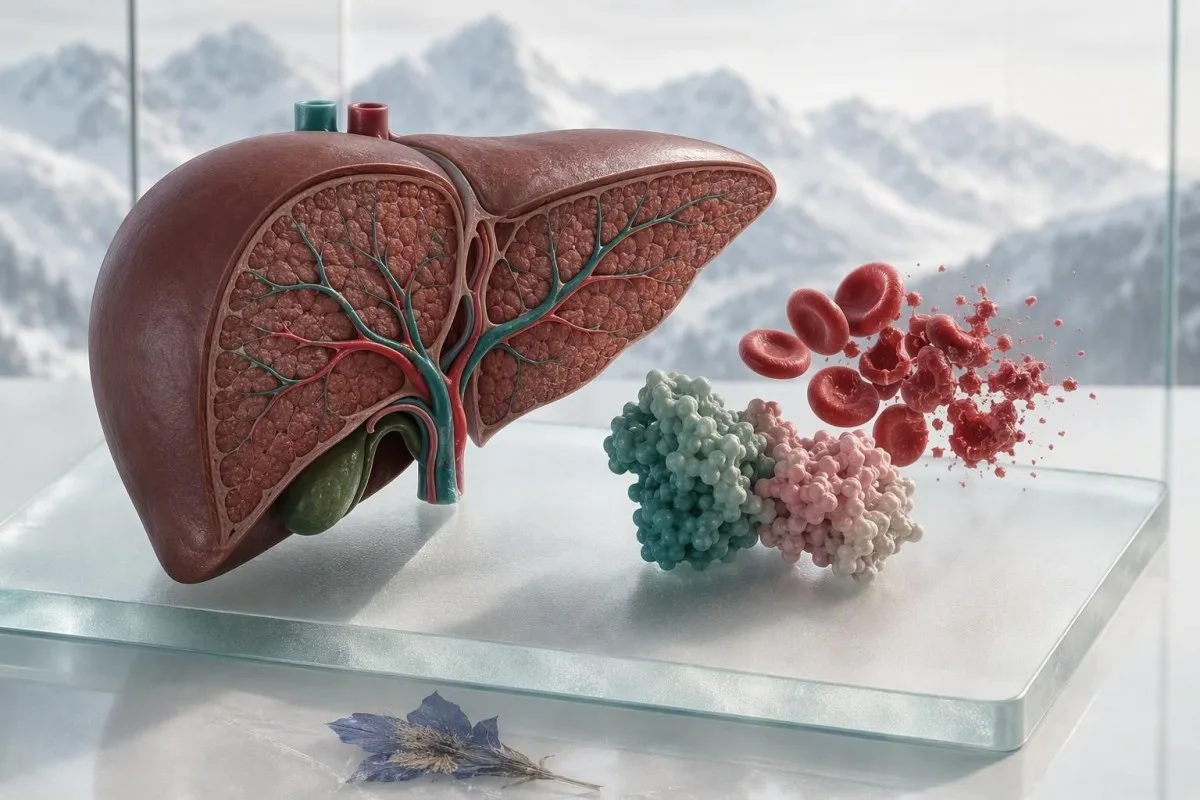
Një rezultat i ulët mund të pasqyrojë shpërbërjen e qelizave të kuqe të gjakut, por gjithashtu mund të pasqyrojë prodhim të zvogëluar të mëlçisë, mungesë të trashëguar, ushtrime të kohëve të fundit, ose mënyrën se si është trajtuar një mostër. CBC-ja shoqëruese, retikulocitet, bilirubina, LDH dhe testi i drejtpërdrejtë antiglobulin përcaktojnë se cila shpjegim përshtatet.


- Kuptimi i haptoglobinës së ulët nuk është automatikisht hemolizë; sinteza e ulët e mëlçisë dhe anahaptoglobinemia e trashëguar mund të prodhojnë të njëjtin rezultat.
- Modeli i hemolizës zakonisht kombinon haptoglobinën e ulët me LDH të ngritur, bilirubinën indirekte mbi rreth 1.2 mg/dL, dhe retikulocitozën.
- Përgjigja e retikulociteve nën rreth 2% gjatë anemisë argumenton kundër shkatërrimit të shpejtë periferik të qelizave të kuqe, nëse prodhimi i palcës nuk është i shtypur.
- Konteksti i mëlçisë ka rëndësi sepse hepatocitet prodhojnë haptoglobinë; albumina e ulët, INR-ja e zgjatur dhe bilirubina në rritje mund të shpjegojnë një vlerë të ulët pa hemolizë.
- Testimi DAT mbështet hemolizën imune vetëm kur interpretohet me pamjen klinike; një DAT negativ nuk përjashton çdo mekanizëm imunitar.
- Koha e ushtrimeve mundet përkohësisht haptoglobinën pas aktivitetit të qëndrueshmërisë, veçanërisht kur gjaku merret brenda 24 deri në 48 orësh.
- Mungesë e trashëguar është më e zakonshme në disa popullata të Azisë Lindore dhe mund të shkaktojë një rezultat vazhdimisht shumë të ulët ose të pashquar tek njerëzit ndryshe të shëndetshëm.
- Rishikim urgjent është e përshtatshme për urinë të errët me ngjyrë kolë, verdhëz, vështirësi në frymëmarrje në qetësi, dhimbje në gjoks, konfuzion, ose rënie të shpejtë të hemoglobinës.
Çfarë do të thotë në të vërtetë një rezultat i ulët i haptoglobinës
Haptoglobina e ulët do të thotë se pak haptoglobinë e lirë ishte e matshme në serum, jo se hemoliza është provuar. Në praktikë, shkatërrimi real intravascular i qelizave të kuqe të gjakut është vetëm një nga disa shkaqe të haptoglobinës së ulët; sinteza e zvogëluar e mëlçisë, mungesa e trashëguar dhe konsumi i përkohshëm pas stërvitjes janë alternativa të besueshme.
Haptoglobina është një proteinë e prodhuar nga mëlçia që lidh hemoglobinën e lirë në plazmë. Shumica e laboratorëve për të rritur ofrojnë një interval referimi afër 30 deri në 200 mg/dL ose 0.3 deri në 2.0 g/L, por analiza dhe intervali ndryshojnë aq shumë sa që intervali i shtypur i laboratorit fiton. Një rezultat nën 20 deri në 30 mg/dL meriton kontekst, jo panik.
Kur shqyrtoj një vlerë të ulët, së pari pyes nëse hemoglobina ka rënë dhe nëse trupi po përgjigjet. Nga përvoja ime klinike, një person me hemoglobinë 14.1 g/dL, LDH normale dhe numër retikulocitësh 1.1% ka një probabilitet shumë më të ndryshëm të hemolizës sesa dikush, hemoglobina e të cilit ra nga 12.8 në 8.9 g/dL gjatë 10 ditëve.
Rregulla punuese e Dr. Thomas Klein është e thjeshtë: një proteinë e vetme e varfëruar pastruese nuk mund të diagnostikojë një proces që duhet të lërë disa shenja biokimike. Për një pasqyrë praktike të vetë testit, shihni tonë udhëzon haptoglobinën.
Pse rezultatet e izoluara mashtrojnë
Haptoglobina gjithashtu rritet gjatë inflamacionit sepse është një reaktant akut. Kjo do të thotë se një rezultat normal mund të maskojë ndonjëherë hemolizë të butë gjatë infeksionit, sëmundjes autoimune, ose pas operacionit; përkundrazi, një rezultat i ulët me shenja normale kthimi shpesh tregon larg shkatërrimit aktiv.
Si bie haptoglobina gjatë hemolizës së vërtetë
Haptoglobina bie më ashpër në hemolizën intravascular sepse hemoglobina e lirë qarkulluese formon shpejt komplekse që hiqen nga plazma. Hemoliza ekstravaskulare gjithashtu mund ta ulë atë, por shpesh më pak dramatike dhe me një model më të përzier.
Biologjia është e dobishme. Hemoglobina e lirë lidhet me haptoglobinën, dhe kompleksi hiqet përmes shtigjeve makrofagike; lëshimi i vazhdueshëm mund ta çojë haptoglobinën në një përqendrim të pashquar. LDH shpesh rritet mbi limitin e sipërm lokal të normalit, megjithëse LDH nuk është specifik dhe mund të rritet nga dëmtimi i mëlçisë, dëmtimi i muskujve, malinjiteti, ose një mostër e dëmtuar.
Bilirubina indirekte rritet kur hemo përpunohet më shpejt sesa mëlçia mund ta konjugojë atë. Tek një i rritur stabil, bilirubina totale mbi 1.2 mg/dL (rreth 20 µmol/L) me një fraksion kryesisht të pakonjuguar mbështet hemolizën vetëm pasi të merren parasysh sindroma e Gilbert-it, agjërimi dhe mosfunksionimi i mëlçisë. Tonë për bilirubinën direkte kundrejt indirekte shpjegon atë ndarje.
Barcellini dhe Fattizzo e përshkruajnë grupin klasik si haptoglobinë të ulët me LDH, bilirubinë të pakonjuguar dhe retikulocite të rritura, por paralajmërojnë gjithashtu se secili shënues ka shkaqe johemolitike (Barcellini & Fattizzo, 2015). Është grupi i gjetjeve—jo vlera më e ulët—që e bën diagnozën bindëse.
Lexoni LDH, bilirubinën dhe retikulocitet si një model
Haptoglobina e ulët së bashku me LDH të lartë, bilirubinë indirekte të lartë dhe përgjigje të përshtatshme retikulocitare përbën modelin më të fortë rutinë laboratorik për hemolizën. Nëse dy ose tre prej këtyre treguesve mungojnë, klinicistët duhet të hetojnë aktivisht shpjegimet johemolitike.
Vetëm përqindja e retikulociteve mund të na mashtrojë në anemi. Përqindja e korrigjuar e retikulociteve përshtatet për hematokritin; me hematokrit 24%, një numër bruto retikulocitesh prej 3% korrigjohet afërsisht në 1.6%, që nuk përbën një përgjigje të fuqishme të palcës së kockave. Një indeks i prodhimit të retikulociteve nën 2 zakonisht sugjeron prodhim të pamjaftueshëm, në vend të një përgjigjeje të fortë kompensuese.
LDH mbi 2 herë kufirin e sipërm të referencës është më shqetësuese për hemolizë klinikisht të rëndësishme sesa një rritje kufitare nga 1% në 2%, veçanërisht nëse kaliumi, AST dhe fosfati janë gjithashtu papritur të larta për shkak të dëmtimit të mostrës. Shikoni shpjegimin tonë për burimet e LDH-së së lartë përpara se t’ia atribuoni të gjithë LDH-në eritrociteve.
Kantesti është një Analizues i testeve të gjakut AI që e interpreton haptoglobinën në lidhje me ecurinë e hemoglobinës, retikulocitet, bilirubinën dhe treguesit e funksionit të mëlçisë, në vend që ta trajtojë një sinjal të vetëm alarmues si diagnozë. Ky dallim ka më shumë rëndësi kur një rezultat është vetëm pak nën intervalin normal.
Sëmundja e mëlçisë mund të ulë haptoglobinën pa shkatërruar qelizat e kuqe
Sëmundja e mëlçisë ul haptoglobinën duke reduktuar sintezën hepatike të proteinave, ndaj një vlerë e ulët mund të shfaqet pa rritje të shkatërrimit të qelizave të kuqe. Ky shpjegim bëhet më i mundshëm kur albumina është e ulët, INR është i zgjatur ose bilirubina dhe enzimat e mëlçisë paraqesin një model koherent hepatik.
Haptoglobina sintetizohet kryesisht nga hepatocitet. Në sëmundjen kronike të avancuar të mëlçisë, albumina e ulët nën 3.5 g/dL, INR mbi intervalin laboratorik, trombocitopenia dhe haptoglobina e ulët mund të shfaqen së bashku edhe kur LDH dhe retikulocitet janë të zakonshme. Kjo është një nga arsyet pse një nivel i ulët nuk është test i pavarur për hemolizën.
Një pacient 58-vjeçar që pashë me cirrozë kishte haptoglobinë nën 8 mg/dL, hemoglobinë 11,6 g/dL, LDH 184 U/L dhe retikulocite 1.0%. Rezultati fillimisht shkaktoi një referim urgjent për hemolizë, por treguesit e qëndrueshëm dhe funksioni sintetik i dëmtuar e drejtuan vlerësimin drejt sëmundjes së mëlçisë dhe anemisë ushqyese. komponentët e panelit të mëlçisë ishin më informuese sesa përsëritja e matjes së haptoglobinës.
Udhëzuesi i EASL për cirrozën e dekompensuar thekson se albumina, bilirubina, INR, kreatinina dhe natriumi karakterizojnë rëndesën dhe prognozën hepatike (European Association for the Study of the Liver, 2018). Haptoglobina mund ta plotësojë këtë pamje, por nuk i zëvendëson këto masa të vendosura.
Haptoglobina e ulët ose mungesa e trashëguar: një shpjegim i qetë gjatë gjithë jetës
Anhaptoglobinemia e trashëguar mund të shkaktojë haptoglobinë vazhdimisht shumë të ulët ose të pazbulueshme te persona pa anemi dhe pa prova biokimike të hemolizës. Ky është një problem gjenetik i prodhimit, jo shkatërrim i vazhdueshëm i qelizave të kuqe.
Mungesa e plotë e haptoglobinës është e pazakontë në nivel global, por raportohet më shpesh në popullatat e Azisë Lindore, ku njihet një alel i delecionit të gjenit HP. Një vlerë vazhdimisht e pazbulueshme gjatë viteve, hemoglobina normale, bilirubina normale dhe LDH normal duhet ta ngrenë këtë mundësi—veçanërisht nëse të afërmit kanë rezultate të ngjashme të ulëta.
Çështja praktike zakonisht nuk lidhet me shëndetin e përditshëm. Personat me mungesë të vërtetë mund të formojnë antitrupa pas ekspozimit ndaj produkteve të gjakut që përmbajnë haptoglobinë, ndaj një histori e dokumentuar mund të jetë e rëndësishme para transfuzionit. Një hematolog ose shërbimi i transfuzionit mund të këshillojë nëse nevojitet konfirmim shtesë.
Mos supozoni një shpjegim gjenetik pas vetëm një testi. Përsëritja e testit kur jeni mirë, së bashku me një CBC, retikulocitet, fraksionet e bilirubinës dhe panelin hepatik, është hapi i parë më i sigurt. Përmbledhja jonë e panelit të plotë të gjakut tregon pse kanë rëndësi modelet në të gjitha panelet.
Inflamacioni mund të fshehë hemolizën në vend që të shkaktojë një rezultat të ulët
Inflamacioni zakonisht e rrit haptoglobinën, ndaj një nivel normal ose i lartë nuk e përjashton plotësisht hemolizën gjatë infeksionit ose aktivitetit autoimun. Një rezultat vërtet i ulët pavarësisht një CRP-je të lartë mund të sugjerojë më shumë konsumim ose sintezë të dobët hepatike sesa i njëjti rezultat gjatë gjendjes së mirë shëndetësore.
Haptoglobina sillet si proteinë e fazës akute, duke u rritur shpesh së bashku me CRP. CRP mbi 10 mg/L tregon inflamacion aktiv në shumë sisteme laboratorike, megjithëse nuk e identifikon shkakun. Në atë rrethanë, një vlerë prej 90 mg/dL mund të jetë brenda intervalit, por më e ulët se sa pritej për atë individ.
Ky nuancim është veçanërisht i rëndësishëm në aneminë hemolitike autoimune, ku inflamacioni dhe hemoliza mund të bashkëekzistojnë. Jäger dhe kolegët vërejnë se diagnoza varet nga konteksti klinik, gjetjet në strisho dhe imunohematologjia, jo nga ndonjë shënues i izoluar i hemolizës (Jäger et al., 2020).
Kantesti’s platformë për interpretimin e biomarkerëve nga AI mund ta sinjalizojë një haptoglobinë të ulët-normale ndryshe kur CRP është 2 mg/L, krahasuar me rastin kur është 96 mg/L. Ky është një tregues për triazh, jo zëvendësim për ekzaminimin e pacientit nga mjeku.
Hemoliza e mostrës dhe konteksti laboratorik mund ta ngatërrojnë pamjen
Një mostër e dëmtuar mund të rrisë në mënyrë të rreme LDH-në, kaliumin dhe AST-në, duke krijuar një model që duket si hemolizë edhe pse pacienti nuk ka shpërbërje in vivo të qelizave të kuqe. Zakonisht nuk e shpjegon një vlerë vërtet të ulët të matur të haptoglobinës, por mund të shtrembërojë provat mbështetëse.
Një indeks laboratorik i hemolizës pasqyron dëmtimin e qelizave të kuqe të gjakut në tub, shpesh nga vështirësia në mbledhje, dridhjet gjatë transportit, ekstremet e temperaturës ose vonesa në ndarje. Potasiumi i ngritur 5.5 mmol/L së bashku me një sinjalizim të analizatorit për hemolizë dhe funksion normal të veshkave zakonisht kërkojnë ripërpunim para trajtimit. E njëjta logjikë vlen edhe për një rritje të papritur të LDH.
Pyetni nëse raporti thotë “mostër e hemolizuar”, “ndërhyrje” apo “rezultati mund të jetë i prekur”. udhëzuesi i ripërpunimit pas hemolizës së specimeneve është i dobishëm sepse korrigjimi më i sigurt është shpesh një përsëritje e qetë, e trajtuar si duhet—jo një analizë e gjerë urgjente.
Koha gjithashtu ndryshon interpretimin. Haptoglobina ka një përgjigje funksionale mjaft të shkurtër saqë një matje pas një ngjarje akute mund të kapë rikuperimin ose varfërimin, ndërsa bilirubina dhe retikulocitet mund të vonohen në drejtime të ndryshme.
Stërvitja dhe koha: kur një vlerë e ulët është kalimtare
Vrapi në distanca të gjata, garat në shtigje dhe ushtrimet e goditjeve të përsëritura të këmbëve mund të prodhojnë hemolizë të përkohshme dhe të ulin haptoglobinën për rreth 24 deri në 48 orë. Madhësia ndryshon gjerësisht me distancën, këpucët, nxehtësinë, hidratimin dhe statusin bazë të hekurit të atletit.
Hemoliza nga goditja e këmbës është e vërtetë, por një haptoglobinë e ulët pas garës nuk përfaqëson automatikisht sëmundje. Kam parë atletë maratonash me haptoglobinë të ulët, LDH pak të ngritur dhe hemoglobinë të qëndrueshme pas një gare; ripërpunimi pas 48 deri në 72 orësh pa stërvitje të vështirë shpesh sqaron bazën.
Stërvitja e rëndë mund të rrisë gjithashtu CK dhe AST, duke bërë që paneli të duket më i rrezikshëm nga sa është. Nëse CK është dukshëm e ngritur, dhimbja e rëndë e muskujve, dobësia, ulja e daljes së urinës ose urina shumë e errët kërkojnë një rishikim urgjent sepse dëmtimi i muskujve është një shqetësim i veçantë; shihni tonën Udhëzuesi i rrezikut për CK.
Dr. Thomas Klein këshillon atletët të regjistrojnë distancën e garës, lartësinë, ekspozimin ndaj nxehtësisë dhe hidratimin me rezultatin. Ajo linjë kohore e vogël shpesh është më e vlefshme diagnostike sesa një test tjetër rastësor gjashtë muaj më vonë.
Kur testi i drejtpërdrejtë antiglobulin ndihmon
Një test antiglobuline i drejtpërdrejtë, ose DAT, zbulon imunoglobulinën ose komplementin e lidhur me qelizat e kuqe të gjakut dhe ndihmon në vlerësimin e hemolizës së dyshuar imune. Është më i dobishëm kur anemia dhe një model bindës i hemolizës janë tashmë të pranishëm.
Një DAT pozitiv nuk barazohet automatikisht me aneminë hemolitike autoimune. Rezultatet pozitive mund të ndodhin pas transfuzionit, me medikamente, gjatë infeksionit, ose pa hemolizë klinikisht të rëndësishme; raporti laboratorik duhet të specifikojë nëse ka zbuluar IgG, C3d, ose të dyja. Shtupi dhe trendi i hemoglobinës mbeten qendrore.
Në të kundërt, një DAT negativ nuk e fshin hemolizën. Ekziston hemoliza imune DAT-negative, dhe shkaqet jo-imune si hemoliza e valvulave mekanike, dëmtimi oksidativ i lidhur me G6PD, mikroangiopatia, djegiet dhe infeksionet kërkojnë teste të ndryshme. Schistocitet në një shtupë kërkojnë vëmendje të menjëhershme, siç shpjegohet në artikullin tonë mbi shtupat urgjente.
Një mjek mund të kërkojë DAT, shtupë periferike, hemoglobinë të lirë në plazmë, hemosiderin në urinë, aktivitet G6PD ose studime të komplementit bazuar në modelin. Testimi i gjithçkaje menjëherë mund të gjenerojë zhurmë, kështu që paneli fillestar duhet të udhëzojë degën e ardhshme.
Retikulocitet e ulëta e zhvendosin pyetjen drejt prodhimit
Anemia me retikulocite të ulëta ose në mënyrë jo adekuate normale sugjeron prodhim të zvogëluar të qelizave të kuqe të gjakut më shumë sesa shkatërrim periferik. Në atë situatë, haptoglobina e ulët mund të pasqyrojë sintezën e mëlçisë ose të bashkë-ekzistojë rastësisht me mungesë hekuri, mungesë B12, sëmundje veshkash ose supresion të palcës kockore.
Një numër retikulocitesh nën 0.5% zakonisht është i ulët, por interpretimi i saktë varet nga hemoglobina dhe hematokriti. Një person me hemoglobinë 8 g/dL duhet të ketë një përgjigje; një numër prej 1.2% mund të duket normal në letër, por të jetë i pamjaftueshëm për ashpërsinë e anemisë.
Mikrocitoza, ferritina e ulët dhe ngopja e ulët e transferrinës tregojnë drejt prodhimit të kufizuar nga hekuri. Makrocitoza me retikulocite të ulëta ngre B12, folat, alkool, sëmundje mëlçie, hipotiroidizëm, ilaçe ose çrregullime të palcës kockore; yni Krahasimi MCV dhe MCH mund të ndihmojë në organizimin e asaj diferenciale.
Haptoglobina e ulët nuk e bën të pamundur mungesën e hekuri. Ndodhin probleme të përziera: një person me sëmundje kronike të mëlçisë dhe humbje hekuri nga menstruacionet mund të ketë si prodhim të dëmtuar të haptoglobinës ashtu edhe anemi me retikulocite të ulëta.
Simptomat e ulëta të haptoglobinës janë në të vërtetë simptoma të shkakut
Vetë haptoglobina e ulët nuk shkakton simptoma specifike; simptomat shfaqen nga anemia, hemoliza, sëmundja e mëlçisë ose shkaku themelor. Shumë njerëz me nivele të ulëta të trashëguara ndihen plotësisht mirë.
Hemoliza mund të prodhojë lodhje, gulçim nga përpjekja, palpitacione, zverdhje, dhimbje shpine dhe urinë me ngjyrë çaji ose kolash. Urina e errët e re plus zverdhja ose një rënie e shpejtë e hemoglobinës është një problem vlerësimi brenda ditës, jo diçka për t'u monitoruar me suplemente shtëpiake. Lexoni më shumë rreth shenjat paralajmëruese të urinës së errët.
Simptomat e lidhura me mëlçinë janë të ndryshme: enjtja e barkut, mavijosje e lehtë, jashtëqitje e zbehtë, kruarje, konfuzion ose enjtje progresive e kaviljeve sugjerojnë se sëmundja e mëlçisë mund të jetë klinikisht e rëndësishme. Mungesa e simptomave është qetësuese, por nuk përjashton disfunksionin e hershëm të mëlçisë.
Kujdesi urgjent është i arsyeshëm për dhimbje gjoksi, të fikët, konfuzion, gulçim në qetësi, ulje të prodhimit të urinës, ethe me dobësi të theksuar, ose shtatzëni me simptoma të reja të anemisë. Një numër i ulët haptoglobine, veçanërisht në një person të qëndrueshëm, rrallë përcakton urgjencën.
Një punë praktike hap pas hapi pas një rezultati të ulët
Hetimi më efikas përsërit kampionet e dyshimta dhe i çiftëzon haptoglobinën me CBC, retikulocite, LDH, fraksione biliare dhe teste të mëlçisë. Testimi DAT dhe filmi i gjakut vijnë më pas kur grupi fillestar mbështet hemolizën ose anemia është e pashpjegueshme.
Hapi 1 është verifikimi: konfirmoni njësitë, diapazonin referues, komentet rreth cilësisë së kampionit, ushtrimin e fundit, transfuzionet, ilaçet e reja dhe sëmundjet. Hapi 2 është një panel i fokusuar—CBC me indekse, numër retikulocitesh, LDH, bilirubinë totale dhe direkte, AST, ALT, albuminë dhe kreatininë. Një përsëritje në 1 deri në 2 javë është shpesh e arsyeshme për një person të qëndrueshëm, asimptomatik, kur nuk ka model urgjent.
Hapi 3 varet nga ajo që ndryshoi. Rënia e hemoglobinës me retikulocitozë dhe rritja e bilirubinës mbështet rishikimin e shtupës dhe DAT; albumina e ulët ose INR jonormale mbështet vlerësimin e mëlçisë; MCV dhe ferritina e ulët mbështesin studimet e hekurit. udhëzuesi i numërimit të retikulociteve shpjegon pse fraksioni i retikulociteve të papjekura mund të shtojë një udhëzues të dobishëm për prodhimin.
Kantesti është një Mjet për analizën e testeve të gjakut me AI përdoret në 30 vende për të organizuar këtë sekuencë nga një PDF ose foto e ngarkuar, por nuk mund të inspektojë një shtupë, të ekzaminojë zverdhjen, ose të zëvendësojë diagnozën e udhëhequr nga klinicisti. Në simptoma akute, kërkoni më parë kujdes mjekësor të drejtpërdrejtë.
Barnat, transfuzioni dhe situatat e veçanta që ndryshojnë interpretimin
Historia e ilaçeve dhe transfuzionit mund të ndryshojë si probabilitetin e hemolizës ashtu edhe kuptimin e një rezultati DAT. Lista e medikamenteve është veçanërisht e rëndësishme kur haptoglobina e ulët shfaqet papritur pas një modeli të mëparshëm të qëndrueshëm.
Shkaqet e mundshme të hemolizës përfshijnë disa antimikrobikë, ilaçe oksiduese në mungesën e G6PD, terapi imune dhe rrallë antitrupa të varur nga droga. Koha ka rëndësi: një rënie e hemoglobinës që fillon 5 deri në 10 ditë pas një ekspozimi të ri meriton një rishikim nga mjeku, ndërsa një haptoglobinë e ulët e qëndrueshme afatgjatë nuk nënkupton të njëjtën urgjencë.
Pas transfuzionit, reaksionet hemolitike të vonuara mund të shfaqen ditë më vonë me rënie të hemoglobinës, rritje të bilirubinës, një antitrup të ri dhe ndonjëherë një DAT pozitiv. Kontaktoni ekipin trajtuar urgjentisht nëse febrë, urinë e errët, verdhëza ose lodhje e papritur zhvillohet pas një transfuzioni.
Shtatzënia, sëmundja e veshkave dhe infeksioni i rëndë shtojnë shtresa të tjera. Për shembull, dëmtimi i veshkave mund të përkeqësojë pasojat e lirimit të pigmentit, ndërsa shtatzënia ndryshon vëllimin e plazmës dhe intervalet e referencës; tonat shenjat paralajmëruese laboratorike në shtatzëni mbulon kur të telefononi pa hezitim.
Pse tendencat mundin një rezultat të vetëm të haptoglobinës
Një ndryshim nga baza juaj e mëparshme e haptoglobinës është shpesh më informativ sesa nëse një vlerë bie pak jashtë një intervali referues të popullatës. Një rezultat i ulët i qëndrueshëm për vite ka një kuptim të ndryshëm nga një rënie nga 120 mg/dL nën 10 mg/dL gjatë ditëve.
Mbani datën e mbledhjes, ushtrimin në 72 orët e mëparshme, kohëzgjatjen e agjërimit, sëmundjen, konsumin e alkoolit, udhëtimet, transfuzionet dhe ndryshimet e medikamenteve pranë çdo rezultati. Këto detaje bëjnë që “variacioni laboratorik” i dukshëm të jetë i interpretueshëm. Një përafërsisht 20% në 30% lëkundje mund të ndodhë nëpërmjet variacionit biologjik dhe analitik për shumë proteina, ndërsa një kolaps i përsëritur në nivele të pashquara kërkon shpjegim.
Kantesti AI krahason biomarkerët gjatësorë dhe mund të nxjerrë një rezultat të ulët haptoglobinë pranë ndryshimeve në hemoglobinë, RDW, bilirubinë dhe enzime të mëlçisë. Tonat udhëzuesi për analizën e trendit të analizave të gjakut përshkruan si të dallosh një prirje reale nga zhurma e zakonshme vizitë-pas-vizite.
Mos u përpiqni të ngrini haptoglobinën me suplemente. Nuk ka suplement të targetuar të bazuar në dëshmi për një rezultat të izoluar të ulët; trajtimi drejtohet drejt hemolizës, sëmundjes së mëlçisë, mungesës së lëndëve ushqyese ose një shkaku tjetër të identifikuar.
Pika kryesore klinike: testoni modelin, jo frikën
Haptoglobina e ulët kërkon njohjen e menjëhershme të modelit, jo një diagnozë automatike të hemolizës. Haptoglobina e ulët me LDH normal, bilirubinë, retikulocite dhe hemoglobinë të qëndrueshme zakonisht pasqyron prodhim të ulët, mungesë trashëgimore ose kontekst; një model hemolize me shumë marka kërkon ndjekje të udhëhequr nga mjeku.
Që nga 22 gushti 2026, asnjë udhëzues kryesor nuk rekomandon skriningun e të rriturve të shëndetshëm në mënyrë të ndryshme për hemolizë vetëm me haptoglobinë. Pyetja e dobishme është: “A përshtatet ky rezultat me një rënie të hemoglobinës, përgjigje kompensuese të palcës dhe dëshmi biokimike të qarkullimit të qelizave të kuqe?” Nëse jo, zgjeroni diferentialin përpara se të pranoni një etiketë të frikshme.
Kantesti është një shërbimin e interpretimit të analizave të AI me metodologjinë e rishikuar nga mjeku që ndihmon përdoruesit të përgatisin një diskutim të fokusuar me mjekun e tyre. Tonat e validimit mjekësor shpjegon kufijtë e interpretimit automatik dhe pse rishikimi klinik mbetet i nevojshëm për hemolizën e dyshuar.
Për kontekstin e lidhur të CBC, publikimi ynë kërkimor mbi RDW dhe indekset e qelizave të kuqe mund të jetë i dobishëm. Ekipi mjekësor i Kantesti, duke përfshirë tonat Bordi Këshillimor Mjekësor, rishikon rregullisht përmbajtjen edukative; rezultatet individuale ende kërkojnë kujdes të përshtatur me simptomat, historinë dhe ekzaminimin.
Pyetje të Shpeshta
A mund të jetë haptoglobina e ulët pa hemolizë?
Po. Haptoglobina e ulët mund të shfaqet pa hemolizë kur mëlçia prodhon më pak proteinë, kur një person ka mungesë të trashëguar të haptoglobinës ose pas stresit të përkohshëm të eritrociteve të lidhur me ushtrimet fizike. Një rezultat i ulët me hemoglobinë të qëndrueshme, LDH normale, bilirubinë indirekte normale dhe retikulocite rreth 0.5% deri në 2.0% është më pak në favor të hemolizës aktive. Modeli i plotë laboratorik dhe simptomat përcaktojnë nëse ndjekja është urgjente.
Çfarë niveli i haptoglobinës sugjeron hemolizë?
Një vlerë e haptoglobinës nën rreth 20–30 mg/dL mund të mbështesë hemolizën, por asnjë prag i vetëm nuk e provon atë, sepse intervalet laboratorike ndryshojnë. Hemoliza ka shumë më tepër gjasa kur haptoglobina e ulët shoqërohet me rritje të LDH-së, bilirubinë indirekte mbi rreth 1,2 mg/dL, retikulocitozë dhe ulje të përqendrimit të hemoglobinës. Sëmundja e mëlçisë dhe mungesa e trashëguar mund të shkaktojnë gjithashtu vlera nën 10 mg/dL pa shkatërrim aktiv të rruazave të kuqe.
A mundet sëmundja e mëlçisë të shkaktojë nivel të ulët të haptoglobinës?
Po. Mëlçia prodhon haptoglobin, kështu që sinteza e dëmtuar e proteinave hepatike mund të ulë nivelin e serumit të haptoglobinës pa hemolizë. Albuminë e ulët nën 3.5 g/dL, INR të zgjatur, trombocitopeni dhe bilirubinë ose enzime të mëlçisë jonormale e bëjnë më të mundshme prodhimin e reduktuar. Një mjek zakonisht e interpreton haptoglobinën së bashku me një panel mëlçie, në vend që ta trajtojë atë si një test të veçantë të mëlçisë.
A normal LDH përjashton hemolizën kur haptoglobina është e ulët?
Një LDH normal e bën më pak të mundshme hemolizën e shpejtë intravaskulare, por nuk e përjashton absolutisht hemolizën e butë, të ndërprerë ose kryesisht ekstravaskulare. Nëse LDH është normale dhe hemoglobina, bilirubina indirekte dhe retikulocitet janë gjithashtu të qëndrueshme, haptoglobina e ulët më shpesh pasqyron sintezën e mëlçisë, mungesën e trashëguar ose kontekstin kohor. Një përsëritje e CBC dhe panelit të hemolizës pas 1 deri në 2 javë mund të qartësojë një situacion të qëndrueshëm.
A mundet që ushtrimi intensiv të ulë hapësirën?
Po. Stërvitja e rezistencës, veçanërisht ngjarjet e vrapimit me goditje të përsëritur të këmbës, mund të ulë përkohësisht haptoglobinën për rreth 24 deri në 48 orë. LDH, CK dhe AST gjithashtu mund të rriten pas aktivitetit të fortë, gjë që mund të komplikojë interpretimin. Përsëritja e testit pas 48 deri në 72 orësh pa stërvitje të rëndë është shpesh e arsyeshme nëse hemoglobina është e qëndrueshme dhe nuk ka simptoma paralajmëruese.
Çfarë do të thotë një test negativ i drejtpërdrejtë antiglobulinik?
Një test negativ i drejtpërdrejtë antiglobulinik nënkupton se analiza nuk zbuloi imunoglobulinë ose komplement të rëndësishëm të ngjitur me qelizat e kuqe të gjakut në atë kohë. E bën më pak të mundshme aneminë tipike hemolitike autoimune, por nuk përjashton hemolizën imune DAT-negative ose shkaqe joimune si shkatërrimi mekanik ose dëmtimi i lidhur me enzimat. Një shtupë periferike, historia e medikamenteve, përgjigja retikulocitare dhe modeli i bilirubinës ndihmojnë në përcaktimin e testit tjetër.
Merrni sot analizë të analizave të gjakut me AI
Bashkohuni me mbi 2 milionë përdorues në mbarë botën që i besojnë Kantesti për analizë të menjëhershme dhe të saktë të analizave laboratorike. Ngarkoni rezultatet e analizave të gjakut dhe merrni interpretim gjithëpërfshirës të biomarkerëve të 15,000+ brenda sekondash.
📚 Publikime kërkimore të cituara
Klein, T., Mitchell, S., & Weber, H. (2026). RDW Test i Gjakut: Udhëzues i plotë për RDW-CV, MCV & MCHC. Kantesti LTD. (2026). Zenodo. https://doi.org/10.5281/zenodo.18202598. ResearchGate: https://www.researchgate.net/ | Academia.edu: https://www.academia.edu/. Kantesti Kërkim Mjekësor me AI.
Klein, T., Mitchell, S., & Weber, H. (2026). BUN/Kreatininë Marrëdhënia e Shpjeguar: Udhëzues për testet e funksionit të veshkave. Kantesti LTD. (2026). Zenodo. https://doi.org/10.5281/zenodo.18207872. ResearchGate: https://www.researchgate.net/ | Academia.edu: https://www.academia.edu/. Kantesti Kërkim Mjekësor me AI.
📖 Referenca të jashtme mjekësore
⚕️ Mohim përgjegjësie mjekësore
Ky artikull është vetëm për qëllime edukative dhe nuk përbën këshilla mjekësore. Gjithmonë konsultohuni me një ofrues të kualifikuar të kujdesit shëndetësor për vendimet e diagnozës dhe trajtimit.
Sinjalet e Besimit E-E-A-T
Përvoja
Rishikim klinik i udhëhequr nga mjeku i flukseve të punës për interpretimin e analizave.
Ekspertizë
Fokus i mjekësisë laboratorike mbi mënyrën se si sillen biomarkerët në kontekstin klinik.
Autoritariteti
Shkruar nga Dr. Thomas Klein me rishikim nga Dr. Sarah Mitchell dhe Prof. Dr. Hans Weber.
Besueshmëria
Interpretim i bazuar në prova, me rrugë të qarta për ndjekje për të reduktuar alarmin.