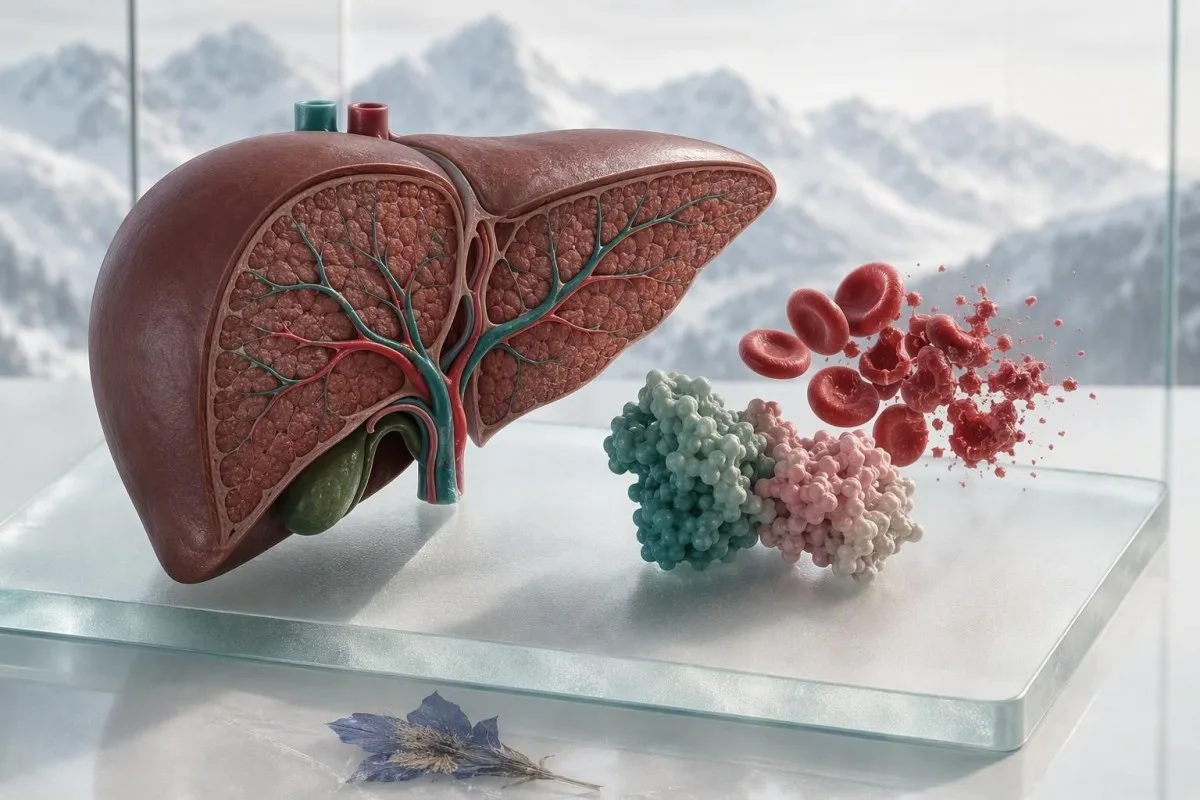
Emaitzak baxuak gorriak apurtzen direla adieraz dezake, baina baita gibeleko ekoizpen murriztua, jaiotzetiko gabezia, azken ariketa fisikoa edo lagina nola maneiatu den ere. Horrekin batera doan CBC, erretikulozi-kopurua, bilirubina, LDH eta antiglobulina zuzeneko probak erabakitzen dute zein azalpen den egokia.


- Haptoglobina baxuaren esanahia ez da automatikoki hemólisia; gibeleko sintesi baxuak eta jaiotzetiko anhaptoglobinemiak emaitza bera eman dezakete.
- Hemolisia eredu normalean haptoglobina baxua eta LDH handitua, bilirubina indirektua 1,2 mg/dL ingurukoa baino altuagoa eta erretikulosia konbinatzen ditu.
- Erretikulozi-kopuruaren erantzuna Anemia garaian 2% ingurukoa baino gutxiago izateak gorri-zelulen suntsipen periferiko biziaren aurka egiten du, baldin eta hezur-muineko ekoizpena zapalduta ez badago.
- Gibeleko testuingurua axola da, hepatocyteek haptoglobina sortzen baitute; albumina baxuak, INR luzeak eta bilirrubina igotzeak balio baxua azal dezakete hemólisia gabe.
- DAT probak Immunohemólisia onartzen du irudi klinikoarekin interpretatuta soilik; DAT negatibo batek ez ditu mekanismo inmuno guztiak baztertzen.
- Ariketa-denboraketa denbora labur batez haptoglobina jaitsi dezake erresistentzia ariketaren ondoren, batez ere odola 24 eta 48 orduko epean ateratzen denean.
- Agortze heredatua ohikoagoa da Ekialdeko Asiako zenbait biztanleren artean eta emaitza oso baxua edo hautemanezin iraunkorra sor dezake bestela ondo dauden pertsonetan.
- Berrikuspen premiazkoa egokia da txiza kolako kolorekoa, jaundicea, atsedeneko arnasa, bularreko mina, nahasmena edo hemoglobinaren jaitsiera azkarra izanez gero.
Zer esan nahi duen benetan emaitza baxuak haptoglobinan
Haptoglobin baxuak esan nahi du serum molekularrean haptoglobin libre gutxi neurtu zela, ez duela hemolisia frogatu. Praktikan, erredolodun zelulen barruko apurtzea benetakoa haptoglobin baxuen kausa bat baino ez da; gibeleko sintesi murriztua, agortze heredatua eta ariketa osteko kontsumo iragankorra alternatiba sinesgarriak dira.
Haptoglobina gibelean egindako proteina bat da, plaketara askatutako hemoglobinarekin lotzen dena. Laborategi helduen gehiengoak erreferentzia-tarte bat aipatzen du 30 eta 200 mg/dL edo 0,3 eta 2,0 g/L, artean, baina saiaketak eta tarteak nahikoa aldatzen dira laborategiko inprimatutako tarteak irabazten duela. 20 eta 30 mg/dL azpiko emaitzak testuingurua merezi du, ez izua.
Balio baxu bat berrikusten dudanean, lehenik eta behin galdetzen diot ea hemoglobina jaitsi den eta ea gorputza erantzuten ari den. Nire esperientzia klinikoan, hemoglobina 14,1 g/dL, LDH normala eta erretikulozito kopurua 1,1% duen pertsona batek hemolisiaren probabilitate oso desberdina du 10 egunetan 12,8tik 8,9 g/dLra jaitsi den norbaitena baino.
Thomas Klein doktorearen lan-araua sinplea da: bilaketa-proteina bakar batek ezin du prozesu bat diagnostikatu, hainbat aztarna biokimiko utzi beharko liratekeena. Prozesuaren berrikuspen praktiko bat lortzeko, ikusi gure haptoglobinaren emaitzak gidatzen du.
Zergatik emaitzek bakarrik engainatzen dute
Haptoglobinak ere igotzen dira hanturaren ondorioz, akutua den faseko erreaktiboa baita. Horrek esan nahi du emaitza normal batek kasualitatez hemolisia arina maskara dezakeela infekzio, gaixotasun autoimmune edo ebakuntza baten ondoren; alderantziz, emaitza baxu batek markatzaile normalekin normalean suntsipen aktiboa kentzen du.
Nola jaisten den haptoglobina hemólisi egiazkoan zehar
Haptoglobinak azkarren jaisten da hemolisi barnealdekoan, zirkulatzen duen hemoglobina askeak azkar eratzen baititu konplexuak plaketatik kentzen direnak. Hemolisi kanpokoak ere jaitsi dezake, baina askotan ez hain dramatikoa eta eredu mistoago batekin.
Biologia erabilgarria da. Hemoglobina askeak haptoglobina lotzen du, eta konplexua makrofago bideen bidez kentzen da; etengabeko askapen batek haptoglobina kontzentrazio hautemanezin batera eraman dezake. LDH tokiko normaltasunaren gainetik askotan igotzen da, LDH ez den arren espezifikoa eta gibeleko lesio, muskulu lesio, minbizi edo zati kaltetuta egotetik igo daitekeena.
Bilirrubina ez-zuzenak gora egiten du gibelak konjugatu baino azkarrago prozesatzen denean. Heldu egonkor batean, bilirrubina osoa honako hauen gainetik 1,2 mg/dL (edo 20 µmol/L inguru) frakzio gutxienak hemolisia onartzen du, Gilberten sindromea, baraualdia eta gibeleko disfuntzioa kontuan hartu ondoren. bilirrubina zuzen vs. indirecto gida -ak zatitua azaltzen du.
Barcellinik eta Fattizzok multzo klasikoa deskribatzen dute, haptoglobina murriztuta, LDH, bilirrubina ez-konjugatua eta erretikulozitoak handituta, baina ohartarazten dute marka bakoitzak kausa ez-hemolitikoak dituela (Barcellini & Fattizzo, 2015). Multzoak—ez kopuru txikienak—diagnostikoa sinesgarri egiten du.
Irakurri LDH, bilirubina eta erretikulozi-kopurua eredu bakar gisa
Haptoglobina baxua eta LDH altua, bilirrubina zuzena altua eta erretikulozito erantzun egokia dira hemolisiaren laborategiko eredu erregular indartsuena. Seinale horietatik bi edo hiru falta badira, klinizinek azalpen ez-hemolitikoak aktiboki probatu beharko lituzkete.
Erretikulozitoen ehunekoak bakarrik engainatu gaitzake anemia batean. Erretikulozitoen ehuneko zuzenduak hematokritoa hartzen du kontuan; %-ko hematokritorekin, %3%-ko erretikulozito kopuru gordina gutxi gorabehera zuzentzen da 1.6%, hau ez da hezur-muinaren erantzun indartsua. 2 azpiko erretikulozitoen ekoizpen-indize batek ekoizpen desegokia iradokitzen du normalean, konpentsazio-erantzun indartsu baten ordez.
LDH baino gehiago erreferentziazko mugaren 2 aldiz hemolisi esanguratsu klinikoagoa da, 10%-tik 20%-ra bitarteko igoera mugakidea baino, batez ere potasioa, AST eta fosfatoa ere espero baino altuagoak badira laginaren kaltearen ondorioz. Ikusi gure azalpena LDH iturri altuei buruzkoa LDH guztia gorri-zelulei egozteko aurretik.
Kantesti bat da. AI odol-analisi analizatzailea horrek hemoglobina-ibilbidea, erretikulozitoak, bilirrubina eta gibeleko markagailuen arabera neurtzen du haptoglobina, gorrizta bakar bat diagnostikotzat hartu beharrean. Desberdintasun horrek gehien axola du emaitza barrutiaren azpitik dagoenean.
Gibeleko gaixotasunak haptoglobina jaitsi dezake gorri-zelulak suntsitu gabe
Gibel gaiztotzeak haptoglobina murrizten du, gibeleko proteinen sintesia gutxituz, beraz balio baxua ager daiteke errediazio-suntsipena areagotu gabe. Azalpen hori askoz ere probableagoa da albumina baxua denean, INR luzatuta dagoenean edo bilirrubinak eta gibeleko entzimek gibeleko eredu koherente bat erakusten dutenean.
Haptoglobina hepatizitoek sintetizatzen dute nagusiki. Gibeleko gaixotasun kroniko aurreratuan, albumina baxua azpitik 3,5 g/dL azpitik, INR laborategiko tartearen gainetik, tronbozitopenia eta haptoglobina baxua elkarrekin joan daitezke LDH eta erretikulozitoak nabarmenak izan arren. Hori da maila baxu bat ez baita berezko hemólisi proba bat izatearen arrazoi bat.
Zirrosia zuen 58 urteko paziente batek haptoglobina 8 mg/dL azpitik zuen, hemoglobinaren 11,6 g/dL, LDH 184 U/L eta erretikulozitoak 1,0%. Emaitzak hasiera batean premiazko hemólisi erreferentzia bat abiarazi zuen, baina egoera egonkorrak eta sintesi funtzio kaltetuek gibeleko gaixotasunera eta anemia nutrizionalera bideratu zuten lan hori. Horiek gibeleko panelaren osagaiak haptoglobina errepikatzea baino informazio gehiago eman zuten.
De konpentsatutako zirrosiaren gaineko EASL jarraibideak azpimarratzen du albumina, bilirrubina, INR, kreatinina eta sodioak gibeleko larritasuna eta pronostikoa karakterizatzen dituztela (European Association for the Study of the Liver, 2018). Haptoglobinak irudi hori osatu dezake, baina ez ditu horiek ezarritako neurriak ordezkatzen.
Jaiotzetiko haptoglobina baxua edo falta: bizitza osorako azalpen isila
Ondu gabeko anhaptoglobinemiak haptoglobina oso baxua edo detektaezina izan dezake anemia eta hemólisi biokimikoko frogarik ez duten pertsonengan. Produkzio arazo genetiko bat da, ez erredien etengabeko suntsipena.
Haptoglobinaren defizientzia osoa arraroa da mundu osoan, baina Ekialdeko Asiako populazioetan maizago jakinarazten da, non HP genearen ezabaketa alelo bat ezagutzen den. Urteetan zehar behin eta berriro balio detektaezina, hemoglobinaren normaltasuna, bilirrubinaren normaltasuna eta LDHren normaltasunak aukera hori piztu beharko lukete, bereziki senideek antzeko emaitza baxuak badituzte.
Arazo praktikoa ez da normalean eguneroko osasuna. Benetako defizientzia duten pertsonek antigorputzak sor ditzakete haptoglobina duten odol produktuekin kontaktuan egon ondoren, beraz, historia dokumentatu batek garrantzia izan dezake transfusioaren aurretik. Hematologo batek edo transfusio zerbitzu batek aholkuak eman ditzake ea berrespen gehigarria egokia den.
Ez ezazu azalpen genetiko bat suposatu proba baten ondoren. Berriz egitea ondo dagoenean, gehiago egitea proba bat egitea baino, erretikulozitoak, bilirrubina frakzioak eta gibeleko panela, lehen urrats seguruagoa da. Gure odolaren panela osoko ikuspegi orokorra erakusten du zergatik panelen arteko ereduak garrantzitsuak diren.
Hanturak hemólisia ezkuta dezake, emaitza baxua sortu beharrean
Hanturak normalean haptoglobina igotzen du, beraz, maila normal edo altuak ez du erabat baztertzen hemólisia infekzio edo jarduera autoimmune baten ondorioz. CRP altua izan arren emaitza baxu benetako bat kontsumoa edo gibeleko sintesi txarra adierazgarriagoa izan daiteke ondoezan dagoen emaitza bera baino.
Haptoglobinak fase akutuko proteina gisa jokatzen du, askotan CRPrekin batera igoz. CRP gainetik 10 mg/L hantura aktiboa adierazten du laborategi sistema askotan, nahiz eta kausa ez identifikatu. Egoera horretan, 90 mg/dLko balioa tartean egon daiteke, baina pertsona horrentzat espero denaren azpitik.
Nuantzia hau bereziki garrantzitsua da anemia hemolitiko autoimmuneetan, non hantura eta hemólisia batera egon daitezkeen. Jäger eta lankideek adierazten dute diagnostikoa testuinguru klinikoan, smear aurkikuntzetan eta immunohematologian oinarritzen dela, ez inolako hemólisi marka isolatuan (Jäger et al., 2020).
Kantesti’s AI biomarkatzaileen interpretazio-plataforma haptoglobina baxu-normal bat modu ezberdinean nabarmendu dezake CRP 2 mg/L denean baino, 96 mg/L denean. Horixe da triaje gako bat, ez pazientea aztertzen duen kliniko baten ordezko.
Laginaren hemólisiak eta laborategiko testuinguruak irudia nahas dezakete
Kalteatutako lagin batek faltsuki igo ditzake LDH, potasioa eta AST, hemólisi itxurako eredu bat sortuz, nahiz eta pazienteak ez izan in-vivo erredien hausturarik. Normalean ez du neurtutako haptoglobinaren benetako emaitza baxua azaltzen, baina froga laguntzaileak desitxuratu ditzake.
Laborategiko hemólisi-indize batek hodian dauden globulu gorrien haustura islatzen du, askotan bilketa zaila, garraio bibrazioa, muturreko tenperaturak edo bereizketa atzeratua dela eta. Potasioa handituta 5,5 mmol/L analizatzailearen hemólisi-banderak eta giltzurrun-funtzio normalak sarritan berriro ateratzea eskatzen dute tratamendua hasi aurretik. Logika bera aplikatzen zaio LDH-ren bat-bateko igoerari.
Galdetu ea txostenak “lagin hemolizatua”, “interferentzia” edo “emaitzak eragina izan dezake” dioen. laginaren hemolisiaren ondorengo berriro ateratzearen gida erabilgarria da, zuzenketarik seguruena askotan lasai eta behar bezala maneiatutako errepikapena baita, ez larrialdiko azterketa zabala.
Denborak interpretazioa ere aldatzen du. Hapto-globinak erantzun funtzional nahiko laburra du, eta gertaera akutuen ondorengo neurketa batek berreskurapena edo agortzea har dezake, bitartean bilirrubinak eta erretikulozitoek norabide desberdinetan atzeratu daitezke.
Ariketa fisikoa eta denbora: balio baxua iragankorra denean
Luzerako lasterketak, mendiko lasterketak eta oinezkoen behin eta berriz jotze ariketak hemólisi iragankorra sor dezakete eta haptoglobina jaitsi 24 eta 48 ordu inguru. Tamaina asko aldatzen da distantziaren, oinetakoen, beroaren, hidratazioaren eta atleta baten burdinaren egoeraren arabera.
Oinezkoen hemólisia erreala da, baina lasterketa osteko haptoglobina baxuak ez du automatikoki gaixotasunik irudikatzen. Lasterketa baten ondoren haptoglobina baxua, LDH apur bat altua eta hemoglobinaren egoera egonkorra duten maratoiak ikusi ditut; berriro probatzea 48 eta 72 ordu igaro ondoren, entrenamendu gogorrik gabe askotan oinarrizko egoera argitzen du.
Ariketa astunak CK eta AST ere handitu ditzake, panelekin pisu handiagoa emanez. CK nabarmen handituta badago, muskulu-mina larria, ahultasuna, gernu-irteera murriztua edo gernu oso iluna premiazko berrikustea behar du, muskulu-lesioa kontuan hartzeko berezia baita; ikusi gure CK arriskuaren gida.
Thomas Klein doktoreak atletaei lasterketaren distantzia, altuera, beroarekiko esposizioa eta hidratazioa emaitzarekin batera grabatzea gomendatzen die. Denbora-lerro txiki hori askotan diagnostiko-balio handiagoa du sei hilabete geroago beste ausazko proba bat baino.
Antiglobulina zuzeneko probak noiz laguntzen duen
Anticorporu zuzeneko probak, edo DAT, globulu gorrien gainean atxikitako immunoglobulina edo osagarria hautematen du eta susmatzen den hemólisi autoimmunea ebaluatzen laguntzen du. Gehienbat anemia eta hemólisi-eredu sinesgarri bat dagoenean da erabilgarria.
DAT positibo batek ez du automatikoki esan nahi anemia hemolitiko autoimmunea denik. Emaitza positiboak transfusioen ondoren, botikekin, infekzio garaian edo kliniko esanguratsurik gabeko hemolisirik gabe gerta daitezke; laborategiko txostenak zehaztu behar du ea hauteman duen IgG, C3d, edo biak. Smear eta hemoglobinaren joera nagusi dira.
Aitzitik, DAT negatibo batek ez du hemólisi ezabatzen. DAT negatiboko hemólisi autoimmunea existitzen da, eta ez-immunologikoak, hala nola balbula mekanikoen hemólisi, G6PD erlazionatutako lesio oxidatzailea, mikroangiopatia, erredurak eta infekzioak, beste proba batzuk behar dituzte. Smearrean dauden esquizitoek arreta azkarra behar dute, gurean azaltzen den bezala smear artikulu premiazkoa.
Mediku batek DAT, smear periferikoa, plasma hemoglobin librearen, gernu-hemosiderinaren, G6PD jardueraren edo osagarri-azterketen eskatu dezake, eredua kontuan hartuta. Guztia aldi berean probatzeak zaratatsua egin dezake, beraz, hasierako panelek hurrengo adarra gidatu beharko lukete.
Erretikulozi-kopuru baxuak galdera ekoizpenaren aldera bideratzen du
Erretikulozito baxuak edo egokitze eza duten anemiek suntsipen periferikoa baino, globulu gorrien ekoizpen murriztua iradokitzen dute. Egoera horretan, haptoglobina baxuak gibeleko sintesia islatu dezake edo burdinaren gabezi, B12 gabezi, giltzurrunetako gaixotasun edo hezur-muineko supresioarekin kasualitatez batera egon daiteke.
Erretikulozitoen kopuru bat 0.5% baxua izan ohi da, baina interpretazio zuzena hemoglobinaren eta hematokritoaren araberakoa da. 8 g/dLko hemoglobinaren bat duten pertsona batek erantzun bat eman beharko luke; 1,2%-ko kopurua normala izan daiteke paperean, baina desegokia anemiaren larritasunerako.
Mikrozitosiak, feritin baxuak eta transferrinaren saturazio baxuak burdinak mugatutako ekoizpenerantz adierazten dute. Makrozitosiak erretikulozito baxuekin B12, folatoa, alkohola, gibeleko gaixotasuna, hipotiroidismoa, botikak edo hezur-muineko nahasteak areagotzen ditu; gure MCV eta MCH konparazioa hori desberdintzeko lagun dezake.
Haptoglobina baxuak ez du ezinezkoa egiten burdinaren gabezi. Nahasketa arazoak gertatzen dira: gibeleko gaixotasun kronikoa eta hilekoaren burdin galera duten pertsona batek haptoglobina ekoizpen inperfektoa eta erretikulozito baxuko anemia izan ditzake.
Haptoglobina baxuaren sintomak kausaren sintomak dira benetan
Haptoglobina baxuak berez ez du sintoma zehatzik eragiten; sintomak anemiagatik, hemolisigatik, gibeleko gaixotasunagatik edo azpiko kausagatik sortzen dira. Maila baxuak heredatu dituzten pertsona askok ondo sentitzen dira.
Hemolisiek nekea, ahalegindutako arnasa gutxitzea, palpitazioak, ikterizia, bizkarreko ondoeza eta te- edo kola-koloreko gernua sor ditzakete. Gernu ilun berria eta ikterizia edo azkar jaisten ari den hemoglobina egun berean ebaluatu beharreko arazoa da, ez etxeko osagarriekin kontrolatu beharrekoa. Irakurri gehiago gernu ilunaren abisu-seinaleak.
Gibelarekin lotutako sintomak desberdinak dira: sabelaldeko hantura, ubeldura errazak, aulki zurbilak, azkura, nahasmena edo orkatilako hantura progresiboa gibeleko disfuntzioak klinikoki esanguratsuak izan daitezkeela adierazten dute. Sintomarik ez egotea lasaigarria da, baina ez du baztertzen gibeleko disfuntzio goiztiarra.
Larrialdietako arreta zentzuzkoa da bularreko minagatik, zorabioagatik, nahasmenagatik, atsedenean arnasa gutxitzeagatik, gernu-irteera murriztuagatik, ahultasun nabarmenarekin sukarra izateagatik edo haurdunaldian anemiaren sintoma berriekin. Haptoglobina baxuko kopuru bakarrak, batez ere pertsona egonkor batean, gutxitan zehazten du premia.
Emaitza baxu baten ondoren lan egiteko moduari buruzko lan-prozesu praktiko bat
Azterketa eraginkorrenak zalantzazko laginak errepikatzen ditu eta haptoglobina CBC, erretikulozitoekin, LDH, bilirubinaren frakzioekin eta gibeleko testekin parekatzen ditu. DAT eta odol-filmaren probak datoz ondoren, hasierako multzoak hemolisi bat onartzen badu edo anemia azaldu gabe badago.
1. urratsa egiaztapena da: unitateak, erreferentzia-tartea, laginaren kalitateari buruzko iruzkinak, azken ariketa, transfusioak, botika berriak eta gaixotasuna egiaztatu. 2. urratsa panel bideratua da — CBC bere adierazleekin, erretikulozitoen kopurua, LDH, bilirrubina osoa eta zuzena, AST, ALT, albumin eta kreatinina. Errepikatzea 1 eta 2 astetan normalean arrazoizkoa da pertsona egonkor eta asintomatiko batentzat, premiazko patroirik ez dagoenean.
3. urratsa aldatu zenaren araberakoa da. Hemoglobina erretikulozitosiarekin eta bilirrubinaren igoerarekin jaisteak esmeararen berrikuspena eta DAT onartzen ditu; albumin baxuak edo INR anormalak gibelaren ebaluazioa onartzen du; MCV eta feritin baxuak burdinaren azterketak onartzen ditu. The erretikulocito-kontuaren gida azaltzen du zergatik immature reticulocyte fraction ekoizpen-zantzu baliagarria gehitzen duen.
Kantesti bat da. AI bidezko odol-analisien analisi-tresna 127+ herrialdeetan zehar erabilia PDF bat edo argazki bat kargatutik sekuentzia hau antolatzeko, baina ezin du esmear bat ikuskatu, ikterizia aztertu, edo kliniko-buru den diagnostikoa ordezkatu. Sintoma akutuen kasuan, bilatu zuzeneko mediku-laguntza lehenik.
Interpretazioa aldatzen duten botikak, transfusioa eta egoera bereziak
Botiken eta transfusioaren historialak hemolisiaren probabilitatea eta DAT emaitzaren esanahia alda ditzakete. Botiken zerrenda bereziki garrantzitsua da haptoglobina baxua bat-batean agertzen denean, aurretik patroi egonkor bat izan ondoren.
Hemolisia sor dezaketen faktoreen artean daude antimikrobiano batzuk, G6PD gabezian oxidatzaile diren sendagaiak, terapia immunologikoak eta, arraro, sendagaiaren aurkako antigorputzak. Denborak axola du: hemoglobinaren jaitsiera hasi eta 2% baino handiagoa denean esposizio berri baten ondoren, medikuaren berrikuspena merezi du, baina aspaldiko hobirna maila baxua mantentzeak ez du premia bera inplikatzen.
Transfusioaren ondoren, erreakzio hemolitiko atzeratuak egun batzuk geroago ager daitezke, hemoglobinaren jaitsierarekin, bilirrubinaren igoerarekin, antigorputz berri batekin eta, batzuetan, DAT positiboarekin. Jarri harremanetan tratamendua egiten duen taldearekin berehala, sukarra, gernu iluna, icterizia edo nekea ezohikoak agertzen badira transfusioaren ondoren.
Haurdunaldia, giltzurruneko gaixotasuna eta infekzio larriak beste geruza batzuk gehitzen dituzte. Adibidez, giltzurruneko lesioak pigmentuen askapenaren ondorioak okertu ditzake, eta haurdunaldiak plasma bolumena eta erreferentziazko aurreikuspenak aldatzen ditu; gurea haurdunaldiko laborategiko abisu-seinaleetarako berehala deitu behar denean azaltzen du.
Zergatik diren joerak hobeto haptoglobinaren emaitza bakarra baino
Zure hobirna maila beheraren aurreko berezko erreferentziarekiko aldaketa askotan esanguratsuagoa da balio bat populazioaren erreferentzia tartearen kanpo geratzea baino. Urteetan zehar emaitza baxu egonkorrak esanahi desberdina du egun gutxitan 120 mg/dL-tik 10 mg/dL azpira jaitsi izanak baino.
Bildu data, aurreko 72 orduetan egindako ariketa fisikoa, baraualdiaren iraupena, gaixotasuna, alkoholaren kontsumoa, bidaiak, transfusioak eta botiken aldaketak emaitza bakoitzaren ondoan. Xehetasun hauek “laborategiko aldaketa” deiturikoa ulergarria egiten dute. Gutxi gorabehera 20% eta 30% arteko gorabehera proteina askoren aldaketa biologiko eta analitikoetan gerta daiteke, berriz, hauteman ezin diren mailetara behin eta berriro erortzeak azalpena behar du.
Kantesti AI-k biomarkatzaile longitudinalak alderatzen ditu eta hobirna maila baxua agerian utzi dezake hemoglobinaren, RDW, bilirrubinaren eta gibeleko entzimenen aldaketekin batera. Gure odol-analisien joeren gida benetako joera ohiko bisita-bisita zalapartatik nola bereizi azaltzen du.
Ez saiatu hobirna gehigarriekin igotzen. Ez dago frogatan oinarritutako helburu gehigarririk emaitza baxu isolatu baterako; tratamendua hemolisiari, gibeleko gaixotasunari, elikagaien gabeziari edo antzemandako beste kausa bati zuzenduta dago.
Behe-lerro klinikoa: beldurra ez, ereduari probatu
Hobirna baxuak azkar ereduak ezagutzea eskatzen du, ez hemolisi-diagnostiko automatikoa. Hobirna baxuak LDH, bilirrubina, erretikulozitoak eta hemoglobina egonkorrarekin batera normalean produkzio baxua, jaiotzetiko gabezia edo testuingurua islatzen du; hemolisi-eredu anitzeko markatzaile batek medikuaren jarraipena behar du.
2026ko abuztuaren 22tik aurrera, ez dago jarraibide nagusirik heldu osasuntsuei hobirnarekin soilik hemolisia aztertzeko. Galdera erabilgarria hau da: “Emaitza honek hemoglobina jaisten ari den, hezur-muinaren erantzun konpentsatzailea eta globulu gorrien biraketaren froga biokimikoak betetzen ditu?” Hala ez bada, zabaldu differentiala etiketa beldurgarri bat onartu aurretik.
Kantesti bat da. AI laborategiko proba interpretatzeko zerbitzuan medikuak berrikusitako metodologiekin, erabiltzaileei beren medikuarekin eztabaida bideratua prestatzen laguntzen diena. Gure baliozkotze medikoko ikuspegia interpretazio automatizatuaren mugak eta zergatik jarraitzen duen beharrezkoa den berrikuspen klinikoa susmatutako hemolisirako azaltzen du.
CBCaren testuinguru erlazionatu baterako, gure ikerketa-argitalpena honi buruz RDW eta globulu-gorriaren indizeei begirada zehatza emanez. erabilgarria izan daiteke. Kantesti mediku taldea, gure Medikuntza Aholku Batzordea, barne, aldian-aldian berrikusten du eduki didaktikoa; emaitza indibidualek oraindik ere sintomak, historia eta azterketari egokitutako arreta behar dute.
Maiz egiten diren galderak
Hemolisirik gabe haptoglobina-maila baxua izan al daiteke?
Bai. Haptoglobina-maila baxua hemolisirik gabe ere gerta daiteke, gibelak proteina gutxiago ekoizten duenean, pertsonak haptoglobina-gabezia heredatua duenean edo aldi baterako ariketak eragindako globulu gorrien estresaren ondoren. Hemoglobina egonkorra, LDH normala, zeharkako bilirrubina normala eta erretikulozitoak 0,5% eta 2,0% inguruan dituen emaitza baxu batek ez du hainbeste babesten hemolisi aktiboaren aukera. Laborategiko patroi osoak eta sintomek zehazten dute jarraipena premiazkoa den ala ez.
Zein haptoglobina-mailak iradokitzen du hemolisia?
20–30 mg/dL inguruko haptoglobina-balio baxuak hemolisia iradoki dezake, baina atalase bakar batek ere ez du hori frogatzen, laborategien erreferentzia-tarteak desberdinak baitira. Hemolisia askoz ere probableagoa da haptoglobina baxuarekin batera LDH-a handitzen denean, zeharkako bilirrubina 1,2 mg/dL ingurutik gora dagoenean, erretikulozitosia dagoenean eta hemoglobina-kontzentrazioa jaisten denean. Gibeleko gaixotasunek eta herentziazko urritasunak ere 10 mg/dL-tik beherako balioak eragin ditzakete globulu gorrien suntsipen aktiborik gabe.
Gibeleko gaixotasunak haptoglobina-maila baxua eragin al dezake?
Bai. Gibelak haptoglobina sortzen du; beraz, gibeleko proteinen sintesia kaltetuta badago, serumeko haptoglobina-maila jaitsi daiteke hemolisirik egon gabe. 3,5 g/dL-tik beherako albumina-maila baxuak, INR luzatuak, tronbozitopeniak eta bilirrubinaren edo gibeleko entzimen balio anormalek ekoizpen murriztua litekeena dela iradokitzen dute. Klinikariak normalean haptoglobina gibeleko analitika batekin batera interpretatzen du, gibeleko proba bereizitzat hartu beharrean.
LDH maila normalak hemolisia baztertzen al du haptoglobina baxua denean?
LDH normala izateak hemolisi intrabaskular bizia izateko aukera txikiagoa egiten du, baina ez du erabat baztertzen hemolisi arina, aldizkakoa edo nagusiki estrabaskularra. LDH normala bada eta hemoglobina, bilirrubina ez-zuzena eta erretikulozitoak ere egonkorrak badira, haptoglobina baxuak maizago islatzen du gibeleko sintesia, herentziazko absentzia edo denboraren araberako testuingurua. 1-2 astera CBC eta hemolisi-panel bat errepikatzeak egoera egonkorra argitzen lagun dezake.
Ahaldu al du ariketa intentsitate handiko haptoglobina gutxitzea?
Bai. Ariketa fisiko ariketak, bereziki oinezko inpaktu errepikatuak dituzten lasterketek, aldi baterako jaitsi dezakete haptoglobina 24 eta 48 orduz. LDH, CK eta AST ere igo daitezke jarduera gogorraren ondoren, eta horrek interpretazioa zaildu dezake. Froga 48 eta 72 orduz errepikatzea, entrenamendu ariketarik egin gabe, arrazoizkoa izaten da normalean hemoglobinaren maila egonkorra bada eta ez badago ohartarazpen sintomarik.
Zer den antiglobulin test zuzen negatiboak?
Odontologia
Test antiglobulínico directo negativo significa que el ensayo no detectó inmunoglobulinas o complemento significativos unidos a los glóbulos rojos en ese momento. Hace que la anemia hemolítica autoinmune típica sea menos probable, pero no excluye la hemólisis inmune DAT negativa o causas no inmunes como la destrucción mecánica o la lesión relacionada con enzimas. Un frotis periférico, el historial de medicación, la respuesta de reticulocitos y el patrón de bilirrubina ayudan a determinar la siguiente prueba.
Lortu gaur AI bidezko odol-analisien analisia
Batu mundu osoko 2 milioi erabiltzaile baino gehiagok Kantesti-n konfiantza dutenak, laborategiko analisiak berehala eta zehaztasunez aztertzeko. Igo zure odol-analisien emaitzak eta jaso 15,000+ biomarkatzaileen interpretazio integrala segundo gutxitan.
📚 Erreferentziatutako ikerketa-argitalpenak
Klein, T., Mitchell, S., & Weber, H. (2026). RDW Odol Testea: Gida osoa RDW-CV, MCV eta MCHCrentzat. Kantesti LTD. (2026). Zenodo. https://doi.org/10.5281/zenodo.18202598. ResearchGate: https://www.researchgate.net/ | Academia.edu: https://www.academia.edu/. Kantesti AI Medical Research.
Klein, T., Mitchell, S., & Weber, H. (2026). BUN/Kreatinin Ratio Azalduz: Giltzurrun-funtzio probak Gida. Kantesti LTD. (2026). Zenodo. https://doi.org/10.5281/zenodo.18207872. ResearchGate: https://www.researchgate.net/ | Academia.edu: https://www.academia.edu/. Kantesti AI Medical Research.
📖 Kanpoko erreferentzia medikoak
⚕️ Ohar medikoa
Artikulu hau hezkuntza-helburuetarako da soilik eta ez du mediku-aholkurik ematen. Diagnostiko- eta tratamendu-erabakietarako, beti kontsultatu osasun-profesional kualifikatu bati.
E-E-A-T Konfiantza-seinaleak
Esperientzia
Medikuek gidatutako berrikuspen klinikoa laborategiko interpretazioaren lan-fluxuei buruz.
Espezializazioa
Laborategiko medikuntzaren ikuspegia biomarkatzaileek testuinguru klinikoan nola jokatzen duten aztertzean.
Autoritatea
Dr. Thomas Klein-ek idatzia, eta Dr. Sarah Mitchell eta Prof. Dr. Hans Weber-ek berrikusia.
Fidagarritasuna
Ebidentzian oinarritutako interpretazioa, alarma murrizteko jarraipen-bide argiekin.