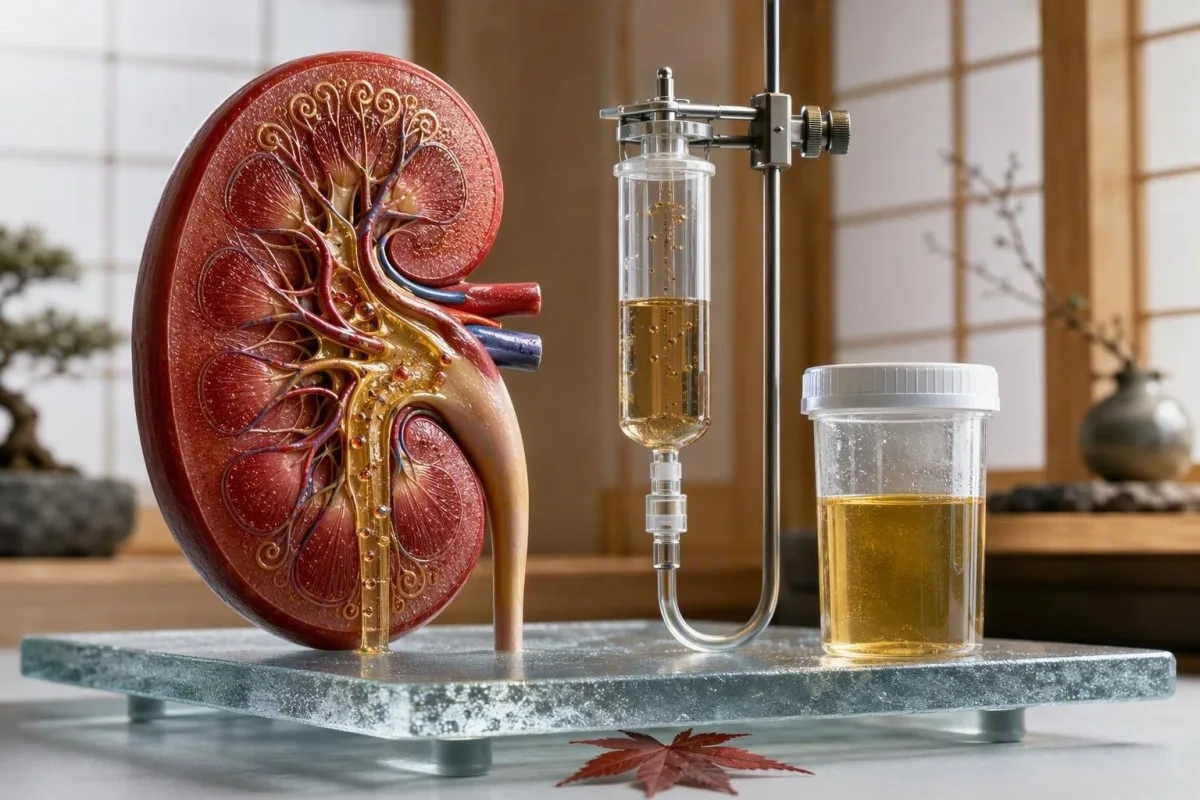
SIADHは単一の異常所見ではなく、パターン診断です。有用な手がかりは、ほぼ同時に採取された血液と尿から得られ、薬剤、甲状腺機能、コルチゾール、および体液量と合わせて解釈されます。.


- 真の低浸透圧性低ナトリウム血症 血清ナトリウムが135 mmol/L未満であり、測定された血清浸透圧が通常275 mOsm/kg未満であることを意味します。.
- SIADH尿浸透圧 低い血清浸透圧にもかかわらず不適切に100 mOsm/kgを超えており、腎臓は希釈尿を生成すべきときに水分を保持しています。.
- 尿中ナトリウム 30 mmol/L以上は、利尿薬、副腎不全、甲状腺疾患、および臨床的に明らかな体液枯渇を除外した後にのみSIADHを支持します。.
- 脱水パターン 通常、尿中ナトリウムが30 mmol/L未満、尿素またはBUNの上昇、および循環血漿量の低下の兆候を伴う濃縮尿を生成します。.
- 副腎不全 SIADHとほぼ同じように見える可能性があるため、低い早朝コルチゾール値または不明瞭な結果は、SIADHと診断される前に緊急の臨床経過観察が必要です。.
- 重い症状 痙攣、錯乱、繰り返しの嘔吐、または意識低下と低ナトリウム血症は緊急治療を必要とし、治療はオンライン解釈を待ってはいけません。.
- 修正の安全性 注意点:慢性低ナトリウム血症では、浸透圧性脱髄のリスクが高い患者では、血清ナトリウム値は24時間あたり8 mmol/Lを超えて上昇させてはならないのが一般的です。.
- タイミングが重要 なぜなら、生理食塩水輸液、利尿剤、または数リットルの水は、数時間以内に尿中ナトリウムと浸透圧を変化させることができるからです。.
SIADHに血液と尿のペア検査が必要な理由
A SIADHの血液検査 低い血清ナトリウム値と低い測定血清浸透圧値、そして濃縮されすぎたナトリウムリッチな尿が組み合わさったパターンです。実際には、抗利尿ホルモン活性が正常にオフにならないため、体はナトリウムに対して過剰な水分を抱えています。ナトリウム値だけではこれを証明できません。.
血清ナトリウム値が以下 135 mmol/L未満 は低ナトリウム血症を定義しますが、ナトリウムは体内の総ナトリウム量の尺度ではなく濃度です。低ナトリウム血症は、水分貯留、塩分喪失、高血糖、検査室のアーチファクト、またはこれらの混合によって起こり得ます。当社のガイドは 低ナトリウム症状ガイド 、症状の重症度が正確な数値よりも低下の速さにしばしば相関する理由を説明します。.
最初に役立つ分岐点は、測定された血清浸透圧値です。 275 mOsm/kg未満 は低張性低ナトリウム血症を示し、SIADHが考慮される状況です。トーマス・クライン博士の臨床的ルールはシンプルです:グルコース、トリグリセリド、総タンパク質、そしてできれば測定された浸透圧をチェックする前に、基礎代謝パネルからSIADHとラベル付けしてはいけません。.
カンテスティは AI血液検査分析装置 ナトリウム、グルコース、尿素、クレアチニン、およびペアになった尿所見を、フラグのコレクションではなく、1つの生理学的問題として読み取るものです。当社のレビューでは、最も危険なエラーは、尿検査または症状の履歴がない122 mmol/Lのナトリウム値の後に安心してしまうことです。; 当社の臨床ユースケース は、文脈の欠如が次のステップをどのように変えるかを示しています。.
SIADHの本当の意味
SIADHは、抗利尿ホルモンの不適切な分泌症候群の略で、歴史的には抗利尿ホルモンの不適切な分泌と呼ばれていました。この症候群は、薬剤、吐き気、肺または中枢神経系の障害、疼痛、術後ストレス、そして時折悪性腫瘍から生じることがあります。検査室のパターンは、根本的な引き金ではなく、水分代謝を特定します。.
血清ナトリウムおよび浸透圧:真の水分過剰を確認する
血清浸透圧値が275 mOsm/kg未満で、ナトリウム値が135 mmol/L未満であれば、低張性低ナトリウム血症が確認されます。, が、それだけではSIADHを特定することはできません。正常または高値の浸透圧は、医師にグルコース、マンニトール、造影剤、アルコール、または偽性低ナトリウム血症を向けさせます。.
ほとんどの検査室は、一般的に2 ×ナトリウム + グルコース + 尿素 (mmol/L) として計算される計算浸透圧値を報告しますが、 測定浸透圧値 は、診断が不明瞭な場合に好ましいです。測定値と計算値の間に意味のある差があると、測定されていない浸透圧物質が明らかになることがあります。これは、ナトリウム値が臨床的に現実的であってもSIADHを表さない理由の1つです。.
グルコース値がおよそ 13.9 mmol/L (250 mg/dL) 低ナトリウム血症の測定値は、細胞から血漿への水分の移動によって低下します。一般的に使用される補正では、5.6 mmol/L(100 mg/dL)を超えるグルコース5.6 mmol/L(100 mg/dL)ごとに、ナトリウム値に約1.6〜2.4 mmol/Lを加算しますが、臨床医は非常に高いグルコース値での正確な係数については意見が一致していません。.
非常に高いトリグリセリドまたはパラプロテインは、間接的なイオン選択性アッセイで偽性低ナトリウム血症を引き起こす可能性がありますが、測定された浸透圧は正常のままです。ナトリウムの結果を 基本代謝パネル と比較し、研究所が直接電極を使用したか間接電極を使用したかを確認してから、水分バランス障害を想定してください。.
SIADH尿浸透圧:状況を変える腎臓の手がかり
低張患者における100 mOsm/kgを超える尿浸透圧は、抗利尿ホルモンの活性が存在することを示します。. SIADHでは、尿浸透圧はしばしば200〜600 mOsm/kgですが、単一の尿値では診断できません。.
尿浸透圧が 100 mOsm/kg以下 は、ほぼ最大限に希釈された尿を示し、SIADHの可能性を低くします。このパターンは、一次性多飲症または低溶質摂取に適合し、そこでは水分摂取量が腎臓の遊離水排泄能力を超えます。これは、特にタンパク質と塩分の摂取量が非常に少ない人々に関連します。.
ここが直感に反する点です。濃縮尿は必ずしも脱水状態を意味するわけではありません。循環血液量減少とSIADHはどちらも抗利尿ホルモンを上昇させますが、脱水は循環を維持するために適切にそうするのに対し、SIADHは臨床的に十分な有効動脈容量にもかかわらずそうします。.
欧州低ナトリウム血症ガイドラインは、身体的な循環血液量の評価がしばしば信頼できないため、尿浸透圧を早期の識別因子として推奨しています(Spasovski et al., 2014)。当社の詳細な説明をお読みください。 尿浸透圧検査 レポートでmOsm/kgが使用されている場合、試薬ストリップ固有比重の代わりに。.
なぜ単一の尿サンプルが誤解を招く可能性があるのか
吐き気が治まり、痛みがコントロールされ、原因となる薬が中止された後、尿浸透圧は急速に低下する可能性があります。尿が静脈内輸液後、ループ利尿薬後、または血液サンプルから数時間後に採取された場合、私はそれを証拠ではなく手がかりとして扱います。.
尿中ナトリウム:SIADH対脱水および有効循環血漿量の低下
30 mmol/Lを超える尿ナトリウムは、食事塩摂取量が通常で利尿薬が存在しない場合の低張性低ナトリウム血症におけるSIADHを支持します。. 30 mmol/L未満の尿ナトリウムは、嘔吐、下痢、発汗、心不全、肝硬変、または真の脱水による腎臓のナトリウム節約をより頻繁に示します。.
合併症のないSIADHでは、腎臓はナトリウムを渇望しないため、尿ナトリウムは一般的に 30 mmol/Lを超える場合 であり、60 mmol/Lを超えることがあります。尿素はしばしば低く、血清尿酸は軽度の循環血液量増加が尿酸クリアランスを増加させるため、4 mg/dL(0.24 mmol/L)未満になることがあります。.
ヒドロクロロチアジドを服用している68歳の患者は、胃腸炎後に55 mmol/Lの尿ナトリウムと濃縮尿を示す可能性がありますが、それはSIADHを確立するものではありません。サイアザイド関連低ナトリウム血症は、すべての古典的な実験室的特徴を模倣する可能性があり、そのため、薬剤リストは管理上の詳細ではなく、診断データなのです。.
利尿薬後、進行した腎疾患、または非常に低い食事ナトリウム摂取量では、尿ナトリウムの信頼性は低下します。クレアチニン、尿素、および 電解質パネル と組み合わせて、30 mmol/Lのカットオフを厳格な境界として扱うのではなく、使用してください。.
尿酸の分数排泄率
尿酸の分数排泄率が 12% SIADHを支持する可能性があり、特に利尿薬が尿中ナトリウムを不明瞭にする場合。通常、SIADHの補正後に正常化しますが、腎性塩喪失状態では上昇したままになることがあります。これは専門的な領域ですが、病歴が一致しない場合に役立ちます。.
検査値で見る脱水とSIADHの違い
脱水は通常、尿中ナトリウムが低く、クレアチニンに対する尿素の上昇、および体液喪失の臨床的証拠を伴う濃縮尿を引き起こします。. SIADHも濃縮尿を引き起こすことが多いですが、患者は通常臨床的に体液過剰ではなく、同じナトリウム保持性の腎臓反応を示しません。.
嘔吐、下痢、または大量の発汗では、腎臓は通常、尿中ナトリウムを低下させます。 20〜30 mmol/L未満 一方、尿浸透圧は100 mOsm/kg以上に上昇します。クレアチニンに対して尿素が不釣り合いに上昇することがありますが、この比率はタンパク質摂取量、消化管出血、ステロイド、肝機能の影響を受けるため、決定的というよりは支持的なものです。.
SIADHでは、血圧や検査所見は正常に見えるかもしれませんが、微妙な所見が重要です。起立性低血圧の症状、乾燥した粘膜、末梢浮腫、または説得力のある消化管喪失はありません。尿が暗いというだけで「脱水」と呼ばれた患者がいました。尿の色は、ナトリウム生理学の貧弱な代理です。 濃い尿ガイド 議論しています。.
慎重な等張食塩水負荷は、選択された監視下で役立つことがあります。体液量減少性低ナトリウム血症は、体液量が増加すると抗利尿ホルモンが抑制されるため改善する傾向があります。SIADHでは、食塩水はナトリウムを上昇させられないか、尿が輸液よりもはるかに濃縮されている場合は悪化させる可能性があります。自宅で試す実験であってはなりません。.
なぜ食塩水がSIADHを悪化させるのか
0.9%食塩水1リットルには154 mmolのナトリウムが含まれていますが、600 mOsm/kgで尿を生成する腎臓は、ナトリウムを排泄し、比例してより多くの水を保持する可能性があります。この「脱塩」効果は、尿中ナトリウムとカリウムの合計が血清ナトリウムに対して高い場合に最も可能性が高いです。.
副腎不全:臨床医が除外しなければならないSIADHの模倣
副腎不全は、低ナトリウム、低血清浸透圧、100 mOsm/kgを超える尿浸透圧、および30 mmol/Lを超える尿中ナトリウムを引き起こす可能性があり、SIADHとほぼ同じパターンです。. したがって、コルチゾール評価は、疲労、体重減少、低血圧、高カリウム血症、またはステロイド暴露がある場合のSIADHの安全なワークアップの一部です。.
朝の血清コルチゾールが約 15-18マイクログラム/dL(414-497 nmol/L) は、アッセイと設定によって異なりますが、臨床的に有意な副腎不全の可能性は通常低いと考えられます。値が 3-5マイクログラム/dL(83-138 nmol/L) 未満の場合は懸念があり、中間的な結果は推測ではなく、ACTH刺激試験を必要とすることがよくあります。.
原発性副腎不全は、アルドステロンが不足しているため高カリウム血症を引き起こすことが多いですが、続発性副腎不全はカリウムが正常でも重度の低ナトリウム血症を引き起こす可能性があります。メカニズムは、コルチゾール欠乏が抗利尿ホルモン放出を増加させることであり、単なる塩喪失ではありません。.
2013年のVerbalis主導の専門家パネルは、SIADHを決定する前に副腎不全を除外することを推奨しています(Verbalis et al.、2013)。この可能性が報告書にある場合は、当社の概要を参照してください。 アジソン病の検査室の手がかり 緊急の医師レビューのために、的を絞った質問を準備するのに役立ちます。.
ステロイド薬は検査を複雑にします
プレドニゾン、ヒドロコルチゾン、および一部の注射用ステロイドは、コルチゾールの解釈を変化させ、副腎軸を抑制する可能性があります。「きれいな検査結果を得る」ために処方されたステロイドを中止しないでください。急激な中止は副腎クリーゼを誘発する可能性があります。.
甲状腺検査:甲状腺機能低下症が低ナトリウム血症を本当に説明する場合
重度の甲状腺機能低下症は水分排泄を損なう可能性がありますが、通常の亜臨床的甲状腺機能低下症が有意な低ナトリウム血症を説明することはめったにありません。. SIADHを診断する前に、TSHと遊離T4をチェックします。なぜなら、重度の甲状腺機能不全は治療可能であり、他の原因と併存する可能性があるからです。.
臨床的に重要な甲状腺機能低下性低ナトリウム血症は、重度の疾患、特に遊離T4、徐脈、低体温、または心拍出量の低下を伴う粘液水腫生理学で最も可能性が高いです。TSHが6 mIU/Lで遊離T4が正常な場合、これは一般的であり、ナトリウム121 mmol/Lの便利な説明になるべきではありません。.
Kantesti AIは、 AI血液検査の読み方プラットフォーム TSHと遊離T4をナトリウム、腎機能、および投薬タイミングと比較するものであり、TSHの結果が陽性であっても、より緊急の副腎または薬剤関連の原因から注意をそらす可能性があります。正常なTSHは中枢性甲状腺機能低下症を除外しません。非上昇性TSHを伴う遊離T4の低下は、記事で説明されている異なる経路に値します。 正常なTSHを伴う遊離T4の低下.
甲状腺補充療法は、確立された甲状腺の適応症に対して調整されるべきであり、急速なナトリウム治療として使用されるべきではありません。私の経験では、吐き気、薬、コルチゾール欠乏症、または病気といった真の水分貯留ドライバーにも対処された後にのみ、ナトリウムは改善することがよくあります。.
下垂体疾患はワークアップを変更します
頭痛、視野症状、性欲低下、原因不明の低血圧、または複数の低下した下垂体ホルモンは、中枢性下垂体疾患の懸念を高めます。その状況では、甲状腺ホルモンがコルチゾールのクリアランスを増加させる可能性があるため、レボチロキシンを開始する前にコルチゾールをチェックしてください。.
SIADH解釈における妊娠、高齢、体格差
妊娠は、正常な浸透圧閾値と血清ナトリウムを約4〜5 mmol/L低下させるため、妊娠初期にナトリウムが130 mmol/L付近であることは生理的なものかもしれませんが、それでも文脈が必要です。. 高齢者は薬剤関連の低ナトリウム血症のリスクが高く、しばしば喉の渇きではなく、転倒や混乱を呈します。.
合併症のない妊娠中、血清浸透圧は通常約減少します 5〜10 mOsm/kg ナトリウムは130〜134 mmol/L付近に落ち着く可能性があります。なぜなら、浸透圧調整器がリセットされるからです。130 mmol/L未満のナトリウム、神経症状、高血圧、肝臓の異常、またはタンパク尿は、正常な妊娠変化として軽視されるのではなく、緊急の産科評価を必要とします。.
75歳以上の人々では、SSRI、サイアザイド、カルバマゼピン、デスモプレシン、および低溶質食が一般的に重複しています。ベースラインの認知機能が脆弱な場合、わずか5 mmol/Lのナトリウム低下でも重要になる可能性があり、歩行不安定性や転倒が最初に観察される兆候となる可能性があります。.
妊娠中は腎臓のろ過が自然に変化し、解釈には妊娠を考慮した参照を使用する必要があります。当社のガイドは 妊娠中のeGFR値 妊娠中に報告されたeGFRがしばしば検証されない理由を説明しています。水分制限は、一般的なSIADHのハンドアウトからコピーするのではなく、妊娠と虚弱に応じて個別化する必要があります。.
低いボディマスは些細な詳細ではありません
体重45 kgの人は、体重100 kgの人よりも総体水分量が少ないため、同じ水分負荷または薬物投与量でより大きなナトリウムシフトが生じる可能性があります。虚弱な患者は、ナトリウムが急速に変化した場合、生理学的予備力も少なくなります。.
SIADHを模倣または誘発する薬剤の影響
サイアザイド系利尿薬、SSRI、SNRI、カルバマゼピン、オクスカルバゼピン、デスモプレシン、および一部の抗精神病薬は、低張性低ナトリウム血症の頻繁な薬剤原因です。. 真のSIADHの生理機能をもたらすものもあり、サイアザイド系利尿薬は希釈能の低下とナトリウム喪失を障害することでSIADHを模倣することができます。.
サイアザイド系利尿薬関連低ナトリウム血症は、多くの場合、服用開始または増量後 2週間 初期の間に始まりますが、病気、食事摂取量の減少、または過剰な水分摂取が加わった数ヶ月後に発生することもあります。ループ利尿薬は、腎臓の濃縮能力を低下させるため、この特定のパターンを引き起こす可能性は低いです。.
SSRI関連低ナトリウム血症は、高齢者、低体重者、および利尿薬を服用している人に最も一般的です。新しい抗うつ薬が常に原因とは限りませんが、教科書的なリストよりも時間的順序が重要です:過去30日間のすべての開始、中止、および用量変更を記録してください。.
兆候を知っている処方医なしに、けいれん、精神疾患、ホルモン、または血圧の薬を中止しないでください。低クロール血症は、利尿薬の使用や嘔吐に伴うことがありますが、当社の 低クロール血症の結果 に関する説明は、より広範な電解質パターンを区別するのに役立ちます。.
市販薬の寄与因子
夜尿症に使用されるデスモプレシンは、服用後に自由に水分を摂取すると急激な水分貯留を引き起こす可能性があるため、特別な注意が必要です。NSAIDsも、特に一時的な病気の間に、感受性の高い人で抗利尿ホルモンの作用を増強する可能性があります。.
低溶質摂取と過剰な水分:SIADHではないパターン
原発性多飲症と非常に低い食事溶質摂取量は、典型的なSIADHとは異なり、通常、尿浸透圧を100 mOsm/kg以下にします。. 厳格な水分制限のみでは栄養失調、アルコール関連疾患、または溶質摂取が再開したときの危険な急激な補正を見逃す可能性があるため、この区別は重要です。.
腎臓は、水分を排泄するために、主にタンパク質からの尿素と電解質からなる溶質を必要とします。1日に利用可能な溶質が250 mOsmしかない場合、人は100 mOsm/kgで約2.5 Lの尿を排泄できますが、抗利尿ホルモンが尿を250 mOsm/kgに保つ場合、1 Lしか排泄できません。.
原発性多飲症では、尿はしばしば著しく希釈され、病歴からは 4-6 L の水分摂取量が毎日明らかになることがありますが、記憶は不完全です。低溶質低ナトリウム血症では、尿素が低く、食事歴から最近タンパク質と塩分の摂取量が低下した期間が明らかになることがあります。.
ケトン体、低尿素、体重減少は、SIADHではなく、栄養失調または長期間の絶食の兆候である可能性があります。ケトーシスがある場合は、 尿中ケトン体 に関する記事を確認してください。糖尿病性ケトアシドーシスは別の緊急事態であり、ナトリウムの解釈を歪める可能性があります。.
再栄養化のリスク
栄養が回復すると、腎臓が溶質排泄能力を取り戻すにつれて、ナトリウムは予想よりも速く上昇する可能性があります。入院チームは、ハイリスク患者、特に積極的な補正中は2〜4時間ごとにナトリウムを頻繁に監視します。.
腎臓、心臓、肝臓の病気:SIADHを伴わない低ナトリウム血症
心不全、肝硬変、および進行した腎臓病は、原発性SIADHではなく、有効動脈容量の低下を通じて低ナトリウム血症を引き起こします。. これらの状態でも濃縮された尿を生成する可能性がありますが、浮腫、灌流低下、低アルブミン血症、またはろ過障害は通常、全体像を変えます。.
心不全および肝硬変では、体内に過剰な水分とナトリウムが存在する可能性がありますが、動脈充満が不十分であると感知され、抗利尿ホルモンとナトリウム保持経路が活性化されます。尿中ナトリウムはしばしば低値となります 30 mmol/L 利尿薬や腎障害により結果が混同されない限り。.
進行した腎疾患は、水分排泄と尿濃縮の両方を制限するため、尿浸透圧は血漿浸透圧付近、約 250〜350 mOsm/kg. になることがあります。その状況では、古典的なSIADHの閾値は精度を失い、反復的なスポット尿検査よりも腎臓内科の専門的意見がより有用になります。.
蛋白尿、円柱、アルブミン、クレアチニン値の推移、浮腫は副次的な問題ではありません。それらは病態生理の特定に役立ちます。当院の実践的なガイドは、 尿比重 複雑な腎疾患の症例において、試験紙による推定値が測定された尿浸透圧に取って代わることができない理由を説明しています。.
浮腫は危険性を排除しない
浮腫のある人でも、ナトリウム値が120 mmol/L未満で重度の神経学的症状を発症することがあります。体液バランスは原因を説明しますが、急性症候性低ナトリウム血症の緊急性を低下させるわけではありません。.
採取時期、点滴静注液、および検査上の落とし穴
血液と尿は、治療がSIADHの検査結果を急速に変化させる可能性があるため、理想的には静脈内輸液前かつ互いに数時間以内に採取されるべきです。. 遅れて採取された尿検体は、低ナトリウム血症の原因ではなく、治療への反応を記述している可能性があります。.
生理食塩水1リットル、フロセミドの投与、吐き気止め、鎮痛薬、またはデスモプレシンの中止は、数時間以内に尿量と浸透圧を変化させることがあります。正確な採取時間、最近の水分摂取量、静脈内治療、および薬剤を記録してください。この些細な詳細が、しばしば矛盾しているように見えるSIADHの検査結果を解決します。.
溶血は通常、偽低ナトリウム血症を引き起こしませんが、高度な高脂血症、高タンパク血症、および検体汚染は引き起こす可能性があります。臨床的な説明なしに昨日の値と大きく異なるナトリウム値は、スプレッドシートによる診断ではなく、再検査または直接イオン選択電極測定を促すべきです。.
Kantesti AIは日付を比較してありえない変化をフラグ付けしますが、記録されていない生理食塩水の注入や投与忘れを見つけることはできません。結果の横に、病気、運動、断食、水分摂取、および薬剤のイベントを記録するために 検査タイムラインについて を使用してください。.
尿比重は浸透圧ではない
比重は、粒子質量と濃度を反映し、グルコース、タンパク質、または造影剤によって歪められる可能性があります。1.020という値は、すべての患者において特定のmOsm/kgの値に確実に換算できるわけではありません。.
臨床医が通常注文するSIADHの集中的な評価
安全なSIADH評価には、通常、血清ナトリウム、カリウム、グルコース、尿素、クレアチニン、測定された血清浸透圧、尿浸透圧、尿中ナトリウム、TSH、遊離T4、および朝のコルチゾールが含まれます。. 目標は、低張性低ナトリウム血症を確認し、SIADHのラベルを付ける前に、可逆的な類似疾患を除外することです。.
追加の検査は文脈によります:尿酸、肝臓マーカー、脂質プロファイル、総タンパク質、ACTH、胸部画像、脳画像、または薬剤レビューが適切である場合があります。ナトリウム値が126 mmol/Lで、一見すると体液過剰がない患者では、同時期の浸透圧ペアとコルチゾールは、広範で焦点の定まらない検査よりも通常は情報量が多いです。.
HoornとZietseのガイドライン比較は、体液量検査単独では診断精度が限られていることを強調し、尿検査を第一とする生化学的アプローチを支持しています(Hoorn and Zietse, 2017)。このため、外見上正常な検査結果であっても、尿浸透圧550 mOsm/kgおよび血清浸透圧260 mOsm/kgを覆すものではありません。.
Thomas Klein博士は、診察前に、採取時間、基準範囲、および薬剤リストを含むすべての結果ページの写真を撮ることを推奨しています。当院の AI医療レポート安全チェックリスト 解釈に必要なソースの詳細を維持する方法を説明します。.
画像検査が関連するようになる時
明確な薬剤や急性疾患がない、新規で持続的なSIADHは、特に喫煙歴や呼吸器症状のある高齢者では、胸部画像検査を促す可能性があります。画像検査は病歴と診察によって標的化され、すべてのナトリウム132 mmol/Lで自動的に必要とされるわけではありません。.
治療数値の意味とナトリウム補正が危険な理由
重度の症候性低ナトリウム血症は、注意深くモニタリングされた高張食塩水で入院治療され、一方、慢性SIADH管理は原因と水分バランスの制御を対象とします。. 危険は二重です。未治療の脳浮腫と過度の迅速な補正は、どちらも永続的な神経学的損傷を引き起こす可能性があります。.
低ナトリウム血症による痙攣、昏睡、重度の錯乱、または重度の嘔吐の場合、ガイドラインでは一般的に 100〜150 mLの3%食塩水 を間欠的ボーラスとして、ナトリウムチェックを繰り返しながら使用します。最初の目的は、脳浮腫を軽減するための約4〜6 mmol/Lのわずかな上昇であり、即時の正常化ではありません。.
慢性低ナトリウム血症では、多くの臨床医は補正を制限します 24時間で8 mmol/L以上の速度でナトリウムを上げると アルコール依存症、栄養失調、重度の肝疾患、低カリウム血症、または非常に低い開始ナトリウム値を含む、浸透圧性脱髄のリスクが高い人々に対して。一部のガイドラインでは、リスクの低い患者に対して初日に10 mmol/Lを許可していますが、抗利尿ホルモンが低下すると数値が予期せず上昇する可能性があるため、私は慎重さを好みます。.
安定したSIADHでは、通常、1日の水分摂取量を800〜1,000 mLから開始しますが、その成功は尿濃度と溶質摂取量に依存します。尿素、塩分を含むループ利尿薬、またはバソプレシン拮抗薬は専門的な判断です。Kantestiは AI搭載の血液検査解析ツール 関連するパターンをフラグ付けするためのものであり、処方または緊急治療の代替ではありません。私たちの 技術的な臨床監督 を確認してください。自動解釈が医学的にレビューされる方法を検討する際に。.
カリウム補正もナトリウムを上昇させます
カリウムは効果的な浸透圧物質であるため、低カリウム血症を治療すると、食塩水なしでも血清ナトリウムが増加することがあります。これは、24時間補正率の合計を計算する際に簡単に見落とされます。.
低ナトリウム血症またはSIADHの疑いがある場合に緊急医療が必要な場合
痙攣、失神、新たな重度の錯乱、著しい眠気、繰り返しの嘔吐、重度の頭痛、または既知または疑われる低ナトリウム血症を伴う呼吸困難の場合は、直ちに救急医療を求めてください。. 120 mmol/L未満のナトリウムは、症状が軽微に見える場合でも、特に低下が最近である可能性がある場合は、同日中に臨床評価を受ける価値があります。.
ナトリウムについて、検査を依頼した医師に直ちに電話してください 125-129 mmol/L, 、新たな薬剤暴露、がん治療、妊娠、副腎症状、または有意な下降傾向。個別の助言を受ける前に、意図的に余分な水を飲んだり、塩錠剤を服用したり、すべての水分を制限したりしないでください。各行動は異なる原因を悪化させる可能性があります。.
2026年8月27日現在、最も有用な患者からの情報は、正確な病歴:毎日の水分摂取量、アルコール摂取量、最近の嘔吐または下痢、すべての処方薬およびサプリメント、IV輸液、痛み、吐き気、肺症状、および過去のナトリウム値です。その病歴は、追加の孤立した化学パネルよりも、一過性の抗利尿ホルモン放出と持続的なSIADHを効果的に区別することがよくあります。.
Kantestiの医療チームは、医師の監督下でパターンベースの結果レビューを使用しています。読者は、私たちの 医療諮問委員会. で、そのプロセスに関わる臨床医を確認できます。結果が不明な場合は、自己治療するのではなく、元の検査室レポートとこのペアテストフレームワークを資格のある臨床医に持参してください。.
受診時に持っていく質問
低ナトリウム血症が低張性であることが確認されているか、治療前に尿が採取されたか、コルチゾールと遊離T4がチェックされたか、そして薬剤または低溶質摂取量がパターンを説明できるかどうかを尋ねてください。これら4つの質問は、治療を変える原因に議論を集中させ続けます。.
よくある質問
SIADHを示唆する血液検査結果は何ですか?
SIADH は、血清ナトリウム値が 135 mmol/L 未満、測定血清浸透圧が 275 mOsm/kg 未満、尿浸透圧が 100 mOsm/kg 超、尿中ナトリウム値が通常 30 mmol/L 超である場合に示唆されます。患者は通常、臨床的に euvolemic であり、明らかな脱水、浮腫、腎不全、副腎不全、または重度の甲状腺機能低下症はありません。尿素と血清尿酸値が約 4 mg/dL 未満であることは支持となる可能性がありますが、どちらも単独では診断的ではありません。臨床医は、ほぼ同時に採取された血液と尿からこれらの検査結果を解釈する必要があります。.
SIADHにおける典型的な尿浸透圧はどれくらいですか?
SIADHにおける尿浸透圧は、血清浸透圧が低いにもかかわらず、不適切に100 mOsm/kgを上回り、多くの患者では200〜600 mOsm/kgの値を示します。尿浸透圧が100 mOsm/kg以下であることは、腎臓が適切に尿を希釈できることを示しているため、SIADHの可能性を否定します。脱水でも尿浸透圧が100 mOsm/kgを上回ることがあるため、尿中ナトリウムと臨床的な水分量評価が必要です。生理食塩水、利尿薬、または吐き気治療後の検体は誤解を招く可能性があります。.
脱水は低ナトリウム血症を引き起こし、SIADHのように見えますか?
はい、嘔吐、下痢、発汗、または摂取不良による脱水は、尿浸透圧が100 mOsm/kgを超える低張性低ナトリウム血症を引き起こす可能性があります。単純な脱水では、腎臓がナトリウムを保持するため、尿中ナトリウムは通常20〜30 mmol/L未満であり、クレアチニンに対する尿素の上昇が見られることがあります。SIADHは、体液枯渇の明確な兆候がない場合、尿中ナトリウムが30 mmol/Lを超えることがより一般的です。利尿薬はこの鑑別を曖昧にする可能性があるため、薬剤服用歴は不可欠です。.
医師がSIADHを疑う場合、なぜコルチゾールを検査するのですか?
SIADH と同様に副腎不全でも低ナトリウム血症、低血清浸透圧、尿濃縮パターンを呈することがあるため、コルチゾールを測定します。通常、午前中のコルチゾール値が約 15〜18 マイクログラム/dL 以上であれば(測定法や臨床状況によって異なります)、重度の副腎不全の可能性は低くなります。3〜5 マイクログラム/dL 未満の結果は懸念されます。中間値の場合は、ACTH 刺激試験が必要となることがよくあります。副腎不全を見逃すことは、輸液制限だけでなくステロイド補充療法が必要となるため危険です。.
SSRIまたは利尿薬はSIADHの検査結果を引き起こす可能性がありますか?
SSRI、SNRI、カルバマゼピン、オクスカルバゼピン、デスモプレシンはSIADH様(SIADH-like)の水分貯留を引き起こす可能性があり、一方サイアザイド系利尿薬はSIADHの検査所見をよく模倣します。サイアザイド系薬剤関連低ナトリウム血症は、治療開始または増量から14日以内に発症することが多いですが、併存疾患によりそれ以降に誘発されることもあります。いずれの状態でも尿中ナトリウムは30 mmol/Lを超えることがありうるため、投薬時期が臨床的に決定的な要因となります。患者は処方された精神科薬、抗てんかん薬、または降圧薬を処方医の助言なしに中止してはいけません。.
低ナトリウム血症はどのくらいの速さで安全に補正できますか?
慢性低ナトリウム血症では、低栄養、アルコール中毒、重度の肝疾患、低カリウム血症、または非常に低いナトリウム値などの浸透圧脱髄のハイリスク患者において、多くの臨床医は24時間あたりのナトリウム補正値を8 mmol/L以下に保つことを目指しています。緊急症状の場合、初期の約4-6 mmol/Lの上昇を達成するために、入院中に3%生理食塩水100-150 mLのボーラス投与が必要となる場合があります。正確な目標値は、期間、症状、およびリスク要因によって異なります。自発的な水分利尿により補正が予期せず加速する可能性があるため、ナトリウム治療には繰り返し血液検査が必要です。.
今日、AIによる血液検査分析を
いますぐ利用しませんか。即時で正確な検査分析を提供するKantestiを信頼する、世界中の200万人以上のユーザーに参加してください。血液検査結果をアップロードすると、15,000+のバイオマーカーについて数秒で包括的な解釈が得られます。.
📚 参考文献
Klein, T., Mitchell, S., & Weber, H. (2026). 女性の健康ガイド:排卵、更年期、ホルモン症状.。 Kantesti AI Medical Research.
Klein, T., Mitchell, S., & Weber, H. (2026). 多言語AI支援臨床意思決定サポートによる早期ハンタウイルストリアージ:50,000件の解釈済み血液検査レポートにおける設計、エンジニアリング検証、および実世界展開.。 Kantesti AI Medical Research.
📖 外部の医学的参考文献
⚕️ 医療免責事項
この記事は教育目的のみを対象としており、医療助言を構成するものではありません。診断や治療の判断を行う際は、必ず有資格の医療提供者にご相談ください。.
E-E-A-T 信頼性シグナル
経験
医師主導による、検査結果解釈ワークフローの臨床レビュー。.
専門知識
臨床的な文脈においてバイオマーカーがどのように振る舞うかに焦点を当てた検査医学。.
権威
トーマス・クライン博士が執筆し、サラ・ミッチェル博士およびハンス・ヴェーバー教授によるレビュー。.
信頼性
アラームを減らすための明確なフォローアップ経路を備えた、エビデンスに基づく解釈。.