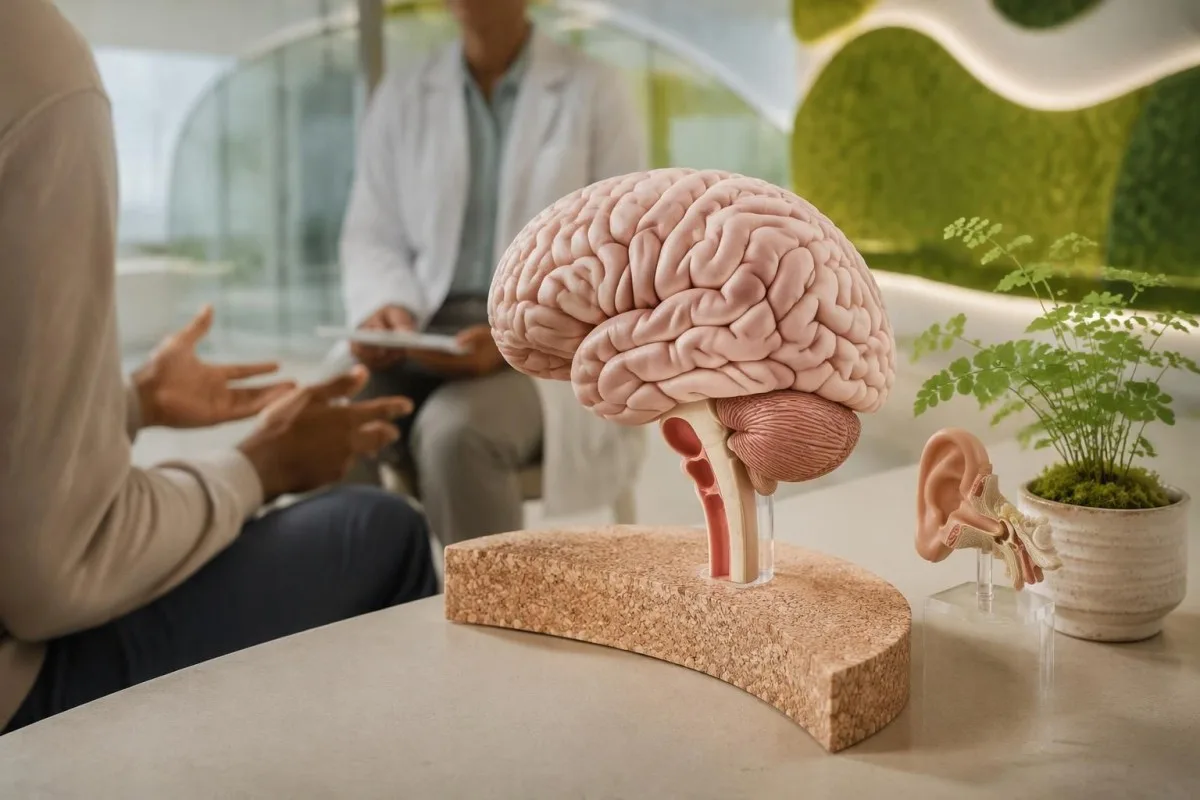
Şizofreni belirtileri halüsinasyonları, sanrıları, dezorganize konuşmayı, motivasyon azalmasını ve bilişsel güçlükleri içerebilir. Tek başına erken değişiklikler şizofreniyi ortaya koymaz: bunu klinik değerlendirme yapar; yakın tehlike, ciddi kafa karışıklığı veya temel ihtiyaçları karşılayamama durumunda acil yardım gerekir.

Temel çıkarımlar
- Şizofreni belirtileri algı, inançlar, konuşma, motivasyon ve düşünmedeki değişiklikleri içerir; 1 belirti veya anormal bir laboratuvar sonucu tanı koymak için yeterli değildir.
- Erken belirtiler içe kapanma, kötü uyku veya performans düşüşü gibi belirtiler özgül değildir. Yararlı olacaksa değişiklikleri 7 gün boyunca kaydedin, ancak yeni psikotik deneyimlerin değerlendirilmesini geciktirmeyin.
- Halüsinasyonlar karşılık gelen bir dış uyaran olmaksızın algılanan deneyimlerdir. Yalnızca uykuya dalarken veya uyanırken yaşanan deneyimlerin klinik anlamı, gündüz süren seslerinkinden farklıdır.
- Negatif belirtiler duygusal ifade, konuşma, motivasyon, haz ve sosyal katılımda azalmayı içerir—yaygın olarak tanımlanan 5 alan; birinin tembel olduğunun kanıtı değildir.
- Tanısal zamanlama farklıdır: DSM-5-TR genellikle en az 6 ay süren kesintisiz bir bozulma gerektirirken, ICD-11 en az 1 ay boyunca karakteristik belirtilerin görülmesini gerektirir. Bu eşiklerden herhangi birine ulaşılmadan destek alınmaya başlanmalıdır.
- Kan testleri tıbbi etkenleri araştırabilir ve tedavinin güvenliğini izleyebilir; şizofreni tanısı koyan, rutin olarak kullanılan doğrulanmış 0 kan testi eşiği vardır.
- Acil yardım yakın bir kendine zarar verme riski, kişinin uygulayabileceği tehlikeli emirler, ağır kafa karışıklığı veya yemek ya da içmekte yetersizlik durumlarında gerekir. Birleşik Krallık'ta acil tehlike varsa 999 veya 112'yi arayın.
- Tedavi genellikle ilaç tedavisini, psikolojik bakımı ve pratik desteği bir arada sunar. NICE, psikoz için bireysel BDT kapsamında planlanmış en az 16 seans önerir.
Şizofreninin hangi erken belirtileri değerlendirilmelidir?
Şizofreninin erken belirtileri sosyal geri çekilmeyi, işlevsellikte düşüşü, alışılmadık deneyimleri ve uyku ya da düşünme biçimindeki değişiklikleri içerebilir; ancak bunların hiçbiri tek başına tanı koydurmaz. Günlük yaşamın 2 veya daha fazla alanını etkileyen yeni bir belirti kümesi, özellikle kişi korkuyorsa veya olağan becerilerini yitiriyorsa dikkate alınmalıdır.

Kişinin başlangıç düzeyine göre değişim bir davranışın başkasına alışılmadık görünüp görünmediğinden daha önemlidir. Örneğin, daha önce keyif aldığı 3 etkinliğe katılmayı bırakan, sohbetleri takip etmekte zorlanan ve giderek daha kuşkucu hâle gelen varsayımsal bir öğrencinin değerlendirilmesi, her zaman yalnızlığı tercih etmiş birininkinden farklı olmalıdır.
Uyku düzenindeki bozulma bir ipucudur, kesin bir yargı değil. Örneğin, sınav döneminde gecede 3 saat uyuyan varsayımsal bir yetişkin, bitkinlik nedeniyle konsantrasyon güçlüğü veya olağandışı algılar yaşayabilir; şu konudaki rehberimiz yetersiz uyku ve testler uyku öyküsünün eşlik eden laboratuvar bulgularının yorumlanışını da neden değiştirdiğini açıklar.
Kantesti bir yapay zekâ kan testi analizörüdür eşlik eden laboratuvar bulgularını açıklayabilir, ancak erken dönemdeki davranış değişikliklerinin şizofreniyi temsil edip etmediğini belirleyemez. Şirketimizi ve amacımızı açıklayan sayfamız rolümüzü tanımlar; 7 günlük belirti kaydı, bir psikiyatrik tanı üreten bir veri değil, klinisyenle paylaşılacak bir kayıttır.
NICE, sıkıntı ve sosyal işlevsellikte düşüşe geçici veya hafif psikotik belirtiler ya da belirli diğer risk göstergeleri eşlik ettiğinde gecikmeden sevk önerir (NICE, 2014). Kaygı verici 1 olayın ardından yapılan değerlendirme depresyonu, travmayı, madde etkilerini veya gelişmekte olan bir psikotik bozukluğu saptayabilir; bu, otomatik olarak şizofreni tanısı konacağı anlamına gelmez.
Halüsinasyonlar nasıl hissettirir ve bunlara başka neler neden olur?
Halüsinasyonlar karşılık gelen bir dış uyaran olmaksızın yaşanan duyusal deneyimlerdir; sesler duymak şizofrenide yaygındır, ancak halüsinasyonlar başka durumlarda da görülür. Değerlendirmede en az 3 soru birbirinden ayrılır: ne yaşandığı, ne zaman yaşandığı ve bunun sıkıntı ya da tehlike yaratıp yaratmadığı.
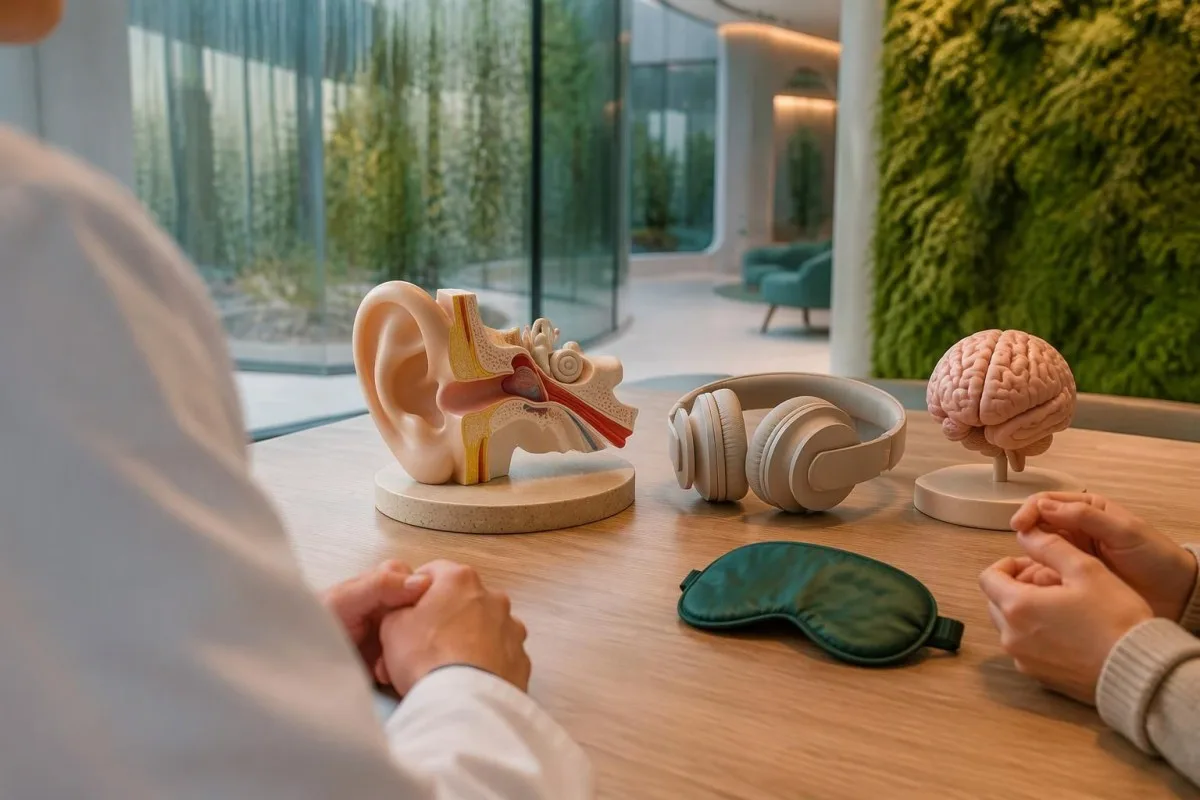
İşitsel deneyimler yorum, konuşma, müzik veya talimatlar şeklinde olabilir ve içsel ya da dışsal gibi algılanabilir. Bir klinisyen 24 saatlik dönemde deneyimlerin kişi tamamen uyanıkken olup olmadığını, ne kadar sürdüğünü ve çevresel seslerin bunları açıklayıp açıklayamayacağını sorabilir; seslerin başın içinden geliyor olması onları kendiliğinden zararsız kılmaz.
Uykuya geçişte yaşanan deneyimler sürekli uyanıklık halüsinasyonlarından farklıdır ve psikotik bir bozukluk olmadan da görülebilir. Alışılmadık algılar yalnızca uykuya dalarken veya uyanırken meydana geliyorsa, gündüz aşırı uykululuk ve ilişkili belirtiler uyku değerlendirmesine yöneltebilir; şu sayfamız narkolepsi testlerini açıklıyor klinisyenlerin uykuya ilişkin 1'den fazla ipucunu neden kullandığını açıklar.
Duyusal bozukluk, yas, ilaçlar, madde intoksikasyonu, yoksunluk ve nörolojik hastalık da halüsinasyonlara neden olabilir. Yeni görsel deneyimler ve 2 gün boyunca dalgalanan dikkat yaşayan varsayımsal 72 yaşındaki bir kişinin, geç başlangıçlı şizofreni olduğu varsayılmak yerine deliryum veya başka bir tıbbi neden açısından değerlendirilmesi gerekir.
Command voices require a safety assessment, not an automatic assumption that someone will act on them. Ask about 3 concrete factors: what the voice says, whether the person feels compelled to obey, and whether they can stay safe; commands involving harm with intent or inability to resist warrant immediate help.
Sanrılar, kaygıdan veya sıra dışı inançlardan nasıl farklıdır?
Delusions are beliefs held with strong conviction despite compelling contrary evidence, assessed within the person's cultural and social context. Clinicians examine at least 3 dimensions—conviction, openness to alternatives, and consequences—rather than diagnosing schizophrenia because a belief sounds unfamiliar or implausible to an observer.
Persecutory delusions can involve beliefs that others are monitoring, targeting, or plotting against the person; referential delusions can involve interpreting ordinary events as personally directed messages. A hypothetical person changing travel routes 4 times to avoid an alleged surveillance team may need assessment of both the belief and the resulting disruption.
Real threats must not be dismissed as delusions. Abuse, discrimination, stalking, and exploitation can occur, including in people with established psychiatric diagnoses; 1 unusual detail does not invalidate an entire account, and a clinician should investigate plausible safety concerns rather than use psychiatric history as a shortcut.
Mood timing changes the differential diagnosis. A hypothetical adult who develops grandiose beliefs during 5 days of markedly increased energy and little need for sleep may have a manic episode; our mood swings and laboratories explains why testing can address contributors without distinguishing bipolar disorder from schizophrenia.
Repeated confrontation often damages trust without resolving a firmly held belief. A supporter can use 2 steps: acknowledge the fear or distress, then offer practical help without endorsing the explanation; discussing whether the person is eating, sleeping, or feeling safe is usually more useful than trying to win an argument.
Şizofreninin negatif belirtileri nelerdir?
Negative symptoms of schizophrenia describe reductions in ordinary emotional expression, speech, motivation, pleasure, or social engagement. These 5 domains are commonly termed blunted affect, alogia, avolition, anhedonia, and asociality; they describe difficulties in functioning, not character flaws or a person's capacity to care.

Avolition means difficulty initiating or sustaining purposeful activity, even when the person understands its value. A hypothetical adult may want to prepare breakfast yet remain unable to begin for 2 hours; simply adding pressure can miss problems with initiation, planning, fatigue, or anticipation of reward.
Reduced expression does not reliably reveal the intensity of someone's internal feelings. A person who gives 1-word answers or shows little facial movement may still feel affection, anxiety, or sadness; communication should allow extra time and avoid interpreting a quiet response as indifference or refusal to participate.
Secondary negative symptoms can arise from depression, sedating medicines, ongoing paranoia, substance use, or a low-stimulation environment. Our low motivation laboratory guide addresses selected medical contributors, but 1 thyroid or vitamin result cannot distinguish primary negative symptoms from these overlapping causes.
Pleasure can be uneven: some people struggle more with anticipating enjoyment than with enjoying an activity once it starts. A practical experiment is 1 short, supported activity chosen by the person, followed by asking how it actually felt; the result guides support, not a diagnosis or a promise of recovery.
Şizofreniye hangi bilişsel ve konuşma değişiklikleri eşlik edebilir?
Cognitive changes can affect attention, working memory, processing speed, and planning, while disorganized speech can make connections between ideas difficult to follow. These are distinct problems: an assessment should separate at least 2 issues—trouble organizing thought and trouble performing a task under everyday demands.

Disorganized speech may involve frequent derailment, answers loosely connected to questions, or speech that becomes difficult to understand. A hypothetical conversation moving through 4 unrelated topics can raise concern, but language proficiency, hearing, anxiety, developmental differences, and the person's usual communication style must be considered before interpreting it.
Working-memory difficulty can make multistep tasks unexpectedly hard. Someone may remember the first of 3 instructions but lose the remaining steps; offering one instruction at a time, using reminders, and reducing distractions are accommodations that can help before the precise cause of the difficulty is established.
A lifelong attention pattern is different from a recent decline. Our adult ADHD symptom guide explains why a history extending back to childhood matters; a new deterioration over 2 months should not be explained away by an unconfirmed ADHD label.
At Kantesti, we treat laboratory explanations of fatigue or brain fog as separate from psychiatric diagnostic reasoning. A hypothetical person with corrected anemia who remains unable to follow a 10-minute conversation still needs follow-up; improvement in a laboratory value does not prove that cognitive symptoms have resolved or identify their cause.
Yetişkinlerde şizofreni belirtileri yaşa göre nasıl değişir?
Schizophrenia symptoms in adults vary in onset, severity, and impact; the same symptom can have different implications at different ages. A first presentation at 22 and a first presentation at 72 both need assessment, but later onset increases the need to investigate medical, neurological, medication, and sensory contributors.

Schizophrenia commonly begins in late adolescence or early adulthood, but age alone cannot confirm or exclude it. For a hypothetical 24-year-old, clinicians may reconstruct the relationship between missed work, unusual beliefs, substance exposure, and sleep across several months instead of relying only on what happens during 1 appointment.
First-onset psychosis in an older adult should prompt careful review of medicines, cognition, physical health, hearing, and vision. Our ileri yaşta ilaçların etkilerine ilişkin rehberimizi explains why a newly added treatment or a dose change 2 weeks earlier can be a more useful clue than a broad psychiatric label.
People can have episodic worsening, persistent difficulties, or substantial improvement with treatment and support. A hypothetical adult managing work for 5 years before a recurrence does not erase the original diagnosis; equally, a first psychotic episode does not establish what the person's long-term course will be.
Schizophrenia is not a split personality, and psychosis does not mean someone is inherently violent. Risk assessment concerns specific circumstances—such as intoxication, severe fear, access to means, or expressed intent—not a diagnosis alone; 1 frightened presentation should not define how family members or services treat a person.
Klinik değerlendirme şizofreni tanısını nasıl koyar?
Schizophrenia is diagnosed clinically, using the symptom pattern, duration, functioning, and exclusion of better explanations—not a blood test or online checklist. DSM-5-TR generally requires at least 6 months of continuous disturbance; ICD-11 requires characteristic symptoms for at least 1 month, with additional requirements in both systems.
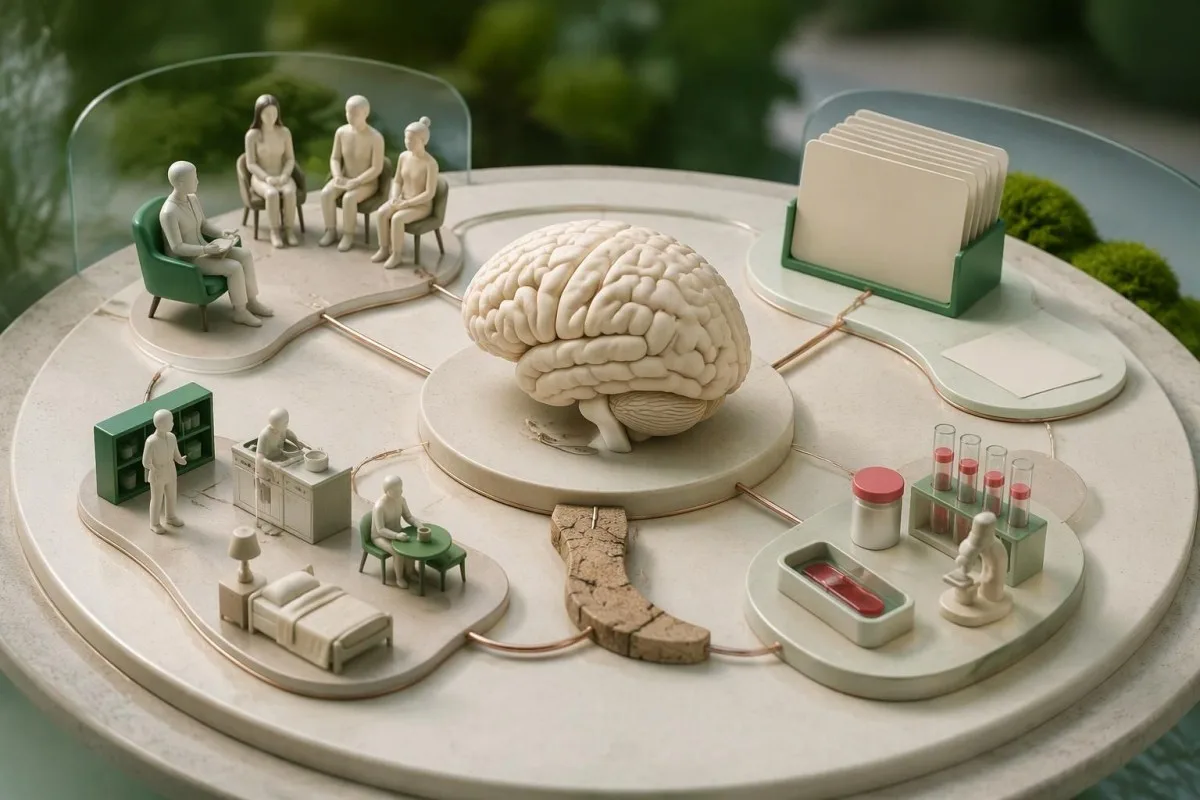
DSM-5-TR requires at least 2 characteristic symptoms during a significant portion of a 1-month period, or less if successfully treated, with at least one being delusions, hallucinations, or disorganized speech. It also requires functional deterioration and a longer course of disturbance; the criteria are not a self-scoring tool.
ICD-11 uses a different structure and requires at least 2 characteristic symptoms, including at least one from its core group, present most of the time for 1 month or more. WHO's clinical requirements emphasize the overall presentation and differential diagnosis rather than mechanically translating every DSM rule into ICD terminology (WHO, 2024).
Assessment often takes more than 1 conversation, particularly when symptoms are new or the history is unclear. With appropriate consent and attention to confidentiality, information from relatives, previous records, and the person's own account can clarify timing; lack of agreement between accounts should be explored rather than treated as proof that someone is unreliable.
Support should not wait for a 6-month diagnostic threshold to pass. A first episode may initially receive a broader working diagnosis while treatment and investigation proceed; our Sorumlu yapay zekâ ilkelerimiz reflect why automated laboratory interpretation must not substitute for this evolving clinical judgment.
Kan testleri şizofreniyi saptayabilir veya belirtileri açıklayabilir mi?
No routine blood test diagnoses schizophrenia, and normal results do not rule it out. Laboratories serve 2 different purposes in this setting: investigating plausible medical contributors and establishing physical-health or medication-safety baselines; neither purpose turns a biomarker panel into a schizophrenia screening test.

Testing is selected from the history and examination, rather than ordered as an unlimited panel. A clinician may consider a CBC, electrolytes, kidney or liver tests, thyroid function, B12, or other investigations; our tiroid hormonu açıklamamız shows why 2 related thyroid measurements can be more informative than one isolated result.
B12 deficiency can contribute to neurological or cognitive symptoms, sometimes without marked anemia. In a hypothetical example, B12 of 160 pg/mL against that laboratory's 200–900 pg/mL interval warrants medical review; our Sınırda B12 yorumu explains why assay ranges and follow-up testing matter, without claiming that deficiency explains every symptom.
Kantesti bir AI kan tahlili yorumlama platformudur that can help explain these 2 laboratory roles without converting results into a psychiatric label. We encourage readers to bring the original report, medicine list, and symptom timeline to the assessing clinician; an interpretation should preserve uncertainty when symptoms and laboratory findings do not fit neatly together.
Research measurements of immune activity, metabolism, proteins, or genetic associations are not validated routine diagnostic thresholds for schizophrenia. A result showing 1 elevated inflammatory marker may reflect many unrelated processes; commercial-sounding claims that a panel can confirm psychosis should be questioned for independent validation and clear intended-use limits.
Hangi durumlar şizofreniye benzeyebilir?
Psychosis can arise from mood disorders, substances, medicines, delirium, and neurological or other medical illnesses, as well as schizophrenia-spectrum disorders. Timing is central: symptoms developing over 2 days with fluctuating attention require a different workup from a gradual change over several months with preserved alertness.
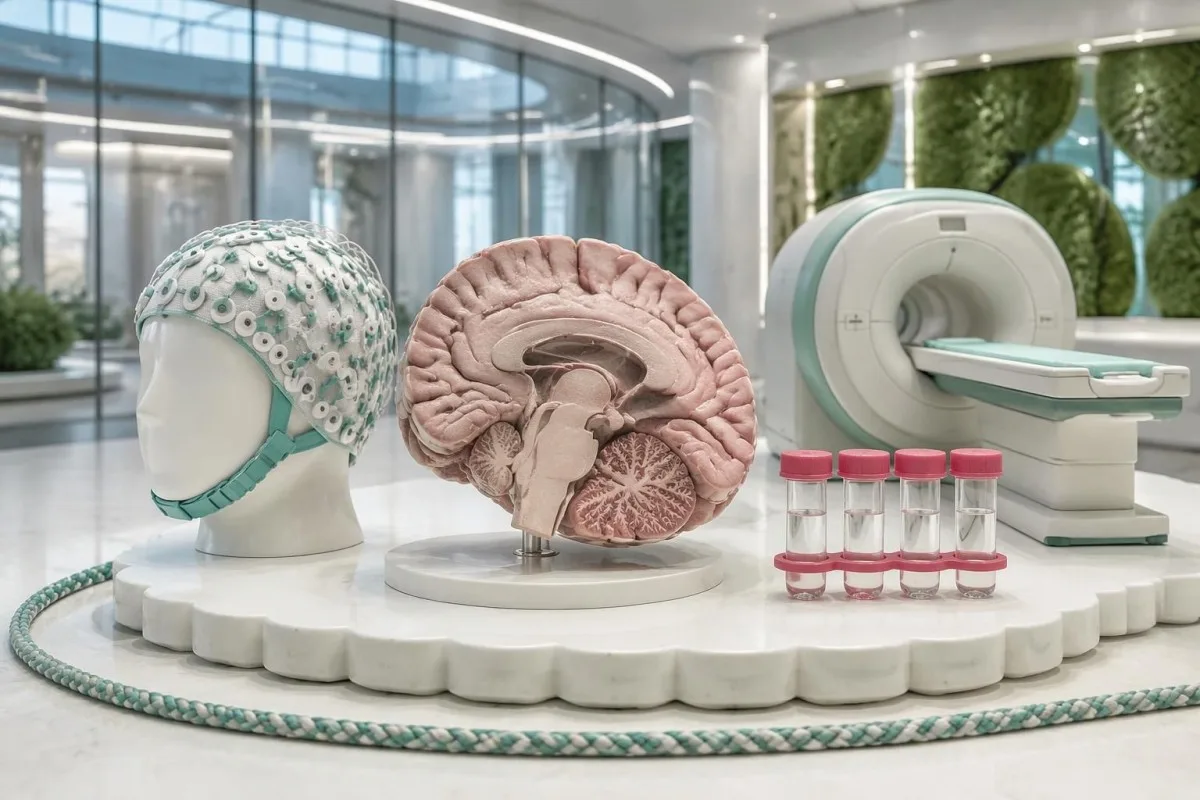
Delirium typically involves disturbed attention and an acute, fluctuating course, and it can include hallucinations or unusual beliefs. A hypothetical person alternating between coherent conversation and marked disorientation over 24 hours needs urgent medical assessment; a pre-existing schizophrenia diagnosis does not make delirium impossible.
New seizures, abnormal movements, reduced consciousness, or rapid cognitive decline can raise concern for an inflammatory brain disorder or another neurological cause. Our autoimmune encephalitis workup explains how MRI, EEG, and cerebrospinal fluid may contribute; 1 positive serum antibody does not independently establish that diagnosis.
Rare medical causes deserve targeted investigation when the accompanying pattern fits, not blanket screening of everyone. Severe episodic abdominal symptoms plus neurological or psychiatric changes can prompt a porphyria workup; our porphyria testing explanation describes why a correctly timed urine test can matter more than 1 general blood panel.
Substance and medication histories should be specific and nonjudgmental. Ask what was taken, approximate amounts, and timing during the preceding 48 hours and earlier weeks; cannabis, stimulants, corticosteroids, and withdrawal states can change diagnostic reasoning, while a negative toxicology screen cannot exclude every exposure or every detection-window limitation.
Şizofreni belirtileri ne zaman acil yardım gerektirir?
Seek emergency help for immediate danger, suicidal intent, dangerous commands someone may act on, severe confusion, or inability to meet basic needs. In the UK, call 999 or 112 for an emergency; new psychotic symptoms without immediate danger still warrant prompt assessment rather than waiting for a routine laboratory appointment.
Possible catatonia needs urgent assessment, including when someone becomes unusually immobile, stops speaking, maintains unusual postures, or refuses fluids. A hypothetical adult drinking nothing for 24 hours and remaining largely motionless should not be managed as simple low motivation; fever, rigidity, or reduced responsiveness further increases concern.
Sudden speech difficulty, one-sided weakness, collapse, or a severe new headache requires emergency medical evaluation. Our inme uyarı işaretleri explain why 1 new focal neurological sign should not be attributed to psychiatric illness, even when hallucinations or a previous mental-health diagnosis are also present.
New psychosis after childbirth is a medical emergency, particularly with little sleep, rapidly changing mood, or confused behavior. If a parent develops these changes 1 week after delivery, seek urgent assessment and ensure both parent and infant have safe support; do not wait to see whether the symptoms fit schizophrenia.
If there is no immediate danger, contact a local crisis service, primary-care clinician, or early-intervention service promptly. In England, NHS 111 offers a mental-health option; in the US, 988 provides crisis support and 911 handles immediate danger, while readers elsewhere should use local emergency or crisis services and avoid leaving an immediately unsafe person alone when it is safe to remain.
Psikoz yaşıyor olabilecek birine nasıl yardım edebilirsiniz?
Help by listening calmly, checking immediate safety, and offering a specific route to assessment, rather than arguing about beliefs or announcing a diagnosis. A useful first conversation covers 3 practical needs: whether the person feels safe, whether they are eating and sleeping, and what assistance they would accept.

Short sentences and a quieter environment can make communication easier when attention is strained. Offer 2 realistic choices, such as contacting a clinician together or accompanying the person to an assessment, instead of several simultaneous demands; avoid crowding, sudden touching, or using threats to force cooperation.
Validate distress without confirming an unverified explanation. If someone believes their food is being tampered with, a supporter can acknowledge the fear and offer an acceptable meal while arranging help; asking how much they have eaten in the last 24 hours identifies a practical risk without requiring a debate about the belief.
A brief timeline can improve an appointment more than a long list of labels. Record 5 kinds of information: observed changes, approximate onset, sleep, substances or medicine changes, and effects on daily functioning; distinguish what you directly observed from what someone else reported, and ask the person's permission whenever possible.
Kantesti'nin gizlilik ve veri rehberi is relevant when accompanying laboratory reports contain sensitive personal information. Share only what is needed and seek consent where possible; having access to 1 family member's report does not automatically authorize uploading their records, and emergency safety concerns should be addressed through clinical services rather than an AI tool.
İlk psikotik ataktan sonra hangi tedavi yardımcı olur?
Treatment for first-episode psychosis commonly combines antipsychotic medication, psychological interventions, and practical support, tailored to diagnosis, preferences, and safety. NICE recommends individual CBT with at least 16 planned sessions and family intervention where appropriate; treatment should address everyday functioning as well as voices or delusions.

Medication choice is a shared clinical decision, including discussion of metabolic effects, movement symptoms, sedation, hormonal effects, and cardiovascular considerations. NICE advises treating an antipsychotic prescription as an explicit individual trial, generally assessing response after 4–6 weeks at an optimum dose while reviewing tolerability throughout (NICE, 2014).
Psychological treatment does not require the clinician to endorse a delusion or tell someone that their experience is imaginary. CBT for psychosis explores distress, interpretations, coping, and functioning; NICE describes family intervention as at least 10 planned sessions over 3 months to 1 year, adapted to the family's circumstances.
Clozapine is recommended for treatment-resistant schizophrenia after inadequate response to 2 adequate antipsychotic trials, subject to clinical assessment and local requirements. The APA guideline also recommends clozapine when suicide risk remains substantial despite other treatments (APA, 2020); our clozapine safety monitoring guide explains why monitoring is treatment-specific.
Recovery goals should be personal and measurable rather than limited to symptom counts. A hypothetical first goal might be returning to 2 supported study sessions weekly or preparing a regular meal; occupational, educational, housing, and social support can address barriers that medication alone does not remove, and prescriptions should never be changed through an automated laboratory interpretation.
Fiziksel sağlık kontrolleri neden şizofreni bakımının bir parçasıdır?
Physical-health checks identify medication effects and health risks that deserve care independently of psychiatric symptoms. NICE recommends baseline assessment and repeat glucose or HbA1c and lipid testing at 12 weeks, 1 year, and annually during antipsychotic treatment; individual medicines and existing conditions may require additional monitoring.

Weight, blood pressure, movement symptoms, nutrition, and activity deserve discussion alongside laboratory results. NICE recommends weighing weekly for the first 6 weeks of antipsychotic treatment, then at 12 weeks, 1 year, and annually; early changes can support a timely conversation about treatment options rather than blame about willpower.
HbA1c of 6.5% equals 48 mmol/mol and is a diabetes diagnostic threshold, usually requiring confirmation when there are no clear symptoms. Our yüksek glukoz uyarı işaretleri explains why thirst, frequent urination, weight loss, or acute illness can change urgency; this threshold says nothing about the severity of psychosis.
Some antipsychotics raise prolactin, which can affect sexual function, menstruation, fertility, or other aspects of health. A result 2 times the laboratory upper limit needs interpretation with symptoms, medicines, sampling conditions, and sometimes repeat testing; our mildly elevated prolactin guide explains why one result should not trigger unsupervised medication changes.
Smoking changes can alter clozapine exposure, because combustion products—not nicotine alone—affect its metabolism. A hypothetical person stopping cigarettes during a 1-week admission needs the prescribing team's attention; diet and supplements also deserve review, but no meal plan, vitamin panel, or supplement regimen has been established as a substitute for schizophrenia treatment.
Araştırma yayınları ve laboratuvar yorumlarının sınırları
The research references below distinguish schizophrenia guidance from supporting laboratory education. The 2 Zenodo guides explain serum proteins and immune tests; they are not schizophrenia diagnostic studies, and their DOIs do not establish peer review, psychiatric screening accuracy, or evidence that these tests should be ordered for early behavioral changes.
Kantesti, bir AI laboratuvar test yorumlama hizmetidir that explains reported measurements rather than diagnosing psychiatric disorders. Our teknik ve klinik gözetimimiz describes the scope of our methodology; performance on laboratory interpretation is not evidence of accuracy for schizophrenia assessment, and those are 2 separate validation questions.
Serum albumin, globulins, and the A/G ratio reflect broad physiological processes, not a schizophrenia signature. Our serum proteinleri kılavuzunu provides context for that laboratory family; a hypothetical A/G ratio of 0.9 must be interpreted against its laboratory interval and clinical setting, not converted into a psychiatric risk score.
Complement and ANA testing answer targeted immune questions, and indiscriminate testing can produce findings unrelated to the presenting symptoms. Our kompleman ve ANA rehberi explains those limits; an isolated ANA titer of 1:80 does not establish an autoimmune explanation for psychosis or justify immune treatment without supporting clinical evidence.
Kantesti's role is to help readers understand accompanying reports while keeping diagnosis and urgent care with qualified clinicians. For a first episode—or a change after 5 stable years—bring the symptom timeline and original results to assessment; the NICE, WHO, and APA references below support the clinical discussion, while the repository publications support narrower laboratory education.
Sıkça sorulan sorular
Şizofreninin ilk belirtileri nelerdir?
Şizofreninin olası erken belirtileri arasında içe kapanma, işlevsellikte azalma, olağandışı algılar, kuşkuculuk ve düşünme ya da uyku düzenindeki değişiklikler yer alır; ancak bu bulgular şizofreni tanısı koymak için yeterince özgül değildir. Yaşamın 2 veya daha fazla alanını etkileyen bir belirti kümesi, değerlendirmeyi özellikle yararlı hâle getirebilir; ancak bu, tanı için bir eşik değildir. Yeni sesler duymak, olağandışı inançlara güçlü biçimde bağlı olmak ya da belirgin bir gerileme, gecikmeden klinik değerlendirme gerektirir. Yardım almak için belirtilerin aylarca sürmesini veya kan testi sonucunu beklemeyin.
Şizofreni olup sesler duymamak mümkün mü?
Bir kişi sesler duymadan da şizofreni hastası olabilir; çünkü işitsel varsanılar her klinik tabloda bulunmak zorunda değildir. DSM-5-TR, aktif dönemde en az iki karakteristik belirtinin bulunmasını ve bunlardan en az birinin sanrılar, varsanılar veya dezorganize konuşma olmasını; ayrıca süre ve işlevsellikle ilgili ek ölçütlerin karşılanmasını gerektirir. Bu nedenle bir kişide işitsel varsanılar olmaksızın belirgin sanrılar veya dezorganize konuşma görülebilir. Klinisyen ayrıca diğer psikiyatrik, maddeyle ilişkili ve tıbbi açıklamaları da değerlendirmelidir.
Kan testi şizofreni tanısı koyabilir mi?
Şizofreniyi teşhis edebilecek veya dışlayabilecek rutin bir kan testi yoktur ve bu amaçla doğrulanmış rutin biyobelirteç eşiği sayısı 0’dır. Kan testleri, tıbbi etkenleri araştırmak veya ilaç güvenliğini izlemek için kullanılabilir; ancak bunlar farklı klinik sorulardır. Örneğin öykü bu sorunlara işaret ediyorsa tiroid veya B12 testleri uygun olabilir. Laboratuvar bulgularının normal olması, devam eden varsanıları, sanrıları veya işlevsellikteki gerilemeyi görmezden gelmenin güvenli olduğu anlamına gelmez.
Düşük motivasyon ve sosyal geri çekilme şizofreni belirtileri midir?
Low motivation and social withdrawal can occur among the negative symptoms of schizophrenia, but they also occur with depression, sleep problems, medicines, stress, and other conditions. Clinicians commonly describe 5 negative-symptom domains: reduced expression, speech, motivation, pleasure, and social engagement. The assessment considers the person's baseline, associated symptoms, and alternative causes rather than counting behaviors on a checklist. New or persistent changes affecting daily life deserve assessment without assuming schizophrenia.
Şizofreni tanısı konmadan önce belirtilerin ne kadar sürmesi gerekir?
Gerekli süre, tanı çerçevesine ve belirtilerin tüm örüntüsüne bağlıdır. DSM-5-TR, genellikle en az 6 ay süren kesintisiz bir bozulma dönemi gerektirir; buna, genellikle en az 1 ay süren ya da tedaviyle başarılı sonuç alınmışsa daha kısa olabilen etkin bir evre de dahildir. ICD-11, ek tanı koşullarıyla birlikte, en az 1 ay boyunca belirtilerin çoğu zaman görülmesini gerektirir. Bu eşikler tanıya yöneliktir; yardım arama zamanını belirlemez: ilk psikotik atak derhal değerlendirilmelidir.
Şizofreni olasılığı bulunan biri acil servise ne zaman başvurmalı?
Emergency care is needed for imminent self-harm, dangerous commands someone may act on, severe confusion, reduced responsiveness, or inability to meet basic needs. In the UK, call 999 or 112 for immediate danger; in the US, call 911 for an emergency or 988 for crisis support. Sudden neurological symptoms, fever with rigidity, and new psychosis after childbirth also require urgent medical assessment. New psychotic symptoms without immediate danger still warrant prompt contact with a clinician or local crisis service.
Kan tahlili sonuçları ne anlama gelir
Laboratuvar raporunuzu yükleyin; Kantesti'nin AI'ı her biyobelirteci saniyeler içinde sade bir dille açıklar. Dünya genelinde 2 milyondan fazla kişi tarafından kullanılıyor.
Referanslar
- Klein, T., Mitchell, S. & Weber, H. (2026). Serum Proteinleri Rehberi: Globülinler, Albümin ve A/G Oranı Kan Testi. Kantesti AI Tıbbi Araştırma. DOI
- Klein, T., Mitchell, S. & Weber, H. (2026). C3 C4 Kompleman Kan Testi ve ANA Titre Kılavuzu. Kantesti AI Tıbbi Araştırma. DOI
- National Institute for Health and Care Excellence (2014). Psychosis and schizophrenia in adults: prevention and management (CG178). NICE Klinik Kılavuzu.
- World Health Organization (2024). Clinical descriptions and diagnostic requirements for ICD-11 mental, behavioural and neurodevelopmental disorders. Dünya Sağlık Örgütü.
- American Psychiatric Association (2020). The American Psychiatric Association Practice Guideline for the Treatment of Patients With Schizophrenia, Third Edition. American Psychiatric Association Publishing. DOI
- 2 milyondan fazlaAnaliz edilen testler
- 127+Ülkeler
- 100+Diller
Sağlık ekibi hakkında


E-E-A-T Güven Sinyalleri
Deneyim
Hekim liderliğinde laboratuvar yorumlama iş akışlarının klinik incelemesi.
Uzmanlık
Klinik bağlamda biyobelirteçlerin nasıl davrandığına odaklanan laboratuvar tıbbı.
Otorite
Dr. Thomas Klein tarafından tıbbi açıdan incelenmiş; Dr. Sarah Mitchell ve Prof. Dr. Hans Weber'in katkılarıyla hazırlanmıştır.
Güvenilirlik
Alarmı azaltmaya yönelik net takip yollarıyla kanıta dayalı yorumlama.






Tıbbi sorumluluk reddi
Bu makale yalnızca eğitim amaçlıdır ve tıbbi tavsiye niteliği taşımaz. Tanı ve tedavi kararları için her zaman yetkin bir sağlık hizmeti sağlayıcısına danışın.
Yayınlanmış · Yayın ekibiyle iletişime geçin
Kantesti Ltd tarafından yayımlanmıştır; İngiltere ve Galler'de kayıtlı, şirket no. 17090423, Londra, Birleşik Krallık.
