Symptomy schizofrenije mogōm obejmować halucynacyje, urojenia, zdezorganizowano godka, ôgraniczōno motywacyjo i trudności poznawcze. Wczesne zmiany same w sobie niy potwierdzajōm schizofrenije: potwierdzo jōm ôcyna kliniczno, a bezpośrednie zagrożynie, ciynżke splōntanie abo niyzdolność do zaspokojynio podstawowych potrzeb wymagajōm pilnej pōmocy.

Najważniejsze informacje
- Symptomy schizofrenije obejmujōm zmiany w postrzeganiu, przekōnaniach, godce, motywacyji i myślyniu; 1 symptom abo niynormalny wynik laboratoryjny niy mogōm potwierdzić diagnozy.
- Wczesne ôznaki jak wycofanie sie, słaby sen abo pogarszajōnce sie wyniki sōm niespecyficzne. Jeśli to pōmoże, zapisuj zmiany przez 7 dni, ale niy ôdkłodaj ôcyny, kej pojawiajōm sie nowe doznania psychotyczne.
- Halucynacyje sōm spostrzeżyniami bez ôdpowiadajōcego im bodźca zewnyntrznego. Doznania wystympujōnce ino przi zasypianiu abo budzyniu majōm inksze znaczymy kliniczne niż utrzymujōnce sie głosy w czasie dnia.
- Negatywne symptomy obejmujōm ôgraniczōno ekspresyjo emocjonalno, godka, motywacyjo, przijymność i zaangażowanie społeczne — 5 czynsto ôpisywanych ôbszarōw, a niy dowōd na to, że ftoś je leń.
- Czas postawiynio diagnozy ôdmiynnie: DSM-5-TR ôgōlnie wymŏgŏ co nŏjmynij 6 miesiyncy ciōngłego zaburzyńŏ, a ICD-11 wymŏgŏ charakterystycznych ôbjawōw przez co nŏjmynij 1 miesiōnc. Pomoc powinna sie zaczōnć, zanim bydzie ôsiōngniynty kerykolwiek z tych progōw.
- Badania krwi może zbadać medyczne prziczyny i monitorować bezpieczyństwo leczyńŏ; niy ma 0 ôbŏwiōnzujōncych progōw rutynowych badań krwi, kere diŏgnozujōn schizofrenijõ.
- Pomoc nagłŏ je potrzebnŏ, kej grozi bezpośrednie samookaleczyństwo, słychać niebezpieczne nakazy, za kerymi ktoś może pójść, wystympuje ciynżke splōntanie abo niymożność jedzynia abo piciŏ. W UK dzwoń na 999 abo 112, kej grozi bezpośrednie niybezpieczeństwo.
- Leczenie ôgōlnie łōnczy leki, opiekõ psychologicznō i praktyczne wsparcie. NICE zalecŏ co nŏjmynij 16 zaplanowanych sesji indywidualnej CBT na psychozõ.
Kere wczesne ôznaki schizofrenije warto skōntrolować?
Wczesne ôznaki schizofrenije mogōm ôbejmować wycofanie społeczne, pogorszyńy funkcjonowaniŏ, niynŏzwyczajne przeżycia i zmiany we śnie abo myślach, ale żŏdne z nich niy je samo w sobie diŏgnozōm. Nowŏ grupa ôbjawōw, kere wpływajōm na 2 abo wiyncyj ôbszary codziynnego życiŏ, zasługuje na uwagã, ôsobliwie kej ôsobie towarzyszy strach abo utrata ôbyczajnych umiyjyntności.

Zmiana w stosōnku do bazowego poziōmu ôsobye je ważniejszŏ ôd tego, czy zachowanie wydŏ sie niyôbyczajnym komuś inkszymu. Na przikłŏd hipotetyczny student, kerego przestaje chodzić na 3 ôbyczajnie lubiane aktywności, mō problem ze śledzyniym kōnwersacyji i stŏwŏ sie coraz barzij podejrzliwy, potrzebuje inkszej ôceny niż ktoś, kery ôd zawdy woli samotność.
Zaburzyńy snu je wskazōwkōm, niy wyrokiym. Hipotetyczny dorosły, kerego śpi po 3 godziny na noc w czasie egzaminōw, może mieć słabõ kōncentracyjõ abo niynŏzwyczajne spostrzeżyniŏ z wyczerpaniŏ; nasz przewodnik ô słabym śnie i badaniach wyjaśniŏ, czamu historia snu zmienia tyż sposōb interpretacyje towarzyszōncych wynikōw laboratoryjnych.
Kantesti to analizator AI do badań krwi kere mogōm wyjaśnić towarzyszōnce wyniki laboratoryjne, ale niy mogōm ôkryślić, czy wczesne zmiany zachowaniŏ ôznaczajōm schizofrenijõ. Nasze firma i cel ôpisujōm naszõ rolã; 7-dniowy zapis ôbjawōw je czymś, co trza pokŏzać klinicyście, a niy danymi wejściowymi, kere tworzōm diagnozõ psychiatrycznõ.
NICE zalecŏ skierowanie bez ôpōźniyniŏ, kej wystympujōm cierpiynie i pogorszyńy funkcjonowaniŏ społecznego ôsobliwie wraz z przejściowymi abo osłabionymi ôbjawami psychotycznymi, abo inkszymi ôkryślōnymi wskaźnikami ryzyka (NICE, 2014). Ôcena po 1 niepokojōncym epizodzie może wykryć depresyjõ, traumã, skutki używanio substancyji abo rozwijajōnce sie zaburzyńy psychotyczne; niy przipisuje ôna automatycznie etykiety schizofrenije.
Jak sie ôdczuwo halucynacyje i co jeszcze je wywołuje?
Halucynacyje to doznaniŏ zmysłowe bez ôdpowiadajōncego im zewnyntrznego bodźca; słyszyńy głosōw je czynste przy schizofrenije, ale halucynacyje wystympujōm tyż przy inkszych schorzyńach. Ôcena ôddzielŏ co nŏjmynij 3 pytaniŏ: co sie stało, kej sie stało i czy wywołuje to cierpiynie abo niybezpieczeństwo.
Doznaniŏ słuchowe mogōm brzmieć jak kōmyntŏrz, kōnwersacyjo, muzyka abo instrukcyje i mogōm sie zdŏwać wewnyntrzne abo zewnyntrzne. W ciōngu 24 godzin klinicysta może spytać, czy doznaniŏ wystympujōm w czasie pełnej ôbudy, jak dugo trwajōm i czy mogōm je wyjaśnić dźwiynki ze ôtoczynia; umiejscowiynie wewnōntrz głowy niy ôznaczŏ, że sōm ône automatycznie nieszkodliwe.
Doznaniŏ na granicy snu rōżniōm sie ôd uporczywych halucynacyji na jawie i mogōm wystympować bez zaburzyńŏ psychotycznego. Jeźli niynŏzwyczajne spostrzeżyniŏ wystympujōm ino przy zasypianiu abo ôbudzaniu, nadmierna senność w ciōngu dnia i powiōnzane z niōm ôbjawy mogōm wskŏzywać na potrzebã ôceny snu; nasze wyjaśniynie badań na narkolepsyjõ ôpisuje, czamu klinicyści używajōm wiyncyj niż 1 wskŏzōwki zwiōnzanej ze snem.
Upośledzyńy zmysłōw, żałoba, leki, ôtrucie, ôdstawiynie i schorzyńa neurologiczne tyż mogōm powodować halucynacyje. Hipotetyczny 72-latek z nowymi doznaniami wzrokowymi i zmieniajōncōm sie uwagōm przez 2 dni potrzebuje ôceny pod kōntem majaczenia abo inkszej medycznej prziczyny, a niy założyniŏ, że mo schizofrenijõ ô późnym poczōntku.
Command voices require a safety assessment, not an automatic assumption that someone will act on them. Ask about 3 concrete factors: what the voice says, whether the person feels compelled to obey, and whether they can stay safe; commands involving harm with intent or inability to resist warrant immediate help.
Czym sie rōżniōm urojenia ôd martwiynio sie abo niytypowych przekōnań?
Delusions are beliefs held with strong conviction despite compelling contrary evidence, assessed within the person's cultural and social context. Clinicians examine at least 3 dimensions—conviction, openness to alternatives, and consequences—rather than diagnosing schizophrenia because a belief sounds unfamiliar or implausible to an observer.
Persecutory delusions can involve beliefs that others are monitoring, targeting, or plotting against the person; referential delusions can involve interpreting ordinary events as personally directed messages. A hypothetical person changing travel routes 4 times to avoid an alleged surveillance team may need assessment of both the belief and the resulting disruption.
Real threats must not be dismissed as delusions. Abuse, discrimination, stalking, and exploitation can occur, including in people with established psychiatric diagnoses; 1 unusual detail does not invalidate an entire account, and a clinician should investigate plausible safety concerns rather than use psychiatric history as a shortcut.
Mood timing changes the differential diagnosis. A hypothetical adult who develops grandiose beliefs during 5 days of markedly increased energy and little need for sleep may have a manic episode; our mood swings and laboratories explains why testing can address contributors without distinguishing bipolar disorder from schizophrenia.
Repeated confrontation often damages trust without resolving a firmly held belief. A supporter can use 2 steps: acknowledge the fear or distress, then offer practical help without endorsing the explanation; discussing whether the person is eating, sleeping, or feeling safe is usually more useful than trying to win an argument.
Jakie sōm negatywne symptomy schizofrenije?
Negative symptoms of schizophrenia describe reductions in ordinary emotional expression, speech, motivation, pleasure, or social engagement. These 5 domains are commonly termed blunted affect, alogia, avolition, anhedonia, and asociality; they describe difficulties in functioning, not character flaws or a person's capacity to care.

Avolition means difficulty initiating or sustaining purposeful activity, even when the person understands its value. A hypothetical adult may want to prepare breakfast yet remain unable to begin for 2 hours; simply adding pressure can miss problems with initiation, planning, fatigue, or anticipation of reward.
Reduced expression does not reliably reveal the intensity of someone's internal feelings. A person who gives 1-word answers or shows little facial movement may still feel affection, anxiety, or sadness; communication should allow extra time and avoid interpreting a quiet response as indifference or refusal to participate.
Secondary negative symptoms can arise from depression, sedating medicines, ongoing paranoia, substance use, or a low-stimulation environment. Our low motivation laboratory guide addresses selected medical contributors, but 1 thyroid or vitamin result cannot distinguish primary negative symptoms from these overlapping causes.
Pleasure can be uneven: some people struggle more with anticipating enjoyment than with enjoying an activity once it starts. A practical experiment is 1 short, supported activity chosen by the person, followed by asking how it actually felt; the result guides support, not a diagnosis or a promise of recovery.
Kere zmiany poznawcze i w godce mogōm towarzyszyć schizofreniji?
Cognitive changes can affect attention, working memory, processing speed, and planning, while disorganized speech can make connections between ideas difficult to follow. These are distinct problems: an assessment should separate at least 2 issues—trouble organizing thought and trouble performing a task under everyday demands.

Disorganized speech may involve frequent derailment, answers loosely connected to questions, or speech that becomes difficult to understand. A hypothetical conversation moving through 4 unrelated topics can raise concern, but language proficiency, hearing, anxiety, developmental differences, and the person's usual communication style must be considered before interpreting it.
Working-memory difficulty can make multistep tasks unexpectedly hard. Someone may remember the first of 3 instructions but lose the remaining steps; offering one instruction at a time, using reminders, and reducing distractions are accommodations that can help before the precise cause of the difficulty is established.
A lifelong attention pattern is different from a recent decline. Our adult ADHD symptom guide explains why a history extending back to childhood matters; a new deterioration over 2 months should not be explained away by an unconfirmed ADHD label.
At Kantesti, we treat laboratory explanations of fatigue or brain fog as separate from psychiatric diagnostic reasoning. A hypothetical person with corrected anemia who remains unable to follow a 10-minute conversation still needs follow-up; improvement in a laboratory value does not prove that cognitive symptoms have resolved or identify their cause.
Jak symptomy schizofrenije u dorosłych zmieniajōm sie z wiekym?
Schizophrenia symptoms in adults vary in onset, severity, and impact; the same symptom can have different implications at different ages. A first presentation at 22 and a first presentation at 72 both need assessment, but later onset increases the need to investigate medical, neurological, medication, and sensory contributors.

Schizophrenia commonly begins in late adolescence or early adulthood, but age alone cannot confirm or exclude it. For a hypothetical 24-year-old, clinicians may reconstruct the relationship between missed work, unusual beliefs, substance exposure, and sleep across several months instead of relying only on what happens during 1 appointment.
First-onset psychosis in an older adult should prompt careful review of medicines, cognition, physical health, hearing, and vision. Our przewodnika po działaniu lekōw u starszych ôsōb explains why a newly added treatment or a dose change 2 weeks earlier can be a more useful clue than a broad psychiatric label.
People can have episodic worsening, persistent difficulties, or substantial improvement with treatment and support. A hypothetical adult managing work for 5 years before a recurrence does not erase the original diagnosis; equally, a first psychotic episode does not establish what the person's long-term course will be.
Schizophrenia is not a split personality, and psychosis does not mean someone is inherently violent. Risk assessment concerns specific circumstances—such as intoxication, severe fear, access to means, or expressed intent—not a diagnosis alone; 1 frightened presentation should not define how family members or services treat a person.
Jak ôcyna kliniczno potwierdzo schizofrenijo?
Schizophrenia is diagnosed clinically, using the symptom pattern, duration, functioning, and exclusion of better explanations—not a blood test or online checklist. DSM-5-TR generally requires at least 6 months of continuous disturbance; ICD-11 requires characteristic symptoms for at least 1 month, with additional requirements in both systems.
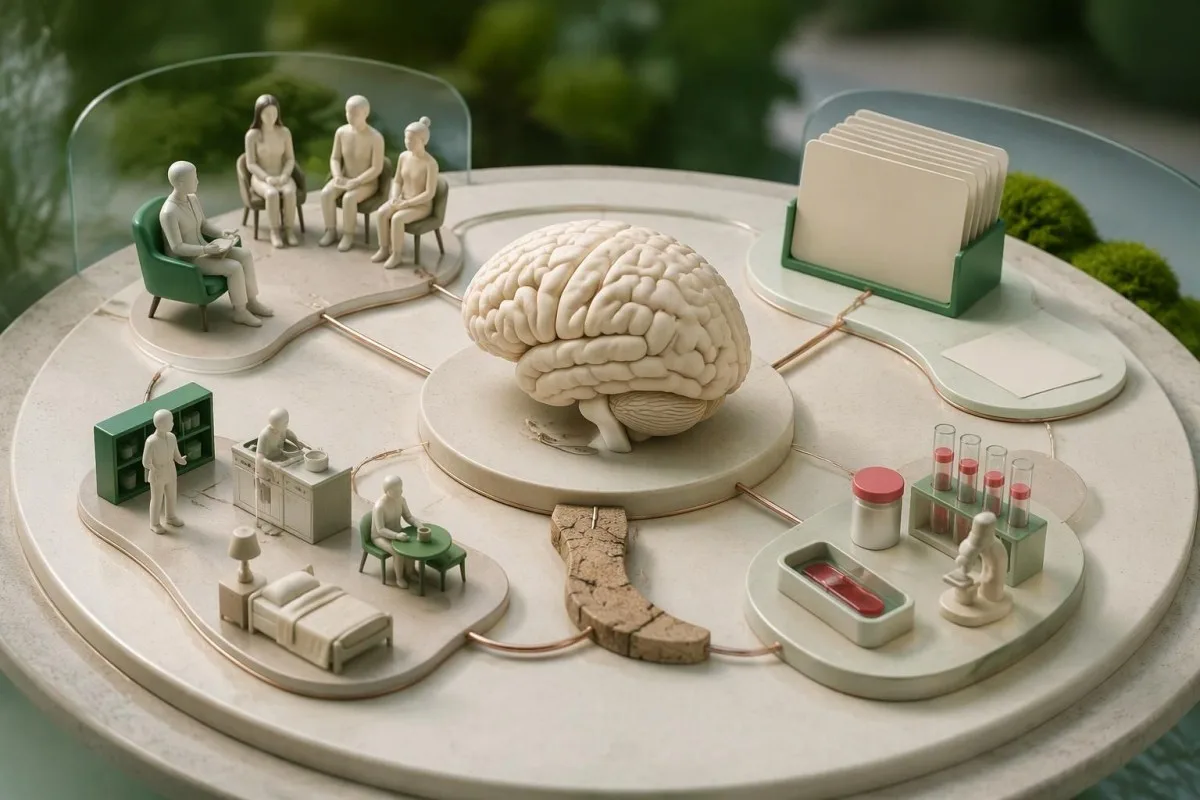
DSM-5-TR requires at least 2 characteristic symptoms during a significant portion of a 1-month period, or less if successfully treated, with at least one being delusions, hallucinations, or disorganized speech. It also requires functional deterioration and a longer course of disturbance; the criteria are not a self-scoring tool.
ICD-11 uses a different structure and requires at least 2 characteristic symptoms, including at least one from its core group, present most of the time for 1 month or more. WHO's clinical requirements emphasize the overall presentation and differential diagnosis rather than mechanically translating every DSM rule into ICD terminology (WHO, 2024).
Assessment often takes more than 1 conversation, particularly when symptoms are new or the history is unclear. With appropriate consent and attention to confidentiality, information from relatives, previous records, and the person's own account can clarify timing; lack of agreement between accounts should be explored rather than treated as proof that someone is unreliable.
Wsparcie niy powinno czekać, aż minie 6-miesiynczny próg diagnostyczny. Piyrszy epizod może na poczóntku dostoć szerszóm roboczóm diagnoza, kej leczenie i badania sóm w toku; nasze zasady ôdpowiedzialnego używanio AI ôdbijajóm, czamu zautomatyzowano interpretacyjo laboratoryjŏ niy może zastómpić tego zmieniajóncego sie osóndu klinicznego.
Czy badania krwie mogōm wykryć schizofrenijo abo wyjaśnić symptomy?
Żŏdne rutynowe badanie krwi niy diagnozuje schizofrenije, a prawidłowe wyniki jōm niy wykluczajóm. Laboratoria majóm w tym przipadku 2 różne zadania: szukanie wiarygodnych medycznych czynników współtworzóncych ôraz ustalynie punktu ôdniesiynia dlŏ zdrowiŏ fizycznego abo bezpieczyństwa lekōw; żŏdne z tych zadań niy robi z panelu biomarkerōw testu przesiewowego na schizofrenijo.

Badania dobiyrŏ sie na podstawie wywiadu i badania, a niy zleco jako niyogrŏniczony panel. Lekŏrz może rozważyć CBC, elektrolity, badania nerek abo wóntroby, czynność tarczycy, B12 abo inksze badania; nasze wyjaśniynie dotyczōnce hormonōw tarczycy pokazuje, czamu 2 powiónzane pomiary tarczycowe mogóm dać wiyncyj informacyje niż jedyn ôsobny wynik.
Niedobōr B12 może przyczyniać sie do objawōw neurologicznych abo poznawczych, czasym bez wyraźnej anemije. W hipotetycznym przikładzie B12 na poziōmie 160 pg/mL przy zakresie referencyjnym tego laboratorium 200–900 pg/mL wymŏgo konsultacyje medycznej; nasze grańiczno interpretacyjo B12 wyjaśnio, czamu zakresy ôznaczeń i badania kontrolne majóm znaczenie, bez twierdzynio, że niedobōr wyjaśnio kożdy objaw.
Kantesti to platforma do interpretacji wyników badań krwi AI kere mogóm pōmóc wyjaśnić te 2 role badań laboratoryjnych, bez przekształcanio wynikōw w psychiatrycznóm etykieta. Zachyncōmy czytelnikōw, coby prziniyśli ôryginalny wynik, lista lekōw i chronologijo objawōw do lekarza prowadzōncego ocenã; interpretacyjo powinna ôstać ostrożno, kej objawy i wyniki laboratoryjne niy pasujóm do siebie.
Pomiyry aktywności układu ôdpornościowego, metabolizmu, białek abo powiónzań genetycznych w badaniach naukowych niy sóm zatwierdzōnymi rutynowymi progami diagnostycznymi dlŏ schizofrenije. Wynik pokazujōncy 1 podwyższōny wskaźnik zapalny może ôdbijać wiela niyzwiónzanych procesōw; twierdzenia brzmiōnce jak reklama, że panel może potwierdzić psychoza, trza poddŏć w wōntpliwość pod kóntem niyôdlyżnej walidacyje i jasno ôkreślōnych ôgraniczyń zamierzōnego użycio.
Kere schorzyńa mogōm przipominać schizofrenijo?
Psychoza może być skutkym zaburzyń nastroju, substancyji, lekōw, delirium, ôraz chorōb neurologicznych abo inkszych chorōb medycznych, a tyż zaburzyń ze spektrum schizofrenije. Kluczowy je przebieg w czasie: objawy rozwijajōnce sie przez 2 dni, z wahajōncōm sie uwagōm, wymŏgajōm inkszych badań niż stopniowo postępujōnco zmiana przez kilka miesiyncy przy zachowanej przytomności.
Delirium zwykle obejmuje zaburzenia uwagi ôraz ostry, wahajōncy sie przebieg, a może tyż obejmować halucynacje abo niyzwykłe przekonania. Hipotetyczno osoba, kerej spójno rozmowa na przemian ustępuje wyraźnej dezorientacyji w czasie 24 godzin, wymŏgo pilnej oceny medycznej; wcześniejszo diagnoza schizofrenije niy wykluczo delirium.
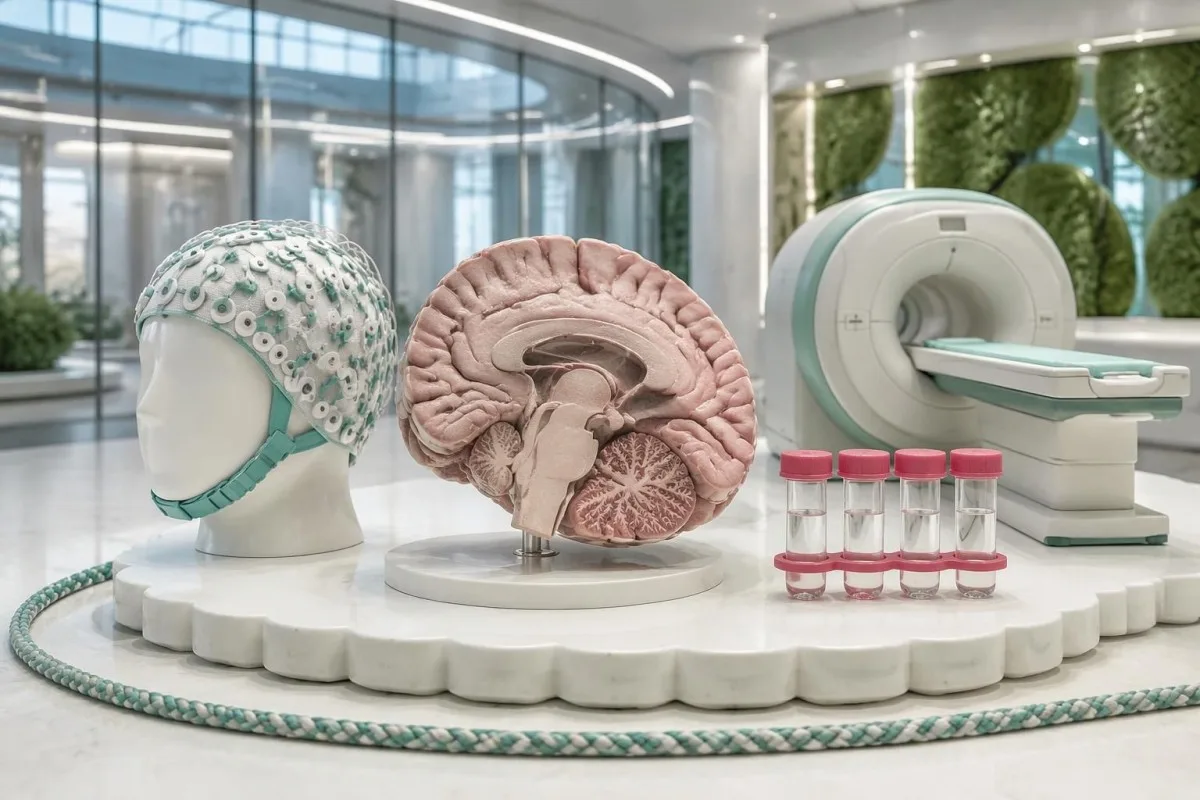
Nowe napady padaczkowe, niyprawidłowe ruchy, ôbniżōno świadomość abo rychły spadek funkcji poznawczych mogóm budzić podejrzynie zapalnego schorzyń mózgu abo inkszej przyczyny neurologicznej. Nasze badanie w kierunku autoimmunologicznego zapalenia mózgu wyjaśnio, jak MRI, EEG i płyn mózgowo-rdzeniowy mogóm w tym pōmóc; 1 dodatnie przeciwciało w surowicy niy potwierdzo samodzielnie tej diagnozy.
Rzadkie medyczne przyczyny zasługujóm na ukierunkowane badania, kej pasuje do nich towarzyszōncy wzorzec, a niy na powszechne przesiewowe badanie kożdego. Silne, epizodyczne objawy brzuszne w połączeniu ze zmianami neurologicznymi abo psychiatrycznymi mogóm skłōnić do diagnostyki porfirii; nasze wyjaśniynie badań w kierunku porfirii ôpisuje, czamu prawidłowo wyczekowane badanie moczu może mieć wiynksze znaczenie niż 1 ogōlny panel krwi.
Wywiad ô substancyjach i lekach powinien być dokładny i pozbawiōny ocenianio. Spytŏj, co było zażyte, w jakich mniej wiyncyj ilościach i kiedy w czasie poprzednich 48 godzin ôraz wcześniejszych tygodni; konopie, stymulanty, kortykosteroidy i stany ôdstawiynne mogóm zmienić rozumowanie diagnostyczne, a ujemny wynik badania toksykologicznego niy wykluczo kożdej ekspozycyje ani wszystkich ôgraniczyń zwiōnzanych z oknem wykrywalności.
Kedy symptomy schizofrenije wymagajōm pilnej pōmocy?
Seek emergency help for immediate danger, suicidal intent, dangerous commands someone may act on, severe confusion, or inability to meet basic needs. In the UK, call 999 or 112 for an emergency; new psychotic symptoms without immediate danger still warrant prompt assessment rather than waiting for a routine laboratory appointment.
Possible catatonia needs urgent assessment, including when someone becomes unusually immobile, stops speaking, maintains unusual postures, or refuses fluids. A hypothetical adult drinking nothing for 24 hours and remaining largely motionless should not be managed as simple low motivation; fever, rigidity, or reduced responsiveness further increases concern.
Sudden speech difficulty, one-sided weakness, collapse, or a severe new headache requires emergency medical evaluation. Our oznakach ostrzegawczych udaru explain why 1 new focal neurological sign should not be attributed to psychiatric illness, even when hallucinations or a previous mental-health diagnosis are also present.
New psychosis after childbirth is a medical emergency, particularly with little sleep, rapidly changing mood, or confused behavior. If a parent develops these changes 1 week after delivery, seek urgent assessment and ensure both parent and infant have safe support; do not wait to see whether the symptoms fit schizophrenia.
If there is no immediate danger, contact a local crisis service, primary-care clinician, or early-intervention service promptly. In England, NHS 111 offers a mental-health option; in the US, 988 provides crisis support and 911 handles immediate danger, while readers elsewhere should use local emergency or crisis services and avoid leaving an immediately unsafe person alone when it is safe to remain.
Jak możesz pōmōc komuś, fto może przeżywać psychoza?
Help by listening calmly, checking immediate safety, and offering a specific route to assessment, rather than arguing about beliefs or announcing a diagnosis. A useful first conversation covers 3 practical needs: whether the person feels safe, whether they are eating and sleeping, and what assistance they would accept.

Short sentences and a quieter environment can make communication easier when attention is strained. Offer 2 realistic choices, such as contacting a clinician together or accompanying the person to an assessment, instead of several simultaneous demands; avoid crowding, sudden touching, or using threats to force cooperation.
Validate distress without confirming an unverified explanation. If someone believes their food is being tampered with, a supporter can acknowledge the fear and offer an acceptable meal while arranging help; asking how much they have eaten in the last 24 hours identifies a practical risk without requiring a debate about the belief.
A brief timeline can improve an appointment more than a long list of labels. Record 5 kinds of information: observed changes, approximate onset, sleep, substances or medicine changes, and effects on daily functioning; distinguish what you directly observed from what someone else reported, and ask the person's permission whenever possible.
Materiały Kantesti wytyczne ô prywatności i danych is relevant when accompanying laboratory reports contain sensitive personal information. Share only what is needed and seek consent where possible; having access to 1 family member's report does not automatically authorize uploading their records, and emergency safety concerns should be addressed through clinical services rather than an AI tool.
Jakie leczenie pōmogo po piyrszym epizodzie psychotycznym?
Treatment for first-episode psychosis commonly combines antipsychotic medication, psychological interventions, and practical support, tailored to diagnosis, preferences, and safety. NICE recommends individual CBT with at least 16 planned sessions and family intervention where appropriate; treatment should address everyday functioning as well as voices or delusions.
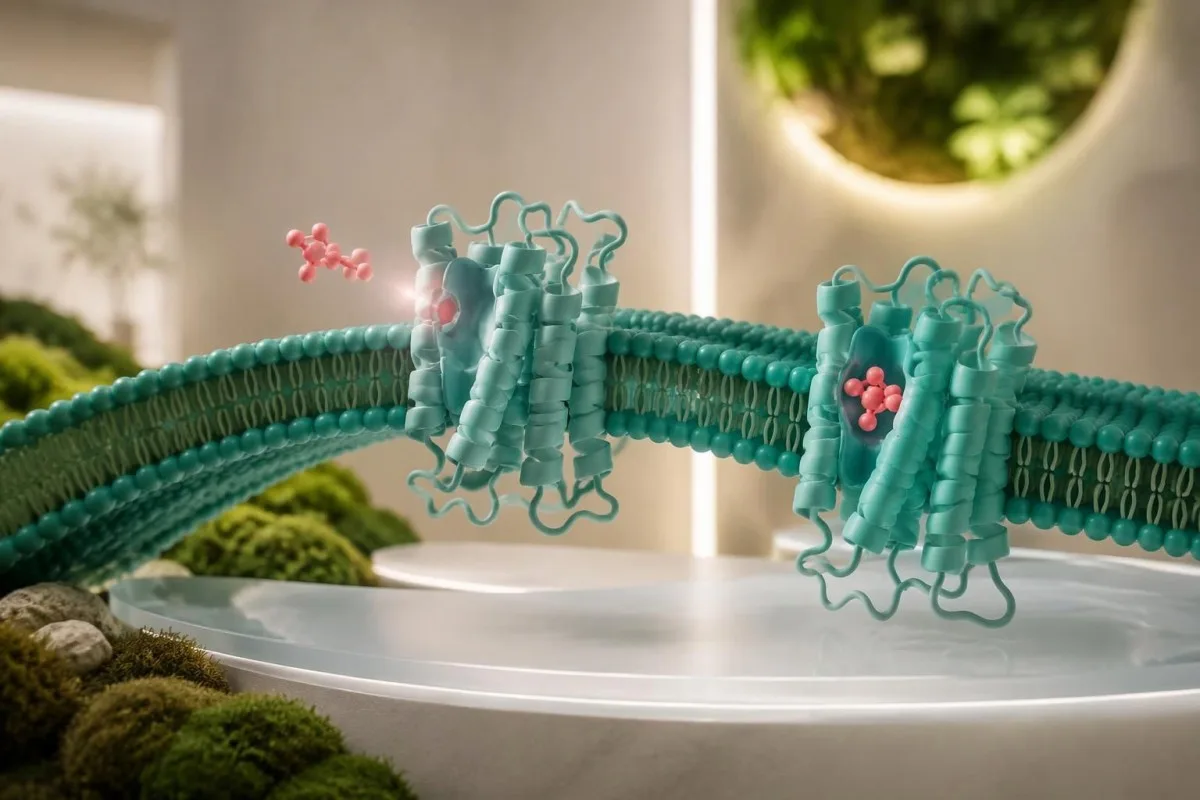
Medication choice is a shared clinical decision, including discussion of metabolic effects, movement symptoms, sedation, hormonal effects, and cardiovascular considerations. NICE advises treating an antipsychotic prescription as an explicit individual trial, generally assessing response after 4–6 weeks at an optimum dose while reviewing tolerability throughout (NICE, 2014).
Psychological treatment does not require the clinician to endorse a delusion or tell someone that their experience is imaginary. CBT for psychosis explores distress, interpretations, coping, and functioning; NICE describes family intervention as at least 10 planned sessions over 3 months to 1 year, adapted to the family's circumstances.
Clozapine is recommended for treatment-resistant schizophrenia after inadequate response to 2 adequate antipsychotic trials, subject to clinical assessment and local requirements. The APA guideline also recommends clozapine when suicide risk remains substantial despite other treatments (APA, 2020); our clozapine safety monitoring guide explains why monitoring is treatment-specific.
Recovery goals should be personal and measurable rather than limited to symptom counts. A hypothetical first goal might be returning to 2 supported study sessions weekly or preparing a regular meal; occupational, educational, housing, and social support can address barriers that medication alone does not remove, and prescriptions should never be changed through an automated laboratory interpretation.
Czamu kōntrole zdrowio fizycznego sōm czynściōm opieki nad osobami ze schizofrenijōm?
Physical-health checks identify medication effects and health risks that deserve care independently of psychiatric symptoms. NICE recommends baseline assessment and repeat glucose or HbA1c and lipid testing at 12 weeks, 1 year, and annually during antipsychotic treatment; individual medicines and existing conditions may require additional monitoring.

Weight, blood pressure, movement symptoms, nutrition, and activity deserve discussion alongside laboratory results. NICE recommends weighing weekly for the first 6 weeks of antipsychotic treatment, then at 12 weeks, 1 year, and annually; early changes can support a timely conversation about treatment options rather than blame about willpower.
HbA1c of 6.5% equals 48 mmol/mol and is a diabetes diagnostic threshold, usually requiring confirmation when there are no clear symptoms. Our alarmujōce symptomy wysoki glukozy explains why thirst, frequent urination, weight loss, or acute illness can change urgency; this threshold says nothing about the severity of psychosis.
Some antipsychotics raise prolactin, which can affect sexual function, menstruation, fertility, or other aspects of health. A result 2 times the laboratory upper limit needs interpretation with symptoms, medicines, sampling conditions, and sometimes repeat testing; our mildly elevated prolactin guide explains why one result should not trigger unsupervised medication changes.
Smoking changes can alter clozapine exposure, because combustion products—not nicotine alone—affect its metabolism. A hypothetical person stopping cigarettes during a 1-week admission needs the prescribing team's attention; diet and supplements also deserve review, but no meal plan, vitamin panel, or supplement regimen has been established as a substitute for schizophrenia treatment.
Publikacyje naukowe i ôgraniczynia interpretacyje laboratoryjnyj
The research references below distinguish schizophrenia guidance from supporting laboratory education. The 2 Zenodo guides explain serum proteins and immune tests; they are not schizophrenia diagnostic studies, and their DOIs do not establish peer review, psychiatric screening accuracy, or evidence that these tests should be ordered for early behavioral changes.
Kantesti to usługa interpretacji wyników badań AI that explains reported measurements rather than diagnosing psychiatric disorders. Our nadzōr techniczny i kliniczny describes the scope of our methodology; performance on laboratory interpretation is not evidence of accuracy for schizophrenia assessment, and those are 2 separate validation questions.
Serum albumin, globulins, and the A/G ratio reflect broad physiological processes, not a schizophrenia signature. Our przewodniku po białkach w surowicy provides context for that laboratory family; a hypothetical A/G ratio of 0.9 must be interpreted against its laboratory interval and clinical setting, not converted into a psychiatric risk score.
Complement and ANA testing answer targeted immune questions, and indiscriminate testing can produce findings unrelated to the presenting symptoms. Our wskazōwki do dopełniacza i ANA explains those limits; an isolated ANA titer of 1:80 does not establish an autoimmune explanation for psychosis or justify immune treatment without supporting clinical evidence.
Kantesti's role is to help readers understand accompanying reports while keeping diagnosis and urgent care with qualified clinicians. For a first episode—or a change after 5 stable years—bring the symptom timeline and original results to assessment; the NICE, WHO, and APA references below support the clinical discussion, while the repository publications support narrower laboratory education.
Często zadawane pytania
Jakie sóm piyrsze ôznaki schizofrenije?
Możliwe wczesne ôbjawy schizofrenije to wycofaniy sie, pogarszaniy sie funkcjonowanio, niyporadne spostrzeżynia, podejrzliwość oraz zmiany w myśleniu abo śnie, ale te ôbjawy niy som doś swoiste, coby na jejich podstawie zdiagnozować schizofrenijo. Zespół ôbjawōw wpływajōncych na 2 abo wiyncyj sfer życia może sprawić, że ocena kliniczno bydzie szczegōlnie przidatno, chocioż niy stanowi to progu diagnostycznego. Nowe głosy, mocno utrzimowane niyporadne przekonania abo znaczne pogorszenie stanu zasługujōm na szybkōm ocenę klinicznōm. Niy czekej miesiōncami na ôbjawy ani na wynik badania krwi, coby poszukać pōmocy.
Czy idzie mieć schizofrenijo bez słyszanio głosów?
Ôsoba może mieć schizofrenijo bez słyszanio głosōw, bo halucynacyje słuchowe niy muszōm wystympować w kożdym przipadku. DSM-5-TR wymago cołkym najmniyj 2 charakterystycznych ôbjawōw w aktywnej fazie, w tym cołkym jednego z tych: urojeń, halucynacyji abo zdezorganizowanej mowy, a tyż spełniynio dodatkowych kryterijōw czasu trwanio i funkcjonowanio. Ktoś może tōż mieć wyraźne urojenia abo zdezorganizowano mōwa bez halucynacyjōw słuchowych. Lekorz musi tyż ôcynić inksze psychiatryczne, zwiōnzane z używaniym substancyj i medyczne wyjaśniynia.
Czy badanie krwi może zdiagnozować schizofrenijo?
Żodyn rutynowy badanie krwi niy może zdiagnozować ani wykluczyć schizofrenii i niy ma żodnych zwalidowanych progów rutynowych biomarkerów do tego celu. Badania krwi mogōm pomōc wykryć medyczne prziczyny abo monitorować bezpieczyństwo lekōw, ale to sōm inksze pytania kliniczne. Na przikłod badania tarczycy abo poziōmu B12 mogōm być wskazane, kej wywiad sugeruje takie problemy. Prawidłowe wyniki laboratoryjne niy znaczōm, że można bezpiecznie ignorować utrzymujōnce sie halucynacje, urojenia abo pogorszenie funkcyjōnowania.
Czy niski poziōm motywacyje i wycofywanie sie ze społeczyństwa to ôznaki schizofrenije?
Low motivation and social withdrawal can occur among the negative symptoms of schizophrenia, but they also occur with depression, sleep problems, medicines, stress, and other conditions. Clinicians commonly describe 5 negative-symptom domains: reduced expression, speech, motivation, pleasure, and social engagement. The assessment considers the person's baseline, associated symptoms, and alternative causes rather than counting behaviors on a checklist. New or persistent changes affecting daily life deserve assessment without assuming schizophrenia.
Jak długo muszōm trwać ôbjawy, coby zdiagnozować schizofrenijõ?
Wymagany czas trwanio zależy ôd ram diagnostycznych i cołkōwitego ôbrazu ôbjawōw. DSM-5-TR z reguły wymago co najmij 6 miesiyncy ciōngłych zaburzyń, w tym fazy aktywnej trwajōncej zwykle co najmij 1 miesiōnc, abo krōcej, kej leczenie przinosi skutek. ICD-11 wymogo charakterystycznych ôbjawōw ôbecnych wiynkszość czasu bezmała bezmała bezmała bezmała bezmała przez co najmij 1 miesiōnc, a tyż spełniynio inkszych wymogōw diagnostycznych. Te progi pomagajōm postawić diagnoza, ale niy ôkryślajōm, kej szukać pōmocy: piyrszy epizod psychotyczny trza jak nojrychlij skōnsultować ze specjalistōm.
Kedy mo osoba z možno schizofrenijom mo iś na pogotowie?
Pilno ôpieka je potrzebno przi groźbie niyodwłocznego skrziwdzynio siebie, niybezpiecznych nakazach, podle kerych ftoś może działać, srogim pomiynszaniu, ôgraniczōnym reagowaniu abo niymoganiy ôstoć ô podstawowe potrzeby. W Zjednoczōnym Krōlestwie, kej je bezpośrednie niybezpiyczyństwo, dzwońcie pod 999 abo 112; w USA dzwońcie pod 911 w nagłym przipadku abo pod 988 po pōmoc kryzysowō. Nagłe ôbjawy neurologiczne, gorōnczka ze sztywnościōm miynśniōw i nowe ôbjawy psychozy po porodzie tyż wymagajōm pilnyj ôceny lekarskiyj. Nowe ôbjawy psychozy bez bezpośredniego niybezpiyczyństwa i tak wymagajōm rychłego kōntaktu z lekorzym abo lokalnōm służbōm kryzysowōm.
Dowiydz się, jak czytać wyniki badańo krwi
Wgraj raport laboratoryjny, a AI Kantesti wyjaśni kożdy biomarker prostym jynzykiym w pora sekund. Używane bezma 2 miliony ludzi na cołkim świecie.
Ôdniesiynia
- Klein, T., Mitchell, S., & Weber, H. (2026). Przewodnik po białkach surowicy: globuliny, albumina i badanie krwi ze wskaźnikiym A/G. Badania medyczne AI Kantesti. DOI
- Klein, T., Mitchell, S., & Weber, H. (2026). Przewodnik ô badaniach krwi dopełniacza C3 i C4 oraz mianowniku ANA. Badania medyczne AI Kantesti. DOI
- National Institute for Health and Care Excellence (2014). Psychosis and schizophrenia in adults: prevention and management (CG178). NICE Clinical Guideline.
- World Health Organization (2024). Clinical descriptions and diagnostic requirements for ICD-11 mental, behavioural and neurodevelopmental disorders. Światowŏ Ôrganizacyjo Zdrowio.
- American Psychiatric Association (2020). The American Psychiatric Association Practice Guideline for the Treatment of Patients With Schizophrenia, Third Edition. American Psychiatric Association Publishing. DOI
- 2M+Ônalyzowane badania
- 127+Kroje
- 100+Jynzyki
Ô zespole medycznym


Sygnały zaufanio E-E-A-T
Doświadczynie
Kliniczny przeglōnd prowadzōny przez lekarza w ramach procydur interpretacyje wynikōw laboratorijnych.
Ekspertyza
Skupiyńce na medycynie laboratorijnej: jak biomarkery zachowujōm sie w klinicznym kontekście.
Autorytetność
Zweryfikowane medycznie przez dr. Thomasa Kleina, przy współudziale dr Sarah Mitchell i prof. dr. Hansa Webera.
Godność
Interpretacyja na bazie dowodōw z jasnymi ścieżkami dalszego postępowania, coby zredukujōć alarm.






Zastrzeżynie medyczne
Ten artykuł je wyłōncznie do celōw edukacyjnych i nie stanowi porady medyczno. Zawsze skonsultuj się z wykwalifikowanym pracownikiem ochrony zdrowio w sprawie decyzji o diagnozie i leczeniu.
Opublikowane · Skontaktuj sie z redakcyjōm
Opublikowane przez Kantesti Ltd, zarejestrowane w Anglii i Walii, numer firmy. 17090423, Londyn, Zjednoczone Królestwo.
