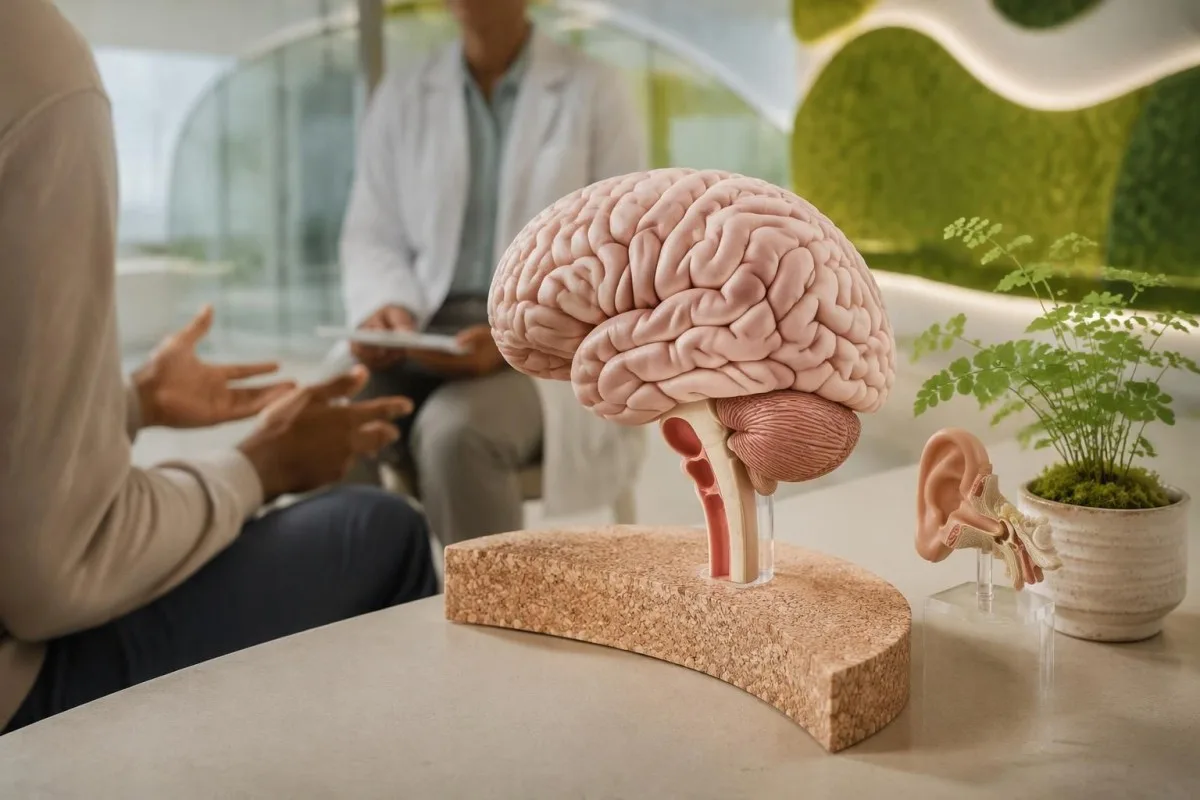
Schizophrenia symptoms can include hallucinations, delusions, disorganized speech, reduced motivation, and cognitive difficulties. Early changes alone do not establish schizophrenia: clinical assessment does, and immediate danger, severe confusion, or inability to meet basic needs requires urgent help.

Conclusións principais
- Schizophrenia symptoms include changes in perception, beliefs, speech, motivation, and thinking; 1 symptom or an abnormal laboratory result cannot establish the diagnosis.
- Early signs such as withdrawal, poor sleep, or falling performance are nonspecific. Record changes over 7 days if helpful, but do not delay assessment for new psychotic experiences.
- Hallucinations are perceptions without a corresponding external stimulus. Experiences occurring only while falling asleep or waking have a different clinical meaning from persistent daytime voices.
- Negative symptoms include reduced emotional expression, speech, motivation, pleasure, and social engagement—5 commonly described domains, not evidence that someone is lazy.
- Diagnostic timing differs: DSM-5-TR generally requires at least 6 months of continuous disturbance, while ICD-11 requires characteristic symptoms for at least 1 month. Help should start before either threshold is reached.
- Análises de sangue can investigate medical contributors and monitor treatment safety; there are 0 validated routine blood-test thresholds that diagnose schizophrenia.
- Emergency help is needed for imminent self-harm, dangerous commands someone may act on, severe confusion, or inability to eat or drink. In the UK, call 999 or 112 for immediate danger.
- Tratamento commonly combines medication, psychological care, and practical support. NICE recommends at least 16 planned sessions for individual CBT for psychosis.
Which early signs of schizophrenia deserve assessment?
Early signs of schizophrenia can include social withdrawal, declining functioning, unusual experiences, and changes in sleep or thinking, but none is diagnostic alone. A new cluster affecting 2 or more areas of daily life deserves attention, especially when the person is frightened or losing their usual abilities.

Change from the person's baseline matters more than whether a behavior seems unusual to someone else. For example, a hypothetical student who stops attending 3 previously enjoyable activities, struggles to follow conversations, and becomes increasingly suspicious needs a different assessment from someone who has always preferred solitude.
Sleep disruption is a clue, not a verdict. A hypothetical adult sleeping 3 hours nightly during examinations may develop poor concentration or unusual perceptions through exhaustion; our guide to poor sleep and tests explains why sleep history also changes how accompanying laboratory findings are interpreted.
Kantesti é un analizador de análises de sangue con IA that can explain accompanying laboratory findings, but cannot determine whether early behavioral changes represent schizophrenia. Our company and purpose describe our role; a 7-day symptom record is something to share with a clinician, not an input that produces a psychiatric diagnosis.
NICE recommends referral without delay when distress and declining social functioning occur alongside transient or attenuated psychotic symptoms, or certain other risk indicators (NICE, 2014). An assessment after 1 concerning episode may identify depression, trauma, substance effects, or a developing psychotic disorder; it does not automatically attach a schizophrenia label.
What do hallucinations feel like, and what else causes them?
Hallucinations are sensory experiences without a corresponding external stimulus; hearing voices is common in schizophrenia, but hallucinations also occur in other conditions. The assessment separates at least 3 questions: what happened, when it happened, and whether it creates distress or danger.
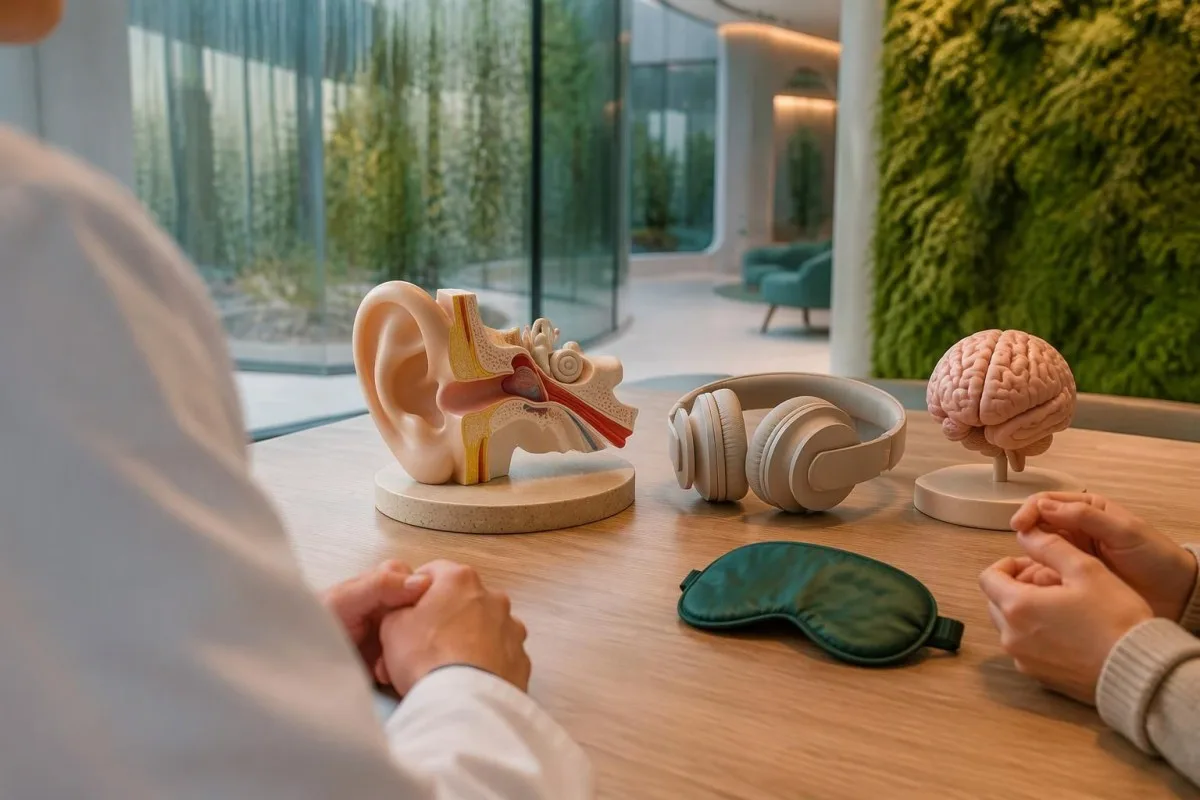
Auditory experiences can sound like commentary, conversation, music, or instructions, and may seem internal or external. Over a 24-hour period, a clinician may ask whether experiences happen while fully awake, how long they last, and whether environmental sounds could explain them; location inside the head does not make them automatically harmless.
Sleep-transition experiences differ from persistent waking hallucinations and can occur without a psychotic disorder. If unusual perceptions happen only while falling asleep or waking, excessive daytime sleepiness and related symptoms may point toward a sleep assessment; our narcolepsy testing explanation describes why clinicians use more than 1 sleep-related clue.
Sensory impairment, bereavement, medicines, intoxication, withdrawal, and neurological illness can also cause hallucinations. A hypothetical 72-year-old with new visual experiences and fluctuating attention over 2 days needs assessment for delirium or another medical cause rather than an assumption of late-onset schizophrenia.
Command voices require a safety assessment, not an automatic assumption that someone will act on them. Ask about 3 concrete factors: what the voice says, whether the person feels compelled to obey, and whether they can stay safe; commands involving harm with intent or inability to resist warrant immediate help.
How are delusions different from worry or unusual beliefs?
Delusions are beliefs held with strong conviction despite compelling contrary evidence, assessed within the person's cultural and social context. Clinicians examine at least 3 dimensions—conviction, openness to alternatives, and consequences—rather than diagnosing schizophrenia because a belief sounds unfamiliar or implausible to an observer.
Persecutory delusions can involve beliefs that others are monitoring, targeting, or plotting against the person; referential delusions can involve interpreting ordinary events as personally directed messages. A hypothetical person changing travel routes 4 times to avoid an alleged surveillance team may need assessment of both the belief and the resulting disruption.
Real threats must not be dismissed as delusions. Abuse, discrimination, stalking, and exploitation can occur, including in people with established psychiatric diagnoses; 1 unusual detail does not invalidate an entire account, and a clinician should investigate plausible safety concerns rather than use psychiatric history as a shortcut.
Mood timing changes the differential diagnosis. A hypothetical adult who develops grandiose beliefs during 5 days of markedly increased energy and little need for sleep may have a manic episode; our mood swings and laboratories explains why testing can address contributors without distinguishing bipolar disorder from schizophrenia.
Repeated confrontation often damages trust without resolving a firmly held belief. A supporter can use 2 steps: acknowledge the fear or distress, then offer practical help without endorsing the explanation; discussing whether the person is eating, sleeping, or feeling safe is usually more useful than trying to win an argument.
What are the negative symptoms of schizophrenia?
Negative symptoms of schizophrenia describe reductions in ordinary emotional expression, speech, motivation, pleasure, or social engagement. These 5 domains are commonly termed blunted affect, alogia, avolition, anhedonia, and asociality; they describe difficulties in functioning, not character flaws or a person's capacity to care.

Avolition means difficulty initiating or sustaining purposeful activity, even when the person understands its value. A hypothetical adult may want to prepare breakfast yet remain unable to begin for 2 hours; simply adding pressure can miss problems with initiation, planning, fatigue, or anticipation of reward.
Reduced expression does not reliably reveal the intensity of someone's internal feelings. A person who gives 1-word answers or shows little facial movement may still feel affection, anxiety, or sadness; communication should allow extra time and avoid interpreting a quiet response as indifference or refusal to participate.
Secondary negative symptoms can arise from depression, sedating medicines, ongoing paranoia, substance use, or a low-stimulation environment. Our low motivation laboratory guide addresses selected medical contributors, but 1 thyroid or vitamin result cannot distinguish primary negative symptoms from these overlapping causes.
Pleasure can be uneven: some people struggle more with anticipating enjoyment than with enjoying an activity once it starts. A practical experiment is 1 short, supported activity chosen by the person, followed by asking how it actually felt; the result guides support, not a diagnosis or a promise of recovery.
Which cognitive and speech changes can accompany schizophrenia?
Cognitive changes can affect attention, working memory, processing speed, and planning, while disorganized speech can make connections between ideas difficult to follow. These are distinct problems: an assessment should separate at least 2 issues—trouble organizing thought and trouble performing a task under everyday demands.

Disorganized speech may involve frequent derailment, answers loosely connected to questions, or speech that becomes difficult to understand. A hypothetical conversation moving through 4 unrelated topics can raise concern, but language proficiency, hearing, anxiety, developmental differences, and the person's usual communication style must be considered before interpreting it.
Working-memory difficulty can make multistep tasks unexpectedly hard. Someone may remember the first of 3 instructions but lose the remaining steps; offering one instruction at a time, using reminders, and reducing distractions are accommodations that can help before the precise cause of the difficulty is established.
A lifelong attention pattern is different from a recent decline. Our adult ADHD symptom guide explains why a history extending back to childhood matters; a new deterioration over 2 months should not be explained away by an unconfirmed ADHD label.
At Kantesti, we treat laboratory explanations of fatigue or brain fog as separate from psychiatric diagnostic reasoning. A hypothetical person with corrected anemia who remains unable to follow a 10-minute conversation still needs follow-up; improvement in a laboratory value does not prove that cognitive symptoms have resolved or identify their cause.
How do schizophrenia symptoms in adults vary with age?
Schizophrenia symptoms in adults vary in onset, severity, and impact; the same symptom can have different implications at different ages. A first presentation at 22 and a first presentation at 72 both need assessment, but later onset increases the need to investigate medical, neurological, medication, and sensory contributors.

Schizophrenia commonly begins in late adolescence or early adulthood, but age alone cannot confirm or exclude it. For a hypothetical 24-year-old, clinicians may reconstruct the relationship between missed work, unusual beliefs, substance exposure, and sleep across several months instead of relying only on what happens during 1 appointment.
First-onset psychosis in an older adult should prompt careful review of medicines, cognition, physical health, hearing, and vision. Our guía sobre os efectos dos medicamentos en persoas maiores explains why a newly added treatment or a dose change 2 weeks earlier can be a more useful clue than a broad psychiatric label.
People can have episodic worsening, persistent difficulties, or substantial improvement with treatment and support. A hypothetical adult managing work for 5 years before a recurrence does not erase the original diagnosis; equally, a first psychotic episode does not establish what the person's long-term course will be.
Schizophrenia is not a split personality, and psychosis does not mean someone is inherently violent. Risk assessment concerns specific circumstances—such as intoxication, severe fear, access to means, or expressed intent—not a diagnosis alone; 1 frightened presentation should not define how family members or services treat a person.
How does clinical assessment establish schizophrenia?
Schizophrenia is diagnosed clinically, using the symptom pattern, duration, functioning, and exclusion of better explanations—not a blood test or online checklist. DSM-5-TR generally requires at least 6 months of continuous disturbance; ICD-11 requires characteristic symptoms for at least 1 month, with additional requirements in both systems.
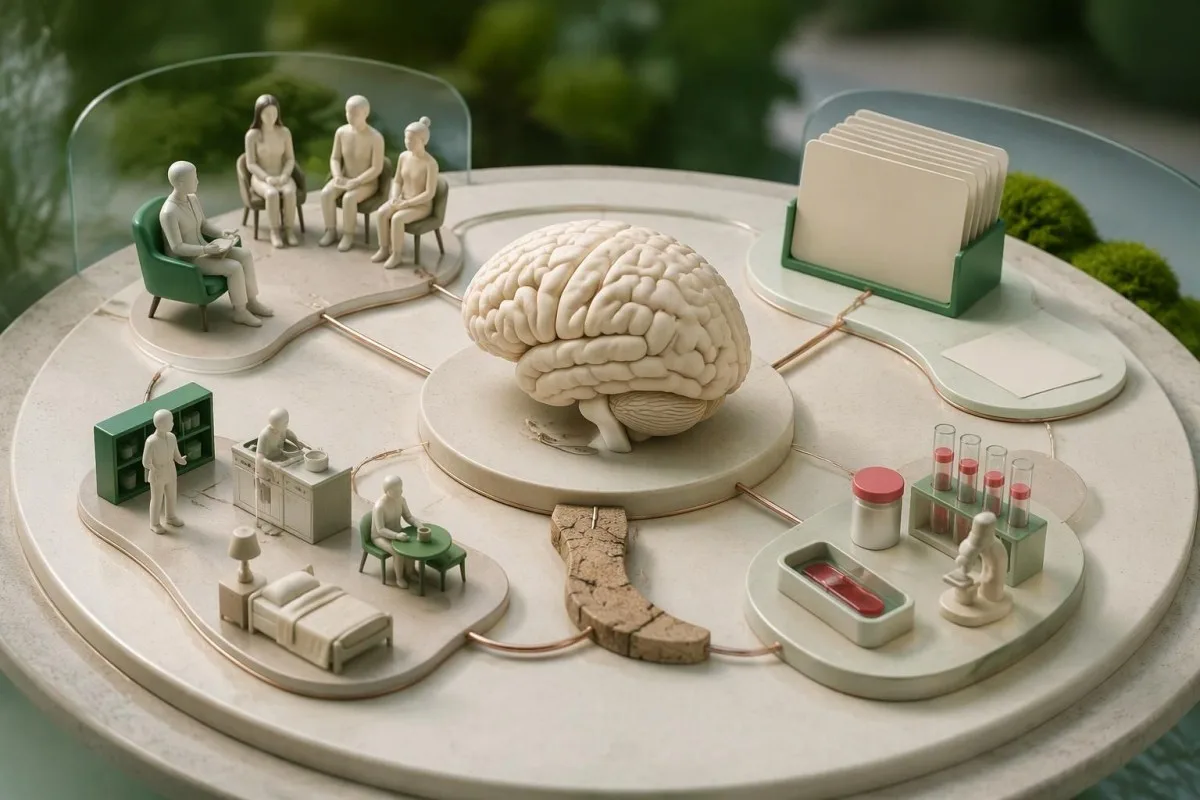
DSM-5-TR requires at least 2 characteristic symptoms during a significant portion of a 1-month period, or less if successfully treated, with at least one being delusions, hallucinations, or disorganized speech. It also requires functional deterioration and a longer course of disturbance; the criteria are not a self-scoring tool.
ICD-11 uses a different structure and requires at least 2 characteristic symptoms, including at least one from its core group, present most of the time for 1 month or more. WHO's clinical requirements emphasize the overall presentation and differential diagnosis rather than mechanically translating every DSM rule into ICD terminology (WHO, 2024).
Assessment often takes more than 1 conversation, particularly when symptoms are new or the history is unclear. With appropriate consent and attention to confidentiality, information from relatives, previous records, and the person's own account can clarify timing; lack of agreement between accounts should be explored rather than treated as proof that someone is unreliable.
Support should not wait for a 6-month diagnostic threshold to pass. A first episode may initially receive a broader working diagnosis while treatment and investigation proceed; our principios de IA responsable reflect why automated laboratory interpretation must not substitute for this evolving clinical judgment.
Can blood tests detect schizophrenia or explain symptoms?
No routine blood test diagnoses schizophrenia, and normal results do not rule it out. Laboratories serve 2 different purposes in this setting: investigating plausible medical contributors and establishing physical-health or medication-safety baselines; neither purpose turns a biomarker panel into a schizophrenia screening test.

Testing is selected from the history and examination, rather than ordered as an unlimited panel. A clinician may consider a CBC, electrolytes, kidney or liver tests, thyroid function, B12, or other investigations; our explicación sobre as hormonas tiroideas shows why 2 related thyroid measurements can be more informative than one isolated result.
B12 deficiency can contribute to neurological or cognitive symptoms, sometimes without marked anemia. In a hypothetical example, B12 of 160 pg/mL against that laboratory's 200–900 pg/mL interval warrants medical review; our interpretación limítrofe da B12 explains why assay ranges and follow-up testing matter, without claiming that deficiency explains every symptom.
Kantesti é unha plataforma de interpretación de análise de sangue con IA that can help explain these 2 laboratory roles without converting results into a psychiatric label. We encourage readers to bring the original report, medicine list, and symptom timeline to the assessing clinician; an interpretation should preserve uncertainty when symptoms and laboratory findings do not fit neatly together.
Research measurements of immune activity, metabolism, proteins, or genetic associations are not validated routine diagnostic thresholds for schizophrenia. A result showing 1 elevated inflammatory marker may reflect many unrelated processes; commercial-sounding claims that a panel can confirm psychosis should be questioned for independent validation and clear intended-use limits.
What conditions can resemble schizophrenia?
Psychosis can arise from mood disorders, substances, medicines, delirium, and neurological or other medical illnesses, as well as schizophrenia-spectrum disorders. Timing is central: symptoms developing over 2 days with fluctuating attention require a different workup from a gradual change over several months with preserved alertness.
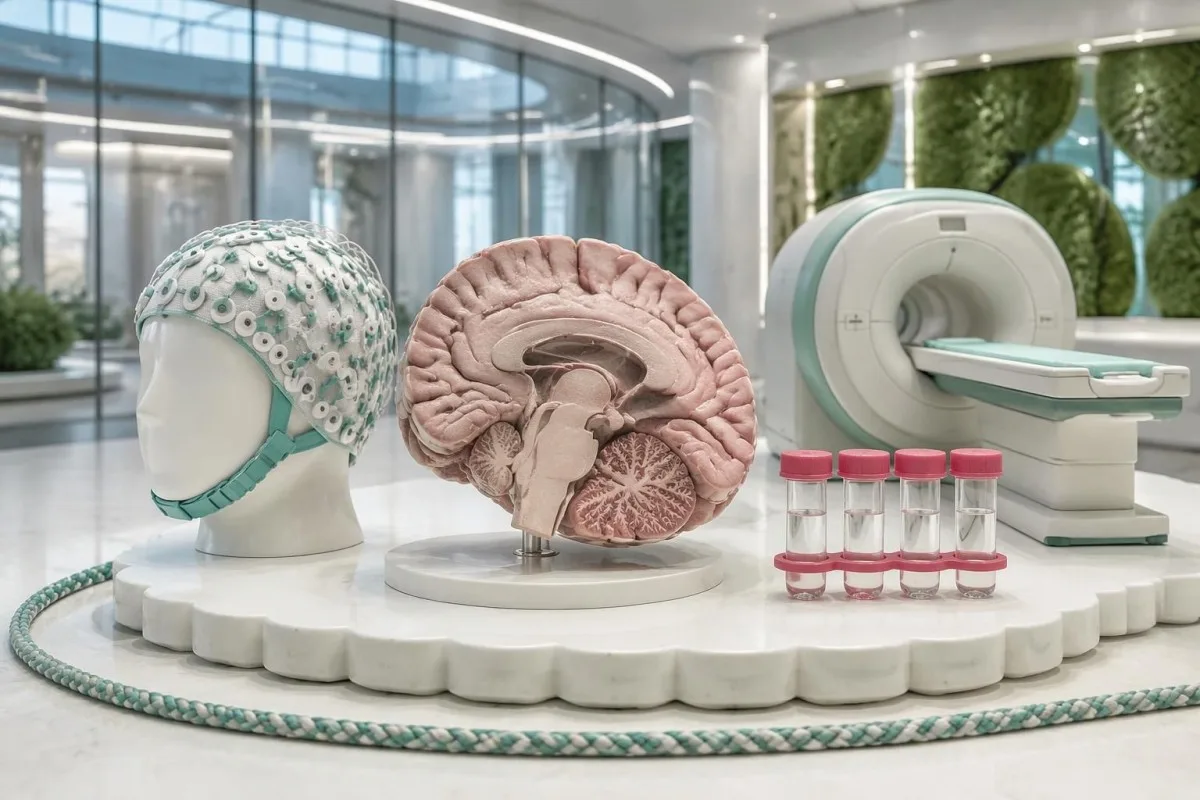
Delirium typically involves disturbed attention and an acute, fluctuating course, and it can include hallucinations or unusual beliefs. A hypothetical person alternating between coherent conversation and marked disorientation over 24 hours needs urgent medical assessment; a pre-existing schizophrenia diagnosis does not make delirium impossible.
New seizures, abnormal movements, reduced consciousness, or rapid cognitive decline can raise concern for an inflammatory brain disorder or another neurological cause. Our autoimmune encephalitis workup explains how MRI, EEG, and cerebrospinal fluid may contribute; 1 positive serum antibody does not independently establish that diagnosis.
Rare medical causes deserve targeted investigation when the accompanying pattern fits, not blanket screening of everyone. Severe episodic abdominal symptoms plus neurological or psychiatric changes can prompt a porphyria workup; our porphyria testing explanation describes why a correctly timed urine test can matter more than 1 general blood panel.
Substance and medication histories should be specific and nonjudgmental. Ask what was taken, approximate amounts, and timing during the preceding 48 hours and earlier weeks; cannabis, stimulants, corticosteroids, and withdrawal states can change diagnostic reasoning, while a negative toxicology screen cannot exclude every exposure or every detection-window limitation.
When do schizophrenia symptoms require urgent help?
Seek emergency help for immediate danger, suicidal intent, dangerous commands someone may act on, severe confusion, or inability to meet basic needs. In the UK, call 999 or 112 for an emergency; new psychotic symptoms without immediate danger still warrant prompt assessment rather than waiting for a routine laboratory appointment.
Possible catatonia needs urgent assessment, including when someone becomes unusually immobile, stops speaking, maintains unusual postures, or refuses fluids. A hypothetical adult drinking nothing for 24 hours and remaining largely motionless should not be managed as simple low motivation; fever, rigidity, or reduced responsiveness further increases concern.
Sudden speech difficulty, one-sided weakness, collapse, or a severe new headache requires emergency medical evaluation. Our sinais de alerta de ictus explain why 1 new focal neurological sign should not be attributed to psychiatric illness, even when hallucinations or a previous mental-health diagnosis are also present.
New psychosis after childbirth is a medical emergency, particularly with little sleep, rapidly changing mood, or confused behavior. If a parent develops these changes 1 week after delivery, seek urgent assessment and ensure both parent and infant have safe support; do not wait to see whether the symptoms fit schizophrenia.
If there is no immediate danger, contact a local crisis service, primary-care clinician, or early-intervention service promptly. In England, NHS 111 offers a mental-health option; in the US, 988 provides crisis support and 911 handles immediate danger, while readers elsewhere should use local emergency or crisis services and avoid leaving an immediately unsafe person alone when it is safe to remain.
How can you help someone who may be experiencing psychosis?
Help by listening calmly, checking immediate safety, and offering a specific route to assessment, rather than arguing about beliefs or announcing a diagnosis. A useful first conversation covers 3 practical needs: whether the person feels safe, whether they are eating and sleeping, and what assistance they would accept.

Short sentences and a quieter environment can make communication easier when attention is strained. Offer 2 realistic choices, such as contacting a clinician together or accompanying the person to an assessment, instead of several simultaneous demands; avoid crowding, sudden touching, or using threats to force cooperation.
Validate distress without confirming an unverified explanation. If someone believes their food is being tampered with, a supporter can acknowledge the fear and offer an acceptable meal while arranging help; asking how much they have eaten in the last 24 hours identifies a practical risk without requiring a debate about the belief.
A brief timeline can improve an appointment more than a long list of labels. Record 5 kinds of information: observed changes, approximate onset, sleep, substances or medicine changes, and effects on daily functioning; distinguish what you directly observed from what someone else reported, and ask the person's permission whenever possible.
Os materiais de Kantesti A orientación sobre privacidade e datos is relevant when accompanying laboratory reports contain sensitive personal information. Share only what is needed and seek consent where possible; having access to 1 family member's report does not automatically authorize uploading their records, and emergency safety concerns should be addressed through clinical services rather than an AI tool.
What treatment helps after a first psychotic episode?
Treatment for first-episode psychosis commonly combines antipsychotic medication, psychological interventions, and practical support, tailored to diagnosis, preferences, and safety. NICE recommends individual CBT with at least 16 planned sessions and family intervention where appropriate; treatment should address everyday functioning as well as voices or delusions.

Medication choice is a shared clinical decision, including discussion of metabolic effects, movement symptoms, sedation, hormonal effects, and cardiovascular considerations. NICE advises treating an antipsychotic prescription as an explicit individual trial, generally assessing response after 4–6 weeks at an optimum dose while reviewing tolerability throughout (NICE, 2014).
Psychological treatment does not require the clinician to endorse a delusion or tell someone that their experience is imaginary. CBT for psychosis explores distress, interpretations, coping, and functioning; NICE describes family intervention as at least 10 planned sessions over 3 months to 1 year, adapted to the family's circumstances.
Clozapine is recommended for treatment-resistant schizophrenia after inadequate response to 2 adequate antipsychotic trials, subject to clinical assessment and local requirements. The APA guideline also recommends clozapine when suicide risk remains substantial despite other treatments (APA, 2020); our clozapine safety monitoring guide explains why monitoring is treatment-specific.
Recovery goals should be personal and measurable rather than limited to symptom counts. A hypothetical first goal might be returning to 2 supported study sessions weekly or preparing a regular meal; occupational, educational, housing, and social support can address barriers that medication alone does not remove, and prescriptions should never be changed through an automated laboratory interpretation.
Why are physical-health checks part of schizophrenia care?
Physical-health checks identify medication effects and health risks that deserve care independently of psychiatric symptoms. NICE recommends baseline assessment and repeat glucose or HbA1c and lipid testing at 12 weeks, 1 year, and annually during antipsychotic treatment; individual medicines and existing conditions may require additional monitoring.

Weight, blood pressure, movement symptoms, nutrition, and activity deserve discussion alongside laboratory results. NICE recommends weighing weekly for the first 6 weeks of antipsychotic treatment, then at 12 weeks, 1 year, and annually; early changes can support a timely conversation about treatment options rather than blame about willpower.
HbA1c of 6.5% equals 48 mmol/mol and is a diabetes diagnostic threshold, usually requiring confirmation when there are no clear symptoms. Our sinais de alerta de glicosa alta explains why thirst, frequent urination, weight loss, or acute illness can change urgency; this threshold says nothing about the severity of psychosis.
Some antipsychotics raise prolactin, which can affect sexual function, menstruation, fertility, or other aspects of health. A result 2 times the laboratory upper limit needs interpretation with symptoms, medicines, sampling conditions, and sometimes repeat testing; our mildly elevated prolactin guide explains why one result should not trigger unsupervised medication changes.
Smoking changes can alter clozapine exposure, because combustion products—not nicotine alone—affect its metabolism. A hypothetical person stopping cigarettes during a 1-week admission needs the prescribing team's attention; diet and supplements also deserve review, but no meal plan, vitamin panel, or supplement regimen has been established as a substitute for schizophrenia treatment.
Publicacións de investigación e límites da interpretación de laboratorio
The research references below distinguish schizophrenia guidance from supporting laboratory education. The 2 Zenodo guides explain serum proteins and immune tests; they are not schizophrenia diagnostic studies, and their DOIs do not establish peer review, psychiatric screening accuracy, or evidence that these tests should be ordered for early behavioral changes.
Kantesti é un servizo de interpretación de probas de laboratorio de IA that explains reported measurements rather than diagnosing psychiatric disorders. Our control técnico e clínico describes the scope of our methodology; performance on laboratory interpretation is not evidence of accuracy for schizophrenia assessment, and those are 2 separate validation questions.
Serum albumin, globulins, and the A/G ratio reflect broad physiological processes, not a schizophrenia signature. Our guía de proteínas séricas provides context for that laboratory family; a hypothetical A/G ratio of 0.9 must be interpreted against its laboratory interval and clinical setting, not converted into a psychiatric risk score.
Complement and ANA testing answer targeted immune questions, and indiscriminate testing can produce findings unrelated to the presenting symptoms. Our guía de complemento e ANA explains those limits; an isolated ANA titer of 1:80 does not establish an autoimmune explanation for psychosis or justify immune treatment without supporting clinical evidence.
Kantesti's role is to help readers understand accompanying reports while keeping diagnosis and urgent care with qualified clinicians. For a first episode—or a change after 5 stable years—bring the symptom timeline and original results to assessment; the NICE, WHO, and APA references below support the clinical discussion, while the repository publications support narrower laboratory education.
Preguntas frecuentes
Cales son os primeiros signos da esquizofrenia?
Os posibles signos temperáns da esquizofrenia inclúen illamento, deterioración do funcionamento, percepcións pouco habituais, desconfianza e cambios no pensamento ou no sono, pero estes achados non son o suficientemente específicos como para diagnosticar esquizofrenia. Un conxunto de síntomas que afecte a 2 ou máis ámbitos da vida pode facer especialmente útil unha avaliación, aínda que non é un limiar diagnóstico. A aparición de voces novas, crenzas pouco habituais firmemente arraigadas ou un deterioro marcado merecen unha avaliación clínica rápida. Non agarde meses ata que aparezan síntomas nin a obter o resultado dunha análise de sangue antes de pedir axuda.
Pódese ter esquizofrenia sen oír voces?
Unha persoa pode ter esquizofrenia sen oír voces, xa que as alucinacións auditivas non son necesarias en todas as manifestacións. O DSM-5-TR esixe polo menos 2 síntomas característicos durante a fase activa, incluído polo menos un dos seguintes: delirios, alucinacións ou fala desorganizada, ademais doutros criterios de duración e funcionamento. Polo tanto, alguén pode presentar delirios destacados ou fala desorganizada sen alucinacións auditivas. Un profesional clínico tamén debe avaliar outras explicacións psiquiátricas, relacionadas co consumo de substancias e médicas.
Pode unha análise de sangue diagnosticar a esquizofrenia?
Ningunha análise de sangue rutineira pode diagnosticar ou descartar a esquizofrenia, e non hai ningún limiar de biomarcador rutineiro validado para ese fin. As análises de sangue poden investigar posibles causas médicas ou controlar a seguridade da medicación, pero son cuestións clínicas diferentes. Por exemplo, pode ser axeitado analizar a función tiroidea ou a vitamina B12 cando os antecedentes apuntan a eses problemas. Uns resultados analíticos normais non fan que sexa seguro ignorar alucinacións persistentes, delirios ou un deterioro funcional.
A baixa motivación e o illamento social son signos de esquizofrenia?
Low motivation and social withdrawal can occur among the negative symptoms of schizophrenia, but they also occur with depression, sleep problems, medicines, stress, and other conditions. Clinicians commonly describe 5 negative-symptom domains: reduced expression, speech, motivation, pleasure, and social engagement. The assessment considers the person's baseline, associated symptoms, and alternative causes rather than counting behaviors on a checklist. New or persistent changes affecting daily life deserve assessment without assuming schizophrenia.
Canto tempo teñen que durar os síntomas para que se diagnostique a esquizofrenia?
A duración requirida depende do marco diagnóstico e do patrón completo de síntomas. O DSM-5-TR require en xeral polo menos 6 meses de alteración continua, incluída unha fase activa que adoita durar polo menos 1 mes, ou menos se se trata con éxito. A CIE-11 require síntomas característicos a maior parte do tempo durante polo menos 1 mes, ademais doutros requisitos diagnósticos. Estes limiares orientan o diagnóstico, non o momento no que se debe pedir axuda: un primeiro episodio psicótico debe ser avaliado de inmediato.
Cando debería acudir a urxencias alguén que podería ter esquizofrenia?
Emergency care is needed for imminent self-harm, dangerous commands someone may act on, severe confusion, reduced responsiveness, or inability to meet basic needs. In the UK, call 999 or 112 for immediate danger; in the US, call 911 for an emergency or 988 for crisis support. Sudden neurological symptoms, fever with rigidity, and new psychosis after childbirth also require urgent medical assessment. New psychotic symptoms without immediate danger still warrant prompt contact with a clinician or local crisis service.
Obtén unha explicación dos resultados análise de sangue
Carga o teu informe de laboratorio e a IA de Kantesti explica cada biomarcador en linguaxe sinxela en cuestión de segundos. Utilizada por máis de 2 millóns de persoas en todo o mundo.
Referencias
- Klein, T., Mitchell, S., & Weber, H. (2026). Guía das proteínas séricas: globulinas, albumina e análise de sangue da relación A/G. Investigación médica con IA de Kantesti. DOI
- Klein, T., Mitchell, S., & Weber, H. (2026). Guía sobre a proba sanguínea de C3 C4 e o título ANA. Investigación médica con IA de Kantesti. DOI
- National Institute for Health and Care Excellence (2014). Psychosis and schizophrenia in adults: prevention and management (CG178). Guía clínica de NICE.
- World Health Organization (2024). Clinical descriptions and diagnostic requirements for ICD-11 mental, behavioural and neurodevelopmental disorders. Organización Mundial da Saúde.
- American Psychiatric Association (2020). The American Psychiatric Association Practice Guideline for the Treatment of Patients With Schizophrenia, Third Edition. American Psychiatric Association Publishing. DOI
- Máis de 2 millónsProbas analizadas
- 127+Países
- 100+Linguas
Sobre o equipo médico


Sinais de confianza E-E-A-T
Experiencia
Revisión clínica dirixida por un médico dos fluxos de interpretación de análises.
Experiencia
Foco en medicina de laboratorio sobre como se comportan os biomarcadores no contexto clínico.
Autoridade
Revisado medicamente polo Dr. Thomas Klein, coas achegas da Dra. Sarah Mitchell e do Prof. Dr. Hans Weber.
Fiabilidade
Interpretación baseada en evidencias con vías de seguimento claras para reducir a alarma.






Aviso médico
Este artigo é só para fins educativos e non constitúe asesoramento médico. Consulta sempre un/ha profesional sanitario/a cualificado/a para decisións de diagnóstico e tratamento.
Publicado · Contacte co equipo editorial
Publicado por Kantesti Ltd, rexistrada en Inglaterra e Gales, número de sociedade. 17090423, Londres, Reino Unido.
