
Patojenik bir BRCA1 veya BRCA2 varyantı, kalıtsal kanser riskini artırır; kanser tanısı koymaz. Önemi belirsiz bir varyant, önleyici cerrahi kararını belirlememelidir. Negatif sonuç, bilinen ailesel varyantı dışladığında ancak gerçek bir negatif sonuçtur; aksi takdirde kalıtsal riski açıklığa kavuşturmayabilir.

Temel çıkarımlar
- Pozitif sonuç patojenik veya olası patojenik bir varyantın saptandığı anlamına gelir; kalıtsal yatkınlık kanser tanısı değildir.
- Beş sınıflandırma genetik varyantları tanımlar: patojenik, olası patojenik, önemi belirsiz, olası benign ve benign.
- BRCA1 riski prospektif bir JAMA çalışmasında, patojenik varyant taşıyan kadınlarda 80 yaşına kadar meme kanseri için yaklaşık 72%, yumurtalık kanseri içinse düzeyine ulaştı.
- BRCA2 riski aynı çalışmada, 80 yaşına kadar meme kanseri için yaklaşık , yumurtalık kanseri içinse düzeyine ulaştı; bunlar kişisel tahminler değil, grup düzeyindeki tahminlerdir.
- VUS yönetimi kişisel ve aile öyküsünü, belirsiz varyantı değil, temel almalıdır; yalnızca bir VUS koruyucu cerrahiyi haklı çıkarmaz.
- Gerçek negatif laboratuvarın ailenizde daha önce belirlenmiş spesifik patojenik varyantı bulmadığı anlamına gelir.
- Bilgilendirici olmayan negatif testin, şüphelenilen kalıtsal risk için bir açıklama bulamadığı anlamına gelir; güçlü aile öyküsü yine de ek değerlendirmeyi haklı çıkarabilir.
- Ailevi kalıtım genellikle germline BRCA1 veya BRCA2 patojenik varyant taşıyıcısının her çocuğuna bu varyantı kalıtma olasılığının olduğunu gösterir.
- Genetik danışmanlık kesin varyantı, test kapsamını, ailenin her iki tarafını ve yaşa bağlı tarama veya korunma seçeneklerini ilişkilendirmeye yardımcı olur.
BRCA genetik test sonuçları gerçekte ne anlama gelir?
BRCA genetik test sonuçları genellikle 3 pratik gruba ayrılır: pozitif, belirsiz veya negatif. Pozitif kalıtsal sonuç kanser yatkınlığını belirler, bir anlamı belirsiz varyant çözüme kavuşmamış olarak kalır ve negatif bir sonucun güven verici olduğu söylenmeden önce aile bağlamında değerlendirilmesi gerekir.

A germline BRCA testi protein konsantrasyonunu ölçmek yerine, genellikle laboratuvara gönderilen kan veya tükürük örneğinden DNA'yı inceler. Sonucu ng/mL cinsinden bir değer gibi yorumlanamaz: klinik açıdan yararlı bilgiler gen, kesin varyant, sınıflandırma ve test kapsamıdır.
Çoğu kişinin 2 kopya BRCA1'den ve BRCA2'den 2'şer kopya; her bir genin bir kopyası biyolojik ebeveynlerin her birinden kalıtılır. Bir kopyadaki zararlı bir değişiklik kanser yatkınlığını artırabilir, ancak kanser gelişimine genellikle ek hücresel değişiklikler de katkıda bulunur; kalıtım, hastalığa doğru geri sayım değildir.
Kanseri olmayan varsayımsal 38 yaşındaki bir kişide patojenik BRCA2 sonucu, mevcut bir kanser tanısı koymadan gelecekteki tarama ve korunma görüşmelerini değiştirebilir. Halihazırda kanser tedavisi gören bir kişide aynı kalıtsal bulgu, tedaviye uygunluğu ve gelecekteki kanserlerin değerlendirilmesini de etkileyebilir.
Kantesti bir AI kan testi analizörü rutin laboratuvar yorumlaması içindir; klinik genetik laboratuvarının yerini tutmaz. Hakkında bilgi kuruluşumuzda kalıtsal bir kanser sonucunu yorumlamak için gereken uzmanlık çalışmasından eğitim amaçlı rolümüzü ayırt etmeye yardımcı olur.
BRCA laboratuvar raporundaki hangi ayrıntılar önemlidir?
BRCA raporundaki en yararlı ayrıntılar şunlardır: gen, kesin varyant, sınıflandırma, örnek türü ve test yöntemi. Klinik laboratuvarlar yaygın olarak 5 varyant sınıflandırması kullanır ve tek başına “varyant” sözcüğü bir bulgunun zararlı olup olmadığını belirtmez.

ACMG/AMP çerçevesi patojenik, olası patojenik, klinik önemi belirsiz, olası benign ve benign bulgularını birbirinden ayırır (Richards ve diğerleri, 2015). Patojenik ve olası patojenik varyantlar genellikle aynı klinik yönetim yolunu destekler; aralarındaki ayrım, kanser riskinin iki farklı yüzdesini değil, kanıtlara duyulan güven düzeyini tanımlar.
Varyant açıklamaları, şu karakterle başlayan DNA düzeyindeki bir değişikliği içerebilir: c. and a protein-level consequence beginning with p. These are coordinates, not severity scores; two reports may describe the same change differently because they use different transcripts or historical naming conventions.
Look for both sequence analysis Ve deletion/duplication analysis when evaluating a comprehensive BRCA1/BRCA2 test. Reading individual DNA changes and detecting missing or extra gene segments require complementary methods, so a report stating “sequencing negative” may not answer every relevant question.
A hypothetical report can contain 2 findings: a pathogenic BRCA1 variant and an unrelated BRCA2 VUS. Management follows the established pathogenic finding, not an average of the two classifications; our guide to categorical versus numerical results explains why laboratory result types require different reading strategies.
BRCA1 pozitif sonucu ne anlama gelir: kesinlik değil, yatkınlık
BRCA1 positive meaning depends on the classification: a germline pathogenic or likely pathogenic BRCA1 variant indicates inherited cancer susceptibility. In a prospective study, women carrying pathogenic BRCA1 variants had an estimated 72% breast cancer risk and 44% ovarian cancer risk by age 80.
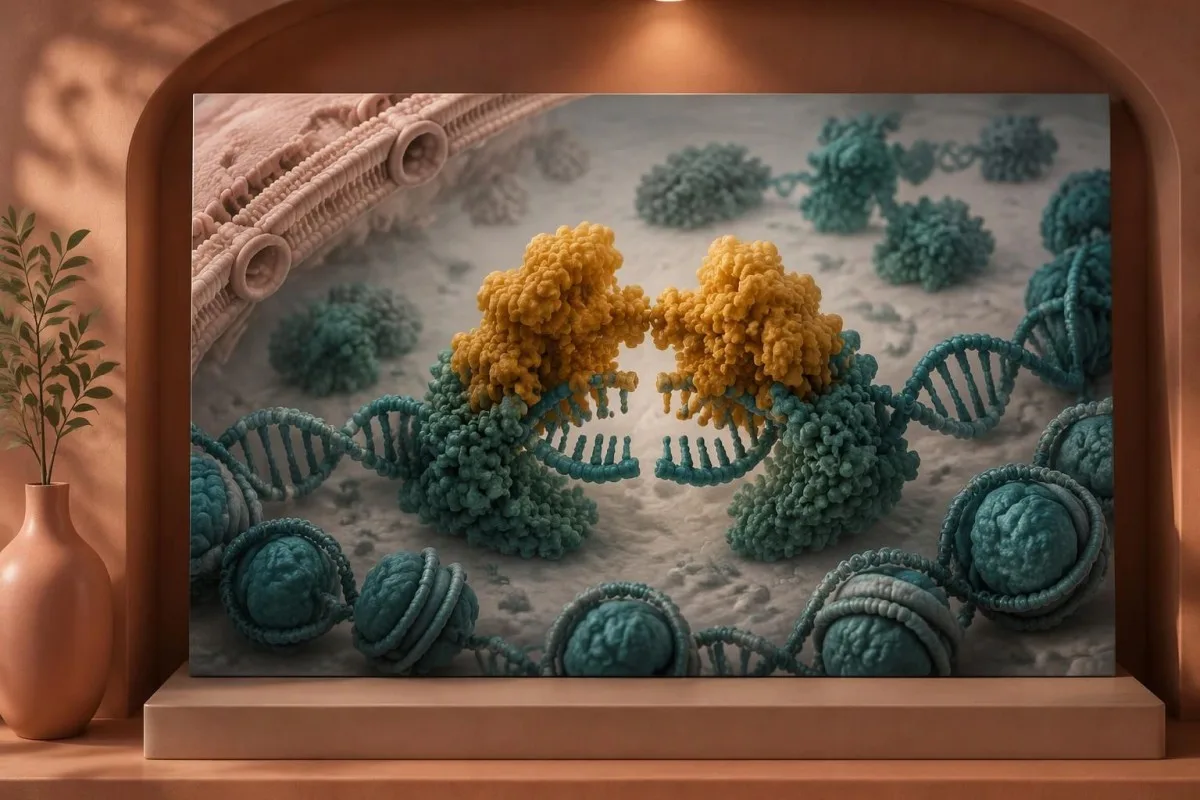
Kuchenbaecker et al. reported those age-80 estimates in JAMA, with 95% confidence intervals of 65–79% for breast cancer Ve 36–53% for ovarian cancer (2017). The intervals describe uncertainty around population estimates; they do not mean an individual’s risk can be read directly from the laboratory report.
A hypothetical 30-year-old BRCA1 carrier should not interpret a 72% age-80 estimate as a 72% risk this year. Personal counseling separates near-term risk from longer-term risk and considers age, prior cancer, relatives’ diagnoses and any preventive procedures already completed.
BRCA1-associated breast cancers are more often triple-negative than breast cancers in the general population, but receptor status cannot be predicted from an inherited result alone. An existing cancer still requires its own pathological and receptor assessment; a genetic finding does not replace those separate tests.
One family can also have more than one inherited explanation for cancer, particularly when diagnoses cluster on both parental branches. For example, several colorectal and endometrial cancers may justify a separate assessment of Lynch syndrome results rather than assuming a BRCA1 finding explains every diagnosis.
BRCA2 mutasyonuna bağlı kanser riski nasıl farklılık gösterir?
BRCA2 mutation cancer risk includes breast and ovarian cancer susceptibility, with particular relevance to male breast, prostate and pancreatic cancer assessment. In the same prospective JAMA study, women carrying pathogenic BRCA2 variants had estimated risks of 69% for breast cancer and 17% for ovarian cancer by age 80.
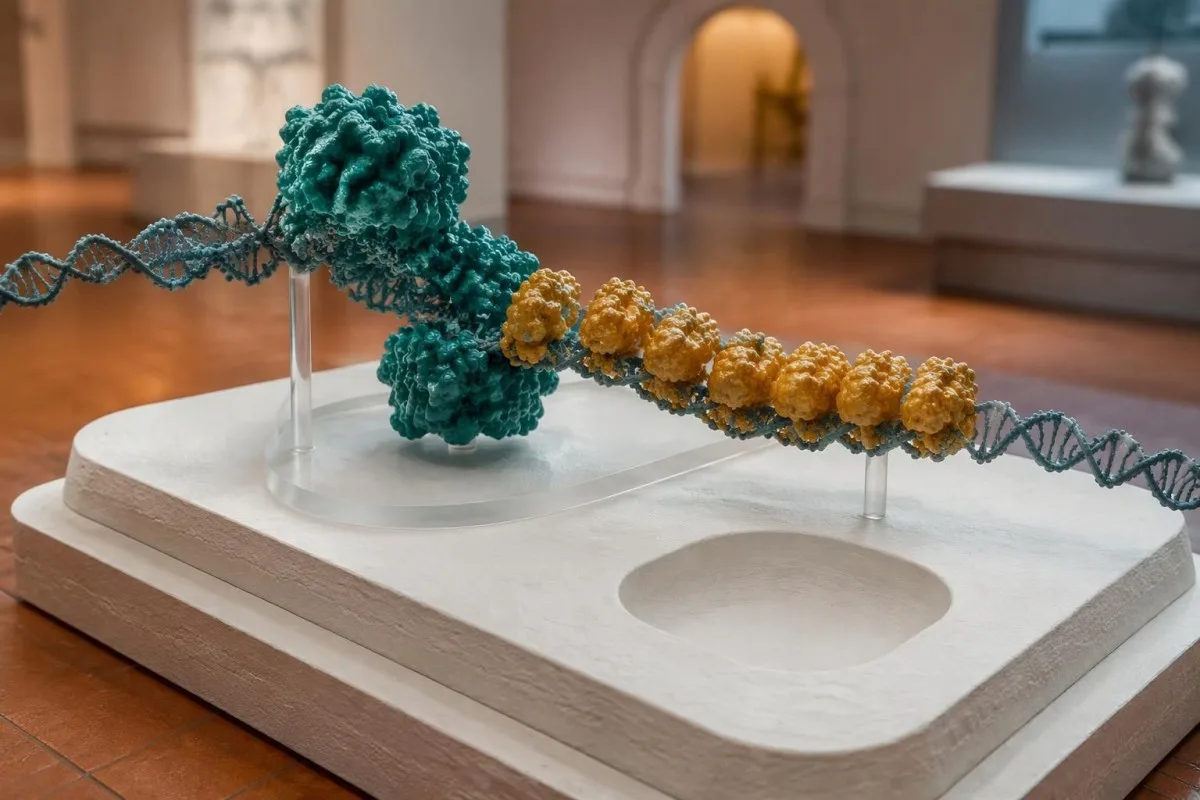
The BRCA2 estimates had 95% confidence intervals of 61–77% for breast cancer Ve 11–25% for ovarian cancer (Kuchenbaecker et al., 2017). BRCA2’s lower average ovarian cancer risk compared with BRCA1 helps explain why preventive ovary-and-tube removal is commonly discussed later for BRCA2 carriers.
A previous breast cancer creates a different risk question: the chance of another cancer in the opposite breast. Kuchenbaecker et al. estimated 20-year contralateral breast cancer risks of 26% for BRCA2 and 40% for BRCA1; those figures are not the same as first-cancer risk and should not be substituted for it.
Prostate screening discussions may begin around age 40 in men with pathogenic BRCA2 variants, depending on the applicable clinical pathway. PSA is a screening measurement rather than a symptom generator; our explanation of what elevated PSA means separates the laboratory number from a diagnosis.
Pancreatic surveillance is another area where eligibility criteria differ, including the importance assigned to family history. A hypothetical 52-year-old BRCA2 carrier with an affected first-degree relative needs a specialist discussion about MRI-based imaging or endoscopic ultrasound—not routine CA 19-9 testing as a substitute.
Önemi belirsiz bir BRCA varyantı ne anlama gelir?
A BRCA variant of uncertain significance, or VUS, means available evidence cannot establish whether a DNA change increases cancer risk. A VUS is not a positive result, and it should not independently determine preventive mastectomy or removal of the ovaries and fallopian tubes.

The ACMG/AMP standards state that a VUS'un klinik karar verme sürecinde kullanılmaması (Richards et al., 2015). Among the 5 classification categories, uncertainty is an evidence status—not a diagnosis, not a halfway-positive result and not a 50% probability that the variant causes cancer.
For example, a hypothetical 42-year-old with a BRCA1 VUS and no significant family history should not be offered risk-reducing surgery because of that VUS alone. Another 42-year-old with the same VUS and a substantial family history may qualify for intensified surveillance because of the history, not because the uncertain variant became actionable.
Ancestry can affect how often laboratories encounter uncertainty because population databases do not represent every group equally. Two people with the same cancer history can therefore receive different levels of interpretive certainty; this reflects evidence gaps and does not establish a biological difference in the seriousness of their results.
At Kantesti, we separate finding a genetic change from proving that the change warrants action. The same distinction helps readers understand common MTHFR variant findings, although MTHFR results and BRCA-associated cancer susceptibility have very different clinical implications.
Bir BRCA VUS'un sınıflandırması daha sonra değişebilir mi?
A BRCA VUS can be reclassified when new evidence clarifies its clinical significance. Many reclassified VUS move toward benign categories, but neither the direction nor the timing can be promised for an individual finding; reinterpretation usually reviews existing DNA data rather than requiring another sample.

Useful new evidence can come from 3 broad sources: population frequency, carefully validated functional work and observations of the variant in families. A computer prediction alone is usually insufficient; expert curation weighs whether the evidence actually addresses the disease mechanism and meets classification standards.
Laboratories can disagree because their evidence differs or their interpretations were issued at different times. Record 2 separate dates when available—the original report date and the most recent classification date—and ask whether a specialist expert-panel assessment exists, rather than counting database entries as votes.
Routine testing of unaffected relatives for a VUS usually does not guide care, although a genetics team may arrange selected family studies to help classification. A hypothetical family with 3 affected relatives should not independently order VUS testing for everyone and interpret who carries it as proof of causation.
Ask which laboratory manages reinterpretation, how amended reports reach you and whether your contact details remain current; there is no universal recontact interval. Our discussion of inherited TTR variant interpretation illustrates the broader need to connect exact genetic findings with disease-specific evidence.
Negatif bir BRCA sonucu ne zaman gerçek bir negatif sonuçtur?
A true negative BRCA result means testing did not find the specific pathogenic or likely pathogenic variant already identified in a biological relative. It removes the inherited risk attributable to that familial variant, but it does not eliminate ordinary cancer risk or unrelated risks from the other family branch.
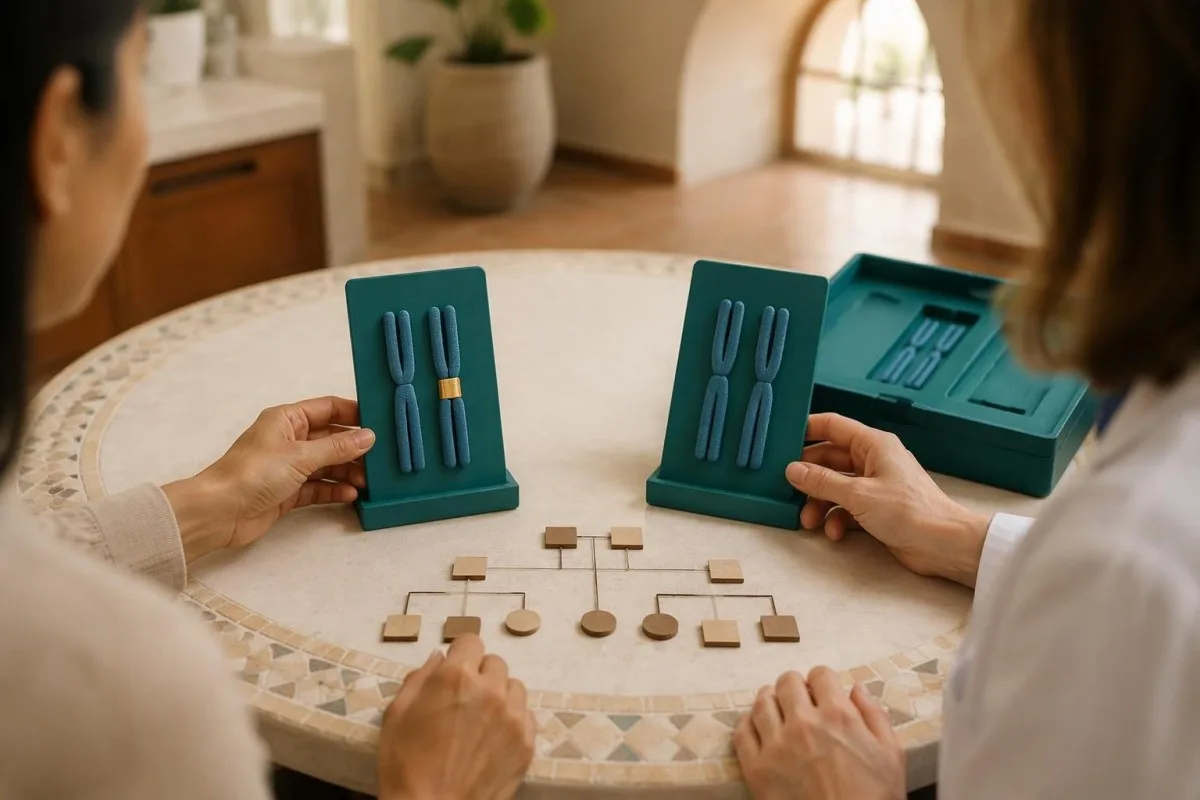
Suppose a hypothetical mother has a confirmed pathogenic BRCA1 variant and her adult daughter’s targeted test excludes that exact variant. Before testing, the daughter generally had a 50% kalıtım olasılığı; afterward, she is not considered a carrier of that maternal finding and cannot pass that uncarried variant to her children.
A negative result becomes less definitive if nobody knows the affected relative’s exact finding. Bring a copy of the original family report rather than a verbal account of “BRCA positive”; a gene name alone cannot distinguish a pathogenic variant from a VUS or identify which change the laboratory should test.
An independently concerning paternal history can remain relevant despite a maternal true negative. For example, 2 close paternal relatives with early breast cancer may warrant separate risk assessment, because excluding one maternal variant does not explain another branch of the pedigree.
The logic of matching a relative’s exact finding also appears in family-based Alport genetic testing, although the genes and inheritance patterns differ. Ask for a written statement identifying which familial variant was excluded and what remaining screening recommendation follows from your own history.
Negatif bir BRCA sonucu neden bilgilendirici olmayabilir?
Bir bilgilendirici olmayan negatif sonuç means no actionable BRCA finding was detected, but testing has not explained a suspicious personal or family cancer history. The result may reflect another gene, a technical limitation or a familial risk pattern that cannot currently be assigned to one detectable variant.
Testing an affected relative first usually provides more information than testing an unaffected relative. A hypothetical unaffected 35-year-old’s negative panel does not prove that her mother’s ovarian cancer lacked an inherited cause; testing the mother, when possible, can establish whether there is a familial finding to exclude.
A broader panel may consider genes such as PALB2, ATM, CHEK2, RAD51C, RAD51D and BRIP1, depending on the cancer pattern. These genes do not share identical cancer risks or prevention recommendations, so “panel positive” still requires gene-specific interpretation rather than applying the BRCA pathway to every result.
Older tests or limited consumer tests may assess only selected variants, whereas comprehensive clinical testing can include sequencing and deletion/duplication analysis. Our explanation of hidden carrier-screening limitations illustrates why a reassuring-looking result can still depend on methodology, although SMA uses a different genetic model.
Kantesti AI does not establish the completeness of a genetic assay or certify that a family’s inherited risk has been excluded. If a hypothetical family has 3 related cancers despite negative testing, clinical genetics can decide whether updated testing, another affected relative or a formal family-history risk model would answer the unresolved question.
Tümörde saptanan bir BRCA bulgusu kalıtsal olduğu anlamına mı gelir?
A BRCA variant found in tumor tissue is not automatically inherited. Tumor testing can detect acquired changes confined to cancer cells; germline testing examines a suitable non-tumor specimen to determine whether the finding is constitutional and relevant to relatives.
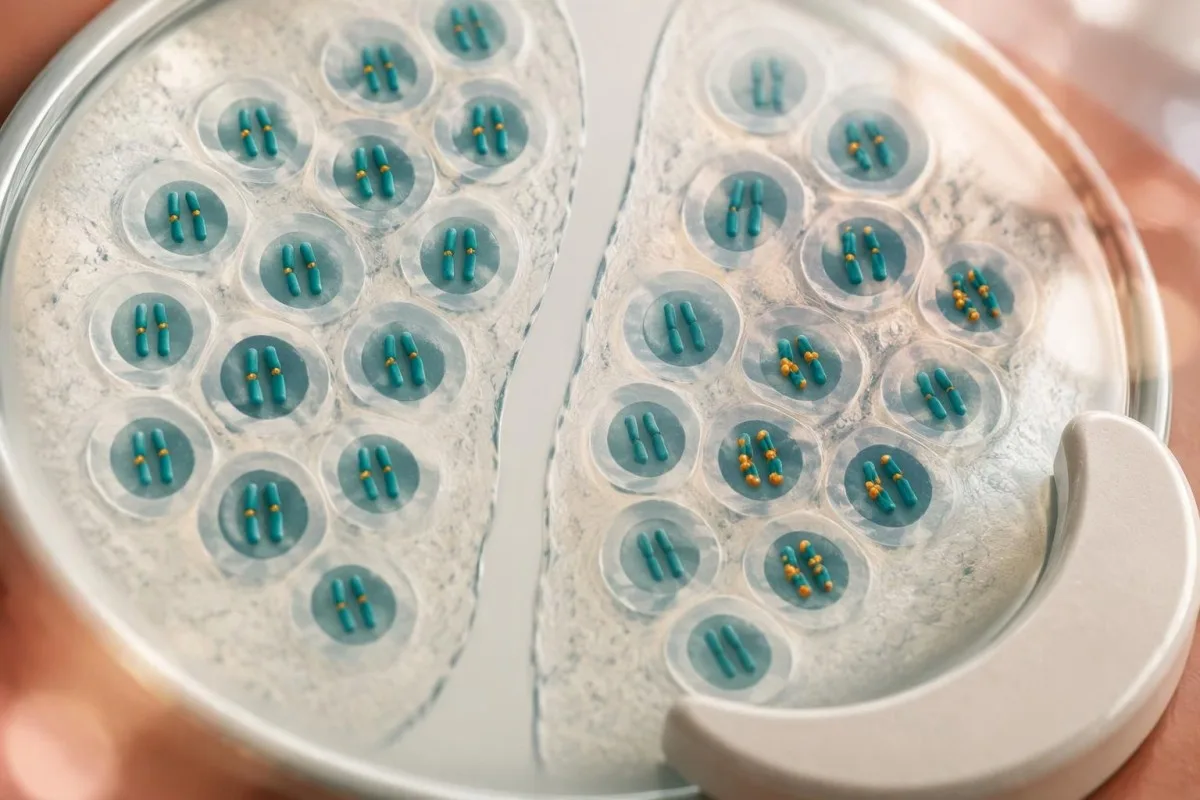
A tumor report may show a variant allele fraction near 50%, but that number does not prove germline origin. Tumor purity, copy-number changes and loss of the other gene copy can all shift the fraction; a percentage on a tumor report cannot replace a properly selected germline test.
Some oncology reports describe homologous recombination deficiency, or HRD, rather than a specific inherited variant. HRD can arise through more than one mechanism, and an HRD-positive result does not establish that a person or their children carry a pathogenic BRCA1 or BRCA2 variant.
After an allogeneic stem-cell transplant, a blood-derived DNA sample may reflect the donor, and saliva can also contain donor-derived cells. A hypothetical transplant recipient therefore needs the genetics laboratory to select an appropriate specimen—sometimes cultured skin fibroblasts—rather than assuming that 2 easily obtained samples answer the inheritance question.
The distinction between acquired and inherited DNA changes also matters in UBA1-related VEXAS testing, although VEXAS is a different condition. For a tumor BRCA finding, ask whether germline confirmation has been completed, is pending or was never requested.
Genetik danışmanlık en çok ne zaman fayda sağlar?
Genetic counseling helps before testing and whenever a result could change screening, treatment or family testing. It is especially useful for pathogenic findings, unresolved VUS, limited negative tests and family patterns involving young diagnoses, ovarian cancer, male breast cancer or multiple related cancers.

A practical pedigree usually covers 3 kuşak and records cancer type, age at diagnosis, biological relationships and both maternal and paternal branches. “Abdominal cancer” is less useful than a confirmed primary site; ovarian, pancreatic and metastatic cancers can otherwise be misremembered as the same diagnosis.
Small families, early deaths and few female relatives can hide hereditary breast-and-ovarian cancer patterns. A hypothetical father with 2 sons and no sisters can carry and transmit a BRCA variant even when the family has no obvious breast cancer cluster; paternal inheritance deserves the same attention as maternal inheritance.
Kantesti bir AI kan tahlili yorumlama platformu, not a genetic counseling service. Our guidance on age-appropriate family testing separates routine laboratory needs from predictive BRCA testing, which is generally deferred in children under 18 because management usually begins in adulthood.
Before an appointment, gather the actual family report, pathology details if available and your previous test methods. Use separate consent for each relative’s records; our discussion of family health consent explains why a shared family history does not give one person automatic permission to access everyone’s medical information.
Patojenik BRCA sonucunun ardından hangi takip süreci uygulanır?
A germline pathogenic BRCA result warrants a personalized prevention plan, not automatic surgery. Options include enhanced breast screening, discussion of risk-reducing procedures and assessment of other gene-associated cancers; age, reproductive plans, previous cancer and local guidance determine the timing.

Many high-risk pathways use annual breast MRI beginning around ages 25–30, with mammography commonly added around age 30, but national recommendations differ. The reason for combining methods is that each detects some findings the other can miss; more imaging is not simply a substitute for understanding age-specific benefit and false-positive risk.
NICE guideline NG241 lists risk-reducing removal of ovaries and fallopian tubes no earlier than age 35 for BRCA1 and 40 for BRCA2, with individualized assessment (NICE, 2024). Common clinical discussions use windows of approximately 35–40 and 40–45 years, respectively, after childbearing; these are planning ranges, not instructions for every carrier.
Removing only the fallopian tubes while delaying ovary removal has not been established as equivalent protection and remains a trial-based strategy in NICE guidance. Surgical menopause can affect symptoms, cardiovascular health and bones; our kadınların hormonal sağlık rehberi explains why prevention planning includes consequences beyond cancer risk.
Hormone treatment after premenopausal risk-reducing surgery may be considered until the usual menopause age, approximately 51, but previous breast cancer and other contraindications change that discussion. Bone-density assessment and evaluation of secondary bone-loss causes are distinct tasks; our guide to bone health laboratory assessment explains what routine tests can and cannot answer.
BRCA sonucu akrabalar ve çocuklar için ne anlama gelir?
Each child of a germline BRCA pathogenic-variant carrier usually has a 50% chance of inheriting the variant, regardless of sex. Adult relatives can consider targeted testing for the established family finding; inheriting susceptibility does not mean inheriting an existing cancer.
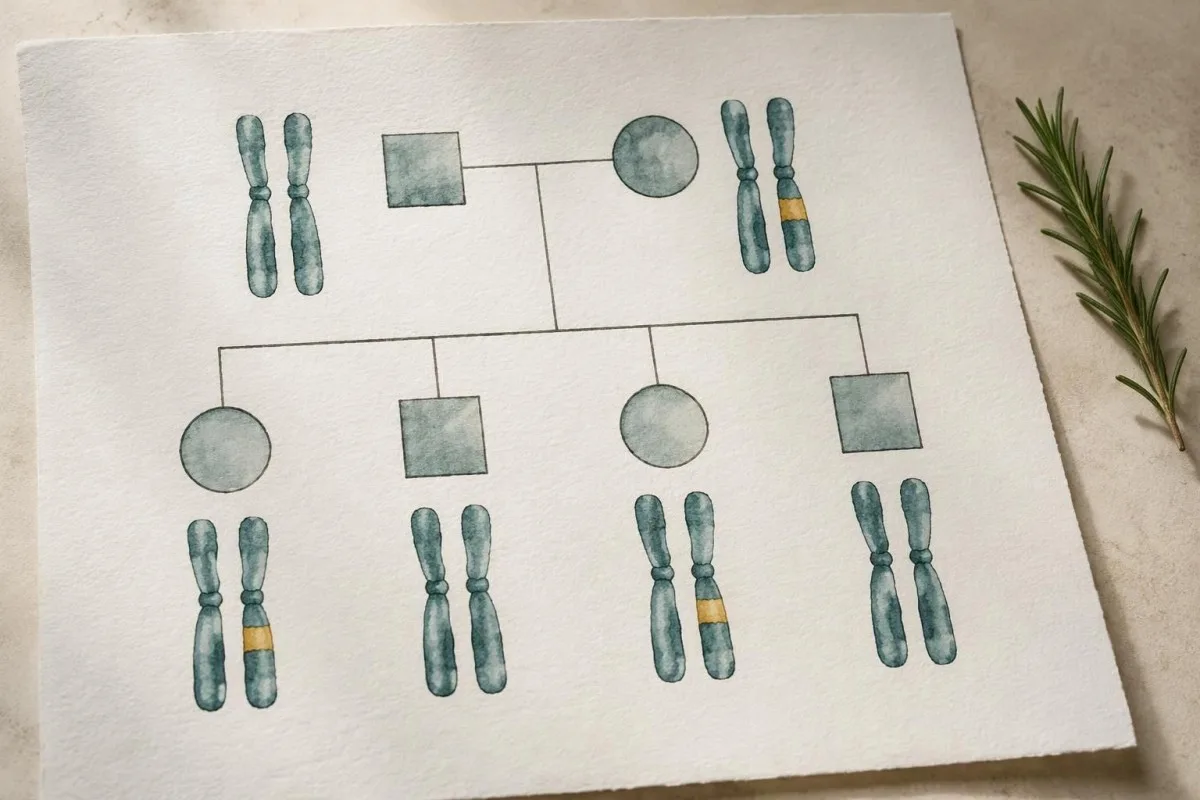
Four children do not imply that exactly 2 will inherit a parent’s BRCA variant. Each pregnancy is an independent event, so all, none or any number in between can inherit it; the 50% figure describes probability rather than a guaranteed family distribution.
A carrier’s siblings often have a 50% kalıtım şansı of sharing the variant when a parent carries it, but that estimate should not be applied without checking the pedigree. Identifying which parent carries the finding helps determine which cousins, aunts and uncles should receive an invitation to discuss testing.
Reproductive options can include natural conception, prenatal diagnosis or IVF with preimplantation genetic testing for a known familial variant. These are preference-sensitive choices, not obligations; our explanation of reproductive genetic result counseling shows why gene-specific inheritance matters, although FMR1 repeat expansion behaves differently from BRCA inheritance.
A rare additional question arises when both partners carry pathogenic variants in BRCA2: each pregnancy has a 25% chance of inheriting pathogenic variants in both copies, which can cause a Fanconi anemia phenotype. Partner testing is not automatically required for every BRCA carrier, but ancestry, relatedness and reproductive planning can justify specialist assessment.
Belirtiler veya tümör belirteçleri BRCA ilişkili kanseri doğrulayabilir mi?
Neither a BRCA result nor a tumor-marker concentration confirms that cancer is present. New symptoms need their own assessment, and a negative genetic result does not make them harmless; examination, imaging and sometimes tissue assessment answer a different question from inherited susceptibility testing.
CA-125 can rise in benign conditions and can remain normal in ovarian cancer, particularly earlier disease. Routine CA-125 and ultrasound screening have not demonstrated a mortality benefit sufficient to replace established risk-reduction discussions; our guide to CA-125 limits and symptoms explains why the usual 35 U/mL cutoff is not a cancer yes-or-no boundary.
CA 15-3 and CA 27-29 are not appropriate tests for deciding whether an unaffected BRCA carrier has developed breast cancer. A hypothetical carrier with a normal marker still needs assessment of a new breast lump; our explanation of CA 15-3 interpretation separates selected monitoring uses from screening.
Kantesti does not infer BRCA carrier status from routine laboratory markers. For example, a CA 19-9 result of 80 U/mL can have non-cancer explanations and cannot establish pancreatic cancer or inherited BRCA2 risk; our guide to CA 19-9 limitations explains the need for clinical and imaging context.
Persistent bloating, early satiety, unexplained weight loss, a new breast change or unexplained jaundice deserve timely medical review regardless of genetic classification. A hypothetical person with 3 weeks of new persistent symptoms should not wait for VUS reclassification or a routine genetics appointment before seeking a separate assessment.
Genetik danışmanlığın yerini almadan yapay zekâ açıklamalarından yararlanın
AI explanations can support understanding, but they cannot independently classify a BRCA variant or authorize preventive surgery. A safe workflow preserves 3 essentials: the original laboratory report, specialist interpretation and a written follow-up plan that distinguishes inherited risk from evaluation of any current symptoms.

Kantesti bir Yapay zekâ biyobelirteç yorumlama platformu that explains routine laboratory findings, with interpretation generally available in about 60 seconds. That turnaround is not a timetable for genetic counseling, and our klinik yöntem bilgileri should not be read as validation of independent BRCA classification or hereditary cancer risk calculation.
Genetic reports can reveal information relevant to more than kişiye, including biological relatives who have not chosen testing. Read our gizlilik ve veri uygulamalarımız before sharing sensitive documents, and avoid uploading another relative’s identifiable report without their permission.
The 2 research publications listed below concern our global routine-test report and RDW educational material; they are not BRCA cancer-risk studies, clinical prevention guidelines or evidence supporting surgery. The medical recommendations in this article instead draw on the ACMG/AMP classification standards, the prospective JAMA risk study and NICE familial ovarian cancer guidance.
Before acting, ask your genetics team to document whether the result is germline, which exact variant is actionable and whether a negative is true or uninformative. Our Sorumlu yapay zekâ ilkelerimiz support keeping those clinical decisions with qualified professionals rather than treating an automated explanation as another laboratory classification.
Sıkça sorulan sorular
BRCA1 veya BRCA2 testinin pozitif çıkması kansere sahip olduğum anlamına mı gelir?
Pozitif bir germ hattı BRCA1 veya BRCA2 testi, patojenik ya da olası patojenik kalıtsal bir varyantı saptar; kanser tanısı koymaz. JAMA’da Kuchenbaecker ve arkadaşlarının prospektif çalışmasında, patojenik varyant taşıyan kadınlarda 80 yaşına kadar tahmini meme kanseri riskleri BRCA1 için 72%, BRCA2 içinse olarak bildirilmiştir. Bunlar toplum düzeyindeki tahminlerdir; kanserin bugün mevcut olma olasılığını göstermez. Mevcut bir kanserin tanısı için ayrı bir klinik değerlendirme gerekir.
BRCA klinik önemi belirsiz bir varyant için koruyucu cerrahi yaptırmalı mıyım?
BRCA belirsiz klinik öneme sahip bir varyant, koruyucu cerrahi kararını tek başına belirlememelidir. ACMG/AMP çerçevesi, VUS’ları kanıta dayalı 5 sınıflandırma arasında sayar ve belirsiz varyantların klinik karar verme sürecinde kullanılmaması gerektiğini belirtir. Kişisel veya aile öyküsü, daha yüksek riskli bakımı ayrıca haklı gösterebilir; ancak bu karar VUS’un patojenik olduğunu varsaymamalıdır. Bir genetik uzmanı, önerilen herhangi bir işlemi hangi kanıtların gerçekten desteklediğini açıklayabilir.
Gerçek negatif ve bilgilendirici olmayan negatif BRCA sonucu arasındaki fark nedir?
Gerçek negatif sonuç, biyolojik bir akrabada daha önce saptanmış olan belirli patojenik veya muhtemelen patojenik BRCA varyantını dışlar. Taşıyıcı bir kişinin çocuğunda bu sonuç, ailedeki söz konusu varyantın kalıtılmasına ilişkin başlangıçtaki olasılığı netleştirebilir. Bilgilendirici olmayan negatif sonuçta ise, ailede kanserlerin neden ortaya çıktığı açıklanmadan klinik açıdan eyleme geçirilebilir bir varyant saptanmaz. Her iki sonuçtan sonra da ailenin diğer kolları, ek genler ve testin sınırlılıkları önemini koruyabilir.
BRCA VUS sonucu daha sonra pozitif hale gelebilir mi?
Bir BRCA VUS daha sonra patojenik veya muhtemelen patojenik olarak yeniden sınıflandırılabilir; ancak muhtemelen benign veya benign olarak da yeniden sınıflandırılabilir. Yeniden sınıflandırma, kanıtları aynı 5 kategorili çerçeve içinde değerlendirir; bu, kişinin DNA’sının değiştiği anlamına gelmez. Bireysel bir varyant için evrensel bir süre sınırı veya garantili bir yön yoktur. Güncellenmiş raporların ve yeniden iletişime geçmenin nasıl ele alındığını ilk laboratuvara veya genetik danışmanlık hizmetine sorun.
BRCA varyantını babamdan miras alabilir miyim?
Patojenik bir BRCA1 veya BRCA2 varyantı biyolojik ebeveynlerden herhangi birinden kalıtılabilir. Germ hattında varyant taşıyan bir kişinin her çocuğunun, taşıyıcının anne ya da baba olmasından bağımsız olarak, bu varyantı kalıtma olasılığı genellikle 'dir. Kadın akrabası az olan baba tarafındaki bir ailede, varyant taşınmasına rağmen belirgin bir meme veya yumurtalık kanseri öyküsü olmayabilir. Bu nedenle genetik danışmanlıkta ailenin her iki kolu da dikkate alınmalıdır.
Tümörümde bulunan bir BRCA mutasyonu çocuklarımın risk altında olduğu anlamına mı gelir?
Tümör dokusunda saptanan bir BRCA mutasyonu, bunun kalıtsal olduğunu kanıtlamaz. Tümör örneğindeki varyant alel frekansı civarında olsa bile, tümör saflığı ve kopya sayısı değişiklikleri bu oranı etkilediğinden germline kökeni güvenilir biçimde kanıtlayamaz. Kalıtsal durumu belirlemek için uygun bir örnekle germline testi yapılması gerekir. Olağan aktarım olasılığı yalnızca ebeveyn germline varyant taşıdığında geçerlidir.
Negatif BRCA testini her yıl tekrarlamam gerekir mi?
Kalıtsal bir varyant yaşlanmayla ortaya çıkmadığından, BRCA DNA testinin her yıl tekrarlanması genellikle gerekli değildir. İlk testin kapsamı sınırlıysa, ailede yeni bir varyant saptanırsa veya başka bir akrabada ilişkili bir kanser gelişirse, negatif sonucun yeniden değerlendirilmesi gerekebilir. Örneğin, yalnızca seçilmiş 3 varyantın test edilmesi, kapsamlı BRCA1/BRCA2 dizilemesi ile delesyon/duplikasyon analizine eşdeğer değildir. Yeniden yorumlama, hedefe yönelik aile testi veya farklı bir panelin ek bilgi sağlayıp sağlamayacağını öğrenmek için genetik danışmanlık hizmetine başvurun.
Kan tahlili sonuçları ne anlama gelir
Laboratuvar raporunuzu yükleyin; Kantesti'nin AI'ı her biyobelirteci saniyeler içinde sade bir dille açıklar. Dünya genelinde 2 milyondan fazla kişi tarafından kullanılıyor.
Referanslar
- Klein, T., Mitchell, S. & Weber, H. (2026). Yapay Zeka Kan Testi Analizörü: 2,5M Test Analiz Edildi | Global Health Report 2026. Kantesti AI Tıbbi Araştırma. DOI
- Klein, T., Mitchell, S. & Weber, H. (2026). RDW Kan Testi: RDW-CV, MCV ve MCHC için Eksiksiz Rehber. Kantesti AI Tıbbi Araştırma. DOI
- Richards S ve ark. (2015). Dizi varyantlarının yorumlanmasına yönelik standartlar ve kılavuzlar: Amerikan Tıbbi Genetik ve Genomik Koleji ile Moleküler Patoloji Derneğinin ortak uzlaşı önerisi. Tıpta Genetik. DOI PubMed
- Kuchenbaecker KB et al. (2017). Risks of Breast, Ovarian, and Contralateral Breast Cancer for BRCA1 and BRCA2 Mutation Carriers. JAMA. DOI PubMed
- National Institute for Health and Care Excellence (2024). Ovarian cancer: identifying and managing familial and genetic risk. NICE guideline NG241.
- 2 milyondan fazlaAnaliz edilen testler
- 127+Ülkeler
- 100+Diller
Sağlık ekibi hakkında


E-E-A-T Güven Sinyalleri
Deneyim
Hekim liderliğinde laboratuvar yorumlama iş akışlarının klinik incelemesi.
Uzmanlık
Klinik bağlamda biyobelirteçlerin nasıl davrandığına odaklanan laboratuvar tıbbı.
Otorite
Dr. Thomas Klein tarafından tıbbi açıdan incelenmiş; Dr. Sarah Mitchell ve Prof. Dr. Hans Weber'in katkılarıyla hazırlanmıştır.
Güvenilirlik
Alarmı azaltmaya yönelik net takip yollarıyla kanıta dayalı yorumlama.






Tıbbi sorumluluk reddi
Bu makale yalnızca eğitim amaçlıdır ve tıbbi tavsiye niteliği taşımaz. Tanı ve tedavi kararları için her zaman yetkin bir sağlık hizmeti sağlayıcısına danışın.
Yayınlanmış · Yayın ekibiyle iletişime geçin
Kantesti Ltd tarafından yayımlanmıştır; İngiltere ve Galler'de kayıtlı, şirket no. 17090423, Londra, Birleşik Krallık.
