
BRCA1 немесе BRCA2 патогенді нұсқасы тұқым қуалайтын қатерлі ісік қаупін арттырады; ол қатерлі ісік диагнозын білдірмейді. Клиникалық маңызы белгісіз нұсқа профилактикалық операция жасауға негіз болмауы керек. Теріс нәтиже белгілі отбасылық нұсқаның жоқ екенін растаған жағдайда ғана нақты теріс нәтиже болып саналады — әйтпесе, тұқым қуалайтын қауіп анықталмаған күйде қалуы мүмкін.

Негізгі тұжырымдар
- Оң нәтиже патогенді немесе патогенді болуы ықтимал нұсқаның анықталғанын білдіреді; тұқым қуалайтын бейімділік қатерлі ісік диагнозы емес.
- Бес жіктеме генетикалық нұсқаларды сипаттайды: патогенді, патогенді болуы ықтимал, клиникалық маңызы белгісіз, қатерсіз болуы ықтимал және қатерсіз.
- BRCA1 қаупі JAMA-дағы проспективті зерттеуде патогенді нұсқасы бар әйелдер арасында 80 жасқа дейін сүт безі қатерлі ісігінің қаупі шамамен 72%, ал аналық без қатерлі ісігінің қаупі 44% болды.
- BRCA2 қаупі сол зерттеуде 80 жасқа дейін сүт безі қатерлі ісігінің қаупі шамамен 69%, ал аналық без қатерлі ісігінің қаупі 17% болды; бұл жеке болжамдар емес, топтық көрсеткіштер.
- Клиникалық маңызы белгісіз нұсқаны басқару белгісіз нұсқаға емес, жеке және отбасылық анамнезге негізделуі керек; белгісіз мәні бар нұсқа (VUS) өздігінен профилактикалық операция жасауға негіз болмайды.
- Нағыз теріс нәтиже зертхана отбасыңызда анықталған нақты патогенді нұсқаны таппағанын білдіреді.
- Ақпарат бермейтін теріс нәтиже тестілеу тұқым қуалайтын қауіпке күдік туғызған себепті анықтамағанын білдіреді; отбасылық анамнездің ауыр болуы қосымша бағалау жүргізуге негіз бола алады.
- Отбасылық тұқым қуалау әдетте, ұрықтық BRCA1 немесе BRCA2 патогенді нұсқасының тасымалдаушысының әрбір баласына сол нұсқаны тұқым қуалау ықтималдығы 50% болады.
- Генетикалық кеңес беру нақты нұсқаны, тестпен қамтылған ауқымды, отбасының екі жағындағы туыстарды және жасқа байланысты скрининг не профилактика нұсқаларын өзара байланыстыруға көмектеседі.
BRCA генетикалық тестінің нәтижелері шын мәнінде нені білдіреді?
BRCA генетикалық тестінің нәтижелері әдетте 3 практикалық топқа бөлінеді: оң, белгісіз немесе теріс. Тұқым қуалайтын оң нәтиже қатерлі ісікке бейімділікті анықтайды, ал маңыздылығы белгісіз нұсқа әлі де анықталмаған күйде қалады, ал теріс нәтижені көңілге қонымды деп бағаламас бұрын отбасылық мәнмәтінді ескеру қажет.

A ұрықтық BRCA тесті ақуыз концентрациясын өлшеудің орнына ДНҚ-ны, әдетте зертханаға тапсырылған қан немесе сілекей үлгісінен зерттейді. Оның нәтижесін нг/мл мәні сияқты түсіндіруге болмайды: клиникалық тұрғыдан пайдалы ақпарат — ген, нақты нұсқа, жіктелуі және тестілеу ауқымы.
Көптеген адамдарда 2 көшірмесі BRCA1-дің және BRCA2-нің 2 көшірмесі болады, олардың әрқайсысының бір көшірмесі биологиялық ата-ананың әрқайсысынан тұқым қуалайды. Бір көшірмедегі зиянды өзгеріс қатерлі ісікке бейімділікті арттыруы мүмкін, бірақ қатерлі ісіктің дамуына әдетте жасушалардағы қосымша өзгерістер де ықпал етеді — тұқым қуалау аурудың басталуына дейінгі кері санақ емес.
Қатерлі ісігі жоқ, жасы 38-дегі ойдан алынған адамда BRCA2 нәтижесінің патогенді болуы болашақтағы скрининг пен профилактика талқылауын өзгертуі мүмкін, бірақ қазіргі кезде қатерлі ісік бар екенін анықтамайды. Қатерлі ісіктен ем алып жүрген адамда дәл осы тұқым қуалайтын белгі ем алу құқығына және болашақта пайда болуы мүмкін қатерлі ісіктерді бағалауға да әсер етуі мүмкін.
Кантести - бұл AI қан анализінің анализаторы күнделікті зертханалық түсіндіруге арналған, клиникалық генетика зертханасының орнын алмастырмайды. Ақпарат біздің ұйымымызда қатерлі ісіктің тұқым қуалайтын нәтижесін түсіндіру үшін қажет мамандандырылған жұмыстан біздің ағартушылық рөлімізді ажыратуға көмектеседі.
BRCA зертханалық есебіндегі қай мәліметтер маңызды?
BRCA есебіндегі ең пайдалы мәліметтер — ген, нақты нұсқа, жіктелуі, үлгі түрі және тестілеу әдісі. Клиникалық зертханалар әдетте нұсқаларды 5 санатқа жіктейді; “нұсқа” деген сөздің өзі табылған өзгерістің зиянды екенін білдірмейді.

ACMG/AMP жүйесі мыналарды ажыратады: патогенді, патогендігі ықтимал, клиникалық маңызы белгісіз, қатерсіздігі ықтимал және қатерсіз нәтижелер (Richards et al., 2015). Патогенді және патогендігі ықтимал нұсқалар әдетте клиникалық басқарудың бірдей жолын негіздейді; бұл айырмашылық қатерлі ісік қаупінің екі түрлі пайызын емес, дәлелдерге деген сенімділік деңгейін сипаттайды.
Нұсқаның сипаттамасы мыналардан басталатын ДНҚ деңгейіндегі өзгерісті қамтуы мүмкін: c. and a protein-level consequence beginning with p. These are coordinates, not severity scores; two reports may describe the same change differently because they use different transcripts or historical naming conventions.
Look for both sequence analysis және deletion/duplication analysis when evaluating a comprehensive BRCA1/BRCA2 test. Reading individual DNA changes and detecting missing or extra gene segments require complementary methods, so a report stating “sequencing negative” may not answer every relevant question.
A hypothetical report can contain 2 findings: a pathogenic BRCA1 variant and an unrelated BRCA2 VUS. Management follows the established pathogenic finding, not an average of the two classifications; our guide to categorical versus numerical results explains why laboratory result types require different reading strategies.
BRCA1 оң нәтижесінің мәні: бейімділік, бірақ анықтық емес
BRCA1 positive meaning depends on the classification: a germline pathogenic or likely pathogenic BRCA1 variant indicates inherited cancer susceptibility. In a prospective study, women carrying pathogenic BRCA1 variants had an estimated 72% breast cancer risk and 44% ovarian cancer risk by age 80.
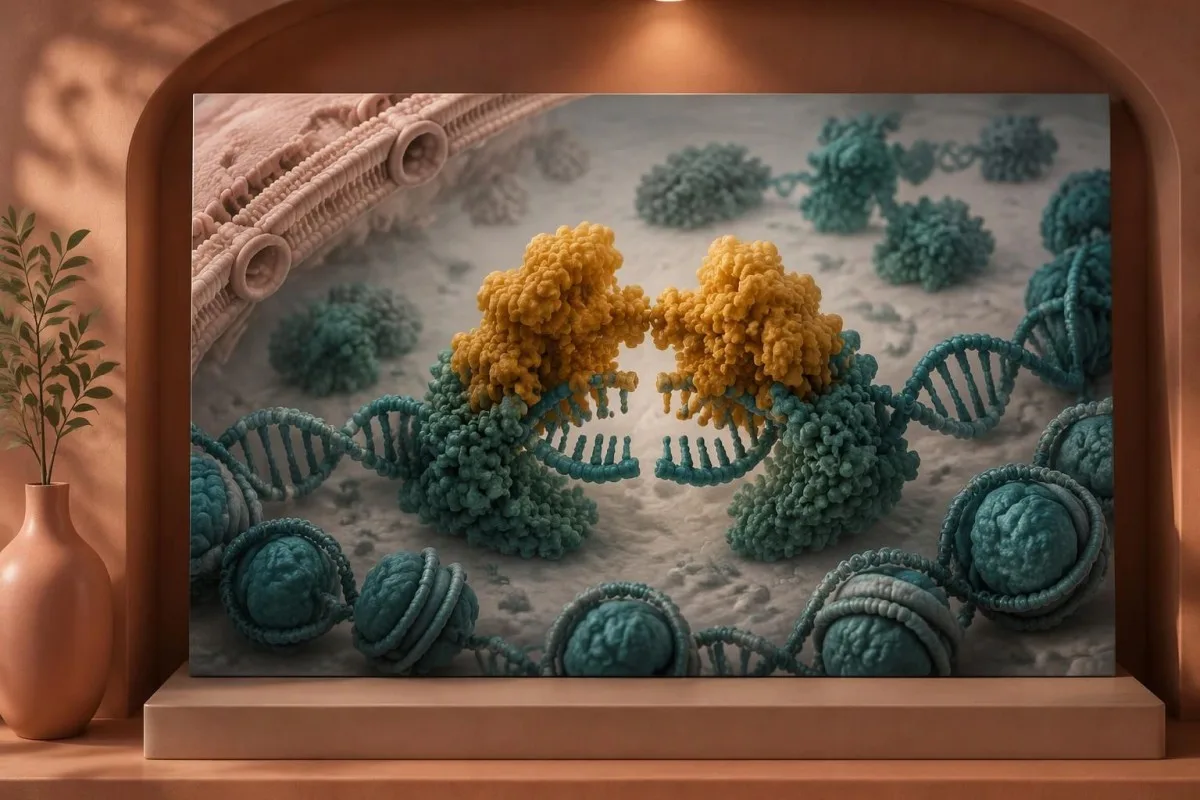
Kuchenbaecker et al. reported those age-80 estimates in JAMA, with 95% confidence intervals of 65–79% for breast cancer және 36–53% for ovarian cancer (2017). The intervals describe uncertainty around population estimates; they do not mean an individual’s risk can be read directly from the laboratory report.
A hypothetical 30-year-old BRCA1 carrier should not interpret a 72% age-80 estimate as a 72% risk this year. Personal counseling separates near-term risk from longer-term risk and considers age, prior cancer, relatives’ diagnoses and any preventive procedures already completed.
BRCA1-associated breast cancers are more often triple-negative than breast cancers in the general population, but receptor status cannot be predicted from an inherited result alone. An existing cancer still requires its own pathological and receptor assessment; a genetic finding does not replace those separate tests.
One family can also have more than one inherited explanation for cancer, particularly when diagnoses cluster on both parental branches. For example, several colorectal and endometrial cancers may justify a separate assessment of Lynch syndrome results rather than assuming a BRCA1 finding explains every diagnosis.
BRCA2 мутациясына байланысты қатерлі ісік қаупі несімен ерекшеленеді?
BRCA2 mutation cancer risk includes breast and ovarian cancer susceptibility, with particular relevance to male breast, prostate and pancreatic cancer assessment. In the same prospective JAMA study, women carrying pathogenic BRCA2 variants had estimated risks of 69% for breast cancer and 17% for ovarian cancer by age 80.
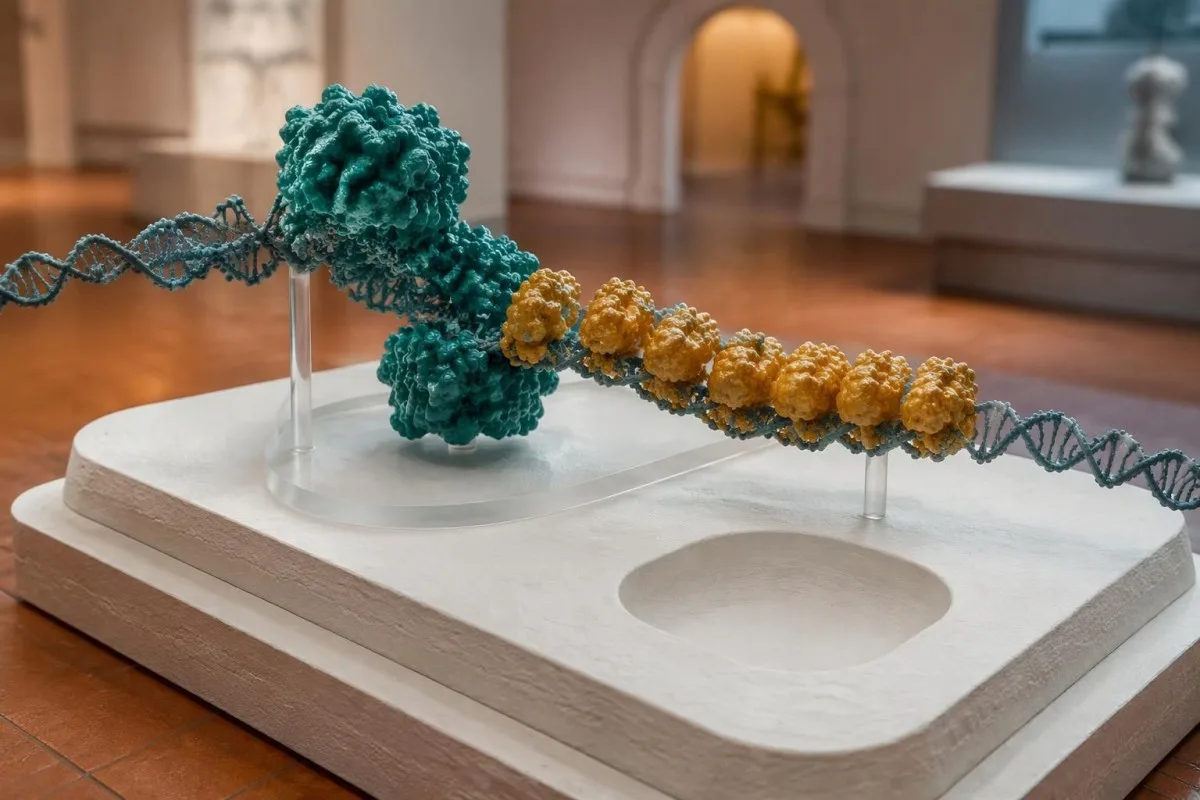
The BRCA2 estimates had 95% confidence intervals of 61–77% for breast cancer және 11–25% for ovarian cancer (Kuchenbaecker et al., 2017). BRCA2’s lower average ovarian cancer risk compared with BRCA1 helps explain why preventive ovary-and-tube removal is commonly discussed later for BRCA2 carriers.
A previous breast cancer creates a different risk question: the chance of another cancer in the opposite breast. Kuchenbaecker et al. estimated 20-year contralateral breast cancer risks of 26% for BRCA2 and 40% for BRCA1; those figures are not the same as first-cancer risk and should not be substituted for it.
Prostate screening discussions may begin around age 40 in men with pathogenic BRCA2 variants, depending on the applicable clinical pathway. PSA is a screening measurement rather than a symptom generator; our explanation of what elevated PSA means separates the laboratory number from a diagnosis.
Pancreatic surveillance is another area where eligibility criteria differ, including the importance assigned to family history. A hypothetical 52-year-old BRCA2 carrier with an affected first-degree relative needs a specialist discussion about MRI-based imaging or endoscopic ultrasound—not routine CA 19-9 testing as a substitute.
BRCA-дағы клиникалық маңызы белгісіз нұсқа нені білдіреді?
A BRCA variant of uncertain significance, or VUS, means available evidence cannot establish whether a DNA change increases cancer risk. A VUS is not a positive result, and it should not independently determine preventive mastectomy or removal of the ovaries and fallopian tubes.

The ACMG/AMP standards state that a VUS клиникалық шешім қабылдауда пайдаланылмауы тиіс (Richards et al., 2015). Among the 5 classification categories, uncertainty is an evidence status—not a diagnosis, not a halfway-positive result and not a 50% probability that the variant causes cancer.
For example, a hypothetical 42-year-old with a BRCA1 VUS and no significant family history should not be offered risk-reducing surgery because of that VUS alone. Another 42-year-old with the same VUS and a substantial family history may qualify for intensified surveillance because of the history, not because the uncertain variant became actionable.
Ancestry can affect how often laboratories encounter uncertainty because population databases do not represent every group equally. Two people with the same cancer history can therefore receive different levels of interpretive certainty; this reflects evidence gaps and does not establish a biological difference in the seriousness of their results.
At Kantesti, we separate finding a genetic change from proving that the change warrants action. The same distinction helps readers understand common MTHFR variant findings, although MTHFR results and BRCA-associated cancer susceptibility have very different clinical implications.
BRCA-дағы клиникалық маңызы белгісіз нұсқаның жіктемесі кейін өзгеруі мүмкін бе?
A BRCA VUS can be reclassified when new evidence clarifies its clinical significance. Many reclassified VUS move toward benign categories, but neither the direction nor the timing can be promised for an individual finding; reinterpretation usually reviews existing DNA data rather than requiring another sample.

Useful new evidence can come from 3 broad sources: population frequency, carefully validated functional work and observations of the variant in families. A computer prediction alone is usually insufficient; expert curation weighs whether the evidence actually addresses the disease mechanism and meets classification standards.
Laboratories can disagree because their evidence differs or their interpretations were issued at different times. Record 2 separate dates when available—the original report date and the most recent classification date—and ask whether a specialist expert-panel assessment exists, rather than counting database entries as votes.
Routine testing of unaffected relatives for a VUS usually does not guide care, although a genetics team may arrange selected family studies to help classification. A hypothetical family with 3 affected relatives should not independently order VUS testing for everyone and interpret who carries it as proof of causation.
Ask which laboratory manages reinterpretation, how amended reports reach you and whether your contact details remain current; there is no universal recontact interval. Our discussion of inherited TTR variant interpretation illustrates the broader need to connect exact genetic findings with disease-specific evidence.
BRCA-ның теріс нәтижесі қашан нақты теріс нәтиже болып саналады?
A true negative BRCA result means testing did not find the specific pathogenic or likely pathogenic variant already identified in a biological relative. It removes the inherited risk attributable to that familial variant, but it does not eliminate ordinary cancer risk or unrelated risks from the other family branch.

Suppose a hypothetical mother has a confirmed pathogenic BRCA1 variant and her adult daughter’s targeted test excludes that exact variant. Before testing, the daughter generally had a 50% тұқым қуалау ықтималдығы; afterward, she is not considered a carrier of that maternal finding and cannot pass that uncarried variant to her children.
A negative result becomes less definitive if nobody knows the affected relative’s exact finding. Bring a copy of the original family report rather than a verbal account of “BRCA positive”; a gene name alone cannot distinguish a pathogenic variant from a VUS or identify which change the laboratory should test.
An independently concerning paternal history can remain relevant despite a maternal true negative. For example, 2 close paternal relatives with early breast cancer may warrant separate risk assessment, because excluding one maternal variant does not explain another branch of the pedigree.
The logic of matching a relative’s exact finding also appears in family-based Alport genetic testing, although the genes and inheritance patterns differ. Ask for a written statement identifying which familial variant was excluded and what remaining screening recommendation follows from your own history.
BRCA-ның теріс нәтижесі неге нақты қорытынды бермеуі мүмкін?
Ан ақпарат бермейтін теріс нәтиже means no actionable BRCA finding was detected, but testing has not explained a suspicious personal or family cancer history. The result may reflect another gene, a technical limitation or a familial risk pattern that cannot currently be assigned to one detectable variant.

Testing an affected relative first usually provides more information than testing an unaffected relative. A hypothetical unaffected 35-year-old’s negative panel does not prove that her mother’s ovarian cancer lacked an inherited cause; testing the mother, when possible, can establish whether there is a familial finding to exclude.
A broader panel may consider genes such as PALB2, ATM, CHEK2, RAD51C, RAD51D and BRIP1, depending on the cancer pattern. These genes do not share identical cancer risks or prevention recommendations, so “panel positive” still requires gene-specific interpretation rather than applying the BRCA pathway to every result.
Older tests or limited consumer tests may assess only selected variants, whereas comprehensive clinical testing can include sequencing and deletion/duplication analysis. Our explanation of hidden carrier-screening limitations illustrates why a reassuring-looking result can still depend on methodology, although SMA uses a different genetic model.
Kantesti AI does not establish the completeness of a genetic assay or certify that a family’s inherited risk has been excluded. If a hypothetical family has 3 related cancers despite negative testing, clinical genetics can decide whether updated testing, another affected relative or a formal family-history risk model would answer the unresolved question.
Ісіктен анықталған BRCA өзгерісі оның тұқым қуалайтынын білдіре ме?
A BRCA variant found in tumor tissue is not automatically inherited. Tumor testing can detect acquired changes confined to cancer cells; germline testing examines a suitable non-tumor specimen to determine whether the finding is constitutional and relevant to relatives.
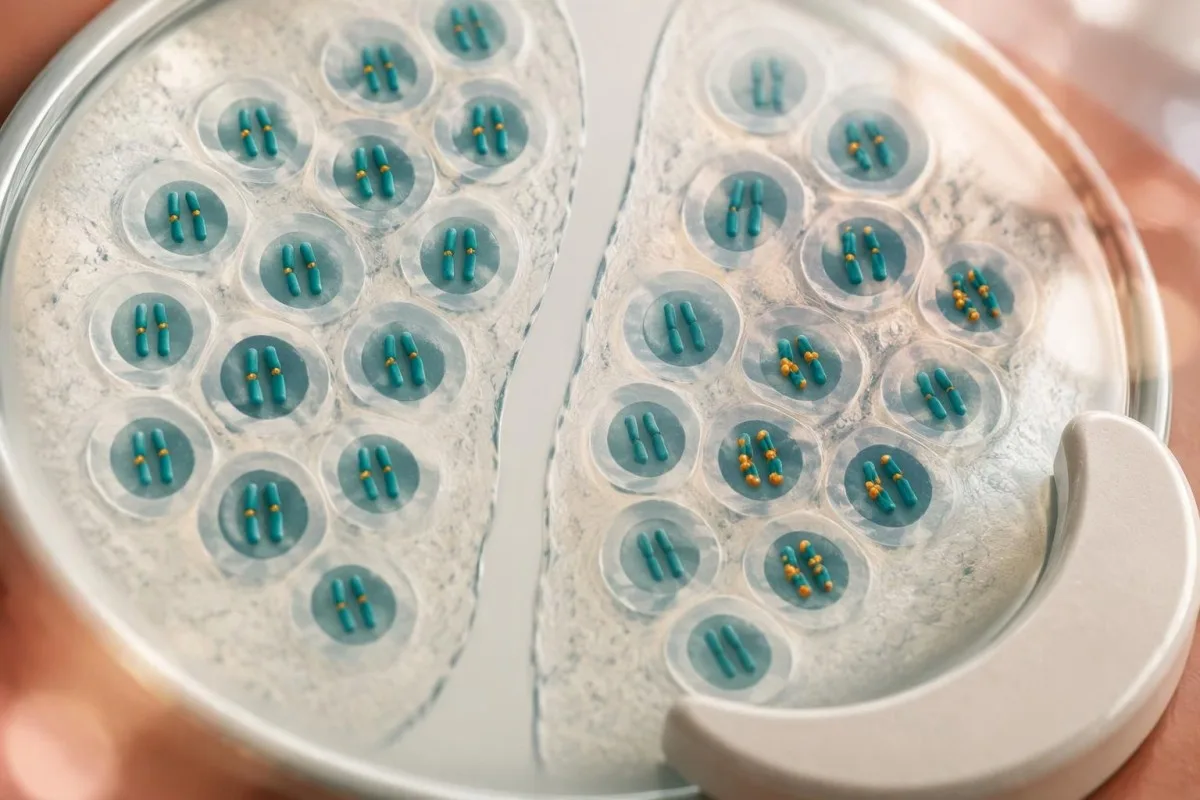
A tumor report may show a variant allele fraction near 50%, but that number does not prove germline origin. Tumor purity, copy-number changes and loss of the other gene copy can all shift the fraction; a percentage on a tumor report cannot replace a properly selected germline test.
Some oncology reports describe homologous recombination deficiency, or HRD, rather than a specific inherited variant. HRD can arise through more than one mechanism, and an HRD-positive result does not establish that a person or their children carry a pathogenic BRCA1 or BRCA2 variant.
After an allogeneic stem-cell transplant, a blood-derived DNA sample may reflect the donor, and saliva can also contain donor-derived cells. A hypothetical transplant recipient therefore needs the genetics laboratory to select an appropriate specimen—sometimes cultured skin fibroblasts—rather than assuming that 2 easily obtained samples answer the inheritance question.
The distinction between acquired and inherited DNA changes also matters in UBA1-related VEXAS testing, although VEXAS is a different condition. For a tumor BRCA finding, ask whether germline confirmation has been completed, is pending or was never requested.
Генетикалық кеңес беру қашан барынша пайдалы?
Genetic counseling helps before testing and whenever a result could change screening, treatment or family testing. It is especially useful for pathogenic findings, unresolved VUS, limited negative tests and family patterns involving young diagnoses, ovarian cancer, male breast cancer or multiple related cancers.

A practical pedigree usually covers 3 ұрпақты and records cancer type, age at diagnosis, biological relationships and both maternal and paternal branches. “Abdominal cancer” is less useful than a confirmed primary site; ovarian, pancreatic and metastatic cancers can otherwise be misremembered as the same diagnosis.
Small families, early deaths and few female relatives can hide hereditary breast-and-ovarian cancer patterns. A hypothetical father with 2 sons and no sisters can carry and transmit a BRCA variant even when the family has no obvious breast cancer cluster; paternal inheritance deserves the same attention as maternal inheritance.
Кантести - бұл AI қан талдауы нәтижесін түсіндіру платформасы, not a genetic counseling service. Our guidance on age-appropriate family testing separates routine laboratory needs from predictive BRCA testing, which is generally deferred in children under 18 because management usually begins in adulthood.
Before an appointment, gather the actual family report, pathology details if available and your previous test methods. Use separate consent for each relative’s records; our discussion of family health consent explains why a shared family history does not give one person automatic permission to access everyone’s medical information.
BRCA патогенді нәтижесінен кейін қандай бақылау жүргізіледі?
A germline pathogenic BRCA result warrants a personalized prevention plan, not automatic surgery. Options include enhanced breast screening, discussion of risk-reducing procedures and assessment of other gene-associated cancers; age, reproductive plans, previous cancer and local guidance determine the timing.

Many high-risk pathways use annual breast MRI beginning around ages 25–30, with mammography commonly added around age 30, but national recommendations differ. The reason for combining methods is that each detects some findings the other can miss; more imaging is not simply a substitute for understanding age-specific benefit and false-positive risk.
NICE guideline NG241 lists risk-reducing removal of ovaries and fallopian tubes no earlier than age 35 for BRCA1 and 40 for BRCA2, with individualized assessment (NICE, 2024). Common clinical discussions use windows of approximately 35–40 and 40–45 years, respectively, after childbearing; these are planning ranges, not instructions for every carrier.
Removing only the fallopian tubes while delaying ovary removal has not been established as equivalent protection and remains a trial-based strategy in NICE guidance. Surgical menopause can affect symptoms, cardiovascular health and bones; our әйелдердің гормондық денсаулығы жөніндегі нұсқаулығымызды explains why prevention planning includes consequences beyond cancer risk.
Hormone treatment after premenopausal risk-reducing surgery may be considered until the usual menopause age, approximately 51, but previous breast cancer and other contraindications change that discussion. Bone-density assessment and evaluation of secondary bone-loss causes are distinct tasks; our guide to bone health laboratory assessment explains what routine tests can and cannot answer.
BRCA нәтижесі туыстары мен балалары үшін нені білдіреді?
Each child of a germline BRCA pathogenic-variant carrier usually has a 50% chance of inheriting the variant, regardless of sex. Adult relatives can consider targeted testing for the established family finding; inheriting susceptibility does not mean inheriting an existing cancer.
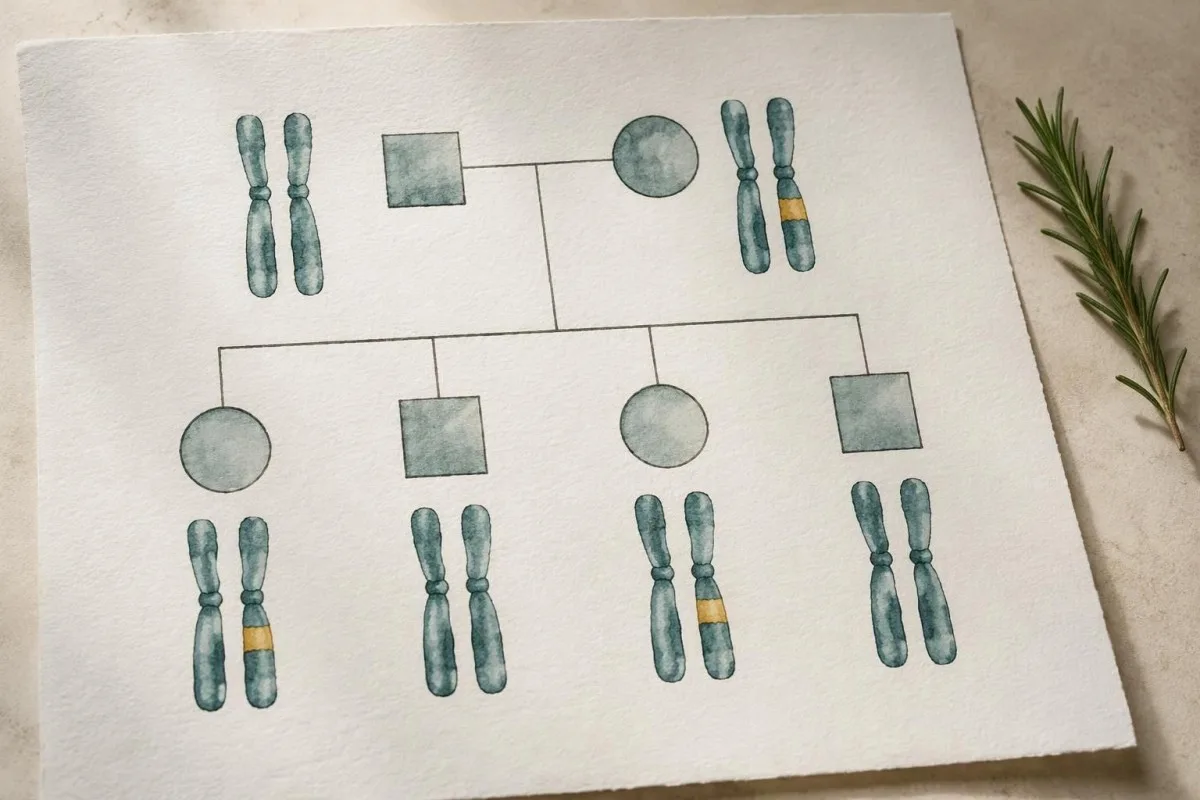
Four children do not imply that exactly 2 will inherit a parent’s BRCA variant. Each pregnancy is an independent event, so all, none or any number in between can inherit it; the 50% figure describes probability rather than a guaranteed family distribution.
A carrier’s siblings often have a 50% ықтималдығы of sharing the variant when a parent carries it, but that estimate should not be applied without checking the pedigree. Identifying which parent carries the finding helps determine which cousins, aunts and uncles should receive an invitation to discuss testing.
Reproductive options can include natural conception, prenatal diagnosis or IVF with preimplantation genetic testing for a known familial variant. These are preference-sensitive choices, not obligations; our explanation of reproductive genetic result counseling shows why gene-specific inheritance matters, although FMR1 repeat expansion behaves differently from BRCA inheritance.
A rare additional question arises when both partners carry pathogenic variants in мутациясы белгілі немесе қара нәсілді тектен шыққан ер адамдар үшін ертерек талқылауды қолдайды. Бұл маңызды, өйткені простата обырының қаупі популяциялар арасында біркелкі бөлінбейді.: each pregnancy has a 25% chance of inheriting pathogenic variants in both copies, which can cause a Fanconi anemia phenotype. Partner testing is not automatically required for every BRCA carrier, but ancestry, relatedness and reproductive planning can justify specialist assessment.
Симптомдар немесе ісік маркерлері BRCA-ға байланысты қатерлі ісікті растай ала ма?
Neither a BRCA result nor a tumor-marker concentration confirms that cancer is present. New symptoms need their own assessment, and a negative genetic result does not make them harmless; examination, imaging and sometimes tissue assessment answer a different question from inherited susceptibility testing.

CA-125 can rise in benign conditions and can remain normal in ovarian cancer, particularly earlier disease. Routine CA-125 and ultrasound screening have not demonstrated a mortality benefit sufficient to replace established risk-reduction discussions; our guide to CA-125 limits and symptoms explains why the usual 35 U/mL cutoff is not a cancer yes-or-no boundary.
CA 15-3 and CA 27-29 are not appropriate tests for deciding whether an unaffected BRCA carrier has developed breast cancer. A hypothetical carrier with a normal marker still needs assessment of a new breast lump; our explanation of CA 15-3 interpretation separates selected monitoring uses from screening.
Kantesti does not infer BRCA carrier status from routine laboratory markers. For example, a CA 19-9 result of 80 U/mL can have non-cancer explanations and cannot establish pancreatic cancer or inherited BRCA2 risk; our guide to CA 19-9 limitations explains the need for clinical and imaging context.
Persistent bloating, early satiety, unexplained weight loss, a new breast change or unexplained jaundice deserve timely medical review regardless of genetic classification. A hypothetical person with 3 weeks of new persistent symptoms should not wait for VUS reclassification or a routine genetics appointment before seeking a separate assessment.
Генетикалық кеңес берудің орнына жүрмейтін ЖИ түсіндірмелерін пайдаланыңыз
AI explanations can support understanding, but they cannot independently classify a BRCA variant or authorize preventive surgery. A safe workflow preserves 3 essentials: the original laboratory report, specialist interpretation and a written follow-up plan that distinguishes inherited risk from evaluation of any current symptoms.

Кантести - бұл AI биомаркерлерін түсіндіру платформасы that explains routine laboratory findings, with interpretation generally available in about 60 seconds. That turnaround is not a timetable for genetic counseling, and our клиникалық әдістеме туралы ақпарат should not be read as validation of independent BRCA classification or hereditary cancer risk calculation.
Genetic reports can reveal information relevant to more than 1 адам, including biological relatives who have not chosen testing. Read our құпиялылық және деректерді өңдеу тәсілдері before sharing sensitive documents, and avoid uploading another relative’s identifiable report without their permission.
The 2 research publications listed below concern our global routine-test report and RDW educational material; they are not BRCA cancer-risk studies, clinical prevention guidelines or evidence supporting surgery. The medical recommendations in this article instead draw on the ACMG/AMP classification standards, the prospective JAMA risk study and NICE familial ovarian cancer guidance.
Before acting, ask your genetics team to document whether the result is germline, which exact variant is actionable and whether a negative is true or uninformative. Our жауапты AI қағидаттарымыз support keeping those clinical decisions with qualified professionals rather than treating an automated explanation as another laboratory classification.
Жиі қойылатын сұрақтар
BRCA1 немесе BRCA2 тестінің оң нәтижесі менде қатерлі ісік бар дегенді білдіре ме?
BRCA1 немесе BRCA2 бойынша тұқым қуалайтын мутацияға оң нәтиже патогенді немесе патогенді болуы ықтимал тұқым қуалайтын нұсқаның бар екенін көрсетеді; бұл қатерлі ісік диагнозын білдірмейді. Kuchenbaecker және әріптестерінің JAMA журналында жарияланған проспективті зерттеуінде патогенді нұсқаларды тасымалдаушы әйелдерде 80 жасқа дейін сүт безі қатерлі ісігінің даму қаупі BRCA1 үшін 72%, ал BRCA2 үшін 69% деп бағаланған. Бұл — популяциялық бағалар, қатерлі ісіктің дәл қазір бар болу ықтималдығы емес. Қазіргі қатерлі ісікке диагноз қою үшін бөлек клиникалық бағалау қажет.
BRCA геніндегі белгісіз клиникалық маңызы бар нұсқаға байланысты профилактикалық операция жасатуым керек пе?
BRCA генінің клиникалық мәні белгісіз нұсқасы профилактикалық операция жасау туралы шешімді өздігінен айқындамауы керек. ACMG/AMP жүйесі VUS-ты дәлелдерге негізделген бес жіктеудің бірі ретінде қарастырады және белгісіз нұсқаларды клиникалық шешім қабылдауда қолдануға болмайтынын көрсетеді. Жеке немесе отбасылық анамнез жоғары қауіпке арналған медициналық көмекті бөлек негіздеуі мүмкін, бірақ мұндай шешім VUS патогенді деп болжамауы тиіс. Генетика маманы ұсынылып отырған процедураны нақты қандай дәлелдер қолдайтынын түсіндіре алады.
Нағыз теріс және ақпарат бермейтін теріс BRCA нәтижесінің айырмашылығы неде?
Нағыз теріс нәтиже биологиялық туыста бұрын анықталған патогенді немесе патогенді болуы ықтимал BRCA нұсқасының жоқ екенін көрсетеді. Тасымалдаушының баласы үшін бұл отбасында анықталған нұсқаны тұқым қуалау жөніндегі бастапқы 50% ықтималдықты нақтылауға мүмкіндік береді. Ақпараттық мәні жоқ теріс нәтиже отбасында қатерлі ісіктің неліктен пайда болғанын анықтамай, клиникалық тұрғыдан маңызды нұсқаны таппайды. Екі нәтиженің кез келгенінен кейін де отбасының басқа тармақтары, қосымша гендер және тест шектеулері маңызды болып қалуы мүмкін.
BRCA геніндегі белгісіз маңызы бар нұсқа кейіннен оң нәтижеге айналуы мүмкін бе?
BRCA белгісіз клиникалық мәні бар вариант кейін патогенді немесе патогенді болуы ықтимал деп қайта жіктелуі мүмкін, бірақ ықтималдығы төмен қатерсіз немесе қатерсіз деп те қайта жіктелуі мүмкін. Қайта жіктеу дәлелдерді сол 5 санаттан тұратын жүйе аясында қайта қарауды білдіреді; бұл адамның ДНҚ-сы өзгерді деген сөз емес. Жеке вариант үшін әмбебап мерзім де, қайта жіктелудің нақты бағытына кепілдік те жоқ. Түзетілген есептер мен қайта хабарласу тәртібі туралы бастапқы зертханадан немесе генетикалық қызметтен сұраңыз.
BRCA нұсқасын әкемнен мұра ете аламын ба?
BRCA1 немесе BRCA2 геніндегі патогенді нұсқа биологиялық ата-ананың кез келгенінен тұқым қуалауы мүмкін. Герминалды нұсқаны тасымалдаушының әрбір баласында, тасымалдаушы анасы болса да, әкесі болса да, әдетте сол нұсқаны тұқым қуалау ықтималдығы 50% болады. Әйел туыстары аз әке жағындағы отбасында нұсқа болғанына қарамастан, сүт безі немесе аналық без обырының айқын тарихы болмауы мүмкін. Сондықтан генетикалық кеңес беру кезінде отбасының екі тармағын да ескеру қажет.
Ісігімнен BRCA мутациясы анықталса, бұл балаларымның да қатерге ұшырайтынын білдіре ме?
Ісік тінінен BRCA мутациясының анықталуы оның тұқым қуалайтынын дәлелдемейді. Ісік жасушаларының тазалығы мен көшірме санының өзгерістері бұл пайызға әсер ететіндіктен, ісіктегі вариант аллель жиілігінің шамамен 50% болуы да оның герминалды текті екенін сенімді түрде дәлелдей алмайды. Тұқым қуалайтын сипатын анықтау үшін тиісті биоматериалды пайдаланып герминалды тестілеу жүргізу қажет. Әдетте қолданылатын 50% берілу ықтималдығы ата-анасында герминалды вариант болған жағдайда ғана қолданылады.
BRCA тестінің нәтижесі теріс болса, оны жыл сайын қайталауым керек пе?
Тұқым қуалайтын нұсқа адам қартайған сайын өздігінен пайда болмайтындықтан, BRCA ДНҚ-сын жыл сайын қайта тексеру әдетте қажет емес. Егер бастапқы талдау шектеулі болса, отбасында жаңа нұсқа анықталса немесе басқа туыста BRCA-ға қатысы болуы мүмкін обыр дамыса, теріс нәтижені қайта қарау қажет болуы мүмкін. Мысалы, таңдалған 3 нұсқаны ғана тексеру BRCA1/BRCA2-ні толық секвенирлеумен және делеция/дупликацияларды талдаумен тең емес. Нәтижелерді қайта түсіндіру, отбасы мүшелерін нысаналы тексеру немесе басқа гендер панелін қолдану қосымша ақпарат бере ала ма — генетика қызметінің маманынан сұраңыз.
Қан анализінің нәтижесін түсіндіріп алыңыз
Зертханалық есепті жүктеңіз, сонда Kantesti AI әр биомаркерді бірнеше секунд ішінде қарапайым тілмен түсіндіреді. Әлем бойынша 2 миллионнан астам адам қолданады.
Сілтемелер
- Klein, T., Mitchell, S., & Weber, H. (2026). AI Blood Test Analyzer: 2,5M талданған тест | Global Health Report 2026. Kantesti AI медициналық зерттеулері. DOI
- Klein, T., Mitchell, S., & Weber, H. (2026). RDW қан анализі: RDW-CV, MCV және MCHC бойынша толық нұсқаулық. Kantesti AI медициналық зерттеулері. DOI
- Richards S және басқалар (2015). Тізбектік нұсқаларды түсіндіру стандарттары мен нұсқаулықтары: Америкалық медициналық генетика және геномика колледжі мен Молекулалық патология қауымдастығының бірлескен консенсустық ұсынымы. Медицинадағы генетика. DOI PubMed
- Kuchenbaecker KB et al. (2017). Risks of Breast, Ovarian, and Contralateral Breast Cancer for BRCA1 and BRCA2 Mutation Carriers. JAMA. DOI PubMed
- National Institute for Health and Care Excellence (2024). Ovarian cancer: identifying and managing familial and genetic risk. NICE guideline NG241.
- 2 млн+Талданған тесттер
- 127+Елдер
- 100+Тілдер
Медициналық топ туралы


E-E-A-T сенім сигналдары
Тәжірибе
Дәрігер басқаратын зертханалық талдауды түсіндіру жұмыс ағындарын клиникалық шолу.
Сараптама
Биомаркерлердің клиникалық контексте қалай әрекет ететініне зертханалық медицина фокусы.
Билік
Доктор Томас Кляйн медициналық тұрғыдан тексерген, доктор Сара Митчелл мен профессор доктор Ханс Вебердің үлесімен.
Сенімділік
Дабыл қаупін азайту үшін айқын бақылау жолдарымен дәлелге негізделген түсіндіру.






Медициналық ескерту
Бұл мақала тек білім беру мақсатында ғана және медициналық кеңес болып табылмайды. Диагноз және ем туралы шешімдер үшін әрдайым білікті медицина қызметкеріне жүгініңіз.
Жарияланды · Редакция тобына хабарласыңыз
Англия мен Уэльсте тіркелген Kantesti Ltd басып шығарған, компания №. 17090423, Лондон, Біріккен Корольдік.
