
BRCA1 বা BRCA2-এর একটি প্যাথোজেনিক ভ্যারিয়েন্ট বংশগত ক্যানসারের ঝুঁকি বাড়ায়; এটি ক্যানসার নির্ণয় করে না। অনিশ্চিত তাৎপর্যের ভ্যারিয়েন্টের ভিত্তিতে প্রতিরোধমূলক অস্ত্রোপচারের সিদ্ধান্ত নেওয়া উচিত নয়। কোনো পরিচিত পারিবারিক ভ্যারিয়েন্ট বাদ দিতে পারলেই শুধু নেগেটিভ ফলাফলকে প্রকৃত নেগেটিভ বলা যায়—অন্যথায়, এতে বংশগত ঝুঁকি অমীমাংসিত থেকে যেতে পারে।

মূল বিষয়গুলো
- পজিটিভ ফলাফল এর অর্থ প্যাথোজেনিক বা সম্ভবত প্যাথোজেনিক ভ্যারিয়েন্ট শনাক্ত হয়েছে; বংশগত প্রবণতা ক্যানসার নির্ণয় নয়।
- পাঁচটি শ্রেণিবিন্যাস জেনেটিক ভ্যারিয়েন্টকে বর্ণনা করে: প্যাথোজেনিক, সম্ভবত প্যাথোজেনিক, অনিশ্চিত তাৎপর্যের, সম্ভবত বেনাইন এবং বেনাইন।
- BRCA1-এর ঝুঁকি একটি সম্ভাবনামূলক JAMA গবেষণায় দেখা গেছে, প্যাথোজেনিক ভ্যারিয়েন্ট বহনকারী নারীদের ৮০ বছর বয়সের মধ্যে স্তন ক্যানসারের ঝুঁকি প্রায় 72% এবং ডিম্বাশয়ের ক্যানসারের ঝুঁকি 44%-এ পৌঁছেছিল।
- BRCA2-এর ঝুঁকি একই গবেষণায় ৮০ বছর বয়সের মধ্যে স্তন ক্যানসারের ঝুঁকি প্রায় 69% এবং ডিম্বাশয়ের ক্যানসারের ঝুঁকি 17%-এ পৌঁছেছিল; এগুলো গোষ্ঠীভিত্তিক অনুমান, ব্যক্তিগত পূর্বাভাস নয়।
- VUS-এর ব্যবস্থাপনা ব্যক্তিগত ও পারিবারিক ইতিহাস অনুসরণ করা উচিত, অনিশ্চিত ভ্যারিয়েন্ট নয়; শুধু একটি VUS প্রতিরোধমূলক অস্ত্রোপচারের যৌক্তিকতা প্রমাণ করে না।
- প্রকৃত নেগেটিভ এর অর্থ, আপনার পরিবারে আগে থেকেই শনাক্ত নির্দিষ্ট প্যাথোজেনিক ভ্যারিয়েন্টটি পরীক্ষাগার খুঁজে পায়নি।
- তথ্যহীন নেগেটিভ এর অর্থ, পরীক্ষায় সন্দেহভাজন বংশগত ঝুঁকির কোনো ব্যাখ্যা পাওয়া যায়নি; শক্তিশালী পারিবারিক ইতিহাস থাকলে অতিরিক্ত মূল্যায়ন এখনও যৌক্তিক হতে পারে।
- পারিবারিক বংশগতির ধরন সাধারণত জীবাণুকোষে BRCA1 বা BRCA2 প্যাথোজেনিক ভ্যারিয়েন্ট বহনকারী প্রত্যেক ব্যক্তির সন্তানের ওই ভ্যারিয়েন্টটি উত্তরাধিকারসূত্রে পাওয়ার ৫০% সম্ভাবনা থাকে।
- জেনেটিক কাউন্সেলিং সঠিক ভ্যারিয়েন্ট, পরীক্ষার আওতা, পরিবারের উভয় দিক এবং বয়সনির্ভর স্ক্রিনিং বা প্রতিরোধের বিকল্পগুলো সংযুক্ত করে বুঝতে সাহায্য করে।
BRCA জেনেটিক পরীক্ষার ফলের প্রকৃত অর্থ কী?
BRCA জেনেটিক পরীক্ষার ফলাফল সাধারণত ৩টি ব্যবহারিক শ্রেণিতে পড়ে: পজিটিভ, অনিশ্চিত বা নেগেটিভ। উত্তরাধিকারসূত্রে পাওয়া পজিটিভ ফল ক্যানসার-সংবেদনশীলতা শনাক্ত করে, একটি অনিশ্চিত তাৎপর্যপূর্ণ পরিবর্তন অমীমাংসিত থেকে যায়, এবং নেগেটিভ ফলকে আশ্বস্তকারী বলা যাবে কি না, তা নির্ধারণের আগে পারিবারিক প্রেক্ষাপট বিবেচনা করা দরকার।

A জীবাণুকোষীয় BRCA পরীক্ষা প্রোটিনের ঘনত্ব মাপার বদলে DNA পরীক্ষা করে, সাধারণত পরীক্ষাগারে নেওয়া রক্ত বা লালার নমুনা থেকে। এর ফলকে ng/mL-এর মানের মতো ব্যাখ্যা করা যায় না: চিকিৎসাগতভাবে কার্যকর তথ্য হলো জিন, সঠিক ভ্যারিয়েন্ট, শ্রেণিবিন্যাস এবং পরীক্ষার পরিধি।
অধিকাংশ মানুষের থাকে ২টি কপি BRCA1-এর এবং BRCA2-এর ২টি কপি, যার প্রতিটি জিনের একটি করে কপি প্রত্যেক জৈবিক অভিভাবকের কাছ থেকে উত্তরাধিকারসূত্রে পাওয়া। একটি কপিতে ক্ষতিকর পরিবর্তন ক্যানসার-সংবেদনশীলতা বাড়াতে পারে, তবে ক্যানসারের বিকাশে সাধারণত কোষের অতিরিক্ত পরিবর্তনও ভূমিকা রাখে—উত্তরাধিকার মানেই রোগের কাউন্টডাউন নয়।
ক্যানসার নেই—এমন কাল্পনিক ৩৮ বছর বয়সী ব্যক্তির ক্ষেত্রে, প্যাথোজেনিক BRCA2 ফল ভবিষ্যতের স্ক্রিনিং ও প্রতিরোধ নিয়ে আলোচনা বদলে দিতে পারে, কিন্তু বর্তমান ক্যানসার নির্ণয় করে না। ইতিমধ্যে ক্যানসারের চিকিৎসা নিচ্ছেন এমন কারও ক্ষেত্রে, একই বংশগত ফল চিকিৎসার যোগ্যতা এবং ভবিষ্যতের ক্যানসার মূল্যায়নেও প্রভাব ফেলতে পারে।
কান্তেস্তি হল একটি এআই রক্ত পরীক্ষা বিশ্লেষক নিয়মিত পরীক্ষাগারভিত্তিক ব্যাখ্যার জন্য, ক্লিনিক্যাল জেনেটিক্স পরীক্ষাগারের বিকল্প হিসেবে নয়। এ সম্পর্কে তথ্য আমাদের সংস্থায় উত্তরাধিকারসূত্রে পাওয়া ক্যানসার-সংক্রান্ত ফল ব্যাখ্যা করার জন্য প্রয়োজনীয় বিশেষজ্ঞের কাজ থেকে আমাদের শিক্ষামূলক ভূমিকা আলাদা করতে সাহায্য করে।
BRCA ল্যাবরেটরি রিপোর্টের কোন বিবরণগুলো গুরুত্বপূর্ণ?
BRCA রিপোর্টের সবচেয়ে কার্যকর বিবরণগুলো হলো জিন, সঠিক ভ্যারিয়েন্ট, শ্রেণিবিন্যাস, নমুনার ধরন এবং পরীক্ষার পদ্ধতি। ক্লিনিক্যাল পরীক্ষাগারগুলো সাধারণত ভ্যারিয়েন্টের ৫টি শ্রেণিবিন্যাস ব্যবহার করে, এবং শুধু “ভ্যারিয়েন্ট” শব্দটি থেকে কোনো ফল ক্ষতিকর কি না বোঝা যায় না।

ACMG/AMP কাঠামোতে আলাদা করা হয় প্যাথোজেনিক, সম্ভবত প্যাথোজেনিক, অনিশ্চিত তাৎপর্যের, সম্ভবত বিনাইন এবং বিনাইন ফলাফলগুলো (Richards et al., 2015)। প্যাথোজেনিক এবং সম্ভবত প্যাথোজেনিক ভ্যারিয়েন্ট সাধারণত একই ক্লিনিক্যাল ব্যবস্থাপনার পথকে সমর্থন করে; এই পার্থক্য প্রমাণের নিশ্চয়তা বোঝায়, ক্যানসারের ঝুঁকির দুটি ভিন্ন শতাংশ নয়।
ভ্যারিয়েন্টের বর্ণনায় DNA-স্তরের এমন একটি পরিবর্তন থাকতে পারে, যা শুরু হয় c. এবং প্রোটিন-স্তরের পরিণতি শুরু হয় p. এগুলো স্থানাঙ্ক, তীব্রতার স্কোর নয়; ভিন্ন ট্রান্সক্রিপ্ট বা ঐতিহাসিক নামকরণের রীতি ব্যবহারের কারণে দুটি রিপোর্টে একই পরিবর্তন ভিন্নভাবে বর্ণিত হতে পারে।
উভয়ই খুঁজুন সিকোয়েন্স বিশ্লেষণ এবং ডিলিশন/ডুপ্লিকেশন বিশ্লেষণ একটি পূর্ণাঙ্গ BRCA1/BRCA2 পরীক্ষা মূল্যায়ন করার সময়। পৃথক DNA পরিবর্তন পড়া এবং জিনের অনুপস্থিত বা অতিরিক্ত অংশ শনাক্ত করার জন্য পরিপূরক পদ্ধতি প্রয়োজন, তাই “সিকোয়েন্সিং নেগেটিভ” বলা কোনো রিপোর্টে প্রাসঙ্গিক সব প্রশ্নের উত্তর নাও থাকতে পারে।
একটি কাল্পনিক রিপোর্টে ২টি ফলাফল থাকতে পারে: একটি প্যাথোজেনিক BRCA1 ভ্যারিয়েন্ট এবং একটি সম্পর্কহীন BRCA2 VUS। ব্যবস্থাপনা নির্ধারিত প্যাথোজেনিক ফলাফল অনুসরণ করে, দুটি শ্রেণিবিন্যাসের গড় নয়; আমাদের শ্রেণিভিত্তিক বনাম সংখ্যাসূচক ফলাফলবিষয়ক নির্দেশিকা ব্যাখ্যা করে কেন পরীক্ষাগারের ফলাফলের ধরন অনুযায়ী সেগুলো পড়ার কৌশল আলাদা হওয়া প্রয়োজন।
BRCA1 পজিটিভ ফলের অর্থ: প্রবণতা, নিশ্চিততা নয়
BRCA1 পজিটিভের অর্থ শ্রেণিবিন্যাসের ওপর নির্ভর করে: জার্মলাইন প্যাথোজেনিক বা সম্ভবত প্যাথোজেনিক BRCA1 ভ্যারিয়েন্ট বংশগত ক্যান্সার-সংবেদনশীলতা নির্দেশ করে। একটি সম্ভাব্যতামূলক গবেষণায়, প্যাথোজেনিক BRCA1 ভ্যারিয়েন্ট বহনকারী নারীদের ৮০ বছর বয়সের মধ্যে স্তন ক্যান্সারের আনুমানিক ঝুঁকি 72% এবং ডিম্বাশয়ের ক্যান্সারের ঝুঁকি ৪৪% ছিল।
Kuchenbaecker et al. JAMA-তে ৮০ বছর বয়সের ওই আনুমানিক ঝুঁকিগুলো জানিয়েছেন, যেখানে 95% আস্থার ব্যবধান ছিল স্তন ক্যান্সারের ক্ষেত্রে ৬৫–৭৯% এবং ডিম্বাশয়ের ক্যান্সারের ক্ষেত্রে ৩৬–৫৩% (২০১৭)। এই ব্যবধানগুলো জনসংখ্যাভিত্তিক আনুমানিক হিসাবের অনিশ্চয়তা বোঝায়; এগুলোর অর্থ এই নয় যে পরীক্ষাগারের রিপোর্ট থেকে সরাসরি কোনো ব্যক্তির ঝুঁকি জানা যায়।
একজন কাল্পনিক ৩০ বছর বয়সী BRCA1 বাহকের 72% ৮০ বছর বয়স পর্যন্ত ঝুঁকির আনুমানিক হিসাবকে এ বছর 72% ঝুঁকি হিসেবে ব্যাখ্যা করা উচিত নয়। ব্যক্তিগত পরামর্শে নিকট-মেয়াদি ঝুঁকি ও দীর্ঘমেয়াদি ঝুঁকি আলাদা করে বিবেচনা করা হয়; পাশাপাশি বয়স, আগে ক্যান্সার হয়েছে কি না, আত্মীয়দের রোগনির্ণয় এবং ইতিমধ্যে সম্পন্ন কোনো প্রতিরোধমূলক প্রক্রিয়াও বিবেচনায় নেওয়া হয়।
BRCA1-সংশ্লিষ্ট স্তন ক্যান্সারগুলোতে বেশি দেখা যায় ট্রিপল-নেগেটিভ সাধারণ জনগোষ্ঠীর স্তন ক্যান্সারের তুলনায়, তবে শুধু বংশগত ফলাফল থেকে রিসেপ্টরের অবস্থা অনুমান করা যায় না। বিদ্যমান ক্যান্সারের নিজস্ব প্যাথলজিক্যাল ও রিসেপ্টর মূল্যায়ন এখনও প্রয়োজন; জেনেটিক ফলাফল এই পৃথক পরীক্ষাগুলোর বিকল্প নয়।
একই পরিবারের ক্যান্সারের একাধিক বংশগত ব্যাখ্যাও থাকতে পারে, বিশেষ করে পিতামাতার উভয় দিকের বংশে রোগনির্ণয়গুলো গুচ্ছাকারে দেখা গেলে। উদাহরণস্বরূপ, কোলোরেক্টাল ও এন্ডোমেট্রিয়াল ক্যান্সারের একাধিক ঘটনা আলাদা করে মূল্যায়নের যৌক্তিকতা তৈরি করতে পারে লিঞ্চ সিনড্রোমের ফলাফল একটি BRCA1 ফলাফলই প্রতিটি রোগনির্ণয়ের ব্যাখ্যা দেয়, এমনটা ধরে নেওয়ার পরিবর্তে।
BRCA2 মিউটেশনে ক্যানসারের ঝুঁকি কীভাবে ভিন্ন?
BRCA2 মিউটেশনে ক্যানসারের ঝুঁকি এর মধ্যে স্তন ও ডিম্বাশয়ের ক্যানসারে সংবেদনশীলতা রয়েছে; পুরুষদের স্তন, প্রোস্টেট ও অগ্ন্যাশয়ের ক্যানসার মূল্যায়নের ক্ষেত্রে এটি বিশেষভাবে প্রাসঙ্গিক। একই prospective JAMA গবেষণায়, প্যাথোজেনিক BRCA2 ভ্যারিয়েন্ট বহনকারী নারীদের ৮০ বছর বয়সের মধ্যে স্তন ক্যানসারের আনুমানিক ঝুঁকি ছিল ৬৯% এবং ডিম্বাশয়ের ক্যানসারের ঝুঁকি ছিল ১৭%।
BRCA2-এর আনুমানিক ঝুঁকিগুলোর 95% confidence interval ছিল স্তন ক্যানসারের জন্য ৬১–৭৭% এবং ডিম্বাশয়ের ক্যানসারের জন্য ১১–২৫% (Kuchenbaecker et al., 2017)। BRCA1-এর তুলনায় BRCA2-তে ডিম্বাশয়ের ক্যানসারের গড় ঝুঁকি কম হওয়ায়, BRCA2 ভ্যারিয়েন্টবাহীদের ক্ষেত্রে প্রতিরোধমূলকভাবে ডিম্বাশয় ও ফ্যালোপিয়ান টিউব অপসারণের বিষয়টি সাধারণত পরে আলোচিত হয়।
আগে স্তন ক্যানসার হওয়ার পর ঝুঁকির প্রশ্নটি ভিন্ন: বিপরীত স্তনে আরেকটি ক্যানসার হওয়ার সম্ভাবনা। Kuchenbaecker et al. হিসাব করেছেন ২০ বছরে বিপরীত স্তনে ক্যানসারের ঝুঁকি BRCA2-এর ক্ষেত্রে ২৬% এবং BRCA1-এর ক্ষেত্রে 40%; এই পরিসংখ্যানগুলো প্রথম ক্যানসারের ঝুঁকির সমান নয় এবং তার বিকল্প হিসেবে ব্যবহার করা উচিত নয়।
প্রোস্টেট স্ক্রিনিং নিয়ে আলোচনা শুরু হতে পারে প্রায় ৪০ বছর বয়সে, প্যাথোজেনিক BRCA2 ভ্যারিয়েন্টযুক্ত পুরুষদের ক্ষেত্রে, প্রযোজ্য ক্লিনিক্যাল পথের ওপর নির্ভর করে। PSA হলো স্ক্রিনিংয়ের একটি পরিমাপ, উপসর্গ সৃষ্টিকারী উপাদান নয়; আমাদের ব্যাখ্যা PSA বেশি থাকার অর্থ কী পরীক্ষাগারের সংখ্যাটিকে রোগনির্ণয় থেকে আলাদা করে।
অগ্ন্যাশয়ের নজরদারি আরেকটি ক্ষেত্র, যেখানে যোগ্যতার মানদণ্ড ভিন্ন হয়; এর মধ্যে পারিবারিক ইতিহাসকে কতটা গুরুত্ব দেওয়া হয়, সেটিও রয়েছে। আক্রান্ত প্রথম-ডিগ্রি আত্মীয়সহ কাল্পনিক ৫২ বছর বয়সী BRCA2 ভ্যারিয়েন্টবাহীর MRI-ভিত্তিক ইমেজিং বা এন্ডোস্কোপিক আল্ট্রাসাউন্ড নিয়ে বিশেষজ্ঞের সঙ্গে আলোচনা করা দরকার—এর বিকল্প হিসেবে নিয়মিত CA 19-9 পরীক্ষা নয়।
অনিশ্চিত তাৎপর্যের BRCA ভ্যারিয়েন্টের অর্থ কী?
A অনিশ্চিত তাৎপর্যের BRCA ভ্যারিয়েন্ট, বা VUS, বলতে বোঝায় যে DNA-র পরিবর্তনটি ক্যানসারের ঝুঁকি বাড়ায় কি না, তা বিদ্যমান প্রমাণ দিয়ে নিশ্চিত করা যায় না। VUS ইতিবাচক ফল নয়, এবং শুধু এর ভিত্তিতে প্রতিরোধমূলক মাস্টেক্টমি বা ডিম্বাশয় ও ফ্যালোপিয়ান টিউব অপসারণের সিদ্ধান্ত নেওয়া উচিত নয়।

ACMG/AMP-এর মানদণ্ডে বলা হয়েছে যে একটি VUS-কে ক্লিনিক্যাল সিদ্ধান্ত গ্রহণে ব্যবহার করা উচিত নয় (Richards et al., 2015)। শ্রেণিবিন্যাসের 5টি বিভাগের মধ্যে, অনিশ্চয়তা হলো প্রমাণের একটি অবস্থা—এটি রোগনির্ণয় নয়, আংশিক-ইতিবাচক ফল নয় এবং ভ্যারিয়েন্টটি ক্যানসার ঘটায়—এমন ৫০% সম্ভাবনাও নয়।
উদাহরণস্বরূপ, উল্লেখযোগ্য পারিবারিক ইতিহাস নেই—এমন কাল্পনিক ৪২ বছর বয়সী BRCA1 VUS-যুক্ত ব্যক্তিকে শুধু ওই VUS-এর কারণে ঝুঁকি-হ্রাসকারী অস্ত্রোপচারের প্রস্তাব দেওয়া উচিত নয়। একই VUS-যুক্ত আরেকজন ৪২ বছর বয়সী ব্যক্তির উল্লেখযোগ্য পারিবারিক ইতিহাস থাকলে, সেই ইতিহাসের কারণে তিনি নিবিড় নজরদারির যোগ্য হতে পারেন; অনিশ্চিত ভ্যারিয়েন্টটি চিকিৎসাগত সিদ্ধান্তের ভিত্তিতে পরিণত হয়েছে বলে নয়।
বংশগত পটভূমি প্রভাব ফেলতে পারে ল্যাবরেটরিগুলো কত ঘন ঘন অনিশ্চয়তার মুখোমুখি হয়, কারণ জনসংখ্যাভিত্তিক ডেটাবেসে সব গোষ্ঠী সমানভাবে প্রতিনিধিত্ব পায় না। ফলে একই ক্যানসার-ইতিহাস থাকা দুজন ব্যক্তি ব্যাখ্যার নিশ্চয়তার ভিন্ন মাত্রা পেতে পারেন; এটি প্রমাণের ঘাটতি প্রতিফলিত করে এবং তাঁদের ফলাফলের গুরুতরতার জৈবিক পার্থক্য প্রতিষ্ঠা করে না।
Kantesti-তে, আমরা জেনেটিক পরিবর্তন শনাক্ত করা আর সেই পরিবর্তনের ভিত্তিতে পদক্ষেপ নেওয়া উচিত—এটি প্রমাণ করাকে আলাদা করে দেখি। এই একই পার্থক্য পাঠকদের বুঝতে সাহায্য করে MTHFR-এর সাধারণ ভ্যারিয়েন্ট-সংক্রান্ত ফলাফলগুলি, although MTHFR results and BRCA-associated cancer susceptibility have very different clinical implications.
BRCA VUS-এর শ্রেণিবিন্যাস কি পরে পরিবর্তিত হতে পারে?
A BRCA VUS can be reclassified when new evidence clarifies its clinical significance. Many reclassified VUS move toward benign categories, but neither the direction nor the timing can be promised for an individual finding; reinterpretation usually reviews existing DNA data rather than requiring another sample.

Useful new evidence can come from 3 broad sources: population frequency, carefully validated functional work and observations of the variant in families. A computer prediction alone is usually insufficient; expert curation weighs whether the evidence actually addresses the disease mechanism and meets classification standards.
Laboratories can disagree because their evidence differs or their interpretations were issued at different times. Record 2 separate dates when available—the original report date and the most recent classification date—and ask whether a specialist expert-panel assessment exists, rather than counting database entries as votes.
Routine testing of unaffected relatives for a VUS usually does not guide care, although a genetics team may arrange selected family studies to help classification. A hypothetical family with 3 affected relatives should not independently order VUS testing for everyone and interpret who carries it as proof of causation.
Ask which laboratory manages reinterpretation, how amended reports reach you and whether your contact details remain current; there is no universal recontact interval. Our discussion of inherited TTR variant interpretation illustrates the broader need to connect exact genetic findings with disease-specific evidence.
কখন BRCA নেগেটিভ ফল প্রকৃত নেগেটিভ?
A true negative BRCA result means testing did not find the specific pathogenic or likely pathogenic variant already identified in a biological relative. It removes the inherited risk attributable to that familial variant, but it does not eliminate ordinary cancer risk or unrelated risks from the other family branch.

Suppose a hypothetical mother has a confirmed pathogenic BRCA1 variant and her adult daughter’s targeted test excludes that exact variant. Before testing, the daughter generally had a 50% উত্তরাধিকারের সম্ভাবনা; afterward, she is not considered a carrier of that maternal finding and cannot pass that uncarried variant to her children.
A negative result becomes less definitive if nobody knows the affected relative’s exact finding. Bring a copy of the original family report rather than a verbal account of “BRCA positive”; a gene name alone cannot distinguish a pathogenic variant from a VUS or identify which change the laboratory should test.
An independently concerning paternal history can remain relevant despite a maternal true negative. For example, 2 close paternal relatives with early breast cancer may warrant separate risk assessment, because excluding one maternal variant does not explain another branch of the pedigree.
The logic of matching a relative’s exact finding also appears in family-based Alport genetic testing, although the genes and inheritance patterns differ. Ask for a written statement identifying which familial variant was excluded and what remaining screening recommendation follows from your own history.
BRCA নেগেটিভ ফল কেন তথ্যবিহীন হতে পারে?
একটি অবহিতকারী নয় এমন নেগেটিভ means no actionable BRCA finding was detected, but testing has not explained a suspicious personal or family cancer history. The result may reflect another gene, a technical limitation or a familial risk pattern that cannot currently be assigned to one detectable variant.
Testing an affected relative first usually provides more information than testing an unaffected relative. A hypothetical unaffected 35-year-old’s negative panel does not prove that her mother’s ovarian cancer lacked an inherited cause; testing the mother, when possible, can establish whether there is a familial finding to exclude.
A broader panel may consider genes such as PALB2, ATM, CHEK2, RAD51C, RAD51D and BRIP1, depending on the cancer pattern. These genes do not share identical cancer risks or prevention recommendations, so “panel positive” still requires gene-specific interpretation rather than applying the BRCA pathway to every result.
Older tests or limited consumer tests may assess only selected variants, whereas comprehensive clinical testing can include sequencing and deletion/duplication analysis. Our explanation of hidden carrier-screening limitations illustrates why a reassuring-looking result can still depend on methodology, although SMA uses a different genetic model.
Kantesti AI does not establish the completeness of a genetic assay or certify that a family’s inherited risk has been excluded. If a hypothetical family has 3 related cancers despite negative testing, clinical genetics can decide whether updated testing, another affected relative or a formal family-history risk model would answer the unresolved question.
টিউমারে BRCA-র উপস্থিতি কি বংশগত হওয়ার অর্থ?
A BRCA variant found in tumor tissue is not automatically inherited. Tumor testing can detect acquired changes confined to cancer cells; germline testing examines a suitable non-tumor specimen to determine whether the finding is constitutional and relevant to relatives.
A tumor report may show a variant allele fraction near 50%, but that number does not prove germline origin. Tumor purity, copy-number changes and loss of the other gene copy can all shift the fraction; a percentage on a tumor report cannot replace a properly selected germline test.
Some oncology reports describe homologous recombination deficiency, or HRD, rather than a specific inherited variant. HRD can arise through more than one mechanism, and an HRD-positive result does not establish that a person or their children carry a pathogenic BRCA1 or BRCA2 variant.
After an allogeneic stem-cell transplant, a blood-derived DNA sample may reflect the donor, and saliva can also contain donor-derived cells. A hypothetical transplant recipient therefore needs the genetics laboratory to select an appropriate specimen—sometimes cultured skin fibroblasts—rather than assuming that 2 easily obtained samples answer the inheritance question.
The distinction between acquired and inherited DNA changes also matters in UBA1-related VEXAS testing, although VEXAS is a different condition. For a tumor BRCA finding, ask whether germline confirmation has been completed, is pending or was never requested.
কখন জেনেটিক কাউন্সেলিং সবচেয়ে বেশি সহায়ক?
Genetic counseling helps before testing and whenever a result could change screening, treatment or family testing. It is especially useful for pathogenic findings, unresolved VUS, limited negative tests and family patterns involving young diagnoses, ovarian cancer, male breast cancer or multiple related cancers.

A practical pedigree usually covers ৩ প্রজন্ম and records cancer type, age at diagnosis, biological relationships and both maternal and paternal branches. “Abdominal cancer” is less useful than a confirmed primary site; ovarian, pancreatic and metastatic cancers can otherwise be misremembered as the same diagnosis.
Small families, early deaths and few female relatives can hide hereditary breast-and-ovarian cancer patterns. A hypothetical father with 2 sons and no sisters can carry and transmit a BRCA variant even when the family has no obvious breast cancer cluster; paternal inheritance deserves the same attention as maternal inheritance.
কান্তেস্তি হল একটি AI রক্ত পরীক্ষার ফলাফল বোঝার প্ল্যাটফর্ম, not a genetic counseling service. Our guidance on age-appropriate family testing separates routine laboratory needs from predictive BRCA testing, which is generally deferred in children under 18 because management usually begins in adulthood.
Before an appointment, gather the actual family report, pathology details if available and your previous test methods. Use separate consent for each relative’s records; our discussion of family health consent explains why a shared family history does not give one person automatic permission to access everyone’s medical information.
প্যাথোজেনিক BRCA ফলের পর কী ফলো-আপ করা হয়?
A germline pathogenic BRCA result warrants a personalized prevention plan, not automatic surgery. Options include enhanced breast screening, discussion of risk-reducing procedures and assessment of other gene-associated cancers; age, reproductive plans, previous cancer and local guidance determine the timing.

Many high-risk pathways use annual breast MRI beginning around ages 25–30, with mammography commonly added around age 30, but national recommendations differ. The reason for combining methods is that each detects some findings the other can miss; more imaging is not simply a substitute for understanding age-specific benefit and false-positive risk.
NICE guideline NG241 lists risk-reducing removal of ovaries and fallopian tubes no earlier than age 35 for BRCA1 and 40 for BRCA2, with individualized assessment (NICE, 2024). Common clinical discussions use windows of approximately 35–40 and 40–45 years, respectively, after childbearing; these are planning ranges, not instructions for every carrier.
Removing only the fallopian tubes while delaying ovary removal has not been established as equivalent protection and remains a trial-based strategy in NICE guidance. Surgical menopause can affect symptoms, cardiovascular health and bones; our নারীদের হরমোনাল স্বাস্থ্য গাইড explains why prevention planning includes consequences beyond cancer risk.
Hormone treatment after premenopausal risk-reducing surgery may be considered until the usual menopause age, approximately 51, but previous breast cancer and other contraindications change that discussion. Bone-density assessment and evaluation of secondary bone-loss causes are distinct tasks; our guide to bone health laboratory assessment explains what routine tests can and cannot answer.
আত্মীয়স্বজন ও সন্তানদের জন্য BRCA ফলের অর্থ কী?
Each child of a germline BRCA pathogenic-variant carrier usually has a 50% chance of inheriting the variant, regardless of sex. Adult relatives can consider targeted testing for the established family finding; inheriting susceptibility does not mean inheriting an existing cancer.
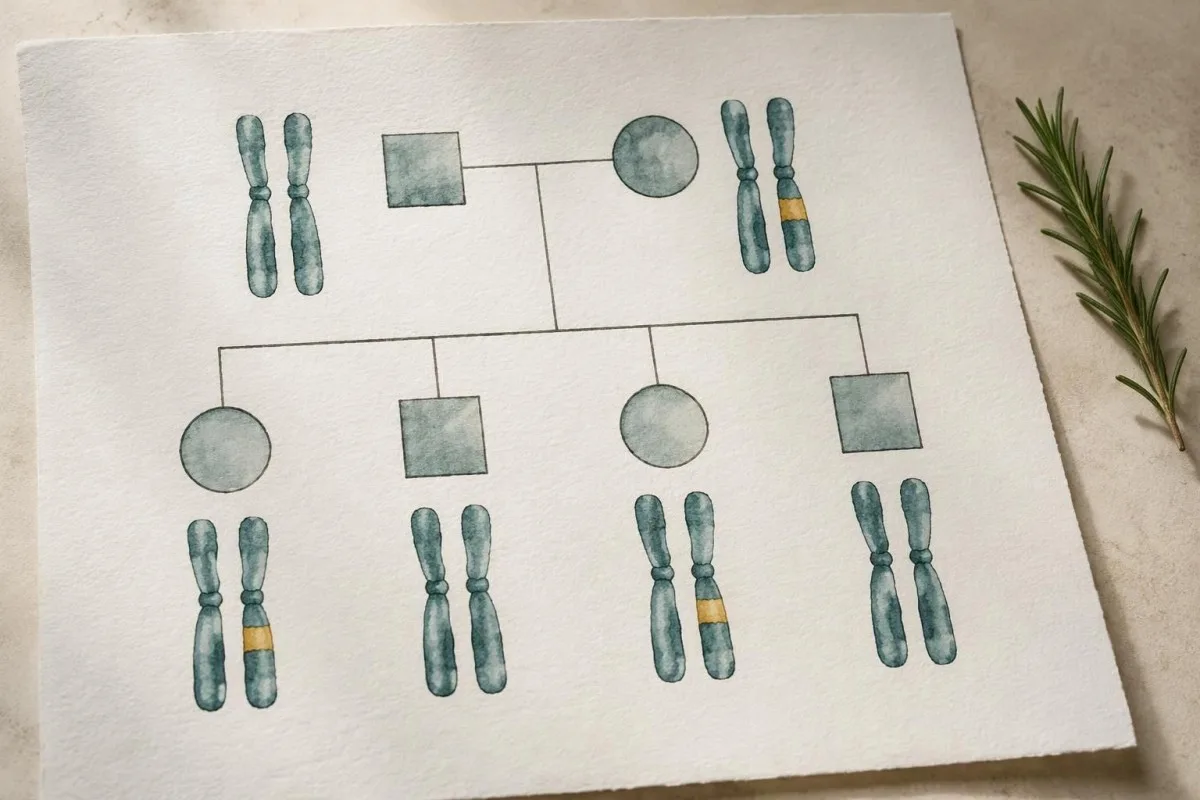
Four children do not imply that exactly 2 will inherit a parent’s BRCA variant. Each pregnancy is an independent event, so all, none or any number in between can inherit it; the 50% figure describes probability rather than a guaranteed family distribution.
A carrier’s siblings often have a 50% সম্ভাবনা of sharing the variant when a parent carries it, but that estimate should not be applied without checking the pedigree. Identifying which parent carries the finding helps determine which cousins, aunts and uncles should receive an invitation to discuss testing.
Reproductive options can include natural conception, prenatal diagnosis or IVF with preimplantation genetic testing for a known familial variant. These are preference-sensitive choices, not obligations; our explanation of reproductive genetic result counseling shows why gene-specific inheritance matters, although FMR1 repeat expansion behaves differently from BRCA inheritance.
A rare additional question arises when both partners carry pathogenic variants in BRCA2: each pregnancy has a 25% chance of inheriting pathogenic variants in both copies, which can cause a Fanconi anemia phenotype. Partner testing is not automatically required for every BRCA carrier, but ancestry, relatedness and reproductive planning can justify specialist assessment.
উপসর্গ বা টিউমার মার্কার কি BRCA-সম্পর্কিত ক্যানসার নিশ্চিত করতে পারে?
Neither a BRCA result nor a tumor-marker concentration confirms that cancer is present. New symptoms need their own assessment, and a negative genetic result does not make them harmless; examination, imaging and sometimes tissue assessment answer a different question from inherited susceptibility testing.
CA-125 can rise in benign conditions and can remain normal in ovarian cancer, particularly earlier disease. Routine CA-125 and ultrasound screening have not demonstrated a mortality benefit sufficient to replace established risk-reduction discussions; our guide to CA-125 limits and symptoms explains why the usual 35 U/mL cutoff is not a cancer yes-or-no boundary.
CA 15-3 and CA 27-29 are not appropriate tests for deciding whether an unaffected BRCA carrier has developed breast cancer. A hypothetical carrier with a normal marker still needs assessment of a new breast lump; our explanation of CA 15-3 interpretation separates selected monitoring uses from screening.
Kantesti does not infer BRCA carrier status from routine laboratory markers. For example, a CA 19-9 result of 80 U/mL can have non-cancer explanations and cannot establish pancreatic cancer or inherited BRCA2 risk; our guide to CA 19-9 limitations explains the need for clinical and imaging context.
Persistent bloating, early satiety, unexplained weight loss, a new breast change or unexplained jaundice deserve timely medical review regardless of genetic classification. A hypothetical person with 3 weeks of new persistent symptoms should not wait for VUS reclassification or a routine genetics appointment before seeking a separate assessment.
জেনেটিক কাউন্সেলিংয়ের বিকল্প হিসেবে নয়, বরং AI-এর ব্যাখ্যা ব্যবহার করুন
AI explanations can support understanding, but they cannot independently classify a BRCA variant or authorize preventive surgery. A safe workflow preserves 3 essentials: the original laboratory report, specialist interpretation and a written follow-up plan that distinguishes inherited risk from evaluation of any current symptoms.

কান্তেস্তি হল একটি AI বায়োমার্কার ব্যাখ্যা প্ল্যাটফর্ম that explains routine laboratory findings, with interpretation generally available in about 60 seconds. That turnaround is not a timetable for genetic counseling, and our ক্লিনিক্যাল পদ্ধতিবিদ্যা-সংক্রান্ত তথ্য should not be read as validation of independent BRCA classification or hereditary cancer risk calculation.
Genetic reports can reveal information relevant to more than ব্যক্তির, including biological relatives who have not chosen testing. Read our গোপনীয়তা ও ডেটা ব্যবস্থাপনা পদ্ধতি before sharing sensitive documents, and avoid uploading another relative’s identifiable report without their permission.
The 2 research publications listed below concern our global routine-test report and RDW educational material; they are not BRCA cancer-risk studies, clinical prevention guidelines or evidence supporting surgery. The medical recommendations in this article instead draw on the ACMG/AMP classification standards, the prospective JAMA risk study and NICE familial ovarian cancer guidance.
Before acting, ask your genetics team to document whether the result is germline, which exact variant is actionable and whether a negative is true or uninformative. Our দায়িত্বশীল AI নীতিমালা support keeping those clinical decisions with qualified professionals rather than treating an automated explanation as another laboratory classification.
প্রায়শই জিজ্ঞাসিত প্রশ্নাবলী
BRCA1 বা BRCA2 পরীক্ষার ফল পজিটিভ হলে কি আমার ক্যানসার হয়েছে?
জার্মলাইন BRCA1 বা BRCA2 পরীক্ষার ফল পজিটিভ হলে একটি প্যাথোজেনিক বা সম্ভবত প্যাথোজেনিক বংশগত ভ্যারিয়েন্ট শনাক্ত হয়; এটি ক্যানসার নির্ণয় করে না। JAMA-তে Kuchenbaecker et al.-এর সম্ভাব্য পর্যবেক্ষণমূলক গবেষণায়, প্যাথোজেনিক ভ্যারিয়েন্ট বহনকারী নারীদের ৮০ বছর বয়স পর্যন্ত স্তন ক্যানসারের আনুমানিক ঝুঁকি ছিল BRCA1-এর ক্ষেত্রে 72% এবং BRCA2-এর ক্ষেত্রে ৬৯%। এগুলো জনসংখ্যাভিত্তিক অনুমান, আজ ক্যানসার উপস্থিত থাকার সম্ভাবনা নয়। বর্তমানে ক্যানসার আছে কি না নির্ণয়ের জন্য পৃথক ক্লিনিক্যাল মূল্যায়ন প্রয়োজন।
BRCA অনিশ্চিত তাৎপর্যের কোনো ভ্যারিয়েন্ট থাকলে কি আমার প্রতিরোধমূলক অস্ত্রোপচার করানো উচিত?
BRCA জিনের অনিশ্চিত তাৎপর্যসম্পন্ন একটি ভ্যারিয়েন্টের ভিত্তিতে এককভাবে প্রতিরোধমূলক অস্ত্রোপচারের সিদ্ধান্ত নেওয়া উচিত নয়। ACMG/AMP কাঠামোতে ৫টি প্রমাণভিত্তিক শ্রেণিবিন্যাসের মধ্যে VUS-কে অন্তর্ভুক্ত করা হয়েছে এবং বলা হয়েছে, অনিশ্চিত ভ্যারিয়েন্টগুলো ক্লিনিক্যাল সিদ্ধান্ত গ্রহণে ব্যবহার করা উচিত নয়। ব্যক্তিগত বা পারিবারিক ইতিহাসের ভিত্তিতে স্বতন্ত্রভাবে উচ্চ-ঝুঁকির পরিচর্যা যুক্তিযুক্ত হতে পারে, তবে সে সিদ্ধান্তে VUS-কে প্যাথোজেনিক বলে ধরে নেওয়া যাবে না। জেনেটিকস-বিষয়ক একজন বিশেষজ্ঞ প্রস্তাবিত কোনো চিকিৎসা-পদ্ধতির পক্ষে কোন প্রমাণ আসলে রয়েছে, তা ব্যাখ্যা করতে পারেন।
সত্যিকারের নেগেটিভ এবং তথ্য-অপর্যাপ্ত নেগেটিভ BRCA ফলাফলের মধ্যে পার্থক্য কী?
একটি প্রকৃত নেগেটিভ ফলাফলে জৈবিক আত্মীয়ের মধ্যে আগে থেকেই শনাক্ত করা নির্দিষ্ট প্যাথোজেনিক বা সম্ভাব্য প্যাথোজেনিক BRCA ভ্যারিয়েন্টটি থাকে না। কোনো বাহকের সন্তানের ক্ষেত্রে, এটি পরিবারের ওই ভ্যারিয়েন্টটি উত্তরাধিকারসূত্রে পাওয়ার প্রাথমিক ৫০% সম্ভাবনার বিষয়টি নিষ্পত্তি করতে পারে। একটি অনির্ণায়ক নেগেটিভ ফলাফলে কোনো অ্যাকশনেবল ভ্যারিয়েন্ট শনাক্ত হয় না, তবে পরিবারে কেন ক্যান্সার হয়েছে তা প্রতিষ্ঠিত হয় না। যেকোনো একটি ফলাফলের পরও পরিবারের অন্য শাখা, অতিরিক্ত জিন এবং পরীক্ষার সীমাবদ্ধতা প্রাসঙ্গিক থাকতে পারে।
BRCA VUS কি পরবর্তীতে পজিটিভ হতে পারে?
একটি BRCA VUS পরবর্তীতে প্যাথোজেনিক বা সম্ভবত প্যাথোজেনিক হিসেবে পুনঃশ্রেণিবদ্ধ হতে পারে, তবে সম্ভবত নিরীহ বা নিরীহ হিসেবেও শ্রেণিবদ্ধ হতে পারে। পুনঃশ্রেণিবিন্যাস একই ৫-শ্রেণির কাঠামোর মধ্যে প্রমাণ পর্যালোচনা করে; এর অর্থ এই নয় যে ব্যক্তির DNA-তে পরিবর্তন হয়েছে। কোনো নির্দিষ্ট ভ্যারিয়েন্টের জন্য সর্বজনীন সময়সীমা বা পুনঃশ্রেণিবিন্যাসের নিশ্চিত দিকনির্দেশ নেই। সংশোধিত রিপোর্ট এবং পুনরায় যোগাযোগের ব্যবস্থা কীভাবে করা হয়, তা মূল পরীক্ষাগার বা জেনেটিক্স সেবাকে জিজ্ঞাসা করুন।
আমি কি আমার বাবার কাছ থেকে BRCA ভ্যারিয়েন্ট উত্তরাধিকারসূত্রে পেতে পারি?
একটি রোগসৃষ্টিকারী BRCA1 বা BRCA2 ভ্যারিয়েন্ট যেকোনো জৈবিক পিতামাতার কাছ থেকে উত্তরাধিকারসূত্রে পাওয়া যেতে পারে। জার্মলাইন ক্যারিয়ারের প্রতিটি সন্তানের সাধারণত সেই ভ্যারিয়েন্টটি উত্তরাধিকারসূত্রে পাওয়ার ৫০% সম্ভাবনা থাকে, ক্যারিয়ার মা হোন বা বাবা—তা নির্বিশেষে। নারী আত্মীয়ের সংখ্যা কম এমন পিতৃকুলে ভ্যারিয়েন্ট বহন করা সত্ত্বেও স্তন বা ডিম্বাশয়ের ক্যানসারের পারিবারিক ইতিহাস খুব একটা দৃশ্যমান নাও হতে পারে। তাই জেনেটিক কাউন্সেলিংয়ে পরিবারের উভয় দিকই বিবেচনা করা উচিত।
আমার টিউমারে পাওয়া BRCA মিউটেশন কি আমার সন্তানদের ঝুঁকিতে ফেলছে?
টিউমার টিস্যুতে BRCA মিউটেশন পাওয়া গেলেই যে সেটি বংশগত, তা প্রমাণিত হয় না। টিউমারে ভ্যারিয়েন্ট অ্যালিলের অনুপাত প্রায় ৫০% হলেও, সেটি নির্ভরযোগ্যভাবে জার্মলাইন উৎস প্রমাণ করতে পারে না, কারণ টিউমারের বিশুদ্ধতা এবং কপি-সংখ্যার পরিবর্তন এই শতাংশকে প্রভাবিত করে। বংশগত অবস্থা নিশ্চিত করতে উপযুক্ত নমুনা ব্যবহার করে জার্মলাইন পরীক্ষা করা প্রয়োজন। ৫০% সংক্রমণের যে স্বাভাবিক সম্ভাবনা, তা কেবল তখনই প্রযোজ্য যখন পিতামাতার জার্মলাইন ভ্যারিয়েন্ট থাকে।
নেগেটিভ BRCA পরীক্ষাটি কি প্রতি বছর পুনরাবৃত্তি করাতে হবে?
উত্তরাধিকারসূত্রে প্রাপ্ত ভ্যারিয়েন্ট শুধু বয়স বাড়ার সঙ্গে দেখা দেয় না বলে সাধারণত প্রতি বছর BRCA DNA পরীক্ষা পুনরায় করানোর প্রয়োজন হয় না। মূল পরীক্ষাটি সীমিত পরিসরের হলে, পরিবারের নতুন কোনো ভ্যারিয়েন্ট শনাক্ত হলে বা অন্য কোনো আত্মীয়ের প্রাসঙ্গিক ক্যানসার দেখা দিলে নেগেটিভ ফলটি পুনর্বিবেচনার প্রয়োজন হতে পারে। উদাহরণস্বরূপ, শুধু বাছাই করা ৩টি ভ্যারিয়েন্ট পরীক্ষা করা, BRCA1/BRCA2-এর পূর্ণাঙ্গ সিকোয়েন্সিংয়ের পাশাপাশি ডিলিশন/ডুপ্লিকেশন বিশ্লেষণের সমতুল্য নয়। ফলের পুনর্ব্যাখ্যা, পরিবারে নির্দিষ্ট ভ্যারিয়েন্টের পরীক্ষা বা অন্য কোনো প্যানেল থেকে অতিরিক্ত তথ্য পাওয়া যাবে কি না, তা জানতে জেনেটিক্স সেবার সঙ্গে যোগাযোগ করুন।
আপনার রক্ত পরীক্ষার রিপোর্ট কীভাবে পড়বেন
আপনার ল্যাব রিপোর্ট আপলোড করুন, আর Kantesti-এর AI কয়েক সেকেন্ডের মধ্যে প্রতিটি বায়োমার্কার সহজ ভাষায় ব্যাখ্যা করবে। বিশ্বজুড়ে 2 মিলিয়নেরও বেশি মানুষ ব্যবহার করেন।.
তথ্যসূত্র
- ক্লেইন, টি., মিচেল, এস., & ওয়েবার, এইচ. (২০২৬)।. AI Blood Test Analyzer: 2.5M Tests Analyzed | Global Health Report 2026।. Kantesti AI চিকিৎসাবিষয়ক গবেষণা।. ডিওআই
- ক্লেইন, টি., মিচেল, এস., & ওয়েবার, এইচ. (২০২৬)।. RDW রক্ত পরীক্ষা: RDW-CV, MCV ও MCHC-এর সম্পূর্ণ নির্দেশিকা।. Kantesti AI চিকিৎসাবিষয়ক গবেষণা।. ডিওআই
- Richards S et al. (2015). সিকোয়েন্স ভ্যারিয়েন্টের ব্যাখ্যার জন্য মানদণ্ড ও নির্দেশিকা: আমেরিকান কলেজ অব মেডিকেল জেনেটিক্স অ্যান্ড জিনোমিক্স এবং অ্যাসোসিয়েশন ফর মলিকিউলার প্যাথলজির যৌথ ঐকমত্যভিত্তিক সুপারিশ।. জেনেটিক্স ইন মেডিসিন।. ডিওআই পাবমেড
- Kuchenbaecker KB et al. (2017). Risks of Breast, Ovarian, and Contralateral Breast Cancer for BRCA1 and BRCA2 Mutation Carriers. JAMA।. ডিওআই পাবমেড
- National Institute for Health and Care Excellence (2024). Ovarian cancer: identifying and managing familial and genetic risk. NICE guideline NG241.
- ২০ লক্ষ+বিশ্লেষণ করা পরীক্ষাগুলো
- 127+দেশগুলি
- 100+ভাষাসমূহ
চিকিৎসক দল সম্পর্কে


E-E-A-T বিশ্বাসযোগ্যতার সংকেত
অভিজ্ঞতা
চিকিৎসক-নেতৃত্বাধীন ল্যাব ব্যাখ্যা কর্মপ্রবাহের ক্লিনিক্যাল পর্যালোচনা।.
দক্ষতা
ক্লিনিকাল প্রেক্ষাপটে বায়োমার্কারগুলো কীভাবে আচরণ করে, সেটির ওপর ল্যাবরেটরি মেডিসিনের ফোকাস।.
কর্তৃত্ব
ডা. থমাস ক্লেইনের চিকিৎসাবিষয়ক পর্যালোচনায়, ডা. সারাহ মিচেল এবং প্রফেসর ডা. হান্স ভেবারের অবদানসহ।.
বিশ্বাসযোগ্যতা
প্রমাণভিত্তিক ব্যাখ্যা, যাতে সতর্কতা কমাতে স্পষ্ট পরবর্তী পদক্ষেপের পথ থাকে।.






চিকিৎসাবিষয়ক দাবিত্যাগ
এই প্রবন্ধটি কেবল শিক্ষামূলক উদ্দেশ্যে এবং এটি চিকিৎসা পরামর্শ হিসেবে গণ্য হয় না। রোগ নির্ণয় ও চিকিৎসা সিদ্ধান্তের জন্য সর্বদা একজন যোগ্য স্বাস্থ্যসেবা প্রদানকারীর সাথে পরামর্শ করুন।.
প্রকাশিত · সম্পাদকীয় দলের সঙ্গে যোগাযোগ করুন
Kantesti Ltd কর্তৃক প্রকাশিত, ইংল্যান্ড ও ওয়েলসে নিবন্ধিত, কোম্পানি নং. 17090423, লন্ডন, যুক্তরাজ্য।.
