
וריאנט פתוגני ב-BRCA1 או ב-BRCA2 מעלה את הסיכון התורשתי לסרטן; הוא אינו מאבחן סרטן. וריאנט שמשמעותו אינה ודאית לא אמור להוביל לניתוח מניעתי. תוצאה שלילית היא שלילית אמיתית רק כשהיא שוללת וריאנט משפחתי ידוע — אחרת, ייתכן שהיא לא תבהיר את הסיכון התורשתי.

נקודות עיקריות
- Positive result פירושו שזוהה וריאנט פתוגני או פתוגני בסבירות גבוהה; נטייה תורשתית אינה אבחנה של סרטן.
- חמשת הסיווגים מתארים וריאנטים גנטיים: פתוגני, פתוגני בסבירות גבוהה, משמעות לא ודאית, שפיר בסבירות גבוהה ושפיר.
- הסיכון הקשור ל-BRCA1 במחקר JAMA פרוספקטיבי הגיע לכ-72% לסרטן השד ול-44% לסרטן השחלות עד גיל 80 בקרב נשים הנושאות וריאנטים פתוגניים.
- הסיכון הקשור ל-BRCA2 באותו מחקר הגיע לכ-69% לסרטן השד ול-17% לסרטן השחלות עד גיל 80; אלה אומדנים קבוצתיים, ולא תחזיות אישיות.
- ניהול VUS צריכה להיות מונחית על ידי ההיסטוריה האישית והמשפחתית, ולא על ידי הווריאנט הבלתי ודאי; ממצא מסוג VUS לבדו אינו מצדיק ניתוח מניעתי.
- תוצאה שלילית אמיתית פירושו שהמעבדה לא מצאה את הווריאנט הפתוגני הספציפי שכבר זוהה במשפחה שלך.
- תוצאה שלילית שאינה אינפורמטיבית פירושה שהבדיקה לא מצאה הסבר לחשד לסיכון תורשתי; היסטוריה משפחתית משמעותית עדיין עשויה להצדיק הערכה נוספת.
- תורשת המחלה במשפחה בדרך כלל מעניקה לכל ילד של נשא או נשאית של וריאנט פתוגני בקו הנבט של BRCA1 או BRCA2 סיכוי של 50% לרשת את הווריאנט.
- ייעוץ גנטי מסייעת לקשר בין הווריאנט המדויק, היקף הבדיקה, שני צדי המשפחה ובחירות של סקר או מניעה התלויות בגיל.
מה בעצם המשמעות של תוצאות בדיקה גנטית ל-BRCA?
תוצאות בדיקה גנטית ל-BRCA מתחלקות בדרך כלל ל-3 קבוצות מעשיות: חיובית, בלתי ודאית או שלילית. תוצאה תורשתית חיובית מזהה נטייה לסרטן, ואילו וריאנט בעל מובהקות בלתי ידועה נותרת בלתי מוכרעת, ותוצאה שלילית מצריכה התייחסות להקשר המשפחתי לפני שאפשר לראות בה תוצאה מרגיעה.

A בדיקת BRCA בקו הנבט בוחנת DNA, בדרך כלל מדגימת דם או רוק הנבדקת במעבדה, ולא מודדת ריכוז של חלבון. אי אפשר לפרש את התוצאה כמו ערך ב-ng/mL: המידע בעל המשמעות הקלינית הוא הגן, הווריאנט המדויק, הסיווג והיקף הבדיקה.
לרוב האנשים יש 2 עותקים של BRCA1 ו-2 עותקים של BRCA2, כאשר עותק אחד מכל אחד מהם עובר בירושה מכל הורה ביולוגי. שינוי מזיק בעותק אחד יכול להגביר את הנטייה לסרטן, אך בדרך כלל שינויים תאיים נוספים תורמים להתפתחות סרטן — התורשה אינה ספירה לאחור לקראת מחלה.
אצל אדם היפותטי בן 38 ללא סרטן, תוצאה פתוגנית של BRCA2 עשויה לשנות את הדיונים על סקר ומניעה בעתיד, מבלי לקבוע אבחנה כלשהי של סרטן בהווה. אצל מי שכבר מקבל טיפול בסרטן, אותו ממצא תורשתי עשוי להשפיע גם על ההתאמה לטיפול ועל הערכת הסיכון לסוגי סרטן עתידיים.
קנטסטי הוא מנתח בדיקות דם בינה מלאכותית לצורך פרשנות מעבדתית שגרתית, ולא כתחליף למעבדה לגנטיקה קלינית. מידע על הארגון שלנו מסייע להבחין בין תפקידנו החינוכי לבין עבודת המומחים הנדרשת לפרשנות של תוצאת בדיקה תורשתית לסרטן.
אילו פרטים בדוח מעבדתי של BRCA חשובים?
הפרטים המועילים ביותר בדוח BRCA הם הגן, הווריאנט המדויק, הסיווג, סוג הדגימה ושיטת הבדיקה. מעבדות קליניות משתמשות בדרך כלל ב-5 סיווגים של וריאנטים, והמילה “וריאנט” לבדה אינה מלמדת אם הממצא מזיק.

המסגרת של ACMG/AMP מבחינה בין ממצאים פתוגניים, כנראה פתוגניים, בעלי משמעות לא ודאית, כנראה שפירים ושפירים (Richards et al., 2015). וריאנטים פתוגניים וכנראה פתוגניים תומכים בדרך כלל באותו מסלול לניהול קליני; ההבחנה מתארת את מידת הביטחון בראיות, ולא שני אחוזים שונים של סיכון לסרטן.
תיאורי וריאנטים יכולים לכלול שינוי ברמת ה-DNA המתחיל ב- c. ותוצאה ברמת החלבון שמתחילה ב־ p. אלה קואורדינטות, לא ציוני חומרה; שני דוחות עשויים לתאר אותו שינוי באופן שונה משום שהם משתמשים בתעתיקים שונים או במוסכמות מינוח היסטוריות.
חפשו גם ניתוח רצף ו ניתוח מחיקות/הכפלות בעת הערכת בדיקת BRCA1/BRCA2 מקיפה. קריאת שינויים בודדים ב-DNA וזיהוי מקטעים חסרים או עודפים של גנים דורשים שיטות משלימות, ולכן דוח המציין “ריצוף שלילי” עשוי שלא לענות על כל שאלה רלוונטית.
דוח היפותטי יכול לכלול 2 ממצאים: וריאנט פתוגני ב-BRCA1 ו-VUS לא קשור ב-BRCA2. הניהול הרפואי מתבסס על הממצא הפתוגני המבוסס, ולא על ממוצע של שני הסיווגים; המדריך שלנו בנושא תוצאות קטגוריות לעומת מספריות מסביר מדוע סוגים שונים של תוצאות מעבדה מצריכים אסטרטגיות קריאה שונות.
המשמעות של תוצאה חיובית ל-BRCA1: נטייה, לא ודאות
משמעות של BRCA1 חיובי תלויה בסיווג: וריאנט נבטי פתוגני או בעל סבירות גבוהה לפתוגניות ב-BRCA1 מצביע על נטייה תורשתית לסרטן. במחקר פרוספקטיבי, אצל נשים שנשאו וריאנטים פתוגניים ב-BRCA1 הוערך סיכון של 72% לסרטן השד ושל 44% לסרטן השחלות עד גיל 80.
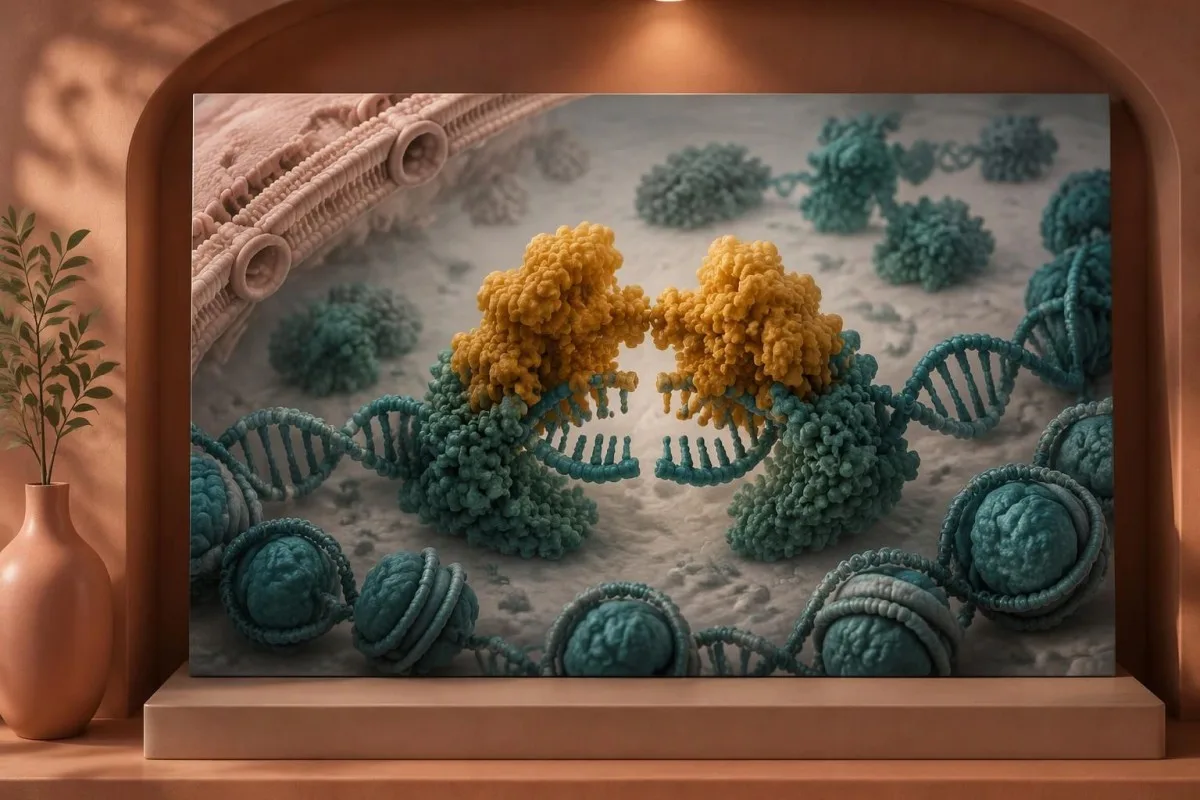
Kuchenbaecker ועמיתיו דיווחו ב-JAMA על הערכות אלה עד גיל 80, עם רווחי סמך של 95% של 65–79% לסרטן השד ו 36–53% לסרטן השחלות (2017). רווחי הסמך מתארים את אי-הוודאות סביב הערכות באוכלוסייה; אין פירוש הדבר שניתן לקרוא את הסיכון של אדם מסוים ישירות מתוך דוח המעבדה.
נשאית BRCA1 היפותטית בת 30 לא צריכה לפרש הערכה של 72% עד גיל 80 כסיכון של 72% השנה. ייעוץ אישי מפריד בין סיכון לטווח הקרוב לבין סיכון לטווח הארוך יותר ומתחשב בגיל, בסרטן קודם, באבחנות אצל קרובי משפחה ובהליכים מניעתיים שכבר בוצעו.
סרטן השד הקשור ל-BRCA1 הוא לעיתים קרובות יותר משולש-שלילי מאשר סרטן השד באוכלוסייה הכללית, אך אי אפשר לחזות את מצב הקולטנים על סמך תוצאה תורשתית בלבד. סרטן קיים עדיין מצריך הערכה פתולוגית והערכת קולטנים משלו; ממצא גנטי אינו מחליף בדיקות נפרדות אלה.
במשפחה אחת עשוי להיות גם יותר מהסבר תורשתי אחד לסרטן, במיוחד כאשר האבחנות מופיעות בשני הצדדים של המשפחה. לדוגמה, כמה מקרי סרטן המעי הגס וסרטן רירית הרחם עשויים להצדיק הערכה נפרדת של תוצאות בדיקת תסמונת לינץ' במקום להניח שממצא ב-BRCA1 מסביר כל אבחנה.
במה שונה הסיכון לסרטן עקב מוטציה ב-BRCA2?
סיכון לסרטן עקב מוטציית BRCA2 כולל נטייה לסרטן השד והשחלות, עם רלוונטיות מיוחדת להערכת סרטן השד בגברים, סרטן הערמונית וסרטן הלבלב. באותו מחקר פרוספקטיבי שפורסם ב-JAMA, לנשים שנשאו וריאנטים פתוגניים ב-BRCA2 הוערכו סיכונים של 69% לסרטן השד ושל 17% לסרטן השחלות עד גיל 80.
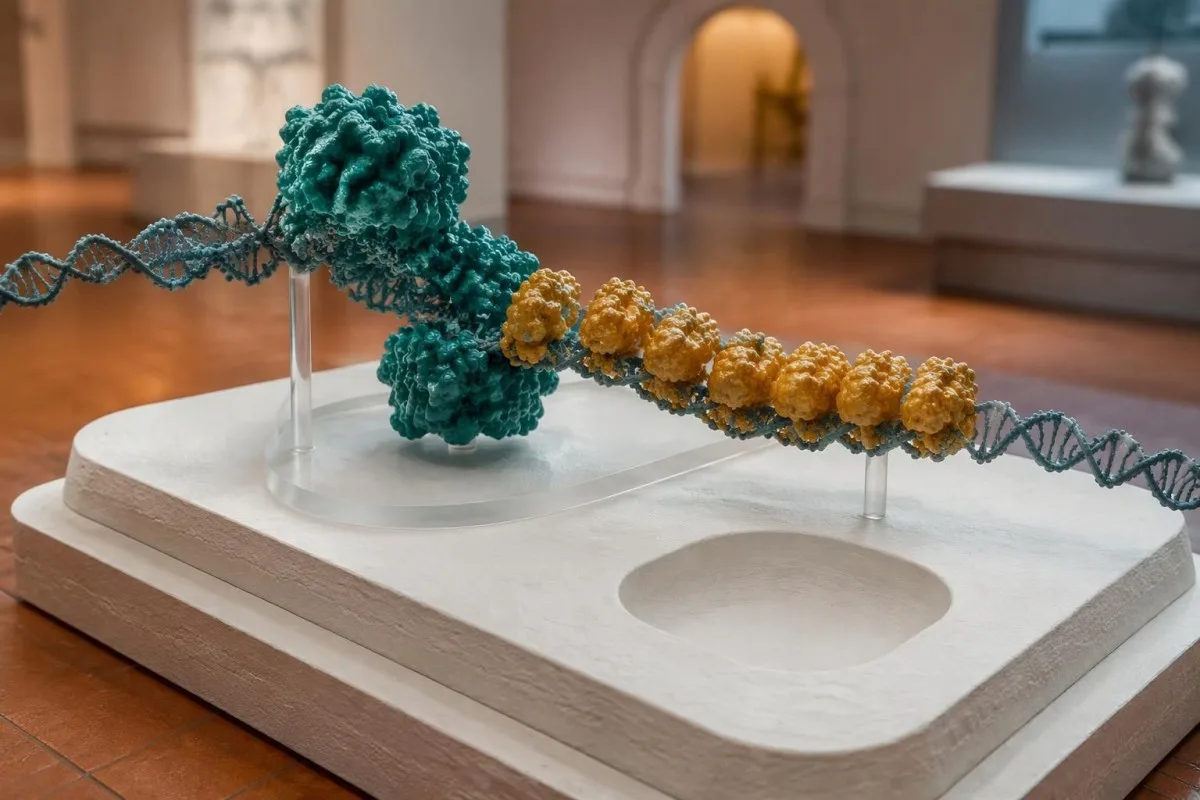
לאומדני BRCA2 היו רווחי סמך של 95% 61–77% לסרטן השד ו 11–25% לסרטן השחלות (Kuchenbaecker et al., 2017). הסיכון הממוצע הנמוך יותר לסרטן השחלות ב-BRCA2 בהשוואה ל-BRCA1 מסייע להסביר מדוע בדרך כלל דנים בהמשך החיים בניתוח מניעתי להסרת השחלות והחצוצרות אצל נשאיות BRCA2.
סרטן שד קודם מציב שאלת סיכון אחרת: הסיכוי לסרטן נוסף בשד הנגדי. Kuchenbaecker et al. העריכו סיכונים לסרטן בשד הנגדי בתוך 20 שנה של 26% עבור BRCA2 ו-40% עבור BRCA1; הנתונים האלה אינם זהים לסיכון לסרטן ראשון, ואין להשתמש בהם במקומו.
דיונים על בדיקות סקר לסרטן הערמונית עשויים להתחיל בסביבות גיל 40 אצל גברים עם וריאנטים פתוגניים ב-BRCA2, בהתאם למסלול הקליני הרלוונטי. PSA הוא מדד בבדיקת סקר ולא גורם לתסמינים; ההסבר שלנו על משמעות PSA מוגבר מבחין בין הערך המעבדתי לבין אבחנה.
מעקב אחר סרטן הלבלב הוא תחום נוסף שבו קריטריוני הזכאות משתנים, לרבות החשיבות המיוחסת להיסטוריה המשפחתית. נשא BRCA2 היפותטי בן 52, שיש לו קרוב משפחה מדרגה ראשונה שחלה, זקוק לדיון עם מומחה על הדמיה מבוססת MRI או אולטרסאונד אנדוסקופי — ולא לבדיקות CA 19-9 שגרתיות כתחליף.
מה המשמעות של וריאנט שמשמעותו אינה ודאית ב-BRCA?
A וריאנט של BRCA בעל משמעות לא ודאית, או VUS, פירושו שהראיות הזמינות אינן יכולות לקבוע אם שינוי ב-DNA מעלה את הסיכון לסרטן. VUS אינו תוצאה חיובית, ואין להשתמש בו לבדו כדי לקבוע כריתת שד מניעתית או הסרת השחלות והחצוצרות.

תקני ACMG/AMP קובעים כי אין להשתמש ב־VUS בקבלת החלטות קליניות (Richards et al., 2015). מתוך 5 קטגוריות הסיווג, אי-ודאות היא מעמד של ראיות — לא אבחנה, לא תוצאה חיובית חלקית ולא הסתברות של 50% לכך שהווריאנט גורם לסרטן.
לדוגמה, אין להציע ניתוח להפחתת סיכון לאדם היפותטי בן 42 עם VUS ב-BRCA1 וללא היסטוריה משפחתית משמעותית, רק בגלל אותו VUS. אדם אחר בן 42 עם אותו VUS והיסטוריה משפחתית משמעותית עשוי להתאים למעקב מוגבר בגלל ההיסטוריה, ולא מפני שהווריאנט הלא ודאי הפך לבעל משמעות טיפולית.
למוצא עשויה להיות השפעה על התדירות שבה מעבדות נתקלות באי-ודאות, משום שמאגרי נתונים של אוכלוסיות אינם מייצגים את כל הקבוצות במידה שווה. לכן, שני אנשים בעלי היסטוריה דומה של סרטן עשויים לקבל רמות שונות של ודאות פרשנית; הדבר משקף פערים בראיות ואינו מבסס הבדל ביולוגי בחומרת התוצאות שלהם.
ב-Kantesti, אנו מבחינים בין זיהוי שינוי גנטי לבין הוכחה שהשינוי מצדיק פעולה. אותה הבחנה מסייעת לקוראים להבין ממצאים נפוצים של וריאנטים ב-MTHFR, although MTHFR results and BRCA-associated cancer susceptibility have very different clinical implications.
האם הסיווג של VUS ב-BRCA יכול להשתנות בהמשך?
A BRCA VUS can be reclassified when new evidence clarifies its clinical significance. Many reclassified VUS move toward benign categories, but neither the direction nor the timing can be promised for an individual finding; reinterpretation usually reviews existing DNA data rather than requiring another sample.

Useful new evidence can come from 3 broad sources: population frequency, carefully validated functional work and observations of the variant in families. A computer prediction alone is usually insufficient; expert curation weighs whether the evidence actually addresses the disease mechanism and meets classification standards.
Laboratories can disagree because their evidence differs or their interpretations were issued at different times. Record 2 separate dates when available—the original report date and the most recent classification date—and ask whether a specialist expert-panel assessment exists, rather than counting database entries as votes.
Routine testing of unaffected relatives for a VUS usually does not guide care, although a genetics team may arrange selected family studies to help classification. A hypothetical family with 3 affected relatives should not independently order VUS testing for everyone and interpret who carries it as proof of causation.
Ask which laboratory manages reinterpretation, how amended reports reach you and whether your contact details remain current; there is no universal recontact interval. Our discussion of inherited TTR variant interpretation illustrates the broader need to connect exact genetic findings with disease-specific evidence.
מתי תוצאה שלילית ל-BRCA נחשבת שלילית אמיתית?
A true negative BRCA result means testing did not find the specific pathogenic or likely pathogenic variant already identified in a biological relative. It removes the inherited risk attributable to that familial variant, but it does not eliminate ordinary cancer risk or unrelated risks from the other family branch.
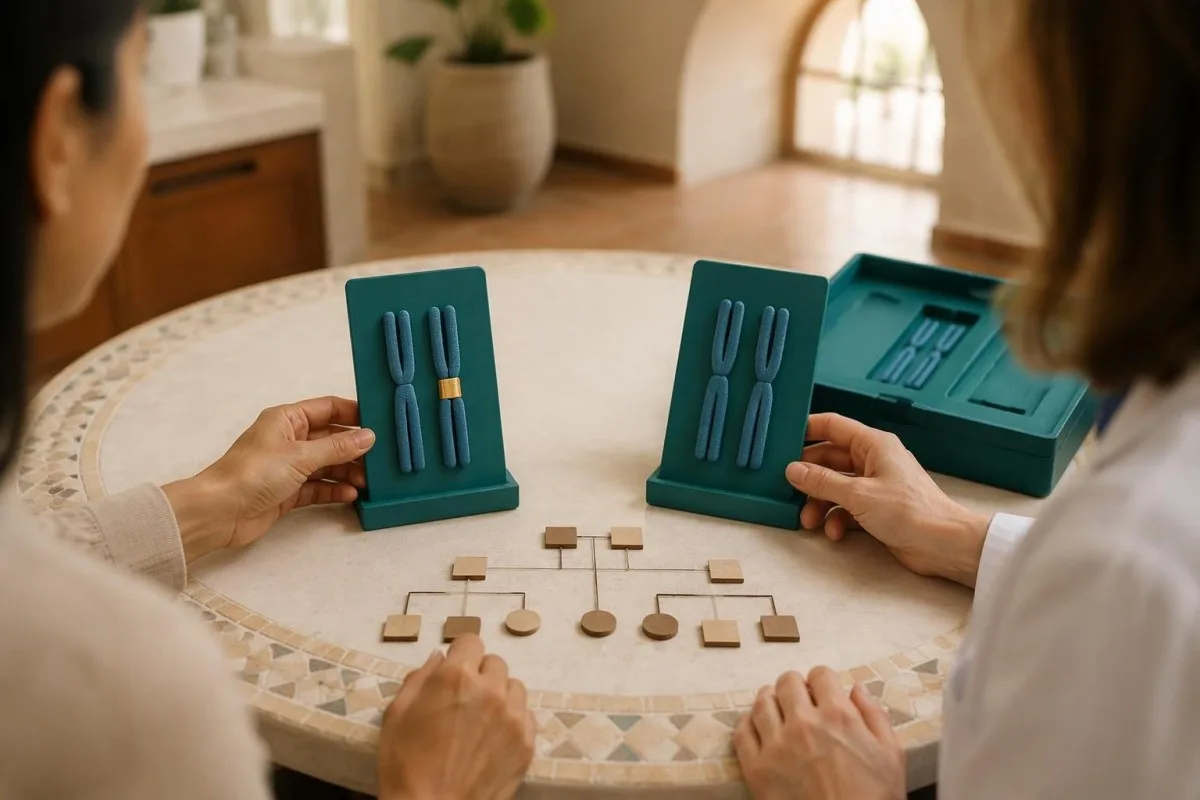
Suppose a hypothetical mother has a confirmed pathogenic BRCA1 variant and her adult daughter’s targeted test excludes that exact variant. Before testing, the daughter generally had a 50%; afterward, she is not considered a carrier of that maternal finding and cannot pass that uncarried variant to her children.
A negative result becomes less definitive if nobody knows the affected relative’s exact finding. Bring a copy of the original family report rather than a verbal account of “BRCA positive”; a gene name alone cannot distinguish a pathogenic variant from a VUS or identify which change the laboratory should test.
An independently concerning paternal history can remain relevant despite a maternal true negative. For example, 2 close paternal relatives with early breast cancer may warrant separate risk assessment, because excluding one maternal variant does not explain another branch of the pedigree.
The logic of matching a relative’s exact finding also appears in family-based Alport genetic testing, although the genes and inheritance patterns differ. Ask for a written statement identifying which familial variant was excluded and what remaining screening recommendation follows from your own history.
מדוע תוצאה שלילית ל-BRCA עשויה לא לספק מידע?
אן שאינו מספק מידע means no actionable BRCA finding was detected, but testing has not explained a suspicious personal or family cancer history. The result may reflect another gene, a technical limitation or a familial risk pattern that cannot currently be assigned to one detectable variant.
Testing an affected relative first usually provides more information than testing an unaffected relative. A hypothetical unaffected 35-year-old’s negative panel does not prove that her mother’s ovarian cancer lacked an inherited cause; testing the mother, when possible, can establish whether there is a familial finding to exclude.
A broader panel may consider genes such as PALB2, ATM, CHEK2, RAD51C, RAD51D and BRIP1, depending on the cancer pattern. These genes do not share identical cancer risks or prevention recommendations, so “panel positive” still requires gene-specific interpretation rather than applying the BRCA pathway to every result.
Older tests or limited consumer tests may assess only selected variants, whereas comprehensive clinical testing can include sequencing and deletion/duplication analysis. Our explanation of hidden carrier-screening limitations illustrates why a reassuring-looking result can still depend on methodology, although SMA uses a different genetic model.
Kantesti AI does not establish the completeness of a genetic assay or certify that a family’s inherited risk has been excluded. If a hypothetical family has 3 related cancers despite negative testing, clinical genetics can decide whether updated testing, another affected relative or a formal family-history risk model would answer the unresolved question.
האם ממצא של BRCA בגידול פירושו שהוא תורשתי?
A BRCA variant found in tumor tissue is not automatically inherited. Tumor testing can detect acquired changes confined to cancer cells; germline testing examines a suitable non-tumor specimen to determine whether the finding is constitutional and relevant to relatives.
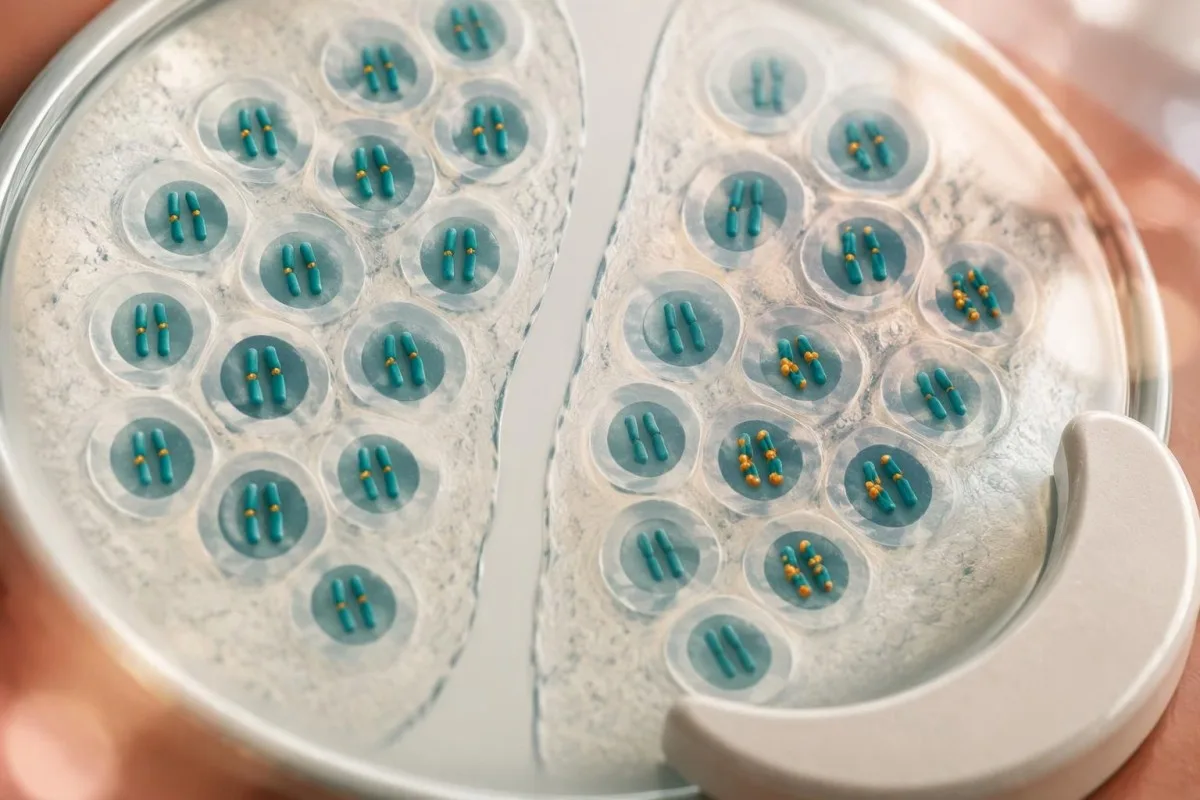
A tumor report may show a variant allele fraction near 50%, but that number does not prove germline origin. Tumor purity, copy-number changes and loss of the other gene copy can all shift the fraction; a percentage on a tumor report cannot replace a properly selected germline test.
Some oncology reports describe homologous recombination deficiency, or HRD, rather than a specific inherited variant. HRD can arise through more than one mechanism, and an HRD-positive result does not establish that a person or their children carry a pathogenic BRCA1 or BRCA2 variant.
After an allogeneic stem-cell transplant, a blood-derived DNA sample may reflect the donor, and saliva can also contain donor-derived cells. A hypothetical transplant recipient therefore needs the genetics laboratory to select an appropriate specimen—sometimes cultured skin fibroblasts—rather than assuming that 2 easily obtained samples answer the inheritance question.
The distinction between acquired and inherited DNA changes also matters in UBA1-related VEXAS testing, although VEXAS is a different condition. For a tumor BRCA finding, ask whether germline confirmation has been completed, is pending or was never requested.
מתי ייעוץ גנטי מועיל במיוחד?
Genetic counseling helps before testing and whenever a result could change screening, treatment or family testing. It is especially useful for pathogenic findings, unresolved VUS, limited negative tests and family patterns involving young diagnoses, ovarian cancer, male breast cancer or multiple related cancers.

A practical pedigree usually covers 3 דורות and records cancer type, age at diagnosis, biological relationships and both maternal and paternal branches. “Abdominal cancer” is less useful than a confirmed primary site; ovarian, pancreatic and metastatic cancers can otherwise be misremembered as the same diagnosis.
Small families, early deaths and few female relatives can hide hereditary breast-and-ovarian cancer patterns. A hypothetical father with 2 sons and no sisters can carry and transmit a BRCA variant even when the family has no obvious breast cancer cluster; paternal inheritance deserves the same attention as maternal inheritance.
קנטסטי הוא פלטפורמת פענוח בדיקות דם של AI, not a genetic counseling service. Our guidance on age-appropriate family testing separates routine laboratory needs from predictive BRCA testing, which is generally deferred in children under 18 because management usually begins in adulthood.
Before an appointment, gather the actual family report, pathology details if available and your previous test methods. Use separate consent for each relative’s records; our discussion of family health consent explains why a shared family history does not give one person automatic permission to access everyone’s medical information.
איזה מעקב נדרש בעקבות תוצאה פתוגנית של BRCA?
A germline pathogenic BRCA result warrants a personalized prevention plan, not automatic surgery. Options include enhanced breast screening, discussion of risk-reducing procedures and assessment of other gene-associated cancers; age, reproductive plans, previous cancer and local guidance determine the timing.

Many high-risk pathways use annual breast MRI beginning around ages 25–30, with mammography commonly added around age 30, but national recommendations differ. The reason for combining methods is that each detects some findings the other can miss; more imaging is not simply a substitute for understanding age-specific benefit and false-positive risk.
NICE guideline NG241 lists risk-reducing removal of ovaries and fallopian tubes no earlier than age 35 for BRCA1 and 40 for BRCA2, with individualized assessment (NICE, 2024). Common clinical discussions use windows of approximately 35–40 and 40–45 years, respectively, after childbearing; these are planning ranges, not instructions for every carrier.
Removing only the fallopian tubes while delaying ovary removal has not been established as equivalent protection and remains a trial-based strategy in NICE guidance. Surgical menopause can affect symptoms, cardiovascular health and bones; our מדריך בריאות הורמונלית לנשים שלנו explains why prevention planning includes consequences beyond cancer risk.
Hormone treatment after premenopausal risk-reducing surgery may be considered until the usual menopause age, approximately 51, but previous breast cancer and other contraindications change that discussion. Bone-density assessment and evaluation of secondary bone-loss causes are distinct tasks; our guide to bone health laboratory assessment explains what routine tests can and cannot answer.
מה המשמעות של תוצאת BRCA עבור קרובי משפחה וילדים?
Each child of a germline BRCA pathogenic-variant carrier usually has a 50% chance of inheriting the variant, regardless of sex. Adult relatives can consider targeted testing for the established family finding; inheriting susceptibility does not mean inheriting an existing cancer.
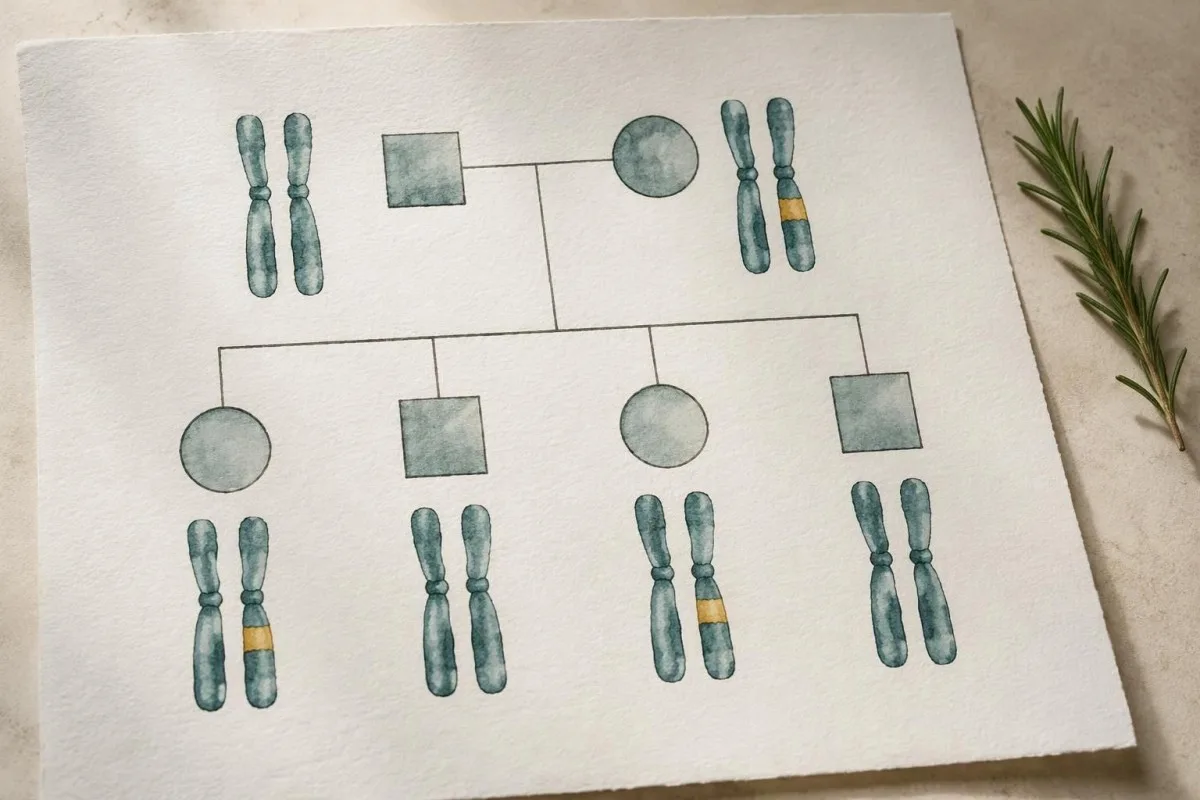
Four children do not imply that exactly 2 will inherit a parent’s BRCA variant. Each pregnancy is an independent event, so all, none or any number in between can inherit it; the 50% figure describes probability rather than a guaranteed family distribution.
A carrier’s siblings often have a סיכוי של 50% of sharing the variant when a parent carries it, but that estimate should not be applied without checking the pedigree. Identifying which parent carries the finding helps determine which cousins, aunts and uncles should receive an invitation to discuss testing.
Reproductive options can include natural conception, prenatal diagnosis or IVF with preimplantation genetic testing for a known familial variant. These are preference-sensitive choices, not obligations; our explanation of reproductive genetic result counseling shows why gene-specific inheritance matters, although FMR1 repeat expansion behaves differently from BRCA inheritance.
A rare additional question arises when both partners carry pathogenic variants in BRCA2: each pregnancy has a 25% chance of inheriting pathogenic variants in both copies, which can cause a Fanconi anemia phenotype. Partner testing is not automatically required for every BRCA carrier, but ancestry, relatedness and reproductive planning can justify specialist assessment.
האם תסמינים או סמני גידול יכולים לאשר סרטן הקשור ל-BRCA?
Neither a BRCA result nor a tumor-marker concentration confirms that cancer is present. New symptoms need their own assessment, and a negative genetic result does not make them harmless; examination, imaging and sometimes tissue assessment answer a different question from inherited susceptibility testing.
CA-125 can rise in benign conditions and can remain normal in ovarian cancer, particularly earlier disease. Routine CA-125 and ultrasound screening have not demonstrated a mortality benefit sufficient to replace established risk-reduction discussions; our guide to CA-125 limits and symptoms explains why the usual 35 U/mL cutoff is not a cancer yes-or-no boundary.
CA 15-3 and CA 27-29 are not appropriate tests for deciding whether an unaffected BRCA carrier has developed breast cancer. A hypothetical carrier with a normal marker still needs assessment of a new breast lump; our explanation of CA 15-3 interpretation separates selected monitoring uses from screening.
Kantesti does not infer BRCA carrier status from routine laboratory markers. For example, a CA 19-9 result of 80 U/mL can have non-cancer explanations and cannot establish pancreatic cancer or inherited BRCA2 risk; our guide to CA 19-9 limitations explains the need for clinical and imaging context.
Persistent bloating, early satiety, unexplained weight loss, a new breast change or unexplained jaundice deserve timely medical review regardless of genetic classification. A hypothetical person with 3 weeks of new persistent symptoms should not wait for VUS reclassification or a routine genetics appointment before seeking a separate assessment.
השתמשו בהסברים של בינה מלאכותית בלי להחליף ייעוץ גנטי
AI explanations can support understanding, but they cannot independently classify a BRCA variant or authorize preventive surgery. A safe workflow preserves 3 essentials: the original laboratory report, specialist interpretation and a written follow-up plan that distinguishes inherited risk from evaluation of any current symptoms.

קנטסטי הוא פלטפורמת פרשנות ביומרקרים של AI that explains routine laboratory findings, with interpretation generally available in about 60 seconds. That turnaround is not a timetable for genetic counseling, and our מידע על המתודולוגיה הקלינית should not be read as validation of independent BRCA classification or hereditary cancer risk calculation.
Genetic reports can reveal information relevant to more than אדם אחד, including biological relatives who have not chosen testing. Read our נוהלי הפרטיות והנתונים before sharing sensitive documents, and avoid uploading another relative’s identifiable report without their permission.
The 2 research publications listed below concern our global routine-test report and RDW educational material; they are not BRCA cancer-risk studies, clinical prevention guidelines or evidence supporting surgery. The medical recommendations in this article instead draw on the ACMG/AMP classification standards, the prospective JAMA risk study and NICE familial ovarian cancer guidance.
Before acting, ask your genetics team to document whether the result is germline, which exact variant is actionable and whether a negative is true or uninformative. Our שלנו בנושא בינה מלאכותית אחראית support keeping those clinical decisions with qualified professionals rather than treating an automated explanation as another laboratory classification.
שאלות נפוצות
האם תוצאת בדיקה חיובית ל-BRCA1 או ל-BRCA2 פירושה שיש לי סרטן?
בדיקה חיובית לנשאות נבטית של BRCA1 או BRCA2 מזהה וריאנט תורשתי פתוגני או כזה שסביר שהוא פתוגני; היא אינה מאבחנת סרטן. במחקר הפרוספקטיבי של Kuchenbaecker ועמיתיה ב-JAMA, הסיכון המשוער לסרטן השד עד גיל 80 היה 72% בקרב נשאיות של וריאנטים פתוגניים ב-BRCA1, ו-69% בקרב נשאיות של וריאנטים פתוגניים ב-BRCA2. אלה אומדנים לאוכלוסייה, ולא ההסתברות שקיים סרטן כעת. אבחון של סרטן קיים מחייב הערכה קלינית נפרדת.
האם כדאי לי לעבור ניתוח מניעתי עקב וריאנט בעל משמעות לא ודאית ב-BRCA?
וריאנט BRCA שמשמעותו אינה ודאית לא אמור להכריע כשלעצמו על ביצוע ניתוח מניעתי. מסגרת ACMG/AMP כוללת VUS בין חמש קטגוריות סיווג המבוססות על ראיות וקובעת שאין להשתמש בווריאנטים שמשמעותם אינה ודאית בקבלת החלטות קליניות. היסטוריה אישית או משפחתית עשויה להצדיק בנפרד טיפול ברמת סיכון גבוהה יותר, אך אין לקבל החלטה זו מתוך הנחה שה־VUS הוא פתוגני. איש מקצוע בתחום הגנטיקה יכול להסביר אילו ראיות אכן תומכות בכל הליך מוצע.
מה ההבדל בין תוצאה שלילית אמיתית לבין תוצאה שלילית שאינה אינפורמטיבית בבדיקת BRCA?
תוצאה שלילית אמיתית שוללת את וריאנט BRCA הפתוגני או ככל הנראה פתוגני הספציפי שכבר זוהה אצל קרוב ביולוגי. אצל ילד של נשא, היא יכולה להכריע את ההסתברות הראשונית של 50% להורשת הממצא המשפחתי הזה. תוצאה שלילית שאינה אינפורמטיבית אינה מזהה וריאנט בר־פעולה, אך גם אינה מבהירה מדוע הופיעו מקרי סרטן במשפחה. גם לאחר כל אחת מהתוצאות, ענפים אחרים במשפחה, גנים נוספים ומגבלות הבדיקה עשויים להישאר רלוונטיים.
האם BRCA VUS יכול להפוך לחיובי בהמשך?
וריאנט מסוג VUS ב-BRCA עשוי להיות מסווג מחדש בהמשך כפתוגני או כפתוגני בסבירות גבוהה, אך הוא עשוי גם להיות מסווג מחדש כככל הנראה שפיר או כשפיר. סיווג מחדש כולל בחינה של ראיות במסגרת אותה מערכת סיווג בת חמש קטגוריות; אין פירוש הדבר שה-DNA של האדם השתנה. אין מועד אחיד או כיוון מובטח עבור וריאנט מסוים. שאלו את המעבדה המקורית או את שירות הייעוץ הגנטי כיצד מטפלים בדוחות מתוקנים וביצירת קשר חוזרת.
האם אני יכול לרשת וריאנט ב-BRCA מאבי?
וריאנט פתוגני ב-BRCA1 או ב-BRCA2 יכול לעבור בתורשה מכל אחד מההורים הביולוגיים. לכל ילד של נשא וריאנט בתאי הנבט יש בדרך כלל סיכוי של 50% לרשת אותו, בין אם הנשא הוא האם ובין אם האב. במשפחה מצד האב, שבה יש מעט קרובות משפחה, ייתכן שלא תיראה היסטוריה משפחתית משמעותית של סרטן השד או השחלות, אף שהמשפחה נושאת וריאנט. לכן, ייעוץ גנטי צריך להביא בחשבון את שני ענפי המשפחה.
האם מוטציית BRCA שנמצאה בגידול שלי פירושה שילדיי נמצאים בסיכון?
מוטציית BRCA שנמצאה ברקמת גידול אינה מוכיחה שהיא תורשתית. גם שיעור אללים של וריאנט בגידול הקרוב ל־50% אינו יכול להוכיח באופן מהימן שמקורו בתאי הנבט, משום שטוהר הגידול ושינויים במספר העותקים משפיעים על שיעור זה. כדי לקבוע אם מדובר במוטציה תורשתית, יש לבצע בדיקה גנטית של תאי הנבט באמצעות דגימה מתאימה. ההסתברות המקובלת להעברה של 50% חלה רק כאשר ההורה נושא וריאנט בתאי הנבט.
האם עליי לחזור על בדיקת BRCA שלילית מדי שנה?
בדיקת DNA חוזרת שנתית ל-BRCA אינה נחוצה בדרך כלל, משום שווריאנט תורשתי אינו מופיע עם הגיל. ייתכן שכדאי לבחון מחדש תוצאה שלילית אם הבדיקה המקורית הייתה מוגבלת, זוהה וריאנט משפחתי חדש או שקרוב משפחה נוסף חלה בסרטן רלוונטי. לדוגמה, בדיקה של 3 וריאנטים נבחרים בלבד אינה שקולה לריצוף מקיף של BRCA1/BRCA2 בתוספת ניתוח של מחיקות והכפלות. שאלו שירות לייעוץ גנטי אם פרשנות מחדש, בדיקה ממוקדת של בני משפחה או פאנל אחר יוסיפו מידע.
קבלו הסבר על תוצאות בדיקות הדם שלכם
העלו את דוח המעבדה שלכם, וה-AI של Kantesti יסביר כל סמן ביולוגי בשפה פשוטה בתוך שניות. יותר מ-2 מיליון אנשים ברחבי העולם משתמשים בו.
הפניות
- Klein, T., Mitchell, S., & Weber, H. (2026). מנתח בדיקות דם בינה מלאכותית: 2.5M בדיקות נותחו | דוח בריאות עולמי 2026. מחקר רפואי של Kantesti AI. DOI
- Klein, T., Mitchell, S., & Weber, H. (2026). בדיקת דם ל-RDW: מדריך מלא ל-RDW-CV, MCV ו-MCHC. מחקר רפואי של Kantesti AI. DOI
- Richards S ואח׳ (2015). תקנים והנחיות לפרשנות של וריאנטים ברצף: המלצת קונצנזוס משותפת של הקולג׳ האמריקאי לגנטיקה רפואית ולגנום ושל האיגוד לפתולוגיה מולקולרית. גנטיקה ברפואה. DOI PubMed
- Kuchenbaecker KB et al. (2017). Risks of Breast, Ovarian, and Contralateral Breast Cancer for BRCA1 and BRCA2 Mutation Carriers. JAMA. DOI PubMed
- National Institute for Health and Care Excellence (2024). Ovarian cancer: identifying and managing familial and genetic risk. NICE guideline NG241.
- 2 מיליון+בדיקות שנותחו
- 127+מדינות
- 100+שפות
על הצוות הרפואי


אותות אמון E-E-A-T
הִתנַסוּת
סקירה קלינית בהובלת רופא של תהליכי עבודה לפענוח בדיקות מעבדה.
מוּמחִיוּת
רפואה מעבדתית מתמקדת באופן שבו סמנים ביולוגיים מתנהגים בהקשר קליני.
סמכותיות
נבדק רפואית על ידי ד״ר Thomas Klein, בתרומתם של ד״ר Sarah Mitchell ופרופ׳ ד״ר Hans Weber.
אֲמִינוּת
פרשנות מבוססת-ראיות עם מסלולי המשך ברורים כדי להפחית בהלה.






הצהרה רפואית
מאמר זה מיועד למטרות חינוכיות בלבד ואינו מהווה ייעוץ רפואי. תמיד יש להתייעץ עם גורם מוסמך בתחום הבריאות לצורך החלטות אבחון וטיפול.
פורסם · צרו קשר עם צוות העריכה
פורסם על ידי Kantesti Ltd, הרשומה באנגליה ובוויילס, מספר חברה. 17090423, לונדון, בריטניה.
