
Patogēns BRCA1 vai BRCA2 variants palielina iedzimtu vēža risku; tas nenozīmē, ka vēzis ir diagnosticēts. Variants ar neskaidru klīnisko nozīmi nedrīkst būt iemesls profilaktiskai operācijai. Negatīvs rezultāts ir patiess negatīvs tikai tad, ja tas izslēdz zināmu ģimenes variantu — pretējā gadījumā iedzimtais risks var palikt nenoskaidrots.

Galvenie secinājumi
- Pozitīvs rezultāts nozīmē, ka ir konstatēts patogēns vai, visticamāk, patogēns variants; iedzimta nosliece nav vēža diagnoze.
- Piecas klasifikācijas raksturo ģenētiskos variantus: patogēns, visticamāk, patogēns, ar neskaidru klīnisko nozīmi, visticamāk, labdabīgs un labdabīgs.
- BRCA1 risks prospektīvā JAMA pētījumā sievietēm ar patogēniem variantiem līdz 80 gadu vecumam sasniedza aptuveni 72% krūts vēža gadījumā un 44% olnīcu vēža gadījumā.
- BRCA2 risks tajā pašā pētījumā līdz 80 gadu vecumam sasniedza aptuveni 69% krūts vēža gadījumā un 17% olnīcu vēža gadījumā; tie ir grupas riska novērtējumi, nevis individuālas prognozes.
- VUS pārvaldība jāvadās pēc personīgās un ģimenes anamnēzes, nevis neskaidrā varianta; tikai VUS neattaisno profilaktisku operāciju.
- Īsti negatīvs rezultāts nozīmē, ka laboratorija neatrada konkrēto patogēno variantu, kas jau noteikts jūsu ģimenē.
- Neinformatīvs negatīvs rezultāts nozīmē, ka testēšanā netika atrasts izskaidrojums aizdomām par iedzimtu risku; spēcīga ģimenes anamnēze joprojām var pamatot papildu izvērtēšanu.
- Iedzimtība ģimenē parasti nozīmē, ka katram dzimumšūnu līnijas BRCA1 vai BRCA2 patogēnā varianta nēsātāja bērnam ir 50% iespēja mantot šo variantu.
- Ģenētiskā konsultēšana palīdz sasaistīt konkrēto variantu, testa tvērumu, abas ģimenes puses un ar vecumu saistītās skrīninga vai profilakses izvēles.
Ko patiesībā nozīmē BRCA ģenētiskā testa rezultāti?
BRCA ģenētiskā testa rezultāti parasti iedalās 3 praktiskās grupās: pozitīvi, neskaidri vai negatīvi. Pozitīvs iedzimts rezultāts norāda uz paaugstinātu uzņēmību pret vēzi, savukārt nenoteiktas nozīmes variants joprojām nav noskaidrots, un negatīvs rezultāts jāvērtē ģimenes kontekstā, pirms to var uzskatīt par nomierinošu.

A dzimumšūnu līnijas BRCA tests analizē DNS, parasti no laboratorijā iegūta asins vai siekalu parauga, nevis mēra proteīna koncentrāciju. Tā rezultātu nevar interpretēt kā vērtību ng/mL: klīniski noderīgā informācija ir gēns, konkrētais variants, tā klasifikācija un testēšanas tvērums.
Lielākajai daļai cilvēku ir 2 kopijas BRCA1 un 2 kopijas BRCA2, katra gēna vienu kopiju mantojot no katra bioloģiskā vecāka. Kaitīgas izmaiņas vienā kopijā var palielināt uzņēmību pret vēzi, taču vēža attīstībā parasti nozīme ir arī papildu izmaiņām šūnās — iedzimtība nav atpakaļskaitīšana līdz slimībai.
Hipotētiskam 38 gadus vecam cilvēkam bez vēža patogēna BRCA2 rezultāta dēļ var mainīties turpmākās skrīninga un profilakses apspriešanas iespējas, taču tas pats par sevi nenosaka pašreizēju vēža diagnozi. Cilvēkam, kurš jau saņem vēža ārstēšanu, šis pats iedzimtais atradums var ietekmēt arī atbilstību ārstēšanai un turpmāku vēžu riska izvērtēšanu.
Kantesti ir AI asins analīžu analizators ikdienas laboratoriskai rezultātu interpretācijai, nevis klīniskās ģenētikas laboratorijas aizstājējs. Informācija par organizācijā palīdz nošķirt mūsu izglītojošo lomu no speciālistu darba, kas nepieciešams iedzimta vēža testa rezultāta interpretēšanai.
Kura informācija BRCA laboratoriskajā pārskatā ir svarīga?
Visnoderīgākā informācija BRCA analīzes pārskatā ir gēns, konkrētais variants, klasifikācija, parauga veids un testēšanas metode. Klīniskās laboratorijas parasti izmanto 5 variantu klasifikācijas, un vārds “variants” pats par sevi nenorāda, vai atradums ir kaitīgs.

ACMG/AMP sistēma iedala patogēnus, ticami patogēnus, ar neskaidru nozīmi, ticami labdabīgus un labdabīgus atradumus (Richards et al., 2015). Patogēni un ticami patogēni varianti parasti pamato vienādu klīniskās aprūpes pieeju; šī atšķirība raksturo pierādījumu ticamību, nevis divus atšķirīgus vēža riska procentus.
Varianta aprakstā var būt iekļautas izmaiņas DNS līmenī, kas sākas ar c. and a protein-level consequence beginning with p. These are coordinates, not severity scores; two reports may describe the same change differently because they use different transcripts or historical naming conventions.
Look for both sequence analysis un deletion/duplication analysis when evaluating a comprehensive BRCA1/BRCA2 test. Reading individual DNA changes and detecting missing or extra gene segments require complementary methods, so a report stating “sequencing negative” may not answer every relevant question.
A hypothetical report can contain 2 findings: a pathogenic BRCA1 variant and an unrelated BRCA2 VUS. Management follows the established pathogenic finding, not an average of the two classifications; our guide to categorical versus numerical results explains why laboratory result types require different reading strategies.
Ko nozīmē pozitīvs BRCA1 rezultāts: nosliece, nevis pārliecība
BRCA1 positive meaning depends on the classification: a germline pathogenic or likely pathogenic BRCA1 variant indicates inherited cancer susceptibility. In a prospective study, women carrying pathogenic BRCA1 variants had an estimated 72% breast cancer risk and 44% ovarian cancer risk by age 80.
Kuchenbaecker et al. reported those age-80 estimates in JAMA, with 95% confidence intervals of 65–79% for breast cancer un 36–53% for ovarian cancer (2017). The intervals describe uncertainty around population estimates; they do not mean an individual’s risk can be read directly from the laboratory report.
A hypothetical 30-year-old BRCA1 carrier should not interpret a 72% age-80 estimate as a 72% risk this year. Personal counseling separates near-term risk from longer-term risk and considers age, prior cancer, relatives’ diagnoses and any preventive procedures already completed.
BRCA1-associated breast cancers are more often triple-negative than breast cancers in the general population, but receptor status cannot be predicted from an inherited result alone. An existing cancer still requires its own pathological and receptor assessment; a genetic finding does not replace those separate tests.
One family can also have more than one inherited explanation for cancer, particularly when diagnoses cluster on both parental branches. For example, several colorectal and endometrial cancers may justify a separate assessment of Lynch syndrome results rather than assuming a BRCA1 finding explains every diagnosis.
Ar ko BRCA2 mutācijas vēža risks atšķiras?
BRCA2 mutation cancer risk includes breast and ovarian cancer susceptibility, with particular relevance to male breast, prostate and pancreatic cancer assessment. In the same prospective JAMA study, women carrying pathogenic BRCA2 variants had estimated risks of 69% for breast cancer and 17% for ovarian cancer by age 80.
The BRCA2 estimates had 95% confidence intervals of 61–77% for breast cancer un 11–25% for ovarian cancer (Kuchenbaecker et al., 2017). BRCA2’s lower average ovarian cancer risk compared with BRCA1 helps explain why preventive ovary-and-tube removal is commonly discussed later for BRCA2 carriers.
A previous breast cancer creates a different risk question: the chance of another cancer in the opposite breast. Kuchenbaecker et al. estimated 20-year contralateral breast cancer risks of 26% for BRCA2 and 40% for BRCA1; those figures are not the same as first-cancer risk and should not be substituted for it.
Prostate screening discussions may begin around age 40 in men with pathogenic BRCA2 variants, depending on the applicable clinical pathway. PSA is a screening measurement rather than a symptom generator; our explanation of what elevated PSA means separates the laboratory number from a diagnosis.
Pancreatic surveillance is another area where eligibility criteria differ, including the importance assigned to family history. A hypothetical 52-year-old BRCA2 carrier with an affected first-degree relative needs a specialist discussion about MRI-based imaging or endoscopic ultrasound—not routine CA 19-9 testing as a substitute.
Ko nozīmē BRCA variants ar neskaidru klīnisko nozīmi?
A BRCA variant of uncertain significance, or VUS, means available evidence cannot establish whether a DNA change increases cancer risk. A VUS is not a positive result, and it should not independently determine preventive mastectomy or removal of the ovaries and fallopian tubes.

The ACMG/AMP standards state that a VUS nedrīkst izmantot klīnisku lēmumu pieņemšanā (Richards et al., 2015). Among the 5 classification categories, uncertainty is an evidence status—not a diagnosis, not a halfway-positive result and not a 50% probability that the variant causes cancer.
For example, a hypothetical 42-year-old with a BRCA1 VUS and no significant family history should not be offered risk-reducing surgery because of that VUS alone. Another 42-year-old with the same VUS and a substantial family history may qualify for intensified surveillance because of the history, not because the uncertain variant became actionable.
Ancestry can affect how often laboratories encounter uncertainty because population databases do not represent every group equally. Two people with the same cancer history can therefore receive different levels of interpretive certainty; this reflects evidence gaps and does not establish a biological difference in the seriousness of their results.
At Kantesti, we separate finding a genetic change from proving that the change warrants action. The same distinction helps readers understand common MTHFR variant findings, although MTHFR results and BRCA-associated cancer susceptibility have very different clinical implications.
Vai BRCA VUS klasifikācija vēlāk var mainīties?
A BRCA VUS can be reclassified when new evidence clarifies its clinical significance. Many reclassified VUS move toward benign categories, but neither the direction nor the timing can be promised for an individual finding; reinterpretation usually reviews existing DNA data rather than requiring another sample.

Useful new evidence can come from 3 broad sources: population frequency, carefully validated functional work and observations of the variant in families. A computer prediction alone is usually insufficient; expert curation weighs whether the evidence actually addresses the disease mechanism and meets classification standards.
Laboratories can disagree because their evidence differs or their interpretations were issued at different times. Record 2 separate dates when available—the original report date and the most recent classification date—and ask whether a specialist expert-panel assessment exists, rather than counting database entries as votes.
Routine testing of unaffected relatives for a VUS usually does not guide care, although a genetics team may arrange selected family studies to help classification. A hypothetical family with 3 affected relatives should not independently order VUS testing for everyone and interpret who carries it as proof of causation.
Ask which laboratory manages reinterpretation, how amended reports reach you and whether your contact details remain current; there is no universal recontact interval. Our discussion of inherited TTR variant interpretation illustrates the broader need to connect exact genetic findings with disease-specific evidence.
Kad negatīvs BRCA rezultāts ir patiess negatīvs?
A true negative BRCA result means testing did not find the specific pathogenic or likely pathogenic variant already identified in a biological relative. It removes the inherited risk attributable to that familial variant, but it does not eliminate ordinary cancer risk or unrelated risks from the other family branch.
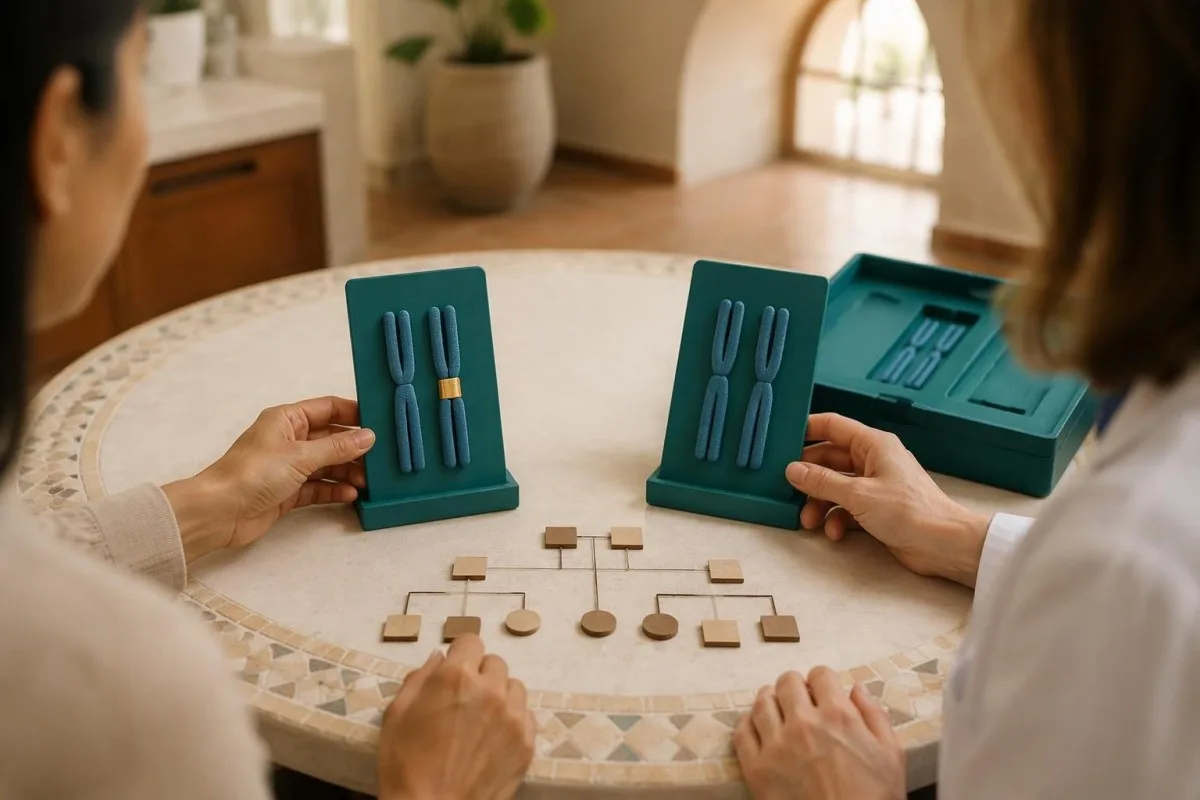
Suppose a hypothetical mother has a confirmed pathogenic BRCA1 variant and her adult daughter’s targeted test excludes that exact variant. Before testing, the daughter generally had a 50% pārmantošanas varbūtība; afterward, she is not considered a carrier of that maternal finding and cannot pass that uncarried variant to her children.
A negative result becomes less definitive if nobody knows the affected relative’s exact finding. Bring a copy of the original family report rather than a verbal account of “BRCA positive”; a gene name alone cannot distinguish a pathogenic variant from a VUS or identify which change the laboratory should test.
An independently concerning paternal history can remain relevant despite a maternal true negative. For example, 2 close paternal relatives with early breast cancer may warrant separate risk assessment, because excluding one maternal variant does not explain another branch of the pedigree.
The logic of matching a relative’s exact finding also appears in family-based Alport genetic testing, although the genes and inheritance patterns differ. Ask for a written statement identifying which familial variant was excluded and what remaining screening recommendation follows from your own history.
Kāpēc negatīvs BRCA rezultāts var nesniegt informāciju?
An neinformatīvs negatīvs rezultāts means no actionable BRCA finding was detected, but testing has not explained a suspicious personal or family cancer history. The result may reflect another gene, a technical limitation or a familial risk pattern that cannot currently be assigned to one detectable variant.
Testing an affected relative first usually provides more information than testing an unaffected relative. A hypothetical unaffected 35-year-old’s negative panel does not prove that her mother’s ovarian cancer lacked an inherited cause; testing the mother, when possible, can establish whether there is a familial finding to exclude.
A broader panel may consider genes such as PALB2, ATM, CHEK2, RAD51C, RAD51D and BRIP1, depending on the cancer pattern. These genes do not share identical cancer risks or prevention recommendations, so “panel positive” still requires gene-specific interpretation rather than applying the BRCA pathway to every result.
Older tests or limited consumer tests may assess only selected variants, whereas comprehensive clinical testing can include sequencing and deletion/duplication analysis. Our explanation of hidden carrier-screening limitations illustrates why a reassuring-looking result can still depend on methodology, although SMA uses a different genetic model.
Kantesti AI does not establish the completeness of a genetic assay or certify that a family’s inherited risk has been excluded. If a hypothetical family has 3 related cancers despite negative testing, clinical genetics can decide whether updated testing, another affected relative or a formal family-history risk model would answer the unresolved question.
Vai BRCA atradne audzējā nozīmē, ka tā ir iedzimta?
A BRCA variant found in tumor tissue is not automatically inherited. Tumor testing can detect acquired changes confined to cancer cells; germline testing examines a suitable non-tumor specimen to determine whether the finding is constitutional and relevant to relatives.
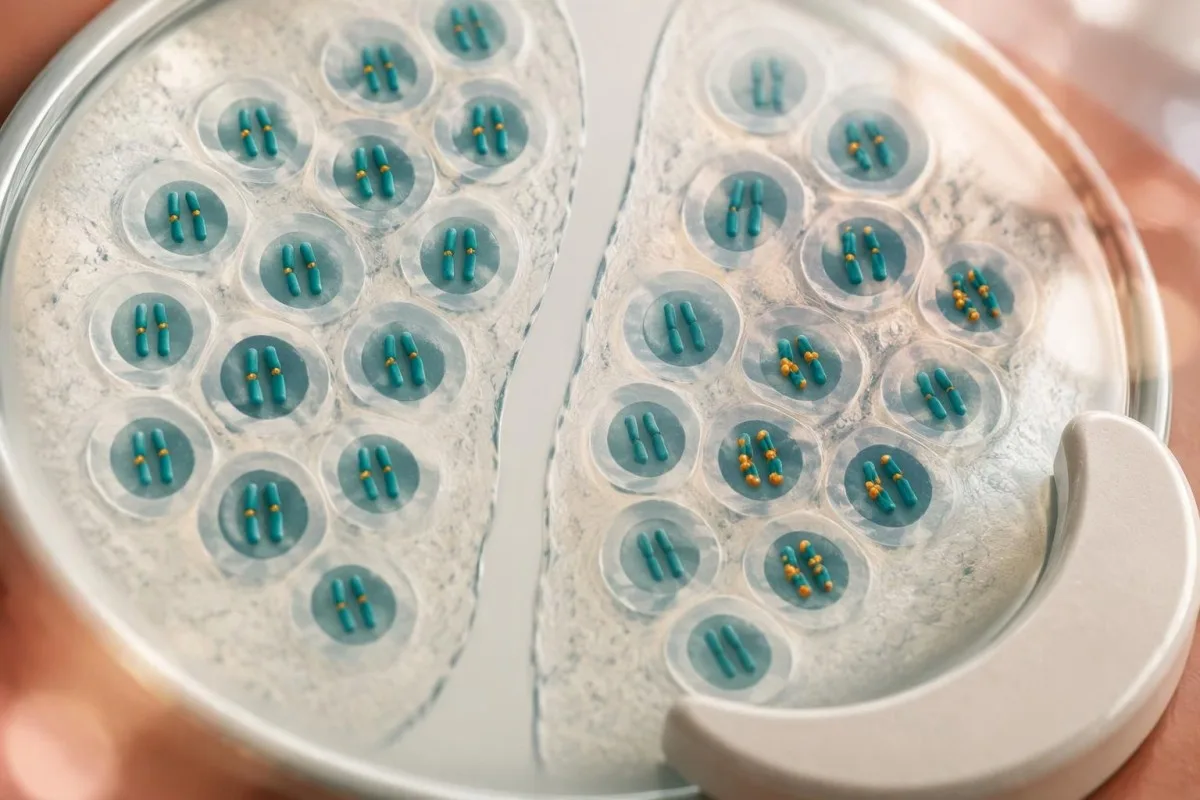
A tumor report may show a variant allele fraction near 50%, but that number does not prove germline origin. Tumor purity, copy-number changes and loss of the other gene copy can all shift the fraction; a percentage on a tumor report cannot replace a properly selected germline test.
Some oncology reports describe homologous recombination deficiency, or HRD, rather than a specific inherited variant. HRD can arise through more than one mechanism, and an HRD-positive result does not establish that a person or their children carry a pathogenic BRCA1 or BRCA2 variant.
After an allogeneic stem-cell transplant, a blood-derived DNA sample may reflect the donor, and saliva can also contain donor-derived cells. A hypothetical transplant recipient therefore needs the genetics laboratory to select an appropriate specimen—sometimes cultured skin fibroblasts—rather than assuming that 2 easily obtained samples answer the inheritance question.
The distinction between acquired and inherited DNA changes also matters in UBA1-related VEXAS testing, although VEXAS is a different condition. For a tumor BRCA finding, ask whether germline confirmation has been completed, is pending or was never requested.
Kad ģenētiskā konsultēšana ir visnoderīgākā?
Genetic counseling helps before testing and whenever a result could change screening, treatment or family testing. It is especially useful for pathogenic findings, unresolved VUS, limited negative tests and family patterns involving young diagnoses, ovarian cancer, male breast cancer or multiple related cancers.

A practical pedigree usually covers 3 paaudzes and records cancer type, age at diagnosis, biological relationships and both maternal and paternal branches. “Abdominal cancer” is less useful than a confirmed primary site; ovarian, pancreatic and metastatic cancers can otherwise be misremembered as the same diagnosis.
Small families, early deaths and few female relatives can hide hereditary breast-and-ovarian cancer patterns. A hypothetical father with 2 sons and no sisters can carry and transmit a BRCA variant even when the family has no obvious breast cancer cluster; paternal inheritance deserves the same attention as maternal inheritance.
Kantesti ir AI asins analīžu rezultātu platforma, not a genetic counseling service. Our guidance on age-appropriate family testing separates routine laboratory needs from predictive BRCA testing, which is generally deferred in children under 18 because management usually begins in adulthood.
Before an appointment, gather the actual family report, pathology details if available and your previous test methods. Use separate consent for each relative’s records; our discussion of family health consent explains why a shared family history does not give one person automatic permission to access everyone’s medical information.
Kāda novērošana nepieciešama pēc patogēna BRCA rezultāta?
A germline pathogenic BRCA result warrants a personalized prevention plan, not automatic surgery. Options include enhanced breast screening, discussion of risk-reducing procedures and assessment of other gene-associated cancers; age, reproductive plans, previous cancer and local guidance determine the timing.

Many high-risk pathways use annual breast MRI beginning around ages 25–30, with mammography commonly added around age 30, but national recommendations differ. The reason for combining methods is that each detects some findings the other can miss; more imaging is not simply a substitute for understanding age-specific benefit and false-positive risk.
NICE guideline NG241 lists risk-reducing removal of ovaries and fallopian tubes no earlier than age 35 for BRCA1 and 40 for BRCA2, with individualized assessment (NICE, 2024). Common clinical discussions use windows of approximately 35–40 and 40–45 years, respectively, after childbearing; these are planning ranges, not instructions for every carrier.
Removing only the fallopian tubes while delaying ovary removal has not been established as equivalent protection and remains a trial-based strategy in NICE guidance. Surgical menopause can affect symptoms, cardiovascular health and bones; our sieviešu hormonālās veselības ceļvedi explains why prevention planning includes consequences beyond cancer risk.
Hormone treatment after premenopausal risk-reducing surgery may be considered until the usual menopause age, approximately 51, but previous breast cancer and other contraindications change that discussion. Bone-density assessment and evaluation of secondary bone-loss causes are distinct tasks; our guide to bone health laboratory assessment explains what routine tests can and cannot answer.
Ko BRCA rezultāts nozīmē radiniekiem un bērniem?
Each child of a germline BRCA pathogenic-variant carrier usually has a 50% chance of inheriting the variant, regardless of sex. Adult relatives can consider targeted testing for the established family finding; inheriting susceptibility does not mean inheriting an existing cancer.
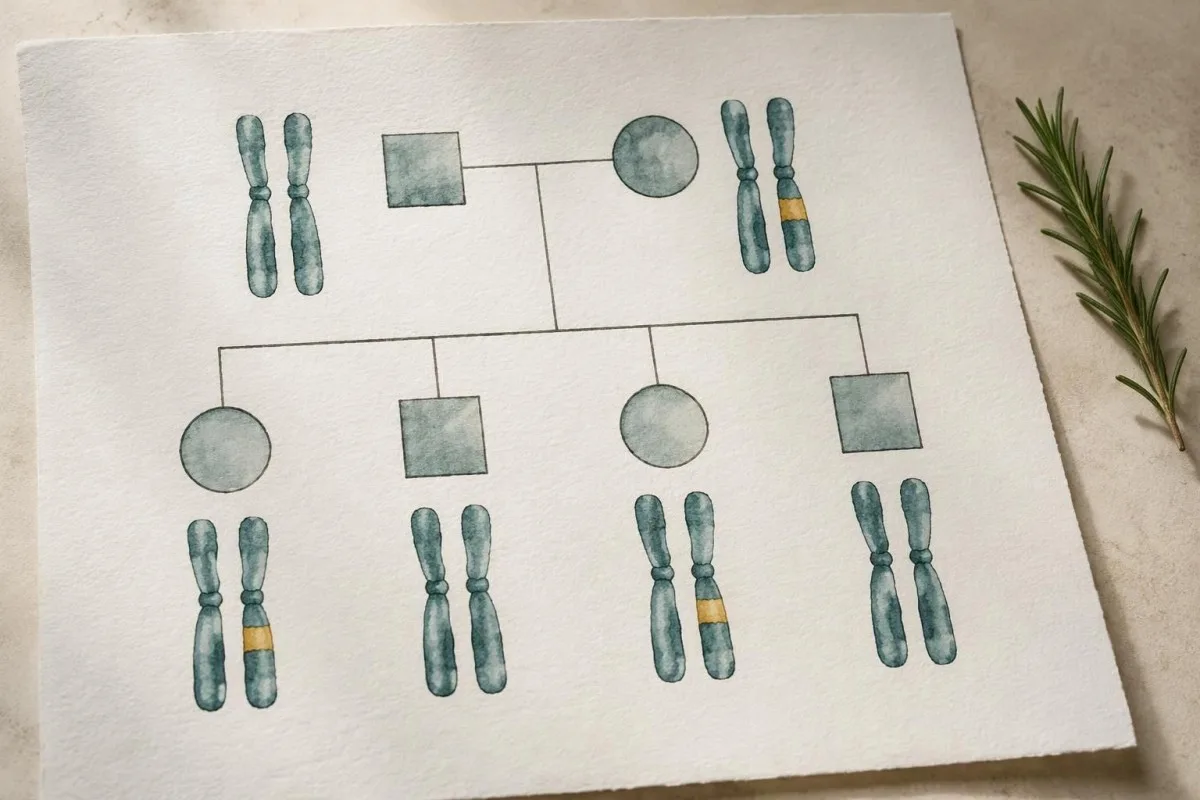
Four children do not imply that exactly 2 will inherit a parent’s BRCA variant. Each pregnancy is an independent event, so all, none or any number in between can inherit it; the 50% figure describes probability rather than a guaranteed family distribution.
A carrier’s siblings often have a 50% iespēja of sharing the variant when a parent carries it, but that estimate should not be applied without checking the pedigree. Identifying which parent carries the finding helps determine which cousins, aunts and uncles should receive an invitation to discuss testing.
Reproductive options can include natural conception, prenatal diagnosis or IVF with preimplantation genetic testing for a known familial variant. These are preference-sensitive choices, not obligations; our explanation of reproductive genetic result counseling shows why gene-specific inheritance matters, although FMR1 repeat expansion behaves differently from BRCA inheritance.
A rare additional question arises when both partners carry pathogenic variants in BRCA2: each pregnancy has a 25% chance of inheriting pathogenic variants in both copies, which can cause a Fanconi anemia phenotype. Partner testing is not automatically required for every BRCA carrier, but ancestry, relatedness and reproductive planning can justify specialist assessment.
Vai simptomi vai audzēja marķieri var apstiprināt ar BRCA saistītu vēzi?
Neither a BRCA result nor a tumor-marker concentration confirms that cancer is present. New symptoms need their own assessment, and a negative genetic result does not make them harmless; examination, imaging and sometimes tissue assessment answer a different question from inherited susceptibility testing.

CA-125 can rise in benign conditions and can remain normal in ovarian cancer, particularly earlier disease. Routine CA-125 and ultrasound screening have not demonstrated a mortality benefit sufficient to replace established risk-reduction discussions; our guide to CA-125 limits and symptoms explains why the usual 35 U/mL cutoff is not a cancer yes-or-no boundary.
CA 15-3 and CA 27-29 are not appropriate tests for deciding whether an unaffected BRCA carrier has developed breast cancer. A hypothetical carrier with a normal marker still needs assessment of a new breast lump; our explanation of CA 15-3 interpretation separates selected monitoring uses from screening.
Kantesti does not infer BRCA carrier status from routine laboratory markers. For example, a CA 19-9 result of 80 U/mL can have non-cancer explanations and cannot establish pancreatic cancer or inherited BRCA2 risk; our guide to CA 19-9 limitations explains the need for clinical and imaging context.
Persistent bloating, early satiety, unexplained weight loss, a new breast change or unexplained jaundice deserve timely medical review regardless of genetic classification. A hypothetical person with 3 weeks of new persistent symptoms should not wait for VUS reclassification or a routine genetics appointment before seeking a separate assessment.
Izmantojiet mākslīgā intelekta skaidrojumus, neaizstājot ģenētisko konsultēšanu
AI explanations can support understanding, but they cannot independently classify a BRCA variant or authorize preventive surgery. A safe workflow preserves 3 essentials: the original laboratory report, specialist interpretation and a written follow-up plan that distinguishes inherited risk from evaluation of any current symptoms.

Kantesti ir AI biomarķieru interpretācijas platforma that explains routine laboratory findings, with interpretation generally available in about 60 seconds. That turnaround is not a timetable for genetic counseling, and our klīniskās metodoloģijas informācija should not be read as validation of independent BRCA classification or hereditary cancer risk calculation.
Genetic reports can reveal information relevant to more than 1 personas, including biological relatives who have not chosen testing. Read our privātuma un datu prakses before sharing sensitive documents, and avoid uploading another relative’s identifiable report without their permission.
The 2 research publications listed below concern our global routine-test report and RDW educational material; they are not BRCA cancer-risk studies, clinical prevention guidelines or evidence supporting surgery. The medical recommendations in this article instead draw on the ACMG/AMP classification standards, the prospective JAMA risk study and NICE familial ovarian cancer guidance.
Before acting, ask your genetics team to document whether the result is germline, which exact variant is actionable and whether a negative is true or uninformative. Our atbildīga MI principi support keeping those clinical decisions with qualified professionals rather than treating an automated explanation as another laboratory classification.
Bieži uzdotie jautājumi
Vai pozitīvs BRCA1 vai BRCA2 testa rezultāts nozīmē, ka man ir vēzis?
Pozitīvs BRCA1 vai BRCA2 cilmes līnijas tests atklāj patogēnu vai, visticamāk, patogēnu iedzimtu variantu; tas nenosaka vēža diagnozi. Kuchenbaecker u. c. prospektīvajā pētījumā, kas publicēts žurnālā JAMA, aplēstais krūts vēža risks līdz 80 gadu vecumam sievietēm, kurām ir patogēni varianti, bija 72% BRCA1 gadījumā un 69% BRCA2 gadījumā. Tie ir populācijas līmeņa aplēses, nevis varbūtība, ka vēzis ir pašlaik. Pašreizēja vēža diagnozei nepieciešams atsevišķs klīnisks izvērtējums.
Vai man vajadzētu veikt profilaktisku operāciju BRCA neskaidras klīniskās nozīmes varianta dēļ?
BRCA variants ar neskaidru klīnisko nozīmi nedrīkst būt vienīgais pamats profilaktiskai operācijai. ACMG/AMP klasifikācijas sistēmā VUS ir viena no piecām uz pierādījumiem balstītām klasifikācijām, un tajā norādīts, ka neskaidras nozīmes variantus nedrīkst izmantot klīnisku lēmumu pieņemšanā. Personīgā vai ģimenes anamnēze var atsevišķi pamatot aprūpi, kas paredzēta augstāka riska pacientiem, taču šāds lēmums nedrīkst balstīties uz pieņēmumu, ka VUS ir patogēns. Ģenētikas speciālists var paskaidrot, kuri pierādījumi patiesībā pamato ierosināto procedūru.
Kāda ir atšķirība starp patiesi negatīvu un neinformatīvi negatīvu BRCA rezultātu?
Īsts negatīvs rezultāts izslēdz konkrēto patogēno vai, visticamāk, patogēno BRCA variantu, kas jau konstatēts bioloģiskam radiniekam. Nēsātāja bērnam tas var atrisināt sākotnējo 50 % varbūtību pārmantot konkrēto ģimenes variantu. Neinformatīva negatīva rezultāta gadījumā netiek atrasts klīniski nozīmīgs variants, taču netiek noskaidrots, kāpēc ģimenē radušies vēža gadījumi. Pēc abu veidu rezultātiem joprojām var būt svarīgi citi ģimenes atzari, papildu gēni un testēšanas ierobežojumi.
Vai BRCA variants ar neskaidru klīnisko nozīmi vēlāk var tikt atzīti par pozitīviem?
BRCA variants ar neskaidru klīnisko nozīmi (VUS) vēlāk var pārklasificēt kā patogēnus vai iespējami patogēnus, taču tos var arī pārklasificēt kā visticamāk labdabīgus vai labdabīgus. Pārklasificēšanas laikā pierādījumi tiek atkārtoti izvērtēti tajā pašā 5 kategoriju sistēmā; tas nenozīmē, ka cilvēka DNS ir mainījusies. Nav noteikta universāla termiņa vai garantēta virziena konkrētam variantam. Jautājiet sākotnējai laboratorijai vai ģenētikas dienestam, kā tiek apstrādāti labotie ziņojumi un saziņa ar pacientu.
Vai es varu mantot BRCA variantu no sava tēva?
Patogēnu BRCA1 vai BRCA2 variantu var mantot no jebkura bioloģiskā vecāka. Katram dzimumšūnu varianta nēsātāja bērnam parasti ir 50 % iespējamība mantot šo variantu neatkarīgi no tā, vai nēsātājs ir māte vai tēvs. Tēva dzimtā, kurā ir maz sieviešu, var būt mazāk izteikta krūts vai olnīcu vēža anamnēze, lai gan šis variants tiek nēsāts. Tāpēc ģenētiskajā konsultēšanā jāizvērtē abas dzimtas līnijas.
Vai BRCA mutācija, kas konstatēta manā audzējā, nozīmē, ka mani bērni ir pakļauti riskam?
BRCA mutācijas atrašana audzēja audos nepierāda, ka tā ir iedzimta. Pat ja varianta alēles frakcija audzējā ir tuvu 50 %, tas nevar droši pierādīt dzimumšūnu līnijas izcelsmi, jo šo procentuālo daļu ietekmē audzēja šūnu tīrība un kopiju skaita izmaiņas. Lai noteiktu, vai mutācija ir iedzimta, nepieciešama dzimumšūnu līnijas testēšana, izmantojot atbilstošu paraugu. Parastā 50 % pārnešanas varbūtība attiecas tikai uz gadījumiem, kad vecākam ir dzimumšūnu līnijas variants.
Vai man katru gadu jāatkārto negatīvs BRCA tests?
Ikgadēja BRCA DNS testēšanas atkārtošana parasti nav nepieciešama, jo iedzimts variants neparādās vienkārši novecojot. Negatīvu rezultātu var būt vērts pārskatīt, ja sākotnējā analīze bija ierobežota, ģimenē tiek atklāts jauns variants vai citam radiniekam attīstās ar to saistīts vēzis. Piemēram, tikai 3 izvēlētu variantu testēšana nav līdzvērtīga visaptverošai BRCA1/BRCA2 sekvenēšanai kopā ar delēciju/duplikāciju analīzi. Jautājiet ģenētikas speciālistiem, vai atkārtota interpretācija, mērķēta ģimenes locekļu testēšana vai cita testēšanas panelī iekļauto gēnu kopa varētu sniegt papildu informāciju.
Uzziniet, kā lasīt asins analīžu rezultātus
Augšupielādējiet laboratorijas pārskatu, un Kantesti mākslīgais intelekts dažu sekunžu laikā vienkāršā valodā izskaidros katru biomarķieri. To izmanto vairāk nekā 2 miljoni cilvēku visā pasaulē.
Atsauces
- Klein, T., Mitchell, S., & Weber, H. (2026). AI asins analīžu analizators: analizēti 2,5M testi | Global Health Report 2026. Kantesti mākslīgā intelekta medicīniskie pētījumi. DOI
- Klein, T., Mitchell, S., & Weber, H. (2026). RDW asins analīze: pilnīgs ceļvedis par RDW-CV, MCV un MCHC. Kantesti mākslīgā intelekta medicīniskie pētījumi. DOI
- Richards S et al. (2015). Standarti un vadlīnijas sekvenču variantu interpretācijai: Amerikas Medicīniskās ģenētikas un genomikas koledžas un Molekulārās patoloģijas asociācijas kopīgs konsensa ieteikums. Medicīniskā ģenētika. DOI PubMed
- Kuchenbaecker KB et al. (2017). Risks of Breast, Ovarian, and Contralateral Breast Cancer for BRCA1 and BRCA2 Mutation Carriers. JAMA. DOI PubMed
- National Institute for Health and Care Excellence (2024). Ovarian cancer: identifying and managing familial and genetic risk. NICE guideline NG241.
- 2M+Analizētie testi
- 127+Valstis
- 100+Valodas
Par medicīnas komandu


E-E-A-T uzticēšanās signāli
Pieredze
Ārstu vadīta klīniskā laboratorijas interpretācijas darbplūsmu pārskatīšana.
Ekspertīze
Laboratorijas medicīnas fokuss uz to, kā biomarķieri uzvedas klīniskā kontekstā.
Autoritāte
Medicīniski recenzējis Dr. Thomas Klein, piedaloties Dr. Sarah Mitchell un Prof. Dr. Hans Weber.
Uzticamība
Uz pierādījumiem balstīta interpretācija ar skaidriem turpmākās rīcības ceļiem, lai mazinātu trauksmi.






Medicīniskā atruna
Šis raksts ir paredzēts tikai izglītojošiem nolūkiem un nav medicīnisks padoms. Vienmēr konsultējieties ar kvalificētu veselības aprūpes speciālistu, lai pieņemtu lēmumus par diagnostiku un ārstēšanu.
Publicēts · Sazinieties ar redakcijas komandu
Publicējis Kantesti Ltd, reģistrēts Anglijā un Velsā, uzņēmuma reģistrācijas Nr. 17090423, Londona, Apvienotā Karaliste.
