
病的なBRCA1またはBRCA2バリアントは、遺伝性のがんリスクを高めますが、がんを診断するものではありません。意義不明のバリアントを根拠に予防的手術を決定すべきではありません。陰性結果が真の陰性となるのは、既知の家族性バリアントを除外できた場合に限られます。それ以外の場合、遺伝性リスクが未解決のまま残ることがあります。

要点
- 陽性結果 は、病的または病的可能性が高いバリアントが特定されたことを意味します。遺伝性の感受性は、がんの診断ではありません。
- 5つの分類 は遺伝子バリアントを、病的、病的可能性が高い、意義不明、良性可能性が高い、良性に分類します。
- BRCA1のリスク 前向きJAMA研究では、病的バリアントを持つ女性の80歳までの乳がんリスクは約72%、卵巣がんリスクは44%に達しました。
- BRCA2のリスク 同じ研究では、80歳までの乳がんリスクは約69%、卵巣がんリスクは17%に達しました。これらは集団の推定値であり、個人の予測ではありません。
- VUSの管理 不確かなバリアントではなく、本人および家族の病歴に基づいて判断すべきであり、VUSのみでは予防的手術の根拠にはなりません。
- 真の陰性 は、検査室が家族ですでに特定されている特定の病原性バリアントを検出しなかったことを意味します。
- 情報が得られない陰性 は、検査で遺伝性リスクが疑われる理由が見つからなかったことを意味します。強い家族歴があれば、追加評価が妥当な場合もあります。
- 家族内遺伝 通常、生殖細胞系列のBRCA1またはBRCA2病原性バリアント保有者の各子どもがそのバリアントを受け継ぐ確率は50%です。
- 遺伝カウンセリング は、正確なバリアント、検査の対象範囲、家族の両系統、年齢に応じた検診や予防の選択肢を結び付けて考えるのに役立ちます。
BRCA遺伝子検査の結果は実際には何を意味するのでしょうか?
BRCA遺伝子検査の結果 は通常、陽性、不確定、陰性の3つの実用的なグループに分類されます。遺伝性の陽性結果は、がん感受性を特定し、 重要性の不明な変異体 は未確定のままであり、陰性結果が安心材料とみなせるかどうかは、家族背景を踏まえて判断する必要があります。

A 生殖細胞系列BRCA検査 は、タンパク質濃度を測定するのではなく、通常は検査室で採取した血液または唾液検体からDNAを調べます。その結果はng/mLの値のようには解釈できません。臨床的に有用な情報は、遺伝子、正確なバリアント、分類、検査範囲です。
ほとんどの人は 2コピー のBRCA1と2コピーのBRCA2があり、それぞれの遺伝子の1コピーを各生物学的親から受け継ぎます。1コピーに有害な変化があるとがん感受性が高まる可能性がありますが、がんの発生には通常、細胞における追加の変化も関与します。遺伝は病気へのカウントダウンではありません。
がんのない仮想の38歳の人では、病原性BRCA2バリアントが見つかると、現在がんと診断されていることにはなりませんが、今後の検診や予防についての話し合いが変わる可能性があります。すでにがん治療を受けている人では、同じ遺伝性の所見が治療の適格性や将来のがんの評価にも影響する場合があります。
カンテスティは AI血液検査分析装置 は日常的な検査室での解釈を目的としたものであり、臨床遺伝学検査室に代わるものではありません。以下の情報は 組織では は、私たちの教育的な役割と、遺伝性がんの結果を解釈するために必要な専門的業務との違いを明確にするのに役立ちます。
BRCA検査報告書のどの詳細が重要ですか?
BRCA報告書で最も有用な詳細情報は、 遺伝子、正確なバリアント、分類、検体の種類、検査方法. です。臨床検査室では一般に5段階のバリアント分類が用いられ、「バリアント」という語だけでは、その所見が有害かどうかはわかりません。

ACMG/AMPの枠組みでは、 病原性、病原性の可能性が高い、意義不明、良性の可能性が高い、良性 の所見に分類されます(Richards et al., 2015)。病原性バリアントと病原性の可能性が高いバリアントは、一般に同じ臨床管理方針の根拠となります。この違いは証拠に対する確信度を示すものであり、がんリスクの割合が異なることを示すものではありません。
バリアントの記述には、次で始まるDNAレベルの変化が含まれることがあります。 c. and a protein-level consequence beginning with p. These are coordinates, not severity scores; two reports may describe the same change differently because they use different transcripts or historical naming conventions.
Look for both sequence analysis そして deletion/duplication analysis when evaluating a comprehensive BRCA1/BRCA2 test. Reading individual DNA changes and detecting missing or extra gene segments require complementary methods, so a report stating “sequencing negative” may not answer every relevant question.
A hypothetical report can contain 2 findings: a pathogenic BRCA1 variant and an unrelated BRCA2 VUS. Management follows the established pathogenic finding, not an average of the two classifications; our guide to categorical versus numerical results explains why laboratory result types require different reading strategies.
BRCA1陽性の意味:確実性ではなく感受性
BRCA1 positive meaning depends on the classification: a germline pathogenic or likely pathogenic BRCA1 variant indicates inherited cancer susceptibility. In a prospective study, women carrying pathogenic BRCA1 variants had an estimated 72% breast cancer risk and 44% ovarian cancer risk by age 80.
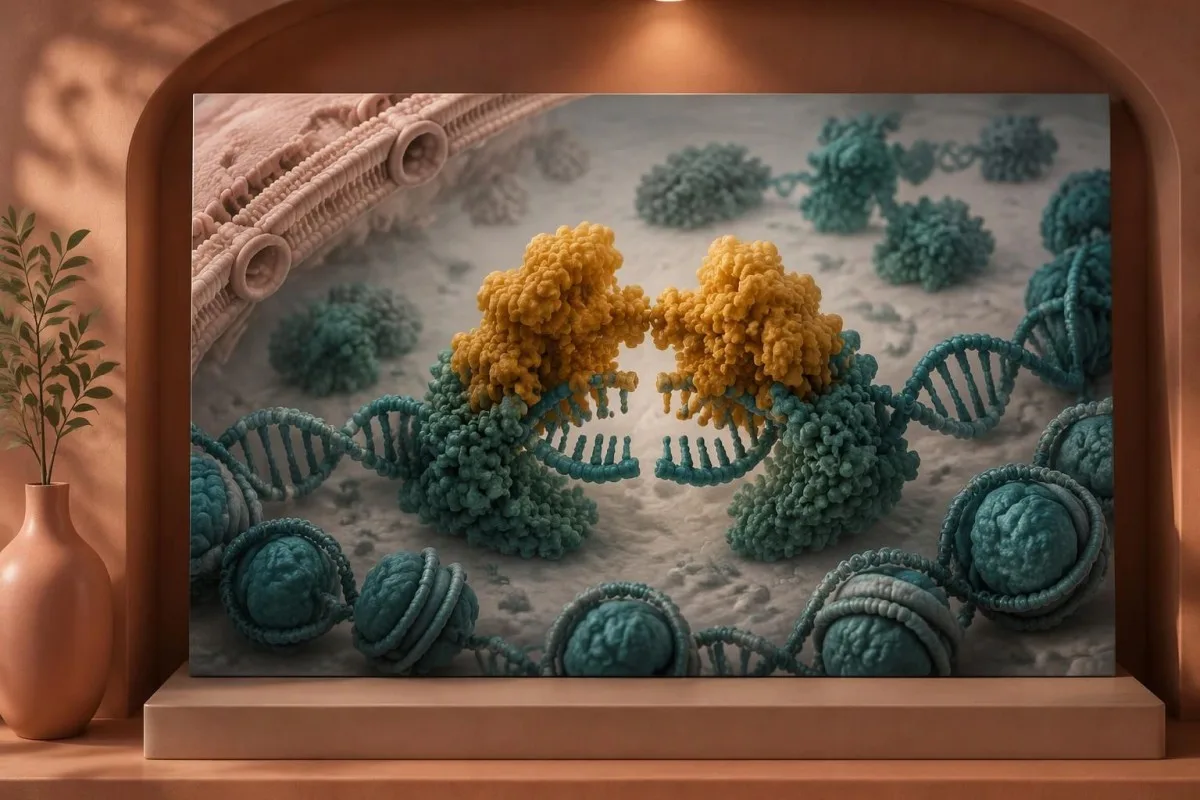
Kuchenbaecker et al. reported those age-80 estimates in JAMA, with 95% confidence intervals of 65–79% for breast cancer そして 36–53% for ovarian cancer (2017). The intervals describe uncertainty around population estimates; they do not mean an individual’s risk can be read directly from the laboratory report.
A hypothetical 30-year-old BRCA1 carrier should not interpret a 72% age-80 estimate as a 72% risk this year. Personal counseling separates near-term risk from longer-term risk and considers age, prior cancer, relatives’ diagnoses and any preventive procedures already completed.
BRCA1-associated breast cancers are more often triple-negative than breast cancers in the general population, but receptor status cannot be predicted from an inherited result alone. An existing cancer still requires its own pathological and receptor assessment; a genetic finding does not replace those separate tests.
One family can also have more than one inherited explanation for cancer, particularly when diagnoses cluster on both parental branches. For example, several colorectal and endometrial cancers may justify a separate assessment of Lynch syndrome results rather than assuming a BRCA1 finding explains every diagnosis.
BRCA2変異によるがんリスクはどのように異なりますか?
BRCA2 mutation cancer risk includes breast and ovarian cancer susceptibility, with particular relevance to male breast, prostate and pancreatic cancer assessment. In the same prospective JAMA study, women carrying pathogenic BRCA2 variants had estimated risks of 69% for breast cancer and 17% for ovarian cancer by age 80.
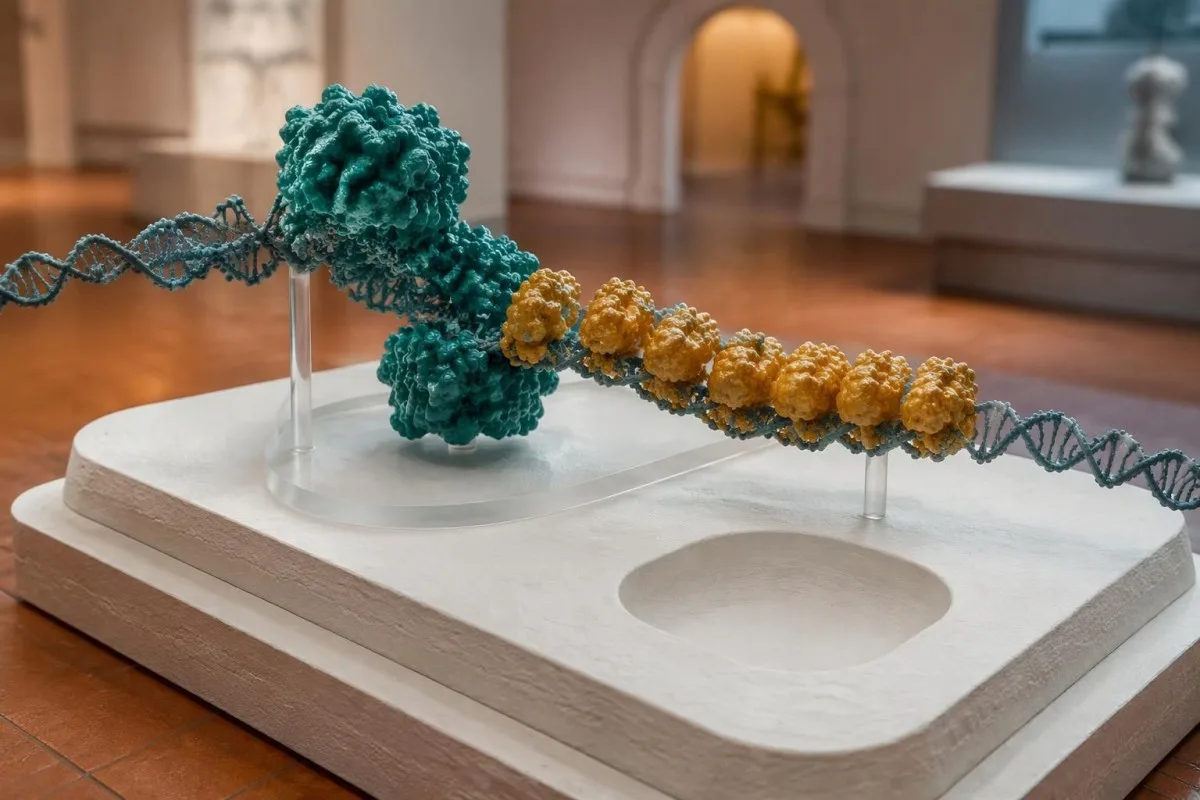
The BRCA2 estimates had 95% confidence intervals of 61–77% for breast cancer そして 11–25% for ovarian cancer (Kuchenbaecker et al., 2017). BRCA2’s lower average ovarian cancer risk compared with BRCA1 helps explain why preventive ovary-and-tube removal is commonly discussed later for BRCA2 carriers.
A previous breast cancer creates a different risk question: the chance of another cancer in the opposite breast. Kuchenbaecker et al. estimated 20-year contralateral breast cancer risks of 26% for BRCA2 and 40% for BRCA1; those figures are not the same as first-cancer risk and should not be substituted for it.
Prostate screening discussions may begin around age 40 in men with pathogenic BRCA2 variants, depending on the applicable clinical pathway. PSA is a screening measurement rather than a symptom generator; our explanation of what elevated PSA means separates the laboratory number from a diagnosis.
Pancreatic surveillance is another area where eligibility criteria differ, including the importance assigned to family history. A hypothetical 52-year-old BRCA2 carrier with an affected first-degree relative needs a specialist discussion about MRI-based imaging or endoscopic ultrasound—not routine CA 19-9 testing as a substitute.
BRCAの意義不明バリアントとは何を意味しますか?
A BRCA variant of uncertain significance, or VUS, means available evidence cannot establish whether a DNA change increases cancer risk. A VUS is not a positive result, and it should not independently determine preventive mastectomy or removal of the ovaries and fallopian tubes.

The ACMG/AMP standards state that a VUSを臨床上の意思決定に用いるべきではない (Richards et al., 2015). Among the 5 classification categories, uncertainty is an evidence status—not a diagnosis, not a halfway-positive result and not a 50% probability that the variant causes cancer.
For example, a hypothetical 42-year-old with a BRCA1 VUS and no significant family history should not be offered risk-reducing surgery because of that VUS alone. Another 42-year-old with the same VUS and a substantial family history may qualify for intensified surveillance because of the history, not because the uncertain variant became actionable.
Ancestry can affect how often laboratories encounter uncertainty because population databases do not represent every group equally. Two people with the same cancer history can therefore receive different levels of interpretive certainty; this reflects evidence gaps and does not establish a biological difference in the seriousness of their results.
At Kantesti, we separate finding a genetic change from proving that the change warrants action. The same distinction helps readers understand common MTHFR variant findings, although MTHFR results and BRCA-associated cancer susceptibility have very different clinical implications.
BRCAのVUSは後に分類が変わることがありますか?
A BRCA VUS can be reclassified when new evidence clarifies its clinical significance. Many reclassified VUS move toward benign categories, but neither the direction nor the timing can be promised for an individual finding; reinterpretation usually reviews existing DNA data rather than requiring another sample.

Useful new evidence can come from 3 broad sources: population frequency, carefully validated functional work and observations of the variant in families. A computer prediction alone is usually insufficient; expert curation weighs whether the evidence actually addresses the disease mechanism and meets classification standards.
Laboratories can disagree because their evidence differs or their interpretations were issued at different times. Record 2 separate dates when available—the original report date and the most recent classification date—and ask whether a specialist expert-panel assessment exists, rather than counting database entries as votes.
Routine testing of unaffected relatives for a VUS usually does not guide care, although a genetics team may arrange selected family studies to help classification. A hypothetical family with 3 affected relatives should not independently order VUS testing for everyone and interpret who carries it as proof of causation.
Ask which laboratory manages reinterpretation, how amended reports reach you and whether your contact details remain current; there is no universal recontact interval. Our discussion of inherited TTR variant interpretation illustrates the broader need to connect exact genetic findings with disease-specific evidence.
BRCA陰性結果が真の陰性となるのはどのような場合ですか?
A true negative BRCA result means testing did not find the specific pathogenic or likely pathogenic variant already identified in a biological relative. It removes the inherited risk attributable to that familial variant, but it does not eliminate ordinary cancer risk or unrelated risks from the other family branch.

Suppose a hypothetical mother has a confirmed pathogenic BRCA1 variant and her adult daughter’s targeted test excludes that exact variant. Before testing, the daughter generally had a 50%の遺伝確率; afterward, she is not considered a carrier of that maternal finding and cannot pass that uncarried variant to her children.
A negative result becomes less definitive if nobody knows the affected relative’s exact finding. Bring a copy of the original family report rather than a verbal account of “BRCA positive”; a gene name alone cannot distinguish a pathogenic variant from a VUS or identify which change the laboratory should test.
An independently concerning paternal history can remain relevant despite a maternal true negative. For example, 2 close paternal relatives with early breast cancer may warrant separate risk assessment, because excluding one maternal variant does not explain another branch of the pedigree.
The logic of matching a relative’s exact finding also appears in family-based Alport genetic testing, although the genes and inheritance patterns differ. Ask for a written statement identifying which familial variant was excluded and what remaining screening recommendation follows from your own history.
BRCA陰性結果が情報をもたらさないことがあるのはなぜですか?
アン 情報が得られない陰性 means no actionable BRCA finding was detected, but testing has not explained a suspicious personal or family cancer history. The result may reflect another gene, a technical limitation or a familial risk pattern that cannot currently be assigned to one detectable variant.

Testing an affected relative first usually provides more information than testing an unaffected relative. A hypothetical unaffected 35-year-old’s negative panel does not prove that her mother’s ovarian cancer lacked an inherited cause; testing the mother, when possible, can establish whether there is a familial finding to exclude.
A broader panel may consider genes such as PALB2, ATM, CHEK2, RAD51C, RAD51D and BRIP1, depending on the cancer pattern. These genes do not share identical cancer risks or prevention recommendations, so “panel positive” still requires gene-specific interpretation rather than applying the BRCA pathway to every result.
Older tests or limited consumer tests may assess only selected variants, whereas comprehensive clinical testing can include sequencing and deletion/duplication analysis. Our explanation of hidden carrier-screening limitations illustrates why a reassuring-looking result can still depend on methodology, although SMA uses a different genetic model.
Kantesti AI does not establish the completeness of a genetic assay or certify that a family’s inherited risk has been excluded. If a hypothetical family has 3 related cancers despite negative testing, clinical genetics can decide whether updated testing, another affected relative or a formal family-history risk model would answer the unresolved question.
腫瘍でBRCAの所見が見つかった場合、それは遺伝性を意味しますか?
A BRCA variant found in tumor tissue is not automatically inherited. Tumor testing can detect acquired changes confined to cancer cells; germline testing examines a suitable non-tumor specimen to determine whether the finding is constitutional and relevant to relatives.
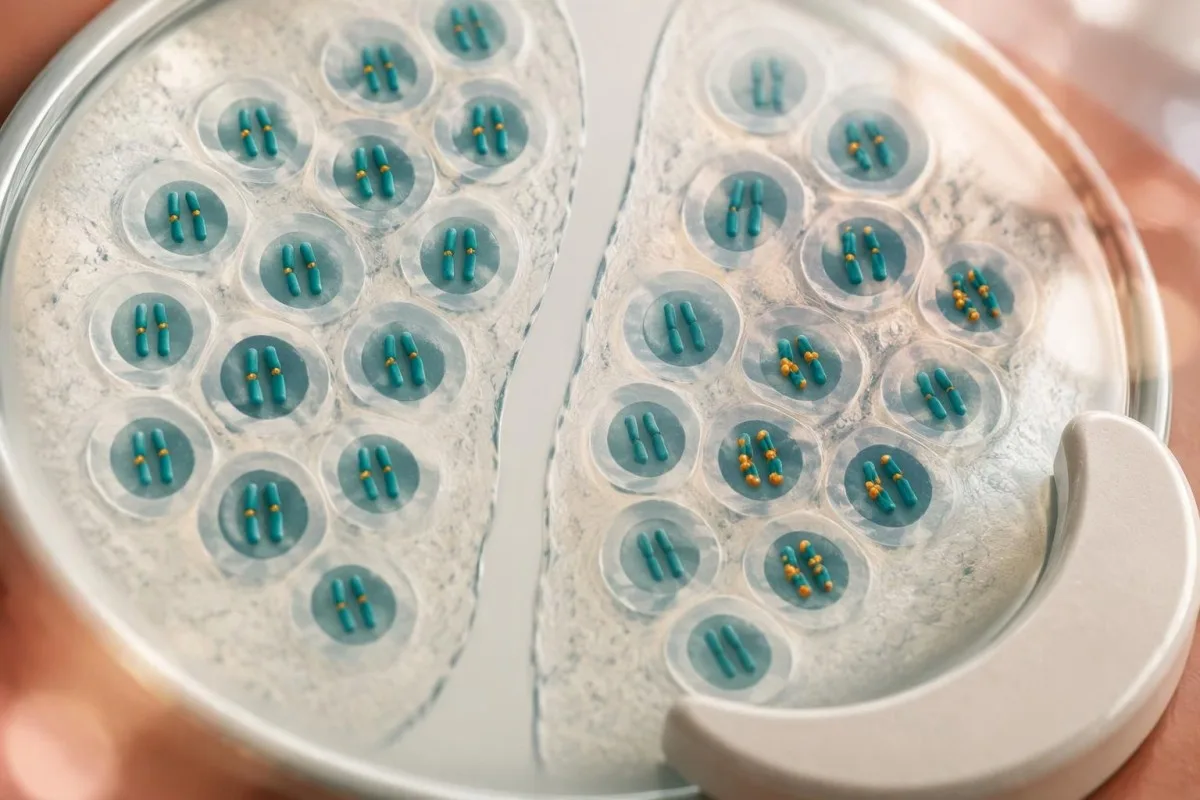
A tumor report may show a variant allele fraction near 50%, but that number does not prove germline origin. Tumor purity, copy-number changes and loss of the other gene copy can all shift the fraction; a percentage on a tumor report cannot replace a properly selected germline test.
Some oncology reports describe homologous recombination deficiency, or HRD, rather than a specific inherited variant. HRD can arise through more than one mechanism, and an HRD-positive result does not establish that a person or their children carry a pathogenic BRCA1 or BRCA2 variant.
After an allogeneic stem-cell transplant, a blood-derived DNA sample may reflect the donor, and saliva can also contain donor-derived cells. A hypothetical transplant recipient therefore needs the genetics laboratory to select an appropriate specimen—sometimes cultured skin fibroblasts—rather than assuming that 2 easily obtained samples answer the inheritance question.
The distinction between acquired and inherited DNA changes also matters in UBA1-related VEXAS testing, although VEXAS is a different condition. For a tumor BRCA finding, ask whether germline confirmation has been completed, is pending or was never requested.
遺伝カウンセリングが最も役立つのはどのような場合ですか?
Genetic counseling helps before testing and whenever a result could change screening, treatment or family testing. It is especially useful for pathogenic findings, unresolved VUS, limited negative tests and family patterns involving young diagnoses, ovarian cancer, male breast cancer or multiple related cancers.

A practical pedigree usually covers 3世代にわたる and records cancer type, age at diagnosis, biological relationships and both maternal and paternal branches. “Abdominal cancer” is less useful than a confirmed primary site; ovarian, pancreatic and metastatic cancers can otherwise be misremembered as the same diagnosis.
Small families, early deaths and few female relatives can hide hereditary breast-and-ovarian cancer patterns. A hypothetical father with 2 sons and no sisters can carry and transmit a BRCA variant even when the family has no obvious breast cancer cluster; paternal inheritance deserves the same attention as maternal inheritance.
カンテスティは AI血液検査の読み方プラットフォーム, not a genetic counseling service. Our guidance on age-appropriate family testing separates routine laboratory needs from predictive BRCA testing, which is generally deferred in children under 18 because management usually begins in adulthood.
Before an appointment, gather the actual family report, pathology details if available and your previous test methods. Use separate consent for each relative’s records; our discussion of family health consent explains why a shared family history does not give one person automatic permission to access everyone’s medical information.
病的BRCAバリアントの結果が出た後、どのようなフォローアップが行われますか?
A germline pathogenic BRCA result warrants a personalized prevention plan, not automatic surgery. Options include enhanced breast screening, discussion of risk-reducing procedures and assessment of other gene-associated cancers; age, reproductive plans, previous cancer and local guidance determine the timing.

Many high-risk pathways use annual breast MRI beginning around ages 25–30, with mammography commonly added around age 30, but national recommendations differ. The reason for combining methods is that each detects some findings the other can miss; more imaging is not simply a substitute for understanding age-specific benefit and false-positive risk.
NICE guideline NG241 lists risk-reducing removal of ovaries and fallopian tubes no earlier than age 35 for BRCA1 and 40 for BRCA2, with individualized assessment (NICE, 2024). Common clinical discussions use windows of approximately 35–40 and 40–45 years, respectively, after childbearing; these are planning ranges, not instructions for every carrier.
Removing only the fallopian tubes while delaying ovary removal has not been established as equivalent protection and remains a trial-based strategy in NICE guidance. Surgical menopause can affect symptoms, cardiovascular health and bones; our 女性のホルモン健康ガイド explains why prevention planning includes consequences beyond cancer risk.
Hormone treatment after premenopausal risk-reducing surgery may be considered until the usual menopause age, approximately 51, but previous breast cancer and other contraindications change that discussion. Bone-density assessment and evaluation of secondary bone-loss causes are distinct tasks; our guide to bone health laboratory assessment explains what routine tests can and cannot answer.
BRCAの結果は親族や子どもにとって何を意味しますか?
Each child of a germline BRCA pathogenic-variant carrier usually has a 50% chance of inheriting the variant, regardless of sex. Adult relatives can consider targeted testing for the established family finding; inheriting susceptibility does not mean inheriting an existing cancer.
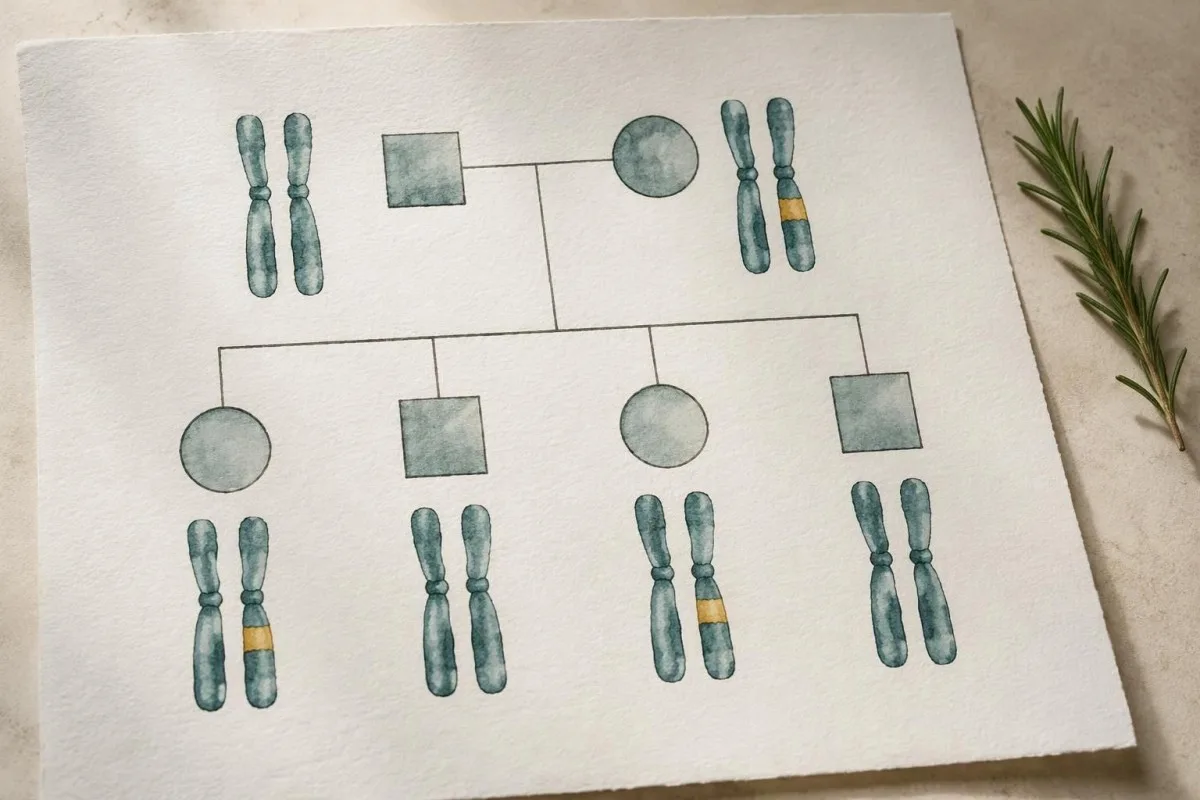
Four children do not imply that exactly 2 will inherit a parent’s BRCA variant. Each pregnancy is an independent event, so all, none or any number in between can inherit it; the 50% figure describes probability rather than a guaranteed family distribution.
A carrier’s siblings often have a 50% の確率 of sharing the variant when a parent carries it, but that estimate should not be applied without checking the pedigree. Identifying which parent carries the finding helps determine which cousins, aunts and uncles should receive an invitation to discuss testing.
Reproductive options can include natural conception, prenatal diagnosis or IVF with preimplantation genetic testing for a known familial variant. These are preference-sensitive choices, not obligations; our explanation of reproductive genetic result counseling shows why gene-specific inheritance matters, although FMR1 repeat expansion behaves differently from BRCA inheritance.
A rare additional question arises when both partners carry pathogenic variants in BRCA2: each pregnancy has a 25% chance of inheriting pathogenic variants in both copies, which can cause a Fanconi anemia phenotype. Partner testing is not automatically required for every BRCA carrier, but ancestry, relatedness and reproductive planning can justify specialist assessment.
症状や腫瘍マーカーでBRCA関連がんを確認できますか?
Neither a BRCA result nor a tumor-marker concentration confirms that cancer is present. New symptoms need their own assessment, and a negative genetic result does not make them harmless; examination, imaging and sometimes tissue assessment answer a different question from inherited susceptibility testing.

CA-125 can rise in benign conditions and can remain normal in ovarian cancer, particularly earlier disease. Routine CA-125 and ultrasound screening have not demonstrated a mortality benefit sufficient to replace established risk-reduction discussions; our guide to CA-125 limits and symptoms explains why the usual 35 U/mL cutoff is not a cancer yes-or-no boundary.
CA 15-3 and CA 27-29 are not appropriate tests for deciding whether an unaffected BRCA carrier has developed breast cancer. A hypothetical carrier with a normal marker still needs assessment of a new breast lump; our explanation of CA 15-3 interpretation separates selected monitoring uses from screening.
Kantesti does not infer BRCA carrier status from routine laboratory markers. For example, a CA 19-9 result of 80 U/mL can have non-cancer explanations and cannot establish pancreatic cancer or inherited BRCA2 risk; our guide to CA 19-9 limitations explains the need for clinical and imaging context.
Persistent bloating, early satiety, unexplained weight loss, a new breast change or unexplained jaundice deserve timely medical review regardless of genetic classification. A hypothetical person with 3 weeks of new persistent symptoms should not wait for VUS reclassification or a routine genetics appointment before seeking a separate assessment.
遺伝カウンセリングに代わるものとしてではなく、説明の補助としてAIを活用する
AI explanations can support understanding, but they cannot independently classify a BRCA variant or authorize preventive surgery. A safe workflow preserves 3 essentials: the original laboratory report, specialist interpretation and a written follow-up plan that distinguishes inherited risk from evaluation of any current symptoms.

カンテスティは AIバイオマーカー解釈プラットフォーム that explains routine laboratory findings, with interpretation generally available in about 60 seconds. That turnaround is not a timetable for genetic counseling, and our 臨床検査法に関する情報 should not be read as validation of independent BRCA classification or hereditary cancer risk calculation.
Genetic reports can reveal information relevant to more than 1人, including biological relatives who have not chosen testing. Read our プライバシーとデータの取り扱い before sharing sensitive documents, and avoid uploading another relative’s identifiable report without their permission.
The 2 research publications listed below concern our global routine-test report and RDW educational material; they are not BRCA cancer-risk studies, clinical prevention guidelines or evidence supporting surgery. The medical recommendations in this article instead draw on the ACMG/AMP classification standards, the prospective JAMA risk study and NICE familial ovarian cancer guidance.
Before acting, ask your genetics team to document whether the result is germline, which exact variant is actionable and whether a negative is true or uninformative. Our 責任あるAIの原則 support keeping those clinical decisions with qualified professionals rather than treating an automated explanation as another laboratory classification.
よくある質問
BRCA1またはBRCA2の検査結果が陽性の場合、がんがあるということですか?
生殖細胞系列のBRCA1またはBRCA2検査が陽性であることは、病的または病的の可能性が高い遺伝性バリアントを特定するものであり、がんの診断を意味するものではありません。KuchenbaeckerらがJAMAで発表した前向き研究では、病的バリアントを有する女性の80歳までの乳がんリスクは、BRCA1で72%、BRCA2で69%と推定されました。これらは集団レベルの推定値であり、今日がんが存在する確率を示すものではありません。現在のがんの診断には、別途、臨床的な評価が必要です。
意義不明のBRCAバリアントがある場合、予防手術を受けるべきでしょうか?
BRCAの意義不明のバリアントのみを根拠に、予防手術の実施を決定すべきではありません。ACMG/AMPの枠組みでは、VUSはエビデンスに基づく5つの分類の1つに位置づけられており、意義不明のバリアントを臨床上の意思決定に用いるべきではないとされています。本人または家族の病歴から、別途、リスクの高い人向けの医療が正当化される場合はありますが、その判断ではVUSが病的であると仮定してはなりません。遺伝医療の専門家に相談すれば、提案されている処置を実際に裏づけるエビデンスについて説明を受けられます。
真の陰性と、情報価値のない陰性のBRCA検査結果の違いは何ですか?
真の陰性とは、生物学的血縁者で既に特定されている病的または病的である可能性が高いBRCAバリアントを保有していないことを確認するものです。保因者の子どもの場合、これにより、その家系内で特定された所見について当初50%だった遺伝確率を解決できます。情報が得られない陰性とは、家族内でがんが発生した理由が明らかにならないまま、対応可能なバリアントが見つからないことを意味します。どちらの結果でも、家系の別の系統、他の遺伝子、検査の限界が引き続き重要となる場合があります。
BRCAのVUSが後に陽性と判定されることはありますか?
BRCAのVUSは、後に病原性または病原性の可能性が高いと再分類されることもあれば、良性の可能性が高い、または良性と判定されることもあります。再分類では、同じ5分類の枠組みの中でエビデンスを見直します。本人のDNAが変化したという意味ではありません。個々のバリアントについて、共通の期限や再分類の方向が保証されているわけではありません。修正報告書や再連絡への対応について、検査を実施した検査機関または遺伝医療サービスに確認してください。
父親からBRCA変異を受け継ぐことはありますか?
病的なBRCA1またはBRCA2バリアントは、実の親のどちらからも遺伝する可能性があります。生殖細胞系列バリアントの保有者の子どもは通常、保有者が母親か父親かにかかわらず、そのバリアントを受け継ぐ確率が50%です。女性親族が少ない父方の家系では、バリアントを保有していても、乳がんや卵巣がんの家族歴がほとんど表面化しないことがあります。そのため、遺伝カウンセリングでは両方の家系を考慮する必要があります。
腫瘍でBRCA変異が見つかった場合、子どもにもリスクがありますか?
腫瘍組織でBRCA変異が見つかっても、それが遺伝性であるとは断定できません。腫瘍の変異アレル頻度が約50%であっても、腫瘍純度やコピー数変化がその割合に影響するため、生殖細胞系列由来であることを確実に証明することはできません。遺伝性であることを確認するには、適切な検体を用いた生殖細胞系列検査が必要です。通常の50%の伝達確率が当てはまるのは、親が生殖細胞系列変異を持っている場合に限られます。
陰性のBRCA検査は毎年受け直す必要がありますか?
遺伝性バリアントは加齢によって新たに出現するものではないため、BRCAの検査を毎年繰り返す必要は一般にありません。初回の検査法に限界があった場合、新たな家族内バリアントが特定された場合、または他の親族が関連するがんを発症した場合には、陰性結果の見直しが妥当なことがあります。たとえば、選択された3つのバリアントのみを検査することは、BRCA1/BRCA2の包括的なシーケンシングに加えて欠失・重複解析を行うことと同等ではありません。再解釈、家族を対象とした標的検査、または別のパネルによって新たな情報が得られるか、遺伝診療部門に相談してください。
血液検査結果の見方を確認しましょう
検査報告書をアップロードすると、KantestiのAIが数秒で各バイオマーカーを平易な言葉で説明します。世界中で200万人以上が利用しています。.
参考文献
- Klein, T., Mitchell, S., & Weber, H. (2026). AI血液検査アナライザー:2.5M件の検査を分析 | グローバルヘルスレポート 2026。. Kantesti AI医学研究。. 掲載日
- Klein, T., Mitchell, S., & Weber, H. (2026). RDW血液検査:RDW-CV、MCV、MCHCの完全ガイド。. Kantesti AI医学研究。. 掲載日
- Richards Sら(2015年)。. 配列バリアントの解釈に関する基準およびガイドライン:米国臨床遺伝・ゲノム学会と分子病理学会による共同コンセンサス推奨。. Genetics in Medicine。. 掲載日 パブメッド
- Kuchenbaecker KB et al. (2017). Risks of Breast, Ovarian, and Contralateral Breast Cancer for BRCA1 and BRCA2 Mutation Carriers. JAMA. 掲載日 パブメッド
- National Institute for Health and Care Excellence (2024). Ovarian cancer: identifying and managing familial and genetic risk. NICE guideline NG241.
- 200万以上分析対象の検査
- 127+国
- 100+言語
医療チームについて


E-E-A-T 信頼性シグナル
経験
医師主導による、検査結果解釈ワークフローの臨床レビュー。.
専門知識
臨床的な文脈においてバイオマーカーがどのように振る舞うかに焦点を当てた検査医学。.
権威
Thomas Klein医師による医学的レビュー。Sarah Mitchell医師およびHans Weber教授の協力。.
信頼性
アラームを減らすための明確なフォローアップ経路を備えた、エビデンスに基づく解釈。.






医療免責事項
この記事は教育目的のみを対象としており、医療助言を構成するものではありません。診断や治療の判断を行う際は、必ず有資格の医療提供者にご相談ください。.
公開 · 編集チームにお問い合わせください
Kantesti Ltdが発行。イングランドおよびウェールズで登録、会社番号. 17090423, 、英国ロンドン。.
