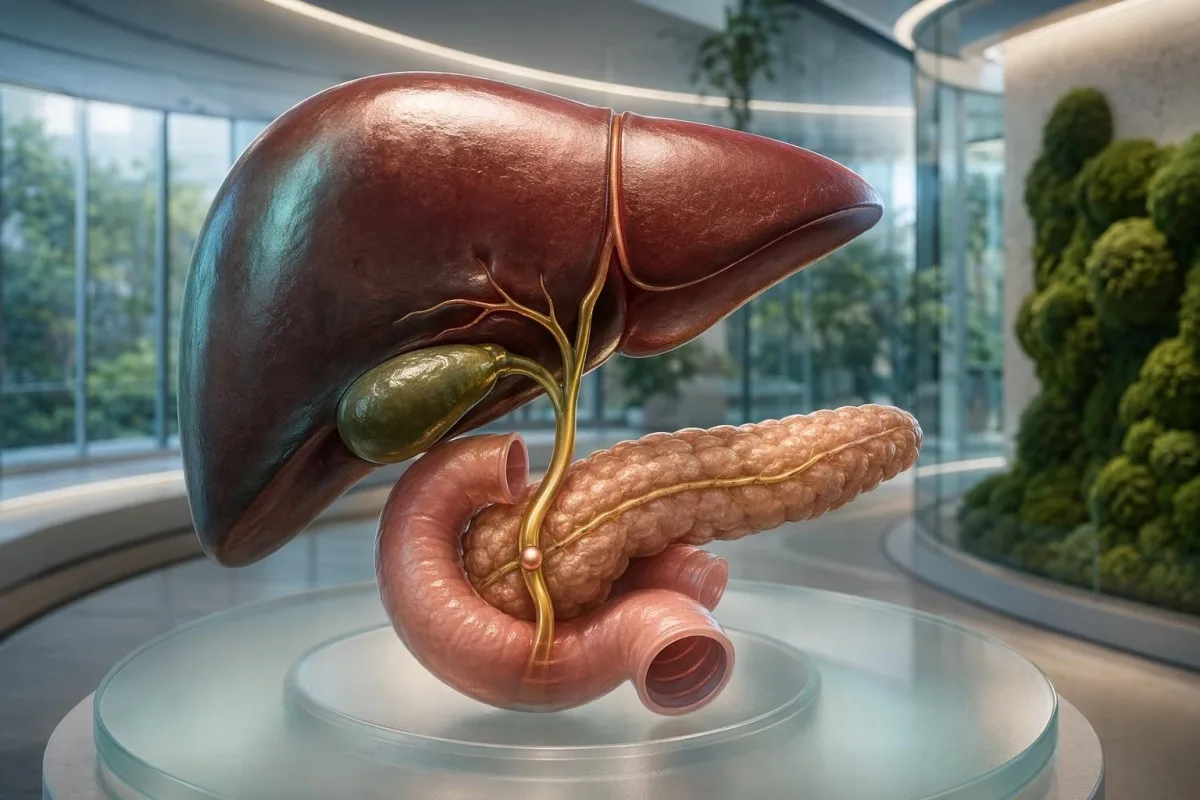
Light stool after one unusual meal is usually not the same problem as clay-colored stool with dark urine. The clinical clue is whether bile pigment is reaching the bowel.


- Pale stool causes are often harmless after a very low-fat diet, barium imaging drink, or short-term antacid use, but persistent clay color can mean bile is not reaching the bowel.
- Dark urine pale stool is a warning pattern because water-soluble conjugated bilirubin may be spilling into urine while too little pigment reaches stool.
- Total bilirubin is usually about 0.2-1.2 mg/dL in adults; direct bilirubin above 0.3 mg/dL often shifts attention toward bile flow or liver processing.
- ALP and GGT rising together suggests a hepatobiliary source; ALP around 44-147 IU/L and GGT around 9-48 IU/L are common adult reference ranges, but labs vary.
- Lipase more than 3 times the upper limit of normal, often above 180 IU/L if the lab cutoff is 60 IU/L, supports acute pancreatitis when symptoms fit.
- Stool elastase below 200 µg/g suggests pancreatic exocrine insufficiency; below 100 µg/g is usually more convincing, especially with greasy floating stool.
- Emergency symptoms include fever, severe right-upper abdominal pain, yellow eyes, confusion, fainting, black stool, or pale stool lasting more than 24-48 hours with dark urine.
- Next tests often include total and direct bilirubin, ALT, AST, ALP, GGT, albumin, PT/INR, CBC, urine bilirubin, ultrasound, and sometimes MRCP, CT, EUS, or ERCP.
What pale stool usually means about bile flow
Pale stool causes range from a one-off diet change to a blocked bile duct, liver inflammation, gallstone, or pancreatic problem. A single light colored stool after a low-fat meal is usually watched, but clay colored stool that persists for 24-48 hours, especially with dark urine, yellow eyes, itching, fever, or abdominal pain, needs same-day medical advice.
Brown stool gets much of its color from stercobilin, a breakdown product of bilirubin that reaches the intestine through bile. When bile pigment cannot enter the bowel, stool may look beige, gray, putty-like, or white rather than simply lighter brown; that distinction is clinically useful.
I’m Thomas Klein, MD, and in practice I ask patients to compare the stool to cardboard, clay, or chalk rather than to a color chart. That sounds low-tech, but it helps: tan stool after rice and chicken is different from stool that looks like modeling clay and appears three times in a row.
Kantesti is an AI blood test analyzer that reads bilirubin, liver enzymes, pancreatic enzymes, and urine markers together rather than treating one flagged value as the whole story. For deeper bilirubin pattern reading, our guide to direct and indirect bilirubin explains why the direct fraction matters when stool turns pale.
As of June 15, 2026, my practical rule is simple: one pale stool without symptoms can be observed, but repeated pale stools plus dark urine should be treated as a bile-flow warning until blood and urine tests prove otherwise.
When light colored stool is diet or medicine related
Light colored stool is often diet-related when it appears once or twice and the person feels well. Very low-fat eating, large dairy intake, barium contrast, kaolin-containing products, and some antacids can make stool look pale without a liver or pancreas problem.
The timing matters more than the exact shade. If a patient had a barium swallow or CT contrast drink, stool can look white or chalky for 1-3 days because the material itself passes through the bowel.
A very low-fat week can also make stool paler because less bile is released with meals. Bile release is meal-responsive; a 10 g fat day stimulates the gallbladder differently from a 70 g fat day, which is why pale stool during aggressive dieting is sometimes functional rather than obstructive.
Medication history should include antacids, anti-diarrheal powders, antibiotics, GLP-1 medicines, high-dose calcium carbonate, and fat-blocking weight-loss drugs. If stool is pale and oily after fat-blocking therapy, the clue may be fat malabsorption, not loss of bile pigment; our article on fat soluble vitamins explains why vitamins A, D, E, and K can drift when fat absorption is poor.
Here is a useful home observation I give patients: if color normalizes after 2-3 ordinary meals and urine stays pale yellow, diet is more likely. If stool stays gray while urine becomes tea-colored, stop assuming it is food.
Why dark urine plus pale stool raises concern
Dark urine pale stool suggests conjugated bilirubin may be leaving through urine while too little bile pigment reaches the intestine. This pattern is more concerning than pale stool alone because it points toward cholestasis, bile duct blockage, or liver cell injury affecting bile export.
Conjugated bilirubin is water-soluble, so it can pass into urine when blood levels rise. Unconjugated bilirubin is not water-soluble and usually does not make urine dark; this is why the urine clue changes the diagnostic pathway.
Normal urine has little or no bilirubin on dipstick. A positive urine bilirubin result in an adult with clay colored stool is abnormal and should prompt blood tests for total bilirubin, direct bilirubin, ALT, AST, ALP, and GGT.
In our analysis of patient-uploaded lab reports, the missed clue is often not the stool description; it is the combination of pale stool, dark urine, and a rising direct bilirubin from 0.4 to 1.8 mg/dL over a few days. Our research-style urobilinogen guide goes into the urine chemistry behind that pattern.
Dehydration can darken urine too, but it does not usually make stool chalk-white. If drinking fluids lightens urine within 6-8 hours but stool remains gray, I still want liver and bile markers checked.
Which liver blood test pattern fits pale stool
The blood test pattern most associated with pale stool is cholestatic: raised direct bilirubin with ALP and GGT higher than expected. ALT and AST may rise too, but the key question is whether bile formation or bile drainage is impaired.
Typical adult reference ranges are total bilirubin 0.2-1.2 mg/dL, direct bilirubin 0.0-0.3 mg/dL, ALT 7-56 IU/L, AST 10-40 IU/L, ALP 44-147 IU/L, and GGT 9-48 IU/L. Some European labs use narrower GGT ranges, so the trend and local reference interval both matter.
The American College of Gastroenterology guideline on abnormal liver chemistries recommends confirming abnormal results and classifying the injury pattern as hepatocellular, cholestatic, or mixed (Kwo et al., 2017). That sounds academic, but it changes what happens next: ultrasound is more urgent when ALP, GGT, and direct bilirubin rise together.
When I review a panel showing ALT 410 IU/L, AST 320 IU/L, ALP 150 IU/L, and bilirubin 1.1 mg/dL, I think more about hepatitis or medication injury than a blocked duct. When ALP is 520 IU/L, GGT 690 IU/L, direct bilirubin 4.2 mg/dL, and stool is clay colored, my thinking shifts sharply toward bile obstruction.
Kantesti AI interprets bilirubin and liver enzyme results by comparing the size of each rise, the direct-to-total bilirubin relationship, and whether bone-source ALP is plausible. Readers who want the enzyme basics can start with our ALT blood test explanation and then compare with ALP isoenzymes.
Gallbladder and bile duct clues patients can recognize
Gallstones and bile duct narrowing can cause clay colored stool when bile cannot drain normally into the intestine. The classic pattern is right-upper abdominal pain, nausea after fatty meals, dark urine, itching, jaundice, and a cholestatic blood test pattern.
Pain from a gallstone often peaks within 30-90 minutes after a fatty meal and may travel to the right shoulder blade. A common bile duct stone can be tiny, sometimes under 5 mm, yet still raise bilirubin and change stool color.
The European Association for the Study of the Liver cholestatic disease guideline describes ALP and GGT as central markers when bile flow is impaired (EASL, 2009). In plain clinic terms, ALP plus GGT is more persuasive for bile tract involvement than ALP alone, because ALP can also come from bone.
A fever above 38°C with right-upper abdominal pain and jaundice raises concern for ascending cholangitis, which is not a wait-and-see problem. Charcot’s triad is old terminology, but the bedside message remains useful: pain, fever, and jaundice together need urgent care.
Borderline results can still matter when symptoms fit. A patient with ALP 160 IU/L may look only mildly abnormal on paper, but if their usual ALP is 70 IU/L and stool has turned gray, I take the change seriously; our borderline ALP guide covers that exact grey zone.
How pancreas problems can make stool pale or greasy
Pancreas problems can cause pale stool in two different ways: blockage near the pancreatic head can obstruct bile flow, and pancreatic enzyme shortage can cause greasy, floating, pale stool from fat malabsorption. The first is a bile drainage problem; the second is a digestion problem.
Acute pancreatitis is usually diagnosed when at least 2 of 3 criteria are present: typical upper abdominal pain, lipase or amylase at least 3 times the upper limit of normal, or imaging findings. The revised Atlanta classification by Banks et al. (2013) is still the framework many clinicians use.
Lipase is commonly reported with an adult reference range around 13-60 IU/L, so a value above 180 IU/L can be meaningful when pain fits. A lipase of 82 IU/L after vomiting may be nonspecific; a lipase of 1,200 IU/L with severe upper abdominal pain is a different conversation.
Pancreatic exocrine insufficiency is quieter. Stool may float, smell unusually strong, leave an oily film, and be difficult to flush; fecal elastase below 200 µg/g supports the diagnosis, while values below 100 µg/g usually point to more severe enzyme deficiency.
For enzyme interpretation, readers can compare our pancreatic blood test guide with the emergency-focused discussion of high lipase risk. The practical tip: pale plus greasy is not the same as pale plus dark urine.
Liver inflammation, hepatitis and medication injury
Hepatitis and medication-related liver injury can cause pale stool when swollen or injured liver cells cannot process or export bile normally. This may happen with viral hepatitis, alcohol-related hepatitis, autoimmune liver disease, supplement reactions, or drug-induced liver injury.
A hepatocellular pattern usually means ALT and AST rise more than ALP. ALT above 500 IU/L is not automatically viral hepatitis, but it is too high to dismiss as a diet blip, especially if bilirubin is also rising.
Viral hepatitis testing is more specific than many patients expect. A hepatitis B surface antigen suggests current infection, while a hepatitis B surface antibody often reflects immunity; our hepatitis blood test guide explains why antibody names can confuse even smart people.
Medication injury is one of the trickier pale stool causes because the exposure may be normal-dose paracetamol, antibiotics, anti-seizure medicine, bodybuilding supplements, green tea extract, or a new herbal blend. In my experience, the supplement list is where the answer hides surprisingly often.
If liver function worsens, the concern is not just enzyme height but synthetic function: INR, albumin, glucose, and mental status. Confusion with liver disease can reflect toxin handling problems, and our piece on high ammonia explains why brain symptoms change urgency.
Children, pregnancy and post-surgery exceptions
Pale stool in babies, pregnancy, or after gallbladder or bowel surgery deserves a lower threshold for medical review. In these groups, a color change can signal biliary atresia, intrahepatic cholestasis of pregnancy, retained stones, bile duct injury, or nutrition-related malabsorption.
In infants, truly pale or white stool is never just a quirky nappy finding. Conjugated bilirubin above 1.0 mg/dL when total bilirubin is under 5 mg/dL, or above 20% of total when total bilirubin is higher, is commonly used to flag neonatal cholestasis.
Biliary atresia outcomes are time-sensitive because early surgery generally works better than late surgery. If a baby has pale stools, dark urine, poor feeding, or prolonged jaundice beyond 2 weeks, parents should contact a clinician promptly rather than waiting for the next routine visit.
Pregnancy adds another layer because itching, raised bile acids, and abnormal liver tests can point toward intrahepatic cholestasis of pregnancy. Many clinicians become especially concerned when bile acids exceed 40 µmol/L, and values above 100 µmol/L carry higher fetal risk in several obstetric protocols.
After gallbladder removal, pale stool can still happen if a common duct stone was retained or a bile duct has narrowed. For pregnancy-specific same-day warning patterns, our pregnancy lab red flags article is a sensible companion read.
Stool texture clues: clay, floating, greasy or mucus
The texture of pale stool helps separate low bile pigment from fat malabsorption or intestinal inflammation. Clay-like, putty stool points more toward absent bile pigment, while floating oily stool points more toward undigested fat.
Steatorrhea means excess fat in stool. A classic 72-hour fecal fat test is abnormal when fat excretion is above 7 g/day on a controlled fat intake, though many clinics now start with fecal elastase because it is easier for patients.
Mucus changes the differential. Pale stool with visible mucus, cramps, and urgency can reflect intestinal inflammation or infection rather than a bile duct problem; that is why stool tests sometimes include culture, ova and parasites, fecal calprotectin, or FIT depending on age and symptoms.
I once reviewed a runner’s labs after they described pale stool for weeks, but the stool was actually bulky, floating, and oily after a high-fat ketogenic phase. Their bilirubin was 0.7 mg/dL, ALP 82 IU/L, GGT 18 IU/L, and the next useful test was pancreatic elastase, not an emergency bile duct scan.
When bowel symptoms dominate, it is worth reading what blood tests can and cannot show in gut health testing. Blood markers can support the picture, but stool behavior still matters.
Urine bilirubin and urobilinogen: small clues, big value
Urine bilirubin and urobilinogen help distinguish bile obstruction from other jaundice patterns. Positive urine bilirubin supports conjugated hyperbilirubinemia, while low or absent urobilinogen can occur when bile pigment does not reach the intestine.
In a complete obstruction, less bilirubin reaches gut bacteria, so less urobilinogen is made. That can produce the triad patients notice: pale stool, dark urine, and sometimes yellowing of the eyes.
Urine dipsticks are helpful but imperfect. Vitamin C, old strips, very concentrated urine, and lighting can all distort interpretation, so a positive or suspicious result should be paired with serum bilirubin fractions rather than treated as the final answer.
Specific gravity adds context. A urine specific gravity above 1.030 often means concentrated urine, while 1.005-1.030 is a common reference interval; our urine specific gravity guide explains how dehydration can mimic dark urine without explaining clay stool.
A practical workflow is to check urine bilirubin, total bilirubin, direct bilirubin, ALP, GGT, ALT, and AST on the same day if symptoms are active. Splitting tests across a week can blur a short-lived obstructing stone that passes.
Next-step tests patients may hear about
The usual next tests for persistent pale stool are blood liver chemistries, bilirubin fractions, urine bilirubin, and abdominal ultrasound. If those suggest obstruction or pancreas involvement, clinicians may add MRCP, CT, endoscopic ultrasound, ERCP, hepatitis serology, autoimmune markers, or stool elastase.
Ultrasound is often first because it can show gallstones, bile duct dilation, gallbladder inflammation, and some liver texture changes without radiation. A common bile duct diameter above about 6 mm can be suspicious in younger adults, though it may be larger after gallbladder removal or with age.
MRCP is a noninvasive MRI-based map of the bile and pancreatic ducts. ERCP is different: it can treat stones or strictures, but because it can trigger pancreatitis in roughly 3-10% of cases depending on risk factors, it is usually used when therapy may be needed.
Kantesti is an AI lab test interpretation service that helps patients organize these results in context before a clinician visit, including units, reference ranges, and abnormal clusters. Our biomarkers guide lists many of the liver, bile, pancreas, urine, and nutrition markers that may appear on reports.
A typical initial panel includes a comprehensive metabolic panel, direct bilirubin, GGT, CBC, PT/INR, albumin, lipase, and urinalysis. If you want the wider chemistry context, our blood chemistry panel guide explains which results are commonly bundled and which are often separate add-ons.
When pale stool needs urgent care
Pale stool needs urgent care when it is persistent and paired with dark urine, jaundice, fever, severe abdominal pain, confusion, fainting, pregnancy, infancy, or abnormal bleeding. Those combinations can signal bile duct infection, acute hepatitis, pancreatitis, or liver synthetic dysfunction.
Same-day assessment is reasonable if stool has been clay colored for more than 24-48 hours and urine is cola-colored. If there is fever above 38°C, shaking chills, or worsening right-upper abdominal pain, I would not wait for a routine appointment.
Emergency clinicians often check bilirubin, ALT, AST, ALP, GGT, lipase, CBC, electrolytes, creatinine, glucose, lactate if infection is suspected, and PT/INR if liver function looks impaired. An INR above 1.5 in acute liver injury changes risk because it means clotting protein production is being affected.
People sometimes ask whether kidney dehydration can explain everything. It can explain dark urine and raised BUN-to-creatinine ratio, but it does not explain absent stool pigment; our BUN creatinine ratio research guide is useful when dehydration is part of the picture.
If your report contains a critical bilirubin or INR flag, treat the lab’s alert seriously. Our article on critical lab values explains why some abnormal results are not designed for slow follow-up.
How AI can help organize bile and liver results
AI can help by grouping bilirubin, liver enzymes, pancreatic enzymes, urine markers, and symptom timing into a readable pattern. It should not replace urgent care, but it can reduce confusion when a report contains 20 values, 6 flags, and 3 different unit systems.
Kantesti is an AI biomarker interpretation platform used by people in 127+ countries, so our system regularly sees liver panels reported in IU/L, U/L, µkat/L, mg/dL, and µmol/L. Unit conversion matters: bilirubin 2.0 mg/dL is about 34 µmol/L, which can look less alarming if the unit change is missed.
Our neural network is designed to flag combinations, not just isolated highs. For example, ALP 210 IU/L with normal GGT may point away from bile ducts, while ALP 210 IU/L with GGT 400 IU/L, direct bilirubin 2.5 mg/dL, and pale stool is a much stronger hepatobiliary signal.
Patients can upload blood test PDFs or photos for structured interpretation in about 60 seconds through our free test upload, then bring the output to a licensed clinician. The technical design is described in our AI technology guide, including how context windows handle multi-marker patterns.
We also publish methodology and oversight material because medical AI needs scrutiny. The clinical validation page explains how we separate educational interpretation from diagnosis, which is especially relevant for symptoms like pale stool that can be harmless or urgent.
What to bring to your appointment
Bring a symptom timeline, medication and supplement list, stool and urine color notes, recent travel or infection history, and any prior liver or pancreatic test results. A clear timeline often saves more time than a long symptom essay.
Write down the first day stool looked pale, whether it happened every bowel movement, and whether urine changed before or after stool color. Add meal changes, alcohol intake, new medicines, antibiotics, supplements, fever, itching, weight loss, and pain location.
Bring old results if you have them. A bilirubin of 1.3 mg/dL may be ordinary for one person with Gilbert syndrome, but a rise from 0.4 to 1.3 mg/dL plus direct bilirubin 0.8 mg/dL and clay colored stool is a different clinical pattern.
Dr. Thomas Klein’s usual appointment advice is blunt: do not arrive with only a screenshot of one flagged value if the symptom is pale stool. Bring the whole panel, because albumin 3.0 g/dL, INR 1.6, platelets 95 × 10⁹/L, and bilirubin 3.4 mg/dL tell a far more serious story together.
If the first explanation does not fit the symptoms, a second review is reasonable rather than confrontational. Our blood test second opinion article explains when another look is useful, and our doctors are listed through the Medical Advisory Board.
Research notes and clinical uncertainty
The evidence is strongest for lab pattern recognition, ultrasound-first evaluation of suspected obstruction, and lipase-based diagnosis when pancreatitis symptoms fit. The uncertainty lies in borderline cases: mild ALP rises, intermittent pale stool, normal ultrasound, and symptoms that improve before testing.
A normal ultrasound does not always end the story. Small common duct stones, early strictures, and pancreatic head abnormalities can be missed, which is why persistent dark urine pale stool may lead to MRCP or endoscopic ultrasound even after an initial scan looks reassuring.
At Kantesti, our editorial standard is to tell patients where the line is clear and where medicine still has grey zones. A single light stool after barium is not the same as persistent clay stool with direct bilirubin 4.0 mg/dL; the first is usually observation, the second is an urgent bile-flow problem until proven otherwise.
The Kantesti medical team reviews liver, kidney, urine, and pancreatic content against current guideline logic rather than one-size-fits-all reference ranges. Patients and clinicians who want the broader editorial trail can start from our main medical blog and the linked research notes below.
Bottom line: persistent pale stool is not a diagnosis, it is a sign. The safest next step is to match the stool change with urine color, symptoms, bilirubin fractions, ALP, GGT, ALT, AST, lipase, INR, and imaging when indicated.
Frequently Asked Questions
What are the most common pale stool causes?
The most common pale stool causes are diet changes, barium contrast, antacids, low-fat eating, reduced bile flow, gallstones, liver inflammation, and pancreatic enzyme problems. One light stool without symptoms is often monitored for 24-48 hours. Repeated clay colored stool with dark urine, yellow eyes, itching, fever, or abdominal pain needs prompt medical review because bile pigment may not be reaching the bowel.
Is clay colored stool always a liver problem?
Clay colored stool is not always a liver problem, but persistent clay or white stool should be treated as a possible bile-flow problem until checked. The issue may be in the liver cells, bile ducts, gallbladder, or pancreas, because all can affect how bile reaches the intestine. Blood tests often include total bilirubin, direct bilirubin, ALT, AST, ALP, GGT, albumin, and PT/INR.
Why do dark urine and pale stool happen together?
Dark urine and pale stool happen together when conjugated bilirubin spills into urine while too little bile pigment reaches the intestine. Conjugated bilirubin is water-soluble, so it can darken urine when blood levels rise. This pattern is more concerning than pale stool alone and often prompts urine bilirubin testing plus a liver panel within the same day or next day.
Which blood tests are checked for pale stool?
The usual blood tests for pale stool are total bilirubin, direct bilirubin, ALT, AST, alkaline phosphatase, GGT, albumin, PT/INR, CBC, and sometimes lipase or amylase. Total bilirubin is commonly about 0.2-1.2 mg/dL in adults, and direct bilirubin is often 0.0-0.3 mg/dL. Raised direct bilirubin with raised ALP and GGT suggests cholestasis or bile duct involvement.
Can pancreatitis cause pale stool?
Pancreatitis can cause pale or greasy stool, especially when pancreatic inflammation affects bile drainage or pancreatic enzyme output. Acute pancreatitis is supported by typical pain plus lipase or amylase at least 3 times the upper limit of normal, or by imaging findings. Pancreatic exocrine insufficiency is more likely when stool is pale, floating, oily, and fecal elastase is below 200 µg/g.
How long can pale stool be watched safely?
A single pale stool can usually be watched for 24-48 hours if the person feels well, urine is normal color, and there is no jaundice, fever, pain, pregnancy, infancy, or weight loss. Persistent pale stool beyond 2 days should be discussed with a clinician. Pale stool with dark urine, yellow eyes, severe pain, fever above 38°C, or confusion should be assessed urgently.
What imaging test is usually done first for pale stool?
Abdominal ultrasound is often the first imaging test when pale stool suggests bile duct or gallbladder disease. Ultrasound can show gallstones, gallbladder inflammation, bile duct widening, and some liver texture changes without radiation. If ultrasound is normal but symptoms and labs still suggest obstruction, clinicians may use MRCP, CT, endoscopic ultrasound, or ERCP depending on the risk and whether treatment may be needed.
Can dehydration alone make stool look pale?
Dehydration commonly makes urine darker but does not usually cause truly clay- or chalk-colored stool. If pale stools recur or occur with dark urine, yellowing skin, itching, or pain, arrange medical assessment rather than assuming dehydration is responsible.
Get AI-Powered Blood Test Analysis Today
Join over 2 million users worldwide who trust Kantesti for instant, accurate lab test analysis. Upload your blood test results and receive comprehensive interpretation of 15,000+ biomarkers in seconds.
📚 Referenced Research Publications
Klein, T., Mitchell, S., & Weber, H. (2026). BUN/Creatinine Ratio Explained: Kidney Function Test Guide. Kantesti AI Medical Research.
Klein, T., Mitchell, S., & Weber, H. (2026). Urobilinogen in Urine Test: Complete Urinalysis Guide 2026. Kantesti AI Medical Research.
📖 External Medical References
⚕️ Medical Disclaimer
This article is for educational purposes only and does not constitute medical advice. Always consult a qualified healthcare provider for diagnosis and treatment decisions.
E-E-A-T Trust Signals
Experience
Physician-led clinical review of lab interpretation workflows.
Expertise
Laboratory medicine focus on how biomarkers behave in clinical context.
Authoritativeness
Written by Dr. Thomas Klein with review by Dr. Sarah Mitchell and Prof. Dr. Hans Weber.
Trustworthiness
Evidence-based interpretation with clear follow-up pathways to reduce alarm.