インフリキシマブ濃度検査では、薬物濃度と抗体を組み合わせて評価し、IBDのコントロールが失われた原因を説明します。有意な抗体を伴わない薬物濃度の低値は曝露不足を示唆し、持続する高値の抗体を伴う薬物濃度の低値は免疫介在性クリアランスを示唆します。十分な曝露にもかかわらず炎症が活動性であれば、作用機序の失敗が考えられますが、炎症、適切な採血、治療目標に応じた適切な目標値を確認した後に限られます。.

要点
- 組み合わせた検査結果 インフリキシマブ曝露不足と抗体関連クリアランスを区別しますが、どちらの結果も単独では症状が再発した理由を証明しません。.
- 投与前採血 とは、次の静脈内投与の開始前に検体を採取することであり、2日後に採取することではありません。.
- 維持療法のベンチマーク は異なります。2017年のAGAガイドラインは反応に基づくモニタリングで少なくとも5 µg/mLを提案し、専門家のコンセンサスでは維持療法で5~10 µg/mLとされています。.
- インフリキシマブ濃度の低値 で抗体が認められない場合、クリアランスの亢進、腸管からのタンパク喪失、投与の遅れ、または投与間隔が長すぎることが原因となる可能性があります。.
- インフリキシマブに対する抗体 その測定法において持続的で大きな影響があり、薬剤濃度が非常に低い、または検出不能な場合に、最も重要となります。.
- 機序的な治療失敗の可能性 を考えるには、十分な薬剤曝露があるにもかかわらずIBDが客観的に活動性であることが必要です。トラフ値が8 µg/mLで下痢があるだけでは、それを確定できません。.
- 測定単位 は相互に換算できるとは限りません。インフリキシマブの1 µg/mLは1 mg/Lに相当しますが、抗体のU/mLとAU/mLは一律に換算できません。.
- 治療の変更 は担当のIBDチームと相談してください。反応消失を認めた一部の症例では、インフリキシマブを中止する前に、薬剤曝露量を10~15 µg/mLにすることが妥当な場合があります。.
インフリキシマブ濃度検査では実際に何がわかりますか?
アン インフリキシマブ濃度検査 は血中を循環するインフリキシマブを測定し、通常は 抗薬物抗体, と併せて、薬剤曝露不足または免疫介在性の薬剤クリアランスを調べます。抗体が検出されず結果が2 µg/mLの場合と、持続的に高値の抗体を伴い2 µg/mLの場合とでは、問うべき内容が異なります。いずれも、その薬剤を必ず中止すべきだという意味ではありません。.
反応に基づく治療薬モニタリング は、症状の悪化や活動性疾患を示す所見をきっかけに行う検査です。見かけ上寛解している期間の予防的モニタリングとは異なります。仮にトラフ値が4 µg/mLの場合、記録された再燃中であれば精査の根拠となる可能性がありますが、内視鏡検査と便中マーカーで持続的な治癒が示されている場合には、別の話し合いが必要です。.
インフリキシマブは、 腫瘍壊死因子, (一般にTNFと略されます)を阻害します。濃度検査では、腸管のTNFシグナルがすべて中和されたかどうかは測定できません。血清中濃度が7 µg/mLという結果は、血中の薬剤濃度を示すものであり、罹患した腸管の各部位における薬剤活性や、腸管の治癒の程度を示すものではありません。.
実際の解釈には、少なくとも3つの情報、すなわち薬剤濃度、抗体の所見、客観的な疾患活動性が用いられます。過去の治療反応も重要です。18か月間コントロールできた後に症状が再発した場合は二次無反応を意味しますが、初回治療中に一度もコントロールを達成できなかった場合は、導入時の薬剤曝露や治療機序について別の疑問が生じます。.
カンテスティは AI血液検査分析装置 これは、1つの検査値を投与指示として扱うことなく、インフリキシマブの濃度と抗体の併用結果を読者が理解するのに役立ちます。当プラットフォームはKantesti LTD(英国会社番号17090423)が運営しています。 組織では に関する情報は、治療薬モニタリングを裏付ける臨床エビデンスとは別のものです。.
インフリキシマブのトラフ濃度はいつ採血すべきですか?
静脈内投与インフリキシマブのトラフ値 は、投与間隔中の濃度が最も低くなる次回の点滴開始直前に採血して測定してください。点滴の2日後に採取した検体はトラフ値ではなく、点滴前の維持療法の目標値と直接比較すべきではありません。.
採血のタイミングによって、治療効果に変化がなくても結果の見かけ上の意味が変わることがあります。例えば、点滴直後に採取した仮定上の18 µg/mLと、次回点滴前に採取した3 µg/mLは、2つの独立した治療状態間で突然悪化したことを示すのではなく、同じ投与サイクルを表す場合があります。.
報告書を解釈する前に、前回の点滴日、実際の投与量(mg)、予定された投与間隔、採血時刻を記録してください。8週間隔の点滴が10週目まで遅れた場合、その濃度はより長い休薬期間を反映します。そのため、当初の8週間隔の投与で十分な薬剤曝露が得られたかどうかを明確に判断することはできません。.
Collection from a line recently used to administer infliximab can contaminate the specimen and produce a misleadingly high result. Ask the infusion service about its collection protocol, and tell it if sampling occurred after treatment started; the timing principles resemble other pre-dose medication tests, although their targets differ.
Fasting is generally not required for the infliximab concentration itself, but another test ordered during the same visit may have preparation requirements. Our 初回採取準備ガイド explains how to document medication timing; for this test, an accurate infusion timeline usually matters more than an 8-hour fast.
どの程度のインフリキシマブ濃度が適切とみなされますか?
白血病を証明する no universal adequate infliximab trough for every patient, disease phenotype, assay, and treatment phase. The 2017 AGA guideline suggested at least 5 µg/mL during reactive maintenance monitoring, while a 2021 expert consensus described maintenance concentrations of 5–10 µg/mL and higher exposure in selected loss-of-response situations.
The AGA benchmark of at least 5 µg/mL is a clinical decision aid, not a healthy-population reference range (Feuerstein et al., 2017). Infliximab is a prescribed biologic: an untreated person normally has no circulating infliximab, so a laboratory's therapeutic interval should never be read like the normal range for sodium.
The TAXIT trial enrolled 263 adults with stable responses and optimized intravenous infliximab toward 3–7 µg/mL before randomized follow-up. Its primary remission endpoint did not improve with concentration-based dosing, although some secondary outcomes favored that approach; this explains why the historical 3–7 µg/mL window is useful context rather than a universal modern target (Vande Casteele et al., 2015).
Cheifetz et al. (2021) recommended considering exposure of 10–15 µg/mL before discontinuing infliximab for secondary loss of response in selected patients. This is expert consensus, not proof that everyone should be escalated to 15 µg/mL; fistulas, endoscopic goals, disease severity, safety, and prior optimization affect whether that reasoning applies.
A concentration of 12 µg/mL is not automatically toxic, and a concentration of 4 µg/mL does not automatically require escalation in an asymptomatic patient with documented healing. Unlike the narrower toxicity discussions around some 他のトラフモニタリング薬に似ていますが, infliximab has no single established serum toxicity cutoff that dictates action.
| レベル | 範囲 | 意味 |
|---|---|---|
| Historical TAXIT optimization window | 3–7 µg/mL | Studied in adults with stable responses; not a universal threshold for active disease or fistula healing. |
| AGA reactive maintenance benchmark | At least 5 µg/mL | Suggested in the 2017 guideline for reactive monitoring; interpret alongside objective activity and the assay. |
| Expert-consensus maintenance range | 5–10 µg/mL | Described by the 2021 consensus; the appropriate goal varies with disease phenotype and desired outcome. |
| Selected loss-of-response reassessment | 10–15 µg/mL | Exposure experts suggest considering before abandoning treatment in selected cases; not a routine target or toxicity range. |
抗体がないのにインフリキシマブ濃度が低いのはなぜですか?
Low infliximab levels with no significant antibodies usually suggest pharmacokinetic underexposure: too little drug remains available over the dosing interval. A trough of 1.5 µg/mL can reflect faster clearance, intestinal protein loss, a delayed infusion, or insufficient dose or frequency—not necessarily failure of TNF blockade as a treatment mechanism.

Severe intestinal disease can increase infliximab clearance and allow protein, including therapeutic antibody, to be lost through the bowel. A hypothetical patient with albumin of 28 g/L and a trough of 1 µg/mL therefore needs assessment of disease burden and protein loss, not just a question about whether the infusion was attended.
Low albumin is associated with faster infliximab clearance, but it is not a direct measure of drug binding or an instruction to apply a free-drug correction. Albumin of 30 g/L and 40 g/L may provide different clearance context; our 血清タンパク質解釈ガイド explains why inflammation, liver synthesis, nutrition, and loss must be distinguished.
Infliximab is mainly broken down through protein-catabolic pathways rather than cleared unchanged by the kidneys. A creatinine of 90 µmol/L cannot predict the infliximab trough, and the medicine should not be interpreted using small-molecule renal dosing assumptions; body size, inflammatory burden, and treatment interruptions may be more informative.
Kantesti AI helps place a low trough alongside reported albumin, CRP, and infusion timing; 1 result cannot identify the clearance pathway by itself. Low albumin should not automatically trigger protein supplements, because inflammation also changes circulating proteins—as explained in our guide to inflammation and transferrin.
薬物濃度の低値と抗体の組み合わせは何を示唆しますか?
Low or undetectable infliximab with persistent high antibodies suggests immune-mediated pharmacokinetic failure: antibodies can accelerate clearance, neutralize drug activity, or both. A trough below an assay's 0.5 µg/mL quantification limit with a substantial antibody result is more concerning than a weak antibody signal alongside a maintained drug concentration.
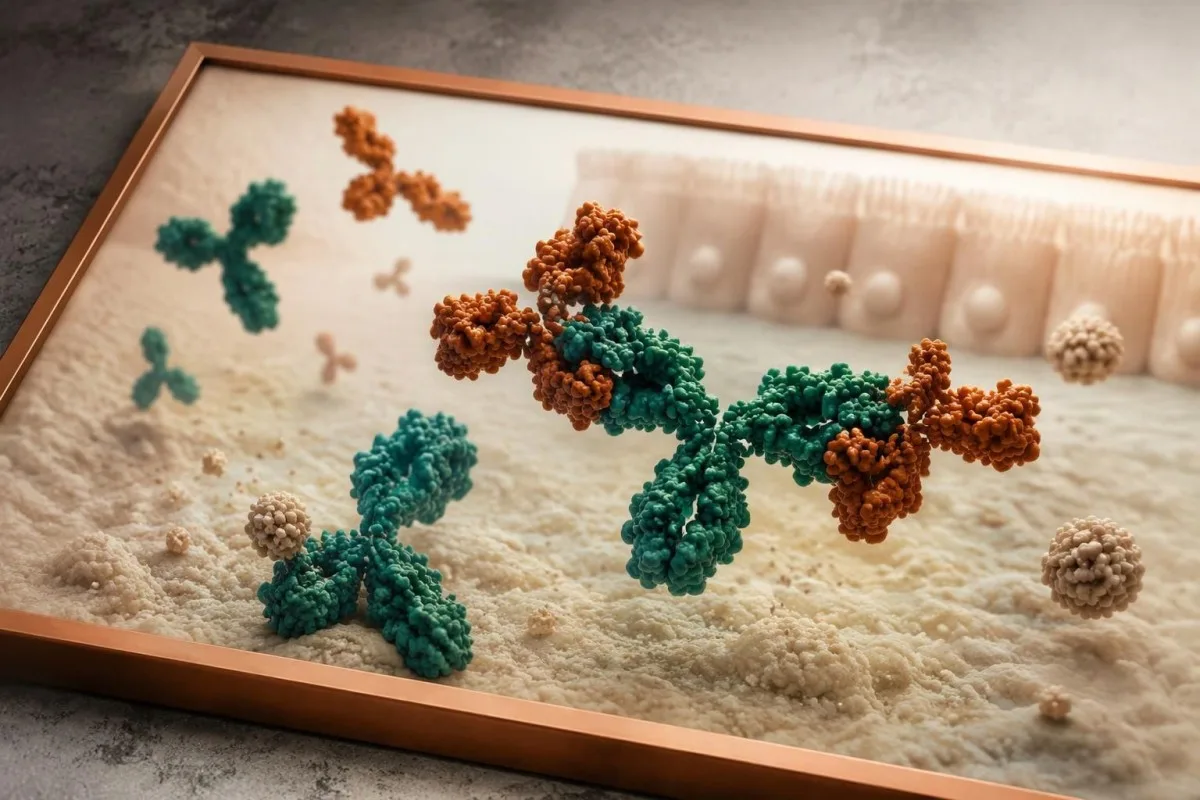
Anti-infliximab antibody tests usually detect binding antibodies; they do not all directly measure neutralizing activity. A positive result of 20 U/mL therefore identifies an assay-defined antibody signal, not a universal percentage of blocked infliximab or a precise prediction of how much benefit remains.
Antibody persistence and magnitude influence whether dose optimization is likely to recover exposure. Cheifetz et al. (2021) described low-titer antibodies as below 10 U/mL for the homogeneous mobility shift assay specifically; that threshold must not be transferred to an ELISA reporting AU/mL or to another laboratory's calibration.
A single low antibody result may be transient or become less clinically relevant after supervised treatment optimization. Repeating paired drug and antibody testing can distinguish a 1-time signal from a rising pattern, but severe disease or an infusion reaction may require action before a second result is available.
Antibodies to infliximab are not the same as antibodies against your own bowel, and they do not by themselves diagnose an immediate allergy. Our explanation of 陽性抗体結果の種類 helps separate these concepts; breathlessness or faintness during an infusion still requires immediate attention regardless of the antibody number.
適切なトラフ濃度はどのような場合に作用機序の失敗を示唆しますか?
機序的な治療失敗の可能性 means objectively active IBD persists despite sufficient infliximab exposure for the treatment goal. A trough of 8 µg/mL with confirmed active colitis may raise this possibility, but selected patients need further exposure optimization before clinicians conclude that another inflammatory pathway should be targeted.
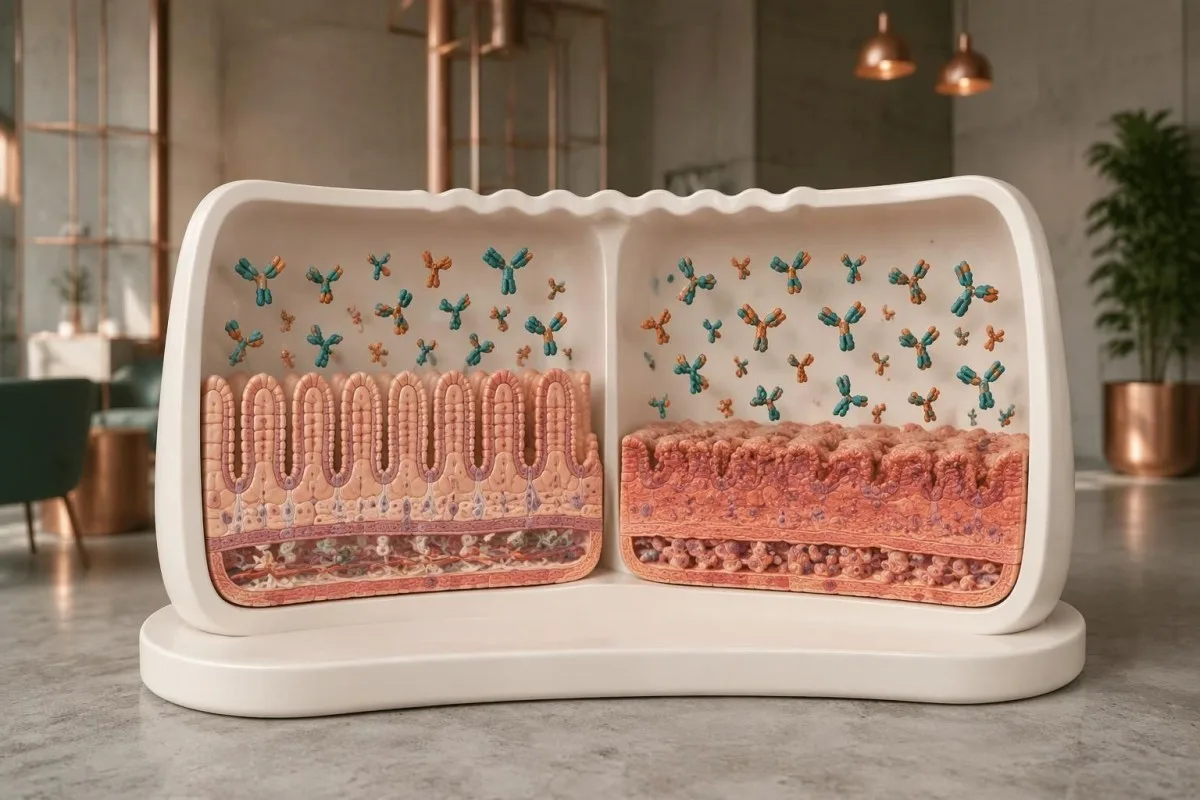
An adequate serum concentration cannot prove that TNF is the only pathway driving a person's current disease. Persistent endoscopic activity with a trough of 12 µg/mL is more supportive of a mechanism problem than the same concentration with normal objective testing and symptoms from bile acid diarrhea.
Calling treatment failure at exactly 5 µg/mL can be premature when the goal is fistula control or substantial endoscopic improvement. The 10–15 µg/mL reassessment discussed in the 2021 consensus provides a safeguard against abandoning an under-optimized treatment, but it is not a requirement to escalate every patient with symptoms.
Objective evidence also has limits: CRP of 3 mg/L does not exclude active IBD, especially in people whose CRP has remained low during previous flares. Borderline stool results need context and sometimes repetition; our guide to 境界線の糞便カルプロテクチン explains why an isolated intermediate value should not determine a biologic switch.
The strongest case for changing mechanism combines 3 findings: documented inflammation, adequate exposure on a correctly timed sample, and an inadequate clinical response despite appropriate optimization. Structural complications, such as a fixed Crohn's stricture, can also cause symptoms that neither more infliximab nor a different biologic will reliably reverse.
インフリキシマブ濃度が適切でも抗体が陽性になることはありますか?
Antibodies can be detected while infliximab remains measurable or adequate, particularly with drug-tolerant assays. A trough of 7 µg/mL and a weak positive antibody result do not automatically mean treatment failure; the assay, antibody trend, and evidence of disease activity determine how much weight that finding deserves.
Drug-tolerant methods can identify antibodies in samples containing infliximab that would interfere with some drug-sensitive methods. This greater analytical sensitivity may reveal early or low-level immunogenicity, but 1 newly detected signal does not necessarily establish clinically meaningful loss of response.
A qualitative positive result contains less information than a quantitative result with the assay's cutoff and units. A report reading only positive cannot distinguish a value just above a 10 AU/mL cutoff from a much larger signal; our guide to 定性および定量的検査 explains what each format can establish.
Compare antibody trajectories using the same laboratory method whenever feasible. Hypothetical results of 12, 15, and 13 AU/mL across 3 correctly timed visits may carry a different implication from 12, 80, and 200 AU/mL, although analytical variability and clinical findings still prevent interpretation from trend alone.
カンテスティは AI血液検査の読み方プラットフォーム that helps distinguish a reported antibody cutoff from a treatment target. When the report lacks the method or units, our interpretation should preserve that uncertainty rather than labeling 1 positive result as proof that infliximab has stopped working.
検査法や抗体の単位が重要なのはなぜですか?
Infliximab and antibody results are method-dependent, so values from different assays are not always interchangeable. Infliximab 1 µg/mL equals 1 mg/L, but antibody results in U/mL, AU/mL, or ng/mL do not have a universal conversion because laboratories use different standards, detection limits, and approaches to drug interference.
An assay may report free or functionally available drug differently from another method that detects a broader pool of circulating drug. Two laboratories can therefore produce somewhat different concentrations from similar specimens; a change from 6 to 8 µg/mL after switching methods may not represent a true gain in exposure.
Below the quantification limit means the assay cannot reliably assign a numerical concentration below its validated boundary. A report of less than 0.4 µg/mL is not proof of exactly 0 µg/mL, and greater than 100 U/mL cannot tell you whether the true antibody result is 110 or 1,000 U/mL.
Some laboratories use reflex antibody testing only when the drug concentration falls below a preset threshold. If antibodies were not tested because infliximab was 9 µg/mL, the result is not equivalent to antibodies negative; ask whether the antibody field says not performed, not detected, or below detection.
Kantesti's report interpretation should retain the assay name, units, and collection context instead of silently converting 20 AU/mL into another method's scale. Our 臨床検査法に関する情報 explains the distinction between technical interpretation and clinical decision-making; no AI explanation removes the need to confirm an unusual result with the reporting laboratory.
臨床医は、再発した症状がIBDによるものだとどのように確認しますか?
Returning symptoms do not necessarily mean returning intestinal inflammation; clinicians combine stool markers, CRP, infection testing, endoscopy, and imaging as appropriate. Three loose stools daily with a trough of 6 µg/mL can arise from active IBD, an intestinal infection, bile acid diarrhea, or a functional bowel disorder.
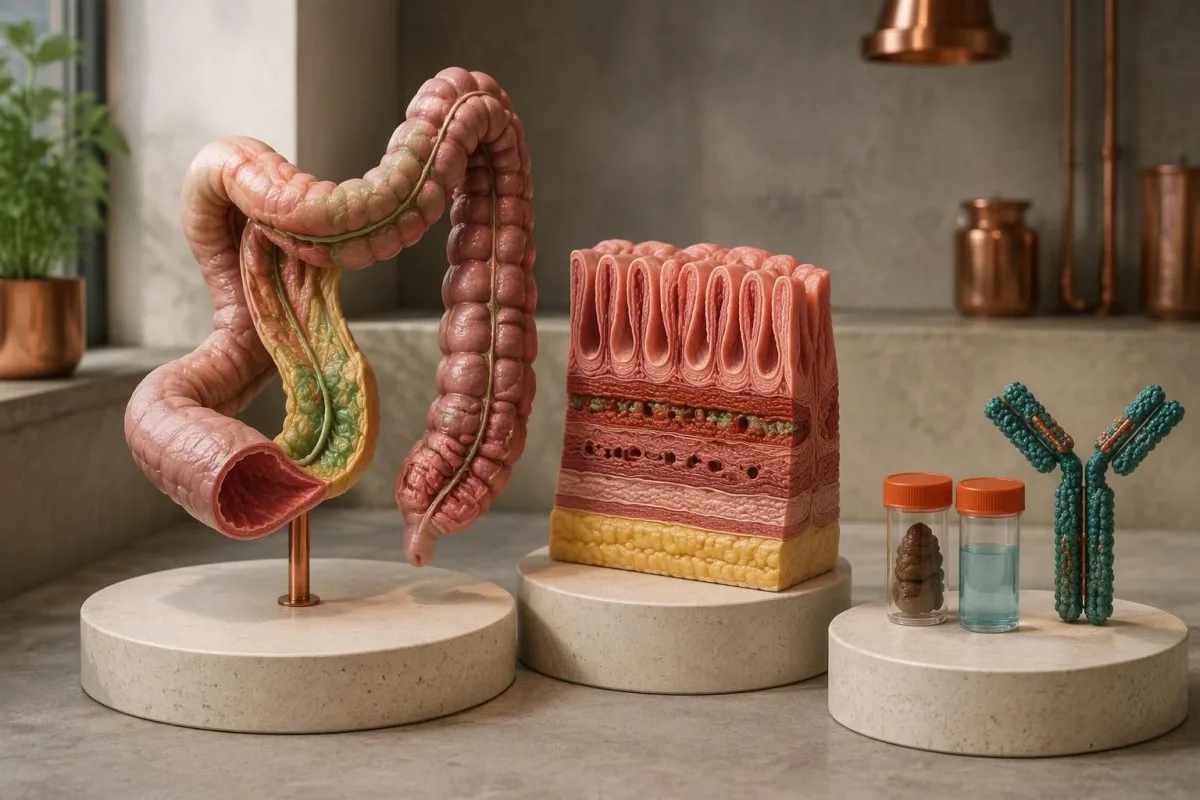
Fecal calprotectin and lactoferrin assess intestinal inflammatory activity rather than infliximab exposure. A hypothetical calprotectin of 800 µg/g adds different information from a trough of 2 µg/mL; our stool inflammation marker comparison explains why paired disease and drug measurements answer separate clinical questions.
C. difficile testing can be necessary during new or worsening diarrhea, even without recent antibiotics. A positive screening test and negative toxin result require contextual interpretation, not automatic classification as an IBD flare; our guide to C. difficile検査結果の不一致に関するガイド describes why 2 test components can disagree.
Bile acid diarrhea is particularly relevant after ileal disease or resection and can persist despite controlled inflammation. A person with a trough of 10 µg/mL and reassuring objective IBD assessment may need a different evaluation; our explanation of SeHCAT retention results covers one diagnostic route where that test is available.
Bloating, gas, and altered stool frequency can also reflect bacterial overgrowth or carbohydrate malabsorption. At least 2 explanations can coexist with IBD, so a satisfactory trough should not end the assessment; our SIBO breath test guide explains preparation and limitations rather than treating breath testing as proof of every symptom's cause.
IBDチームは曝露不足にどのように対応する可能性がありますか?
Low exposure without substantial persistent antibodies may lead an IBD team to increase the infliximab dose, shorten the dosing interval, or address a treatment interruption. A common adult intravenous maintenance schedule is 5 mg/kg every 8 weeks after induction, but any adjustment requires individualized prescribing and reassessment of disease activity.
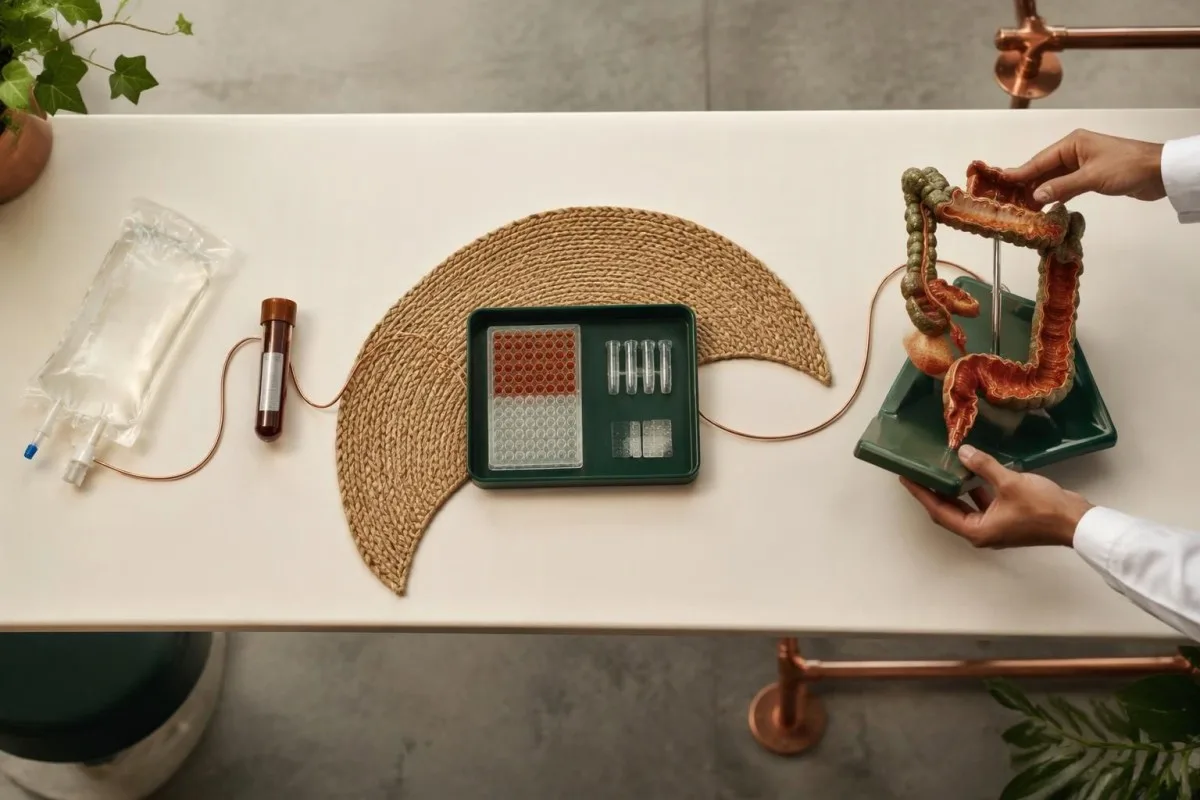
For a hypothetical 70 kg adult, 5 mg/kg corresponds to 350 mg before local preparation or rounding rules. Shortening an unchanged dose from every 8 weeks to every 6 weeks increases average drug administered per unit time by about 33%; the trough increase cannot be predicted as exactly 33% because clearance is not constant.
Increasing the dose and shortening the interval are not pharmacokinetically identical strategies. A larger dose changes peak exposure, while a shorter interval reduces time for concentrations to decline; a hypothetical patient whose symptoms repeatedly return during week 7 may prompt a different discussion from someone symptomatic throughout all 8 weeks.
A useful reassessment checks both exposure and the treatment outcome rather than declaring success because the trough rose. If infliximab increases from 2 to 9 µg/mL but calprotectin remains 900 µg/g and endoscopic disease persists, the new result has narrowed the explanation without necessarily improving the underlying disease.
The timing of repeat testing depends on severity, the revised schedule, and the clinical question; waiting 3 months is not appropriate for every deteriorating patient. Our 薬剤安全性トレンドガイド explains why comparable dates and methods matter, but an app should never independently recommend extra infusions.
治療の切り替えや併用療法はどのような場合に検討されますか?
Persistent high antibodies with low drug may favor changing treatment, while adequate exposure with confirmed active IBD may favor switching to a different mechanism. Low-level immunogenicity can sometimes be addressed through supervised optimization or an immunomodulator, but a result of 15 U/mL alone cannot determine which option offers the best benefit-risk balance.
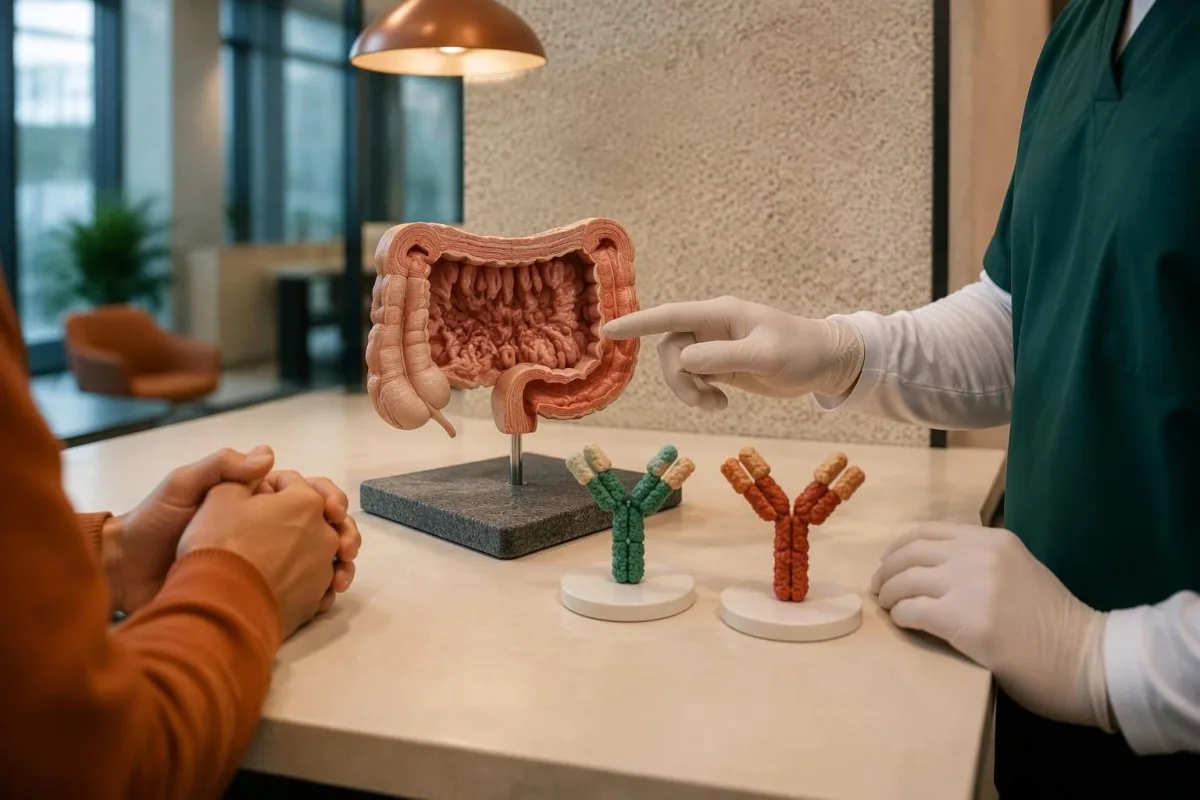
Switching within the anti-TNF class can make sense when infliximab previously controlled disease but antibody-associated clearance now prevents adequate exposure. Switching to another mechanism becomes more persuasive when inflammation persists with adequate exposure; these are 2 different failure patterns, not interchangeable reasons to choose the next medicine.
An immunomodulator such as azathioprine or methotrexate may reduce immunogenicity in selected circumstances, but adding one introduces additional monitoring and adverse-effect risks. Before azathioprine, TPMT testing and safety assessment can inform prescribing; TPMT and NUDT15 assessment do not replace ongoing CBC and liver monitoring, even when baseline results are normal.
If a person already takes a thiopurine, metabolite testing can help clarify exposure or a metabolism pattern before assuming combination therapy has failed. For example, 2 patients prescribed the same mg dose may have very different metabolite findings; our thiopurine treatment pattern guide explains why prescription dose alone is incomplete.
Restarting infliximab after a long interruption deserves a separate safety discussion because immunogenicity and infusion reactions can complicate re-exposure. A treatment gap of 6 months is not equivalent to a routine 1-week scheduling delay; never restart, add an immunomodulator, or stop an existing medicine based solely on an online interpretation.
導入療法、瘻孔、小児、注射によって目標値は変わりますか?
Treatment phase, disease phenotype, age, and formulation can change the relevant exposure goal; intravenous maintenance targets should not be copied into every setting. Standard adult intravenous induction commonly uses 5 mg/kg at weeks 0, 2, and 6, and those early concentrations are interpreted differently from an established 8-week maintenance trough.

The 2021 expert consensus described induction goals of approximately 20–25 µg/mL at week 2, 15–20 µg/mL at week 6, and 7–10 µg/mL at week 14 (Cheifetz et al., 2021). These are consensus exposure goals influenced by disease phenotype and outcome, not interchangeable minimums from one definitive randomized trial.
Perianal fistula outcomes may require higher exposure than symptom control in uncomplicated luminal disease, but observational associations do not establish a universal healing threshold. A fistula still draining at 10 µg/mL may also need imaging, drainage of an abscess, or procedural care; raising the trough cannot substitute for addressing an undrained collection.
Children can have different clearance and dosing requirements, particularly with lower body weight or severe disease. An adult maintenance benchmark of 5 µg/mL should not become a parent-directed dosing rule; our discussion of 子供向けのAI解釈 explains why pediatric specialist context and age-appropriate interpretation remain necessary.
Subcutaneous infliximab produces a different concentration-time profile from intermittent intravenous infusions, and availability and prescribing schedules vary internationally. A concentration of 15 µg/mL during injection treatment should not be labeled excessive merely because an intravenous report lists 3–7 µg/mL; the formulation, actual regimen, and sampling convention must be specified.
組み合わせた検査結果は臨床的な推論をどのように変えますか?
Paired results guide the next question rather than dictate a prescription: low drug without antibodies suggests underexposure, low drug with persistent antibodies suggests immunogenicity, and adequate drug with inflammation raises possible mechanism failure. The following 4 examples are entirely hypothetical; the concentrations are illustrative, not personalized treatment recommendations.
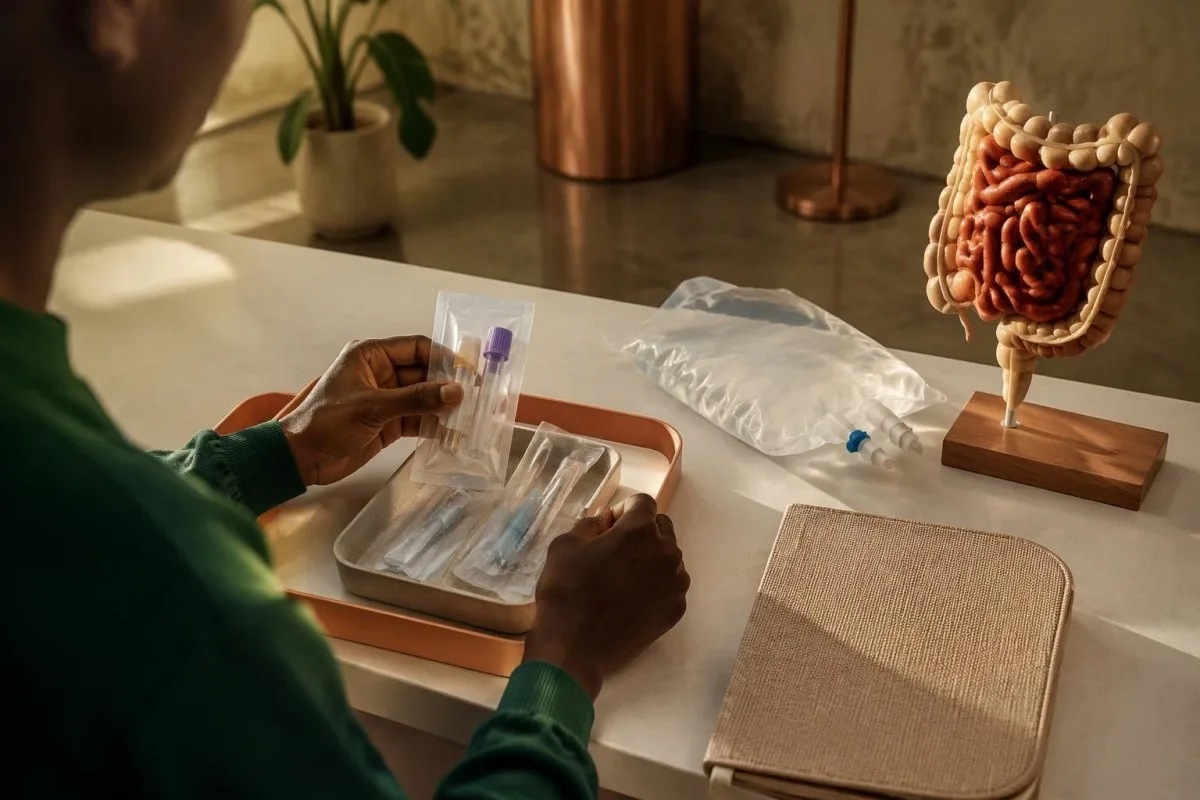
Example 1: a 34-year-old with Crohn's disease has a true trough of 1.8 µg/mL, no detected antibodies, albumin of 29 g/L, and calprotectin of 1,100 µg/g. This pattern supports underexposure in active disease; confirming the infusion schedule and considering supervised optimization are more logical than immediately declaring TNF blockade ineffective.
Example 2: a 46-year-old with ulcerative colitis has infliximab below 0.4 µg/mL and antibodies above the laboratory's 100 U/mL reporting limit on 2 visits. Assuming the assay defines that antibody signal as substantial, persistent immunogenicity is plausible; simply increasing the dose may be less successful than a clinician-directed treatment change.
Example 3: a 28-year-old has a trough of 11 µg/mL, no significant antibodies, and repeatedly active colitis on endoscopy despite appropriate optimization. Example 4: a 61-year-old has the same 11 µg/mL trough but reassuring endoscopy and diarrhea after ileal resection; the first pattern raises mechanism failure, whereas the second prompts investigation of non-inflammatory causes.
カンテスティは AI搭載の血液検査解析ツール that helps organize these distinctions when the report and treatment details are supplied. Our AI技術の説明 describes how laboratory context informs interpretation; if a 2-week-old report lacks sampling timing, the missing information must stay visible rather than being guessed.
再診時には何を持参し、どのエビデンスが該当しますか?
Bring the complete report, infusion timeline, and objective disease results to your IBD review; these 3 evidence streams make paired drug-antibody testing actionable. Seek earlier care for severe deterioration rather than waiting for the next trough, and distinguish infliximab-specific clinical research from general educational publications about accompanying laboratory abnormalities.
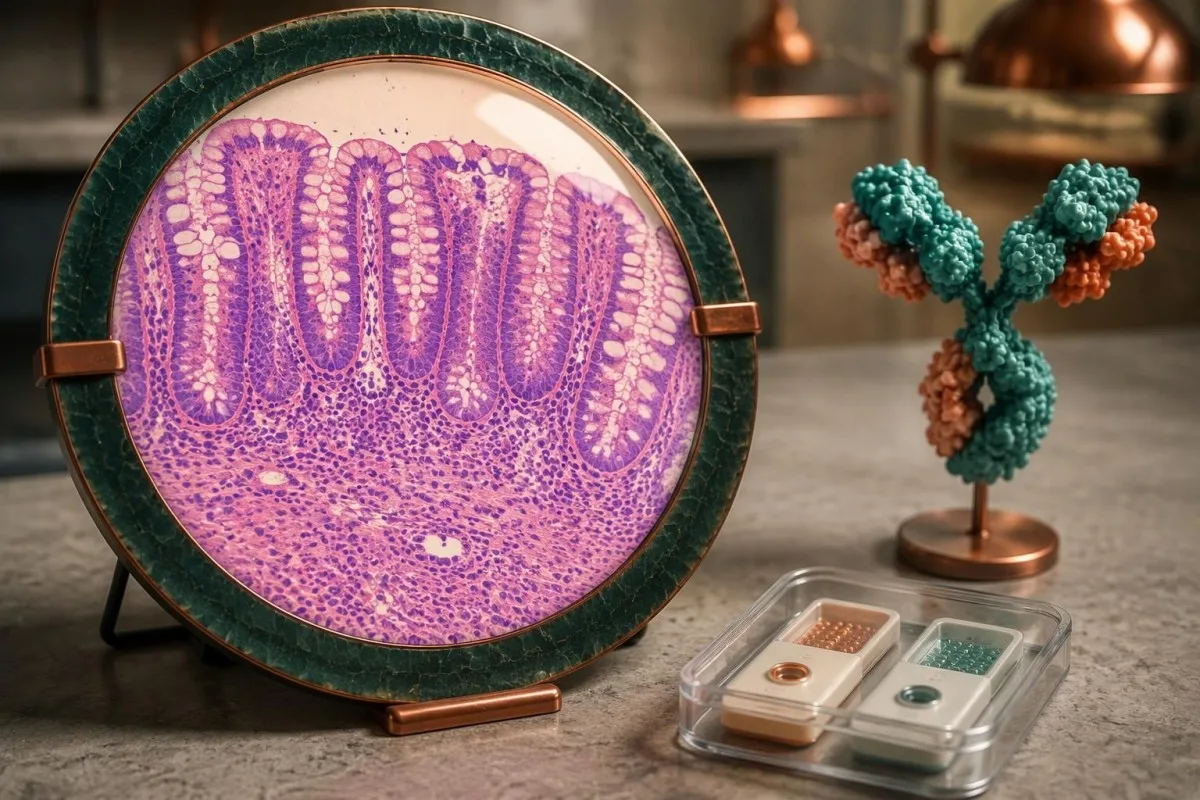
A useful review record includes the previous 2 infusion dates, actual dose, collection timing, assay name, antibody units, and recent CRP, albumin, and fecal calprotectin. Add symptom timing, steroid use, recent antibiotics, and missed doses; ask whether the proposed change addresses insufficient exposure, immunogenicity, active non-TNF disease, or a non-inflammatory explanation.
Contact your clinical team promptly for worsening diarrhea with dehydration, persistent vomiting, new significant bleeding, or fever of 38°C or higher while immunosuppressed. Severe abdominal pain with distension, fainting, or inability to keep fluids down may require emergency assessment; during an infusion, sudden breathing difficulty or collapse requires immediate staff attention, not interpretation of an antibody report.
Kantesti provides educational interpretation, not independent biologic prescribing, and our 責任あるAIの原則 explain that boundary. A reassuring trough of 10 µg/mL does not establish that an infusion is safe during an acute illness; the treating service must assess symptoms, examination findings, and any necessary investigations.
The 2 Zenodo publications listed below address accompanying laboratory interpretation, not infliximab target validation: our RDWと赤血球ガイド concerns anemia patterns, while our BUNとクレアチニンのガイド concerns renal and hydration context. These educational deposits are not evidence for anti-drug antibody cutoffs; the AGA guideline, TAXIT trial, and biologic-monitoring consensus supply the directly relevant clinical references.
よくある質問
インフリキシマブ濃度が低いとはどういう意味ですか?
インフリキシマブ濃度が低いということは、循環血中の薬剤曝露が、その治療段階と目標に対して設定された基準値を下回っていることを意味しますが、それだけでインフリキシマブを中止すべきということにはなりません。有意な抗体がない状態で、維持療法時の真のトラフ値が2 µg/mLであれば、クリアランスの亢進、腸管からのタンパク質喪失、あるいは用量または投与間隔が不十分であることを反映している可能性があります。一方、薬剤濃度が低く、持続的に高い抗体価が認められる場合は、免疫介在性クリアランスが示唆されます。IBDチームは、客観的な疾患活動性、点滴のタイミング、および測定法と併せて結果を解釈する必要があります。.
IBDにおけるインフリキシマブの適切なトラフ値はどのくらいですか?
IBD患者全員に当てはまる、単一の適切なインフリキシマブ・トラフ値はありません。2017年のAGAガイドラインは、リアクティブな維持期モニタリングにおいて少なくとも5 µg/mLを推奨し、2021年の専門家コンセンサスでは維持期の濃度を5–10 µg/mLとしています。二次性効果減弱がみられる一部の患者では、治療を中止する前に10–15 µg/mLで再評価が必要となる場合があります。導入療法、瘻孔、皮下投与にはそれぞれ異なる状況が関わるため、検査室の基準範囲は普遍的な投与目標ではありません。.
インフリキシマブ濃度検査はいつ受ければよいですか?
For intravenous infliximab, a trough sample should be collected immediately before the next infusion begins. A sample obtained 2 days after an infusion is not comparable with routine pre-infusion targets. Record the last infusion date, dose, scheduled interval, and actual collection time, especially if an 8-week appointment was delayed. Subcutaneous infliximab has a different exposure profile, so sampling should follow the prescribing team's and laboratory's instructions.
インフリキシマブに対する抗体は消失することがありますか?
インフリキシマブに対する低力価抗体は、検出されなくなったり、臨床的意義が低下したりすることがありますが、高力価の抗体が持続し、薬物濃度が非常に低い場合は、克服がより困難です。2021年の専門家コンセンサスでは、ある均一移動度シフトアッセイにおいて、抗体価10 U/mL未満を低力価抗体と定義していました。この基準値をすべての検査法に適用することはできません。医療従事者の監督下での治療最適化や免疫調節薬の使用が一部の患者に有効な場合がある一方、治療変更が必要な患者もいます。薬物濃度と抗体価を組み合わせた再検査により持続性を確認できますが、患者自身の判断で治療を変更すべきではありません。.
インフリキシマブは、血中濃度が正常でも効かなくなることがありますか?
インフリキシマブは、血中濃度が十分であっても客観的に活動性のあるIBDを制御できないことがあり、機序的な治療失敗の可能性が示唆されます。トラフ値が10 µg/mLであっても、腸管の治癒が保証されるわけではなく、疾患を駆動する経路がTNFのみであると確定するものでもありません。作用機序を変更する前に、臨床医は炎症を確認し、構造的または感染性の合併症を評価し、特定の治療目標に対して薬剤曝露が十分であったかを検討します。客観的評価で問題が認められない場合、下痢には非炎症性の原因がある可能性もあります。.
インフリキシマブ濃度が高いのは危険ですか?
高いインフリキシマブ濃度が自動的に危険というわけではなく、すべてのIBD患者に当てはまる、確立された単一の血清毒性閾値はありません。15 µg/mLという結果は、導入療法、瘻孔の治療、皮下注射療法中か、通常の静脈内維持療法中かによって、解釈が異なることがあります。安全性は濃度だけでなく、治療計画全体、感染症、点滴時反応、その他の臨床所見によって判断されます。処方チームに結果を相談せずに、点滴を受けなかったり、用量を減らしたりしないでください。.
検査機関を変更した後、インフリキシマブ抗体の検査結果が変わったのはなぜですか?
検査法は校正、単位、検出限界、循環中の薬剤に対する許容性が異なるため、検査機関を変更するとインフリキシマブ抗体の結果が変わることがあります。20 AU/mLという結果を、普遍的にU/mLやng/mLへ換算することはできません。薬剤耐性法では、インフリキシマブが測定可能な濃度で残っている場合、薬剤感受性検査では検出されない抗体を検出できることがあります。可能であれば同じ方法を用いて推移を比較し、反射検査のルールによって省略されたのではなく、抗体検査が実際に実施されたかどうかを確認してください。.
血液検査結果の見方を確認しましょう
検査報告書をアップロードすると、KantestiのAIが数秒で各バイオマーカーを平易な言葉で説明します。世界中で200万人以上が利用しています。.
参考文献
- Klein, T., Mitchell, S., & Weber, H. (2026). RDW血液検査:RDW-CV、MCV、MCHCの完全ガイド。. Kantesti AI医学研究。. 掲載日
- Klein, T., Mitchell, S., & Weber, H. (2026). BUN/クレアチニン比の説明:腎機能検査ガイド。. Kantesti AI医学研究。. 掲載日
- Feuerstein JD et al. (2017). American Gastroenterological Association Institute Guideline on Therapeutic Drug Monitoring in Inflammatory Bowel Disease. Gastroenterology。. 掲載日
- Vande Casteele N et al. (2015). Trough concentrations of infliximab guide dosing for patients with inflammatory bowel disease. Gastroenterology。. 掲載日
- Cheifetz AS et al. (2021). A Comprehensive Literature Review and Expert Consensus Statement on Therapeutic Drug Monitoring of Biologics in Inflammatory Bowel Disease. The American Journal of Gastroenterology. 掲載日
- 200万以上分析対象の検査
- 127+国
- 100+言語
医療チームについて


E-E-A-T 信頼性シグナル
経験
医師主導による、検査結果解釈ワークフローの臨床レビュー。.
専門知識
臨床的な文脈においてバイオマーカーがどのように振る舞うかに焦点を当てた検査医学。.
権威
Thomas Klein医師による医学的レビュー。Sarah Mitchell医師およびHans Weber教授の協力。.
信頼性
アラームを減らすための明確なフォローアップ経路を備えた、エビデンスに基づく解釈。.





医療免責事項
この記事は教育目的のみを対象としており、医療助言を構成するものではありません。診断や治療の判断を行う際は、必ず有資格の医療提供者にご相談ください。.
公開 · 編集チームにお問い合わせください
Kantesti Ltdが発行。イングランドおよびウェールズで登録、会社番号. 17090423, 、英国ロンドン。.
