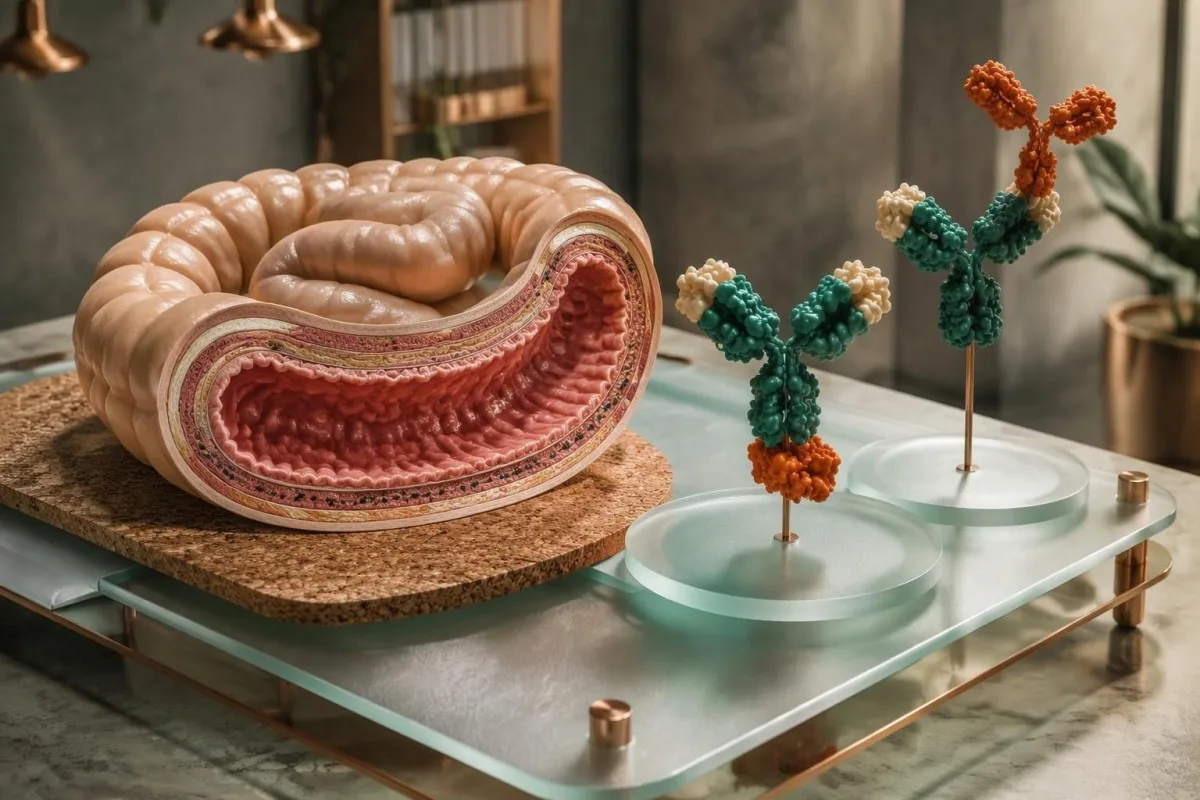
IBD පාලනය අහිමි වීමට හේතුව පැහැදිලි කිරීම සඳහා infliximab මට්ටම පරීක්ෂාවක් මඟින් ඖෂධ සාන්ද්රණය ප්රතිදේහ සමඟ සසඳයි. සැලකිය යුතු ප්රතිදේහ නොමැතිව ඖෂධ මට්ටම අඩු වීමෙන් නිරාවරණය ප්රමාණවත් නොවන බව හැඟවේ; ඖෂධ මට්ටම අඩු වීමත් සමඟ ඉහළ ප්රතිදේහ පවතින්නේ නම් ප්රතිශක්ති-මැදිහත් නිෂ්කාශනයක් හැඟවේ. ප්රමාණවත් නිරාවරණයක් තිබියදී සක්රීය ප්රදාහය පැවතීමෙන් යාන්ත්රණමය අසාර්ථකත්වයක් ඇති විය හැකි බව හැඟවිය හැක—නමුත් ප්රදාහය, නියැදිය නිවැරදිව ලබාගැනීම සහ ප්රතිකාර අරමුණට ගැළපෙන ඉලක්කයක් තහවුරු කළ පසුව පමණි.

ප්රධාන කරුණු
- යුගලිත ප්රතිඵල ප්රමාණවත් නොවන infliximab නිරාවරණය ප්රතිදේහ-සම්බන්ධ නිෂ්කාශනයෙන් වෙන්කර හඳුනාගනී; රෝග ලක්ෂණ නැවත ඇතිවීමට හේතුව ප්රතිඵල දෙකෙන් එකක්වත් තනිවම සනාථ නොකරයි.
- මුදල් දීමට පෙර නියැදිය ලබාගැනීම යනු ඊළඟ අභ්යන්තර ශිරා මුදල් දීම ආරම්භ වීමට පෙර රසායනාගාර නියැදිය ලබාගැනීමයි; දින 2කට පසුව නොවේ.
- නඩත්තු ප්රතිකාරයේ මිණුම් සලකුණු වෙනස් වේ: 2017 AGA මාර්ගෝපදේශය ප්රතික්රියාශීලී නිරීක්ෂණය සඳහා අවම වශයෙන් 5 µg/mL යෝජනා කළ අතර, විශේෂඥ එකඟතාව නඩත්තු ප්රතිකාරය සඳහා 5–10 µg/mL විස්තර කරයි.
- අඩු infliximab මට්ටම් ප්රතිදේහ නොමැති විට, වේගවත් නිෂ්කාශනය, ආන්ත්රික ප්රෝටීන අහිමි වීම, මාත්රා ලබාදීම ප්රමාද වීම හෝ මාත්රා අතර කාල පරතරය වැඩි වීම නිසා ඇති විය හැක.
- infliximab වෙත ඇති ප්රතිදේහ ඒවා වඩාත් වැදගත් වන්නේ දිගටම පවතින විට, එම පරීක්ෂණය සඳහා සැලකිය යුතු වන විට සහ ඖෂධ මට්ටම ඉතා අඩු හෝ හඳුනාගත නොහැකි වන විටය.
- යාන්ත්රණමය අසාර්ථකත්වයක් විය හැකිය එයට ප්රමාණවත් ඖෂධ නිරාවරණයක් තිබියදී වෛෂයිකව සක්රීය IBD තිබීම අවශ්ය වේ; අවම මට්ටම 8 µg/mL වන විට ඇති පාචනයෙන් එය තහවුරු නොවේ.
- පරීක්ෂණ ඒකක එකිනෙකට හුවමාරු කළ නොහැක: infliximab 1 µg/mL යනු 1 mg/L ට සමාන වුවද, ප්රතිදේහ U/mL සහ AU/mL ඒකක අතර විශ්වීය ලෙස පරිවර්තනය කළ නොහැක.
- ප්රතිකාර වෙනස්කම් ඔබේ IBD කණ්ඩායම සමඟ තීරණය කළ යුතුය; ප්රතිචාරය අහිමි වූ තෝරාගත් අවස්ථාවලදී infliximab නවතා දැමීමට පෙර 10–15 µg/mL දක්වා ඖෂධ නිරාවරණයක් ලබාගැනීම සාධාරණ විය හැකිය.
infliximab මට්ටම පරීක්ෂාවකින් ඇත්තටම කියවෙන්නේ කුමක්ද?
ඇන් infliximab මට්ටම පරීක්ෂාව සංසරණයේ ඇති infliximab මනින අතර, සාමාන්යයෙන් එයට සමගාමීව ඖෂධයට එරෙහි ප්රතිදේහ, ප්රමාණවත් නොවන ඖෂධ නිරාවරණය හෝ ප්රතිශක්ති-මැදිහත් ඖෂධ නිෂ්කාශනය විමර්ශනය කිරීම සඳහා මනිනු ලැබේ. ප්රතිදේහ හඳුනා නොගත් විට 2 µg/mL ප්රතිඵලයක් ලැබීමෙන් මතුවන ප්රශ්නය, අඛණ්ඩව පවතින ඉහළ ප්රතිදේහ සමඟ 2 µg/mL ලැබීමෙන් මතුවන ප්රශ්නයට වඩා වෙනස්ය; මේ දෙකෙන් කිසිවක් ඖෂධය අනිවාර්යයෙන් නතර කළ යුතු බව ස්වයංක්රීයව අදහස් නොකරයි.
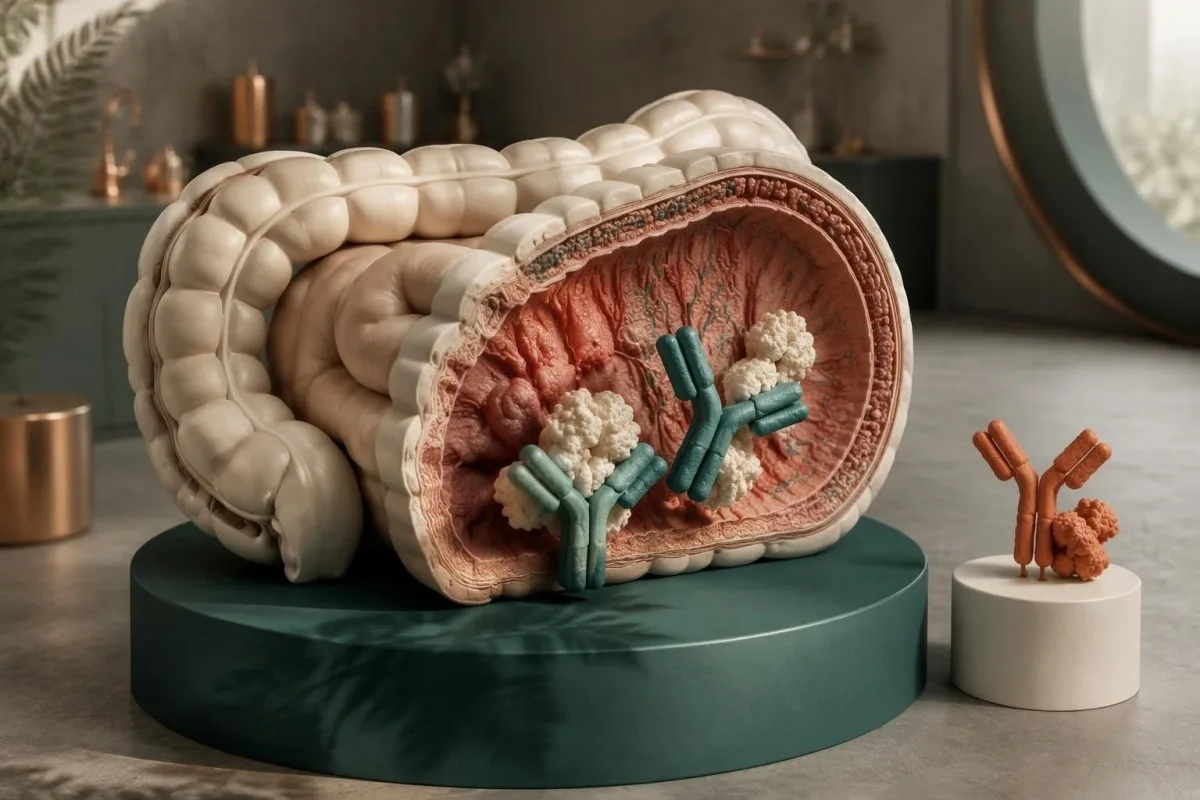
ප්රතික්රියාශීලී චිකිත්සක ඖෂධ නිරීක්ෂණය රෝග ලක්ෂණ නරක අතට හැරීම හෝ සක්රීය රෝගයක් පිළිබඳ සාක්ෂි මත පදනම්ව පරීක්ෂා කිරීමයි. එය පෙනෙන පරිදි රෝගය සමනය වී ඇති කාලයේ සිදු කරන ක්රියාශීලී නිරීක්ෂණයට වඩා වෙනස්ය: ලේඛනගත රෝග උත්සන්න වීමකදී 4 µg/mL යන උපකල්පිත අවම මට්ටමක් විමර්ශනයක් සාධාරණීකරණය කළ හැකි නමුත්, එන්ඩොස්කොපි පරීක්ෂණයෙන් සහ මල සලකුණුකාරකවලින් අඛණ්ඩ සුවවීමක් පෙන්නුම් කරන විට වෙනස් සාකච්ඡාවක් අවශ්ය විය හැකිය.
Infliximab අවහිර කරන්නේ tumor necrosis factor, සාමාන්යයෙන් TNF ලෙස කෙටියෙන් හඳුන්වන; සාන්ද්රණ පරීක්ෂණයෙන් සෑම බඩවැල් TNF සංඥාවක්ම නිෂ්ක්රීය කර තිබේද යන්න මනින්නේ නැත. සෙරුමයේ 7 µg/mL ප්රතිඵලයෙන් මනිනු ලබන්නේ සංසරණයේ ඇති ඖෂධය මිස, බලපෑමට ලක්වූ එක් එක් බඩවැල් කොටස තුළ ඖෂධයේ ක්රියාකාරීත්වය හෝ බඩවැල් සුවවී ඇති ප්රමාණය නොවේ.
ප්රායෝගික අර්ථකථනයේදී අවම වශයෙන් කරුණු 3ක් යොදාගනී: ඖෂධ සාන්ද්රණය, ප්රතිදේහ සොයාගැනීම් සහ රෝග ක්රියාකාරීත්වය පිළිබඳ වෛෂයික සාක්ෂි. පෙර ප්රතිචාරයද වැදගත්ය—මාස 18ක පාලනයකින් පසු රෝග ලක්ෂණ නැවත ඇතිවීම ද්විතියික ප්රතිචාර අහිමි වීමක් වන අතර, ආරම්භක ප්රතිකාරයේදී කිසිවිටෙක පාලනයක් අත්කර නොගැනීමෙන් ප්රේරණ අවධියේ ඖෂධ නිරාවරණය සහ ප්රතිකාර යාන්ත්රණය පිළිබඳ වෙනත් ප්රශ්න මතු වේ.
කන්ටෙස්ටි යනු AI රුධිර පරීක්ෂණ විශ්ලේෂකය යුගලගත infliximab සොයාගැනීම් තේරුම් ගැනීමට පාඨකයන්ට උපකාරී වන අතර, රසායනාගාර අංක 1ක් මාත්රා උපදෙසක් ලෙස නොසලකයි. අපගේ වේදිකාව මෙහෙයවනු ලබන්නේ එක්සත් රාජධානියේ Kantesti LTD, සමාගම් අංක 17090423 විසිනි; පිළිබඳ තොරතුරු අපගේ සංවිධානය තුළ චිකිත්සක ඖෂධ නිරීක්ෂණයට සහාය වන සායනික සාක්ෂිවලින් වෙන්ව ඇත.
infliximab අවම මට්ටම් නියැදි කළ යුත්තේ කවදාද?
අභිනාලීය infliximab අවම මට්ටම් ඊළඟ මුදල් සම්පාදනය ආරම්භ වීමට ආසන්න මොහොතේ, එම මාත්රා කාල පරතරය තුළ සාන්ද්රණය අවම මට්ටමට ආසන්න වන විට, නියැදි ලබාගත යුතුය. මුදල් සම්පාදනයෙන් දින 2කට පසු ලබාගත් නියැදියක් අවම මට්ටමේ නියැදියක් නොවන අතර, මුදල් සම්පාදනයට පෙර නඩත්තු ප්රතිකාර ඉලක්ක සමඟ සෘජුව සැසඳිය යුතු නොවේ.
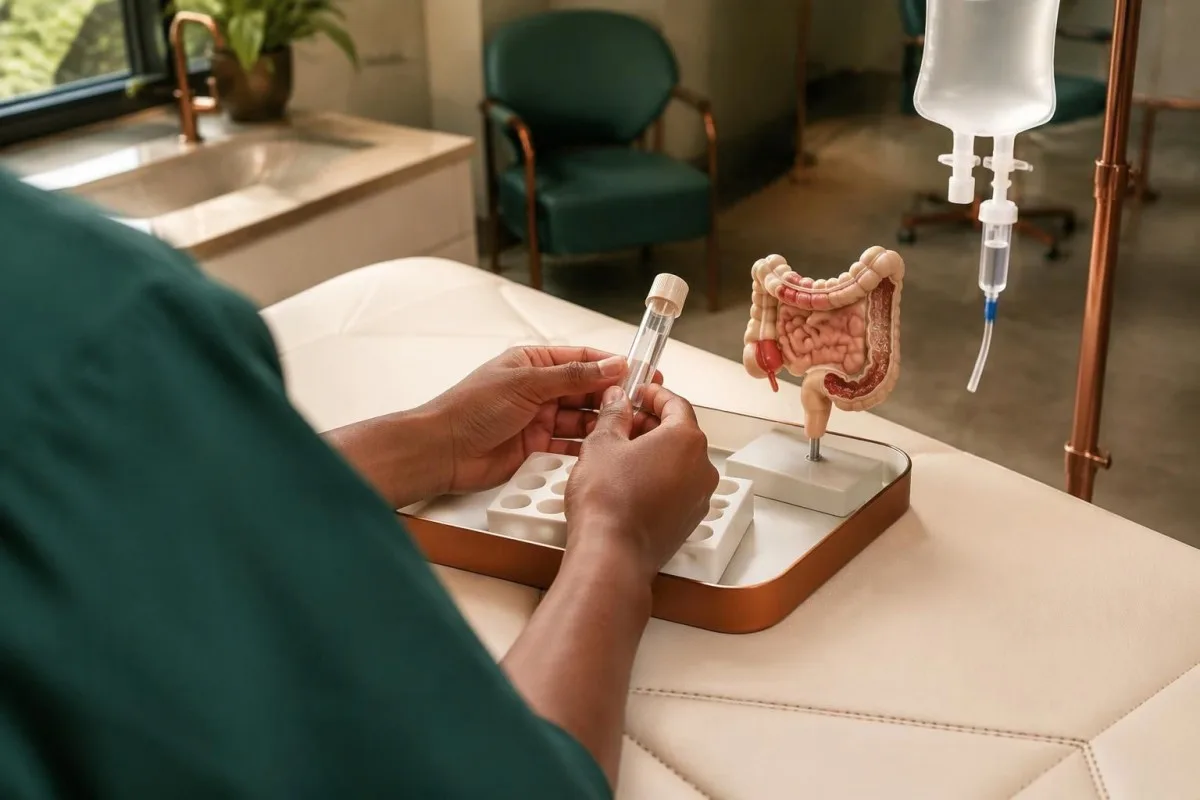
ප්රතිකාරයේ කාර්යක්ෂමතාව වෙනස් නොවී තිබියදීම නියැදි ලබාගත් වේලාව ප්රතිඵලයක පෙනෙන අර්ථය වෙනස් කළ හැකිය. උදාහරණයක් ලෙස, මුදල් සම්පාදනයෙන් ටික වේලාවකට පසු ලබාගත් උපකල්පිත 18 µg/mL අගයක් සහ ඊළඟ මුදල් සම්පාදනයට පෙර ලබාගත් 3 µg/mL අගයක් එකම මාත්රා චක්රය විස්තර කළ හැකිය—ස්වාධීන ප්රතිකාර තත්ත්ව 2ක් අතර හදිසි පිරිහීමක් නොවේ.
වාර්තාව අර්ථකථනය කිරීමට පෙර පෙර මුදල් සම්පාදන දිනය, සැබෑ මාත්රාව mg වලින්, නියමිත කාල පරතරය සහ නියැදි එකතු කළ වේලාව සටහන් කරන්න. සති 8කට නියමිත මුදල් සම්පාදනය සතිය 10 වන තෙක් ප්රමාද වුවහොත්, එහි ප්රතිඵලයක් ලෙස ලැබෙන සාන්ද්රණයෙන් විස්තර වන්නේ ඖෂධ නොමැතිව ගත වූ වැඩි කාල පරතරයකි; මුල් සති 8ක කාලසටහනෙන් ප්රමාණවත් ඖෂධ නිරාවරණයක් ලැබුණේද යන්නට එය පැහැදිලි පිළිතුරක් ලබා දිය නොහැක.
Collection from a line recently used to administer infliximab can contaminate the specimen and produce a misleadingly high result. Ask the infusion service about its collection protocol, and tell it if sampling occurred after treatment started; the timing principles resemble other pre-dose medication tests, although their targets differ.
Fasting is generally not required for the infliximab concentration itself, but another test ordered during the same visit may have preparation requirements. Our පළමු-පහර සකස් කිරීමේ මාර්ගෝපදේශය explains how to document medication timing; for this test, an accurate infusion timeline usually matters more than an 8-hour fast.
ප්රමාණවත් යැයි සැලකෙන infliximab මට්ටම කුමක්ද?
ලියුකේමියාව සනාථ කරන no universal adequate infliximab trough for every patient, disease phenotype, assay, and treatment phase. The 2017 AGA guideline suggested at least 5 µg/mL during reactive maintenance monitoring, while a 2021 expert consensus described maintenance concentrations of 5–10 µg/mL and higher exposure in selected loss-of-response situations.
The AGA benchmark of at least 5 µg/mL is a clinical decision aid, not a healthy-population reference range (Feuerstein et al., 2017). Infliximab is a prescribed biologic: an untreated person normally has no circulating infliximab, so a laboratory's therapeutic interval should never be read like the normal range for sodium.
The TAXIT trial enrolled 263 adults with stable responses and optimized intravenous infliximab toward 3–7 µg/mL before randomized follow-up. Its primary remission endpoint did not improve with concentration-based dosing, although some secondary outcomes favored that approach; this explains why the historical 3–7 µg/mL window is useful context rather than a universal modern target (Vande Casteele et al., 2015).
Cheifetz et al. (2021) recommended considering exposure of 10–15 µg/mL before discontinuing infliximab for secondary loss of response in selected patients. This is expert consensus, not proof that everyone should be escalated to 15 µg/mL; fistulas, endoscopic goals, disease severity, safety, and prior optimization affect whether that reasoning applies.
A concentration of 12 µg/mL is not automatically toxic, and a concentration of 4 µg/mL does not automatically require escalation in an asymptomatic patient with documented healing. Unlike the narrower toxicity discussions around some අනෙකුත් trough-monitored medicines, infliximab has no single established serum toxicity cutoff that dictates action.
| මට්ටම | පරාසය | එහි අර්ථය |
|---|---|---|
| Historical TAXIT optimization window | 3–7 µg/mL | Studied in adults with stable responses; not a universal threshold for active disease or fistula healing. |
| AGA reactive maintenance benchmark | At least 5 µg/mL | Suggested in the 2017 guideline for reactive monitoring; interpret alongside objective activity and the assay. |
| Expert-consensus maintenance range | 5–10 µg/mL | Described by the 2021 consensus; the appropriate goal varies with disease phenotype and desired outcome. |
| Selected loss-of-response reassessment | 10–15 µg/mL | Exposure experts suggest considering before abandoning treatment in selected cases; not a routine target or toxicity range. |
ප්රතිදේහ නොමැතිව infliximab මට්ටම් අඩු වන්නේ ඇයි?
Low infliximab levels with no significant antibodies usually suggest pharmacokinetic underexposure: too little drug remains available over the dosing interval. A trough of 1.5 µg/mL can reflect faster clearance, intestinal protein loss, a delayed infusion, or insufficient dose or frequency—not necessarily failure of TNF blockade as a treatment mechanism.

Severe intestinal disease can increase infliximab clearance and allow protein, including therapeutic antibody, to be lost through the bowel. A hypothetical patient with albumin of 28 g/L and a trough of 1 µg/mL therefore needs assessment of disease burden and protein loss, not just a question about whether the infusion was attended.
Low albumin is associated with faster infliximab clearance, but it is not a direct measure of drug binding or an instruction to apply a free-drug correction. Albumin of 30 g/L and 40 g/L may provide different clearance context; our සෙරුම් ප්රෝටීන් අර්ථ නිරූපණ මාර්ගෝපදේශය explains why inflammation, liver synthesis, nutrition, and loss must be distinguished.
Infliximab is mainly broken down through protein-catabolic pathways rather than cleared unchanged by the kidneys. A creatinine of 90 µmol/L cannot predict the infliximab trough, and the medicine should not be interpreted using small-molecule renal dosing assumptions; body size, inflammatory burden, and treatment interruptions may be more informative.
Kantesti AI helps place a low trough alongside reported albumin, CRP, and infusion timing; 1 result cannot identify the clearance pathway by itself. Low albumin should not automatically trigger protein supplements, because inflammation also changes circulating proteins—as explained in our guide to inflammation and transferrin.
ඖෂධ මට්ටම් අඩු වීම සහ ප්රතිදේහ තිබීමෙන් හැඟවෙන්නේ කුමක්ද?
Low or undetectable infliximab with persistent high antibodies suggests immune-mediated pharmacokinetic failure: antibodies can accelerate clearance, neutralize drug activity, or both. A trough below an assay's 0.5 µg/mL quantification limit with a substantial antibody result is more concerning than a weak antibody signal alongside a maintained drug concentration.
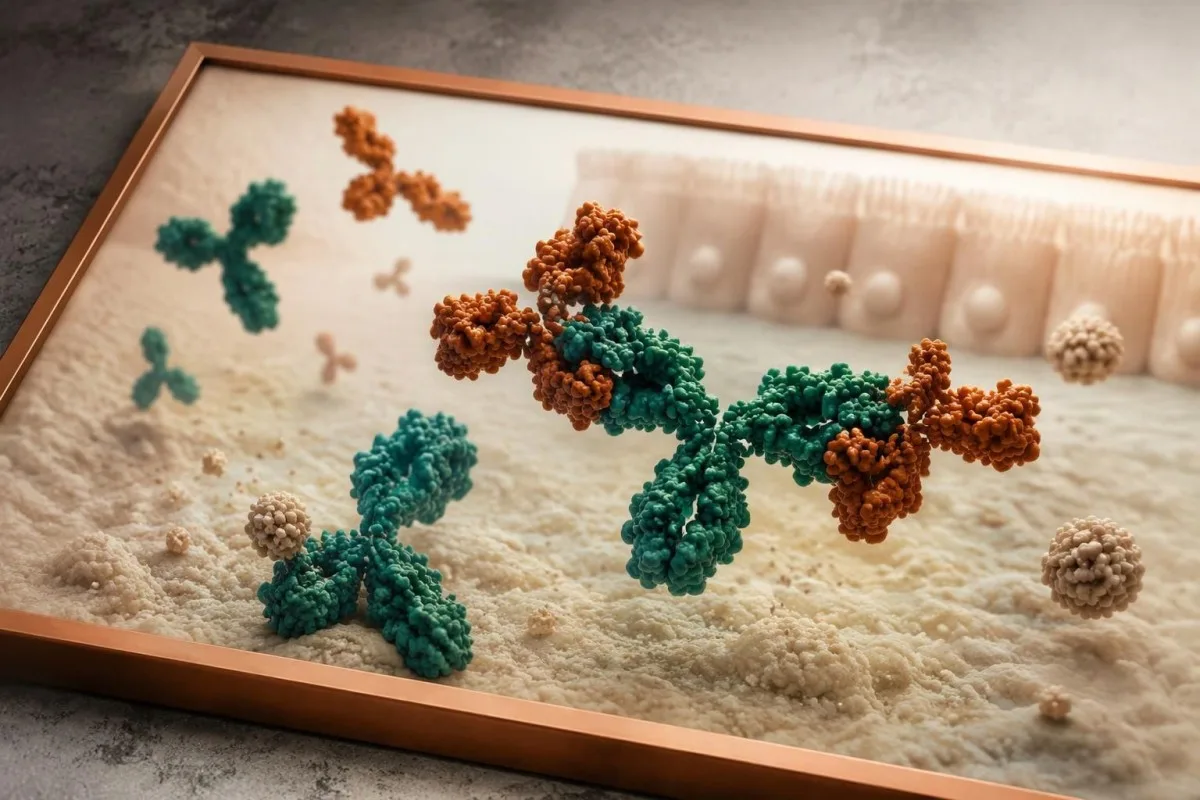
Anti-infliximab antibody tests usually detect binding antibodies; they do not all directly measure neutralizing activity. A positive result of 20 U/mL therefore identifies an assay-defined antibody signal, not a universal percentage of blocked infliximab or a precise prediction of how much benefit remains.
Antibody persistence and magnitude influence whether dose optimization is likely to recover exposure. Cheifetz et al. (2021) described low-titer antibodies as below 10 U/mL for the homogeneous mobility shift assay specifically; that threshold must not be transferred to an ELISA reporting AU/mL or to another laboratory's calibration.
A single low antibody result may be transient or become less clinically relevant after supervised treatment optimization. Repeating paired drug and antibody testing can distinguish a 1-time signal from a rising pattern, but severe disease or an infusion reaction may require action before a second result is available.
Antibodies to infliximab are not the same as antibodies against your own bowel, and they do not by themselves diagnose an immediate allergy. Our explanation of ධනාත්මක ප්රතිදේහ ප්රතිඵල වර්ග helps separate these concepts; breathlessness or faintness during an infusion still requires immediate attention regardless of the antibody number.
ප්රමාණවත් අවම මට්ටමකින් යාන්ත්රණමය අසාර්ථකත්වයක් හැඟවෙන්නේ කවදාද?
යාන්ත්රණමය අසාර්ථකත්වයක් විය හැකිය means objectively active IBD persists despite sufficient infliximab exposure for the treatment goal. A trough of 8 µg/mL with confirmed active colitis may raise this possibility, but selected patients need further exposure optimization before clinicians conclude that another inflammatory pathway should be targeted.

An adequate serum concentration cannot prove that TNF is the only pathway driving a person's current disease. Persistent endoscopic activity with a trough of 12 µg/mL is more supportive of a mechanism problem than the same concentration with normal objective testing and symptoms from bile acid diarrhea.
Calling treatment failure at exactly 5 µg/mL can be premature when the goal is fistula control or substantial endoscopic improvement. The 10–15 µg/mL reassessment discussed in the 2021 consensus provides a safeguard against abandoning an under-optimized treatment, but it is not a requirement to escalate every patient with symptoms.
Objective evidence also has limits: CRP of 3 mg/L does not exclude active IBD, especially in people whose CRP has remained low during previous flares. Borderline stool results need context and sometimes repetition; our guide to මායිම්ගත මළපහ කැල්ටෙක්ට්රින් explains why an isolated intermediate value should not determine a biologic switch.
The strongest case for changing mechanism combines 3 findings: documented inflammation, adequate exposure on a correctly timed sample, and an inadequate clinical response despite appropriate optimization. Structural complications, such as a fixed Crohn's stricture, can also cause symptoms that neither more infliximab nor a different biologic will reliably reverse.
infliximab මට්ටම ප්රමාණවත් වූ විටත් ප්රතිදේහ ධනාත්මක විය හැකිද?
Antibodies can be detected while infliximab remains measurable or adequate, particularly with drug-tolerant assays. A trough of 7 µg/mL and a weak positive antibody result do not automatically mean treatment failure; the assay, antibody trend, and evidence of disease activity determine how much weight that finding deserves.

Drug-tolerant methods can identify antibodies in samples containing infliximab that would interfere with some drug-sensitive methods. This greater analytical sensitivity may reveal early or low-level immunogenicity, but 1 newly detected signal does not necessarily establish clinically meaningful loss of response.
A qualitative positive result contains less information than a quantitative result with the assay's cutoff and units. A report reading only positive cannot distinguish a value just above a 10 AU/mL cutoff from a much larger signal; our guide to ගුණාත්මක හා ගුණාත්මක පරීක්ෂණ explains what each format can establish.
Compare antibody trajectories using the same laboratory method whenever feasible. Hypothetical results of 12, 15, and 13 AU/mL across 3 correctly timed visits may carry a different implication from 12, 80, and 200 AU/mL, although analytical variability and clinical findings still prevent interpretation from trend alone.
කන්ටෙස්ටි යනු AI රුධිර පරීක්ෂණ ප්රතිඵල වේදිකාව that helps distinguish a reported antibody cutoff from a treatment target. When the report lacks the method or units, our interpretation should preserve that uncertainty rather than labeling 1 positive result as proof that infliximab has stopped working.
රසායනාගාර ක්රම සහ ප්රතිදේහ ඒකක වැදගත් වන්නේ ඇයි?
Infliximab and antibody results are method-dependent, so values from different assays are not always interchangeable. Infliximab 1 µg/mL equals 1 mg/L, but antibody results in U/mL, AU/mL, or ng/mL do not have a universal conversion because laboratories use different standards, detection limits, and approaches to drug interference.
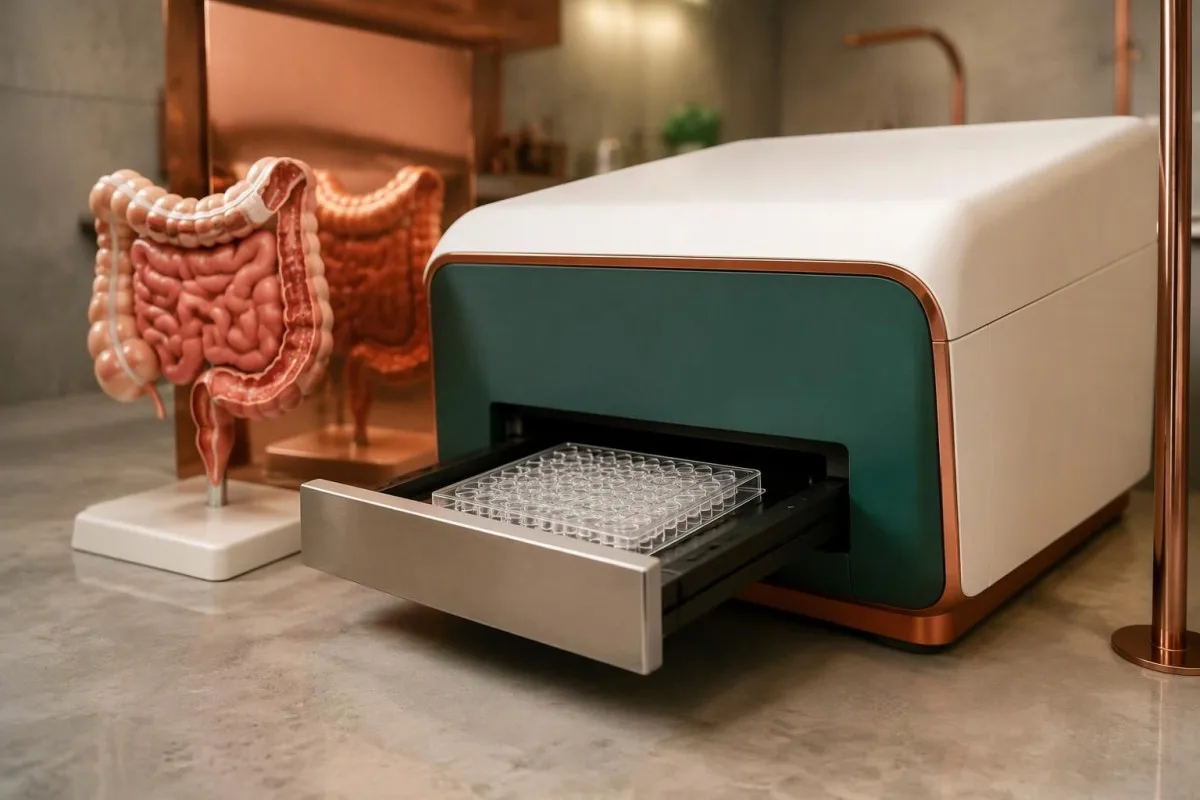
An assay may report free or functionally available drug differently from another method that detects a broader pool of circulating drug. Two laboratories can therefore produce somewhat different concentrations from similar specimens; a change from 6 to 8 µg/mL after switching methods may not represent a true gain in exposure.
Below the quantification limit means the assay cannot reliably assign a numerical concentration below its validated boundary. A report of less than 0.4 µg/mL is not proof of exactly 0 µg/mL, and greater than 100 U/mL cannot tell you whether the true antibody result is 110 or 1,000 U/mL.
Some laboratories use reflex antibody testing only when the drug concentration falls below a preset threshold. If antibodies were not tested because infliximab was 9 µg/mL, the result is not equivalent to antibodies negative; ask whether the antibody field says not performed, not detected, or below detection.
Kantesti's report interpretation should retain the assay name, units, and collection context instead of silently converting 20 AU/mL into another method's scale. Our සායනික ක්රමවේද තොරතුරු explains the distinction between technical interpretation and clinical decision-making; no AI explanation removes the need to confirm an unusual result with the reporting laboratory.
නැවත ඇතිවන රෝග ලක්ෂණ IBD නිසා බව වෛද්යවරු තහවුරු කරන්නේ කෙසේද?
Returning symptoms do not necessarily mean returning intestinal inflammation; clinicians combine stool markers, CRP, infection testing, endoscopy, and imaging as appropriate. Three loose stools daily with a trough of 6 µg/mL can arise from active IBD, an intestinal infection, bile acid diarrhea, or a functional bowel disorder.
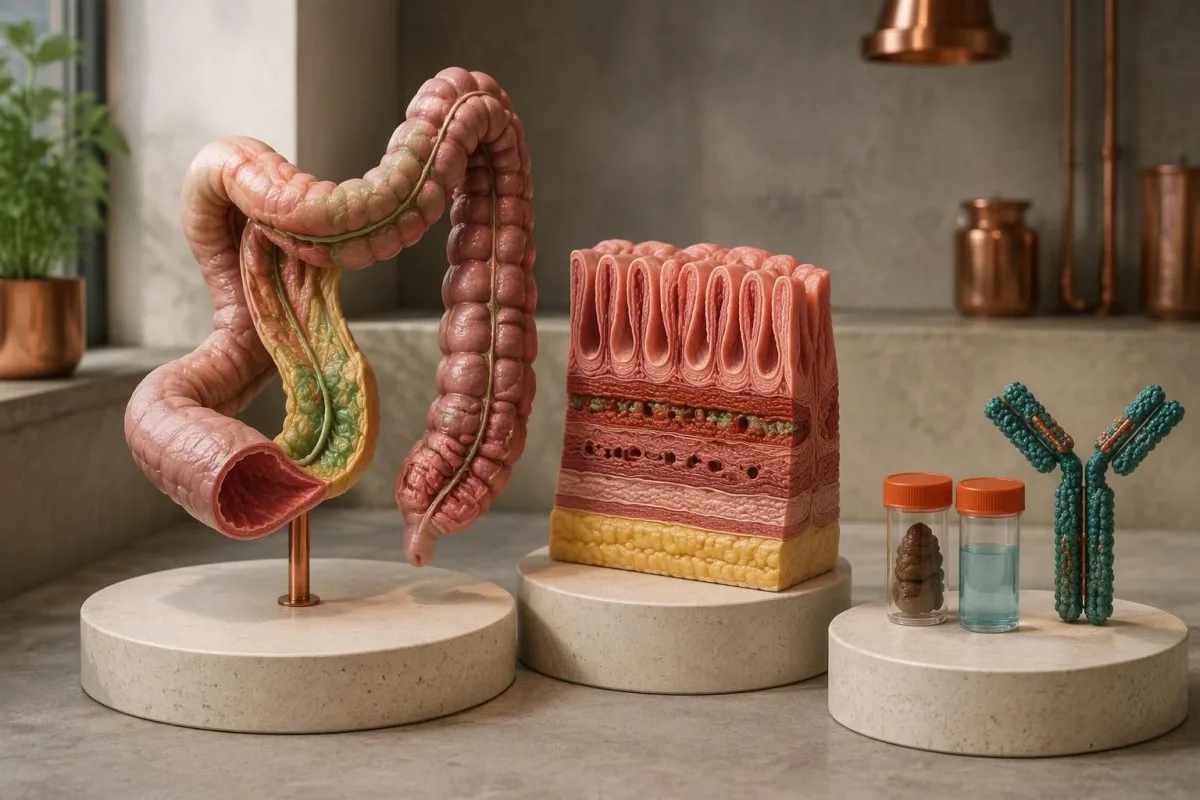
Fecal calprotectin and lactoferrin assess intestinal inflammatory activity rather than infliximab exposure. A hypothetical calprotectin of 800 µg/g adds different information from a trough of 2 µg/mL; our stool inflammation marker comparison explains why paired disease and drug measurements answer separate clinical questions.
C. difficile testing can be necessary during new or worsening diarrhea, even without recent antibiotics. A positive screening test and negative toxin result require contextual interpretation, not automatic classification as an IBD flare; our guide to නොගැළපෙන C. difficile ප්රතිඵල describes why 2 test components can disagree.
Bile acid diarrhea is particularly relevant after ileal disease or resection and can persist despite controlled inflammation. A person with a trough of 10 µg/mL and reassuring objective IBD assessment may need a different evaluation; our explanation of SeHCAT retention results covers one diagnostic route where that test is available.
Bloating, gas, and altered stool frequency can also reflect bacterial overgrowth or carbohydrate malabsorption. At least 2 explanations can coexist with IBD, so a satisfactory trough should not end the assessment; our SIBO breath test guide explains preparation and limitations rather than treating breath testing as proof of every symptom's cause.
අඩු නිරාවරණයකට IBD කණ්ඩායම ප්රතිචාර දක්වන්නේ කෙසේද?
Low exposure without substantial persistent antibodies may lead an IBD team to increase the infliximab dose, shorten the dosing interval, or address a treatment interruption. A common adult intravenous maintenance schedule is 5 mg/kg every 8 weeks after induction, but any adjustment requires individualized prescribing and reassessment of disease activity.
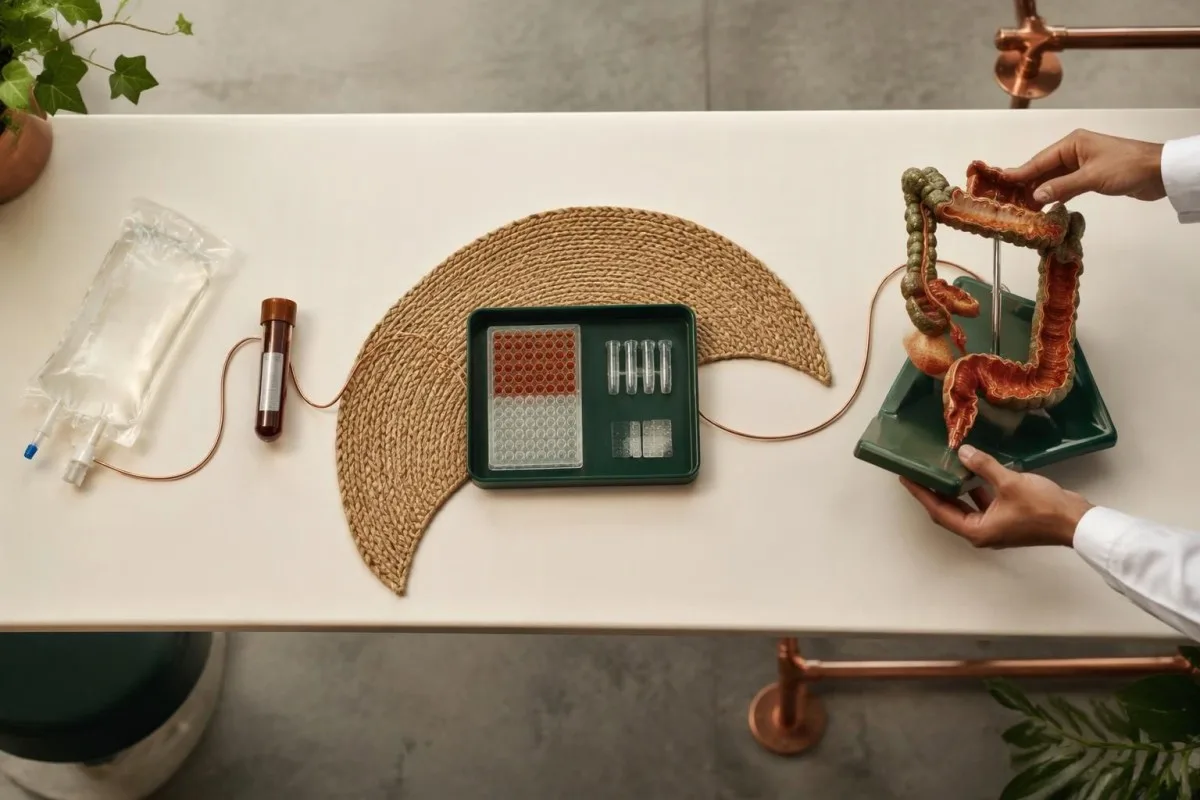
For a hypothetical 70 kg adult, 5 mg/kg corresponds to 350 mg before local preparation or rounding rules. Shortening an unchanged dose from every 8 weeks to every 6 weeks increases average drug administered per unit time by about 33%; the trough increase cannot be predicted as exactly 33% because clearance is not constant.
Increasing the dose and shortening the interval are not pharmacokinetically identical strategies. A larger dose changes peak exposure, while a shorter interval reduces time for concentrations to decline; a hypothetical patient whose symptoms repeatedly return during week 7 may prompt a different discussion from someone symptomatic throughout all 8 weeks.
A useful reassessment checks both exposure and the treatment outcome rather than declaring success because the trough rose. If infliximab increases from 2 to 9 µg/mL but calprotectin remains 900 µg/g and endoscopic disease persists, the new result has narrowed the explanation without necessarily improving the underlying disease.
The timing of repeat testing depends on severity, the revised schedule, and the clinical question; waiting 3 months is not appropriate for every deteriorating patient. Our ඖෂධ සුරක්ෂිතා ප්රවනතා මාර්ගෝපදේශය explains why comparable dates and methods matter, but an app should never independently recommend extra infusions.
ප්රතිකාර මාරු කිරීම හෝ සංයෝජන ප්රතිකාර සලකා බලන්නේ කවදාද?
Persistent high antibodies with low drug may favor changing treatment, while adequate exposure with confirmed active IBD may favor switching to a different mechanism. Low-level immunogenicity can sometimes be addressed through supervised optimization or an immunomodulator, but a result of 15 U/mL alone cannot determine which option offers the best benefit-risk balance.
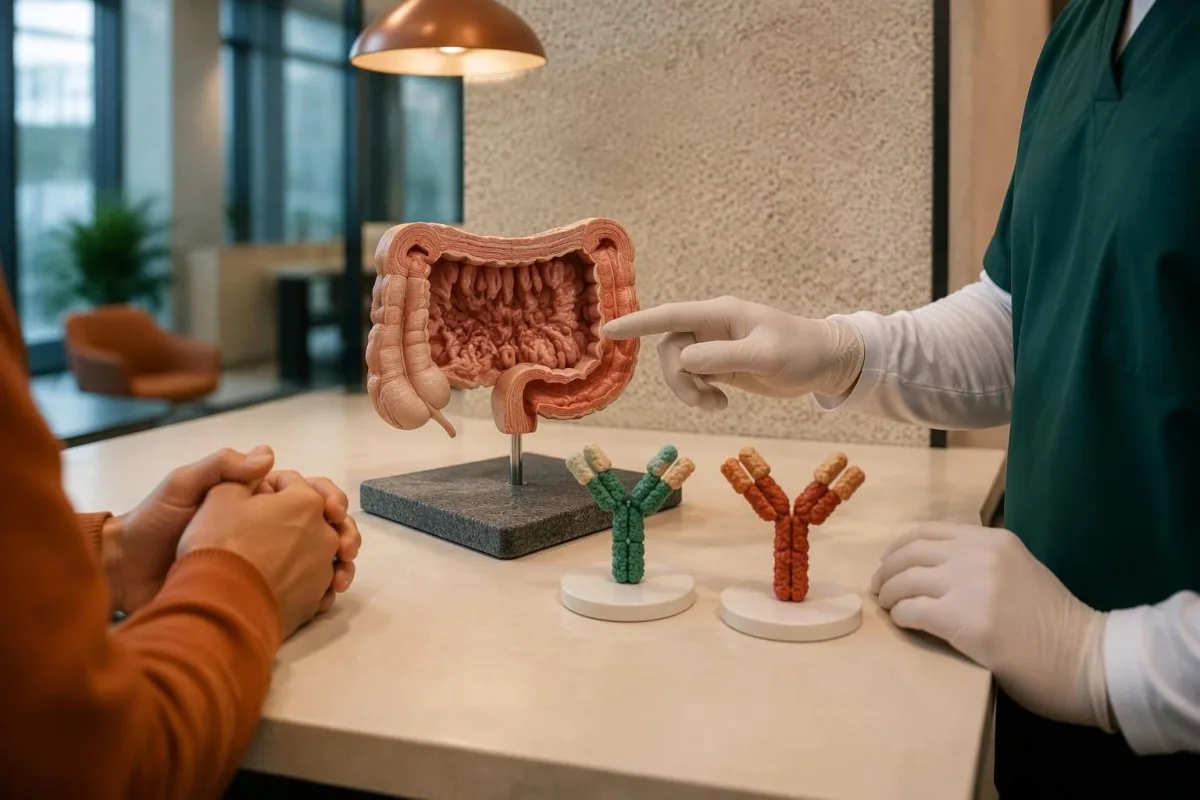
Switching within the anti-TNF class can make sense when infliximab previously controlled disease but antibody-associated clearance now prevents adequate exposure. Switching to another mechanism becomes more persuasive when inflammation persists with adequate exposure; these are 2 different failure patterns, not interchangeable reasons to choose the next medicine.
An immunomodulator such as azathioprine or methotrexate may reduce immunogenicity in selected circumstances, but adding one introduces additional monitoring and adverse-effect risks. Before azathioprine, TPMT testing and safety assessment can inform prescribing; TPMT and NUDT15 assessment do not replace ongoing CBC and liver monitoring, even when baseline results are normal.
If a person already takes a thiopurine, metabolite testing can help clarify exposure or a metabolism pattern before assuming combination therapy has failed. For example, 2 patients prescribed the same mg dose may have very different metabolite findings; our thiopurine treatment pattern guide explains why prescription dose alone is incomplete.
Restarting infliximab after a long interruption deserves a separate safety discussion because immunogenicity and infusion reactions can complicate re-exposure. A treatment gap of 6 months is not equivalent to a routine 1-week scheduling delay; never restart, add an immunomodulator, or stop an existing medicine based solely on an online interpretation.
ආරම්භක ප්රතිකාරය, fistulas, දරුවන් සහ එන්නත් ඉලක්ක වෙනස් කරන්නේද?
Treatment phase, disease phenotype, age, and formulation can change the relevant exposure goal; intravenous maintenance targets should not be copied into every setting. Standard adult intravenous induction commonly uses 5 mg/kg at weeks 0, 2, and 6, and those early concentrations are interpreted differently from an established 8-week maintenance trough.

The 2021 expert consensus described induction goals of approximately 20–25 µg/mL at week 2, 15–20 µg/mL at week 6, and 7–10 µg/mL at week 14 (Cheifetz et al., 2021). These are consensus exposure goals influenced by disease phenotype and outcome, not interchangeable minimums from one definitive randomized trial.
Perianal fistula outcomes may require higher exposure than symptom control in uncomplicated luminal disease, but observational associations do not establish a universal healing threshold. A fistula still draining at 10 µg/mL may also need imaging, drainage of an abscess, or procedural care; raising the trough cannot substitute for addressing an undrained collection.
Children can have different clearance and dosing requirements, particularly with lower body weight or severe disease. An adult maintenance benchmark of 5 µg/mL should not become a parent-directed dosing rule; our discussion of ළමුන් සඳහා AI අර්ථ නිරූපණය explains why pediatric specialist context and age-appropriate interpretation remain necessary.
Subcutaneous infliximab produces a different concentration-time profile from intermittent intravenous infusions, and availability and prescribing schedules vary internationally. A concentration of 15 µg/mL during injection treatment should not be labeled excessive merely because an intravenous report lists 3–7 µg/mL; the formulation, actual regimen, and sampling convention must be specified.
යුගලිත ප්රතිඵල සායනික තර්කනය වෙනස් කරන්නේ කෙසේද?
Paired results guide the next question rather than dictate a prescription: low drug without antibodies suggests underexposure, low drug with persistent antibodies suggests immunogenicity, and adequate drug with inflammation raises possible mechanism failure. The following 4 examples are entirely hypothetical; the concentrations are illustrative, not personalized treatment recommendations.
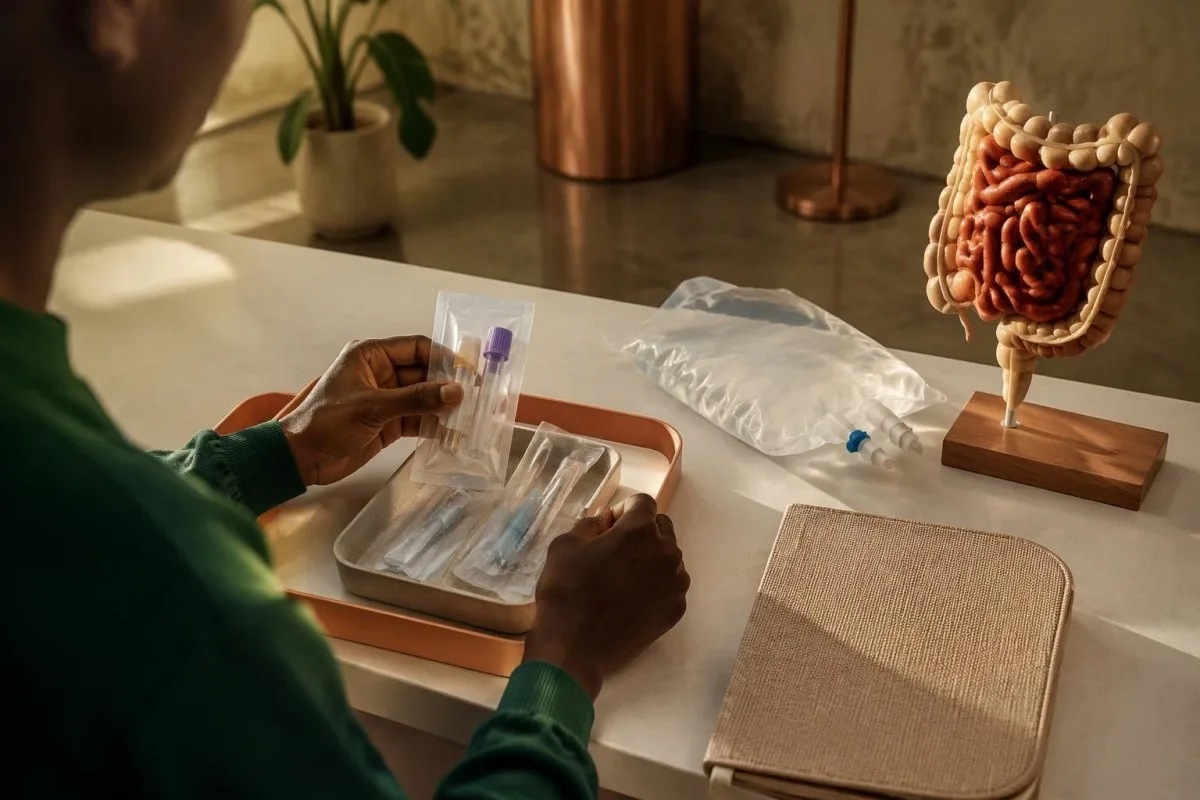
Example 1: a 34-year-old with Crohn's disease has a true trough of 1.8 µg/mL, no detected antibodies, albumin of 29 g/L, and calprotectin of 1,100 µg/g. This pattern supports underexposure in active disease; confirming the infusion schedule and considering supervised optimization are more logical than immediately declaring TNF blockade ineffective.
Example 2: a 46-year-old with ulcerative colitis has infliximab below 0.4 µg/mL and antibodies above the laboratory's 100 U/mL reporting limit on 2 visits. Assuming the assay defines that antibody signal as substantial, persistent immunogenicity is plausible; simply increasing the dose may be less successful than a clinician-directed treatment change.
Example 3: a 28-year-old has a trough of 11 µg/mL, no significant antibodies, and repeatedly active colitis on endoscopy despite appropriate optimization. Example 4: a 61-year-old has the same 11 µg/mL trough but reassuring endoscopy and diarrhea after ileal resection; the first pattern raises mechanism failure, whereas the second prompts investigation of non-inflammatory causes.
කන්ටෙස්ටි යනු AI මගින් බලගැන්වූ රුධිර පරීක්ෂණ විශ්ලේෂණ මෙවලම that helps organize these distinctions when the report and treatment details are supplied. Our AI තාක්ෂණ පැහැදිලි කිරීම describes how laboratory context informs interpretation; if a 2-week-old report lacks sampling timing, the missing information must stay visible rather than being guessed.
පසු විපරම් හමුවට ඔබ ගෙන ආ යුත්තේ කුමක්ද, සහ අදාළ වන්නේ කුමන සාක්ෂිද?
Bring the complete report, infusion timeline, and objective disease results to your IBD review; these 3 evidence streams make paired drug-antibody testing actionable. Seek earlier care for severe deterioration rather than waiting for the next trough, and distinguish infliximab-specific clinical research from general educational publications about accompanying laboratory abnormalities.
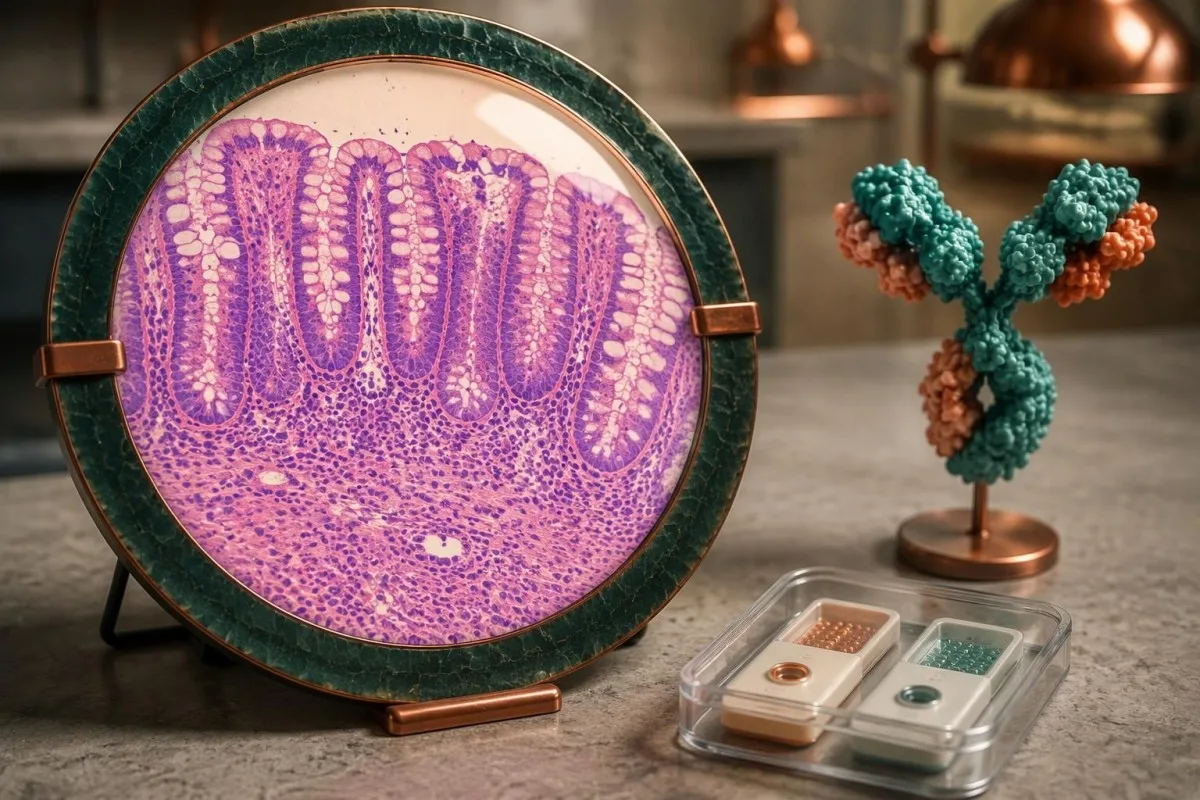
A useful review record includes the previous 2 infusion dates, actual dose, collection timing, assay name, antibody units, and recent CRP, albumin, and fecal calprotectin. Add symptom timing, steroid use, recent antibiotics, and missed doses; ask whether the proposed change addresses insufficient exposure, immunogenicity, active non-TNF disease, or a non-inflammatory explanation.
Contact your clinical team promptly for worsening diarrhea with dehydration, persistent vomiting, new significant bleeding, or fever of 38°C or higher while immunosuppressed. Severe abdominal pain with distension, fainting, or inability to keep fluids down may require emergency assessment; during an infusion, sudden breathing difficulty or collapse requires immediate staff attention, not interpretation of an antibody report.
Kantesti provides educational interpretation, not independent biologic prescribing, and our වගකිවයුතු AI මූලධර්ම explain that boundary. A reassuring trough of 10 µg/mL does not establish that an infusion is safe during an acute illness; the treating service must assess symptoms, examination findings, and any necessary investigations.
The 2 Zenodo publications listed below address accompanying laboratory interpretation, not infliximab target validation: our RDW සහ රතු-රුධිර සෛල මාර්ගෝපදේශය concerns anemia patterns, while our BUN සහ creatinine මාර්ගෝපදේශය concerns renal and hydration context. These educational deposits are not evidence for anti-drug antibody cutoffs; the AGA guideline, TAXIT trial, and biologic-monitoring consensus supply the directly relevant clinical references.
නිතර අසනු ලබන ප්රශ්න
අඩු ඉන්ෆ්ලික්සිමාබ් මට්ටමක් යන්නෙන් අදහස් කරන්නේ කුමක්ද?
infliximab මට්ටම අඩු වීමෙන් අදහස් වන්නේ එම ප්රතිකාර අදියර සහ අරමුණ සඳහා තෝරාගත් යොමු මට්ටමට වඩා රුධිර සංසරණයේ පවතින ඖෂධ නිරාවරණය අඩු බවයි; එයින් infliximab නතර කළ යුතු බව ස්වයංක්රීයව අදහස් නොවේ. සැලකිය යුතු ප්රතිදේහ නොමැතිව පවත්වාගෙන යාමේ අදියරේදී මනින ලද සැබෑ අවම මට්ටම 2 µg/mL වීමෙන් වේගවත් නිෂ්කාශනයක්, අන්ත්රයෙන් ප්රෝටීන් අහිමි වීමක් හෝ ප්රමාණවත් නොවන මාත්රාවක් හෝ මාත්රා අතර කාල පරතරයක් පිළිබිඹු විය හැකිය. සැලකිය යුතු ප්රතිදේහ අඛණ්ඩව පවතින අතර ඖෂධ මට්ටම අඩු නම්, එයින් ප්රතිශක්ති-මැදිහත් නිෂ්කාශනයක් යෝජනා වේ. ඔබේ IBD කණ්ඩායම රෝගයේ වස්තුමය ක්රියාකාරීත්වය, ඖෂධ සම්භාරණයේ වේලාව සහ පරීක්ෂණ ක්රමය සමඟ ප්රතිඵලය අර්ථ දැක්විය යුතුය.
IBD සඳහා හොඳ ඉන්ෆ්ලික්සිමාබ් අවම මට්ටමක් යනු කුමක්ද?
IBD ඇති සෑම පුද්ගලයෙකුටම සුදුසු එකම infliximab trough අගයක් නොමැත. 2017 AGA මාර්ගෝපදේශය ප්රතික්රියාශීලී නඩත්තු නිරීක්ෂණය සඳහා අවම වශයෙන් 5 µg/mLක් යෝජනා කළ අතර, 2021 විශේෂඥ එකඟතාවක නඩත්තු සාන්ද්රණය 5–10 µg/mL ලෙස සඳහන් විය. ද්විතීයික ප්රතිචාර අහිමිවීම ඇති තෝරාගත් රෝගීන් සඳහා ප්රතිකාරය අත්හැරීමට පෙර 10–15 µg/mLදී නැවත තක්සේරුවක් අවශ්ය විය හැකිය. ප්රේරණය, ෆිස්ටුලා සහ චර්මාභ්යන්තර ප්රතිකාර සඳහා වෙනස් සන්දර්භයක් අවශ්ය බැවින්, රසායනාගාර පරාසයක් යනු සැමට පොදු මාත්රා ඉලක්කයක් නොවේ.
මගේ ඉන්ෆ්ලික්සිමාබ් මට්ටම පරීක්ෂා කරගත යුත්තේ කවදාද?
For intravenous infliximab, a trough sample should be collected immediately before the next infusion begins. A sample obtained 2 days after an infusion is not comparable with routine pre-infusion targets. Record the last infusion date, dose, scheduled interval, and actual collection time, especially if an 8-week appointment was delayed. Subcutaneous infliximab has a different exposure profile, so sampling should follow the prescribing team's and laboratory's instructions.
Infliximab සඳහා ඇති ප්රතිදේහ අතුරුදහන් විය හැකිද?
infliximab වෙත ඇති අඩු මට්ටමේ ප්රතිදේහ සමහර විට හඳුනාගත නොහැකි බවට පත්වීමට හෝ සායනිකව අඩු අදාළත්වයක් ඇති වීමට ඉඩ ඇත. එහෙත්, ඖෂධ මට්ටම ඉතා අඩු වන විට අඛණ්ඩව පවතින සැලකිය යුතු ප්රතිදේහ මැඩපැවැත්වීම වඩා දුෂ්කරය. 2021 විශේෂඥ එකඟතාවයකින් එක් සමජාතීය සංචලතා-මාරු පරීක්ෂණ ක්රමයක් සඳහා අඩු ටයිටර් ප්රතිදේහ ලෙස 10 U/mL ට අඩු අගයන් විස්තර කරන ලදී; එම සීමාව සෑම රසායනාගාර ක්රමයකටම යෙදිය නොහැක. වෛද්ය අධීක්ෂණය යටතේ ප්රතිකාරය ප්රශස්ත කිරීම හෝ ප්රතිශක්ති-විකරණ ඖෂධයක් භාවිත කිරීම තෝරාගත් රෝගීන්ට උපකාරී විය හැකි අතර, අනෙක් අයට ප්රතිකාරය වෙනස් කිරීමට අවශ්ය වේ. නැවත කරන යුගල පරීක්ෂණ මඟින් ප්රතිදේහ අඛණ්ඩව පවතීද යන්න පැහැදිලි කළ හැකි නමුත්, රෝගීන් තමන් විසින්ම ප්රතිකාරය වෙනස් නොකළ යුතුය.
මට්ටම සාමාන්ය වුවද ඉන්ෆ්ලික්සිමැබ් ක්රියා කිරීම නතර කළ හැකිද?
ප්රමාණවත් රුධිර සංසරණ සාන්ද්රණයක් තිබියදීත් සක්රීය බව වස්තුමය වශයෙන් තහවුරු කළ IBD පාලනය කිරීමට Infliximab අසමත් විය හැකි අතර, එමඟින් යාන්ත්රණමය ප්රතිකාර අසාර්ථකත්වයක් ඇති විය හැකි බව මතු කරයි. 10 µg/mL අවම සාන්ද්රණයක් තිබීමෙන් බඩවැල් සුවවීම සහතික නොවන අතර රෝගය මෙහෙයවන එකම මාර්ගය TNF බව තහවුරු නොවේ. ක්රියාකාරී යාන්ත්රණය වෙනස් කිරීමට පෙර, වෛද්යවරු ප්රදාහය තහවුරු කර, ව්යුහාත්මක හෝ ආසාදනමය සංකූලතා ඇගයීමට ලක් කර, නිශ්චිත ප්රතිකාර ඉලක්කය සඳහා ඖෂධ නිරාවරණය ප්රමාණවත් වූයේද යන්න සලකා බලති. වස්තුමය ඇගයීමෙන් සැනසිලිදායක ප්රතිඵල ලැබුණද පාචනයට ප්රදාහමය නොවන හේතුවක් තිබිය හැක.
ඉන්ෆ්ලික්සිමාබ් මට්ටම ඉහළ වීම අනතුරුදායකද?
ඉහළ infliximab සාන්ද්රණයක් තිබීමෙන් එය ස්වයංක්රීයව අනතුරුදායක බව අදහස් නොවන අතර, සියලුම IBD රෝගීන්ට අදාළ වන බව තහවුරු කර ඇති තනි serum විෂ සහිතතා සීමාවක් නොමැත. 15 µg/mL ප්රතිඵලයක්, induction අවධියේදී, fistula ප්රතිකාරයේදී හෝ චර්මාභ්යන්තර ප්රතිකාරයේදී, සාමාන්ය intravenous නඩත්තු ප්රතිකාරයේදී එය අර්ථකථනය කරන ආකාරයට වඩා වෙනස් ලෙස අර්ථකථනය කළ හැකිය. ආරක්ෂාව රඳා පවතින්නේ සාන්ද්රණය මත පමණක් නොව, සමස්ත ප්රතිකාර ක්රමය, ආසාදන, infusion ප්රතික්රියා සහ අනෙකුත් සායනික සොයාගැනීම් මතය. ඔබගේ ප්රතිකාරය නියම කළ කණ්ඩායම සමඟ ප්රතිඵලය සාකච්ඡා නොකර infusion එකක් මඟ නොහරින්න හෝ මාත්රාව අඩු නොකරන්න.
වෙනත් පරීක්ෂණාගාරයකට මාරු වූ පසු මගේ infliximab ප්රතිදේහ පරීක්ෂණ ප්රතිඵල වෙනස් වූයේ ඇයි?
පරීක්ෂණ ක්රමවල ක්රමාංකනය, ඒකක, හඳුනාගැනීමේ සීමා සහ රුධිරයේ සංසරණය වන ඖෂධය ඉවසීමේ හැකියාව වෙනස් වන බැවින්, රසායනාගාර මාරු කිරීමෙන් පසු Infliximab ප්රතිදේහ ප්රතිඵල වෙනස් විය හැක. 20 AU/mL ප්රතිඵලයක් U/mL හෝ ng/mL බවට සෑම අවස්ථාවකම පරිවර්තනය කළ නොහැක. Infliximab මැනිය හැකි මට්ටමක පවතින විට, ඖෂධයට ඔරොත්තු දෙන ක්රමයකින් ඖෂධයට සංවේදී පරීක්ෂණයකින් මඟහැරෙන ප්රතිදේහ හඳුනාගත හැක. හැකි විට එකම ක්රමය භාවිත කර ප්රවණතා සසඳන්න, එසේම ප්රතීක පරීක්ෂණ නියමයක් නිසා අත්හැර දමා තිබේද යන්න වෙනුවට, ප්රතිදේහ පරීක්ෂණය ඇත්ත වශයෙන්ම සිදු කළේදැයි විමසන්න.
ඔබේ රුධිර පරීක්ෂණ ප්රතිඵල කියවා ගන්න
ඔබේ රසායනාගාර වාර්තාව උඩුගත කරන්න; Kantesti හි AI තත්පර කිහිපයකින් එක් එක් ජෛව සලකුණ සරල භාෂාවෙන් පැහැදිලි කරයි. ලොව පුරා මිලියන 2කට අධික පිරිසක් භාවිත කරති.
ආශ්රිත
- ක්ලයින්, ටී., මිචෙල්, එස්., සහ වෙබර්, එච්. (2026). RDW රුධිර පරීක්ෂණය: RDW-CV, MCV සහ MCHC පිළිබඳ සම්පූර්ණ මාර්ගෝපදේශය. Kantesti AI වෛද්ය පර්යේෂණය. ඩීඕඅයි
- ක්ලයින්, ටී., මිචෙල්, එස්., සහ වෙබර්, එච්. (2026). BUN/Creatinine අනුපාතය විස්තරය: කුඩු ක්රියාකාරිත්ව පරීක්ෂණ මාර්ගෝපදේශය. Kantesti AI වෛද්ය පර්යේෂණය. ඩීඕඅයි
- Feuerstein JD et al. (2017). American Gastroenterological Association Institute Guideline on Therapeutic Drug Monitoring in Inflammatory Bowel Disease. Gastroenterology. ඩීඕඅයි
- Vande Casteele N et al. (2015). Trough concentrations of infliximab guide dosing for patients with inflammatory bowel disease. Gastroenterology. ඩීඕඅයි
- Cheifetz AS et al. (2021). A Comprehensive Literature Review and Expert Consensus Statement on Therapeutic Drug Monitoring of Biologics in Inflammatory Bowel Disease. The American Journal of Gastroenterology. ඩීඕඅයි
- මි2+විශ්ලේෂණය කළ පරීක්ෂණ
- 127+රටවල්
- 100+භාෂා
වෛද්ය කණ්ඩායම පිළිබඳව


E-E-A-T විශ්වාස සංඥා
අත්දැකීම්
වෛද්යවරයා විසින් මෙහෙයවන ලද රසායනාගාර අර්ථකථන ක්රියාවලි පිළිබඳ සමාලෝචනය.
ප්රවීණතාව
සායනික සන්දර්භය තුළ ජෛව සලකුණු (biomarkers) හැසිරෙන ආකාරය පිළිබඳ රසායනාගාර වෛද්ය විද්යා අවධානය.
අධිකාරීත්වය
වෛද්ය Thomas Klein විසින් වෛද්යමය වශයෙන් සමාලෝචනය කරන ලද අතර, Dr. Sarah Mitchell සහ Prof. Dr. Hans Weber දායක වූහ.
විශ්වසනීයත්වය
අනතුරු ඇඟවීම් අඩු කිරීමට පැහැදිලි පසුකැඳවීම් මාර්ග සහිත සාක්ෂි-පාදක අර්ථකථනය.






වෛද්ය වියාචනය
මෙම ලිපිය අධ්යාපනික අරමුණු සඳහා පමණක් වන අතර වෛද්ය උපදෙස් ලෙස නොසැලකේ. රෝග නිદાન සහ ප්රතිකාර තීරණ සඳහා සෑම විටම සුදුසුකම් ලත් සෞඛ්ය සේවා සපයන්නෙකුගෙන් උපදෙස් ලබාගන්න.
ප්රකාශයට පත් කරන ලදී · කර්තෘ මණ්ඩලය අමතන්න
Kantesti Ltd විසින් ප්රකාශයට පත් කරන ලද අතර, එංගලන්තයේ සහ වේල්සයේ ලියාපදිංචි සමාගමකි, සමාගම් අංකය. 17090423, ලන්ඩන්, එක්සත් රාජධානිය.
