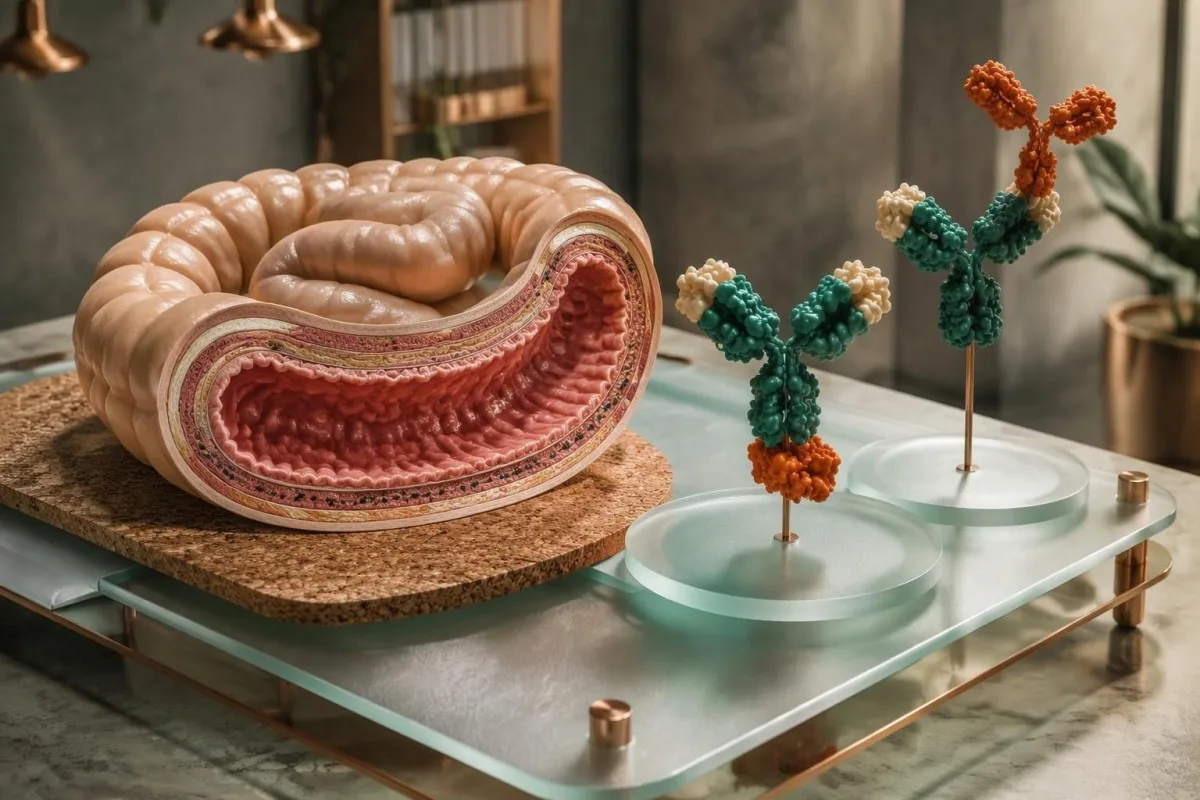
Pinagsasama ng pagsusuri sa antas ng infliximab ang konsentrasyon ng gamot at mga antibody upang maipaliwanag ang pagkawala ng kontrol sa IBD. Ang mababang antas ng gamot nang walang makabuluhang mga antibody ay nagpapahiwatig ng hindi sapat na pagkakalantad; ang mababang antas ng gamot na may patuloy na mataas na mga antibody ay nagpapahiwatig ng clearance na pinamagitan ng immune system. Ang aktibong pamamaga sa kabila ng sapat na pagkakalantad ay nagbubunsod ng posibilidad ng pagkabigo ng mekanismo—ngunit pagkatapos lamang makumpirma ang pamamaga, wastong pagkolekta ng sample, at target na naaangkop sa layunin ng paggamot.

Mahahalagang punto
- Magkapares na resulta ang nagtatangi sa hindi sapat na pagkakalantad sa infliximab mula sa clearance na may kaugnayan sa mga antibody; hindi pinatutunayan ng alinman sa mga resulta lamang kung bakit bumalik ang mga sintomas.
- Pagkuha ng sample bago ang pagbubuhos ay nangangahulugan ng pagkolekta ng sample sa laboratoryo bago magsimula ang susunod na intravenous infusion, hindi makalipas ang 2 araw.
- Mga pamantayan sa maintenance ay nagkakaiba: nagmungkahi ang alituntunin ng AGA noong 2017 ng hindi bababa sa 5 µg/mL para sa reaktibong pagsubaybay, samantalang inilalarawan ng ekspertong pinagkasunduan ang 5–10 µg/mL para sa maintenance.
- Mababang antas ng infliximab kapag walang mga antibody ay maaaring magpahiwatig ng mas mabilis na clearance, pagkawala ng protina sa bituka, pagkaantala ng dosis, o napakahabang pagitan ng mga dosis.
- Mga antibody laban sa infliximab pinakamahalaga kapag nananatili ang mga ito, makabuluhan para sa assay na iyon, at may kasamang napakababa o hindi matukoy na antas ng gamot.
- Posibleng mekanistikong pagkabigo nangangailangan ng IBD na aktibo ayon sa obhetibong pagsusuri sa kabila ng sapat na exposure; hindi nito pinatutunayan ang kondisyon ang pagtatae na may trough na 8 µg/mL.
- Mga yunit ng assay ay hindi mapagpapalit: katumbas ng 1 mg/L ang 1 µg/mL ng infliximab, ngunit hindi maaaring magkaroon ng pangkalahatang conversion sa pagitan ng U/mL at AU/mL ng antibody.
- Mga pagbabago sa paggamot ay dapat pag-usapan kasama ng iyong pangkat sa IBD; para sa piling kaso ng pagkawala ng tugon, maaaring makatuwirang subukang umabot muna sa exposure na 10–15 µg/mL bago ihinto ang infliximab.
Ano ba talaga ang ipinapakita ng pagsusuri sa antas ng infliximab?
Isang pagsusuri sa antas ng infliximab sumusukat sa umiikot na infliximab, karaniwan kasabay ng mga antibody laban sa gamot, upang siyasatin ang hindi sapat na exposure o ang pag-aalis ng gamot na dulot ng immune system. Iba ang tanong na sinasagot ng resultang 2 µg/mL na walang natukoy na antibody kumpara sa 2 µg/mL na may patuloy na mataas na antas ng antibody; hindi awtomatikong nangangahulugan ang alinman na dapat ihinto ang gamot.
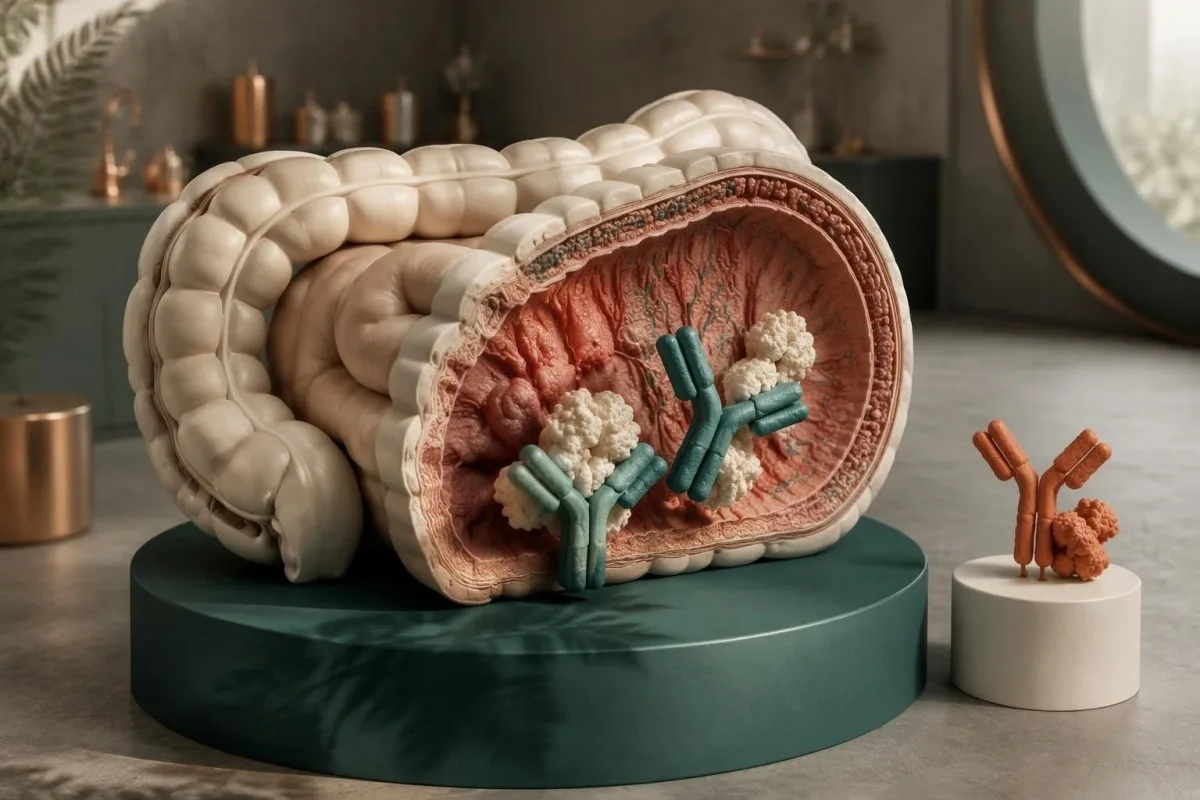
Reaktibong therapeutic drug monitoring ay pagsusuring isinasagawa dahil lumalala ang mga sintomas o may ebidensiya ng aktibong sakit. Naiiba ito sa maagap na monitoring habang tila nasa remission: maaaring bigyang-katwiran ng hipotetikal na trough na 4 µg/mL ang pagsisiyasat kapag dokumentado ang pagsiklab ng sakit, ngunit maaaring mangailangan ng ibang pag-uusap kapag ipinakikita ng endoscopy at mga marker sa dumi ang tuluy-tuloy na paghilom.
Hinaharang ng infliximab ang tumor necrosis factor, na karaniwang dinadaglat na TNF; hindi sinusukat ng pagsusuri sa konsentrasyon kung na-neutralize ang bawat signal ng TNF sa bituka. Sinusukat ng resulta sa serum na 7 µg/mL ang gamot sa sirkulasyon, hindi ang aktibidad ng gamot sa bawat apektadong bahagi ng bituka o ang lawak ng paghilom ng bituka.
Gumagamit ang praktikal na interpretasyon ng hindi bababa sa 3 input: konsentrasyon ng gamot, mga resulta ng antibody, at obhetibong aktibidad ng sakit. Mahalaga rin ang naunang tugon—ang pagbabalik ng mga sintomas matapos ang 18 buwan ng pagkontrol sa sakit ay kumakatawan sa sekondaryang pagkawala ng tugon, samantalang nagbubukas ng ibang mga tanong hinggil sa exposure sa induction at mekanismo ng paggamot ang hindi kailanman pagkamit ng pagkontrol sa sakit sa paunang paggamot.
Si Kantesti ay isang AI blood test analyzer na tumutulong sa mga mambabasa na maunawaan ang pinagsamang resulta ng infliximab nang hindi itinuturing na tagubilin sa dosis ang 1 numero sa laboratoryo. Pinamamahalaan ang aming platform ng Kantesti LTD, UK Company No. 17090423; hiwalay ang impormasyon tungkol sa aming organisasyon sa klinikal na ebidensiyang sumusuporta sa therapeutic drug monitoring.
Kailan dapat kumuha ng sample para sa trough level ng infliximab?
Mga trough level ng intravenous infliximab ay dapat kunin kaagad bago simulan ang susunod na infusion, kapag malapit na sa pinakamababang antas nito ang konsentrasyon sa pagitan ng mga dosis na iyon. Hindi trough ang sample na kinuha 2 araw pagkatapos ng infusion at hindi ito dapat direktang ikumpara sa mga target bago ang infusion para sa maintenance.
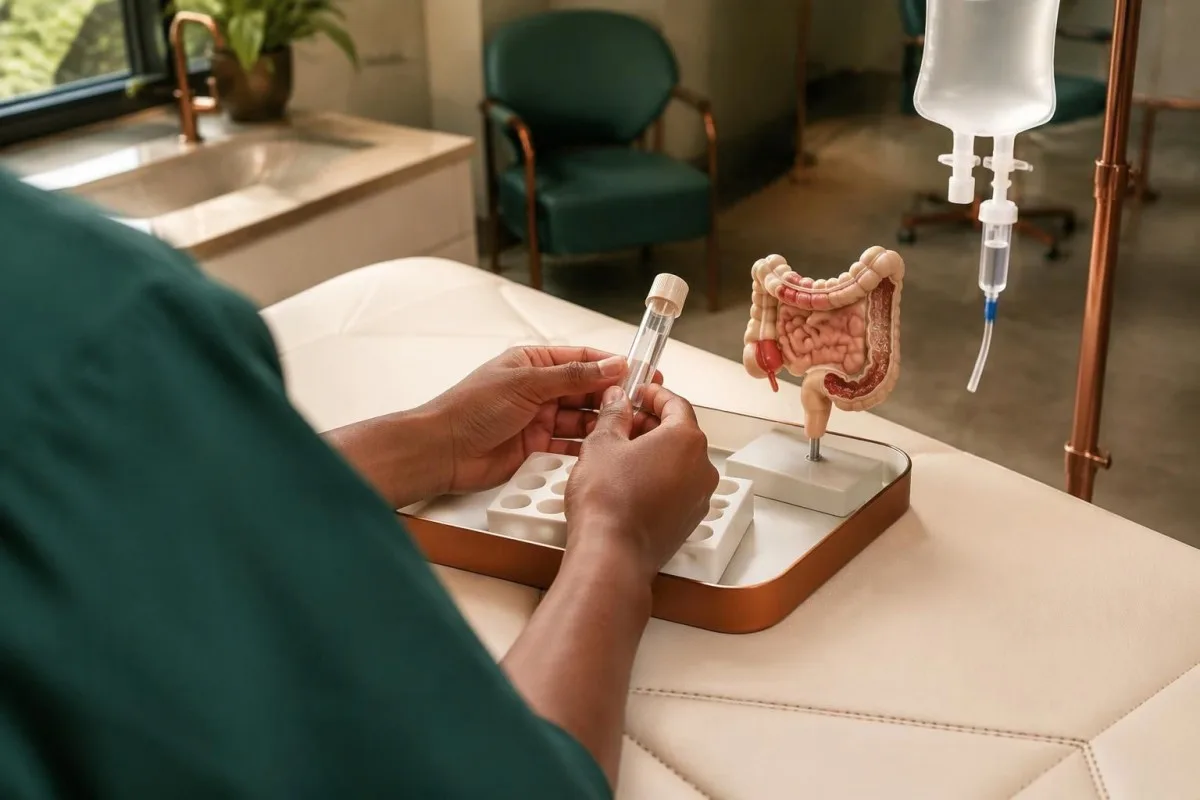
Maaaring baguhin ng oras ng pagkuha ng sample ang maliwanag na kahulugan ng resulta kahit walang pagbabago sa bisa ng paggamot. Halimbawa, maaaring tumukoy sa iisang siklo ng dosis ang hipotetikal na 18 µg/mL na kinuha ilang sandali pagkatapos ng infusion at 3 µg/mL na kinuha bago ang kasunod na infusion—hindi ito nangangahulugan ng biglaang paglala sa pagitan ng 2 magkahiwalay na kalagayan ng paggamot.
Itala ang petsa ng nakaraang infusion, aktuwal na dosis sa mg, nakatakdang pagitan, at oras ng pagkuha bago bigyang-kahulugan ang ulat. Kung maantala hanggang ika-10 linggo ang infusion na nakatakda tuwing 8 linggo, inilalarawan ng nagresultang konsentrasyon ang mas mahabang pagitan na walang gamot; hindi nito malinaw na masasagot kung sapat ang exposure sa orihinal na iskedyul na 8 linggo.
Collection from a line recently used to administer infliximab can contaminate the specimen and produce a misleadingly high result. Ask the infusion service about its collection protocol, and tell it if sampling occurred after treatment started; the timing principles resemble other pre-dose medication tests, although their targets differ.
Fasting is generally not required for the infliximab concentration itself, but another test ordered during the same visit may have preparation requirements. Our gabay sa paghahanda ng unang pagkuha explains how to document medication timing; for this test, an accurate infusion timeline usually matters more than an 8-hour fast.
Anong antas ng infliximab ang itinuturing na sapat?
May no universal adequate infliximab trough for every patient, disease phenotype, assay, and treatment phase. The 2017 AGA guideline suggested at least 5 µg/mL during reactive maintenance monitoring, while a 2021 expert consensus described maintenance concentrations of 5–10 µg/mL and higher exposure in selected loss-of-response situations.
The AGA benchmark of at least 5 µg/mL is a clinical decision aid, not a healthy-population reference range (Feuerstein et al., 2017). Infliximab is a prescribed biologic: an untreated person normally has no circulating infliximab, so a laboratory's therapeutic interval should never be read like the normal range for sodium.
The TAXIT trial enrolled 263 adults with stable responses and optimized intravenous infliximab toward 3–7 µg/mL before randomized follow-up. Its primary remission endpoint did not improve with concentration-based dosing, although some secondary outcomes favored that approach; this explains why the historical 3–7 µg/mL window is useful context rather than a universal modern target (Vande Casteele et al., 2015).
Cheifetz et al. (2021) recommended considering exposure of 10–15 µg/mL before discontinuing infliximab for secondary loss of response in selected patients. This is expert consensus, not proof that everyone should be escalated to 15 µg/mL; fistulas, endoscopic goals, disease severity, safety, and prior optimization affect whether that reasoning applies.
A concentration of 12 µg/mL is not automatically toxic, and a concentration of 4 µg/mL does not automatically require escalation in an asymptomatic patient with documented healing. Unlike the narrower toxicity discussions around some iba pang gamot na binabantayan ang trough, infliximab has no single established serum toxicity cutoff that dictates action.
| Antas | Saklaw | Kahulugan |
|---|---|---|
| Historical TAXIT optimization window | 3–7 µg/mL | Studied in adults with stable responses; not a universal threshold for active disease or fistula healing. |
| AGA reactive maintenance benchmark | At least 5 µg/mL | Suggested in the 2017 guideline for reactive monitoring; interpret alongside objective activity and the assay. |
| Expert-consensus maintenance range | 5–10 µg/mL | Described by the 2021 consensus; the appropriate goal varies with disease phenotype and desired outcome. |
| Selected loss-of-response reassessment | 10–15 µg/mL | Exposure experts suggest considering before abandoning treatment in selected cases; not a routine target or toxicity range. |
Bakit mababa ang mga antas ng infliximab kapag walang mga antibody?
Low infliximab levels with no significant antibodies usually suggest pharmacokinetic underexposure: too little drug remains available over the dosing interval. A trough of 1.5 µg/mL can reflect faster clearance, intestinal protein loss, a delayed infusion, or insufficient dose or frequency—not necessarily failure of TNF blockade as a treatment mechanism.

Severe intestinal disease can increase infliximab clearance and allow protein, including therapeutic antibody, to be lost through the bowel. A hypothetical patient with albumin of 28 g/L and a trough of 1 µg/mL therefore needs assessment of disease burden and protein loss, not just a question about whether the infusion was attended.
Low albumin is associated with faster infliximab clearance, but it is not a direct measure of drug binding or an instruction to apply a free-drug correction. Albumin of 30 g/L and 40 g/L may provide different clearance context; our gabay sa interpretasyon ng serum protein explains why inflammation, liver synthesis, nutrition, and loss must be distinguished.
Infliximab is mainly broken down through protein-catabolic pathways rather than cleared unchanged by the kidneys. A creatinine of 90 µmol/L cannot predict the infliximab trough, and the medicine should not be interpreted using small-molecule renal dosing assumptions; body size, inflammatory burden, and treatment interruptions may be more informative.
Kantesti AI helps place a low trough alongside reported albumin, CRP, and infusion timing; 1 result cannot identify the clearance pathway by itself. Low albumin should not automatically trigger protein supplements, because inflammation also changes circulating proteins—as explained in our guide to inflammation and transferrin.
Ano ang ipinahihiwatig ng mababang antas ng gamot kasama ng mga antibody?
Low or undetectable infliximab with persistent high antibodies suggests immune-mediated pharmacokinetic failure: antibodies can accelerate clearance, neutralize drug activity, or both. A trough below an assay's 0.5 µg/mL quantification limit with a substantial antibody result is more concerning than a weak antibody signal alongside a maintained drug concentration.
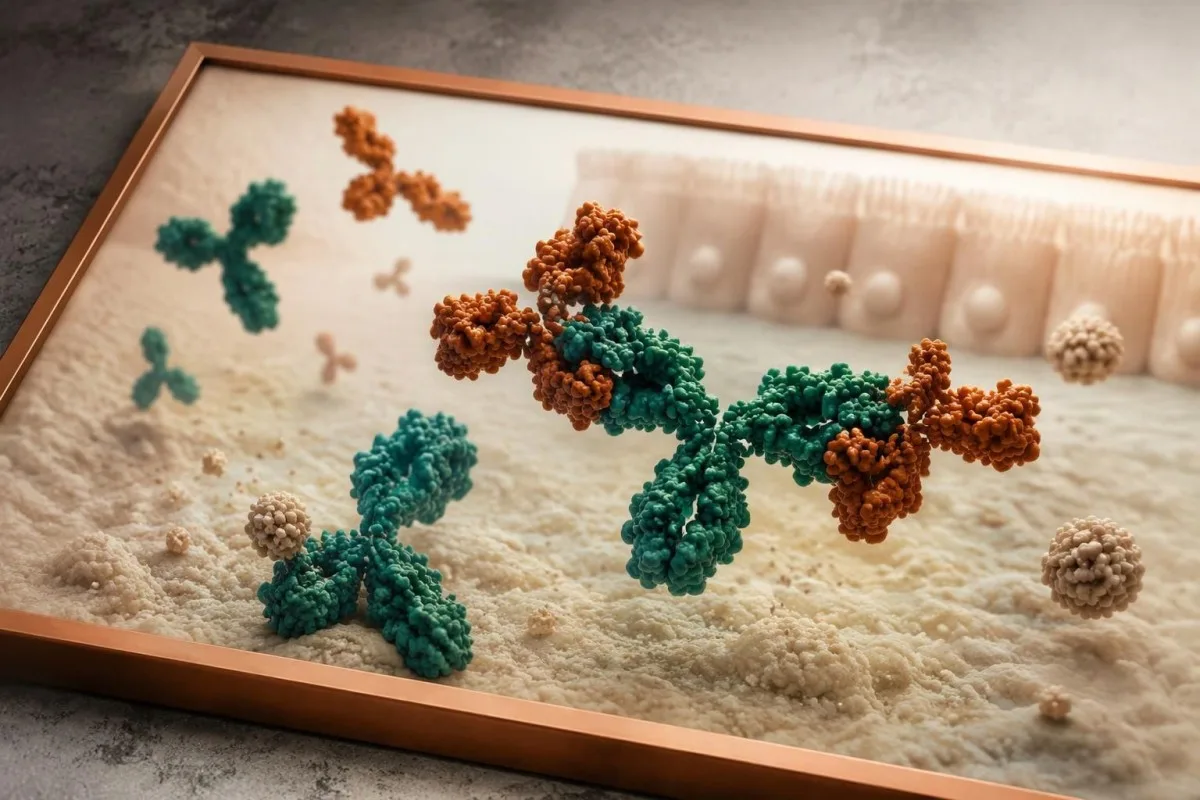
Anti-infliximab antibody tests usually detect binding antibodies; they do not all directly measure neutralizing activity. A positive result of 20 U/mL therefore identifies an assay-defined antibody signal, not a universal percentage of blocked infliximab or a precise prediction of how much benefit remains.
Antibody persistence and magnitude influence whether dose optimization is likely to recover exposure. Cheifetz et al. (2021) described low-titer antibodies as below 10 U/mL for the homogeneous mobility shift assay specifically; that threshold must not be transferred to an ELISA reporting AU/mL or to another laboratory's calibration.
A single low antibody result may be transient or become less clinically relevant after supervised treatment optimization. Repeating paired drug and antibody testing can distinguish a 1-time signal from a rising pattern, but severe disease or an infusion reaction may require action before a second result is available.
Antibodies to infliximab are not the same as antibodies against your own bowel, and they do not by themselves diagnose an immediate allergy. Our explanation of positibong uri ng resulta ng antibody helps separate these concepts; breathlessness or faintness during an infusion still requires immediate attention regardless of the antibody number.
Kailan nagpapahiwatig ng pagkabigo ng mekanismo ang sapat na trough level?
Posibleng mekanistikong pagkabigo means objectively active IBD persists despite sufficient infliximab exposure for the treatment goal. A trough of 8 µg/mL with confirmed active colitis may raise this possibility, but selected patients need further exposure optimization before clinicians conclude that another inflammatory pathway should be targeted.
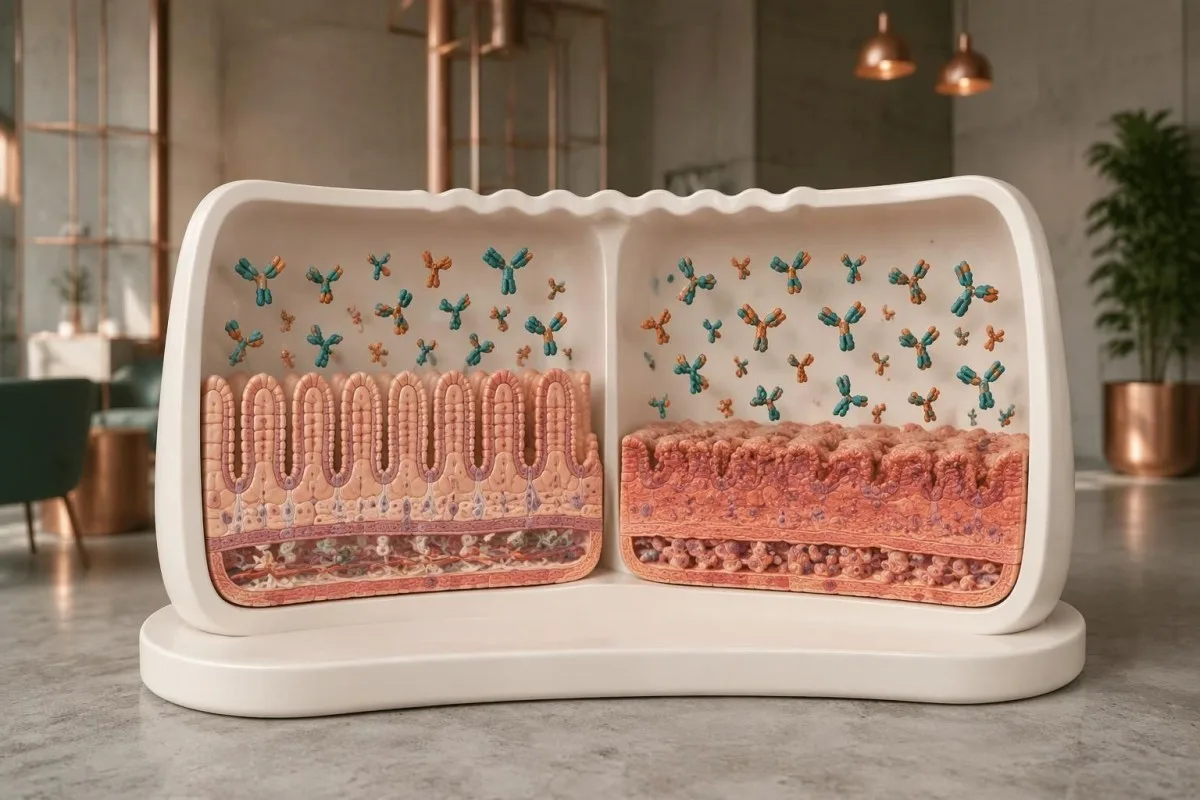
An adequate serum concentration cannot prove that TNF is the only pathway driving a person's current disease. Persistent endoscopic activity with a trough of 12 µg/mL is more supportive of a mechanism problem than the same concentration with normal objective testing and symptoms from bile acid diarrhea.
Calling treatment failure at exactly 5 µg/mL can be premature when the goal is fistula control or substantial endoscopic improvement. The 10–15 µg/mL reassessment discussed in the 2021 consensus provides a safeguard against abandoning an under-optimized treatment, but it is not a requirement to escalate every patient with symptoms.
Objective evidence also has limits: CRP of 3 mg/L does not exclude active IBD, especially in people whose CRP has remained low during previous flares. Borderline stool results need context and sometimes repetition; our guide to bahagyang mataas na fecal calprotectin explains why an isolated intermediate value should not determine a biologic switch.
The strongest case for changing mechanism combines 3 findings: documented inflammation, adequate exposure on a correctly timed sample, and an inadequate clinical response despite appropriate optimization. Structural complications, such as a fixed Crohn's stricture, can also cause symptoms that neither more infliximab nor a different biologic will reliably reverse.
Maaari bang positibo ang mga antibody kapag sapat ang infliximab?
Antibodies can be detected while infliximab remains measurable or adequate, particularly with drug-tolerant assays. A trough of 7 µg/mL and a weak positive antibody result do not automatically mean treatment failure; the assay, antibody trend, and evidence of disease activity determine how much weight that finding deserves.

Drug-tolerant methods can identify antibodies in samples containing infliximab that would interfere with some drug-sensitive methods. This greater analytical sensitivity may reveal early or low-level immunogenicity, but 1 newly detected signal does not necessarily establish clinically meaningful loss of response.
A qualitative positive result contains less information than a quantitative result with the assay's cutoff and units. A report reading only positive cannot distinguish a value just above a 10 AU/mL cutoff from a much larger signal; our guide to qualitative at quantitative tests explains what each format can establish.
Compare antibody trajectories using the same laboratory method whenever feasible. Hypothetical results of 12, 15, and 13 AU/mL across 3 correctly timed visits may carry a different implication from 12, 80, and 200 AU/mL, although analytical variability and clinical findings still prevent interpretation from trend alone.
Si Kantesti ay isang AI blood test interpretation platform that helps distinguish a reported antibody cutoff from a treatment target. When the report lacks the method or units, our interpretation should preserve that uncertainty rather than labeling 1 positive result as proof that infliximab has stopped working.
Bakit mahalaga ang mga pamamaraan sa laboratoryo at mga yunit ng antibody?
Infliximab and antibody results are method-dependent, so values from different assays are not always interchangeable. Infliximab 1 µg/mL equals 1 mg/L, but antibody results in U/mL, AU/mL, or ng/mL do not have a universal conversion because laboratories use different standards, detection limits, and approaches to drug interference.
An assay may report free or functionally available drug differently from another method that detects a broader pool of circulating drug. Two laboratories can therefore produce somewhat different concentrations from similar specimens; a change from 6 to 8 µg/mL after switching methods may not represent a true gain in exposure.
Below the quantification limit means the assay cannot reliably assign a numerical concentration below its validated boundary. A report of less than 0.4 µg/mL is not proof of exactly 0 µg/mL, and greater than 100 U/mL cannot tell you whether the true antibody result is 110 or 1,000 U/mL.
Some laboratories use reflex antibody testing only when the drug concentration falls below a preset threshold. If antibodies were not tested because infliximab was 9 µg/mL, the result is not equivalent to antibodies negative; ask whether the antibody field says not performed, not detected, or below detection.
Kantesti's report interpretation should retain the assay name, units, and collection context instead of silently converting 20 AU/mL into another method's scale. Our impormasyon tungkol sa klinikal na pamamaraan explains the distinction between technical interpretation and clinical decision-making; no AI explanation removes the need to confirm an unusual result with the reporting laboratory.
Paano kinukumpirma ng mga clinician na IBD ang sanhi ng muling paglitaw ng mga sintomas?
Returning symptoms do not necessarily mean returning intestinal inflammation; clinicians combine stool markers, CRP, infection testing, endoscopy, and imaging as appropriate. Three loose stools daily with a trough of 6 µg/mL can arise from active IBD, an intestinal infection, bile acid diarrhea, or a functional bowel disorder.
Fecal calprotectin and lactoferrin assess intestinal inflammatory activity rather than infliximab exposure. A hypothetical calprotectin of 800 µg/g adds different information from a trough of 2 µg/mL; our stool inflammation marker comparison explains why paired disease and drug measurements answer separate clinical questions.
C. difficile testing can be necessary during new or worsening diarrhea, even without recent antibiotics. A positive screening test and negative toxin result require contextual interpretation, not automatic classification as an IBD flare; our guide to hindi nagtutugmang resulta para sa C. difficile describes why 2 test components can disagree.
Bile acid diarrhea is particularly relevant after ileal disease or resection and can persist despite controlled inflammation. A person with a trough of 10 µg/mL and reassuring objective IBD assessment may need a different evaluation; our explanation of SeHCAT retention results covers one diagnostic route where that test is available.
Bloating, gas, and altered stool frequency can also reflect bacterial overgrowth or carbohydrate malabsorption. At least 2 explanations can coexist with IBD, so a satisfactory trough should not end the assessment; our SIBO breath test guide explains preparation and limitations rather than treating breath testing as proof of every symptom's cause.
Paano maaaring tumugon ang pangkat ng IBD sa mababang pagkakalantad?
Low exposure without substantial persistent antibodies may lead an IBD team to increase the infliximab dose, shorten the dosing interval, or address a treatment interruption. A common adult intravenous maintenance schedule is 5 mg/kg every 8 weeks after induction, but any adjustment requires individualized prescribing and reassessment of disease activity.
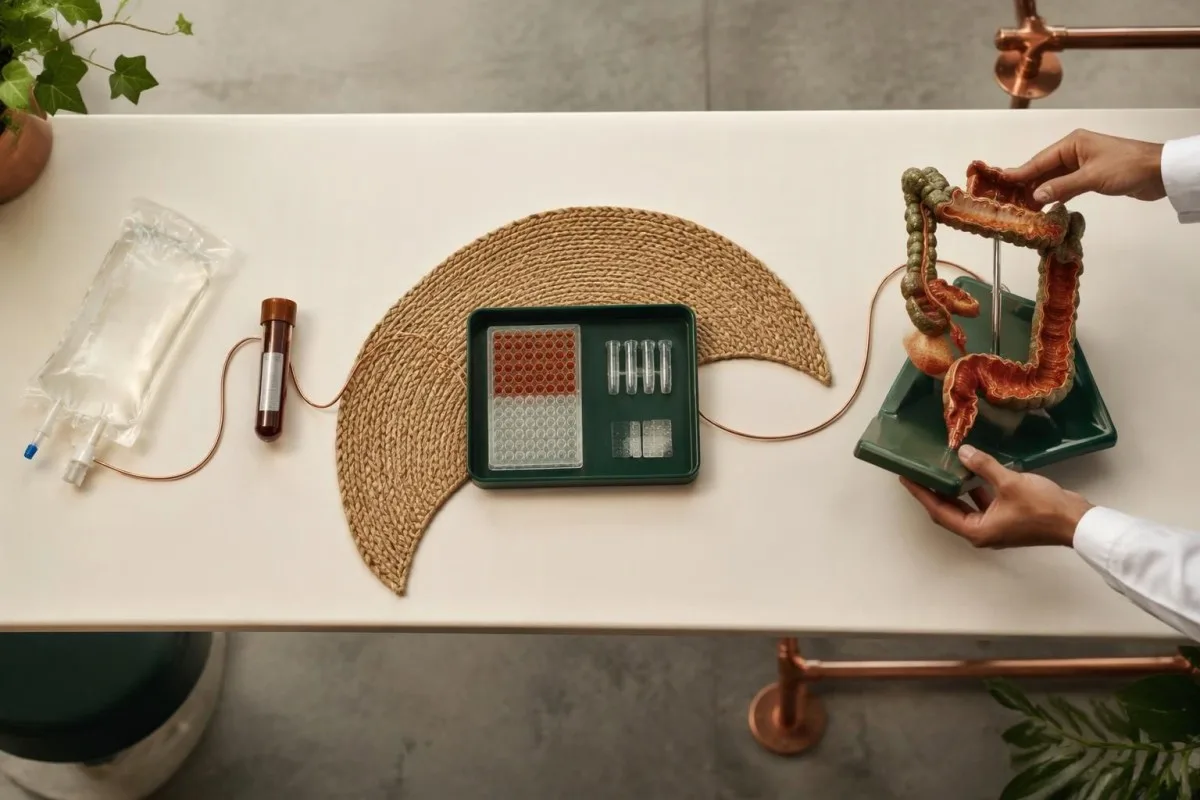
For a hypothetical 70 kg adult, 5 mg/kg corresponds to 350 mg before local preparation or rounding rules. Shortening an unchanged dose from every 8 weeks to every 6 weeks increases average drug administered per unit time by about 33%; the trough increase cannot be predicted as exactly 33% because clearance is not constant.
Increasing the dose and shortening the interval are not pharmacokinetically identical strategies. A larger dose changes peak exposure, while a shorter interval reduces time for concentrations to decline; a hypothetical patient whose symptoms repeatedly return during week 7 may prompt a different discussion from someone symptomatic throughout all 8 weeks.
A useful reassessment checks both exposure and the treatment outcome rather than declaring success because the trough rose. If infliximab increases from 2 to 9 µg/mL but calprotectin remains 900 µg/g and endoscopic disease persists, the new result has narrowed the explanation without necessarily improving the underlying disease.
The timing of repeat testing depends on severity, the revised schedule, and the clinical question; waiting 3 months is not appropriate for every deteriorating patient. Our gabay sa trend ng kaligtasan ng gamot explains why comparable dates and methods matter, but an app should never independently recommend extra infusions.
Kailan isinasaalang-alang ang pagpapalit ng paggamot o kombinasyong therapy?
Persistent high antibodies with low drug may favor changing treatment, while adequate exposure with confirmed active IBD may favor switching to a different mechanism. Low-level immunogenicity can sometimes be addressed through supervised optimization or an immunomodulator, but a result of 15 U/mL alone cannot determine which option offers the best benefit-risk balance.
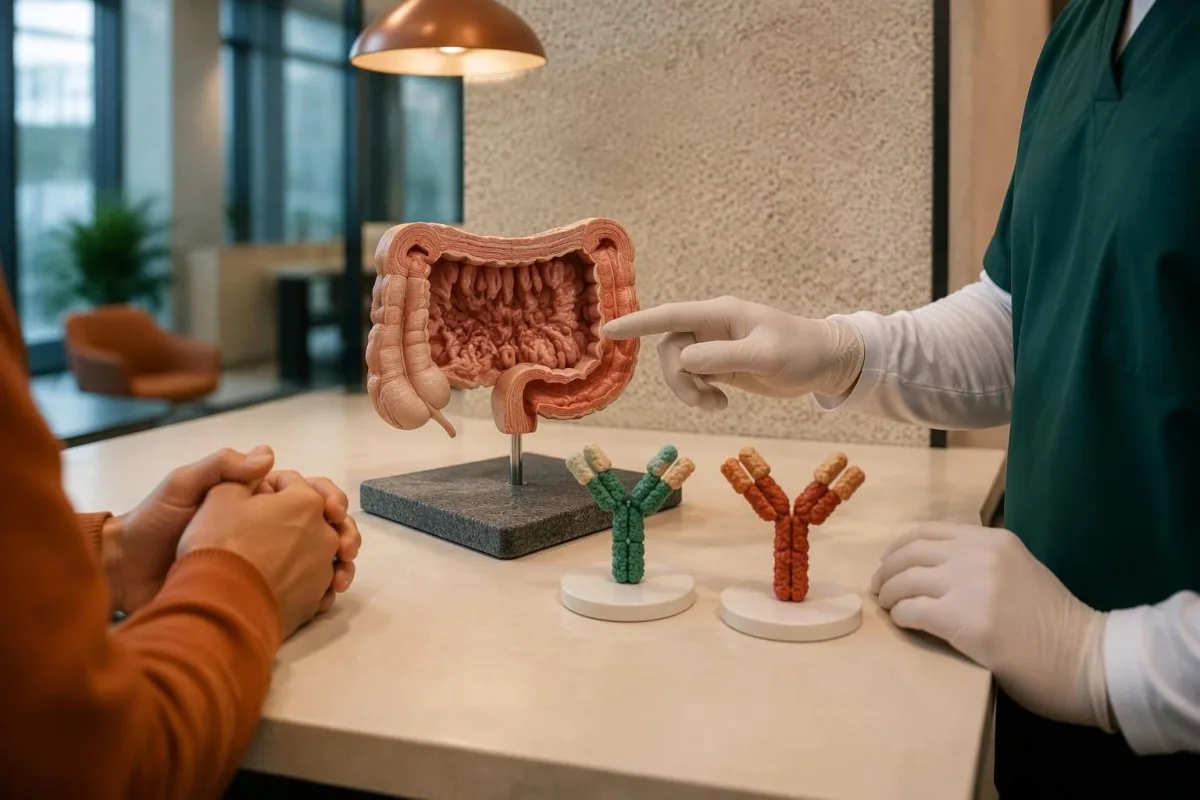
Switching within the anti-TNF class can make sense when infliximab previously controlled disease but antibody-associated clearance now prevents adequate exposure. Switching to another mechanism becomes more persuasive when inflammation persists with adequate exposure; these are 2 different failure patterns, not interchangeable reasons to choose the next medicine.
An immunomodulator such as azathioprine or methotrexate may reduce immunogenicity in selected circumstances, but adding one introduces additional monitoring and adverse-effect risks. Before azathioprine, TPMT testing and safety assessment can inform prescribing; TPMT and NUDT15 assessment do not replace ongoing CBC and liver monitoring, even when baseline results are normal.
If a person already takes a thiopurine, metabolite testing can help clarify exposure or a metabolism pattern before assuming combination therapy has failed. For example, 2 patients prescribed the same mg dose may have very different metabolite findings; our thiopurine treatment pattern guide explains why prescription dose alone is incomplete.
Restarting infliximab after a long interruption deserves a separate safety discussion because immunogenicity and infusion reactions can complicate re-exposure. A treatment gap of 6 months is not equivalent to a routine 1-week scheduling delay; never restart, add an immunomodulator, or stop an existing medicine based solely on an online interpretation.
Binabago ba ng induction, mga fistula, mga bata, at mga iniksyon ang mga target?
Treatment phase, disease phenotype, age, and formulation can change the relevant exposure goal; intravenous maintenance targets should not be copied into every setting. Standard adult intravenous induction commonly uses 5 mg/kg at weeks 0, 2, and 6, and those early concentrations are interpreted differently from an established 8-week maintenance trough.

The 2021 expert consensus described induction goals of approximately 20–25 µg/mL at week 2, 15–20 µg/mL at week 6, and 7–10 µg/mL at week 14 (Cheifetz et al., 2021). These are consensus exposure goals influenced by disease phenotype and outcome, not interchangeable minimums from one definitive randomized trial.
Perianal fistula outcomes may require higher exposure than symptom control in uncomplicated luminal disease, but observational associations do not establish a universal healing threshold. A fistula still draining at 10 µg/mL may also need imaging, drainage of an abscess, or procedural care; raising the trough cannot substitute for addressing an undrained collection.
Children can have different clearance and dosing requirements, particularly with lower body weight or severe disease. An adult maintenance benchmark of 5 µg/mL should not become a parent-directed dosing rule; our discussion of AI interpretation para sa mga bata explains why pediatric specialist context and age-appropriate interpretation remain necessary.
Subcutaneous infliximab produces a different concentration-time profile from intermittent intravenous infusions, and availability and prescribing schedules vary internationally. A concentration of 15 µg/mL during injection treatment should not be labeled excessive merely because an intravenous report lists 3–7 µg/mL; the formulation, actual regimen, and sampling convention must be specified.
Paano binabago ng magkapares na resulta ang klinikal na pangangatwiran?
Paired results guide the next question rather than dictate a prescription: low drug without antibodies suggests underexposure, low drug with persistent antibodies suggests immunogenicity, and adequate drug with inflammation raises possible mechanism failure. The following 4 examples are entirely hypothetical; the concentrations are illustrative, not personalized treatment recommendations.
Example 1: a 34-year-old with Crohn's disease has a true trough of 1.8 µg/mL, no detected antibodies, albumin of 29 g/L, and calprotectin of 1,100 µg/g. This pattern supports underexposure in active disease; confirming the infusion schedule and considering supervised optimization are more logical than immediately declaring TNF blockade ineffective.
Example 2: a 46-year-old with ulcerative colitis has infliximab below 0.4 µg/mL and antibodies above the laboratory's 100 U/mL reporting limit on 2 visits. Assuming the assay defines that antibody signal as substantial, persistent immunogenicity is plausible; simply increasing the dose may be less successful than a clinician-directed treatment change.
Example 3: a 28-year-old has a trough of 11 µg/mL, no significant antibodies, and repeatedly active colitis on endoscopy despite appropriate optimization. Example 4: a 61-year-old has the same 11 µg/mL trough but reassuring endoscopy and diarrhea after ileal resection; the first pattern raises mechanism failure, whereas the second prompts investigation of non-inflammatory causes.
Si Kantesti ay isang AI-powered tool para sa pagsusuri ng dugo that helps organize these distinctions when the report and treatment details are supplied. Our paliwanag sa AI technology describes how laboratory context informs interpretation; if a 2-week-old report lacks sampling timing, the missing information must stay visible rather than being guessed.
Ano ang dapat mong dalhin sa follow-up, at aling ebidensiya ang naaangkop?
Bring the complete report, infusion timeline, and objective disease results to your IBD review; these 3 evidence streams make paired drug-antibody testing actionable. Seek earlier care for severe deterioration rather than waiting for the next trough, and distinguish infliximab-specific clinical research from general educational publications about accompanying laboratory abnormalities.
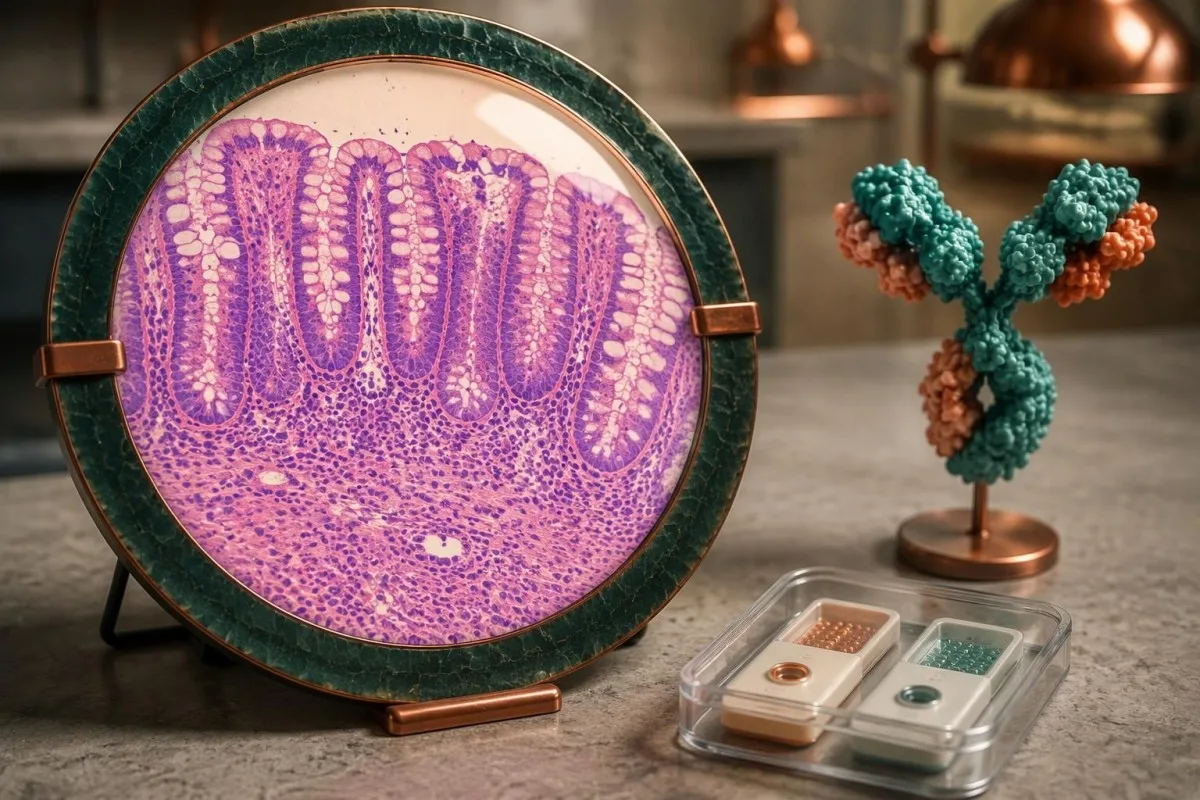
A useful review record includes the previous 2 infusion dates, actual dose, collection timing, assay name, antibody units, and recent CRP, albumin, and fecal calprotectin. Add symptom timing, steroid use, recent antibiotics, and missed doses; ask whether the proposed change addresses insufficient exposure, immunogenicity, active non-TNF disease, or a non-inflammatory explanation.
Contact your clinical team promptly for worsening diarrhea with dehydration, persistent vomiting, new significant bleeding, or fever of 38°C or higher while immunosuppressed. Severe abdominal pain with distension, fainting, or inability to keep fluids down may require emergency assessment; during an infusion, sudden breathing difficulty or collapse requires immediate staff attention, not interpretation of an antibody report.
Kantesti provides educational interpretation, not independent biologic prescribing, and our mga prinsipyo ng responsableng AI explain that boundary. A reassuring trough of 10 µg/mL does not establish that an infusion is safe during an acute illness; the treating service must assess symptoms, examination findings, and any necessary investigations.
The 2 Zenodo publications listed below address accompanying laboratory interpretation, not infliximab target validation: our RDW at gabay sa red-cell concerns anemia patterns, while our BUN at creatinine guide concerns renal and hydration context. These educational deposits are not evidence for anti-drug antibody cutoffs; the AGA guideline, TAXIT trial, and biologic-monitoring consensus supply the directly relevant clinical references.
Mga Madalas Itanong
Ano ang ibig sabihin ng mababang antas ng infliximab?
Ang mababang antas ng infliximab ay nangangahulugang mas mababa sa benchmark na pinili para sa yugtong iyon ng paggamot at layunin ang pagkakalantad sa gamot na umiikot sa dugo; hindi ito awtomatikong nangangahulugang dapat ihinto ang infliximab. Ang tunay na trough sa maintenance na 2 µg/mL na walang makabuluhang antibodies ay maaaring magpahiwatig ng mas mabilis na clearance, pagkawala ng protina sa bituka, o hindi sapat na dosis o pagitan ng mga dosis. Sa halip, ang mababang antas ng gamot kasabay ng patuloy na mataas na antas ng antibodies ay nagpapahiwatig ng immune-mediated clearance. Dapat bigyang-kahulugan ng iyong pangkat sa IBD ang resulta kasama ng obhetibong aktibidad ng sakit, oras ng pagbubuhos, at assay.
Ano ang magandang antas ng trough ng infliximab para sa IBD?
Walang iisang pinakamainam na antas ng infliximab sa labangan para sa lahat ng taong may IBD. Iminungkahi ng gabay ng AGA noong 2017 ang hindi bababa sa 5 µg/mL para sa reaktibong pagsubaybay sa maintenance, samantalang inilarawan ng isang ekspertong pinagkasunduan noong 2021 ang mga konsentrasyon sa maintenance na 5–10 µg/mL. Maaaring kailangang muling suriin ang mga piling pasyenteng nakaranas ng pangalawang pagkawala ng tugon sa 10–15 µg/mL bago ihinto ang paggamot. Nangangailangan ng ibang konteksto ang induction, mga fistula, at paggamot sa ilalim ng balat, kaya hindi pangkalahatang target ng dosis ang saklaw ng laboratoryo.
Kailan ako dapat magpasuri ng antas ng infliximab ko?
For intravenous infliximab, a trough sample should be collected immediately before the next infusion begins. A sample obtained 2 days after an infusion is not comparable with routine pre-infusion targets. Record the last infusion date, dose, scheduled interval, and actual collection time, especially if an 8-week appointment was delayed. Subcutaneous infliximab has a different exposure profile, so sampling should follow the prescribing team's and laboratory's instructions.
Maaari bang mawala ang mga antibody laban sa infliximab?
Ang mga antibody na mababa ang antas laban sa infliximab ay maaaring minsang maging hindi na matukoy o hindi na gaanong mahalaga sa klinika, ngunit mas mahirap malampasan ang mga antibody na nananatiling mataas habang napakababa ng antas ng gamot. Inilarawan ng pinagkasunduan ng mga eksperto noong 2021 ang mga antibody na mababa ang titer bilang mas mababa sa 10 U/mL para sa isang homogeneous mobility shift assay; hindi maaaring ilapat ang cutoff na iyon sa bawat pamamaraan ng laboratoryo. Maaaring makatulong sa mga piling pasyente ang pag-optimize na pinangangasiwaan ng doktor o isang immunomodulator, samantalang kailangang magpalit ng paggamot ang iba. Maaaring makatulong ang muling pagsusuri ng magkaparis na sample upang matukoy kung nananatili ito, ngunit hindi dapat baguhin ng mga pasyente ang kanilang paggamot nang sila lamang.
Maaari bang tumigil sa paggana ang infliximab kahit normal ang antas nito?
Maaaring hindi makontrol ng infliximab ang obhetibong aktibong IBD sa kabila ng sapat na konsentrasyon nito sa sirkulasyon, na nagpapahiwatig ng posibleng kabiguan ng mekanismo. Hindi ginagarantiyahan ng trough na 10 µg/mL ang paggaling ng bituka o pinatutunayan na TNF lamang ang landas na nagtutulak sa sakit. Bago baguhin ang mekanismo, kinukumpirma ng mga clinician ang pamamaga, tinatasa ang mga komplikasyong istruktural o nakahahawa, at isinasaalang-alang kung sapat ang exposure para sa partikular na layunin ng paggamot. Sa halip, maaaring hindi dahil sa pamamaga ang pagtatae kung nakapagbibigay-katiyakan ang obhetibong pagsusuri.
Mapanganib ba ang mataas na antas ng infliximab?
Ang mataas na konsentrasyon ng infliximab ay hindi awtomatikong mapanganib, at walang iisang itinakdang cutoff ng toxicity sa serum na naaangkop sa lahat ng pasyenteng may IBD. Maaaring magkaiba ang interpretasyon sa resultang 15 µg/mL sa panahon ng induction, paggamot sa fistula, o subcutaneous therapy kumpara sa regular na intravenous maintenance. Nakadepende ang kaligtasan sa pangkalahatang regimen ng paggamot, mga impeksiyon, mga reaksiyon sa infusion, at iba pang klinikal na natuklasan, hindi lamang sa konsentrasyon. Huwag lumiban sa infusion o magbawas ng dosis nang hindi tinatalakay ang resulta sa iyong pangkat ng mga tagapagreseta.
Bakit nagbago ang mga resulta ng pagsusuri sa mga antibody laban sa infliximab ko matapos lumipat ng laboratoryo?
Maaaring magbago ang mga resulta ng pagsusuri sa antibody laban sa infliximab matapos lumipat ng laboratoryo dahil nagkakaiba ang mga assay sa pagkakalibrate, mga yunit, mga limitasyon sa pagtukoy, at kakayahang tumanggap ng nagpapalipat-lipat na gamot. Hindi maaaring gawing U/mL o ng/mL sa paraang pangkalahatan ang resultang 20 AU/mL. Maaaring matukoy ng pamamaraang tolerant sa gamot ang mga antibody na hindi nakikita ng assay na sensitibo sa gamot kapag nasusukat pa rin ang infliximab. Ihambing ang mga takbo ng resulta gamit ang iisang pamamaraan kung maaari, at itanong kung aktuwal na isinagawa ang pagsusuri sa antibody o hindi ito isinama dahil sa tuntunin ng reflex testing.
Ipaliwanag sa iyo ang resulta ng blood test
I-upload ang iyong ulat sa laboratoryo at ipapaliwanag ng AI ng Kantesti ang bawat biomarker sa payak na pananalita sa loob ng ilang segundo. Ginagamit ng mahigit 2 milyong tao sa buong mundo.
Mga Sanggunian
- Klein, T., Mitchell, S., & Weber, H. (2026). Pagsusuri ng RDW sa Dugo: Kumpletong Gabay sa RDW-CV, MCV at MCHC. Kantesti AI Medical Research. DOI
- Klein, T., Mitchell, S., & Weber, H. (2026). BUN/Creatinine Ratio Explained: Gabay sa Pagsusuri ng Punsyon ng Bato. Kantesti AI Medical Research. DOI
- Feuerstein JD et al. (2017). American Gastroenterological Association Institute Guideline on Therapeutic Drug Monitoring in Inflammatory Bowel Disease. Gastroenterology. DOI
- Vande Casteele N et al. (2015). Trough concentrations of infliximab guide dosing for patients with inflammatory bowel disease. Gastroenterology. DOI
- Cheifetz AS et al. (2021). A Comprehensive Literature Review and Expert Consensus Statement on Therapeutic Drug Monitoring of Biologics in Inflammatory Bowel Disease. The American Journal of Gastroenterology. DOI
- 2M+Mga sinuring pagsusuri
- 127+Mga bansa
- 100+Mga wika
Tungkol sa pangkat medikal


Mga Signal ng Tiwala ng E-E-A-T
Karanasan
Pinamumunuan ng manggagamot na klinikal na pagsusuri ng mga daloy ng interpretasyon ng mga pagsusuri sa laboratoryo.
Kadalubhasaan
Pokus sa laboratoryong medisina kung paano kumikilos ang mga biomarker sa kontekstong klinikal.
Pagka-awtoridad
Sinuri sa medikal na aspeto ni Dr. Thomas Klein, kasama ang mga kontribusyon nina Dr. Sarah Mitchell at Prof. Dr. Hans Weber.
Pagiging Mapagkakatiwalaan
Interpretasyong nakabatay sa ebidensya na may malinaw na mga susunod na hakbang upang mabawasan ang pag-aalarma.





Paunawang medikal
Ang artikulong ito ay para sa mga layuning pang-edukasyon lamang at hindi ito bumubuo ng medikal na payo. Palaging kumonsulta sa isang kwalipikadong tagapagbigay ng pangangalagang pangkalusugan para sa mga desisyon sa diagnosis at paggamot.
Inilathala · Makipag-ugnayan sa pangkat ng editoryal
Inilathala ng Kantesti Ltd, nakarehistro sa England at Wales, numero ng kumpanya. 17090423, London, United Kingdom.
