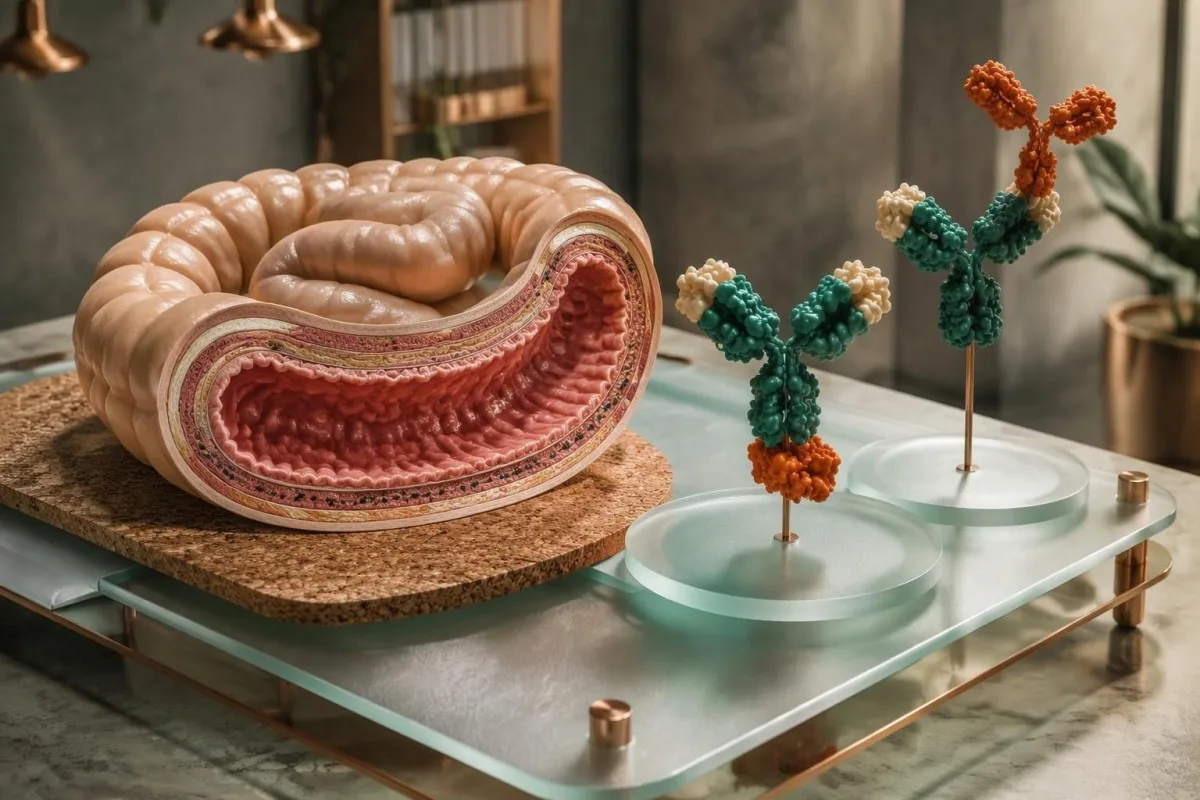
Инфликсимабын түвшний шинжилгээ нь IBD-ийн хяналт алдагдсан шалтгааныг тайлбарлахын тулд эмийн концентрацыг эсрэгбиетэй хамтатган үнэлдэг. Эсрэгбие мэдэгдэхүйц ихсээгүй байхад эмийн түвшин бага байвал өртөлт хангалтгүй байгааг илтгэнэ; эмийн түвшин бага бөгөөд эсрэгбие тогтвортой өндөр байвал дархлааны зуучлалтай цэвэрлэгдэлтийг илтгэнэ. Өртөлт хангалттай ч үрэвсэл идэвхтэй хэвээр байвал үйлдлийн механизмын бүтэлгүйтэл байж болзошгүй—гэхдээ үрэвсэл байгааг, сорьцыг зөв авсныг болон эмчилгээний зорилгод нийцсэн түвшнийг баталгаажуулсны дараа л.

Гол санаанууд
- Хосолсон хариу инфликсимабын өртөлт хангалтгүй байгааг эсрэгбиетэй холбоотой цэвэрлэгдэлтээс ялгадаг; аль нэг хариу дангаараа шинж тэмдэг яагаад дахин илэрснийг нотлохгүй.
- Судсаар хийхийн өмнөх сорьцлолт гэдэг нь дараагийн судсаар хийх сэлбэлт эхлэхээс өмнө лабораторийн шинжилгээний сорьц авахыг хэлнэ, 2 хоногийн дараа авахыг биш.
- Засвар эмчилгээний жишиг түвшин харилцан адилгүй: AGA-ийн 2017 оны удирдамжид хариу урвалыг хянахад дор хаяж 5 µg/mL байхыг санал болгосон бол шинжээчдийн зөвшилцлөөр засвар эмчилгээнд 5–10 µg/mL гэж тодорхойлсон.
- Инфликсимабын түвшин бага бөгөөд эсрэгбие илрээгүй бол клиренс түргэсэх, гэдсээр уураг алдагдах, тунг хойшлуулах эсвэл тун хоорондын зай хэт урт байхтай холбоотой байж болно.
- Инфликсимабын эсрэгбие тухайн шинжилгээнд тогтвортой, мэдэгдэхүйц хэмжээгээр нөлөөлж, эмийн хэмжээ маш бага эсвэл илрэхгүй байх үед хамгийн чухал ач холбогдолтой.
- Боломжит үйлдлийн механизмын бүтэлгүйтэл гэдэг нь хангалттай өртөлттэй хэдий ч IBD объектив идэвхтэй байгааг шаарддаг; эмийн доод түвшин 8 µg/mL байхад суулгах нь үүнийг батлахгүй.
- Шинжилгээний нэгжүүд харилцан орлуулж болохгүй: infliximab-ийн 1 µg/mL нь 1 mg/L-тэй тэнцэх боловч эсрэгбиеийн U/mL болон AU/mL-ийг нийтлэг байдлаар хөрвүүлэх боломжгүй.
- Эмчилгээний өөрчлөлт таны IBD-ийн багтай хамт шийдэх асуудал; хариу урвал алдагдсан зарим тохиолдолд infliximab-ийг зогсоохоос өмнө эмийн өртөлтийг 10–15 µg/mL хүргэх нь зүйтэй байж болно.
Инфликсимабын түвшний шинжилгээ яг юуг хэлж өгдөг вэ?
Ан infliximab-ийн түвшний шинжилгээ цусанд эргэлдэж буй infliximab-ийг ихэвчлэн эмийн эсрэг эсрэгбиетэй, хамт хэмжиж, эмийн өртөлт хангалтгүй эсвэл дархлааны шалтгаант эмийн клиренсийг судалдаг. Эсрэгбие илрээгүй үед 2 µg/mL гарсан үр дүн нь эсрэгбие тогтвортой өндөр байхад 2 µg/mL гарсан үр дүнгээс өөр асуулт тавина; эдгээрийн аль нь ч эмийг заавал зогсоох ёстой гэсэн үг биш.
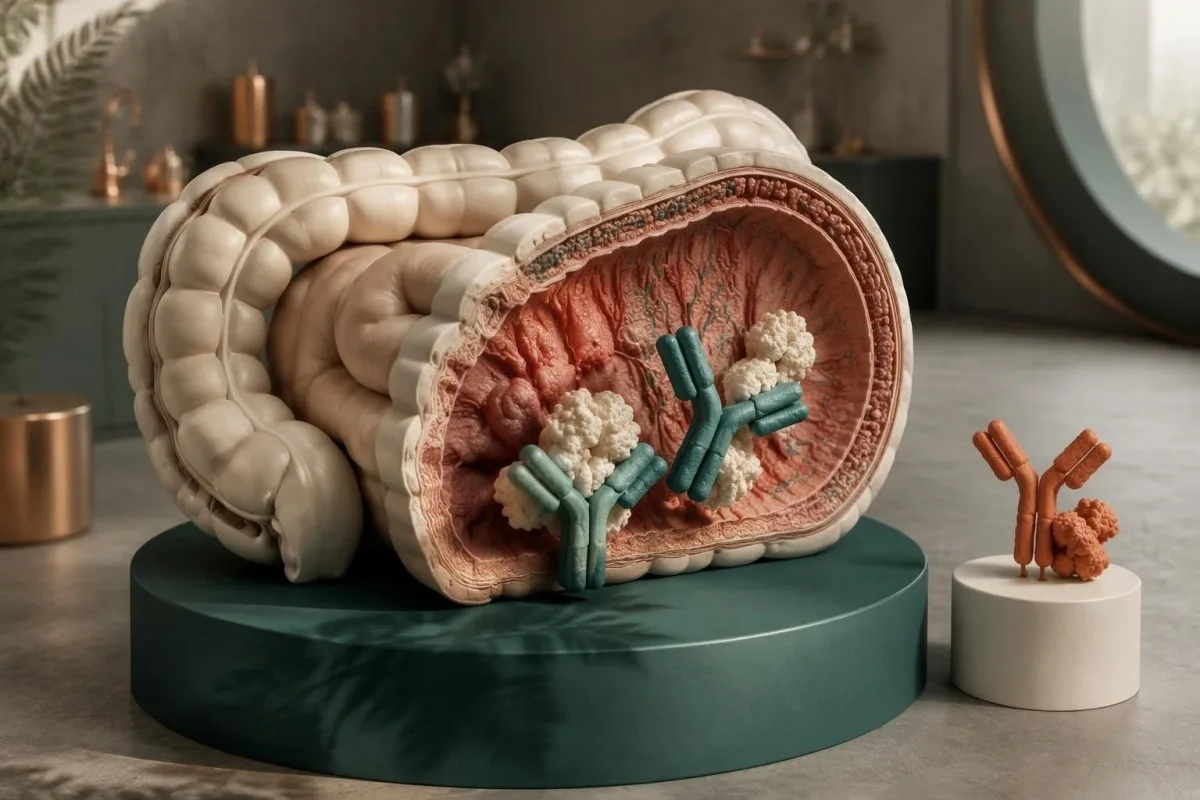
Шаардлагатай үед хийгдэх эмчилгээний эмийн хяналт гэдэг нь шинж тэмдэг даамжрах эсвэл өвчин идэвхтэй байгааг нотлох баримт гарахад шинжилгээ хийхийг хэлнэ. Энэ нь өвчин намжмал байгаа мэт үед тогтмол хяналт хийхээс ялгаатай: сэдрэл батлагдсан үед эмийн доод түвшин таамгаар 4 µg/mL байвал судлах үндэслэлтэй байж болох ч дурангийн шинжилгээ болон өтгөний маркерууд эдгэрэлт тогтвортой байгааг харуулбал өөрөөр хэлэлцэх шаардлагатай.
Infliximab нь хавдрын үхжилийн хүчин зүйл, -ийг хориглодог бөгөөд үүнийг ихэвчлэн TNF гэж товчилдог; концентраци хэмжих шинжилгээ нь гэдэсний TNF-ийн бүх дохио саармагжсан эсэхийг хэмждэггүй. Сийвэнгийн 7 µg/mL гэсэн үр дүн нь цусны эргэлт дэх эмийн хэмжээг хэмждэг болохоос гэдэсний өртсөн хэсэг бүр дэх эмийн идэвх эсвэл гэдэс хэр эдгэрснийг хэмждэггүй.
Практикт тайлбарлахдаа дор хаяж 3 үзүүлэлтийг харгалзана: эмийн концентраци, эсрэгбиеийн үзүүлэлт, өвчний идэвхжилийн объектив нотолгоо. Өмнө нь эмчилгээнд хэрхэн хариу үзүүлж байсан нь мөн чухал—18 сарын турш өвчнийг хянасны дараа шинж тэмдэг эргэн илрэх нь хоёрдогч хариу урвал алдагдал бол анхны эмчилгээний үед өвчин хэзээ ч хяналтад ороогүй байх нь эхлүүлэх үеийн эмийн өртөлт болон эмчилгээний механизмыг өөр өнцгөөс авч үзэхэд хүргэнэ.
Кантести бол AI цусны шинжилгээний анализатор нь уншигчдад infliximab-ийн хосолсон үзүүлэлтийг лабораторийн 1 тоог тунгийн заавар гэж үзэлгүйгээр ойлгоход тусалдаг. Манай платформыг Их Британийн Kantesti LTD компани ажиллуулдаг бөгөөд компанийн бүртгэлийн дугаар нь 17090423; талаарх мэдээлэл манай байгууллага нь эмчилгээний эмийн хяналтыг дэмждэг эмнэлзүйн нотолгооноос тусдаа.
Инфликсимабын эмийн доод түвшинг хэзээ сорьцлох ёстой вэ?
Судсаар хийх infliximab-ийн доод түвшин дараагийн сэлбэлтийг эхлүүлэхийн өмнө нэн даруй дээж авч хэмжих ёстой бөгөөд энэ үед тухайн тун хоорондын хугацаанд концентраци хамгийн бага түвшиндээ ойртсон байдаг. Сэлбэлтээс 2 хоногийн дараа авсан дээж нь доод түвшний сорьц биш бөгөөд сэлбэлтийн өмнөх барих эмчилгээний зорилтот түвшинтэй шууд харьцуулж болохгүй.
Дээж авсан хугацаа нь эмчилгээний үр нөлөө өөрчлөгдөөгүй байхад үр дүнг өөрөөр харагдуулж болно. Жишээлбэл, сэлбэлтийн дараахан авсан таамагласан 18 µg/mL болон дараагийн сэлбэлтийн өмнө авсан 3 µg/mL нь эмчилгээний 2 тусдаа төлөвийн хооронд гэнэт муудсаныг бус, ижил тунгийн мөчлөгийг илэрхийлж байж болно.
Үр дүнг тайлбарлахаас өмнө өмнөх сэлбэлтийн огноо, бодит тунг mg-аар, төлөвлөсөн зай, дээж авсан цагийг тэмдэглэ. Хэрэв 8 долоо хоногийн сэлбэлтийг 10 дахь долоо хоног хүртэл хойшлуулбал гарсан концентраци нь эмгүй байсан хугацаа уртассан нөхцөлийг илэрхийлнэ; анхны 8 долоо хоногийн хуваарь хангалттай өртөлт өгсөн эсэхэд тодорхой хариулт өгөх боломжгүй.
Collection from a line recently used to administer infliximab can contaminate the specimen and produce a misleadingly high result. Ask the infusion service about its collection protocol, and tell it if sampling occurred after treatment started; the timing principles resemble other pre-dose medication tests, although their targets differ.
Fasting is generally not required for the infliximab concentration itself, but another test ordered during the same visit may have preparation requirements. Our анхны зурах бэлтгэлийн гарын авлага explains how to document medication timing; for this test, an accurate infusion timeline usually matters more than an 8-hour fast.
Инфликсимабын ямар түвшнийг хангалттай гэж үздэг вэ?
Лейкемийг батлах no universal adequate infliximab trough for every patient, disease phenotype, assay, and treatment phase. The 2017 AGA guideline suggested at least 5 µg/mL during reactive maintenance monitoring, while a 2021 expert consensus described maintenance concentrations of 5–10 µg/mL and higher exposure in selected loss-of-response situations.
The AGA benchmark of at least 5 µg/mL is a clinical decision aid, not a healthy-population reference range (Feuerstein et al., 2017). Infliximab is a prescribed biologic: an untreated person normally has no circulating infliximab, so a laboratory's therapeutic interval should never be read like the normal range for sodium.
The TAXIT trial enrolled 263 adults with stable responses and optimized intravenous infliximab toward 3–7 µg/mL before randomized follow-up. Its primary remission endpoint did not improve with concentration-based dosing, although some secondary outcomes favored that approach; this explains why the historical 3–7 µg/mL window is useful context rather than a universal modern target (Vande Casteele et al., 2015).
Cheifetz et al. (2021) recommended considering exposure of 10–15 µg/mL before discontinuing infliximab for secondary loss of response in selected patients. This is expert consensus, not proof that everyone should be escalated to 15 µg/mL; fistulas, endoscopic goals, disease severity, safety, and prior optimization affect whether that reasoning applies.
A concentration of 12 µg/mL is not automatically toxic, and a concentration of 4 µg/mL does not automatically require escalation in an asymptomatic patient with documented healing. Unlike the narrower toxicity discussions around some бусад бууралтын түвшинг хянадаг эмүүдтэй, infliximab has no single established serum toxicity cutoff that dictates action.
| Түвшин | Хязгаар | Утга |
|---|---|---|
| Historical TAXIT optimization window | 3–7 µg/mL | Studied in adults with stable responses; not a universal threshold for active disease or fistula healing. |
| AGA reactive maintenance benchmark | At least 5 µg/mL | Suggested in the 2017 guideline for reactive monitoring; interpret alongside objective activity and the assay. |
| Expert-consensus maintenance range | 5–10 µg/mL | Described by the 2021 consensus; the appropriate goal varies with disease phenotype and desired outcome. |
| Selected loss-of-response reassessment | 10–15 µg/mL | Exposure experts suggest considering before abandoning treatment in selected cases; not a routine target or toxicity range. |
Эсрэгбие байхгүй байхад инфликсимабын түвшин яагаад бага байдаг вэ?
Low infliximab levels with no significant antibodies usually suggest pharmacokinetic underexposure: too little drug remains available over the dosing interval. A trough of 1.5 µg/mL can reflect faster clearance, intestinal protein loss, a delayed infusion, or insufficient dose or frequency—not necessarily failure of TNF blockade as a treatment mechanism.

Severe intestinal disease can increase infliximab clearance and allow protein, including therapeutic antibody, to be lost through the bowel. A hypothetical patient with albumin of 28 g/L and a trough of 1 µg/mL therefore needs assessment of disease burden and protein loss, not just a question about whether the infusion was attended.
Low albumin is associated with faster infliximab clearance, but it is not a direct measure of drug binding or an instruction to apply a free-drug correction. Albumin of 30 g/L and 40 g/L may provide different clearance context; our Цусны ийлдсийн уургийн тайлбарын гарын авлага explains why inflammation, liver synthesis, nutrition, and loss must be distinguished.
Infliximab is mainly broken down through protein-catabolic pathways rather than cleared unchanged by the kidneys. A creatinine of 90 µmol/L cannot predict the infliximab trough, and the medicine should not be interpreted using small-molecule renal dosing assumptions; body size, inflammatory burden, and treatment interruptions may be more informative.
Kantesti AI helps place a low trough alongside reported albumin, CRP, and infusion timing; 1 result cannot identify the clearance pathway by itself. Low albumin should not automatically trigger protein supplements, because inflammation also changes circulating proteins—as explained in our guide to inflammation and transferrin.
Эмийн түвшин бага, дээр нь эсрэгбие илэрвэл юуг илтгэдэг вэ?
Low or undetectable infliximab with persistent high antibodies suggests immune-mediated pharmacokinetic failure: antibodies can accelerate clearance, neutralize drug activity, or both. A trough below an assay's 0.5 µg/mL quantification limit with a substantial antibody result is more concerning than a weak antibody signal alongside a maintained drug concentration.
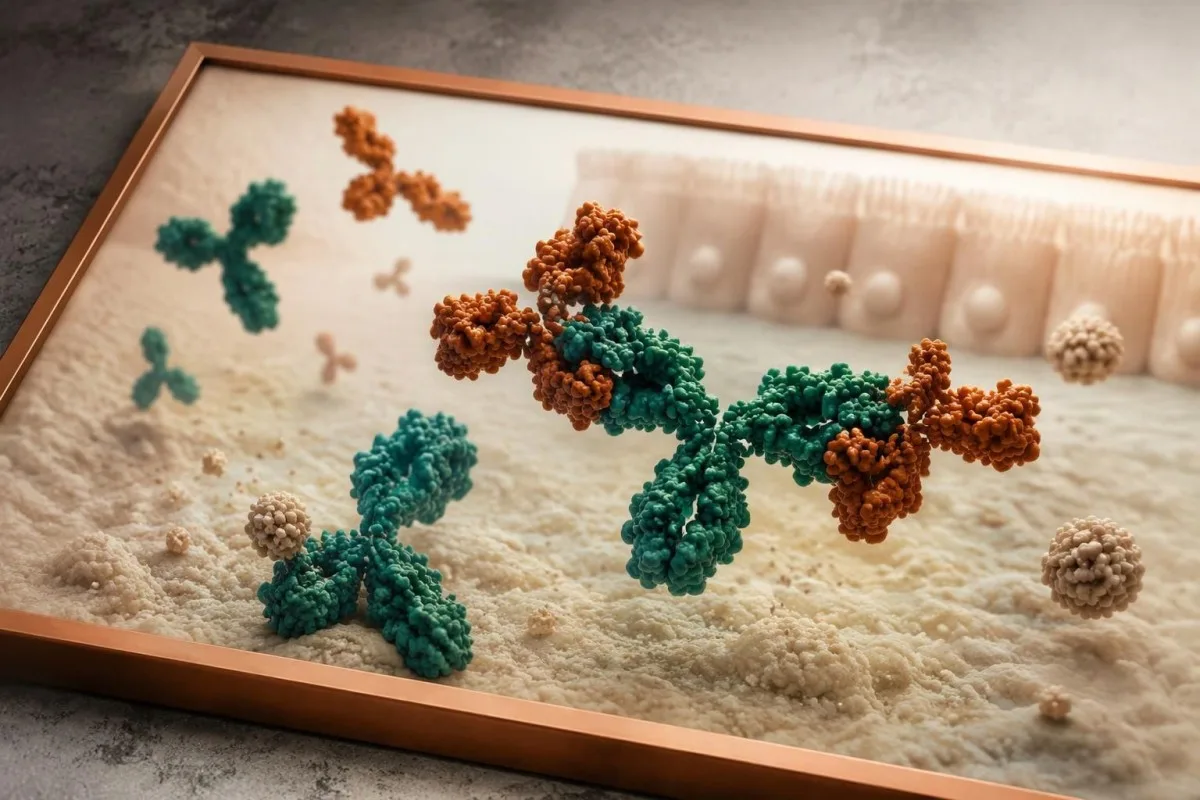
Anti-infliximab antibody tests usually detect binding antibodies; they do not all directly measure neutralizing activity. A positive result of 20 U/mL therefore identifies an assay-defined antibody signal, not a universal percentage of blocked infliximab or a precise prediction of how much benefit remains.
Antibody persistence and magnitude influence whether dose optimization is likely to recover exposure. Cheifetz et al. (2021) described low-titer antibodies as below 10 U/mL for the homogeneous mobility shift assay specifically; that threshold must not be transferred to an ELISA reporting AU/mL or to another laboratory's calibration.
A single low antibody result may be transient or become less clinically relevant after supervised treatment optimization. Repeating paired drug and antibody testing can distinguish a 1-time signal from a rising pattern, but severe disease or an infusion reaction may require action before a second result is available.
Antibodies to infliximab are not the same as antibodies against your own bowel, and they do not by themselves diagnose an immediate allergy. Our explanation of эерэг эсрэгбиеийн үр дүнгийн төрлүүд helps separate these concepts; breathlessness or faintness during an infusion still requires immediate attention regardless of the antibody number.
Эмийн доод түвшин хангалттай байхад үйлдлийн механизмын бүтэлгүйтлийг хэзээ илтгэдэг вэ?
Боломжит үйлдлийн механизмын бүтэлгүйтэл means objectively active IBD persists despite sufficient infliximab exposure for the treatment goal. A trough of 8 µg/mL with confirmed active colitis may raise this possibility, but selected patients need further exposure optimization before clinicians conclude that another inflammatory pathway should be targeted.
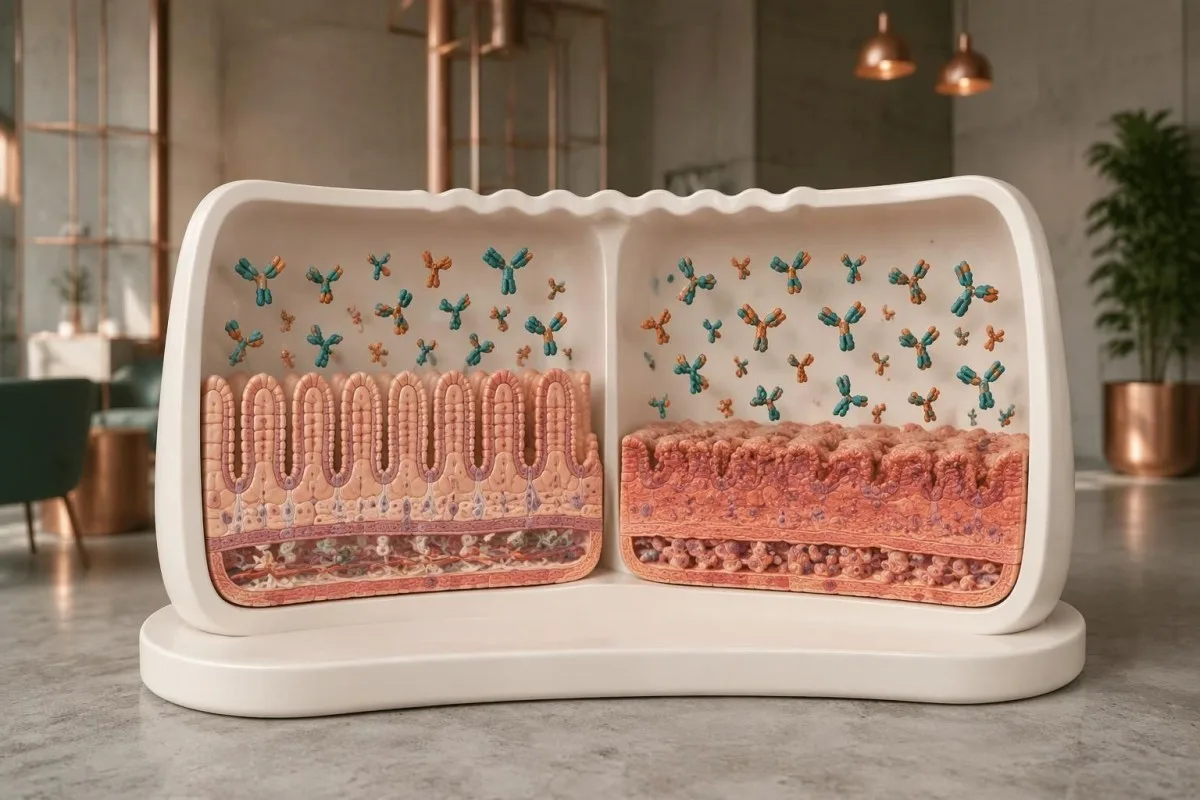
An adequate serum concentration cannot prove that TNF is the only pathway driving a person's current disease. Persistent endoscopic activity with a trough of 12 µg/mL is more supportive of a mechanism problem than the same concentration with normal objective testing and symptoms from bile acid diarrhea.
Calling treatment failure at exactly 5 µg/mL can be premature when the goal is fistula control or substantial endoscopic improvement. The 10–15 µg/mL reassessment discussed in the 2021 consensus provides a safeguard against abandoning an under-optimized treatment, but it is not a requirement to escalate every patient with symptoms.
Objective evidence also has limits: CRP of 3 mg/L does not exclude active IBD, especially in people whose CRP has remained low during previous flares. Borderline stool results need context and sometimes repetition; our guide to хязгаарлагдмал fecal calprotectin explains why an isolated intermediate value should not determine a biologic switch.
The strongest case for changing mechanism combines 3 findings: documented inflammation, adequate exposure on a correctly timed sample, and an inadequate clinical response despite appropriate optimization. Structural complications, such as a fixed Crohn's stricture, can also cause symptoms that neither more infliximab nor a different biologic will reliably reverse.
Инфликсимабын түвшин хангалттай байхад эсрэгбие эерэг гарч болох уу?
Antibodies can be detected while infliximab remains measurable or adequate, particularly with drug-tolerant assays. A trough of 7 µg/mL and a weak positive antibody result do not automatically mean treatment failure; the assay, antibody trend, and evidence of disease activity determine how much weight that finding deserves.
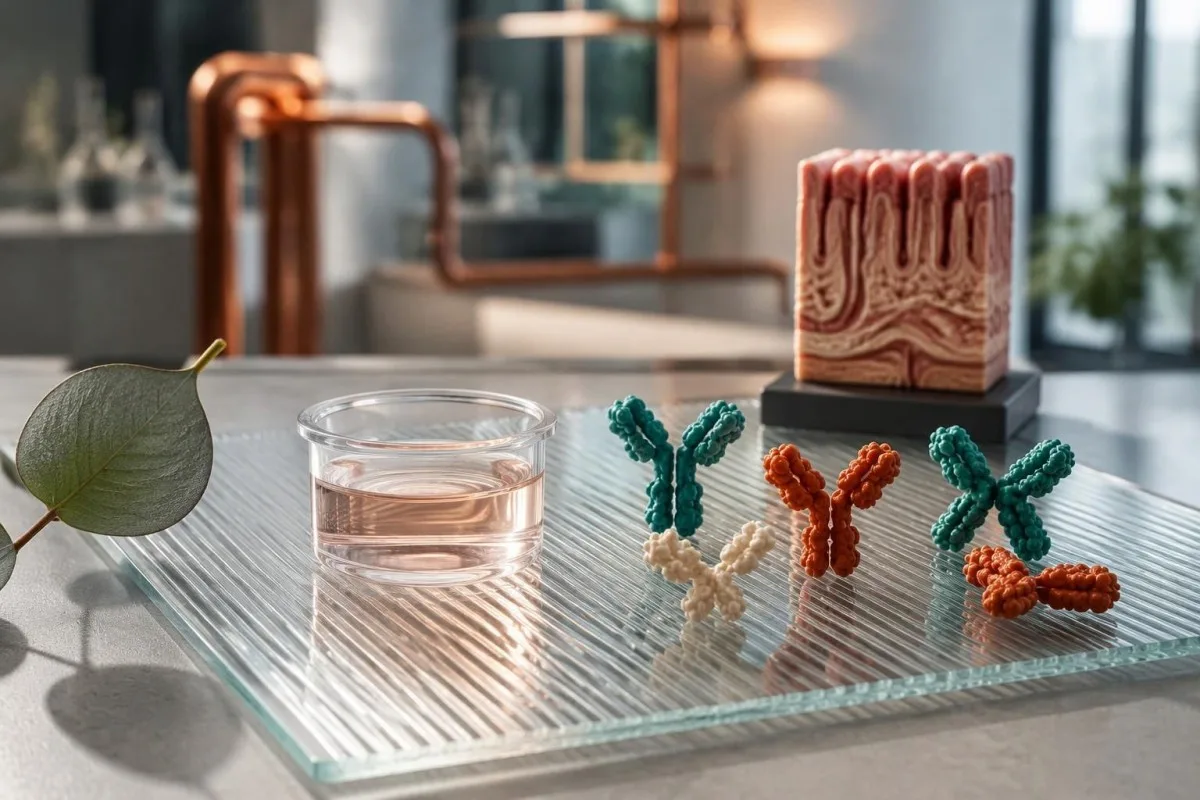
Drug-tolerant methods can identify antibodies in samples containing infliximab that would interfere with some drug-sensitive methods. This greater analytical sensitivity may reveal early or low-level immunogenicity, but 1 newly detected signal does not necessarily establish clinically meaningful loss of response.
A qualitative positive result contains less information than a quantitative result with the assay's cutoff and units. A report reading only positive cannot distinguish a value just above a 10 AU/mL cutoff from a much larger signal; our guide to чанарын болон хэмжээст шинжилгээ explains what each format can establish.
Compare antibody trajectories using the same laboratory method whenever feasible. Hypothetical results of 12, 15, and 13 AU/mL across 3 correctly timed visits may carry a different implication from 12, 80, and 200 AU/mL, although analytical variability and clinical findings still prevent interpretation from trend alone.
Кантести бол AI цусны шинжилгээний тайлал платформ that helps distinguish a reported antibody cutoff from a treatment target. When the report lacks the method or units, our interpretation should preserve that uncertainty rather than labeling 1 positive result as proof that infliximab has stopped working.
Лабораторийн арга, эсрэгбиеийн хэмжих нэгж яагаад чухал вэ?
Infliximab and antibody results are method-dependent, so values from different assays are not always interchangeable. Infliximab 1 µg/mL equals 1 mg/L, but antibody results in U/mL, AU/mL, or ng/mL do not have a universal conversion because laboratories use different standards, detection limits, and approaches to drug interference.
An assay may report free or functionally available drug differently from another method that detects a broader pool of circulating drug. Two laboratories can therefore produce somewhat different concentrations from similar specimens; a change from 6 to 8 µg/mL after switching methods may not represent a true gain in exposure.
Below the quantification limit means the assay cannot reliably assign a numerical concentration below its validated boundary. A report of less than 0.4 µg/mL is not proof of exactly 0 µg/mL, and greater than 100 U/mL cannot tell you whether the true antibody result is 110 or 1,000 U/mL.
Some laboratories use reflex antibody testing only when the drug concentration falls below a preset threshold. If antibodies were not tested because infliximab was 9 µg/mL, the result is not equivalent to antibodies negative; ask whether the antibody field says not performed, not detected, or below detection.
Kantesti's report interpretation should retain the assay name, units, and collection context instead of silently converting 20 AU/mL into another method's scale. Our эмнэлзүйн аргачлалын мэдээлэл explains the distinction between technical interpretation and clinical decision-making; no AI explanation removes the need to confirm an unusual result with the reporting laboratory.
Эмч нар шинж тэмдэг дахин илрэх нь IBD-ээс шалтгаалж байгааг хэрхэн баталгаажуулдаг вэ?
Returning symptoms do not necessarily mean returning intestinal inflammation; clinicians combine stool markers, CRP, infection testing, endoscopy, and imaging as appropriate. Three loose stools daily with a trough of 6 µg/mL can arise from active IBD, an intestinal infection, bile acid diarrhea, or a functional bowel disorder.
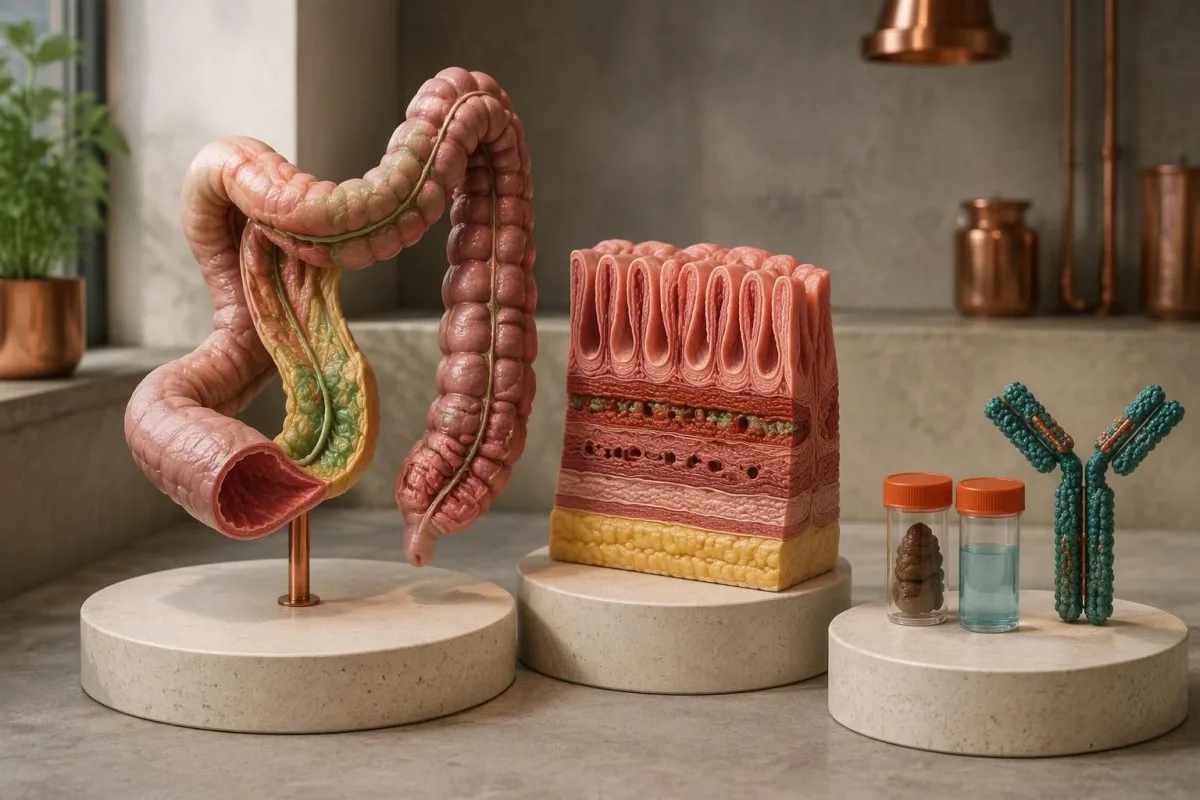
Fecal calprotectin and lactoferrin assess intestinal inflammatory activity rather than infliximab exposure. A hypothetical calprotectin of 800 µg/g adds different information from a trough of 2 µg/mL; our stool inflammation marker comparison explains why paired disease and drug measurements answer separate clinical questions.
C. difficile testing can be necessary during new or worsening diarrhea, even without recent antibiotics. A positive screening test and negative toxin result require contextual interpretation, not automatic classification as an IBD flare; our guide to C. difficile-ийн зөрүүтэй хариу describes why 2 test components can disagree.
Bile acid diarrhea is particularly relevant after ileal disease or resection and can persist despite controlled inflammation. A person with a trough of 10 µg/mL and reassuring objective IBD assessment may need a different evaluation; our explanation of SeHCAT retention results covers one diagnostic route where that test is available.
Bloating, gas, and altered stool frequency can also reflect bacterial overgrowth or carbohydrate malabsorption. At least 2 explanations can coexist with IBD, so a satisfactory trough should not end the assessment; our SIBO breath test guide explains preparation and limitations rather than treating breath testing as proof of every symptom's cause.
IBD-ийн баг өртөлт бага байхад хэрхэн хариу арга хэмжээ авч болох вэ?
Low exposure without substantial persistent antibodies may lead an IBD team to increase the infliximab dose, shorten the dosing interval, or address a treatment interruption. A common adult intravenous maintenance schedule is 5 mg/kg every 8 weeks after induction, but any adjustment requires individualized prescribing and reassessment of disease activity.
For a hypothetical 70 kg adult, 5 mg/kg corresponds to 350 mg before local preparation or rounding rules. Shortening an unchanged dose from every 8 weeks to every 6 weeks increases average drug administered per unit time by about 33%; the trough increase cannot be predicted as exactly 33% because clearance is not constant.
Increasing the dose and shortening the interval are not pharmacokinetically identical strategies. A larger dose changes peak exposure, while a shorter interval reduces time for concentrations to decline; a hypothetical patient whose symptoms repeatedly return during week 7 may prompt a different discussion from someone symptomatic throughout all 8 weeks.
A useful reassessment checks both exposure and the treatment outcome rather than declaring success because the trough rose. If infliximab increases from 2 to 9 µg/mL but calprotectin remains 900 µg/g and endoscopic disease persists, the new result has narrowed the explanation without necessarily improving the underlying disease.
The timing of repeat testing depends on severity, the revised schedule, and the clinical question; waiting 3 months is not appropriate for every deteriorating patient. Our эмийн аюулгүй байдлын тренд гарын авлага explains why comparable dates and methods matter, but an app should never independently recommend extra infusions.
Эмчилгээг солих эсвэл хавсарсан эмчилгээ хийхийг хэзээ авч үздэг вэ?
Persistent high antibodies with low drug may favor changing treatment, while adequate exposure with confirmed active IBD may favor switching to a different mechanism. Low-level immunogenicity can sometimes be addressed through supervised optimization or an immunomodulator, but a result of 15 U/mL alone cannot determine which option offers the best benefit-risk balance.
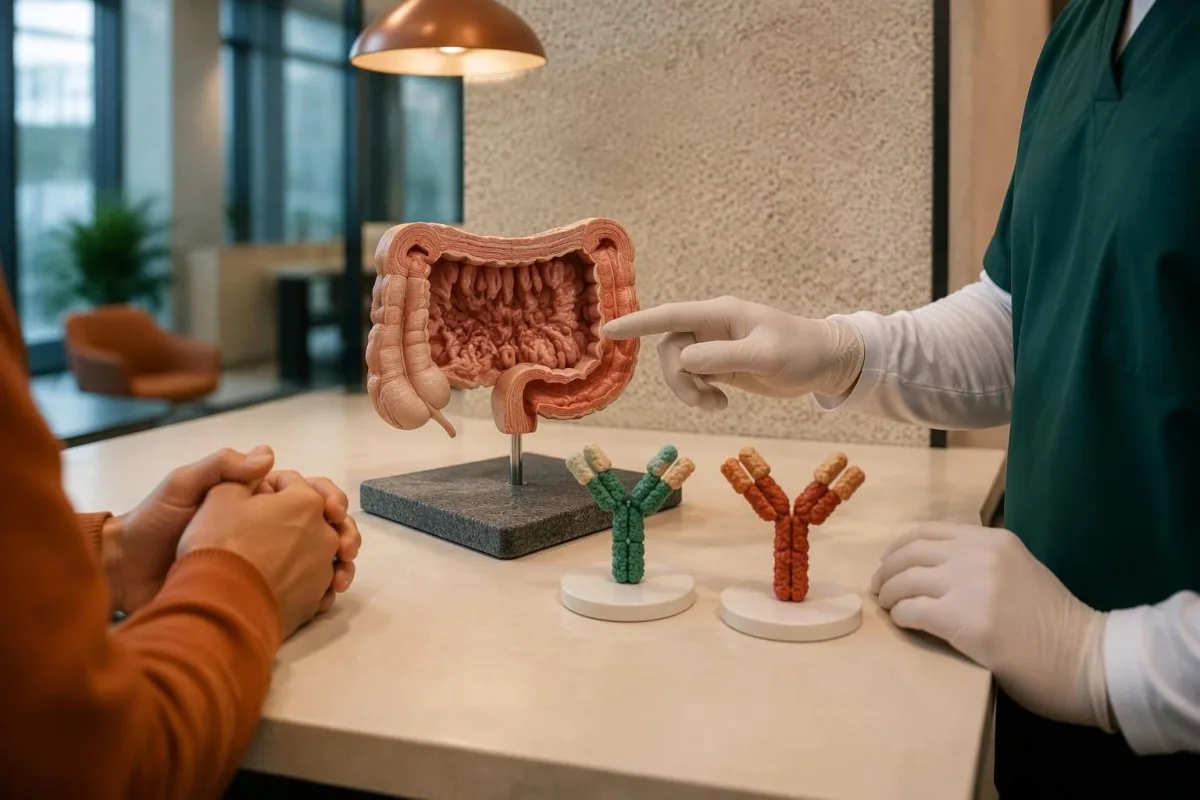
Switching within the anti-TNF class can make sense when infliximab previously controlled disease but antibody-associated clearance now prevents adequate exposure. Switching to another mechanism becomes more persuasive when inflammation persists with adequate exposure; these are 2 different failure patterns, not interchangeable reasons to choose the next medicine.
An immunomodulator such as azathioprine or methotrexate may reduce immunogenicity in selected circumstances, but adding one introduces additional monitoring and adverse-effect risks. Before azathioprine, TPMT testing and safety assessment can inform prescribing; TPMT and NUDT15 assessment do not replace ongoing CBC and liver monitoring, even when baseline results are normal.
If a person already takes a thiopurine, metabolite testing can help clarify exposure or a metabolism pattern before assuming combination therapy has failed. For example, 2 patients prescribed the same mg dose may have very different metabolite findings; our thiopurine treatment pattern guide explains why prescription dose alone is incomplete.
Restarting infliximab after a long interruption deserves a separate safety discussion because immunogenicity and infusion reactions can complicate re-exposure. A treatment gap of 6 months is not equivalent to a routine 1-week scheduling delay; never restart, add an immunomodulator, or stop an existing medicine based solely on an online interpretation.
Эмчилгээний эхний үе, фистул, хүүхэд болон тарилга нь зорилтот түвшнийг өөрчилдөг үү?
Treatment phase, disease phenotype, age, and formulation can change the relevant exposure goal; intravenous maintenance targets should not be copied into every setting. Standard adult intravenous induction commonly uses 5 mg/kg at weeks 0, 2, and 6, and those early concentrations are interpreted differently from an established 8-week maintenance trough.

The 2021 expert consensus described induction goals of approximately 20–25 µg/mL at week 2, 15–20 µg/mL at week 6, and 7–10 µg/mL at week 14 (Cheifetz et al., 2021). These are consensus exposure goals influenced by disease phenotype and outcome, not interchangeable minimums from one definitive randomized trial.
Perianal fistula outcomes may require higher exposure than symptom control in uncomplicated luminal disease, but observational associations do not establish a universal healing threshold. A fistula still draining at 10 µg/mL may also need imaging, drainage of an abscess, or procedural care; raising the trough cannot substitute for addressing an undrained collection.
Children can have different clearance and dosing requirements, particularly with lower body weight or severe disease. An adult maintenance benchmark of 5 µg/mL should not become a parent-directed dosing rule; our discussion of Хүүхдэд зориулсан AI тайлбар explains why pediatric specialist context and age-appropriate interpretation remain necessary.
Subcutaneous infliximab produces a different concentration-time profile from intermittent intravenous infusions, and availability and prescribing schedules vary internationally. A concentration of 15 µg/mL during injection treatment should not be labeled excessive merely because an intravenous report lists 3–7 µg/mL; the formulation, actual regimen, and sampling convention must be specified.
Хосолсон шинжилгээний хариу эмнэлзүйн үндэслэлийг хэрхэн өөрчилдөг вэ?
Paired results guide the next question rather than dictate a prescription: low drug without antibodies suggests underexposure, low drug with persistent antibodies suggests immunogenicity, and adequate drug with inflammation raises possible mechanism failure. The following 4 examples are entirely hypothetical; the concentrations are illustrative, not personalized treatment recommendations.
Example 1: a 34-year-old with Crohn's disease has a true trough of 1.8 µg/mL, no detected antibodies, albumin of 29 g/L, and calprotectin of 1,100 µg/g. This pattern supports underexposure in active disease; confirming the infusion schedule and considering supervised optimization are more logical than immediately declaring TNF blockade ineffective.
Example 2: a 46-year-old with ulcerative colitis has infliximab below 0.4 µg/mL and antibodies above the laboratory's 100 U/mL reporting limit on 2 visits. Assuming the assay defines that antibody signal as substantial, persistent immunogenicity is plausible; simply increasing the dose may be less successful than a clinician-directed treatment change.
Example 3: a 28-year-old has a trough of 11 µg/mL, no significant antibodies, and repeatedly active colitis on endoscopy despite appropriate optimization. Example 4: a 61-year-old has the same 11 µg/mL trough but reassuring endoscopy and diarrhea after ileal resection; the first pattern raises mechanism failure, whereas the second prompts investigation of non-inflammatory causes.
Кантести бол AI-аар ажилладаг цусны шинжилгээний үр дүнгийн шинжилгээний хэрэгсэл that helps organize these distinctions when the report and treatment details are supplied. Our хиймэл оюун ухааны технологийн тайлбар describes how laboratory context informs interpretation; if a 2-week-old report lacks sampling timing, the missing information must stay visible rather than being guessed.
Давтан үзлэгт юу авчрах ёстой вэ, ямар нотолгоо хамааралтай вэ?
Bring the complete report, infusion timeline, and objective disease results to your IBD review; these 3 evidence streams make paired drug-antibody testing actionable. Seek earlier care for severe deterioration rather than waiting for the next trough, and distinguish infliximab-specific clinical research from general educational publications about accompanying laboratory abnormalities.
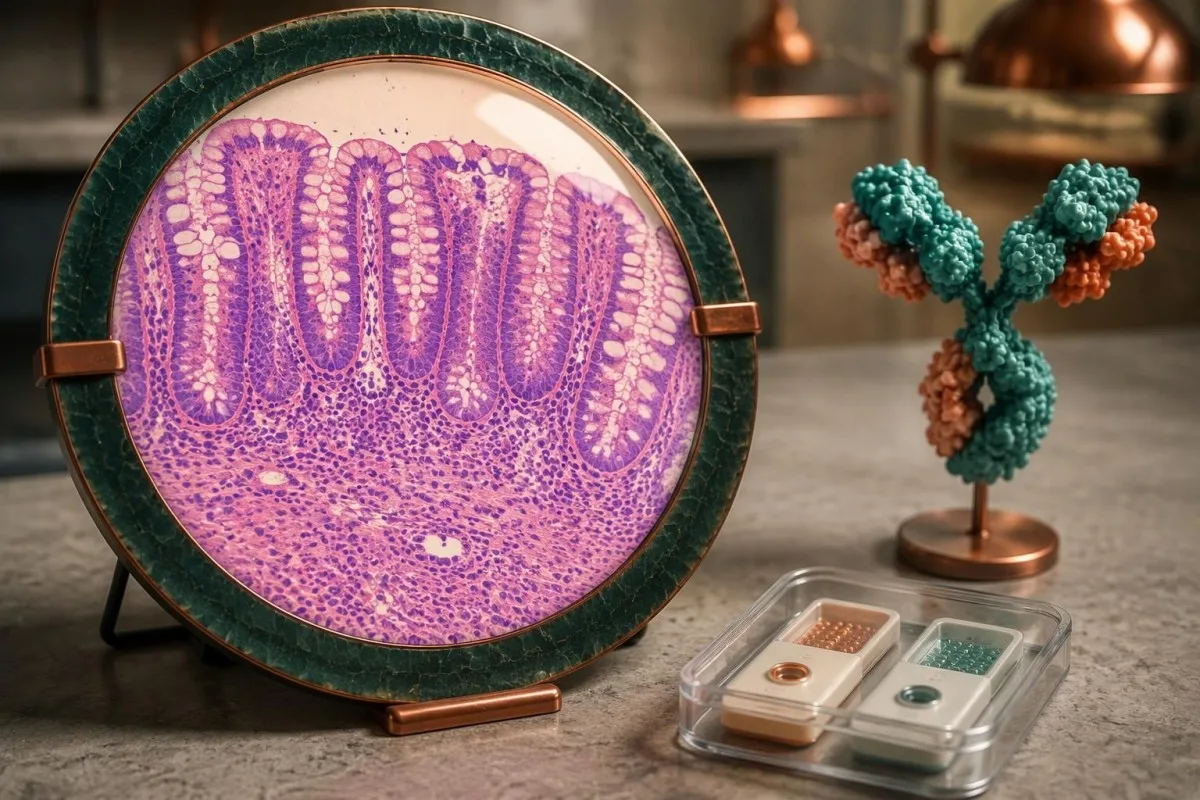
A useful review record includes the previous 2 infusion dates, actual dose, collection timing, assay name, antibody units, and recent CRP, albumin, and fecal calprotectin. Add symptom timing, steroid use, recent antibiotics, and missed doses; ask whether the proposed change addresses insufficient exposure, immunogenicity, active non-TNF disease, or a non-inflammatory explanation.
Contact your clinical team promptly for worsening diarrhea with dehydration, persistent vomiting, new significant bleeding, or fever of 38°C or higher while immunosuppressed. Severe abdominal pain with distension, fainting, or inability to keep fluids down may require emergency assessment; during an infusion, sudden breathing difficulty or collapse requires immediate staff attention, not interpretation of an antibody report.
Kantesti provides educational interpretation, not independent biologic prescribing, and our хариуцлагатай AI-ийн зарчмууд explain that boundary. A reassuring trough of 10 µg/mL does not establish that an infusion is safe during an acute illness; the treating service must assess symptoms, examination findings, and any necessary investigations.
The 2 Zenodo publications listed below address accompanying laboratory interpretation, not infliximab target validation: our RDW болон улаан эсийн гарын авлага concerns anemia patterns, while our BUN ба креатинины гарын авлага concerns renal and hydration context. These educational deposits are not evidence for anti-drug antibody cutoffs; the AGA guideline, TAXIT trial, and biologic-monitoring consensus supply the directly relevant clinical references.
Түгээмэл асуултууд
Инфликсимабын түвшин бага байх нь юу гэсэн үг вэ?
Инфликсимабын түвшин бага байна гэдэг нь цусанд эргэлдэж буй эмийн өртөлт тухайн эмчилгээний үе шат болон зорилгод сонгосон жишиг түвшнээс доогуур байгааг илэрхийлнэ; энэ нь инфликсимабыг заавал зогсоох хэрэгтэй гэсэн үг биш. Мэдэгдэхүйц эсрэгбие илрээгүй үед тогтвортой эмчилгээний үеийн жинхэнэ ең доод түвшин 2 µg/mL байх нь эмийн клиренс түргэссэн, гэдсээр уураг алдагдсан эсвэл тун, эсвэл тун хоорондын зай хангалтгүй байгааг илтгэж болно. Харин эмийн түвшин бага бөгөөд эсрэгбие удаан хугацаанд их хэмжээгээр илэрсээр байвал энэ нь дархлааны тогтолцооны нөлөөгөөр клиренс нэмэгдсэнийг илтгэнэ. Таны гэдэсний үрэвсэлт өвчний баг шинжилгээний хариуг өвчний бодит идэвхжил, дуслаар хийх эмчилгээний хугацаа болон шинжилгээний аргын хамт тайлбарлах хэрэгтэй.
IBD-ийн үед инфликсимабын зохистой доод түвшин хэд вэ?
IBD-тэй хүн бүрт тохирох infliximab-ийн ганц тогтсон доод түвшин гэж байхгүй. AGA-ийн 2017 оны удирдамжид хариу урвалд суурилсан эмчилгээний үеийн хяналтад дор хаяж 5 µg/mL байхыг санал болгосон бол 2021 оны шинжээчдийн зөвшилцөлд эмчилгээний үеийн концентрацыг 5–10 µg/mL гэж тодорхойлсон. Хариу урвал хоёрдогчоор буурсан зарим өвчтөнд эмчилгээг зогсоохоос өмнө 10–15 µg/mL түвшинд дахин үнэлэх шаардлагатай байж болно. Индукцийн эмчилгээ, фистул болон арьсан дор хийх эмчилгээний нөхцөл өөр тул лабораторийн лавлах интервал нь бүх хүнд тохирох тунгийн зорилтот хэмжээ биш юм.
Инфликсимабын түвшингээ хэзээ шинжлүүлэх ёстой вэ?
For intravenous infliximab, a trough sample should be collected immediately before the next infusion begins. A sample obtained 2 days after an infusion is not comparable with routine pre-infusion targets. Record the last infusion date, dose, scheduled interval, and actual collection time, especially if an 8-week appointment was delayed. Subcutaneous infliximab has a different exposure profile, so sampling should follow the prescribing team's and laboratory's instructions.
Инфликсимабын эсрэгбие алга болж болох уу?
Инфликсимабын эсрэг бага түвшний эсрэгбие заримдаа илрэхээ болих эсвэл эмнэлзүйн ач холбогдол нь буурч болох ч эмийн хэмжээ маш бага байхтай хавсарсан, удаан хугацаанд өндөр хэвээр байгаа эсрэгбиетэй тэмцэхэд илүү бэрх. 2021 оны шинжээчдийн зөвшилцөлд нэг төрлийн хөдөлгөөний шилжилтийн шинжилгээнд бага титртэй эсрэгбиеийг 10 U/mL-ээс бага гэж тодорхойлсон; энэ босго утгыг лабораторийн бүх аргад хэрэглэх боломжгүй. Эмчийн хяналтан дор эмчилгээг оновчлох эсвэл дархлаа дарангуйлагч эм нэмэх нь зарим өвчтөнд тусалж болох бол бусдад эмчилгээг өөрчлөх шаардлагатай. Хосолсон шинжилгээг давтан хийх нь эсрэгбие удаан хугацаанд хадгалагдаж байгаа эсэхийг тодруулах боловч өвчтөнүүд эмчилгээгээ өөрсдөө өөрчилж болохгүй.
Инфликсимабын түвшин хэвийн байсан ч үйлчлэхээ больж болох уу?
Инфликсимабын эргэлдэх концентраци хангалттай байсан ч үрэвсэлт гэдэсний өвчний (IBD) объектив идэвхийг хянаж чадахгүй байх нь эмчилгээний механизмын боломжит бүтэлгүйтлийг илтгэнэ. 10 µg/mL-ийн доод концентраци нь гэдэсний салст эдгэрнэ гэдгийг батлахгүй, мөн TNF нь өвчнийг өдөөж буй цорын ганц зам гэдгийг тогтоохгүй. Үйлдлийн механизмыг өөрчлөхөөс өмнө эмч нар үрэвсэл байгаа эсэхийг баталгаажуулж, бүтцийн болон халдварын хүндрэлүүдийг үнэлж, тухайн эмчилгээний тодорхой зорилгод хүрэхэд эмийн өртөлт хангалттай байсан эсэхийг авч үзнэ. Объектив үнэлгээгээр санаа зовоох зүйлгүй атлаа суулгалт илэрвэл шалтгаан нь үрэвслийн бус байж болно.
Инфликсимабын өндөр түвшин аюултай юу?
Infliximab-ийн өндөр концентраци нь шууд аюултай гэсэн үг биш бөгөөд IBD-тэй бүх өвчтөнд хамаарах, ийлдэс дэх хоруу чанарын нэг тогтсон босго утга байдаггүй. 15 µg/mL-ийн үр дүнг эмчилгээг эхлүүлэх үе, фистулын эмчилгээ эсвэл арьсан дор хийх эмчилгээний үед ердийн судсаар хийх барих эмчилгээний үеийнхээс өөрөөр тайлбарлаж болно. Аюулгүй байдал нь зөвхөн концентрациас бус, эмчилгээний нийт схем, халдвар, дусаалгын урвал болон эмнэлзүйн бусад үзүүлэлтээс хамаарна. Үр дүнг эмчилгээ бичиж өгсөн багтайгаа ярилцахгүйгээр дусаалгыг алгасах эсвэл тунг бууруулах хэрэггүй.
Лабораторио сольсны дараа инфликсимабын эсрэгбиеийн шинжилгээний хариу яагаад өөрчлөгдсөн бэ?
Шинжилгээний аргачлалуудын тохируулга, нэгж, илрүүлэх хязгаар болон цусанд эргэлдэж буй эмийг тэсвэрлэх чадвар харилцан адилгүй байдаг тул лаборатороо сольсны дараа инфликсимабын эсрэгбиеийн шинжилгээний хариу өөрчлөгдөж болно. 20 AU/mL гэсэн хариуг бүх тохиолдолд U/mL эсвэл ng/mL болгон хөрвүүлэх боломжгүй. Эмийг тэсвэрлэх чадвартай арга нь инфликсимаб хэмжигдэхүйц хэвээр байхад эмэнд мэдрэмтгий шинжилгээний илрүүлж чадаагүй эсрэгбиемийг илрүүлж болно. Боломжтой бол үзүүлэлтүүдийн чиг хандлагыг ижил аргаар харьцуулж, автоматаар давтан шинжилгээ хийх дүрмийн дагуу орхигдсон бус, эсрэгбиеийн шинжилгээг үнэхээр хийсэн эсэхийг лавлаарай.
Цусны шинжилгээний хариугаа тайлбарлуулаарай
Лабораторийн тайлангаа байршуулснаар Kantesti-ийн AI биомаркер бүрийг энгийн хэлээр хэдхэн секундэд тайлбарлана. Дэлхий даяар 2 сая гаруй хүн ашигладаг.
Лавлагаа
- Klein, T., Mitchell, S., & Weber, H. (2026). RDW цусны шинжилгээ: RDW-CV, MCV болон MCHC-ийн талаарх бүрэн гарын авлага. Kantesti AI-ийн анагаахын судалгаа. DOI
- Klein, T., Mitchell, S., & Weber, H. (2026). BUN/Creatinine Ratio тайлбар: шээсний функцийн тестийн гарын авлага. Kantesti AI-ийн анагаахын судалгаа. DOI
- Feuerstein JD et al. (2017). American Gastroenterological Association Institute Guideline on Therapeutic Drug Monitoring in Inflammatory Bowel Disease. Gastroenterology. DOI
- Vande Casteele N et al. (2015). Trough concentrations of infliximab guide dosing for patients with inflammatory bowel disease. Gastroenterology. DOI
- Cheifetz AS et al. (2021). A Comprehensive Literature Review and Expert Consensus Statement on Therapeutic Drug Monitoring of Biologics in Inflammatory Bowel Disease. The American Journal of Gastroenterology. DOI
- 2 сая+Шинжилсэн сорилууд
- 127+Улс орнууд
- 100+Хэлнүүд
Эмнэлгийн багийн тухай


E-E-A-T итгэлийн дохио
Туршлага
Эмчийн удирдлагатай лабораторийн тайлалын ажлын урсгалын клиник хяналт.
Мэргэшсэн байдал
Биомаркерууд клиникийн нөхцөлд хэрхэн ажиллаж/өөрчлөгдөж байгаад чиглэсэн лабораторийн анагаах ухаан.
Эрх мэдэл
Доктор Томас Кляйн эмнэлзүйн хувьд хянасан бөгөөд доктор Сара Митчелл, профессор доктор Ханс Вебер нар хувь нэмэр оруулсан.
Найдвартай байдал
Сэрэмжлүүлгийг бууруулахын тулд тодорхой дараагийн алхамтай, нотолгоонд суурилсан тайлал.





Эмнэлгийн хариуцлагаас татгалзах мэдэгдэл
Энэ нийтлэл зөвхөн боловсролын зорилготой бөгөөд эмнэлгийн зөвлөгөө биш болно. Оношилгоо, эмчилгээний шийдвэр гаргахдаа мэргэшсэн эрүүл мэндийн үйлчилгээ үзүүлэгчтэй заавал зөвлөлдөнө.
Хэвлэгдсэн · Редакцын багтай холбогдох
Kantesti Ltd компани Англи, Уэльст бүртгэлтэй, компанийн дугаар. 17090423, Лондон, Нэгдсэн Хаант Улс.
