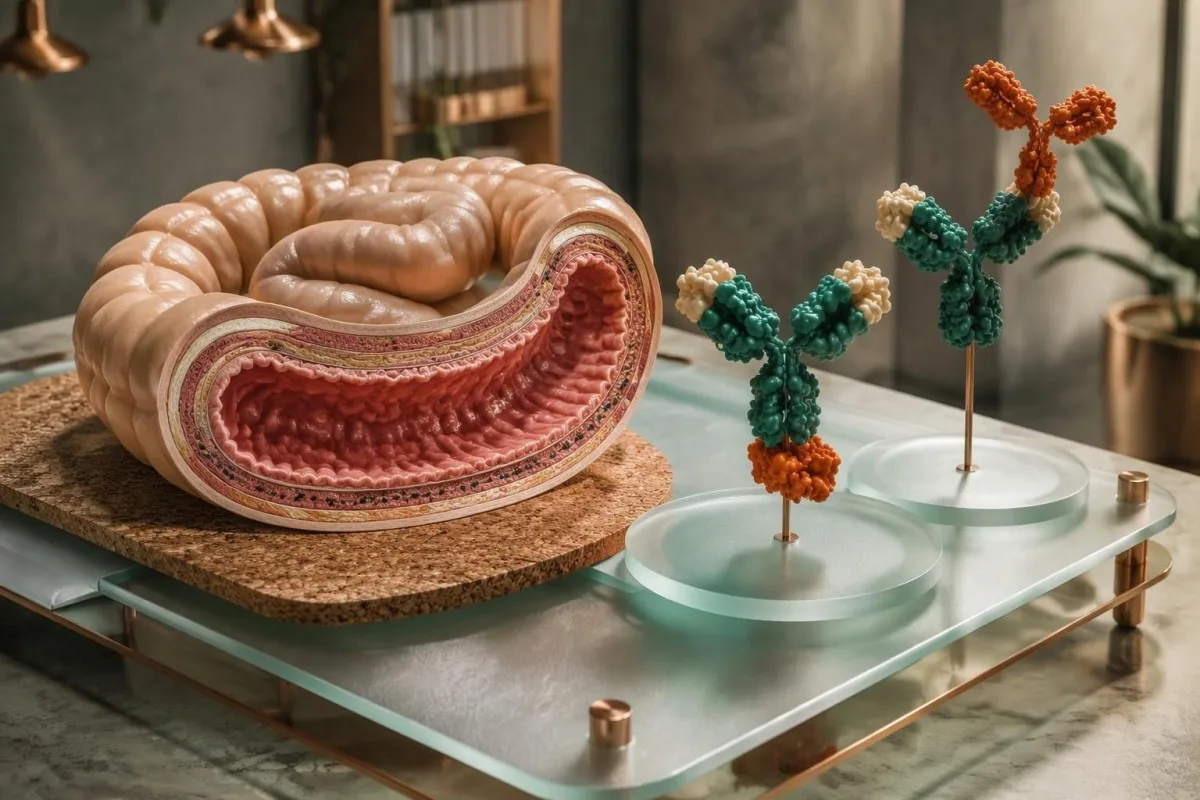
تحليل مستوى الإنفليكسيماب كيجمع بين تركيز الدوا والأجسام المضادة باش يفسّر فقدان السيطرة على IBD. إلا كان مستوى الدوا منخفض وما كايناش أجسام مضادة مهمّة، فهذا كيشير لتعرّض غير كافي للدوا؛ وإلا كان مستوى الدوا منخفض ومعاه أجسام مضادة مرتفعة ومستمرة، فهذا كيشير للتخلّص من الدوا بوساطة مناعية. الالتهاب النشيط رغم التعرّض الكافي كيرفع احتمال فشل آلية العلاج—ولكن غير من بعد التأكد من وجود الالتهاب، وأخذ العينة فالوقت الصحيح، وأن الهدف مناسب للغرض من العلاج.

أهم الخلاصات
- النتائج المقترنة كتميّز بين التعرّض غير الكافي للإنفليكسيماب والتخلّص منو المرتبط بالأجسام المضادة؛ وما كيثبت حتى واحد من هاد النتائج بوحدو علاش رجعات الأعراض.
- أخذ العينة قبل التسريب كيعني جمع عينة المختبر قبل ما يبدا التسريب الوريدي الموالي، ماشي من بعد يومين.
- المعايير المرجعية لعلاج المداومة كتختلف: توجيهات AGA ديال 2017 اقترحات على الأقل 5 µg/mL للمراقبة التفاعلية، بينما التوافق بين الخبراء كيوصف 5–10 µg/mL لعلاج المداومة.
- مستويات الإنفليكسيماب المنخفضة مع غياب الأجسام المضادة تقدر تكون ناتجة على التخلّص السريع من الدوا، أو فقدان البروتين عبر الأمعاء، أو تأخر الجرعات، أو طول الفترة بين الجرعات بزاف.
- الأجسام المضادة للإنفليكسيماب كايهمّو أكثر ملي كيكونو مستمرين، مهمّين بزاف بالنسبة لهاد التحليل، ومرفوقين بمستوى ضعيف بزاف ديال الدوا أو ما كيتكشفش.
- فشل محتمل بسبب آلية معيّنة كيتطلب وجود مرض الأمعاء الالتهابي نشيط بشكل موضوعي رغم التعرّض الكافي للدوا؛ الإسهال مع مستوى قبل الجرعة ديال 8 µg/mL ما كيثبتش هاد الشي.
- وحدات التحليل ماشي قابلة للتبديل: 1 µg/mL ديال الإنفليكسيماب كيساوي 1 mg/L، ولكن ما يمكنش نحوّلو بشكل عام بين U/mL وAU/mL ديال الأجسام المضادة.
- تغييرات العلاج خاصها تكون بالتشاور مع الفريق الطبي ديال مرض الأمعاء الالتهابي؛ فبعض حالات فقدان الاستجابة المختارة، ممكن يكون مناسب نوصلو التعرّض لـ 10–15 µg/mL قبل ما نوقفو الإنفليكسيماب.
آش كيكشف فعلياً تحليل مستوى الإنفليكسيماب؟
أن تحليل مستوى الإنفليكسيماب كيقيس الإنفليكسيماب اللي كيدور فالدم، غالباً بالتوازي مع الأجسام المضادة للدوا, ، باش نبحثو على التعرّض غير الكافي أو تصفية الدوا بوساطة المناعة. نتيجة ديال 2 µg/mL بلا أجسام مضادة مكتشفة كتطرح سؤال مختلف على 2 µg/mL مع أجسام مضادة مرتفعة ومستمرة؛ وحتى وحدة فيهم ما كتعنيش تلقائياً بلي خاص يوقفو الدوا.
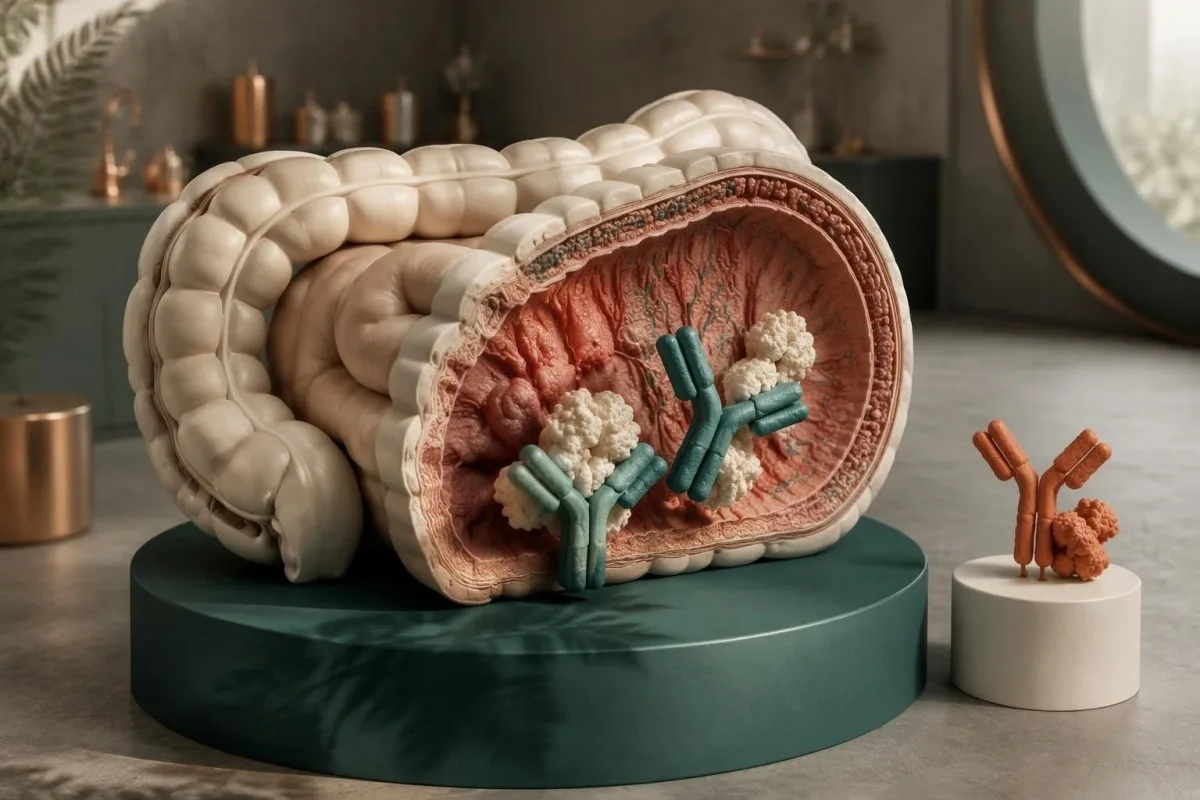
المراقبة التفاعلية لمستوى الدوا العلاجي هي إجراء التحليل بسبب تفاقم الأعراض أو وجود دليل على نشاط المرض. وكتختلف على المراقبة الاستباقية خلال فترة هدوء باينة: المستوى الافتراضي قبل الجرعة ديال 4 µg/mL يقدر يبرر البحث خلال نوبة موثقة، ولكن يقدر يتطلب نقاشاً مختلفاً ملي التنظير وعلامات البراز كيبينو شفاء مستمراً.
الإنفليكسيماب كيحبس عامل نخر الورم, ، اللي كيتختاصر غالباً بـ TNF؛ تحليل التركيز ما كيقيسش واش تحيّدات كل إشارة ديال TNF فالأمعاء. نتيجة ديال 7 µg/mL فالدم كتقيس الدوا فالدورة الدموية، ماشي نشاط الدوا داخل كل جزء مصاب من الأمعاء ولا مدى شفاء الأمعاء.
التفسير العملي كيعتمد على 3 معطيات على الأقل: تركيز الدوا، نتائج الأجسام المضادة، ونشاط المرض الموضوعي. والاستجابة السابقة حتى هي مهمة—رجوع الأعراض من بعد 18 شهر ديال السيطرة كيمثل فقداناً ثانوياً للاستجابة، بينما عدم الوصول للسيطرة من البداية خلال العلاج الأولي كيثير أسئلة مختلفة على التعرّض أثناء مرحلة التحريض وآلية العلاج.
كانتيستي هو محلل اختبار الدم بالذكاء الاصطناعي اللي كيساعد القرا يفهمو نتائج الإنفليكسيماب المقترنة بلا ما يتعاملو مع رقم واحد ديال المختبر على أنه تعليمات للجرعة. المنصة ديالنا كتسيرها Kantesti LTD، الشركة مسجلة فالمملكة المتحدة برقم 17090423؛ معلومات على منظمتنا منفصلة على الأدلة السريرية اللي كتدعم المراقبة العلاجية لمستوى الدوا.
فوقاش خاص قياس مستويات الإنفليكسيماب فالحضيض؟
مستويات الإنفليكسيماب الوريدي قبل الجرعة خاص يتاخد ليها العيّنة مباشرة قبل ما يبدا التسريب التالي، ملي كيكون التركيز قريب لأدنى مستوى ديالو فداك الفاصل بين الجرعات. العيّنة اللي كتتاخد من بعد يومين من التسريب ماشي مستوى قبل الجرعة، وما خاصهاش تقارن مباشرة بالأهداف ديال الصيانة قبل التسريب.
توقيت أخذ العيّنة يقدر يبدل المعنى الظاهر ديال النتيجة بلا ما تتبدل فعالية العلاج. مثلاً، 18 µg/mL افتراضية متاخدة مباشرة من بعد التسريب و3 µg/mL متاخدة قبل التسريب اللي من بعد يقدرو يوصفو نفس دورة الجرعات—ماشي تدهور مفاجئ بين حالتين علاجيتين مستقلتين.
سجّل تاريخ التسريب السابق، والجرعة الفعلية بـ mg، والفاصل المبرمج، ووقت أخذ العيّنة قبل ما تفسر التقرير. إلا تأخر التسريب ديال 8 أسابيع حتى للأسبوع 10، فالتركيز الناتج كيوصف فترة أطول بلا دوا؛ وما يقدرش يجاوب بدقة على واش البرنامج الأصلي ديال 8 أسابيع كان كيوفر تعرّضاً كافياً.
Collection from a line recently used to administer infliximab can contaminate the specimen and produce a misleadingly high result. Ask the infusion service about its collection protocol, and tell it if sampling occurred after treatment started; the timing principles resemble other pre-dose medication tests, although their targets differ.
Fasting is generally not required for the infliximab concentration itself, but another test ordered during the same visit may have preparation requirements. Our دليل تحضير السحب الأول explains how to document medication timing; for this test, an accurate infusion timeline usually matters more than an 8-hour fast.
شحال خاص يكون مستوى الإنفليكسيماب باش يتعتبر كافي؟
لا يوجد no universal adequate infliximab trough for every patient, disease phenotype, assay, and treatment phase. The 2017 AGA guideline suggested at least 5 µg/mL during reactive maintenance monitoring, while a 2021 expert consensus described maintenance concentrations of 5–10 µg/mL and higher exposure in selected loss-of-response situations.
The AGA benchmark of at least 5 µg/mL is a clinical decision aid, not a healthy-population reference range (Feuerstein et al., 2017). Infliximab is a prescribed biologic: an untreated person normally has no circulating infliximab, so a laboratory's therapeutic interval should never be read like the normal range for sodium.
The TAXIT trial enrolled 263 adults with stable responses and optimized intravenous infliximab toward 3–7 µg/mL before randomized follow-up. Its primary remission endpoint did not improve with concentration-based dosing, although some secondary outcomes favored that approach; this explains why the historical 3–7 µg/mL window is useful context rather than a universal modern target (Vande Casteele et al., 2015).
Cheifetz et al. (2021) recommended considering exposure of 10–15 µg/mL before discontinuing infliximab for secondary loss of response in selected patients. This is expert consensus, not proof that everyone should be escalated to 15 µg/mL; fistulas, endoscopic goals, disease severity, safety, and prior optimization affect whether that reasoning applies.
A concentration of 12 µg/mL is not automatically toxic, and a concentration of 4 µg/mL does not automatically require escalation in an asymptomatic patient with documented healing. Unlike the narrower toxicity discussions around some الأدوية الأخرى التي تراقب مستوياتها الدنيا, infliximab has no single established serum toxicity cutoff that dictates action.
| المستوى | النطاق | شنو كتعني |
|---|---|---|
| Historical TAXIT optimization window | 3–7 µg/mL | Studied in adults with stable responses; not a universal threshold for active disease or fistula healing. |
| AGA reactive maintenance benchmark | At least 5 µg/mL | Suggested in the 2017 guideline for reactive monitoring; interpret alongside objective activity and the assay. |
| Expert-consensus maintenance range | 5–10 µg/mL | Described by the 2021 consensus; the appropriate goal varies with disease phenotype and desired outcome. |
| Selected loss-of-response reassessment | 10–15 µg/mL | Exposure experts suggest considering before abandoning treatment in selected cases; not a routine target or toxicity range. |
علاش كتكون مستويات الإنفليكسيماب منخفضة بلا أجسام مضادة؟
Low infliximab levels with no significant antibodies usually suggest pharmacokinetic underexposure: too little drug remains available over the dosing interval. A trough of 1.5 µg/mL can reflect faster clearance, intestinal protein loss, a delayed infusion, or insufficient dose or frequency—not necessarily failure of TNF blockade as a treatment mechanism.

Severe intestinal disease can increase infliximab clearance and allow protein, including therapeutic antibody, to be lost through the bowel. A hypothetical patient with albumin of 28 g/L and a trough of 1 µg/mL therefore needs assessment of disease burden and protein loss, not just a question about whether the infusion was attended.
Low albumin is associated with faster infliximab clearance, but it is not a direct measure of drug binding or an instruction to apply a free-drug correction. Albumin of 30 g/L and 40 g/L may provide different clearance context; our دليل تفسير بروتينات المصل explains why inflammation, liver synthesis, nutrition, and loss must be distinguished.
Infliximab is mainly broken down through protein-catabolic pathways rather than cleared unchanged by the kidneys. A creatinine of 90 µmol/L cannot predict the infliximab trough, and the medicine should not be interpreted using small-molecule renal dosing assumptions; body size, inflammatory burden, and treatment interruptions may be more informative.
Kantesti AI helps place a low trough alongside reported albumin, CRP, and infusion timing; 1 result cannot identify the clearance pathway by itself. Low albumin should not automatically trigger protein supplements, because inflammation also changes circulating proteins—as explained in our guide to inflammation and transferrin.
على آش كتشير مستويات الدوا المنخفضة مع وجود الأجسام المضادة؟
Low or undetectable infliximab with persistent high antibodies suggests immune-mediated pharmacokinetic failure: antibodies can accelerate clearance, neutralize drug activity, or both. A trough below an assay's 0.5 µg/mL quantification limit with a substantial antibody result is more concerning than a weak antibody signal alongside a maintained drug concentration.
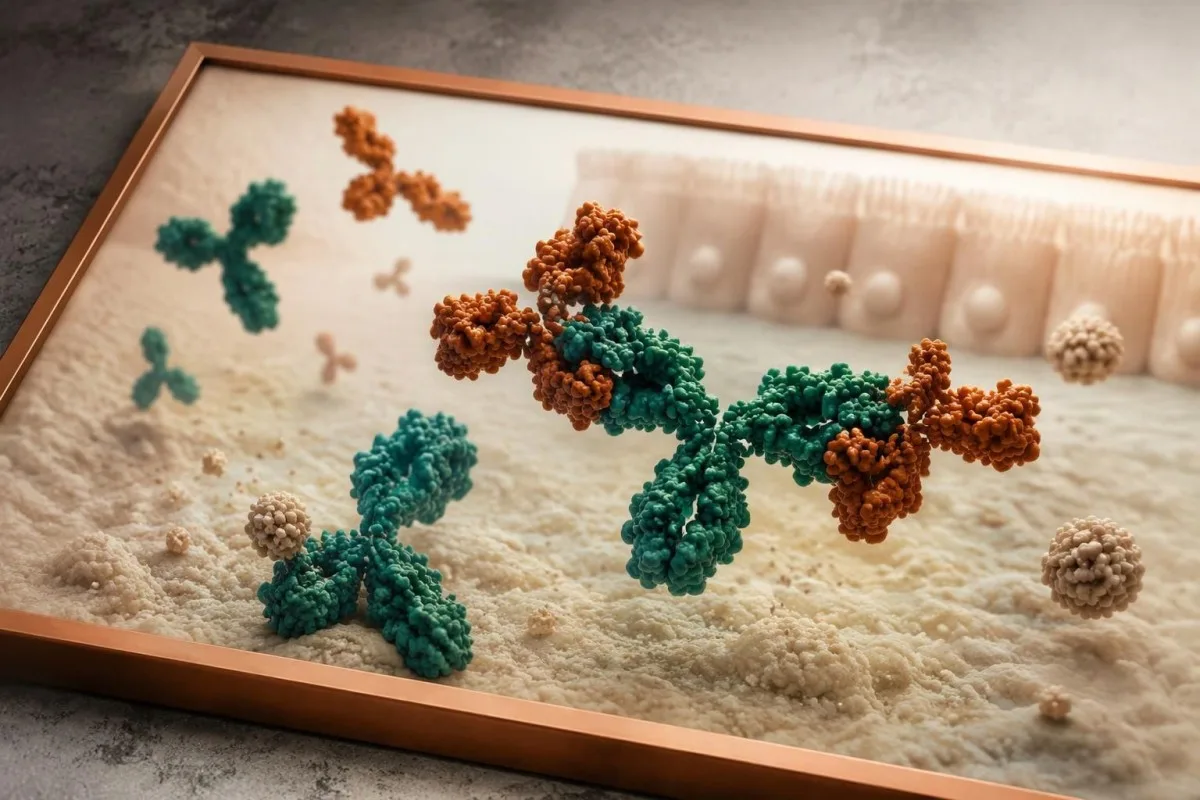
Anti-infliximab antibody tests usually detect binding antibodies; they do not all directly measure neutralizing activity. A positive result of 20 U/mL therefore identifies an assay-defined antibody signal, not a universal percentage of blocked infliximab or a precise prediction of how much benefit remains.
Antibody persistence and magnitude influence whether dose optimization is likely to recover exposure. Cheifetz et al. (2021) described low-titer antibodies as below 10 U/mL for the homogeneous mobility shift assay specifically; that threshold must not be transferred to an ELISA reporting AU/mL or to another laboratory's calibration.
A single low antibody result may be transient or become less clinically relevant after supervised treatment optimization. Repeating paired drug and antibody testing can distinguish a 1-time signal from a rising pattern, but severe disease or an infusion reaction may require action before a second result is available.
Antibodies to infliximab are not the same as antibodies against your own bowel, and they do not by themselves diagnose an immediate allergy. Our explanation of أنواع نتائج الأجسام المضادة الإيجابية helps separate these concepts; breathlessness or faintness during an infusion still requires immediate attention regardless of the antibody number.
فوقاش كيشير مستوى الحضيض الكافي لفشل آلية العلاج؟
فشل محتمل بسبب آلية معيّنة means objectively active IBD persists despite sufficient infliximab exposure for the treatment goal. A trough of 8 µg/mL with confirmed active colitis may raise this possibility, but selected patients need further exposure optimization before clinicians conclude that another inflammatory pathway should be targeted.
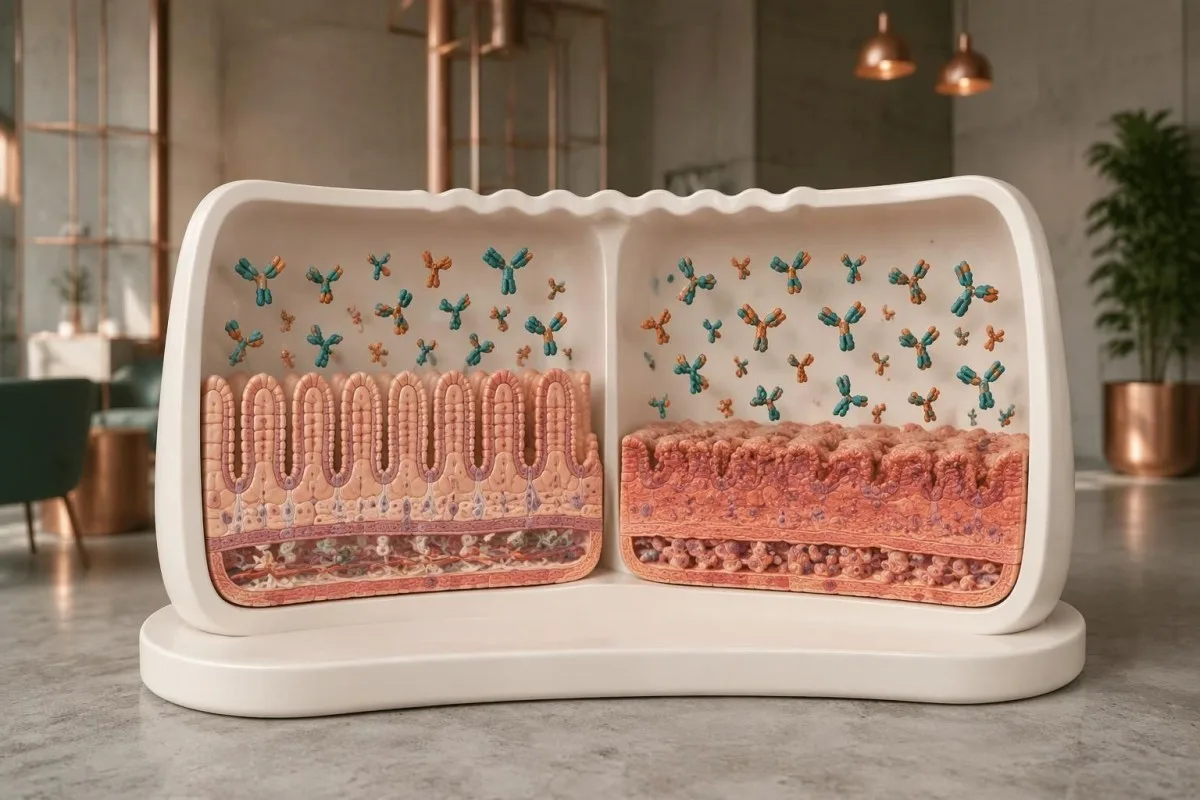
An adequate serum concentration cannot prove that TNF is the only pathway driving a person's current disease. Persistent endoscopic activity with a trough of 12 µg/mL is more supportive of a mechanism problem than the same concentration with normal objective testing and symptoms from bile acid diarrhea.
Calling treatment failure at exactly 5 µg/mL can be premature when the goal is fistula control or substantial endoscopic improvement. The 10–15 µg/mL reassessment discussed in the 2021 consensus provides a safeguard against abandoning an under-optimized treatment, but it is not a requirement to escalate every patient with symptoms.
Objective evidence also has limits: CRP of 3 mg/L does not exclude active IBD, especially in people whose CRP has remained low during previous flares. Borderline stool results need context and sometimes repetition; our guide to كالبروتكتين البرازي الحدودي explains why an isolated intermediate value should not determine a biologic switch.
The strongest case for changing mechanism combines 3 findings: documented inflammation, adequate exposure on a correctly timed sample, and an inadequate clinical response despite appropriate optimization. Structural complications, such as a fixed Crohn's stricture, can also cause symptoms that neither more infliximab nor a different biologic will reliably reverse.
واش ممكن تكون الأجسام المضادة إيجابية ومستوى الإنفليكسيماب كافي؟
Antibodies can be detected while infliximab remains measurable or adequate, particularly with drug-tolerant assays. A trough of 7 µg/mL and a weak positive antibody result do not automatically mean treatment failure; the assay, antibody trend, and evidence of disease activity determine how much weight that finding deserves.
Drug-tolerant methods can identify antibodies in samples containing infliximab that would interfere with some drug-sensitive methods. This greater analytical sensitivity may reveal early or low-level immunogenicity, but 1 newly detected signal does not necessarily establish clinically meaningful loss of response.
A qualitative positive result contains less information than a quantitative result with the assay's cutoff and units. A report reading only positive cannot distinguish a value just above a 10 AU/mL cutoff from a much larger signal; our guide to الاختبارات النوعية والكمية explains what each format can establish.
Compare antibody trajectories using the same laboratory method whenever feasible. Hypothetical results of 12, 15, and 13 AU/mL across 3 correctly timed visits may carry a different implication from 12, 80, and 200 AU/mL, although analytical variability and clinical findings still prevent interpretation from trend alone.
كانتيستي هو منصة تفسير تحليل الدم ديال AI that helps distinguish a reported antibody cutoff from a treatment target. When the report lacks the method or units, our interpretation should preserve that uncertainty rather than labeling 1 positive result as proof that infliximab has stopped working.
علاش كتهم طرق المختبر ووحدات قياس الأجسام المضادة؟
Infliximab and antibody results are method-dependent, so values from different assays are not always interchangeable. Infliximab 1 µg/mL equals 1 mg/L, but antibody results in U/mL, AU/mL, or ng/mL do not have a universal conversion because laboratories use different standards, detection limits, and approaches to drug interference.
An assay may report free or functionally available drug differently from another method that detects a broader pool of circulating drug. Two laboratories can therefore produce somewhat different concentrations from similar specimens; a change from 6 to 8 µg/mL after switching methods may not represent a true gain in exposure.
Below the quantification limit means the assay cannot reliably assign a numerical concentration below its validated boundary. A report of less than 0.4 µg/mL is not proof of exactly 0 µg/mL, and greater than 100 U/mL cannot tell you whether the true antibody result is 110 or 1,000 U/mL.
Some laboratories use reflex antibody testing only when the drug concentration falls below a preset threshold. If antibodies were not tested because infliximab was 9 µg/mL, the result is not equivalent to antibodies negative; ask whether the antibody field says not performed, not detected, or below detection.
Kantesti's report interpretation should retain the assay name, units, and collection context instead of silently converting 20 AU/mL into another method's scale. Our معلومات المنهجية السريرية explains the distinction between technical interpretation and clinical decision-making; no AI explanation removes the need to confirm an unusual result with the reporting laboratory.
كيفاش كيتأكدو الأطباء أن الأعراض اللي رجعات سببها IBD؟
Returning symptoms do not necessarily mean returning intestinal inflammation; clinicians combine stool markers, CRP, infection testing, endoscopy, and imaging as appropriate. Three loose stools daily with a trough of 6 µg/mL can arise from active IBD, an intestinal infection, bile acid diarrhea, or a functional bowel disorder.
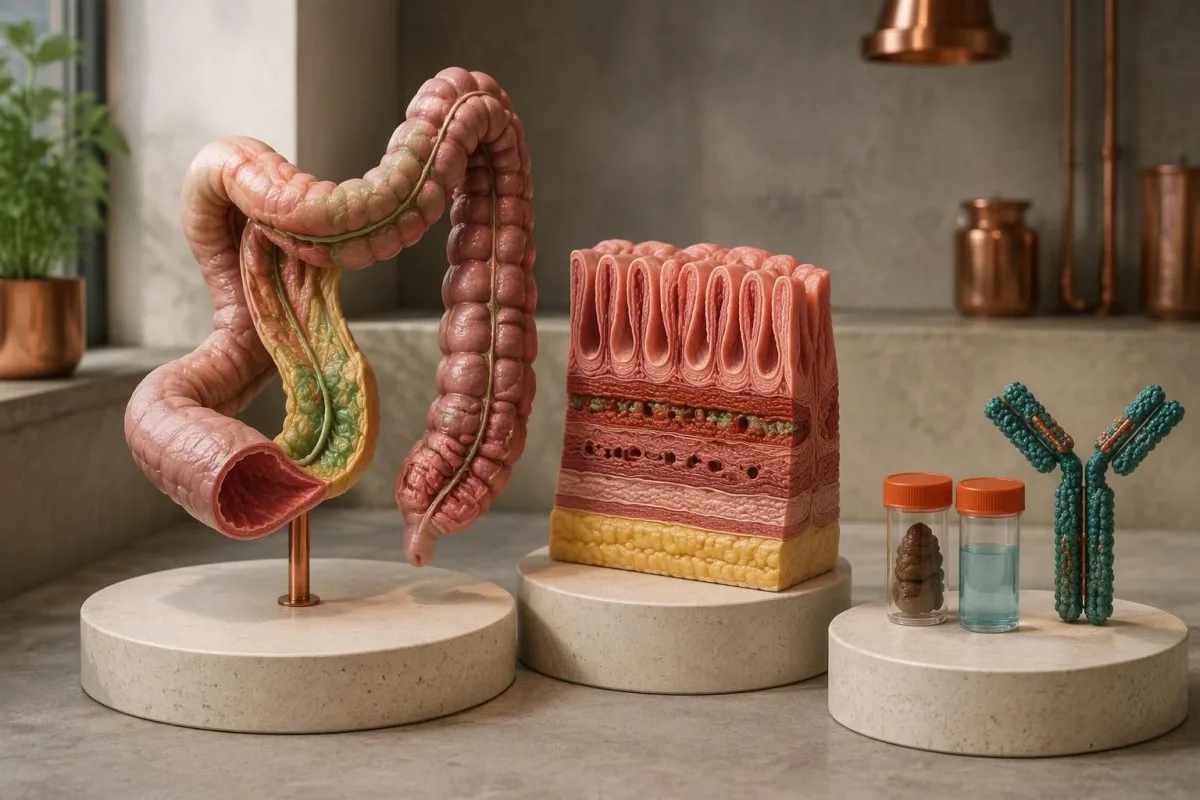
Fecal calprotectin and lactoferrin assess intestinal inflammatory activity rather than infliximab exposure. A hypothetical calprotectin of 800 µg/g adds different information from a trough of 2 µg/mL; our stool inflammation marker comparison explains why paired disease and drug measurements answer separate clinical questions.
C. difficile testing can be necessary during new or worsening diarrhea, even without recent antibiotics. A positive screening test and negative toxin result require contextual interpretation, not automatic classification as an IBD flare; our guide to نتائج C. difficile المتعارضة describes why 2 test components can disagree.
Bile acid diarrhea is particularly relevant after ileal disease or resection and can persist despite controlled inflammation. A person with a trough of 10 µg/mL and reassuring objective IBD assessment may need a different evaluation; our explanation of SeHCAT retention results covers one diagnostic route where that test is available.
Bloating, gas, and altered stool frequency can also reflect bacterial overgrowth or carbohydrate malabsorption. At least 2 explanations can coexist with IBD, so a satisfactory trough should not end the assessment; our SIBO breath test guide explains preparation and limitations rather than treating breath testing as proof of every symptom's cause.
كيفاش يقدر فريق IBD يتعامل مع التعرّض المنخفض للدوا؟
Low exposure without substantial persistent antibodies may lead an IBD team to increase the infliximab dose, shorten the dosing interval, or address a treatment interruption. A common adult intravenous maintenance schedule is 5 mg/kg every 8 weeks after induction, but any adjustment requires individualized prescribing and reassessment of disease activity.
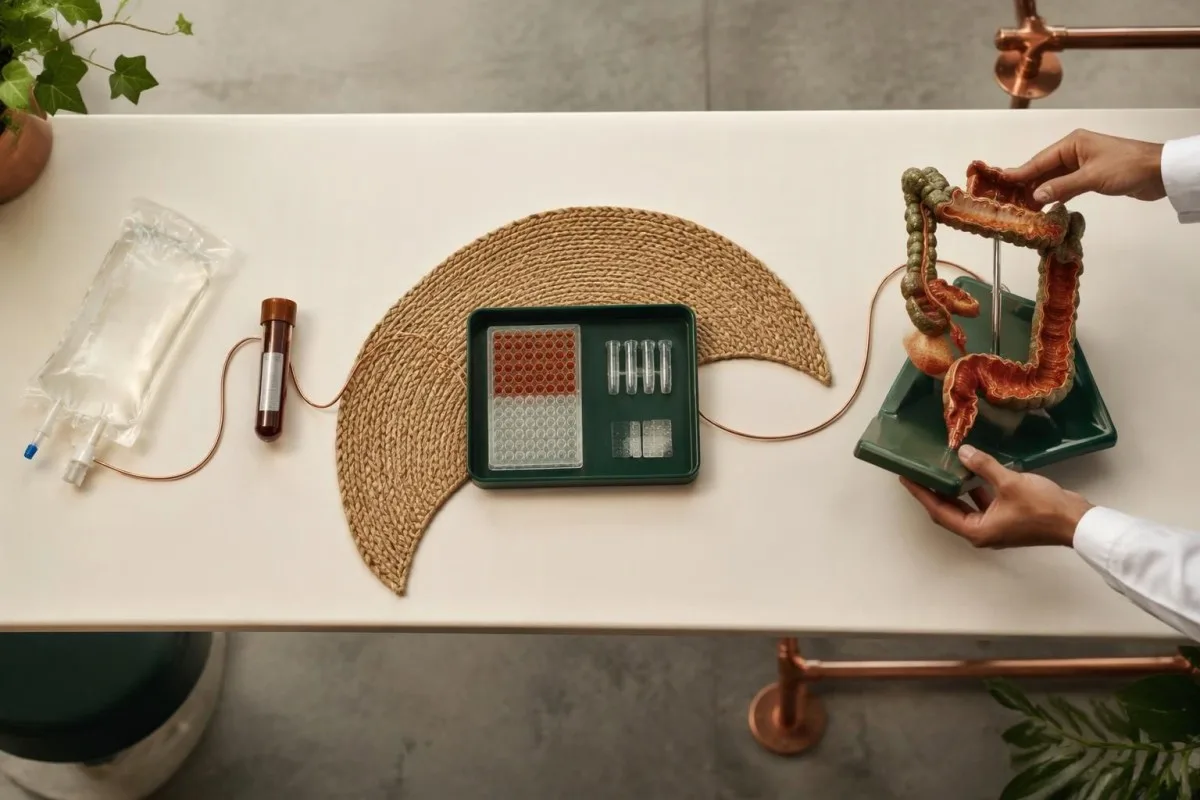
For a hypothetical 70 kg adult, 5 mg/kg corresponds to 350 mg before local preparation or rounding rules. Shortening an unchanged dose from every 8 weeks to every 6 weeks increases average drug administered per unit time by about 33%; the trough increase cannot be predicted as exactly 33% because clearance is not constant.
Increasing the dose and shortening the interval are not pharmacokinetically identical strategies. A larger dose changes peak exposure, while a shorter interval reduces time for concentrations to decline; a hypothetical patient whose symptoms repeatedly return during week 7 may prompt a different discussion from someone symptomatic throughout all 8 weeks.
A useful reassessment checks both exposure and the treatment outcome rather than declaring success because the trough rose. If infliximab increases from 2 to 9 µg/mL but calprotectin remains 900 µg/g and endoscopic disease persists, the new result has narrowed the explanation without necessarily improving the underlying disease.
The timing of repeat testing depends on severity, the revised schedule, and the clinical question; waiting 3 months is not appropriate for every deteriorating patient. Our دليل اتجاهات سلامة الأدوية explains why comparable dates and methods matter, but an app should never independently recommend extra infusions.
فوقاش كيتفكّروا فتبديل العلاج أو فالعلاج المركّب؟
Persistent high antibodies with low drug may favor changing treatment, while adequate exposure with confirmed active IBD may favor switching to a different mechanism. Low-level immunogenicity can sometimes be addressed through supervised optimization or an immunomodulator, but a result of 15 U/mL alone cannot determine which option offers the best benefit-risk balance.
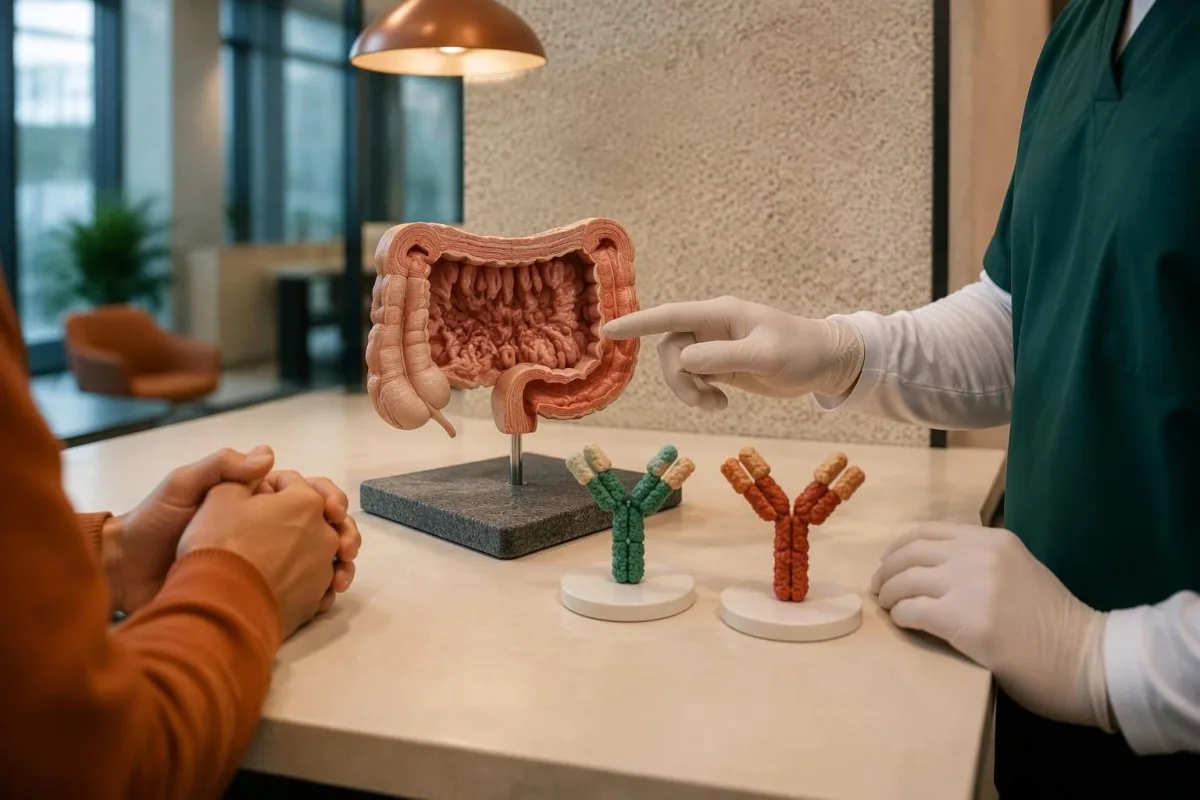
Switching within the anti-TNF class can make sense when infliximab previously controlled disease but antibody-associated clearance now prevents adequate exposure. Switching to another mechanism becomes more persuasive when inflammation persists with adequate exposure; these are 2 different failure patterns, not interchangeable reasons to choose the next medicine.
An immunomodulator such as azathioprine or methotrexate may reduce immunogenicity in selected circumstances, but adding one introduces additional monitoring and adverse-effect risks. Before azathioprine, TPMT testing and safety assessment can inform prescribing; TPMT and NUDT15 assessment do not replace ongoing CBC and liver monitoring, even when baseline results are normal.
If a person already takes a thiopurine, metabolite testing can help clarify exposure or a metabolism pattern before assuming combination therapy has failed. For example, 2 patients prescribed the same mg dose may have very different metabolite findings; our thiopurine treatment pattern guide explains why prescription dose alone is incomplete.
Restarting infliximab after a long interruption deserves a separate safety discussion because immunogenicity and infusion reactions can complicate re-exposure. A treatment gap of 6 months is not equivalent to a routine 1-week scheduling delay; never restart, add an immunomodulator, or stop an existing medicine based solely on an online interpretation.
واش التحريض، والناسور، والأطفال، والحقن كيبدّلو الأهداف؟
Treatment phase, disease phenotype, age, and formulation can change the relevant exposure goal; intravenous maintenance targets should not be copied into every setting. Standard adult intravenous induction commonly uses 5 mg/kg at weeks 0, 2, and 6, and those early concentrations are interpreted differently from an established 8-week maintenance trough.

The 2021 expert consensus described induction goals of approximately 20–25 µg/mL at week 2, 15–20 µg/mL at week 6, and 7–10 µg/mL at week 14 (Cheifetz et al., 2021). These are consensus exposure goals influenced by disease phenotype and outcome, not interchangeable minimums from one definitive randomized trial.
Perianal fistula outcomes may require higher exposure than symptom control in uncomplicated luminal disease, but observational associations do not establish a universal healing threshold. A fistula still draining at 10 µg/mL may also need imaging, drainage of an abscess, or procedural care; raising the trough cannot substitute for addressing an undrained collection.
Children can have different clearance and dosing requirements, particularly with lower body weight or severe disease. An adult maintenance benchmark of 5 µg/mL should not become a parent-directed dosing rule; our discussion of تفسير الذكاء الاصطناعي للأطفال explains why pediatric specialist context and age-appropriate interpretation remain necessary.
Subcutaneous infliximab produces a different concentration-time profile from intermittent intravenous infusions, and availability and prescribing schedules vary internationally. A concentration of 15 µg/mL during injection treatment should not be labeled excessive merely because an intravenous report lists 3–7 µg/mL; the formulation, actual regimen, and sampling convention must be specified.
كيفاش كتبدّل النتائج المقترنة الاستدلال السريري؟
Paired results guide the next question rather than dictate a prescription: low drug without antibodies suggests underexposure, low drug with persistent antibodies suggests immunogenicity, and adequate drug with inflammation raises possible mechanism failure. The following 4 examples are entirely hypothetical; the concentrations are illustrative, not personalized treatment recommendations.
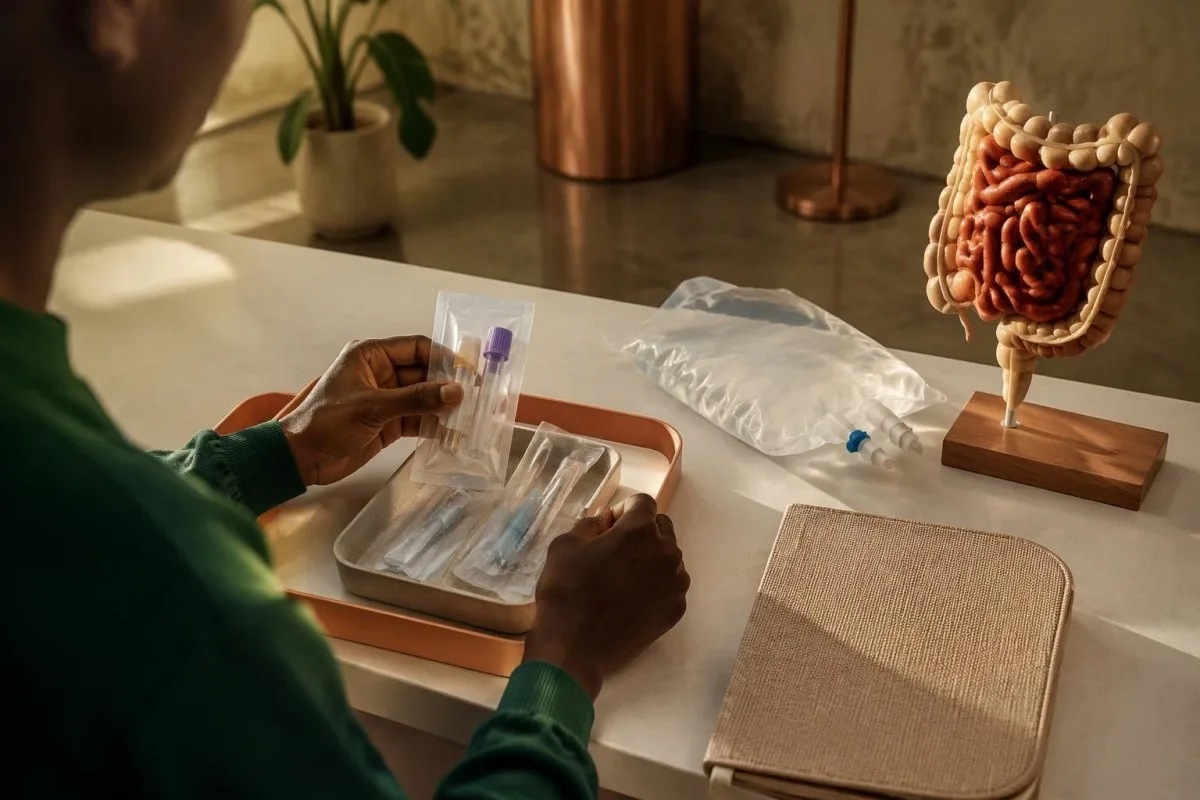
Example 1: a 34-year-old with Crohn's disease has a true trough of 1.8 µg/mL, no detected antibodies, albumin of 29 g/L, and calprotectin of 1,100 µg/g. This pattern supports underexposure in active disease; confirming the infusion schedule and considering supervised optimization are more logical than immediately declaring TNF blockade ineffective.
Example 2: a 46-year-old with ulcerative colitis has infliximab below 0.4 µg/mL and antibodies above the laboratory's 100 U/mL reporting limit on 2 visits. Assuming the assay defines that antibody signal as substantial, persistent immunogenicity is plausible; simply increasing the dose may be less successful than a clinician-directed treatment change.
Example 3: a 28-year-old has a trough of 11 µg/mL, no significant antibodies, and repeatedly active colitis on endoscopy despite appropriate optimization. Example 4: a 61-year-old has the same 11 µg/mL trough but reassuring endoscopy and diarrhea after ileal resection; the first pattern raises mechanism failure, whereas the second prompts investigation of non-inflammatory causes.
كانتيستي هو أداة تحليل ديال تحاليل الدم مدعومة بالذكاء الاصطناعي that helps organize these distinctions when the report and treatment details are supplied. Our شرح تقنية الذكاء الاصطناعي describes how laboratory context informs interpretation; if a 2-week-old report lacks sampling timing, the missing information must stay visible rather than being guessed.
شنو خاصك تجيب معاك للمتابعة، وشنو الأدلة اللي كتنطبق؟
Bring the complete report, infusion timeline, and objective disease results to your IBD review; these 3 evidence streams make paired drug-antibody testing actionable. Seek earlier care for severe deterioration rather than waiting for the next trough, and distinguish infliximab-specific clinical research from general educational publications about accompanying laboratory abnormalities.
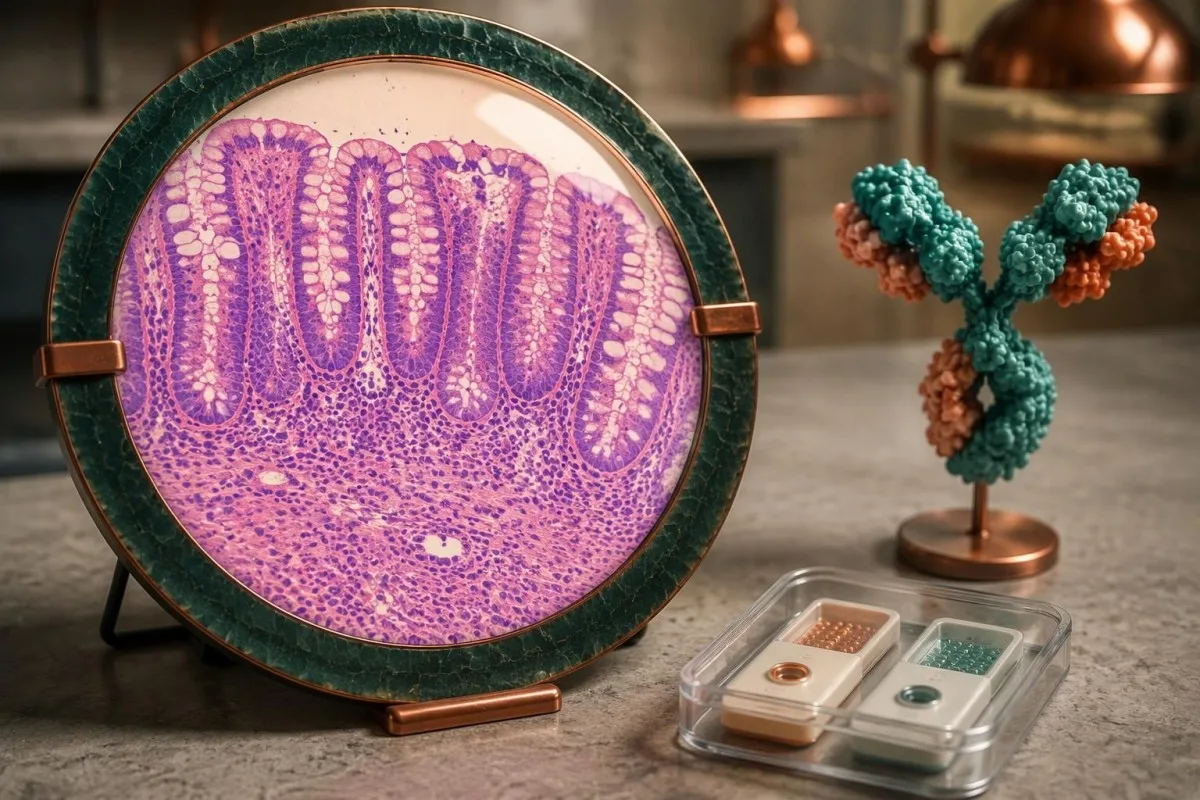
A useful review record includes the previous 2 infusion dates, actual dose, collection timing, assay name, antibody units, and recent CRP, albumin, and fecal calprotectin. Add symptom timing, steroid use, recent antibiotics, and missed doses; ask whether the proposed change addresses insufficient exposure, immunogenicity, active non-TNF disease, or a non-inflammatory explanation.
Contact your clinical team promptly for worsening diarrhea with dehydration, persistent vomiting, new significant bleeding, or fever of 38°C or higher while immunosuppressed. Severe abdominal pain with distension, fainting, or inability to keep fluids down may require emergency assessment; during an infusion, sudden breathing difficulty or collapse requires immediate staff attention, not interpretation of an antibody report.
Kantesti provides educational interpretation, not independent biologic prescribing, and our مبادئ الذكاء الاصطناعي المسؤول explain that boundary. A reassuring trough of 10 µg/mL does not establish that an infusion is safe during an acute illness; the treating service must assess symptoms, examination findings, and any necessary investigations.
The 2 Zenodo publications listed below address accompanying laboratory interpretation, not infliximab target validation: our دليل RDW وخلايا الدم الحمراء concerns anemia patterns, while our دليل BUN والكرياتينين concerns renal and hydration context. These educational deposits are not evidence for anti-drug antibody cutoffs; the AGA guideline, TAXIT trial, and biologic-monitoring consensus supply the directly relevant clinical references.
أسئلة متكررة
شنو كيعني المستوى المنخفض ديال الإنفليكسيماب؟
0 مستوى منخفض ديال الإنفليكسيماب كيعني أن التعرّض للدواء فالدورة الدموية أقل من المستوى المرجعي المختار لهاد المرحلة والهدف ديال العلاج؛ وما كيعنيش بالضرورة خاص يتوقف الإنفليكسيماب. مستوى حقيقي فالحضيض ديال العلاج الاستمراري قدره 2 µg/mL، بلا أجسام مضادة مهمة، يقدر يدل على تصفية أسرع للدواء، أو فقدان البروتين من الأمعاء، أو جرعة غير كافية أو فاصل زمني طويل بزاف. أما الدواء المنخفض مع استمرار وجود أجسام مضادة بكمية كبيرة، فيوحي بتصفية بوساطة المناعة. خاص فريق علاج مرض التهاب الأمعاء ديالك يفسر النتيجة مع نشاط المرض اللي تقاس بموضوعية، وتوقيت التسريب، والتحليل المستعمل.
شحال خاص يكون المستوى الأدنى ديال الإنفليكسيماب فمرض الأمعاء الالتهابي؟
ما كاينش مستوى واحد مثالي ديال infliximab فالقاع كيناسب جميع الناس اللي عندهم IBD. توجيهات AGA ديال 2017 اقترحات على الأقل 5 µg/mL للمراقبة التفاعلية فمرحلة العلاج الوقائي، بينما إجماع الخبراء ديال 2021 وصف تراكيز وقائية بين 5–10 µg/mL. بعض المرضى اللي رجع عندهم نقص الاستجابة من بعد استجابة أولية، ممكن يحتاجو يعاودو التقييم عند 10–15 µg/mL قبل ما يتوقف العلاج. التحريض، والناسور، والعلاج تحت الجلد كيتطلبو سياق مختلف، وبالتالي المجال المرجعي ديال المختبر ماشي هدف جرعات كيناسب الجميع.
0 إمتى خاصني ندير تحليل مستوى الإنفليكسيماب ديالي؟
For intravenous infliximab, a trough sample should be collected immediately before the next infusion begins. A sample obtained 2 days after an infusion is not comparable with routine pre-infusion targets. Record the last infusion date, dose, scheduled interval, and actual collection time, especially if an 8-week appointment was delayed. Subcutaneous infliximab has a different exposure profile, so sampling should follow the prescribing team's and laboratory's instructions.
واش يقدرو يختافيو الأجسام المضادة للإنفليكسيماب؟
الأجسام المضادة بمستوى منخفض ضد الإنفليكسيماب ممكن مرات ما تبقاش كتبان فالتحاليل أو تولّي أقل أهمية سريرية، ولكن الأجسام المضادة المرتفعة والمستمرة مع مستوى منخفض بزاف ديال الدوا كيكون أصعب نتغلبو عليها. التوافق ديال الخبراء لعام 2021 وصف الأجسام المضادة ذات العيار المنخفض بأنها أقل من 10 U/mL باستعمال اختبار واحد ديال الإزاحة المتجانسة للحركية؛ وما يمكنش تطبيق هاد الحد على جميع طرق التحليل المختبرية. تحسين العلاج تحت الإشراف أو إضافة دواء مُعدِّل للمناعة يقدر يعاون بعض المرضى، بينما آخرين كيحتاجو يبدلو العلاج. إعادة التحاليل المزدوجة تقدر توضح واش الحالة مستمرة، ولكن ما خاصش المرضى يبدلو العلاج بوحدهم.
0 واش يقدر الإنفليكسيماب يحبّس يخدم حتى إلا كان المستوى ديالو عادي؟
0 إنفليكسيماب يقدر ما يتحكمش فمرض الأمعاء الالتهابي النشيط موضوعيا، رغم أن التركيز ديالو فالدورة الدموية كافي، وهادشي كيثير احتمال فشل آلي. تركيز 10 µg/mL قبل الجرعة ما كيضمنش شفاء الأمعاء، وما كيثبتش أن TNF هو المسار الوحيد اللي كيسبب المرض. قبل ما يبدلو آلية العلاج، كيتأكدو الأطباء من وجود الالتهاب، وكيقيّمو المضاعفات البنيوية أو المعدية، وكياخدو بعين الاعتبار واش التعرض للدواء كان كافي للهدف العلاجي المحدد. الإسهال مع تقييم موضوعي مطمئن يقدر يكون عندو سبب غير التهابي.
0 واش المستوى المرتفع ديال إنفليكسيماب خطير؟
التركيز العالي ديال الإنفليكسيماب ما كيعنيش بالضرورة أنه خطير، وما كاين حتى حدّ ثابت ومعتمد لتركيز الدواء فالسيروم كيطبّق على جميع مرضى أمراض الأمعاء الالتهابية. نتيجة 15 µg/mL ممكن تتفسّر بشكل مختلف فمرحلة العلاج التحريضي، أو علاج الناسور، أو العلاج تحت الجلد، مقارنةً مع العلاج الوريدي الاعتيادي ديال المداومة. السلامة كتعتمد على نظام العلاج كامل، والالتهابات، وردود الفعل للتسريب، ونتائج سريرية أخرى، ماشي على التركيز بوحدو. ما تفوّتش حتى تسريب وما تنقصش الجرعة بلا ما تناقش النتيجة مع الفريق الطبي اللي وصف ليك العلاج.
علاش تبدلات نتائج الأجسام المضادة للإنفليكسيماب ديالي من بعد ما بدلت المختبر؟
0 نتائج الأجسام المضادة للإنفليكسيماب تقدر تتبدل من بعد تغيير المختبرات، حيث التحاليل كتختلف فالمعايرة والوحدات وحدود الكشف ومدى تحملها لوجود الدوا فالدورة الدموية. نتيجة 20 AU/mL ما يمكنش تتحول بشكل عام لـ U/mL ولا ng/mL. الطريقة اللي كتتحمل وجود الدوا تقدر تكشف الأجسام المضادة اللي كيغفل عليها تحليل حساس للدوا ملي كيبقى الإنفليكسيماب قابل للقياس. قارن التغيّرات باستعمال نفس الطريقة إلا أمكن، وسول واش دارو تحليل الأجسام المضادة فعلاً ولا تحيد بسبب قاعدة ديال التحليل التلقائي.
خذ شرح لنتائج تحليل الدم ديالك
حمّل تقرير التحاليل ديالك، وكيشرح AI ديال Kantesti كل مؤشر حيوي بلغة بسيطة فثواني. كايستعملوه أكثر من 2 مليون شخص فالعالم.
مراجع
- كلاين، ت.، ميتشل، س.، و ويبر، هـ. (2026). تحليل RDW فالدم: دليل شامل على RDW-CV وMCV وMCHC. الأبحاث الطبية ديال Kantesti AI. DOI
- كلاين، ت.، ميتشل، س.، و ويبر، هـ. (2026). شرح نسبة BUN/كرياتينين: دليل اختبار وظائف الكلى. الأبحاث الطبية ديال Kantesti AI. DOI
- Feuerstein JD et al. (2017). American Gastroenterological Association Institute Guideline on Therapeutic Drug Monitoring in Inflammatory Bowel Disease. أمراض الجهاز الهضمي. DOI
- Vande Casteele N et al. (2015). Trough concentrations of infliximab guide dosing for patients with inflammatory bowel disease. أمراض الجهاز الهضمي. DOI
- Cheifetz AS et al. (2021). A Comprehensive Literature Review and Expert Consensus Statement on Therapeutic Drug Monitoring of Biologics in Inflammatory Bowel Disease. The American Journal of Gastroenterology. DOI
- 2 مليون+الاختبارات المُحلَّلة
- 127+بلدان
- 100+اللغات
نبذة عن الفريق الطبي


إشارات الثقة E-E-A-T
خبرة
مراجعة سريرية يقودها الأطباء لسير عمل تفسير التحاليل.
خبرة
تركيز طب المختبر على كيفية سلوك الـ biomarkers في السياق السريري.
السلطة
راجعها طبياً الدكتور Thomas Klein، بمساهمات من الدكتورة Sarah Mitchell والأستاذ الدكتور Hans Weber.
الجدارة بالثقة
تفسير قائم على الأدلة مع مسارات متابعة واضحة لتقليل الإنذار.





إخلاء المسؤولية الطبية
هذه المقالة لأغراض تعليمية فقط ولا تشكل نصيحة طبية. استشر دائمًا مقدم رعاية صحية مؤهلًا لاتخاذ قرارات التشخيص والعلاج.
نُشر · تواصل مع فريق التحرير
منشور من طرف Kantesti Ltd، مسجل في إنجلترا وويلز، رقم الشركة. 17090423, ، لندن، المملكة المتحدة.
