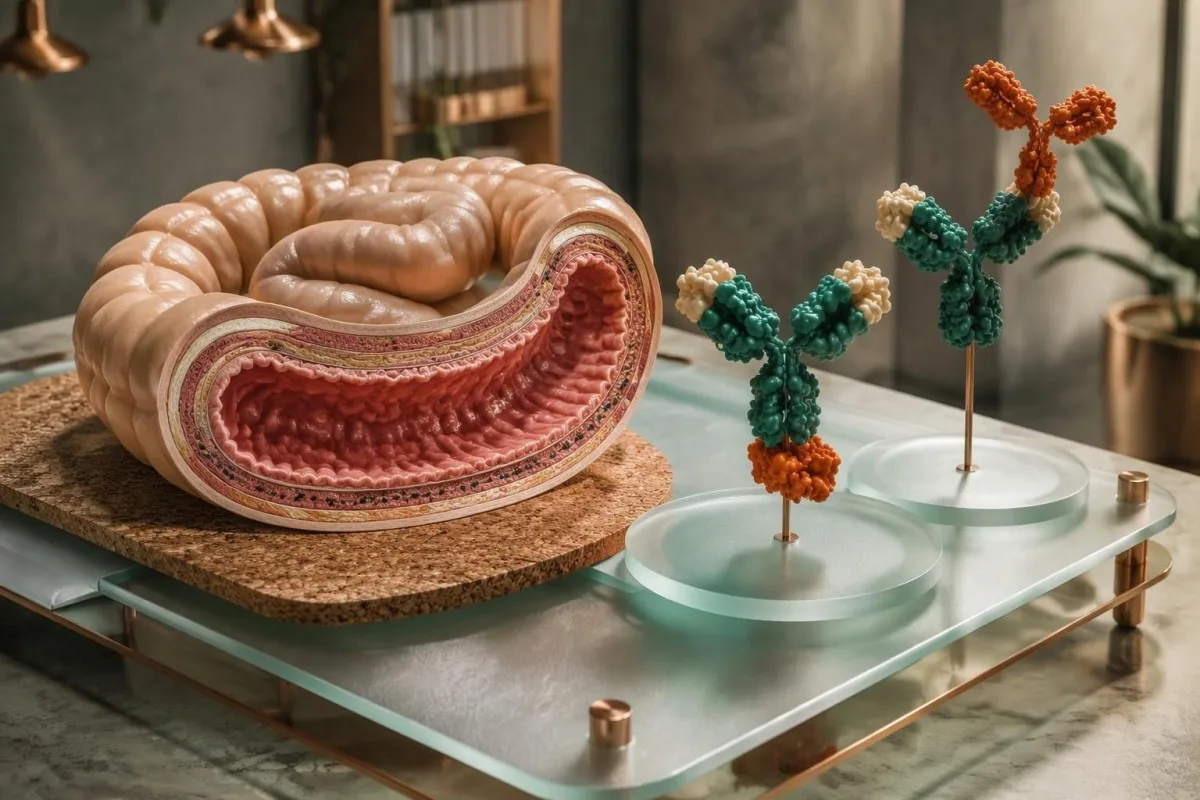
Инфликсимаб деңгейін анықтайтын талдау дәрінің концентрациясын антиденелермен қатар өлшеп, ІҚА бақылауының жоғалу себебін түсіндіруге көмектеседі. Елеулі антиденелерсіз дәрі деңгейінің төмен болуы препараттың жеткіліксіз әсерін көрсетеді; дәрі деңгейінің төмен болуы және антиденелердің тұрақты жоғары болуы иммундық клиренсті меңзейді. Препарат жеткілікті әсер еткеніне қарамастан белсенді қабынудың болуы әсер ету механизмінің ықтимал жеткіліксіздігін көрсетеді, бірақ тек қабыну барын, сынама дұрыс алынғанын және ем мақсатына сай нысаналы деңгейді растағаннан кейін ғана.

Негізгі тұжырымдар
- Қатар алынған нәтижелер инфликсимаб әсерінің жеткіліксіздігін антиденелермен байланысты клиренстен ажыратады; нәтижелердің ешқайсысы симптомдардың қайталану себебін өздігінен дәлелдемейді.
- Инфузия алдында сынама алу келесі көктамырішілік инфузия басталмай тұрып зертханалық сынама алуды білдіреді, 2 күннен кейін емес.
- Қолдаушы емге арналған бағдарлық деңгейлер әртүрлі: AGA-ның 2017 жылғы нұсқаулығында реактивті мониторинг үшін кемінде 5 µg/mL ұсынылса, сарапшылар консенсусында қолдаушы ем кезінде 5–10 µg/mL көрсетілген.
- Инфликсимабтың төмен деңгейі антиденелер болмаған жағдайда клиренстің жылдамдауын, ішектен ақуыз жоғалуын, дозаны кешіктіруді немесе аралықтың тым ұзақ болуын көрсетуі мүмкін.
- Инфликсимабқа қарсы антиденелер сол талдау үшін тұрақты әрі елеулі болғанда және препарат мөлшері өте төмен немесе анықталмайтын деңгейде болғанда аса маңызды.
- Ықтимал механизмдік ем сәтсіздігі препараттың жеткілікті әсеріне қарамастан, ішектің қабыну ауруының (IBD) объективті белсенді болуын талап етеді; 8 µg/mL ең төменгі концентрациясындағы диарея мұны дәлелдемейді.
- Талдау бірліктері өзара алмастырылмайды: инфликсимабтың 1 µg/mL мөлшері 1 mg/L-ге тең, бірақ антиденелердің U/mL және AU/mL бірліктерін әмбебап түрде бір-біріне айналдыру мүмкін емес.
- Емді өзгерту IBD бойынша сізді емдейтін топпен бірлесіп шешілуі керек; емге жауап жоғалған кейбір жағдайларда инфликсимабтан бас тартпай тұрып, препарат мөлшерін 10–15 µg/mL-ге дейін жеткізу қажет болуы мүмкін.
Инфликсимаб деңгейін анықтайтын талдау нақты нені көрсетеді?
Ан инфликсимаб деңгейін анықтайтын тест қанда айналымда жүрген инфликсимаб мөлшерін, әдетте препаратқа қарсы антиденелермен бірге, өлшеп, препарат әсерінің жеткіліксіздігін немесе иммундық жүйе арқылы препараттың шығарылуын анықтауға көмектеседі. Антиденелер анықталмаған кездегі 2 µg/mL нәтижесі тұрақты жоғары антиденелер бар кездегі 2 µg/mL нәтижесінен басқа сұрақ туғызады; екі жағдайда да дәріні міндетті түрде тоқтату керек деген сөз емес.
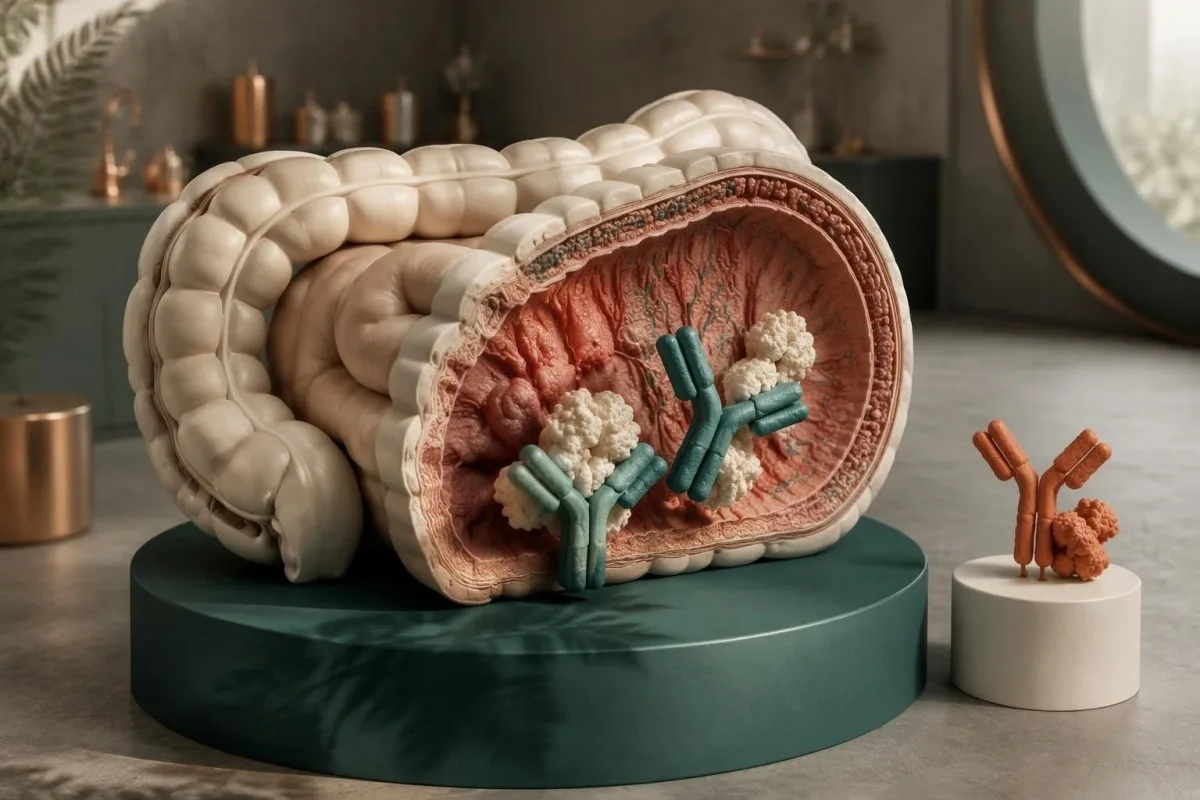
Емдік препарат мониторингін реактивті түрде жүргізу симптомдар күшейгенде немесе аурудың белсенді екені байқалғанда тағайындалатын талдау. Бұл аурудың ремиссияда екені көрінген кезде жүргізілетін проактивті мониторингтен ерекшеленеді: аурудың асқынуы құжатталған жағдайда ең төменгі 4 µg/mL концентрациясы тексеру жүргізуге негіз болуы мүмкін, ал эндоскопия мен нәжіс маркерлері тұрақты жазылуды көрсеткенде басқа талқылауды қажет етеді.
Инфликсимаб ісік некрозының факторын, тежейді; ол әдетте TNF деп қысқартылады. Концентрацияны анықтайтын талдау ішектегі TNF сигналдарының барлығы бейтараптанған-бейтараптанбағанын өлшемейді. Қан сарысуындағы 7 µg/mL нәтижесі қан айналымындағы препарат мөлшерін көрсетеді, бірақ зақымданған ішектің әр бөлігіндегі препарат белсенділігін немесе ішектің жазылу дәрежесін көрсетпейді.
Нәтижені тәжірибеде түсіндіру кемінде 3 көрсеткішке сүйенеді: препарат концентрациясы, антиденелер туралы деректер және ауру белсенділігінің объективті белгілері. Бұрынғы емге берілген жауап та маңызды: 18 ай бақылауда болғаннан кейін симптомдардың қайта пайда болуы — емге жауаптың екіншілік жоғалуы, ал бастапқы ем кезінде ауруды бақылауға ешқашан қол жеткізбеу индукциялық кезеңдегі препарат әсері мен ем механизмінің тиімділігіне қатысты басқа сұрақтар туғызады.
Кантести - бұл AI қан анализінің анализаторы оқырмандарға инфликсимаб бойынша біріктірілген нәтижелерді зертханалық бір санды дозалау жөніндегі нұсқау ретінде қабылдамай түсінуге көмектеседі. Біздің платформаны Ұлыбританияда тіркелген Kantesti LTD басқарады; компания нөмірі — 17090423; туралы ақпарат біздің ұйымымызда емдік препарат мониторингін қолдайтын клиникалық дәлелдерден бөлек қарастырылады.
Инфликсимабтың ең төменгі деңгейін қашан өлшеу керек?
Инфликсимабты көктамыр ішіне енгізгендегі ең төменгі концентрациясы келесі инфузия басталар алдында, концентрациясы дозалау аралығындағы ең төменгі деңгейге жақын болған кезде өлшенуі керек. Инфузиядан кейін 2 күн өткен соң алынған үлгі ең төменгі концентрацияны көрсетпейді, сондықтан оны инфузия алдындағы демеуші емге арналған мақсатты көрсеткіштермен тікелей салыстыруға болмайды.
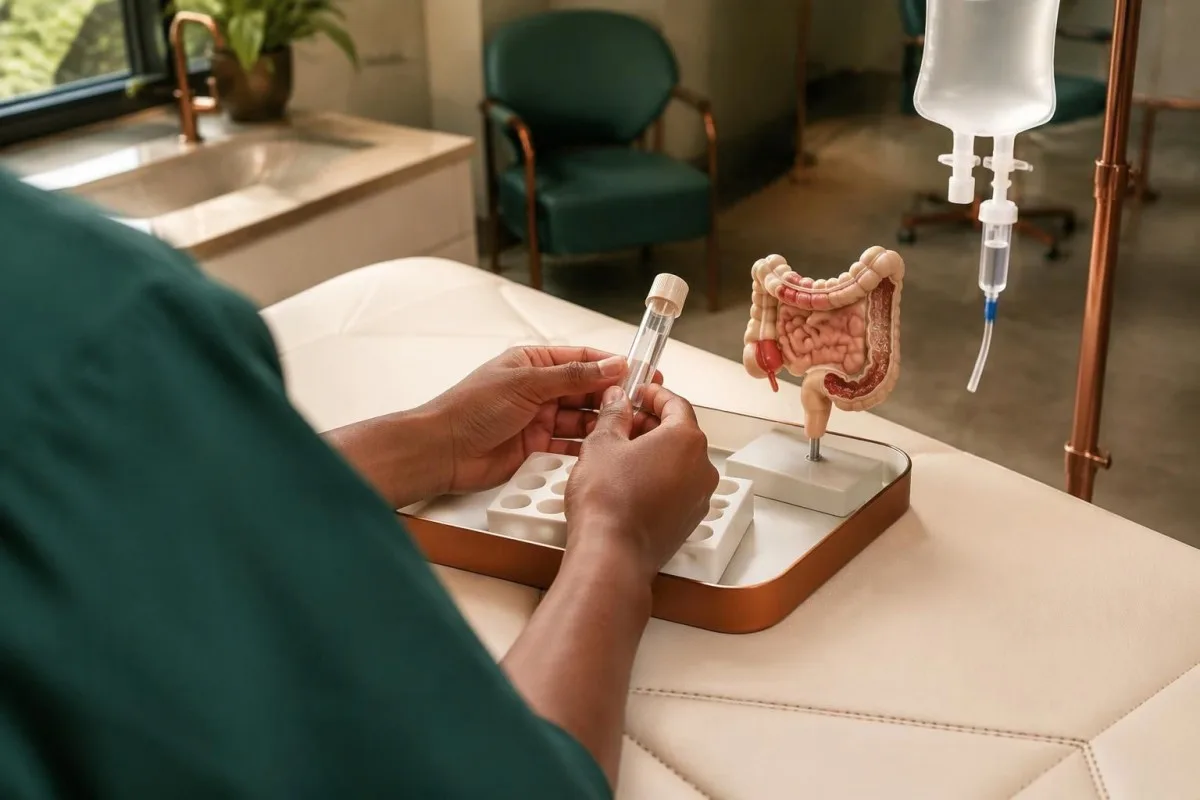
Үлгі алу уақыты емнің тиімділігі өзгермесе де, нәтиженің көзге көрінетін мағынасын өзгертуі мүмкін. Мысалы, инфузиядан кейін көп ұзамай алынған шартты 18 µg/mL және келесі инфузия алдында алынған 3 µg/mL нәтижелері екі тәуелсіз ем жағдайының арасындағы кенет нашарлауды емес, бір дозалау циклін сипаттауы мүмкін.
Нәтижені түсіндірмес бұрын алдыңғы инфузияның күнін, енгізілген нақты дозаны (mg), жоспарланған аралықты және үлгі алынған уақытты тіркеңіз. Егер 8 апта сайынғы инфузия 10-аптаға дейін кешіктірілсе, алынған концентрация препаратсыз өткен ұзағырақ аралықты сипаттайды; ол бастапқы 8 апталық кесте жеткілікті әсерді қамтамасыз еткен-етпегеніне нақты жауап бере алмайды.
Collection from a line recently used to administer infliximab can contaminate the specimen and produce a misleadingly high result. Ask the infusion service about its collection protocol, and tell it if sampling occurred after treatment started; the timing principles resemble other pre-dose medication tests, although their targets differ.
Fasting is generally not required for the infliximab concentration itself, but another test ordered during the same visit may have preparation requirements. Our бірінші ретті дайындау нұсқаулығы explains how to document medication timing; for this test, an accurate infusion timeline usually matters more than an 8-hour fast.
Инфликсимабтың қандай деңгейі жеткілікті деп саналады?
Лейкозды дәлелдейтін no universal adequate infliximab trough for every patient, disease phenotype, assay, and treatment phase. The 2017 AGA guideline suggested at least 5 µg/mL during reactive maintenance monitoring, while a 2021 expert consensus described maintenance concentrations of 5–10 µg/mL and higher exposure in selected loss-of-response situations.
The AGA benchmark of at least 5 µg/mL is a clinical decision aid, not a healthy-population reference range (Feuerstein et al., 2017). Infliximab is a prescribed biologic: an untreated person normally has no circulating infliximab, so a laboratory's therapeutic interval should never be read like the normal range for sodium.
The TAXIT trial enrolled 263 adults with stable responses and optimized intravenous infliximab toward 3–7 µg/mL before randomized follow-up. Its primary remission endpoint did not improve with concentration-based dosing, although some secondary outcomes favored that approach; this explains why the historical 3–7 µg/mL window is useful context rather than a universal modern target (Vande Casteele et al., 2015).
Cheifetz et al. (2021) recommended considering exposure of 10–15 µg/mL before discontinuing infliximab for secondary loss of response in selected patients. This is expert consensus, not proof that everyone should be escalated to 15 µg/mL; fistulas, endoscopic goals, disease severity, safety, and prior optimization affect whether that reasoning applies.
A concentration of 12 µg/mL is not automatically toxic, and a concentration of 4 µg/mL does not automatically require escalation in an asymptomatic patient with documented healing. Unlike the narrower toxicity discussions around some басқа төменгі деңгейде бақыланатын дәрілерге ұқсас, infliximab has no single established serum toxicity cutoff that dictates action.
| Деңгей | Аралық | Мағынасы |
|---|---|---|
| Historical TAXIT optimization window | 3–7 µg/mL | Studied in adults with stable responses; not a universal threshold for active disease or fistula healing. |
| AGA reactive maintenance benchmark | At least 5 µg/mL | Suggested in the 2017 guideline for reactive monitoring; interpret alongside objective activity and the assay. |
| Expert-consensus maintenance range | 5–10 µg/mL | Described by the 2021 consensus; the appropriate goal varies with disease phenotype and desired outcome. |
| Selected loss-of-response reassessment | 10–15 µg/mL | Exposure experts suggest considering before abandoning treatment in selected cases; not a routine target or toxicity range. |
Неліктен антиденелер жоқ кезде инфликсимаб деңгейі төмен болады?
Low infliximab levels with no significant antibodies usually suggest pharmacokinetic underexposure: too little drug remains available over the dosing interval. A trough of 1.5 µg/mL can reflect faster clearance, intestinal protein loss, a delayed infusion, or insufficient dose or frequency—not necessarily failure of TNF blockade as a treatment mechanism.

Severe intestinal disease can increase infliximab clearance and allow protein, including therapeutic antibody, to be lost through the bowel. A hypothetical patient with albumin of 28 g/L and a trough of 1 µg/mL therefore needs assessment of disease burden and protein loss, not just a question about whether the infusion was attended.
Low albumin is associated with faster infliximab clearance, but it is not a direct measure of drug binding or an instruction to apply a free-drug correction. Albumin of 30 g/L and 40 g/L may provide different clearance context; our сарысудағы ақуыздарды интерпретациялау жөніндегі нұсқаулық explains why inflammation, liver synthesis, nutrition, and loss must be distinguished.
Infliximab is mainly broken down through protein-catabolic pathways rather than cleared unchanged by the kidneys. A creatinine of 90 µmol/L cannot predict the infliximab trough, and the medicine should not be interpreted using small-molecule renal dosing assumptions; body size, inflammatory burden, and treatment interruptions may be more informative.
Kantesti AI helps place a low trough alongside reported albumin, CRP, and infusion timing; 1 result cannot identify the clearance pathway by itself. Low albumin should not automatically trigger protein supplements, because inflammation also changes circulating proteins—as explained in our guide to inflammation and transferrin.
Дәрі деңгейінің төмен болуы және антиденелердің болуы нені меңзейді?
Low or undetectable infliximab with persistent high antibodies suggests immune-mediated pharmacokinetic failure: antibodies can accelerate clearance, neutralize drug activity, or both. A trough below an assay's 0.5 µg/mL quantification limit with a substantial antibody result is more concerning than a weak antibody signal alongside a maintained drug concentration.
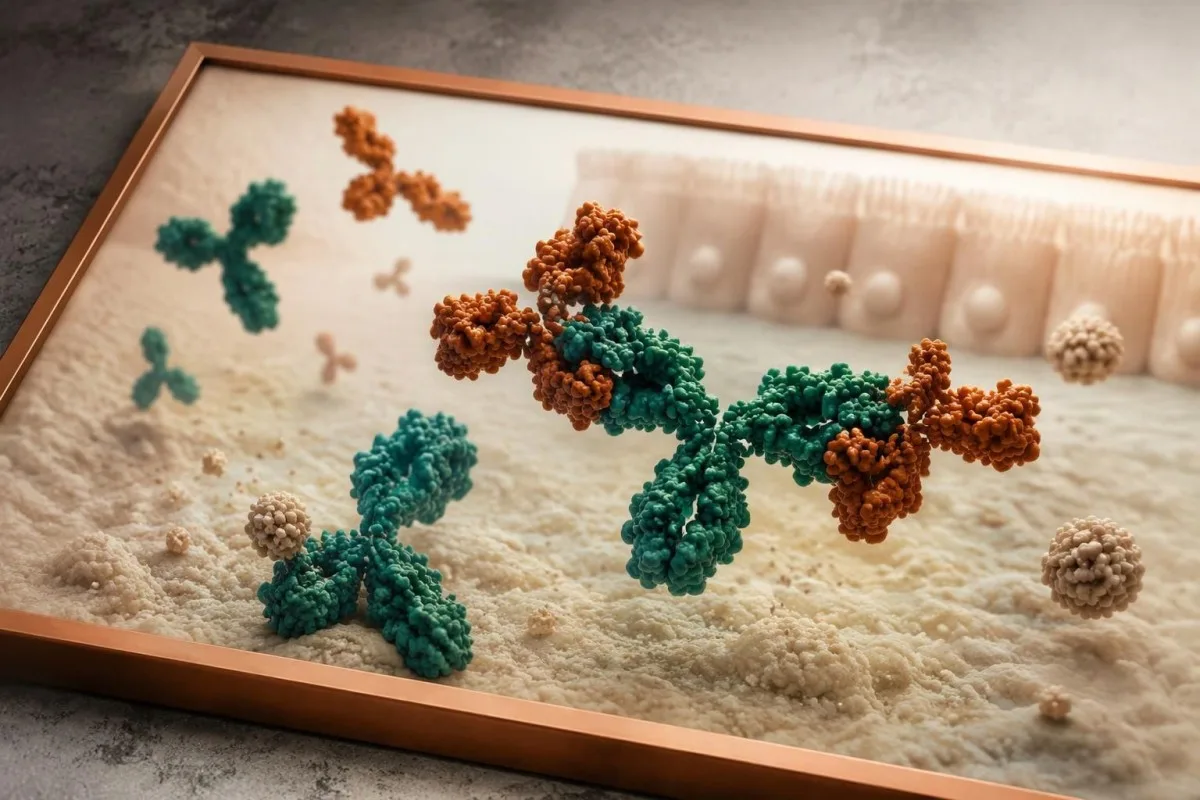
Anti-infliximab antibody tests usually detect binding antibodies; they do not all directly measure neutralizing activity. A positive result of 20 U/mL therefore identifies an assay-defined antibody signal, not a universal percentage of blocked infliximab or a precise prediction of how much benefit remains.
Antibody persistence and magnitude influence whether dose optimization is likely to recover exposure. Cheifetz et al. (2021) described low-titer antibodies as below 10 U/mL for the homogeneous mobility shift assay specifically; that threshold must not be transferred to an ELISA reporting AU/mL or to another laboratory's calibration.
A single low antibody result may be transient or become less clinically relevant after supervised treatment optimization. Repeating paired drug and antibody testing can distinguish a 1-time signal from a rising pattern, but severe disease or an infusion reaction may require action before a second result is available.
Antibodies to infliximab are not the same as antibodies against your own bowel, and they do not by themselves diagnose an immediate allergy. Our explanation of оң антидене нәтижесінің түрлері helps separate these concepts; breathlessness or faintness during an infusion still requires immediate attention regardless of the antibody number.
Жеткілікті ең төменгі деңгей әсер ету механизмінің жеткіліксіздігін қашан меңзейді?
Ықтимал механизмдік ем сәтсіздігі means objectively active IBD persists despite sufficient infliximab exposure for the treatment goal. A trough of 8 µg/mL with confirmed active colitis may raise this possibility, but selected patients need further exposure optimization before clinicians conclude that another inflammatory pathway should be targeted.

An adequate serum concentration cannot prove that TNF is the only pathway driving a person's current disease. Persistent endoscopic activity with a trough of 12 µg/mL is more supportive of a mechanism problem than the same concentration with normal objective testing and symptoms from bile acid diarrhea.
Calling treatment failure at exactly 5 µg/mL can be premature when the goal is fistula control or substantial endoscopic improvement. The 10–15 µg/mL reassessment discussed in the 2021 consensus provides a safeguard against abandoning an under-optimized treatment, but it is not a requirement to escalate every patient with symptoms.
Objective evidence also has limits: CRP of 3 mg/L does not exclude active IBD, especially in people whose CRP has remained low during previous flares. Borderline stool results need context and sometimes repetition; our guide to шектік нәжіс калпротектині explains why an isolated intermediate value should not determine a biologic switch.
The strongest case for changing mechanism combines 3 findings: documented inflammation, adequate exposure on a correctly timed sample, and an inadequate clinical response despite appropriate optimization. Structural complications, such as a fixed Crohn's stricture, can also cause symptoms that neither more infliximab nor a different biologic will reliably reverse.
Инфликсимаб деңгейі жеткілікті болғанда антиденелер оң нәтиже көрсетуі мүмкін бе?
Antibodies can be detected while infliximab remains measurable or adequate, particularly with drug-tolerant assays. A trough of 7 µg/mL and a weak positive antibody result do not automatically mean treatment failure; the assay, antibody trend, and evidence of disease activity determine how much weight that finding deserves.

Drug-tolerant methods can identify antibodies in samples containing infliximab that would interfere with some drug-sensitive methods. This greater analytical sensitivity may reveal early or low-level immunogenicity, but 1 newly detected signal does not necessarily establish clinically meaningful loss of response.
A qualitative positive result contains less information than a quantitative result with the assay's cutoff and units. A report reading only positive cannot distinguish a value just above a 10 AU/mL cutoff from a much larger signal; our guide to сапалық және сандық тесттер explains what each format can establish.
Compare antibody trajectories using the same laboratory method whenever feasible. Hypothetical results of 12, 15, and 13 AU/mL across 3 correctly timed visits may carry a different implication from 12, 80, and 200 AU/mL, although analytical variability and clinical findings still prevent interpretation from trend alone.
Кантести - бұл AI қан талдауы нәтижесін түсіндіру платформасы that helps distinguish a reported antibody cutoff from a treatment target. When the report lacks the method or units, our interpretation should preserve that uncertainty rather than labeling 1 positive result as proof that infliximab has stopped working.
Зертханалық әдістер мен антиденелердің өлшем бірліктері неліктен маңызды?
Infliximab and antibody results are method-dependent, so values from different assays are not always interchangeable. Infliximab 1 µg/mL equals 1 mg/L, but antibody results in U/mL, AU/mL, or ng/mL do not have a universal conversion because laboratories use different standards, detection limits, and approaches to drug interference.
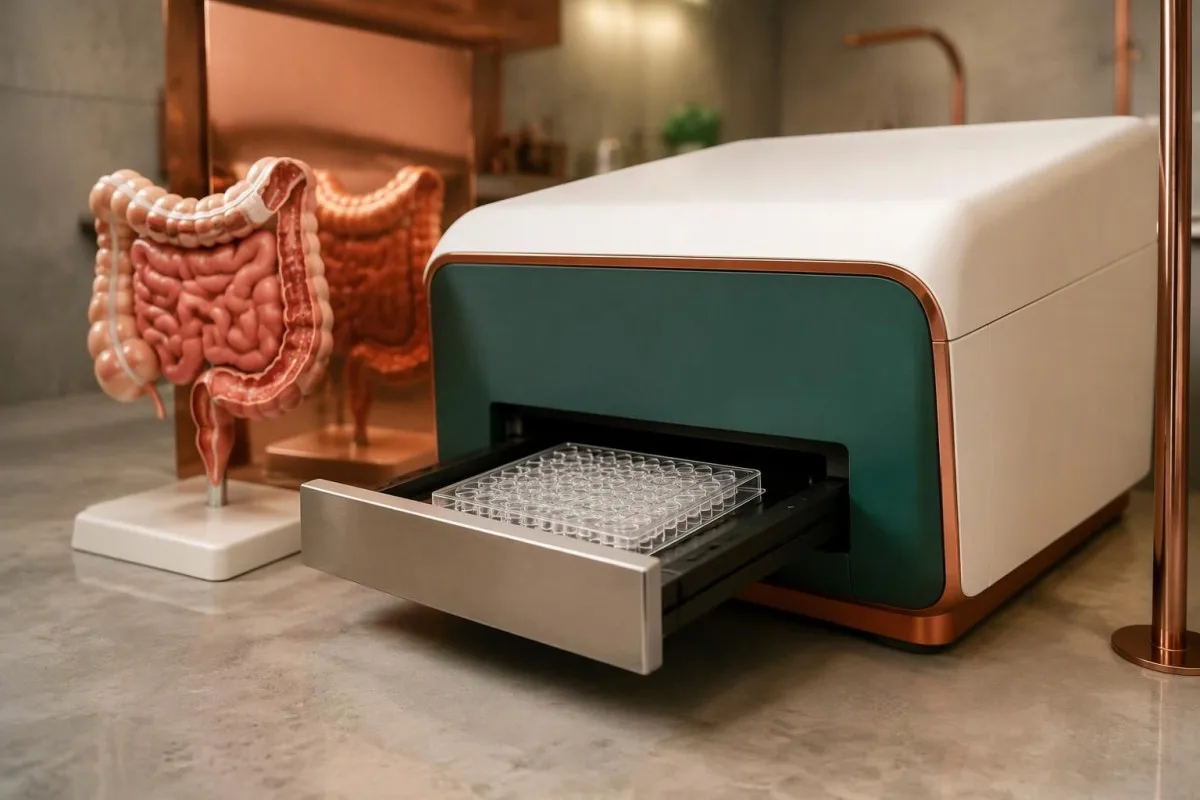
An assay may report free or functionally available drug differently from another method that detects a broader pool of circulating drug. Two laboratories can therefore produce somewhat different concentrations from similar specimens; a change from 6 to 8 µg/mL after switching methods may not represent a true gain in exposure.
Below the quantification limit means the assay cannot reliably assign a numerical concentration below its validated boundary. A report of less than 0.4 µg/mL is not proof of exactly 0 µg/mL, and greater than 100 U/mL cannot tell you whether the true antibody result is 110 or 1,000 U/mL.
Some laboratories use reflex antibody testing only when the drug concentration falls below a preset threshold. If antibodies were not tested because infliximab was 9 µg/mL, the result is not equivalent to antibodies negative; ask whether the antibody field says not performed, not detected, or below detection.
Kantesti's report interpretation should retain the assay name, units, and collection context instead of silently converting 20 AU/mL into another method's scale. Our клиникалық әдістеме туралы ақпарат explains the distinction between technical interpretation and clinical decision-making; no AI explanation removes the need to confirm an unusual result with the reporting laboratory.
Дәрігерлер қайталанған симптомдардың ІҚА-дан туындағанын қалай растайды?
Returning symptoms do not necessarily mean returning intestinal inflammation; clinicians combine stool markers, CRP, infection testing, endoscopy, and imaging as appropriate. Three loose stools daily with a trough of 6 µg/mL can arise from active IBD, an intestinal infection, bile acid diarrhea, or a functional bowel disorder.
Fecal calprotectin and lactoferrin assess intestinal inflammatory activity rather than infliximab exposure. A hypothetical calprotectin of 800 µg/g adds different information from a trough of 2 µg/mL; our stool inflammation marker comparison explains why paired disease and drug measurements answer separate clinical questions.
C. difficile testing can be necessary during new or worsening diarrhea, even without recent antibiotics. A positive screening test and negative toxin result require contextual interpretation, not automatic classification as an IBD flare; our guide to C. difficile бойынша сәйкес келмейтін нәтижелерге арналған нұсқаулығымыз describes why 2 test components can disagree.
Bile acid diarrhea is particularly relevant after ileal disease or resection and can persist despite controlled inflammation. A person with a trough of 10 µg/mL and reassuring objective IBD assessment may need a different evaluation; our explanation of SeHCAT retention results covers one diagnostic route where that test is available.
Bloating, gas, and altered stool frequency can also reflect bacterial overgrowth or carbohydrate malabsorption. At least 2 explanations can coexist with IBD, so a satisfactory trough should not end the assessment; our SIBO breath test guide explains preparation and limitations rather than treating breath testing as proof of every symptom's cause.
ІҚА тобы препараттың жеткіліксіз әсеріне қалай жауап беруі мүмкін?
Low exposure without substantial persistent antibodies may lead an IBD team to increase the infliximab dose, shorten the dosing interval, or address a treatment interruption. A common adult intravenous maintenance schedule is 5 mg/kg every 8 weeks after induction, but any adjustment requires individualized prescribing and reassessment of disease activity.
For a hypothetical 70 kg adult, 5 mg/kg corresponds to 350 mg before local preparation or rounding rules. Shortening an unchanged dose from every 8 weeks to every 6 weeks increases average drug administered per unit time by about 33%; the trough increase cannot be predicted as exactly 33% because clearance is not constant.
Increasing the dose and shortening the interval are not pharmacokinetically identical strategies. A larger dose changes peak exposure, while a shorter interval reduces time for concentrations to decline; a hypothetical patient whose symptoms repeatedly return during week 7 may prompt a different discussion from someone symptomatic throughout all 8 weeks.
A useful reassessment checks both exposure and the treatment outcome rather than declaring success because the trough rose. If infliximab increases from 2 to 9 µg/mL but calprotectin remains 900 µg/g and endoscopic disease persists, the new result has narrowed the explanation without necessarily improving the underlying disease.
The timing of repeat testing depends on severity, the revised schedule, and the clinical question; waiting 3 months is not appropriate for every deteriorating patient. Our дәрі-дәрмектердің қауіпсіздігін бағалау бойынша нұсқаулық explains why comparable dates and methods matter, but an app should never independently recommend extra infusions.
Емді ауыстыру немесе біріктірілген емді қашан қарастырады?
Persistent high antibodies with low drug may favor changing treatment, while adequate exposure with confirmed active IBD may favor switching to a different mechanism. Low-level immunogenicity can sometimes be addressed through supervised optimization or an immunomodulator, but a result of 15 U/mL alone cannot determine which option offers the best benefit-risk balance.
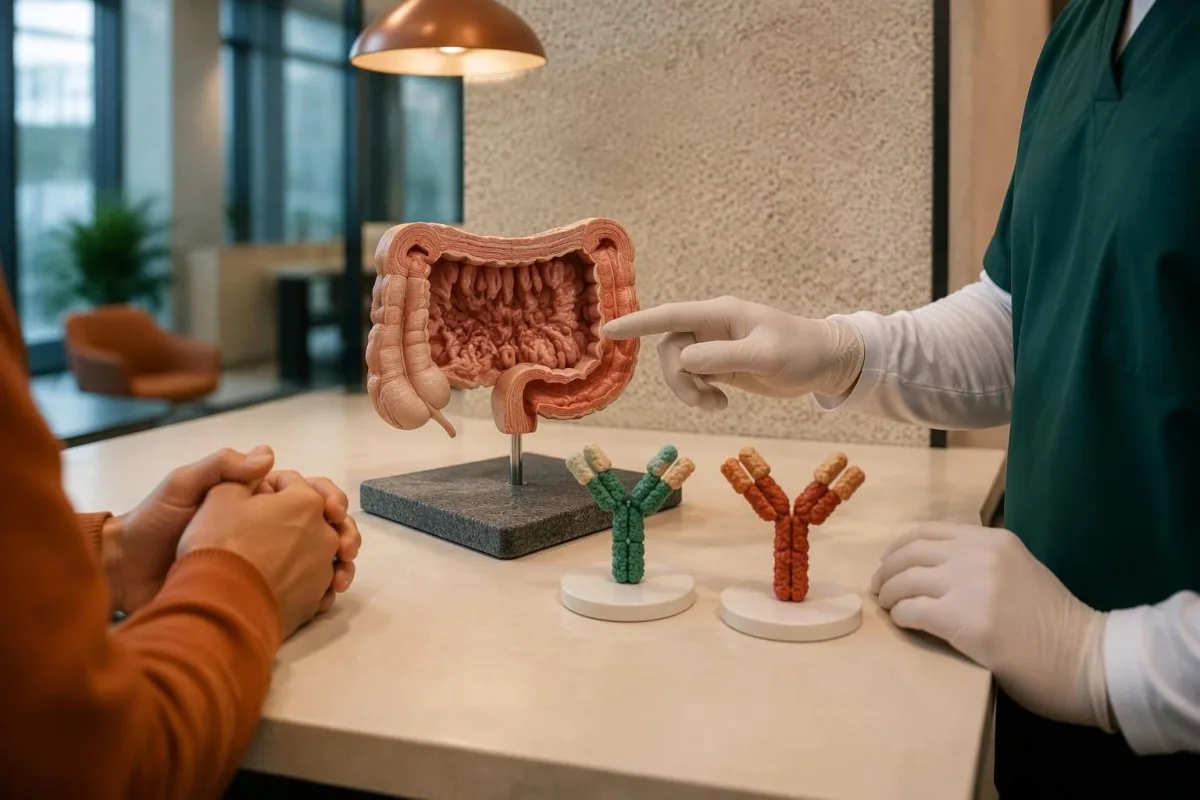
Switching within the anti-TNF class can make sense when infliximab previously controlled disease but antibody-associated clearance now prevents adequate exposure. Switching to another mechanism becomes more persuasive when inflammation persists with adequate exposure; these are 2 different failure patterns, not interchangeable reasons to choose the next medicine.
An immunomodulator such as azathioprine or methotrexate may reduce immunogenicity in selected circumstances, but adding one introduces additional monitoring and adverse-effect risks. Before azathioprine, TPMT testing and safety assessment can inform prescribing; TPMT and NUDT15 assessment do not replace ongoing CBC and liver monitoring, even when baseline results are normal.
If a person already takes a thiopurine, metabolite testing can help clarify exposure or a metabolism pattern before assuming combination therapy has failed. For example, 2 patients prescribed the same mg dose may have very different metabolite findings; our thiopurine treatment pattern guide explains why prescription dose alone is incomplete.
Restarting infliximab after a long interruption deserves a separate safety discussion because immunogenicity and infusion reactions can complicate re-exposure. A treatment gap of 6 months is not equivalent to a routine 1-week scheduling delay; never restart, add an immunomodulator, or stop an existing medicine based solely on an online interpretation.
Индукциялық ем, жыланкөздер, балалар және инъекциялар нысаналы деңгейді өзгерте ме?
Treatment phase, disease phenotype, age, and formulation can change the relevant exposure goal; intravenous maintenance targets should not be copied into every setting. Standard adult intravenous induction commonly uses 5 mg/kg at weeks 0, 2, and 6, and those early concentrations are interpreted differently from an established 8-week maintenance trough.

The 2021 expert consensus described induction goals of approximately 20–25 µg/mL at week 2, 15–20 µg/mL at week 6, and 7–10 µg/mL at week 14 (Cheifetz et al., 2021). These are consensus exposure goals influenced by disease phenotype and outcome, not interchangeable minimums from one definitive randomized trial.
Perianal fistula outcomes may require higher exposure than symptom control in uncomplicated luminal disease, but observational associations do not establish a universal healing threshold. A fistula still draining at 10 µg/mL may also need imaging, drainage of an abscess, or procedural care; raising the trough cannot substitute for addressing an undrained collection.
Children can have different clearance and dosing requirements, particularly with lower body weight or severe disease. An adult maintenance benchmark of 5 µg/mL should not become a parent-directed dosing rule; our discussion of AI балаларға арналған интерпретациясы explains why pediatric specialist context and age-appropriate interpretation remain necessary.
Subcutaneous infliximab produces a different concentration-time profile from intermittent intravenous infusions, and availability and prescribing schedules vary internationally. A concentration of 15 µg/mL during injection treatment should not be labeled excessive merely because an intravenous report lists 3–7 µg/mL; the formulation, actual regimen, and sampling convention must be specified.
Қатар алынған нәтижелер клиникалық пайымдауды қалай өзгертеді?
Paired results guide the next question rather than dictate a prescription: low drug without antibodies suggests underexposure, low drug with persistent antibodies suggests immunogenicity, and adequate drug with inflammation raises possible mechanism failure. The following 4 examples are entirely hypothetical; the concentrations are illustrative, not personalized treatment recommendations.
Example 1: a 34-year-old with Crohn's disease has a true trough of 1.8 µg/mL, no detected antibodies, albumin of 29 g/L, and calprotectin of 1,100 µg/g. This pattern supports underexposure in active disease; confirming the infusion schedule and considering supervised optimization are more logical than immediately declaring TNF blockade ineffective.
Example 2: a 46-year-old with ulcerative colitis has infliximab below 0.4 µg/mL and antibodies above the laboratory's 100 U/mL reporting limit on 2 visits. Assuming the assay defines that antibody signal as substantial, persistent immunogenicity is plausible; simply increasing the dose may be less successful than a clinician-directed treatment change.
Example 3: a 28-year-old has a trough of 11 µg/mL, no significant antibodies, and repeatedly active colitis on endoscopy despite appropriate optimization. Example 4: a 61-year-old has the same 11 µg/mL trough but reassuring endoscopy and diarrhea after ileal resection; the first pattern raises mechanism failure, whereas the second prompts investigation of non-inflammatory causes.
Кантести - бұл AI арқылы қуаттандырылған қан талдауын жүргізу құралы that helps organize these distinctions when the report and treatment details are supplied. Our AI технологиясының түсіндірмесі describes how laboratory context informs interpretation; if a 2-week-old report lacks sampling timing, the missing information must stay visible rather than being guessed.
Қайта қаралуға не апару керек және қандай дәлелдер қолданылады?
Bring the complete report, infusion timeline, and objective disease results to your IBD review; these 3 evidence streams make paired drug-antibody testing actionable. Seek earlier care for severe deterioration rather than waiting for the next trough, and distinguish infliximab-specific clinical research from general educational publications about accompanying laboratory abnormalities.
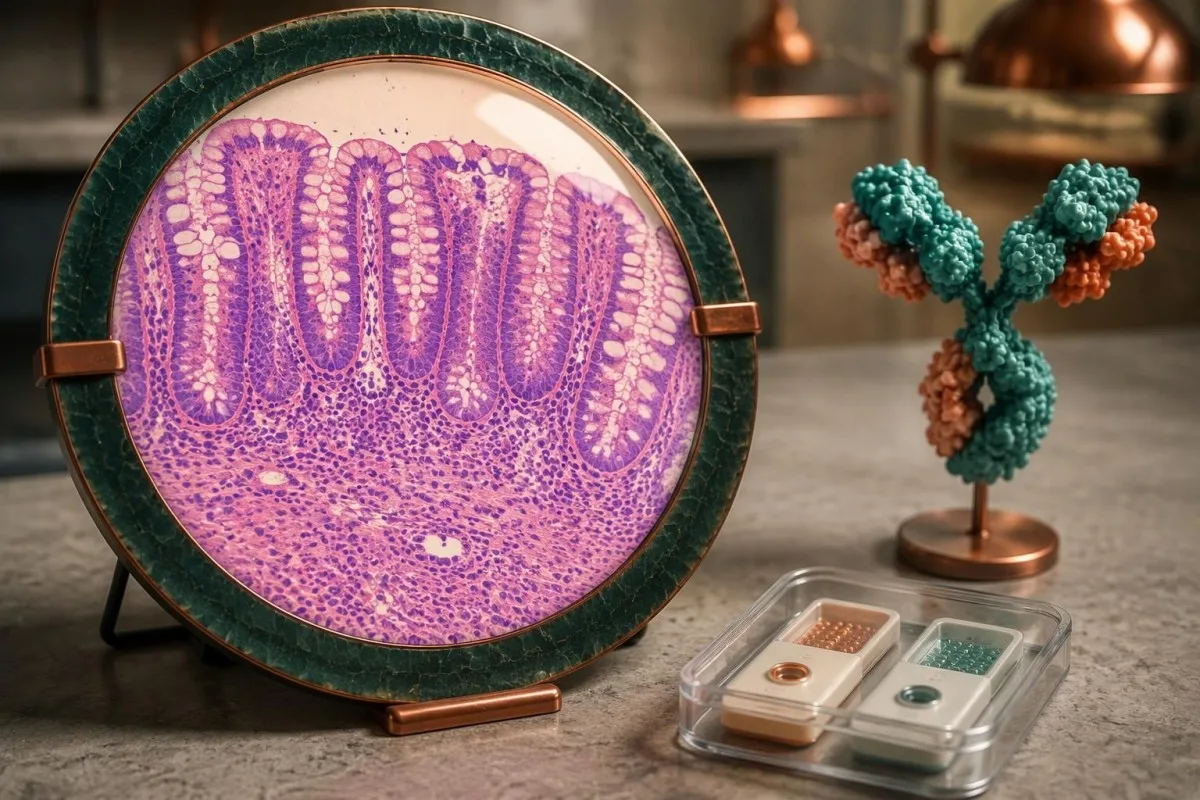
A useful review record includes the previous 2 infusion dates, actual dose, collection timing, assay name, antibody units, and recent CRP, albumin, and fecal calprotectin. Add symptom timing, steroid use, recent antibiotics, and missed doses; ask whether the proposed change addresses insufficient exposure, immunogenicity, active non-TNF disease, or a non-inflammatory explanation.
Contact your clinical team promptly for worsening diarrhea with dehydration, persistent vomiting, new significant bleeding, or fever of 38°C or higher while immunosuppressed. Severe abdominal pain with distension, fainting, or inability to keep fluids down may require emergency assessment; during an infusion, sudden breathing difficulty or collapse requires immediate staff attention, not interpretation of an antibody report.
Kantesti provides educational interpretation, not independent biologic prescribing, and our жауапты AI қағидаттарымыз explain that boundary. A reassuring trough of 10 µg/mL does not establish that an infusion is safe during an acute illness; the treating service must assess symptoms, examination findings, and any necessary investigations.
The 2 Zenodo publications listed below address accompanying laboratory interpretation, not infliximab target validation: our RDW және қызыл қан жасушалары бойынша нұсқаулық concerns anemia patterns, while our BUN және креатинин бойынша нұсқаулық concerns renal and hydration context. These educational deposits are not evidence for anti-drug antibody cutoffs; the AGA guideline, TAXIT trial, and biologic-monitoring consensus supply the directly relevant clinical references.
Жиі қойылатын сұрақтар
Инфликсимаб деңгейінің төмен болуы нені білдіреді?
Инфликсимаб деңгейінің төмен болуы қандағы препарат мөлшері емнің осы кезеңі мен мақсаты үшін таңдалған шекті деңгейден төмен екенін білдіреді; бұл инфликсимабты міндетті түрде тоқтату керек дегенді білдірмейді. Елеулі антиденелер анықталмаған жағдайда, демеуші ем кезіндегі 2 µg/mL деңгейіндегі нақты ең төменгі концентрация препараттың тезірек шығарылуын, ішектен ақуыз жоғалуын немесе дозаның не дозалар арасындағы аралықтың жеткіліксіздігін көрсетуі мүмкін. Препарат деңгейінің төмен болуы және тұрақты түрде едәуір мөлшерде антиденелердің болуы иммундық механизмге байланысты препараттың шығарылуын меңзейді. Ішектің қабыну ауруы (IBD) бойынша емдеуші топ нәтижені ауру белсенділігінің объективті көрсеткіштерімен, инфузия уақытымен және талдау әдісімен бірге түсіндіруі керек.
IBD кезінде инфликсимабтың қолайлы қалдық деңгейі қандай?
IBD-мен ауыратын барлық адамға бірдей оңтайлы infliximab қалдық концентрациясы болмайды. 2017 жылғы AGA нұсқаулығында емді жалғастыру барысындағы реактивті мониторинг үшін кемінде 5 µg/mL деңгейі ұсынылса, 2021 жылғы сарапшылар консенсусында емді жалғастыру кезіндегі концентрациялар 5–10 µg/mL деп көрсетілген. Емге жауаптың қайталама жоғалуы байқалған кейбір пациенттерде емді тоқтату туралы шешім қабылдамас бұрын 10–15 µg/mL деңгейінде қайта бағалау қажет болуы мүмкін. Индукциялық ем, жыланкөздер және тері астына енгізілетін емдеу үшін контекст өзгеше, сондықтан зертханалық аралық дозалаудың әмбебап нысаналы деңгейі болып саналмайды.
0 Инфликсимаб деңгейіне талдауды қашан тапсыруым керек?
For intravenous infliximab, a trough sample should be collected immediately before the next infusion begins. A sample obtained 2 days after an infusion is not comparable with routine pre-infusion targets. Record the last infusion date, dose, scheduled interval, and actual collection time, especially if an 8-week appointment was delayed. Subcutaneous infliximab has a different exposure profile, so sampling should follow the prescribing team's and laboratory's instructions.
Инфликсимабқа қарсы антиденелер жоғалып кетуі мүмкін бе?
Инфликсимабқа қарсы төмен деңгейдегі антиденелер кейде анықталмай қалуы немесе клиникалық маңызы төмендеуі мүмкін, бірақ дәрінің деңгейі өте төмен болғанда антиденелердің ұзақ уақыт бойы едәуір жоғары болуы бұл жағдайды еңсеруді қиындатады. 2021 жылғы сарапшылар консенсусында біртекті қозғалғыштықты ығыстыру талдауына арналған төмен титрлі антиденелер 10 U/mL-ден төмен деп сипатталған; бұл шекті барлық зертханалық әдістерге қолдануға болмайды. Дәрігердің бақылауымен дозаны оңтайландыру немесе иммуномодулятор тағайындау кейбір пациенттерге көмектесуі мүмкін, ал басқаларына емді өзгерту қажет. Қайталама жұпталған талдау антиденелердің тұрақты бар-жоғын анықтауға көмектеседі, бірақ пациенттер емін өз бетінше өзгертпеуі керек.
Инфликсимаб деңгейі қалыпты болса да, әсер етпей қалуы мүмкін бе?
Қандағы концентрациясы жеткілікті болғанына қарамастан, инфликсимаб ішектің қабыну ауруының объективті түрде белсенді түрін бақылауда ұстай алмауы мүмкін, бұл ықтимал механизмдік тиімсіздікті көрсетеді. 10 µg/mL ең төменгі концентрациясы ішектің жазылуына кепілдік бермейді және аурудың дамуына тек TNF қана түрткі болатынын дәлелдемейді. Әсер ету механизмін өзгертпес бұрын, дәрігерлер қабынудың бар-жоғын растайды, құрылымдық немесе инфекциялық асқынуларды бағалайды және нақты емдеу мақсатына жету үшін препараттың жеткілікті әсер еткен-етпегенін қарастырады. Объективті бағалау көңіл көншітерлік болғанымен, диареяның себебі қабынудан басқа болуы мүмкін.
Инфликсимаб деңгейінің жоғары болуы қауіпті ме?
Инфликсимабтың жоғары концентрациясы өздігінен қауіпті дегенді білдірмейді және ішектің қабыну аурулары бар барлық пациенттерге бірдей қолданылатын, сарысудағы уыттылықтың нақты шекті мәні белгіленбеген. 15 µg/mL нәтижесі индукциялық ем, жыланкөзді емдеу немесе тері астына енгізу кезінде жоспарлы көктамырішілік демеуші ем кезіндегіден басқаша түсіндірілуі мүмкін. Қауіпсіздік тек концентрацияға емес, жалпы емдеу сызбасына, инфекцияларға, инфузиялық реакцияларға және басқа клиникалық белгілерге байланысты. Нәтижені ем тағайындаған дәрігерлер тобымен талқыламай, инфузияны өткізіп алмаңыз немесе дозаны азайтпаңыз.
Зертхананы ауыстырғаннан кейін инфликсимабқа қарсы антиденелердің нәтижелері неге өзгерді?
Зертханаларды ауыстырғаннан кейін инфликсимабқа қарсы антиденелердің нәтижелері өзгеруі мүмкін, өйткені талдаулар калибрлеуі, өлшем бірліктері, анықтау шектері және қанда айналымдағы препаратқа төзімділігі бойынша ерекшеленеді. 20 AU/mL нәтижесін U/mL немесе ng/mL бірліктеріне әмбебап түрде айналдыру мүмкін емес. Препаратқа төзімді әдіс инфликсимаб мөлшері әлі де өлшенетін кезде препаратқа сезімтал талдау анықтай алмайтын антиденелерді анықтауы мүмкін. Мүмкіндігінше үрдістерді бір әдісті қолданып салыстырыңыз және антиденелерге арналған талдаудың шынымен жүргізілгенін, рефлекстік тестілеу ережесіне сәйкес өткізіліп кетпегенін сұраңыз.
Қан анализінің нәтижесін түсіндіріп алыңыз
Зертханалық есепті жүктеңіз, сонда Kantesti AI әр биомаркерді бірнеше секунд ішінде қарапайым тілмен түсіндіреді. Әлем бойынша 2 миллионнан астам адам қолданады.
Сілтемелер
- Klein, T., Mitchell, S., & Weber, H. (2026). RDW қан анализі: RDW-CV, MCV және MCHC бойынша толық нұсқаулық. Kantesti AI медициналық зерттеулері. DOI
- Klein, T., Mitchell, S., & Weber, H. (2026). BUN/Креатинин қатынасы: Бүйрек қызметінің анализі бойынша нұсқаулық. Kantesti AI медициналық зерттеулері. DOI
- Feuerstein JD et al. (2017). American Gastroenterological Association Institute Guideline on Therapeutic Drug Monitoring in Inflammatory Bowel Disease. Gastroenterology. DOI
- Vande Casteele N et al. (2015). Trough concentrations of infliximab guide dosing for patients with inflammatory bowel disease. Gastroenterology. DOI
- Cheifetz AS et al. (2021). A Comprehensive Literature Review and Expert Consensus Statement on Therapeutic Drug Monitoring of Biologics in Inflammatory Bowel Disease. The American Journal of Gastroenterology. DOI
- 2 млн+Талданған тесттер
- 127+Елдер
- 100+Тілдер
Медициналық топ туралы


E-E-A-T сенім сигналдары
Тәжірибе
Дәрігер басқаратын зертханалық талдауды түсіндіру жұмыс ағындарын клиникалық шолу.
Сараптама
Биомаркерлердің клиникалық контексте қалай әрекет ететініне зертханалық медицина фокусы.
Билік
Доктор Томас Кляйн медициналық тұрғыдан тексерген, доктор Сара Митчелл мен профессор доктор Ханс Вебердің үлесімен.
Сенімділік
Дабыл қаупін азайту үшін айқын бақылау жолдарымен дәлелге негізделген түсіндіру.





Медициналық ескерту
Бұл мақала тек білім беру мақсатында ғана және медициналық кеңес болып табылмайды. Диагноз және ем туралы шешімдер үшін әрдайым білікті медицина қызметкеріне жүгініңіз.
Жарияланды · Редакция тобына хабарласыңыз
Англия мен Уэльсте тіркелген Kantesti Ltd басып шығарған, компания №. 17090423, Лондон, Біріккен Корольдік.
