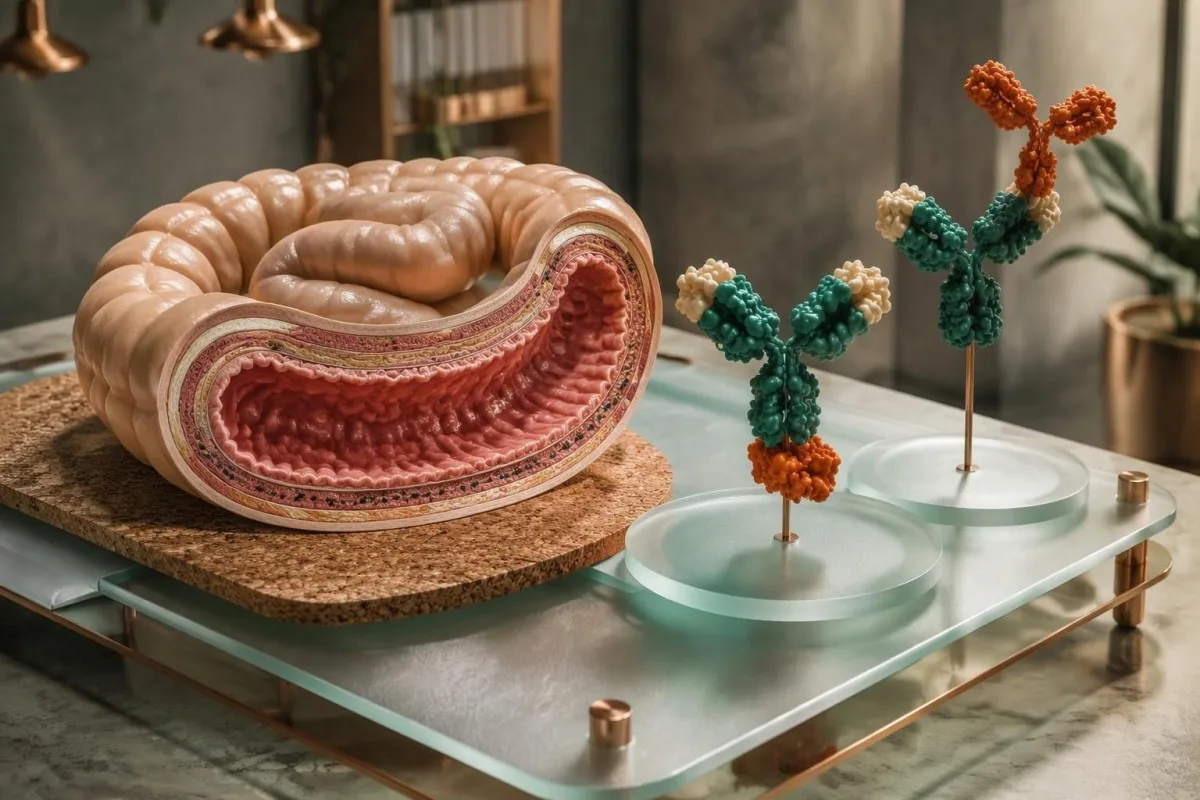
د انفلیکسیماب د کچې ازموینه د درملو غلظت له انټيباډیو سره پرتله کوي، څو د IBD د کنټرول د له منځه تلو لامل روښانه کړي. د پام وړ انټيباډیو پرته د درملو ټیټه کچه د درملو د ناکافي تماس ښکارندويي کوي؛ له دوامدارو او لوړو انټيباډیو سره د درملو ټیټه کچه د معافیتي سیستم لهخوا د درملو د پاکېدو احتمال ښيي. د کافي تماس باوجود فعال التهاب د عمل د میکانیزم د ناکامۍ احتمال راپورته کوي—خو یوازې وروسته له دې چې التهاب، د نمونې سمه اخیستنه، او د درملنې له موخې سره سم هدف تأیید شي.

مهم ټکي
- جوړه شوې پایلې د انفلیکسیماب ناکافي تماس له انټيباډیو سره تړلي پاکېدو څخه بېلوي؛ له دواړو پایلو څخه هېڅ یوه په یوازې ځان دا نه ثابتوي چې ولې نښې بېرته راګرځېدلې دي.
- د انفیوژن مخکې د نمونې اخیستل یعنې لابراتواري نمونه د راتلونکي وریدي انفیوژن له پیلېدو مخکې اخیستل، نه ۲ ورځې وروسته.
- د ساتنې د درملنې معیارونه توپیر لري: د AGA د ۲۰۱۷ کال لارښود د غبرګوني څارنې لپاره لږ تر لږه 5 µg/mL وړاندیز کړی و، په داسې حال کې چې د متخصصینو توافق د ساتنې د درملنې لپاره 5–10 µg/mL ښيي.
- د انفلیکسیماب ټیټې کچې له انټيباډیو پرته کېدای شي د چټک پاکېدو، د کولمو له لارې د پروټین د ضایع کېدو، د درملو د ځنډني دوز، یا د دوزونو ترمنځ د ډېر اوږد واټن له امله وي.
- د انفلیکسیماب پر ضد انټيباډۍ تر ټولو مهم هغه وخت وي چې دوامدار وي، د هماغه ازموینې له مخې د پام وړ وي، او په وینه کې د درملو کچه ډېره ټیټه یا نهموندل کېدونکې وي.
- احتمالي میکانیزمي ناکامي د کافي درملیزې کچې سره سره د IBD عیني فعالوالی غواړي؛ له 8 µg/mL ټراف سره نس ناستی دا نه ثابتوي.
- د ازموینې واحدونه د یو بل پر ځای نه شي کارېدلی: د infliximab 1 µg/mL له 1 mg/L سره برابر دی، خو د انټيباډۍ U/mL او AU/mL په نړیواله کچه نه شي بدلېدای.
- د درملنې بدلونونه باید ستاسو د IBD له ډلې سره په همغږۍ وشي؛ د ځواب د له منځه تلو په ځینو ټاکلو مواردو کې ښايي د infliximab تر پرېښودو مخکې د درملو 10–15 µg/mL کچې ته رسولو ته اړتیا وي.
د انفلیکسیماب د کچې ازموینه په حقیقت کې څه درښيي؟
یو د infliximab د کچې ازموینه په دوران کې د infliximab کچه اندازه کوي، معمولاً د د درملو ضد انټيباډیو, تر څنګ، څو د درملو د ناکافي کچې یا د معافیتي بهیر له امله د درملو د پاکېدو علت وڅېړي. د 2 µg/mL پایله چې انټيباډۍ پکې نه وي موندل شوې، له هغې 2 µg/mL پایلې سره چې دوامدارې لوړې انټيباډۍ ورسره وي، بېله پوښتنه راپورته کوي؛ هېڅ یوه په خپله دا معنا نه لري چې درمل باید بند شي.
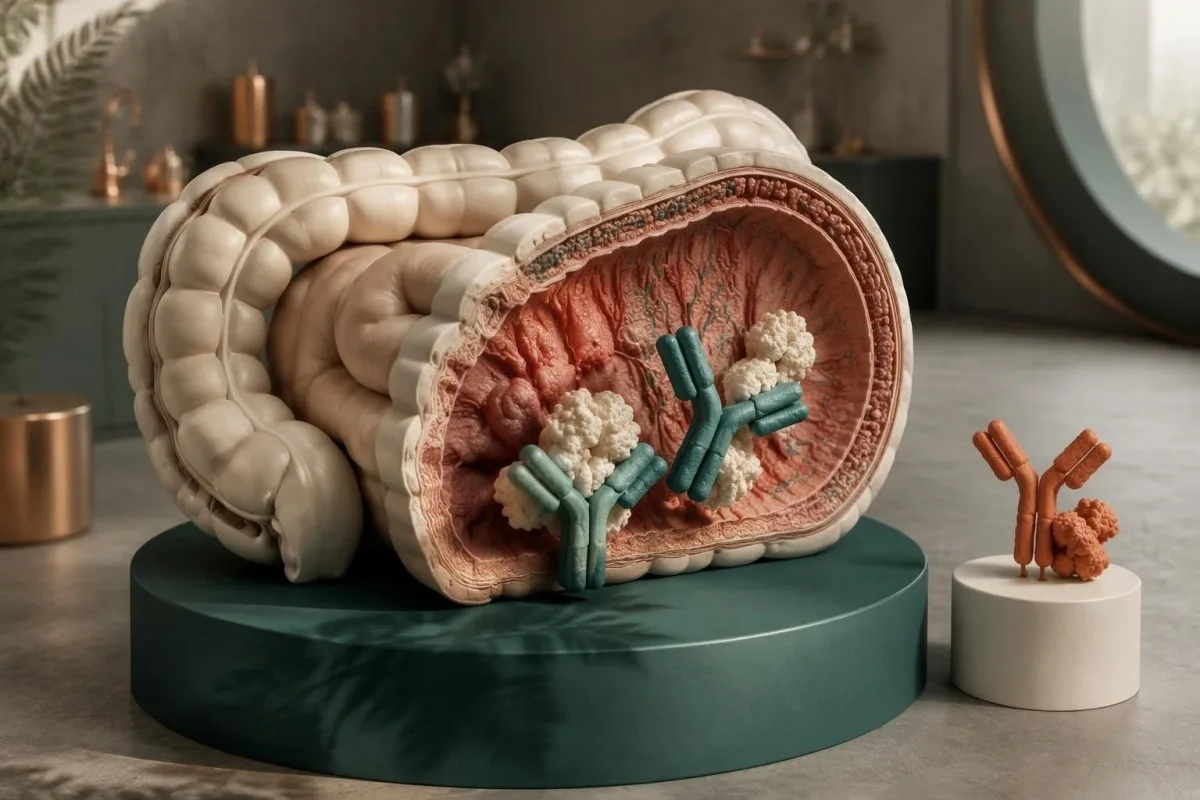
د درملیزې کچې غبرګوني څارنه هغه ازموینه ده چې د نښو د خرابېدو یا د فعالې ناروغۍ د شواهدو له امله ترسره کېږي. دا د ظاهري ارامۍ پر مهال له مخکینۍ څارنې سره توپیر لري: د 4 µg/mL فرضي ټراف ښايي د مستندې ناروغۍ د راپارېدو پر مهال څېړنې ته اړتیا ولري، خو کله چې اندوسکوپي او د غایطې نښې د دوامدارې رغېدنې څرګندونه کوي، بیا جلا بحث ته اړتیا ولري.
Infliximab د تومور نکروز فکټور, مخه نیسي، چې په عام ډول TNF لنډېږي؛ د غلظت ازموینه دا نه اندازه کوي چې د کولمو هر TNF پیغام بېاغېزې شوی دی که نه. د 7 µg/mL د وینې پایله په دوران کې د درملو کچه اندازه کوي، نه د کولمو په هره اغېزمنه برخه کې د درملو فعالیت یا د کولمو د رغېدو کچه.
د عملي تفسیر لپاره لږ تر لږه 3 معلومات کارول کېږي: د درملو غلظت، د انټيباډیو پایلې، او د ناروغۍ عیني فعالیت. مخکینی ځواب هم مهم دی—د 18 میاشتو د کنټرول وروسته د نښو بېرته راګرځېدل د ځواب ثانوي له منځه تلو ته اشاره کوي، په داسې حال کې چې د لومړنۍ درملنې پر مهال هېڅکله کنټرول ته نه رسېدل د درملنې د پیل د درملیزې کچې او د درملنې د میکانیزم په اړه بېلابېلې پوښتنې راپورته کوي.
کانټیسټي یو دی د AI د وینې معاینې شنونکی چې له لوستونکو سره مرسته کوي د infliximab ګډې پایلې درک کړي، پرته له دې چې د لابراتوار یوه شمېره د درملو د دوز لارښوونه وګڼي. زموږ پلېټفارم د Kantesti LTD، د انګلستان شرکت شمېره 17090423، له خوا چلول کېږي؛ د زموږ سازمان کې په اړه معلومات له هغو کلینیکي شواهدو څخه جلا دي چې د درملیزې کچې د څارنې ملاتړ کوي.
د انفلیکسیماب د پاتې کچې نمونې باید کله واخیستل شي؟
د وریدي infliximab د ټراف کچې باید د بل انفیوژن له پیل څخه سمدستي مخکې واخیستل شي، کله چې د دوز په هغه واټن کې غلظت خپل تر ټولو ټیټ حد ته نږدې وي. د انفیوژن 2 ورځې وروسته اخیستل شوې نمونه ټراف نه ده او باید د انفیوژن مخکې د ساتنې له هدفونو سره مستقیمه پرتله نه شي.
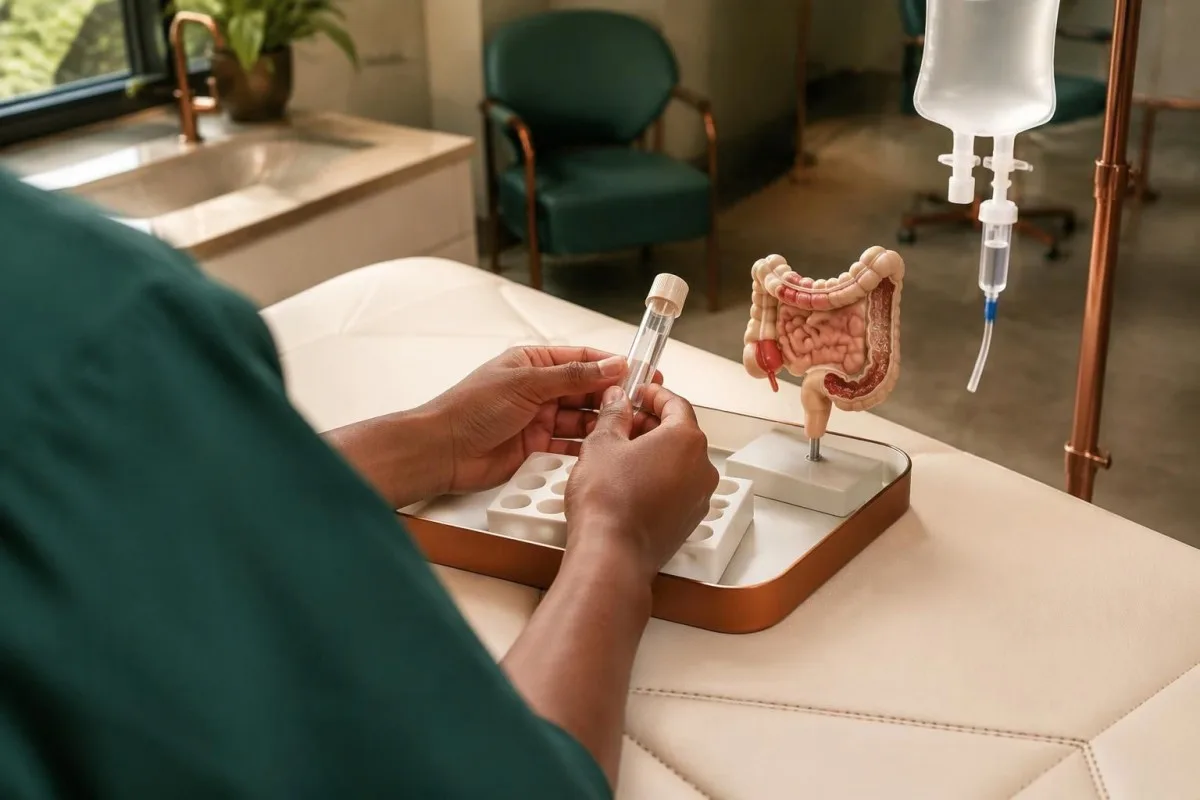
د نمونې اخیستلو وخت د پایلې ظاهري معنا بدلولای شي، بې له دې چې د درملنې په اغېزمنتیا کې بدلون راغلی وي. د بېلګې په توګه، د انفیوژن لږ وروسته اخیستل شوې فرضي 18 µg/mL او د بل انفیوژن مخکې اخیستل شوې 3 µg/mL، د دوز هماغه دوره ښودلای شي—نه د درملنې د 2 خپلواکو حالتونو ترمنځ ناڅاپي خرابوالی.
د راپور تر تفسیر مخکې د مخکیني انفیوژن نېټه، په mg کې اصلي دوز، ټاکل شوی واټن، او د نمونې اخیستلو وخت ثبت کړئ. که د 8 اونیو انفیوژن تر 10مې اونۍ وځنډول شي، پایله شوې غلظت د درملو له اوږدې وقفې وروسته حالت ښيي؛ دا په روښانه توګه ځواب نه شي ورکولای چې ایا د 8 اونیو اصلي مهالویش کافي درملیزه کچه برابروله که نه.
Collection from a line recently used to administer infliximab can contaminate the specimen and produce a misleadingly high result. Ask the infusion service about its collection protocol, and tell it if sampling occurred after treatment started; the timing principles resemble other pre-dose medication tests, although their targets differ.
Fasting is generally not required for the infliximab concentration itself, but another test ordered during the same visit may have preparation requirements. Our کې تشریح شوي explains how to document medication timing; for this test, an accurate infusion timeline usually matters more than an 8-hour fast.
د انفلیکسیماب کومه کچه کافي ګڼل کېږي؟
داسې no universal adequate infliximab trough for every patient, disease phenotype, assay, and treatment phase. The 2017 AGA guideline suggested at least 5 µg/mL during reactive maintenance monitoring, while a 2021 expert consensus described maintenance concentrations of 5–10 µg/mL and higher exposure in selected loss-of-response situations.
The AGA benchmark of at least 5 µg/mL is a clinical decision aid, not a healthy-population reference range (Feuerstein et al., 2017). Infliximab is a prescribed biologic: an untreated person normally has no circulating infliximab, so a laboratory's therapeutic interval should never be read like the normal range for sodium.
The TAXIT trial enrolled 263 adults with stable responses and optimized intravenous infliximab toward 3–7 µg/mL before randomized follow-up. Its primary remission endpoint did not improve with concentration-based dosing, although some secondary outcomes favored that approach; this explains why the historical 3–7 µg/mL window is useful context rather than a universal modern target (Vande Casteele et al., 2015).
Cheifetz et al. (2021) recommended considering exposure of 10–15 µg/mL before discontinuing infliximab for secondary loss of response in selected patients. This is expert consensus, not proof that everyone should be escalated to 15 µg/mL; fistulas, endoscopic goals, disease severity, safety, and prior optimization affect whether that reasoning applies.
A concentration of 12 µg/mL is not automatically toxic, and a concentration of 4 µg/mL does not automatically require escalation in an asymptomatic patient with documented healing. Unlike the narrower toxicity discussions around some نور ټراف-څارول شوي درمل, infliximab has no single established serum toxicity cutoff that dictates action.
| کچه | حد | مانا یې څه ده |
|---|---|---|
| Historical TAXIT optimization window | 3–7 µg/mL | Studied in adults with stable responses; not a universal threshold for active disease or fistula healing. |
| AGA reactive maintenance benchmark | At least 5 µg/mL | Suggested in the 2017 guideline for reactive monitoring; interpret alongside objective activity and the assay. |
| Expert-consensus maintenance range | ۵–۱۰ µg/mL | Described by the 2021 consensus; the appropriate goal varies with disease phenotype and desired outcome. |
| Selected loss-of-response reassessment | 10–15 µg/mL | Exposure experts suggest considering before abandoning treatment in selected cases; not a routine target or toxicity range. |
ولې د انټيباډیو پرته د انفلیکسیماب کچه ټیټه وي؟
Low infliximab levels with no significant antibodies usually suggest pharmacokinetic underexposure: too little drug remains available over the dosing interval. A trough of 1.5 µg/mL can reflect faster clearance, intestinal protein loss, a delayed infusion, or insufficient dose or frequency—not necessarily failure of TNF blockade as a treatment mechanism.

Severe intestinal disease can increase infliximab clearance and allow protein, including therapeutic antibody, to be lost through the bowel. A hypothetical patient with albumin of 28 g/L and a trough of 1 µg/mL therefore needs assessment of disease burden and protein loss, not just a question about whether the infusion was attended.
Low albumin is associated with faster infliximab clearance, but it is not a direct measure of drug binding or an instruction to apply a free-drug correction. Albumin of 30 g/L and 40 g/L may provide different clearance context; our د سیرم پروټین تفسیر لارښود explains why inflammation, liver synthesis, nutrition, and loss must be distinguished.
Infliximab is mainly broken down through protein-catabolic pathways rather than cleared unchanged by the kidneys. A creatinine of 90 µmol/L cannot predict the infliximab trough, and the medicine should not be interpreted using small-molecule renal dosing assumptions; body size, inflammatory burden, and treatment interruptions may be more informative.
Kantesti AI helps place a low trough alongside reported albumin, CRP, and infusion timing; 1 result cannot identify the clearance pathway by itself. Low albumin should not automatically trigger protein supplements, because inflammation also changes circulating proteins—as explained in our guide to inflammation and transferrin.
د درملو ټیټه کچه له انټيباډیو سره یوځای څه ښيي؟
Low or undetectable infliximab with persistent high antibodies suggests immune-mediated pharmacokinetic failure: antibodies can accelerate clearance, neutralize drug activity, or both. A trough below an assay's 0.5 µg/mL quantification limit with a substantial antibody result is more concerning than a weak antibody signal alongside a maintained drug concentration.
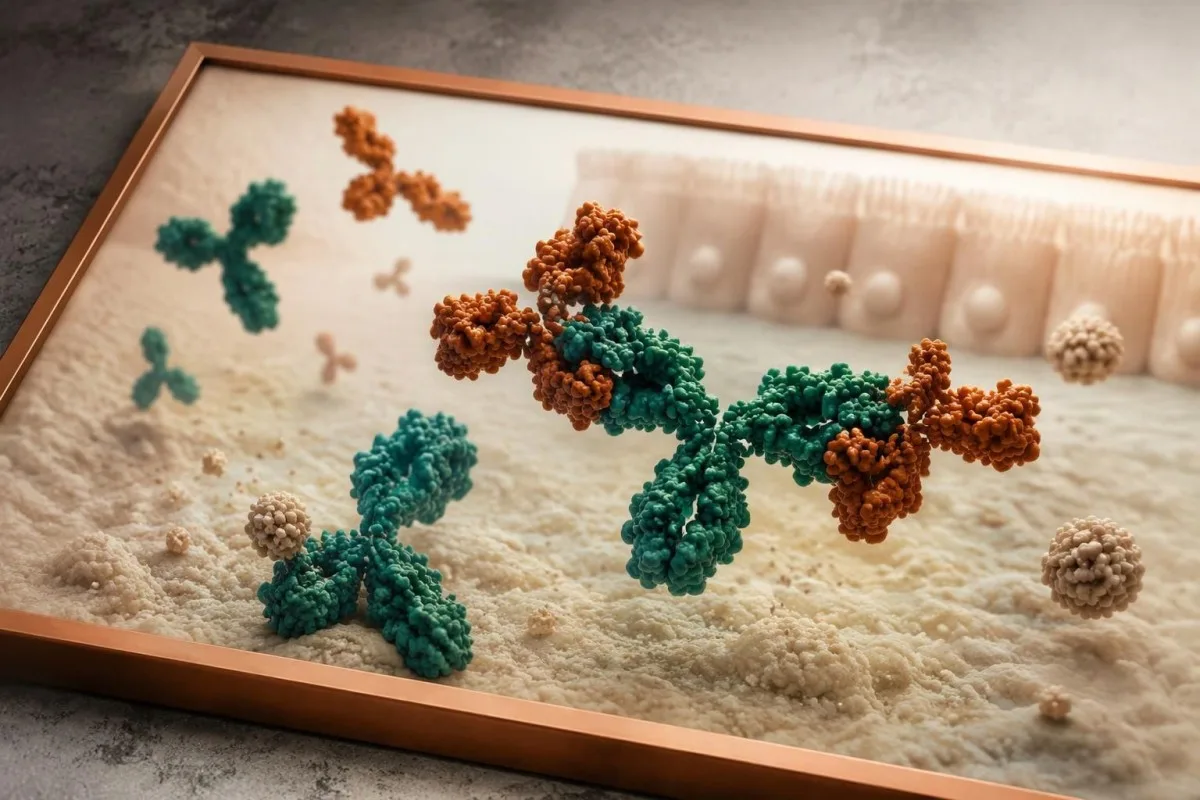
Anti-infliximab antibody tests usually detect binding antibodies; they do not all directly measure neutralizing activity. A positive result of 20 U/mL therefore identifies an assay-defined antibody signal, not a universal percentage of blocked infliximab or a precise prediction of how much benefit remains.
Antibody persistence and magnitude influence whether dose optimization is likely to recover exposure. Cheifetz et al. (2021) described low-titer antibodies as below 10 U/mL for the homogeneous mobility shift assay specifically; that threshold must not be transferred to an ELISA reporting AU/mL or to another laboratory's calibration.
A single low antibody result may be transient or become less clinically relevant after supervised treatment optimization. Repeating paired drug and antibody testing can distinguish a 1-time signal from a rising pattern, but severe disease or an infusion reaction may require action before a second result is available.
Antibodies to infliximab are not the same as antibodies against your own bowel, and they do not by themselves diagnose an immediate allergy. Our explanation of د مثبت انټي باډي پایلې ډولونه helps separate these concepts; breathlessness or faintness during an infusion still requires immediate attention regardless of the antibody number.
د پاتې کافي کچه کله د عمل د میکانیزم د ناکامۍ احتمال ښيي؟
احتمالي میکانیزمي ناکامي means objectively active IBD persists despite sufficient infliximab exposure for the treatment goal. A trough of 8 µg/mL with confirmed active colitis may raise this possibility, but selected patients need further exposure optimization before clinicians conclude that another inflammatory pathway should be targeted.
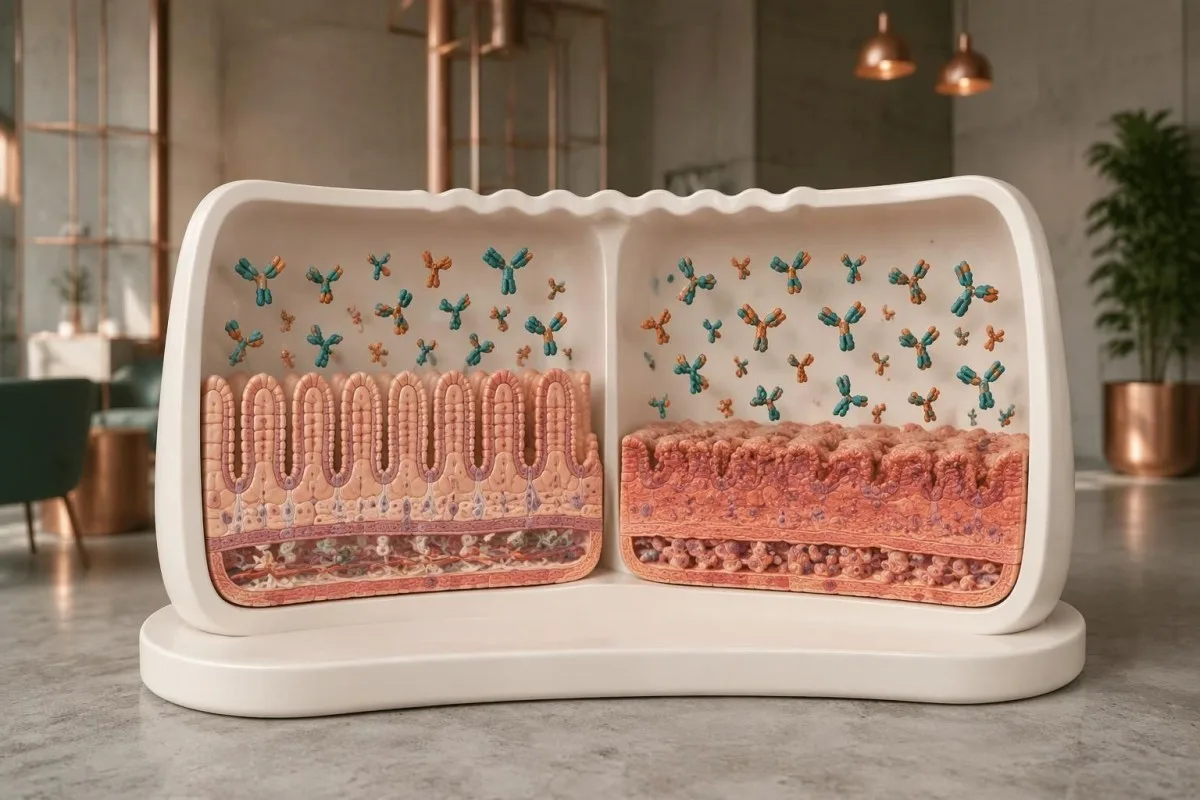
An adequate serum concentration cannot prove that TNF is the only pathway driving a person's current disease. Persistent endoscopic activity with a trough of 12 µg/mL is more supportive of a mechanism problem than the same concentration with normal objective testing and symptoms from bile acid diarrhea.
Calling treatment failure at exactly 5 µg/mL can be premature when the goal is fistula control or substantial endoscopic improvement. The 10–15 µg/mL reassessment discussed in the 2021 consensus provides a safeguard against abandoning an under-optimized treatment, but it is not a requirement to escalate every patient with symptoms.
Objective evidence also has limits: CRP of 3 mg/L does not exclude active IBD, especially in people whose CRP has remained low during previous flares. Borderline stool results need context and sometimes repetition; our guide to границы فایکل کیالپروټیکټین explains why an isolated intermediate value should not determine a biologic switch.
The strongest case for changing mechanism combines 3 findings: documented inflammation, adequate exposure on a correctly timed sample, and an inadequate clinical response despite appropriate optimization. Structural complications, such as a fixed Crohn's stricture, can also cause symptoms that neither more infliximab nor a different biologic will reliably reverse.
ایا د انفلیکسیماب د کچې د کافيوالي پر مهال هم انټيباډۍ مثبتې کېدای شي؟
Antibodies can be detected while infliximab remains measurable or adequate, particularly with drug-tolerant assays. A trough of 7 µg/mL and a weak positive antibody result do not automatically mean treatment failure; the assay, antibody trend, and evidence of disease activity determine how much weight that finding deserves.
Drug-tolerant methods can identify antibodies in samples containing infliximab that would interfere with some drug-sensitive methods. This greater analytical sensitivity may reveal early or low-level immunogenicity, but 1 newly detected signal does not necessarily establish clinically meaningful loss of response.
A qualitative positive result contains less information than a quantitative result with the assay's cutoff and units. A report reading only positive cannot distinguish a value just above a 10 AU/mL cutoff from a much larger signal; our guide to کیفیتي او کمیتي ازموینې explains what each format can establish.
Compare antibody trajectories using the same laboratory method whenever feasible. Hypothetical results of 12, 15, and 13 AU/mL across 3 correctly timed visits may carry a different implication from 12, 80, and 200 AU/mL, although analytical variability and clinical findings still prevent interpretation from trend alone.
کانټیسټي یو دی AI د وینې ازموینې تشریح پلیټفارم that helps distinguish a reported antibody cutoff from a treatment target. When the report lacks the method or units, our interpretation should preserve that uncertainty rather than labeling 1 positive result as proof that infliximab has stopped working.
ولې لابراتواري طریقې او د انټيباډیو واحدونه مهم دي؟
Infliximab and antibody results are method-dependent, so values from different assays are not always interchangeable. Infliximab 1 µg/mL equals 1 mg/L, but antibody results in U/mL, AU/mL, or ng/mL do not have a universal conversion because laboratories use different standards, detection limits, and approaches to drug interference.
An assay may report free or functionally available drug differently from another method that detects a broader pool of circulating drug. Two laboratories can therefore produce somewhat different concentrations from similar specimens; a change from 6 to 8 µg/mL after switching methods may not represent a true gain in exposure.
Below the quantification limit means the assay cannot reliably assign a numerical concentration below its validated boundary. A report of less than 0.4 µg/mL is not proof of exactly 0 µg/mL, and greater than 100 U/mL cannot tell you whether the true antibody result is 110 or 1,000 U/mL.
Some laboratories use reflex antibody testing only when the drug concentration falls below a preset threshold. If antibodies were not tested because infliximab was 9 µg/mL, the result is not equivalent to antibodies negative; ask whether the antibody field says not performed, not detected, or below detection.
Kantesti's report interpretation should retain the assay name, units, and collection context instead of silently converting 20 AU/mL into another method's scale. Our د کلینیکي مېتودولوژۍ معلومات explains the distinction between technical interpretation and clinical decision-making; no AI explanation removes the need to confirm an unusual result with the reporting laboratory.
ډاکټران څنګه تأییدوي چې بېرته راګرځېدونکې نښې IBD دي؟
Returning symptoms do not necessarily mean returning intestinal inflammation; clinicians combine stool markers, CRP, infection testing, endoscopy, and imaging as appropriate. Three loose stools daily with a trough of 6 µg/mL can arise from active IBD, an intestinal infection, bile acid diarrhea, or a functional bowel disorder.
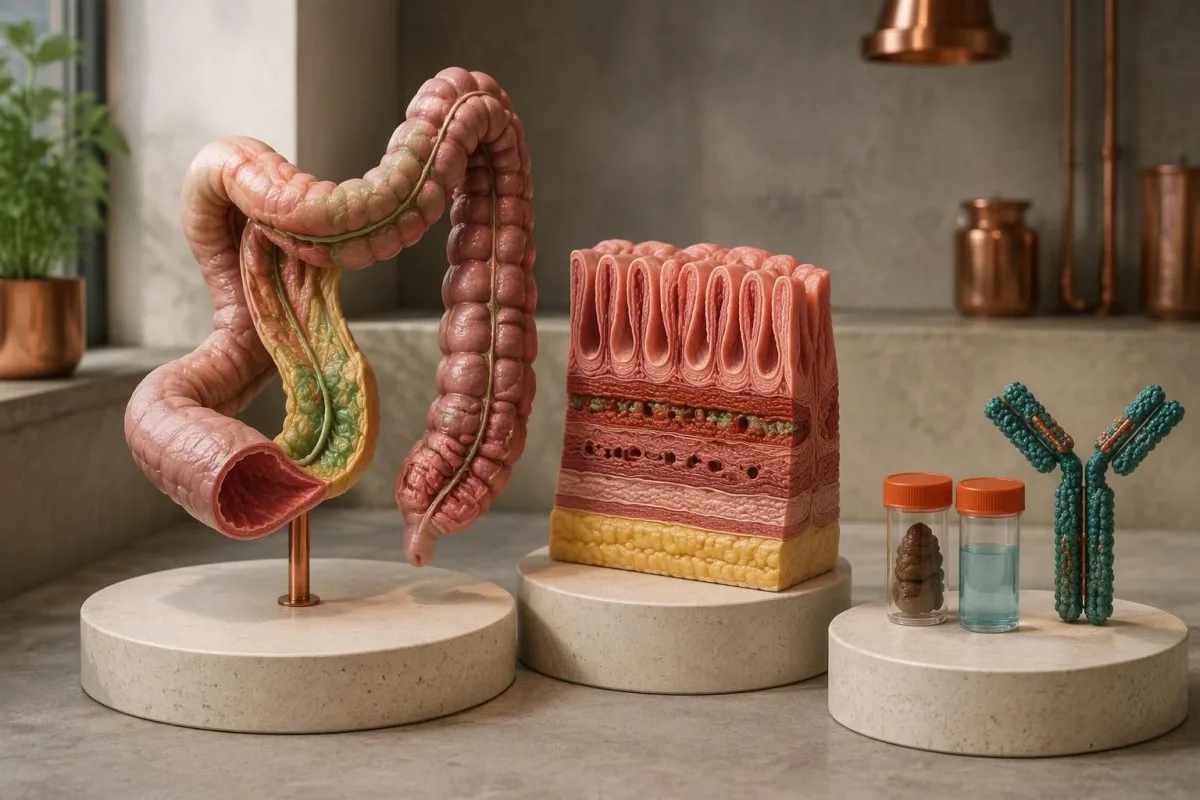
Fecal calprotectin and lactoferrin assess intestinal inflammatory activity rather than infliximab exposure. A hypothetical calprotectin of 800 µg/g adds different information from a trough of 2 µg/mL; our stool inflammation marker comparison explains why paired disease and drug measurements answer separate clinical questions.
C. difficile testing can be necessary during new or worsening diarrhea, even without recent antibiotics. A positive screening test and negative toxin result require contextual interpretation, not automatic classification as an IBD flare; our guide to د C. difficile متضادو پایلو describes why 2 test components can disagree.
Bile acid diarrhea is particularly relevant after ileal disease or resection and can persist despite controlled inflammation. A person with a trough of 10 µg/mL and reassuring objective IBD assessment may need a different evaluation; our explanation of SeHCAT retention results covers one diagnostic route where that test is available.
Bloating, gas, and altered stool frequency can also reflect bacterial overgrowth or carbohydrate malabsorption. At least 2 explanations can coexist with IBD, so a satisfactory trough should not end the assessment; our SIBO breath test guide explains preparation and limitations rather than treating breath testing as proof of every symptom's cause.
د IBD ډله ښايي د درملو د کم تماس په ځواب کې څه وکړي؟
Low exposure without substantial persistent antibodies may lead an IBD team to increase the infliximab dose, shorten the dosing interval, or address a treatment interruption. A common adult intravenous maintenance schedule is 5 mg/kg every 8 weeks after induction, but any adjustment requires individualized prescribing and reassessment of disease activity.
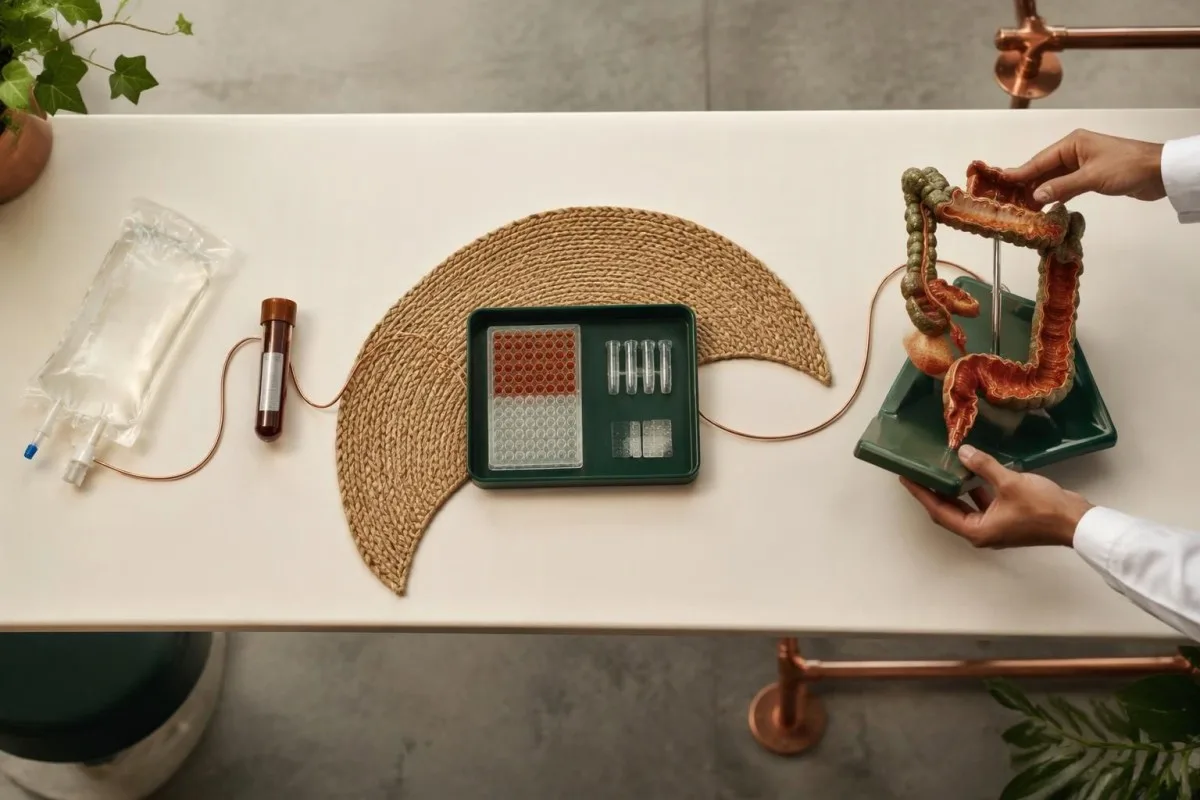
For a hypothetical 70 kg adult, 5 mg/kg corresponds to 350 mg before local preparation or rounding rules. Shortening an unchanged dose from every 8 weeks to every 6 weeks increases average drug administered per unit time by about 33%; the trough increase cannot be predicted as exactly 33% because clearance is not constant.
Increasing the dose and shortening the interval are not pharmacokinetically identical strategies. A larger dose changes peak exposure, while a shorter interval reduces time for concentrations to decline; a hypothetical patient whose symptoms repeatedly return during week 7 may prompt a different discussion from someone symptomatic throughout all 8 weeks.
A useful reassessment checks both exposure and the treatment outcome rather than declaring success because the trough rose. If infliximab increases from 2 to 9 µg/mL but calprotectin remains 900 µg/g and endoscopic disease persists, the new result has narrowed the explanation without necessarily improving the underlying disease.
The timing of repeat testing depends on severity, the revised schedule, and the clinical question; waiting 3 months is not appropriate for every deteriorating patient. Our د درملو خوندیتوب د رجحان لارښود explains why comparable dates and methods matter, but an app should never independently recommend extra infusions.
د درملنې بدلول یا ګډه درملنه کله په پام کې نیول کېږي؟
Persistent high antibodies with low drug may favor changing treatment, while adequate exposure with confirmed active IBD may favor switching to a different mechanism. Low-level immunogenicity can sometimes be addressed through supervised optimization or an immunomodulator, but a result of 15 U/mL alone cannot determine which option offers the best benefit-risk balance.
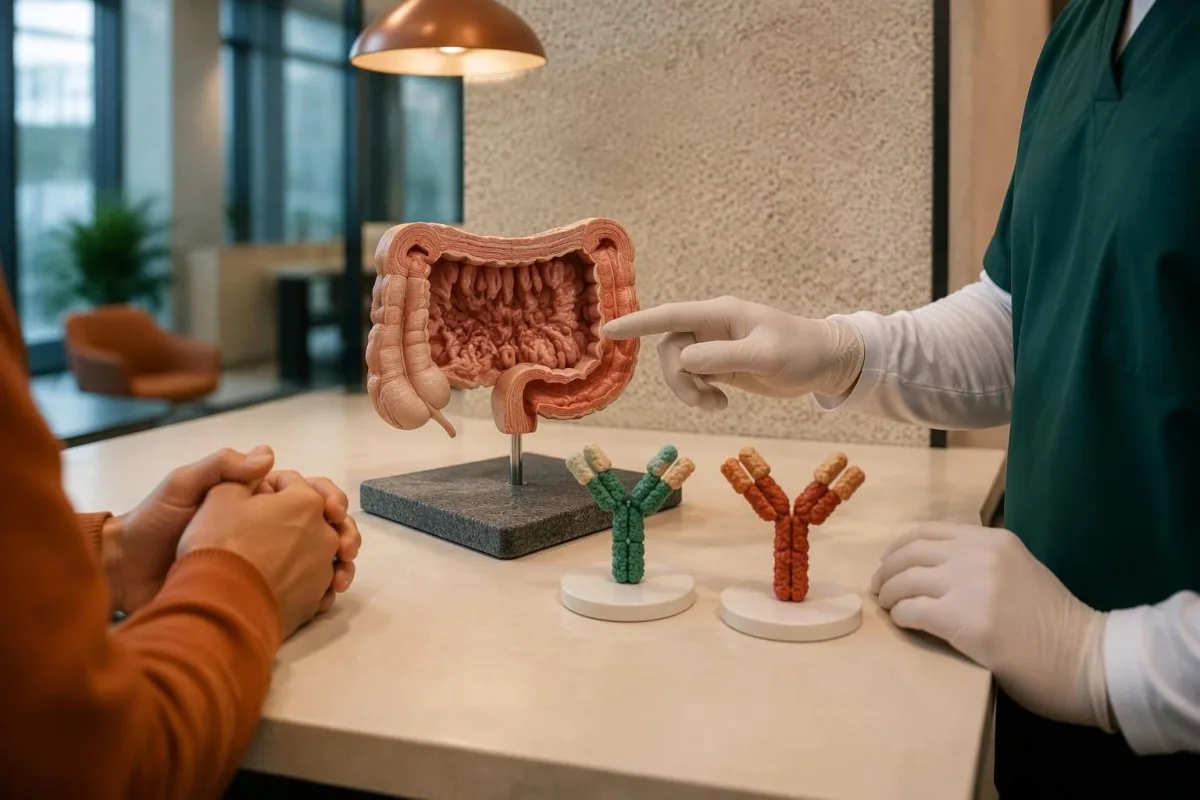
Switching within the anti-TNF class can make sense when infliximab previously controlled disease but antibody-associated clearance now prevents adequate exposure. Switching to another mechanism becomes more persuasive when inflammation persists with adequate exposure; these are 2 different failure patterns, not interchangeable reasons to choose the next medicine.
An immunomodulator such as azathioprine or methotrexate may reduce immunogenicity in selected circumstances, but adding one introduces additional monitoring and adverse-effect risks. Before azathioprine, TPMT testing and safety assessment can inform prescribing; TPMT and NUDT15 assessment do not replace ongoing CBC and liver monitoring, even when baseline results are normal.
If a person already takes a thiopurine, metabolite testing can help clarify exposure or a metabolism pattern before assuming combination therapy has failed. For example, 2 patients prescribed the same mg dose may have very different metabolite findings; our thiopurine treatment pattern guide explains why prescription dose alone is incomplete.
Restarting infliximab after a long interruption deserves a separate safety discussion because immunogenicity and infusion reactions can complicate re-exposure. A treatment gap of 6 months is not equivalent to a routine 1-week scheduling delay; never restart, add an immunomodulator, or stop an existing medicine based solely on an online interpretation.
ایا د درملنې پیل، فسټولا، ماشومان او پیچکاري هدفونه بدلوي؟
Treatment phase, disease phenotype, age, and formulation can change the relevant exposure goal; intravenous maintenance targets should not be copied into every setting. Standard adult intravenous induction commonly uses 5 mg/kg at weeks 0, 2, and 6, and those early concentrations are interpreted differently from an established 8-week maintenance trough.

The 2021 expert consensus described induction goals of approximately 20–25 µg/mL at week 2, 15–20 µg/mL at week 6, and 7–10 µg/mL at week 14 (Cheifetz et al., 2021). These are consensus exposure goals influenced by disease phenotype and outcome, not interchangeable minimums from one definitive randomized trial.
Perianal fistula outcomes may require higher exposure than symptom control in uncomplicated luminal disease, but observational associations do not establish a universal healing threshold. A fistula still draining at 10 µg/mL may also need imaging, drainage of an abscess, or procedural care; raising the trough cannot substitute for addressing an undrained collection.
Children can have different clearance and dosing requirements, particularly with lower body weight or severe disease. An adult maintenance benchmark of 5 µg/mL should not become a parent-directed dosing rule; our discussion of د AI تفسیر د ماشومانو لپاره explains why pediatric specialist context and age-appropriate interpretation remain necessary.
Subcutaneous infliximab produces a different concentration-time profile from intermittent intravenous infusions, and availability and prescribing schedules vary internationally. A concentration of 15 µg/mL during injection treatment should not be labeled excessive merely because an intravenous report lists 3–7 µg/mL; the formulation, actual regimen, and sampling convention must be specified.
جوړه شوې پایلې کلینیکي استدلال څنګه بدلوي؟
Paired results guide the next question rather than dictate a prescription: low drug without antibodies suggests underexposure, low drug with persistent antibodies suggests immunogenicity, and adequate drug with inflammation raises possible mechanism failure. The following 4 examples are entirely hypothetical; the concentrations are illustrative, not personalized treatment recommendations.
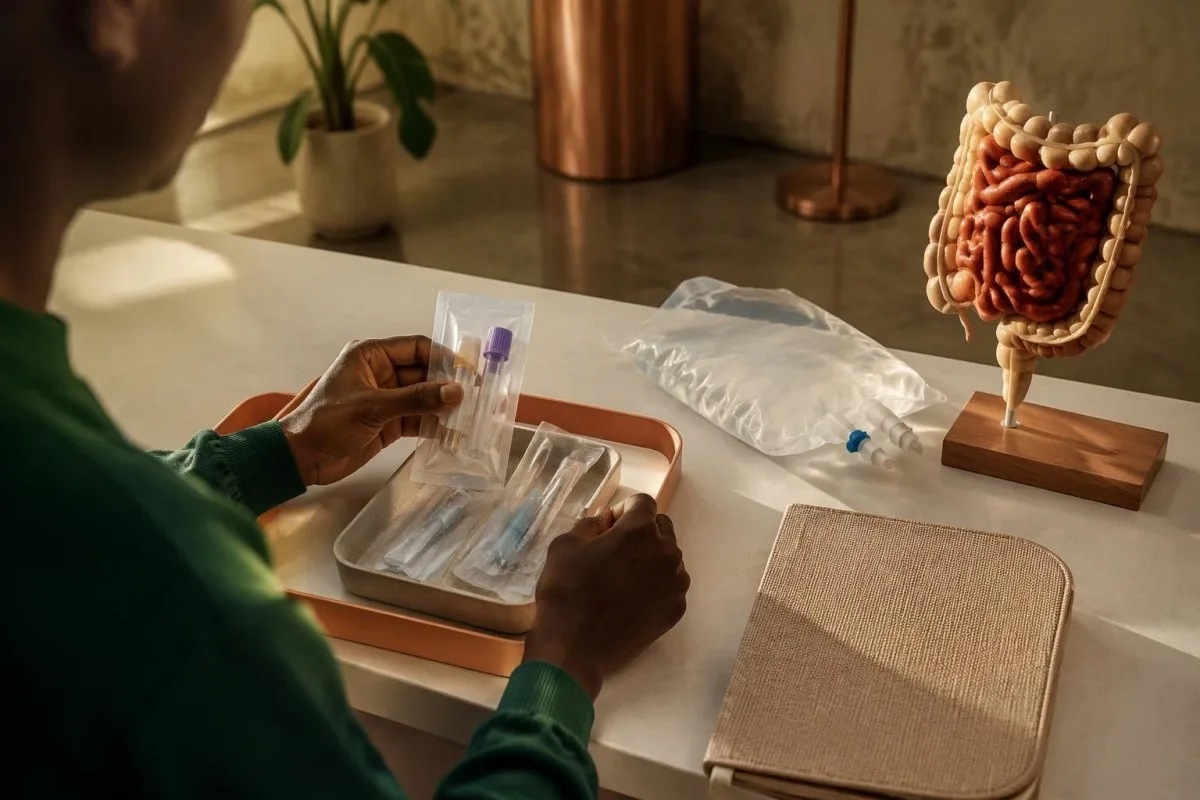
Example 1: a 34-year-old with Crohn's disease has a true trough of 1.8 µg/mL, no detected antibodies, albumin of 29 g/L, and calprotectin of 1,100 µg/g. This pattern supports underexposure in active disease; confirming the infusion schedule and considering supervised optimization are more logical than immediately declaring TNF blockade ineffective.
Example 2: a 46-year-old with ulcerative colitis has infliximab below 0.4 µg/mL and antibodies above the laboratory's 100 U/mL reporting limit on 2 visits. Assuming the assay defines that antibody signal as substantial, persistent immunogenicity is plausible; simply increasing the dose may be less successful than a clinician-directed treatment change.
Example 3: a 28-year-old has a trough of 11 µg/mL, no significant antibodies, and repeatedly active colitis on endoscopy despite appropriate optimization. Example 4: a 61-year-old has the same 11 µg/mL trough but reassuring endoscopy and diarrhea after ileal resection; the first pattern raises mechanism failure, whereas the second prompts investigation of non-inflammatory causes.
کانټیسټي یو دی د AI پر بنسټ د وینې ازموینې تحلیل وسیله that helps organize these distinctions when the report and treatment details are supplied. Our شرح تقنية الذكاء الاصطناعي describes how laboratory context informs interpretation; if a 2-week-old report lacks sampling timing, the missing information must stay visible rather than being guessed.
د بیاکتنې لیدنې ته باید څه درسره یوسئ، او کوم شواهد پرې د تطبیق وړ دي؟
Bring the complete report, infusion timeline, and objective disease results to your IBD review; these 3 evidence streams make paired drug-antibody testing actionable. Seek earlier care for severe deterioration rather than waiting for the next trough, and distinguish infliximab-specific clinical research from general educational publications about accompanying laboratory abnormalities.
A useful review record includes the previous 2 infusion dates, actual dose, collection timing, assay name, antibody units, and recent CRP, albumin, and fecal calprotectin. Add symptom timing, steroid use, recent antibiotics, and missed doses; ask whether the proposed change addresses insufficient exposure, immunogenicity, active non-TNF disease, or a non-inflammatory explanation.
Contact your clinical team promptly for worsening diarrhea with dehydration, persistent vomiting, new significant bleeding, or fever of 38°C or higher while immunosuppressed. Severe abdominal pain with distension, fainting, or inability to keep fluids down may require emergency assessment; during an infusion, sudden breathing difficulty or collapse requires immediate staff attention, not interpretation of an antibody report.
Kantesti provides educational interpretation, not independent biologic prescribing, and our د مصنوعي ځیرکتیا مسؤلانه اصول explain that boundary. A reassuring trough of 10 µg/mL does not establish that an infusion is safe during an acute illness; the treating service must assess symptoms, examination findings, and any necessary investigations.
The 2 Zenodo publications listed below address accompanying laboratory interpretation, not infliximab target validation: our RDW او د سره حجرو لارښود concerns anemia patterns, while our BUN او کریټینین لارښود concerns renal and hydration context. These educational deposits are not evidence for anti-drug antibody cutoffs; the AGA guideline, TAXIT trial, and biologic-monitoring consensus supply the directly relevant clinical references.
پرله پسې پوښتل شوي پوښتنې
د انفلیکسیماب ټیټه کچه څه معنا لري؟
0 د انفلیکسیماب ټیټه کچه یعنې په وینه کې د درملو اندازه د درملنې د هغې مرحلې او موخې لپاره له ټاکل شوي معیار څخه ټیټه ده؛ دا په خپله د دې مانا نه لري چې انفلیکسیماب باید بند شي. د ساتنې په پړاو کې د 2 µg/mL رښتینې ټراف کچه، په داسې حال کې چې د پام وړ انټيباډيګانې نه وي، ښايي د درملو د چټک تصفیې، د کولمو له لارې د پروټین د ضایع کېدو، یا د ناکافي دوز یا دوزونو ترمنځ د واټن نښه وي. د درملو ټیټه کچه له دوامداره او پام وړ انټيباډيګانو سره بیا د معافیتي سیستم په منځګړیتوب د درملو د تصفیې نښه ده. ستاسو د IBD ډله باید پایله د ناروغۍ له عیني فعالیت، د انفیوژن له وختبندۍ او د ازموینې له طریقې سره یوځای وارزوي.
د IBD لپاره د انفلیکسیماب د ټراف کچه څومره ښه ده؟
د IBD د هر ناروغ لپاره د infliximab یو واحد مناسب ټراف کچه نشته. د ۲۰۱۷ کال د AGA لارښود د غبرګوني ساتندوی څارنې لپاره لږ تر لږه 5 µg/mL وړاندیز کړی و، په داسې حال کې چې د ۲۰۲۱ کال د کارپوهانو یوې اجماع د ساتنې غلظت 5–10 µg/mL وباله. ځینې ټاکلي ناروغان چې ځواب یې دویم ځلي له لاسه ورکړی وي، ښايي د درملنې تر پرېښودلو مخکې په 10–15 µg/mL کې بیا ارزونې ته اړتیا ولري. د درملنې پیل، فستولاګانې او د پوستکي لاندې درملنه بېلابېل شرایط لري، نو د لابراتوار حد د دوز ټاکلو لپاره یو نړیوال هدف نه دی.
زه باید کله د انفلیکسیماب د کچې ازموینه وکړم؟
For intravenous infliximab, a trough sample should be collected immediately before the next infusion begins. A sample obtained 2 days after an infusion is not comparable with routine pre-infusion targets. Record the last infusion date, dose, scheduled interval, and actual collection time, especially if an 8-week appointment was delayed. Subcutaneous infliximab has a different exposure profile, so sampling should follow the prescribing team's and laboratory's instructions.
ایا د انفلیکسیماب پر وړاندې انټيباډي له منځه تللی شي؟
د انفلیکسیماب پر وړاندې د انټيباډیو ټیټه کچه کله ناکله د نهموندل کېدو وړ یا له کلینیکي پلوه لږه اړونده کېدای شي، خو د درملو له ډېرې ټیټې کچې سره دوامداره او د پام وړ انټيباډۍ له منځه وړل یې ستونزمن دي. د ۲۰۲۱ کال د متخصصینو په اجماع کې د ټیټر له پلوه ټیټې انټيباډۍ د یوه همجنس خوځښت بدلون ازموینې لپاره له 10 U/mL څخه کمې تعریف شوې وې؛ دا حد پر هره لابراتواري طریقه د تطبیق وړ نه دی. تر څارنې لاندې د درملنې تنظیمول یا د معافیتبدلوونکی درمل ښايي له ټاکلو ناروغانو سره مرسته وکړي، په داسې حال کې چې نور د درملنې بدلون ته اړتیا لري. د دواړو ازموینو تکرار په ګډه کولای شي دوام روښانه کړي، خو ناروغان باید خپله درملنه پخپله بدله نه کړي.
ایا انفلیکسیماب ان سره سره هم کار پرېښودلی شي چې کچه یې عادي وي؟
0 Infliximab ښايي د وینې د کافي غلظت سربېره هم په عیني ډول فعاله IBD کنټرول نه کړي، چې د میکانیزمي ناکامۍ احتمال راپورته کوي. د درملو تر ټولو ټیټه کچه 10 µg/mL د کولمو د رغېدو تضمین نه کوي او نه دا ثابتوي چې TNF د ناروغۍ د پرمخ وړلو یوازینۍ لاره ده. د میکانیزم تر بدلولو مخکې، ډاکټران التهاب تاییدوي، ساختماني یا ساري اختلاطات ارزوي او په پام کې نیسي چې ایا د ځانګړي درملنیز هدف لپاره د درملو تماس کافي و. اسهال، سره له دې چې عیني ارزونه ډاډ ورکوونکې وي، ښايي بل غیرالتهابي لامل ولري.
0 ایا د انفلیکسیماب لوړه کچه خطرناکه ده؟
د infliximab لوړه غلظت په خپله په اتومات ډول خطرناکه نه ده، او داسې یو ثابت حد نشته چې د وینې په سیروم کې یې مسمومیت د IBD ټولو ناروغانو لپاره تطبیق شي. د 15 µg/mL پایله د درملنې د پیل په پړاو، د فستولا د درملنې یا د پوستکي لاندې درملنې پر مهال، د منظم وریدي ساتندوی درملنې په پرتله په بل ډول تعبیر کېدای شي. خوندیتوب د درملنې پر ټولیز رژیم، انتاناتو، د انفیوژن غبرګونونو او نورو کلینیکي موندنو پورې اړه لري، نه یوازې پر غلظت. له خپل درمللیکونکي ټیم سره د پایلې له شریکولو پرته انفیوژن مه پرېږدئ او دوز مه کموئ.
د لابراتوار له بدلولو وروسته زما د انفلیکسیماب د انټيباډیو پایلې ولې بدلې شوې؟
د Infliximab د انټيباډي پایلې د لابراتوارونو ترمنځ له بدلون وروسته بدلېدای شي، ځکه چې ازموینې په کالیبراسیون، واحدونو، د کشف په حدونو او د وینې په دوران کې د درملو په زغم کې توپیر لري. د 20 AU/mL پایله په نړیواله توګه U/mL یا ng/mL ته نه شي اړول کېدای. د درملو پر وړاندې زغم لرونکې طریقه ښايي هغه انټيباډۍ ومومي چې د درملو پر وړاندې حساسه ازموینه یې له پامه غورځوي، کله چې Infliximab لا هم د اندازه کېدو وړ وي. د امکان په صورت کې بدلونونه د هماغې طریقې په کارولو سره پرتله کړئ، او وپوښتئ چې ایا د انټيباډي ازموینه په رښتیا ترسره شوې وه او که د انعکاسي ازموینې د قاعدې له مخې حذف شوې وه.
د وینې ازموینې پایلې څنګه ولولئ
خپل لابراتواري راپور پورته کړئ، او د Kantesti AI به په څو ثانیو کې هر بایومارکر په ساده ژبه تشریح کړي. په ټوله نړۍ کې له 2 میلیونو څخه زیاتو کسانو ترې کار اخیستی.
ماخذونه
- کلاین، ټي.، میچل، ایس.، او وېبر، ایچ. (۲۰۲۶). د RDW د وینې ازموینه: د RDW-CV، MCV او MCHC بشپړ لارښود. د Kantesti AI طبي څېړنه. د دفاع وزارت
- کلاین، ټي.، میچل، ایس.، او وېبر، ایچ. (۲۰۲۶). د BUN/کریاتینین نسبت تشریح: د پښتورګو د فعالیت ازموینې لارښود. د Kantesti AI طبي څېړنه. د دفاع وزارت
- Feuerstein JD et al. (2017). American Gastroenterological Association Institute Guideline on Therapeutic Drug Monitoring in Inflammatory Bowel Disease. ګاستروانټرولوژي. د دفاع وزارت
- Vande Casteele N et al. (2015). Trough concentrations of infliximab guide dosing for patients with inflammatory bowel disease. ګاستروانټرولوژي. د دفاع وزارت
- Cheifetz AS et al. (2021). A Comprehensive Literature Review and Expert Consensus Statement on Therapeutic Drug Monitoring of Biologics in Inflammatory Bowel Disease. The American Journal of Gastroenterology. د دفاع وزارت
- ۲ میلیونه+تحلیل شوې ازموینې
- 127+هېوادونه
- 100+ژبې
د طبي ټیم په اړه


د E-E-A-T باور نښې
تجربه
د ډاکټر تر مشرۍ لاندې کلینیکي بیاکتنه د لابراتواري تفسیر د کاري بهیرونو لپاره.
تخصص
د لابراتواري طب تمرکز پر دې چې بایومارکرونه په کلینیکي شرایطو کې څنګه چلند کوي.
واک ورکول
د ډاکټر توماس کلاین له خوا طبي بیاکتنه شوې، د ډاکټر سارا میچل او پروفیسور ډاکټر هانس وېبر په مرسته.
اعتبار
د شواهدو پر بنسټ تفسیر د روښانه تعقیبي لارو چارو سره، تر څو اندیښنه کمه شي.





طبي سلبِ مسئولیت
دا مقاله یوازې د زده کړې لپاره ده او طبي مشوره نه جوړوي. د تشخیص او درملنې د پرېکړو لپاره تل د وړ روغتیايي خدمت وړاندې کوونکي سره سلا وکړئ.
خپور شوی · له تحریري ټیم سره اړیکه ونیسئ
خپروونکی یې Kantesti Ltd دی، چې په انګلستان او وېلز کې ثبت شوی، د شرکت شمېره. 17090423, ، لندن، بریتانیا.
