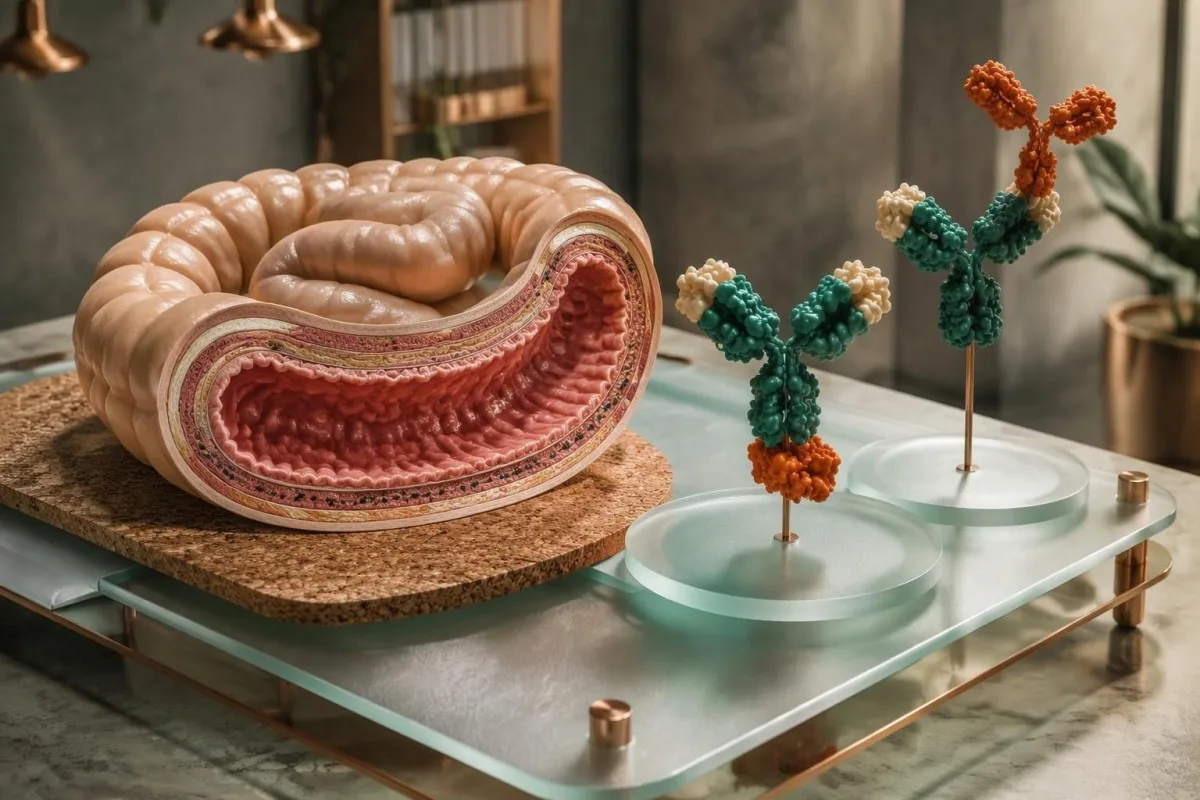
Тэст на ўзровень інфліксімабу вызначае канцэнтрацыю прэпарату і наяўнасць антыцелаў, каб растлумачыць страту кантролю над IBD. Нізкі ўзровень прэпарату без значнай колькасці антыцелаў сведчыць пра недастатковую экспазіцыю; нізкі ўзровень прэпарату пры ўстойліва высокім узроўні антыцелаў сведчыць пра імунна-апасродкаваны кліранс. Актыўнае запаленне пры дастатковай экспазіцыі можа сведчыць пра магчымую механістычную неэфектыўнасць, але толькі пасля пацвярджэння запалення, правільнасці ўзяцця пробы і адпаведнасці мэтавага ўзроўню мэце лячэння.

Асноўныя высновы
- Вынікі парных аналізаў дазваляюць адрозніць недастатковую экспазіцыю інфліксімабу ад клірансу, звязанага з антыцеламі; ні адзін з вынікаў паасобку не даказвае, чаму вярнуліся сімптомы.
- Узяцце пробы перад інфузіяй азначае ўзяць пробу для лабараторнага аналізу да пачатку наступнай нутравеннай інфузіі, а не праз 2 дні пасля яе.
- Мэтавыя паказчыкі падтрымлівайнай тэрапіі адрозніваюцца: рэкамендацыі AGA 2017 года прапанавалі не менш за 5 µg/mL для рэактыўнага маніторынгу, тады як экспертны кансэнсус вызначае 5–10 µg/mL для падтрымлівайнай тэрапіі.
- Нізкі ўзровень інфліксімабу пры адсутнасці антыцелаў можа быць звязаны з паскораным клірансам, стратай бялку праз кішэчнік, затрымкай увядзення дозы або празмерна доўгім інтэрвалам паміж дозамі.
- Антыцелы да інфліксімабу найбольш важныя, калі яны ўстойлівыя, значныя для гэтага аналізу і суправаджаюцца вельмі нізкім або невызначальным узроўнем прэпарату.
- Магчымая механістычная неэфектыўнасць патрабуе аб’ектыўна актыўнага IBD пры дастатковай экспазіцыі; дыярэя пры мінімальнай канцэнтрацыі 8 µg/mL гэтага не пацвярджае.
- Адзінкі вымярэння ў аналізах не з’яўляюцца ўзаемазаменнымі: 1 µg/mL інфліксімабу роўны 1 mg/L, але U/mL і AU/mL для антыцелаў нельга перавесці ўніверсальна.
- Змены лячэння трэба абмяркоўваць з вашай камандай па IBD; у асобных выпадках страты адказу можа быць мэтазгодна павялічыць экспазіцыю да 10–15 µg/mL, перш чым адмовіцца ад інфліксімабу.
Што насамрэч паказвае тэст на ўзровень інфліксімабу?
Ан аналіз на ўзровень інфліксімабу вымярае інфліксімаб у крыві, звычайна разам з антыцеламі да прэпарату, каб высветліць, ці дастатковая экспазіцыя, ці адбываецца імунна-апасродкаванае вывядзенне прэпарату. Вынік 2 µg/mL пры адсутнасці выяўленых антыцелаў патрабуе іншага тлумачэння, чым 2 µg/mL пры ўстойліва высокім узроўні антыцелаў; ні адзін з гэтых вынікаў сам па сабе не азначае, што прыём прэпарату трэба спыніць.
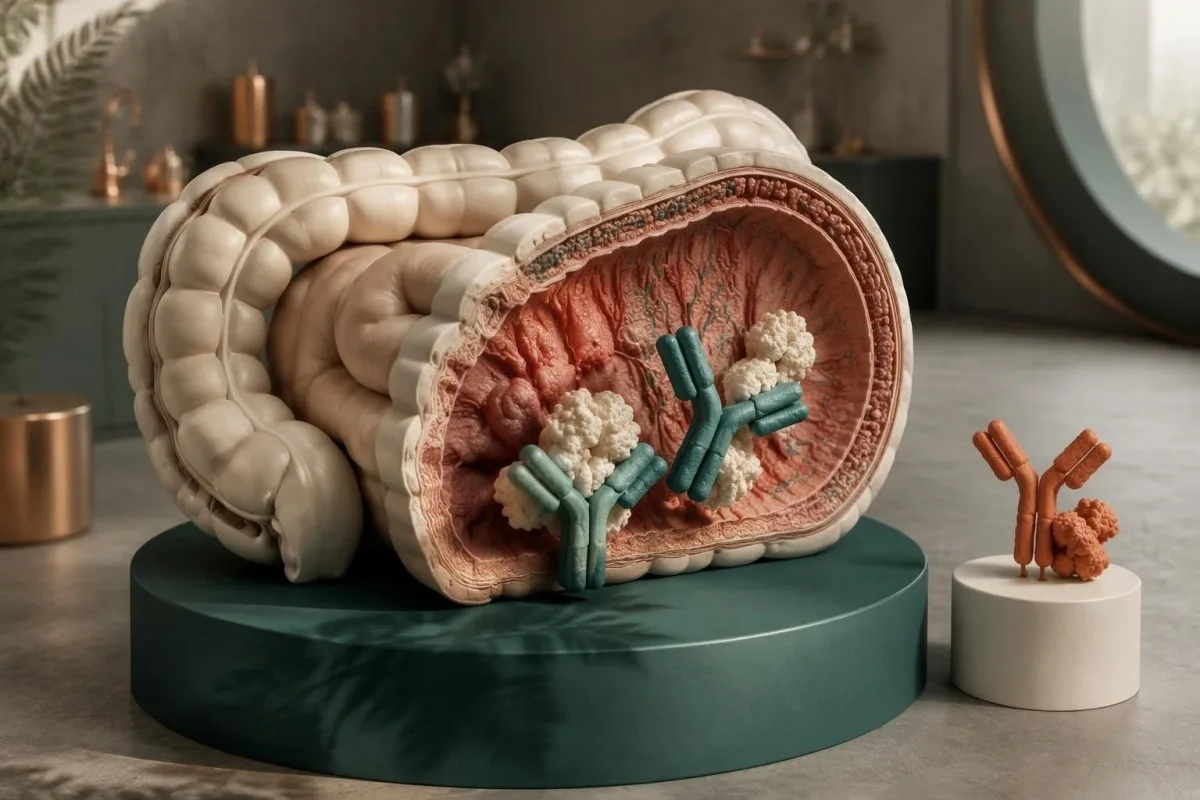
Рэактыўны тэрапеўтычны маніторынг прэпарату — гэта аналіз, які прызначаюць пры пагаршэнні сімптомаў або прыкметах актыўнага захворвання. Ён адрозніваецца ад праактыўнага маніторынгу падчас уяўнай рэмісіі: гіпатэтычны ўзровень перад увядзеннем 4 µg/mL можа быць падставай для абследавання пры дакументальна пацверджаным абвастрэнні, але патрабаваць іншага абмеркавання, калі эндаскапія і маркеры ў кале сведчаць пра ўстойлівае гаенне.
Інфліксімаб блакуе фактар некрозу пухліны, які звычайна скарачаюць як TNF; аналіз канцэнтрацыі не вызначае, ці нейтралізаваны кожны сігнал TNF у кішэчніку. Вынік 7 µg/mL у сыроватцы паказвае канцэнтрацыю прэпарату ў крыві, а не яго актыўнасць у кожным здзіўленым сегменце кішэчніка і не ступень гаення кішэчніка.
Для практычнай інтэрпрэтацыі патрэбныя прынамсі 3 паказчыкі: канцэнтрацыя прэпарату, вынікі аналізу на антыцелы і аб’ектыўная актыўнасць захворвання. Мае значэнне і папярэдні адказ на лячэнне: вяртанне сімптомаў пасля 18 месяцаў кантролю сведчыць пра другасную страту адказу, тады як адсутнасць кантролю з самага пачатку лячэння ставіць іншыя пытанні адносна экспазіцыі падчас індукцыі і механізму дзеяння лячэння.
Кантэсці — гэта Аналізатар крыві са штучным інтэлектам які дапамагае чытачам разумець супастаўленыя вынікі па інфліксімабе, не ўспрымаючы 1 лабараторны паказчык як інструкцыю па дазаванні. Нашай платформай кіруе Kantesti LTD, кампанія з Вялікабрытаніі, рэгістрацыйны нумар 17090423; інфармацыя пра нашай арганізацыі не звязана з клінічнымі доказамі, якія падтрымліваюць тэрапеўтычны маніторынг прэпарату.
Калі трэба браць пробу для вызначэння мінімальнай канцэнтрацыі інфліксімабу?
Мінімальную канцэнтрацыю інфліксімабу пры нутравенным увядзенні трэба вымяраць непасрэдна перад пачаткам наступнай інфузіі, калі канцэнтрацыя блізкая да найніжэйшага ўзроўню за гэты інтэрвал дазавання. Узор, узяты праз 2 дні пасля інфузіі, не з’яўляецца мінімальнай канцэнтрацыяй, і яго не варта непасрэдна параўноўваць з мэтавымі паказчыкамі перад інфузіяй падчас падтрымлівае лячэння.
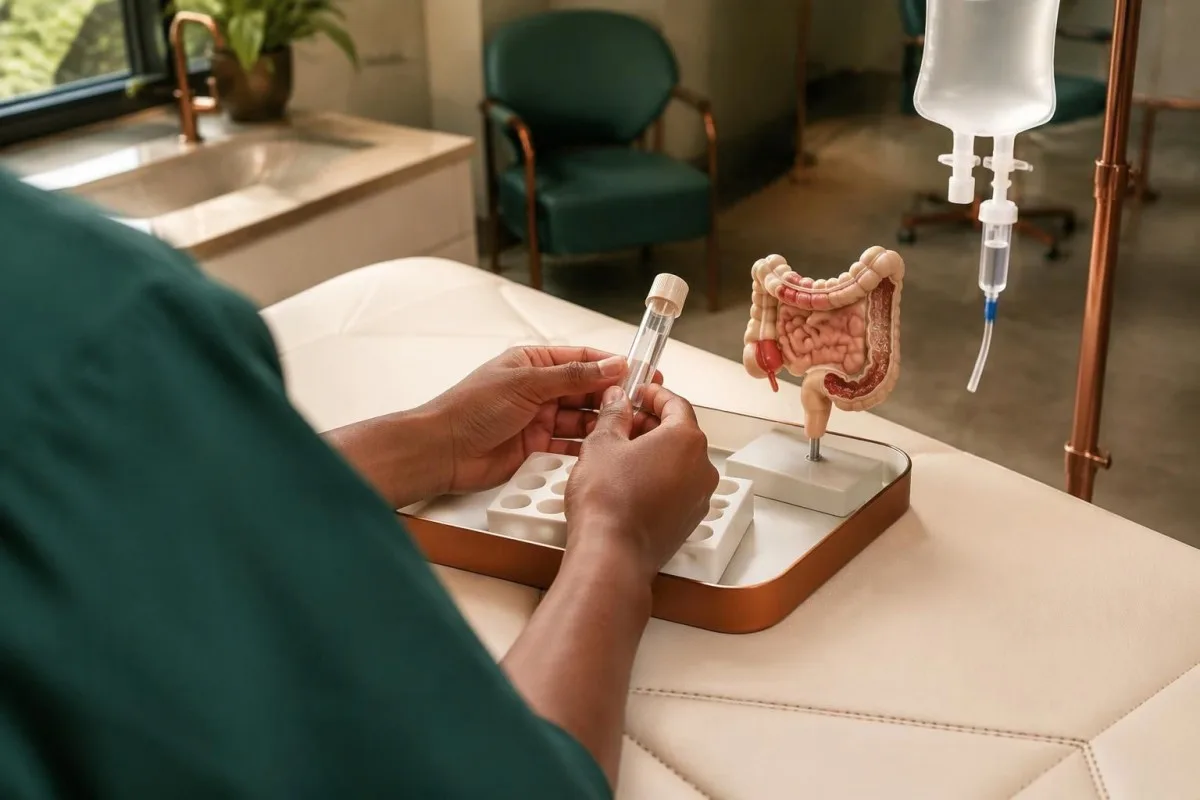
Час узяцця ўзору можа змяніць уяўленне пра значэнне выніку, нават калі эфектыўнасць лячэння не змянілася. Напрыклад, гіпатэтычныя 18 µg/mL, вымераныя неўзабаве пасля інфузіі, і 3 µg/mL, вымераныя перад наступнай інфузіяй, могуць апісваць адзін і той жа цыкл дазавання, а не раптоўнае пагаршэнне паміж 2 незалежнымі станамі лячэння.
Перад інтэрпрэтацыяй выніку зафіксуйце дату папярэдняй інфузіі, фактычную дозу ў mg, запланаваны інтэрвал і час узяцця ўзору. Калі інфузію з інтэрвалам у 8 тыдняў адкладаюць да 10-га тыдня, атрыманая канцэнтрацыя адлюстроўвае больш працяглы перыяд без прэпарату; яна не можа дакладна адказаць на пытанне, ці забяспечваў першапачатковы графік з інтэрвалам у 8 тыдняў дастатковую экспазіцыю.
Collection from a line recently used to administer infliximab can contaminate the specimen and produce a misleadingly high result. Ask the infusion service about its collection protocol, and tell it if sampling occurred after treatment started; the timing principles resemble other pre-dose medication tests, although their targets differ.
Fasting is generally not required for the infliximab concentration itself, but another test ordered during the same visit may have preparation requirements. Our кіраўніцтва па падрыхтоўцы першай прабіркі explains how to document medication timing; for this test, an accurate infusion timeline usually matters more than an 8-hour fast.
Які ўзровень інфліксімабу лічыцца дастатковым?
Існуе no universal adequate infliximab trough for every patient, disease phenotype, assay, and treatment phase. The 2017 AGA guideline suggested at least 5 µg/mL during reactive maintenance monitoring, while a 2021 expert consensus described maintenance concentrations of 5–10 µg/mL and higher exposure in selected loss-of-response situations.
The AGA benchmark of at least 5 µg/mL is a clinical decision aid, not a healthy-population reference range (Feuerstein et al., 2017). Infliximab is a prescribed biologic: an untreated person normally has no circulating infliximab, so a laboratory's therapeutic interval should never be read like the normal range for sodium.
The TAXIT trial enrolled 263 adults with stable responses and optimized intravenous infliximab toward 3–7 µg/mL before randomized follow-up. Its primary remission endpoint did not improve with concentration-based dosing, although some secondary outcomes favored that approach; this explains why the historical 3–7 µg/mL window is useful context rather than a universal modern target (Vande Casteele et al., 2015).
Cheifetz et al. (2021) recommended considering exposure of 10–15 µg/mL before discontinuing infliximab for secondary loss of response in selected patients. This is expert consensus, not proof that everyone should be escalated to 15 µg/mL; fistulas, endoscopic goals, disease severity, safety, and prior optimization affect whether that reasoning applies.
A concentration of 12 µg/mL is not automatically toxic, and a concentration of 4 µg/mL does not automatically require escalation in an asymptomatic patient with documented healing. Unlike the narrower toxicity discussions around some іншыя лекі, якія кантралююцца па мінімуме,, infliximab has no single established serum toxicity cutoff that dictates action.
| Узровень | Дыяпазон | Што гэта значыць |
|---|---|---|
| Historical TAXIT optimization window | 3–7 µg/mL | Studied in adults with stable responses; not a universal threshold for active disease or fistula healing. |
| AGA reactive maintenance benchmark | At least 5 µg/mL | Suggested in the 2017 guideline for reactive monitoring; interpret alongside objective activity and the assay. |
| Expert-consensus maintenance range | 5–10 µg/mL | Described by the 2021 consensus; the appropriate goal varies with disease phenotype and desired outcome. |
| Selected loss-of-response reassessment | 10–15 µg/mL | Exposure experts suggest considering before abandoning treatment in selected cases; not a routine target or toxicity range. |
Чаму ўзровень інфліксімабу нізкі пры адсутнасці антыцелаў?
Low infliximab levels with no significant antibodies usually suggest pharmacokinetic underexposure: too little drug remains available over the dosing interval. A trough of 1.5 µg/mL can reflect faster clearance, intestinal protein loss, a delayed infusion, or insufficient dose or frequency—not necessarily failure of TNF blockade as a treatment mechanism.

Severe intestinal disease can increase infliximab clearance and allow protein, including therapeutic antibody, to be lost through the bowel. A hypothetical patient with albumin of 28 g/L and a trough of 1 µg/mL therefore needs assessment of disease burden and protein loss, not just a question about whether the infusion was attended.
Low albumin is associated with faster infliximab clearance, but it is not a direct measure of drug binding or an instruction to apply a free-drug correction. Albumin of 30 g/L and 40 g/L may provide different clearance context; our даведнік па інтэрпрэтацыі бялкоў сыроваткі explains why inflammation, liver synthesis, nutrition, and loss must be distinguished.
Infliximab is mainly broken down through protein-catabolic pathways rather than cleared unchanged by the kidneys. A creatinine of 90 µmol/L cannot predict the infliximab trough, and the medicine should not be interpreted using small-molecule renal dosing assumptions; body size, inflammatory burden, and treatment interruptions may be more informative.
Kantesti AI helps place a low trough alongside reported albumin, CRP, and infusion timing; 1 result cannot identify the clearance pathway by itself. Low albumin should not automatically trigger protein supplements, because inflammation also changes circulating proteins—as explained in our guide to inflammation and transferrin.
Пра што сведчыць нізкі ўзровень прэпарату разам з наяўнасцю антыцелаў?
Low or undetectable infliximab with persistent high antibodies suggests immune-mediated pharmacokinetic failure: antibodies can accelerate clearance, neutralize drug activity, or both. A trough below an assay's 0.5 µg/mL quantification limit with a substantial antibody result is more concerning than a weak antibody signal alongside a maintained drug concentration.
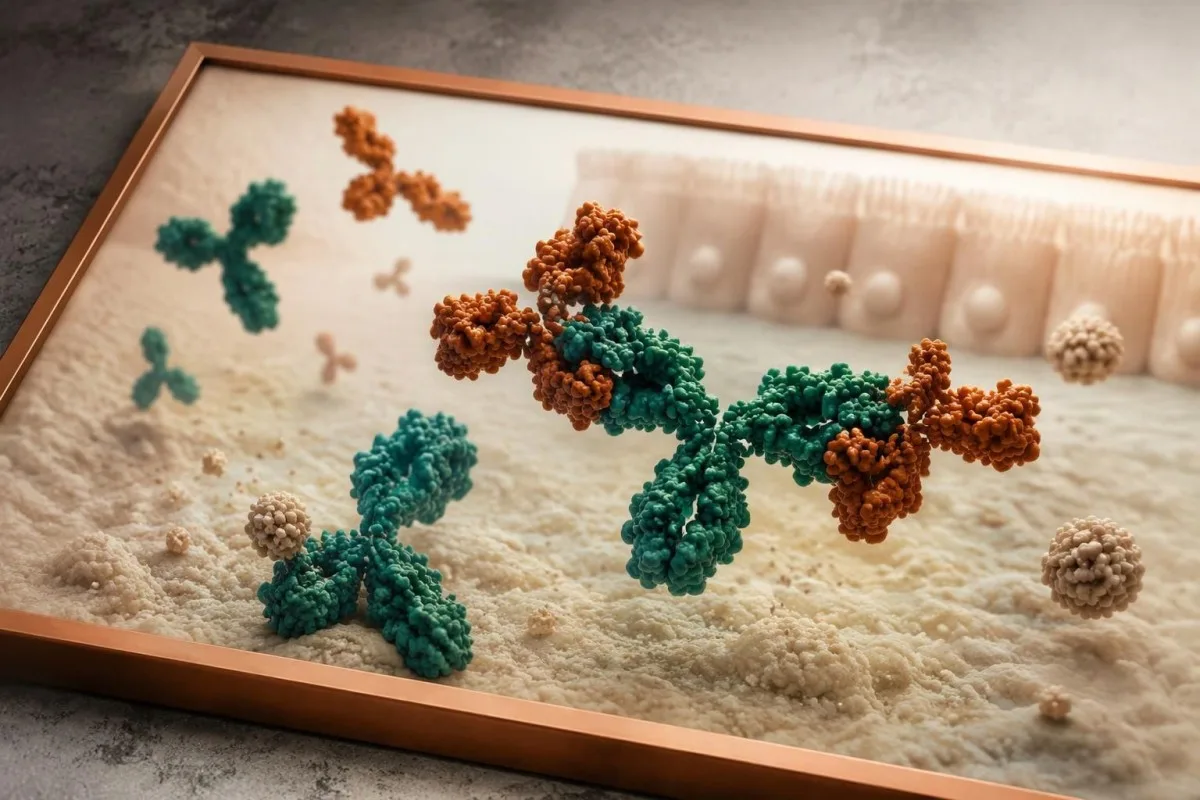
Anti-infliximab antibody tests usually detect binding antibodies; they do not all directly measure neutralizing activity. A positive result of 20 U/mL therefore identifies an assay-defined antibody signal, not a universal percentage of blocked infliximab or a precise prediction of how much benefit remains.
Antibody persistence and magnitude influence whether dose optimization is likely to recover exposure. Cheifetz et al. (2021) described low-titer antibodies as below 10 U/mL for the homogeneous mobility shift assay specifically; that threshold must not be transferred to an ELISA reporting AU/mL or to another laboratory's calibration.
A single low antibody result may be transient or become less clinically relevant after supervised treatment optimization. Repeating paired drug and antibody testing can distinguish a 1-time signal from a rising pattern, but severe disease or an infusion reaction may require action before a second result is available.
Antibodies to infliximab are not the same as antibodies against your own bowel, and they do not by themselves diagnose an immediate allergy. Our explanation of станоўчых тыпаў вынікаў аналізу на антыцелы helps separate these concepts; breathlessness or faintness during an infusion still requires immediate attention regardless of the antibody number.
Калі дастатковая мінімальная канцэнтрацыя сведчыць пра механістычную неэфектыўнасць?
Магчымая механістычная неэфектыўнасць means objectively active IBD persists despite sufficient infliximab exposure for the treatment goal. A trough of 8 µg/mL with confirmed active colitis may raise this possibility, but selected patients need further exposure optimization before clinicians conclude that another inflammatory pathway should be targeted.
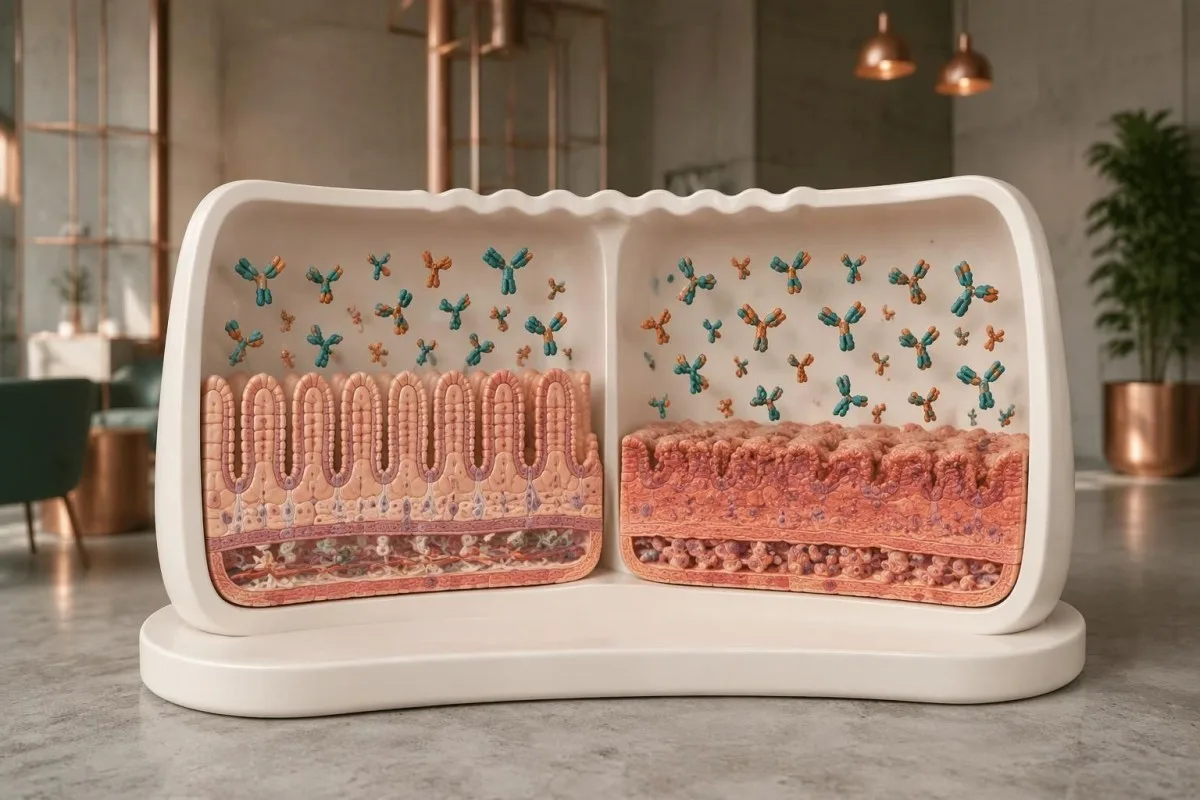
An adequate serum concentration cannot prove that TNF is the only pathway driving a person's current disease. Persistent endoscopic activity with a trough of 12 µg/mL is more supportive of a mechanism problem than the same concentration with normal objective testing and symptoms from bile acid diarrhea.
Calling treatment failure at exactly 5 µg/mL can be premature when the goal is fistula control or substantial endoscopic improvement. The 10–15 µg/mL reassessment discussed in the 2021 consensus provides a safeguard against abandoning an under-optimized treatment, but it is not a requirement to escalate every patient with symptoms.
Objective evidence also has limits: CRP of 3 mg/L does not exclude active IBD, especially in people whose CRP has remained low during previous flares. Borderline stool results need context and sometimes repetition; our guide to мяжуючы фекальны калпратэктын explains why an isolated intermediate value should not determine a biologic switch.
The strongest case for changing mechanism combines 3 findings: documented inflammation, adequate exposure on a correctly timed sample, and an inadequate clinical response despite appropriate optimization. Structural complications, such as a fixed Crohn's stricture, can also cause symptoms that neither more infliximab nor a different biologic will reliably reverse.
Ці могуць антыцелы быць выяўленыя пры дастатковым узроўні інфліксімабу?
Antibodies can be detected while infliximab remains measurable or adequate, particularly with drug-tolerant assays. A trough of 7 µg/mL and a weak positive antibody result do not automatically mean treatment failure; the assay, antibody trend, and evidence of disease activity determine how much weight that finding deserves.
Drug-tolerant methods can identify antibodies in samples containing infliximab that would interfere with some drug-sensitive methods. This greater analytical sensitivity may reveal early or low-level immunogenicity, but 1 newly detected signal does not necessarily establish clinically meaningful loss of response.
A qualitative positive result contains less information than a quantitative result with the assay's cutoff and units. A report reading only positive cannot distinguish a value just above a 10 AU/mL cutoff from a much larger signal; our guide to якасных і колькасных тэстах explains what each format can establish.
Compare antibody trajectories using the same laboratory method whenever feasible. Hypothetical results of 12, 15, and 13 AU/mL across 3 correctly timed visits may carry a different implication from 12, 80, and 200 AU/mL, although analytical variability and clinical findings still prevent interpretation from trend alone.
Кантэсці — гэта Платформа AI для расшыфроўкі аналізу крыві that helps distinguish a reported antibody cutoff from a treatment target. When the report lacks the method or units, our interpretation should preserve that uncertainty rather than labeling 1 positive result as proof that infliximab has stopped working.
Чаму важныя метады лабараторнага аналізу і адзінкі вымярэння антыцелаў?
Infliximab and antibody results are method-dependent, so values from different assays are not always interchangeable. Infliximab 1 µg/mL equals 1 mg/L, but antibody results in U/mL, AU/mL, or ng/mL do not have a universal conversion because laboratories use different standards, detection limits, and approaches to drug interference.
An assay may report free or functionally available drug differently from another method that detects a broader pool of circulating drug. Two laboratories can therefore produce somewhat different concentrations from similar specimens; a change from 6 to 8 µg/mL after switching methods may not represent a true gain in exposure.
Below the quantification limit means the assay cannot reliably assign a numerical concentration below its validated boundary. A report of less than 0.4 µg/mL is not proof of exactly 0 µg/mL, and greater than 100 U/mL cannot tell you whether the true antibody result is 110 or 1,000 U/mL.
Some laboratories use reflex antibody testing only when the drug concentration falls below a preset threshold. If antibodies were not tested because infliximab was 9 µg/mL, the result is not equivalent to antibodies negative; ask whether the antibody field says not performed, not detected, or below detection.
Kantesti's report interpretation should retain the assay name, units, and collection context instead of silently converting 20 AU/mL into another method's scale. Our інфармацыя пра клінічную метадалогію explains the distinction between technical interpretation and clinical decision-making; no AI explanation removes the need to confirm an unusual result with the reporting laboratory.
Як клініцысты пацвярджаюць, што сімптомы, якія вярнуліся, звязаныя з IBD?
Returning symptoms do not necessarily mean returning intestinal inflammation; clinicians combine stool markers, CRP, infection testing, endoscopy, and imaging as appropriate. Three loose stools daily with a trough of 6 µg/mL can arise from active IBD, an intestinal infection, bile acid diarrhea, or a functional bowel disorder.
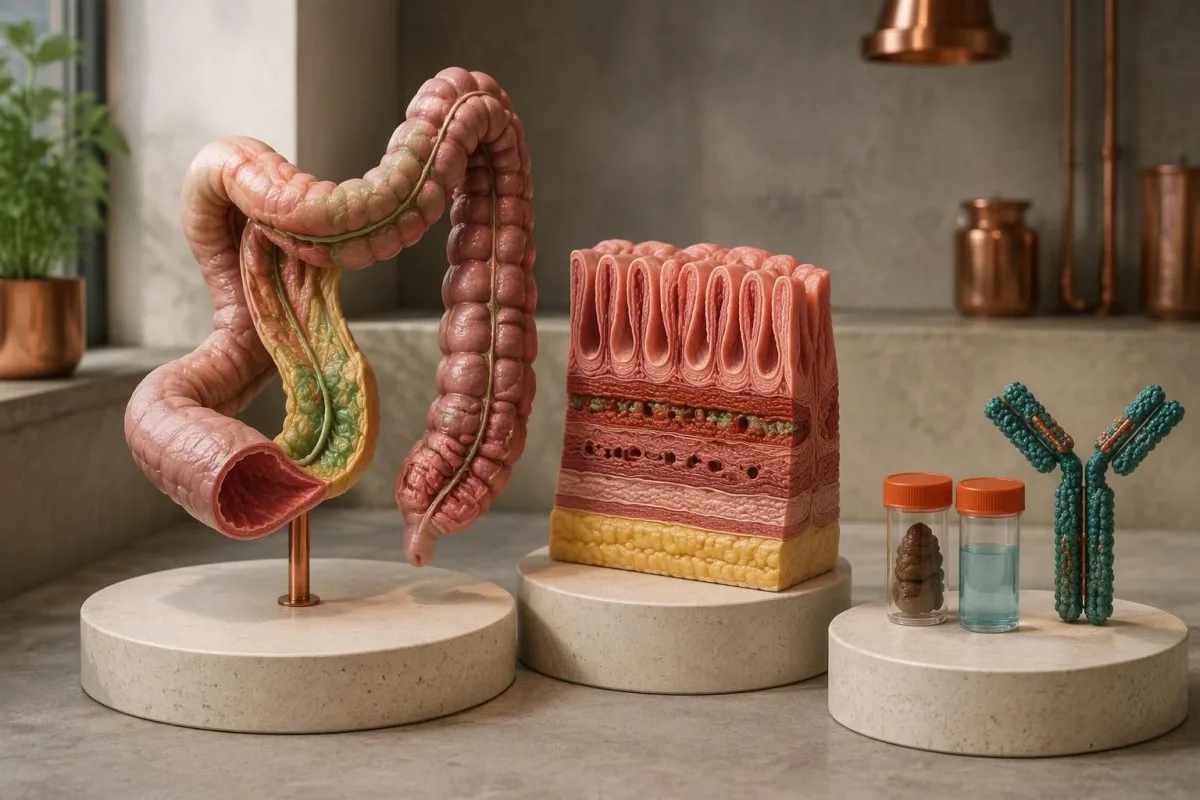
Fecal calprotectin and lactoferrin assess intestinal inflammatory activity rather than infliximab exposure. A hypothetical calprotectin of 800 µg/g adds different information from a trough of 2 µg/mL; our stool inflammation marker comparison explains why paired disease and drug measurements answer separate clinical questions.
C. difficile testing can be necessary during new or worsening diarrhea, even without recent antibiotics. A positive screening test and negative toxin result require contextual interpretation, not automatic classification as an IBD flare; our guide to неадпаведных выніках аналізу на C. difficile describes why 2 test components can disagree.
Bile acid diarrhea is particularly relevant after ileal disease or resection and can persist despite controlled inflammation. A person with a trough of 10 µg/mL and reassuring objective IBD assessment may need a different evaluation; our explanation of SeHCAT retention results covers one diagnostic route where that test is available.
Bloating, gas, and altered stool frequency can also reflect bacterial overgrowth or carbohydrate malabsorption. At least 2 explanations can coexist with IBD, so a satisfactory trough should not end the assessment; our SIBO breath test guide explains preparation and limitations rather than treating breath testing as proof of every symptom's cause.
Як каманда спецыялістаў па IBD можа адрэагаваць на нізкую экспазіцыю?
Low exposure without substantial persistent antibodies may lead an IBD team to increase the infliximab dose, shorten the dosing interval, or address a treatment interruption. A common adult intravenous maintenance schedule is 5 mg/kg every 8 weeks after induction, but any adjustment requires individualized prescribing and reassessment of disease activity.
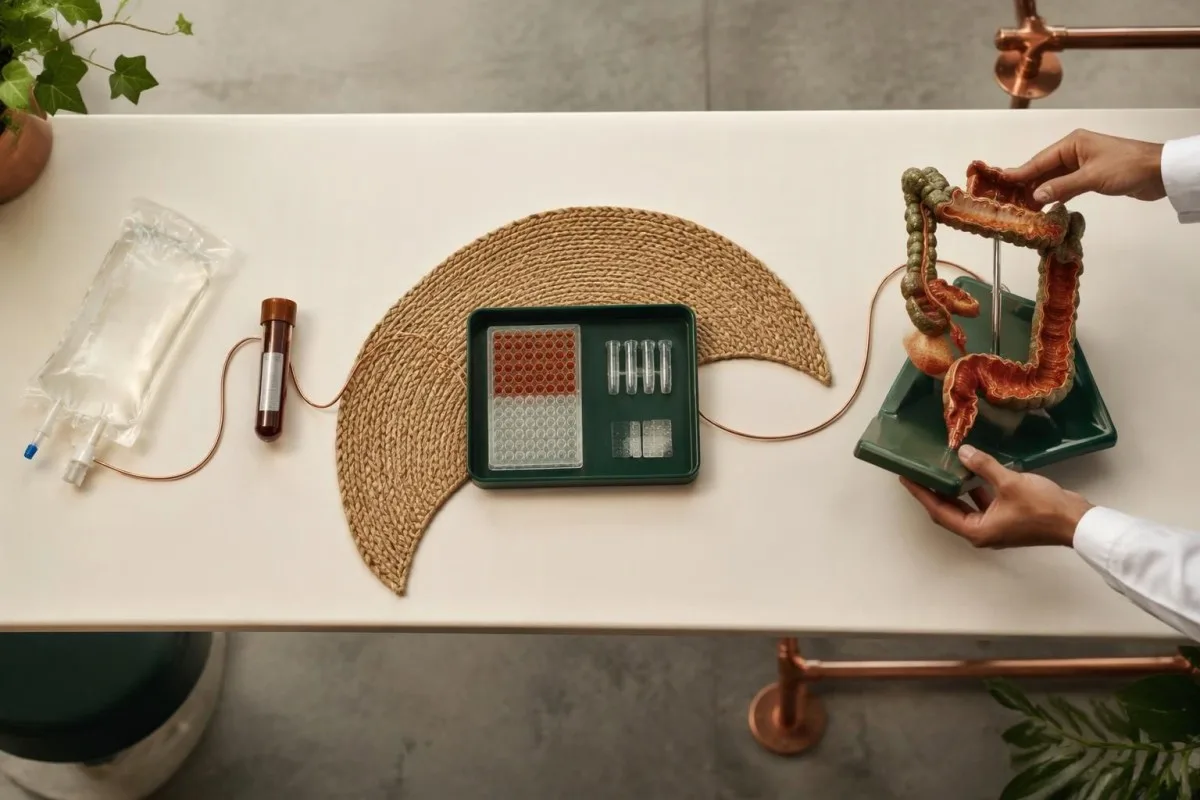
For a hypothetical 70 kg adult, 5 mg/kg corresponds to 350 mg before local preparation or rounding rules. Shortening an unchanged dose from every 8 weeks to every 6 weeks increases average drug administered per unit time by about 33%; the trough increase cannot be predicted as exactly 33% because clearance is not constant.
Increasing the dose and shortening the interval are not pharmacokinetically identical strategies. A larger dose changes peak exposure, while a shorter interval reduces time for concentrations to decline; a hypothetical patient whose symptoms repeatedly return during week 7 may prompt a different discussion from someone symptomatic throughout all 8 weeks.
A useful reassessment checks both exposure and the treatment outcome rather than declaring success because the trough rose. If infliximab increases from 2 to 9 µg/mL but calprotectin remains 900 µg/g and endoscopic disease persists, the new result has narrowed the explanation without necessarily improving the underlying disease.
The timing of repeat testing depends on severity, the revised schedule, and the clinical question; waiting 3 months is not appropriate for every deteriorating patient. Our кіраўніцтва па трэндах бяспекі лекаў explains why comparable dates and methods matter, but an app should never independently recommend extra infusions.
Калі разглядаюць змену лячэння або камбінаваную тэрапію?
Persistent high antibodies with low drug may favor changing treatment, while adequate exposure with confirmed active IBD may favor switching to a different mechanism. Low-level immunogenicity can sometimes be addressed through supervised optimization or an immunomodulator, but a result of 15 U/mL alone cannot determine which option offers the best benefit-risk balance.
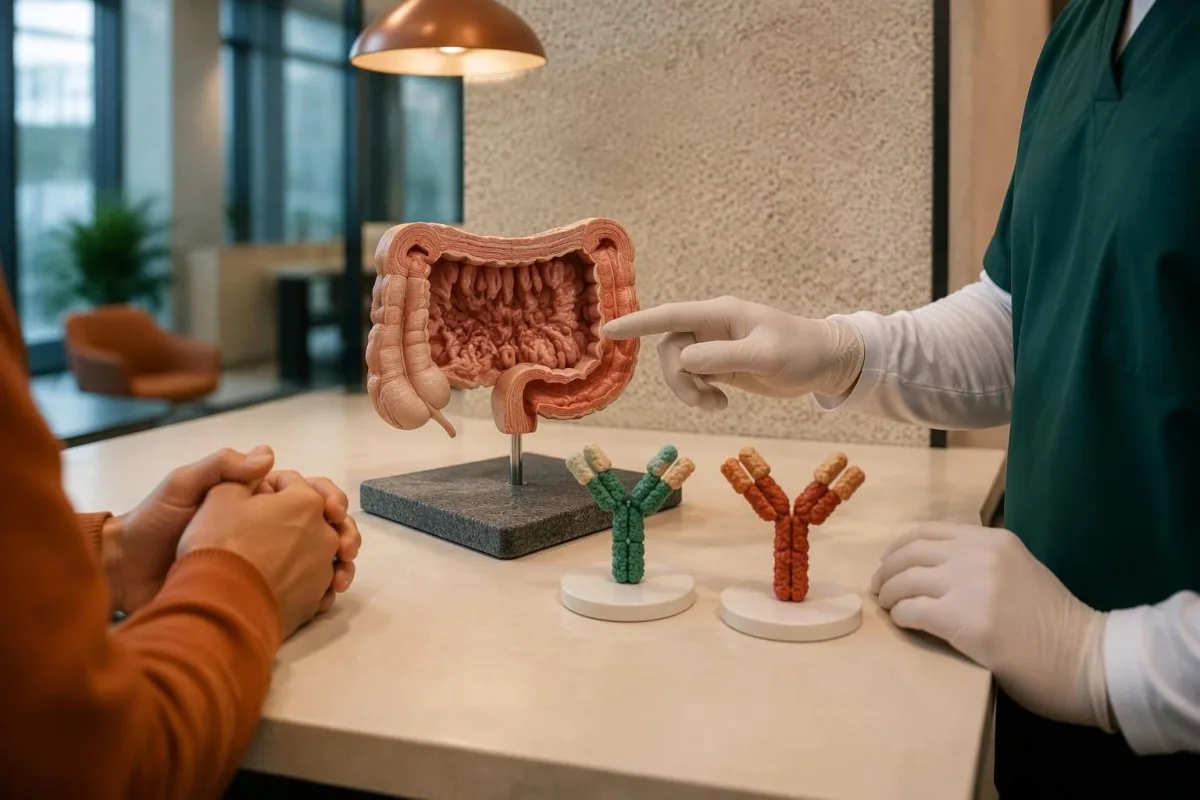
Switching within the anti-TNF class can make sense when infliximab previously controlled disease but antibody-associated clearance now prevents adequate exposure. Switching to another mechanism becomes more persuasive when inflammation persists with adequate exposure; these are 2 different failure patterns, not interchangeable reasons to choose the next medicine.
An immunomodulator such as azathioprine or methotrexate may reduce immunogenicity in selected circumstances, but adding one introduces additional monitoring and adverse-effect risks. Before azathioprine, TPMT testing and safety assessment can inform prescribing; TPMT and NUDT15 assessment do not replace ongoing CBC and liver monitoring, even when baseline results are normal.
If a person already takes a thiopurine, metabolite testing can help clarify exposure or a metabolism pattern before assuming combination therapy has failed. For example, 2 patients prescribed the same mg dose may have very different metabolite findings; our thiopurine treatment pattern guide explains why prescription dose alone is incomplete.
Restarting infliximab after a long interruption deserves a separate safety discussion because immunogenicity and infusion reactions can complicate re-exposure. A treatment gap of 6 months is not equivalent to a routine 1-week scheduling delay; never restart, add an immunomodulator, or stop an existing medicine based solely on an online interpretation.
Ці ўплываюць індукцыйная тэрапія, свіршчы, дзіцячы ўзрост і ін'екцыі на мэтавыя ўзроўні?
Treatment phase, disease phenotype, age, and formulation can change the relevant exposure goal; intravenous maintenance targets should not be copied into every setting. Standard adult intravenous induction commonly uses 5 mg/kg at weeks 0, 2, and 6, and those early concentrations are interpreted differently from an established 8-week maintenance trough.

The 2021 expert consensus described induction goals of approximately 20–25 µg/mL at week 2, 15–20 µg/mL at week 6, and 7–10 µg/mL at week 14 (Cheifetz et al., 2021). These are consensus exposure goals influenced by disease phenotype and outcome, not interchangeable minimums from one definitive randomized trial.
Perianal fistula outcomes may require higher exposure than symptom control in uncomplicated luminal disease, but observational associations do not establish a universal healing threshold. A fistula still draining at 10 µg/mL may also need imaging, drainage of an abscess, or procedural care; raising the trough cannot substitute for addressing an undrained collection.
Children can have different clearance and dosing requirements, particularly with lower body weight or severe disease. An adult maintenance benchmark of 5 µg/mL should not become a parent-directed dosing rule; our discussion of AI-інтэрпрэтацыя для дзяцей explains why pediatric specialist context and age-appropriate interpretation remain necessary.
Subcutaneous infliximab produces a different concentration-time profile from intermittent intravenous infusions, and availability and prescribing schedules vary internationally. A concentration of 15 µg/mL during injection treatment should not be labeled excessive merely because an intravenous report lists 3–7 µg/mL; the formulation, actual regimen, and sampling convention must be specified.
Як вынікі парных аналізаў змяняюць клінічную ацэнку?
Paired results guide the next question rather than dictate a prescription: low drug without antibodies suggests underexposure, low drug with persistent antibodies suggests immunogenicity, and adequate drug with inflammation raises possible mechanism failure. The following 4 examples are entirely hypothetical; the concentrations are illustrative, not personalized treatment recommendations.
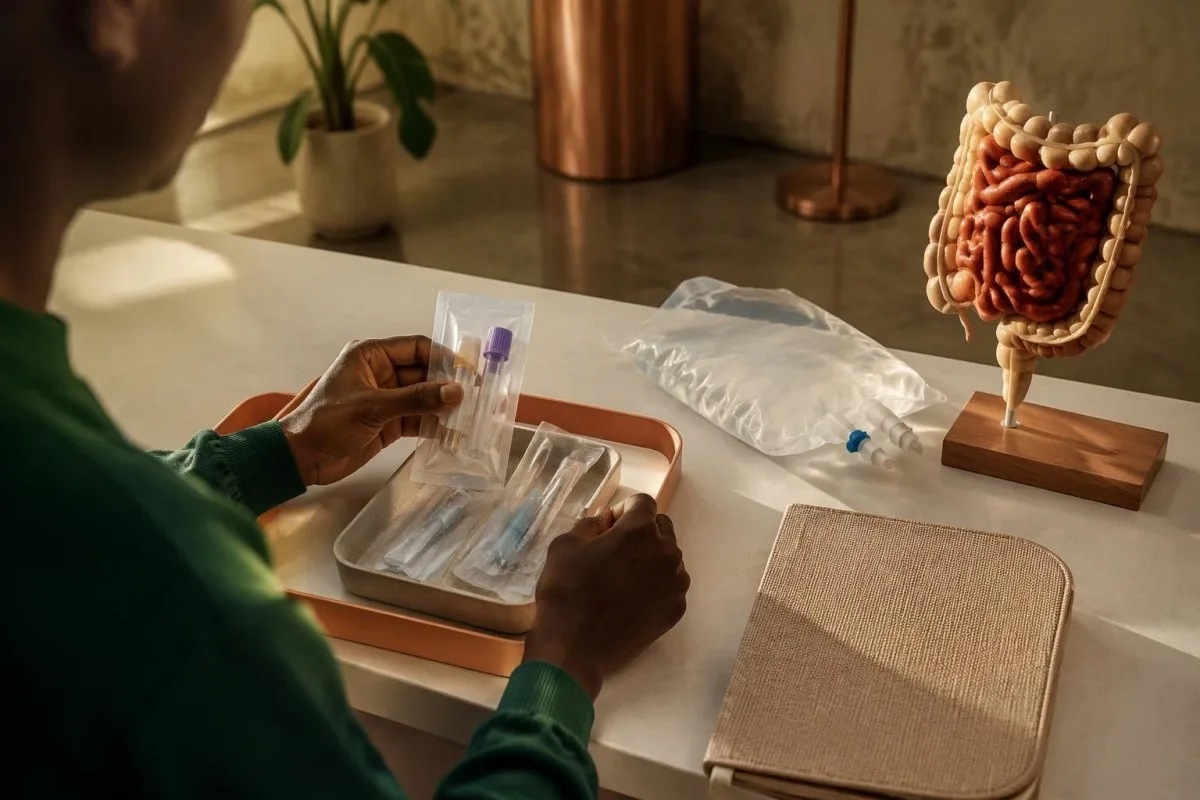
Example 1: a 34-year-old with Crohn's disease has a true trough of 1.8 µg/mL, no detected antibodies, albumin of 29 g/L, and calprotectin of 1,100 µg/g. This pattern supports underexposure in active disease; confirming the infusion schedule and considering supervised optimization are more logical than immediately declaring TNF blockade ineffective.
Example 2: a 46-year-old with ulcerative colitis has infliximab below 0.4 µg/mL and antibodies above the laboratory's 100 U/mL reporting limit on 2 visits. Assuming the assay defines that antibody signal as substantial, persistent immunogenicity is plausible; simply increasing the dose may be less successful than a clinician-directed treatment change.
Example 3: a 28-year-old has a trough of 11 µg/mL, no significant antibodies, and repeatedly active colitis on endoscopy despite appropriate optimization. Example 4: a 61-year-old has the same 11 µg/mL trough but reassuring endoscopy and diarrhea after ileal resection; the first pattern raises mechanism failure, whereas the second prompts investigation of non-inflammatory causes.
Кантэсці — гэта Інструмент аналізу вынікаў аналізу крыві з падтрымкай AI that helps organize these distinctions when the report and treatment details are supplied. Our тлумачэнне тэхналогіі ШІ describes how laboratory context informs interpretation; if a 2-week-old report lacks sampling timing, the missing information must stay visible rather than being guessed.
Што трэба прынесці на наступны прыём і якія даныя маюць значэнне?
Bring the complete report, infusion timeline, and objective disease results to your IBD review; these 3 evidence streams make paired drug-antibody testing actionable. Seek earlier care for severe deterioration rather than waiting for the next trough, and distinguish infliximab-specific clinical research from general educational publications about accompanying laboratory abnormalities.
A useful review record includes the previous 2 infusion dates, actual dose, collection timing, assay name, antibody units, and recent CRP, albumin, and fecal calprotectin. Add symptom timing, steroid use, recent antibiotics, and missed doses; ask whether the proposed change addresses insufficient exposure, immunogenicity, active non-TNF disease, or a non-inflammatory explanation.
Contact your clinical team promptly for worsening diarrhea with dehydration, persistent vomiting, new significant bleeding, or fever of 38°C or higher while immunosuppressed. Severe abdominal pain with distension, fainting, or inability to keep fluids down may require emergency assessment; during an infusion, sudden breathing difficulty or collapse requires immediate staff attention, not interpretation of an antibody report.
Kantesti provides educational interpretation, not independent biologic prescribing, and our прынцыпы адказнага выкарыстання AI explain that boundary. A reassuring trough of 10 µg/mL does not establish that an infusion is safe during an acute illness; the treating service must assess symptoms, examination findings, and any necessary investigations.
The 2 Zenodo publications listed below address accompanying laboratory interpretation, not infliximab target validation: our кіраўніцтва па RDW і эрытрацытах concerns anemia patterns, while our гід па BUN і креатыніну concerns renal and hydration context. These educational deposits are not evidence for anti-drug antibody cutoffs; the AGA guideline, TAXIT trial, and biologic-monitoring consensus supply the directly relevant clinical references.
Часта задаваныя пытанні
Што азначае нізкі ўзровень інфліксімабу?
Нізкі ўзровень інфліксімабу азначае, што экспазіцыя прэпарата ў крыві ніжэйшая за эталонны ўзровень, абраны для гэтай фазы лячэння і пастаўленай мэты; гэта не азначае аўтаматычна, што інфліксімаб трэба спыніць. Сапраўдная мінімальная канцэнтрацыя перад чарговай падтрымлівайчай дозай 2 мкг/мл пры адсутнасці значнай колькасці антыцелаў можа сведчыць пра паскораны кліранс, страту бялку праз кішэчнік або недастатковую дозу ці занадта працяглы інтэрвал паміж увядзеннямі. Нізкі ўзровень прэпарата пры захаванні значнай колькасці антыцелаў, наадварот, сведчыць пра імунна-апасродкаваны кліранс. Ваша каманда па ВЗК павінна інтэрпрэтаваць вынік з улікам аб’ектыўнай актыўнасці захворвання, часу інфузіі і выкарыстанага аналізу.
Які ўзровень інфліксімабу ў даліне лічыцца добрым пры запаленчых захворваннях кішэчніка?
Няма адзінага аптымальнага мінімальнага ўзроўню інфліксімабу для ўсіх людзей з IBD. Рэкамендацыі AGA 2017 года прапаноўвалі не менш за 5 µg/mL пры рэактыўным маніторынгу падчас падтрымлівае тэрапіі, а экспертны кансэнсус 2021 года вызначаў падтрымлівае канцэнтрацыі ў межах 5–10 µg/mL. У асобных пацыентаў з другаснай стратай адказу перад спыненнем тэрапіі можа спатрэбіцца паўторная ацэнка пры ўзроўні 10–15 µg/mL. Для індукцыі, свіршчоў і падскурнага лячэння патрэбны іншы кантэкст, таму лабараторны рэферэнтны інтэрвал не з’яўляецца універсальнай мэтавай дозай.
Калі мне трэба здаць аналіз на ўзровень інфліксімабу?
For intravenous infliximab, a trough sample should be collected immediately before the next infusion begins. A sample obtained 2 days after an infusion is not comparable with routine pre-infusion targets. Record the last infusion date, dose, scheduled interval, and actual collection time, especially if an 8-week appointment was delayed. Subcutaneous infliximab has a different exposure profile, so sampling should follow the prescribing team's and laboratory's instructions.
Ці могуць знікнуць антыцелы да інфліксімабу?
Антыцелы да інфліксімабу нізкага ўзроўню часам могуць стаць невыяўнымі або менш клінічна значнымі, але ўстойлівыя значныя ўзроўні антыцелаў пры вельмі нізкай канцэнтрацыі прэпарата цяжэй пераадолець. У экспертным кансэнсусе 2021 года нізкі тытр антыцелаў вызначаўся як менш за 10 U/mL для аднаго аналізу з аднародным зрухам рухомасці; гэты парог нельга прымяняць да кожнага лабараторнага метаду. Кантраляваная аптымізацыя лячэння або імунамадулятар могуць дапамагчы некаторым пацыентам, іншым жа неабходна змяніць лячэнне. Паўторнае парнае тэставанне можа праясніць, ці захоўваюцца антыцелы, але пацыенты не павінны самастойна мяняць лячэнне.
Ці можа інфліксімаб перастаць дзейнічаць, нават калі яго ўзровень нармальны?
Інфліксімаб можа не спраўляцца з кантролем аб’ектыўна актыўнага запаленчага захворвання кішэчніка, нягледзячы на дастатковую канцэнтрацыю ў крыві, што можа сведчыць пра механістычную неэфектыўнасць. Мінімальная канцэнтрацыя 10 µg/mL не гарантуе гаення кішэчніка і не даказвае, што ФНП — адзіны шлях, які абумоўлівае захворванне. Перш чым змяніць механізм дзеяння прэпарата, клініцысты пацвярджаюць наяўнасць запалення, ацэньваюць структурныя ўскладненні або ўскладненні інфекцыйнага характару і ўлічваюць, ці было ўздзеянне прэпарата дастатковым для дасягнення канкрэтнай мэты лячэння. Дыярэя пры абнадзейлівых выніках аб’ектыўнай ацэнкі можа мець незапаленчую прычыну.
Ці небяспечны высокі ўзровень інфліксімабу?
Высокая канцэнтрацыя інфліксімабу не азначае аўтаматычна небяспеку, і не існуе адзінага ўсталяванага парога таксічнасці ў сыроватцы, які падыходзіў бы ўсім пацыентам з запаленчымі захворваннямі кішэчніка (ЗЗК). Вынік 15 мкг/мл можа трактавацца па-рознаму падчас індукцыйнай тэрапіі, лячэння свіршчоў або падскурнай тэрапіі ў параўнанні са звычайнай падтрымлівай тэрапіяй нутравеннымі інфузіямі. Бяспека залежыць ад агульнай схемы лячэння, наяўнасці інфекцый, інфузійных рэакцый і іншых клінічных даных, а не толькі ад канцэнтрацыі. Не прапускайце інфузію і не зніжайце дозу, не абмеркаваўшы вынік з медыцынскай камандай, якая прызначыла вам прэпарат.
Чаму змяніліся вынікі аналізу на антыцелы да інфліксімабу пасля таго, як я перайшоў у іншую лабараторыю?
Вынікі аналізу на антыцелы да інфліксімабу могуць змяняцца пасля пераходу ў іншую лабараторыю, бо аналізы адрозніваюцца каліброўкай, адзінкамі вымярэння, межамі выяўлення і здольнасцю выяўляць антыцелы пры наяўнасці прэпарата ў крыві. Вынік 20 AU/mL нельга адназначна перавесці ў U/mL або ng/mL. Метад, устойлівы да ўплыву прэпарата, можа выявіць антыцелы, якія не выяўляе адчувальны да прэпарата аналіз, калі інфліксімаб усё яшчэ выяўляецца ў крыві. Па магчымасці параўноўвайце дынаміку вынікаў, атрыманых адным і тым жа метадам, і ўдакладніце, ці быў аналіз на антыцелы сапраўды выкананы, а не прапушчаны з-за правіла рэфлекснага тэставання.
Атрымайце тлумачэнне вынікаў аналізу крыві
Загрузіце свой лабараторны справаздачу, і AI Kantesti за некалькі секунд простай мовай растлумачыць кожны біямаркер. Ім карыстаюцца больш за 2 мільёны чалавек па ўсім свеце.
Спасылкі
- Кляйн, Т., Мітчэл, С., і Вебер, Х. (2026). Аналіз крыві на RDW: поўнае кіраўніцтва па RDW-CV, MCV і MCHC. Kantesti AI Medical Research. DOI
- Кляйн, Т., Мітчэл, С., і Вебер, Х. (2026). Падрабязнае тлумачэнне суадносін BUN/Крэатініну: гіда па тэсту функцыі нырак. Kantesti AI Medical Research. DOI
- Feuerstein JD et al. (2017). American Gastroenterological Association Institute Guideline on Therapeutic Drug Monitoring in Inflammatory Bowel Disease. Gastroenterology. DOI
- Vande Casteele N et al. (2015). Trough concentrations of infliximab guide dosing for patients with inflammatory bowel disease. Gastroenterology. DOI
- Cheifetz AS et al. (2021). A Comprehensive Literature Review and Expert Consensus Statement on Therapeutic Drug Monitoring of Biologics in Inflammatory Bowel Disease. The American Journal of Gastroenterology. DOI
- 2 млн+Прааналізаваныя тэсты
- 127+Краіны
- 100+Мовы
Пра медыцынскую каманду


Сігналы даверу E-E-A-T
Вопыт
Клінічны агляд, які вядзе лекар, працэсаў інтэрпрэтацыі лабараторных паказчыкаў.
Экспертыза
Фокус лабараторнай медыцыны на тым, як біямаркеры паводзяць сябе ў клінічным кантэксце.
Аўтарытэтнасць
Медыцынскую рэцэнзію правёў доктар Томас Кляйн пры ўдзеле доктара Сары Мітчэл і прафесара, доктара Ганса Вэбера.
Надзейнасць
Інтэрпрэтацыя на аснове доказаў з выразнымі шляхамі далейшых дзеянняў, каб паменшыць трывогу.





Медыцынская адмова ад адказнасці
Гэты артыкул прызначаны толькі для адукацыйных мэт і не з’яўляецца медычнай парадай. Заўсёды кансультуйцеся з кваліфікаваным спецыялістам аховы здароўя для прыняцця рашэнняў па дыягностыцы і лячэнні.
Апублікавана · Звязацца з рэдакцыйнай камандай
Апублікавана кампаніяй Kantesti Ltd, зарэгістраванай у Англіі і Уэльсе, нумар кампаніі. 17090423, Лондан, Злучанае Каралеўства.
