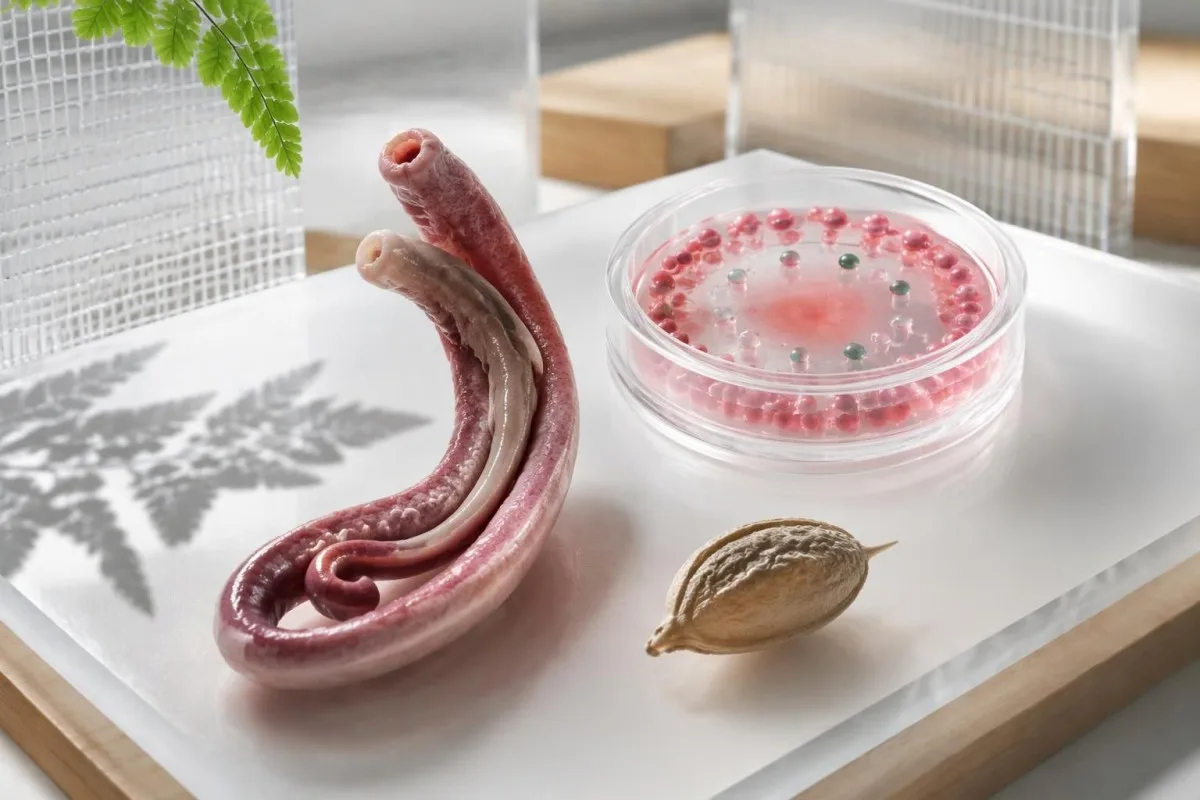
Maaaring maging batayan ng paggamot ang positibong resulta ng antibody sa Schistosoma matapos ang kapani-paniwalang pagkakalantad sa tubig-tabang kung hindi ka pa nakatanggap ng sapat na paggamot, ngunit hindi nito mapatutunayan ang aktibong impeksiyon o makukumpirma ang paggaling. Ang mga petsa ng pagkakalantad mo, nakaraang paggamot at mga karagdagang pagsusuri ang magtatakda ng susunod na hakbang.

Mahahalagang punto
- Positibong antibodies nagpapahiwatig ng tugon ng immune system sa mga antigen ng Schistosoma; hindi matutukoy ng 1 positibong resulta kung hindi pa nagagamot ang impeksiyon o nagamot na ito dati.
- Panahon ng pagsusuri mahalaga: inirerekomenda ng CDC na kumuha ng mga sampol para sa pagsusuri ng antibody nang hindi bababa sa 6–8 linggo matapos ang pinaghihinalaang bagong impeksiyon.
- Pagkakalantad sa tubig-tabang ay nangangahulugan ng pagdikit ng balat sa mga lawa, ilog o kanal na maaaring kontaminado—hindi lamang pagbisita sa bansang apektado.
- Mikroskopikong pagsusuri ay higit na nagbibigay-kaalaman kapag humiling ang mga clinician ng 3 sampol ng dumi o ihi na kinolekta sa magkakaibang araw.
- Praziquantel karaniwang may kabuuang dosis na 40 mg/kg sa loob ng 1 araw para sa S. mansoni at S. haematobium, ngunit nakadepende ang pagrereseta sa uri ng parasito at mga klinikal na kalagayan.
- Timing ng paggamot karaniwang nangangahulugan ng paghihintay nang hindi bababa sa 6–8 linggo matapos ang huling pagkakalantad sa tubig-tabang para sa mga biyaherong matatag naman ang kalagayan, dahil pinakamabisa ang praziquantel laban sa mga ganap nang hustong bulate.
- Follow-up na mikroskopikong pagsusuri maaaring hilingin 1–2 buwan pagkatapos ng paggamot kapag may mga itlog bago ang paggamot.
- Nananatiling positibo ang IgG sa loob ng maraming taon pagkatapos ng matagumpay na paggamot; hindi awtomatikong nangangahulugan ang isa pang positibong resulta na kailangan ng isa pang kurso ng paggamot.
Kailangan bang gamutin ang positibong resulta ng antibody sa Schistosoma?
Hindi awtomatikong nangangahulugan ang positibong resulta ng pagsusuri sa mga antibody laban sa schistosoma na kailangan mo ng paggamot. Madalas irekomenda ng mga clinician ang paggamot kapag kapani-paniwala ang pagkakalantad sa tubig-tabang at walang sapat na naunang paggamot, kahit negatibo ang microscopy; pagkatapos ng dokumentadong paggamot at nang walang muling pagkakalantad, karaniwang hindi sapat ang 1 patuloy na positibong resulta para bigyang-katwiran ang muling paggamot.
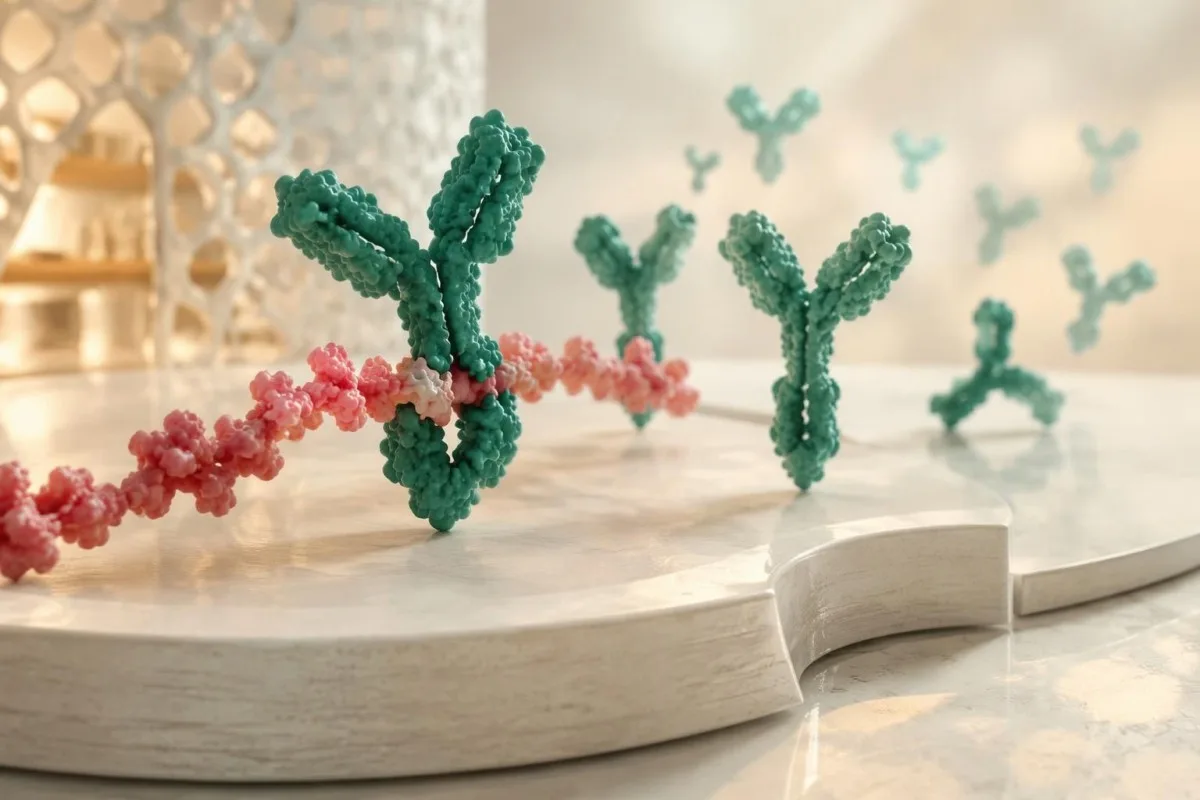
Kahulugan ng positibong Schistosoma IgG ay pinakamainam unawain bilang ebidensiya ng pagkilala ng immune system, hindi bilang pagsukat sa mga buhay na bulate. Maaaring manatili ang tugon ng antibody nang maraming taon lampas sa pagkawala ng parasito, at maaaring mangailangan ng magkaibang pangangalaga ang 2 taong may magkaparehong iniulat na resulta—ang isa matapos ang hindi nagamot na pagkakalantad, at ang isa matapos ang matagumpay na paggamot nang walang kasunod na pagdikit sa tubig-tabang.
Magkahiwalay na usapin ang dating pagkakalantad at dating paggamot: maaaring hindi nagamot ang isang lumang impeksiyon, samantalang maaaring manatiling positibo ang isang lumang pagsusuri kahit gumaling na. Bago bigyang-kahulugan ang 1 ulat bilang aktibong sakit o hindi mapanganib na dating impeksiyon, tiyakin ang pangalan ng paggamot, dosis, petsa at anumang sumunod na pagdikit sa tubig; ang aming paliwanag tungkol sa positibong resulta ng antibody ay nagtatangi sa mga ganitong uri ng ebidensiya.
Ang Kantesti ay isang AI blood test analyzer na tumutulong magpaliwanag kung bakit hindi mapatutunayan ng 1 positibong resulta ng Schistosoma IgG ang aktibong impeksiyon, kahit normal ang kumpletong blood count. Ang tungkulin namin ay magpaliwanag ng ulat—hindi tumukoy ng parasito o magreseta—at ang aming organization and purpose ay dapat unawain nang hiwalay sa mga pasyang pinangungunahan ng clinician na inilalarawan dito.
Aling mga pagkakalantad sa tubig-tabang ang higit na nagpapakumbinsi sa resulta?
Dahil sa pagdikit ng balat sa tubig-tabang sa lugar na may transmisyon, nagiging mas makabuluhan sa klinika ang positibong resulta. Maaaring magdulot ng pagkakalantad ang paglangoy, pagtawid sa mababaw na tubig, pagligo, pagbabalsa o paglalaba sa mga lawa, ilog at kanal ng irigasyon; itala ang 3 detalye para sa bawat pangyayari: ang eksaktong lokasyon, ang aktibidad at ang petsa ng huling pagdikit.
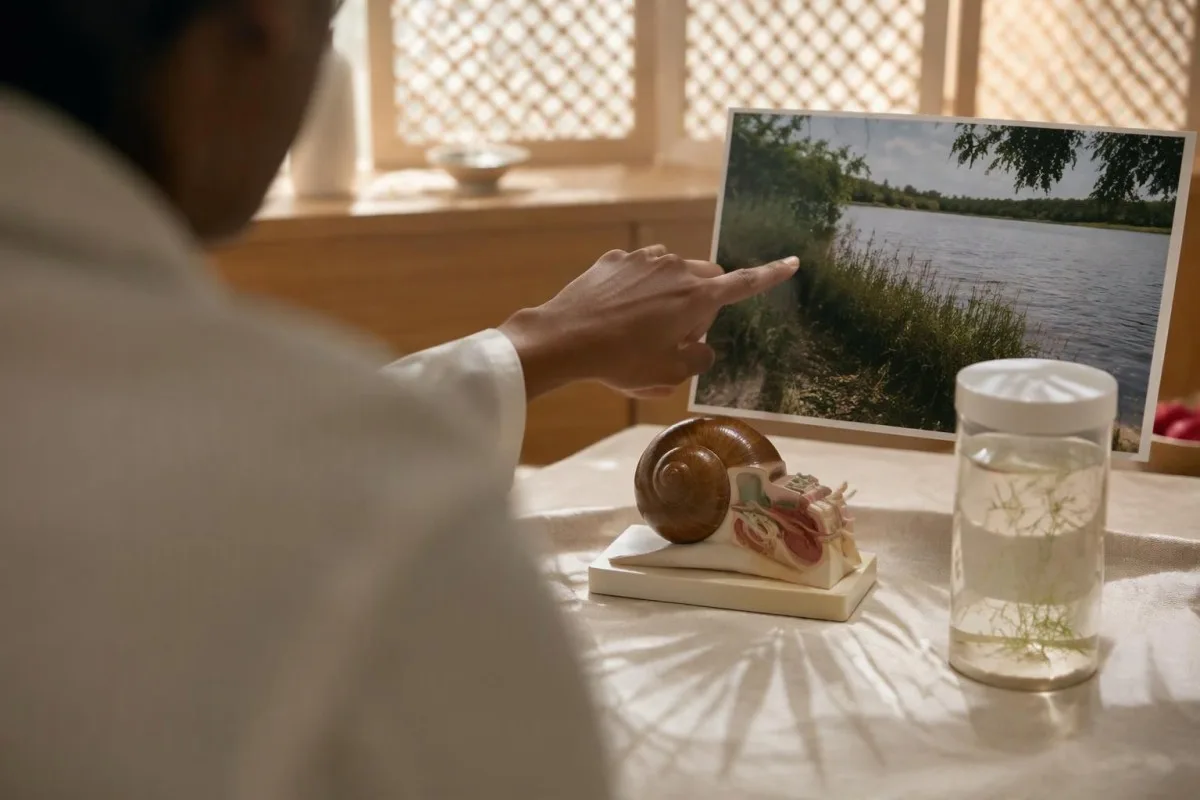
Pumapasok sa balat ang mga larba ng Schistosoma na inilalabas ng mga kuhol sa tubig-tabang; hindi kailangang lumunok ng tubig. Bilang pagkakalantad pa rin ang maikling pagtawid sa mababaw na tubig, at hindi nangangahulugang walang pagkakalantad kung walang makating pantal, kaya dapat banggitin ng isang kathang-isip na manlalakbay na lumusong sa lawa nang 5 minuto ang pangyayaring iyon sa halip na itala lamang ang mas mahahabang paglangoy.
Hindi karaniwang pinagmumulan ng pagkakalantad sa schistosomiasis ang tubig-dagat at mga swimming pool na wastong nilagyan ng chlorine. Maaari ring magdulot ng pag-aalala ang pagdikit sa tubig-tabang tungkol sa iba pang kondisyong nangangailangan ng ibang pagsusuri at paggamot, kabilang ang leptospirosis matapos malantad sa tubig; hindi dapat iugnay sa mga antibody laban sa Schistosoma ang lagnat na nagsimula 1 linggo matapos ang aktibidad sa ilog nang walang mas malawak na pagtatasa.
Hindi sapat ang pangalan lamang ng isang bansa para matukoy ang indibidwal na panganib dahil nagkakaiba ang transmisyon sa loob ng mga bansa at anyong-tubig. Balikan kahit 1 nakalimutang aktibidad—gaya ng paghuhugas ng kagamitan sa tabi ng ilog—at ihiwalay ang pagkakalantad sa parasito sa mga tala ng pagbabakuna; mga pagsusuri ng antibody kaugnay ng paglalakbay ay sumasagot sa ibang tanong at hindi nagbibigay ng proteksiyon laban sa schistosomiasis.
Kailan dapat magpasuri para sa schistosomiasis pagkatapos bumiyahe?
Karaniwang mas nagbibigay-kaalaman ang pagsusuri ng antibody para sa schistosomiasis kapag lumipas na ang hindi bababa sa 6–8 linggo mula sa hinihinalang bagong impeksiyon. Ipinapaliwanag sa gabay ng CDC na Clinical Testing and Diagnosis for Schistosomiasis na nagbibigay-daan ang pagitan na ito para makabuo ng mga antibody; hindi maaasahang maibubukod ng negatibong resulta na nakolekta nang mas maaga ang kamakailang impeksiyong nakuha mula sa tubig-tabang.
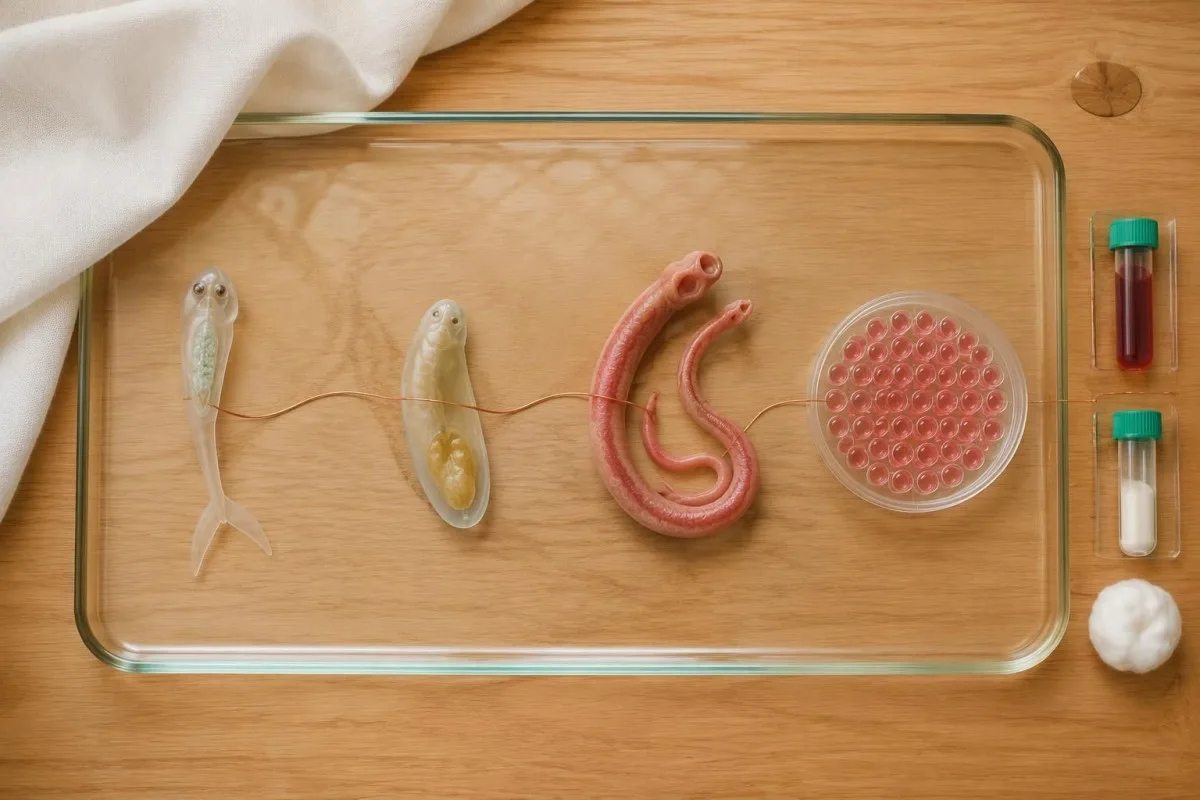
The last freshwater contact is a practical anchor when a trip involved several possible exposures. For example, a hypothetical traveler who swam on both the first and final day of a 3-week holiday should calculate the testing interval from the final swim, rather than assuming that the first exposure makes an immediate post-trip result conclusive.
Seroconversion is not identical across people or assays, so 6–8 weeks is a useful testing window rather than a guarantee of detection. When exposure is persuasive and an initial result is negative, a clinician may arrange another sample later, sometimes around 12 weeks after exposure; a second date should be agreed rather than inferred from a generic laboratory reference range.
Fever or significant symptoms after travel should be assessed without waiting for an antibody window to close, especially after a malaria-risk itinerary. At Kantesti, we encourage readers to keep 2 dates visible—last freshwater contact and sample collection—because kahalagahan ng pag-iskedyul ng pagsusuri ng impeksyon can change the meaning of a negative report even though each organism requires its own diagnostic strategy.
Maaari bang maging maling positibo ang mga antibody sa Schistosoma?
Schistosoma antibody tests can produce false-positive or cross-reactive results, and their performance varies by assay. There is no universal IgG concentration or index that proves active schistosomiasis; 2 laboratories may use different antigen preparations, reporting units and thresholds, making direct numerical comparisons unreliable.
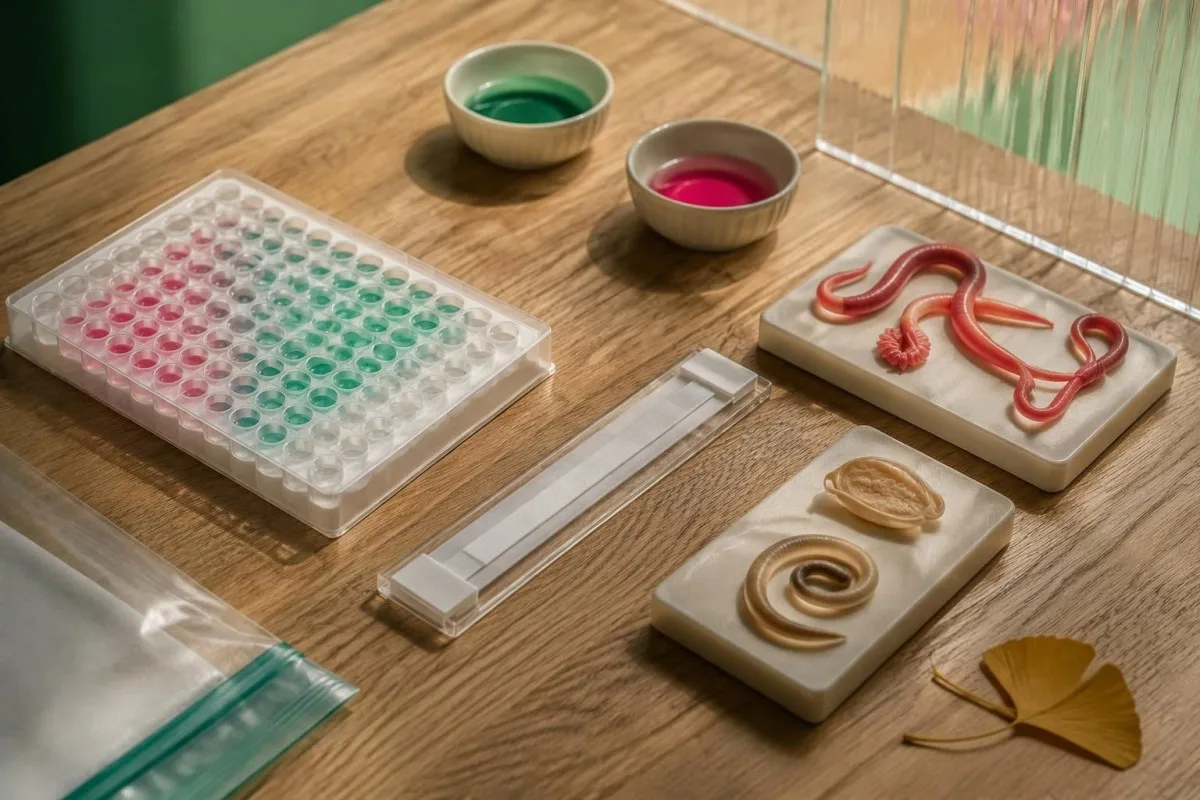
Cross-reactivity with other helminth antibodies depends on the test rather than occurring uniformly in every person. A laboratory may recommend an alternative assay or reference-laboratory review when the exposure history does not fit; 1 additional positive parasite antibody result also needs independent interpretation, as explained in our discussion of Toxocara antibody findings.
A hypothetical probability example shows why background risk matters: assume an imaginary test has 90% sensitivity and 95% specificity in 10,000 people, of whom 1% have the target infection. It would identify approximately 90 true positives and 495 false positives, so only about 15% of positive results would be true positives—these are teaching assumptions, not measured Schistosoma assay performance.
A high index should not be read as a high worm count, and a borderline index should not automatically be dismissed when exposure is strong. Ask for the assay name and the laboratory's interpretation of 1 equivocal or weakly positive result; confirmation with a different method can address assay uncertainty, but another antibody test still cannot reliably separate active infection from treated history.
Ano ang matitiyak ng mikroskopikong pagsusuri ng dumi at ihi?
Finding characteristic Schistosoma eggs provides direct parasitological evidence, whereas negative microscopy does not exclude a light infection. CDC recommends examining 3 stool or urine samples collected on different days to improve sensitivity, because egg output can be sparse and intermittent, particularly in travelers with a low parasite burden.
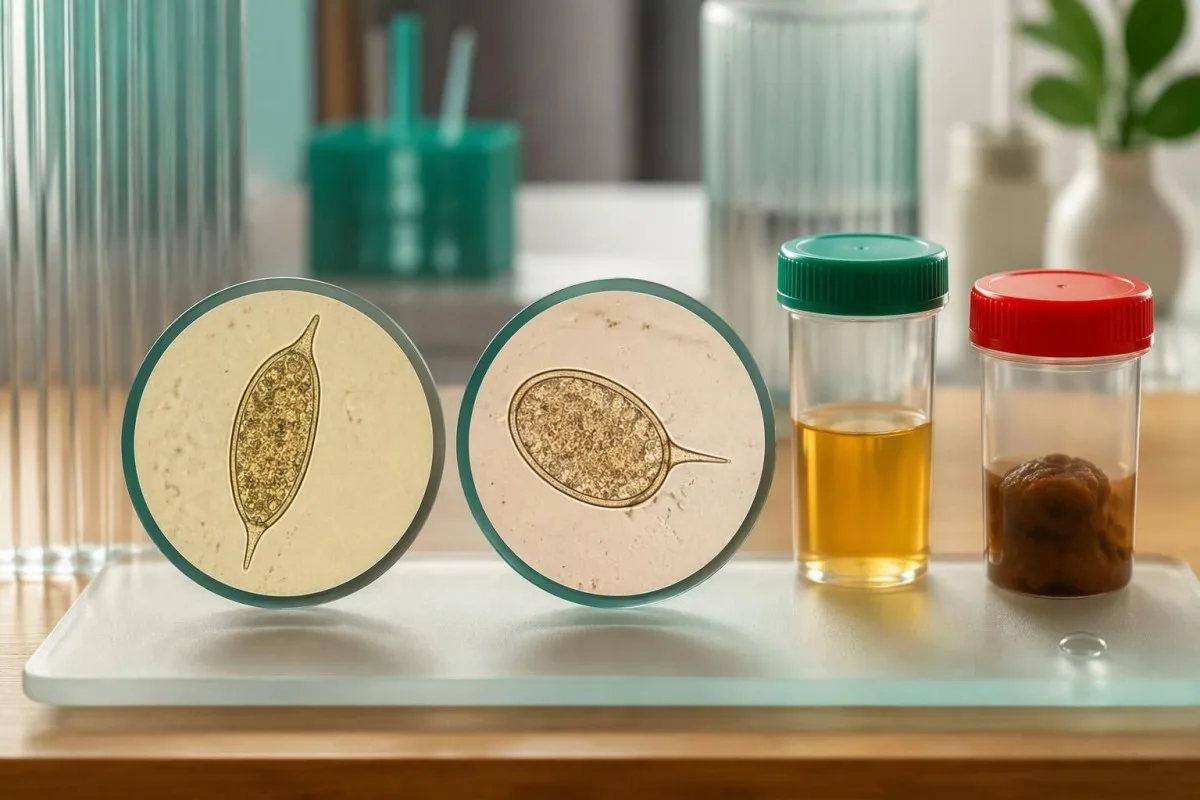
The suspected species determines specimen choice: S. mansoni and S. japonicum are usually investigated through stool, while S. haematobium is usually investigated through urine. Some exposure histories warrant both, so 1 negative stool examination does not address a possible urinary infection; interpretasyon ng urine sediment also explains why ordinary urinary findings are not equivalent to parasite identification.
Urinary egg excretion often peaks around midday, and laboratories may request a sample between approximately 12 noon and 3 pm. Urine filtration may use a measured volume such as 10 mL, but collection, transport and processing instructions vary; follow the receiving laboratory's protocol rather than improvising exercise, fluid restriction or a collection time.
Routine dipstick testing is not a substitute for a specific Schistosoma egg examination, and 1 routine stool pathogen panel may omit the parasite entirely. Check the exact tests ordered, including concentration or filtration methods when appropriate; our urinalysis method guide helps distinguish screening for cells and chemistry from targeted parasitology.
Mas malinaw bang naipakikita ng mga pagsusuri sa antigen o PCR ang aktibong impeksiyon?
Schistosoma antigen tests can provide evidence more closely linked to living worms than antibody tests, but access and performance differ. Circulating anodic antigen, or CAA, and circulating cathodic antigen, or CCA, are 2 distinct targets; PCR detects parasite DNA and needs interpretation according to specimen, timing and the laboratory method.
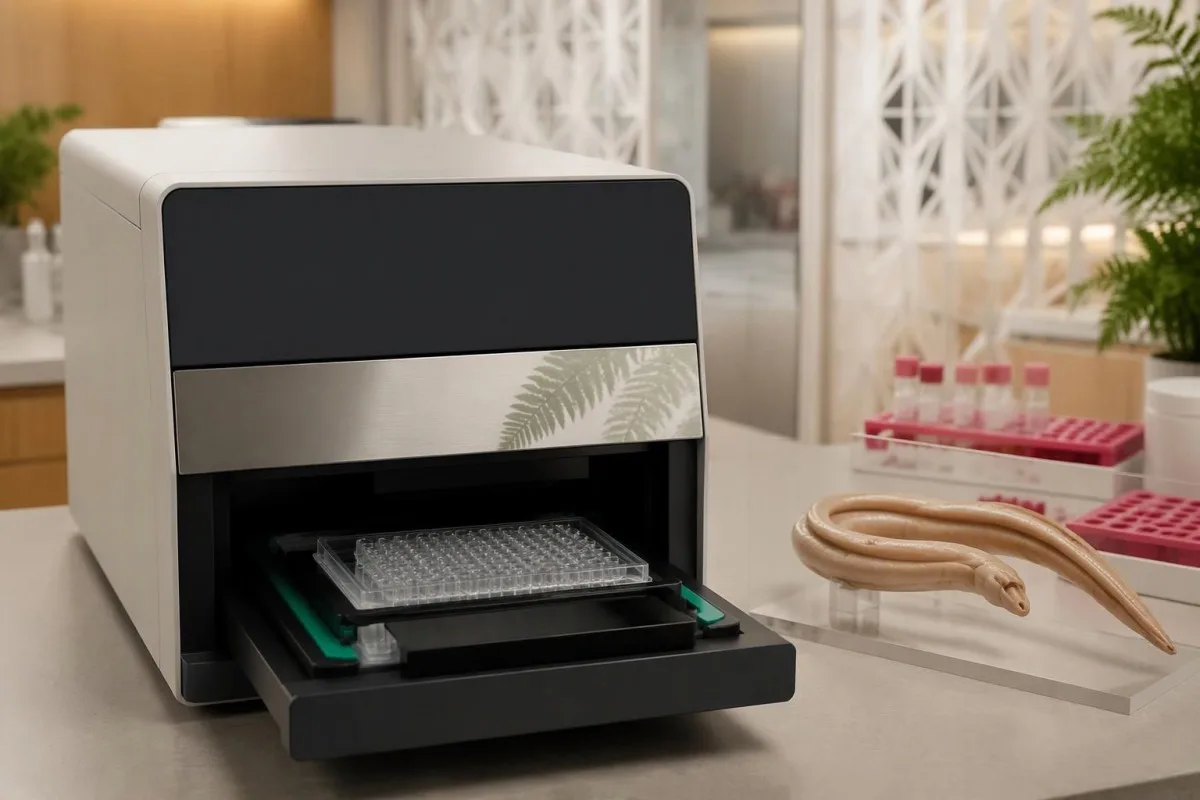
CAA assays can detect antigens released by living schistosomes, including some low-burden infections that microscopy misses. Urine CCA testing is used especially for S. mansoni, but trace readings and performance for other species complicate interpretation; 1 negative point-of-care CCA test should not be treated as a universal exclusion of urinary or intestinal schistosomiasis.
PCR may support diagnosis when microscopy is negative, but DNA detection is not identical to proving that every detected parasite component remains viable after treatment. The specimen matters—serum, stool and urine are not interchangeable—and 1 positive molecular result must be interpreted against the laboratory's validated application; antibodies versus direct detection illustrates this distinction in a different parasitic condition.
Kantesti is an AI lab test interpretation service that can explain the difference between 2 reports labeled Schistosoma IgG and Schistosoma PCR without treating them as interchangeable evidence. Our mga pamamaraan ng interpretasyon ng AI do not replace reference-laboratory expertise, and an antigen test's usefulness depends on whether the local service can obtain and validate it for your clinical question.
Aling mga kasabay na resulta sa dugo at ihi ang mahalaga?
Eosinophilia, urinary abnormalities and signs of organ involvement can strengthen the case for further assessment, but none proves schistosomiasis alone. An absolute eosinophil count above approximately 0.5 × 10⁹/L is commonly considered elevated; a normal count does not exclude infection, especially outside the early immune-response phase.
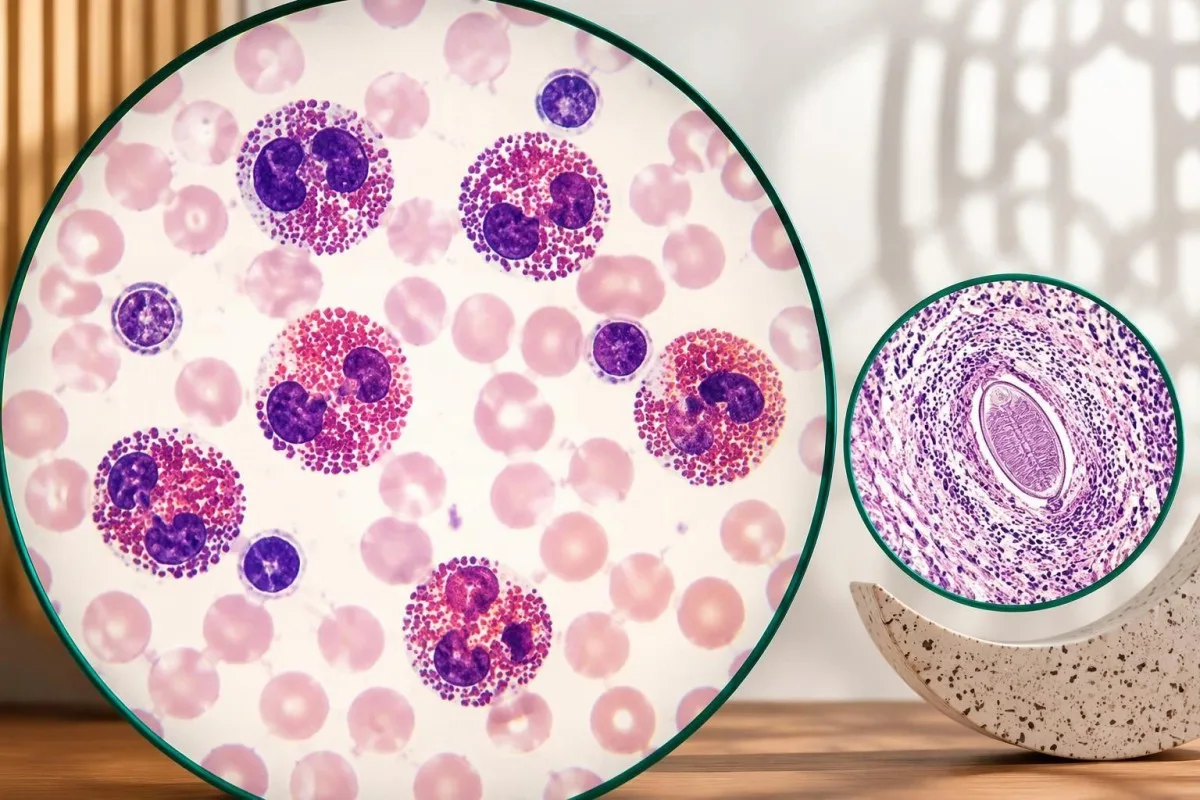
The absolute eosinophil count is usually more informative than the percentage because a percentage depends on the other white-cell populations. A hypothetical count of 0.8 × 10⁹/L may reflect schistosomiasis, another parasite, allergy or a medicine effect; persistent counts at or above 1.5 × 10⁹/L generally warrant broader evaluation, as discussed in our eosinophil count guide.
Normal liver enzymes do not reliably exclude hepatosplenic schistosomiasis because periportal fibrosis and portal hypertension can occur without the usual pattern of cirrhosis. For example, an ALT of 24 IU/L cannot overrule an enlarged spleen or suggestive ultrasound; interpretasyon ng liver panel explains why enzyme results answer different questions from structural imaging.
Blood in urine, protein in urine, persistent diarrhea or genital symptoms can change which investigations are appropriate. At Kantesti, we encourage keeping at least 3 evidence categories separate—exposure, parasite tests and organ findings—because a positive antibody result should not obscure a urinary obstruction, significant anemia or another explanation that requires its own assessment.
Bakit maaaring irekomenda ang paggamot kapag negatibo ang mikroskopikong pagsusuri?
Clinicians may treat a seropositive person with credible exposure and no adequate treatment history despite negative microscopy. This approach recognizes that light infections can escape egg detection and untreated adult worms can persist for years; the decision balances 3 factors: exposure probability, diagnostic limitations and the person's treatment risks.
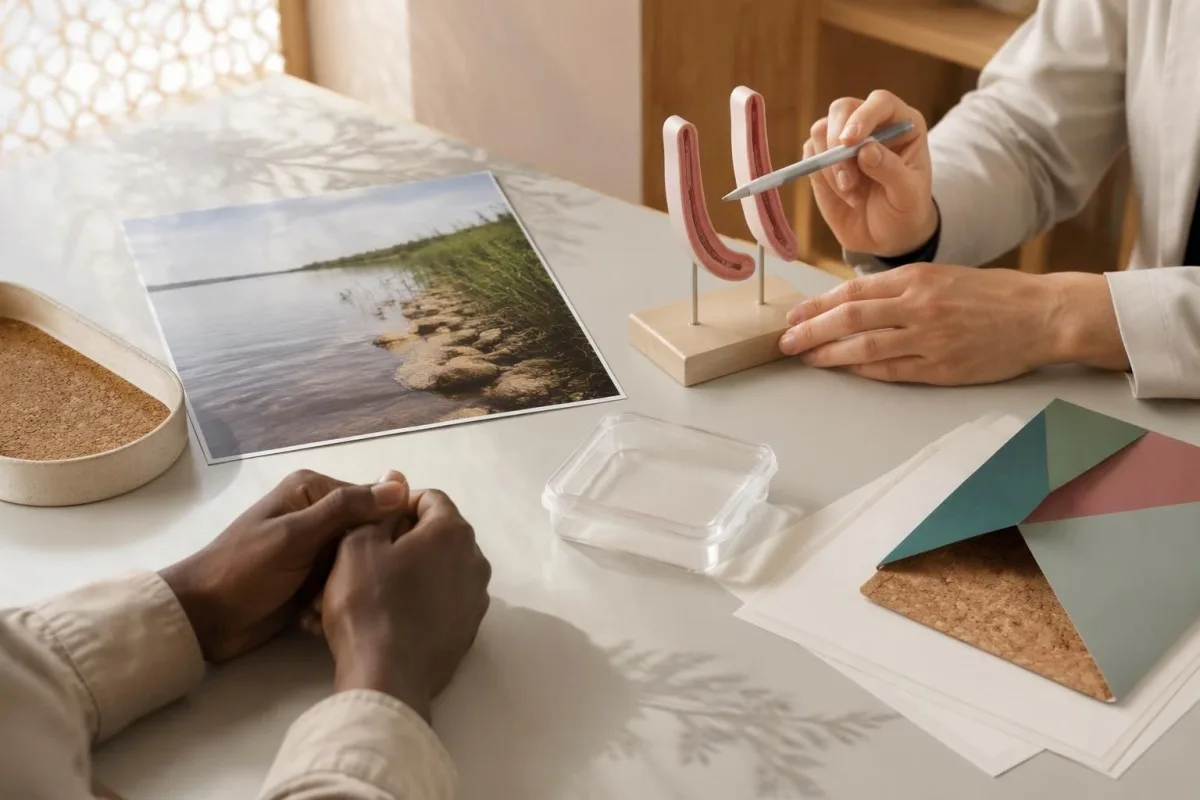
Absence of symptoms does not establish absence of infection or eliminate the potential benefit of treatment. A hypothetical traveler tested 10 weeks after a lake swim, with positive IgG and 3 negative stool examinations, may still be offered praziquantel if the exposure was credible and no earlier treatment occurred; negative microscopy lowers certainty but does not settle the question.
Documented earlier treatment changes the reasoning, particularly when no freshwater re-exposure has occurred. A person with a positive test 5 years after an appropriately timed course does not automatically need another course; the clinician should investigate whether treatment was complete, whether the initial infection was confirmed and whether any symptoms or direct tests now suggest persistence.
Visible blood in urine requires assessment even when Schistosoma antibodies are positive, because 1 parasite result does not exclude stones, other infections or cancer. Chronic urinary schistosomiasis is associated with increased bladder cancer risk, but risk is not diagnosis; our guide to bladder warning symptoms explains why persistent or recurrent urinary changes deserve separate attention.
Paano pinipili ang dosis ng praziquantel at oras ng paggamot?
Praziquantel is the standard medicine for schistosomiasis, but dose and timing depend on species and clinical circumstances. CDC's Clinical Care of Schistosomiasis guidance lists 40 mg/kg over 1 day in 2 divided doses for S. mansoni, S. haematobium and S. intercalatum, and 60 mg/kg in 3 divided doses for S. japonicum and S. mekongi.
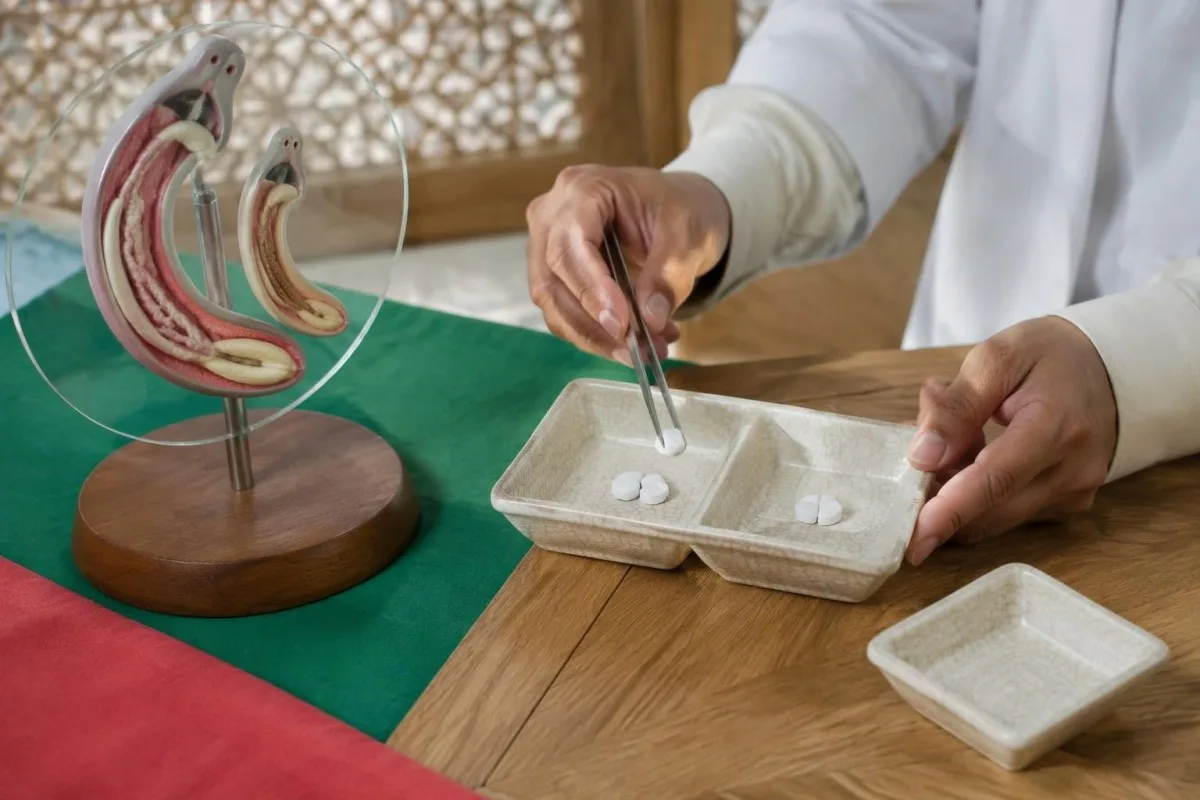
Praziquantel works best against mature worms, so otherwise stable travelers are generally treated at least 6–8 weeks after their last freshwater exposure. Taking it immediately after a swim is not reliable preventive treatment; if a course was given very early, the clinician may plan another course after maturation rather than assuming the initial prescription covered all developing worms.
A clearly hypothetical calculation illustrates a 40 mg/kg regimen: a 60 kg adult would receive 2,400 mg total over 1 day, split into 2 doses of 1,200 mg. Where 600 mg tablets are supplied, that arithmetic corresponds to 2 tablets per dose, but it is not an individual prescription—species, available formulation, rounding, swallowing ability and medical history must be checked.
Repeat treatment after 2–4 weeks may be appropriate in selected patients, especially with light infections or concerns about an incomplete response; it is not required solely because IgG remains positive. Medication review matters because rifampicin and enzyme-inducing antiseizure medicines can reduce praziquantel exposure, so patients taking carbamazepine should bring their regimen and any carbamazepine monitoring information rather than adjusting either medicine themselves.
Aling mga sintomas ang nangangailangan ng agarang pagsusuri o emerhensiyang pangangalaga?
Fever after travel needs prompt assessment, and new weakness, seizures or bladder-control changes need emergency evaluation. Acute schistosomiasis can cause fever, cough, rash, diarrhea and eosinophilia around 2–8 weeks after exposure, but these symptoms overlap with other conditions and cannot be diagnosed from antibodies alone.
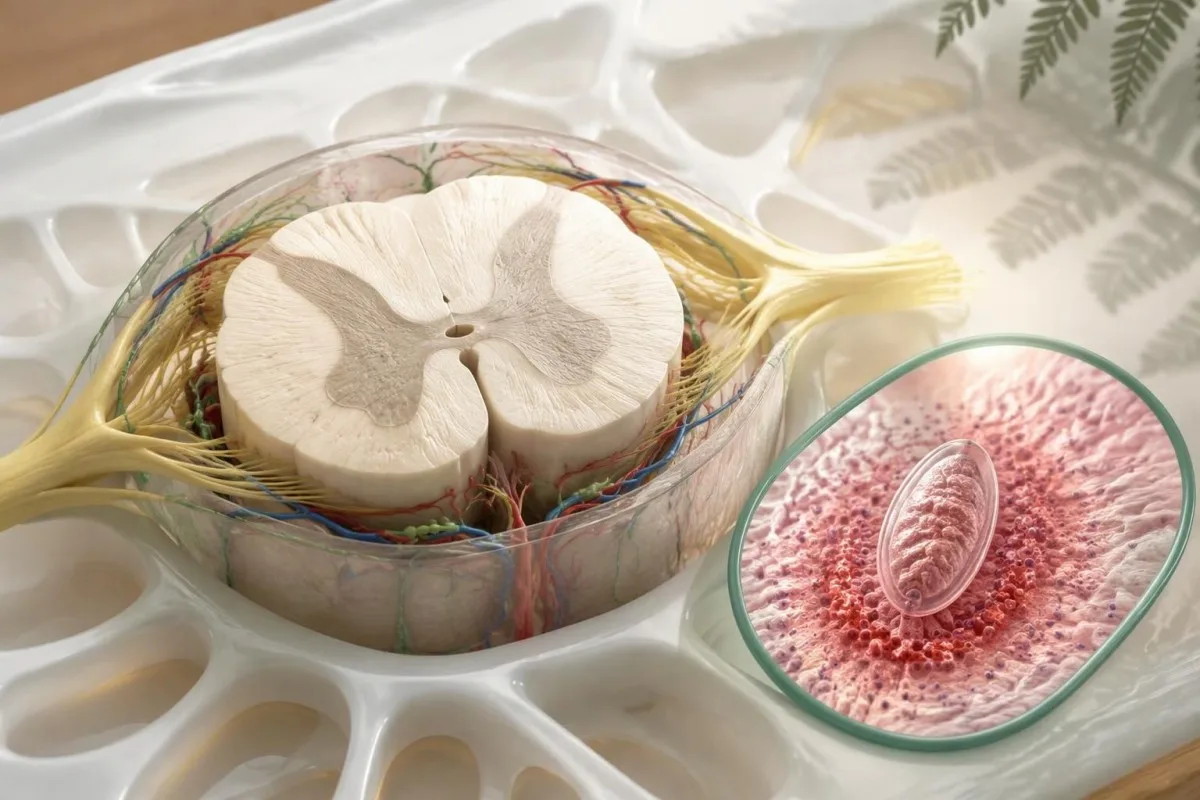
New leg weakness, difficulty walking, urinary retention or loss of bowel control can signal spinal cord involvement and should not wait for routine repeat serology. Schistosoma eggs can occasionally affect neurological tissue, but 1 positive antibody result does not establish the cause; emergency clinicians may need imaging and a broad differential diagnosis before specialist treatment is selected.
Acute systemic or neurological schistosomiasis may require specialist-directed corticosteroids alongside a carefully timed antiparasitic plan. If the exposure history also suggests Strongyloides, assess that possibility before immunosuppression when feasible, because steroids can precipitate dangerous hyperinfection; a Strongyloides IgG result needs its own management rather than assuming 1 antiparasitic medicine treats both organisms.
Fever after a malaria-risk itinerary should be assessed the same day, even if Schistosoma antibodies offer a plausible alternative explanation. Do not wait 6–8 weeks for repeat serology when there is persistent high fever, breathing difficulty, confusion, fainting, significant gastrointestinal bleeding or inability to pass urine; the immediate priority is identifying and treating the acute problem.
Paano binabago ng pagbubuntis, pagkabata at iba pang kondisyon ang pangangalaga?
Pregnancy, young age and complex illness require individualized treatment decisions rather than automatically withholding or prescribing praziquantel. The WHO guideline on control and elimination of human schistosomiasis (2022) supports preventive treatment from age 2 years and includes pregnant women after the first trimester and lactating women in eligible programs.
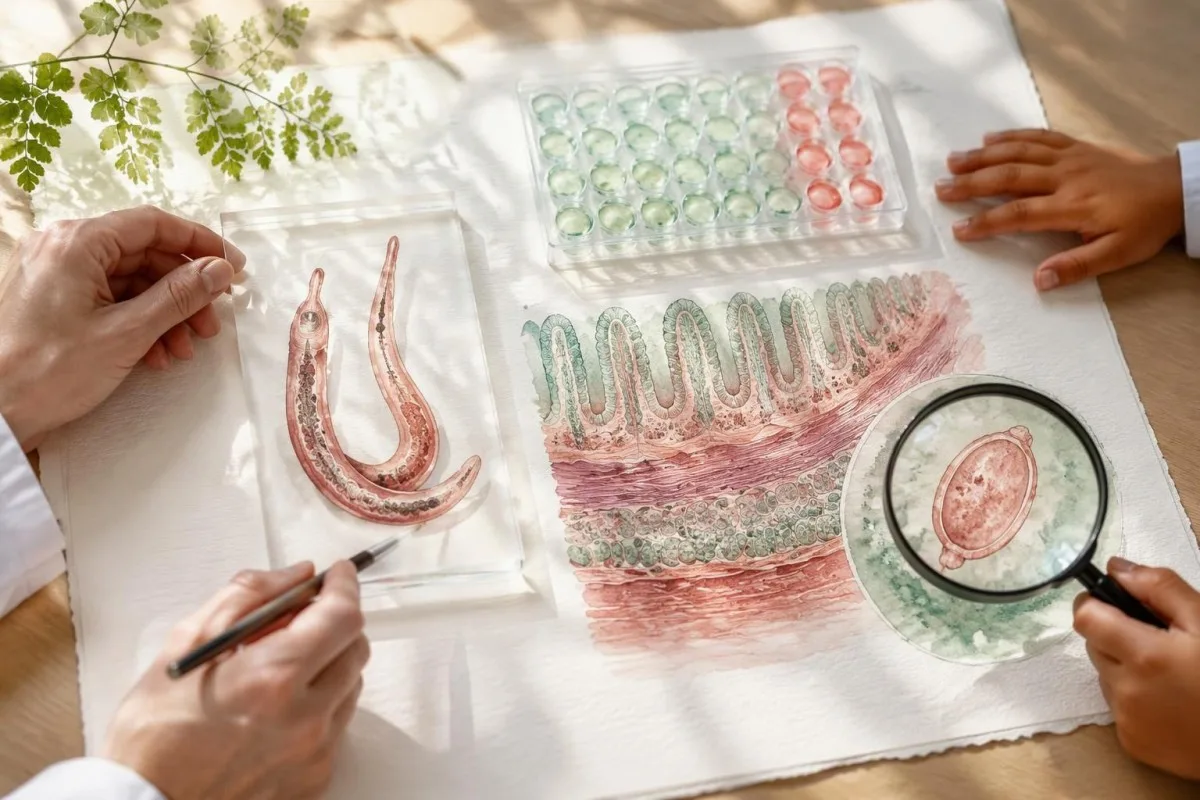
WHO program recommendations and treatment of an individual imported infection answer related but different questions. A hypothetical patient at 10 weeks of pregnancy needs a clinician-led balance of infection likelihood, severity and treatment timing; the recommendation to include pregnancy after the first trimester in preventive programs should not be turned into a blanket rule for every symptomatic patient.
Children's dosing requires an accurate weight and a formulation they can take safely; adult tablet arithmetic is not enough. WHO's inclusion of children aged 2 years and older in preventive chemotherapy does not make every product licensed for every younger age in every country, and our discussion of children's interpretation limits explains why pediatric results need age-specific clinical oversight.
A history of seizures, possible cysticercosis, significant liver disease or neurological symptoms should be reviewed before treatment. For 1 person with a straightforward travel-acquired infection, routine outpatient prescribing may be appropriate; another with possible central nervous system involvement may need specialist planning because the immune response to parasite treatment can itself affect symptoms.
Bakit maaaring manatiling positibo ang Schistosoma IgG matapos ang matagumpay na paggamot?
Schistosoma IgG can remain positive for years after successful treatment and is not a reliable test of cure. CDC recommends considering repeat stool or urine examination 1–2 months after treatment when eggs were detected before treatment; follow-up must match the evidence used to establish infection and the person's subsequent clinical course.
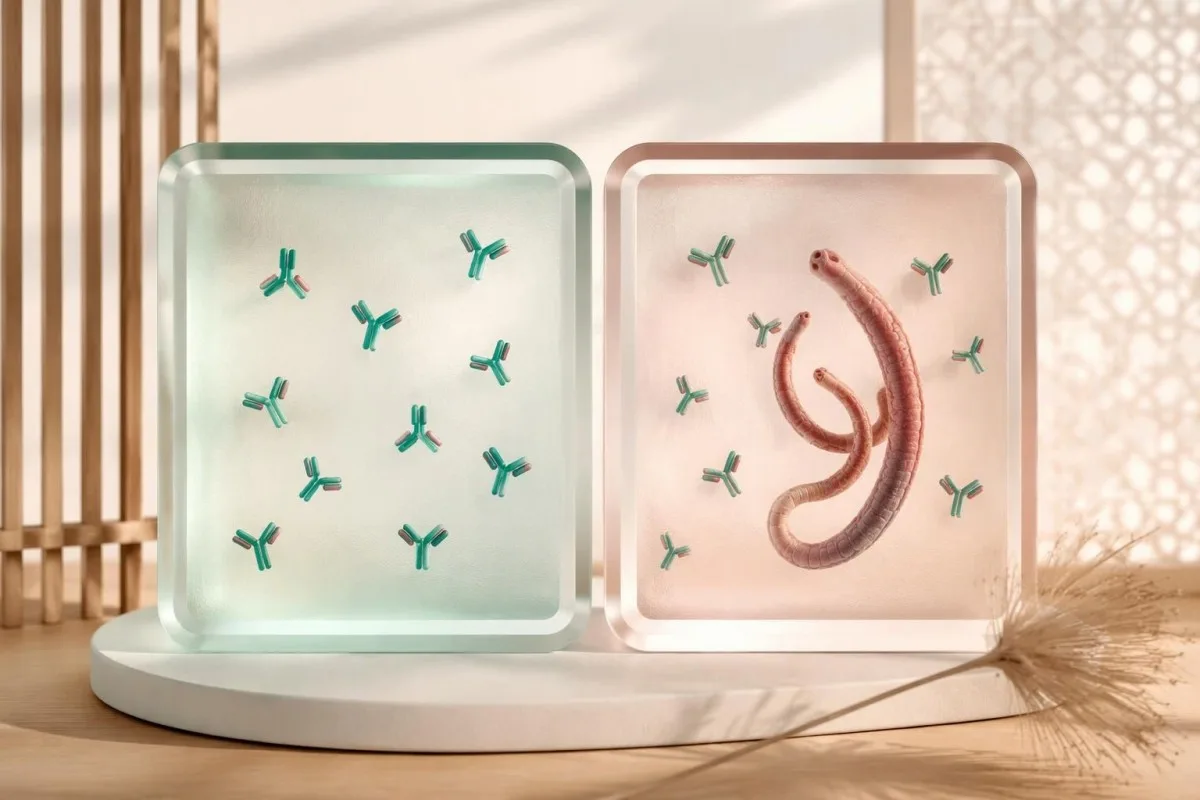
A positive IgG result 6 months after treatment does not, by itself, demonstrate treatment failure. Antibody decline varies, and a stable or temporarily higher signal cannot reliably quantify surviving worms; comparing results from 2 different laboratories adds assay differences, making numerical trend interpretation even less suitable for declaring cure.
Persistent symptoms or eosinophilia deserve reassessment, but neither automatically proves living Schistosoma remain. If eggs are still found at the 1–2 month follow-up, specialists may consider egg viability, collection details, treatment timing and whether another course is needed; PCR positivity can also require caution because detecting parasite DNA is not the same as identifying viable adult worms.
Kantesti can help organize 3 follow-up dates—treatment, specimen collection and any re-exposure—without labeling persistent IgG as treatment failure. Our gabay sa pagsusuri ng trend ng gamot explains why trends must be matched to the right clinical endpoint; an available validated antigen assay may be more useful than serial antibodies, but its follow-up schedule belongs to the treating service.
Paano maaaring humantong sa magkakaibang pasiya ang parehong positibong resulta?
The same positive Schistosoma IgG result can lead to treatment, additional testing or observation because the surrounding evidence differs. The following 4 examples are hypothetical teaching scenarios—not patient encounters—and illustrate how exposure dates, prior therapy, assay uncertainty and organ findings can outweigh the apparent simplicity of a positive flag.
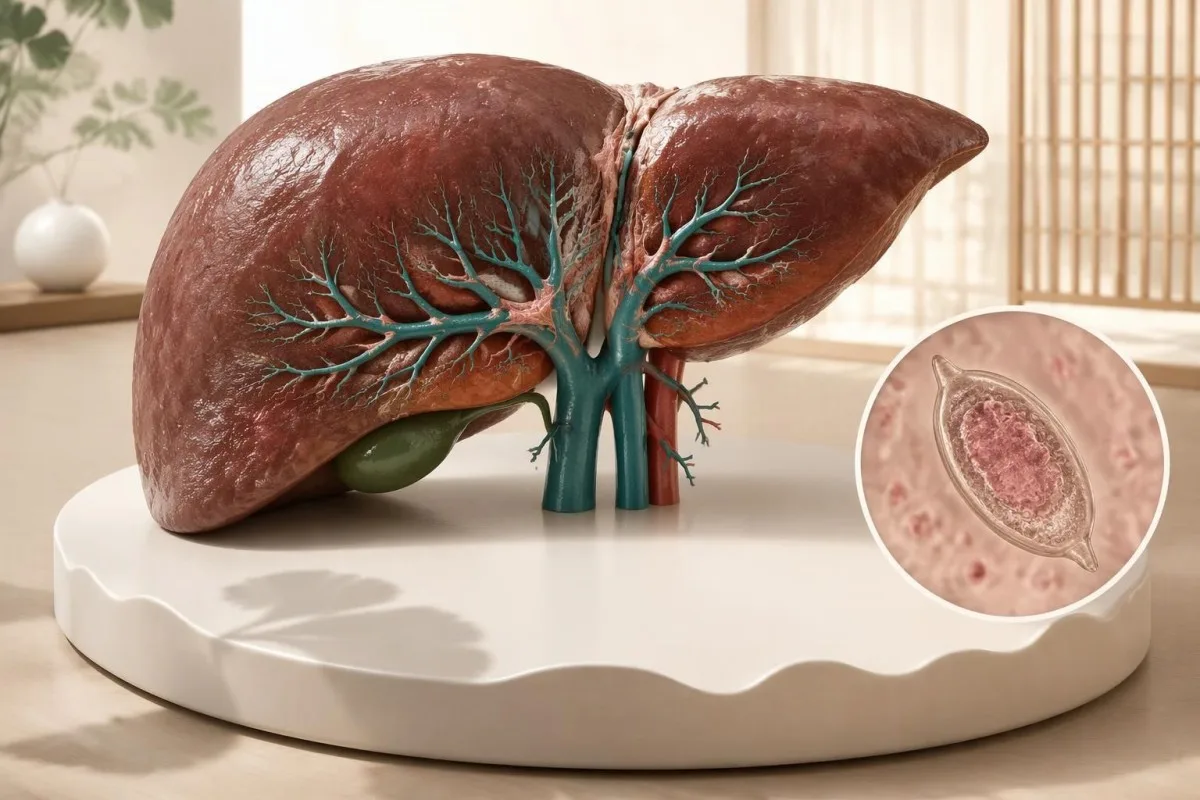
A hypothetical 28-year-old returns from a freshwater swim, tests positive 10 weeks later and has never received praziquantel; treatment may be reasonable despite negative microscopy. A hypothetical 44-year-old treated appropriately 4 years earlier, with no further exposure and no concerning findings, may not need retreatment; the timeline of laboratory results helps keep these histories distinct.
A hypothetical 35-year-old with no plausible freshwater exposure has a weakly positive screening assay and normal supporting investigations. The next step may be checking the original indication, assay and cross-reactivity rather than immediate treatment; changing a report from weak positive to strong positive on 1 repeat antibody assay still does not create a documented exposure or prove active infection.
A hypothetical 54-year-old who lived near endemic freshwater 20 years earlier has positive IgG, an enlarged spleen and an ALT of 24 IU/L within the local range. That combination merits assessment for portal and other organ disease despite normal enzymes; an old exposure is not automatically resolved, and common liver fibrosis scores should not be assumed validated for schistosomal periportal fibrosis.
Ano ang dapat mong dalhin sa follow-up, at aling mga sanggunian ang sumusuporta sa pangangalaga?
Bring your exposure history, complete laboratory report and treatment record to a clinician experienced in travel medicine, infectious diseases or tropical medicine. Prepare 3 questions: whether the result fits your exposure, which direct tests could change the decision and how treatment response will be assessed without relying on antibody disappearance.
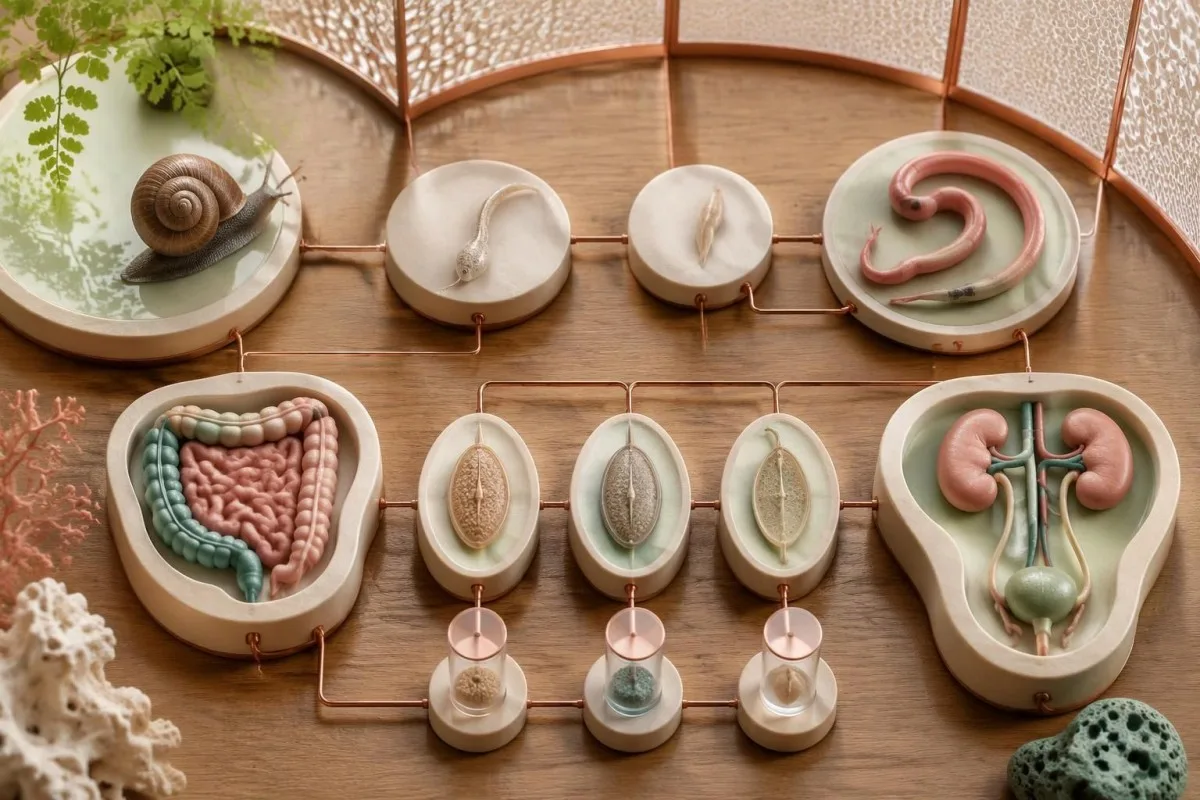
Your report should retain the assay name, units or index, reference interpretation and collection date, rather than only a cropped positive flag. Add 1 concise exposure timeline, previous praziquantel doses and dates, current medicines, pregnancy status where relevant and any urinary or neurological symptoms; this makes uncertainty visible and reduces the chance of repeating an uninformative antibody test.
Kantesti is an AI blood test interpretation platform that helps explain why 1 Schistosoma antibody result must be considered alongside exposure and treatment history, not used as a prescribing instruction. Our klinikal na framework ng validation describes methodology and oversight, while our privacy at pangangasiwa ng datos information explains how to review data choices before sharing a travel or laboratory record.
The 2 Zenodo publications below describe Kantesti's validation framework and aggregate platform reporting; they are not clinical schistosomiasis guidelines and do not establish the sensitivity of a Schistosoma assay. Clinical recommendations in this article draw on CDC diagnostic and treatment guidance and the WHO guideline (2022), with our mga pamantayan sa nilalamang medikal distinguishing published evidence, hypothetical calculations and the limits of AI-supported explanation.
Mga Madalas Itanong
Nangangahulugan ba ang positibong resulta ng Schistosoma IgG na mayroon akong aktibong impeksiyon?
0. Hindi maaasahang matutukoy ng positibong resulta ng Schistosoma IgG kung aktibo ang impeksiyon o kung nagamot na ito dati. Maaaring manatiling natutukoy ang mga antibody sa loob ng maraming taon, kaya dapat bigyang-kahulugan ang 1 positibong ulat kasabay ng kasaysayan ng pagkakalantad sa tubig-tabang at paggamot. Maaaring gumamit ang mga clinician ng mikroskopya ng dumi o ihi, pagsusuri ng antigen o PCR kung naaangkop upang makakuha ng mas direktang ebidensiya. Maaaring bigyang-katwiran ng kapani-paniwalang pagkakalantad nang walang sapat na naunang paggamot ang paggamot kahit negatibo ang mikroskopya.
Maaari ba akong magkaroon ng schistosomiasis kahit negatibo ang mga pagsusuri sa dumi at ihi?
Hindi inaalis ng negatibong mikroskopikong pagsusuri ng dumi o ihi ang posibilidad ng schistosomiasis, lalo na pagkatapos bumiyahe kung maaaring mababa ang dami ng parasito. Inirerekomenda ng CDC na suriin ang 3 sample na kinolekta sa magkakaibang araw dahil maaaring hindi tuluy-tuloy ang paglabas ng mga itlog. Tinutukoy rin ng pinaghihinalaang species kung dumi, ihi o pareho ang dapat suriin. Maaari pa ring magrekomenda ng paggamot ang isang clinician kapag positibo ang mga antibody, kapani-paniwala ang pagkakalantad at walang dokumentasyon ng sapat na naunang paggamot.
Gaano katagal pagkatapos malantad sa tubig-tabang ako dapat magpasuri?
0 Inirerekomenda ng CDC ang pagkolekta ng mga sample para sa pagsusuri ng antibody laban sa Schistosoma nang hindi bababa sa 6–8 linggo matapos ang pinaghihinalaang bagong impeksiyon. Gamitin ang huling pakikisalamuha sa tubig-tabang bilang praktikal na batayan kung maraming pagkakalantad ang naganap sa isang biyahe. Maaaring kailangang ulitin ang mga naunang negatibong resulta dahil maaaring hindi pa matukoy ang mga antibody. Nangangailangan ng agarang pagsusuri ang lagnat o iba pang malulubhang sintomas sa halip na hintayin ang panahong ito para sa pagsusuri.
Bakit positibo pa rin ako sa pagsusuri para sa mga antibody laban sa Schistosoma pagkatapos uminom ng praziquantel?
Maaaring manatiling positibo ang mga antibody laban sa Schistosoma sa loob ng maraming taon matapos ang matagumpay na paggamot gamit ang praziquantel dahil mas matagal ang tugon ng immune system kaysa sa parasito. Ang positibong resulta 6 na buwan matapos ang paggamot ay hindi, sa ganang sarili, nagpapatunay na nabigo ang paggamot o nagbibigay-katwiran sa panibagong kurso nito. Kapag may natukoy na mga itlog bago ang paggamot, maaaring humiling ang mga clinician ng muling pagsusuri sa dumi o ihi pagkalipas ng 1–2 buwan. Mas nagbibigay ng impormasyon ang bagong pagkakalantad, mga nagpapatuloy na sintomas at mga resulta ng direktang pagsusuri kaysa sa pananatili ng mga antibody lamang.
Anong dosis ng praziquantel ang ginagamit para sa schistosomiasis?
Inililista ng CDC ang praziquantel na 40 mg/kg sa loob ng 1 araw, na hinahati sa 2 dosis, para sa S. mansoni, S. haematobium at S. intercalatum. Ang nakalistang regimen para sa S. japonicum at S. mekongi ay 60 mg/kg sa loob ng 1 araw, na hinahati sa 3 dosis. Karaniwang ginagamot ang mga manlalakbay na matatag naman ang kalagayan nang hindi bababa sa 6–8 linggo pagkatapos ng huling pagkakalantad sa tubig-tabang, dahil pinakamabisa ang praziquantel laban sa mga ganap nang uod. Kailangang piliin ng isang clinician ang regimen at suriin ang mga gamot, pagbubuntis, edad at posibleng pagkakasangkot ng sistema ng nerbiyos.
Maaari bang maging maling positibo ang positibong pagsusuri ng antibody laban sa Schistosoma?
Maaaring magbigay ng maling positibong resulta ang pagsusuri para sa mga antibody ng Schistosoma o mag-cross-react ito sa mga antibody laban sa ibang parasito, depende sa assay. Walang unibersal na halaga ng index na nagpapatunay ng aktibong impeksiyon, at maaaring gumamit ang 2 laboratoryo ng magkaibang paghahanda ng antigen at mga cutoff. Maaaring mangailangan ng pagsusuri ng laboratoryo o ibang paraan ng pagkumpirma ang mahinang positibong resulta kung walang kapani-paniwalang pagkakalantad sa tubig-tabang. Hindi pa rin maaasahang maihihiwalay ng paulit-ulit na pagsusuri sa mga antibody lamang ang nagamot nang impeksiyon noon mula sa mga buhay na uod.
Ipaliwanag sa iyo ang resulta ng blood test
I-upload ang iyong ulat sa laboratoryo at ipapaliwanag ng AI ng Kantesti ang bawat biomarker sa payak na pananalita sa loob ng ilang segundo. Ginagamit ng mahigit 2 milyong tao sa buong mundo.
Mga Sanggunian
- Klein, T., Mitchell, S., & Weber, H. (2026). Clinical Validation Framework v2.0 (Medical Validation Page). Kantesti AI Medical Research. DOI
- Klein, T., Mitchell, S., & Weber, H. (2026). AI Blood Test Analyzer: 2.5M Tests Analyzed | Global Health Report 2026. Kantesti AI Medical Research. DOI
- Centers for Disease Control and Prevention (2024). Clinical Testing and Diagnosis for Schistosomiasis. CDC Schistosomiasis Clinical Guidance.
- Centers for Disease Control and Prevention (2024). Clinical Care of Schistosomiasis. CDC Schistosomiasis Clinical Guidance.
- World Health Organization (2022). WHO guideline on control and elimination of human schistosomiasis. World Health Organization Guidelines.
- 2M+Mga sinuring pagsusuri
- 127+Mga bansa
- 100+Mga wika
Tungkol sa pangkat medikal


Mga Signal ng Tiwala ng E-E-A-T
Karanasan
Pinamumunuan ng manggagamot na klinikal na pagsusuri ng mga daloy ng interpretasyon ng mga pagsusuri sa laboratoryo.
Kadalubhasaan
Pokus sa laboratoryong medisina kung paano kumikilos ang mga biomarker sa kontekstong klinikal.
Pagka-awtoridad
Sinuri sa medikal na aspeto ni Dr. Thomas Klein, kasama ang mga kontribusyon nina Dr. Sarah Mitchell at Prof. Dr. Hans Weber.
Pagiging Mapagkakatiwalaan
Interpretasyong nakabatay sa ebidensya na may malinaw na mga susunod na hakbang upang mabawasan ang pag-aalarma.






Paunawang medikal
Ang artikulong ito ay para sa mga layuning pang-edukasyon lamang at hindi ito bumubuo ng medikal na payo. Palaging kumonsulta sa isang kwalipikadong tagapagbigay ng pangangalagang pangkalusugan para sa mga desisyon sa diagnosis at paggamot.
Inilathala · Makipag-ugnayan sa pangkat ng editoryal
Inilathala ng Kantesti Ltd, nakarehistro sa England at Wales, numero ng kumpanya. 17090423, London, United Kingdom.
