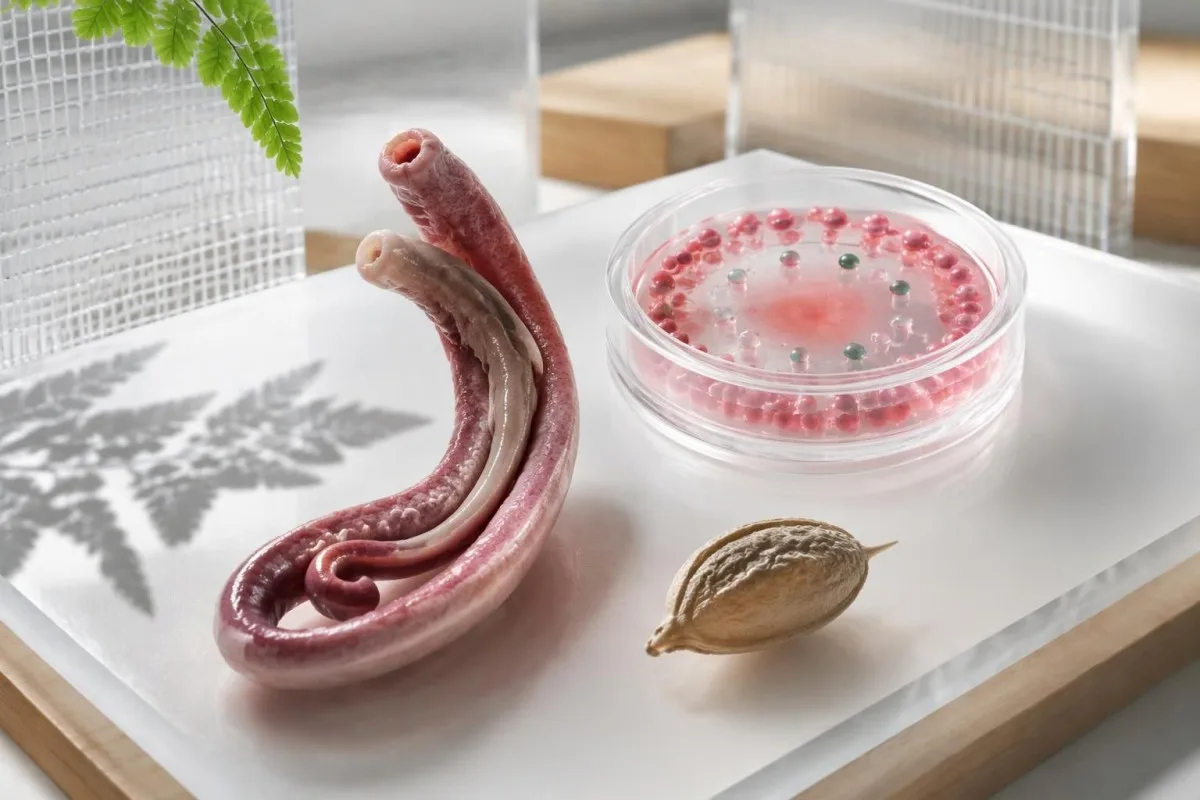
Позитивний результат тесту на антитіла до Schistosoma може бути підставою для лікування після достовірного контакту з прісною водою, якщо ви ніколи не проходили належного лікування, але він не може довести наявність активної інфекції чи підтвердити одужання. Наступний крок визначають дати контакту, попереднє лікування та додаткові обстеження.

Ключові висновки
- Позитивні антитіла свідчить про імунну відповідь на антигени Schistosoma; один позитивний результат не дає змоги відрізнити неліковану інфекцію від інфекції, яку лікували раніше.
- Вікно тестування має значення: CDC рекомендує брати зразки для визначення антитіл щонайменше через 6–8 тижнів після ймовірного зараження.
- Контакт із прісною водою означає контакт шкіри з потенційно забрудненими озерами, річками чи каналами, а не просто відвідування країни, де поширена хвороба.
- Мікроскопія є інформативнішою, коли лікарі призначають 3 зразки калу або сечі, зібрані в різні дні.
- Празиквантел зазвичай призначають у сумарній дозі 40 mg/kg протягом 1 дня при інфекції S. mansoni та S. haematobium, але призначення залежить від виду збудника та клінічних обставин.
- Час початку лікування зазвичай означає, що в мандрівників зі стабільним станом слід зачекати щонайменше 6–8 тижнів після останнього контакту з прісною водою, оскільки празиквантел найефективніший проти дорослих гельмінтів.
- Повторна мікроскопія можуть бути призначені через 1–2 місяці після лікування, якщо до лікування були наявні яйця.
- Стійкий позитивний IgG може залишатися позитивним роками після успішного лікування; ще один позитивний результат не є автоматичною підставою для повторного курсу.
Чи потребує позитивний результат тесту на антитіла до Schistosoma лікування?
Позитивний результат аналізу на антитіла до Schistosoma не означає автоматично, що вам потрібне лікування. Клініцисти часто рекомендують лікування, якщо контакт із прісною водою є достовірним, а належної попередньої терапії не було, навіть за негативної мікроскопії; після документально підтвердженого лікування без повторного контакту 1 стійкого позитивного результату зазвичай недостатньо, щоб обґрунтувати повторне лікування.
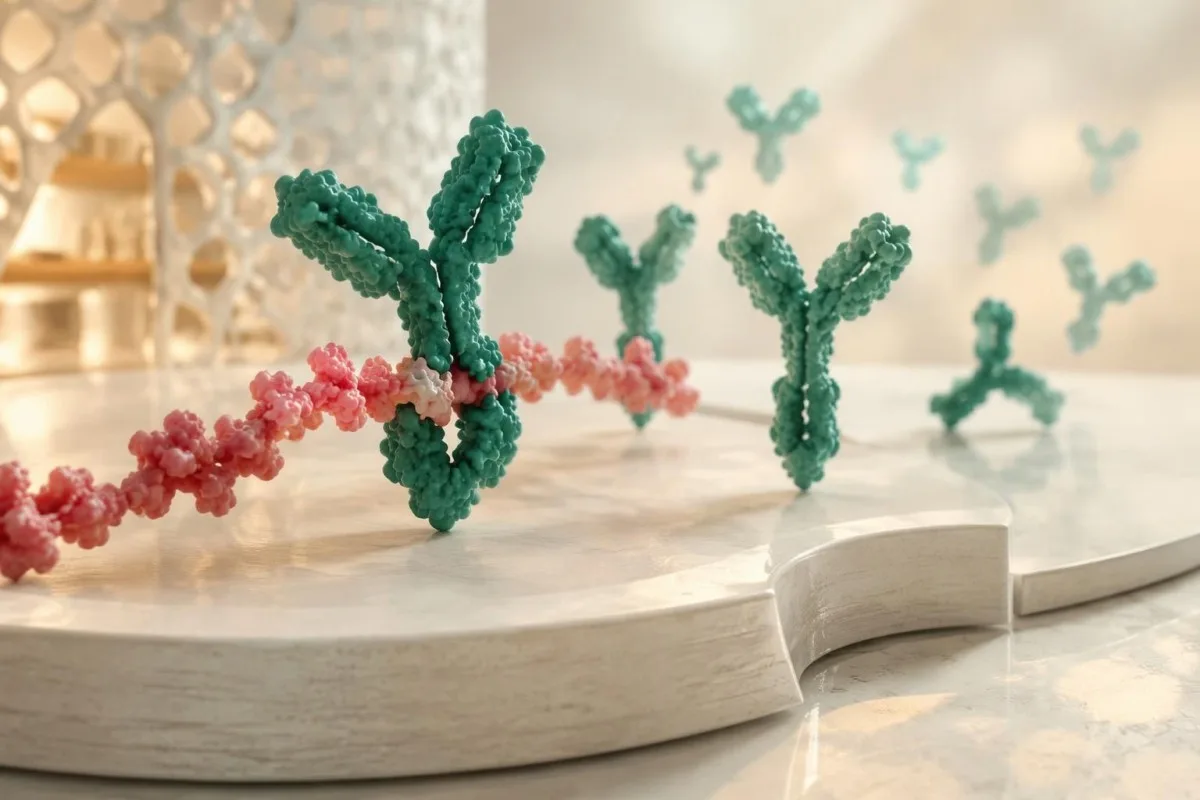
Що означає позитивний результат на Schistosoma IgG найкраще розуміти як свідчення розпізнавання імунною системою, а не як вимірювання кількості живих червів. Відповідь антитіл може зберігатися роками після зникнення паразита, а 2 людини з однаковим результатом аналізу можуть потребувати різної допомоги: одна — після нелікованого контакту, інша — після успішного лікування без подальшого контакту з прісною водою.
Попередній контакт і попереднє лікування — це окремі питання: давня інфекція може залишатися нелікованою, тоді як давній позитивний результат аналізу може зберігатися після одужання. Перш ніж тлумачити 1 висновок як ознаку активного захворювання або нешкідливе свідчення перенесеної інфекції, перевірте назву препарату, дозу, дату та будь-який подальший контакт із водою; наше пояснення позитивних результатів антитіл розрізняє ці різні види свідчень.
Kantesti — це ШІ-аналізатор аналізів крові, який допомагає пояснити, чому 1 позитивний результат на Schistosoma IgG не може підтвердити активну інфекцію, навіть якщо загальний аналіз крові в нормі. Наша роль — пояснення результатів аналізів, а не виявлення паразитів чи призначення лікування, і наш організація та мета слід розглядати окремо від рішень під керівництвом клініциста, описаних тут.
За якого контакту з прісною водою результат є переконливішим?
Контакт шкіри з прісною водою в зоні поширення інфекції надає позитивному результату більшого клінічного значення. Плавання, перехід убрід, купання, сплав на плотах або прання в озерах, річках і зрошувальних каналах можуть призвести до зараження; зафіксуйте 3 деталі кожного випадку: точне місце, заняття та дату останнього контакту.

Личинки Schistosoma, що вивільняються прісноводними равликами, проникають крізь шкіру; ковтати воду не потрібно. Навіть короткий перехід убрід вважається контактом, а відсутність сверблячого висипу не виключає його, тому уявний мандрівник, який заходив в озеро на 5 хвилин, має згадати про цей випадок, а не занотовувати лише триваліші запливи.
Морська вода та належним чином хлоровані басейни не є типовими джерелами зараження шистосомозом. Контакт із прісною водою також може викликати занепокоєння щодо інших захворювань, для діагностики та лікування яких застосовують інші підходи, зокрема лептоспіроз після контакту з водою; гарячку, що почалася через 1 тиждень після перебування на річці, не слід приписувати антитілам до Schistosoma без ширшого обстеження.
Сама лише назва країни не дає змоги встановити індивідуальний ризик, оскільки поширення інфекції різниться в різних регіонах країн і водоймах. Відновіть навіть 1 забутий епізод, наприклад миття спорядження біля річки, і відрізняйте контакт із паразитом від записів про вакцинацію; перевірка антитіл під час подорожі відповідає на інше запитання й не забезпечує захисту від шистосомозу.
Коли після подорожі слід проходити обстеження на шистосомоз?
Аналіз на антитіла до шистосомозу зазвичай інформативніший щонайменше через 6–8 тижнів після ймовірного нового зараження. Рекомендації CDC щодо клінічного тестування та діагностики шистосомозу пояснюють, що цей проміжок часу дає змогу виробитися антитілам; негативний результат, отриманий раніше, не дає змоги надійно виключити нещодавнє зараження через контакт із прісною водою.
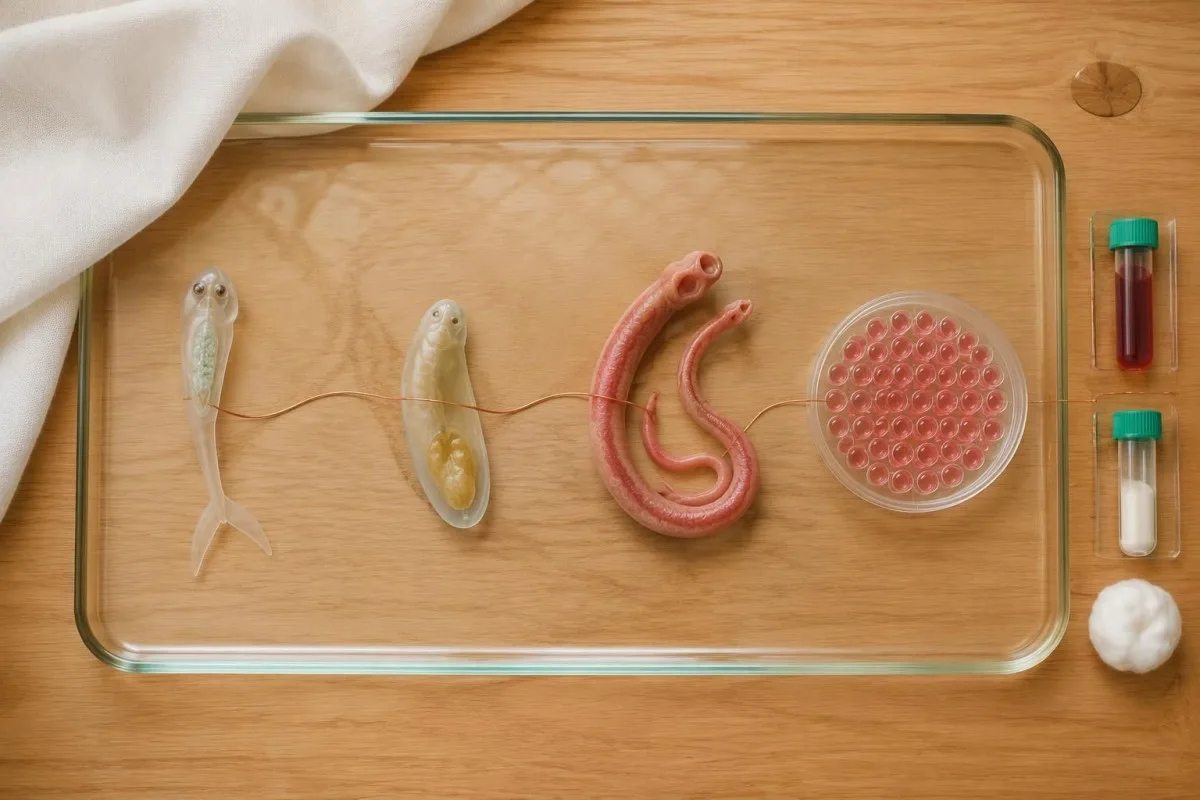
The last freshwater contact is a practical anchor when a trip involved several possible exposures. For example, a hypothetical traveler who swam on both the first and final day of a 3-week holiday should calculate the testing interval from the final swim, rather than assuming that the first exposure makes an immediate post-trip result conclusive.
Seroconversion is not identical across people or assays, so 6–8 weeks is a useful testing window rather than a guarantee of detection. When exposure is persuasive and an initial result is negative, a clinician may arrange another sample later, sometimes around 12 weeks after exposure; a second date should be agreed rather than inferred from a generic laboratory reference range.
Fever or significant symptoms after travel should be assessed without waiting for an antibody window to close, especially after a malaria-risk itinerary. At Kantesti, we encourage readers to keep 2 dates visible—last freshwater contact and sample collection—because час проведення тесту на інфекцію can change the meaning of a negative report even though each organism requires its own diagnostic strategy.
Чи можуть результати тесту на антитіла до Schistosoma бути хибнопозитивними?
Schistosoma antibody tests can produce false-positive or cross-reactive results, and their performance varies by assay. There is no universal IgG concentration or index that proves active schistosomiasis; 2 laboratories may use different antigen preparations, reporting units and thresholds, making direct numerical comparisons unreliable.
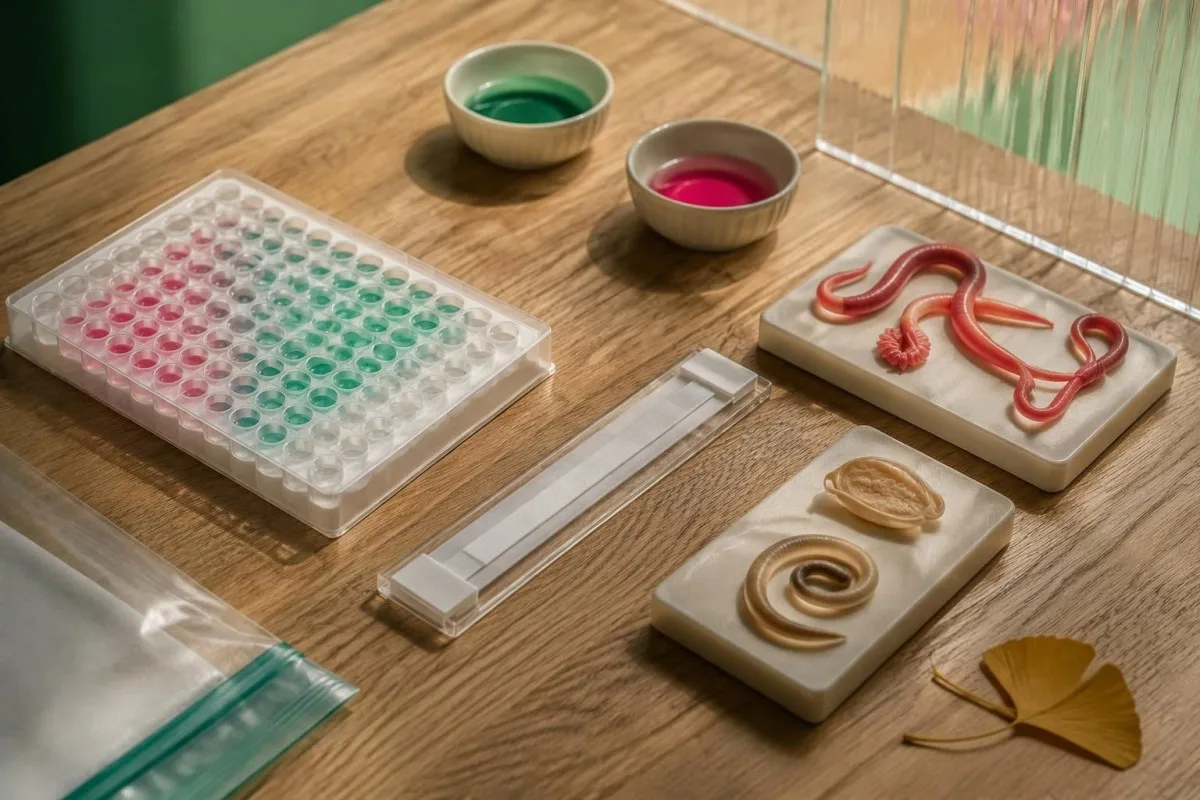
Cross-reactivity with other helminth antibodies depends on the test rather than occurring uniformly in every person. A laboratory may recommend an alternative assay or reference-laboratory review when the exposure history does not fit; 1 additional positive parasite antibody result also needs independent interpretation, as explained in our discussion of Toxocara antibody findings.
A hypothetical probability example shows why background risk matters: assume an imaginary test has 90% sensitivity and 95% specificity in 10,000 people, of whom 1% have the target infection. It would identify approximately 90 true positives and 495 false positives, so only about 15% of positive results would be true positives—these are teaching assumptions, not measured Schistosoma assay performance.
A high index should not be read as a high worm count, and a borderline index should not automatically be dismissed when exposure is strong. Ask for the assay name and the laboratory's interpretation of 1 equivocal or weakly positive result; confirmation with a different method can address assay uncertainty, but another antibody test still cannot reliably separate active infection from treated history.
Що можна встановити за допомогою мікроскопії калу й сечі?
Finding characteristic Schistosoma eggs provides direct parasitological evidence, whereas negative microscopy does not exclude a light infection. CDC recommends examining 3 stool or urine samples collected on different days to improve sensitivity, because egg output can be sparse and intermittent, particularly in travelers with a low parasite burden.
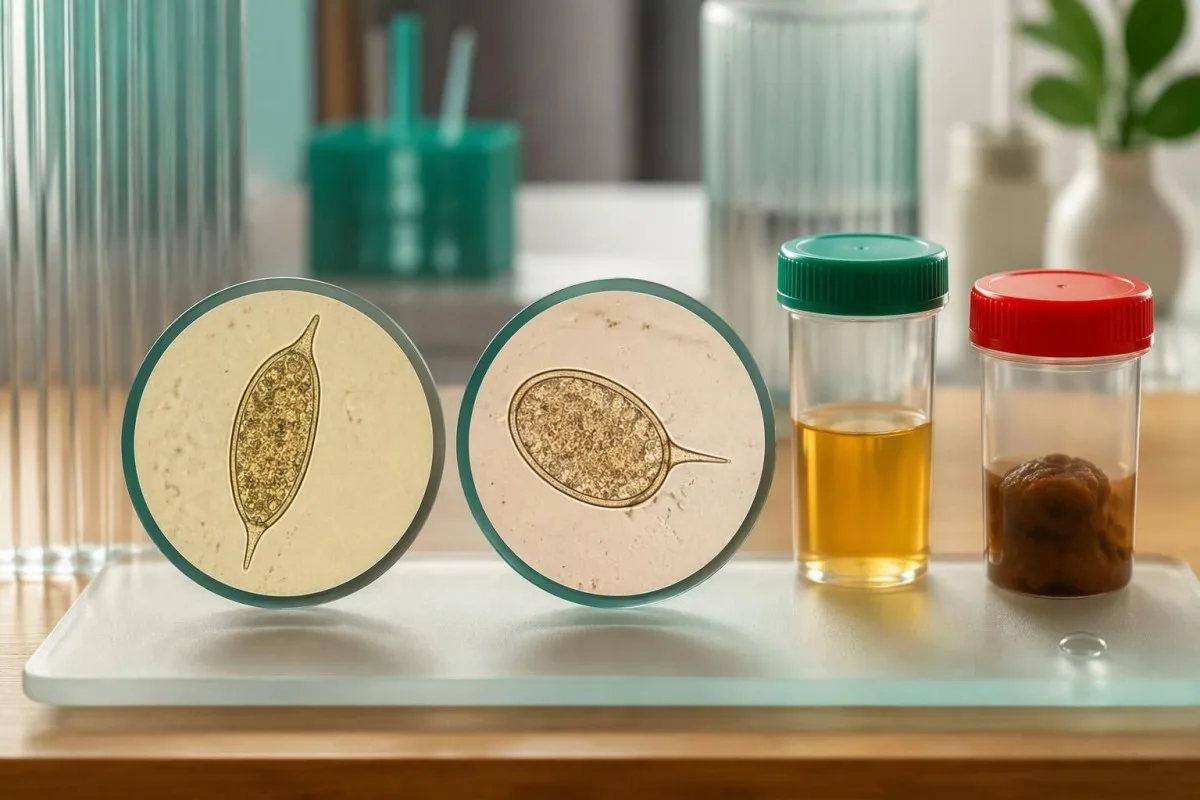
The suspected species determines specimen choice: S. mansoni and S. japonicum are usually investigated through stool, while S. haematobium is usually investigated through urine. Some exposure histories warrant both, so 1 negative stool examination does not address a possible urinary infection; інтерпретації осаду сечі also explains why ordinary urinary findings are not equivalent to parasite identification.
Urinary egg excretion often peaks around midday, and laboratories may request a sample between approximately 12 noon and 3 pm. Urine filtration may use a measured volume such as 10 mL, but collection, transport and processing instructions vary; follow the receiving laboratory's protocol rather than improvising exercise, fluid restriction or a collection time.
Routine dipstick testing is not a substitute for a specific Schistosoma egg examination, and 1 routine stool pathogen panel may omit the parasite entirely. Check the exact tests ordered, including concentration or filtration methods when appropriate; our urinalysis method guide helps distinguish screening for cells and chemistry from targeted parasitology.
Чи дають тести на антигени або ПЛР змогу чіткіше виявити активну інфекцію?
Schistosoma antigen tests can provide evidence more closely linked to living worms than antibody tests, but access and performance differ. Circulating anodic antigen, or CAA, and circulating cathodic antigen, or CCA, are 2 distinct targets; PCR detects parasite DNA and needs interpretation according to specimen, timing and the laboratory method.
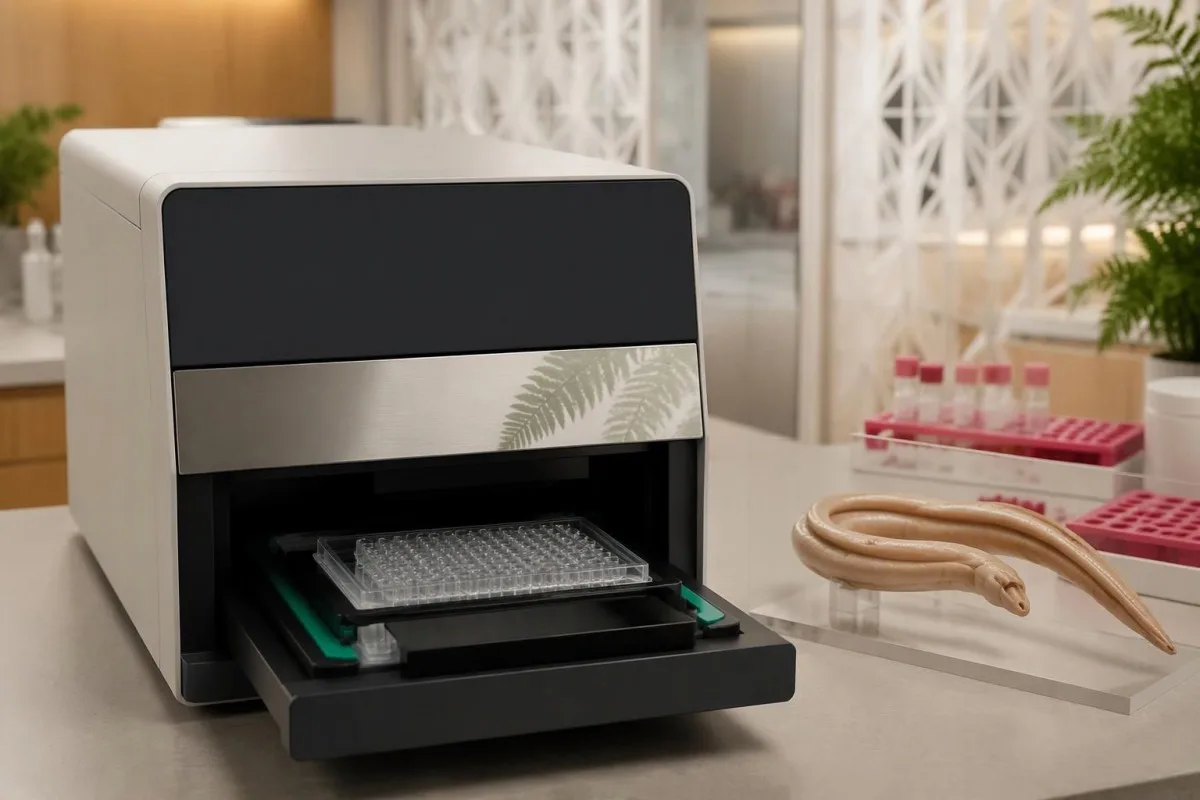
CAA assays can detect antigens released by living schistosomes, including some low-burden infections that microscopy misses. Urine CCA testing is used especially for S. mansoni, but trace readings and performance for other species complicate interpretation; 1 negative point-of-care CCA test should not be treated as a universal exclusion of urinary or intestinal schistosomiasis.
PCR may support diagnosis when microscopy is negative, but DNA detection is not identical to proving that every detected parasite component remains viable after treatment. The specimen matters—serum, stool and urine are not interchangeable—and 1 positive molecular result must be interpreted against the laboratory's validated application; antibodies versus direct detection illustrates this distinction in a different parasitic condition.
Kantesti is an AI lab test interpretation service that can explain the difference between 2 reports labeled Schistosoma IgG and Schistosoma PCR without treating them as interchangeable evidence. Our методах інтерпретації AI do not replace reference-laboratory expertise, and an antigen test's usefulness depends on whether the local service can obtain and validate it for your clinical question.
Які супутні зміни в аналізах крові й сечі мають значення?
Eosinophilia, urinary abnormalities and signs of organ involvement can strengthen the case for further assessment, but none proves schistosomiasis alone. An absolute eosinophil count above approximately 0.5 × 10⁹/L is commonly considered elevated; a normal count does not exclude infection, especially outside the early immune-response phase.
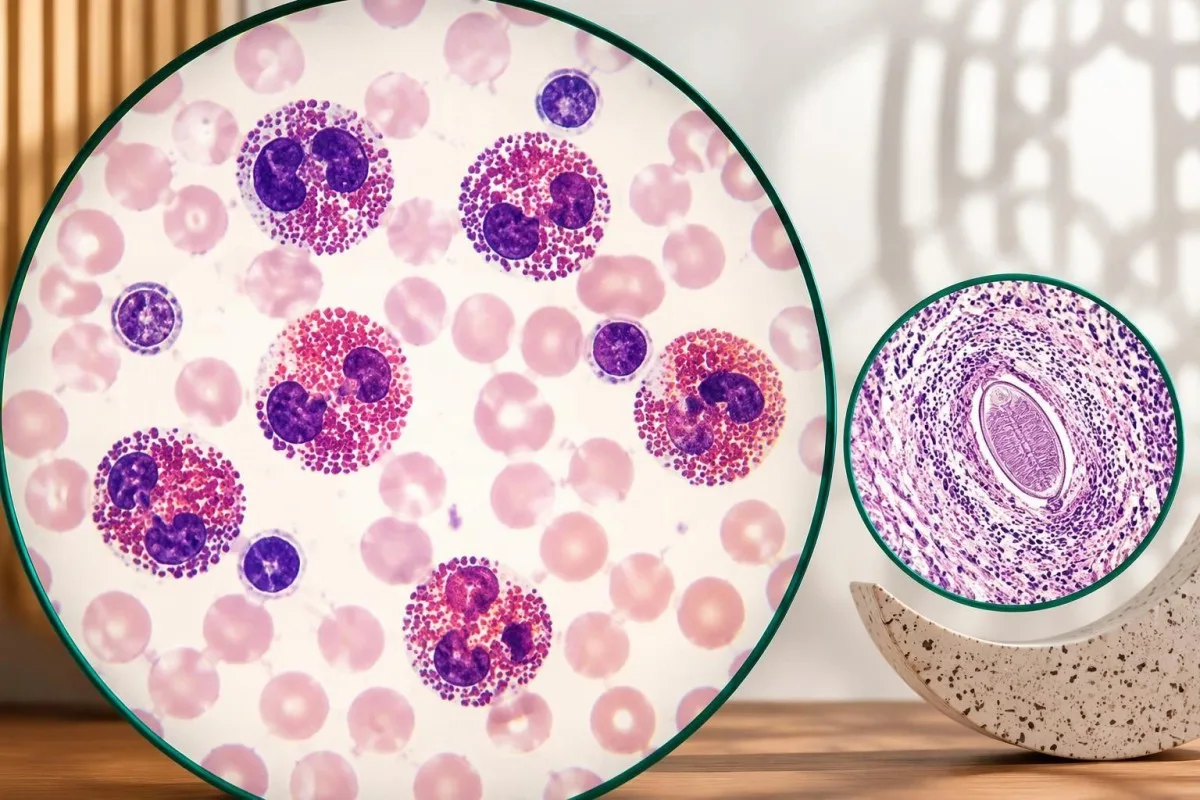
The absolute eosinophil count is usually more informative than the percentage because a percentage depends on the other white-cell populations. A hypothetical count of 0.8 × 10⁹/L may reflect schistosomiasis, another parasite, allergy or a medicine effect; persistent counts at or above 1.5 × 10⁹/L generally warrant broader evaluation, as discussed in our eosinophil count guide.
Normal liver enzymes do not reliably exclude hepatosplenic schistosomiasis because periportal fibrosis and portal hypertension can occur without the usual pattern of cirrhosis. For example, an ALT of 24 IU/L cannot overrule an enlarged spleen or suggestive ultrasound; інтерпретацією печінкової панелі explains why enzyme results answer different questions from structural imaging.
Blood in urine, protein in urine, persistent diarrhea or genital symptoms can change which investigations are appropriate. At Kantesti, we encourage keeping at least 3 evidence categories separate—exposure, parasite tests and organ findings—because a positive antibody result should not obscure a urinary obstruction, significant anemia or another explanation that requires its own assessment.
Чому лікування можуть призначити навіть за негативної мікроскопії?
Clinicians may treat a seropositive person with credible exposure and no adequate treatment history despite negative microscopy. This approach recognizes that light infections can escape egg detection and untreated adult worms can persist for years; the decision balances 3 factors: exposure probability, diagnostic limitations and the person's treatment risks.
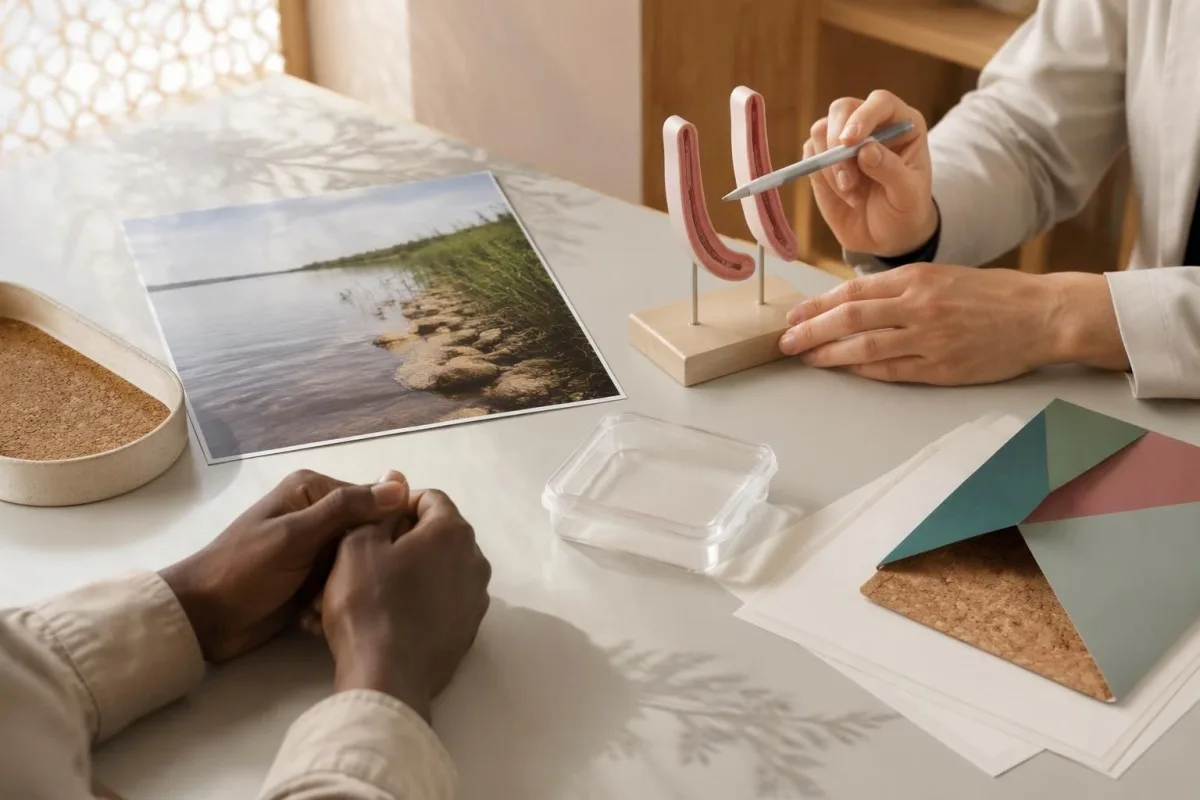
Absence of symptoms does not establish absence of infection or eliminate the potential benefit of treatment. A hypothetical traveler tested 10 weeks after a lake swim, with positive IgG and 3 negative stool examinations, may still be offered praziquantel if the exposure was credible and no earlier treatment occurred; negative microscopy lowers certainty but does not settle the question.
Documented earlier treatment changes the reasoning, particularly when no freshwater re-exposure has occurred. A person with a positive test 5 years after an appropriately timed course does not automatically need another course; the clinician should investigate whether treatment was complete, whether the initial infection was confirmed and whether any symptoms or direct tests now suggest persistence.
Visible blood in urine requires assessment even when Schistosoma antibodies are positive, because 1 parasite result does not exclude stones, other infections or cancer. Chronic urinary schistosomiasis is associated with increased bladder cancer risk, but risk is not diagnosis; our guide to bladder warning symptoms explains why persistent or recurrent urinary changes deserve separate attention.
Як обирають дозу празиквантелу та час лікування?
Praziquantel is the standard medicine for schistosomiasis, but dose and timing depend on species and clinical circumstances. CDC's Clinical Care of Schistosomiasis guidance lists 40 mg/kg over 1 day in 2 divided doses for S. mansoni, S. haematobium and S. intercalatum, and 60 mg/kg in 3 divided doses for S. japonicum and S. mekongi.
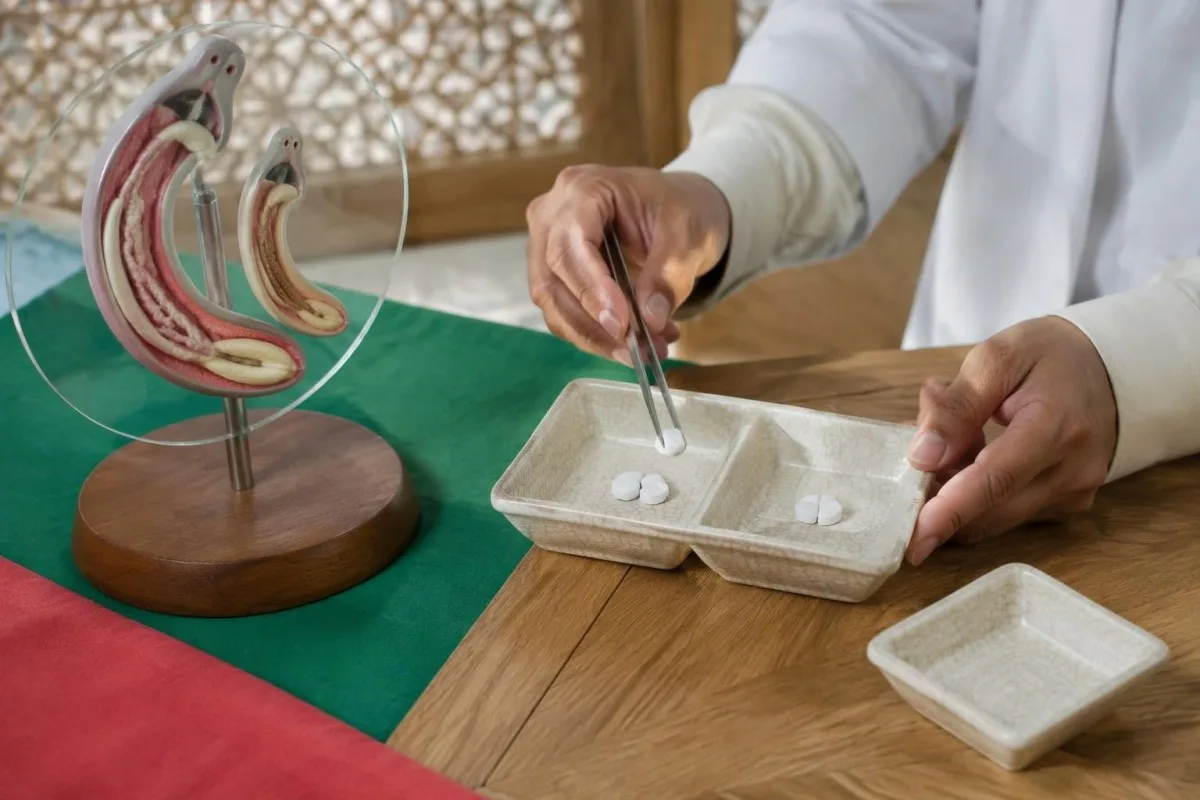
Praziquantel works best against mature worms, so otherwise stable travelers are generally treated at least 6–8 weeks after their last freshwater exposure. Taking it immediately after a swim is not reliable preventive treatment; if a course was given very early, the clinician may plan another course after maturation rather than assuming the initial prescription covered all developing worms.
A clearly hypothetical calculation illustrates a 40 mg/kg regimen: a 60 kg adult would receive 2,400 mg total over 1 day, split into 2 doses of 1,200 mg. Where 600 mg tablets are supplied, that arithmetic corresponds to 2 tablets per dose, but it is not an individual prescription—species, available formulation, rounding, swallowing ability and medical history must be checked.
Repeat treatment after 2–4 weeks may be appropriate in selected patients, especially with light infections or concerns about an incomplete response; it is not required solely because IgG remains positive. Medication review matters because rifampicin and enzyme-inducing antiseizure medicines can reduce praziquantel exposure, so patients taking carbamazepine should bring their regimen and any carbamazepine monitoring information rather than adjusting either medicine themselves.
Які симптоми потребують невідкладного або екстреного обстеження?
Fever after travel needs prompt assessment, and new weakness, seizures or bladder-control changes need emergency evaluation. Acute schistosomiasis can cause fever, cough, rash, diarrhea and eosinophilia around 2–8 weeks after exposure, but these symptoms overlap with other conditions and cannot be diagnosed from antibodies alone.
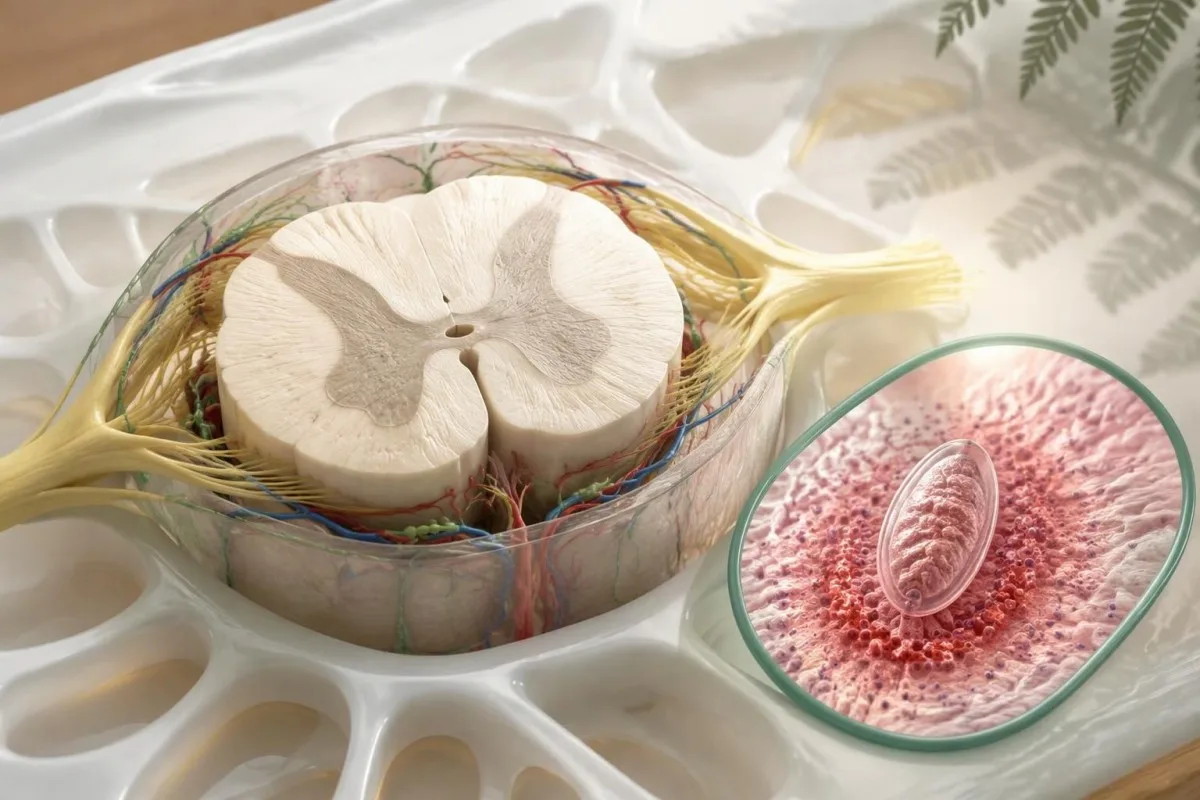
New leg weakness, difficulty walking, urinary retention or loss of bowel control can signal spinal cord involvement and should not wait for routine repeat serology. Schistosoma eggs can occasionally affect neurological tissue, but 1 positive antibody result does not establish the cause; emergency clinicians may need imaging and a broad differential diagnosis before specialist treatment is selected.
Acute systemic or neurological schistosomiasis may require specialist-directed corticosteroids alongside a carefully timed antiparasitic plan. If the exposure history also suggests Strongyloides, assess that possibility before immunosuppression when feasible, because steroids can precipitate dangerous hyperinfection; a Strongyloides IgG result needs its own management rather than assuming 1 antiparasitic medicine treats both organisms.
Fever after a malaria-risk itinerary should be assessed the same day, even if Schistosoma antibodies offer a plausible alternative explanation. Do not wait 6–8 weeks for repeat serology when there is persistent high fever, breathing difficulty, confusion, fainting, significant gastrointestinal bleeding or inability to pass urine; the immediate priority is identifying and treating the acute problem.
Як вагітність, дитячий вік та інші стани впливають на лікування?
Pregnancy, young age and complex illness require individualized treatment decisions rather than automatically withholding or prescribing praziquantel. The WHO guideline on control and elimination of human schistosomiasis (2022) supports preventive treatment from age 2 years and includes pregnant women after the first trimester and lactating women in eligible programs.
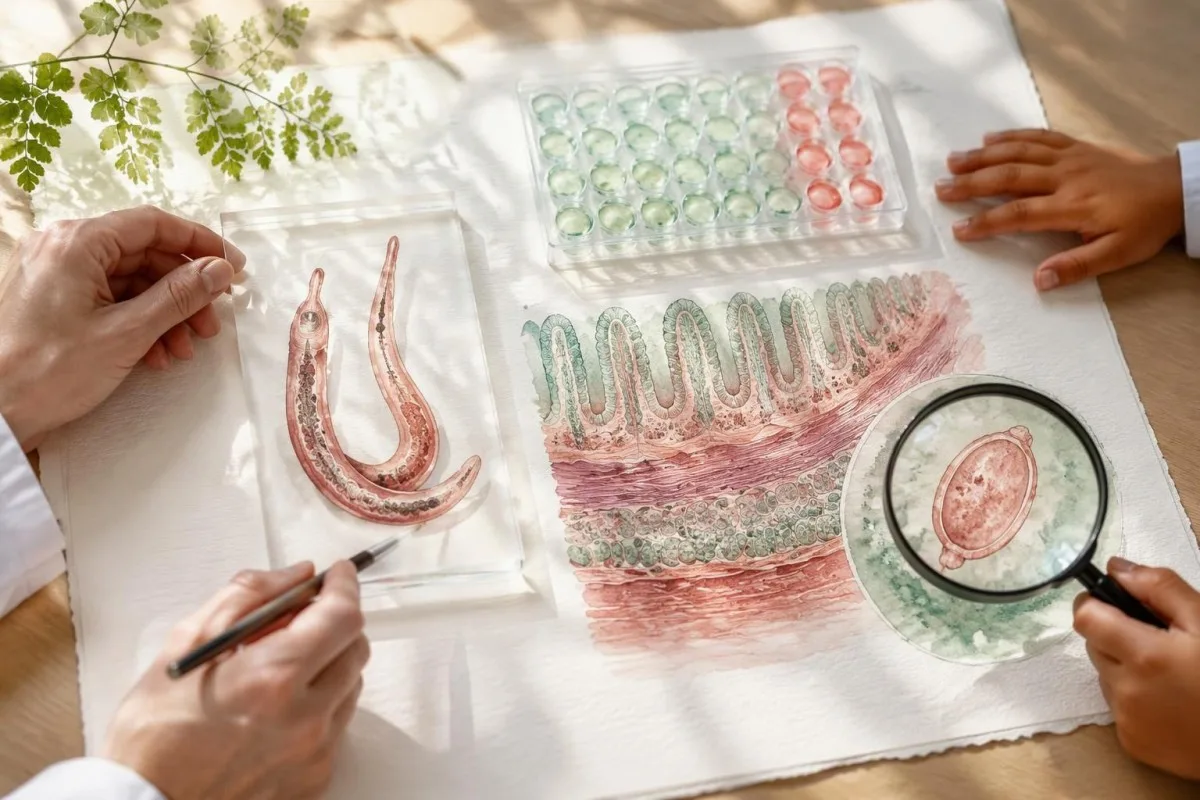
WHO program recommendations and treatment of an individual imported infection answer related but different questions. A hypothetical patient at 10 weeks of pregnancy needs a clinician-led balance of infection likelihood, severity and treatment timing; the recommendation to include pregnancy after the first trimester in preventive programs should not be turned into a blanket rule for every symptomatic patient.
Children's dosing requires an accurate weight and a formulation they can take safely; adult tablet arithmetic is not enough. WHO's inclusion of children aged 2 years and older in preventive chemotherapy does not make every product licensed for every younger age in every country, and our discussion of children's interpretation limits explains why pediatric results need age-specific clinical oversight.
A history of seizures, possible cysticercosis, significant liver disease or neurological symptoms should be reviewed before treatment. For 1 person with a straightforward travel-acquired infection, routine outpatient prescribing may be appropriate; another with possible central nervous system involvement may need specialist planning because the immune response to parasite treatment can itself affect symptoms.
Чому рівень IgG до Schistosoma може залишатися позитивним після успішного лікування?
Schistosoma IgG can remain positive for years after successful treatment and is not a reliable test of cure. CDC recommends considering repeat stool or urine examination 1–2 months after treatment when eggs were detected before treatment; follow-up must match the evidence used to establish infection and the person's subsequent clinical course.
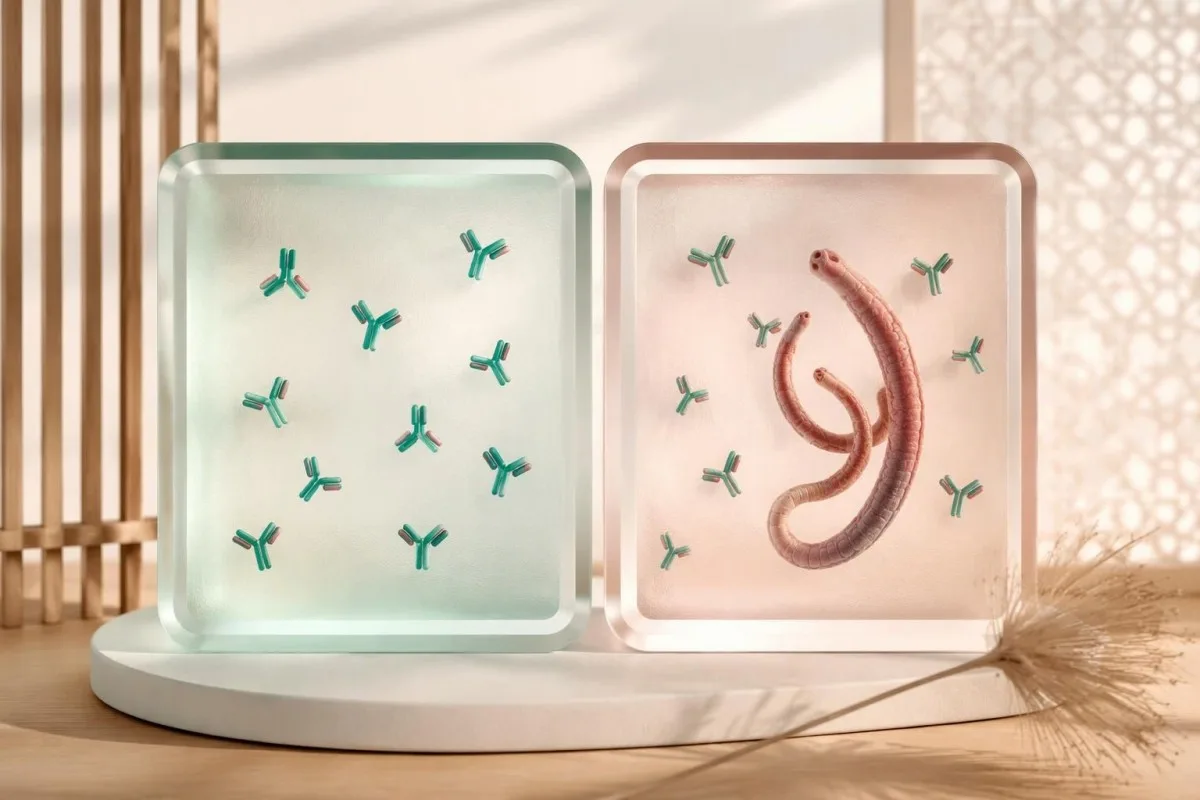
A positive IgG result 6 months after treatment does not, by itself, demonstrate treatment failure. Antibody decline varies, and a stable or temporarily higher signal cannot reliably quantify surviving worms; comparing results from 2 different laboratories adds assay differences, making numerical trend interpretation even less suitable for declaring cure.
Persistent symptoms or eosinophilia deserve reassessment, but neither automatically proves living Schistosoma remain. If eggs are still found at the 1–2 month follow-up, specialists may consider egg viability, collection details, treatment timing and whether another course is needed; PCR positivity can also require caution because detecting parasite DNA is not the same as identifying viable adult worms.
Kantesti can help organize 3 follow-up dates—treatment, specimen collection and any re-exposure—without labeling persistent IgG as treatment failure. Our посібник з аналізу тенденцій прийому ліків explains why trends must be matched to the right clinical endpoint; an available validated antigen assay may be more useful than serial antibodies, but its follow-up schedule belongs to the treating service.
Чому за однакового позитивного результату можуть ухвалювати різні рішення?
The same positive Schistosoma IgG result can lead to treatment, additional testing or observation because the surrounding evidence differs. The following 4 examples are hypothetical teaching scenarios—not patient encounters—and illustrate how exposure dates, prior therapy, assay uncertainty and organ findings can outweigh the apparent simplicity of a positive flag.
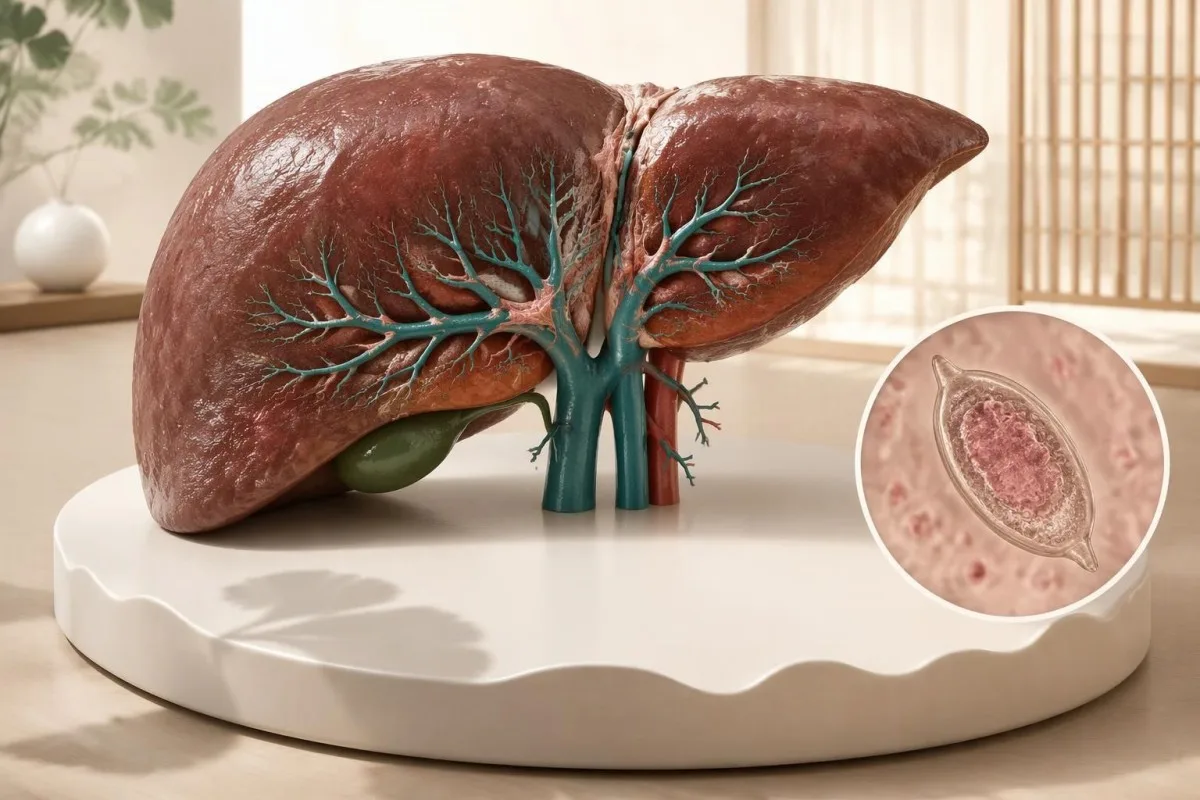
A hypothetical 28-year-old returns from a freshwater swim, tests positive 10 weeks later and has never received praziquantel; treatment may be reasonable despite negative microscopy. A hypothetical 44-year-old treated appropriately 4 years earlier, with no further exposure and no concerning findings, may not need retreatment; the timeline of laboratory results helps keep these histories distinct.
A hypothetical 35-year-old with no plausible freshwater exposure has a weakly positive screening assay and normal supporting investigations. The next step may be checking the original indication, assay and cross-reactivity rather than immediate treatment; changing a report from weak positive to strong positive on 1 repeat antibody assay still does not create a documented exposure or prove active infection.
A hypothetical 54-year-old who lived near endemic freshwater 20 years earlier has positive IgG, an enlarged spleen and an ALT of 24 IU/L within the local range. That combination merits assessment for portal and other organ disease despite normal enzymes; an old exposure is not automatically resolved, and common liver fibrosis scores should not be assumed validated for schistosomal periportal fibrosis.
Що слід узяти на повторний прийом і які джерела містять рекомендації щодо лікування?
Bring your exposure history, complete laboratory report and treatment record to a clinician experienced in travel medicine, infectious diseases or tropical medicine. Prepare 3 questions: whether the result fits your exposure, which direct tests could change the decision and how treatment response will be assessed without relying on antibody disappearance.
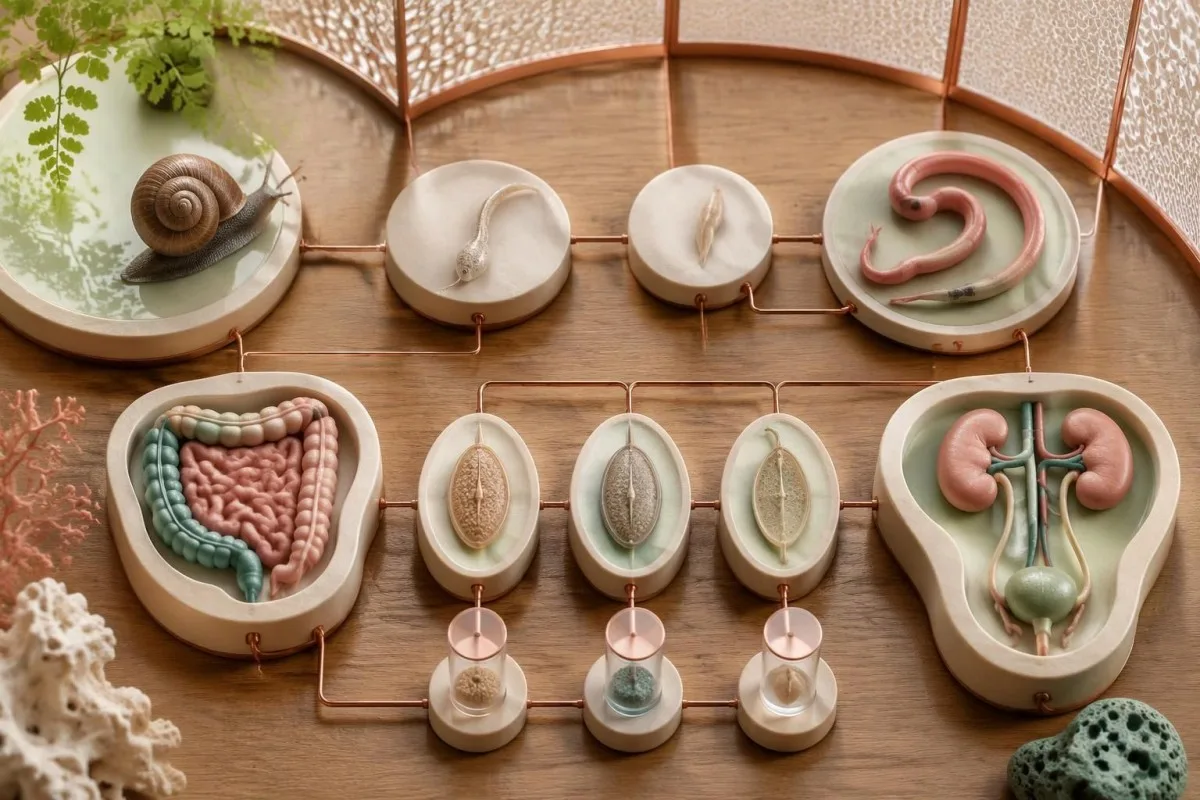
Your report should retain the assay name, units or index, reference interpretation and collection date, rather than only a cropped positive flag. Add 1 concise exposure timeline, previous praziquantel doses and dates, current medicines, pregnancy status where relevant and any urinary or neurological symptoms; this makes uncertainty visible and reduces the chance of repeating an uninformative antibody test.
Kantesti is an AI blood test interpretation platform that helps explain why 1 Schistosoma antibody result must be considered alongside exposure and treatment history, not used as a prescribing instruction. Our клінічну рамку валідації describes methodology and oversight, while our правилами конфіденційності та обробки даних information explains how to review data choices before sharing a travel or laboratory record.
The 2 Zenodo publications below describe Kantesti's validation framework and aggregate platform reporting; they are not clinical schistosomiasis guidelines and do not establish the sensitivity of a Schistosoma assay. Clinical recommendations in this article draw on CDC diagnostic and treatment guidance and the WHO guideline (2022), with our стандарти медичного контенту distinguishing published evidence, hypothetical calculations and the limits of AI-supported explanation.
Поширені запитання
Чи означає позитивний результат аналізу на IgG до Schistosoma, що в мене активна інфекція?
Позитивний результат тесту на IgG до Schistosoma не дає змоги надійно відрізнити активну інфекцію від раніше пролікованої. Антитіла можуть виявлятися роками, тому 1 позитивний результат слід інтерпретувати з урахуванням контакту з прісною водою та анамнезу лікування. За потреби клініцисти можуть застосовувати мікроскопію калу або сечі, тестування на антиген чи ПЛР, щоб отримати більш прямі докази. За наявності обґрунтованих даних про контакт і відсутності належного попереднього лікування лікування може бути доцільним, навіть якщо результат мікроскопії негативний.
Чи може в мене бути шистосомоз за негативних результатів аналізів калу та сечі?
Негативний результат мікроскопічного дослідження калу або сечі не виключає шистосомозу, особливо після подорожі, коли паразитарне навантаження може бути низьким. CDC рекомендує дослідити 3 зразки, зібрані в різні дні, оскільки виділення яєць може бути періодичним. Від підозрюваного виду також залежить, чи слід досліджувати кал, сечу або обидва зразки. Лікар може рекомендувати лікування навіть за позитивних результатів аналізу на антитіла, якщо є підстави вважати, що зараження могло статися, і в документах немає підтвердження належного попереднього лікування.
Через який час після контакту з прісною водою мені слід пройти тестування?
CDC рекомендує збирати зразки для визначення антитіл до Schistosoma щонайменше через 6–8 тижнів після ймовірного нового зараження. Якщо під час поїздки було кілька контактів із прісною водою, як практичний орієнтир використовуйте останній такий контакт. Ранні негативні результати може знадобитися перевірити повторно, оскільки антитіла ще можуть бути невиявними. За наявності гарячки чи інших значних симптомів необхідно негайно пройти обстеження, а не чекати настання цього періоду для тестування.
Чому після прийому празиквантелу в мене все ще позитивний результат на антитіла до Schistosoma?
0 Антитіла до Schistosoma можуть залишатися позитивними протягом років після успішного лікування празиквантелом, оскільки імунна відповідь зберігається довше, ніж паразит. Позитивний результат через 6 місяців після лікування сам по собі не доводить невдачу лікування і не є підставою для повторного курсу. Якщо до лікування виявили яйця паразита, лікарі можуть призначити повторне дослідження калу або сечі через 1–2 місяці. Повторне зараження, стійкі симптоми та результати прямих тестів інформативніші, ніж лише збереження антитіл.
Яку дозу празиквантелу застосовують при шистосомозі?
CDC зазначає празиквантел у дозі 40 мг/кг протягом 1 дня у 2 прийоми для S. mansoni, S. haematobium і S. intercalatum. Зазначена схема лікування для S. japonicum і S. mekongi — 60 мг/кг протягом 1 дня у 3 прийоми. В інших випадках мандрівників зі стабільним станом зазвичай лікують не раніше ніж через 6–8 тижнів після останнього контакту з прісною водою, оскільки празиквантел найефективніший проти дорослих гельмінтів. Схему лікування має обрати лікар, який також має перевірити прийняті ліки, вагітність, вік і можливе ураження нервової системи.
Чи може позитивний тест на антитіла до Schistosoma бути хибнопозитивним?
0 Аналіз на антитіла до Schistosoma може давати хибнопозитивний результат або перехресно реагувати з антитілами до інших паразитів — залежно від методу аналізу. Не існує універсального значення індексу, яке підтверджувало б активну інфекцію, і 2 лабораторії можуть використовувати різні препарати антигенів і порогові значення. Слабкопозитивний результат за відсутності ймовірного контакту з прісною водою може потребувати перевірки лабораторією або застосування іншого методу підтвердження. Повторне визначення лише антитіл усе одно не дає змоги надійно відрізнити перенесену інфекцію, яку лікували, від наявності живих гельмінтів.
Дізнайтеся, як читати аналіз крові
Завантажте лабораторний звіт, і ШІ Kantesti за лічені секунди пояснить кожен біомаркер простою мовою. Ним користуються понад 2 мільйони людей у всьому світі.
Посилання
- Klein, T., Mitchell, S., & Weber, H. (2026). Clinical Validation Framework v2.0 (сторінка медичної валідації). Медичні дослідження ШІ Kantesti. DOI
- Klein, T., Mitchell, S., & Weber, H. (2026). AI Blood Test Analyzer: проаналізовано 2,5 млн тестів | Global Health Report 2026. Медичні дослідження ШІ Kantesti. DOI
- Центри з контролю та профілактики захворювань (2024). Clinical Testing and Diagnosis for Schistosomiasis. CDC Schistosomiasis Clinical Guidance.
- Центри з контролю та профілактики захворювань (2024). Clinical Care of Schistosomiasis. CDC Schistosomiasis Clinical Guidance.
- World Health Organization (2022). WHO guideline on control and elimination of human schistosomiasis. World Health Organization Guidelines.
- 2 млн+Проаналізовані тести
- 127+Країни
- 100+Мови
Про медичну команду


Сигнали довіри E-E-A-T
Досвід
Лікарський клінічний огляд робочих процесів інтерпретації лабораторних показників.
Експертиза
Лабораторна медицина з акцентом на те, як біомаркери поводяться в клінічному контексті.
Авторитетність
Медичну рецензію провів доктор Томас Кляйн за участю доктора Сари Мітчелл і професора, доктора Ганса Вебера.
Довірливість
Інтерпретація на основі доказів із чіткими шляхами подальших дій, щоб зменшити тривогу.






Застереження щодо медичної інформації
Ця стаття призначена лише для освітніх цілей і не становить медичної поради. Завжди консультуйтеся з кваліфікованим медичним працівником щодо рішень про діагностику та лікування.
Опубліковано · Зв’язатися з редакційною командою
Опубліковано компанією Kantesti Ltd, зареєстрованою в Англії та Уельсі під номером компанії. 17090423, Лондон, Велика Британія.
