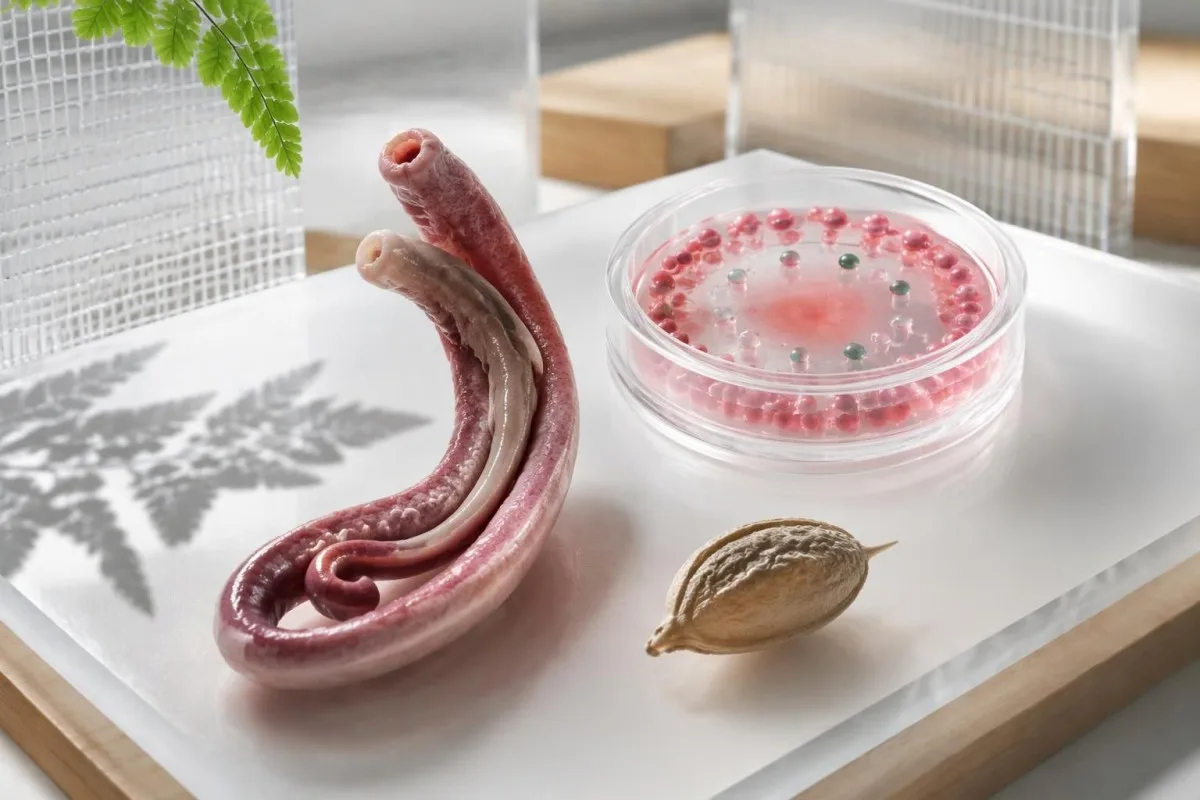
Положителният резултат за антитела срещу Schistosoma може да е основание за лечение след достоверен контакт със сладководен водоем, ако никога не сте получавали адекватно лечение, но не може да докаже активна инфекция или да потвърди излекуване. Датите на излагане, предишното лечение и допълнителните изследвания определят следващата стъпка.

Основни изводи
- Положителни антитела показват имунен отговор към антигени на Schistosoma; 1 положителен резултат не може да разграничи нелекуваната инфекция от инфекция, лекувана преди това.
- Прозорец за тестване има значение: CDC препоръчва проби за антитела да се вземат най-малко 6–8 седмици след предполагаема нова инфекция.
- Контакт със сладководен водоем означава контакт на кожата с потенциално замърсени езера, реки или канали, а не просто посещение на засегната страна.
- Микроскопията е по-информативна, когато клиницистите поискат 3 проби от изпражнения или урина, събрани в различни дни.
- Празиквантел обичайната обща доза е 40 mg/kg за 1 ден при S. mansoni и S. haematobium, но предписването зависи от вида и клиничните обстоятелства.
- Време на лечение обикновено означава изчакване най-малко 6–8 седмици след последния контакт със сладководен водоем при пътуващи в стабилно състояние, тъй като празиквантелът действа най-добре срещу зрелите червеи.
- Контролна микроскопия може да бъде изследван 1–2 месеца след лечението, когато преди лечението са били налице яйца.
- Персистиращ IgG може да остане положителен години след успешно лечение; друг положителен резултат не е автоматично основание за нов курс на лечение.
Налага ли се лечение при положителен резултат за антитела срещу Schistosoma?
Положителният резултат за антитела срещу Schistosoma не означава автоматично, че се нуждаете от лечение. Клиничните специалисти често препоръчват лечение, когато има данни за контакт със сладка вода и липсва подходящо предходно лечение, дори ако микроскопското изследване е отрицателно; след документирано лечение без повторен контакт с източника на заразяване 1 персистиращ положителен резултат обикновено не е достатъчно основание за повторно лечение.
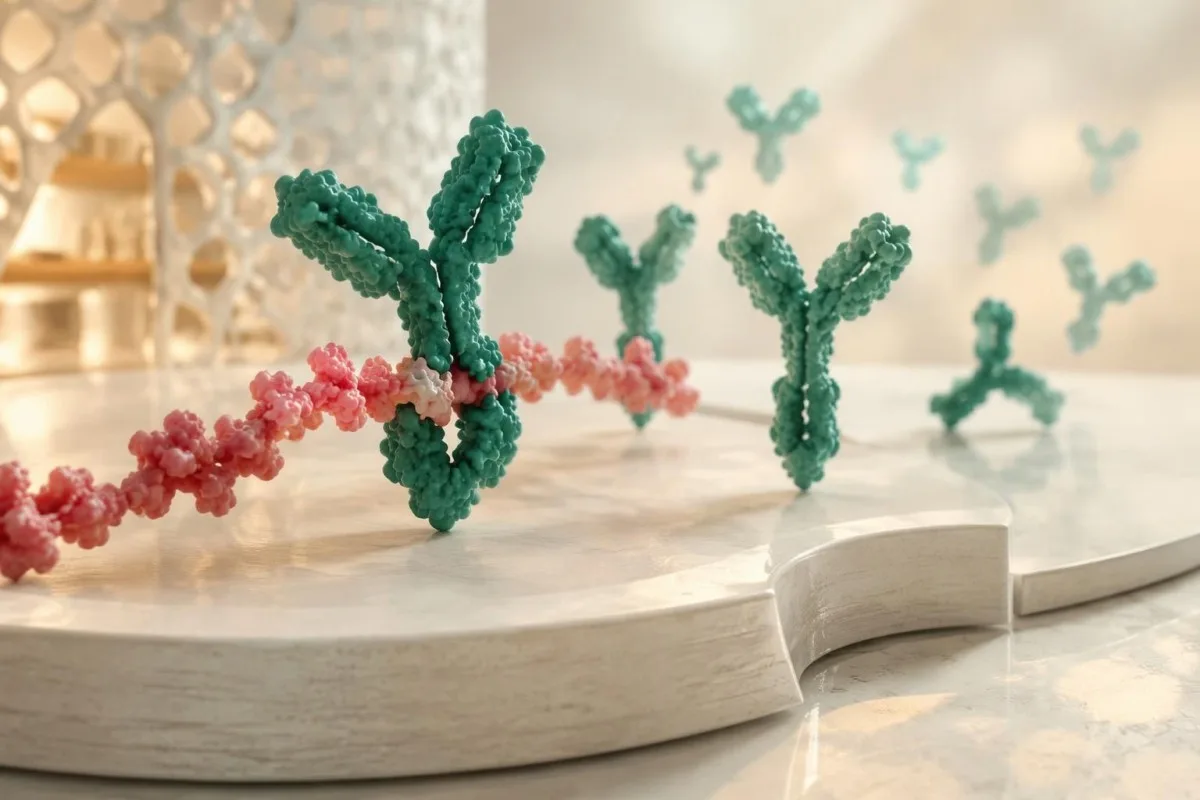
Значение на положителен резултат за Schistosoma IgG най-добре се разбира като доказателство за разпознаване от имунната система, а не като измерване на живи червеи. Имунният отговор може да продължи години след изчезването на паразита, а 2 души със същия отчетен резултат може да се нуждаят от различни грижи — единият след нелекуван контакт, а другият след успешно лечение без последващ контакт със сладка вода.
Предходният контакт и предходното лечение са отделни въпроси: стара инфекция може да остане нелекувана, докато стар положителен тест може да остане такъв и след излекуване. Преди да тълкувате 1 резултат като активно заболяване или безобидна следа от миналото, проверете името на лечението, дозата, датата и евентуалния последващ контакт с вода; нашето обяснение на положителни резултати от антитела разграничава тези различни видове доказателства.
Kantesti е анализатор на кръвни изследвания с изкуствен интелект, който помага да се обясни защо 1 положителен резултат за Schistosoma IgG не може да установи активна инфекция, дори когато пълната кръвна картина е нормална. Нашата роля е да обясняваме резултатите — не да идентифицираме паразити или да предписваме лечение; нашите организация и цел трябва да се разглеждат отделно от описаните тук решения, ръководени от клиницист.
Кои контакти със сладководни водоеми правят резултата по-убедителен?
Контактът на кожата със сладка вода в район на предаване на инфекцията прави положителния резултат по-значим в клиничен план. Плуването, газенето, къпането, спускането с лодка по бързеи или прането в езера, реки и напоителни канали могат да доведат до контакт; отбележете 3 подробности за всяко събитие: точното място, дейността и датата на последния контакт.

Ларвите на Schistosoma, отделяни от сладководни охлюви, проникват през кожата; не е необходимо да поглъщате вода. Дори краткото газене се счита за контакт, а липсата на сърбящ обрив не го изключва, затова пътуващ, който условно е влязъл в езеро за 5 минути, трябва да спомене това събитие, вместо да отбелязва само по-продължителните плувания.
Морската вода и правилно хлорираните плувни басейни не са типични източници на заразяване с шистозомиаза. Контактът със сладка вода може да породи опасения и за други състояния, които изискват различни изследвания и лечение, включително лептоспироза след контакт с вода; температура, започнала 1 седмица след дейност в река, не бива да се отдава на антитела срещу Schistosoma без по-широка оценка.
Самото име на държава не може да установи индивидуалния риск, тъй като разпространението на инфекцията се различава в отделните райони и водоеми. Възстановете дори 1 забравена дейност — например миене на оборудване край река — и разграничете излагането на паразити от данните за ваксинации; изследванията за антитела при пътуване дават отговор на друг въпрос и не осигуряват защита срещу шистозомиаза.
Кога трябва да се направи изследване за шистозомиаза след пътуване?
Изследването за антитела срещу шистозомиаза обикновено е по-информативно най-малко 6–8 седмици след предполагаема нова инфекция. Указанията на CDC за клинично изследване и диагностика на шистозомиаза обясняват, че този период позволява образуването на антитела; отрицателен резултат, получен по-рано, не може надеждно да изключи скорошна инфекция, придобита чрез контакт със сладка вода.
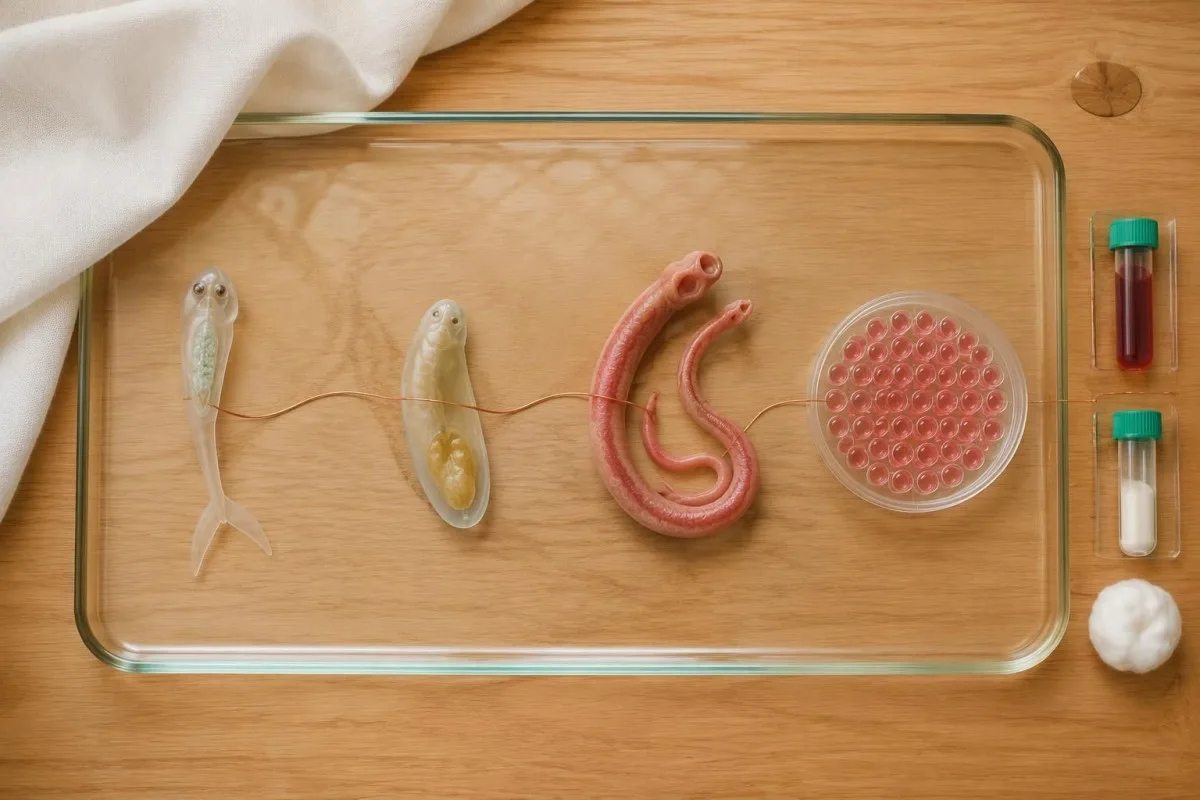
The last freshwater contact is a practical anchor when a trip involved several possible exposures. For example, a hypothetical traveler who swam on both the first and final day of a 3-week holiday should calculate the testing interval from the final swim, rather than assuming that the first exposure makes an immediate post-trip result conclusive.
Seroconversion is not identical across people or assays, so 6–8 weeks is a useful testing window rather than a guarantee of detection. When exposure is persuasive and an initial result is negative, a clinician may arrange another sample later, sometimes around 12 weeks after exposure; a second date should be agreed rather than inferred from a generic laboratory reference range.
Fever or significant symptoms after travel should be assessed without waiting for an antibody window to close, especially after a malaria-risk itinerary. At Kantesti, we encourage readers to keep 2 dates visible—last freshwater contact and sample collection—because времето за тестване за инфекция can change the meaning of a negative report even though each organism requires its own diagnostic strategy.
Възможно ли е резултатът за антитела срещу Schistosoma да е фалшиво положителен?
Schistosoma antibody tests can produce false-positive or cross-reactive results, and their performance varies by assay. There is no universal IgG concentration or index that proves active schistosomiasis; 2 laboratories may use different antigen preparations, reporting units and thresholds, making direct numerical comparisons unreliable.
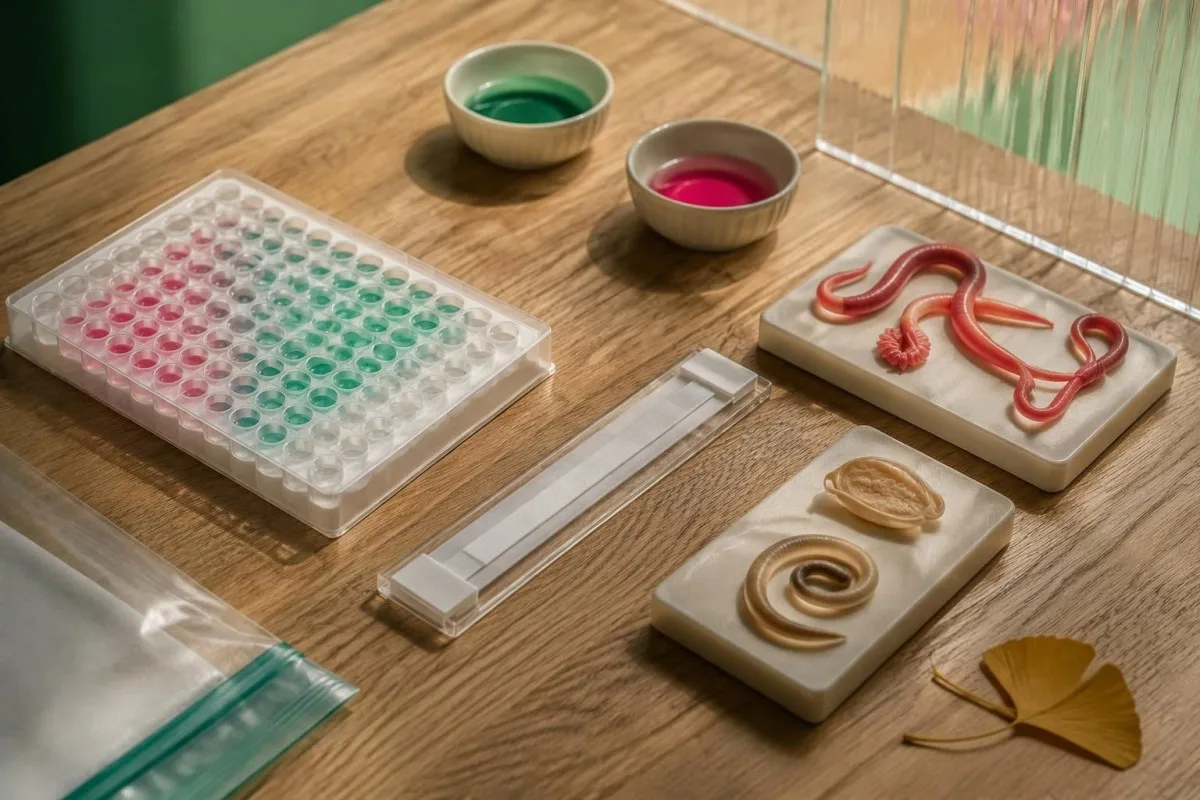
Cross-reactivity with other helminth antibodies depends on the test rather than occurring uniformly in every person. A laboratory may recommend an alternative assay or reference-laboratory review when the exposure history does not fit; 1 additional positive parasite antibody result also needs independent interpretation, as explained in our discussion of Toxocara antibody findings.
A hypothetical probability example shows why background risk matters: assume an imaginary test has 90% sensitivity and 95% specificity in 10,000 people, of whom 1% have the target infection. It would identify approximately 90 true positives and 495 false positives, so only about 15% of positive results would be true positives—these are teaching assumptions, not measured Schistosoma assay performance.
A high index should not be read as a high worm count, and a borderline index should not automatically be dismissed when exposure is strong. Ask for the assay name and the laboratory's interpretation of 1 equivocal or weakly positive result; confirmation with a different method can address assay uncertainty, but another antibody test still cannot reliably separate active infection from treated history.
Какво могат да установят микроскопските изследвания на изпражнения и урина?
Finding characteristic Schistosoma eggs provides direct parasitological evidence, whereas negative microscopy does not exclude a light infection. CDC recommends examining 3 stool or urine samples collected on different days to improve sensitivity, because egg output can be sparse and intermittent, particularly in travelers with a low parasite burden.
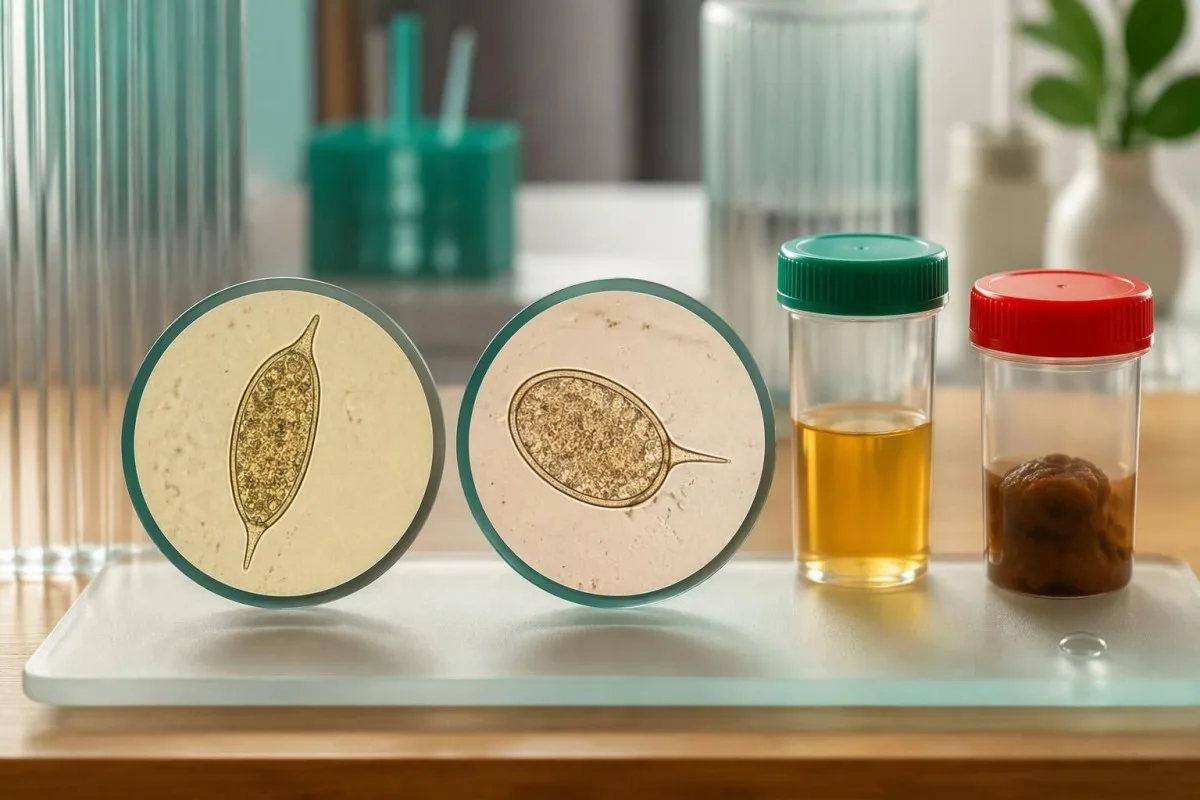
The suspected species determines specimen choice: S. mansoni and S. japonicum are usually investigated through stool, while S. haematobium is usually investigated through urine. Some exposure histories warrant both, so 1 negative stool examination does not address a possible urinary infection; интерпретация на уринен седимент also explains why ordinary urinary findings are not equivalent to parasite identification.
Urinary egg excretion often peaks around midday, and laboratories may request a sample between approximately 12 noon and 3 pm. Urine filtration may use a measured volume such as 10 mL, but collection, transport and processing instructions vary; follow the receiving laboratory's protocol rather than improvising exercise, fluid restriction or a collection time.
Routine dipstick testing is not a substitute for a specific Schistosoma egg examination, and 1 routine stool pathogen panel may omit the parasite entirely. Check the exact tests ordered, including concentration or filtration methods when appropriate; our urinalysis method guide helps distinguish screening for cells and chemistry from targeted parasitology.
Показват ли антигенните тестове или PCR по-ясно активна инфекция?
Schistosoma antigen tests can provide evidence more closely linked to living worms than antibody tests, but access and performance differ. Circulating anodic antigen, or CAA, and circulating cathodic antigen, or CCA, are 2 distinct targets; PCR detects parasite DNA and needs interpretation according to specimen, timing and the laboratory method.
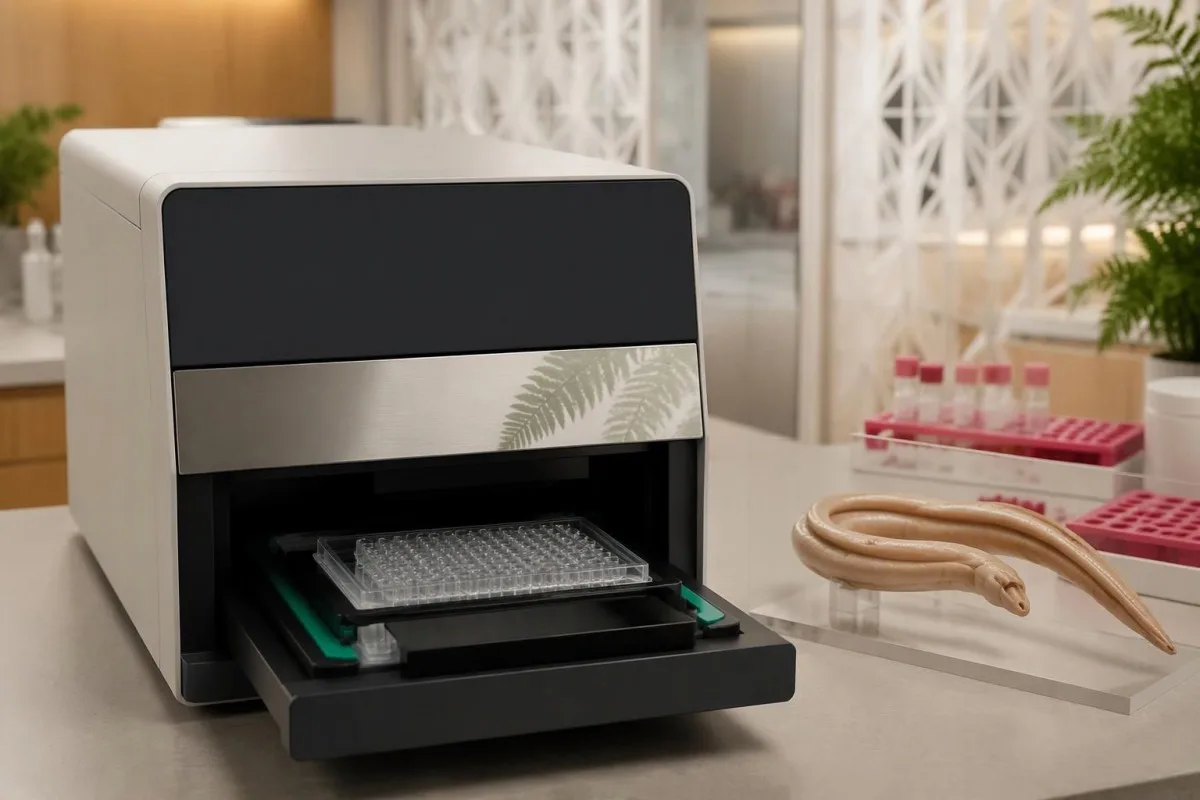
CAA assays can detect antigens released by living schistosomes, including some low-burden infections that microscopy misses. Urine CCA testing is used especially for S. mansoni, but trace readings and performance for other species complicate interpretation; 1 negative point-of-care CCA test should not be treated as a universal exclusion of urinary or intestinal schistosomiasis.
PCR may support diagnosis when microscopy is negative, but DNA detection is not identical to proving that every detected parasite component remains viable after treatment. The specimen matters—serum, stool and urine are not interchangeable—and 1 positive molecular result must be interpreted against the laboratory's validated application; antibodies versus direct detection illustrates this distinction in a different parasitic condition.
Kantesti is an AI lab test interpretation service that can explain the difference between 2 reports labeled Schistosoma IgG and Schistosoma PCR without treating them as interchangeable evidence. Our методите за интерпретация на AI do not replace reference-laboratory expertise, and an antigen test's usefulness depends on whether the local service can obtain and validate it for your clinical question.
Кои съпътстващи находки в кръвта и урината имат значение?
Eosinophilia, urinary abnormalities and signs of organ involvement can strengthen the case for further assessment, but none proves schistosomiasis alone. An absolute eosinophil count above approximately 0.5 × 10⁹/L is commonly considered elevated; a normal count does not exclude infection, especially outside the early immune-response phase.
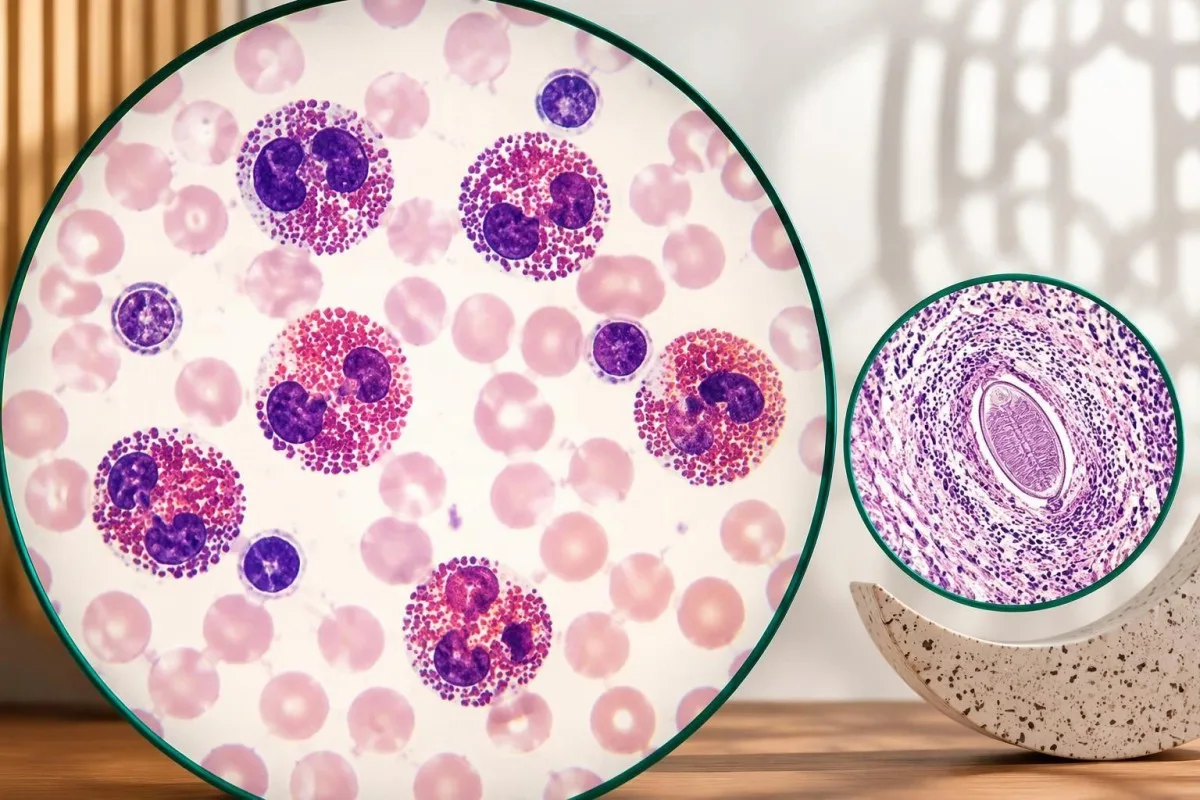
The absolute eosinophil count is usually more informative than the percentage because a percentage depends on the other white-cell populations. A hypothetical count of 0.8 × 10⁹/L may reflect schistosomiasis, another parasite, allergy or a medicine effect; persistent counts at or above 1.5 × 10⁹/L generally warrant broader evaluation, as discussed in our eosinophil count guide.
Normal liver enzymes do not reliably exclude hepatosplenic schistosomiasis because periportal fibrosis and portal hypertension can occur without the usual pattern of cirrhosis. For example, an ALT of 24 IU/L cannot overrule an enlarged spleen or suggestive ultrasound; интерпретация на чернодробен панел explains why enzyme results answer different questions from structural imaging.
Blood in urine, protein in urine, persistent diarrhea or genital symptoms can change which investigations are appropriate. At Kantesti, we encourage keeping at least 3 evidence categories separate—exposure, parasite tests and organ findings—because a positive antibody result should not obscure a urinary obstruction, significant anemia or another explanation that requires its own assessment.
Защо може да се предложи лечение при отрицателна микроскопия?
Clinicians may treat a seropositive person with credible exposure and no adequate treatment history despite negative microscopy. This approach recognizes that light infections can escape egg detection and untreated adult worms can persist for years; the decision balances 3 factors: exposure probability, diagnostic limitations and the person's treatment risks.
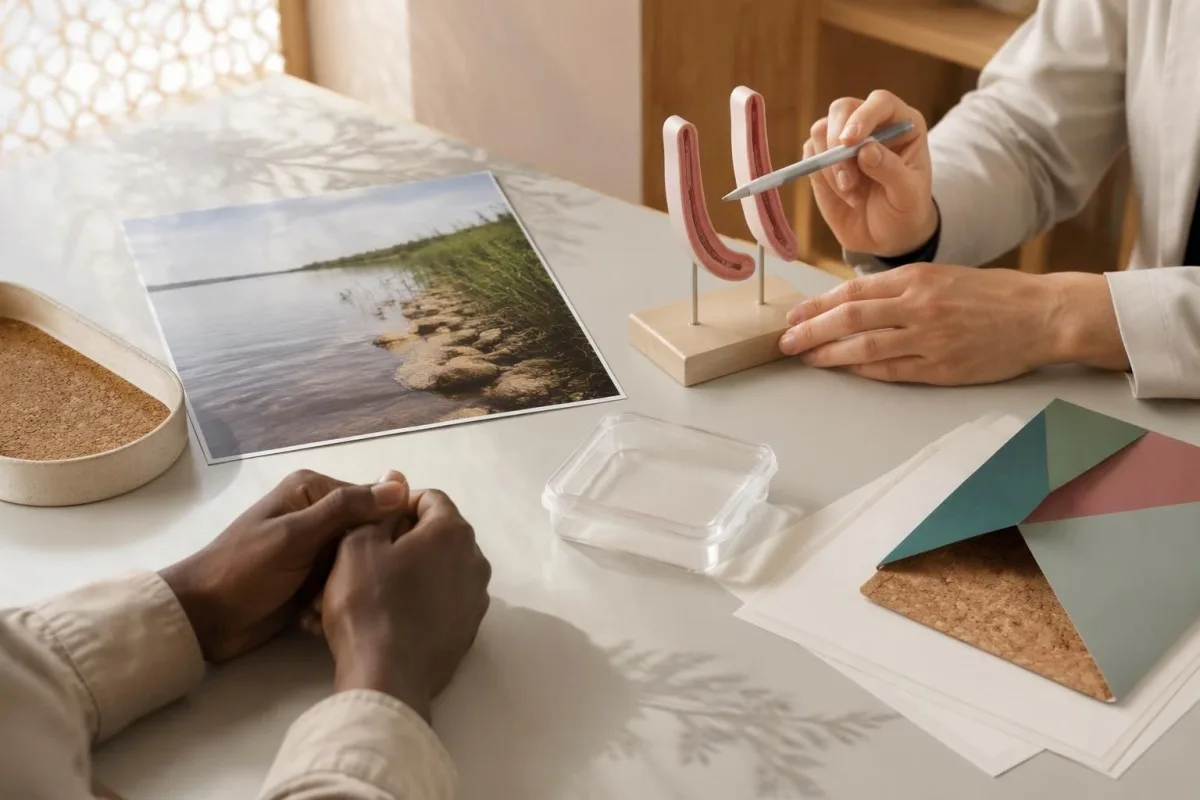
Absence of symptoms does not establish absence of infection or eliminate the potential benefit of treatment. A hypothetical traveler tested 10 weeks after a lake swim, with positive IgG and 3 negative stool examinations, may still be offered praziquantel if the exposure was credible and no earlier treatment occurred; negative microscopy lowers certainty but does not settle the question.
Documented earlier treatment changes the reasoning, particularly when no freshwater re-exposure has occurred. A person with a positive test 5 years after an appropriately timed course does not automatically need another course; the clinician should investigate whether treatment was complete, whether the initial infection was confirmed and whether any symptoms or direct tests now suggest persistence.
Visible blood in urine requires assessment even when Schistosoma antibodies are positive, because 1 parasite result does not exclude stones, other infections or cancer. Chronic urinary schistosomiasis is associated with increased bladder cancer risk, but risk is not diagnosis; our guide to bladder warning symptoms explains why persistent or recurrent urinary changes deserve separate attention.
Как се определят дозата на празиквантела и моментът на лечението?
Praziquantel is the standard medicine for schistosomiasis, but dose and timing depend on species and clinical circumstances. CDC's Clinical Care of Schistosomiasis guidance lists 40 mg/kg over 1 day in 2 divided doses for S. mansoni, S. haematobium and S. intercalatum, and 60 mg/kg in 3 divided doses for S. japonicum and S. mekongi.
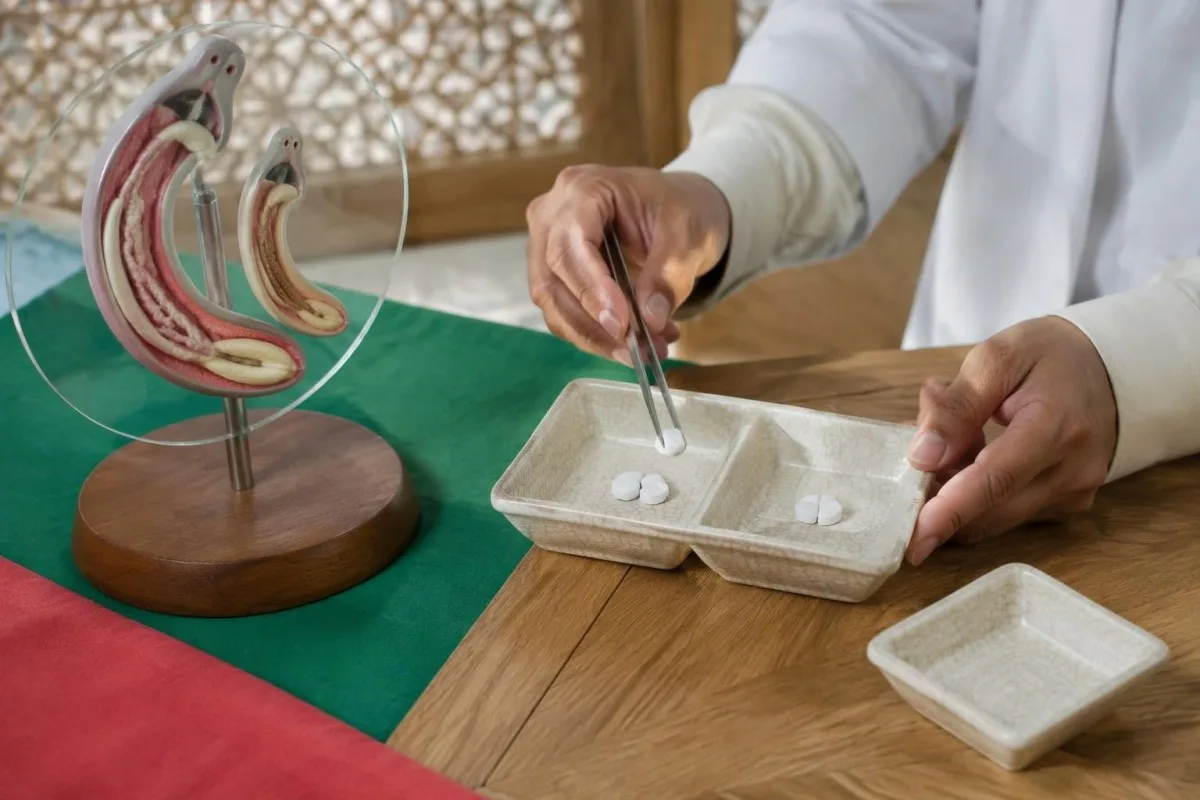
Praziquantel works best against mature worms, so otherwise stable travelers are generally treated at least 6–8 weeks after their last freshwater exposure. Taking it immediately after a swim is not reliable preventive treatment; if a course was given very early, the clinician may plan another course after maturation rather than assuming the initial prescription covered all developing worms.
A clearly hypothetical calculation illustrates a 40 mg/kg regimen: a 60 kg adult would receive 2,400 mg total over 1 day, split into 2 doses of 1,200 mg. Where 600 mg tablets are supplied, that arithmetic corresponds to 2 tablets per dose, but it is not an individual prescription—species, available formulation, rounding, swallowing ability and medical history must be checked.
Repeat treatment after 2–4 weeks may be appropriate in selected patients, especially with light infections or concerns about an incomplete response; it is not required solely because IgG remains positive. Medication review matters because rifampicin and enzyme-inducing antiseizure medicines can reduce praziquantel exposure, so patients taking carbamazepine should bring their regimen and any carbamazepine monitoring information rather than adjusting either medicine themselves.
Кои симптоми изискват незабавна или спешна оценка?
Fever after travel needs prompt assessment, and new weakness, seizures or bladder-control changes need emergency evaluation. Acute schistosomiasis can cause fever, cough, rash, diarrhea and eosinophilia around 2–8 weeks after exposure, but these symptoms overlap with other conditions and cannot be diagnosed from antibodies alone.
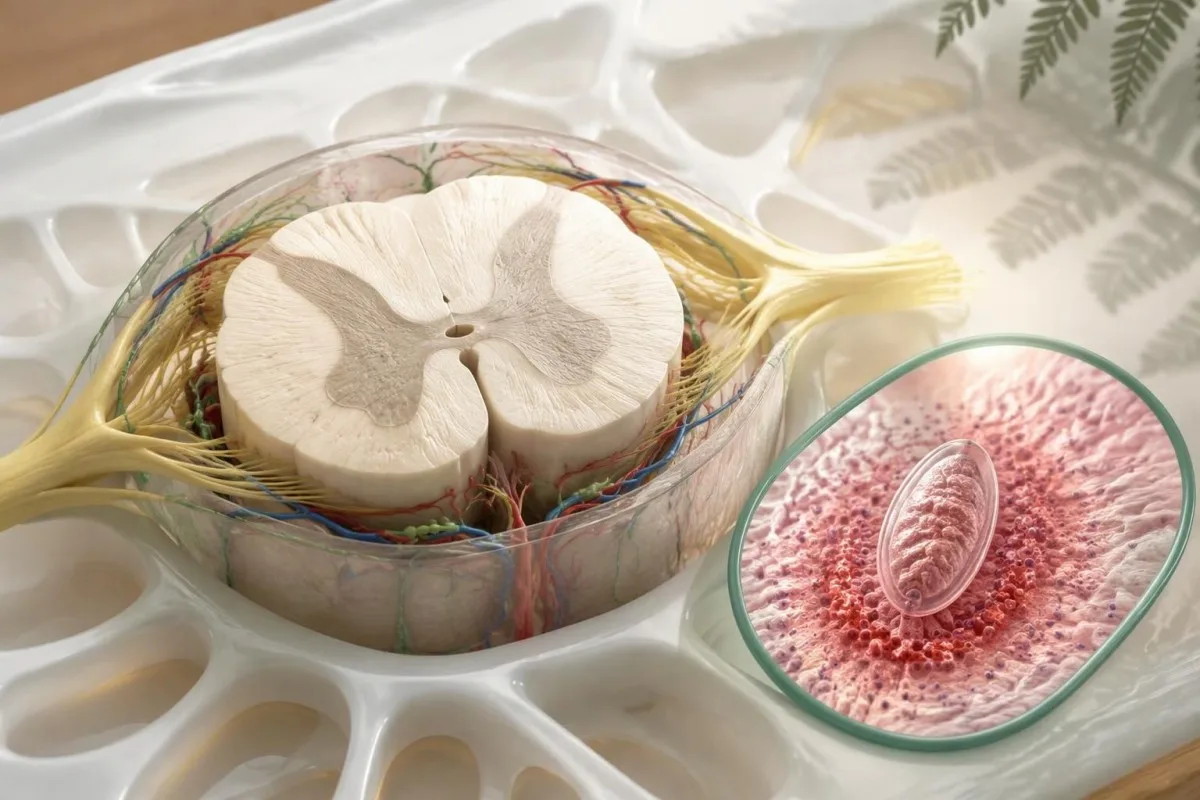
New leg weakness, difficulty walking, urinary retention or loss of bowel control can signal spinal cord involvement and should not wait for routine repeat serology. Schistosoma eggs can occasionally affect neurological tissue, but 1 positive antibody result does not establish the cause; emergency clinicians may need imaging and a broad differential diagnosis before specialist treatment is selected.
Acute systemic or neurological schistosomiasis may require specialist-directed corticosteroids alongside a carefully timed antiparasitic plan. If the exposure history also suggests Strongyloides, assess that possibility before immunosuppression when feasible, because steroids can precipitate dangerous hyperinfection; a Strongyloides IgG result needs its own management rather than assuming 1 antiparasitic medicine treats both organisms.
Fever after a malaria-risk itinerary should be assessed the same day, even if Schistosoma antibodies offer a plausible alternative explanation. Do not wait 6–8 weeks for repeat serology when there is persistent high fever, breathing difficulty, confusion, fainting, significant gastrointestinal bleeding or inability to pass urine; the immediate priority is identifying and treating the acute problem.
Как бременността, детската възраст и другите заболявания променят лечението?
Pregnancy, young age and complex illness require individualized treatment decisions rather than automatically withholding or prescribing praziquantel. The WHO guideline on control and elimination of human schistosomiasis (2022) supports preventive treatment from age 2 years and includes pregnant women after the first trimester and lactating women in eligible programs.
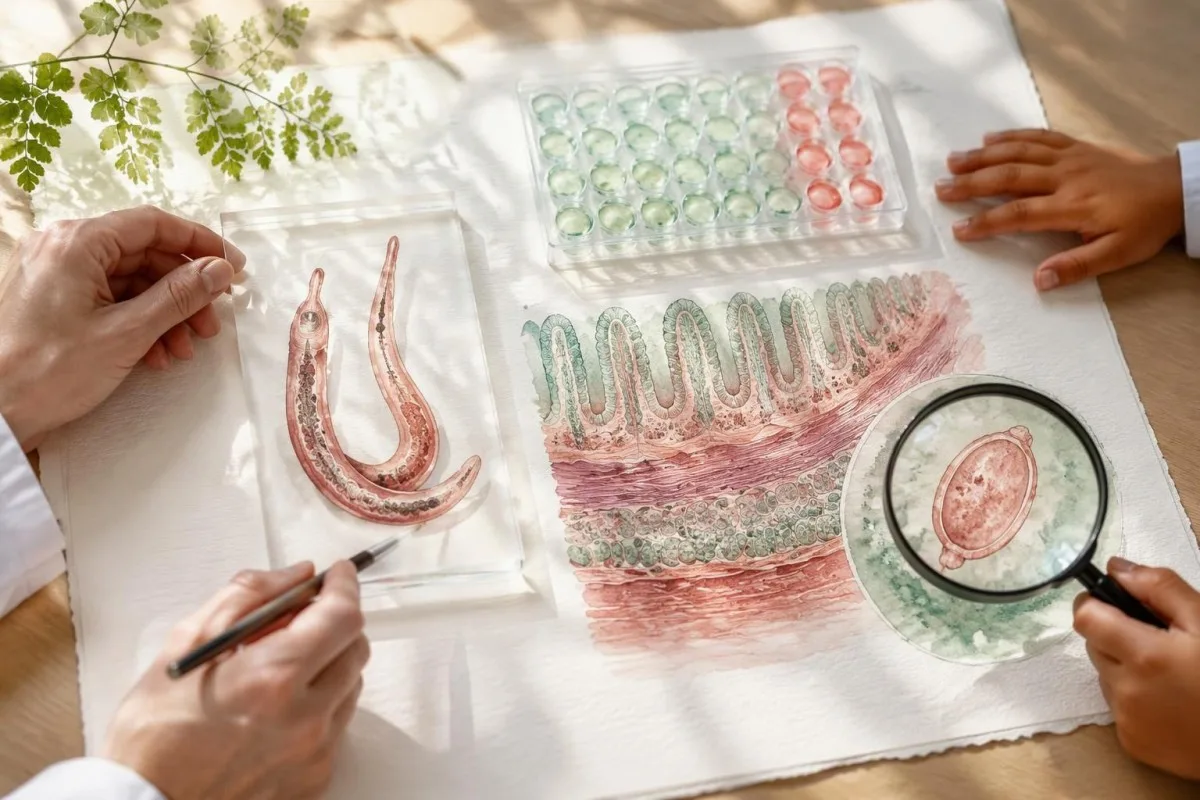
WHO program recommendations and treatment of an individual imported infection answer related but different questions. A hypothetical patient at 10 weeks of pregnancy needs a clinician-led balance of infection likelihood, severity and treatment timing; the recommendation to include pregnancy after the first trimester in preventive programs should not be turned into a blanket rule for every symptomatic patient.
Children's dosing requires an accurate weight and a formulation they can take safely; adult tablet arithmetic is not enough. WHO's inclusion of children aged 2 years and older in preventive chemotherapy does not make every product licensed for every younger age in every country, and our discussion of children's interpretation limits explains why pediatric results need age-specific clinical oversight.
A history of seizures, possible cysticercosis, significant liver disease or neurological symptoms should be reviewed before treatment. For 1 person with a straightforward travel-acquired infection, routine outpatient prescribing may be appropriate; another with possible central nervous system involvement may need specialist planning because the immune response to parasite treatment can itself affect symptoms.
Защо IgG срещу Schistosoma може да остане положителен след успешно лечение?
Schistosoma IgG can remain positive for years after successful treatment and is not a reliable test of cure. CDC recommends considering repeat stool or urine examination 1–2 months after treatment when eggs were detected before treatment; follow-up must match the evidence used to establish infection and the person's subsequent clinical course.
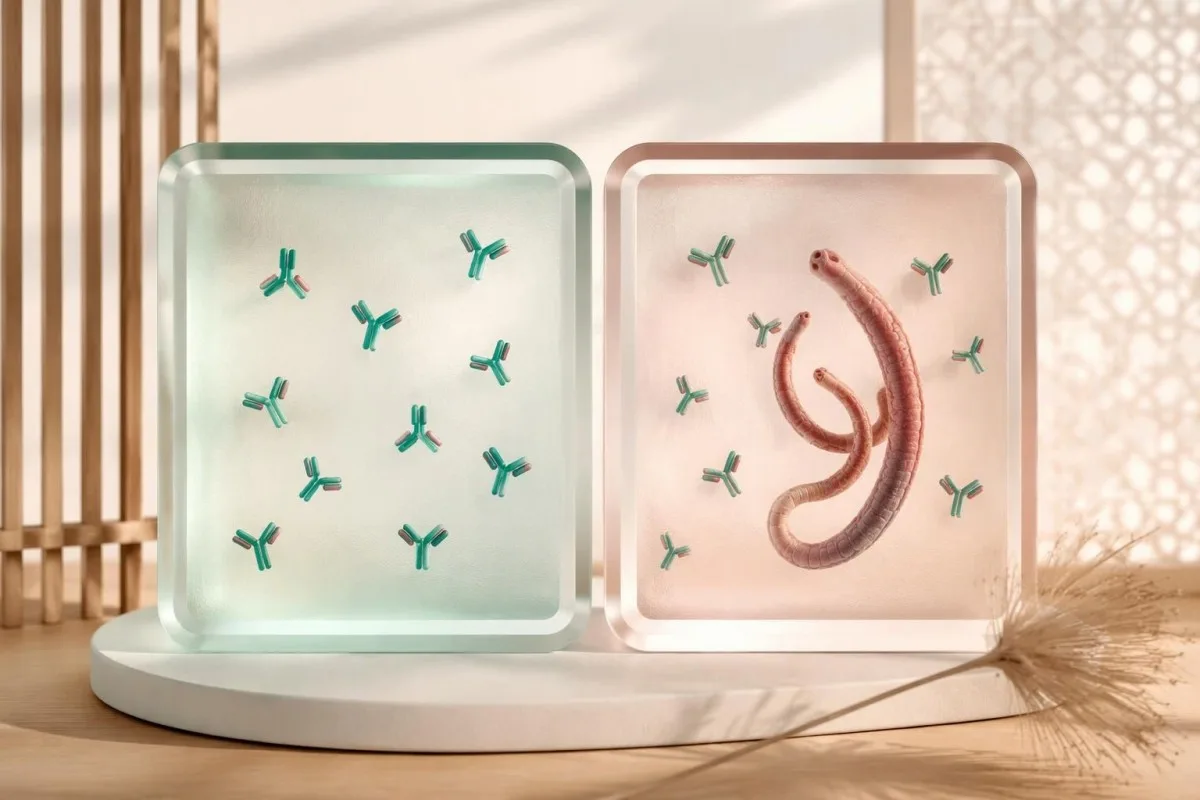
A positive IgG result 6 months after treatment does not, by itself, demonstrate treatment failure. Antibody decline varies, and a stable or temporarily higher signal cannot reliably quantify surviving worms; comparing results from 2 different laboratories adds assay differences, making numerical trend interpretation even less suitable for declaring cure.
Persistent symptoms or eosinophilia deserve reassessment, but neither automatically proves living Schistosoma remain. If eggs are still found at the 1–2 month follow-up, specialists may consider egg viability, collection details, treatment timing and whether another course is needed; PCR positivity can also require caution because detecting parasite DNA is not the same as identifying viable adult worms.
Kantesti can help organize 3 follow-up dates—treatment, specimen collection and any re-exposure—without labeling persistent IgG as treatment failure. Our наръчник за анализ на тенденциите в лекарствата explains why trends must be matched to the right clinical endpoint; an available validated antigen assay may be more useful than serial antibodies, but its follow-up schedule belongs to the treating service.
Как един и същ положителен резултат може да доведе до различни решения?
The same positive Schistosoma IgG result can lead to treatment, additional testing or observation because the surrounding evidence differs. The following 4 examples are hypothetical teaching scenarios—not patient encounters—and illustrate how exposure dates, prior therapy, assay uncertainty and organ findings can outweigh the apparent simplicity of a positive flag.
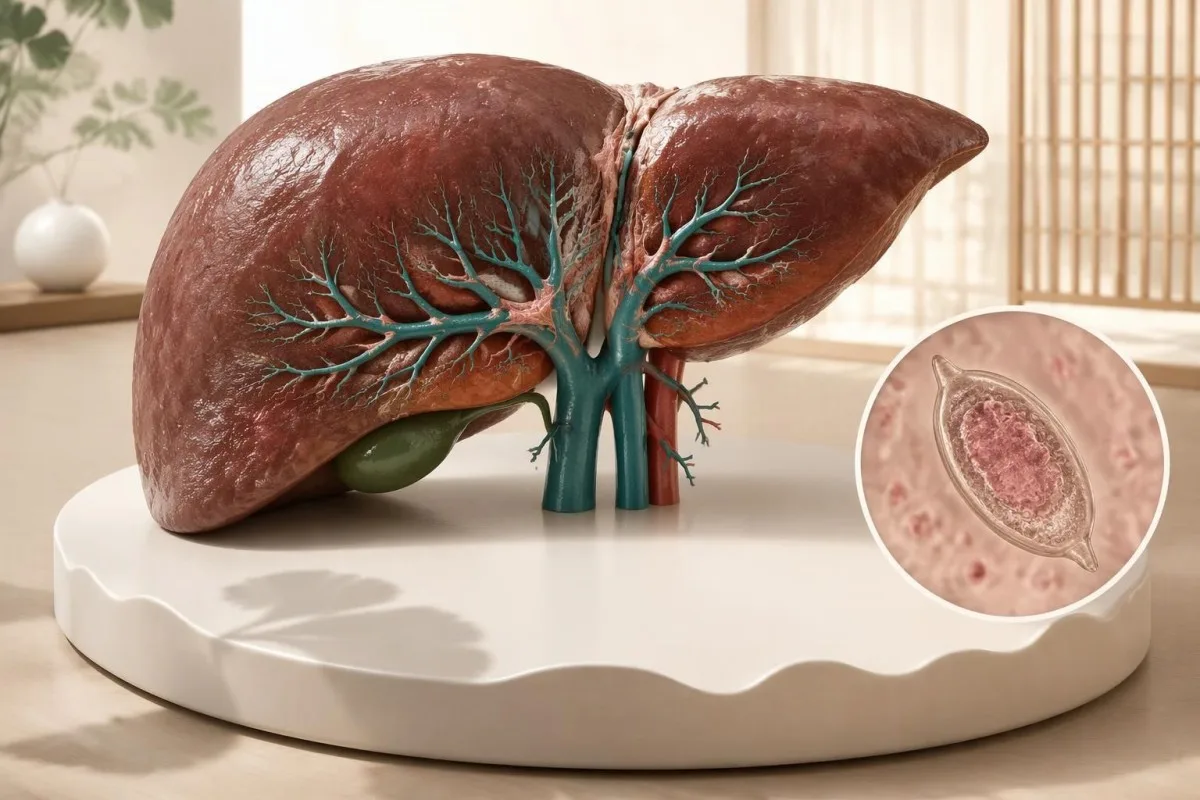
A hypothetical 28-year-old returns from a freshwater swim, tests positive 10 weeks later and has never received praziquantel; treatment may be reasonable despite negative microscopy. A hypothetical 44-year-old treated appropriately 4 years earlier, with no further exposure and no concerning findings, may not need retreatment; the timeline of laboratory results helps keep these histories distinct.
A hypothetical 35-year-old with no plausible freshwater exposure has a weakly positive screening assay and normal supporting investigations. The next step may be checking the original indication, assay and cross-reactivity rather than immediate treatment; changing a report from weak positive to strong positive on 1 repeat antibody assay still does not create a documented exposure or prove active infection.
A hypothetical 54-year-old who lived near endemic freshwater 20 years earlier has positive IgG, an enlarged spleen and an ALT of 24 IU/L within the local range. That combination merits assessment for portal and other organ disease despite normal enzymes; an old exposure is not automatically resolved, and common liver fibrosis scores should not be assumed validated for schistosomal periportal fibrosis.
Какво трябва да носите на контролния преглед и кои източници подкрепят лечението?
Bring your exposure history, complete laboratory report and treatment record to a clinician experienced in travel medicine, infectious diseases or tropical medicine. Prepare 3 questions: whether the result fits your exposure, which direct tests could change the decision and how treatment response will be assessed without relying on antibody disappearance.
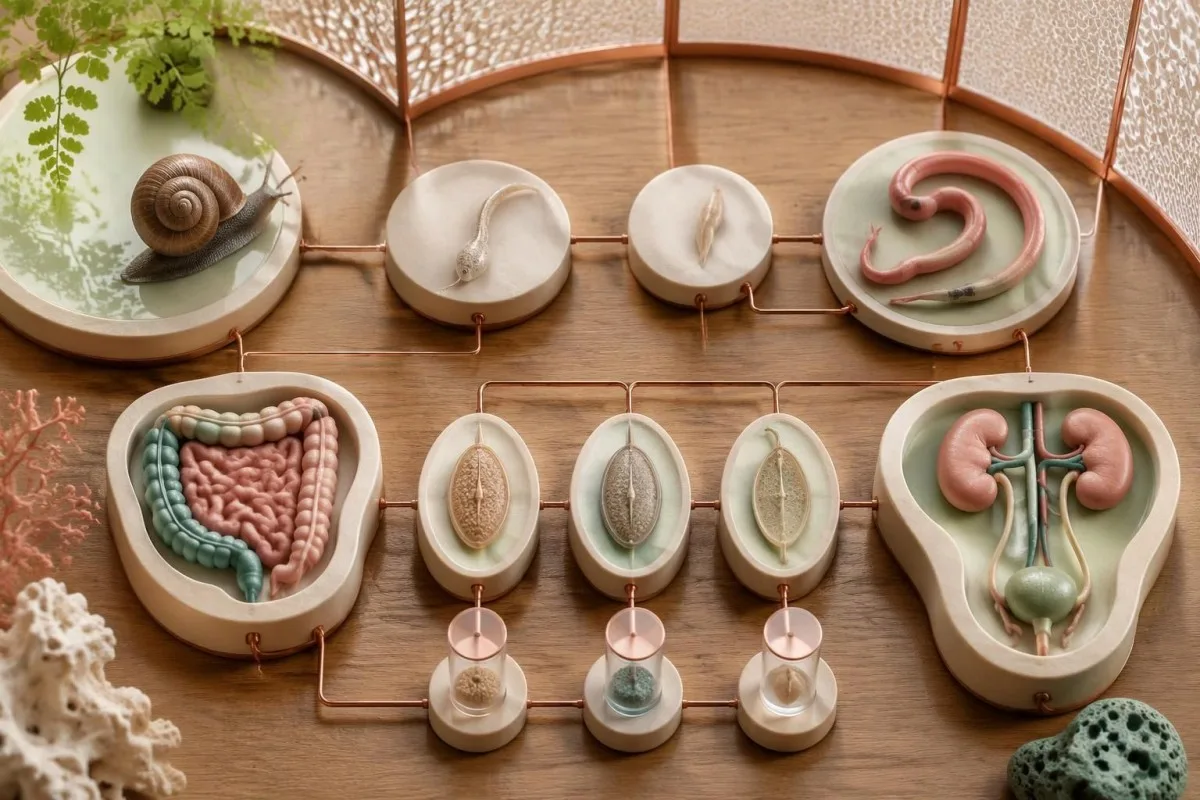
Your report should retain the assay name, units or index, reference interpretation and collection date, rather than only a cropped positive flag. Add 1 concise exposure timeline, previous praziquantel doses and dates, current medicines, pregnancy status where relevant and any urinary or neurological symptoms; this makes uncertainty visible and reduces the chance of repeating an uninformative antibody test.
Kantesti is an AI blood test interpretation platform that helps explain why 1 Schistosoma antibody result must be considered alongside exposure and treatment history, not used as a prescribing instruction. Our клинична рамка за валидиране describes methodology and oversight, while our правила за поверителност и обработване на данни information explains how to review data choices before sharing a travel or laboratory record.
The 2 Zenodo publications below describe Kantesti's validation framework and aggregate platform reporting; they are not clinical schistosomiasis guidelines and do not establish the sensitivity of a Schistosoma assay. Clinical recommendations in this article draw on CDC diagnostic and treatment guidance and the WHO guideline (2022), with our стандарти за медицинско съдържание distinguishing published evidence, hypothetical calculations and the limits of AI-supported explanation.
Често задавани въпроси
Означава ли положителният резултат за IgG срещу Schistosoma, че имам активна инфекция?
Положителният резултат за Schistosoma IgG не може надеждно да разграничи активна инфекция от инфекция, лекувана в миналото. Антителата могат да останат откриваеми с години, затова 1 положителен резултат трябва да се тълкува с оглед на контакт с прясна вода и анамнеза за лечение. Клиницистите могат да използват микроскопско изследване на фекалии или урина, изследване за антиген или PCR, когато е уместно, за да получат по-преки доказателства. Достоверна експозиция без адекватно предходно лечение може да е основание за лечение дори при отрицателна микроскопия.
Възможно ли е да имам шистозомиаза при отрицателни изследвания на изпражнения и урина?
Отрицателната микроскопия на изпражнения или урина не изключва шистозомиаза, особено след пътуване, когато паразитният товар може да е нисък. CDC препоръчва изследването на 3 проби, взети в различни дни, тъй като отделянето на яйца може да е периодично. Предполагаемият вид също определя дали трябва да се изследват изпражнения, урина или и двете. Клиничният лекар все пак може да препоръча лечение, когато антителата са положителни, експозицията е достоверна и няма документирани данни за предходно адекватно лечение.
Колко време след излагане на сладководна вода трябва да си направя изследване?
CDC препоръчва проби за антитела срещу Schistosoma да се вземат най-малко 6–8 седмици след предполагаема нова инфекция. При няколко излагания по време на пътуване последният контакт със сладка вода може да се използва като практическа отправна точка. Може да се наложи по-ранните отрицателни резултати да бъдат повторени, тъй като антителата все още може да не се откриват. При висока температура или други значими симптоми е необходима незабавна оценка, вместо да се чака този период за изследване.
Защо все още имам положителен резултат за антитела срещу шистозома след лечение с празиквантел?
Антителата срещу Schistosoma могат да останат положителни години след успешно лечение с празиквантел, тъй като имунният отговор продължава по-дълго от присъствието на паразита. Положителен резултат 6 месеца след лечението сам по себе си не доказва неуспех на лечението и не е основание за нов курс. Когато преди лечението са били открити яйца, лекарите могат да поискат повторно изследване на изпражнения или урина 1–2 месеца след това. Новото излагане, персистиращите симптоми и резултатите от директните изследвания са по-информативни от самото персистиране на антителата.
Каква доза празиквантел се използва при шистозомиаза?
CDC посочва празиквантел 40 mg/kg за 1 ден в 2 разделени дози при S. mansoni, S. haematobium и S. intercalatum. Посочената схема за S. japonicum и S. mekongi е 60 mg/kg за 1 ден в 3 разделени дози. В останалите случаи стабилните пътуващи обикновено се лекуват най-малко 6–8 седмици след последния контакт със сладка вода, тъй като празиквантелът действа най-добре срещу зрелите червеи. Лекарят трябва да избере схемата и да прегледа приеманите лекарства, бременността, възрастта и възможното засягане на нервната система.
Възможно ли е положителният тест за антитела срещу Schistosoma да е фалшиво положителен?
0. Изследването за антитела срещу Schistosoma може да даде фалшиво положителен резултат или да реагира кръстосано с антитела срещу други паразити в зависимост от метода. Няма универсална стойност на индекса, която да потвърждава активна инфекция, а 2 лаборатории може да използват различни антигенни препарати и гранични стойности. Слабо положителен резултат при липса на вероятен контакт със сладководни води може да налага преглед от лабораторията или използване на друг потвърдителен метод. Самото повторно изследване на антителата все така не може надеждно да разграничи прекарана и лекувана инфекция от наличие на живи паразити.
Получете обяснение на резултатите от кръвните си изследвания
Качете лабораторния си доклад и AI на Kantesti ще обясни всеки биомаркер на разбираем език за секунди. Използва се от над 2 милиона души по света.
Референции
- Klein, T., Mitchell, S., & Weber, H. (2026). Клинична рамка за валидация v2.0 (страница за медицинска валидация). Медицински изследвания с Kantesti AI. ДОИ
- Klein, T., Mitchell, S., & Weber, H. (2026). AI анализатор на кръвни изследвания: 2,5M изследвания анализирани | Global Health Report 2026. Медицински изследвания с Kantesti AI. ДОИ
- Центрове за контрол и превенция на заболяванията (2024). Clinical Testing and Diagnosis for Schistosomiasis. CDC Schistosomiasis Clinical Guidance.
- Центрове за контрол и превенция на заболяванията (2024). Clinical Care of Schistosomiasis. CDC Schistosomiasis Clinical Guidance.
- World Health Organization (2022). WHO guideline on control and elimination of human schistosomiasis. World Health Organization Guidelines.
- 2 милиона+Анализирани тестове
- 127+Държави
- 100+Езици
За медицинския екип


Сигнали за доверие E-E-A-T
Опит
Медицински преглед, воден от лекар, на работните процеси за интерпретация на лабораторни резултати.
Експертиза
Фокус в лабораторната медицина върху това как се държат биомаркерите в клиничен контекст.
Авторитетност
Медицинска рецензия от д-р Thomas Klein, с принос от д-р Sarah Mitchell и проф. д-р Hans Weber.
Надеждност
Интерпретация, основана на доказателства, с ясни последващи стъпки за намаляване на тревогата.






Медицински отказ от отговорност
Тази статия е само с образователна цел и не представлява медицински съвет. Винаги се консултирайте с квалифициран медицински специалист за решения относно диагностика и лечение.
Публикувано · Свържете се с редакционния екип
Издава се от Kantesti Ltd, регистрирана в Англия и Уелс, дружество №. 17090423, Лондон, Обединено кралство.
