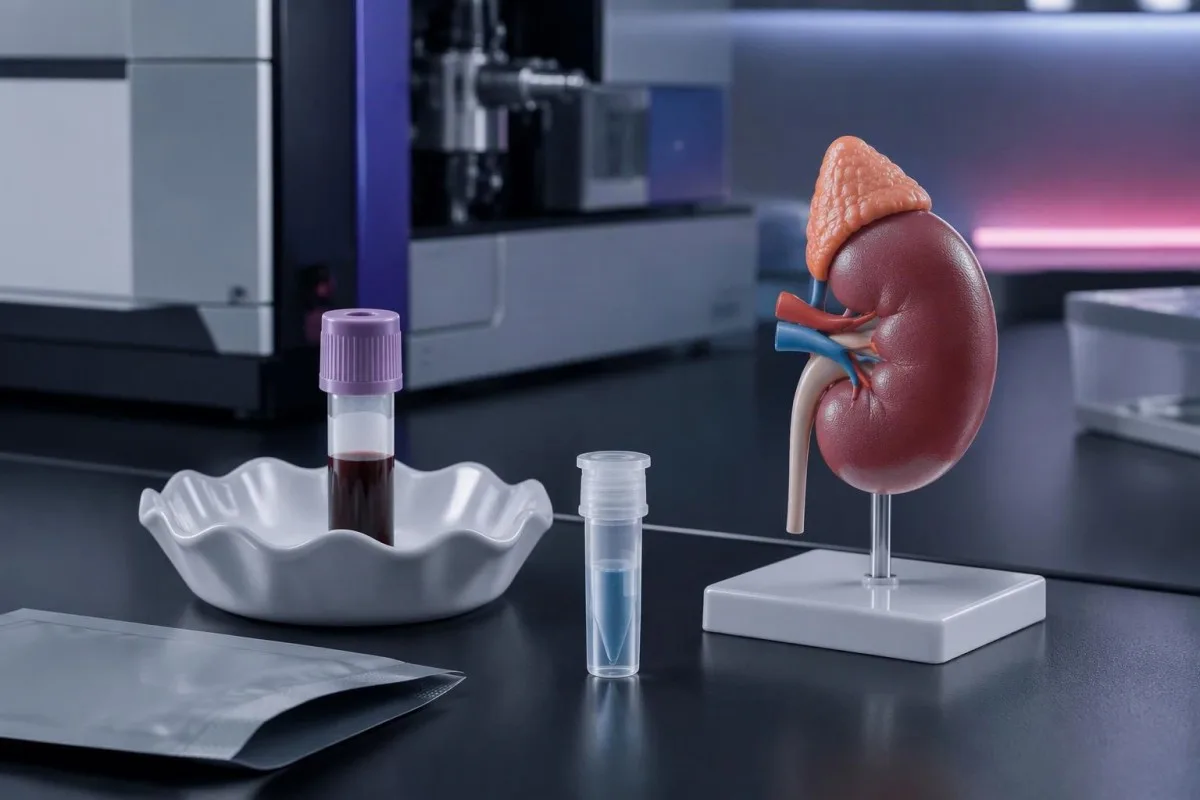
Paras palung everolimus 3–8 ng/mL lazimnya disasarkan dalam rejimen pemindahan organ tertentu, biasanya menggunakan sampel yang diambil sejurus sebelum dos seterusnya. Protokol pemindahan organ anda, ubat lain dan masa pengambilan menentukan maksud keputusan anda; rawatan kanser menggunakan prinsip dos yang berbeza, dan anda tidak sepatutnya mengubah dos sendiri.

Perkara utama
- Sasaran pemindahan organ lazimnya menggunakan 3–8 ng/mL dalam darah penuh, tetapi organ, ubat yang digunakan bersama dan protokol pasukan anda menentukan sasaran peribadi anda.
- Masa pengambilan ialah sejurus sebelum dos berjadual seterusnya—kira-kira 12 jam selepas dos sebelumnya bagi rejimen dua kali sehari.
- Unit makmal adalah setara apabila dinyatakan sebagai ng/mL atau µg/L: 5 ng/mL bersamaan 5 µg/L.
- Keputusan tinggi melebihi sasaran 3–8 ng/mL yang ditetapkan memerlukan semakan oleh pasukan pemindahan organ; 8 ng/mL bukan ambang kecemasan atau ketoksikan yang universal.
- Keputusan rendah di bawah 3 ng/mL mungkin menunjukkan pendedahan yang tidak mencukupi dalam rejimen yang menggunakan had bawah tersebut, tetapi tidak mendiagnosis penolakan organ.
- Ujian ulangan lazimnya berlaku sekitar 4–5 hari selepas perubahan dos yang diarahkan oleh klinisian, dengan ujian lebih awal atau tambahan apabila keadaan memerlukannya.
- Interaksi termasuk antikulat azol, klaritromisin, ubat yang mengandungi ritonavir, rifampisin dan sesetengah ubat sawan; memulakan atau menghentikan ubat yang berinteraksi boleh mengubah kepekatan.
- Rawatan kanser tidak secara automatik menggunakan julat pemindahan 3–8 ng/mL; banyak rejimen onkologi menggunakan dos harian khusus mengikut indikasi dan pelarasan berdasarkan ketoksikan.
- Keselamatan dos bermaksud bertanya kepada pasukan pemindahan anda tentang apa yang perlu diambil dan bila ujian perlu diulang, bukannya melangkau, menggandakan atau mengira semula dos sendiri.
Apakah yang sebenarnya ditunjukkan oleh paras palung everolimus?
Seorang paras palung everolimus mengukur kepekatan ubat dalam darah penuh sejurus sebelum dos seterusnya, membantu klinisian menilai pendedahan dan bukannya sekadar jumlah yang dipreskripsikan. Keputusan 5 ng/mL mungkin menepati sasaran pemindahan 3–8 ng/mL, tetapi hanya jika masa pengambilan sampel dan protokol rawatan sepadan dengan tafsiran tersebut.
Dos everolimus yang sama boleh menghasilkan kepekatan berbeza pada 2 orang kerana penyerapan, metabolisme hati dan ubat yang berinteraksi berbeza-beza. Paras palung ialah titik pensampelan yang praktikal, bukannya ukuran lengkap pendedahan sepanjang hari; nombor yang memuaskan juga tidak dapat membuktikan bahawa organ yang dipindahkan berfungsi secara normal atau tiada kesan buruk.
Di Kantesti, kami membezakan julat yang dicetak oleh makmal daripada sasaran yang sebenarnya ditetapkan oleh pasukan anda—contohnya, 3–8 ng/mL berbanding julat individu yang lebih sempit. Kami organisasi dan tujuan klinikal menerangkan peranan pendidikan dalam tafsiran; perkhidmatan pemindahan kekal bertanggungjawab memilih rejimen imunosupresif dan memutuskan sama ada keputusan patut mengubah rawatan.
Kantesti ialah seorang Penganalisis ujian darah AI yang boleh membantu meletakkan keputusan everolimus seperti 5 ng/mL bersama-sama keputusan fungsi buah pinggang dan kiraan darah yang dimuat naik, tanpa mempreskripsikan dos. Apabila everolimus digunakan bersama imunosupresan lain, kami panduan pemantauan tacrolimus menerangkan sebab setiap ubat memerlukan sasaran dan arahan pengambilan sampelnya sendiri.
Julat terapeutik everolimus yang manakah sesuai untuk indikasi anda?
The julat terapeutik everolimus yang lazim digunakan untuk rejimen pemindahan buah pinggang dan hati terpilih ialah 3–8 ng/mL dalam darah penuh. Protokol pemindahan jantung di bidang kuasa yang meluluskan penggunaan ini sering menggunakan julat yang serupa, tetapi pemindahan paru-paru, strategi pengurangan ubat pendamping dan indikasi lain memerlukan sasaran khusus daripada pakar.
Laporan konsensus oleh Shipkova et al. (2016), yang diterbitkan dalam Therapeutic Drug Monitoring, menyokong tafsiran kepekatan everolimus dalam konteks keseluruhan rejimen pemindahan, yang lazimnya menggunakan 3–8 ng/mL bersama perencat kalsineurin. Had bawah mencerminkan kebimbangan tentang imunosupresi yang tidak mencukupi, manakala had atas membantu mengehadkan kesan buruk yang berkaitan dengan pendedahan; kedua-dua had ini bukan sempadan biologi yang menyebabkan keselamatan berubah secara mendadak.
Kelulusan dan protokol berbeza di peringkat antarabangsa: pelabelan pemindahan A.S. meliputi keadaan buah pinggang dan hati tertentu, manakala maklumat produk Eropah turut merangkumi penggunaan terpilih untuk pemindahan jantung. Oleh itu, julat makmal 3–8 ng/mL tidak dengan sendirinya mengenal pasti organ, pendedahan kepada ubat pendamping atau fasa pascapembedahan, dan pusat rawatan mungkin memilih sasaran yang berbeza atas sebab klinikal yang didokumenkan.
Minta 3 maklumat: julat sasaran anda, sebab sasaran itu dipilih dan sasaran untuk mana-mana perencat kalsineurin yang digunakan bersama. Prinsip umum ini turut dipaparkan dalam tafsiran paras palung infliximab: julat terapeutik berkaitan dengan ubat, indikasi dan strategi pensampelan tertentu, bukannya untuk setiap orang yang mengambil ubat tersebut.
| Tahap | Julat | Maksudnya |
|---|---|---|
| Rejimen pemindahan buah pinggang terpilih | Lazimnya 3–8 ng/mL | Sasaran prados dalam darah penuh yang digunakan bersama imunosupresi tertentu; sahkan protokol pusat rawatan. |
| Rejimen pemindahan hati terpilih | Lazimnya 3–8 ng/mL | Often paired with reduced tacrolimus exposure after an appropriate postoperative interval. |
| Selected heart-transplant regimens | Often 3–8 ng/mL | Applicable only where the regimen and local approval support this target. |
| Lung or other specialist transplant regimens | Center-specific | Do not infer an individualized target from another organ's protocol. |
| Rawatan kanser | No universal transplant-equivalent target | Oncology dosing and adverse-effect management do not automatically use 3–8 ng/mL. |
Bilakah sampel everolimus perlu diambil?
Everolimus level timing should place the collection immediately before the next scheduled dose. For a twice-daily transplant regimen, this generally means approximately 12 hours after the previous dose; a specialist-requested trough for a once-daily regimen would generally be approximately 24 hours after the previous dose.
A hypothetical recipient takes everolimus at 08:00 and 20:00, then attends a planned collection just before 08:00 the next morning. The transplant team's usual instruction is to bring the morning dose and take it after collection, but obtain that instruction beforehand; a laboratory delay does not give you permission to postpone immunosuppression indefinitely.
Record the previous dose time, collection time and next dose time as 3 separate entries. A fasting instruction for glucose or lipids is a different issue from trough timing, so confirm whether you should take your usual food afterward and whether other morning medicines have separate instructions; our senarai semak persediaan cabutan pertama kami helps prevent missing these details.
Scheduling accuracy matters more than an appointment labeled simply 'morning': a 07:00 sample after a 23:00 dose represents an 8-hour interval, not a 12-hour trough. If travel, shift work or another medication makes the standard schedule difficult, arrange a collection plan with the transplant coordinator rather than changing dose times solely to fit the laboratory.
Bagaimana jika anda mengambil dos sebelum ujian atau terlepas satu dos?
A sample collected after taking everolimus is not a true predose trough and should not be compared directly with a 3–8 ng/mL trough target. A missed dose or substantially delayed collection also changes interpretation; report the actual times rather than trying to make the result fit the expected interval.
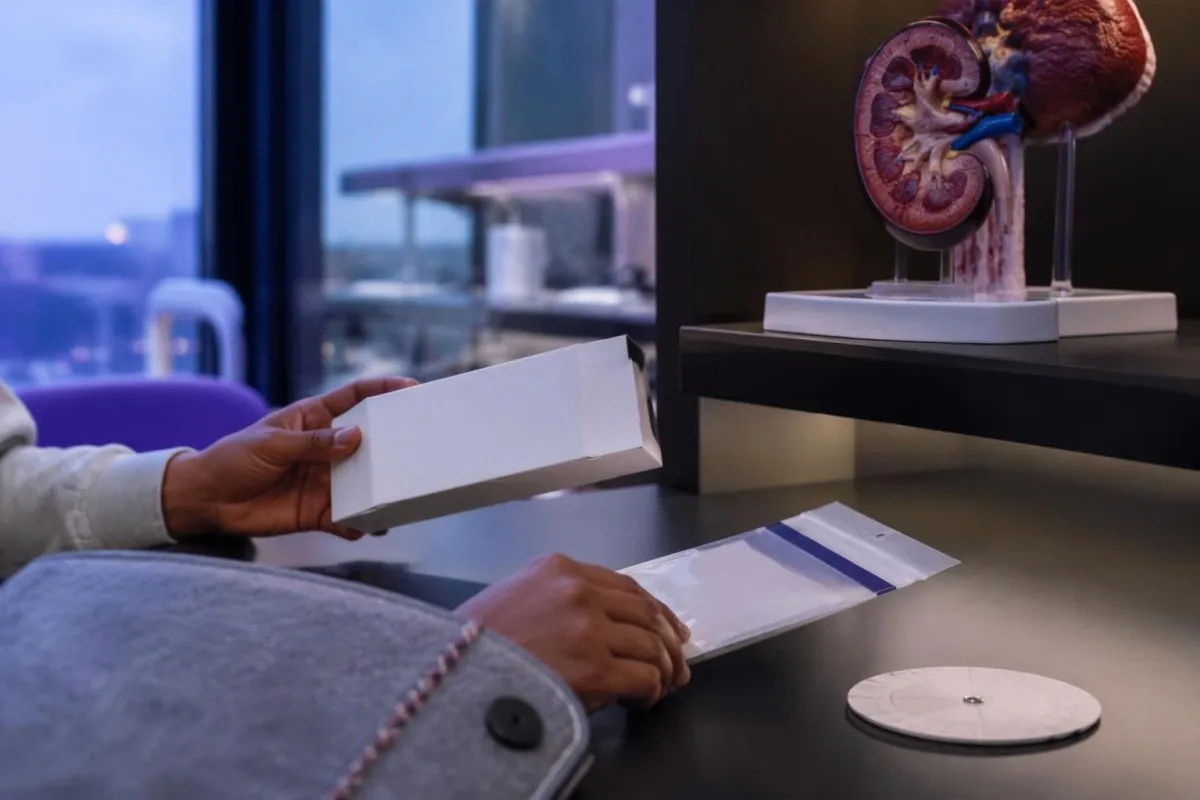
Everolimus commonly reaches peak concentrations around 1–2 hours after an oral dose, although food and individual absorption can change that timing. A hypothetical result of 12 ng/mL collected 90 minutes after dosing could reflect the absorption phase rather than an excessive trough; the team must still review the result and symptoms, not simply dismiss the number.
Missing the evening dose can make an apparently low morning concentration unrepresentative of your usual prescribed regimen, even if the appointment occurs at the expected hour. Give the team a factual account of the last 2–3 days, including vomiting or uncertainty about a dose; a one-time low result cannot distinguish missed treatment from inadequate dosing without that history.
Do not take an extra dose to compensate for a misleading 2 ng/mL result, and do not omit the next dose because a postdose sample looks high. Different medicines have different postdose sampling rules, as our digoxin sample-timing guide illustrates; ask the transplant team whether the collection needs repeating and what to take in the meantime.
Berapa lama selepas perubahan dos paras perlu diperiksa semula?
A routine everolimus level is commonly reassessed around 4–5 days after a clinician-directed dose change, when concentrations are approaching the new steady state. Earlier collections may be appropriate for suspected toxicity or major interactions, but they should be interpreted as transitional measurements rather than final evidence of the new dose's effect.
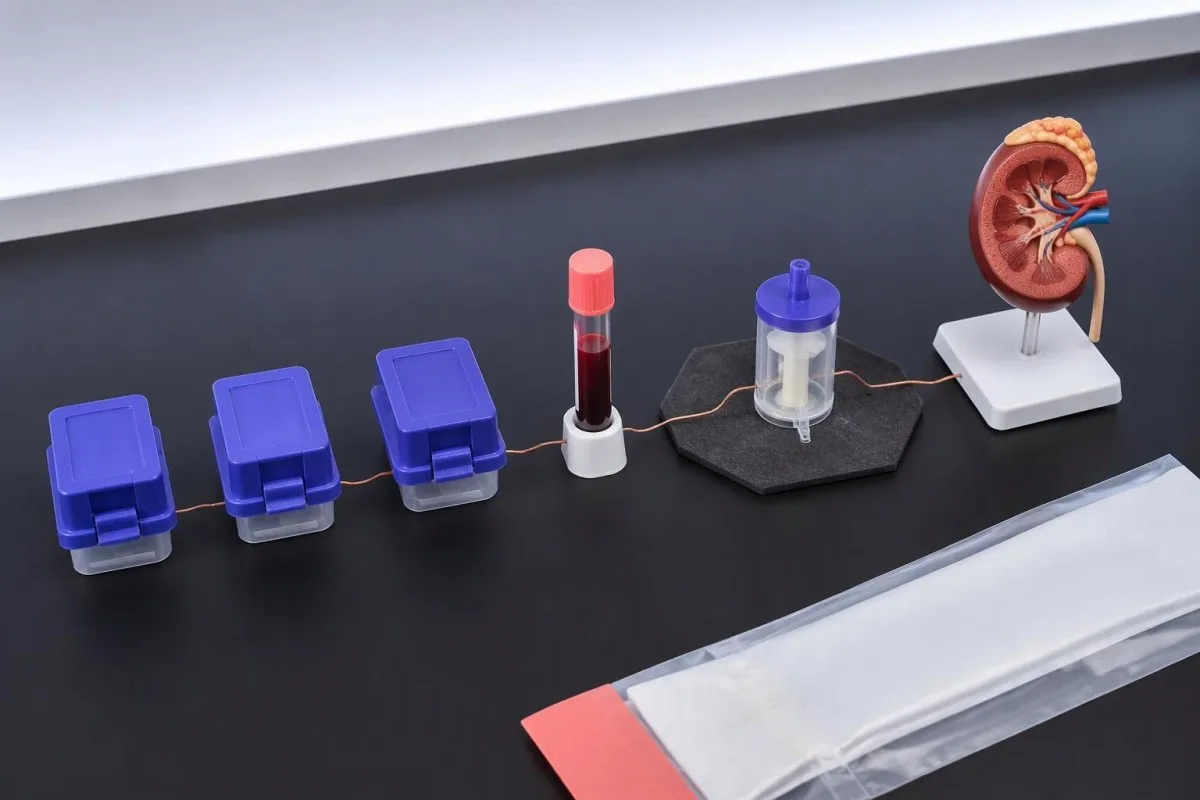
Everolimus has an average elimination half-life of roughly 30 hours, with substantial variation between people. After only 24 hours, a concentration still reflects considerable exposure from the previous regimen, so a second adjustment based solely on that early result can overshoot the intended target; product instructions commonly discourage routine adjustments more frequently than every 4–5 days.
A hypothetical recipient changes dose on Monday and has a predose sample on Tuesday because another test was already booked. That 1-day interval may provide useful safety information, but the transplant team may still request a later level; our blood-test change timeline explains why the biological response and the appointment schedule are not the same thing.
Starting an inhibitor can raise exposure while everolimus is still accumulating, and stopping an inducer can have delayed effects as enzyme activity returns toward baseline. Keep 2 dates in your record—the everolimus dose change and the interacting medicine change—because 'unchanged dose' does not mean unchanged exposure, and the team may need more than one repeat collection.
Mengapakah jenis spesimen dan kaedah makmal penting?
Everolimus transplant monitoring uses darah penuh, usually collected in an EDTA tube, rather than an interchangeable serum concentration. Results reported in ng/mL and µg/L are numerically equivalent: 6 ng/mL equals 6 µg/L, but values produced by different assay methods may not be directly comparable.
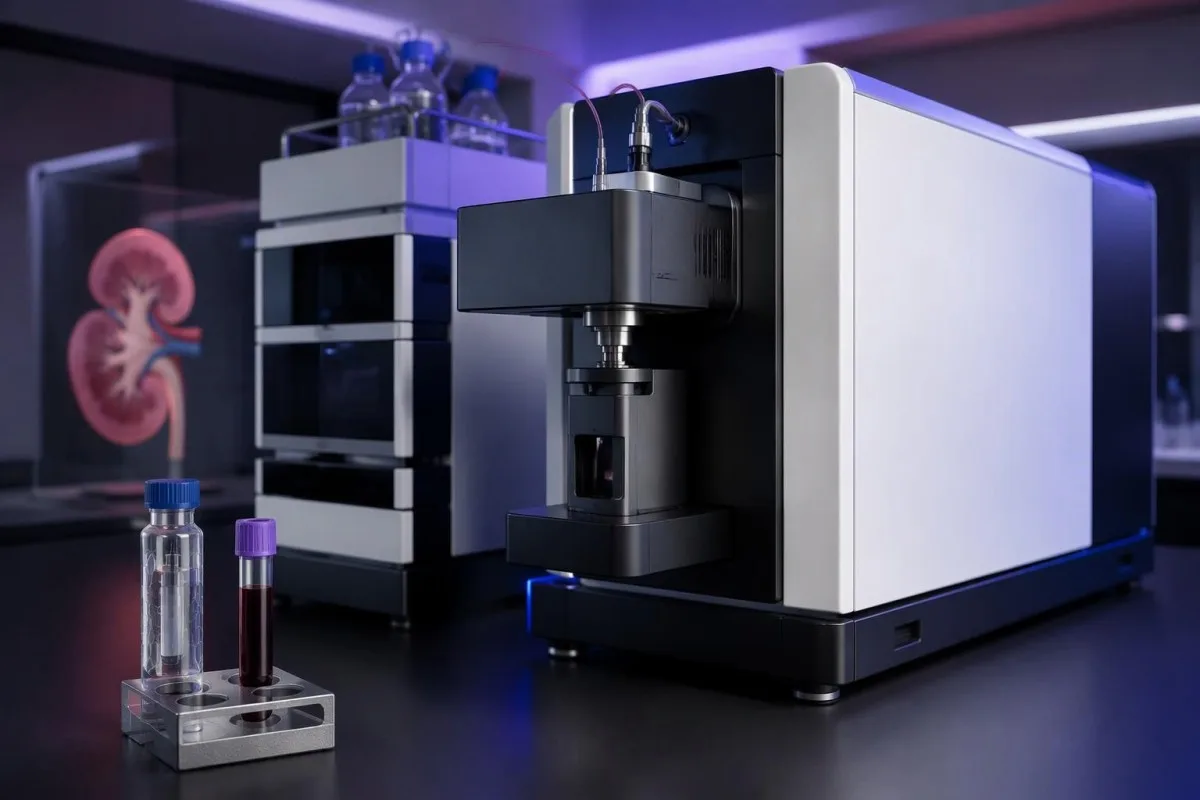
Liquid chromatography–tandem mass spectrometry, abbreviated LC-MS/MS, is a reference approach for everolimus measurement, while some laboratories use immunoassays. Method-dependent bias can occur, including differences in metabolite cross-reactivity, so an apparent shift from 6 to 8 ng/mL after changing laboratories deserves a method check before anyone assumes that drug exposure increased by one-third.
Whole-blood concentrations also depend partly on distribution into cellular elements, meaning a large hematocrit change may alter the relationship between the measured value and circulating drug exposure. There is no routine patient-applied hematocrit correction formula for an everolimus result of 4 ng/mL; our phenytoin bebas berbanding jumlah explains why specimen biology differs across monitored drugs.
Kantesti can help organize 3 report details—the analyte name, units and laboratory interval—but an uploaded report does not reveal an undocumented dose time or assay change. Our rangka kerja pengesahan dan pengawasan describes interpretation standards; it does not mean that AI performs the everolimus assay or replaces a transplant pharmacist's assessment of unexpected concentrations.
Ubat yang manakah boleh menaikkan atau menurunkan paras everolimus?
Medicines that inhibit CYP3A4 or P-glycoprotein can raise everolimus exposure, while enzyme-inducing medicines can lower it. Strong inhibitors such as certain azole antifungals and ritonavir-containing treatments may require avoidance or specialist management; even a 5-day course can matter for a twice-daily transplant regimen.
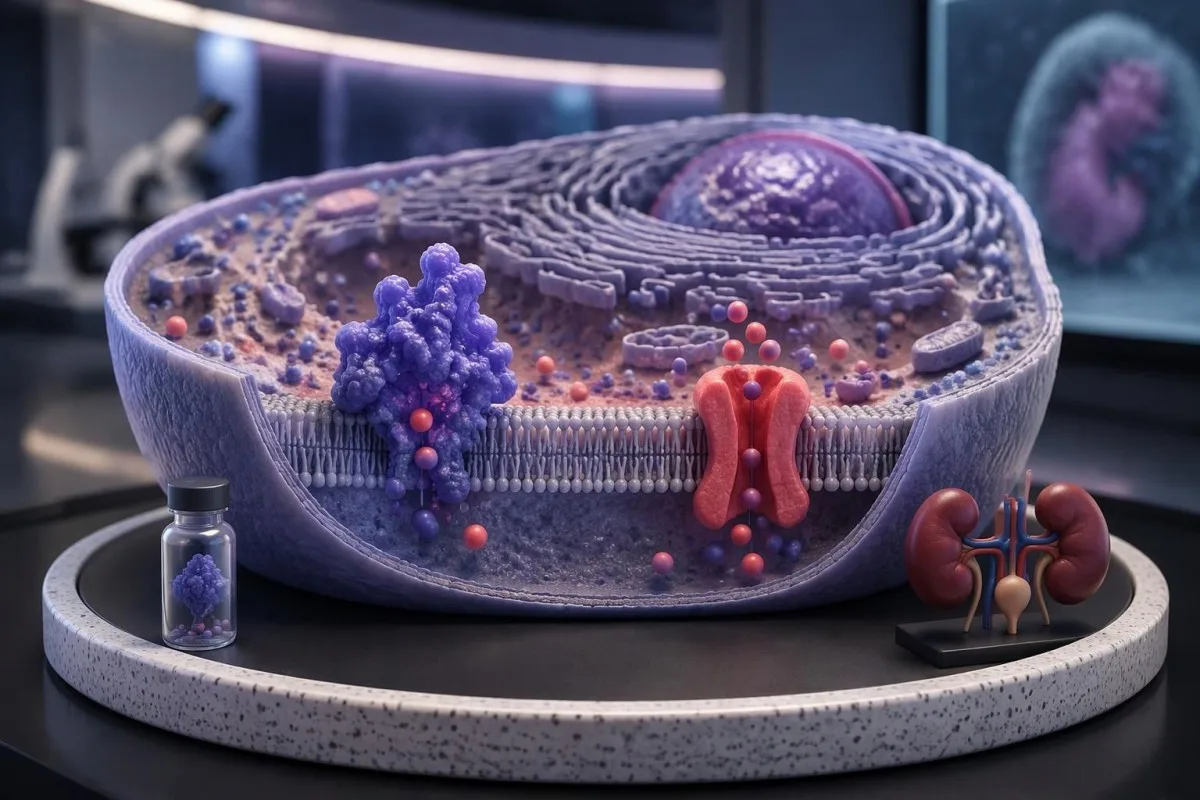
Examples that can raise exposure include voriconazole, posaconazole, itraconazole, clarithromycin and ritonavir or cobicistat; fluconazole, diltiazem and verapamil can also be relevant. The effect is not identical for every drug or person, and a previous concentration of 5 ng/mL does not predict safety after an inhibitor starts; our voriconazole monitoring guide covers the antifungal's own monitoring needs.
Rifampicin, carbamazepine, phenytoin, phenobarbital and St John's wort can reduce everolimus exposure through induction, although onset and recovery depend on the particular medicine. Starting an inducer may lower a previously acceptable 6 ng/mL trough, while stopping it may subsequently raise concentrations; tell the team about both actions rather than reporting only the new prescription.
Cyclosporine can increase everolimus exposure, so changes to its dose can alter the everolimus concentration even when the everolimus prescription stays the same. Before starting 1 new antibiotic, antifungal, antiviral or supplement, ask the transplant service or pharmacist to check the complete regimen—including tacrolimus, cyclosporine and nonprescription products—rather than checking each medicine separately.
Bagaimanakah makanan, fungsi hati dan penyakit perut menjejaskan keputusan?
Food consistency, liver impairment and gastrointestinal illness can change everolimus exposure or make a result harder to interpret. Take each prescribed dose consistently with or without food, avoid grapefruit unless your specialist explicitly advises otherwise, and report vomiting or persistent diarrhea even when the latest concentration was within 3–8 ng/mL.
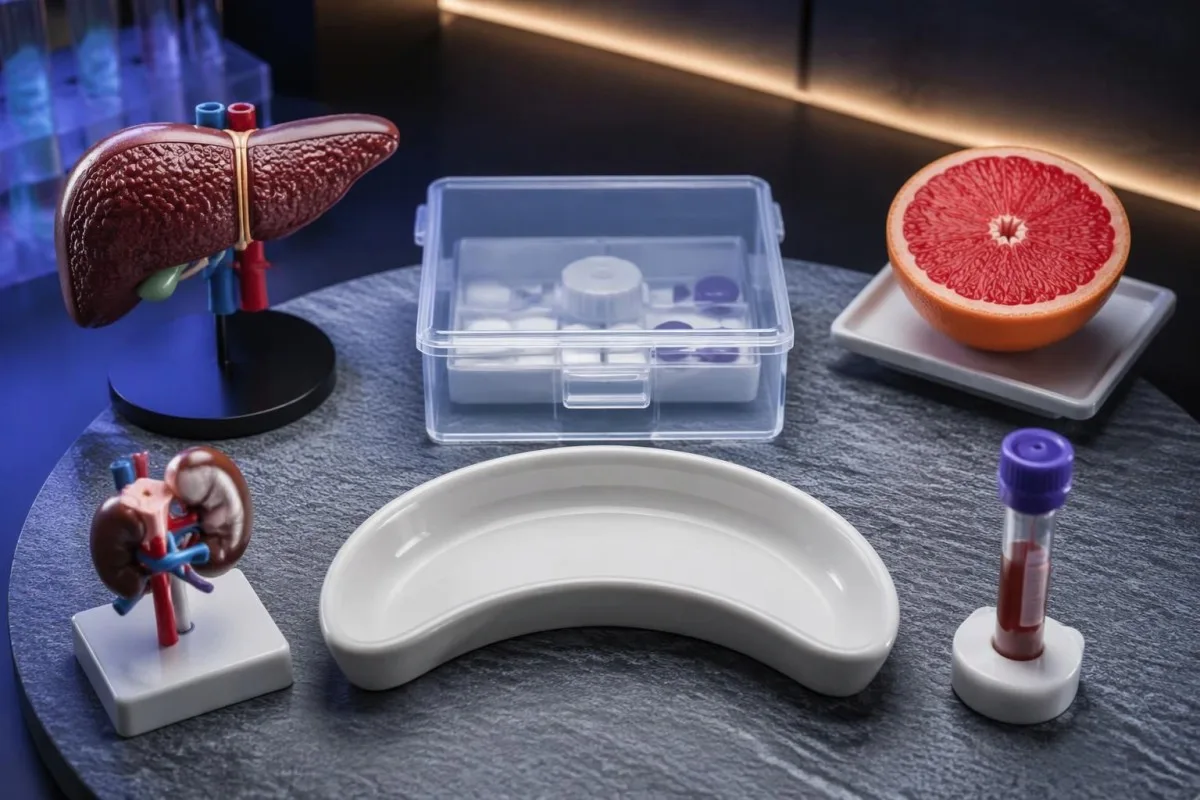
Food can alter everolimus absorption, so switching between fasting doses and doses with substantial meals can introduce variability without any prescription change. A practical record includes whether each of the previous 2 doses was taken with food; do not begin taking it fasting to 'improve' a low result, because that changes the exposure pattern your team is trying to assess.
Liver impairment can reduce everolimus clearance and may require indication-specific clinician-directed dose reduction, whereas reduced kidney filtration alone does not explain clearance in the same way. A change from 5 to 9 ng/mL therefore deserves a review of liver status and interacting medicines as well as kidney results; avoid unreviewed products marketed for kidney supplement support.
Diarrhea and vomiting can disrupt absorption, medication retention, hydration and the overall transplant regimen, but they do not reliably move everolimus concentrations in one predictable direction. If illness lasts more than 24 hours, or you cannot retain a scheduled dose, contact the team promptly; our norovirus recovery guidance should not substitute for transplant-specific advice.
Apakah yang perlu anda lakukan jika paras everolimus anda terlalu tinggi?
Seorang everolimus level too high means the measured concentration exceeds your prescribed target—not that one universal number proves poisoning. If your target is 3–8 ng/mL and a correctly collected trough is 12 ng/mL, contact the transplant team promptly for timing, interaction, symptom and laboratory review without independently withholding or reducing treatment.
A value of 8.4 ng/mL is only 0.4 ng/mL above an 8 ng/mL upper target and does not carry the same context as a sudden rise from 5 to 16 ng/mL. There is no universally accepted emergency cutoff that applies to every transplant regimen; the direction of change, collection accuracy, symptoms and other immunosuppressants determine how urgently the team responds.
Everolimus can cause mouth sores, low blood counts, proteinuria, increased lipids, hyperglycemia, impaired healing and noninfectious pneumonitis, including at concentrations within the intended range. New thirst or frequent urination warrants glucose assessment rather than assuming the trough explains everything; our high-glucose warning signs distinguish routine follow-up from symptoms that require urgent evaluation.
Kantesti ialah seorang platform tafsiran ujian darah AI that can help compare a reported 12 ng/mL concentration with accompanying uploaded results, but cannot decide whether the next dose should be held. Fever of 38°C or higher, new breathlessness, severe weakness, markedly reduced urine output or inability to keep medicines down warrants urgent clinical contact; severe breathing difficulty requires emergency care regardless of the trough.
Adakah paras palung everolimus yang rendah bermakna penolakan organ?
A low everolimus trough can indicate insufficient exposure when it falls below your protocol's lower target, but it does not diagnose rejection. For a regimen targeting 3–8 ng/mL, a genuine 2.2 ng/mL trough should prompt timely transplant-team review of adherence, timing, interactions and the complete immunosuppressive regimen.
A missed dose, an inducer such as rifampicin, inconsistent food intake or a delayed collection can each contribute to a low result. If a hypothetical recipient's usual trough is 4.5 ng/mL and the new result is 2.2 ng/mL, the useful first step is reconstructing events—not assuming the prescribed dose suddenly stopped working or taking an extra tablet.
Rejection assessment depends on graft function, symptoms and organ-specific investigations; a kidney recipient may need creatinine trends, urine testing, imaging or specialist tissue assessment. A rise in creatinine plus a 2 ng/mL trough raises concern, but dehydration, obstruction and other causes remain possible, so the transplant service decides which tests can distinguish them.
Increasing immunosuppression can worsen some viral complications, which is why a low trough cannot be managed separately from the rest of the record. Our BK virus graft-risk guide explains a setting where graft dysfunction and treatment intensity must be balanced; do not double 1 dose or change tacrolimus to compensate for an isolated everolimus result.
Ujian lain yang manakah menjadikan pemantauan everolimus lebih selamat?
Everolimus safety monitoring commonly includes blood counts, kidney function, urine protein, liver tests, glucose and lipids, alongside the trough and companion-drug levels. A 5 ng/mL concentration within a 3–8 ng/mL target does not rule out cytopenias, proteinuria, metabolic adverse effects or a problem caused by combined immunosuppression.
Persistent urine protein can require assessment even when creatinine changes little, and a urine albumin-to-creatinine ratio of 30 mg/g marks increased albumin excretion under general kidney classification. That threshold is not an automatic everolimus stopping rule; the team may use albumin or total-protein ratios, trends and graft context, while our panduan air kencing berbuih yang berterusan explains why appearance alone is insufficient.
De Simone et al. (2012) tested everolimus targeting 3–8 ng/mL with reduced tacrolimus after liver transplantation and found better kidney-function outcomes than standard tacrolimus exposure in the studied setting. This supports a deliberately coordinated regimen, not independent calcineurin-inhibitor withdrawal; our panduan nisbah fungsi buah pinggang provides background, but cannot identify the cause of graft dysfunction by itself.
A platelet decline from 180 to 70 × 10⁹/L combined with rising creatinine and evidence of red-cell fragmentation would need urgent investigation, including consideration of thrombotic microangiopathy. Those hypothetical values are not diagnostic thresholds, and other medicines or illnesses can be responsible; our tafsiran skistosit segera explains why a normal everolimus trough cannot make this pattern safe to ignore.
Mengapakah sasaran pemindahan organ tidak boleh digunakan secara automatik untuk rawatan kanser?
Cancer treatment should not automatically use the transplant 3–8 ng/mL everolimus target, because treatment goals, doses, formulations and supporting evidence differ. Many oncology regimens use a prescribed once-daily dose and adjust for adverse effects, interactions and liver function rather than routinely titrating every patient to a transplant trough interval.
Baselga et al. (2012), in the BOLERO-2 trial published in The New England Journal of Medicine, studied everolimus 10 mg daily with exemestane in a defined advanced breast-cancer population. That trial supports an indication-specific treatment strategy, not a universal concentration goal; a cancer patient's result above 8 ng/mL cannot be labeled excessive solely because a transplant report prints that upper boundary.
Exposure-response studies suggest potential roles for individualized oncology monitoring, but evidence has not established one universally accepted routine trough target across cancers. Separate noncancer indications also illustrate the difference: product labeling uses concentration-guided treatment targeting 5–15 ng/mL in certain tuberous-sclerosis-associated settings, and that interval must not be borrowed for cancer or transplantation without specialist direction.
A hypothetical oncology patient with a 9 ng/mL concentration needs the oncologist to review why the test was ordered, whether it was a true 24-hour predose sample and whether adverse effects are present. Our chemotherapy testing distinctions explain a different medicine-specific safety test; drug monitoring, pharmacogenetics and toxicity grading are not interchangeable routes to a self-selected dose.
Bagaimanakah masa dan interaksi mengubah keputusan berangka yang sama?
The same everolimus concentration can mean different things when the dose interval, indication or interacting medicines differ. Kantesti is an Alat analisis ujian darah berkuasa AI that can help organize these distinctions around a reported 10 ng/mL result, but only the treating team can translate the clinical context into a dosing decision.
Hypothetical example 1: a kidney recipient targeting 3–8 ng/mL has a 10 ng/mL result collected 12 hours after the last dose, several days after starting clarithromycin. That combination suggests a plausible interaction-related rise requiring prompt review; a mouth-sore history, blood count and companion-drug level would influence the clinician's decision more than the number alone.
Hypothetical example 2: another recipient has 10 ng/mL collected 1 hour after taking the morning dose, while their previous genuine trough was 5 ng/mL. The two results should not be plotted as equivalent troughs; our aliran kerja trend keselamatan ubat explains why sample annotations matter before interpreting a line rising on a chart.
Kantesti AI can support a record containing 4 fields—dose, previous-dose time, collection time and target—while our penjelasan teknologi AI kami describes the broader interpretation workflow. A proportional calculation such as reducing a dose by 50% because a level doubled ignores timing errors, interactions and graft risk, so it is not a safe patient dosing method.
Penerbitan penyelidikan dan senarai semak susulan pemindahan organ yang selamat
The strongest evidence for interpreting everolimus comes from drug-monitoring consensus guidance and indication-specific trials, not from general laboratory articles. Before acting on a result such as 9 ng/mL, obtain your prescribed target, verify collection timing and ask your transplant service for explicit next-dose and repeat-test instructions.
Send the service 5 essentials: the result and units, prescribed regimen, last-dose time, collection time and recent medicine or illness changes. Ask whether the sample is interpretable, what to take next and when to repeat it; the Shipkova et al. (2016) consensus and indication-specific trials provide clinical background, but none makes an unexplained high flag a patient-directed dosing instruction.
The 2 Zenodo publications listed below address coagulation and serum proteins, not everolimus pharmacokinetics, transplant target validation or oncology dose selection. Our panduan tafsiran protein serum may help explain accompanying albumin results, but these background resources should not be cited as evidence that 3–8 ng/mL is appropriate for a particular recipient.
bahan Kantesti piawaian kandungan perubatan distinguish educational interpretation from prescribing; this article cannot confirm that an individual 6 ng/mL result is correctly timed or clinically safe. Keep the transplant service's daytime and out-of-hours contact details available, and obtain urgent help for fever, breathing changes or inability to retain immunosuppression rather than waiting for another concentration.
Soalan lazim
Apakah paras palung everolimus sasaran selepas pemindahan organ?
An everolimus trough target of 3–8 ng/mL in whole blood is commonly used in selected kidney and liver transplant regimens and some heart-transplant protocols. Your personal target depends on the transplanted organ, accompanying immunosuppressants, postoperative phase and local protocol. A laboratory's printed range is not automatically your prescribed target. Ask the transplant team to confirm the interval before interpreting a flagged result or considering any treatment change.
Berapa jam selepas dos everolimus tahapnya perlu diperiksa?
An everolimus trough should be collected immediately before the next scheduled dose, usually approximately 12 hours after the previous dose for a twice-daily transplant regimen. If a specialist requests a trough during once-daily treatment, the expected interval is generally approximately 24 hours. Follow the team's instructions about taking the next dose after collection, and report both actual dose and collection times. A sample taken after dosing should not be treated as an ordinary predose trough.
Adakah paras everolimus 10 ng/mL terlalu tinggi?
Paras everolimus sebanyak 10 ng/mL melebihi sasaran jika julat paras palung darah penuh yang ditetapkan untuk anda ialah 3–8 ng/mL, tetapi paras ini bukan ambang ketoksikan yang universal. Keputusan sebenar sebelum dos mempunyai makna yang berbeza daripada sampel yang diambil 1–2 jam selepas dos. Hubungi pasukan pemindahan organ anda dengan segera untuk menyemak masa pengambilan sampel, ubat-ubatan yang berinteraksi, gejala dan keputusan makmal yang lain. Jangan langkau, kurangkan atau bahagikan dos seterusnya atas inisiatif sendiri; kesukaran bernafas yang teruk atau gejala serius lain memerlukan rawatan segera tanpa mengira kepekatan tersebut.
Adakah paras everolimus yang rendah bermakna pemindahan organ saya sedang ditolak?
Paras paras everolimus di bawah 3 ng/mL mungkin menunjukkan pendedahan yang tidak mencukupi dalam rejimen yang menggunakan 3–8 ng/mL, tetapi keputusan tersebut tidak mendiagnosis penolakan. Dos yang tertinggal, pengambilan sampel yang lewat, muntah dan ubat pengaruh enzim juga boleh menyumbang kepada kepekatan yang rendah. Penilaian penolakan memerlukan trend fungsi graft dan penyiasatan khusus organ yang dipilih oleh perkhidmatan transplantasi. Laporkan keputusan seperti 2.2 ng/mL dengan segera dan bukannya mengambil dos tambahan atau mengubah ubat imunosupresan lain.
Berapa lama selepas menukar dos paras everolimus perlu diulang?
Everolimus concentrations are commonly rechecked around 4–5 days after a clinician-directed dose change, when exposure is approaching the new steady state. The medicine's average half-life is roughly 30 hours, so a sample after only 1 day may still reflect the previous regimen substantially. Suspected toxicity, a major interaction or an unstable clinical situation can justify earlier or additional testing. Your transplant team should specify both the collection date and what to take while waiting.
Adakah pesakit kanser yang mengambil everolimus memerlukan paras palung 3–8 ng/mL?
Pesakit yang mengambil everolimus untuk kanser tidak seharusnya secara automatik diberikan sasaran paras palung pemindahan sebanyak 3–8 ng/mL. Banyak rejimen onkologi menggunakan dos sekali sehari yang khusus mengikut indikasi, seperti rejimen 10 mg sehari yang dikaji dalam BOLERO-2, dengan pelarasan yang diarahkan oleh doktor klinikal bagi kesan advers, interaksi dan fungsi hati. Tiada satu sasaran paras palung rutin yang diterima secara universal untuk semua jenis kanser. Jika pakar onkologi memesan ujian kepekatan, tanyakan sebab kepekatan itu diukur dan rangka kerja tafsiran yang digunakan.
Ubat-ubatan manakah yang boleh menyebabkan paras trough everolimus meningkat?
Pendedahan kepada everolimus boleh meningkat dengan perencat CYP3A4 atau P-glikoprotein, termasuk antikulat azol tertentu, clarithromycin dan ubat yang mengandungi ritonavir. Diltiazem, verapamil, fluconazole dan cyclosporine juga boleh menjadi relevan, walaupun kesannya berbeza mengikut ubat dan individu. Preskripsi selama 5 hari sekalipun boleh mengganggu paras palung 5 ng/mL yang sebelum ini stabil. Semak preskripsi dan suplemen baharu dengan pasukan pemindahan organ atau ahli farmasi sebelum memulakannya, dan maklumkan juga apabila rawatan yang berinteraksi dihentikan.
Dapatkan penjelasan tentang keputusan ujian darah anda
Muat naik laporan makmal anda dan AI Kantesti menerangkan setiap biomarker dalam bahasa mudah dalam beberapa saat. Digunakan oleh lebih daripada 2 juta orang di seluruh dunia.
Rujukan
- Klein, T., Mitchell, S., & Weber, H. (2026). Julat Normal aPTT: Panduan Pembekuan Darah D-Dimer, Protein C. Penyelidikan Perubatan AI Kantesti. DOI
- Klein, T., Mitchell, S., & Weber, H. (2026). Panduan Protein Serum: Globulin, Albumin & Ujian Darah Nisbah A/G. Penyelidikan Perubatan AI Kantesti. DOI
- Shipkova M et al. (2016). Therapeutic Drug Monitoring of Everolimus: A Consensus Report. Therapeutic Drug Monitoring.
- De Simone P et al. (2012). Everolimus with reduced tacrolimus improves renal function in de novo liver transplant recipients: a randomized controlled trial. American Journal of Transplantation. DOI
- Baselga J et al. (2012). Everolimus in Postmenopausal Hormone-Receptor–Positive Advanced Breast Cancer. The New England Journal of Medicine. DOI
- 2J+Ujian dianalisis
- 127+negara
- 100+Bahasa
Mengenai pasukan perubatan


Isyarat Kepercayaan E-E-A-T
Pengalaman
Semakan klinikal yang diketuai oleh doktor terhadap aliran kerja tafsiran makmal.
Kepakaran
Fokus perubatan makmal tentang bagaimana biomarker berkelakuan dalam konteks klinikal.
Kewibawaan
Disemak secara perubatan oleh Dr. Thomas Klein, dengan sumbangan daripada Dr. Sarah Mitchell dan Prof. Dr. Hans Weber.
Kebolehpercayaan
Tafsiran berasaskan bukti dengan laluan susulan yang jelas untuk mengurangkan kebimbangan.






Penafian perubatan
Artikel ini adalah untuk tujuan pendidikan sahaja dan tidak merupakan nasihat perubatan. Sentiasa rujuk pembekal penjagaan kesihatan yang berkelayakan untuk keputusan diagnosis dan rawatan.
Diterbitkan · Hubungi pasukan editorial
Diterbitkan oleh Kantesti Ltd, berdaftar di England & Wales, nombor syarikat. 17090423, London, United Kingdom.
