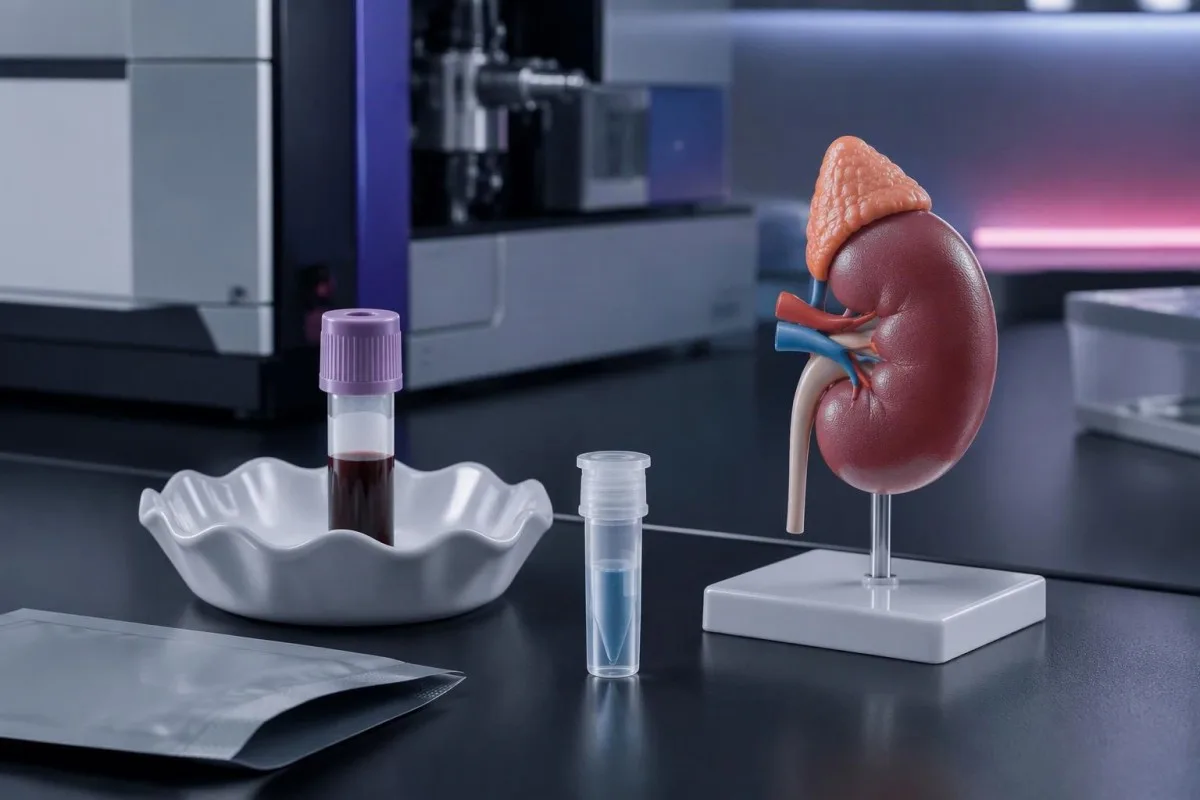
Teatud siirdamisraviskeemide puhul on tavapärane eesmärk saavutada everoliimuse minimaalne kontsentratsioon 3–8 ng/mL, määrates selleks tavaliselt vahetult enne järgmist annust võetud proovist. Teie siirdamisprotokoll, teised ravimid ja proovi võtmise aeg määravad, mida tulemus tähendab; vähiravis kasutatakse teistsuguseid annustamispõhimõtteid ning te ei tohiks annuseid ise muuta.

Peamised järeldused
- Siirdamise sihtväärtused on sageli täisveres 3–8 ng/mL, kuid isikliku sihtväärtuse määravad siirdatud elund, kaasuvad ravimid ja teie ravimeeskonna protokoll.
- Proovi võtmise aeg on vahetult enne järgmist plaanilist annust – kaks korda päevas manustatava raviskeemi korral ligikaudu 12 tundi pärast eelmist annust.
- Laboratoorsed ühikud on samaväärsed, kui need on väljendatud ühikutes ng/mL või µg/L: 5 ng/mL võrdub 5 µg/L.
- Kõrged tulemused üle määratud sihtväärtuse 3–8 ng/mL nõuavad siirdamismeeskonna hinnangut; 8 ng/mL ei ole universaalne erakorralise seisundi ega toksilisuse piirväärtus.
- Madalad tulemused alla 3 ng/mL võivad viidata ebapiisavale ekspositsioonile raviskeemides, kus kasutatakse seda alumist piirväärtust, kuid ei diagnoosi äratõuget.
- Kordustestimine esineb tavaliselt umbes 4–5 päeva pärast arsti juhendatud annuse muutmist; asjaolude nõudmisel tehakse varasem või lisauuring.
- Koostoimed hõlmavad asooli tüüpi seenevastaseid ravimeid, klaritromütsiini, ritonaviiri sisaldavaid ravimeid, rifampitsiini ja mõningaid krambivastaseid ravimeid; koostoimeid põhjustava ravimi alustamine või lõpetamine võib muuta kontsentratsioone.
- Vähiravi ei kasuta automaatselt siirdamise korral kehtivat vahemikku 3–8 ng/mL; paljudes onkoloogilistes raviskeemides kasutatakse näidustuspõhist ööpäevast annust ja toksilisuse põhjal tehtavaid kohandusi.
- Annuse ohutus tähendab, et küsige siirdamismeeskonnalt, mida võtta ja millal analüüsi korrata, selle asemel et annus vahele jätta, kahekordistada või seda ise ümber arvutada.
Mida everoliimuse minimaalne kontsentratsioon tegelikult näitab?
Üks everoliimuse minimaalne kontsentratsioon mõõdab ravimi kontsentratsiooni täisveres vahetult enne järgmist annust, aidates arstidel hinnata ravimi ekspositsiooni, mitte üksnes määratud annuse suurust. Tulemuseks saadud 5 ng/mL võib jääda siirdamise sihtvahemikku 3–8 ng/mL, kuid ainult juhul, kui proovi võtmise aeg ja raviprotokoll selle tõlgendusega sobivad.
Sama everoliimuse annus võib anda kahel inimesel erineva kontsentratsiooni, sest imendumine, metabolism maksas ja koostoimeid põhjustavad ravimid on erinevad. Minimaalne kontsentratsioon on praktiline proovivõtu hetk, mitte täielik mõõt kogu päeva vältel toimuva ekspositsiooni kohta; rahuldav tulemus ei tõesta samuti, et siirdatud elund toimib normaalselt või kõrvaltoimeid ei esine.
Teenuses Kantesti eristame labori väljastatud referentsvahemikku sihtvahemikust, mille teie ravimeeskond tegelikult määras – näiteks 3–8 ng/mL võrreldes kitsama individuaalse vahemikuga. Meie organisatsioon ja kliiniline eesmärk selgitavad tulemuste tõlgendamise hariduslikku rolli; immunosupressiivse raviskeemi valimise ja otsustamise eest, kas tulemus peaks ravi muutma, vastutab endiselt siirdamisraviteenistus.
Kantesti on AI vereanalüüsi analüsaator mis aitab paigutada everoliimuse tulemuse, näiteks 5 ng/mL, koos üles laaditud neerutalitluse ja vereanalüüsi tulemustega, annust määramata. Kui everoliimust kasutatakse koos teise immunosupressandiga, siis meie takroliimuse jälgimise juhend selgitab, miks iga ravim vajab oma sihtvahemikku ja proovivõtu juhiseid.
Milline everoliimuse terapeutiline vahemik kehtib teie näidustuse korral?
The everoliimuse terapeutiline vahemik mida kasutatakse tavaliselt valitud neeru- ja maksasiirdamise raviskeemides, on täisveres 3–8 ng/mL. Südamesiirdamise protokollides, kus see kasutus on heaks kiidetud, kasutatakse sageli sarnast vahemikku, kuid kopsusiirdamise, kaasravimi annuse vähendamise strateegiate ja muude näidustuste korral on vaja spetsialisti selgesõnaliselt määratud sihtvahemikke.
Shipkova jt 2016. aasta konsensusraport, mis avaldati ajakirjas Therapeutic Drug Monitoring, toetab everoliimuse kontsentratsioonide tõlgendamist siirdamise raviskeemi tervikuna arvestades; koos kaltsineuriini inhibiitoritega kasutatakse tavaliselt vahemikku 3–8 ng/mL. Alumine piir väljendab muret ebapiisava immunosupressiooni pärast, ülemine piir aga aitab piirata ekspositsiooniga seotud kõrvaltoimeid; kumbki piir ei ole bioloogiline järsk piir, millest üle astudes ohutus ootamatult muutub.
Heakskiidud ja protokollid erinevad riigiti: USA siirdamisravimite märgistuses on käsitletud kindlaid neeru- ja maksasiirdamise olukordi, Euroopa ravimiteabes aga ka valitud südamesiirdamise kasutusviise. Seetõttu ei näita labori vahemik 3–8 ng/mL iseenesest siirdatud elundit, kaasravimi ekspositsiooni ega operatsioonijärgset perioodi ning ravikeskus võib dokumenteeritud kliinilisel põhjusel valida teistsuguse sihtvahemiku.
Küsige kolme asja: oma sihtvahemikku, selle valimise põhjust ja kaasneva kaltsineuriini inhibiitori sihtvahemikku. Sama üldpõhimõte esineb ka meie infliksimabi minimaalse kontsentratsiooni tõlgenduses: terapeutilised vahemikud kehtivad konkreetse ravimi, näidustuse ja proovivõtustrateegia kohta, mitte iga selle ravimi kasutaja kohta.
| Tase | Vahemik | Mida see tähendab |
|---|---|---|
| Valitud neerusiirdamise raviskeemid | Tavaliselt 3–8 ng/mL | Täisvere sihtkontsentratsioon enne annust, mida kasutatakse koos kindla kaasneva immunosupressiivse raviga; kinnitage ravikeskuse protokoll. |
| Valitud maksasiirdamise raviskeemid | Tavaliselt 3–8 ng/mL | Often paired with reduced tacrolimus exposure after an appropriate postoperative interval. |
| Selected heart-transplant regimens | Often 3–8 ng/mL | Applicable only where the regimen and local approval support this target. |
| Lung or other specialist transplant regimens | Center-specific | Do not infer an individualized target from another organ's protocol. |
| Vähiravi | No universal transplant-equivalent target | Oncology dosing and adverse-effect management do not automatically use 3–8 ng/mL. |
Millal tuleks everoliimuse proov võtta?
Everolimus level timing should place the collection immediately before the next scheduled dose. For a twice-daily transplant regimen, this generally means approximately 12 hours after the previous dose; a specialist-requested trough for a once-daily regimen would generally be approximately 24 hours after the previous dose.
A hypothetical recipient takes everolimus at 08:00 and 20:00, then attends a planned collection just before 08:00 the next morning. The transplant team's usual instruction is to bring the morning dose and take it after collection, but obtain that instruction beforehand; a laboratory delay does not give you permission to postpone immunosuppression indefinitely.
Record the previous dose time, collection time and next dose time as 3 separate entries. A fasting instruction for glucose or lipids is a different issue from trough timing, so confirm whether you should take your usual food afterward and whether other morning medicines have separate instructions; our esimese verevõtu ettevalmistamise kontrollnimekiri helps prevent missing these details.
Scheduling accuracy matters more than an appointment labeled simply 'morning': a 07:00 sample after a 23:00 dose represents an 8-hour interval, not a 12-hour trough. If travel, shift work or another medication makes the standard schedule difficult, arrange a collection plan with the transplant coordinator rather than changing dose times solely to fit the laboratory.
Mida teha, kui võtsite annuse enne analüüsi või jätsite annuse vahele?
A sample collected after taking everolimus is not a true predose trough and should not be compared directly with a 3–8 ng/mL trough target. A missed dose or substantially delayed collection also changes interpretation; report the actual times rather than trying to make the result fit the expected interval.
Everolimus commonly reaches peak concentrations around 1–2 hours after an oral dose, although food and individual absorption can change that timing. A hypothetical result of 12 ng/mL collected 90 minutes after dosing could reflect the absorption phase rather than an excessive trough; the team must still review the result and symptoms, not simply dismiss the number.
Missing the evening dose can make an apparently low morning concentration unrepresentative of your usual prescribed regimen, even if the appointment occurs at the expected hour. Give the team a factual account of the last 2–3 days, including vomiting or uncertainty about a dose; a one-time low result cannot distinguish missed treatment from inadequate dosing without that history.
Do not take an extra dose to compensate for a misleading 2 ng/mL result, and do not omit the next dose because a postdose sample looks high. Different medicines have different postdose sampling rules, as our digoxin sample-timing guide illustrates; ask the transplant team whether the collection needs repeating and what to take in the meantime.
Kui kaua pärast annuse muutmist tuleks taset uuesti kontrollida?
A routine everolimus level is commonly reassessed around 4–5 days after a clinician-directed dose change, when concentrations are approaching the new steady state. Earlier collections may be appropriate for suspected toxicity or major interactions, but they should be interpreted as transitional measurements rather than final evidence of the new dose's effect.
Everolimus has an average elimination half-life of roughly 30 hours, with substantial variation between people. After only 24 hours, a concentration still reflects considerable exposure from the previous regimen, so a second adjustment based solely on that early result can overshoot the intended target; product instructions commonly discourage routine adjustments more frequently than every 4–5 days.
A hypothetical recipient changes dose on Monday and has a predose sample on Tuesday because another test was already booked. That 1-day interval may provide useful safety information, but the transplant team may still request a later level; our blood-test change timeline explains why the biological response and the appointment schedule are not the same thing.
Starting an inhibitor can raise exposure while everolimus is still accumulating, and stopping an inducer can have delayed effects as enzyme activity returns toward baseline. Keep 2 dates in your record—the everolimus dose change and the interacting medicine change—because 'unchanged dose' does not mean unchanged exposure, and the team may need more than one repeat collection.
Miks on proovi tüüp ja laborimeetod olulised?
Everolimus transplant monitoring uses täisveri, usually collected in an EDTA tube, rather than an interchangeable serum concentration. Results reported in ng/mL and µg/L are numerically equivalent: 6 ng/mL equals 6 µg/L, but values produced by different assay methods may not be directly comparable.
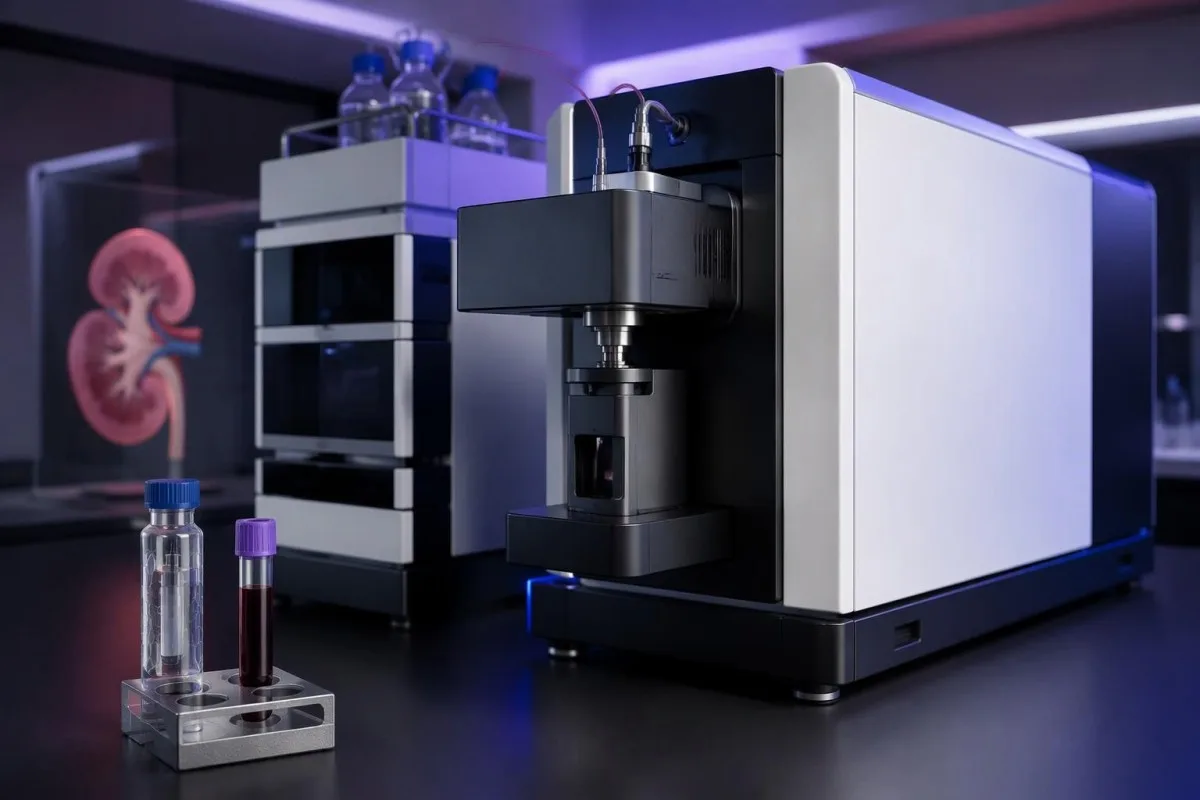
Liquid chromatography–tandem mass spectrometry, abbreviated LC-MS/MS, is a reference approach for everolimus measurement, while some laboratories use immunoassays. Method-dependent bias can occur, including differences in metabolite cross-reactivity, so an apparent shift from 6 to 8 ng/mL after changing laboratories deserves a method check before anyone assumes that drug exposure increased by one-third.
Whole-blood concentrations also depend partly on distribution into cellular elements, meaning a large hematocrit change may alter the relationship between the measured value and circulating drug exposure. There is no routine patient-applied hematocrit correction formula for an everolimus result of 4 ng/mL; our vaba ja üldfenütoiini juhend explains why specimen biology differs across monitored drugs.
Kantesti can help organize 3 report details—the analyte name, units and laboratory interval—but an uploaded report does not reveal an undocumented dose time or assay change. Our valideerimis- ja järelevalveraamistik describes interpretation standards; it does not mean that AI performs the everolimus assay or replaces a transplant pharmacist's assessment of unexpected concentrations.
Millised ravimid võivad everoliimuse taset tõsta või langetada?
Medicines that inhibit CYP3A4 or P-glycoprotein can raise everolimus exposure, while enzyme-inducing medicines can lower it. Strong inhibitors such as certain azole antifungals and ritonavir-containing treatments may require avoidance or specialist management; even a 5-day course can matter for a twice-daily transplant regimen.
Examples that can raise exposure include voriconazole, posaconazole, itraconazole, clarithromycin and ritonavir or cobicistat; fluconazole, diltiazem and verapamil can also be relevant. The effect is not identical for every drug or person, and a previous concentration of 5 ng/mL does not predict safety after an inhibitor starts; our voriconazole monitoring guide covers the antifungal's own monitoring needs.
Rifampicin, carbamazepine, phenytoin, phenobarbital and St John's wort can reduce everolimus exposure through induction, although onset and recovery depend on the particular medicine. Starting an inducer may lower a previously acceptable 6 ng/mL trough, while stopping it may subsequently raise concentrations; tell the team about both actions rather than reporting only the new prescription.
Cyclosporine can increase everolimus exposure, so changes to its dose can alter the everolimus concentration even when the everolimus prescription stays the same. Before starting 1 new antibiotic, antifungal, antiviral or supplement, ask the transplant service or pharmacist to check the complete regimen—including tacrolimus, cyclosporine and nonprescription products—rather than checking each medicine separately.
Kuidas mõjutavad tulemusi toit, maksafunktsioon ja maohaigus?
Food consistency, liver impairment and gastrointestinal illness can change everolimus exposure or make a result harder to interpret. Take each prescribed dose consistently with or without food, avoid grapefruit unless your specialist explicitly advises otherwise, and report vomiting or persistent diarrhea even when the latest concentration was within 3–8 ng/mL.
Food can alter everolimus absorption, so switching between fasting doses and doses with substantial meals can introduce variability without any prescription change. A practical record includes whether each of the previous 2 doses was taken with food; do not begin taking it fasting to 'improve' a low result, because that changes the exposure pattern your team is trying to assess.
Liver impairment can reduce everolimus clearance and may require indication-specific clinician-directed dose reduction, whereas reduced kidney filtration alone does not explain clearance in the same way. A change from 5 to 9 ng/mL therefore deserves a review of liver status and interacting medicines as well as kidney results; avoid unreviewed products marketed for kidney supplement support.
Diarrhea and vomiting can disrupt absorption, medication retention, hydration and the overall transplant regimen, but they do not reliably move everolimus concentrations in one predictable direction. If illness lasts more than 24 hours, or you cannot retain a scheduled dose, contact the team promptly; our norovirus recovery guidance should not substitute for transplant-specific advice.
Mida peaksite tegema, kui everoliimuse tase on liiga kõrge?
Üks everolimus level too high means the measured concentration exceeds your prescribed target—not that one universal number proves poisoning. If your target is 3–8 ng/mL and a correctly collected trough is 12 ng/mL, contact the transplant team promptly for timing, interaction, symptom and laboratory review without independently withholding or reducing treatment.
A value of 8.4 ng/mL is only 0.4 ng/mL above an 8 ng/mL upper target and does not carry the same context as a sudden rise from 5 to 16 ng/mL. There is no universally accepted emergency cutoff that applies to every transplant regimen; the direction of change, collection accuracy, symptoms and other immunosuppressants determine how urgently the team responds.
Everolimus can cause mouth sores, low blood counts, proteinuria, increased lipids, hyperglycemia, impaired healing and noninfectious pneumonitis, including at concentrations within the intended range. New thirst or frequent urination warrants glucose assessment rather than assuming the trough explains everything; our high-glucose warning signs distinguish routine follow-up from symptoms that require urgent evaluation.
Kantesti on AI vereanalüüsi tulemuste tõlgendamise platvorm that can help compare a reported 12 ng/mL concentration with accompanying uploaded results, but cannot decide whether the next dose should be held. Fever of 38°C or higher, new breathlessness, severe weakness, markedly reduced urine output or inability to keep medicines down warrants urgent clinical contact; severe breathing difficulty requires emergency care regardless of the trough.
Kas everoliimuse madal minimaalne kontsentratsioon tähendab äratõuget?
A low everolimus trough can indicate insufficient exposure when it falls below your protocol's lower target, but it does not diagnose rejection. For a regimen targeting 3–8 ng/mL, a genuine 2.2 ng/mL trough should prompt timely transplant-team review of adherence, timing, interactions and the complete immunosuppressive regimen.
A missed dose, an inducer such as rifampicin, inconsistent food intake or a delayed collection can each contribute to a low result. If a hypothetical recipient's usual trough is 4.5 ng/mL and the new result is 2.2 ng/mL, the useful first step is reconstructing events—not assuming the prescribed dose suddenly stopped working or taking an extra tablet.
Rejection assessment depends on graft function, symptoms and organ-specific investigations; a kidney recipient may need creatinine trends, urine testing, imaging or specialist tissue assessment. A rise in creatinine plus a 2 ng/mL trough raises concern, but dehydration, obstruction and other causes remain possible, so the transplant service decides which tests can distinguish them.
Increasing immunosuppression can worsen some viral complications, which is why a low trough cannot be managed separately from the rest of the record. Our BK virus graft-risk guide explains a setting where graft dysfunction and treatment intensity must be balanced; do not double 1 dose or change tacrolimus to compensate for an isolated everolimus result.
Millised muud analüüsid muudavad everoliimuse jälgimise ohutumaks?
Everolimus safety monitoring commonly includes blood counts, kidney function, urine protein, liver tests, glucose and lipids, alongside the trough and companion-drug levels. A 5 ng/mL concentration within a 3–8 ng/mL target does not rule out cytopenias, proteinuria, metabolic adverse effects or a problem caused by combined immunosuppression.
Persistent urine protein can require assessment even when creatinine changes little, and a urine albumin-to-creatinine ratio of 30 mg/g marks increased albumin excretion under general kidney classification. That threshold is not an automatic everolimus stopping rule; the team may use albumin or total-protein ratios, trends and graft context, while our püsiva vahutava uriini juhend explains why appearance alone is insufficient.
De Simone et al. (2012) tested everolimus targeting 3–8 ng/mL with reduced tacrolimus after liver transplantation and found better kidney-function outcomes than standard tacrolimus exposure in the studied setting. This supports a deliberately coordinated regimen, not independent calcineurin-inhibitor withdrawal; our neerufunktsiooni suhte juhend provides background, but cannot identify the cause of graft dysfunction by itself.
A platelet decline from 180 to 70 × 10⁹/L combined with rising creatinine and evidence of red-cell fragmentation would need urgent investigation, including consideration of thrombotic microangiopathy. Those hypothetical values are not diagnostic thresholds, and other medicines or illnesses can be responsible; our skistotsüütide kiire tõlgendamise juhend explains why a normal everolimus trough cannot make this pattern safe to ignore.
Miks ei tohiks vähiravis siirdamisravi sihtväärtusi automaatselt kasutada?
Cancer treatment should not automatically use the transplant 3–8 ng/mL everolimus target, because treatment goals, doses, formulations and supporting evidence differ. Many oncology regimens use a prescribed once-daily dose and adjust for adverse effects, interactions and liver function rather than routinely titrating every patient to a transplant trough interval.
Baselga et al. (2012), in the BOLERO-2 trial published in The New England Journal of Medicine, studied everolimus 10 mg daily with exemestane in a defined advanced breast-cancer population. That trial supports an indication-specific treatment strategy, not a universal concentration goal; a cancer patient's result above 8 ng/mL cannot be labeled excessive solely because a transplant report prints that upper boundary.
Exposure-response studies suggest potential roles for individualized oncology monitoring, but evidence has not established one universally accepted routine trough target across cancers. Separate noncancer indications also illustrate the difference: product labeling uses concentration-guided treatment targeting 5–15 ng/mL in certain tuberous-sclerosis-associated settings, and that interval must not be borrowed for cancer or transplantation without specialist direction.
A hypothetical oncology patient with a 9 ng/mL concentration needs the oncologist to review why the test was ordered, whether it was a true 24-hour predose sample and whether adverse effects are present. Our chemotherapy testing distinctions explain a different medicine-specific safety test; drug monitoring, pharmacogenetics and toxicity grading are not interchangeable routes to a self-selected dose.
Kuidas muudavad ajastus ja koostoimed sama arvulise tulemuse tähendust?
The same everolimus concentration can mean different things when the dose interval, indication or interacting medicines differ. Kantesti is an AI-põhine vereanalüüsi analüüsitööriist that can help organize these distinctions around a reported 10 ng/mL result, but only the treating team can translate the clinical context into a dosing decision.
Hypothetical example 1: a kidney recipient targeting 3–8 ng/mL has a 10 ng/mL result collected 12 hours after the last dose, several days after starting clarithromycin. That combination suggests a plausible interaction-related rise requiring prompt review; a mouth-sore history, blood count and companion-drug level would influence the clinician's decision more than the number alone.
Hypothetical example 2: another recipient has 10 ng/mL collected 1 hour after taking the morning dose, while their previous genuine trough was 5 ng/mL. The two results should not be plotted as equivalent troughs; our ravimiohutuse suundumuste töövoog explains why sample annotations matter before interpreting a line rising on a chart.
Kantesti AI can support a record containing 4 fields—dose, previous-dose time, collection time and target—while our AI tehnoloogia selgitus describes the broader interpretation workflow. A proportional calculation such as reducing a dose by 50% because a level doubled ignores timing errors, interactions and graft risk, so it is not a safe patient dosing method.
Teaduspublikatsioonid ja ohutu siirdamisjärgse jälgimise kontrollnimekiri
The strongest evidence for interpreting everolimus comes from drug-monitoring consensus guidance and indication-specific trials, not from general laboratory articles. Before acting on a result such as 9 ng/mL, obtain your prescribed target, verify collection timing and ask your transplant service for explicit next-dose and repeat-test instructions.
Send the service 5 essentials: the result and units, prescribed regimen, last-dose time, collection time and recent medicine or illness changes. Ask whether the sample is interpretable, what to take next and when to repeat it; the Shipkova et al. (2016) consensus and indication-specific trials provide clinical background, but none makes an unexplained high flag a patient-directed dosing instruction.
The 2 Zenodo publications listed below address coagulation and serum proteins, not everolimus pharmacokinetics, transplant target validation or oncology dose selection. Our seerumivalkude tõlgendamise juhend may help explain accompanying albumin results, but these background resources should not be cited as evidence that 3–8 ng/mL is appropriate for a particular recipient.
Kantesti meditsiinilise sisu standardid distinguish educational interpretation from prescribing; this article cannot confirm that an individual 6 ng/mL result is correctly timed or clinically safe. Keep the transplant service's daytime and out-of-hours contact details available, and obtain urgent help for fever, breathing changes or inability to retain immunosuppression rather than waiting for another concentration.
Korduma kippuvad küsimused
Milline on siirdamisjärgne everoliimuse minimaalne sihttase?
An everolimus trough target of 3–8 ng/mL in whole blood is commonly used in selected kidney and liver transplant regimens and some heart-transplant protocols. Your personal target depends on the transplanted organ, accompanying immunosuppressants, postoperative phase and local protocol. A laboratory's printed range is not automatically your prescribed target. Ask the transplant team to confirm the interval before interpreting a flagged result or considering any treatment change.
Mitu tundi pärast everoliimuse annust tuleb ravimitaset kontrollida?
An everolimus trough should be collected immediately before the next scheduled dose, usually approximately 12 hours after the previous dose for a twice-daily transplant regimen. If a specialist requests a trough during once-daily treatment, the expected interval is generally approximately 24 hours. Follow the team's instructions about taking the next dose after collection, and report both actual dose and collection times. A sample taken after dosing should not be treated as an ordinary predose trough.
Kas everoliimuse tase 10 ng/mL on liiga kõrge?
Everoliimuse tase 10 ng/mL ületab sihttaset, kui teile määratud täisvere minimaalse kontsentratsiooni vahemik on 3–8 ng/mL, kuid see ei ole universaalne toksilisuse piirväärtus. Enne ravimi võtmist võetud proovi tulemus tähendab midagi muud kui 1–2 tundi pärast annuse võtmist kogutud proovi tulemus. Võtke viivitamata ühendust oma siirdamismeeskonnaga, et vaadata üle proovi võtmise ajastus, koostoimeid põhjustavad ravimid, sümptomid ja muud laboritulemused. Ärge jätke järgmist annust omal käel vahele, vähendage seda ega jagage seda osadeks; raske hingamisraskuse või muude tõsiste sümptomite korral pöörduge kiireloomulise abi saamiseks olenemata ravimi kontsentratsioonist.
Kas madal everoliimuse tase võib tähendada, et siiratud organ tõukab siiriku ära?
Everoliimuse jääkkontsentratsioon alla 3 ng/mL võib viidata ebapiisavale ravimile eksponeeritusele raviskeemi korral, mille sihtvahemik on 3–8 ng/mL, kuid tulemus ei diagnoosi äratõuget. Väikese kontsentratsiooni võivad põhjustada ka vahelejäänud annused, proovi hilinenud võtmine, oksendamine ja ensüüme indutseerivad ravimid. Äratõuke hindamiseks on vaja siiriku funktsiooni muutusi jälgida ja teha siirdamismeeskonna valitud elundispetsiifilisi uuringuid. Teatage sellisest tulemusest nagu 2,2 ng/mL viivitamata, selle asemel et võtta lisaannus või muuta mõne muu immunosupressandi annust.
Kui kiiresti tuleks pärast annuse muutmist everoliimuse taset uuesti mõõta?
Everolimus concentrations are commonly rechecked around 4–5 days after a clinician-directed dose change, when exposure is approaching the new steady state. The medicine's average half-life is roughly 30 hours, so a sample after only 1 day may still reflect the previous regimen substantially. Suspected toxicity, a major interaction or an unstable clinical situation can justify earlier or additional testing. Your transplant team should specify both the collection date and what to take while waiting.
Kas everoliimust vähi raviks võtvate inimeste ravimi minimaalne kontsentratsioon peab olema 3–8 ng/mL?
Vähi tõttu everoliimust kasutavatele inimestele ei tohiks automaatselt määrata siirdamisjärgset minimaalse kontsentratsiooni sihtvahemikku 3–8 ng/mL. Paljudes onkoloogilistes raviskeemides kasutatakse näidustuspõhiseid üks kord päevas manustatavaid annuseid, näiteks BOLERO-2 uuringus uuritud 10 mg ööpäevast annust, mida kohandab arst kõrvaltoimete, koostoimete ja maksafunktsiooni järgi. Kõigi vähivormide puhul ei kehti ühtki üldtunnustatud rutiinset minimaalse kontsentratsiooni sihtväärtust. Kui onkoloog määrab ravimikontsentratsiooni mõõtmise, küsige, miks seda mõõdeti ja milline tõlgendusraamistik kehtib.
Millised ravimid võivad everoliimuse minimaalset taset tõsta?
Everoliimuse ekspositsioon võib suureneda CYP3A4 või P-glükoproteiini inhibiitorite, sealhulgas teatud asoolseenevastaste ravimite, klaritromütsiini ja ritonaviiri sisaldavate ravimite toimel. Olulised võivad olla ka diltiaseem, verapamiil, flukonasool ja tsüklosporiin, kuigi toime oleneb ravimist ja inimesest. Isegi 5-päevane ravikuur võib häirida varem stabiilset 5 ng/mL minimaalset kontsentratsiooni. Enne uute retseptiravimite või toidulisandite kasutamise alustamist kontrollige neid siirdamismeeskonna või apteekriga ning teavitage neid ka koostoimeid põhjustava ravi lõpetamisest.
Saage teada, kuidas lugeda vereanalüüsi tulemusi
Laadige oma laboriaruanne üles ja Kantesti AI selgitab iga biomarkerit sekunditega lihtsas keeles. Kasutusel enam kui 2 miljoni inimese seas kogu maailmas.
Viited
- Klein, T., Mitchell, S., & Weber, H. (2026). aPTT normaalvahemik: D-dimeeri ja C-proteiini juhend vere hüübimise kohta. Kantesti AI meditsiiniuuringud. DOI
- Klein, T., Mitchell, S., & Weber, H. (2026). Seerumivalkude juhend: globuliinid, albumiin ja albumiini-globuliini suhte vereanalüüs. Kantesti AI meditsiiniuuringud. DOI
- Shipkova M et al. (2016). Therapeutic Drug Monitoring of Everolimus: A Consensus Report. Therapeutic Drug Monitoring.
- De Simone P et al. (2012). Everolimus with reduced tacrolimus improves renal function in de novo liver transplant recipients: a randomized controlled trial. American Journal of Transplantation. DOI
- Baselga J et al. (2012). Everolimus in Postmenopausal Hormone-Receptor–Positive Advanced Breast Cancer. The New England Journal of Medicine. DOI
- 2+ kuudAnalüüsitud testid
- 127+Riigid
- 100+Keeled
Meditsiinimeeskonnast


E-E-A-T usaldussignaalid
Kogemus
Arsti juhitud kliiniline ülevaade labori tõlgendamise töövoogudest.
Ekspertiis
Laborimeditsiin keskendub sellele, kuidas biomarkerid käituvad kliinilises kontekstis.
Autoriteetsus
Meditsiiniliselt retsenseerinud dr Thomas Klein, kaastöölised dr Sarah Mitchell ja prof dr Hans Weber.
Usaldusväärsus
Tõenduspõhine tõlgendus selgete edasiste sammudega, et vähendada ärevust.






Meditsiiniline lahtiütlus
Käesolev artikkel on mõeldud üksnes hariduslikel eesmärkidel ega kujuta endast meditsiinilist nõuannet. Diagnoosi ja ravivalikute otsuste tegemiseks konsulteeri alati kvalifitseeritud tervishoiutöötajaga.
Avaldatud · Võtke ühendust toimetusega
Avaldanud Kantesti Ltd, registreeritud Inglismaal ja Walesis, ettevõtte nr. 17090423, London, Ühendkuningriik.
