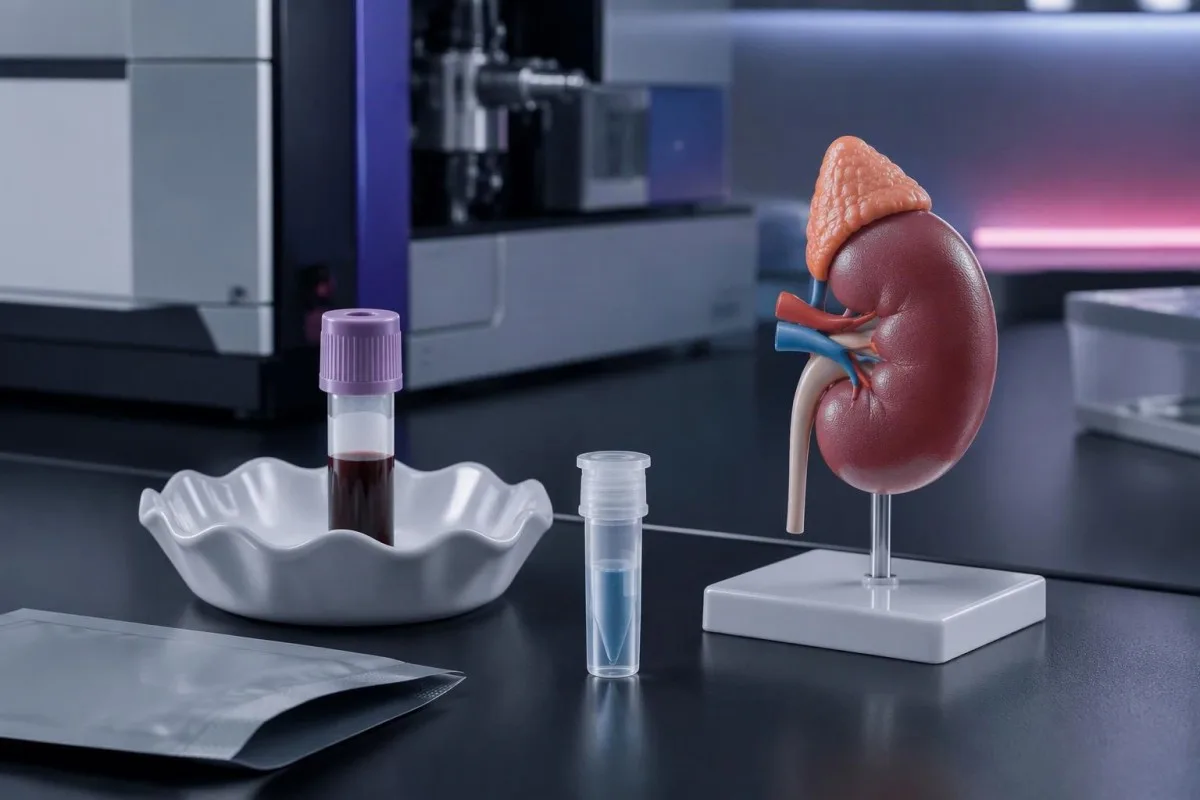
При некоторых схемах терапии после трансплантации обычно стремятся к минимальной концентрации эверолимуса 3–8 нг/мл; для этого образец, как правило, берут непосредственно перед следующей дозой. Значение результата зависит от протокола трансплантации, других лекарств и времени забора образца; при лечении рака применяются другие принципы дозирования, и не следует самостоятельно менять дозы.

Основные выводы
- Целевые показатели после трансплантации обычно составляют 3–8 нг/мл в цельной крови, однако ваш индивидуальный целевой показатель определяется органом, сопутствующими лекарствами и протоколом вашей лечащей команды.
- Время забора непосредственно перед следующей запланированной дозой — приблизительно через 12 часов после предыдущей дозы при приёме два раза в день.
- Единицы измерения в лабораторных анализах взаимозаменяемы при выражении в нг/мл или мкг/л: 5 нг/мл равны 5 мкг/л.
- Высокие результаты Результаты выше назначенного целевого диапазона 3–8 нг/мл требуют оценки трансплантационной командой; 8 нг/мл не является универсальным порогом экстренной ситуации или токсичности.
- Низкие результаты ниже 3 нг/мл могут указывать на недостаточную экспозицию при схемах, использующих эту нижнюю границу, но не позволяют диагностировать отторжение трансплантата.
- Повторное тестирование обычно возникает примерно через 4–5 дней после изменения дозы по указанию врача; при необходимости анализ проводят раньше или повторяют дополнительно.
- Взаимодействия включают азольные противогрибковые препараты, кларитромицин, препараты, содержащие ритонавир, рифампицин и некоторые противосудорожные препараты; начало или отмена взаимодействующего препарата может изменить концентрацию.
- Лечение рака автоматически не применяет диапазон 3–8 нг/мл для трансплантации; во многих онкологических схемах используют суточную дозу, определяемую конкретным показанием, и корректируют её с учётом токсичности.
- Безопасность дозировки означает, что нужно спросить у трансплантологической команды, что принимать и когда повторить анализ, а не пропускать приём, не удваивать дозу и не пересчитывать её самостоятельно.
Что на самом деле показывает минимальная концентрация эверолимуса?
Ан остаточная концентрация эверолимуса измеряет концентрацию препарата в цельной крови непосредственно перед следующей дозой, помогая врачам оценить экспозицию, а не просто назначенное количество. Результат 5 нг/мл может соответствовать целевому диапазону 3–8 нг/мл после трансплантации, но только если время взятия образца и протокол лечения позволяют так его интерпретировать.
Одна и та же доза эверолимуса может приводить к разным концентрациям у двух людей из-за различий во всасывании, метаболизме в печени и взаимодействии с другими препаратами. Остаточная концентрация — это удобный момент для взятия образца, а не полное измерение экспозиции в течение дня; удовлетворительный показатель также не доказывает, что пересаженный орган функционирует нормально или что побочные эффекты отсутствуют.
В Kantesti мы отличаем напечатанный лабораторией референсный интервал от целевого диапазона, фактически назначенного вашей командой, например 3–8 нг/мл от более узкого индивидуального интервала. Наши организация и клиническое назначение объясняют образовательную роль интерпретации; трансплантологическая служба по-прежнему отвечает за выбор схемы иммуносупрессии и решение о том, следует ли менять лечение по результату анализа.
Кантести — это Анализатор анализа крови на основе искусственного интеллекта которые могут помочь рассмотреть результат анализа на эверолимус, например 5 нг/мл, вместе с загруженными результатами анализов функции почек и общего анализа крови, не назначая дозу. Если эверолимус принимают вместе с другим иммунодепрессантом, наши справочник по мониторингу такролимуса объясняют, почему для каждого препарата нужны собственный целевой диапазон и инструкции по взятию образца.
Какой терапевтический диапазон эверолимуса применим при вашем показании?
The терапевтический диапазон эверолимуса обычно применяемый в отдельных схемах после трансплантации почки и печени, составляет 3–8 нг/мл в цельной крови. В протоколах после трансплантации сердца в странах, где такое применение одобрено, часто используют аналогичный диапазон, однако при трансплантации лёгких, схемах со снижением дозы сопутствующего препарата и других показаниях необходимы конкретные целевые значения, установленные специалистом.
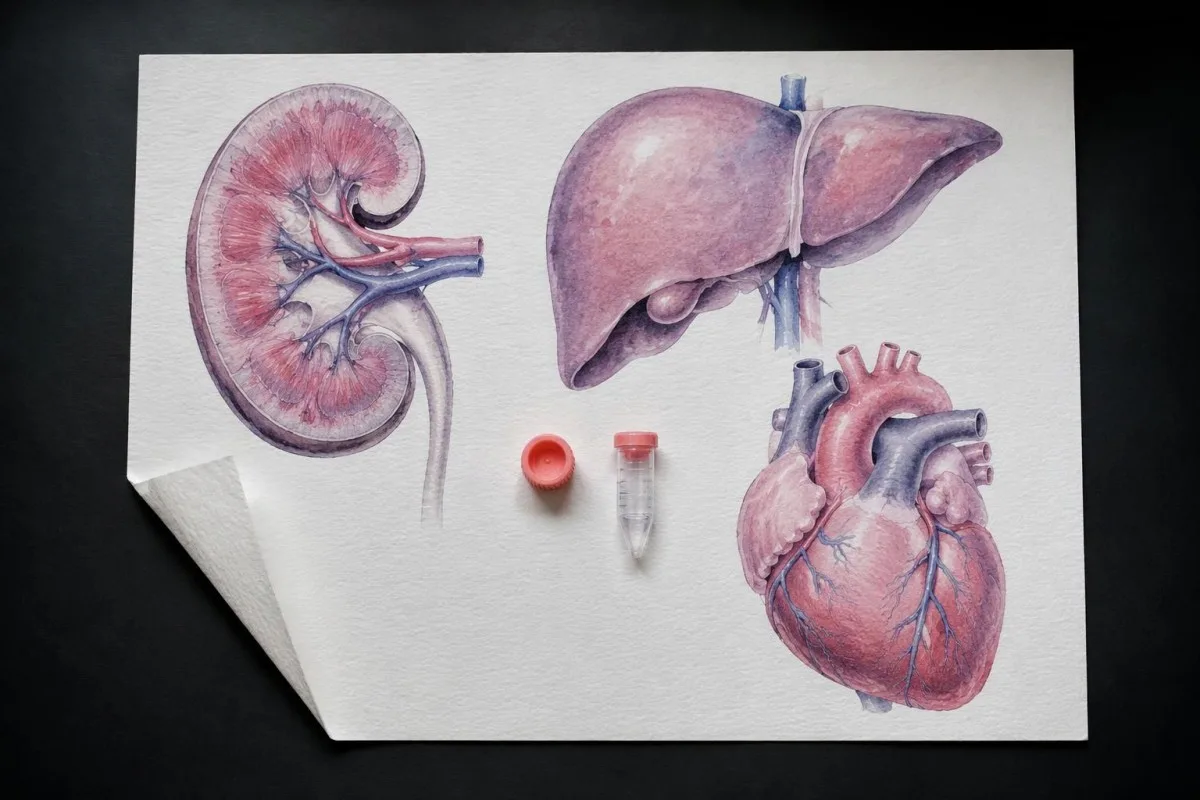
Консенсусный доклад Shipkova et al. (2016), опубликованный в журнале Therapeutic Drug Monitoring, подтверждает, что концентрации эверолимуса следует интерпретировать в контексте полной схемы лечения после трансплантации; при применении с ингибиторами кальциневрина обычно используют диапазон 3–8 нг/мл. Нижняя граница отражает опасения по поводу недостаточной иммуносупрессии, а верхняя помогает ограничить побочные эффекты, связанные с экспозицией; ни одна из границ не является биологическим порогом, при пересечении которого безопасность резко меняется.
Регистрационные показания и протоколы различаются в разных странах: в США инструкции по применению препаратов для трансплантации охватывают определённые случаи трансплантации почки и печени, тогда как европейская информация о препаратах также включает отдельные случаи трансплантации сердца. Поэтому лабораторный интервал 3–8 нг/мл сам по себе не указывает на пересаженный орган, экспозицию сопутствующего препарата или послеоперационный период, и медицинский центр может выбрать другой целевой диапазон по документированной клинической причине.
Запросите 3 сведения: целевой диапазон, причину его выбора и целевой диапазон для любого сопутствующего ингибитора кальциневрина. Этот общий принцип также рассматривается в нашем материале об интерпретации остаточной концентрации инфликсимаба: терапевтические диапазоны относятся к конкретному препарату, показанию и стратегии взятия образца, а не ко всем людям, принимающим этот препарат.
| Уровень | Диапазон | Значение |
|---|---|---|
| Отдельные схемы после трансплантации почки | Обычно 3–8 нг/мл | Целевая концентрация в цельной крови перед приёмом дозы, используемая при определённых схемах сопутствующей иммуносупрессии; уточните протокол медицинского центра. |
| Отдельные схемы после трансплантации печени | Обычно 3–8 нг/мл | Often paired with reduced tacrolimus exposure after an appropriate postoperative interval. |
| Selected heart-transplant regimens | Often 3–8 ng/mL | Applicable only where the regimen and local approval support this target. |
| Lung or other specialist transplant regimens | Center-specific | Do not infer an individualized target from another organ's protocol. |
| Лечение рака | No universal transplant-equivalent target | Oncology dosing and adverse-effect management do not automatically use 3–8 ng/mL. |
Когда следует брать образец для определения концентрации эверолимуса?
Everolimus level timing should place the collection immediately before the next scheduled dose. For a twice-daily transplant regimen, this generally means approximately 12 hours after the previous dose; a specialist-requested trough for a once-daily regimen would generally be approximately 24 hours after the previous dose.
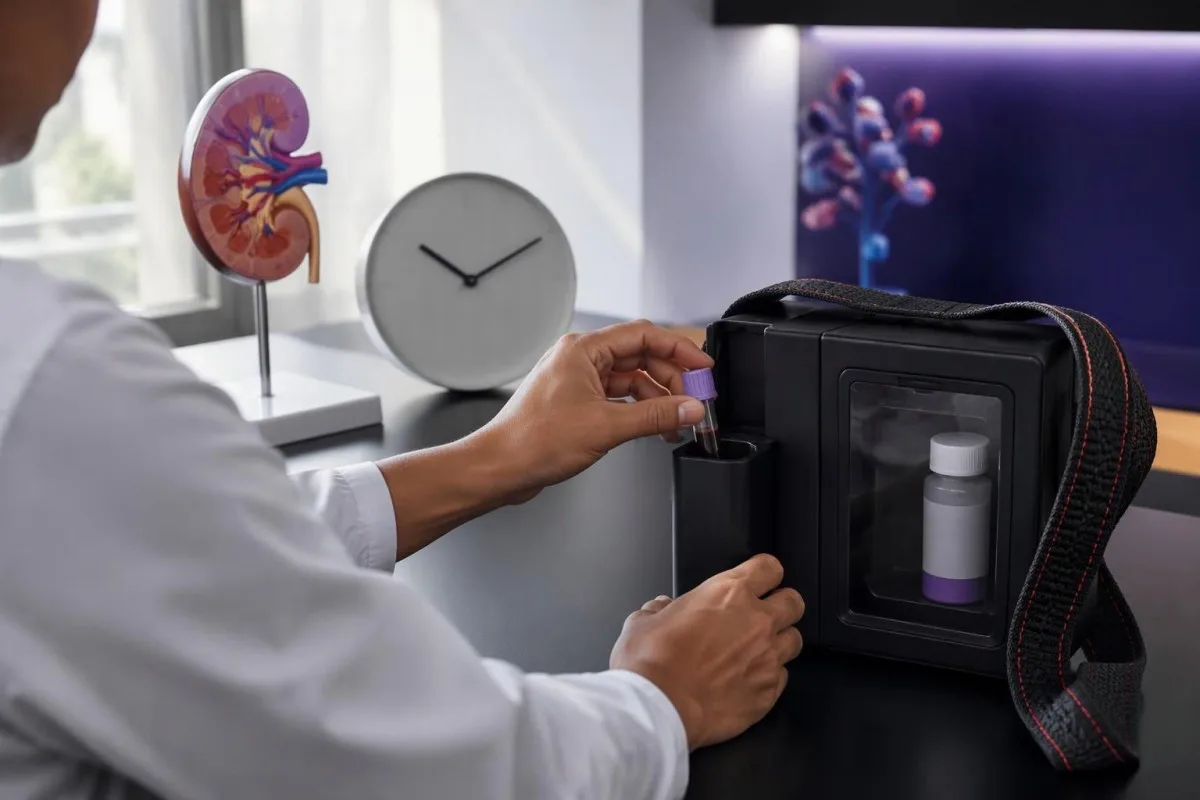
A hypothetical recipient takes everolimus at 08:00 and 20:00, then attends a planned collection just before 08:00 the next morning. The transplant team's usual instruction is to bring the morning dose and take it after collection, but obtain that instruction beforehand; a laboratory delay does not give you permission to postpone immunosuppression indefinitely.
Record the previous dose time, collection time and next dose time as 3 separate entries. A fasting instruction for glucose or lipids is a different issue from trough timing, so confirm whether you should take your usual food afterward and whether other morning medicines have separate instructions; our контрольный список подготовки к первой пробе helps prevent missing these details.
Scheduling accuracy matters more than an appointment labeled simply 'morning': a 07:00 sample after a 23:00 dose represents an 8-hour interval, not a 12-hour trough. If travel, shift work or another medication makes the standard schedule difficult, arrange a collection plan with the transplant coordinator rather than changing dose times solely to fit the laboratory.
Что делать, если вы приняли дозу перед анализом или пропустили приём?
A sample collected after taking everolimus is not a true predose trough and should not be compared directly with a 3–8 ng/mL trough target. A missed dose or substantially delayed collection also changes interpretation; report the actual times rather than trying to make the result fit the expected interval.
Everolimus commonly reaches peak concentrations around 1–2 hours after an oral dose, although food and individual absorption can change that timing. A hypothetical result of 12 ng/mL collected 90 minutes after dosing could reflect the absorption phase rather than an excessive trough; the team must still review the result and symptoms, not simply dismiss the number.
Missing the evening dose can make an apparently low morning concentration unrepresentative of your usual prescribed regimen, even if the appointment occurs at the expected hour. Give the team a factual account of the last 2–3 days, including vomiting or uncertainty about a dose; a one-time low result cannot distinguish missed treatment from inadequate dosing without that history.
Do not take an extra dose to compensate for a misleading 2 ng/mL result, and do not omit the next dose because a postdose sample looks high. Different medicines have different postdose sampling rules, as our digoxin sample-timing guide illustrates; ask the transplant team whether the collection needs repeating and what to take in the meantime.
Через какое время после изменения дозы следует повторно проверить концентрацию?
A routine everolimus level is commonly reassessed around 4–5 days after a clinician-directed dose change, when concentrations are approaching the new steady state. Earlier collections may be appropriate for suspected toxicity or major interactions, but they should be interpreted as transitional measurements rather than final evidence of the new dose's effect.
Everolimus has an average elimination half-life of roughly 30 hours, with substantial variation between people. After only 24 hours, a concentration still reflects considerable exposure from the previous regimen, so a second adjustment based solely on that early result can overshoot the intended target; product instructions commonly discourage routine adjustments more frequently than every 4–5 days.
A hypothetical recipient changes dose on Monday and has a predose sample on Tuesday because another test was already booked. That 1-day interval may provide useful safety information, but the transplant team may still request a later level; our blood-test change timeline explains why the biological response and the appointment schedule are not the same thing.
Starting an inhibitor can raise exposure while everolimus is still accumulating, and stopping an inducer can have delayed effects as enzyme activity returns toward baseline. Keep 2 dates in your record—the everolimus dose change and the interacting medicine change—because 'unchanged dose' does not mean unchanged exposure, and the team may need more than one repeat collection.
Почему имеют значение тип образца и лабораторный метод?
Everolimus transplant monitoring uses цельная кровь, usually collected in an EDTA tube, rather than an interchangeable serum concentration. Results reported in ng/mL and µg/L are numerically equivalent: 6 ng/mL equals 6 µg/L, but values produced by different assay methods may not be directly comparable.
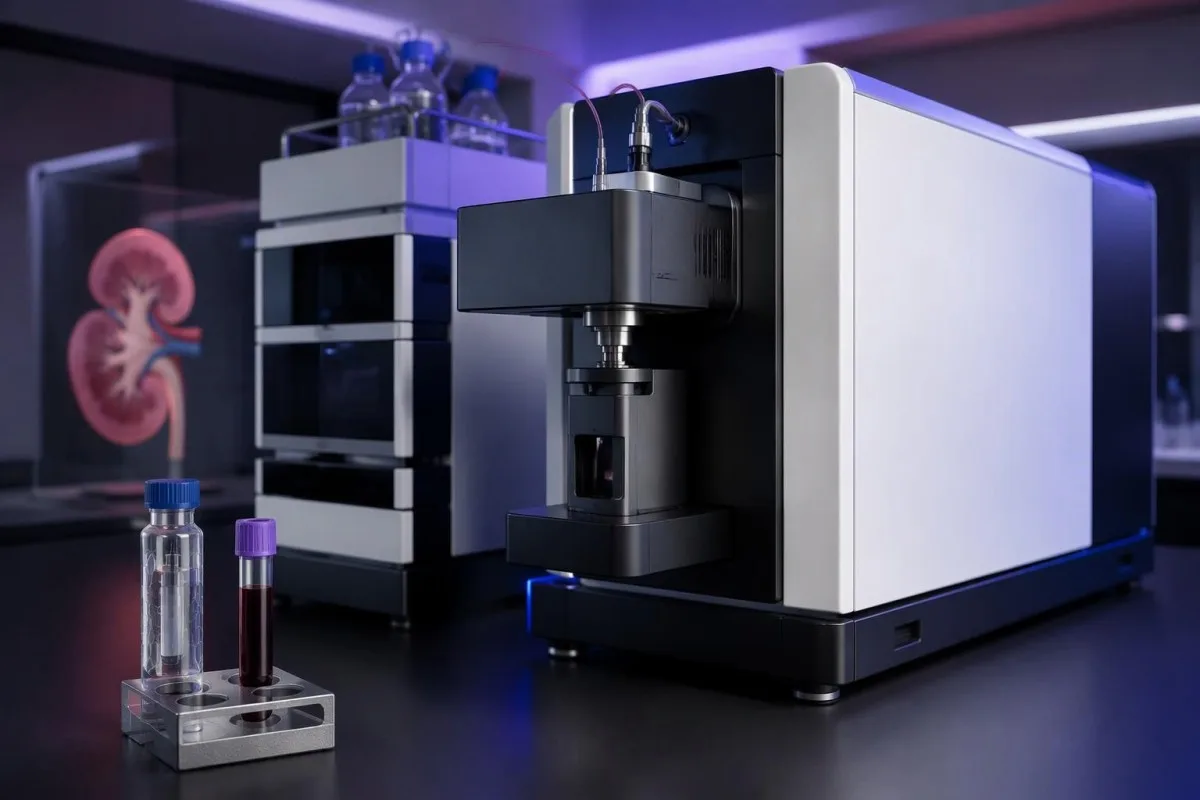
Liquid chromatography–tandem mass spectrometry, abbreviated LC-MS/MS, is a reference approach for everolimus measurement, while some laboratories use immunoassays. Method-dependent bias can occur, including differences in metabolite cross-reactivity, so an apparent shift from 6 to 8 ng/mL after changing laboratories deserves a method check before anyone assumes that drug exposure increased by one-third.
Whole-blood concentrations also depend partly on distribution into cellular elements, meaning a large hematocrit change may alter the relationship between the measured value and circulating drug exposure. There is no routine patient-applied hematocrit correction formula for an everolimus result of 4 ng/mL; our по свободному и общему фенитоину explains why specimen biology differs across monitored drugs.
Kantesti can help organize 3 report details—the analyte name, units and laboratory interval—but an uploaded report does not reveal an undocumented dose time or assay change. Our система валидации и надзора describes interpretation standards; it does not mean that AI performs the everolimus assay or replaces a transplant pharmacist's assessment of unexpected concentrations.
Какие лекарства могут повышать или снижать концентрацию эверолимуса?
Medicines that inhibit CYP3A4 or P-glycoprotein can raise everolimus exposure, while enzyme-inducing medicines can lower it. Strong inhibitors such as certain azole antifungals and ritonavir-containing treatments may require avoidance or specialist management; even a 5-day course can matter for a twice-daily transplant regimen.
Examples that can raise exposure include voriconazole, posaconazole, itraconazole, clarithromycin and ritonavir or cobicistat; fluconazole, diltiazem and verapamil can also be relevant. The effect is not identical for every drug or person, and a previous concentration of 5 ng/mL does not predict safety after an inhibitor starts; our voriconazole monitoring guide covers the antifungal's own monitoring needs.
Rifampicin, carbamazepine, phenytoin, phenobarbital and St John's wort can reduce everolimus exposure through induction, although onset and recovery depend on the particular medicine. Starting an inducer may lower a previously acceptable 6 ng/mL trough, while stopping it may subsequently raise concentrations; tell the team about both actions rather than reporting only the new prescription.
Cyclosporine can increase everolimus exposure, so changes to its dose can alter the everolimus concentration even when the everolimus prescription stays the same. Before starting 1 new antibiotic, antifungal, antiviral or supplement, ask the transplant service or pharmacist to check the complete regimen—including tacrolimus, cyclosporine and nonprescription products—rather than checking each medicine separately.
Как пища, функция печени и расстройство желудка влияют на результаты?
Food consistency, liver impairment and gastrointestinal illness can change everolimus exposure or make a result harder to interpret. Take each prescribed dose consistently with or without food, avoid grapefruit unless your specialist explicitly advises otherwise, and report vomiting or persistent diarrhea even when the latest concentration was within 3–8 ng/mL.
Food can alter everolimus absorption, so switching between fasting doses and doses with substantial meals can introduce variability without any prescription change. A practical record includes whether each of the previous 2 doses was taken with food; do not begin taking it fasting to 'improve' a low result, because that changes the exposure pattern your team is trying to assess.
Liver impairment can reduce everolimus clearance and may require indication-specific clinician-directed dose reduction, whereas reduced kidney filtration alone does not explain clearance in the same way. A change from 5 to 9 ng/mL therefore deserves a review of liver status and interacting medicines as well as kidney results; avoid unreviewed products marketed for kidney supplement support.
Diarrhea and vomiting can disrupt absorption, medication retention, hydration and the overall transplant regimen, but they do not reliably move everolimus concentrations in one predictable direction. If illness lasts more than 24 hours, or you cannot retain a scheduled dose, contact the team promptly; our norovirus recovery guidance should not substitute for transplant-specific advice.
Что делать, если концентрация эверолимуса слишком высокая?
Ан everolimus level too high means the measured concentration exceeds your prescribed target—not that one universal number proves poisoning. If your target is 3–8 ng/mL and a correctly collected trough is 12 ng/mL, contact the transplant team promptly for timing, interaction, symptom and laboratory review without independently withholding or reducing treatment.
A value of 8.4 ng/mL is only 0.4 ng/mL above an 8 ng/mL upper target and does not carry the same context as a sudden rise from 5 to 16 ng/mL. There is no universally accepted emergency cutoff that applies to every transplant regimen; the direction of change, collection accuracy, symptoms and other immunosuppressants determine how urgently the team responds.
Everolimus can cause mouth sores, low blood counts, proteinuria, increased lipids, hyperglycemia, impaired healing and noninfectious pneumonitis, including at concentrations within the intended range. New thirst or frequent urination warrants glucose assessment rather than assuming the trough explains everything; our high-glucose warning signs distinguish routine follow-up from symptoms that require urgent evaluation.
Кантести — это Платформа для расшифровки анализа крови AI that can help compare a reported 12 ng/mL concentration with accompanying uploaded results, but cannot decide whether the next dose should be held. Fever of 38°C or higher, new breathlessness, severe weakness, markedly reduced urine output or inability to keep medicines down warrants urgent clinical contact; severe breathing difficulty requires emergency care regardless of the trough.
Означает ли низкая минимальная концентрация эверолимуса отторжение трансплантата?
A low everolimus trough can indicate insufficient exposure when it falls below your protocol's lower target, but it does not diagnose rejection. For a regimen targeting 3–8 ng/mL, a genuine 2.2 ng/mL trough should prompt timely transplant-team review of adherence, timing, interactions and the complete immunosuppressive regimen.
A missed dose, an inducer such as rifampicin, inconsistent food intake or a delayed collection can each contribute to a low result. If a hypothetical recipient's usual trough is 4.5 ng/mL and the new result is 2.2 ng/mL, the useful first step is reconstructing events—not assuming the prescribed dose suddenly stopped working or taking an extra tablet.
Rejection assessment depends on graft function, symptoms and organ-specific investigations; a kidney recipient may need creatinine trends, urine testing, imaging or specialist tissue assessment. A rise in creatinine plus a 2 ng/mL trough raises concern, but dehydration, obstruction and other causes remain possible, so the transplant service decides which tests can distinguish them.
Increasing immunosuppression can worsen some viral complications, which is why a low trough cannot be managed separately from the rest of the record. Our BK virus graft-risk guide explains a setting where graft dysfunction and treatment intensity must be balanced; do not double 1 dose or change tacrolimus to compensate for an isolated everolimus result.
Какие другие анализы делают мониторинг эверолимуса безопаснее?
Everolimus safety monitoring commonly includes blood counts, kidney function, urine protein, liver tests, glucose and lipids, alongside the trough and companion-drug levels. A 5 ng/mL concentration within a 3–8 ng/mL target does not rule out cytopenias, proteinuria, metabolic adverse effects or a problem caused by combined immunosuppression.
Persistent urine protein can require assessment even when creatinine changes little, and a urine albumin-to-creatinine ratio of 30 mg/g marks increased albumin excretion under general kidney classification. That threshold is not an automatic everolimus stopping rule; the team may use albumin or total-protein ratios, trends and graft context, while our руководство по стойкой пенистой моче explains why appearance alone is insufficient.
De Simone et al. (2012) tested everolimus targeting 3–8 ng/mL with reduced tacrolimus after liver transplantation and found better kidney-function outcomes than standard tacrolimus exposure in the studied setting. This supports a deliberately coordinated regimen, not independent calcineurin-inhibitor withdrawal; our руководство по соотношению показателей функции почек provides background, but cannot identify the cause of graft dysfunction by itself.
A platelet decline from 180 to 70 × 10⁹/L combined with rising creatinine and evidence of red-cell fragmentation would need urgent investigation, including consideration of thrombotic microangiopathy. Those hypothetical values are not diagnostic thresholds, and other medicines or illnesses can be responsible; our срочная интерпретация шистоцитов explains why a normal everolimus trough cannot make this pattern safe to ignore.
Почему при лечении рака не следует автоматически применять целевые показатели для трансплантации?
Cancer treatment should not automatically use the transplant 3–8 ng/mL everolimus target, because treatment goals, doses, formulations and supporting evidence differ. Many oncology regimens use a prescribed once-daily dose and adjust for adverse effects, interactions and liver function rather than routinely titrating every patient to a transplant trough interval.
Baselga et al. (2012), in the BOLERO-2 trial published in The New England Journal of Medicine, studied everolimus 10 mg daily with exemestane in a defined advanced breast-cancer population. That trial supports an indication-specific treatment strategy, not a universal concentration goal; a cancer patient's result above 8 ng/mL cannot be labeled excessive solely because a transplant report prints that upper boundary.
Exposure-response studies suggest potential roles for individualized oncology monitoring, but evidence has not established one universally accepted routine trough target across cancers. Separate noncancer indications also illustrate the difference: product labeling uses concentration-guided treatment targeting 5–15 ng/mL in certain tuberous-sclerosis-associated settings, and that interval must not be borrowed for cancer or transplantation without specialist direction.
A hypothetical oncology patient with a 9 ng/mL concentration needs the oncologist to review why the test was ordered, whether it was a true 24-hour predose sample and whether adverse effects are present. Our chemotherapy testing distinctions explain a different medicine-specific safety test; drug monitoring, pharmacogenetics and toxicity grading are not interchangeable routes to a self-selected dose.
Как время забора и лекарственные взаимодействия меняют интерпретацию одного и того же числового результата?
The same everolimus concentration can mean different things when the dose interval, indication or interacting medicines differ. Kantesti is an Инструмент анализа результатов анализа крови с ИИ that can help organize these distinctions around a reported 10 ng/mL result, but only the treating team can translate the clinical context into a dosing decision.
Hypothetical example 1: a kidney recipient targeting 3–8 ng/mL has a 10 ng/mL result collected 12 hours after the last dose, several days after starting clarithromycin. That combination suggests a plausible interaction-related rise requiring prompt review; a mouth-sore history, blood count and companion-drug level would influence the clinician's decision more than the number alone.
Hypothetical example 2: another recipient has 10 ng/mL collected 1 hour after taking the morning dose, while their previous genuine trough was 5 ng/mL. The two results should not be plotted as equivalent troughs; our рабочий процесс отслеживания динамики безопасности лекарственной терапии explains why sample annotations matter before interpreting a line rising on a chart.
Kantesti AI can support a record containing 4 fields—dose, previous-dose time, collection time and target—while our объяснение технологии ИИ describes the broader interpretation workflow. A proportional calculation such as reducing a dose by 50% because a level doubled ignores timing errors, interactions and graft risk, so it is not a safe patient dosing method.
Научные публикации и контрольный список для безопасного наблюдения после трансплантации
The strongest evidence for interpreting everolimus comes from drug-monitoring consensus guidance and indication-specific trials, not from general laboratory articles. Before acting on a result such as 9 ng/mL, obtain your prescribed target, verify collection timing and ask your transplant service for explicit next-dose and repeat-test instructions.
Send the service 5 essentials: the result and units, prescribed regimen, last-dose time, collection time and recent medicine or illness changes. Ask whether the sample is interpretable, what to take next and when to repeat it; the Shipkova et al. (2016) consensus and indication-specific trials provide clinical background, but none makes an unexplained high flag a patient-directed dosing instruction.
The 2 Zenodo publications listed below address coagulation and serum proteins, not everolimus pharmacokinetics, transplant target validation or oncology dose selection. Our руководстве по интерпретации сывороточных белков may help explain accompanying albumin results, but these background resources should not be cited as evidence that 3–8 ng/mL is appropriate for a particular recipient.
Материалы Kantesti стандарты медицинского контента distinguish educational interpretation from prescribing; this article cannot confirm that an individual 6 ng/mL result is correctly timed or clinically safe. Keep the transplant service's daytime and out-of-hours contact details available, and obtain urgent help for fever, breathing changes or inability to retain immunosuppression rather than waiting for another concentration.
Часто задаваемые вопросы
Каков целевой минимальный уровень эверолимуса после трансплантации?
An everolimus trough target of 3–8 ng/mL in whole blood is commonly used in selected kidney and liver transplant regimens and some heart-transplant protocols. Your personal target depends on the transplanted organ, accompanying immunosuppressants, postoperative phase and local protocol. A laboratory's printed range is not automatically your prescribed target. Ask the transplant team to confirm the interval before interpreting a flagged result or considering any treatment change.
Через сколько часов после приёма эверолимуса следует проверять его уровень?
An everolimus trough should be collected immediately before the next scheduled dose, usually approximately 12 hours after the previous dose for a twice-daily transplant regimen. If a specialist requests a trough during once-daily treatment, the expected interval is generally approximately 24 hours. Follow the team's instructions about taking the next dose after collection, and report both actual dose and collection times. A sample taken after dosing should not be treated as an ordinary predose trough.
Не слишком ли высок уровень эверолимуса 10 нг/мл?
Уровень эверолимуса 10 нг/мл выше целевого, если назначенный вам целевой интервал минимальной концентрации в цельной крови составляет 3–8 нг/мл, но это не универсальный порог токсичности. Результат анализа, действительно взятого перед приемом дозы, имеет иное значение, чем результат образца, взятого через 1–2 часа после приема. Незамедлительно свяжитесь со своей трансплантационной командой, чтобы обсудить время взятия образца, взаимодействующие препараты, симптомы и другие результаты лабораторных исследований. Не пропускайте, не уменьшайте и не делите следующую дозу самостоятельно; при серьезном затруднении дыхания или других тяжелых симптомах необходимо срочно обратиться за медицинской помощью независимо от концентрации.
Может ли низкий уровень эверолимуса означать, что организм отторгает трансплантат?
Минимальная концентрация эверолимуса ниже 3 ng/mL может указывать на недостаточную экспозицию при режиме дозирования, предусматривающем концентрацию 3–8 ng/mL, но такой результат не диагностирует отторжение. Пропуск доз, поздний забор крови, рвота и прием препаратов, индуцирующих ферменты, также могут способствовать снижению концентрации. Для оценки отторжения необходимы данные о динамике функции трансплантата и обследования с учетом особенностей органа, назначенные трансплантационной службой. О таком результате, как 2.2 ng/mL, следует незамедлительно сообщить, а не принимать дополнительную дозу или менять другой иммуносупрессант.
Как скоро следует повторно проверить уровень эверолимуса после изменения дозы?
Everolimus concentrations are commonly rechecked around 4–5 days after a clinician-directed dose change, when exposure is approaching the new steady state. The medicine's average half-life is roughly 30 hours, so a sample after only 1 day may still reflect the previous regimen substantially. Suspected toxicity, a major interaction or an unstable clinical situation can justify earlier or additional testing. Your transplant team should specify both the collection date and what to take while waiting.
Нужна ли пациентам, принимающим эверолимус для лечения рака, минимальная концентрация 3–8 нг/мл?
Пациентам, принимающим эверолимус для лечения рака, не следует автоматически назначать целевой минимальный уровень, используемый при трансплантации, — 3–8 нг/мл. Во многих онкологических схемах лечения применяются однократные суточные дозы, специфичные для конкретного показания, например суточная доза 10 мг, изучавшаяся в исследовании BOLERO-2, с корректировкой под контролем врача с учётом нежелательных явлений, взаимодействий и функции печени. Единого общепринятого стандартного целевого минимального уровня для всех видов рака не существует. Если онколог назначил измерение концентрации препарата, уточните, зачем оно проводилось и какие критерии интерпретации применимы.
Какие препараты могут повысить минимальную концентрацию эверолимуса?
Экспозиция эверолимуса может повышаться при применении ингибиторов CYP3A4 или P-гликопротеина, включая некоторые противогрибковые препараты группы азолов, кларитромицин и препараты, содержащие ритонавир. Дилтиазем, верапамил, флуконазол и циклоспорин также могут иметь значение, хотя эффект зависит от препарата и конкретного пациента. Даже назначение препарата на 5 дней может нарушить ранее стабильную минимальную концентрацию 5 ng/mL. Прежде чем начинать прием новых лекарств и добавок, уточните это у службы трансплантации или фармацевта, а также сообщите им о прекращении взаимодействующего лечения.
Получите объяснение результатов анализа крови
Загрузите отчёт лаборатории, и ИИ Kantesti за считаные секунды объяснит каждый биомаркер простым языком. Им пользуются более 2 миллионов человек по всему миру.
Ссылки
- Кляйн, Т., Митчелл, С., и Вебер, Х. (2026). Нормальный диапазон АЧТВ: руководство по D-димеру и протеину C при свёртывании крови. Kantesti AI Медицинские исследования. DOI
- Кляйн, Т., Митчелл, С., и Вебер, Х. (2026). Руководство по белкам сыворотки: глобулины, альбумин и анализ крови на соотношение А/Г. Kantesti AI Медицинские исследования. DOI
- Shipkova M et al. (2016). Therapeutic Drug Monitoring of Everolimus: A Consensus Report. Therapeutic Drug Monitoring.
- De Simone P et al. (2012). Everolimus with reduced tacrolimus improves renal function in de novo liver transplant recipients: a randomized controlled trial. American Journal of Transplantation. DOI
- Baselga J et al. (2012). Everolimus in Postmenopausal Hormone-Receptor–Positive Advanced Breast Cancer. The New England Journal of Medicine. DOI
- 2М+Проанализированные исследования
- 127+Страны
- 100+Языки
О медицинской команде


Сигналы доверия E-E-A-T
Опыт
Клинический обзор рабочих процессов интерпретации лабораторных данных под руководством врача.
Экспертиза
Акцент на лабораторной медицине: как биомаркеры ведут себя в клиническом контексте.
Авторитетность
Медицинскую проверку провёл доктор Томас Кляйн при участии доктора Сары Митчелл и профессора, доктора Ганса Вебера.
Доверие
Интерпретация на основе доказательств с понятными маршрутами дальнейших действий, чтобы снизить тревожность.






Медицинская оговорка
Эта статья предназначена только для образовательных целей и не является медицинской консультацией. Всегда консультируйтесь с квалифицированным специалистом здравоохранения по вопросам диагностики и решений по лечению.
Опубликовано · Связаться с редакцией
Издатель — Kantesti Ltd, зарегистрированная в Англии и Уэльсе компания, рег. №. 17090423, Лондон, Великобритания.
