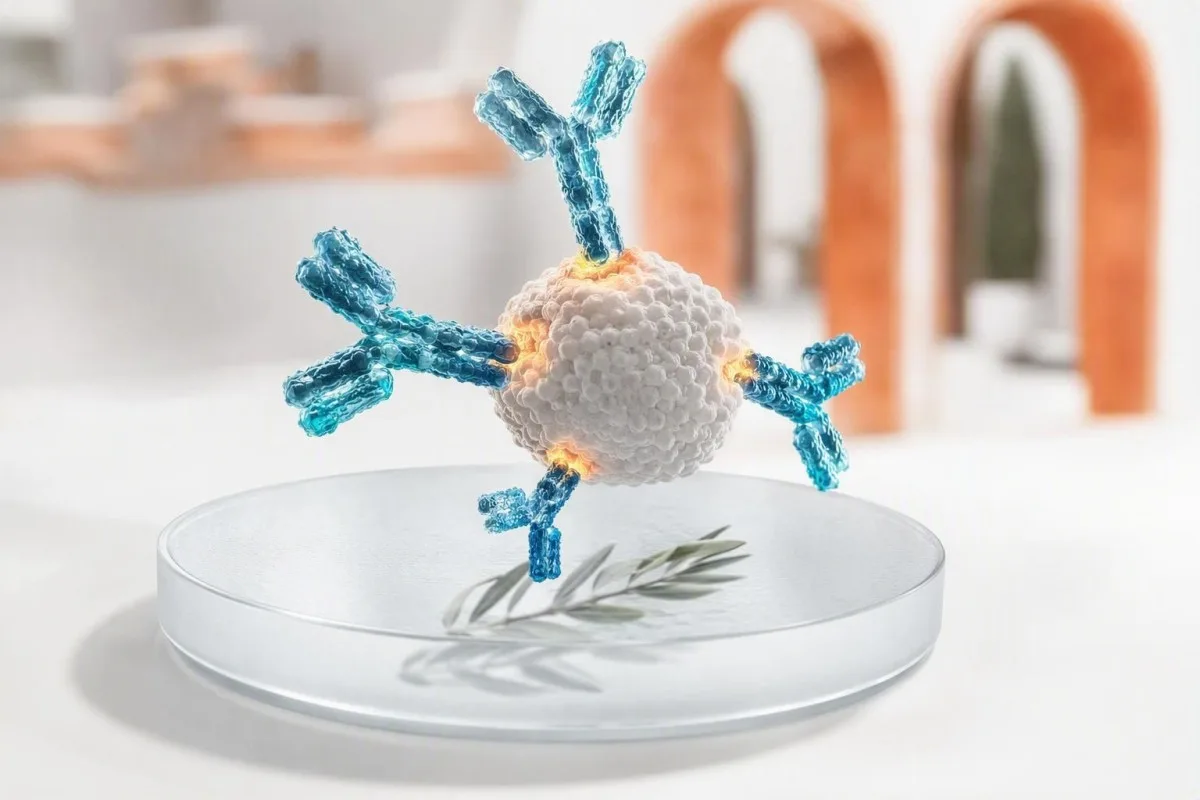
Un resultat positiu d'anticossos significa que el vostre sistema immunitari va reconèixer un objectiu particular; no demostra, per si sol, una infecció activa o una malaltia. La classe d'anticossos, el mètode de prova, el moment, els símptomes i les proves acompanyants determinen si necessiteu tranquil·litat, una repetició de la prova, confirmació o atenció clínica immediata.


- Resultat positiu d'anticossos normalment mostra reconeixement immunitari, no necessàriament malaltia actual o contagi.
- IgM versus IgG és una pista de moment, no un rellotge: la IgM pot persistir durant mesos i la IgG pot aparèixer d'hora.
- Anticossos de vacunes poden fer que les proves d'immunitat siguin positives sense indicar infecció natural.
- IgE específica d'al·lèrgens per sobre de 0,35 kUA/L indica sensibilització, però els símptomes després de l'exposició estableixen l'al·lèrgia clínica.
- Positivitat d'ANA es produeix en fins a 20% d'adults sans a títols baixos, especialment amb l'edat; els símptomes i els anticossos específics són més importants.
- Reactivitat de cribratge del VIH sempre requereix l'algoritme de confirmació del laboratori abans de fer qualsevol diagnòstic.
- IgA anti-tTG és fiable per a l'avaluació de la celiaquia només quan la persona està menjant gluten i té una IgA total adequada.
- Símptomes urgents com ara dificultat per respirar, confusió, icterícia, dolor toràcic o una erupció ampollosa generalitzada superen un resultat rutinari d'anticossos.
Què us diu realment un resultat positiu d'anticossos
A prova d'anticossos positiva significa que l'assaig va detectar proteïnes immunes que s'uneixen a un objectiu particular; no ho fa no significar automàticament que teniu una infecció activa, una malaltia autoimmune o una al·lèrgia que requereix tractament. El següent pas depèn del tipus d'anticòs, la força del resultat, els símptomes, el moment de l'exposició i qualsevol antigen aparellat, PCR o proves de funció orgànica.
Els anticossos són proteïnes de cèl·lules B produïdes després de la vacunació, infecció, exposició a al·lèrgies, autoimmune, o ocasionalment sense motiu clínicament perjudicial. Un resultat positiu respon a una pregunta analítica específica: “es va detectar una unió per sobre d'aquest llindar de laboratori?” en lloc de la pregunta clínica més àmplia sobre què està passant al vostre cos avui.
En els meus 15 anys de pràctica clínica, l'error més comú ha estat llegir “positiu” com a diagnòstic. La regla pràctica del Dr. Thomas Klein és identificar primer l' objectiu—un virus, antigen de vacuna, proteïna alimentària, enzim tiroïdal, antigen nuclear o medicament— llavors pregunteu si la prova detecta exposició passada, organisme present, sensibilització o mala direcció immune.
Kantesti AI és una Analitzador de sang amb IA que llegeix les banderes d'anticossos al costat de les dates, la classe d'immunoglobulina i els resultats relacionats en lloc de tractar una sola línia positiva com a veredicte. Aquest context és particularment útil quan els pacients comparen informes de diferents laboratoris; resultats qualitatius i quantitatius no són intercanviables fins i tot quan tots dos diuen positiu.
Positiu IgG versus IgM: per què el moment és menys senzill del que sembla
IgM positiva pot suggerir una resposta immune recent, mentre que IgG positiva sovint suggereix exposició passada o resposta a la vacuna; cap dels patrons no data de manera fiable una malaltia per si sola. Algunes infeccions produeixen IgG en 7-14 dies, i la IgM pot romandre detectable durant 3-12 mesos o més.
La IgM és un anticòs gran de cinc unitats que sovint és detectable aviat, però la seva mida i ampla unió la fan més propensa a reaccions creuades. El virus d'Epstein-Barr, el parvovirus B19, el factor reumatoide i alguns anticossos autoimmune poden causar reaccions IgM enganyoses; un resultat aïllat de IgM a baix nivell mereix més escepticisme que pànic.
La IgG sol persistir després del desenvolupament de la memòria immune, de vegades durant dècades. Un resultat positiu de IgG pot reflectir una infecció infantil, una vacuna recent, anticossos passius d'immunoglobulina intravenosa o transferència materna a un nadó; no pot provar protecció a menys que aquest assaig particular tingui un llindar protector validat.
Els exemplars aparellats poden ser més útils que una sola extracció: un augment quàdruple del títol d'anticossos entre mostres preses aproximadament amb 2-4 setmanes de diferència dóna suport a una infecció recent en malalties seleccionades. Si l'informe enumera IgG total, IgA i IgM, reviseu el patró en lloc d'un sol número amb el nostre guia d'interpretació d'immunoglobulines.
Quan els anticossos de la infecció signifiquen o no malaltia activa
Els anticossos de la infecció solen mostrar exposició, mentre que la PCR, les proves d'antígens, el cultiu o un títol creixent són millors eines per detectar moltes infeccions actives. Un resultat positiu d'anticossos sense símptomes és sovint històric, però l'excepció depèn de l'organisme i del seu estat immunològic.
Per a l'hepatitis C, un anticòs reactiu significa exposició en algun moment, però només l'ARN del VHC detectable estableix la viremia actual. Per a l'hepatitis B, la combinació és important: l'antigen de superfície, l'anticòs de superfície i l'anticòs del nucli separen la infecció activa, la infecció resolta i la immunitat de la vacuna molt millor que un sol marcador positiu.
El VIH és un altre context on la redacció és enormement important. Una prova de cribratge reactiva de quarta generació no és un diagnòstic; el laboratori continua amb un immunoassay de diferenciació VIH-1/VIH-2 i, si cal, proves d'àcids nucleics. Una persona que pren profilaxi postexposició necessita proves específiques del moment, tal com s'explica a la nostra guia de proves de VIH després de la PEP.
He vist un pacient ben assenyat espantat per un anticòs treponèmic de sífilis positiu després d'un tractament 18 anys abans. Les proves treponèmiques sovint romanen positives de per vida, mentre que un títol RPR o VDRL ajuda a jutjar l'activitat actual i la resposta; patrons de proves de sífilis fan més clara aquesta distinció.
Com els anticossos de les vacunes difereixen dels anticossos després d'una infecció
Els anticossos relacionats amb vacunes mostren que el sistema immunitari va respondre a un antigen de la vacuna; no volen dir que la vacuna va causar una infecció activa. Un resultat positiu encara pot caure per sota d'un correlat protector conegut, perquè els anticossos de unió i els anticossos neutralitzants funcionals no són idèntics.
Les concentracions d'anticossos de superfície de l'hepatitis B de 10 mIU/mL o més mesurades 1-2 mesos després d'una sèrie de vacunació documentada es consideren generalment protectores en persones immunocompetents. L'anti-HBc, l'anticòs del nucli de l'hepatitis B, no és produït per la vacunació estàndard contra l'hepatitis B; la seva presència apunta cap a una exposició natural i hauria de suggerir una interpretació de panell complet.
La IgG de rubèola es comprova habitualment abans de l'embaràs perquè indica immunitat prèvia, no una malaltia activa de rubèola. Els laboratoris estableixen llindars específics de cada assaig, i els resultats limítrofs es solen tractar com no immunes per a la planificació preconcepcional en lloc d'interpretar-los com una infecció recent; el moment es detalla a la nostra guia de proves de rubèola.
Kantesti AI és una plataforma d’interpretació d’anàlisi de sang AI que separa els anticossos del patró de vacuna dels anticossos del patró d'infecció quan l'informe inclou els marcadors acompanyants rellevants. La pregunta pràctica sovint no és “estic positiu?” sinó “quin antigen es va mesurar, quan em vaig vacunar i aquest resultat canvia el pla de protecció d'avui?”
Per què una prova positiva d'anticossos contra les al·lèrgies pot no significar una al·lèrgia
Un al·lergè específic positiu IgE prova indica sensibilització, és a dir, que la IgE reconeix un al·lergen; no diagnostica al·lèrgia clínica sense una història de reacció compatible. Un valor superior a 0.35 kUA/L és un llindar analític comú de positivitat, no un llindar universal per evitar un aliment o medicament.
La història prèvia a la prova és més important del que molta gent es pensa. Si una persona menja cacauet setmanalment sense urticària, sibilàncies, vòmits o col·lapse, una IgE de cacauet positiu baixa per si sola no hauria de portar a l'evitació; la restricció alimentària innecessària pot causar danys nutricionals i socials.
La guia sobre al·lèrgies alimentàries patrocinada pel NIAID afirma que les proves cutànies i la IgE específica identifiquen possibles aliments desencadenants, però no poden diagnosticar de forma independent l'al·lèrgia alimentària (Sampson et al., 2010). En casos seleccionats, un al·lergòleg utilitza proves resoltes per components o un desafiament alimentari oral supervisat mèdicament, que segueix sent l'estàndard de referència per resoldre la incertesa.
La IgE total es mesura en IU/mL i pot ser alta en èczema, exposició a paràsits, tabaquisme i diverses condicions immunitàries; no pot identificar un al·lergen causant. Les proves per components poden distingir una proteïna d'emmagatzematge estable d'una proteïna relacionada amb el pol·len i amb reactivitat creuada, una diferència explorada a la nostra article sobre proves d'al·lèrgia molecular.
Per què els anticossos autoimmunes requereixen símptomes i indicis d'òrgans
Els anticossos autoimmune poden precedir la malaltia, acompanyar la malaltia o aparèixer en persones sanes; un resultat positiu per si sol rarament estableix un diagnòstic autoimmune. Els clínics actuen quan el patró d'anticossos coincideix amb símptomes, troballes de l'exploració, marcadors d'inflamació o canvis objectius dels òrgans.
Un anticòs antinuclear, o ANA, és positiu a títols baixos en aproximadament un 13% de les persones a 1:80 i al voltant d'un 20% a 1:40 en estudis de població, amb taxes més altes en dones i adults grans. Un patró homogeni o motejat no diagnostica el lupus; l'ANA s'utilitza millor com a prova d'entrada quan el quadre clínic fa plausible la malaltia del teixit connectiu.
El marc de classificació del lupus EULAR/ACR del 2019 utilitza l'ANA a un títol d'almenys 1:80 com a criteri d'entrada, i després requereix característiques clíniques i immunològiques addicionals ponderades (Aringer et al., 2019). Nova proteïna a l'orina, baixos C3/C4, citopènies, inflor articular inflamatori o un exantema fotosensible convincent canvien la urgència molt més que un ANA dèbil per si sol.
L'anti-dsDNA es torna més significatiu quan s'acompanya de baix complement i troballes renals, encara que els mètodes de la prova difereixen substancialment. La nostra guia de seguiment d'anti-dsDNA i vista general de proves de complement explica per què un especialista pot repetir les proves en una plataforma diferent.
Anticossos específics d'òrgans: exemples de tiroides, celiaquia i estómac
Els anticossos específics d'òrgans identifiquen l'atac immunològic d'un teixit, però no sempre mostren si l'òrgan està danyat actualment o necessita tractament. Els anticossos contra la peroxidasa tiroïdal, els anticossos contra la transglutaminasa tissular i els anticossos contra el factor intrínsec requereixen proves acompanyants diferents.
Els anticossos TPO són comuns en la tiroiditis de Hashimoto i poden estar presents durant anys mentre que el TSH i el T4 lliure romanen normals. En un adult no embarassat amb funció tiroïdal normal, el resultat generalment dóna suport al seguiment periòdic del TSH en lloc del tractament amb hormones tiroïdals; l'embaràs, els plans de fertilitat i els símptomes poden alterar aquest enfocament.
Una prova positiva tTG-IgA suggereix la malaltia celíaca només si la persona encara consumeix gluten i la IgA total és adequada. La deficiència selectiva d'IgA pot fer que la tTG-IgA sigui falsament negativa, de manera que els clínics utilitzen pèptids de gliadina desamidada basats en IgG o proves tTG quan la IgA total és baixa; vegeu la nostra explicació de els paranys de la IgA baixa.
L'anticòs contra el factor intrínsec és relativament específic però no molt sensible per a l'anèmia perniciosa. Quan és positiu juntament amb B12 baixa, àcid metilmalònic elevat i macrocitosi, el patró és convincent; sense aquest patró, evito tractar una etiqueta de laboratori en lloc del pacient. Proves d'anèmia perniciosa mostra la seqüència de confirmació habitual.
Què causa un resultat d'anticossos falsament positiu
Els resultats falsos positius d'anticossos sorgeixen quan el mètode detecta una unió no desitjada, no quan el laboratori simplement “s'equivoca”. Anticossos creuats, factor reumatoide, estimulació immune recent, immunoglobulines passives i baixa probabilitat pre-test són motius comuns.
L'especificitat no és perfecció. Una prova amb un 99% d'especificitat produeix aproximadament 10 resultats falsos positius per cada 1.000 persones realment negatives examinades; quan la condició és rara, aquests resultats poden superar els positius reals. Per això, un cribratge ampli en algú sense símptomes sovint crea ambigüetat en lloc de tranquil·litat.
La biotina és famosa per interferir amb alguns assaigs hormonals i cardíacs, mentre que els anticossos heteròfils i el factor reumatoide poden interferir amb certs immunoassajos. El laboratori de vegades pot diluir la mostra, utilitzar reactius de bloqueig, repetir el resultat en un altre mètode de prova o realitzar un mètode de confirmació més específic.
Un resultat positiu que entra en conflicte amb un quadre clínic completament no destacable no és quelcom per ignorar; és una raó per verificar. Kantesti AI compara marcadors discordants i dates de proves, i el nostre llista de verificació de l’exactitud del resultat de laboratori pot ajudar-vos a registrar suplements, infusions recents i malalties abans de parlar amb el metge que ha demanat la prova.
Prova d'anticossos positiva però sense símptomes: un pla de triatge pràctic
Quan una prova d'anticossos és positiva però us sentiu bé, la majoria de la gent necessita una clarificació en lloc d'atenció d'urgència. Els primers passos més segurs són verificar el mètode exacte, comprovar les dates d'exposició i vacunació, i buscar la prova acompanyant que confirmi la malaltia actual o la implicació orgànica.
Comenceu amb l'informe en si mateix: registreu el nom de l'analit, la classe d'anticossos, l'índex numèric o el títol, l'interval de referència, el mètode de laboratori i la data de la mostra. “Reactiu” pot significar una relació senyal-tall amb prou feines per sobre de 1,0 o un resultat molt més fort; els laboratoris no utilitzen llindars idèntics, i la magnitud només de vegades segueix la probabilitat clínica.
A continuació, pregunteu si existeix una prova per a malaltia activa. Els exemples inclouen PCR per a hepatitis C, RPR seriats per a sífilis, proves de femta o alè per a Helicobacter pylori actiu, TSH/T4 lliure per a anticossos tiroïdals, i anàlisi d'orina més creatinina per a preocupacions renals relacionades amb el lupus.
A partir del 8 de setembre de 2026, no recomanaria iniciar antibiòtics, antivirals, dietes sense gluten, medicació tiroïdal o evitació d'aliments per compte propi basant-me exclusivament en un resultat d'anticossos aïllat. Guardeu el PDF original, anoteu el vostre punt de partida amb el seguiment longitudinal de laboratori, i arrangeu una revisió rutinària tret que hi hagi símptomes d'alarma.
Proves de confirmació que canvien el següent pas
La millor prova de confirmació depèn del que els anticossos detecten: la detecció molecular confirma moltes infeccions, els assajos funcionals aclareixen les al·lèrgies i les proves de funció orgànica avaluen l'impacte autoimmune. Repetir la mateixa prova d'anticossos només és útil quan el canvi esperat en el temps té un significat clínic.
Per a un cribratge reactiu de VIH, la via de confirmació reflex és un assaig de diferenciació seguit de proves d'àcid nucleic del VIH si els resultats són indeterminats. Per a un anticòs de l'hepatitis C, l'ARN del VHC és el seguiment decisiu; per a un anticòs positiu del nucli de l'hepatitis B, l'antigen de superfície, l'anticòs de superfície i de vegades l'ADN del VHB clarifiquen el patró.
Per a la sospita de malaltia celíaca, les decisions de biòpsia s'han de prendre mentre l'exposició al gluten és suficient per a les proves. Per a una possible al·lèrgia alimentària, un al·lergòleg considera l'historial d'exposició, el nivell d'IgE específica, el perfil de component i el risc de desafiament, no un panell de positius baixos no relacionats ordenats sense una pregunta clínica.
Kantesti AI és una Eina d’anàlisi d’analítica de sang impulsada per IA que pot organitzar aquests marcadors enllaçats en una llista de preguntes llestes per al metge, però no substitueix les proves de confirmació o el diagnòstic. Si no esteu segurs de quant confiar en un resultat fora de rang, els nostres estàndards de validació mèdica descriuen per què la verificació i la supervisió clínica són importants.
Símptomes que fan que un resultat positiu d'anticossos sigui més urgent
Un resultat positiu d'anticossos justifica una avaluació urgent quan acompanya dificultat per respirar, inflor facial o de la gola, desmais, confusió, dolor al pit, icterícia, erupció cutània de ràpida extensió, deshidratació greu o debilitat neurològica nova. Els símptomes, no només el número d'anticossos, determinen la urgència.
La possible anafilaxi és una emergència: urticària generalitzada sobtada amb sibilàncies, tensió a la gola, vòmits persistents, debilitat o pressió arterial baixa després de l'exposició necessita serveis d'emergència i adrenalina prescrita si està disponible. Una IgE alimentària o de verí positiva de fa mesos no prediu ni descarta aquest risc immediat.
Una icterícia nova amb orina fosca, dolor abdominal marcat, febre o confusió ha de provocar una avaluació el mateix dia, independentment de si els anticossos de l'hepatitis viral són positius o no. Els enzims hepàtics, la bilirrubina, l'INR i les proves directes de patògens ajuden a distingir l'historial immune de la malaltia hepatobiliar activa; components del panell hepàtic són un context útil.
La preocupació autoimmune esdevé sensible al temps amb tos amb sang, dificultat per respirar, creatinina en ràpid augment, diarrea amb sang, canvis visuals, convulsions o una nova debilitat unilateral. He après a no tranquil·litzar algú basant-me en un títol d'anticossos límit quan la seva trajectòria de símptomes es deteriora clarament.
Un nombre més alt d'anticossos significa una malaltia més greu?
Un índex o títol d'anticossos més alt de vegades augmenta la probabilitat que un resultat sigui genuí, però normalment no mesura la gravetat de la malaltia. Els valors dels assajos depenen del mètode i un resultat de 80 AU/mL no es pot comparar directament amb 80 U/mL d'un altre laboratori.
En la malaltia autoimmune, les tendències dels anti-dsDNA de vegades poden seguir l'activitat del lupus, especialment quan es mesuren constantment pel mateix mètode i s'interpreten amb el complement i la proteïna urinària. Tanmateix, el títol d'ANA és una mesura deficient de la gravetat del lupus i no s'ha de perseguir repetidament en una persona estable.
Per a les infeccions, un senyal d'anticossos fort pot donar suport a una exposició prèvia, però rarament indica infecciositat. Les proves d'anticossos neutralitzants són especialitzades i els seus valors de tall protectors poden variar segons el patogen, l'edat, el producte de la vacuna i la immunodepressió; un simple assaig comercial d'IgG no és un passaport personal d'immunitat.
Quan compareu informes, manteniu visible el laboratori, l'assaig i les unitats. Un canvi biològic real hauria de superar la variació ordinària analítica i diària, per això el nostre guia de comparació d'anàlisis de sang se centra en les dates i els mètodes en lloc de només en les banderes codificades per colors.
L'embaràs, els nens i la immunosupressió canvien la interpretació
L'embaràs, la lactància i el tractament immunodepressor poden alterar tant la producció d'anticossos com la seguretat d'esperar la confirmació. En aquests grups, un resultat positiu pot reflectir anticossos materns, resposta reduïda a la vacuna, risc de reactivació o la necessitat d'un assessorament especialitzat més primerenc.
La IgG materna travessa la placenta i pot romandre detectable en un nadó durant diversos mesos, mentre que la IgM materna generalment no travessa. Per tant, una positivitat aïllada de IgG en un nadó sovint reflecteix la immunitat materna, mentre que la IgM específica de l'organisme o la detecció directa poden requerir una avaluació més específica depenent de la infecció i l'edat.
Durant l'embaràs, els resultats dels anticossos de rubèola o parvovirus s'interpreten amb les dates d'exposició, proves d'avidesa i mostres repetides en lloc d'una única IgM aïllada. La IgM fals positiva és un problema reconegut, i una alarma evitable pot conduir a investigacions invasives innecessàries; l'assessorament obstètric o de malalties infeccioses és sensat quan l'exposició és creïble.
Les persones que reben rituximab, corticoides en dosis altes, quimioteràpia o medicació per a trasplantaments poden tenir respostes d'anticossos febles o absents malgrat la infecció o la vacunació. Per a les decisions familiars, els límits d'interpretació de la IA infantil i el El consell assessor mèdic Kantesti reforcen la necessitat de revisió clínica.
Com preparar-se per a una revisió clínica útil d'un resultat positiu
Porteu l'informe de laboratori complet, el motiu pel qual es va demanar la prova, les dates de símptomes o exposició, l'historial de vacunació, els medicaments i els resultats anteriors. Aquesta informació pot convertir un resultat d'anticossos aparentment positiu i ambigu en una acció clara i immediata en una sola cita.
Anoteu cinc fets abans de la visita: el primer dia dels símptomes, l'última exposició plausible, les dates de vacunació, els medicaments immunomoduladors o les infusions d'immunoglobulina, i si els símptomes milloren o empitjoren. Una febre que va començar 3 dies abans de la mostra s'interpreta de manera molt diferent que la fatiga que va començar fa 6 mesos.
Feu tres preguntes enfocades: “Què detecta aquesta prova?”, “Quina prova estableix la malaltia activa o l'efecte orgànic?” i “Quin resultat canviaria el tractament?” El Dr. Thomas Klein considera que aquestes preguntes redueixen els panells de repetició innecessaris i ajuden els pacients a marxar amb un termini definit: avui, d'aquí a 1-2 setmanes o seguiment rutinari.
La IA Kantesti admet la revisió segura d'informes en més de 75 idiomes i pot identificar proves complementàries faltants d'un PDF fotografiat o carregat en aproximadament 60 segons. El nostre guia de tecnologia d’IA explica l'enfocament de concordança de context, mentre que el nostre equip clínic proporciona la supervisió mèdica darrere de la interpretació orientada al pacient.
Preguntes freqüents
Què significa un resultat positiu d'anticossos si no tinc símptomes?
Un resultat positiu d'anticossos sense símptomes indica majoritàriament una exposició prèvia, vacunació, sensibilització o un resultat que requereix confirmació en lloc d'una malaltia activa. El següent pas depèn de l'objectiu: els anticossos contra l'hepatitis C necessiten ARN del VHC, una cribra reactiva del VIH necessita l'algorisme de confirmació del laboratori i els anticossos tiroïdals necessiten TSH i T4 lliure. Un resultat aïllat lleugerament positiu és menys persuasiva quan no hi ha antecedents d'exposició o símptomes compatibles. Busqueu atenció ràpida si apareix icterícia nova, dificultat per respirar, confusió, dolor al pit o una erupció que empitjora ràpidament.
Que un IgM positiu i un IgG negatiu signifiqui sempre una infecció nova?
La IgM positiva amb la IgG negativa pot ocórrer al principi d'una infecció, però no sempre demostra una infecció nova. La IgM pot reaccionar creuada amb proteïnes immunes no relacionades, i alguns assajos produeixen resultats falsos positius de IgM més sovint que els resultats de IgG. Els metges poden repetir la serologia després d'1-2 setmanes, sol·licitar una PCR o una prova d'antígens, o utilitzar un assaig de confirmació més específic. La interpretació correcta també depèn del cronograma de la malaltia i de l'organisme específic provat.
Pot una vacuna fer que una prova d'anticossos sigui positiva?
Sí, les vacunes sovint fan que les proves d'anticossos siguin positives per a l'antigen contingut a la vacuna. Per a l'hepatitis B, una concentració d'anti-HBs d'almenys 10 mIU/mL mesurada 1–2 mesos després d'una sèrie completa generalment indica una resposta protectora de la vacuna en persones immunocompetents. La vacunació estàndard contra l'hepatitis B no produeix anti-HBc, de manera que la positivitat dels anticossos del nucli suggereix una exposició natural en lloc d'una simple vacunació. La positivitat relacionada amb la vacuna no significa que tingueu una infecció activa.
Es pot tenir un test d'anticossos autoimmune positiu i estar sa?
Sí, les persones sanes poden tenir anticossos autoimmune positius, especialment els resultats d'ANA de baix títol. Els ANA són detectables en aproximadament el 13% de les persones amb un títol de 1:80 i al voltant de l'20% amb 1:40, per la qual cosa no és una prova autònoma de lupus. Símptomes com inflor de les articulacions inflamatòries, úlceres a la boca, erupció fotosensible, nivells baixos de complement, proteïnes a l'orina o anomalies en els recomptes sanguinis determinen si cal una valoració especialitzada. Un resultat positiu s'ha d'interpretar en el context del motiu pel qual es va demanar la prova.
Una prova de sang IgE positiva vol dir que he d'evitar aquest aliment?
No, un resultat positiu d'IgE específica dels aliments significa sensibilització i no demostra que menjar l'aliment causi una reacció al·lèrgica. Molts laboratoris anomenen positius els resultats superiors a 0,35 kUA/L, però aquest llindar està dissenyat per a la detecció més que per a una decisió universal d'evitació. Una persona que menja regularment l'aliment sense urticària, sibilàncies, vòmits repetitius o debilitat no hauria de retirar-lo automàticament de la dieta. Un al·lergòleg pot utilitzar l'historial de reaccions, les proves de components i, de vegades, un desafiament oral d'aliments supervisat per aclarir el risc.
Quant de temps romanen positius els anticossos després d'una infecció?
La durada dels anticossos varia àmpliament segons la infecció i la classe d'anticòs. Les IgM poden desaparèixer en poques setmanes, però poden persistir durant 3-12 mesos o més, mentre que les IgG poden romandre mesurables durant anys o tota la vida. Els anticossos de la sífilis treponèmica sovint romanen positius per a tota la vida després d'un tractament exitós, mentre que els títols de RPR o VDRL s'utilitzen per seguir l'activitat. Per tant, un resultat positiu d'anticossos no pot dir de manera fiable quan es va produir una infecció sense altra informació clínica i de laboratori.
Obteniu avui una anàlisi de sang amb IA
Uneix-te a més de 2 milions d’usuaris a tot el món que confien en Kantesti per a una anàlisi instantània i precisa de proves de laboratori. Pengeu els vostres resultats d’anàlisi de sang i rebeu una interpretació completa de biomarcadors 15,000+ en segons.
📚 Publicacions de recerca citades
Klein, T., Mitchell, S., & Weber, H. (2026). Suport de Decisió Clínica Assistit per IA Multilingüe per al Triatge Primerenc d'Hantavirus: Disseny, Validació d'Enginyeria i Implementació al Món Real en 50.000 Informes de Proves de Sang Interpretats. Figshare. https://www.researchgate.net/. Kantesti Recerca mèdica amb IA.
Klein, T., Mitchell, S., & Weber, H. (2026). Un Establiment de Referència Tècnica Automatitzat Basat en Rubrica i Pre-registrat del Motor d'Interpretació de Proves de Sang Kantesti sobre 100.000 Casos de Prova Sintètics. Figshare. https://www.academia.edu/. Kantesti Recerca mèdica amb IA.
📖 Referències mèdiques externes
⚕️ Avís mèdic
Aquest article és només per a finalitats educatives i no constitueix assessorament mèdic. Consulteu sempre un professional sanitari qualificat per a decisions de diagnòstic i tractament.
Senyals de confiança E-E-A-T
Experiència
Revisió clínica liderada per metges dels fluxos de treball d’interpretació de laboratori.
Experiència
Enfocament en medicina de laboratori sobre com es comporten els biomarcadors en context clínic.
Autoritat
Escrit pel Dr. Thomas Klein amb revisió de la Dra. Sarah Mitchell i el Prof. Dr. Hans Weber.
Fiabilitat
Interpretació basada en l’evidència amb vies de seguiment clares per reduir l’alarma.