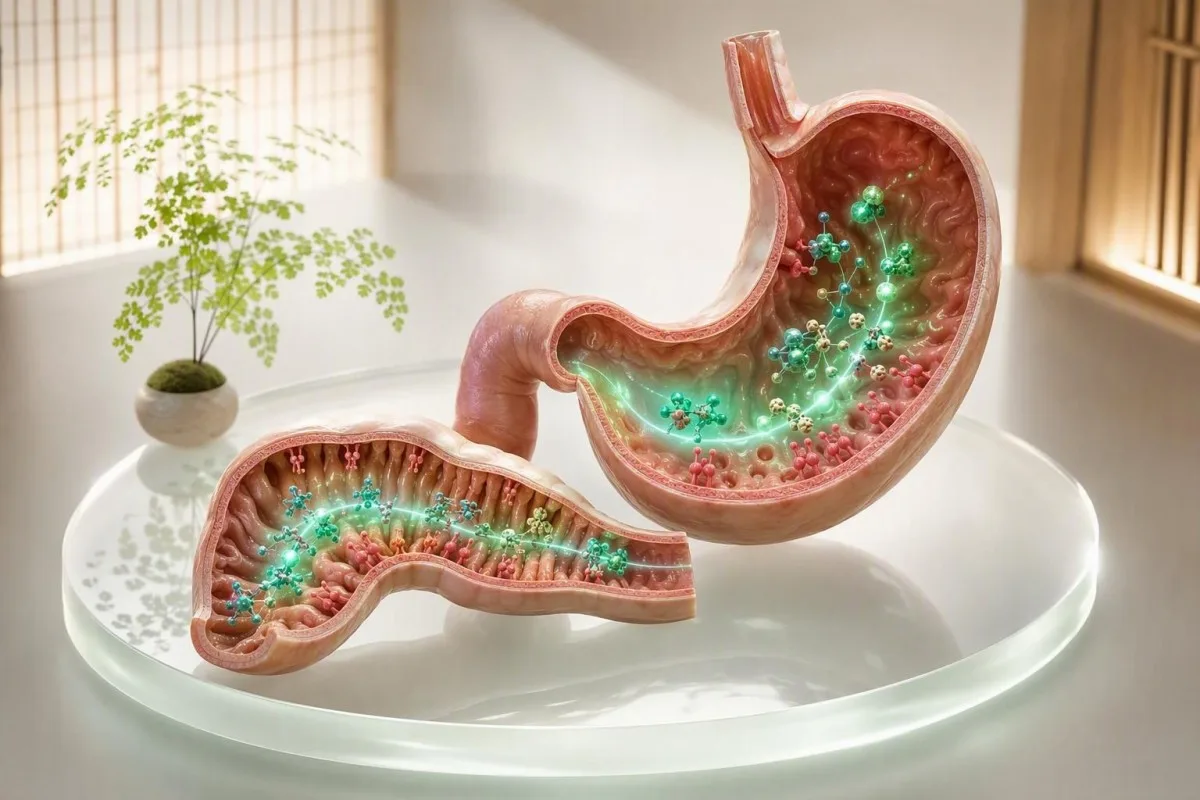
Pålitligt vitamin B12 kommer från animaliska livsmedel eller specifikt berikade produkter; en näringsrik kost kan inte övervinna alla absorptionsproblem. Här är hur jag hjälper patienter att matcha matval, symtom, mediciner och laboratorieresultat.


- Dagligt B12-behov är 2,4 mcg för de flesta vuxna, 2,6 mcg under graviditet och 2,8 mcg under amning.
- Bästa livsmedelskällor inkluderar musslor, lever, fisk, kött, mejeriprodukter, ägg och berikade livsmedel med B12; obearbetade växtbaserade livsmedel är inte pålitliga källor.
- Nötlever ger cirka 70 mcg B12 per 85 g tillagad portion, medan 250 ml mjölk ger cirka 1,3 mcg.
- Absorptionsgräns innebär att intrinsic factor vanligtvis absorberar endast cirka 1,5-2 mcg från en måltid; ungefär 1% av en stor oral dos kan fortfarande tas upp passivt.
- S-B12 under 200 pg/mL (148 pmol/L) stöder vanligtvis brist, medan 200-300 pg/mL ofta behöver metylmalonsyra eller aktiv B12-kontext.
- Metformin och syrahämmande mediciner kan sänka B12 över tid, särskilt när användningen fortsätter under flera år.
- Neurologiska symtom som domningar, gångförändringar, minnesproblem eller förlust av vibrationssinne kräver medicinsk bedömning även om anemi saknas.
- Mat ensam kan inte korrigera brist orsakad av perniciös anemi, magsäcksoperation, svår malabsorption eller betydande neurologiska symtom.
Vilka livsmedel ger det mest pålitliga vitamin B12?
Livsmedel rika på B12 är nästan uteslutande animaliska livsmedel och livsmedel som avsiktligt berikats med kobalamin. Musselfrukter, lever, fisk, kött, mjölk, yoghurt, ost, ägg, berikat frukostflingor och berikade växtdrycker är pålitliga val när etiketten bekräftar B12-innehållet.
Tillagade musselfrukter kan ge ungefär 84 mcg per 85 g, och tillagad nötlever ungefär 70 mcg per 85 g; båda överskrider vuxnas behov många gånger om. Jag uppmuntrar fortfarande variation snarare än att förlita sig på lever ofta, eftersom lever också är exceptionellt rik på förformad vitamin A och inte är en vardagsmat under graviditet.
Fisk är en praktisk medelväg: tillagad öring ger ungefär 5,4 mcg per 85 g, lax ungefär 2,6 mcg, och tonfisk på burk ungefär 2,5 mcg. En patient som ogillar skaldjur kan vanligtvis tillgodose sina kostbehov med två portioner fisk per vecka plus mejeriprodukter, ägg eller berikade livsmedel; vår guide om B12 vs folat förklarar varför folat inte kan ersätta kobalamin.
Kantesti är en AI blodprovsanalysator som placerar ett B12-resultat bredvid medelkorpuskulär volym, hemoglobin, folat, njurfunktion och medicineringens kontext. Det spelar roll eftersom en person som äter fisk två gånger i veckan fortfarande kan bli deficient om problemet är intrinsisk faktor snarare än intag.
Hur mycket B12 finns det i vardagsmat?
En enda portion fisk, kött eller mejeriprodukter kan ge en del av eller hela 2,4 mcg mål för vuxna, men mängderna skiljer sig skarpt beroende på livsmedel och portion. Etiketter och livsmedelskompositionstabeller är uppskattningar, inte en garanti för vad som når cirkulationen.
En kopp komjölk på 250 ml ger cirka 1,3 mcg, 170 g naturell yoghurt cirka 1,0 mcg, ett stort ägg cirka 0,5 mcg, och 85 g tillagad magert nötkött cirka 2,4 mikrogram. Mejeriprodukter kan därför meningsfullt stödja intaget, även om två ägg till frukost vanligtvis inte täcker hela dagens behov.
Jag ser ofta ett missvisande mönster hos personer som beskriver sig själva som 'främst vegetarianer': enstaka ägg och ost kan förhindra allvarlig brist, men deras intag fluktuerar fortfarande under målen i månader. Detta är en anledning till att trötthet förtjänar en bredare titt som inkluderar järnrika matval och inte bara ett multivitamin.
Thomas Klein, MD, råder patienter att registrera faktiska portioner under 7 dagar innan de beslutar att kosten är tillräcklig. En matdagbok som bara visar 0,5-1,0 mcg dagligen är mer kliniskt användbar än det vaga uttalandet 'Jag äter hälsosamt'.'
Räcker berikade livsmedel med B12 för veganer?
B12-berikade livsmedel kan uppfylla behoven för veganer när de äts konsekvent i mätta mängder, men obefäddade växtbaserade livsmedel kan inte pålitligt göra det. Sjögräs, svamp, fermenterade livsmedel och näringsjäst utan en tillsatt B12-etikett är inte pålitliga ersättningar.
Många berikade växtbaserade drycker ger 0,4-1,0 mcg per 250 ml, medan en portion berikat flingor kan ge 1,0-6,0 mcg. Läs den lokala etiketten varje gång: produkter varierar beroende på land, recept och portionsstorlek, och 'innehåller vitaminer' betyder inte automatiskt att det innehåller B12.
Cyanokobalamin är det vanligaste berikningsmedlet eftersom det förblir stabilt under lagring och matlagning. Genomgången från 2010 av O'Leary och Samman i Nutrients beskriver varför analoger som finns i vissa alger kan likna B12 kemiskt men inte på ett tillförlitligt sätt stödjer människors B12-status (O'Leary & Samman, 2010).
Kantesti är en AI-plattform för tolkning av blodprov används för att hjälpa läsare att se kostmönster, B12 och relaterade markörer i ett sammanhang. Personer som följer en växtbaserad kost bör också överväga ett planerat blodprov för näringsbrist snarare än att vänta på stickningar eller utmattning.
Vilka är de dagliga B12-kraven per ålder och livsstadium?
De flesta vuxna behöver 2,4 mcg vitamin B12 dagligen, medan graviditet kräver 2,6 mcg och amning kräver 2,8 mcg. Dessa mål förhindrar brist hos personer med normal absorption; de är inte behandlingsdoser för etablerad brist.
United States Recommended Dietary Allowance är 0,4 mcg från födseln till 6 månader, 0,9 mcg i åldrarna 1-3 år, 1,2 mcg vid 4-8 år, 1,8 mcg vid 9-13 år, och 2,4 mcg från 14 års ålder. Storbritanniens referensnäringsintag för vuxna är lägre vid 1,5 mcg dagligen, så internationella näringsappar kan visa olika mål utan att någon av dem är ett fel.
Äldre vuxna behöver ofta samma kostmängd men har en högre risk för matbunden B12-malabsorption på grund av minskad magsyra, gastrit eller medicinering. En normal aptit utesluter inte detta; vår guide till B12-nivåer hos barn visar också varför åldersspecifik kontext är viktig.
B12 lagras i levern, vanligtvis vid 2-5 mg, vilket är anledningen till att det kan ta 2-5 år för ett uttömt intag att bli uppenbart. Den förseningen är kliniskt obekväm: symtom kan uppstå långt efter att en restriktiv diet har påbörjats.
Hur fungerar B12-absorptionen efter att du har ätit det?
B12-absorption kräver magsyra, pankreasenzymer och inre faktor från magceller innan upptag i det slutliga ileum. Ett problem i något av stegen kan göra en B12-rik kost otillräcklig.
Livsmedelsbundet B12 frigörs från protein i magen, binder först haptocorrin, överförs sedan till inre faktor i tunntarmen. Komplexet inre faktor-B12 absorberas i terminala ileum genom en receptormedierad process; detta är anledningen till att sjukdom eller borttagande av det tarmsegmentet har konsekvenser.
Absorption av inre faktor mättas vid ungefär 1,5-2 mcg per måltid, medan ungefär 1% av en stor oral dos kan passera genom passiv diffusion. Den lilla passiva vägen förklarar varför kliniker ibland använder orala behandlingsdoser på 1 000-2 000 mcg, inte för att någon behöver 1 000 gånger det kostrelaterade behovet.
För personer med kronisk diarré, oförklarlig viktnedgång eller misstänkt celiaki räcker inte en intagsberäkning. Att diskutera rätt tidpunkt för en glutenprovtagning före testning kan förhindra en falskt lugnande utredning.
Vad blockerar B12-absorptionen även med en bra kost?
Perniciös anemi, magsäcks- eller tarmsoperation, celiaki, Crohns sjukdom, långvarig metforminbehandling och syrahämmande läkemedel kan minska B12-absorptionen. I dessa situationer kan ökat intag av fisk eller berikat flingor sakta ner nedgången men kanske inte korrigera bristen.
Autoimmun gastrit kan förstöra inre faktor-producerande magceller och orsaka perniciös anemi, en absorptionsstörning snarare än ett kostrelaterat misslyckande. NICE-vägledning NG239, publicerad 2024, rekommenderar att man överväger testning för anti-inre faktor-antikroppar vid misstanke om autoimmun gastrit, även om ett negativt resultat inte helt utesluter det.
Metforminassocierat lågt B12 är verkligt men varierande. I Diabetes Prevention Program Outcomes Study var lågt eller gränsfall lågt B12 vanligare med metformin än placebo efter 5 år, och risken ökade med längre exponering (Aroda et al., 2016); detta är anledningen till varför blodprov efter metformin inte bör fokusera enbart på glukos.
En 63-årig patient jag undersökte åt lax varje vecka och drack mjölk dagligen, men hade B12 på 156 pg/mL med domningar i tårna efter år av metformin och omeprazol. Maten var inte det saknade steget – absorptionen var.
Vilka blodtester klargör en möjlig B12-brist?
Serum B12 under 200 pg/mL, eller 148 pmol/L, stöder vanligtvis brist, medan 200-300 pg/mL är en obestämd zon som gynnas av bekräftande sammanhang. Metylmalonsyra, homocystein, aktivt B12, fullständigt blodstatus och folat kan lösa osäkerhet.
Metylmalonsyra stiger vanligtvis när cellulärt B12 är otillräckligt; ett MMA över 0,40 mikromol/L anses ofta vara förhöjt, även om laboratoriegränser skiljer sig åt. Nedsatt njurfunktion kan höja MMA oberoende, så en eGFR på 35 mL/min/1,73 m² ändrar innebörden av samma resultat.
Makrocytos är en ledtråd, inte ett krav. Ett MCV över 100 fL kan förekomma vid B12-brist, men tidig brist kan ha normalt MCV, och järnbrist kan delvis maskera cellförstoring; jämför resultatet med vår guide för högt MCV vid uppföljning.
Kantesti är en AI-baserat analysverktyg för blodprov som tolkar B12 med MMA, MCV, RDW, kreatinin och longitudinella förändringar snarare än att tillämpa en enda gräns. Det diagnostiska ramverket i Devalia et al. (2014) stöder likaså användningen av kliniska drag och tester av andra linjen när serum B12 inte löser frågan.
Kan B12-brist orsaka symtom utan anemi?
Ja, B12-brist kan orsaka nerv- och kognitiva symtom innan hemoglobinet sjunker eller MCV stiger. Stickningar, brännande fötter, nedsatt balans, förlust av vibrationssinne, nedstämdhet och hjärndimma förtjänar utredning när de kvarstår.
Ett hemoglobin på 13,2 g/dL och ett MCV på 92 fL utesluter inte funktionell B12-brist hos en person med progressiv parestesi. Neurologisk återhämtning är mindre förutsägbar när symtom har funnits i många månader, varför jag inte rekommenderar att man väntar på uppenbar anemi.
Folat kan normalisera blodbildens utseende medan B12-relaterad nervskada fortsätter. Detta är den kliniska frågan bakom varningen om höga doser folsyra; se vår förklaring av högt folat som maskerar B12 för de praktiska detaljerna.
Brådskande bedömning samma dag är vettig vid snabbt förvärrad gångsvårighet, ny förvirring, uttalad svaghet eller förändringar i tarm- och blåsförmågan. Dessa symtom har flera orsaker, men B12 bör vara en del av en snabb differentialdiagnostik snarare än ett supplementexperiment.
När kan maten korrigera lågt B12, och när behövs behandling?
Mat kan korrigera ett marginellt lågt intag hos någon med intakt absorption, men bekräftad brist från malabsorption kräver ofta högdos oral behandling eller injektioner. Valet beror på orsak, svårighetsgrad, följsamhet och neurologiska fynd – inte bara på serumvärdet.
Vid kostbrist utan allvarliga symtom kan läkare använda oral cyanokobalamin eller metylkobalamin i doser som 50-150 mcg dagligen för underhåll, med högre doser vid korrigering av brist. Exakta regimer varierar mellan länder och bör följa den behandlande läkarens protokoll.
Perniciös anemi, total gastrektomi, betydande ileumsjukdom eller betydande neurologiska symtom förändrar vanligtvis diskussionen. Vår detaljerade jämförelse av B12-injektioner och tabletter förklarar varför högdos-tabletter fortfarande kan fungera genom passiv absorption, medan injektioner kan föredras när säkerhet eller snabbhet är viktig.
Erfarenhetsmässigt är en mat-först-plan utmärkt prevention men dålig räddningsterapi vid symptomatisk malabsorption. Tidpunkten för omprov bör inkludera symtom och funktionella markörer, inte bara ett B12-resultat som stiger snabbt efter en injektion.
Är metylerat B12 bättre än cyanokobalamin?
Metylkobalamin och cyanokobalamin kan båda korrigera B12-brist när dos och absorption är tillräckliga; evidens visar inte att metylerat B12 universellt är överlägset. Cyanokobalamin är stabilt, brett studerat och vanligt i berikade livsmedel.
Kroppen omvandlar kobalamin till aktiva koenzymformer som används av metioninsyntas och metylmalonyl-CoA-mutas. Marknadsföringsspråk kring 'metylerade' produkter överskrider ofta jämförande klinisk evidens; absorption, dos, kostnad och konsistens är vanligtvis mer avgörande.
Hydroxokobalamin används vanligtvis via injektion i flera hälsovårdssystem eftersom det stannar kvar i kroppen längre än cyanokobalamin. Personer med kronisk njursjukdom eller ovanliga metabola störningar behöver individuell rådgivning, eftersom MMA och val av behandling kan bli mer komplicerat.
För en praktisk jämförelse av produktkemi, doslogik och laboratorieuppföljning, läs metylerat B12 kontra cyanokobalamin. Sluta inte med föreskrivna injektioner bara för att en supplementetikett lovar en mer 'naturlig' form.
Hur ser en praktisk dag med B12-rik kost ut?
En blandad kost kan ge upp till 2,4 mcg B12 med vanliga måltider, medan ett veganskt mönster kräver medveten planering av berikade livsmedel eller ett supplement. Den mest pålitliga planen är en som du kan upprepa under resor, hektiska veckor och aptitförändringar.
Ett allätande exempel är yoghurt till frukost (1,0 mcg), ett ägg till lunch (0,5 mcg), och 85 g lax till middag (2,6 mcg). Detta ger ungefär 4,1 mcg innan man tar hänsyn till variationer i maten, samtidigt som det är bekvämt för de flesta att sprida intaget över måltiderna.
Ett berikat veganskt exempel kan använda en växtbaserad dryck som ger 1,0 mcg, flingor som ger 1,5 mcg, och berikad näringsgäst som ger 1,0 mcg. Svårigheten är konsistensen: att byta märke kan plötsligt ta bort näringsämnet, så spara en bild av etiketten i dina hälsologgar.
B12 hör till det bredare mönstret av vattenlösliga näringsämnen, protein, järn och energiintag. Vår guide för vattenlösliga vitaminer hjälper till att förhindra det vanliga misstaget att behandla ett vitamin som hela förklaringen till trötthet.
Vem bör vara särskilt uppmärksam på lågt B12?
Veganer, äldre vuxna, personer som tar metformin eller långvariga syrahämmare, patienter efter mag- eller ileumsoperation, och personer med inflammatorisk tarmsjukdom har en högre risk för B12-brist. Risken ökar när mer än en faktor finns närvarande.
Långvarig användning av protonpumpshämmare kan minska frisättningen av B12 från kostprotein genom att sänka magsyran. Sambandet är inte en anledning att sluta med ett förskrivet läkemedel abrupt, men det är en anledning att fråga om övervakning är lämplig efter 2 år eller mer av kontinuerlig användning.
Personer över kan vara en kärlrelaterad ledtråd snarare än bara en fråga om livskvalitet; evidensen är inte perfekt, men i min erfarenhet är det en bra anledning att inte skjuta upp en lipidpanel. kan utveckla malabsorption av föda-kobalamin även med en varierad kost, ibland tillsammans med atrofisk gastrit. Ett lägre B12-värde i denna grupp är inte automatiskt 'bara ålder'; det kan vara en signal att undersöka symtom, mediciner och autoimmun historia.
Vår handledning för långtidsövervakning av PPI beskriver relaterade laboratoriediskussioner, inklusive magnesium och järn. Att kombinera lågt B12 med oförklarlig järnbrist kan peka kliniker mot en magorsakad orsak snarare än två orelaterade kostluckor.
När ska B12-nivåerna kontrolleras igen efter koständring eller behandling?
Omprovtagning sker ofta 8-12 veckor efter en kostförändring eller oral behandling, medan symtomens svårighetsgrad och behandlingsmetod kan motivera tidigare klinisk granskning. Ett serum B12-resultat kan stiga snabbt efter tillskott och kanske inte ensamt bevisa vävnadsåterhämtning.
En fullständig blodstatus kan visa ett retikulocytsvar inom cirka 1 vecka efter effektiv behandling av megaloblastisk anemi, medan hemoglobin vanligtvis förbättras över flera veckor. Nervsymtom återhämtar sig vanligtvis långsammare och ibland ofullständigt, särskilt efter långvarig brist.
Att sluta och börja med tillskott kan få serum B12 att se normalt ut på testdagen medan MMA, symtom eller makrocytos förblir oroande. Detta är en anledning att berätta för läkaren exakt vad du tog, dosen och datumet för sista dosen innan resultaten tolkas.
Kantesti AI kan jämföra B12, MCV, hemoglobin, RDW, folat och kreatinin över flera rapporter för att identifiera om en förändring är kliniskt meningsfull. För läsare som lär sig denna färdighet, vår blodprovs-trendanalysguide förklarar varför ett isolerat resultat sällan är hela sanningen.
Vilka B12-missuppfattningar kan fördröja korrekt vård?
Den största missuppfattningen om B12 är att mer animalisk föda kommer att åtgärda alla låga resultat. Kosten hjälper intaget, men den kan inte återställa inre faktor, vända tarmsjukdom eller säkert ersätta utvärdering av neurologiska symtom.
En annan myt är att ett högt serum B12-resultat alltid innebär utmärkt status. Ett resultat över 900 pg/mL återspeglar vanligtvis kosttillskott eller injektioner, men ihållande oförklarlig förhöjning kan också förekomma vid leversjukdom, njursjukdom eller vissa hematologiska tillstånd; sammanhanget är viktigare än panik.
Från och med den 1 september 2026 skulle jag också varna för att använda energi förbättring efter en tablett som diagnostiskt bevis. Placeboeffekter, sömn, järnstatus, sköldkörtelsjukdom, depression och glukosförändringar kan alla påverka energin över 1-4 veckor utan att bekräfta B12-brist.
Kantesti:s kliniska innehåll granskas med stöd från vår Medicinsk rådgivande nämnd, men en AI-tolkning ersätter aldrig undersökning av framskridande neurologiska symtom. Läsare kan granska vår kliniska valideringsstrategi för att förstå hur vi utformar uppföljningsfrågor snarare än att ställa en diagnos.
Vilka är de säkraste nästa stegen om du misstänker lågt B12?
Om du har ihållande domningar, balansproblem, kognitiva förändringar, oförklarlig makrocytos eller ett B12-resultat under 200 pg/ml, boka medicinsk bedömning istället för att förlita dig enbart på mat. Tidig behandling är särskilt relevant när nerver kan vara inblandade.
Ta med en lista över mediciner, kosttillskott, kostmönster, matsmältningsdiagnoser, operationer, alkoholinntag och tidigare laboratorierapporter. En läkare kan då avgöra om B12 ska upprepas, MMA eller homocystein beställas, folat och fullständig blodstatus kontrolleras, eller perniciös anemi och malabsorption utredas.
Thomas Klein, MD, rekommenderar att undvika höga doser folsyra som självbehandling för oförklarlig makrocytos tills B12 har bedömts rimligt. Om du inte har några varningssignaler och kostintaget är tydligt lågt, är en plan med anpassad mat eller kosttillskott med ett upprepat resultat inom 8–12 veckor ofta vettigt.
Kantesti kopplar trender i labbrapporter till begripliga frågor för ditt besök, samtidigt som det slutliga diagnostiska beslutet ligger hos din läkare. Utforska vår referensguide för biomarkörer för de laboratorietermer som troligen förekommer tillsammans med ett B12-resultat.
Vanliga frågor
Vilken mat är rikast på vitamin B12?
Musslor och nötlever är bland de livsmedel som har högst halt av vitamin B12. En tillagad portion musslor på 85 g kan ge cirka 84 mcg B12, medan samma portion nötlever ger cirka 70 mcg; båda överstiger vida den dagliga målet för vuxna på 2,4 mcg. Lever bör inte betraktas som en daglig mat under graviditet på grund av sitt mycket höga innehåll av färdigbildat vitamin A. För regelbundna måltider är fisk, kött, mejeriprodukter, ägg och märkta berikade livsmedel mer praktiska källor.
Kan veganer få tillräckligt med B12 enbart från mat?
Veganer kan tillgodose sitt behov av vitamin B12 genom mat endast om de regelbundet använder produkter berikade med B12 i mätta mängder. Obergikade grönsaker, svamp, sjögräs, tempeh och näringsjäst är inte pålitliga B12-källor eftersom deras kobalamininnehåll saknas, är inkonsekvent eller kan inkludera inaktiva analoger. Många berikade växtdrycker ger 0,4-1,0 mcg per 250 ml, men formuleringar varierar beroende på land och märke. Ett B12-tillskott är ofta ett enklare och mer pålitligt skydd för vegankost.
Hur mycket B12 bör en vuxen få varje dag?
De flesta vuxna behöver 2,4 mikrogram (mcg) vitamin B12 dagligen enligt United States Recommended Dietary Allowance. Graviditet ökar målet till 2,6 mikrogram (mcg) dagligen, och amning ökar det till 2,8 mikrogram (mcg) dagligen. Den brittiska referensnäringsintaget för vuxna är 1,5 mikrogram (mcg) dagligen, så landsspecifika näringsetiketter kan skilja sig åt. Dessa värden är förebyggande mål för normal absorption och är mycket lägre än behandlingsdoser som används för diagnostiserad brist.
Kan jag åtgärda B12-brist genom att äta mer kött och ägg?
Att öka intaget av kött, fisk, mejeriprodukter, ägg eller berikade livsmedel kan korrigera B12-brist orsakad enbart av lågt kostintag, men det kanske inte fungerar när absorptionen är nedsatt. Perniciös anemi, celiaki, Crohns sjukdom, magsäcksoperation, ileumresektion, metformin och långvarig syrahämmande behandling kan minska absorptionen trots en B12-rik kost. Serum B12 under 200 pg/mL eller 148 pmol/L motiverar generellt en klinisk bedömning av orsaken. Neurologiska symtom som domningar, dålig balans eller kognitiv förändring bör inte behandlas enbart med mat.
Vad hjälper B12-upptaget?
Absorption av vitamin B12 beror på adekvat magsäcksprocessning, pankreasenzymer, inre faktor och ett fungerande terminala ileum. Inre faktor absorberar aktivt endast cirka 1,5–2 mcg B12 från en måltid, medan ungefär 1% av en stor oral dos kan tas upp genom passiv diffusion. Att äta B12 med mat är rimligt, men ingen specifik kombination av livsmedel kan kompensera för brist på inre faktor eller större ileumsjukdom. Högdos oral B12 eller injektioner kan behövas när absorptionen är nedsatt.
Vilken B12-nivå anses vara låg?
Ett serumvitamin B12-resultat under 200 pg/mL, vilket motsvarar cirka 148 pmol/L, stöder vanligtvis B12-brist, även om laboratorier använder olika analysintervall. Resultat från 200-300 pg/mL anses ofta vara gränsfall eller oklara och kan behöva mätning av metylmalonsyra, homocystein, aktivt B12, blodstatus, folat, njurfunktion och en bedömning av symtomen. Metylmalonsyra över cirka 0,40 mikromol/L stöder cellulär B12-brist men kan också stiga vid nedsatt njurfunktion. Ett normalt hemoglobin eller MCV utesluter inte tillförlitligt tidiga B12-relaterade nervsymtom.
Få AI-drivna analyser av blodprov redan idag
Gå med i över 2 miljoner användare världen över som litar på Kantesti för snabb och korrekt analys av blodprover. Ladda upp dina blodprovsresultat och få en heltäckande tolkning av 15,000+-biomarkörer på sekunder.
📚 Refererade forskningspublikationer
Klein, T., Mitchell, S., & Weber, H. (2026). Urobilinogen i urinprov: Komplett guide för urintest 2026. Kantesti AI Medical Research.
Klein, T., Mitchell, S., & Weber, H. (2026). Järnstudieguide: TIBC, järnmättnad och bindningskapacitet. Kantesti AI Medical Research.
📖 Externa medicinska referenser
⚕️ Medicinsk ansvarsfriskrivning
Den här artikeln är endast avsedd för utbildningsändamål och utgör inte medicinsk rådgivning. Rådgör alltid med en behörig vårdgivare för beslut om diagnos och behandling.
E-E-A-T förtroendesignaler
Uppleva
Läkarledd klinisk granskning av arbetsflöden för laboratorietolkning.
Expertis
Laboratoriemedicinskt fokus på hur biomarkörer beter sig i kliniskt sammanhang.
Auktoritet
Skrivet av Dr. Thomas Klein med granskning av Dr. Sarah Mitchell och Prof. Dr. Hans Weber.
Trovärdighet
Evidensbaserad tolkning med tydliga uppföljningsspår för att minska larm.