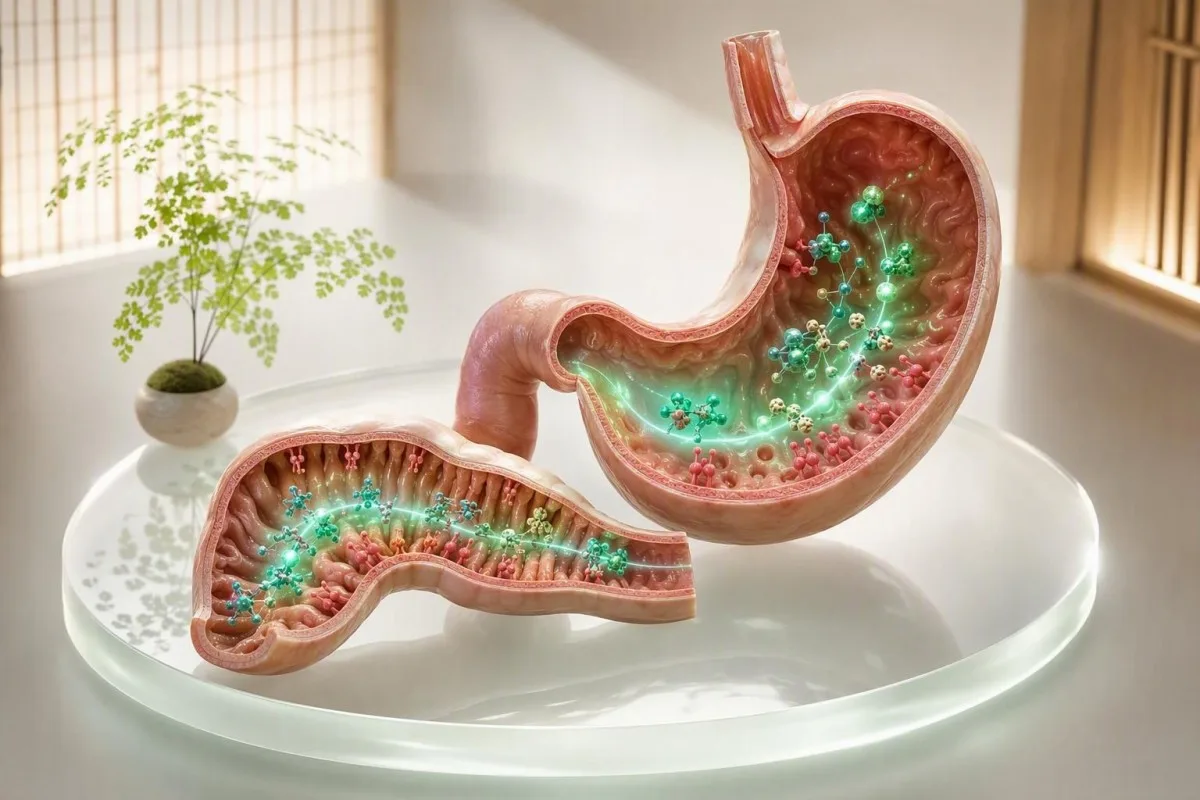
Betrouwbaar vitamine B12 komt uit dierlijke voedingsmiddelen of specifieke verrijkte producten; een voedzaam dieet kan niet elk absorptieprobleem overwinnen. Hier is hoe ik patiënten help om voedselkeuzes, symptomen, medicijnen en laboratoriumresultaten op elkaar af te stemmen.


- Dagelijkse B12-behoefte is 2,4 mcg voor de meeste volwassenen, 2,6 mcg tijdens zwangerschap en 2,8 mcg tijdens borstvoeding.
- Beste voedingsbronnen omvatten schelpdieren, lever, vis, vlees, zuivel, eieren en met B12 verrijkte voedingsmiddelen; onverrijkte plantaardige voedingsmiddelen zijn geen betrouwbare bronnen.
- Runderlever levert ongeveer 70 mcg B12 per gekookte portie van 85 g, terwijl 250 ml melk ongeveer 1,3 mcg levert.
- Absorptieplafond betekent dat intrinsieke factor meestal slechts ongeveer 1,5-2 mcg uit een maaltijd absorbeert; ruwweg 1% van een hoge orale dosis kan nog steeds passief binnenkomen.
- Serum B12 onder 200 pg/mL (148 pmol/L) ondersteunt vaak deficiëntie, terwijl 200-300 pg/mL vaak methylmalonzuur of actieve B12-context nodig heeft.
- Metformine en zuurremmende medicijnen kan B12 na verloop van tijd verlagen, vooral wanneer het gebruik enkele jaren aanhoudt.
- Neurologische symptomen zoals gevoelloosheid, veranderingen in het looppatroon, geheugenproblemen of verlies van vibratiezin vereisen medische beoordeling, zelfs als er geen sprake is van bloedarmoede.
- Voeding alleen is mogelijk niet voldoende om een tekort te corrigeren veroorzaakt door pernicieuze anemie, maagchirurgie, ernstige malabsorptie of significante neurologische symptomen.
Welke voedingsmiddelen leveren het meest betrouwbare vitamine B12?
Voedingsmiddelen die rijk zijn aan B12 zijn bijna uitsluitend dierlijke producten en voedingsmiddelen die opzettelijk zijn verrijkt met cobalamine. Kokkels, lever, vis, vlees, melk, yoghurt, kaas, eieren, verrijkte ontbijtgranen en verrijkte plantaardige dranken zijn betrouwbare keuzes wanneer het etiket de B12-inhoud bevestigt.
Gekookte kokkels kunnen ongeveer 84 mcg per 85 g, leveren, en gekookte runderlever ongeveer 70 mcg per 85 g; beide overschrijden de behoefte van volwassenen vele malen. Ik moedig toch aan om variatie te zoeken in plaats van vaak op lever te vertrouwen, omdat lever ook uitzonderlijk veel pre-vitamine A bevat en geen alledaagse voeding is tijdens de zwangerschap.
Vis is een praktisch middenweg: gekookte forel levert ongeveer 5,4 mcg per 85 g, zalm ongeveer 2,6 mcg, en tonijn uit blik ongeveer 2,5 mcg. Een patiënt die geen schaaldieren lust, kan meestal aan zijn voedingsbehoeften voldoen met twee porties vis per week plus zuivel, eieren of verrijkte voedingsmiddelen; ons B12 versus folaatgids verklaart waarom foliumzuur cobalamine niet kan vervangen.
Kantesti is een AI-bloedtestanalysator dat een B12-resultaat plaatst naast gemiddeld corpusculair volume, hemoglobine, foliumzuur, nierfunctie en medicatiecontext. Dat is belangrijk omdat iemand die twee keer per week vis eet toch een tekort kan krijgen als het probleem ligt bij de intrinsieke factor in plaats van bij de inname.
Hoeveel B12 zit er in alledaagse voedingsmiddelen?
Een enkele portie vis, vlees of zuivel kan (een deel van) de 2,4 mcg-doelstelling voor volwassenen leveren, maar de hoeveelheden verschillen sterk per voedingsmiddel en portie. Etiketten en voedingssamenstellingstabellen zijn schattingen, geen garantie van wat in de bloedsomloop terechtkomt.
Een kop koemelk van 250 ml levert ongeveer 1,3 mcg, 170 g volle yoghurt ongeveer 1,0 mcg, één groot ei ongeveer 0,5 mcg, en 85 g gekookt mager rundvlees ongeveer 2,4 mcg. Zuivel kan de inname daarom zinvol ondersteunen, hoewel twee eieren bij het ontbijt meestal niet aan de behoefte van de hele dag voldoen.
Ik zie vaak een misleidend patroon bij mensen die zichzelf omschrijven als 'meestal vegetarisch': af en toe eieren en kaas kunnen ernstige uitputting voorkomen, maar hun inname blijft toch maandenlang onder het streefcijfer schommelen. Dit is een reden waarom vermoeidheid een bredere kijk verdient die rekening houdt met ijzerrijke voedselkeuzes en niet alleen een multivitamine.
Thomas Klein, MD, adviseert patiënten om gedurende 7 dagen de werkelijke porties te registreren voordat ze beslissen dat hun dieet adequaat is. Een voedingsdagboek dat slechts 0,5-1,0 mcg per dag onthult, is klinisch nuttiger dan de vage uitspraak: 'Ik eet gezond.'
Zijn met B12 verrijkte voedingsmiddelen voldoende voor veganisten?
Met B12 verrijkte voedingsmiddelen kunnen aan de behoeften van veganisten voldoen wanneer ze consequent in afgemeten hoeveelheden worden gegeten, maar onverrijkte plantaardige voedingsmiddelen kunnen dit niet betrouwbaar doen. Zeewier, paddenstoelen, gefermenteerde voedingsmiddelen en edelgistvlokken zonder toegevoegd B12-etiket zijn geen betrouwbare vervangers.
Veel verrijkte plantaardige dranken leveren 0,4-1,0 mcg per 250 ml, terwijl een portie verrijkt ontbijtgranen mogelijk 1,0-6,0 mcg. levert. Lees altijd het lokale etiket: producten verschillen per land, recept en portiegrootte, en 'bevat vitaminen' betekent niet automatisch dat het B12 bevat.
Cyanocobalamine is het meest voorkomende verrijkingsmiddel omdat het stabiel blijft tijdens opslag en bereiding. De beoordeling uit 2010 door O'Leary en Samman in Nutrients beschrijft waarom analogen die in sommige algen voorkomen chemisch op B12 kunnen lijken, maar de B12-status van de mens niet betrouwbaar ondersteunen (O'Leary & Samman, 2010).
Kantesti is een AI-bloedonderzoek uitslagplatform gebruikt om lezers te helpen dieetpatroon, B12 en gerelateerde markers in één beeld te plaatsen. Mensen die een plantaardig dieet volgen, moeten ook rekening houden met een geplande bloedtest op nutriëntengaten in plaats van te wachten op tintelingen of uitputting.
Wat zijn de dagelijkse B12-behoeften per leeftijd en levensfase?
De meeste volwassenen hebben dagelijks 2,4 mcg vitamine B12 nodig, terwijl zwangerschap 2,6 mcg en borstvoeding 2,8 mcg vereist. Deze doelen voorkomen een tekort bij mensen met een normale absorptie; het zijn geen behandelingsdoses voor een vastgesteld tekort.
De Recommended Dietary Allowance van de Verenigde Staten is 0,4 mcg vanaf de geboorte tot 6 maanden, 0,9 mcg op 1-3 jarige leeftijd, 1,2 mcg op 4-8 jarige leeftijd, 1,8 mcg op 9-13 jarige leeftijd, En 2,4 mcg vanaf 14 jaar. De referentie-voedingsinname voor volwassenen in het VK is lager op 1,5 mcg per dag, dus internationale voedingsapps kunnen verschillende doelen weergeven zonder dat een van beide een fout is.
Oudere volwassenen hebben vaak dezelfde dieethoeveelheid nodig, maar hebben een grotere kans op voedselgebonden B12-malabsorptie door verminderd maagzuur, gastritis of medicatie. Een normale eetlust sluit dit niet uit; onze gids voor B12-niveaus bij kinderen laat ook zien waarom leeftijdspecifieke context ertoe doet.
B12 wordt in de lever opgeslagen, doorgaans op 2-5 mg, waardoor het 2-5 jaar kan duren voordat een ontoereikende inname duidelijk wordt. Dat uitstel is klinisch onhandig: symptomen kunnen lang nadat een restrictief dieet begon, opduiken.
Hoe werkt B12-absorptie nadat je het hebt gegeten?
B12-opname vereist maagzuur, pancreatische enzymen en intrinsieke factor van maagcellen voordat het in het laatste deel van het ileum wordt opgenomen. Een probleem bij een van de stappen kan een dieet met veel B12 ontoereikend maken.
Voedingsgebonden B12 wordt in de maag uit eiwitten vrijgemaakt, bindt eerst aan haptocorrine en wordt vervolgens in de dunne darm overgedragen aan intrinsieke factor. Het intrinsieke factor-B12-complex wordt in het terminale ileum geabsorbeerd via een receptor-gemedieerd proces; dit is de reden waarom ziekte of verwijdering van dit darmsegment gevolgen heeft.
Opname van intrinsieke factor is verzadigd bij ongeveer 1,5-2 mcg per maaltijd, terwijl ongeveer 1% van een grote orale dosis via passieve diffusie kan worden opgenomen. Dat kleine passieve kanaal verklaart waarom artsen soms orale behandelingsdoses van 1.000-2.000 mcg gebruiken, niet omdat iemand 1.000 keer de voedingsbehoefte nodig heeft.
Voor mensen met chronische diarree, onverklaarbaar gewichtsverlies of vermoeden van coeliakie is een berekening van de inname niet voldoende. Het bespreken van de juiste timing van een gluten provocatietest vóór het testen kan een vals geruststellende werk-up voorkomen.
Wat blokkeert de B12-opname, zelfs met een goed dieet?
Pernicieuze anemie, maag- of darmchirurgie, coeliakie, de ziekte van Crohn, langdurig gebruik van metformine en zuurremmers kunnen de B12-opname verminderen. In deze situaties kan het verhogen van vis of verrijkte ontbijtgranen de achteruitgang vertragen, maar mogelijk niet de deficiëntie corrigeren.
Auto-immune gastritis kan intrinsieke factor-producerende maagcellen vernietigen en veroorzaken pernicieuze anemie, een absorptiestoornis in plaats van een dieetfalen. NICE-richtlijn NG239, gepubliceerd in 2024, beveelt aan om anti-intrinsieke factor antilichaamtesten te overwegen wanneer auto-immune gastritis wordt vermoed, hoewel een negatief resultaat dit niet volledig uitsluit.
Metformine-geassocieerde lage B12 is reëel, maar variabel. In de Diabetes Prevention Program Outcomes Study was lage of grens-lage B12 vaker voorkomend bij metformine dan bij placebo na 5 jaar, en het risico nam toe met langere blootstelling (Aroda et al., 2016); daarom bloedonderzoek na metformine mag niet alleen op glucose worden gericht.
Een 63-jarige patiënt die ik beoordeelde, at wekelijks zalm en dronk dagelijks melk, maar had een B12-waarde van 156 pg/mL met gevoelloze tenen na jarenlang gebruik van metformine en omeprazol. Voeding was niet het ontbrekende onderdeel - absorptie wel.
Welke bloedtesten verduidelijken een mogelijk B12-tekort?
Serum B12 onder 200 pg/mL, of 148 pmol/L, ondersteunt vaak deficiëntie, terwijl 200-300 pg/mL een onbepaalde zone is die baat heeft bij bevestigende context. Methylmalonzuur, homocysteïne, actieve B12, volledig bloedbeeld en foliumzuur kunnen onzekerheid wegnemen.
Methylmalonzuur stijgt meestal wanneer cellulaire B12 ontoereikend is; een MMA boven 0,40 micromol/L wordt vaak als verhoogd beschouwd, hoewel de laboratoriumgrenzen verschillen. Nierinsufficiëntie kan MMA onafhankelijk verhogen, dus een eGFR van 35 mL/min/1,73 m² verandert de betekenis van hetzelfde resultaat.
Macrocytose is een aanwijzing, geen vereiste. Een MCV boven , MCV dat stijgt boven kan optreden bij B12-deficiëntie, maar vroege deficiëntie kan een normaal MCV hebben, en ijzerdeficiëntie kan celvergroting gedeeltelijk maskeren; vergelijk het resultaat met onze gids voor opvolging van hoge MCV.
Kantesti is een AI-aangedreven tool voor analyse van bloedtesten die B12 interpreteert met MMA, MCV, RDW, creatinine en longitudinale veranderingen in plaats van een enkele afkapwaarde toe te passen. Het diagnostische raamwerk in Devalia et al. (2014) ondersteunt eveneens het gebruik van klinische kenmerken en tweedelijns tests wanneer serum B12 de vraag niet kan beantwoorden.
Kan een B12-tekort symptomen veroorzaken zonder bloedarmoede?
Ja, B12-deficiëntie kan zenuw- en cognitieve symptomen veroorzaken voordat hemoglobine daalt of MCV stijgt. Tintelingen, brandende voeten, verminderde balans, verlies van vibratiezin, neerslachtigheid en hersenmist verdienen beoordeling wanneer ze aanhouden.
Een hemoglobine van 13,2 g/dL en MCV van 92 fL sluiten functionele B12-deficiëntie bij een persoon met progressieve paresthesie niet uit. Neurologisch herstel is minder voorspelbaar wanneer symptomen al vele maanden aanwezig zijn, daarom raad ik af te wachten op overduidelijke anemie.
Foliumzuur kan het bloedbeeld normaliseren terwijl B12-gerelateerd zenuwletsel voortduurt. Dit is de klinische kwestie achter de waarschuwing over hooggedoseerd foliumzuur; zie onze uitleg van hoog foliumzuur dat B12 maskeert voor het praktische detail.
Dringende beoordeling op dezelfde dag is zinvol bij snel verergerende loopmoeilijkheden, nieuwe verwardheid, duidelijke zwakte of veranderingen in de darm- en blaasfunctie. Deze symptomen hebben verschillende oorzaken, maar B12 moet deel uitmaken van een snelle differentiële diagnose in plaats van een supplementexperiment.
Wanneer kan voeding een laag B12 corrigeren en wanneer is behandeling nodig?
Voedsel kan een marginale lage inname corrigeren bij iemand met een intacte absorptie, maar een bevestigd tekort als gevolg van malabsorptie vereist vaak een orale behandeling met hoge doseringen of injecties. De keuze hangt af van de oorzaak, de ernst, therapietrouw en neurologische bevindingen - niet simpelweg van het serumgetal.
Voor voedingsinsufficiëntie zonder ernstige symptomen kunnen clinici orale cyanocobalamine of methylcobalamine gebruiken in doseringen zoals 50-150 mcg per dag voor onderhoud, met hogere doseringen bij het corrigeren van een tekort. Exacte regimes variëren per land en moeten het protocol van de behandelende arts volgen.
Pernicieuze anemie, totale gastrectomie, ernstige ileumziekte of aanzienlijke neurologische symptomen veranderen meestal het gesprek. Onze gedetailleerde vergelijking van B12-injecties en -tabletten verklaart waarom tabletten met hoge doseringen nog steeds kunnen werken via passieve absorptie, terwijl injecties de voorkeur kunnen hebben wanneer zekerheid of snelheid belangrijk is.
Naar mijn ervaring is een "food-first" plan uitstekende preventie, maar slechte spoedtherapie bij symptomatische malabsorptie. De timing van de hercontrole moet symptomen en functionele markers omvatten, niet alleen een B12-resultaat dat snel stijgt na een injectie.
Is gemethyleerd B12 beter dan cyanocobalamine?
Methylcobalamine en cyanocobalamine kunnen beide B12-tekorten corrigeren wanneer de dosering en absorptie adequaat zijn; bewijs toont niet aan dat gemethyleerde B12 universeel superieur is. Cyanocobalamine is stabiel, uitgebreid bestudeerd en wordt vaak gebruikt in verrijkte voedingsmiddelen.
Het lichaam zet cobalamine om in actieve co-enzymvormen die door methionine synthase en methylmalonyl-CoA mutase worden gebruikt. Marketingtaal rond 'gemethyleerde' producten loopt vaak vooruit op vergelijkend klinisch bewijs; absorptie, dosering, kosten en consistentie zijn meestal doorslaggevender.
Hydroxocobalamine wordt in verschillende gezondheidssystemen vaak via injectie gebruikt omdat het langer in het lichaam blijft dan cyanocobalamine. Mensen met chronische nierziekte of ongebruikelijke stofwisselingsstoornissen hebben individueel advies nodig, omdat MMA en de keuze van de behandeling ingewikkelder kunnen worden.
Voor een praktische vergelijking van productchemie, doseringslogica en laboratoriumfollow-up, leest u gemethyleerd B12 versus cyanocobalamine. Stop voorgeschreven injecties niet omdat een supplementlabel een meer 'natuurlijke' vorm belooft.
Hoe ziet een praktische dag met B12-rijk eten eruit?
Een gemengd dieet kan 2,4 mcg B12 opleveren met gewone maaltijden, terwijl een veganistisch patroon doelbewuste planning van verrijkte voedingsmiddelen of een supplement vereist. Het meest betrouwbare plan is een plan dat u kunt herhalen tijdens reizen, drukke weken en veranderingen in eetlust.
Een omnivoor voorbeeld is yoghurt bij het ontbijt (1,0 mcg), een ei bij de lunch (0,5 mcg), en 85 g zalm bij het avondeten (2,6 mcg). Dit levert ongeveer 4,1 mcg voordat rekening wordt gehouden met variatie tussen voedingsmiddelen, terwijl het spreiden van de inname over maaltijden voor de meeste mensen comfortabel is.
Een verrijkt veganistisch voorbeeld zou een plantaardig drankje kunnen gebruiken dat 1,0 mcg, ontbijtgranen die 1,5 mcg, en verrijkte voedingsgist die 1,0 mcg. De crux is consistentie: het veranderen van merken kan het nutriënt abrupt verwijderen, dus bewaar een foto van het etiket in uw gezondheidsnotities.
B12 hoort thuis in het bredere patroon van in water oplosbare voedingsstoffen, eiwitten, ijzer en energie-inname. Onze gids voor in water oplosbare vitaminen helpt de veelvoorkomende fout te voorkomen om één vitamine als de volledige verklaring voor vermoeidheid te beschouwen.
Wie moet extra alert zijn op een laag B12-gehalte?
Veganisten, ouderen, mensen die metformine of langdurige zuurremmers gebruiken, patiënten na maag- of ileumoperaties en mensen met inflammatoire darmziekten lopen een hoger risico op B12-tekort. Het risico neemt toe wanneer meer dan één factor aanwezig is.
Langdurig gebruik van protonpompremmers kan de afgifte van B12 uit voedingsproteïnen verminderen door de maagaciditeit te verlagen. Het verband is geen reden om een voorgeschreven medicijn abrupt te stoppen, maar het is wel een reden om te vragen of monitoring passend is na 2 jaar of langer van continu gebruik.
Mensen ouder dan 60 jaar kunnen voedsel-cobalamine malabsorptie ontwikkelen, zelfs met een gevarieerd dieet, soms naast atrofische gastritis. Een lager B12-niveau in deze groep is niet automatisch 'alleen leeftijd'; het kan een signaal zijn om symptomen, medicijnen en auto-immuunhistorie te onderzoeken.
Ons langetermijn PPI monitoring gids schetst bijbehorende laboratoriumdiscussies, waaronder magnesium en ijzer. Het combineren van een laag B12-gehalte met onverklaarde ijzertekort kan clinici wijzen op een maagoorzaak in plaats van twee niet-gerelateerde voedingslacunes.
Wanneer moeten B12-spiegels opnieuw worden getest na het veranderen van dieet of behandeling?
Hertesten vindt vaak 8-12 weken na een dieet- of orale behandeling plaats, terwijl de ernst van de symptomen en de behandelmethode een eerdere klinische beoordeling kunnen rechtvaardigen. Een serum B12-resultaat kan snel stijgen na suppletie en bewijst weefselherstel op zichzelf mogelijk niet.
Een volledig bloedbeeld kan een reticulocytenrespons vertonen binnen ongeveer 1 week na effectieve behandeling van megaloblastische anemie, terwijl hemoglobine meestal binnen enkele weken verbetert. Zenuwsymptomen herstellen doorgaans langzamer en soms onvolledig, vooral na langdurig tekort.
Stop-en-start suppletie kan ervoor zorgen dat serum B12 op de dag van de test normaal lijkt, terwijl MMA, symptomen of macrocytose zorgwekkend blijven. Dit is een reden om de arts precies te vertellen wat u heeft ingenomen, de dosis en de datum van de laatste dosis voordat de resultaten worden geïnterpreteerd.
Kantesti AI kan B12, MCV, hemoglobine, RDW, folaat en creatinine over verschillende rapporten vergelijken om te bepalen of een verandering klinisch significant is. Voor lezers die deze vaardigheid leren, onze bloedtest-trendanalysegids legt uit waarom één geïsoleerd resultaat zelden het hele verhaal vertelt.
Welke B12-misvattingen kunnen een juiste behandeling vertragen?
De grootste misvatting over B12 is dat het eten van meer dierlijk voedsel elk laag resultaat zal oplossen. Voeding helpt bij de inname, maar het kan de intrinsieke factor niet herstellen, darmziekten niet omkeren, of neurologische symptomen veilig vervangen door evaluatie.
Een andere mythe is dat een hoog serum B12-resultaat altijd een uitstekende status betekent. Een resultaat boven 900 pg/mL weerspiegelt vaak supplementen of injecties, maar aanhoudende onverklaarbare verhoging kan ook voorkomen bij leverziekte, nierziekte of bepaalde hematologische aandoeningen; context is belangrijker dan paniek.
Vanaf 1 september 2026 zou ik ook waarschuwen tegen het gebruik van energieverbetering na één tablet als diagnostisch bewijs. Placebo-effecten, slaap, ijzerstatus, schildklierziekte, depressie en glucoseveranderingen kunnen allemaal de energie beïnvloeden 1-4 weken zonder een B12-tekort te bevestigen.
De klinische inhoud van Kantesti wordt beoordeeld met ondersteuning van onze Medische Adviesraad, maar een AI-interpretatie vervangt nooit een onderzoek naar voortschrijdende neurologische symptomen. Lezers kunnen onze klinische validatie-aanpak bekijken om te begrijpen hoe we vervolgprompts formuleren in plaats van een diagnose te stellen.
Wat zijn de veiligste volgende stappen als u een laag B12-gehalte vermoedt?
Als u aanhoudende gevoelloosheid, evenwichtsproblemen, cognitieve veranderingen, onverklaarbare macrocytose of een B12-resultaat onder de 200 pg/mL heeft, regel dan medische beoordeling in plaats van alleen op voedsel te vertrouwen. Vroege behandeling is met name relevant wanneer zenuwen betrokken kunnen zijn.
Neem een lijst mee van medicijnen, supplementen, voedingspatroon, spijsverteringsdiagnoses, operaties, alcoholinname en eerdere laboratoriumrapporten. Een arts kan dan beslissen of B12 herhaald moet worden, MMA of homocysteïne moet worden aangevraagd, foliumzuur en volledig bloedbeeld moet worden gecontroleerd, of pernicieuze anemie en malabsorptie moet worden onderzocht.
Thomas Klein, MD, raadt aan om hooggedoseerd foliumzuur te vermijden als zelfbehandeling voor onverklaarbare macrocytose totdat B12 redelijk is beoordeeld. Als u geen rode vlaggen heeft en de voedingsinname duidelijk laag is, is een gemeten voedings- of supplementenplan met een herhaald resultaat over 8-12 weken vaak verstandig.
Kantesti verbindt laboratoriumrapporttrends aan begrijpelijke vragen voor uw afspraak, terwijl de uiteindelijke diagnostische beslissing bij uw arts blijft. Ontdek onze biomarker referentiegids voor de laboratoriumtermen die waarschijnlijk naast een B12-resultaat zullen verschijnen.
Veelgestelde vragen
Wat eten bevat de meeste vitamine B12?
Schelpdieren en runderlever behoren tot de voedingsmiddelen die het meest rijk zijn aan vitamine B12. Een gekookte portie van 85 g schelpdieren kan ongeveer 84 mcg B12 leveren, terwijl hetzelfde deel runderlever ongeveer 70 mcg levert; beide overschrijden ruimschoots de dagelijkse aanbevolen hoeveelheid van 2,4 mcg voor volwassenen. Lever mag tijdens de zwangerschap niet als dagelijks voedsel worden beschouwd vanwege het zeer hoge gehalte aan reeds gevormde vitamine A. Voor reguliere maaltijden zijn vis, vlees, zuivel, eieren en gemerkte verrijkte voedingsmiddelen praktischere bronnen.
Kunnen veganisten genoeg B12 binnenkrijgen uit voeding alleen?
**Vegans kunnen hun behoefte aan vitamine B12 uit voeding alleen dekken als ze regelmatig producten gebruiken die met B12 verrijkt zijn in afgemeten hoeveelheden. Niet-verrijkte groenten, paddenstoelen, zeewier, tempeh en edelgistvlokken zijn geen betrouwbare B12-bronnen omdat hun cobalaminegehalte afwezig, inconsistent is of inactieve analogen kan bevatten. Veel verrijkte plantaardige dranken leveren 0,4-1,0 mcg per 250 ml, maar de samenstellingen verschillen per land en merk. Een B12-supplement is vaak een eenvoudigere en betrouwbaardere bescherming voor veganistische diëten.**.
Hoeveel B12 moet een volwassene dagelijks binnenkrijgen?
De meeste volwassenen hebben dagelijks 2,4 mcg vitamine B12 nodig volgens de United States Recommended Dietary Allowance. Zwangerschap verhoogt het doel naar 2,6 mcg per dag, en borstvoeding verhoogt het naar 2,8 mcg per dag. Het UK referentie-nutriënteninname voor volwassenen is 1,5 mcg per dag, dus land-specifieke voedingslabels kunnen verschillen. Deze waarden zijn preventieve doelen voor normale absorptie en liggen veel lager dan de behandelingsdoseringen die worden gebruikt voor vastgestelde deficiëntie.
Kan ik een B12-tekort verhelpen door meer vlees en eieren te eten?
Het verhogen van de consumptie van vlees, vis, zuivelproducten, eieren of verrijkte voedingsmiddelen kan een B12-tekort dat uitsluitend wordt veroorzaakt door een lage voedselinname corrigeren, maar werkt mogelijk niet wanneer de absorptie is aangetast. Pernicieuze anemie, coeliakie, de ziekte van Crohn, maagchirurgie, ileumchirurgie, metformine en langdurige zuurremmende behandeling kunnen de absorptie verminderen ondanks een B12-rijk dieet. Een serum B12-waarde onder 200 pg/mL of 148 pmol/L rechtvaardigt over het algemeen een klinische beoordeling van de oorzaak. Neurologische symptomen zoals gevoelloosheid, slecht evenwicht of cognitieve veranderingen mogen niet alleen met voeding worden behandeld.
Wat helpt bij de opname van B12?
Vitamine B12-absorptie is afhankelijk van adequate maagverwerking, pancreasenzymen, intrinsieke factor en een goed functionerend terminale ileum. Intrinsieke factor absorbeert actief slechts ongeveer 1,5-2 mcg B12 uit een maaltijd, terwijl ruwweg 1% van een grote orale dosis via passieve diffusie kan worden opgenomen. Het eten van B12 met voedsel is redelijk, maar geen enkele specifieke voedselcombinatie kan afwezige intrinsieke factor of ernstige ileumziekte overwinnen. Hoge doses orale B12 of injecties kunnen nodig zijn wanneer de absorptie is aangetast.
Welk B12-gehalte wordt als laag beschouwd?
Een serumvitamine B12-resultaat onder 200 pg/mL, wat overeenkomt met ongeveer 148 pmol/L, ondersteunt doorgaans vitamine B12-deficiëntie, hoewel laboratoria verschillende testbereiken hanteren. Resultaten van 200-300 pg/mL worden vaak als grensgeval of onbepaald beschouwd en vereisen mogelijk methylmalonzuur, homocysteïne, actieve B12, volledig bloedbeeld, foliumzuur, nierfunctie en context van symptomen. Methylmalonzuur boven ongeveer 0,40 micromol/L ondersteunt cellulaire vitamine B12-deficiëntie, maar kan ook stijgen bij verminderde nierfunctie. Een normale hemoglobine of MCV sluit vroege, door B12 gerelateerde zenuwklachten niet betrouwbaar uit.
Ontvang vandaag nog AI-aangedreven bloedtestanalyse
Sluit je aan bij meer dan 2 miljoen gebruikers wereldwijd die Kantesti vertrouwen voor directe, nauwkeurige analyse van labtests. Upload je bloedwaarden resultaten en ontvang binnen enkele seconden een uitgebreide interpretatie van 15,000+-biomarkers.
📚 Geraadpleegde wetenschappelijke publicaties
Klein, T., Mitchell, S., & Weber, H. (2026). Urobilinogeen in urinetest: Complete gids 2026 voor urinalyse. Kantesti AI medisch onderzoek.
Klein, T., Mitchell, S., & Weber, H. (2026). Handleiding voor ijzeronderzoek: TIBC, ijzerverzadiging en bindingscapaciteit. Kantesti AI medisch onderzoek.
📖 Externe medische referenties
⚕️ Medische disclaimer
Dit artikel is uitsluitend bedoeld voor educatieve doeleinden en vormt geen medisch advies. Raadpleeg altijd een gekwalificeerde zorgverlener voor beslissingen over diagnose en behandeling.
E-E-A-T Vertrouwenssignalen
Ervaring
Klinische beoordeling door artsen van lab-interpretatieworkflows.
Expertise
Laboratoriumgeneeskunde met focus op hoe biomarkers zich gedragen in een klinische context.
Gezag
Geschreven door Dr. Thomas Klein, met review door Dr. Sarah Mitchell en Prof. Dr. Hans Weber.
Betrouwbaarheid
Evidence-based interpretatie met duidelijke vervolgstappen om onrust te verminderen.