A megbízható B12-vitamin állati élelmiszerekből vagy speciálisan dúsított termékekből származik; egy tápláló étrend nem tud minden felszívódási problémát orvosolni. Így segítek a betegeknek összehangolni az ételválasztást, a tüneteket, a gyógyszereket és a laboratóriumi eredményeket.


- Napi B12-szükséglet a legtöbb felnőtt számára 2,4 mcg, terhesség alatt 2,6 mcg, szoptatás alatt pedig 2,8 mcg.
- Legjobb élelmiszerforrások kagyló, máj, hal, hús, tejtermékek, tojás és B12-vel dúsított élelmiszerek; a dúsítatlan növényi élelmiszerek nem megbízható források.
- Marhamáj kb. 70 mcg B12-t biztosít 85 g főtt adagonként, míg 250 ml tej kb. 1,3 mcg-ot biztosít.
- Felszívódási küszöb azt jelenti, hogy a belső faktor általában csak kb. 1,5-2 mcg-ot szív fel egy étkezésből; egy nagy orális dózis nagyjából 1% még passzívan is felszívódhat.
- A szérum B12 200 pg/mL alatt (148 pmol/L) gyakran jelez hiányt, míg a 200-300 pg/mL gyakran igényel metilmalonsav vagy aktív B12 kontextust.
- Metformin és savcsökkentő gyógyszerek csökkentheti a B12-szintet idővel, különösen, ha az használat több évig tart.
- Neurológiai tünetek mint a zsibbadás, járászavar, memóriaproblémák vagy a rezgésérzés elvesztése orvosi felülvizsgálatot igényel még akkor is, ha nincs vérszegénység.
- Csak étellel nem lehet korrigálni a hiányt olyan esetekben, mint a ।।pernicious anemia।।, gyomorműtét, súlyos felszívódási zavar vagy jelentős neurológiai tünetek.
Mely élelmiszerek biztosítják a legmegbízhatóbb B12-vitamint?
A B12-ben gazdag élelmiszerek szinte kizárólag állati eredetű élelmiszerek és a kifejezetten kobalaminnal dúsított élelmiszerek. A kagyló, máj, hal, hús, tej, joghurt, sajt, tojás, dúsított reggelizőpehely és dúsított növényi italok megbízható választások, ha a címke igazolja a B12-tartalmat.
A főtt kagyló körülbelül 84 mcg-ot biztosíthat 85 g-onként, és a főtt marhamáj körülbelül 70 mcg-ot 85 g-onként; mindkettő sokszorosan meghaladja a felnőtt szükségletet. Továbbra is a változatosságot javaslom a májtól való gyakori függés helyett, mert a máj emellett rendkívül magas A-vitamin-tartalmú, és terhesség alatt nem hétköznapi étel.
A hal praktikus köztes megoldás: a főtt pisztráng körülbelül 5,4 mcg-ot biztosít 85 g-onként, a lazac körülbelül 2,6 mcg-ot, és a konzerv tonhal körülbelül 2,5 mcg-ot. Az a beteg, aki nem kedveli a tenger gyümölcseit, általában teljesítheti élelmiszer-szükségletét heti két adag hallal, plusz tejtermékekkel, tojással vagy dúsított élelmiszerekkel; a miénk B12 a foláttal szemben útmutatóban tárgyaljuk elmagyarázza, miért nem helyettesítheti a folát a kobalamint.
Kantesti egy AI vérvizsgálati analizátor amely a B12-eredményt összeveti az átlagos corpuscularis térfogattal, a hemoglobinnal, a foláttal, a vesefunkcióval és a gyógyszeres kontextussal. Ez azért fontos, mert egy személy, aki hetente kétszer eszik halat, továbbra is hiányos lehet, ha a probléma a belső faktor, nem pedig a bevitel.
Mennyi B12 van a mindennapi élelmiszerekben?
Egyetlen adag hal, hús vagy tejtermék biztosíthatja a 2,4 mcg-os felnőtt célmennyiség részben vagy egészében, de az összegek élelmiszerenként és adagonként élesen eltérnek. A címkék és az élelmiszer-összetételi táblázatok becslések, nem pedig garancia arra, ami a keringésbe kerül.
Egy 250 ml-es csésze tehéntej körülbelül 1,3 mcg, 170 g natúr joghurt körülbelül 1,0 mcg, egy nagy tojás körülbelül 0,5 mcg, és 85 g főtt sovány marhahús körülbelül 2,4 mcg. A tejtermékek tehát érdemben támogathatják a bevitelüket, bár két tojás reggelire általában nem elég a teljes napi szükséglethez.
Gyakran látok félrevezető mintázatot azoknál, akik magukat 'nagyrészt vegetáriánusnak' vallják: az alkalmi tojás és sajt fogyasztása ugyan megakadályozhatja a súlyos kimerültséget, mégis hónapokig a cél alatti ingadozást tapasztalnak a bevitelükben. Ez az egyik oka annak, hogy a fáradtságot szélesebb körben kell vizsgálni, beleértve a vasionban gazdag élelmiszereket , és nem csak egy multivitamin.
Thomas Klein, MD, azt tanácsolja a betegeknek, hogy 7 napig rögzítsék a tényleges adagokat, mielőtt úgy döntenének, hogy étrendjük megfelelő. Egy olyan étkezési napló, amely csak napi 0,5–1,0 mcg-ot mutat, klinikailag hasznosabb, mint az a homályos kijelentés, hogy 'egészségesen étkezem'.'
Elég a B12-vel dúsított élelmiszer a vegánoknak?
A B12-vel dúsított élelmiszerek fedezhetik a vegánok szükségletét, ha következetesen, mért mennyiségben fogyasztják őket, de a nem dúsított növényi élelmiszerek megbízhatóan nem tudják ezt megtenni. A tengeri algák, gombák, fermentált élelmiszerek és táplálkozási élesztő hozzáadott B12-címke nélkül nem megbízható helyettesítők.
Sok dúsított növényi ital biztosít 0,4-1,0 mcg / 250 ml, míg egy dúsított gabonapehely adagja 1,0-6,0 mcg. -ot tartalmazhat. Olvasd el minden alkalommal a helyi címkét: a termékek országonként, receptenként és adagméretenként eltérnek, és a 'vitaminokat tartalmaz' felirat nem jelenti automatikusan azt, hogy B12-t is tartalmaz.
A cianokobalamin a leggyakoribb dúsítószer, mert tárolás és főzés során is stabil marad. Az O'Leary és Samman által a Nutrients folyóiratban 2010-ben közölt áttekintés leírja, miért hasonlíthatnak kémiailag a B12-re egyes algákban található analógok, de nem képesek megbízhatóan támogatni az emberi B12-ellátottságot (O'Leary & Samman, 2010).
Kantesti egy AI vérvizsgálat-értelmező platform a diétás mintázat, a B12 és a kapcsolódó markerek egy nézetben történő megjelenítéséhez. A növényi alapú étrendet követőknek is fontolóra kell venniük egy tervezett tápanyag-rés vérvizsgálatot a bizsergésre vagy kimerültségre várva.
Mik a napi B12-szükségletek életkor és életszakasz szerint?
A legtöbb felnőttnek napi 2,4 mcg B12-vitaminra van szüksége, míg terhesség alatt 2,6 mcg, szoptatás alatt pedig 2,8 mcg. Ezek a célok a normál felszívódású emberekben a hiány megelőzésére szolgálnak; nem a már kialakult hiány kezelésére szolgáló dózisok.
Az Egyesült Államokban az ajánlott napi bevitel 0,4 mcg születéstől 6 hónapos korig, 0,9 mcg 1-3 éves korban, 1,2 mcg 4-8 éves korban, 1,8 mcg 9-13 éves korban, és 2,4 mcg 14 éves kortól. Az Egyesült Királyságban a felnőtt referencia tápanyagbevitel alacsonyabb, napi 1,5 mcg, ezért a nemzetközi táplálkozási alkalmazások eltérő célokat jeleníthetnek meg anélkül, hogy bármelyikük is hibás lenne.
Az idősebb felnőtteknek gyakran ugyanannyi étrendi mennyiségre van szükségük, de náluk nagyobb az esélye az élelmiszerhez kötött B12-malabszorpciónak csökkent gyomorsav, gyomorhurut vagy gyógyszerek miatt. A normál étvágy nem zárja ki ezt; a gyermekek B12-szintjéről szóló útmutatónk B12-szintek gyermekeknél is megmutatja, miért számít az életkor-specifikus kontextus.
A B12-vitamint a máj tárolja, általában 2-5 mg, mennyiségben, ezért 2-5 év is eltelhet, mire a csökkent bevitel nyilvánvalóvá válik. Ez a késleltetés klinikailag kellemetlen: a tünetek jóval azután jelentkezhetnek, hogy a szigorú diéta elkezdődött.
Hogyan működik a B12 felszívódása étkezés után?
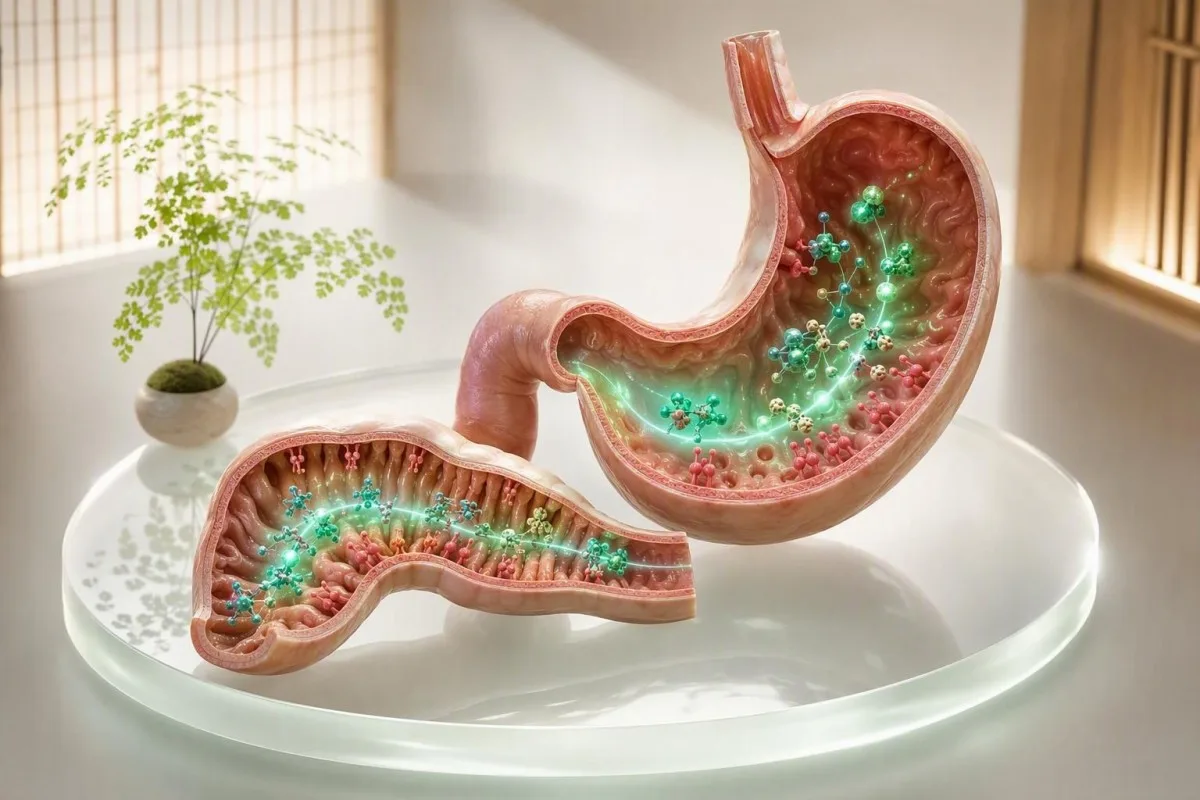
A B12 felszívódásához gyomorsavra, hasnyálmirigy-enzimekre és a gyomorsejtekből származó intrinsic faktorra van szükség az utolsó szakaszon, a terminális ileumban történő felszívódás előtt. Az egyes lépések bármelyikénél fellépő probléma elégtelenné teheti a magas B12-tartalmú étrendet.
Az ételhez kötött B12 a gyomorban szabadul fel a fehérjéből, először haptokorrinhoz kötődik, majd a vékonybélben intrinsic faktorhoz kerül. Az intrinsic faktor-B12 komplexet a terminális ileumban, receptor-mediált folyamat révén szívják fel; ezért van következménye az adott bél szakasz betegségének vagy eltávolításának.
Az intrinsic faktor felszívódása nagyjából telítődik 1,5-2 mcg étkezésenként, míg nagyjából 1% egy nagy orális dózis passzív diffúzióval képes áthaladni. Ez a kis passzív út magyarázza, miért használnak a klinikusok néha 1000-2000 mcg orális kezelési dózisokat, nem azért, mert bárkinek a szükségletének 1000-szeresére lenne szüksége.
Krónikus hasmenésben, tisztázatlan fogyásban vagy feltételezett coeliakiában szenvedőknél a bevitel kiszámítása nem elegendő. A megfelelő időzítés megbeszélése a tesztelés előtti gluténterhelés esetében megelőzheti a tévesen megnyugtató eredményt.
Mi gátolja a B12 felszívódását még jó étrend mellett is?
A pernicious anemia, gyomor- vagy bélműtét, coeliakia, Crohn-betegség, hosszú távú metformin szedés és savcsökkentés csökkenthetik a B12 felszívódását. Ilyen esetekben a hal- vagy dúsított gabonafélék fogyasztásának növelése lassíthatja a csökkenést, de nem feltétlenül korrigálja a hiányt.
Az autoimmun gastritis elpusztíthatja az intrinsic faktort termelő gyomorsejteket és okozhat a perniciózus anémia, amely felszívódási zavar, nem pedig étrendi hiba. A NICE 2024-ben kiadott NG239 útmutatása javasolja az anti-intrinsic faktor antitest vizsgálat megfontolását autoimmun gastritis gyanúja esetén, bár a negatív eredmény nem zárja ki teljesen.
A metforminhoz társult alacsony B12-szint valós, de változó. A Diabetes Prevention Program Outcomes Study-ban a metformin szedése után 5 évvel gyakoribb volt az alacsony vagy határérték alatti B12-szint, mint a placebó esetében, és a kockázat nőtt a hosszabb expozícióval (Aroda et al., 2016); ezért metformin utáni laborvizsgálatokról ne csak a glükózra összpontosítson.
Egy általam vizsgált 63 éves beteg hetente evett lazacot és naponta ivott tejet, mégis 156 pg/mL volt a B12-szintje, és lábujjai zsibbadtak, miután évekig szedett metformint és omeprazolt. Nem az étel volt a hiányzó láncszem – a felszívódás volt.
Mely vérvizsgálatok tisztázzák a lehetséges B12-hiányt?
A 200 pg/mL alatti, vagy 148 pmol/L alatti szérum B12-szint gyakran alátámasztja a hiányt, míg a 200-300 pg/mL határozatlan zóna, amely megerősítő kontextusból profitál. A metilmalonsav, a homocisztein, az aktív B12, a teljes vérkép és a folát tisztázhatja a bizonytalanságot.
A metilmalonsav általában emelkedik, ha a sejtes B12-szint elégtelen; egy MMA-érték, amely 0,40 mikromol/l felett van gyakran emelkedettnek számít, bár a laboratóriumi határértékek eltérőek lehetnek. A vesekárosodás önmagában is növelheti az MMA-szintet, így egy 35 ml/perc/1,73 m² eGFR megváltoztatja az eredmény jelentését.
A makrocitózis támpont, nem követelmény. Egy MCV-érték, amely , az MCV pedig emelkedett lehet B12-hiány esetén, de a korai hiány normál MCV-vel is jelentkezhet, és a vashiány részlegesen elfedheti a sejtek megnagyobbodását; hasonlítsa össze az eredményt a mi magas MCV utánkövetési útmutatónkkal.
Kantesti egy Mesterséges intelligencia-alapú vérvizsgálat-elemző eszköz , amely a B12-szintet MMA-val, MCV-vel, RDW-vel, kreatininnal és hosszirányú változásokkal együtt értékeli ki, ahelyett, hogy egyetlen határértéket alkalmazna. A Devalia et al. (2014) által bemutatott diagnosztikai keretrendszer hasonlóképpen támogatja a klinikai jellemzők és a másodvonalbeli tesztek használatát, amikor a szérum B12-szint nem dönthető el.
Okozhat-e B12-hiány tüneteket vérszegénység nélkül?
Igen, a B12-hiány okozhat idegrendszeri és kognitív tüneteket, mielőtt a hemoglobin csökkenne vagy az MCV emelkedne. A zsibbadás, égő lábfejek, csökkent egyensúly, rezgésérzékelés csökkenése, rossz hangulat és ködös gondolkodás megítélést érdemel, ha tartósak.
Egy hemoglobinérték 13,2 g/dL és egy MCV-érték 92 fL nem zárja ki a funkcionális B12-hiányt egy progresszív paraesthesiában szenvedő személynél. Az idegrendszeri regenerálódás kevésbé kiszámítható, ha a tünetek sok hónapja fennállnak, ezért nem javaslom a nyilvánvaló anémia megjelenésére való várakozást.
A folsav normalizálhatja a vérkép megjelenését, miközben a B12-hiánnyal összefüggő idegkárosodás tovább tart. Ez a klinikai probléma áll a magas dózisú folsavval kapcsolatos figyelmeztetés hátterében; lásd a magas folsav B12-t elfedő hatásáról szóló magyarázatunkat a gyakorlati részletekért.
Azonnali, aznapra szóló értékelés indokolt az egyre súlyosbodó járási nehézség, új zavartság, jelentős gyengeség, vagy bél- és hólyagelváltozások esetén. E tüneteknek számos oka lehet, de a B12-vitamint a gyors differenciáldiagnózis részének kell tekinteni, nem pedig egy kísérleti pótlást.
Mikor tudja az étel korrigálni az alacsony B12-szintet, és mikor szükséges a kezelés?
Az étel korrigálhatja az enyhe, alacsony bevitelű állapotot olyan személyeknél, akiknek ép a felszívódása, de a felszívódási zavarból eredő, megerősített hiány gyakran nagy dózisú orális kezelést vagy injekciókat igényel. A választás az okon, a súlyosságon, a compliance-on és a neurológiai leleteken múlik – nem csupán a szérum számon.
Étrendi hiány esetén, súlyos tünetek nélkül, a klinikusok alkalmazhatnak orális cianokobalamint vagy metilkobalamint olyan dózisokban, mint például 50-150 mcg naponta a fenntartáshoz, nagyobb dózisokkal a hiány korrigálásakor. A pontos adagolási rend országonként eltérő lehet, és követnie kell a kezelő orvos protokollját.
Perniciózus anémia, teljes gyomoreltávolítás, jelentős ileum-betegség vagy súlyos neurológiai tünetek általában megváltoztatják a mérlegelést. Részletes összehasonlításunk a B12 injekciók és tabletták magyarázza, miért működhetnek még mindig a nagy dózisú tabletták passzív felszívódáson keresztül, míg az injekciók előnyben részesíthetők, ha a bizonyosság vagy a gyorsaság számít.
Tapasztalatom szerint az étrend-alapú megközelítés kiváló megelőzés, de gyenge mentőterápia tünetes felszívódási zavar esetén. Az ellenőrzés időzítésének tartalmaznia kell a tüneteket és a funkcionális markereket, nem csak egy B12-eredményt, amely injekció után gyorsan emelkedik.
A metilált B12 jobb, mint a cianokobalamin?
Mind a metilkobalamin, mind a cianokobalamin képes korrigálni a B12-hiányt, ha a dózis és a felszívódás megfelelő; a bizonyítékok nem mutatják, hogy a metilezett B12 univerzálisan jobb lenne. A cianokobalamin stabil, széles körben kutatott, és gyakran használják dúsított élelmiszerekben.
A szervezet a kobalamint aktív koenzim formákká alakítja, amelyeket a metionin-szintáz és a metilmalonil-CoA mutáz használ. A 'metilezett' termékek körüli marketingnyelv gyakran felülmúlja a összehasonlító klinikai bizonyítékokat; a felszívódás, a dózis, a költség és a konzisztencia általában döntőbbek.
A hidroxokobalamint gyakran használják injekcióban számos egészségügyi rendszerben, mert hosszabb ideig marad a szervezetben, mint a cianokobalamin. Krónikus vesebetegségben vagy rendellenes anyagcsere-betegségekben szenvedőknek egyéni tanácsra van szükségük, mert az MMA és a kezelés megválasztása bonyolultabbá válhat.
A termék kémia, dózis logika és laboratóriumi követés gyakorlati összehasonlításához olvassa el a metilezett B12 kontra cianokobalamin. Ne hagyja abba az előírt injekciókat, mert egy étrend-kiegészítő címkéje 'természetesebb' formát ígér.
Milyen egy gyakorlatias, B12-ban gazdag étkezési nap?
A vegyes étrend a szokásos étkezésekkel 2,4 mcg B12-t is elérhet, míg a vegán étrend tudatosan dúsított élelmiszer-ütemezést vagy étrend-kiegészítőt igényel. A legmegbízhatóbb terv az, amit megismételhet utazás, elfoglalt hetek és étvágyváltozások során.
Egy mindenevő példa: joghurt reggelire (1,0 mcg), tojás ebédre (0,5 mcg), és 85 g lazac vacsorára (2,6 mcg-ot). Ez durván 4,1 mcg az étel-táblázat variációinak figyelembevétele előtt, míg a bevitel étkezésekre való elosztása a legtöbb ember számára kényelmes.
Egy dúsított vegán példa használhat egy növényi italt, amely biztosít 1,0 mcg, gabonapehely, amely biztosít 1,5 mcg, és dúsított táplálkozási élesztő, amely biztosít 1,0 mcg. A trükk a következetesség: a márkák megváltoztatása hirtelen eltávolíthatja a tápanyagot, ezért őrizzen meg egy fotót a címkéről az egészségügyi jegyzeteiben.
A B12 a vízben oldódó tápanyagok, fehérjék, vas és energia bevitel szélesebb mintázatának része. A mi vízben oldódó vitaminokkal foglalkozó útmutatónk segít megelőzni azt a gyakori hibát, hogy egy vitamint teszünk a fáradtság teljes magyarázatává.
Kinek kell különösen figyelnie az alacsony B12-szintre?
A vegánok, az idősebb felnőttek, a metformin vagy hosszan tartó savcsökkentő gyógyszereket szedők, gyomor- vagy ileum-műtét utáni betegek és a gyulladásos bélbetegségben szenvedők magasabb B12-hiány kockázattal rendelkeznek. A kockázat növekszik, ha több tényező is jelen van.
A hosszú távú protonpumpa-gátló használat csökkentheti a B12 felszabadulását az ételből származó fehérjéből a gyomorsavasság csökkentésével. Az összefüggés nem ok arra, hogy hirtelen abbahagyjon egy felírt gyógyszert, de ok arra, hogy megkérdezze, indokolt-e a monitorozás 2 év vagy annál több folyamatosan szedik.
idős kor felettiek inkább éreredetű jel lehet, nem csupán életminőségi probléma; az evidencia nem tökéletes, de a tapasztalatom szerint ez jó ok arra, hogy ne halasszuk el a lipidpanelt. étrendi, változatos étrend mellett is kialakulhat a kobalamin-malabszorpció, néha atrófiás gasztritisz mellett. Ebben a csoportban az alacsonyabb B12-szint nem feltétlenül 'csak az életkor'; jele lehet a tünetek, gyógyszerek és autoimmun anamnézis kivizsgálásának.
A miénk hosszú távú PPI monitorozási útmutatónk vázolja a kapcsolódó laboratóriumi megbeszéléseket, beleértve a magnéziumot és a vasat. Az alacsony B12 és az ismeretlen vashiány kombinálása két független étrendi hiány helyett gyomoreredetre utalhat a klinikusok számára.
Mikor kell újra ellenőrizni a B12-szintet az étrend vagy a kezelés megváltoztatása után?
Az újratesztelés gyakran 8-12 héttel az étrendi vagy orális kezelési változás után történik, míg a tünetek súlyossága és a kezelési módszer korábbi klinikai felülvizsgálatot indokolhat. A szérum B12 eredmény gyorsan emelkedhet a kiegészítés után, és önmagában nem bizonyíthatja a szöveti gyógyulást.
Egy teljes vérkép kimutathat retikulocita választ körülbelül 1 héten belül ismétlem. a megaloblasztos anémia hatékony kezelése után, míg a hemoglobin általában több hét alatt javul. Az idegrendszeri tünetek gyakran lassabban és néha tökéletlenül gyógyulnak, különösen hosszan tartó hiány után.
A kiegészítés leállítása és újraindítása normálisnak mutathatja a szérum B12-t a tesztelés napján, míg az MMA, a tünetek vagy a makrocitózis aggodalomra adhat okot. Ez az egyik ok, amiért a klinikusnak pontosan el kell mondani, mit vett be, az adagot és az utolsó adag dátumát, mielőtt az eredményeket értelmezné.
Kantesti AI képes összehasonlítani a B12, MCV, hemoglobin, RDW, folát és kreatinin értékeket több jelentésből, hogy azonosítsa, hogy a változás klinikailag jelentős-e. Azoknak az olvasóknak, akik ezt a készséget tanulják, a mi vérvizsgálati trend-elemzési útmutatónk elmagyarázza, miért ritkán a teljes történet egyetlen elkülönített eredmény.
Mely B12-tévhitek késleltethetik a megfelelő ellátást?
A legnagyobb B12-tévhit, hogy az állati eredetű élelmiszerekből való nagyobb bevitel minden alacsony eredményt orvosol. Az étrend segít a bevitelben, de nem képes visszaállítani a belső faktort, visszafordítani a bélbetegséget, vagy biztonságosan helyettesíteni az idegrendszeri tünetek értékelését.
Egy másik mítosz, hogy a magas szérum B12-eredmény mindig kiváló állapotot jelent. Egy eredmény, amely meghaladja a 900 pg/mL gyakran a táplálékkiegészítőket vagy injekciókat tükrözi, de tartós, megmagyarázhatatlan emelkedés májbetegség, vesebetegség vagy bizonyos hematológiai állapotok esetén is előfordulhat; a kontextus fontosabb, mint a pánik.
2026. szeptember 1-jétől óvakodni kell attól is, hogy egy tabletta utáni energiaszint-javulást diagnosztikai bizonyítékként használjanak. A placebo hatások, az alvás, a vas-állapot, a pajzsmirigybetegség, a depresszió és a vércukorszint változásai mind befolyásolhatják az energiaszintet 1-4 héten belül anélkül, hogy megerősítenék a B12-hiányt.
A Kantesti klinikai tartalma áttekintésre kerül a támogatásunkkal Orvosi Tanácsadó Testület, de az AI értelmezés soha nem helyettesíti az idegrendszeri tünetek előrehaladásának vizsgálatát. Az olvasók áttekinthetik a klinikai validálási megközelítésünk -t, hogy megértsék, hogyan alakítjuk ki a további kérdéseket, ahelyett, hogy diagnózist állítanánk fel.
Mik a legbiztonságosabb következő lépések, ha alacsony B12-szintre gyanakszik?
Ha tartós zsibbadása, egyensúlyi problémái, kognitív változásai, megmagyarázhatatlan makrocitózisa van, vagy a B12-eredménye 200 pg/mL alatt van, kérjen orvosi vizsgálatot, ahelyett, hogy kizárólag az ételekre hagyatkozna. A korai kezelés különösen releváns, ha idegek érintettek lehetnek.
Hozzon magával egy listát a gyógyszerekről, táplálékkiegészítőkről, étrendről, emésztési diagnózisokról, műtétekről, alkoholfogyasztásról és korábbi laboratóriumi leletekről. A kezelőorvos ezután eldöntheti, hogy megismételje-e a B12-vizsgálatot, MMA vagy homocisztein szintet rendeljen-e, ellenőrizze a folátot és a teljes vérképet, vagy kivizsgálja a pernicious anémiát és a malabszorpciót.
Thomas Klein, MD, azt javasolja, hogy kerülje a magas dózisú folsavat önkezelésként a megmagyarázhatatlan makrocitózis esetén, amíg a B12-szintet ésszerűen fel nem mérték. Ha nincsenek vörös zászlók, és az étrendi bevitel egyértelműen alacsony, egy mérsékelt élelmiszer- vagy táplálékkiegészítő terv ismételt eredményekkel 8–12 hét gyakran ésszerű.
A Kantesti összekapcsolja a laboratóriumi trendeket az érthető kérdésekkel a rendeléséhez, miközben a végső diagnosztikai döntést a kezelőorvosra bízza. Fedezze fel biomarker referencia útmutató -nket a B12-eredmény mellett valószínűleg megjelenő laboratóriumi kifejezésekhez.
Gyakran Ismételt Kérdések
Mi tartalmazza a legtöbb B12-vitamint?
A kagyló és a marhamáj a B12-vitaminban leggazdagabb élelmiszerek közé tartozik. A főtt, 85 g-os kagyló adag körülbelül 84 mcg B12-t biztosíthat, míg ugyanennyi marhamáj körülbelül 70 mcg-ot; mindkettő messze meghaladja a napi 2,4 mcg felnőtt célt. A májat terhesség alatt nem szabad mindennapi ételként fogyasztani, mert nagyon magas a preformált A-vitamin tartalma. A rendszeres étkezésekhez a hal, a hús, a tejtermékek, a tojás és a címkével ellátott dúsított élelmiszerek praktikusabb források.
A vegánok be tudnak-e vinni elegendő B12-t kizárólag élelmiszerekből?
A vegánok csak akkor tudják fedezni a B12-vitamin szükségletüket élelmiszerből, ha rendszeresen, mérsékelt mennyiségben fogyasztanak B12-vel dúsított termékeket. A dúsítatlan zöldségek, gombák, tengeri algák, tempeh és táplálkozási élesztő nem megbízható B12-források, mivel kobalamintartalmuk hiányzik, következetlen, vagy inaktív analógokat tartalmazhatnak. Sok növényi ital 0,4-1,0 mcg-ot biztosít 250 ml-enként, de az összetétel országonként és márkánként eltérő. A B12-kiegészítő gyakran egyszerűbb és megbízhatóbb biztonsági intézkedés a vegán étrendekhez.
Mennyi B12-vitamint kellene egy felnőttnek naponta bevinni?
Az Amerikai Egyesült Államok Ajánlott Napi Bevitel (United States Recommended Dietary Allowance) szerint a legtöbb felnőttnek napi 2,4 mcg B12-vitaminra van szüksége. A terhesség 2,6 mcg/napra, a szoptatás pedig 2,8 mcg/napra növeli ezt az értéket. Az Egyesült Királyság felnőtt referencia tápanyagbevitelének napi 1,5 mcg, így az ország-specifikus táplálkozási címkék eltérhetnek. Ezek az értékek a normál felszívódás megelőzési céljai, és jóval alacsonyabbak, mint a diagnosztizált hiányosság kezelésére használt adagok.
Javítható a B12-hiány több hús és tojás fogyasztásával?
A hús, hal, tejtermékek, tojás vagy dúsított élelmiszerek nagyobb mennyiségű fogyasztása orvosolhatja a kizárólag alacsony étrendi bevitelből adódó B12-hiányt, de nem biztos, hogy hatékony, ha a felszívódás károsodott. Súlyos vérszegénység, coeliakia, Crohn-betegség, gyomorműtét, vékonybél-műtét, metformin és hosszan tartó savcsökkentő kezelés csökkentheti a felszívódást B12-ben gazdag étrend mellett is. A 200 pg/mL vagy 148 pmol/L alatti szérum B12-szint általában indokolja a kiváltó ok klinikai felmérését. Az olyan neurológiai tünetek, mint a zsibbadás, rossz egyensúly vagy kognitív változások, nem kezelhetők csak élelemmel.
Mi segíti a B12-vitamin felszívódását?
A B12-vitamin felszívódása elegendő gyomoreredménytől, hasnyálmirigy-enzimektől, intrinsic faktortól és egy működőképes terminális ileumtól függ. Az intrinsic faktor csak körülbelül 1,5-2 mcg B12-t képes aktívan felszívni egy étkezésből, míg egy nagy orális dózis körülbelül 1%-a diffúzióval juthat be. Ésszerű a B12-vitamint étellel együtt fogyasztani, de egyetlen ételkombináció sem pótolhatja a hiányzó intrinsic faktort vagy a súlyos ileumbetegséget. A felszívódás zavara esetén magas dózisú orális B12-vitaminra vagy injekciókra lehet szükség.
Milyen B12-szintet tekintenek alacsonynak?
A szérum B12-vitamintartalmának 200 pg/mL (körülbelül 148 pmol/L) alatti eredménye, bár a laboratóriumok eltérő vizsgálati tartományokat használnak, általában B12-hiányt támaszt alá. A 200-300 pg/mL közötti eredményeket gyakran határértéknek vagy eldönthetetlennek tekintik, és szükség lehet metilmalonsav, homocisztein, aktív B12, teljes vérkép, folát, vesefunkció és a tünetek kontextusának értékelésére. A metilmalonsav 0,40 mikromol/L feletti értéke sejtes B12-hiányt támaszt alá, de csökkent vesefunkció esetén is emelkedhet. A normális hemoglobinszint vagy MCV nem zárja ki megbízhatóan a korai B12-vel összefüggő idegrendszeri tüneteket.
Végezzen mesterséges intelligencia által támogatott vérvizsgálat-elemzést még ma
Csatlakozzon világszerte több mint 2 millió felhasználóhoz, akik az Kantesti-t bízzák meg azonnali, pontos laborvizsgálat-elemzésért. Töltse fel a vérvizsgálat eredményeit, és kapjon átfogó értelmezést az 15,000+ biomarkerekről másodpercek alatt.
📚 Hivatkozott kutatási publikációk
Klein, T., Mitchell, S., & Weber, H. (2026). Urobilinogén a vizeletvizsgálatban: Teljes vizeletvizsgálati útmutató 2026. Kantesti mesterséges intelligencia orvosi kutatás.
Klein, T., Mitchell, S., & Weber, H. (2026). Vas Tanulmányok Útmutatója: TIBC, Vas Telítettség és Kötési Kapacitás. Kantesti mesterséges intelligencia orvosi kutatás.
📖 Külső orvosi hivatkozások
⚕️ Orvosi nyilatkozat
A cikk kizárólag oktatási célokat szolgál, és nem minősül orvosi tanácsadásnak. A diagnózisra és a kezelési döntésekre vonatkozóan mindig konzultáljon szakképzett egészségügyi szolgáltatóval.
E-E-A-T bizalmi jelzések
Tapasztalat
Orvosok által vezetett klinikai áttekintés a laboratóriumi értelmezési munkafolyamatokról.
Szakértelem
Laboratóriumi medicina fókusz: hogyan viselkednek a biomarkerek klinikai környezetben.
Tekintélyesség
Dr. Thomas Klein írta, Dr. Sarah Mitchell és Prof. Dr. Hans Weber általi felülvizsgálattal.
Megbízhatóság
Bizonyítékokon alapuló értelmezés, világos követési útvonalakkal a riadalom csökkentésére.