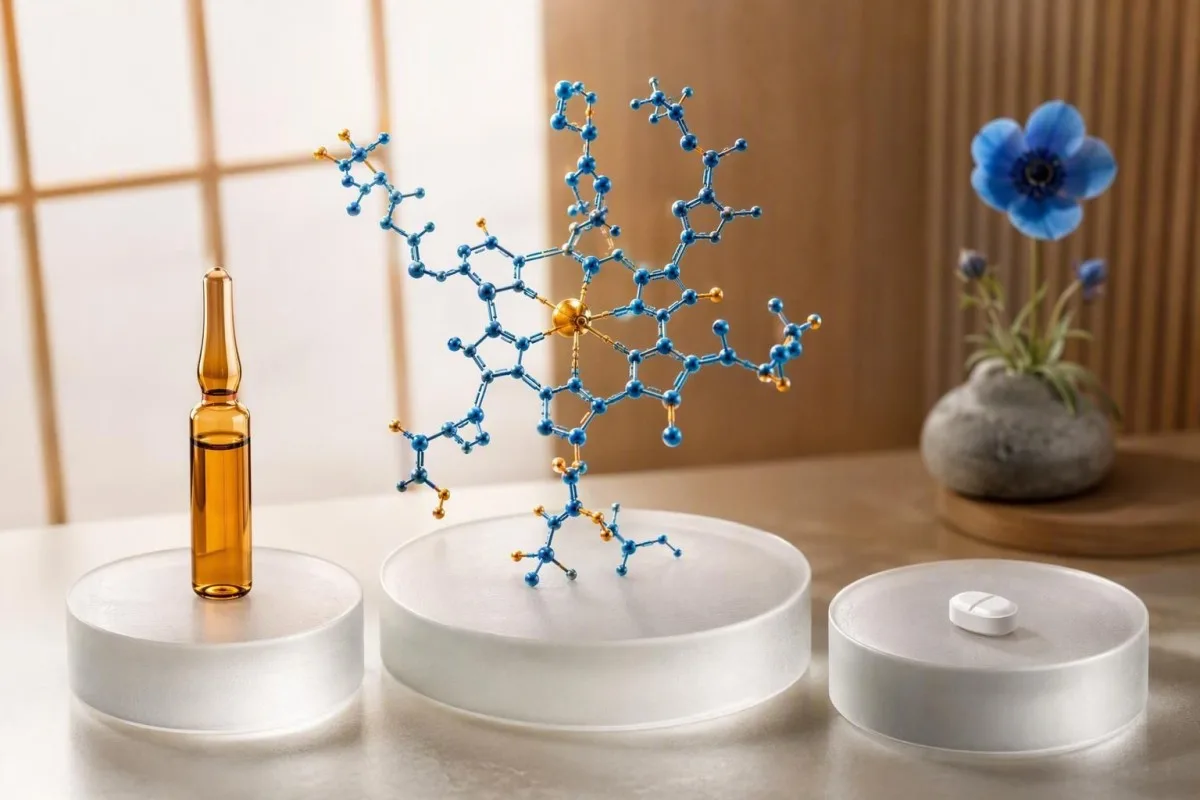
Az injekciók azonnali szérumszint-emelkedést eredményeznek, de a magas dózisú orális B12-vitamin is ugyanolyan hatékonyan orvosolhatja a hiányt heteken belül. A döntő tényező általában a hiány oka és súlyossága – nem csak a preferencia.


- Leggyorsabb szérumszint-emelkedés: Egy 1000 mikrogrammos intramuszkuláris B12-injekció órákon belül emeli a keringő B12-szintet, míg a tabletták szintje fokozatosan, napok alatt emelkedik.
- Hasonló pótlás: Az 1000-2000 mikrogramm naponta orálisan bevett cianokobalamin sok felnőtt esetében hasonló rövid távú véreredményeket és tüneti javulást érhet el, mint az intramuszkuláris terápia.
- Injekció indikációja: Súlyos neurológiai tünetek, súlyos vérszegénység, tabletták szedésének képtelensége, vagy megbízhatatlan felszívódás általában indokolják az orvos által vezetett injekciókat.
- Határértékű eredmény: Az 180 pg/mL (133 pmol/L) alatti szérum B12-szintet gyakran hiányként tartják számon; a 180-350 pg/mL-es értékhez gyakran MMA vagy homocisztein megerősítés szükséges.
- Passzív felszívódás: A nagy dózisú orális B12-vitamin kb. 1%-a passzív diffúzióval szívódik fel, ezért egy 1000 mikrogrammos tabletta is hatékony lehet csökkent intrinzik faktor mellett.
- Újravizsgálat időzítése: A CBC és a klinikai válasz általában 4-8 héttel a kezelés után hasznosabb, mint az azonnal levett B12-szint.
- Biztonsági szempont: Ne kezelje a magyarázat nélküli zsibbadást csak folsavval; a folát javíthatja a vérszegénységet, miközben a B12-hiánnyal kapcsolatos idegkárosodás halad.
- Számít az ok: A metformin, a protonpumpa-gátlók, a vegán étrend, a coeliákia, a gyomorműtét és a perniciózus anémia eltérő utánkövetési terveket igényelnek.
Melyik opció növeli gyorsabban a B12-vitamin szintjét?
A B12-injekciók gyorsabban emelik meg a mért szérumszintet, mint a tabletták, gyakran órákon belül, mert megkerülik a beleket. A legtöbb stabil felnőtt esetében megerősített hiány esetén azonban a napi 1000-2000 mikrogrammos orális dózis heteken keresztül képes feltölteni a testraktárakat és javítani a vérképet, klinikailag hasonló ütemben.
Az injekció éles korai csúcsot hoz létre, mert a hidroxi-kobalamint vagy a ciano-kobalamint közvetlenül az izomba, majd a keringésbe juttatják. Az a laboratóriumi csúcs nem ugyanaz, mint a helyreállított szöveti raktárak vagy a javult idegi funkció; a gyakorlatomban a tünetek helyreállítása hetekben, nem hónapokban mérhető, nem pedig másnap reggel.
A gyakorlati összehasonlítás gyakran órák kontra napok a szérumkoncentráció tekintetében, de nagyjából 4-8 hét egy érdemi hematológiai válaszhoz bármelyik megfelelő útvonalon. A reticulocyták gyakran emelkednek 3-5 napon belül, a hemoglobin javulása körülbelül 1-2 hét után kezdődik, és a makrocitózis rendeződése akár 8 hetet is igénybe vehet.
Kantesti egy AI vérvizsgálati analizátor ezáltal a B12-t az MCV, hemoglobin, folát, kreatinin és korábbi eredmények mellé helyezi, ahelyett, hogy a kezelés utáni B12-csúcsot a mögöttes probléma megoldásának bizonyítékaként kezelné. Az olvasók összehasonlíthatják eredményüket a miénkkel is B12 referenciatartomány útmutatóját.
Mit is jelent valójában a “gyorsabb”
Az injekció utáni magas eredmény megerősíti a közelmúltbeli expozíciót, nem feltétlenül az elegendő sejtes bevitelt. A metilmalonsav, a neurológiai leletek és a CBC trend informatívabbak, ha az eredeti diagnózis bizonytalan volt.
Hogyan működik az orális B12-felszívódás csökkent intrinzik faktor mellett
A magas dózisú orális B12 akkor is működhet, ha az intrinsic faktor felszívódása károsodott, mert kis részben passzív diffúzióval jut be. Körülbelül 1% az 1000 mikrogrammos dózisból passzívan szívódhat fel, ami körülbelül 10 mikrogrammot eredményez – ez jóval meghaladja az átlagos napi 2,4 mikrogrammos felnőtt szükségletet.
A normál élelmiszerhez kötött B12-t a gyomorsavnak kell felszabadítania, kötődnie kell az intrinsic faktorhoz, és a terminális ileumban kell felszívódnia. Ez a többlépéses rendszer magyarázza, miért okozhat hiányt a hosszú távú savcsökkentés, az autoimmun gastritis, az ilealis betegség és a bariátriai beavatkozások; ez magyarázza azt is, miért gyakran túl alacsony dózis a standard multivitamin a kezeléshez.
Az orális B12 felszívódása dózisfüggő, de nem lineáris. Az intrinsic faktor útja nagyjából 1,5-2 mikrogramm étkezésenként telítődik, míg a passzív diffúzió csak milligramm tartományú tablettákkal válik klinikailag hasznossá. Egy 50 mikrogrammos étrend-kiegészítő ésszerű megelőzés egyesek számára, de nem egyenértékű 1000 mikrogrammal a kialakult hiány esetén.
Az omeprazolt, pantoprazolt vagy más PPI-t használó betegeknél a szélesebb mintázatot vizsgálom – étrendet, életkort, vérszegénységet és használati időtartamot –, ahelyett, hogy feltételezném, hogy a gyógyszer a teljes történet. Az általunk végzett felülvizsgálat hosszú távú PPI laboratóriumi monitorozás megmagyarázza, miért lehet a magnézium és a vas is fontos.
Mit mutatnak a klinikai vizsgálatok a tabletták és az injekciók összehasonlításáról
Randomizált bizonyítékok arra utalnak, hogy az 1000-2000 mikrogramm naponta szájon át szedhető B12-vitamin sok, hiánybetegségben szenvedő ember számára ugyanolyan hatékony lehet, mint az intramuszkuláris B12-vitamin. A bizonyítékok alapja nem hatalmas, és kevesebb súlyos neurológiai betegségben szenvedő beteget tartalmaz, mint amennyit a klinikusok szeretnének.
A Wang és munkatársai által végzett Cochrane-áttekintés kimutatta, hogy a nagy dózisú szájon át szedhető B12-vitamin hasonló B12-vérszint-választ eredményezett, mint az intramuszkuláris kezelés a rendelkezésre álló kis számú randomizált vizsgálatban (Wang et al., 2018). Egy vizsgálatban naponta 2000 mikrogrammot használtak szájon át, egy másikban pedig 1000 mikrogrammot szájon át, egy kezdeti adagolási rend után, tehát a “szájon át történő terápia” nem jelent alacsony dózisú szupermarket terméket.
A Kuzminski és munkatársai által végzett korábbi vizsgálat nagyobb szérum B12-koncentrációt mutatott ki 2000 mikrogramm szájon át szedhető cianokobalaminnal, mint 1000 mikrogrammos injekciós kúrával, mégis a klinikai kimenetel volt a kérdés, ami számított (Kuzminski et al., 1998). A bizonyítékok őszintén szólva vegyesek az ideális protokoll tekintetében, mivel a vizsgálatok eltérő injekciós időközöket és utánkövetési időszakokat használtak.
Egy tabletta csak akkor hatásos, ha beveszik. Az elmaradt napi adagok miatt egy 2-3 havonta beadott injekció a valós életben megbízhatóbb lehet, különösen gyenge felnőtteknél vagy összetett gyógyszeres kezelési renddel rendelkezőknél. A mi laboratóriumi leletek időzítési útmutatója segíthet megkülönböztetni az igazi kezelési változást egy rosszul időzített újrateszteléstől.
Mikor indokoltak orvosilag a B12-injekciók
A B12-injekciók általában orvosilag indokoltak, ha a hiány súlyos, neurológiai tünetek vannak jelen, a szájon át történő bevitel lehetetlen, vagy a felszívódás és a compliance nem megbízható. Ezek nem automatikusan kötelezőek pusztán azért, mert rosszindulatú vérszegénység gyanúja merül fel, feltéve, hogy a nagy dózisú szájon át történő kezelés és az utánkövetés megvalósítható.
Sürgős klinikai értékelés indokolt új járásbeli egyensúlyzavar, progresszív zsibbadás, gyengeség, zavartság, látásváltozás, jelentős vérszegénység vagy terhesség esetén, jelentős hiánnyal. A neurológiai B12-károsodás részben visszafordíthatatlanná válhat; ebben az esetben nem késleltetném a parenterális terápiát a kényelem megvitatása közben.
A NICE guideline NG239 az intramuszkuláris kezelést javasolja, ha felszívódási zavar gyanúja vagy megerősítése áll fenn, és sok esetben életre szóló intramuszkuláris pótlását javasolja autoimmun gastritis esetén (NICE, 2024). A gyakorlat nemzetközileg eltérő: egyes klinikusok naponta 1-2 mg-ot használnak megbízható, rosszindulatú vérszegénységben szenvedő betegeknél, míg mások az injekciókat részesítik előnyben, mert egy kihagyás következményei nagyobbak.
A 80 g/L alatti hemoglobin, tünetekkel járó légszomj, szapora szívverés, vagy lehetséges gerincvelő érintettség sürgős orvosi felülvizsgálatot igényel önkezelés helyett. Annak megértéséhez, hogy a vérszegénységi mintázatok hogyan jelennek meg a rutinvizsgálatokon, lásd mit tartalmaz egy teljes vérkép.
B12-hiány kezelési dózisai, amelyeket az orvosok valójában használnak
A gyakori szájon át szedhető kezelési dózisok 1000-2000 mikrogramm naponta, míg a gyakori intramuszkuláris adagolási rendek dóisonként 1000 mikrogrammot használnak, kezdeti feltöltési szakasszal. A termék, a nemzeti irányelv és a hiány oka határozza meg a pontos adagolási rendet.
Az Egyesült Királyságban a hidroxokobalamin 1000 mikrogramm intramuszkulárisan gyakran heti háromszor adják 2 héten át, ha nincs neurológiai érintettség, majd 2-3 havonta a fenntartó kezeléshez; a protokollok helyi szolgáltatások szerint eltérnek. Neurológiai tünetek esetén a kezdeti adagokat gyakran minden más nap adják, amíg nincs további javulás, majd a fenntartó kezelés szakorvosi tanács szerint történik.
Egy tipikus szájon át szedhető terv a cianokobalamin 1000 mikrogramm naponta 8-12 héten át, majd 1000 mikrogramm naponta vagy alacsonyabb fenntartó adagolási rend, ha csak az étrend volt az ok. A szublingvális termékek nem bizonyítottan teljesítenek jobban, mint a lenyelt tabletták; feloldódás után legtöbbjüket amúgy is lenyelik.
Ne improvizáljon feltöltési adagolási rendet közösségi média tanácsok alapján. A metilált B12 kontra cianokobalamin összehasonlítás elmagyarázza, miért a dózis és a következetesség általában fontosabb, mint a marketing állítások a B12 formájáról.
Hogyan kell értelmezni az alacsony vagy borderline B12-eredményt
A 180 pg/mL (133 pmol/L) alatti szérum B12 általában alátámasztja a hiányt, míg a körülbelül 180-350 pg/mL értékek egy határozatlan zónát jelentenek, ahol az MMA vagy a homocisztein tisztázhatja a celluláris hiányt. Az egyéni laboratóriumi intervallumok eltérnek, és egy normál szérumérték nem zárja ki teljesen a hiányt a közelmúltbeli kiegészítés után.
A metil-malonsav emelkedik, ha a B12-függő anyagcsere károsodott, de a vesefunkció csökkenése önmagában is emelheti a MMA-t. A homocisztein emelkedhet B12-hiány, folát-hiány, B6-vitamin-hiány, pajzsmirigy-alulműködés és veseelégtelenség esetén, így egyik megerősítő tesztet sem szabad önmagában értékelni.
A makrocitózis alátámasztó, de nem kötelező. A 100 fL feletti átlagos vörösvértest térfogat gyanút kelt B12- vagy folát-hiány, alkoholhatás, májbetegség, pajzsmirigy-alulműködés, csontvelő-betegségek vagy gyógyszerhatások esetén; a tünetes B12-hiányos betegek körülbelül negyede normál MCV-vel rendelkezhet.
A Kantesti AI ellenőrzi a MCV, RDW, hemoglobin, folát és történelmi értékeket, beleértve azokat a nyomokat is, amelyek szerint egy folát-kiegészítő elfedheti a makrocitózist. A
mintázatot -ről szóló cikkünk a
magas MCV utókövetése gyakori alternatívákat tárgyalja.
A perniciózus anémia megváltoztatja a hosszú távú tervet, nem mindig az alkalmazás módját
A perniciózis anémia a intrinsic-faktor funkció autoimmun elvesztése, és diagnózis után élethosszig tartó B12-pótló kezelést igényel. Az injekciók megbízható bevitelüket biztosítanak, de a nagy dózisú orális terápia kiválasztott, szorosan ellenőrzött felnőtteknél továbbra is fenntarthatja az adekvát státuszt.
A leggyakrabban használt tesztek az intrinsic-faktor antitestek és a parietális sejtek elleni antitestek, valamint a B12, a CBC és néha a gasztrin. A pozitív intrinsic-faktor antitest nagyon specifikus, de nem túl szenzitív, így a negatív eredmény nem zárja ki a betegséget; ez az egyik olyan terület, ahol a kontextus fontosabb, mint egyetlen antitest.
A perniciózis anémia több mint felszívódási probléma. Az autoimmun gastritis együtt járhat vashiánnyal, mielőtt a B12-hiány nyilvánvalóvá válik, és a hosszan tartó betegség gyomorrákszűrési megfontolásokat hordoz magában, amelyeket meg kell vitatni a kezelő orvossal. A
perniciózis anémia tesztelési útmutató
részletezi a diagnosztikai sorrendet.
Kantesti egy AI vérvizsgálat-értelmező platform 127+ országban használatos, de egy AI értelmezés nem tud autoimmun gyomorhurutot diagnosztizálni vagy élethosszig tartó injekciós intervallumot kiválasztani. Az orvosnak össze kell kapcsolnia a tüneteket, az antitesteket, a endoszkópos kórtörténetet és a laboratóriumi mintát.
Miért igényelnek a neurológiai tünetek gyorsabb orvosi beavatkozást
Zsibbadás, rezgésérzés elvesztése, bizonytalan járás, kognitív változás vagy gyengeség alacsony B12-szint mellett sürgős személyes vizsgálatot és általában injekciós kezelést igényel. Az idegek regenerálódása kevésbé kiszámítható, mint a vérszegénység regenerálódása, és a hiány hónapok után is hiányos maradhat.
A hátsó kötegek és a perifériás idegek érzékenyek a B12-hiányra, ami a klinikusok által előrehaladott esetekben szubakut kombinált degenerációnak nevezett mintázatot eredményezi. A normál hemoglobin nem véd ez ellen; láttam már olyan betegeket, akiknél a zsibbadó lábak és a kóros rezgésérzés megelőzte a nyilvánvaló vérszegénységet.
A javulás gyakran az effektív terápia megkezdésétől számított 1 héten belül elkezdődik, de az érzékszervi tünetek 3-12 hónapot vehetnek igénybe, és nem feltétlenül szűnnek meg teljesen. A legbiztonságosabb megközelítés az alapfunkciók rögzítése – járási távolság, elesések, kézügyesség, rezgésérzés –, mert a növekvő szérum B12-szint önmagában nem javulási pontszám.
A neuropátia sok utánzóval is rendelkezik, beleértve a cukorbetegséget, az alkoholos idegkárosodást, a pajzsmirigybetegséget, a B6-vitamin túladagolását és néhány gyógyszert. A zsibbadásos betegek használhatják a
B6-vitamin ideg-tünet útmutató
-t jobb kérdések elkészítéséhez, de a progresszív gyengeség orvosi ellátást igényel most.
Mikor elegendőek általában a tabletták az étrendi B12-hiány kezelésére
A tabletták általában elegendőek, ha az alacsony B12-szint nem megfelelő bevitelből adódik, és a bél képes felszívni a táplálékkiegészítőket. A vegánok, a nagyon kevés állati eredetű ételt fogyasztók és az ideiglenes étrendi korlátozásokkal élő felnőttek általában jól reagálnak az 1000 mikrogrammos orális cianokobalaminra naponta.
A B12-vitamint természetesen az állati eredetű élelmiszerekben és dúsított élelmiszerekben koncentrálják, így a szigorú vegán étrend megbízható dúsított élelmiszer- vagy kiegészítő stratégiát igényel. A természetes B12-forrásként forgalmazott növényi élelmiszerek következetlenek; a tengeri algák és az erjesztett élelmiszerek inaktív analógokat tartalmazhatnak, amelyek nem megbízható kezelést jelentenek.
A táplálkozási hiány ellenére is röviden ki kell kérdezni a beteget. Egy 23 éves, B12-szintje 142 pg/mL, kezelés után normális MMA-értékkel és bélrendszeri tünetek nélkül rendelkező vegán más, mint egy 68 éves, akinek ugyanez az eredménye, fogyása és vashiánya van. Az életkor, a gyógyszerek és a gastrointestinalis tünetek megváltoztatják a kivizsgálást.
Az élelmiszertervezéshez vízben oldódó vitaminokkal foglalkozó útmutatónk különválasztja a megelőző adagokat a hiány kezelésétől. Ne feltételezze, hogy a táplálkozás önmagában gyorsan orvosolja az idegrendszeri tüneteket.
Mely gyógyszerek és bélrendszeri állapotok befolyásolják a B12-kezelés megválasztását
A metformin, savcsökkentő gyógyszerek, coeliákia, az ileumot érintő Crohn-betegség, hasnyálmirigy-elégtelenség és gyomorműtétek mind csökkenthetik a B12 hasznosulását. Egyes esetekben tablettával történő próbakezelés lehet indokolt, de az injekciókat gyakran választják, ha a felszívódás bizonytalan vagy a tünetek jelentősek.
A metforminhoz társuló B12-hiány elég gyakori ahhoz, hogy a hatóságok javasolják a szintek ellenőrzését neuropathiában, anémiában vagy más kockázati tényezőkkel rendelkező betegeknél, különösen magasabb dózisok vagy hosszú kezelési idő esetén. A mechanizmus valószínűleg a B12-intrinsic faktor komplex kalciumfüggő felszívódását foglalja magában az ileumban, nem csupán a rossz étrendet.
Sleeve gastrectomia vagy gyomor-bypass után a kezelési döntéseknek követniük kell a bariátriai sebészeti csapat protokollját, mivel a vas, a folsav, a thiamin, a D-vitamin és a réz együttesen érintettek lehetnek. Hasmenés, alacsony albumin, megmagyarázatlan fogyás vagy zsíros széklet kivizsgálást kell, hogy sürgessen, ne pedig végtelen kiegészítőváltásokat.
Az alacsony rézszint is okozhat anémiát és neurológiai tüneteket, amelyek B12-hiányra hasonlítanak, különösen bariátriai sebészet vagy túlzott cinkbevitel után. A miénk alacsony réz klinikai jelzéseink megmagyarázzák, miért hiányozhat a valódi ok, ha csak a B12-t vizsgáljuk.
Milyen hamar kell újra tesztelni a B12-kezelés után
Egy CBC és tünetek áttekintése körülbelül 4-8 héttel később általában hasznosabb, mint a szérum B12 azonnali ismételt ellenőrzése injekció vagy tablettakurzus után. Az injekció beadása vagy tablettakúra után nem sokkal nagyon magas B12-eredmény főként a bevett dózist tükrözi.
A kb. 3-5. nap körüli retikulocita válasz korai jelzést ad a csontvelői termelés helyreállásáról, míg a hemoglobin emelkedése a következő hetekben várható, ha a B12-hiány volt a fő ok. A javulás hiánya újra megnyitja a differenciáldiagnózist: vashiány, folyamatos vérzés, folsavhiány, gyulladás, vesebetegség vagy téves diagnózis.
Egyszerű táplálkozási hiány esetén gyakran ellenőrzöm a CBC-t és a B12-t 8-12 hét múlva, majd megerősítem a fenntartható kezelési tervet. Neurológiai betegség, autoimmun gastritis, terhesség, vesekárosodás vagy több hiány esetén az utánkövetésnek egyénre szabottnak kell lennie, és gyakran korábban kezdődik.
Kantesti’s Mesterséges intelligencia-alapú vérvizsgálat-elemző eszköz összehasonlíthatja a szekvenciális B12, MCV, RDW és hemoglobin eredményeket, ahelyett, hogy minden egyes vérvételt különálló eseményként jelenítene meg. A párhuzamos laboratóriumi összehasonlítási útmutatónkat megmutatja, mit kell feljegyezni a vizsgálatok között.
Miért nem mindig megnyugtató a magas B12-eredmény kezelés után
Az injekció vagy magas dózisú tabletta után magas B12-szint gyakran a kiegészítést tükrözi, és nem bizonyítja, hogy a tüneteknek más oka van. Ezzel szemben a nem magyarázható, tartós B12-emelkedés étrend-kiegészítők nélkül is megérdemel klinikai értékelést, különösen, ha máj-, vese- vagy vérképzőszervi rendellenességek is fennállnak.
A szérum B12-szint a kezelés után megközelítheti a laboratóriumi felső határt, kb. 900-1000 pg/mL-t, az analízistől és az időzítéstől függően. Ez várható, és általában nem mérgező; egészséges felnőtteknél nincs megállapított tolerálható felső bevitel szint a B12-re, mivel a felesleg nagyrészt kiürül, bár kisebb arányban akneiform kitörések fordulnak elő.
Az általam feltett kérdés egyszerű: a minta étrend-kiegészítő, injekció, multivitamin, energiaital vagy dúsított termék bevétele után készült-e? Ha nem, a magas B12-szint májbetegséggel, csökkent vesetisztulással, gyulladással vagy bizonyos hematológiai állapotokkal társulhat, és kontextusra van szükség, nem pedig riadalomra.
A miénk magas B12-vitamin útmutató magyarázza meg a különbséget a várható étrend-kiegészítővel összefüggő emelkedés és a megmagyarázhatatlan laboratóriumi jelzés között.
Gyakori B12-kezelési hibák, amelyek késleltetik a gyógyulást
A leginkább következményekkel járó hiba a folsav önmagában történő szedése, amikor a B12-hiányt nem zárták ki. A folsav normalizálhatja a vérszegénységet, miközben lehetővé teszi a B12-vel összefüggő idegkárosodás progresszióját, különösen akkor, ha az adagok meghaladják a szokásos étrendi tartományt.
Ne használja kizárólag a tüneteket az injekciók és a tabletták közötti döntéshez. A fáradtság, az agyi köd és az alacsony hangulat valós, de nem specifikus tünetek; alváshiány, pajzsmirigybetegség, vashiány, depresszió, cukorbetegség és gyógyszerhatások hasonló panaszokat okozhatnak. A 250 pg/mL körüli B12-eredmény gyakrabban igényel megerősítést, mint egy automatikus injekció.
Egy másik hiba a vizsgálat elhalasztása a kiegészítők elkezdése után, ha lehetséges. Már napi 50-500 mikrogramm is elegendő lehet a szérum B12-szint megváltoztatásához a diagnózis megnehezítése érdekében, bár az sürgős neurológiai tüneteket mindig először kell kezelni. A magas folát és rejtett B12 probléma különösen releváns a terhességi vagy energizáló étrend-kiegészítőket szedő emberek számára.
2026. augusztus 27-től Dr. Thomas Klein tanácsa az, hogy válassza a legkevésbé megterhelő, orvosilag megbízható utat, majd ellenőrizze a gyógyulást tünetekkel és tendenciákkal. Az injekciós kezelés kiváló orvosság, ha indokolt; nem inherent módon erősebb orvosság minden alacsony eredmény esetén.
Praktikus döntési keretrendszer a B12-injekciókhoz vagy tablettákhoz
Válasszon injekciókat, ha a kockázat magas, vagy az orális szedés megbízhatósága alacsony; válasszon magas dózisú tablettákat, ha a hiány enyhe-közepes, a bevitel a fő probléma, és a nyomon követés megbízható. A legjobb út az, amelyik korrigálja a hiányt anélkül, hogy elhalasztaná annak okának kivizsgálását.
A tabletták akkor a legmegfelelőbbek, ha a B12 alacsony az étrend miatt, nincsenek neurológiai tünetek, a nyelés biztonságos, és a személy naponta következetesen 1000-2000 mikrogrammot tud bevenni. Az injekciók a legmegfelelőbbek neurológiai leletek, súlyos tünetekkel járó vérszegénység, hányás, jelentős malabszorpció, műtét utáni anatómia vagy bizonytalan betartás esetén.
Hozzon négy dolgot az időpontra: az eredeti B12 eredményt egységekkel, egy CBC-t, minden étrend-kiegészítő és gyógyszer dózisát, valamint egy tüneti idővonalat. Dr. Thomas Klein klinikai szabálya, hogy az okot meg kell nevezni, mielőtt a fenntartást határozatlanná tesszük, amikor az biztonságosan elvégezhető.
Az Kantesti AI egy AI laboratóriumi leletértelmező szolgáltatás arra szolgál, hogy megszervezze a laboratóriumi kontextust a betegek és a klinikusok számára, miközben a végső diagnózis és felírás klinikai döntés marad. A mi Orvosi Tanácsadó Testület és klinikai validálási megközelítésünk írjuk le a határon belüli orvosi felügyeletet.
Gyakran Ismételt Kérdések
A B12 injekciók gyorsabban hatnak, mint a tabletták?
A B12-injekció gyorsabban emeli a szérum B12-szintet, mint a tabletták, mert egy 1000 mikrogrammos intramuszkuláris dózis megkerüli a bél abszorpcióját, és órákon belül növelheti a keringő szintet. A magas dózisú orális B12, általában napi 1000-2000 mikrogramm, sok felnőttnél néhány hét alatt hatékonyan korrigálhatja a hiányt. A jelentős végpontok a tünetek javulása, a reticulocyták 3-5 napon belüli, és a CBC helyreállása nagyjából 4-8 héten belül, nem csupán a kezdeti szérum csúcsérték. Az injekciók előnyben részesítendők neurológiai tünetek, súlyos vérszegénység vagy megbízhatatlan felszívódás esetén.
Használhat-e orális B12-pótlás, ha pernicious anémiám van?
Nagy dózisú orális B12 bizonyos emberekben perniciózus anémia esetén hatékony lehet, mert a nagy dózis körülbelül 1%-a passzív diffúzióval, intrinsic faktor nélkül szívódik fel. Ezért a napi 1000-2000 mikrogramm orális dózis 10-20 mikrogramm felszívódott B12-t biztosíthat, ami meghaladja a felnőttek napi 2,4 mikrogrammos szükségletét. A NICE iránymutatása általában az autoimmun gastritisz esetén az életre szóló intramuszkuláris pótlás mellett szól, különösen, ha a megbízhatóság bizonytalan. Az útvonalat a diagnózissal foglalkozó klinikusnak kell megbeszélnie és a tünetek, valamint a CBC alapján kell monitorozni.
Hány B12 tabletta ér fel egy injekcióval?
Nincs pontos tablettáról injekcióra történő átváltási arány, mivel az injekciók közel teljes szisztémás biohasznosulást eredményeznek, míg az orális felszívódás dózisfüggő és részben telíthető. Az 1000 mikrogrammos injekció, valamint az 1000-2000 mikrogrammos napi orális bevitel egyaránt általános kezelési dózisok, de dózis-dózis alapon nem farmakológiailag felcserélhetők. Körülbelül az 1000 mikrogrammos orális dózis 1%-a képes passzív diffúzióval felszívódni, míg további felszívódás történik a belső faktoron keresztül, amikor ez az út működik. A kezelésre adott válasz és a hiány okának meg kell határoznia bármilyen váltás irányát.
Mennyi idő alatt javítják a B12-injekciók a fáradtságot?
A B12-injekciók néhány napon vagy héten belül javíthatják az energiaszintet, ha a kimerültség valódi oka a hiány, de az időkeret széles skálán mozog. A retikulociták termelése gyakran emelkedik 3-5 napon belül, a hemoglobin általában 1-2 hét után kezd emelkedni, és a makrocitózis teljes korrekciója akár 8 hétig is eltarthat. A zsibbadás, egyensúlyi problémák és kognitív tünetek gyakran 3-12 hónapot vesznek igénybe, és a hiány tartós fennállása esetén nem teljesek lehetnek. A normalizálódó CBC utáni tartós fáradtság felveti a vashiány, pajzsmirigybetegség, alvási problémák és egyéb okok felülvizsgálatának szükségességét.
Be kell vennem B12 tablettát vérvétel előtt?
Ha a megmagyarázhatatlan B12-hiány diagnosztizálása céljából tesztelés van folyamatban, és Ön klinikailag stabil, kerülje a táplálékkiegészítők szedésének megkezdését a minta levételéig, mert akár napi 50-500 mikrogramm is megváltoztathatja a szérum B12-szintet. Nincs univerzális kiürülési idő, mivel a laboratóriumok és az adagok eltérőek, ezért kérdezze meg a kezelőorvost vagy a laboratóriumot az előkészítési tanácsokkal kapcsolatban. Ne késleltesse a kezelést tökéletes alapérték elérése érdekében, ha neurológiai tünetei, súlyos vérszegénysége, terhességgel kapcsolatos aggályai vagy jelentős klinikai romlása van. Dokumentálja az adagot és a kezdés dátumát, hogy az eredmény helyesen értelmezhető legyen.
A B12-szint 200 pg/mL alacsony ahhoz, hogy injekciót írjanak fel?
A B12-szint 200 pg/mL határtalanul alacsony, és önmagában nem dönti el, hogy szükség van-e injekciókra. Sok laboratórium a 180 pg/mL alatti értékeket egyértelműen hiányosnak tekinti, míg az 180-350 pg/mL körüli értékeknél metilmalonsav, homocisztein, CBC leletek és tünetek felülvizsgálata lehet szükséges. Injekciók 200 pg/mL esetén indokoltak, ha neurológiai tünetek, vérszegénység, malabszorpció, terhesség vagy orális terápia alkalmazásának képtelensége áll fenn. Egy stabil, étrendi kockázattal rendelkező és neurológiai leletek nélküli személy jól reagálhat napi 1000-2000 mikrogramm orális B12-re tervezett utánkövetéssel.
Végezzen mesterséges intelligencia által támogatott vérvizsgálat-elemzést még ma
Csatlakozzon világszerte több mint 2 millió felhasználóhoz, akik az Kantesti-t bízzák meg azonnali, pontos laborvizsgálat-elemzésért. Töltse fel a vérvizsgálat eredményeit, és kapjon átfogó értelmezést az 15,000+ biomarkerekről másodpercek alatt.
📚 Hivatkozott kutatási publikációk
Klein, T., Mitchell, S., & Weber, H. (2026). Kantesti LTD. (2026). Egy előregisztrált, rubrika-alapú automatizált technikai benchmark az Kantesti Blood-Test Interpretation Engine 100 000 szintetikus tesztesetén. Figshare.. Kantesti mesterséges intelligencia orvosi kutatás.
Klein, T., Mitchell, S., & Weber, H. (2026). Kantesti KFT. (2026). Klinikai validálási keretrendszer 2.0 (Orvosi validálási oldal). Zenodo.. Kantesti mesterséges intelligencia orvosi kutatás.
📖 Külső orvosi hivatkozások
NICE (2024). B12-vitamin-hiány 16 év felett: diagnózis és kezelés. NICE Guideline NG239.
⚕️ Orvosi nyilatkozat
A cikk kizárólag oktatási célokat szolgál, és nem minősül orvosi tanácsadásnak. A diagnózisra és a kezelési döntésekre vonatkozóan mindig konzultáljon szakképzett egészségügyi szolgáltatóval.
E-E-A-T bizalmi jelzések
Tapasztalat
Orvosok által vezetett klinikai áttekintés a laboratóriumi értelmezési munkafolyamatokról.
Szakértelem
Laboratóriumi medicina fókusz: hogyan viselkednek a biomarkerek klinikai környezetben.
Tekintélyesség
Dr. Thomas Klein írta, Dr. Sarah Mitchell és Prof. Dr. Hans Weber általi felülvizsgálattal.
Megbízhatóság
Bizonyítékokon alapuló értelmezés, világos követési útvonalakkal a riadalom csökkentésére.