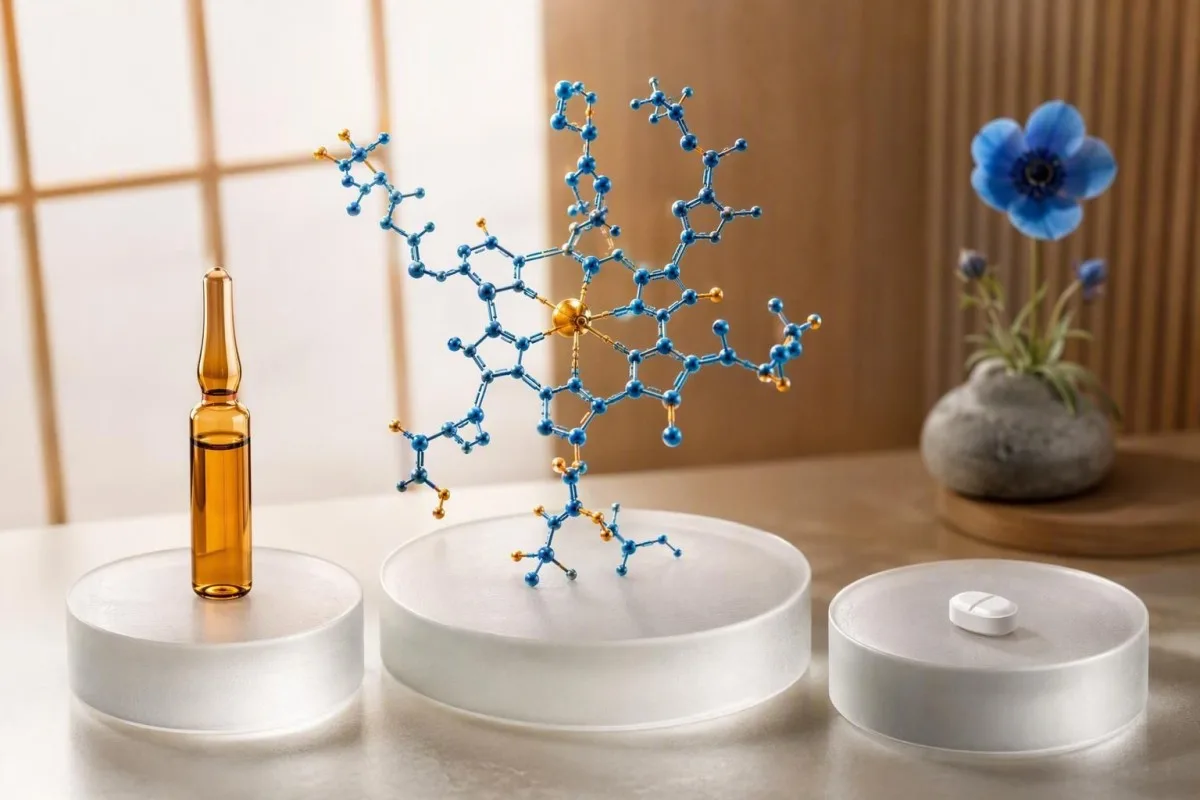
Le iniezioni producono un picco sierico immediato, ma la B12 orale ad alto dosaggio spesso corregge la carenza con la stessa efficacia nel corso di settimane. Il fattore decisivo è solitamente la causa e la gravità della carenza, non solo la preferenza.


- Picco sierico più rapido: Un'iniezione intramuscolare di B12 da 1.000 microgrammi aumenta la B12 circolante entro poche ore, mentre le compresse aumentano più gradualmente nel corso di giorni.
- Sostituzione comparabile: La cianocobalamina orale da 1.000-2.000 microgrammi al giorno può ottenere risultati ematici e sintomatici a breve termine simili alla terapia intramuscolare per molti adulti.
- Indicazione per l'iniezione: Sintomi neurologici gravi, anemia profonda, incapacità di assumere compresse o assorbimento inaffidabile giustificano solitamente le iniezioni guidate dal medico.
- Risultato borderline: La B12 sierica inferiore a 180 pg/mL (133 pmol/L) è comunemente considerata carente; 180-350 pg/mL spesso richiede la conferma tramite MMA o omocisteina.
- Assorbimento passivo: Circa l'1% di una dose orale elevata di B12 viene assorbito per diffusione passiva, motivo per cui una compressa da 1.000 microgrammi può funzionare nonostante un fattore intrinseco compromesso.
- Tempistica del riesame: Un esame emocromocitometrico completo (CBC) e la risposta clinica sono solitamente più utili a 4-8 settimane rispetto a un dosaggio di B12 prelevato immediatamente dopo il trattamento.
- Punto di sicurezza: Non trattare l'intorpidimento inspiegabile solo con acido folico; il folato può migliorare l'anemia mentre il danno nervoso correlato alla B12 progredisce.
- La causa è importante: Metformina, inibitori della pompa protonica, diete vegane, celiachia, chirurgia gastrica e anemia perniciosa richiedono piani di follow-up diversi.
Quale opzione aumenta i livelli di vitamina B12 più velocemente?
Le iniezioni di B12 aumentano il livello sierico misurato più velocemente delle compresse, spesso entro ore, perché bypassano l'intestino. Tuttavia, per la maggior parte degli adulti stabili con carenza confermata, una dose orale da 1.000-2.000 microgrammi al giorno può reintegrare le scorte corporee e migliorare gli indici ematici nel corso di settimane con una velocità clinicamente simile.
Un'iniezione crea un picco precoce e netto perché l'idrossicobalamina o la cianocobalamina vengono somministrate direttamente nel muscolo e poi nella circolazione. Quel picco di laboratorio non è la stessa cosa delle scorte tissutali ripristinate o della funzione nervosa riparata; nella mia pratica, il recupero dei sintomi viene misurato in settimane o mesi, non nel giorno successivo.
Il confronto pratico è spesso ore contro giorni per la concentrazione sierica, ma all'incirca 4-8 settimane per una risposta ematologica significativa con entrambe le vie adeguate. I reticolociti aumentano comunemente dal giorno 3-5, l'emoglobina inizia a migliorare dopo circa 1-2 settimane e la macrocitosi può richiedere fino a 8 settimane per normalizzarsi.
Kantesti è un Analizzatore di analisi del sangue AI che colloca la B12 accanto a MCV, emoglobina, folati, creatinina e risultati precedenti piuttosto che trattare un picco di B12 post-trattamento come prova che il problema sottostante è risolto. I lettori possono anche confrontare il loro risultato con il nostro guida ai range di riferimento per la B12.
Cosa significa realmente “più veloce”
Un risultato elevato dopo un'iniezione conferma un'esposizione recente, non necessariamente un'adeguata somministrazione cellulare. L'acido metilmalonico, i reperti neurologici e l'andamento del CBC sono più informativi quando la diagnosi originale era incerta.
Come funziona l'assorbimento orale di B12 quando il fattore intrinseco è basso
La B12 orale ad alto dosaggio può funzionare anche quando l'assorbimento del fattore intrinseco è compromesso perché una piccola frazione entra per diffusione passiva. Circa l'1% di una dose da 1.000 microgrammi può essere assorbito passivamente, fornendo circa 10 microgrammi, ben al di sopra del fabbisogno giornaliero medio di 2,4 microgrammi per gli adulti.
La B12 normale legata al cibo deve essere rilasciata dall'acido gastrico, legarsi al fattore intrinseco ed essere assorbita nell'ileo terminale. Questo sistema a più passaggi spiega perché la soppressione acida a lungo termine, la gastrite autoimmune, le malattie ileali e le procedure bariatriche possono causare carenza; spiega anche perché un multivitaminico standard sia spesso una dose troppo bassa per il trattamento.
L'assorbimento orale di B12 è dose-dipendente ma non lineare. Il percorso del fattore intrinseco si satura a circa 1,5-2 microgrammi per pasto, mentre la diffusione passiva diventa clinicamente utile solo con compresse nell'ordine dei milligrammi. Un integratore da 50 microgrammi è una prevenzione ragionevole per alcune persone, ma non è equivalente a 1.000 microgrammi per una carenza conclamata.
Per i pazienti che utilizzano omeprazolo, pantoprazolo o un altro PPI, controllo il quadro generale: dieta, età, anemia e durata dell'uso, piuttosto che presumere che il farmaco sia l'intera spiegazione. La nostra revisione di monitoraggio di laboratorio a lungo termine dei PPI spiega perché anche magnesio e ferro potrebbero essere importanti.
Cosa mostrano gli studi clinici sulle compresse rispetto alle iniezioni
L'evidenza randomizzata suggerisce che la B12 orale a 1.000-2.000 microgrammi al giorno può essere efficace quanto la B12 intramuscolare per molte persone con carenza. La base di evidenze non è enorme e include meno pazienti con gravi malattie neurologiche di quanto i medici vorrebbero.
La revisione Cochrane di Wang e colleghi ha rilevato che la B12 orale ad alte dosi ha prodotto risposte nei livelli ematici di B12 simili al trattamento intramuscolare nei piccoli studi randomizzati disponibili (Wang et al., 2018). Uno studio ha utilizzato 2.000 microgrammi per via orale ogni giorno; un altro ha utilizzato 1.000 microgrammi per via orale dopo un regime iniziale, quindi “terapia orale” non significa un prodotto da supermercato a basso dosaggio.
Lo studio precedente di Kuzminski et al. ha riportato maggiori concentrazioni sieriche di B12 con 2.000 microgrammi di cianocobalamina orale rispetto a un regime di iniezione da 1.000 microgrammi, eppure gli esiti clinici erano la questione che contava (Kuzminski et al., 1998). Le evidenze sono onestamente miste sul protocollo ideale perché gli studi hanno utilizzato intervalli di iniezione e periodi di follow-up differenti.
Una compressa funziona solo se viene assunta. Dosi giornaliere saltate possono rendere un'iniezione somministrata ogni 2-3 mesi più affidabile nella vita reale, specialmente per gli adulti fragili o persone con schemi terapeutici complessi. Il nostro guida alla tempistica degli esami del sangue può aiutare a distinguere un vero cambiamento del trattamento da un nuovo test effettuato in modo errato.
Quando le iniezioni di B12 sono medicalmente necessarie
Le iniezioni di B12 sono solitamente medicalmente necessarie quando la carenza è grave, sono presenti sintomi neurologici, l'assunzione orale è impossibile, o l'assorbimento e l'aderenza non sono affidabili. Non sono automaticamente obbligatorie semplicemente perché si sospetta un'anemia perniciosa, a condizione che il trattamento orale ad alte dosi e il follow-up siano fattibili.
Una valutazione medica urgente è appropriata per un nuovo squilibrio dell'andatura, intorpidimento progressivo, debolezza, confusione, alterazione visiva, anemia marcata o gravidanza con carenza significativa. Il danno neurologico da carenza di B12 può diventare parzialmente irreversibile; in tal caso, non ritarderei la terapia parenterale mentre discuto della convenienza.
La linea guida NICE NG239 raccomanda il trattamento intramuscolare quando si sospetta o si conferma un malassorbimento e raccomanda la sostituzione intramuscolare a vita per la gastrite autoimmune in molti casi (NICE, 2024). La pratica varia a livello internazionale: alcuni medici utilizzano 1-2 mg al giorno per via orale in pazienti affidabili con anemia perniciosa, mentre altri preferiscono le iniezioni perché le conseguenze di una dimenticanza sono maggiori.
Un'emoglobina inferiore a 80 g/L, affanno sintomatico, tachicardia o possibile coinvolgimento del midollo spinale giustificano una pronta revisione medica piuttosto che l'autotrattamento. Per capire come si presentano i pattern di anemia nei test di routine, vedere cosa include un emocromo completo.
Dosi di trattamento della carenza di B12 utilizzate dai medici
Le dosi comuni di trattamento orale sono 1.000-2.000 microgrammi al giorno, mentre i regimi intramuscolari comuni utilizzano 1.000 microgrammi per dose con una fase iniziale di carico. Il prodotto, la linea guida nazionale e la causa della carenza determinano il programma esatto.
Nella pratica del Regno Unito, l'idrossicobalamina 1.000 microgrammi per via intramuscolare viene spesso somministrata tre volte a settimana per 2 settimane quando non vi è coinvolgimento neurologico, quindi ogni 2-3 mesi per il mantenimento; i protocolli differiscono per servizio locale. Con caratteristiche neurologiche, le dosi iniziali vengono spesso somministrate a giorni alterni fino a quando non vi è ulteriore miglioramento, quindi il mantenimento segue il parere specialistico.
Un piano orale tipico è la cianocobalamina 1.000 microgrammi al giorno per 8-12 settimane, seguita da 1.000 microgrammi al giorno o un regime di mantenimento inferiore se la dieta è stata l'unica causa. I prodotti sublinguali non hanno dimostrato di superare le compresse ingerite; una volta sciolti, la maggior parte viene comunque ingerita.
Non improvvisare un regime di carico sulla base di consigli dai social media. Il confronto tra B12 metilata e cianocobalamina spiega perché la dose e la consistenza generalmente contano più delle dichiarazioni di marketing sulla forma della B12.
Come interpretare un risultato di B12 basso o borderline
Un valore di B12 sierica inferiore a 180 pg/mL (133 pmol/L) solitamente supporta la carenza, mentre valori da circa 180-350 pg/mL sono una zona indeterminata in cui l'MMA o l'omocisteina possono chiarire la carenza cellulare. Gli intervalli dei singoli laboratori differiscono e un valore sierico normale non esclude completamente la carenza dopo recente integrazione.
L'acido metilmalonico aumenta quando il metabolismo dipendente dalla B12 è compromesso, ma una ridotta funzionalità renale può aumentare la MMA indipendentemente. L'omocisteina può aumentare con carenza di B12, carenza di folati, carenza di vitamina B6, ipotiroidismo e insufficienza renale, quindi nessuno dei due test di conferma dovrebbe essere interpretato isolatamente.
La macrocitosi è di supporto ma non obbligatoria. Un volume corpuscolare medio superiore a 100 fL solleva il sospetto di carenza di B12 o folati, esposizione all'alcol, epatopatia, ipotiroidismo, disturbi del midollo o effetti di farmaci; circa un quarto dei pazienti sintomatici con carenza di B12 può avere un MCV normale.
L'IA di Kantesti interpreta i risultati della B12 controllando il modello MCV, RDW, emoglobina, folati e valori storici, inclusi indizi che un integratore di folati possa mascherare la macrocitosi. Il nostro articolo su follow-up di MCV elevato copre le alternative comuni.
L'anemia perniciosa cambia il piano a lungo termine, non sempre la via
L'anemia perniciosa è la perdita autoimmune della funzione del fattore intrinseco e richiede una sostituzione a vita di B12 dopo la diagnosi. Le iniezioni offrono una somministrazione affidabile, ma la terapia orale ad alto dosaggio può comunque mantenere uno stato adeguato in adulti selezionati e strettamente monitorati.
I test più comunemente utilizzati sono gli anticorpi anti-fattore intrinseco e gli anticorpi parietali, insieme alla B12, al CBC e talvolta alla gastrina. Un anticorpo anti-fattore intrinseco positivo è altamente specifico ma non molto sensibile, quindi un risultato negativo non esclude la condizione; questa è una di quelle aree in cui il contesto conta più di un singolo anticorpo.
L'anemia perniciosa è più di un problema di assorbimento. La gastrite autoimmune può coesistere con la carenza di ferro prima che la carenza di B12 diventi evidente, e la malattia di lunga data comporta considerazioni sulla sorveglianza gastrica che dovrebbero essere discusse con il medico curante. La nostra guida ai test per l'anemia perniciosa descrive la sequenza diagnostica.
Kantesti è un Piattaforma di interpretazione esami del sangue AI utilizzati in 127+ paesi, ma un'interpretazione IA non può diagnosticare la gastrite autoimmune o selezionare un intervallo di iniezione a vita. Un clinico deve collegare sintomi, anticorpi, storia endoscopica e il pattern di laboratorio.
Perché i sintomi neurologici richiedono un'azione clinica più rapida
Formicolio, perdita del senso di vibrazione, deambulazione instabile, alterazione cognitiva o debolezza con bassi livelli di B12 dovrebbero innescare una valutazione immediata di persona e solitamente un trattamento iniettabile. Il recupero nervoso è meno prevedibile del recupero dell'anemia e può rimanere incompleto dopo mesi di carenza.
Le colonne dorsali e i nervi periferici sono vulnerabili alla carenza di B12, producendo un quadro che i medici chiamano degenerazione combinata subacuta nei casi avanzati. Un'emoglobina normale non protegge da questo; ho visto pazienti i cui piedi intorpiditi e il senso di vibrazione anormale precedevano qualsiasi anemia evidente.
Il miglioramento inizia spesso entro 1 settimana di terapia efficace, ma i sintomi sensoriali possono richiedere 3-12 mesi e potrebbero non risolversi completamente. L'approccio più sicuro è registrare la funzione di base—distanza percorsa, cadute, destrezza delle mani, senso di vibrazione—poiché un aumento della B12 sierica da solo non è un punteggio di recupero.
La neuropatia ha anche molti mimic, tra cui il diabete, il danno nervoso correlato all'alcol, la malattia della tiroide, l'eccesso di vitamina B6 e alcuni farmaci. I pazienti con formicolio possono utilizzare la nostra guida ai sintomi nervosi della vitamina B6 per preparare domande migliori, ma la debolezza progressiva richiede ora cure mediche.
Quando le compresse sono solitamente sufficienti per la carenza di B12 alimentare
Le compresse sono solitamente sufficienti quando bassi livelli di B12 derivano da un'assunzione inadeguata e l'intestino può assorbire gli integratori. Vegani, persone che mangiano pochissimo cibo di origine animale e adulti con restrizione dietetica temporanea rispondono comunemente bene alla cianocobalamina orale 1.000 microgrammi al giorno.
La vitamina B12 è naturalmente concentrata negli alimenti di origine animale e negli alimenti fortificati, quindi una dieta rigorosamente vegana richiede una strategia affidabile di alimenti fortificati o integratori. Gli alimenti vegetali commercializzati come fonti naturali di B12 sono incoerenti; le alghe e gli alimenti fermentati possono contenere analoghi inattivi che non sono un trattamento affidabile.
Una carenza dietetica dovrebbe comunque richiedere una breve anamnesi. Una vegana di 23 anni con B12 di 142 pg/mL, MMA normale dopo trattamento e senza sintomi intestinali è diversa da una 68enne con lo stesso risultato, perdita di peso e carenza di ferro. Età, farmaci e sintomi gastrointestinali modificano l'iter diagnostico.
Per la pianificazione alimentare, la nostra guida alle vitamine idrosolubili separa le dosi di prevenzione dal trattamento della carenza. Non dare per scontato che la sola nutrizione corregga rapidamente i sintomi neurologici.
Farmaci e condizioni intestinali che alterano la scelta del trattamento per la B12
La metformina, i farmaci che sopprimono l'acido, la celiachia, il morbo di Crohn che colpisce l'ileo, l'insufficienza pancreatica e la chirurgia gastrica possono ridurre la disponibilità di B12. Una prova con compresse può essere ragionevole in alcuni casi, ma le iniezioni sono spesso scelte quando l'assorbimento è incerto o i sintomi sono significativi.
La carenza di B12 associata alla metformina è abbastanza comune che gli enti regolatori consigliano di controllare i livelli nei pazienti con neuropatia, anemia o altri fattori di rischio, in particolare a dosi più elevate o con lunga durata. Il meccanismo probabilmente coinvolge l'assorbimento calcio-dipendente del complesso B12-fattore intrinseco nell'ileo, non semplicemente una dieta inadeguata.
Dopo sleeve gastrectomy o bypass gastrico, le decisioni terapeutiche dovrebbero seguire il protocollo del team bariatrico perché ferro, folato, tiamina, vitamina D e rame possono essere interessati contemporaneamente. Diarrea, bassa albumina, perdita di peso inspiegabile o feci untuose dovrebbero indurre indagini piuttosto che innumerevoli cambiamenti di integratori.
Anche un basso livello di rame può causare anemia e sintomi neurologici che assomigliano a una carenza di B12, specialmente dopo chirurgia bariatrica o un eccesso di zinco. I nostri indizi clinici per il basso livello di rame spiegano perché controllare solo la B12 può far perdere la vera spiegazione.
Dopo quanto tempo rivalutare dopo il trattamento con B12
Un CBC e una revisione dei sintomi a circa 4-8 settimane sono generalmente più utili che ripetere la B12 sierica immediatamente dopo un'iniezione o un ciclo di compresse. Un risultato di B12 molto alto subito dopo il trattamento riflette principalmente la dose che è stata assunta.
Una risposta dei reticolociti intorno al giorno 3-5 offre un indizio precoce che la produzione midollare sta recuperando, mentre l'emoglobina dovrebbe aumentare nelle settimane successive se la carenza di B12 è stata un fattore chiave. La mancanza di miglioramento dovrebbe riaprire la diagnosi differenziale: carenza di ferro, perdita ematica in corso, carenza di folati, infiammazione, malattia renale o una diagnosi errata.
Per un deficit dietetico non complicato, ricontrollo spesso CBC e B12 a 8-12 settimane, quindi confermo un piano di mantenimento sostenibile. Per malattie neurologiche, gastrite autoimmune, gravidanza, insufficienza renale o carenze multiple, il follow-up deve essere individualizzato e solitamente inizia prima.
Kantesti’s Strumento di analisi degli esami del sangue basato su AI può confrontare i risultati sequenziali di B12, MCV, RDW ed emoglobina piuttosto che visualizzare ogni prelievo come un evento disconnesso. Il guida al confronto dei laboratori affiancati mostra cosa registrare tra i test.
Perché un risultato elevato di B12 dopo il trattamento non è sempre rassicurante
Un livello elevato di B12 dopo un'iniezione o una compressa ad alto dosaggio riflette comunemente la supplementazione e non dimostra che i sintomi abbiano un'altra causa. Al contrario, una persistente e inspiegabile elevazione della B12 senza integratori merita una revisione clinica, soprattutto quando coesistono anomalie epatiche, renali o dei conteggi ematici.
La B12 sierica può superare il limite superiore di circa 900-1.000 pg/mL dopo il trattamento, a seconda del saggio e del momento del prelievo. Questo è previsto e solitamente non tossico; la B12 non ha un livello di assunzione superiore tollerabile stabilito negli adulti sani perché l'eccesso viene in gran parte escreto, sebbene eruzioni acneiformi si verifichino in una piccola minoranza.
La domanda che pongo è semplice: il campione è stato prelevato dopo un integratore, un'iniezione, un multivitaminico, una bevanda energetica o un prodotto fortificato? In caso contrario, una B12 elevata può accompagnare malattie epatiche, ridotta clearance renale, infiammazione o determinate condizioni ematologiche, e necessita di contesto piuttosto che di allarme.
Nostro guida per l'alto livello di vitamina B12 spiega la distinzione tra un innalzamento atteso correlato all'integratore e un indizio di laboratorio inspiegabile.
Errori comuni nel trattamento della B12 che ritardano il recupero
L'errore più grave è assumere acido folico da solo quando non è stata esclusa una carenza di B12. L'acido folico può normalizzare l'anemia consentendo alla lesione nervosa correlata alla B12 di progredire, in particolare quando le dosi superano il normale intervallo dietetico.
Non utilizzare solo i sintomi per decidere tra iniezioni e compresse. Stanchezza, "nebbia cerebrale" e umore basso sono reali ma aspecifici; la privazione del sonno, le malattie della tiroide, la carenza di ferro, la depressione, il diabete e gli effetti dei farmaci possono produrre lamentele simili. Un risultato di B12 vicino a 250 pg/mL giustifica più spesso una conferma piuttosto che un'iniezione automatica.
Un altro errore è ritardare un esame fino a dopo aver iniziato gli integratori, quando possibile. Anche 50-500 microgrammi al giorno possono alterare la B12 sierica abbastanza da complicare la diagnosi, sebbene i sintomi neurologici urgenti debbano sempre essere trattati per primi. La questione del folato elevato e della B12 nascosta è particolarmente rilevante per le persone che assumono integratori prenatali o energetici.
Al 27 agosto 2026, il mio consiglio come Dr. Thomas Klein è di scegliere il percorso meno gravoso che sia medicalmente affidabile, quindi verificare il recupero con sintomi e tendenze. Il trattamento iniettabile è un'ottima medicina quando indicata; non è intrinsecamente una medicina più forte per ogni risultato basso.
Un quadro decisionale pratico per iniezioni o compresse di B12
Scegliere le iniezioni quando il rischio è alto o l'affidabilità orale è bassa; scegliere compresse ad alto dosaggio quando la carenza è lieve-moderata, l'assunzione è il problema principale e il follow-up è affidabile. Il percorso migliore è quello che corregge la carenza senza ritardare l'indagine sulla sua causa.
Le compresse sono più indicate quando la B12 è bassa a causa della dieta, non ci sono segni neurologici, la deglutizione è sicura e la persona può assumere 1.000-2.000 microgrammi al giorno in modo costante. Le iniezioni sono più indicate in presenza di sintomi neurologici, anemia sintomatica grave, vomito, malassorbimento importante, anatomia post-operatoria o aderenza incerta.
Porta quattro cose all'appuntamento: il risultato originale della B12 con le unità, un CBC, ogni integratore e dose di farmaco, e una cronologia dei sintomi. La regola clinica del Dr. Thomas Klein è che la causa dovrebbe essere identificata prima che il mantenimento venga reso indefinito, ogni volta che ciò può essere fatto in sicurezza.
Kantesti AI è un servizio di interpretazione dei test del laboratorio di IA progettato per organizzare il contesto di laboratorio per pazienti e medici, mentre la diagnosi finale e la prescrizione rimangono decisioni cliniche. La nostra Comitato consultivo medico E approccio di validazione clinica descrive la supervisione medica alla base di quel confine.
Domande frequenti
Le iniezioni di B12 funzionano più velocemente delle compresse?
Le iniezioni di B12 aumentano la B12 sierica più velocemente delle compresse perché una dose intramuscolare di 1.000 microgrammi bypassa l'assorbimento intestinale e può aumentare i livelli circolanti entro poche ore. La B12 orale ad alte dosi, solitamente 1.000-2.000 microgrammi al giorno, può comunque correggere efficacemente la carenza nel corso di diverse settimane in molti adulti. Gli endpoint significativi sono il miglioramento dei sintomi, dei reticolociti entro 3-5 giorni e il recupero della CBC entro circa 4-8 settimane, non solo il picco sierico immediato. Le iniezioni sono preferite in presenza di sintomi neurologici, anemia grave o malassorbimento.
La B12 orale può funzionare se ho l'anemia perniciosa?
L'integrazione orale di B12 ad alto dosaggio può funzionare in alcune persone con anemia perniciosa perché circa l'1% di una dose elevata viene assorbito per diffusione passiva senza fattore intrinseco. Una dose orale giornaliera di 1.000-2.000 microgrammi può quindi fornire 10-20 microgrammi di B12 assorbita, superando il requisito giornaliero di 2,4 microgrammi per gli adulti. Le linee guida NICE supportano comunemente la sostituzione intramuscolare a vita per la gastrite autoimmune, in particolare quando l'affidabilità è incerta. La via di somministrazione deve essere concordata con il clinico che gestisce la diagnosi e monitorata con i sintomi e un AST, CBC.
Quante compresse di B12 equivalgono a un'iniezione?
Non esiste un'equivalenza esatta tra compresse e iniezioni perché le iniezioni producono una biodisponibilità sistemica quasi completa, mentre l'assorbimento orale è dose-dipendente e parzialmente saturabile. Un'iniezione da 1.000 microgrammi e 1.000-2.000 microgrammi per via orale al giorno sono entrambe dosi di trattamento comuni, ma non sono farmacologicamente intercambiabili su base dose-per-dose. Circa 1% di una dose orale da 1.000 microgrammi possono essere assorbiti per diffusione passiva, mentre un ulteriore assorbimento avviene attraverso il fattore intrinseco quando quella via è funzionante. La risposta al trattamento e la causa della carenza dovrebbero guidare qualsiasi passaggio.
Quanto tempo impiegano le iniezioni di B12 per migliorare la fatica?
Le iniezioni di B12 possono migliorare l'energia entro giorni o poche settimane se la carenza è la vera causa della fatica, ma la tempistica varia ampiamente. La produzione di reticolociti spesso aumenta entro 3-5 giorni, l'emoglobina comunemente inizia ad aumentare dopo 1-2 settimane e la completa correzione della macrocitosi può richiedere fino a 8 settimane. Intorpidimento, problemi di equilibrio e sintomi cognitivi richiedono spesso 3-12 mesi e possono essere incompleti se la carenza è stata prolungata. La fatica persistente dopo un CBC normalizzato dovrebbe indurre una revisione per carenza di ferro, malattie della tiroide, problemi di sonno e altre cause.
Devo prendere le compresse di B12 prima di un esame del sangue?
Se è prevista una valutazione diagnostica per la carenza inspiegata di B12 e il paziente è clinicamente stabile, evitare di iniziare l'assunzione di integratori fino alla raccolta del campione, poiché anche 50-500 microgrammi al giorno possono alterare la B12 sierica. Non esiste un intervallo di washout universale, poiché i laboratori e i dosaggi differiscono, quindi chiedere al clinico o al laboratorio il proprio consiglio sulla preparazione. Non ritardare il trattamento per ottenere un valore basale perfetto se sono presenti sintomi neurologici, anemia grave, preoccupazioni relative alla gravidanza o un significativo peggioramento clinico. Documentare la dose e la data di inizio in modo che il risultato possa essere interpretato correttamente.
Un livello di B12 di 200 pg/mL è abbastanza basso da giustificare le iniezioni?
Un livello di B12 di 200 pg/mL è borderline basso e da solo non determina se siano necessarie le iniezioni. Molti laboratori considerano i valori inferiori a 180 pg/mL chiaramente carenti, mentre i valori da circa 180-350 pg/mL potrebbero necessitare di acido metilmalonico, omocisteina, risultati del CBC e revisione dei sintomi. Le iniezioni sono ragionevoli a 200 pg/mL in presenza di sintomi neurologici, anemia, malassorbimento, gravidanza o incapacità di assumere terapia orale. Una persona stabile con rischio dietetico e senza reperti neurologici potrebbe rispondere bene a 1.000-2.000 microgrammi di B12 orale al giorno con follow-up programmato.
Ottieni oggi l’analisi degli esami del sangue con IA (AI-Powered Blood Test Analysis)
Unisciti a oltre 2 milioni di utenti in tutto il mondo che si fidano di Kantesti per un’analisi istantanea e accurata degli esami di laboratorio. Carica i tuoi risultati analisi del sangue e ricevi un’interpretazione completa dei biomarcatori di 15,000+ in pochi secondi.
📚 Pubblicazioni di ricerca di riferimento
Klein, T., Mitchell, S., & Weber, H. (2026). Kantesti LTD. (2026). Un benchmark tecnico automatizzato pre-registrato, basato su rubriche, dell’engine di interpretazione degli esami del sangue di Kantesti su 100.000 casi di test sintetici. Figshare.. Kantesti AI Medical Research.
Klein, T., Mitchell, S., & Weber, H. (2026). Kantesti LTD. (2026). Clinical Validation Framework v2.0 (Pagina di Validazione Medica). Zenodo.. Kantesti AI Medical Research.
📖 Riferimenti medici esterni
NICE (2024). Carenza di vitamina B12 negli over 16: diagnosi e gestione. Linea guida NICE NG239.
⚕️ Esclusione di responsabilità medica
Questo articolo ha solo scopo educativo e non costituisce consulenza medica. Consulta sempre un operatore sanitario qualificato per decisioni su diagnosi e trattamento.
Segnali di fiducia E-E-A-T
Esperienza
Revisione clinica guidata da un medico dei flussi di lavoro di interpretazione degli esami.
Competenza
Focus sulla medicina di laboratorio su come i biomarcatori si comportano nel contesto clinico.
autorevolezza
Scritto dal dott. Thomas Klein con revisione della dott.ssa Sarah Mitchell e del Prof. Dr. Hans Weber.
Affidabilità
Interpretazione basata su evidenze, con percorsi di follow-up chiari per ridurre l’allarme.