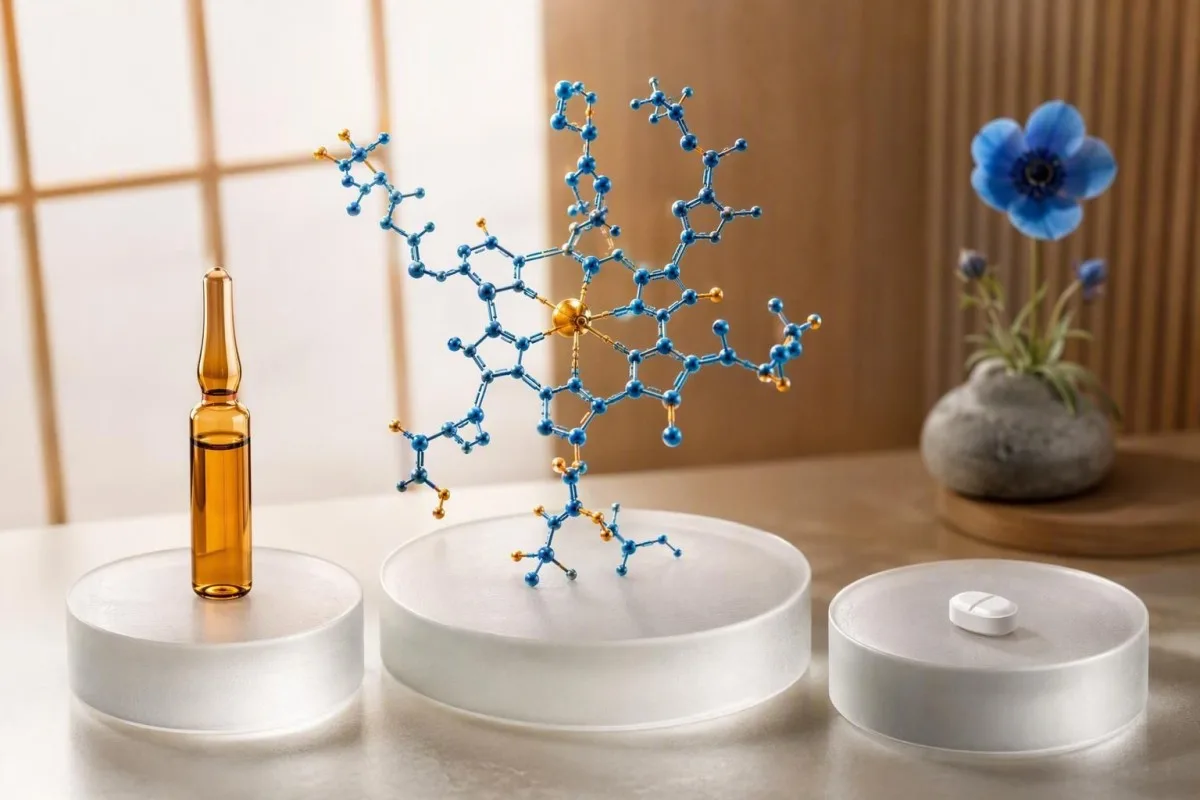
Injekcijas nodrošina tūlītēju seruma maksimumu, taču lielas devas perorālais B12 bieži vien tikpat efektīvi dažu nedēļu laikā novērš deficītu. Izšķirošais faktors parasti ir deficīta cēlonis un smagums, nevis tikai izvēle.


- Ātrākais seruma pieaugums: 1000 mikrogramu intramuskulāra B12 injekcija palielina cirkulējošā B12 daudzumu dažu stundu laikā, savukārt tabletes vairāk pakāpeniski pieaug vairāku dienu laikā.
- Salīdzināma aizstāšana: Perorāls ciānokobalamīns 1000–2000 mikrogrami dienā var nodrošināt līdzīgus īstermiņa asins un simptomu rezultātus kā intramuskulāra terapija daudziem pieaugušajiem.
- Injekciju indikācija: Smagi neiroloģiski simptomi, dziļa anēmija, nespēja lietot tabletes vai nepārliecinoša uzsūkšanās parasti pamato klīnicista veiktu injekciju.
- Robežlīnijas rezultāts: Seruma B12 līmenis zem 180 pg/mL (133 pmol/L) bieži tiek uzskatīts par deficītu; 180–350 pg/mL bieži nepieciešama MMA vai homocisteīna apstiprināšana.
- Pasīvā uzsūkšanās: Aptuveni 1% no lielas B12 devas iekšķīgi uzsūcas pasīvā difūzijā, tāpēc 1000 mikrogramu tablete var būt efektīva, neskatoties uz traucētu iekšējo faktoru.
- Pārbaudes laiks: Parasti pēc 4-8 nedēļām CBC un klīniskā atbildes reakcija ir noderīgāka nekā B12 līmenis, kas noteikts tūlīt pēc ārstēšanas.
- Drošības apsvērums: Neārstējiet neizskaidrojamu nejutīgumu tikai ar folijskābi; folāti var uzlabot anēmiju, kamēr ar B12 saistīti nervu bojājumi progresē.
- Cēlonim ir nozīme: Metformīns, protonu sūkņa inhibitors, vegānu diētas, celiakija, kuņģa operācijas un ļaundabīgā anēmija prasa atšķirīgus novērošanas plānus.
Kura iespēja ātrāk paaugstina B12 vitamīna līmeni?
B12 injekcijas ātrāk paaugstina noteikto seruma līmeni nekā tabletes, bieži vien dažu stundu laikā, jo tās apiet zarnas. Vairumam stabilu pieaugušo ar apstiprinātu deficītu tomēr 1000-2000 mikrogramu B12 deva iekšķīgi katru dienu var papildināt ķermeņa rezerves un uzlabot asins rādītājus vairāku nedēļu laikā ar klīniski līdzīgu ātrumu.
Injekcija rada strauju agrīnu maksimumu, jo hidroksikobalamīns vai cianokobalamīns tiek ievadīts tieši muskulī un pēc tam cirkulācijā. Šis laboratorijas maksimums nav tas pats, kas atjaunotas audu rezerves vai salabota nervu funkcija; manā praksē simptomu atveseļošanās tiek mērīta nedēļās vai mēnešos, nevis nākamajā rītā.
Praktiskais salīdzinājums bieži vien ir stundas pret dienām seruma koncentrācijai, bet aptuveni 4-8 nedēļas nozīmīgai hematoloģiskai atbildes reakcijai ar jebkuru atbilstošu devas veidu. Retikulocīti parasti palielinās 3.-5. dienā, hemoglobīns sāk uzlaboties apmēram pēc 1-2 nedēļām, un makrocitoze var izzust līdz 8 nedēļām.
Kantesti ir AI asins analīžu analizators kas ļauj B12 novērtēt kopā ar MCV, hemoglobīnu, folātiem, kreatinīnu un iepriekšējiem rezultātiem, nevis ārstēt pēcapstrādes B12 līmeņa straujo pieaugumu kā pierādījumu, ka pamatproblēma ir atrisināta. Lasītāji var arī salīdzināt savu rezultātu ar mūsu B12 referenču diapazonu ceļvedi.
Ko patiesībā nozīmē “ātrāk”
Augsts rezultāts pēc injekcijas apstiprina nesenu iedarbību, ne obligāti pietiekamu šūnu piegādi. Metilmalonskābe, neiroloģiskie atradumi un CBC tendence ir informatīvāki, ja sākotnējā diagnoze bija neskaidra.
Kā notiek perorālā B12 uzsūkšanās, ja iekšējā faktora līmenis ir zems
Lielas B12 devas iekšķīgi var būt efektīvas pat tad, ja iekšējā faktora uzsūkšanās ir traucēta, jo neliela daļa uzsūcas pasīvā difūzijā. Aptuveni 1% no 1000 mikrogramu devas var tikt uzsūkta pasīvi, iegūstot apmēram 10 mikrogramus — krietni virs vidējās ikdienas vajadzības 2,4 mikrogrami pieaugušajiem.
Normāli ar pārtiku saistītais B12 ir jāatbrīvo ar kuņģa skābi, jāsasiet ar iekšējo faktoru un jāuzņem gala ileumā. Šī daudzpakāpju sistēma izskaidro, kāpēc ilgstoša skābes supresija, autoimūns gastrīts, ileuma slimības un bariatriskās procedūras var izraisīt deficītu; tā arī izskaidro, kāpēc standarta multivitamīna deva bieži ir pārāk maza ārstēšanai.
B12 uzsūkšanās iekšķīgi ir atkarīga no devas, bet nav lineāra. Iekšējā faktora ceļš piesātinās aptuveni ar 1,5-2 mikrogramiem uz ēdienreizi, savukārt pasīvā difūzija kļūst klīniski noderīga tikai ar miligramu klases tabletēm. 50 mikrogramu papildinājums ir saprātīga profilakse dažiem cilvēkiem, taču tas nav ekvivalents 1000 mikrogramiem apstiprināta deficīta gadījumā.
Pacientiem, kuri lieto omeprazolu, pantoprazolu vai citu PPI, es pārbaudīšu plašāku ainu — diētu, vecumu, anēmiju un lietošanas ilgumu —, nevis pieņemšu, ka zāles ir visa problēma. Mūsu apskats par ilgstošu PPI laboratorijas uzraudzību skaidro, kāpēc arī magnijs un dzelzs var būt nozīmīgi.
Ko klīniskie pētījumi parāda par tabletēm salīdzinājumā ar injekcijām
Randomizēti pierādījumi liecina, ka B12 perorāli 1000-2000 mikrogrami dienā var būt tikpat efektīvi kā B12 intramuskulāri daudziem cilvēkiem ar deficītu. Pierādījumu bāze nav liela, un tajā ir mazāk pacientu ar smagām neiroloģiskām slimībām, nekā klīnicisti vēlētos.
Wang un kolēģu veiktajā Cochrane apskatā tika konstatēts, ka augstas devas B12 perorāli radīja līdzīgas B12 līmeņa atbildes asinīs kā intramuskulāra ārstēšana nelielos pieejamos randomizētajos pētījumos (Wang et al., 2018). Vienā pētījumā tika lietoti 2000 mikrogrami perorāli katru dienu; citā tika lietoti 1000 mikrogrami perorāli pēc sākotnējās shēmas, tāpēc “perorāla terapija” nenozīmē zemu devu produktu no lielveikala.
Iepriekšējais Kuzminski et al. pētījums ziņoja par lielāku B12 koncentrāciju serumā, lietojot 2000 mikrogramus perorāli cianokobalamīna, nekā 1000 mikrogramu injekciju režīmā, tomēr klīniskie rezultāti bija jautājums, kas bija svarīgs (Kuzminski et al., 1998). Pierādījumi ir godīgi sajaukti par ideālo protokolu, jo pētījumos tika izmantoti atšķirīgi injekciju intervāli un novērošanas periodi.
Tablete darbojas tikai tad, ja tā tiek lietota. Izlaistas ikdienas devas var padarīt injekciju, ko ievada ik pēc 2-3 mēnešiem, reālajā dzīvē uzticamāku, īpaši trausliem pieaugušajiem vai cilvēkiem ar sarežģītām medikamentu shēmām. Mūsu ceļvedis par asins analīžu laika grafiku var palīdzēt atšķirt patiesas ārstēšanas izmaiņas no nepareizi laicīgi veikta atkārtotas pārbaudes.
Kad B12 injekcijas ir medicīniski nepieciešamas
B12 injekcijas parasti ir medicīniski nepieciešamas, ja deficīts ir smags, ir klāt neiroloģiski simptomi, perorāla uzņemšana nav iespējama vai uzsūkšanos un ievērošanu nevar uzticēt. Tās nav automātiski obligātas tikai tāpēc, ka tiek aizdomas par ļaundabīgu anēmiju, ja vien augstas devas perorāla ārstēšana un novērošana ir iespējama.
Steidzama klīnicista novērtēšana ir piemērota jaunai līdzsvara traucējumiem, progresējošai nejutībai, vājumam, apjukumam, redzes izmaiņām, ievērojamai anēmijai vai grūtniecībai ar ievērojamu deficītu. Neiroloģiski B12 bojājumi var kļūt daļēji neatgriezeniski; šajā gadījumā es nevilcinātos ar parenterālu terapiju, kamēr debatētu par ērtību.
NICE vadlīnijas NG239 iesaka intramuskulāru ārstēšanu, ja tiek aizdomas par malabsorbciju vai tā ir apstiprināta, un daudzos gadījumos iesaka mūža intramuskulāru aizstāšanu autoimūna gastrīta gadījumā (NICE, 2024). Prakse atšķiras starptautiski: daži klīnicisti lieto 1-2 mg perorāli dienā uzticamiem pacientiem ar ļaundabīgu anēmiju, bet citi dod priekšroku injekcijām, jo kavēšanās sekas ir lielākas.
Hemoglobīns zem 80 g/L, simptomātiska elpas trūkums, tahikardija vai iespējama muguras smadzeņu bojājums prasa tūlītēju medicīnisku pārskatīšanu, nevis pašārstēšanos. Lai saprastu, kā rodas anēmijas aina ikdienas testos, skatiet ko pilna asins analīze ietver.
B12 deficīta ārstēšanas devas, ko klīnicisti faktiski lieto
Kopējās perorālās ārstēšanas devas ir 1000-2000 mikrogrami dienā, savukārt parastie intramuskulārie režīmi izmanto 1000 mikrogramus devā ar sākotnējo uzlādes fāzi. Produkts, valsts vadlīnijas un deficīta cēlonis nosaka precīzu grafiku.
Lielbritānijas praksē hidroksokobalamīns 1000 mikrogrami intramuskulāri bieži tiek dots trīs reizes nedēļā 2 nedēļas, ja nav neiroloģisku iesaistīšanās, tad ik pēc 2-3 mēnešiem uzturēšanai; protokoli atšķiras atkarībā no vietējā dienesta. Ar neiroloģiskām pazīmēm sākotnējās devas bieži tiek dotas katru otro dienu, līdz vairs nav uzlabojumu, tad uzturēšanu veic pēc speciālista padoma.
Tipisks perorāls plāns ir cianokobalamīns 1000 mikrogrami dienā 8-12 nedēļas, kam seko 1000 mikrogrami dienā vai zemāka uzturēšanas shēma, ja uzturs bija vienīgais cēlonis. Sublingvāli produkti nav pierādījuši, ka tie pārspētu norītas tabletes; pēc izšķīdināšanas lielākā daļa tāpat tiek norīta.
Nepārbaudiet uzlādes režīmu no sociālo mediju padomiem. metilētais B12 pret cianokobalamīna salīdzinājumu skaidro, kāpēc deva un konsekvence parasti ir svarīgākas nekā mārketinga apgalvojumi par B12 formu.
Kā interpretēt zemu vai robežlīnijas B12 rezultātu
B12 līmenis serumā zem 180 pg/mL (133 pmol/L) parasti liecina par deficītu, savukārt vērtības no aptuveni 180-350 pg/mL ir nenoteikta zona, kurā MMA vai homocisteīns var precizēt šūnu deficītu. Individuālie laboratoriju intervāli atšķiras, un normāla serumvērtība neizslēdz pilnīgu deficītu pēc nesenas papildināšanas.
Metilmalonilskābe paaugstinās, ja B12 atkarīgā vielmaiņa ir traucēta, taču samazināta nieru darbība var paaugstināt MMA neatkarīgi. Homocisteīns var paaugstināties B12 deficīta, folātu deficīta, B6 vitamīna deficīta, hipotireozes un nieru darbības traucējumu gadījumā, tāpēc neviens no apstiprinošajiem testiem nav jāinterpretē izolēti.
Makrocitoze ir atbalstoša, bet nav obligāta. Vidējais sarkanās šūnas tilpums virs 100 fL rada aizdomas par B12 vai folātu deficītu, alkohola ietekmi, aknu slimībām, hipotireozi, kaulu smadzeņu traucējumiem vai medikamentu ietekmi; apmēram ceturtdaļai simptomātisku B12 deficīta pacientu var būt normāls MCV.
Kantesti AI interpretē B12 rezultātus, pārbaudot modeli MCV, RDW, hemoglobīna, folātu un iepriekšējo vērtību, ieskaitot norādes, ka folātu papildinājums var maskēt makrocitozi. Mūsu raksts par augsta MCV turpmāku izmeklēšanu aptver biežākās alternatīvas.
Perningā anēmija maina ilgtermiņa plānu, ne vienmēr ceļu
Pernicioza anēmija ir autoimūna iekšējā faktora funkcijas zudums, un pēc diagnozes noteikšanas prasa mūža B12 aizvietošanu. Injekcijas nodrošina uzticamu piegādi, taču lielas devas perorālā terapija joprojām var nodrošināt adekvātu līmeni izvēlētiem, cieši uzraudzītiem pieaugušajiem.
Visbiežāk lietotie testi ir iekšējā faktora antivielas un parietālo šūnu antivielas, kopā ar B12, CBC un dažreiz gastrīnu. Pozitīva iekšējā faktora antiviela ir ļoti specifiska, bet ne ļoti jutīga, tāpēc negatīvs rezultāts neizslēdz slimību; šī ir viena no tām jomām, kurā konteksts ir svarīgāks par vienu antivielu.
Pernicioza anēmija ir vairāk nekā tikai uzsūkšanās problēma. Autoimūns gastrīts var būt līdzās dzelzs deficītam pirms B12 deficīta kļūst acīmredzams, un ilgstoša slimība rada kuņģa uzraudzības apsvērumus, kas jāapspriež ar ārstējošajiem klīnicistiem. Mūsu perniciozās anēmijas testēšanas ceļvedis detalizēti apraksta diagnostikas secību.
Kantesti ir AI asins analīžu rezultātu platforma izmantots 127+ valstīs, taču AI interpretācija nevar diagnosticēt autoimūnu gastrītu vai noteikt mūža injekciju intervālu. Klīnicistam ir jāsaista simptomi, antivielas, endoskopiskā vēsture un laboratorijas dati.
Kāpēc neiroloģiski simptomi prasa ātrāku klīnisko rīcību
Tirpšana, vibrācijas jušanas zudums, nestabila staigāšana, kognitīvas izmaiņas vai vājums ar zemu B12 līmeni prasa savlaicīgu klātienes novērtējumu un parasti injekciju terapiju. Nervu atveseļošanās ir mazāk prognozējama nekā anēmijas atveseļošanās un var palikt nepilnīga pēc vairāku mēnešu deficīta.
Dorsālie iekšējie un perifērie nervi ir jutīgi pret B12 deficītu, radot modeli, ko klīnicisti sauc par subakūtu kombinētu deģenerāciju attīstītos gadījumos. Normāls hemoglobīna līmenis no tā nepasargā; esmu redzējis pacientus, kuriem notirpusi kājas un patoloģiska vibrācijas sajūta radās pirms jebkādas acīmredzamas anēmijas.
Uzlabojumi bieži sākas 1 nedēļas laikā pēc efektīvas terapijas, taču sensorie simptomi var ilgt 3-12 mēnešus un var pilnībā neatgriezties. Drošākā pieeja ir reģistrēt funkcionālo stāvokli – staigāšanas distanci, kritienus, roku veiklību, vibrācijas sajūtu –, jo paaugstināts B12 līmenis serumā pats par sevi nav atveseļošanās rādītājs.
Neiropātijai ir arī daudz līdzīgu slimību, tai skaitā diabēts, ar alkoholu saistīti nervu bojājumi, vairogdziedzera slimības, pārmērīgs B6 vitamīna daudzums un daži medikamenti. Pacienti ar tirpšanu var izmantot mūsu B6 vitamīna nervu simptomu ceļvedi lai labāk sagatavotos jautājumiem, taču progresējošs vājums prasa medicīnisku aprūpi nekavējoties.
Kad diētisko B12 deficītu parasti pietiek ar tabletēm
Tabletes parasti ir pietiekamas, ja zems B12 līmenis rodas nepietiekama uzņemšanas dēļ un zarnas spēj absorbēt papildinājumus. Vegāni, cilvēki, kas patērē ļoti maz dzīvnieku izcelsmes pārtikas produktu, un pieaugušie ar īslaicīgiem uztura ierobežojumiem parasti labi reaģē uz perorālu cianokobalamīnu 1000 mikrogramus dienā.
B12 vitamīns dabiski koncentrējas dzīvnieku izcelsmes pārtikas produktos un bagātinātajos pārtikas produktos, tāpēc stingrai vegānu diētai ir nepieciešama uzticama bagātinātu pārtikas produktu vai piedevu stratēģija. Augu izcelsmes pārtikas produkti, kas tiek tirgoti kā dabiski B12 avoti, ir nepastāvīgi; jūraszāles un fermentēti pārtikas produkti var saturēt neaktīvus analogus, kas nav uzticami ārstēšanai.
Uztura deficīts joprojām prasa īsu slimības vēsturi. 23 gadus vecs vegāns ar B12 līmeni 142 pg/mL, normālu MMA pēc ārstēšanas un bez zarnu simptomiem atšķiras no 68 gadus veca pacienta ar tādu pašu rezultātu, svara zudumu un dzelzs deficītu. Vecums, medikamenti un gastrointestinālie simptomi maina izmeklēšanu.
Pārtikas plānošanai mūsu ūdenī šķīstošo vitamīnu ceļvedis atdala profilakses devas no deficīta ārstēšanas. Neparedziet, ka tikai uzturs ātri novērsīs neiroloģiskos simptomus.
Zāles un zarnu slimības, kas maina B12 ārstēšanas izvēli
Metformīns, skābi nomācoši medikamenti, celiakija, Krona slimība, kas skar zarnas, aizkuņģa dziedzera mazspēja un kuņģa operācijas, var samazināt B12 pieejamību. Tablešu terapija dažos gadījumos var būt lietderīga, taču injekcijas bieži izvēlas, ja uzsūkšanās ir nenoteikta vai simptomi ir būtiski.
Ar metformīnu saistīts B12 deficīts ir pietiekami izplatīts, lai regulatori ieteiktu pārbaudīt līmeni pacientiem ar neiropātiju, anēmiju vai citiem riska faktoriem, īpaši lielākās devās vai ilgstošas lietošanas gadījumā. Mehānisms, visticamāk, ietver kalcijā atkarīgu B12-iekšējā faktora kompleksa uzņemšanu zarnās, nevis tikai sliktu uzturu.
Pēc piedurkstulpju gastrektomijas vai kuņģa apiešanas operācijas ārstēšanas lēmumiem jāseko bariatriskās komandas protokolam, jo tas var ietekmēt arī dzelzi, folātus, tiamīnu, D vitamīnu un varu. Caureja, zems albumīna līmenis, neizskaidrojams svara zudums vai taukainas izkārnījumos liecina par nepieciešamību izmeklēšanai, nevis bezgalīgām piedevu izmaiņām.
Zems vara līmenis var arī izraisīt anēmiju un neiroloģiskus simptomus, kas atgādina B12 deficītu, īpaši pēc bariatriskās ķirurģijas vai pārmērīga cinka lietošanas. Mūsu zema vara klīniskās pazīmes izskaidro, kāpēc tikai B12 pārbaude var palaist garām patieso iemeslu.
Cik drīz atkārtoti jāveic B12 ārstēšanas izmeklējums
CBC un simptomu pārskatīšana apmēram 4-8 nedēļas pēc injekcijas vai tablešu kursa parasti ir noderīgāka nekā serum B12 atkārtota pārbaude. Ļoti augsts B12 rezultāts drīz pēc ārstēšanas galvenokārt atspoguļo lietoto devu.
Retikulocītu atbildes reakcija apmēram 3-5 dienā sniedz agrīnu norādi, ka atjaunojas kaulu smadzeņu ražošana, savukārt hemoglobīna līmenim vajadzētu paaugstināties nākamajās nedēļās, ja B12 deficīts bija galvenais cēlonis. Uzlabojuma trūkums liecina par nepieciešamību atkārtoti izvērtēt diferenciāldiagnozi: dzelzs deficīts, pastāvīga asiņošana, folātu deficīts, iekaisums, nieru slimība vai nepareiza diagnoze.
Nepareiza uztura deficīta gadījumā es bieži atkārtoti pārbaudīšu CBC un B12 līmeni 8-12 nedēļu laikā, pēc tam apstiprināšu ilgtspējīgu uzturēšanas plānu. Neiroloģisku slimību, autoimūna gastrīta, grūtniecības, nieru mazspējas vai vairāku deficītu gadījumā turpmāka novērošana jāveic individuāli un parasti sākas agrāk.
Kantesti’s ar AI balstīts asins analīzes rīks var salīdzināt secīgus B12, MCV, RDW un hemoglobīna rezultātus, nevis attēlot katru analīžu reizi kā nesaistītu notikumu. paralēlo laboratorijas salīdzināšanas rokasgrāmatu parāda, kas jāreģistrē starp testiem.
Kāpēc augsts B12 rezultāts pēc ārstēšanas ne vienmēr ir nomierinošs
Augsts B12 līmenis pēc injekcijas vai lielas devas tablešu lietošanas bieži vien atspoguļo papildināšanu un nepierāda, ka simptomiem ir cits cēlonis. Turpretim nenoskaidrots pastāvīgs B12 paaugstinājums bez piedevām prasa klīnisku izvērtēšanu, īpaši, ja vienlaikus ir novērojami aknu, nieru vai asinsrades patoloģijas.
Serum B12 līmenis pēc ārstēšanas var pārsniegt laboratorijas augšējo robežu aptuveni 900-1000 pg/mL, atkarībā no testa un laika. Tas ir sagaidāms un parasti nav toksisks; B12 nav noteikta pieļaujamā augšējā uzņemšanas līmeņa veseliem pieaugušajiem, jo liekais daudzums lielākoties tiek izvadīts, lai gan nelielai daļai rodas pinnes veida izsitumi.
Jautājums, ko es uzdodu, ir vienkāršs: vai paraugs tika ņemts pēc piedevas, injekcijas, multivitamīna, enerģijas dzēriena vai bagātināta produkta lietošanas? Ja nē, paaugstināts B12 līmenis var būt saistīts ar aknu slimību, samazinātu nieru izvadīšanu, iekaisumu vai noteiktām hematoloģiskām slimībām, un tas prasa kontekstu, nevis trauksmi.
Mūsu rokas ceļvedis par B12 vitamīnu skaidro atšķirību starp sagaidāmu ar uztura bagātinātājiem saistītu paaugstināšanos un neizskaidrojamu laboratorisku rādītāju.
Izplatītas B12 ārstēšanas kļūdas, kas aizkavē atveseļošanos
Visnopietnākā kļūda ir tikai folijskābes lietošana, ja B12 deficīts nav izslēgts. Folijskābe var normalizēt anēmiju, vienlaikus ļaujot progresēt B12 deficīta izraisītiem nervu bojājumiem, īpaši, ja devas pārsniedz parasto uzturvērtības līmeni.
Neizmantojiet simptomus vienus, lai izšķirtos starp injekcijām un tabletēm. Nogurums, "smadzeņu migla" un slikts garastāvoklis ir reāli, bet nespecifiski; miega trūkums, vairogdziedzera slimības, dzelzs deficīts, depresija, diabēts un medikamentu ietekme var radīt līdzīgas sūdzības. B12 rādītājs, kas ir tuvu 250 pg/mL, biežāk prasa apstiprinājumu nekā automātiskas injekcijas.
Vēl viena kļūda ir testa atlikšana līdz brīdim, kad sākta uztura bagātinātāju lietošana, ja tas ir iespējams. Pat 50-500 mikrogrami dienā var mainīt seruma B12 līmeni, lai sarežģītu diagnostiku, lai gan steidzami neiroloģiski simptomi vienmēr jāārstē vispirms. augsts folātu un slēpts B12 deficīta jautājums ir īpaši svarīgs cilvēkiem, kuri lieto pirmsdzemdību vai enerģijas uztura bagātinātājus.
Sākot ar 2026. gada 27. augustu, mans padoms kā Dr. Tomasam Kleinam ir izvēlēties mazāk apgrūtinošāko, bet medicīniski ticamo ceļu, pēc tam apstiprināt atveseļošanos ar simptomiem un tendencēm. Injekciju terapija ir lieliska medicīna, ja tā ir indicēta; tā nav pašsaprotami spēcīgāka medicīna katram zemu rādītāju gadījumā.
Praktisks lēmumu pieņemšanas modelis B12 injekcijām vai tabletēm
Izvēlieties injekcijas, ja risks ir augsts vai perorālās uzņemšanas uzticamība ir zema; izvēlieties lielas devas tabletes, ja deficīts ir viegls līdz mēreni izteikts, galvenā problēma ir uzņemšana un sekošana ir uzticama. Labākais veids ir tas, kas novērš deficītu, neatliekot tā cēloņa izmeklēšanu.
Tabletes vislabāk der, ja B12 līmenis ir zems uztura dēļ, nav neiroloģisku pazīmju, rīšana ir droša un persona spēj konsekventi lietot 1000–2000 mikrogramus dienā. Injekcijas vislabāk der pie neiroloģiskām atradnēm, smagas simptomātiskas anēmijas, vemšanas, ievērojamas malabsorbcijas, pēcoperācijas anatomijas vai nenoteiktas ievērošanas gadījumā.
Līdzi uz vizīti ņemiet četras lietas: sākotnējo B12 rādītāju ar mērvienībām, CBC, katru uztura bagātinātāju un medikamentu devu, kā arī simptomu laika grafiku. Dr. Tomasa Kleina klīniskais noteikums ir, ka cēlonis jānosauc pirms uzturēšanas terapijas noteikšanas uz nenoteiktu laiku, kad vien tas droši iespējams.
Kantesti AI ir AI laboratorijas testa interpretācijas pakalpojumā paredzēts organizēt laboratorisko kontekstu pacientiem un klīnicistiem, savukārt galīgā diagnostika un izrakstīšana paliek klīniskie lēmumi. Mūsu Medicīnas konsultatīvā padome un klīniskās validācijas pieeja apraksta medicīnisko uzraudzību aiz šīs robežas.
Bieži uzdotie jautājumi
Vai B12 injekcijas darbojas ātrāk nekā tabletes?
B12 injekcijas paaugstina B12 seruma līmeni ātrāk nekā tabletes, jo 1000 mikrogramu intramuskulāra deva apiet zarnu uzsūkšanos un var paaugstināt cirkulējošos līmeni dažu stundu laikā. Lielas devas perorālais B12, parasti 1000–2000 mikrogramu dienā, joprojām var efektīvi novērst deficītu vairāku nedēļu laikā daudziem pieaugušajiem. Nozīmīgi galapunkti ir simptomu uzlabošanās, retikulocītu skaita pieaugums 3.–5. dienā un CBC atjaunošanās aptuveni 4.–8. nedēļās, nevis tikai tūlītējs seruma maksimums. Injekcijas ir priekšrocība, ja ir klātesoši neiroloģiski simptomi, smaga anēmija vai nepastāvīga uzsūkšanās.
Vai B12, ko lieto iekšķīgi, var palīdzēt, ja man ir pernicioza anēmija?
Lielas devas B12 perorāli var būt efektīvas dažiem cilvēkiem ar ļaundabīgo anēmiju, jo aptuveni 1% no lielas devas uzsūcas pasīvās difūzijas ceļā bez iekšējā faktora. Tādējādi 1000–2000 mikrogramu perorāla deva dienā var nodrošināt 10–20 mikrogramus uzsūktā B12, pārsniedzot pieaugušajiem nepieciešamos 2,4 mikrogramus dienā. NICE vadlīnijas parasti atbalsta mūža intramuskulāru aizstāšanu autoimūna gastrīta gadījumā, jo īpaši, ja uzticamība ir apšaubāma. Lietošanas veids jāsaskaņo ar ārstu, kurš vada diagnostiku, un jāmonitorē, ņemot vērā simptomus un CBC.
Cik B12 tabletes ir līdzvērtīgas vienai injekcijai?
Nav tortas precīzas tablešu devas pārvēršanas injekciju devās, jo injekcijas nodrošina gandrīz pilnīgu sistēmisko pieejamību, savukārt perorālā uzsūkšanās ir atkarīga no devas un daļēji piesātināma. 1000 mikrogramu injekcija un 1000–2000 mikrogramu perorāli dienā ir abas parastās ārstēšanas devas, taču tās nav farmakoloģiski savstarpēji aizvietojamas devas pēc devas. Apmēram 1% no 1000 mikrogramu perorālās devas var uzsūkties pasīvās difūzijas ceļā, savukārt papildu uzsūkšanās notiek, izmantojot iekšējo faktoru, kad šī īpašā uzsūkšanās notiek. Ārstēšanas atbildes reakcijai un deficīta cēlonim vajadzētu vadīt jebkuras pārejas lēmumu.
Cik ilgi B12 injekcijām nepieciešams, lai uzlabotu nogurumu?
B12 injekcijas var uzlabot enerģiju dažu dienu līdz dažām nedēļām laikā, ja noguruma patiesais iemesls ir deficīts, taču laiks ir ļoti atšķirīgs. Retikulocītu veidošanās bieži pieaug 3.-5. dienā, hemoglobīns parasti sāk pieaugt pēc 1-2 nedēļām, un makrocitozes pilnīga korekcija var ilgt līdz 8 nedēļām. Nieru mazspēja, līdzsvara problēmas un kognitīvie simptomi bieži ilgst 3-12 mēnešus un var būt nepilnīgi, ja deficīts bija ilgstošs. Pastāvīgs nogurums pēc normalizēta CBC jāpārskata, lai noteiktu dzelzs deficītu, vairogdziedzera slimības, miega problēmas un citus cēloņus.
Vai man pirms analīzēm jālieto B12 tabletes?
Ja plānots testēšana, lai diagnosticētu neizskaidrotu B12 deficītu un jūs esat klīniski stabils, izvairieties uzsākt piedevu lietošanu pirms parauga savākšanas, jo pat 50-500 mikrogrami dienā var izmainīt B12 serumā. Nav universāla "izskalošanās" perioda, jo laboratorijas un devas atšķiras, tāpēc konsultējieties ar ārstu vai laboratoriju par sagatavošanās ieteikumiem. Neaizkavējiet ārstēšanu, lai iegūtu ideālu pamatnovērtējumu, ja jums ir neiroloģiski simptomi, smaga anēmija, ar grūtniecību saistītas bažas vai ievērojama klīniskā pasliktināšanās. Dokumentējiet devu un sākuma datumu, lai rezultātu varētu pareizi interpretēt.
Vai B12 līmenis 200 pg/mL ir pietiekami zems, lai veiktu injekcijas?
B12 līmenis 200 pg/mL ir robežstāvoklī zems, un pats par sevi nenosaka, vai ir nepieciešamas injekcijas. Daudzas laboratorijas uzskata, ka vērtības zem 180 pg/mL ir skaidri deficītas, savukārt vērtības no aptuveni 180-350 pg/mL var prasīt metilmalonskābes, homocisteīna, CBC rādītāju un simptomu analīzi. Injekcijas ir pamatotas pie 200 pg/mL, ja ir klātesoši neiroloģiski simptomi, anēmija, malabsorbcija, grūtniecība vai nespēja lietot perorālu terapiju. Stabila persona ar diētisku risku un bez neiroloģiskām izpausmēm var labi reaģēt uz 1000-2000 mikrogramiem perorāla B12 dienā ar plānotu uzraudzību.
Iegūstiet AI vadītu asins analīžu analīzi jau šodien
Pievienojieties vairāk nekā 2 miljoniem lietotāju visā pasaulē, kuri uzticas Kantesti tūlītējai, precīzai laboratorijas analīžu interpretācijai. Augšupielādējiet savas asins analīzes rezultātus un dažu sekunžu laikā saņemiet visaptverošu 15,000+ biomarķieru interpretāciju.
📚 Atsauces pētniecības publikācijas
Kleins, T., Mičels, S., un Vēbers, H. (2026). Kantesti LTD. (2026). Iepriekš reģistrēts, uz rubrikām balstīts automatizēts tehniskais etalons Kantesti Blood-Test Interpretation Engine 100,000 sintētisku testu gadījumiem. Figshare.. Kantesti AI Medicīnas pētījumi.
Kleins, T., Mičels, S., un Vēbers, H. (2026). Kantesti LTD. (2026). Klīniskās validācijas ietvarstruktūra v2.0 (Medicīniskās validācijas lapa). Zenodo.. Kantesti AI Medicīnas pētījumi.
📖 Ārējās medicīniskās atsauces
NICE (2024). B12 vitamīna deficīts personām, kas vecākas par 16 gadiem: diagnostika un ārstēšana. NICE vadlīnijas NG239.
⚕️ Medicīniskā atruna
Šis raksts ir paredzēts tikai izglītojošiem nolūkiem un nav medicīnisks padoms. Vienmēr konsultējieties ar kvalificētu veselības aprūpes speciālistu, lai pieņemtu lēmumus par diagnostiku un ārstēšanu.
E-E-A-T uzticēšanās signāli
Pieredze
Ārstu vadīta klīniskā laboratorijas interpretācijas darbplūsmu pārskatīšana.
Ekspertīze
Laboratorijas medicīnas fokuss uz to, kā biomarķieri uzvedas klīniskā kontekstā.
Autoritāte
Sagatavojis Dr. Thomas Klein, pārskatījusi Dr. Sarah Mitchell un prof. Dr. Hans Weber.
Uzticamība
Uz pierādījumiem balstīta interpretācija ar skaidriem turpmākās rīcības ceļiem, lai mazinātu trauksmi.