B12を多く含む食品:供給源、吸収、および毎日の必要量

カテゴリー
記事
栄養療法 検査の解釈 2026年の更新 患者さん向け

信頼できるビタミンB12は動物性食品または特別に強化された製品から摂取できます。栄養価の高い食事でも、すべての吸収不良を克服できるわけではありません。ここでは、患者さんが食品の選択、症状、薬、検査結果を一致させるお手伝いをします。.

📖 約11分 📅
📝 公開: 🩺 医学的監修: ✅ エビデンスに基づく
⚡ 簡単な概要 v1.0 —
  1. 1日のB12必要量 は、ほとんどの成人で2.4mcg、妊娠中は2.6mcg、授乳中は2.8mcgです。.
  2. 最良の食品源 には、ハマグリ、レバー、魚、肉、乳製品、卵、B12強化食品が含まれます。強化されていない植物性食品は信頼できる供給源ではありません。.
  3. 牛レバー は、調理済みの85gあたり約70mcgのB12を含み、一方250mLの牛乳は約1.3mcgを含みます。.
  4. 吸収の限界 は、内因子が通常、食事から約1.5〜2mcgしか吸収しないことを意味します。大量の経口摂取量の約1%は、受動的に吸収される可能性があります。.
  5. 血清B12が200 pg/mL未満 (148 pmol/L)は通常欠乏を支持し、一方200〜300 pg/mLではメチルマロン酸または活性B12の文脈が必要となることが多いです。.
  6. メトホルミンおよび酸抑制薬 は、特に数年間使用が続いた場合、長期間にわたってB12を低下させる可能性があります。.
  7. 神経症状 びまん性、歩行障害、記憶障害、振動覚の喪失などは、貧血がなくても医学的レビューが必要です。.
  8. 食事だけでは欠乏症を矯正できない場合があります 悪性貧血、胃切除術、重度の吸収不良、または顕著な神経症状によって引き起こされた場合。.

どの食品が最も信頼できるビタミンB12を供給しますか?

B12を多く含む食品は、ほぼすべて動物性食品と、コバラミンを添加した食品に限られます。. クラム、レバー、魚、肉、牛乳、ヨーグルト、チーズ、卵、強化朝食用シリアル、強化植物性飲料は、ラベルでB12含有量を確認すれば信頼できる選択肢です。.

Foods high in B12 arranged around an anatomical illustration of vitamin B12 absorption
図1: 動物性食品と強化食品は、最も信頼できる食事からのB12を供給します。.

調理されたクラムは約 85gあたり84mcg, 、調理された牛レバーは約 85gあたり70mcg; を供給できます。どちらも成人必要量をはるかに超えています。レバーはビタミンAも非常に豊富で、妊娠中の日常食としては適切ではないため、私は頻繁にレバーに頼るのではなく、多様性を奨励します。.

魚は実用的な中間点です。調理されたマスは約 85gあたり5.4mcg, 、鮭は約 2.6mcg, 、缶詰のマグロは約 2.5mcg. です。貝類が嫌いな患者は、週に2回の魚の摂取と、乳製品、卵、または強化食品で、食事の必要量を満たすことができます。私たちの B12 と葉酸ガイドで説明しています。 は、葉酸がコバラミンに代わることができない理由を説明しています。.

カンテスティは AI血液検査分析装置 は、B12の結果を、赤血球容積、ヘモグロビン、葉酸、腎機能、および薬の文脈と並べて示します。これは、週に2回魚を食べる人でも、問題が摂取量ではなく内因子である場合は欠乏症になる可能性があるため重要です。.

日常の食品にはB12がどれくらい含まれていますか?

魚、肉、または乳製品の1回の摂取で、2.4mcgの成人目標値の一部または全部を供給できますが、食品とポーションによって量は大きく異なります。. ラベルと食品組成表は推定値であり、循環に到達するものの保証ではありません。.

Measured portions of fish dairy eggs and fortified cereal for foods high in B12
図2: 一般的なポーションは、日常の食事でB12摂取量が広く変動する理由を示しています。.

牛乳250mLカップは約 1.3 mcg, 170 g of plain yoghurt about 1.0 mcg, one large egg about 0.5 mcg, and 85 g of cooked lean beef about 2.4 mcg. Dairy can therefore meaningfully support intake, although two eggs at breakfast do not usually meet the whole day's need.

I often see a misleading pattern in people who describe themselves as 'mostly vegetarian': occasional eggs and cheese may prevent severe depletion, yet their intake still fluctuates below target for months. This is one reason fatigue deserves a wider look that includes iron-rich food choices and not just a multivitamin.

Thomas Klein, MD, advises patients to record actual portions for 7 days before deciding that diet is adequate. A food diary revealing only 0.5-1.0 mcg daily is more clinically useful than the vague statement, 'I eat healthy.'

Very high source >10 mcg per serving Clams and liver can exceed daily needs several times over.
Strong source 2-10 mcg per serving Fish, meat, and some fortified foods can cover a daily target.
Supporting source 0.5-2 mcg per serving Milk, yoghurt, cheese, and eggs add up across the day.
Label-dependent source 0-100% daily value Plant products require confirmation that B12 was added.

B12強化食品はビーガンにとって十分ですか?

B12-fortified foods can meet needs for vegans when eaten consistently in measured amounts, but unfortified plant foods cannot reliably do so. Seaweed, mushrooms, fermented foods, and nutritional yeast without an added B12 label are not dependable replacements.

Fortified plant drink cereal and nutritional yeast beside a laboratory B12 assay
図3: Fortified foods work only when cobalamin has been intentionally added.

Many fortified plant drinks provide 0.4-1.0 mcg per 250 mL, while a fortified cereal portion may supply 1.0-6.0 mcg. Read the local label every time: products vary by country, recipe, and serving size, and 'contains vitamins' does not automatically mean it contains B12.

Cyanocobalamin is the most common fortificant because it remains stable through storage and cooking. The 2010 review by O'Leary and Samman in Nutrients describes why analogues found in some algae may resemble B12 chemically but do not reliably support human B12 status (O'Leary & Samman, 2010).

カンテスティは AI血液検査の読み方プラットフォーム used to help readers put dietary pattern, B12, and related markers into one view. People following a plant-based diet should also consider a planned nutrient-gap blood test rather than waiting for tingling or exhaustion.

年齢やライフステージ別の1日のB12推奨量は?

Most adults need 2.4 mcg of vitamin B12 daily, while pregnancy requires 2.6 mcg and breastfeeding requires 2.8 mcg. These targets prevent deficiency in people with ordinary absorption; they are not treatment doses for established deficiency.

Life-stage nutrition display showing B12 food portions and maternal dietary planning
図4: B12 requirements rise modestly during pregnancy and breastfeeding.

The United States Recommended Dietary Allowance is 0.4 mcg from birth to 6 months, 0.9 mcg at ages 1-3 years, 1.2 mcg at 4-8 years, 1.8 mcg at 9-13 years、 そして 2.4 mcg from age 14 years. The UK adult reference nutrient intake is lower at 1.5 mcg daily, so international nutrition apps may display different targets without either being an error.

Older adults often need the same dietary amount but have a higher chance of food-bound B12 malabsorption from reduced stomach acid, gastritis, or medication. A normal appetite does not exclude this; our guide to B12 levels in children also shows why age-specific context matters.

B12 is stored in the liver, commonly at 2-5 mg, which is why depleted intake can take 2-5 years to become obvious. That delay is clinically inconvenient: symptoms may emerge long after a restrictive diet began.

食べてからB12の吸収はどのように行われますか?

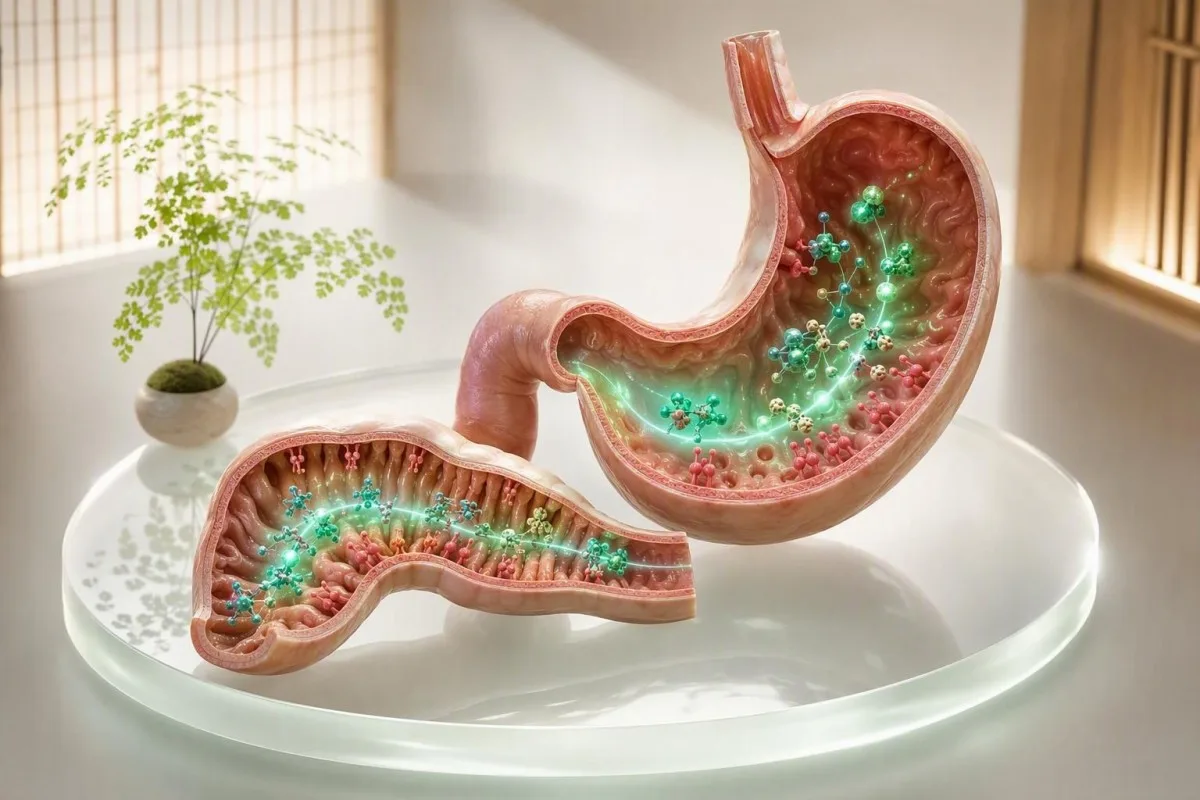
B12 absorption requires stomach acid, pancreatic enzymes, and intrinsic factor from stomach cells before uptake in the final ileum. A problem at any one step can make a high-B12 diet insufficient.

Anatomical vitamin B12 absorption pathway through stomach pancreas and terminal ileum
図5: Dietary B12 needs several digestive steps before intestinal uptake.

Food-bound B12 is released from protein in the stomach, first binds haptocorrin, then transfers to intrinsic factor in the small intestine. The intrinsic factor-B12 complex is absorbed in the terminal ileum through a receptor-mediated process; this is why disease or removal of that bowel segment has consequences.

Intrinsic factor absorption saturates at roughly 1.5-2 mcg per meal, while about 1% of a large oral dose can cross by passive diffusion. That small passive pathway explains why clinicians sometimes use 1,000-2,000 mcg oral treatment doses, not because anyone needs 1,000 times the dietary requirement.

For people with chronic diarrhoea, unexplained weight loss, or suspected coeliac disease, an intake calculation is not enough. Discussing the correct timing of a gluten challenge before testing can prevent a falsely reassuring work-up.

良い食事をしていても、B12の吸収を妨げるものは何ですか?

Pernicious anemia, stomach or bowel surgery, coeliac disease, Crohn's disease, long-term metformin, and acid suppression can reduce B12 absorption. In these settings, increasing fish or fortified cereal may slow decline but may not correct deficiency.

Clinical medication and digestive pathway scene illustrating barriers to B12 absorption
図6: Medicines and gastrointestinal conditions can interrupt normal B12 absorption.

Autoimmune gastritis can destroy intrinsic-factor-producing stomach cells and cause 悪性貧血, an absorption disorder rather than a dietary failure. NICE guidance NG239, published in 2024, recommends considering anti-intrinsic factor antibody testing when autoimmune gastritis is suspected, although a negative result does not fully exclude it.

Metformin-associated low B12 is real but variable. In the Diabetes Prevention Program Outcomes Study, low or borderline-low B12 was more common with metformin than placebo after 5 years, and risk rose with longer exposure (Aroda et al., 2016); this is why メトホルミン後の採血に関するガイドが should not focus on glucose alone.

A 63-year-old patient I reviewed ate salmon weekly and drank milk daily, yet had B12 of 156 pg/mL with numb toes after years of metformin and omeprazole. Food was not the missing step—absorption was.

どのような血液検査でB12欠乏の可能性を明らかにできますか?

Serum B12 below 200 pg/mL, or 148 pmol/L, commonly supports deficiency, while 200-300 pg/mL is an indeterminate zone that benefits from confirmatory context. Methylmalonic acid, homocysteine, active B12, full blood count, and folate can resolve uncertainty.

Laboratory analysis setup for serum B12 methylmalonic acid and full blood count
図7: B12 interpretation is stronger when serum results are paired with functional markers.

Methylmalonic acid usually rises when cellular B12 is inadequate; an MMA above 0.40 micromol/L is often considered elevated, although laboratory cutoffs differ. Kidney impairment can raise MMA independently, so an eGFR of 35 mL/min/1.73 m² changes the meaning of the same result.

Macrocytosis is a clue, not a requirement. An MCV above 100 fL を超えて上昇している may occur with B12 deficiency, but early deficiency can have normal MCV, and iron deficiency can partially mask cell enlargement; compare the result with our high MCV follow-up guide.

カンテスティは AI搭載の血液検査解析ツール that reads B12 with MMA, MCV, RDW, creatinine, and longitudinal changes rather than applying a single cutoff. The diagnostic framework in Devalia et al. (2014) similarly supports using clinical features and second-line tests when serum B12 does not settle the question.

B12が低い可能性 <200 pg/mL または <148 pmol/L Deficiency is likely, particularly with symptoms or raised MMA.
判定困難なB12 200-300 pg/mL Consider MMA, homocysteine, active B12, medication, and symptoms.
Typical laboratory range About 300-900 pg/mL Interpret with local assay range and the clinical picture.
Raised B12 >900 pg/mL Often supplements, but persistent unexplained elevation needs context.

B12欠乏は貧血なしで症状を引き起こすことがありますか?

Yes, B12 deficiency can cause nerve and cognitive symptoms before haemoglobin falls or MCV rises. Tingling, burning feet, reduced balance, loss of vibration sense, low mood, and brain fog deserve assessment when they persist.

Educational nerve pathway illustration beside a full blood count result review
図8: Neurologic B12 symptoms can occur before classic anemia appears.

A haemoglobin of で、唯一の手がかりが倦怠感を伴う低正常のMCVである場合でも、鉄欠乏症が見逃されているのを私はまだ見ています。フェリチンがなければ、見た目は予防的な血液検査でも、見かけ上は正常に見えてしまうことがあります。 and MCV of 92 fL do not rule out functional B12 deficiency in a person with progressive paraesthesia. Neurologic recovery is less predictable when symptoms have been present for many months, which is why I do not advise waiting for overt anemia.

Folate can normalise the blood-count appearance while B12-related nerve injury continues. This is the clinical issue behind the warning about high-dose folic acid; see our explanation of high folate masking B12 for the practical detail.

Urgent same-day assessment is sensible for rapidly worsening walking difficulty, new confusion, marked weakness, or bowel and bladder changes. Those symptoms have several causes, but B12 should be part of a prompt differential diagnosis rather than a supplement experiment.

いつ食事でB12不足を改善でき、いつ治療が必要ですか?

Food can correct a marginal low intake in someone with intact absorption, but confirmed deficiency from malabsorption often needs high-dose oral treatment or injections. The choice depends on cause, severity, adherence, and neurologic findings—not simply the serum number.

Oral B12 tablets and fortified foods beside a clinician reviewing laboratory results
図9: Treatment choice depends on absorption, severity, and neurologic symptoms.

For dietary insufficiency without severe symptoms, clinicians may use oral cyanocobalamin or methylcobalamin in doses such as 50-150 mcg daily for maintenance, with larger doses when correcting deficiency. Exact regimens vary across countries and should follow the treating clinician's protocol.

Pernicious anemia, total gastrectomy, major ileal disease, or substantial neurologic symptoms usually change the conversation. Our detailed comparison of B12注射と錠剤 explains why high-dose tablets may still work through passive absorption, while injections can be preferred when certainty or speed matters.

In my experience, a food-first plan is excellent prevention but poor rescue therapy for symptomatic malabsorption. Recheck timing should include symptoms and functional markers, not only a B12 result that rises quickly after an injection.

メチル化B12はシアノコバラミンより優れていますか?

Methylcobalamin and cyanocobalamin can both correct B12 deficiency when dose and absorption are adequate; evidence does not show that methylated B12 is universally superior. Cyanocobalamin is stable, widely studied, and commonly used in fortified foods.

Molecular visualization of cyanocobalamin and methylcobalamin in a clinical laboratory setting
図10: Different B12 forms ultimately support the same cobalamin-dependent pathways.

The body converts cobalamin into active coenzyme forms used by methionine synthase and methylmalonyl-CoA mutase. Marketing language around 'methylated' products often outruns comparative clinical evidence; absorption, dose, cost, and consistency are usually more decisive.

Hydroxocobalamin is commonly used by injection in several health systems because it remains in the body longer than cyanocobalamin. People with chronic kidney disease or unusual metabolic disorders need individual advice, because MMA and treatment selection can become more complicated.

For a practical comparison of product chemistry, dose logic, and lab follow-up, read methylated B12 versus cyanocobalamin. Do not stop prescribed injections because a supplement label promises a more 'natural' form.

B12が豊富な食事の実際的な1日分はどのようなものですか?

A mixed diet can reach 2.4 mcg of B12 with ordinary meals, while a vegan pattern needs deliberate fortified-food scheduling or a supplement. The most reliable plan is one you can repeat through travel, busy weeks, and appetite changes.

Daily meal preparation with fish yoghurt eggs and B12-fortified plant foods
図11: Simple meal combinations can meet B12 needs without relying on one food.

One omnivorous example is yoghurt at breakfast (1.0 mcg), an egg at lunch (0.5 mcg), and 85 g salmon at dinner (2.6mcg). This provides roughly 4.1 mcg before allowing for food-table variation, while spreading intake across meals is comfortable for most people.

A fortified vegan example might use a plant drink providing 1.0 mcg, cereal providing 1.5 mcg, and fortified nutritional yeast providing 1.0 mcg. The catch is consistency: changing brands can abruptly remove the nutrient, so retain a photo of the label in your health notes.

B12 belongs in the wider pattern of water-soluble nutrients, protein, iron, and energy intake. Our 水溶性ビタミンガイド helps prevent the common mistake of treating one vitamin as the whole explanation for fatigue.

誰がB12不足に特に注意すべきですか?

Vegans, older adults, people taking metformin or long-term acid suppressants, patients after gastric or ileal surgery, and people with inflammatory bowel disease have higher B12-deficiency risk. Risk increases when more than one factor is present.

Clinical risk assessment with medication bottles dietary notes and B12 laboratory sample
図12: Combined dietary, medication, and digestive risks deserve proactive B12 review.

Long-term proton-pump inhibitor use may reduce release of B12 from food protein by lowering gastric acidity. The association is not a reason to stop a prescribed medicine abruptly, but it is a reason to ask whether monitoring is appropriate after 2 years or more の継続使用後により関係してきます。.

People aged over 60歳 can develop food-cobalamin malabsorption even with a varied diet, sometimes alongside atrophic gastritis. A lower B12 level in this group is not automatically 'just age'; it can be a signal to investigate symptoms, medicines, and autoimmune history.

私たちの 長期PPIモニタリングガイド outlines associated laboratory discussions, including magnesium and iron. Combining low B12 with unexplained iron deficiency can point clinicians toward a gastric cause rather than two unrelated dietary gaps.

食事や治療を変更した後、いつB12レベルを再検査すべきですか?

Retesting often occurs 8-12 weeks after a dietary or oral-treatment change, while symptom severity and treatment method may justify earlier clinical review. A serum B12 result can rise rapidly after supplementation and may not prove tissue recovery by itself.

Timeline-style laboratory workflow showing repeated B12 sample analysis and trend review
図13: B12 follow-up should examine trends, symptoms, and functional markers together.

A full blood count may show a reticulocyte response within about 1週間 after effective treatment for megaloblastic anemia, while haemoglobin usually improves over several weeks. Nerve symptoms commonly recover more slowly and sometimes incompletely, especially after prolonged deficiency.

Stop-and-start supplementation can make serum B12 look normal on the day of testing while MMA, symptoms, or macrocytosis remain concerning. This is one reason to tell the clinician exactly what you took, the dose, and the last dose date before interpreting results.

Kantesti AI can compare B12, MCV, haemoglobin, RDW, folate, and creatinine across several reports to identify whether a change is clinically meaningful. For readers learning this skill, our 血液検査のトレンド解析ガイド explains why one isolated result is rarely the whole story.

どのようなB12に関する誤解が適切なケアを遅らせる可能性がありますか?

The biggest B12 misconception is that eating more animal food will fix every low result. Diet helps intake, but it cannot restore intrinsic factor, reverse bowel disease, or safely replace evaluation of neurologic symptoms.

Clinical comparison of B12-rich foods supplements and diagnostic laboratory interpretation
図14: Food, supplements, symptoms, and laboratory evidence must be interpreted together.

Another myth is that a high serum B12 result always means excellent status. A result above 900 pg/mL commonly reflects supplements or injections, but persistent unexplained elevation can also occur with liver disease, kidney disease, or some hematologic conditions; context matters more than panic.

As of September 1, 2026, I would also caution against using energy improvement after one tablet as diagnostic proof. Placebo effects, sleep, iron status, thyroid disease, depression, and glucose changes can all alter energy over 結果が新しく、暗い尿、淡い便、痛み、発熱、または直接型の割合が高いことを伴う場合は懸念が高まります。 without confirming B12 deficiency.

Kantesti's clinical content is reviewed with support from our 医療諮問委員会, but an AI interpretation never replaces examination for progressing neurologic symptoms. Readers can review our 臨床的妥当性の検証アプローチ to understand how we frame follow-up prompts rather than make a diagnosis.

B12不足が疑われる場合、最も安全な次のステップは何ですか?

If you have persistent numbness, balance problems, cognitive change, unexplained macrocytosis, or a B12 result below 200 pg/mL, arrange medical review rather than relying on food alone. Early treatment is particularly relevant when nerves may be involved.

Patient reviewing B12 laboratory report with clinician in a calm modern clinical setting
図15: A low B12 result should guide a cause-focused clinical follow-up plan.

Bring a list of medicines, supplements, diet pattern, digestive diagnoses, surgeries, alcohol intake, and previous laboratory reports. A clinician can then decide whether to repeat B12, order MMA or homocysteine, check folate and full blood count, or investigate pernicious anemia and malabsorption.

Thomas Klein, MD, recommends avoiding high-dose folic acid as a self-treatment for unexplained macrocytosis until B12 has been reasonably assessed. If you have no red flags and dietary intake is clearly low, a measured food or supplement plan with a repeat result in 8〜12週間 is often sensible.

Kantesti connects lab-report trends to understandable questions for your appointment, while keeping the final diagnostic decision with your clinician. Explore our バイオマーカーリファレンスガイド for the laboratory terms likely to appear alongside a B12 result.

よくある質問

ビタミンB12が最も多く含まれる食品は何ですか?

二枚貝と牛レバーは、ビタミンB12を多く含む食品の代表例です。調理済みの二枚貝85gには約84mcgのB12が含まれており、同じ量の牛レバーには約70mcgが含まれています。どちらも、成人の1日の目標量である2.4mcgを大幅に上回っています。レバーは、ビタミンA(レチノール)を非常に多く含むため、妊娠中の日常的な食品としては摂取すべきではありません。通常の食事としては、魚、肉、乳製品、卵、表示のある強化食品の方が実用的な供給源です。.

ヴィーガンは食事だけで十分なビタミンB12を摂取できますか?

ヴィーガンは、B12強化製品を定期的に規定量摂取する場合にのみ、食事だけでビタミンB12の必要量を満たすことができます。強化されていない野菜、きのこ、海藻、テンペ、栄養酵母は、コバラミンの含有量がなかったり、不均一であったり、または不活性な類似体を含んでいる可能性があるため、信頼できるB12源ではありません。多くの強化植物性飲料は、250mLあたり0.4~1.0mcgを提供しますが、配合は国やブランドによって異なります。B12サプリメントは、ヴィーガン食にとって、より簡単で信頼性の高い安全策となることがよくあります。.

成人は1日にどのくらいのビタミンB12を摂取すべきですか?

米国推奨食事摂取基準によると、ほとんどの成人は1日あたり2.4mcgのビタミンB12を必要とします。妊娠中は1日あたり2.6mcg、授乳中は1日あたり2.8mcgに目標値が上がります。英国の成人参考栄養摂取量は1日あたり1.5mcgであるため、国固有の栄養表示は異なる場合があります。これらの値は通常の吸収に対する予防目標であり、診断された欠乏症の治療用量よりもはるかに低いです。.

肉や卵を多く食べることでB12欠乏症を治せますか?

食事からの摂取不足のみが原因のB12欠乏症は、肉、魚、乳製品、卵、または強化食品を増やすことで改善する可能性がありますが、吸収が阻害されている場合には効果がないことがあります。悪性貧血、セリアック病、クローン病、胃切除術、回腸切除術、メトホルミン、および長期の酸抑制療法は、B12が豊富な食事であっても吸収を低下させる可能性があります。血清B12値が200 pg/mLまたは148 pmol/Lを下回る場合は、一般的に原因の臨床的評価が推奨されます。しびれ、バランス感覚の低下、認知機能の変化などの神経症状は、食事だけで管理すべきではありません。.

B12の吸収を助けるものは何ですか?

ビタミンB12の吸収は、十分な胃での処理、膵酵素、内因子、そして機能的な回腸終末部の存在に依存します。内因子は食事から約1.5-2 mcgのB12しか受動的に吸収しませんが、大量の経口投与では約1%が受動拡散で吸収される可能性があります。B12を食事と一緒に摂ることは合理的ですが、内因子の欠如や重度の回腸疾患を克服できる特定の食品の組み合わせはありません。吸収が損なわれている場合は、高用量の経口B12または注射が必要になることがあります。.

ビタミンB12の基準値はどのくらいですか?

血清ビタミンB12値が200 pg/mL(約148 pmol/L)未満の場合、一般的にB12欠乏症が支持されますが、検査室によって測定範囲は異なります。200~300 pg/mLの結果は、しばしば境界域または不明瞭と見なされ、メチルマロン酸、ホモシステイン、活性B12、全血球計算、葉酸、腎機能、および症状の文脈の確認が必要になる場合があります。メチルマロン酸値が約0.40 micromol/Lを超えると、細胞レベルでのB12欠乏症が支持されますが、腎機能低下でも上昇することがあります。正常なヘモグロビン値またはMCV値では、早期のB12関連神経症状を確実に除外することはできません。.

今日、AIによる血液検査分析を

いますぐ利用しませんか。即時で正確な検査分析を提供するKantestiを信頼する、世界中の200万人以上のユーザーに参加してください。血液検査結果をアップロードすると、15,000+のバイオマーカーについて数秒で包括的な解釈が得られます。.

📚 Referenced Research Publications

1

Klein, T., Mitchell, S., & Weber, H. (2026). 尿中ウロビリノーゲン検査:尿検査完全ガイド 2026.。 Kantesti AI Medical Research.

2

Klein, T., Mitchell, S., & Weber, H. (2026). 鉄研究ガイド:TIBC、鉄飽和度、結合能.。 Kantesti AI Medical Research.

📖 外部の医学的参考文献

3

O'Leary F, Samman S (2010). 健康と疾患におけるビタミンB12.。 栄養素。.

4

Devalia V ほか (2014)。. コバラミンおよび葉酸障害の診断と治療のためのガイドライン.。 英国血液学雑誌。.

5

Aroda VR et al. (2016). Long-term metformin use and vitamin B12 deficiency in the Diabetes Prevention Program Outcomes Study.。 Journal of Clinical Endocrinology and Metabolism.

200万以上分析されたテスト
127+
75+言語

⚕️ 医療免責事項

E-E-A-T 信頼性シグナル

経験

医師主導による、検査結果解釈ワークフローの臨床レビュー。.

📋

専門知識

臨床的な文脈においてバイオマーカーがどのように振る舞うかに焦点を当てた検査医学。.

👤

権威

トーマス・クライン博士が執筆し、サラ・ミッチェル博士およびハンス・ヴェーバー教授によるレビュー。.

🛡️

信頼性

アラームを減らすための明確なフォローアップ経路を備えた、エビデンスに基づく解釈。.

🏢 カンテスティ株式会社 イングランドおよびウェールズに登録 · 会社番号. 17090423 ロンドン、イギリス · kantesti.net
blank
Prof. Dr. Thomas Kleinによる

トーマス・クライン博士は、Kantesti AIにおける最高医療責任者(CMO)を務める、ボード認定の臨床血液専門医です。検査医学における15年以上の経験に加え、「血液検査結果」のAI支援による解釈に強い関心を持ち、新しい技術を日常の臨床実践につなげることに取り組んでいます。関心領域には、バイオマーカー解析、臨床意思決定支援の研究、集団特異的な基準範囲の最適化が含まれます。CMOとして、同プラットフォームの内部ベンチマークに対する臨床的インプットを提供し、Kantestiの教育レポートの医療品質に関する臨床的監督を行います。.

コメントを残す

メールアドレスが公開されることはありません。 が付いている欄は必須項目です