農薬に曝露した後、過剰な唾液、発汗、嘔吐、縮瞳、筋肉のぴくつき、脱力、または呼吸困難があれば、中毒の可能性があります。有機リン中毒が疑われる場合は緊急治療が必要です—コリンエステラーゼの結果を待たないでください。

要点
- 緊急対応:症状を伴う中毒が疑われる場合は、英国では999または112、米国では911、または現地の緊急電話番号に電話してください。
- 呼吸の危険:有機リン系農薬は、気道分泌物、気道狭窄、呼吸筋の筋力低下という3つの機序で呼吸を障害することがあります。
- 初期症状:曝露後に発汗、唾液、涙、嘔吐、下痢、縮瞳、筋肉のぴくつきが複数同時に現れた場合、より懸念されます。
- 曝露から発症までの時間:症状は多くの場合、数分から数時間以内に始まりますが、汚染された衣服や皮膚を介した吸収により、発症が遅れることがあります。
- 2種類の酵素検査:赤血球アセチルコリンエステラーゼと血漿ブチリルコリンエステラーゼは診断を補助しますが、いずれも直ちに行う臨床評価に代わるものではありません。
- 個人のベースライン:8,000 U/Lから3,200 U/Lへの仮想的な低下は、普遍的に定義された重症度カテゴリーではなく、60%の減少を表します。
- 眼の除染:救急支援を手配しながら、曝露した眼を清潔なぬるま湯で15~20分間洗い流してください。
- 遅発性の脱力:中間症候群は急性中毒の約24~96時間後に発症することがあります。一部の化合物は、およそ1~3週間後に遅発性神経障害を引き起こすことがあります。
農薬曝露後、どのような症状があれば緊急対応が必要ですか?
農薬への曝露後に呼吸困難、過剰な分泌物、ぴくつき、脱力、錯乱、または繰り返す嘔吐が見られた場合、有機リン中毒の症状には緊急の評価が必要です。 英国では999または112、米国では911、または現地の緊急電話番号に電話してください。検査結果の確定を待たないでください。
症状が現れる前でも、相当量を摂取した場合は緊急の助言を求めてください。 高濃度の製品、量が不明な場合、または意図的な摂取では、自宅で安全に解決できない不確実性が生じます。4つの情報すべてを集めるために通報を遅らせず、製品名、曝露経路、おおよその量、曝露時刻を通報先に伝えてください。
危険な組み合わせは 湿った気道と脱力, であり、単に瞳孔が小さいことや胃の不調ではありません。有機リン系化合物は、分泌物、気管支攣縮、筋力低下という3つの別々の機序で呼吸を損なう可能性があるため、最初は意識がはっきりして会話ができていても、状態が悪化することがあります。
酸素飽和度が正常でも、中毒が進行している可能性は否定できません。たとえば、酸素飽和度が97%で、新たにぴくつきが現れ、噴霧器の漏れの後に唾液が異常に多くなった作業者を仮定しても、緊急の評価が必要です。酸素飽和度では呼吸筋力を測定したり、農薬の吸収が続くかどうかを予測したりすることはできません。
カンテスティは AI血液検査分析装置 臨床ケア後の検査報告書の説明に用いるものであり、中毒の緊急対応サービスではありません。当社の 会社情報は、より広範な医療AIのミッション、認証、および製品の範囲を説明しています。実用的な約束はシンプルです。迅速な解釈であっても、慎重な解釈であるべきです。 はこのツールを提供する組織について説明しています。約60秒で完了する報告書の説明によって、緊急通報が遅れてはなりません。
有機リン中毒では、どの症状が最も特徴的ですか?
有機リン中毒では通常、コリン作動性の症状が現れます。 過剰な唾液、涙、発汗、嘔吐、下痢、縮瞳、気道分泌物、筋肉のぴくつき、脱力などです。臨床医は、すべての症状が現れると想定するのではなく、重なり合う3つの群、すなわちムスカリン性、ニコチン性、中枢神経系への影響を評価します。

ムスカリン性の影響により、通常は制御されている分泌物が過剰になります。 鼻水だけでは特異性はありませんが、1回の曝露中に涙、唾液、発汗、下痢、胸部の湿性雑音が同時に現れた場合、懸念は大きく高まります。農薬に接触した後の喘鳴を、安易に 通常の喘息症状.
ニコチン性の影響は、骨格筋と自律神経節に及びます。 衣服の下で筋肉が細かく波打つ動き、手の脱力、または頭をまっすぐ保つ困難は、神経筋への影響を示している可能性があります。心拍数は遅くなるのではなく速くなることもあるため、一度脈拍が問題なさそうに見えても、中毒を否定することはできません。
中枢神経系への影響には、興奮、錯乱、けいれん、意識レベルの低下が含まれます。 Peterら(2014年)のレビューでは、症状の分類が重複する理由や、臨床的重症度を単一の覚え方に還元できない理由が説明されています。同じ曝露でも、3つの症状群が異なる速度で現れることがあります。
瞳孔の著しい縮小は参考になりますが、必ず見られるわけではありません。眼への直接曝露では、他の部位の重症度を反映せずに、特に小さな瞳孔や視界のぼやけが生じることがあります。一方、照明、他の薬剤、過去のアトロピン投与によって瞳孔径は変わることがあり、同じくらい小さな瞳孔が両側にあっても、それだけでは診断できません。
農薬中毒の症状はどのくらい早く始まりますか?
有機リン系中毒の症状は数分から数時間以内に始まることが多いものの、発症時期は化学物質、用量、製剤、曝露経路によって異なります。 皮膚からの吸収は、吸入や摂取より遅いことがあります。また、最初の24時間を過ぎてから、かなり遅れて強い毒性を示す化合物もあります。
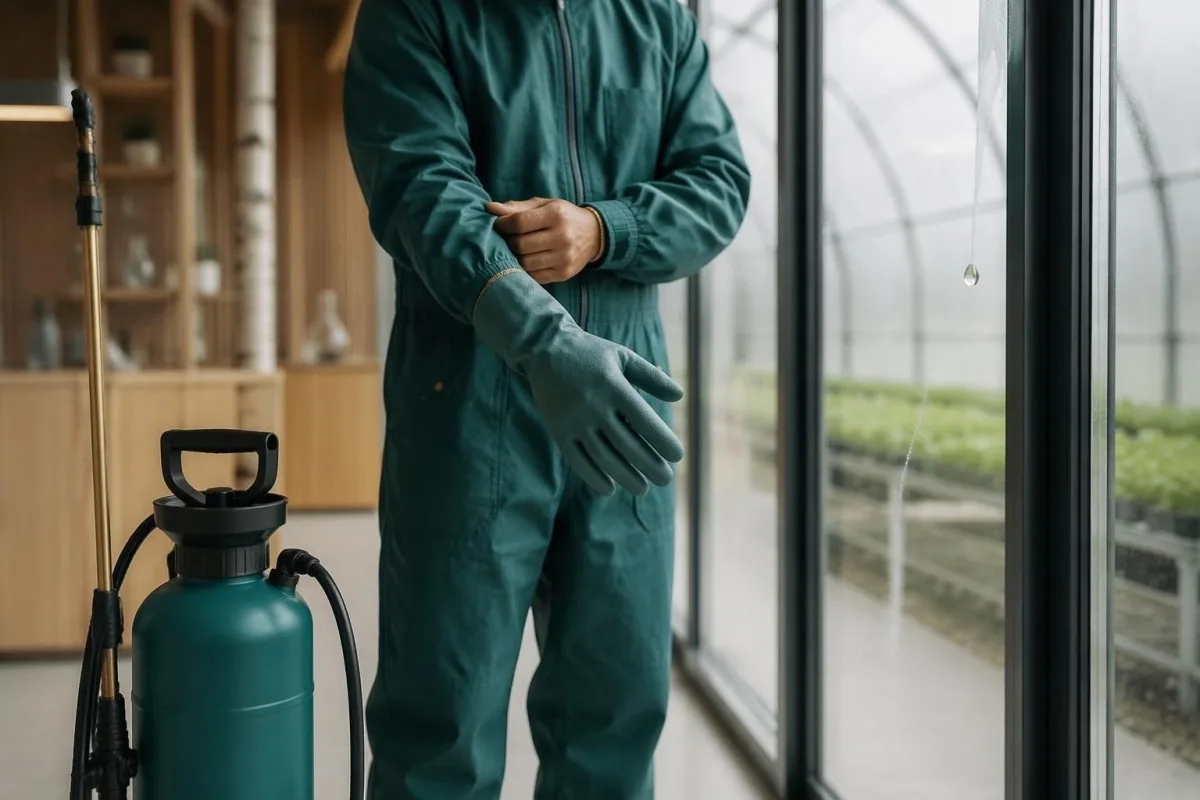
皮膚の汚染があると、散布を止めた後も農薬への曝露が続くことがあります。 農薬がしみ込んだ袖、漏れのある手袋、汚染されたブーツは、数時間にわたって曝露源となることがあります。汚染された衣服を脱がずに作業場所を離れると、吸入は止められても、別の経路から相当量が吸収され続ける可能性があります。
有効成分と同じくらい、製剤も重要です。仮に希釈した散布液に10分間曝露した場合と、原液を10分間取り扱った場合は同等ではありません。また、溶剤が刺激や誤嚥のリスクを加えることもあります。元のラベルの写真があれば、医療従事者は農薬とその製剤の両方を特定しやすくなります。
最初に症状がない時間があっても、安全の証明にはなりません。 一部の有機リン系化合物は代謝活性化を要し、脂溶性化合物は時間の経過とともに再分布することがあります。救急医療チームは、すべてに一律の時間を当てはめるのではなく、特定の製品や臨床経過に応じて、24~48時間またはそれ以上の経過観察を勧める場合があります。
曝露歴は、中毒のメカニズムを見分けるうえでも役立ちます。密閉された機材小屋で複数人に頭痛が生じた場合は、農薬曝露だけでなく、エンジン排気ガスも考慮する必要があります。当サイトの 一酸化炭素検査ガイド では、一酸化炭素の検査に、2種類のコリンエステラーゼ検査とは異なる検査室測定が必要な理由を説明しています。
救急隊が到着する前に何をすべきですか?
安全にできる場合に限り発生源から離れ、救急サービスに連絡し、さらなる汚染を防いでください。 適切な防護具なしに、救助のため汚染区域へ入ってはいけません。眼が曝露した場合は、清潔なぬるま湯で15~20分間洗い流してください。

救助者を守ることで、二次的な中毒を防げます。 汚染された衣服、液状の農薬、嘔吐物に直接触れないでください。適切な防護具については、通信指令員の指示に従ってください。一般的な薄手の診察用手袋があらゆる農薬製剤に確実に耐性を示すわけではないため、どの種類の手袋も普遍的に安全だと考えてはいけません。
助けを呼ぶのを遅らせずにできる場合は、汚染された衣服を脱がせ、2枚の袋または密閉できる容器に入れて、他の人から離しておいてください。曝露した皮膚は石けんと十分な水で洗い、強くこすらないでください。漂白剤、溶剤、化学的中和剤は使用せず、すでに行った洗浄について救急隊員に伝えてください。
中毒の専門家から具体的な指示がない限り、無理に吐かせたり、家庭療法、食べ物、飲み物、活性炭を与えたりしないでください。 反応がなくなった場合、または正常な呼吸が止まった場合は、緊急通報の通信指令員による蘇生指示に従ってください。農薬による汚染があることを伝え、最初の数分間の救助者の安全について通信指令員が対応できるようにしてください。
車内や救急外来には、開封済みまたは漏れている容器ではなく、ラベルの写真を持参してください。家庭用パルスオキシメーターで98%と表示されても、受診を遅らせてよいわけではありません。当サイトの 呼吸機能検査の限界 では、検査室での測定値と酸素の測定値が、それぞれ異なる呼吸に関する疑問に答える理由を説明しています。
病院では有機リン中毒をどのように診断しますか?
有機リン中毒の診断は、主に臨床所見に基づきます: 臨床医は曝露歴、コリン作動性症状のパターン、呼吸状態の評価、診察所見を組み合わせます。赤血球アセチルコリンエステラーゼと血漿コリンエステラーゼは補助的な証拠となりますが、これら2つの検査結果が出るまで治療を待つことはできません。
通常の毒物学スクリーニングでは、有機リン系農薬を確実に検出できません。 標準的な尿薬物検査パネルは、通常、特定の医薬品や嗜好性物質を対象としており、農薬による酵素阻害は対象としません。同様に、 重金属検査は 別の曝露カテゴリーを測定するものであり、関連する2つのコリンエステラーゼ測定検査の代わりにはなりません。
診察では瞳孔や脈拍だけでなく、気道分泌物、呼吸努力、胸部聴診所見、筋力、精神状態、血圧、ECG所見も評価します。脈拍が110拍/分の患者でも、低酸素症、ストレス、ニコチン性作用によって脈拍の低下が相殺される場合があるため、コリン作動性中毒の可能性があります。
ほかの検査は農薬の種類を証明するのではなく、合併症を特定します。 血液ガス、電解質、血糖、腎機能、必要に応じて胸部画像検査を行い、換気、脱水、誤嚥、鑑別診断を評価します。例えば、血糖値が70 mg/dL未満であれば、単独でも混乱の一因となる可能性があり、速やかな補正も必要です。
Eddleston et al.(2008)は『The Lancet』で、生化学的な確定を待つのではなく、早期蘇生と臨床管理を重視しています。当社も、教育と緊急の臨床判断を同様に区別しています。 医療コンテンツ基準:説明レポートは1件でも、ベッドサイドでの再評価に代わるものではありません。
赤血球アセチルコリンエステラーゼ検査では何を測定しますか?
赤血球アセチルコリンエステラーゼ検査では、神経シナプスのアセチルコリンエステラーゼに類似した、赤血球膜上の酵素活性を測定します。 活性の低下はコリンエステラーゼ阻害物質への曝露を裏付けますが、この特殊な検査は、通常のCBCで報告される赤血球数とは別のものです。

赤血球アセチルコリンエステラーゼは一般に、血漿ブチリルコリンエステラーゼよりも、関連する神経酵素の阻害をよく反映します。 ただし、この関連性は完全ではありません。農薬の種類、治療のタイミング、測定法、個人の生物学的特性が解釈に影響するため、基準値の20%未満と報告された結果であっても、それだけで気道治療の方針を決定することはできません。
検査機関によっては、赤血球活性を U/g hemoglobin、充填赤血球容積あたりの単位、または測定法固有の別の単位で報告します。仮に12 U/g hemoglobinという結果があっても、U/Lで示された別の検査機関の結果と直接比較することはできません。分母が異なる2つの値であり、同じ数値の互換表記ではありません。
AChE活性は、アセチルコリン受容体抗体検査ではありません。 の 重症筋無力症の血液検査ガイドは、 別の原因による筋力低下に関連する抗体を扱っています。AChR抗体パネルを注文しても、2つのコリンエステラーゼ活性測定検査のいずれとも同じ問いには答えられません。
成熟赤血球の寿命は約120日であるため、臨床的に回復した後も赤血球活性の低下が続くことがありますが、回復は再活性化や新たな細胞の産生にも左右されます。その後、Kantesti AIは報告された単位の説明に役立ちますが、抑制が続いているというだけでは、呼吸器系の危険が継続していることは証明されず、自己判断による治療の根拠にもなりません。
中毒がなくても血漿コリンエステラーゼ値が低くなるのはなぜですか?
血漿コリンエステラーゼは通常、ブチリルコリンエステラーゼを指し、偽コリンエステラーゼとも呼ばれる、肝臓で産生される酵素です。 Its activity may fall after organophosphate exposure, but liver dysfunction, inherited enzyme variants, pregnancy, poor nutrition, and some medicines can also lower it; 1 low value is not a standalone diagnosis.

Plasma butyrylcholinesterase is often more accessible than red-cell acetylcholinesterase. The ease of testing makes it useful, but the depth of suppression does not reliably mirror severity for every pesticide; 2 people with the same plasma activity may have very different breathing, strength, and consciousness findings.
A low pre-existing level changes the interpretation of an exposure result. For example, a hypothetical adult with a stable activity near 3,000 U/L before and after an incident needs a different explanation from someone whose activity falls from 8,000 to 3,000 U/L; the history distinguishes persistent low production from a new decline.
Inherited butyrylcholinesterase deficiency has implications for anesthesia, not just pesticide interpretation. の dibucaine number explanation describes a test of enzyme inhibition characteristics rather than simply activity; low activity can prolong the action of certain anesthetic muscle relaxants, including succinylcholine.
A plasma result should therefore be read with at least 2 contexts: the acute exposure and the person's usual health. Liver tests, albumin, medication history, and any prior anesthesia-related prolonged paralysis may help explain a persistently low result; a clinician should decide which follow-up tests are needed rather than treating every low value as poisoning.
臨床医はコリンエステラーゼの結果と基準値をどのように解釈しますか?
Cholinesterase testing is most informative when the current activity is compared with a reliable personal baseline using the same assay. There is no universal U/L cutoff that confirms or excludes poisoning across both enzyme tests, all laboratories, and all pesticide compounds.

Percentage reduction equals 100 × (baseline minus current activity) ÷ baseline. In a clearly hypothetical plasma example, a fall from 8,000 to 3,200 U/L gives 100 × 4,800 ÷ 8,000 = 60%; that describes biochemical change, not a validated rule saying a person has a particular clinical severity.
A population reference interval can hide a meaningful individual fall. A hypothetical worker whose activity decreases from 8,000 to 6,000 U/L has a 25% decline even if the second value remains inside the laboratory interval; our 基準検査の準備ガイド explains why a usable comparison needs consistent methods and circumstances.
Sample timing and handling can change interpretation. If feasible without delaying care, clinicians obtain samples before oxime treatment and record the time of exposure, collection, and antidotes; 3 timestamps can help the laboratory evaluate apparent reactivation or disagreement between assays, while storage requirements must follow that laboratory's instructions.
カンテスティは AI血液検査の読み方プラットフォーム that can explain supplied values, units, and reference intervals, but it cannot reconstruct a missing baseline. Our AIテクノロジーガイド provides context for that distinction; 2 enzyme results without exposure timing remain incomplete evidence.
コリンエステラーゼによる確定を待たずに治療を開始しなければならないのはなぜですか?
Treatment starts before laboratory confirmation because respiratory failure can develop faster than cholinesterase results return. Clinicians act on the exposure and examination; there is no safe universal waiting period of 1, 6, or 24 hours when symptoms suggest acute poisoning.

Atropine treats dangerous muscarinic effects without needing an enzyme value first. Excess airway fluid and bronchospasm interfere with oxygen movement, while neuromuscular weakness requires separate assessment; waiting for a sample to reach a specialist laboratory can delay treatment of all 3 breathing mechanisms.
Some organophosphate-enzyme complexes undergo aging, a chemical change that makes oxime reactivation ineffective. The timing varies from minutes to many hours or longer depending on the compound, so a blanket 6-hour cutoff is misleading; early specialist input is more useful than assuming every pesticide follows the same biochemical clock.
A normal or borderline result does not automatically overrule a convincing clinical picture. Very early sampling, assay limitations, exposure type, or treatment can complicate interpretation; the clinical team may repeat 1 or both assays while continuing respiratory support and reassessing alternative diagnoses rather than withholding care.
Other poisoning tests also require timing-aware interpretation, but their rules cannot be transferred wholesale to organophosphates. Our サリチル酸中毒の発現時期に関するガイド illustrates why 1 concentration can mislead; organophosphate care adds the separate problem that enzyme activity is not a direct pesticide concentration.
有機リン中毒にはどのような緊急治療が行われますか?
Hospital treatment combines airway support, oxygen or ventilation when needed, atropine, and specialist consideration of an oxime such as pralidoxime. An adult atropine starting dose of 1–3 mg intravenously appears in the Eddleston et al. (2008) review; dosing and repeat administration require monitored clinical care.
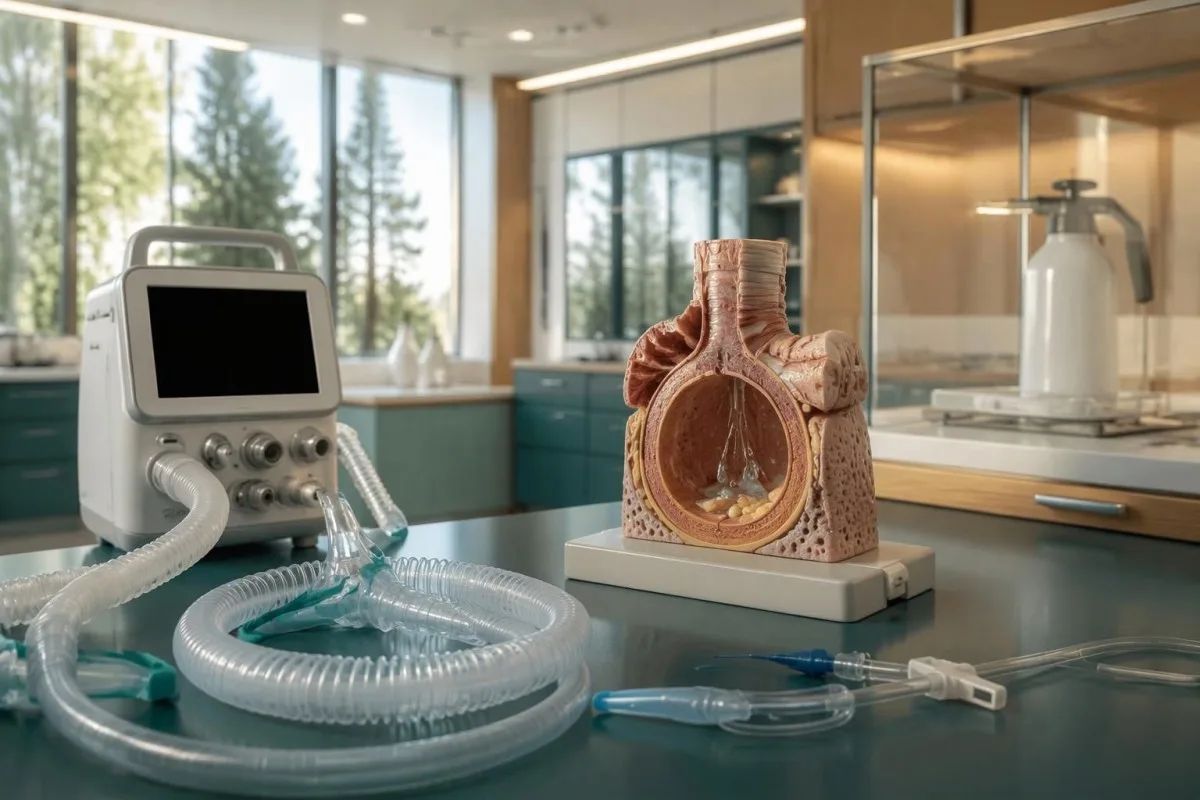
Atropine is titrated to clinical response, not a predetermined total dose. The 2008 Lancet review describes reassessment and dose doubling at intervals of about 3–5 minutes when required; improving chest secretions, oxygenation, and circulation matter more than forcing the pupils to dilate or the pulse to reach a particular number.
Ventilation may be needed even after secretions improve because atropine does not reliably reverse skeletal-muscle weakness. An arterial PaCO2 above 45 mmHg can indicate hypoventilation, although baseline lung disease and acid–base status matter; our 動脈血ガスの解説 separates ventilation from oxygen saturation.
Pralidoxime evidence is genuinely mixed and depends on the compound and clinical circumstances. Eddleston et al. (2009) conducted a randomized PLoS Medicine trial that did not establish improved survival with the studied regimen; this does not mean every oxime regimen is useless, but it explains why 1 universal treatment promise would be inaccurate.
Seizures may require benzodiazepines, and ongoing monitoring looks for aspiration, arrhythmias, and impaired perfusion. A lactate above 2 mmol/L can have several explanations and is not an organophosphate-specific marker; our lactate sampling guide explains why collection conditions also affect that complication-focused result.
中毒後24~96時間で脱力が再発することがあるのはなぜですか?
Intermediate syndrome can cause neck, proximal limb, and respiratory muscle weakness roughly 24–96 hours after acute organophosphate poisoning. Certain organophosphates can also cause delayed neuropathy about 1–3 weeks later; these complications have different mechanisms and are not simply repeated diarrhea or sweating.

Improving saliva and chest secretions do not guarantee recovery of muscle function. A hypothetical patient who becomes unable to lift their head 48 hours after initial improvement needs immediate reassessment; intermediate syndrome can threaten breathing when the earlier muscarinic signs have largely settled (Peter et al., 2014).
Repeated bedside respiratory and strength assessments may be more informative than 1 reassuring plasma enzyme result. Neck flexion, shoulder and hip strength, cough effectiveness, swallowing, and respiratory measurements help clinicians detect evolving weakness; the treating team determines the assessment frequency according to severity and the specific pesticide.
Delayed neuropathy generally appears later than intermediate syndrome. New foot weakness, altered walking, tingling, or distal weakness over 1–3 weeks warrants medical evaluation; some compounds affect neuropathy target esterase pathways, which are not measured by either routine red-cell acetylcholinesterase or plasma butyrylcholinesterase activity.
Weakness after an exposure still deserves a broad differential diagnosis. Our 緊急性のある筋力低下の警告サイン discuss another condition that can affect breathing; a new inability to walk, swallow, or breathe normally should trigger emergency care rather than waiting 24 hours for an outpatient repeat test.
他の農薬でも同様の症状が起こることはありますか?
Yes—carbamate pesticides can produce a similar cholinergic syndrome, while pyrethroids, solvents, and other chemicals cause different or overlapping symptoms. The active ingredient matters more than the word pesticide; 2 products used for the same pest can require different diagnostic and treatment approaches.

Carbamates also inhibit cholinesterase, but inhibition is generally more readily reversible. Their laboratory activity can recover more quickly, including during sample handling, so 1 near-normal result may not reflect the earlier clinical state; atropine may still be needed, while oxime decisions require product-specific toxicology advice.
Pyrethroid exposure can cause skin tingling, irritation, nausea, or neurological symptoms, particularly after substantial exposure. Those effects do not reliably produce the same enzyme suppression pattern as organophosphates; a hypothetical person with facial tingling but no excess secretions still needs product-based advice rather than assuming 2 symptom categories identify the chemical.
Some exposures impair oxygen carriage rather than inhibit cholinesterase. Selected pesticides or associated chemicals can cause methemoglobinemia, for which co-oximetry is relevant; our methemoglobin result guide explains why a pulse oximeter may remain near 85% despite a different underlying oxygen problem.
Alternative diagnoses include asthma, heat illness, hypoglycemia, opioid effects, and gastrointestinal infection. Exposure plus 3 cholinergic features is more suggestive than vomiting alone, but none of these combinations is a validated home diagnostic score; clinicians use the label, examination, and targeted testing to distinguish overlapping emergencies.
どのような追跡検査や職場での予防措置が重要ですか?
Follow-up depends on symptoms, the pesticide involved, and how far enzyme activity has fallen from a personal baseline. Red-cell activity may remain depressed for weeks to months, so a single abnormal follow-up value does not by itself mean active poisoning or establish fitness to return to exposure.
Occupational monitoring thresholds are preventive rules, not emergency diagnosis cutoffs. Local programs may use different percentage declines for medical evaluation, removal from exposure, and return to work; a 25% decline in a hypothetical report must be interpreted under the applicable protocol, with occupational health input rather than a universal online rule.
Return-to-work decisions require more than a laboratory increase. Symptoms, strength, respiratory function, product handling, protective equipment, and the cause of the original leak all matter; 2 improving measurements do not make an unchanged exposure source safe, and contaminated gloves or clothing should be handled according to pesticide-specific guidance.
Meaningful trends require comparable methods and documented timing. 私たちの 採血タイムラインのガイド explains why illness, treatment, and laboratory changes can create apparent trends; for cholinesterase monitoring, record the dates of exposure, collection, and antidotes alongside both enzyme names and units.
At Kantesti, we encourage readers to keep emergency records and baseline results available for clinician-led follow-up, not to use an AI interpretation as occupational clearance. Remove unnecessary identifiers before sharing reports and review our プライバシーとデータに関するガイダンス; 1 shared document should contain only information needed for its intended purpose.
緊急治療後の研究情報源と安全なAIによる説明
The organophosphate evidence cited here concerns clinical assessment, cholinesterase interpretation, delayed weakness, and antidote treatment—not AI-based emergency diagnosis. The 3 external medical publications listed below support those discussions; our 2 companion DOI resources address other laboratory topics and are not evidence for pesticide treatment.
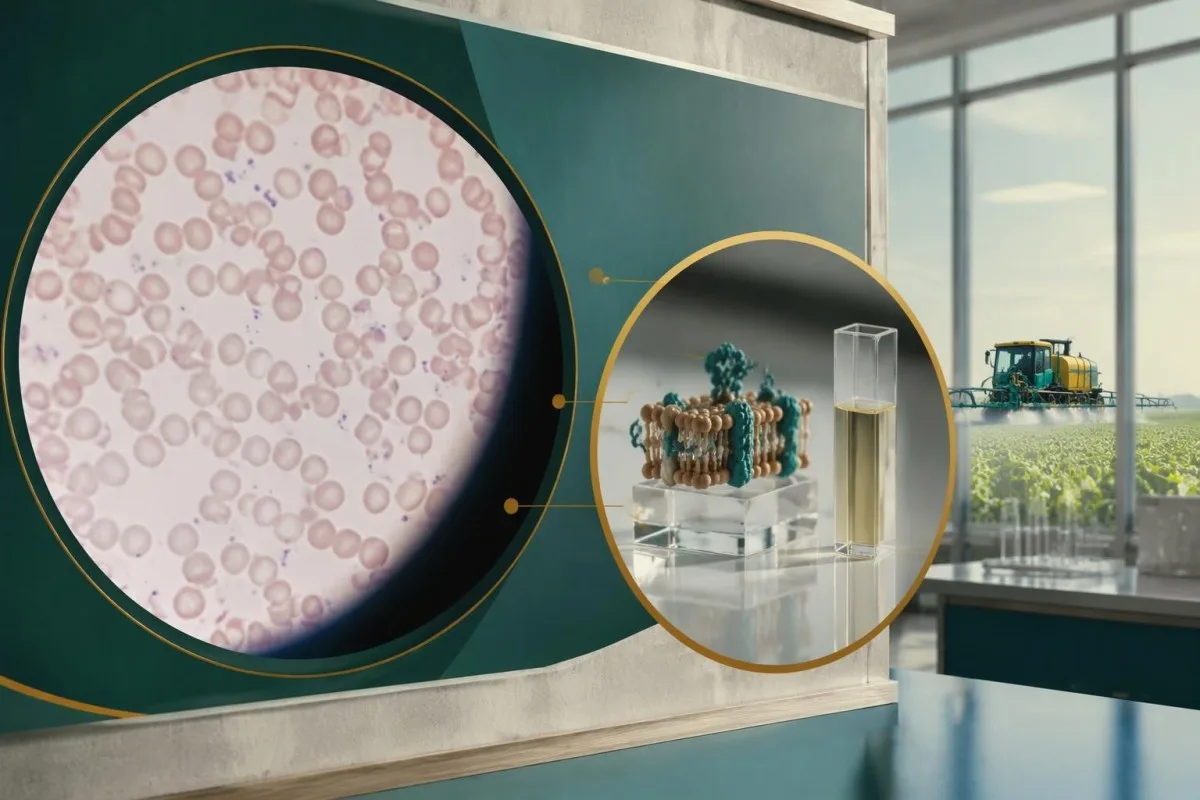
Clinical reviews and trials answer different questions. Eddleston et al. (2008) describe acute management, Peter et al. (2014) review clinical patterns and delayed syndromes, and Eddleston et al. (2009) test 1 pralidoxime regimen; none supplies a universal cholinesterase number that safely overrides an emergency examination.
カンテスティは AIラボ検査解釈サービス that can help translate laboratory terminology after emergency assessment, but it cannot observe breathing or measure muscle strength. Our 臨床検査法に関する情報 should be read alongside that limitation; 2 enzyme values alone cannot establish that home observation is safe.
Iron studies answer a different biochemical question from cholinesterase testing. 私たちの iron panel explanation accompanies the first DOI resource below; iron concentration, transferrin saturation, and binding capacity are 3 related measurements, but none measures acetylcholinesterase inhibition or identifies the active ingredient in a pesticide.
Kantesti's second companion DOI publication concerns clotting tests, not poisoning confirmation. The clotting test guide discusses aPTT, D-dimer, and protein C—3 distinct tests that may be relevant to other clinical problems; their inclusion in our publication library must not be mistaken for direct organophosphate research.
よくある質問
有機リン中毒の初期症状にはどのようなものがありますか?
初期の有機リン中毒の症状には、過剰な発汗、唾液や涙の分泌、吐き気、嘔吐、下痢、縮瞳、筋肉のぴくつきなどがあります。症状は多くの場合、数分から数時間以内に現れますが、皮膚からの吸収や特定の化合物では、発症が24時間を超えて遅れることがあります。曝露、分泌物の増加、脱力が組み合わさっている場合は、単一の症状よりも懸念されます。有機リン中毒が疑われる場合は、酵素検査を待たずに緊急の診察を受ける必要があります。
農薬にさらされた後、いつ救急サービスに連絡すべきですか?
農薬に曝露した後、呼吸困難、分泌物の過剰、脱力、ぴくつき、混乱、けいれん、または繰り返す嘔吐が中毒を示唆する場合は、救急サービスに連絡してください。大量に摂取した場合は、症状が現れる前であっても、緊急の助言が必要です。英国では999または112、米国では911、その他の地域では現地の緊急通報番号に連絡してください。97%などの正常な酸素飽和度の測定値が出ても、進行中の有機リン中毒を否定することはできません。
有機リン中毒の診断に役立つ血液検査はどれですか?
赤血球アセチルコリンエステラーゼ活性と血漿ブチリルコリンエステラーゼ活性は、有機リン中毒の診断を補助するために用いられる主な2つの酵素活性検査です。赤血球の活性は、関連する神経酵素の阻害をよりよく反映しますが、血漿活性は中毒以外にも複数の原因で低下します。いずれの検査も、通常のCBCや標準的な尿薬物スクリーニングと同等ではありません。臨床医は、どちらの検査結果が出る前にも、必要な救急治療を開始します。
正常なコリンエステラーゼ値で中毒を否定できますか?
A single normal cholinesterase result cannot reliably exclude poisoning when the exposure and examination are concerning. Timing, assay limitations, treatment, and the specific inhibitor can complicate interpretation of either of the 2 enzyme tests. A result within the population interval can also conceal a fall from a person's usual activity. Clinicians may repeat targeted testing while continuing treatment and investigating alternative diagnoses.
血漿コリンエステラーゼ値が低い場合、必ず農薬中毒を意味しますか?
血漿コリンエステラーゼ値が低くても、必ずしも農薬中毒を意味するわけではありません。肝機能障害、遺伝的変異、妊娠、栄養不良、一部の薬剤によっても活性が低下することがあります。以前から値が低い状態と新たな低下を区別するには、個人のベースライン値を測定しておくことが特に有用です。仮に8,000 U/Lから3,200 U/Lに低下した場合、60%の低下に相当しますが、この割合だけで臨床的な重症度が決まるわけではありません。解釈にあたっては、症状と曝露歴が引き続き重要です。
有機リン中毒は遅発性の筋力低下を引き起こすことがありますか?
有機リン中毒では、急性期から約24~96時間後に、頸部、四肢、呼吸筋の筋力低下を伴う中間症候群が起こることがあります。また、一部の化合物では、約1~3週間後に遅発性神経障害が生じることもあります。これらの合併症は、初期の発汗や分泌物の増加が改善した後に起こることがあります。新たに呼吸困難や嚥下障害が生じた場合、または著しい筋力低下がある場合は、検査結果の再確認を待たず、緊急に医療機関で再評価を受ける必要があります。
血液検査結果の見方を確認しましょう
検査報告書をアップロードすると、KantestiのAIが数秒で各バイオマーカーを平易な言葉で説明します。世界中で200万人以上が利用しています。.
参考文献
- Klein, T., Mitchell, S., & Weber, H. (2026). 鉄検査ガイド:TIBC、鉄飽和度、鉄結合能。. Kantesti AI医学研究。. 掲載日
- Klein, T., Mitchell, S., & Weber, H. (2026). aPTTの基準範囲:Dダイマー、プロテインC、血液凝固ガイド。. Kantesti AI医学研究。. 掲載日
- Eddleston M et al. (2008). Management of acute organophosphorus pesticide poisoning. The Lancet. 掲載日
- Peter JV et al. (2014). Clinical features of organophosphate poisoning: A review of different classification systems and approaches. Indian Journal of Critical Care Medicine. 掲載日
- Eddleston M et al. (2009). Pralidoxime in acute organophosphorus insecticide poisoning—A randomised controlled trial. PLoS Medicine. 掲載日
- 200万以上分析対象の検査
- 127+国
- 100+言語
医療チームについて


E-E-A-T 信頼性シグナル
経験
医師主導による、検査結果解釈ワークフローの臨床レビュー。.
専門知識
臨床的な文脈においてバイオマーカーがどのように振る舞うかに焦点を当てた検査医学。.
権威
Thomas Klein医師による医学的レビュー。Sarah Mitchell医師およびHans Weber教授の協力。.
信頼性
アラームを減らすための明確なフォローアップ経路を備えた、エビデンスに基づく解釈。.






医療免責事項
この記事は教育目的のみを対象としており、医療助言を構成するものではありません。診断や治療の判断を行う際は、必ず有資格の医療提供者にご相談ください。.
公開 · 編集チームにお問い合わせください
Kantesti Ltdが発行。イングランドおよびウェールズで登録、会社番号. 17090423, 、英国ロンドン。.
