Torjunta-aineille altistumisen jälkeen runsas syljeneritys, hikoilu, oksentelu, pistemäiset pupillit, lihasnykäykset, heikkous tai hengitysvaikeudet voivat olla merkkejä myrkytyksestä. Epäilty organofosfaattimyrkytys vaatii päivystyshoitoa — älä odota koliiniesteraasituloksia.

Keskeiset huomiot
- Hätätoimet: Soita numeroon 999 tai 112 Isossa-Britanniassa, 911 Yhdysvalloissa tai paikalliseen hätänumeroon, jos epäilet oireista myrkytystä.
- Hengitysvaara: Organofosfaatit voivat vaikeuttaa hengitystä kolmella mekanismilla — hengitysteiden eritteet, hengitysteiden ahtautuminen ja hengityslihasten heikkous.
- Varhaiset oireet: Hikoilu, syljeneritys, kyynelvuoto, oksentelu, ripuli, pienet pupillit ja lihasnykäykset ovat huolestuttavampia, kun useita niistä ilmenee yhdessä altistumisen jälkeen.
- Altistumisen ajankohta: Oireet alkavat usein minuuteissa tai tunneissa, mutta imeytyminen saastuneiden vaatteiden tai ihon kautta voi aiheuttaa viivästyneen sairastumisen.
- Kaksi entsyymitutkimusta: Punasolujen asetyylikoliiniesteraasi ja plasman butyryylikoliiniesteraasi tukevat diagnoosia; kumpikaan ei korvaa välitöntä kliinistä arviointia.
- Henkilökohtainen lähtötaso: Hypoteettinen lasku 8 000:sta 3 200 U/L:aan vastaa 60%:n vähennystä, ei yleispätevästi määriteltyä vaikeusasteluokkaa.
- Silmien puhdistaminen: Huuhtele altistuneet silmät puhtaalla, haalealla vedellä 15–20 minuutin ajan samalla, kun järjestät hätäapua.
- Viivästynyt heikkous: Keskushermosto-oireyhtymä voi kehittyä noin 24–96 tuntia akuutin myrkytyksen jälkeen; tietyt yhdisteet voivat aiheuttaa viivästyneen neuropatian suunnilleen 1–3 viikon kuluttua.
Milloin torjunta-aineille altistumisen jälkeiset oireet vaativat kiireellistä apua?
Organofosfaattimyrkytyksen oireet edellyttävät kiireellistä arviota, jos torjunta-ainealtistusta seuraa hengitysvaikeus, runsas eritys, nykiminen, heikkous, sekavuus tai toistuva oksentelu. Soita Yhdistyneessä kuningaskunnassa numeroon 999 tai 112, Yhdysvalloissa numeroon 911 tai paikalliseen hätänumeroon; älä odota laboratoriovarmistusta.
Merkittävä määrä ainetta nieltynä edellyttää kiireellisten toimintaohjeiden pyytämistä jo ennen oireiden ilmaantumista. Väkevä valmiste, tuntematon määrä tai tahallinen nieleminen aiheuttaa epävarmuutta, jota ei voida turvallisesti selvittää kotona; kerro hätäkeskuspäivystäjälle tuotteen nimi, altistumisreitti, arvioitu määrä ja ajankohta viivyttämättä puhelua kaikkien neljän tiedon kokoamiseksi.
Vaarallinen yhdistelmä on kosteat hengitystiet ja heikkous, ei pelkästään pienet pupillit tai vatsavaivat. Organofosfaatit voivat vaarantaa hengityksen kolmella erillisellä mekanismilla — eritteillä, keuhkoputkien supistumisella ja lihasten toiminnan pettämisellä — joten henkilön tila voi huonontua, vaikka hän vaikuttaisi aluksi valppaalta ja pystyisi puhumaan.
Normaali happisaturaatio ei sulje pois kehittyvää myrkytystä. Esimerkiksi hypoteettinen työntekijä, jonka happisaturaatio on 97 % ja jolla ilmenee uusia nykäyksiä sekä poikkeuksellisen runsasta syljeneritystä suihkevuodon jälkeen, tarvitsee silti kiireellisen arvion; happisaturaatio ei mittaa hengityslihasten voimaa eikä ennusta torjunta-aineen imeytymisen jatkumista.
Kantesti on Tekoälyinen verikoeanalysaattori laboratoriotulosten selittämiseen kliinisen hoidon jälkeen, ei hätäpalveluksi myrkytystilanteissa. Meidän yritystietomme kuvailee työkalun taustalla olevaa organisaatiota; noin 60 sekuntia kestävä tuloksen selitys ei saa koskaan viivästyttää hätäpuhelua.
Mitkä organofosfaattimyrkytyksen oireet ovat tyypillisimpiä?
Organofosfaattimyrkytys aiheuttaa tyypillisesti kolinergisen oirekuvan: runsasta syljeneritystä, kyynelvuotoa, hikoilua, oksentelua, ripulia, pieniä pupilleja, hengitysteiden eritteitä, lihasnykäyksiä ja heikkoutta. Lääkärit arvioivat kolmea päällekkäistä oirekokonaisuutta — muskariinivaikutuksia, nikotiinivaikutuksia ja keskushermostovaikutuksia — sen sijaan, että odottaisivat kaikkien oireiden ilmaantuvan.

Muskariinivaikutukset lisäävät normaalisti hallinnassa olevia eritteitä liiallisiksi. Pelkkä nuha ei ole spesifinen oire, mutta yhdessä altistumistilanteessa ilmaantuvat kyyneleet, syljeneritys, hikoilu, ripuli ja kostean kuuloinen rintakehä lisäävät huolta huomattavasti; torjunta-aineelle altistumisen jälkeen ilmenevää vinkunaa ei pidä automaattisesti pitää tavallisina astmaoireina.
Nikotiinivaikutukset kohdistuvat luustolihaksiin ja autonomisiin ganglioihin. Vaatteiden alla näkyvät pienet lihasvärinät, käsien heikkous tai vaikeus pitää pää pystyssä voivat viitata hermo-lihasjärjestelmän osallistumiseen; syke voi olla hidas sijaan nopea, joten yksittäinen näennäisen rauhoittava pulssimittaus ei sulje pois myrkytystä.
Central effects include agitation, confusion, seizures, and reduced consciousness. The review by Peter et al. (2014) explains why symptom classifications overlap and why clinical severity cannot be reduced to a single mnemonic; 3 symptom groups may develop at different speeds in the same exposure.
Pinpoint pupils are helpful but not mandatory. Direct eye exposure can produce especially small pupils or blurred vision without reflecting the severity elsewhere, while lighting, other medicines, and prior atropine can alter pupil size; 2 equally small pupils do not establish the diagnosis by themselves.
Kuinka pian torjunta-ainemyrkytyksen oireet voivat alkaa?
Organophosphate symptoms often start within minutes to hours, but their timing depends on the chemical, dose, formulation, and exposure route. Skin absorption can be slower than inhalation or ingestion, and some compounds can cause substantial delayed toxicity beyond the first 24 hours.
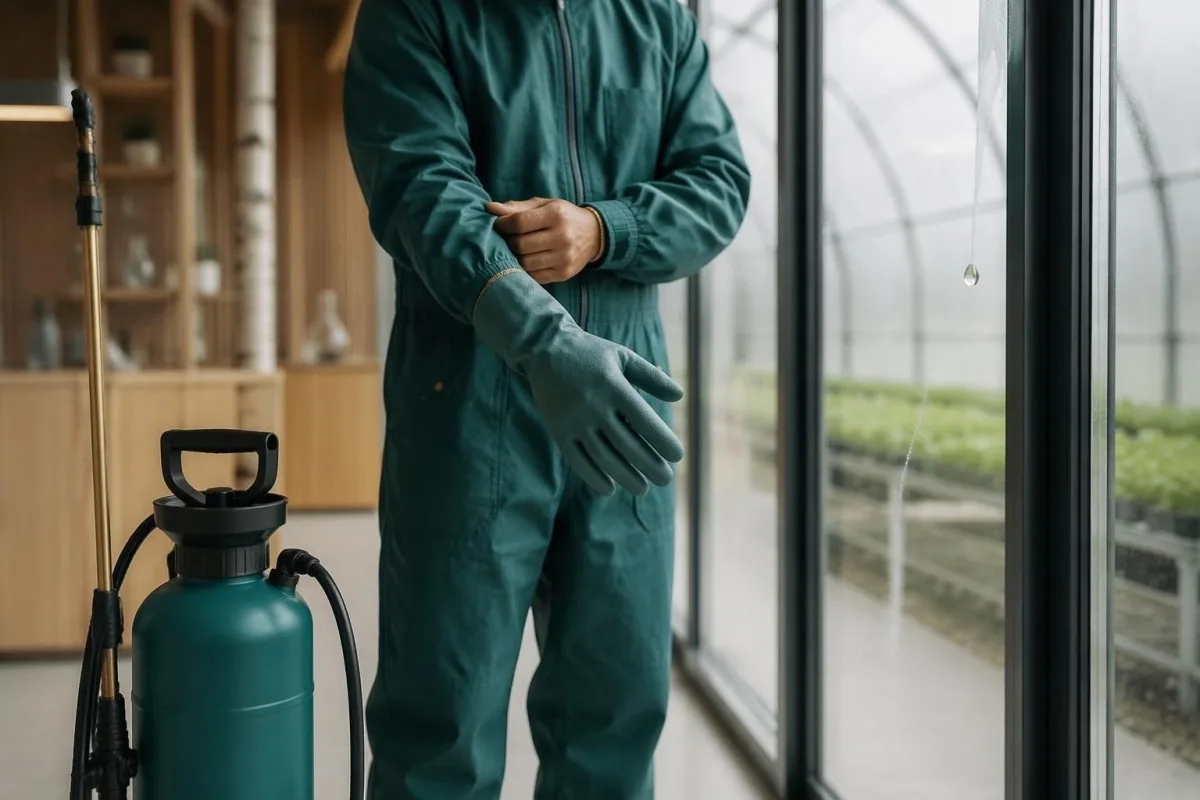
Skin contamination can continue delivering pesticide after spraying stops. A soaked sleeve, leaking glove, or contaminated boot can act as an exposure reservoir for several hours; leaving the work area without removing contaminated clothing may stop inhalation while allowing substantial absorption through another route.
The product formulation matters as much as the active ingredient. A hypothetical 10-minute exposure to diluted spray is not equivalent to 10 minutes handling concentrate, and solvents may add irritation or aspiration risk; a photograph of the original label helps clinicians identify both the pesticide and its formulation.
An initially symptom-free interval is not proof of safety. Some organophosphates require metabolic activation, and lipid-soluble compounds can redistribute over time; emergency teams may recommend observation extending into 24–48 hours or longer, depending on the specific product and clinical course rather than a universal stopwatch.
Exposure history also helps separate poisoning mechanisms. Several people developing headache in an enclosed equipment shed should prompt consideration of engine exhaust as well as pesticide exposure; our carbon monoxide test guide explains why carbon monoxide requires a different laboratory measurement from either of the 2 cholinesterase assays.
Mitä sinun tulee tehdä ennen ensihoitajien saapumista?
Move away from the source only if you can do so safely, call emergency services, and prevent further contamination. Do not enter a contaminated space to rescue someone without appropriate protection; exposed eyes should be rinsed with clean lukewarm water for 15–20 minutes.

Protecting the helper prevents a second poisoning. Avoid direct contact with contaminated clothing, liquid pesticide, or vomit, and follow dispatcher instructions about suitable protection; ordinary thin examination gloves are not reliably resistant to every pesticide formulation, so no 1 glove type should be assumed universally safe.
If feasible without delaying help, remove contaminated clothing and place it in 2 bags or a securely sealed container away from others. Wash exposed skin with soap and plenty of water, avoid vigorous scrubbing, and do not apply bleach, solvents, or chemical neutralizers; tell responders what washing has already occurred.
Do not induce vomiting or give home remedies, food, drinks, or charcoal unless a poison specialist specifically directs you. If the person becomes unresponsive or stops breathing normally, follow the emergency dispatcher's resuscitation instructions; identify pesticide contamination so the dispatcher can address rescuer safety during those first minutes.
Bring a label photograph rather than an open or leaking container into a car or emergency department. A reading of 98% on a home pulse oximeter is not permission to delay care; our breathing test limitations explain why laboratory and oxygen measurements answer different respiratory questions.
Miten organofosfaattimyrkytys diagnosoidaan sairaalassa?
Organophosphate poisoning diagnosis is primarily clinical: clinicians combine exposure history, the cholinergic symptom pattern, respiratory assessment, and examination. Red-cell acetylcholinesterase and plasma cholinesterase provide supporting evidence, but treatment cannot depend on either of these 2 tests returning first.
A routine toxicology screen does not reliably detect organophosphate pesticides. Standard urine drug panels usually target selected medicines or recreational substances, not pesticide enzyme inhibition; similarly, heavy metal testing measures a different exposure category and cannot substitute for the 2 relevant cholinesterase assays.
The examination looks beyond pupils and pulse. Clinicians assess airway secretions, breathing effort, chest sounds, strength, mental status, blood pressure, and ECG findings; a patient with a pulse of 110 beats/min can still have cholinergic poisoning because hypoxia, stress, and nicotinic effects may counteract a slower pulse.
Other tests identify complications rather than prove the pesticide identity. Blood gases, electrolytes, glucose, kidney function, and sometimes chest imaging help assess ventilation, dehydration, aspiration, and alternative diagnoses; a glucose below 70 mg/dL, for example, can independently contribute to confusion and also needs prompt correction.
Eddleston et al. (2008), in The Lancet, emphasize early resuscitation and clinical management rather than waiting for biochemical confirmation. We follow the same separation between education and urgent clinical decisions in our lääketieteellisen sisällön standardit: 1 explanatory report cannot replace bedside reassessment.
Mitä punasolujen asetyylikoliiniesteraasitutkimuksella mitataan?
Red-cell acetylcholinesterase testing measures the activity of an enzyme on red-cell membranes that resembles acetylcholinesterase at nerve synapses. Reduced activity supports exposure to a cholinesterase inhibitor, but this specialized assay is separate from the red-cell count reported in a routine CBC.

Red-cell acetylcholinesterase generally tracks relevant neural enzyme inhibition better than plasma butyrylcholinesterase does. That relationship is imperfect, however: the pesticide, treatment timing, assay method, and individual biology affect interpretation, so even a result reported at 20% of baseline cannot independently determine an airway treatment plan.
Laboratories may report red-cell activity in U/g hemoglobin, units per packed-cell volume, or other method-specific units. A hypothetical result of 12 U/g hemoglobin cannot be compared directly with another laboratory's result expressed in U/L; those are 2 different denominators, not interchangeable versions of the same number.
AChE activity is not an acetylcholine receptor antibody test. The myasthenia blood test guide concerns antibodies associated with a different cause of weakness; ordering an AChR antibody panel would not answer the same question as either of the 2 cholinesterase activity assays.
Red-cell activity can remain depressed after clinical recovery because mature red cells have an approximate lifespan of 120 days, although recovery also depends on reactivation and new-cell production. Kantesti AI can help explain the reported units afterward, but persistent suppression alone does not establish ongoing respiratory danger or justify self-directed treatment.
Miksi plasman koliiniesteraasi voi olla matala ilman myrkytystä?
Plasma cholinesterase usually means butyrylcholinesterase, also called pseudocholinesterase, a liver-produced enzyme. Its activity may fall after organophosphate exposure, but liver dysfunction, inherited enzyme variants, pregnancy, poor nutrition, and some medicines can also lower it; 1 low value is not a standalone diagnosis.
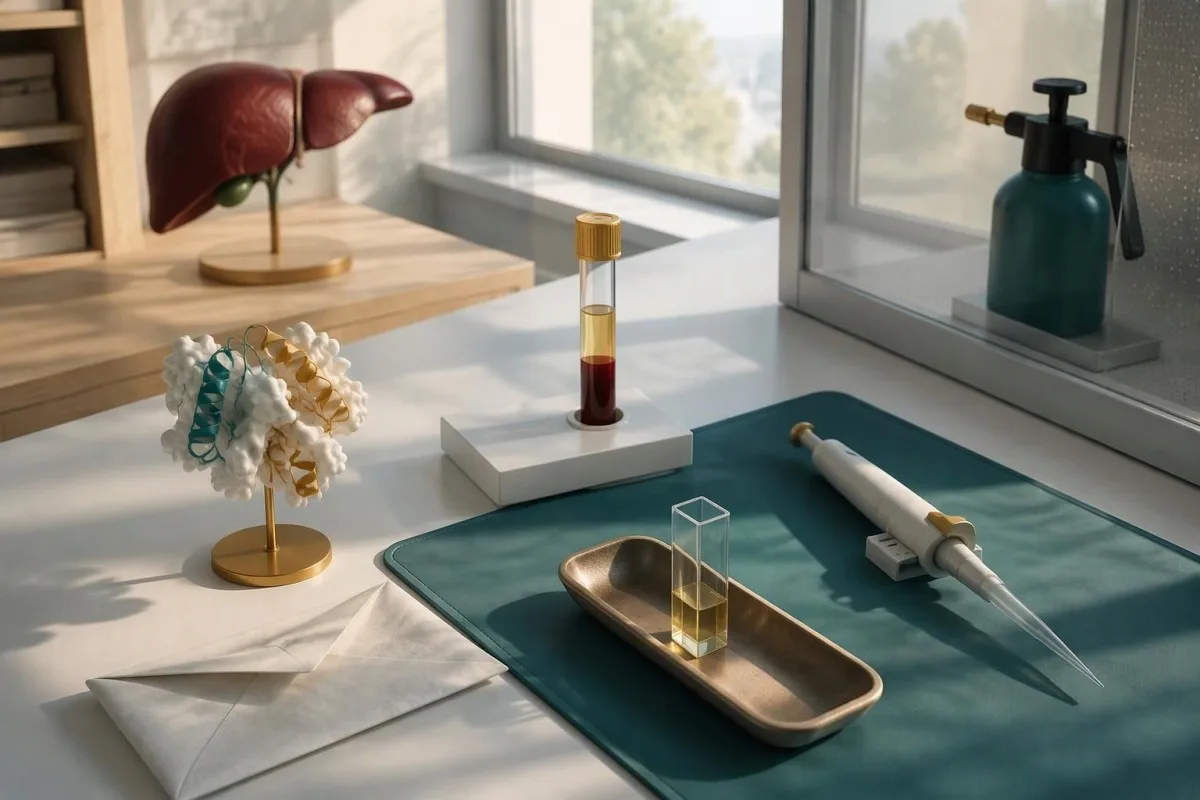
Plasma butyrylcholinesterase is often more accessible than red-cell acetylcholinesterase. The ease of testing makes it useful, but the depth of suppression does not reliably mirror severity for every pesticide; 2 people with the same plasma activity may have very different breathing, strength, and consciousness findings.
A low pre-existing level changes the interpretation of an exposure result. For example, a hypothetical adult with a stable activity near 3,000 U/L before and after an incident needs a different explanation from someone whose activity falls from 8,000 to 3,000 U/L; the history distinguishes persistent low production from a new decline.
Inherited butyrylcholinesterase deficiency has implications for anesthesia, not just pesticide interpretation. The dibucaine number explanation describes a test of enzyme inhibition characteristics rather than simply activity; low activity can prolong the action of certain anesthetic muscle relaxants, including succinylcholine.
A plasma result should therefore be read with at least 2 contexts: the acute exposure and the person's usual health. Liver tests, albumin, medication history, and any prior anesthesia-related prolonged paralysis may help explain a persistently low result; a clinician should decide which follow-up tests are needed rather than treating every low value as poisoning.
Miten lääkärit tulkitsevat koliiniesteraasituloksia ja lähtöarvoja?
Cholinesterase testing is most informative when the current activity is compared with a reliable personal baseline using the same assay. There is no universal U/L cutoff that confirms or excludes poisoning across both enzyme tests, all laboratories, and all pesticide compounds.

Percentage reduction equals 100 × (baseline minus current activity) ÷ baseline. In a clearly hypothetical plasma example, a fall from 8,000 to 3,200 U/L gives 100 × 4,800 ÷ 8,000 = 60%; that describes biochemical change, not a validated rule saying a person has a particular clinical severity.
A population reference interval can hide a meaningful individual fall. A hypothetical worker whose activity decreases from 8,000 to 6,000 U/L has a 25% decline even if the second value remains inside the laboratory interval; our testiin valmistautumisen lähtötaso-oppaassa, explains why a usable comparison needs consistent methods and circumstances.
Sample timing and handling can change interpretation. If feasible without delaying care, clinicians obtain samples before oxime treatment and record the time of exposure, collection, and antidotes; 3 timestamps can help the laboratory evaluate apparent reactivation or disagreement between assays, while storage requirements must follow that laboratory's instructions.
Kantesti on AI verikoe-tulkinta-alusta that can explain supplied values, units, and reference intervals, but it cannot reconstruct a missing baseline. Our Tekoälyteknologiaopas provides context for that distinction; 2 enzyme results without exposure timing remain incomplete evidence.
Miksi hoito on aloitettava ennen koliiniesteraasituloksen varmistumista?
Treatment starts before laboratory confirmation because respiratory failure can develop faster than cholinesterase results return. Clinicians act on the exposure and examination; there is no safe universal waiting period of 1, 6, or 24 hours when symptoms suggest acute poisoning.

Atropine treats dangerous muscarinic effects without needing an enzyme value first. Excess airway fluid and bronchospasm interfere with oxygen movement, while neuromuscular weakness requires separate assessment; waiting for a sample to reach a specialist laboratory can delay treatment of all 3 breathing mechanisms.
Some organophosphate-enzyme complexes undergo aging, a chemical change that makes oxime reactivation ineffective. The timing varies from minutes to many hours or longer depending on the compound, so a blanket 6-hour cutoff is misleading; early specialist input is more useful than assuming every pesticide follows the same biochemical clock.
A normal or borderline result does not automatically overrule a convincing clinical picture. Very early sampling, assay limitations, exposure type, or treatment can complicate interpretation; the clinical team may repeat 1 or both assays while continuing respiratory support and reassessing alternative diagnoses rather than withholding care.
Other poisoning tests also require timing-aware interpretation, but their rules cannot be transferred wholesale to organophosphates. Our salisylaattimyrkytyksen ajoitusopas illustrates why 1 concentration can mislead; organophosphate care adds the separate problem that enzyme activity is not a direct pesticide concentration.
Mitä hätähoitoja organofosfaattimyrkytykseen käytetään?
Hospital treatment combines airway support, oxygen or ventilation when needed, atropine, and specialist consideration of an oxime such as pralidoxime. An adult atropine starting dose of 1–3 mg intravenously appears in the Eddleston et al. (2008) review; dosing and repeat administration require monitored clinical care.
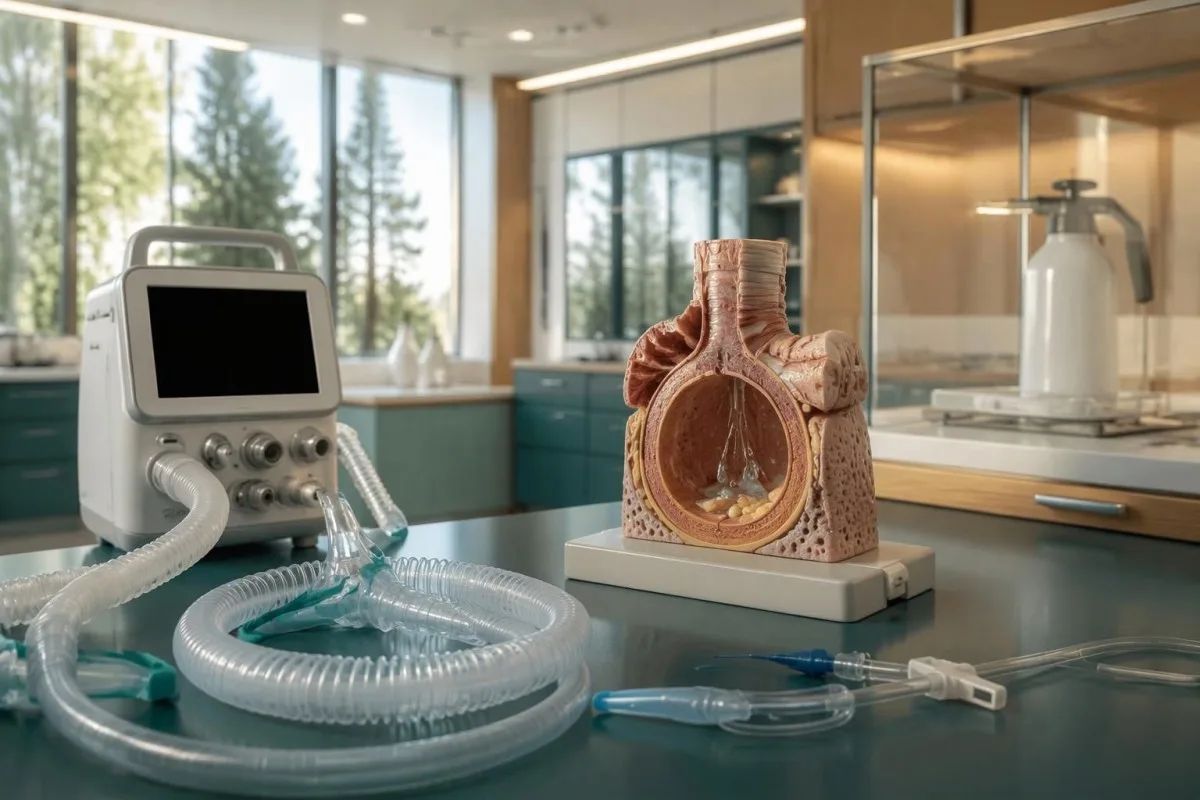
Atropine is titrated to clinical response, not a predetermined total dose. The 2008 Lancet review describes reassessment and dose doubling at intervals of about 3–5 minutes when required; improving chest secretions, oxygenation, and circulation matter more than forcing the pupils to dilate or the pulse to reach a particular number.
Ventilation may be needed even after secretions improve because atropine does not reliably reverse skeletal-muscle weakness. An arterial PaCO2 above 45 mmHg can indicate hypoventilation, although baseline lung disease and acid–base status matter; our valtimoverikaasuanalyysin selityksemme separates ventilation from oxygen saturation.
Pralidoxime evidence is genuinely mixed and depends on the compound and clinical circumstances. Eddleston et al. (2009) conducted a randomized PLoS Medicine trial that did not establish improved survival with the studied regimen; this does not mean every oxime regimen is useless, but it explains why 1 universal treatment promise would be inaccurate.
Seizures may require benzodiazepines, and ongoing monitoring looks for aspiration, arrhythmias, and impaired perfusion. A lactate above 2 mmol/L can have several explanations and is not an organophosphate-specific marker; our lactate sampling guide explains why collection conditions also affect that complication-focused result.
Miksi heikkous voi palata 24–96 tuntia myrkytyksen jälkeen?
Intermediate syndrome can cause neck, proximal limb, and respiratory muscle weakness roughly 24–96 hours after acute organophosphate poisoning. Certain organophosphates can also cause delayed neuropathy about 1–3 weeks later; these complications have different mechanisms and are not simply repeated diarrhea or sweating.

Improving saliva and chest secretions do not guarantee recovery of muscle function. A hypothetical patient who becomes unable to lift their head 48 hours after initial improvement needs immediate reassessment; intermediate syndrome can threaten breathing when the earlier muscarinic signs have largely settled (Peter et al., 2014).
Repeated bedside respiratory and strength assessments may be more informative than 1 reassuring plasma enzyme result. Neck flexion, shoulder and hip strength, cough effectiveness, swallowing, and respiratory measurements help clinicians detect evolving weakness; the treating team determines the assessment frequency according to severity and the specific pesticide.
Delayed neuropathy generally appears later than intermediate syndrome. New foot weakness, altered walking, tingling, or distal weakness over 1–3 weeks warrants medical evaluation; some compounds affect neuropathy target esterase pathways, which are not measured by either routine red-cell acetylcholinesterase or plasma butyrylcholinesterase activity.
Weakness after an exposure still deserves a broad differential diagnosis. Our kiireellistä huomiota vaativat heikkouden varoitusmerkit discuss another condition that can affect breathing; a new inability to walk, swallow, or breathe normally should trigger emergency care rather than waiting 24 hours for an outpatient repeat test.
Voivatko muut torjunta-aineet aiheuttaa samankaltaisia oireita?
Yes—carbamate pesticides can produce a similar cholinergic syndrome, while pyrethroids, solvents, and other chemicals cause different or overlapping symptoms. The active ingredient matters more than the word pesticide; 2 products used for the same pest can require different diagnostic and treatment approaches.

Carbamates also inhibit cholinesterase, but inhibition is generally more readily reversible. Their laboratory activity can recover more quickly, including during sample handling, so 1 near-normal result may not reflect the earlier clinical state; atropine may still be needed, while oxime decisions require product-specific toxicology advice.
Pyrethroid exposure can cause skin tingling, irritation, nausea, or neurological symptoms, particularly after substantial exposure. Those effects do not reliably produce the same enzyme suppression pattern as organophosphates; a hypothetical person with facial tingling but no excess secretions still needs product-based advice rather than assuming 2 symptom categories identify the chemical.
Some exposures impair oxygen carriage rather than inhibit cholinesterase. Selected pesticides or associated chemicals can cause methemoglobinemia, for which co-oximetry is relevant; our methemoglobin result guide explains why a pulse oximeter may remain near 85% despite a different underlying oxygen problem.
Alternative diagnoses include asthma, heat illness, hypoglycemia, opioid effects, and gastrointestinal infection. Exposure plus 3 cholinergic features is more suggestive than vomiting alone, but none of these combinations is a validated home diagnostic score; clinicians use the label, examination, and targeted testing to distinguish overlapping emergencies.
Millä seurantatutkimuksilla ja työpaikan varotoimilla on merkitystä?
Follow-up depends on symptoms, the pesticide involved, and how far enzyme activity has fallen from a personal baseline. Red-cell activity may remain depressed for weeks to months, so a single abnormal follow-up value does not by itself mean active poisoning or establish fitness to return to exposure.
Occupational monitoring thresholds are preventive rules, not emergency diagnosis cutoffs. Local programs may use different percentage declines for medical evaluation, removal from exposure, and return to work; a 25% decline in a hypothetical report must be interpreted under the applicable protocol, with occupational health input rather than a universal online rule.
Return-to-work decisions require more than a laboratory increase. Symptoms, strength, respiratory function, product handling, protective equipment, and the cause of the original leak all matter; 2 improving measurements do not make an unchanged exposure source safe, and contaminated gloves or clothing should be handled according to pesticide-specific guidance.
Meaningful trends require comparable methods and documented timing. Meidän verikokeiden aikajanan opas explains why illness, treatment, and laboratory changes can create apparent trends; for cholinesterase monitoring, record the dates of exposure, collection, and antidotes alongside both enzyme names and units.
At Kantesti, we encourage readers to keep emergency records and baseline results available for clinician-led follow-up, not to use an AI interpretation as occupational clearance. Remove unnecessary identifiers before sharing reports and review our yksityisyyttä ja tietoja koskevat ohjeet; 1 shared document should contain only information needed for its intended purpose.
Tutkimuslähteet ja turvalliset tekoälyn selitykset päivystyshoidon jälkeen
The organophosphate evidence cited here concerns clinical assessment, cholinesterase interpretation, delayed weakness, and antidote treatment—not AI-based emergency diagnosis. The 3 external medical publications listed below support those discussions; our 2 companion DOI resources address other laboratory topics and are not evidence for pesticide treatment.
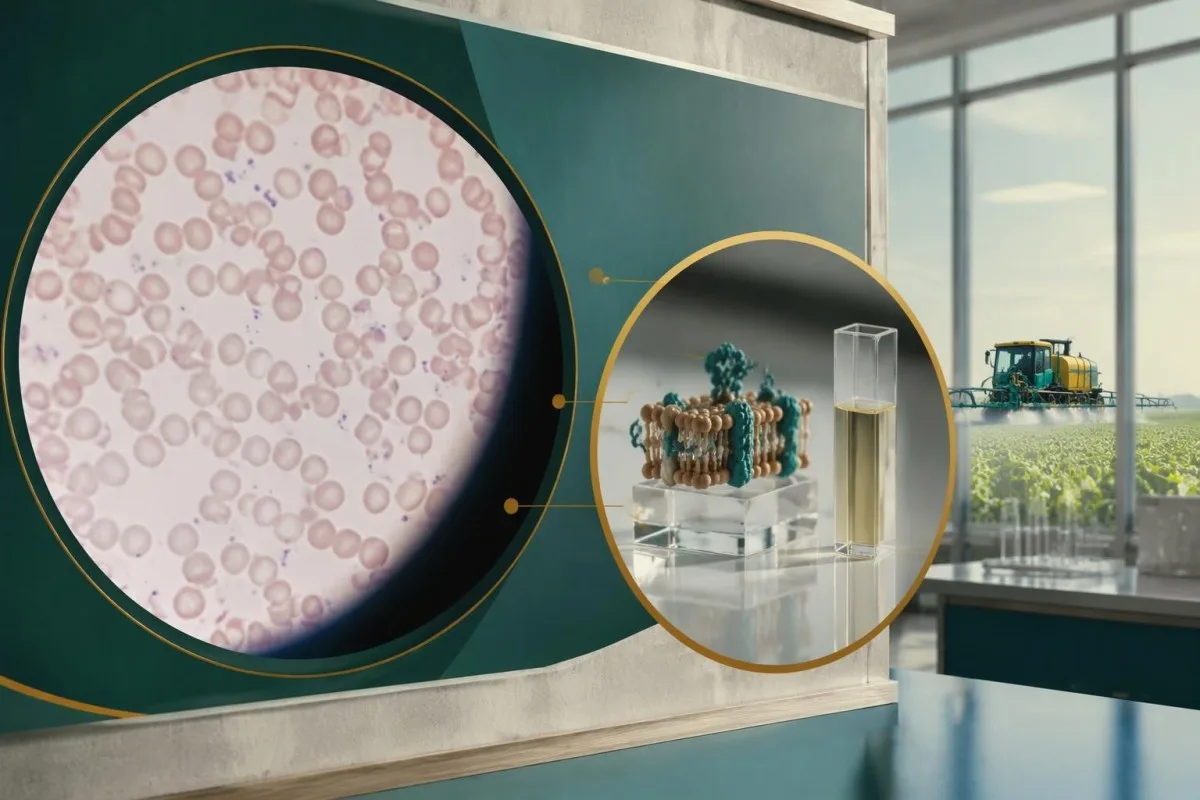
Clinical reviews and trials answer different questions. Eddleston et al. (2008) describe acute management, Peter et al. (2014) review clinical patterns and delayed syndromes, and Eddleston et al. (2009) test 1 pralidoxime regimen; none supplies a universal cholinesterase number that safely overrides an emergency examination.
Kantesti on AI-laboratoriotestien tulkintapalvelu that can help translate laboratory terminology after emergency assessment, but it cannot observe breathing or measure muscle strength. Our kliinistä menetelmää koskevat tiedot should be read alongside that limitation; 2 enzyme values alone cannot establish that home observation is safe.
Iron studies answer a different biochemical question from cholinesterase testing. Meidän iron panel explanation accompanies the first DOI resource below; iron concentration, transferrin saturation, and binding capacity are 3 related measurements, but none measures acetylcholinesterase inhibition or identifies the active ingredient in a pesticide.
Kantesti's second companion DOI publication concerns clotting tests, not poisoning confirmation. The clotting test guide discusses aPTT, D-dimer, and protein C—3 distinct tests that may be relevant to other clinical problems; their inclusion in our publication library must not be mistaken for direct organophosphate research.
Usein kysytyt kysymykset
Mitkä ovat organofosfaattimyrkytyksen ensimmäiset oireet?
Organofosfaattimyrkytyksen varhaisia oireita voivat olla runsas hikoilu, syljeneritys, kyynelvuoto, pahoinvointi, oksentelu, ripuli, pienet mustuaiset ja lihasnykäykset. Oireet alkavat usein minuuteista tunteihin, mutta ihon kautta imeytyminen ja tietyt yhdisteet voivat viivästyttää oireiden ilmaantumista yli 24 tuntia. Altistuksen, eritteiden ja heikkouden yhdistelmä on huolestuttavampi kuin mikään yksittäinen oire. Epäilty myrkytys vaatii kiireellisen arvion odottamatta entsyymitestejä.
Milloin minun pitäisi soittaa hätänumeroon torjunta-aineelle altistumisen jälkeen?
Soita hätänumeroon torjunta-aineelle altistumisen jälkeen, jos hengitysvaikeudet, runsas limaneritys, heikkous, lihasnykäykset, sekavuus, kouristukset tai toistuva oksentelu viittaavat myrkytykseen. Merkittävä määrä ainetta nieltynä edellyttää myös kiireellistä neuvontaa jo ennen oireiden ilmaantumista. Soita Isossa-Britanniassa numeroon 999 tai 112, Yhdysvalloissa numeroon 911 tai muualla paikalliseen hätänumeroon. Normaali happisaturaatio, myös 97 prosentin lukema, ei sulje pois kehittyvää organofosfaattimyrkytystä.
Mitkä verikokeet auttavat diagnosoimaan organofosfaattimyrkytyksen?
Punasolujen asetyylikoliiniesteraasi ja plasman butyryylikoliiniesteraasi ovat kaksi tärkeintä entsyymiaktiivisuustestiä, joita käytetään fosforiorgaanisten yhdisteiden aiheuttaman myrkytyksen diagnoosin tukena. Punasolujen entsyymiaktiivisuus kuvastaa hermoston kannalta olennaista entsyymin estymistä tarkemmin, kun taas plasman entsyymiaktiivisuuden alenemaan on useita muitakin kuin myrkytykseen liittyviä syitä. Kumpikaan testi ei vastaa tavanomaista CBC:tä tai tavanomaista huumeseulaa virtsasta. Lääkärit aloittavat tarvittavan kiireellisen hoidon ennen kuin kummankaan testin tulos valmistuu.
Voiko normaali koliiniesteraasiarvo sulkea myrkytyksen pois?
A single normal cholinesterase result cannot reliably exclude poisoning when the exposure and examination are concerning. Timing, assay limitations, treatment, and the specific inhibitor can complicate interpretation of either of the 2 enzyme tests. A result within the population interval can also conceal a fall from a person's usual activity. Clinicians may repeat targeted testing while continuing treatment and investigating alternative diagnoses.
Tarkoittaako matala plasman koliiniesteraasipitoisuus aina torjunta-ainemyrkytystä?
Plasman koliiniesteraasin matala pitoisuus ei aina merkitse torjunta-ainemyrkytystä, sillä maksan toimintahäiriö, perinnölliset variantit, raskaus, vajaaravitsemus ja jotkin lääkkeet voivat vähentää aktiivisuutta. Henkilökohtaiset lähtötason mittaukset ovat erityisen hyödyllisiä erotettaessa pitkään jatkunut matala arvo uudesta laskusta. Kuvitteellinen lasku arvosta 8 000 arvoon 3 200 U/L vastaa 60%:n vähennystä, mutta prosenttiluku ei yksin määritä kliinisen tilan vaikeusastetta. Oireet ja altistumishistoria ovat edelleen keskeisiä tulkinnassa.
Voiko organofosfaattimyrkytys aiheuttaa viivästynyttä heikkoutta?
Organofosfaattimyrkytys voi aiheuttaa välioireyhtymän, johon liittyy niskan, raajojen ja hengityslihasten heikkoutta noin 24–96 tuntia akuutin vaiheen jälkeen. Tietyt yhdisteet voivat aiheuttaa myös viivästyneen neuropatian noin 1–3 viikon kuluttua. Näitä komplikaatioita voi ilmetä sen jälkeen, kun alkuvaiheen hikoilu ja eritteiden muodostuminen ovat jo vähentyneet. Uusi hengitysvaikeus, nielemisvaikeudet tai huomattava heikkous edellyttävät kiireellistä uutta lääketieteellistä arviota sen sijaan, että odotettaisiin uusintalaboratoriotulosta.
Saat verikoetulokset selitettyinä
Lataa laboratoriolausuntosi, niin Kantesti:n tekoäly selittää jokaisen biomarkkerin selkokielellä sekunneissa. Yli 2 miljoonaa käyttäjää maailmanlaajuisesti.
Viitteet
- Klein, T., Mitchell, S. & Weber, H. (2026). Rauta-arvojen opas: TIBC, raudan saturaatio ja raudansitomiskyky. Kantesti AI Medical Research. DOI-koodi
- Klein, T., Mitchell, S. & Weber, H. (2026). aPTT:n viitearvot: D-dimeeri ja proteiini C – opas veren hyytymiseen. Kantesti AI Medical Research. DOI-koodi
- Eddleston M et al. (2008). Management of acute organophosphorus pesticide poisoning. The Lancet. DOI-koodi
- Peter JV et al. (2014). Clinical features of organophosphate poisoning: A review of different classification systems and approaches. Indian Journal of Critical Care Medicine. DOI-koodi
- Eddleston M et al. (2009). Pralidoxime in acute organophosphorus insecticide poisoning—A randomised controlled trial. PLoS Medicine. DOI-koodi
- 2 kk+Analysoidut testit
- 127+Maat
- 100+Kielet
Tietoa lääketieteellisestä tiimistä


E-E-A-T-luottamussignaalit
Kokea
Lääkärin johtama kliininen arviointi laboratoriotulkinnan työnkuluista.
Asiantuntemus
Laboratoriolääketiede keskittyy siihen, miten biomarkkerit käyttäytyvät kliinisessä kontekstissa.
Auktoriteetti
Lääketieteellisen tarkastuksen on tehnyt tohtori Thomas Klein, ja siihen ovat osallistuneet tohtori Sarah Mitchell ja professori Hans Weber.
Luotettavuus
Näyttöön perustuva tulkinta selkeillä jatkopoluilla, jotka vähentävät hälytystä.






Lääketieteellinen vastuuvapauslauseke
Tämä artikkeli on tarkoitettu vain koulutustarkoituksiin eikä se muodosta lääketieteellistä neuvontaa. Ota aina yhteyttä pätevään terveydenhuollon ammattilaiseen diagnoosi- ja hoitopäätöksiä varten.
Julkaistu · Ota yhteyttä toimitukseen
Julkaisija: Kantesti Ltd, rekisteröity Englannissa ja Walesissa, yrityksen nro. 17090423, Lontoo, Yhdistynyt kuningaskunta.
