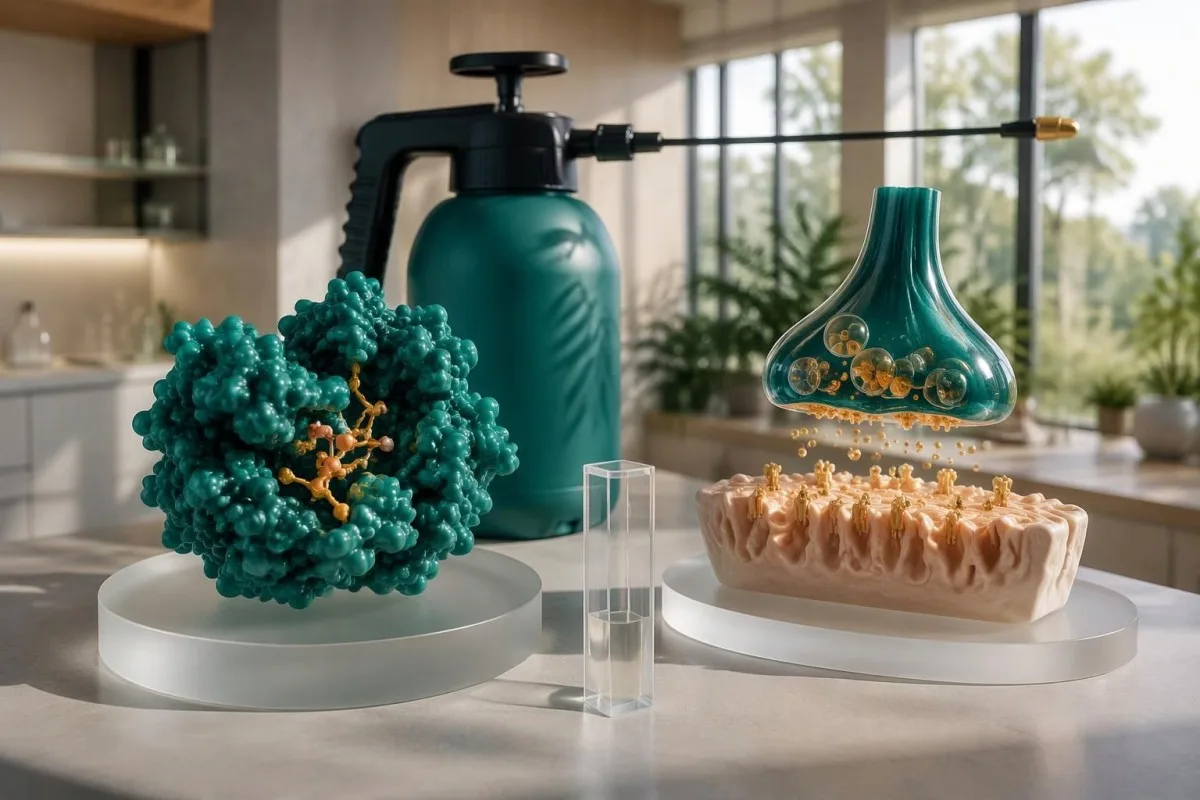
Pagkatapos malantad sa pestisidyo, maaaring palatandaan ng pagkalason ang labis na laway, pagpapawis, pagsusuka, napakaliit na balintataw, pangingisay ng kalamnan, panghihina, o hirap sa paghinga. Nangangailangan ng emerhensiyang pangangalaga ang pinaghihinalaang pagkalason sa organophosphate—huwag hintayin ang mga resulta ng cholinesterase.

Mahahalagang punto
- Aksyon sa emerhensiya: Tumawag sa 999 o 112 sa UK, 911 sa US, o sa lokal mong emergency number kung pinaghihinalaan ang pagkalason na may mga sintomas.
- Panganib sa paghinga: Maaaring pahinain ng mga organophosphate ang paghinga sa pamamagitan ng 3 mekanismo—mga sekresyon sa daanan ng hangin, pagsikip ng daanan ng hangin, at panghihina ng mga kalamnan sa paghinga.
- Mga maagang sintomas: Mas nakababahala ang pagpapawis, laway, luha, pagsusuka, pagtatae, maliliit na balintataw, at pangingisay kapag sabay-sabay na lumilitaw ang ilan sa mga ito pagkatapos malantad.
- Oras ng pagkakalantad: Madalas magsimula ang mga sintomas sa loob ng ilang minuto hanggang oras, ngunit maaaring magdulot ng pagkaantalang pagkakasakit ang pagsipsip sa pamamagitan ng kontaminadong damit o balat.
- Dalawang pagsusuri sa enzyme: Nakakatulong sa pagsusuri ang red-cell acetylcholinesterase at plasma butyrylcholinesterase; hindi mapapalitan ng alinman sa mga ito ang agarang klinikal na pagtatasa.
- Personal na baseline: Ang isang ipinagpapalagay na pagbaba mula 8,000 tungong 3,200 U/L ay kumakatawan sa 60% na pagbawas, hindi sa isang kategorya ng kalubhaan na pangkalahatang itinakda.
- Pag-dekontamina sa mata: Banlawan ang mga matang nalantad sa malinis at maligamgam na tubig sa loob ng 15–20 minuto habang inaayos ang paghingi ng agarang tulong.
- Naantalang panghihina: Maaaring magkaroon ng intermediate syndrome mga 24–96 oras pagkatapos ng matinding pagkalason; maaaring magdulot ang ilang compound ng naantalang neuropathy makalipas ang humigit-kumulang 1–3 linggo.
Kailan nangangailangan ng agarang tulong ang mga sintomas pagkatapos malantad sa pestisidyo?
Nangangailangan ng agarang pagsusuri ang mga sintomas ng pagkalason sa organophosphate kapag sinundan ang pagkakalantad sa pestisidyo ng hirap sa paghinga, labis na mga sekresyon, pangingisay ng kalamnan, panghihina, pagkalito, o paulit-ulit na pagsusuka. Tumawag sa 999 o 112 sa UK, 911 sa US, o sa lokal na numerong pang-emergency; huwag hintayin ang kumpirmasyon mula sa laboratoryo.
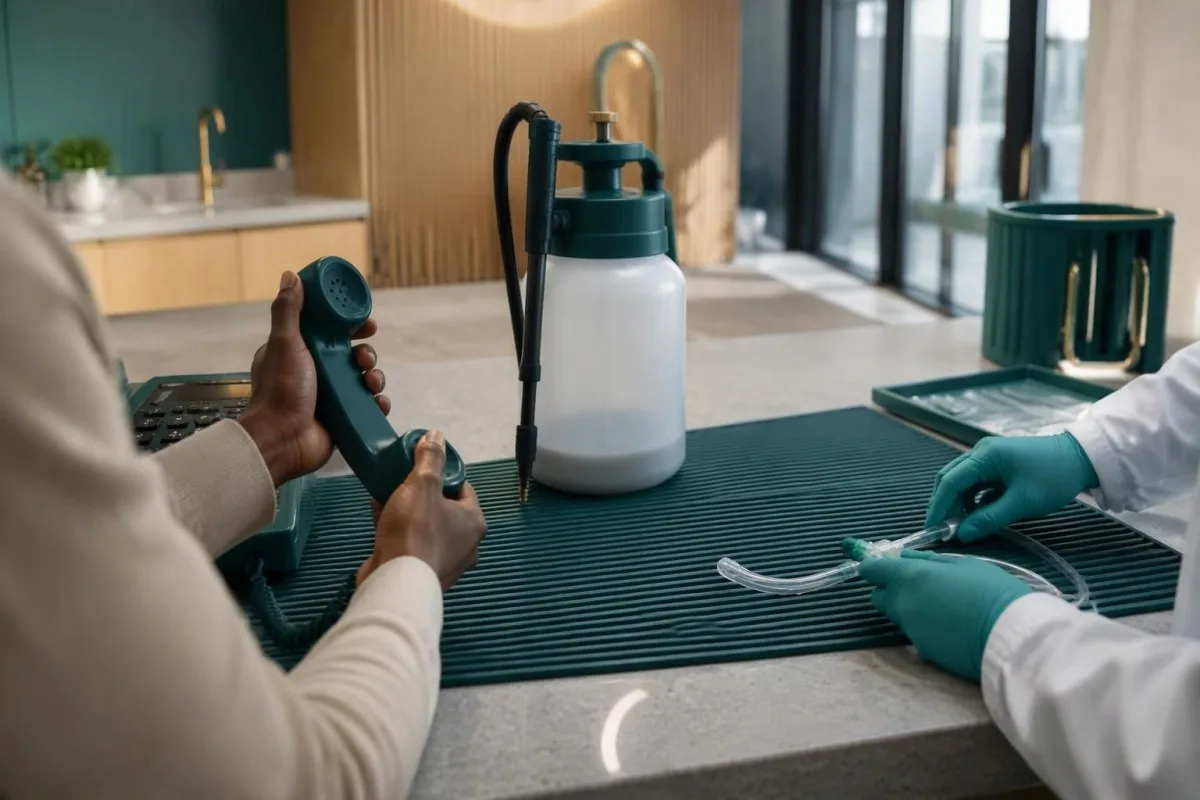
Nangangailangan ng agarang payo ang malaking dami ng nakain kahit hindi pa lumilitaw ang mga sintomas. Nagdudulot ng kawalang-katiyakan na hindi ligtas malutas sa bahay ang produktong mataas ang konsentrasyon, hindi tiyak na dami, o sinadyang pag-inom; sabihin sa dispatcher ang pangalan ng produkto, paraan ng pagkakalantad, tinatayang dami, at oras, nang hindi inaantala ang pagtawag para tipunin ang lahat ng 4 na detalye.
Ang mapanganib na kombinasyon ay basang mga daanan ng hangin at panghihina, hindi lamang maliit na balintataw o pananakit ng tiyan. Maaaring makapinsala ang mga organophosphate sa paghinga sa pamamagitan ng 3 magkakahiwalay na mekanismo—mga sekresyon, bronchospasm, at paghina ng mga kalamnan—kaya maaaring lumala ang kalagayan ng isang tao kahit mukhang alerto siya at nakapagsasalita sa simula.
Hindi inaalis ng normal na sukat ng oxygen ang posibilidad ng unti-unting paglala ng pagkalason. Halimbawa, kailangan pa rin ng agarang pagsusuri ang isang manggagawang ipinagpapalagay na may oxygen saturation na 97%, bagong pangingisay ng kalamnan, at di-pangkaraniwang dami ng laway matapos tumagas ang spray; hindi nasusukat ng oxygen saturation ang lakas ng mga kalamnan sa paghinga o nahuhulaan ang patuloy na pagsipsip ng pestisidyo.
Si Kantesti ay isang AI blood test analyzer para sa pagpapaliwanag ng mga ulat ng laboratoryo pagkatapos ng klinikal na pangangalaga, hindi isang serbisyong pang-emergency para sa pagkalason. Ang aming impormasyon ng kumpanya ay naglalarawan sa organisasyong nasa likod ng tool; hindi kailanman dapat magpaantala sa pagtawag para sa emerhensiya ang pagpapaliwanag sa ulat na tumatagal nang mga 60 segundo.
Aling mga sintomas ng pagkalason sa organophosphate ang pinakanatatangi?
Karaniwang nagdudulot ng cholinergic na padron ang pagkalason sa organophosphate: labis na laway, luha, pagpapawis, pagsusuka, pagtatae, maliliit na balintataw, mga sekresyon sa daanan ng hangin, pangingisay ng kalamnan, at panghihina. Sinusuri ng mga clinician ang 3 magkakapatong na pangkat—mga epektong muscarinic, nicotinic, at sa central nervous system—sa halip na asahang lilitaw ang lahat ng sintomas.

Nagiging labis ang mga sekresyong karaniwang kontrolado dahil sa mga epektong muscarinic. Hindi tiyak na palatandaan ang sipon lamang, ngunit lubhang nagpapataas ng pag-aalala ang sabay-sabay na paglitaw ng luha, laway, pagpapawis, pagtatae, at basang tunog sa dibdib sa loob ng 1 insidente ng pagkakalantad; hindi dapat awtomatikong ipalagay na karaniwang sintomas ng hika.
ang sanhi ng paghingal matapos madikit sa pestisidyo. Kabilang sa mga epektong nicotinic ang mga kalamnan ng kalansay at mga autonomic ganglia. Maaaring magpahiwatig ng paglahok ng mga ugat at kalamnan ang maliliit na pagkibot sa ilalim ng damit, panghihina ng kamay, o hirap panatilihing tuwid ang ulo; maaaring mabilis sa halip na mabagal ang tibok ng puso, kaya hindi inaalis ng 1 tila nakapagpapapanatag na sukat ng pulso ang posibilidad ng pagkalason.
Central effects include agitation, confusion, seizures, and reduced consciousness. The review by Peter et al. (2014) explains why symptom classifications overlap and why clinical severity cannot be reduced to a single mnemonic; 3 symptom groups may develop at different speeds in the same exposure.
Pinpoint pupils are helpful but not mandatory. Direct eye exposure can produce especially small pupils or blurred vision without reflecting the severity elsewhere, while lighting, other medicines, and prior atropine can alter pupil size; 2 equally small pupils do not establish the diagnosis by themselves.
Gaano kabilis maaaring magsimula ang mga sintomas ng pagkalason sa pestisidyo?
Organophosphate symptoms often start within minutes to hours, but their timing depends on the chemical, dose, formulation, and exposure route. Skin absorption can be slower than inhalation or ingestion, and some compounds can cause substantial delayed toxicity beyond the first 24 hours.
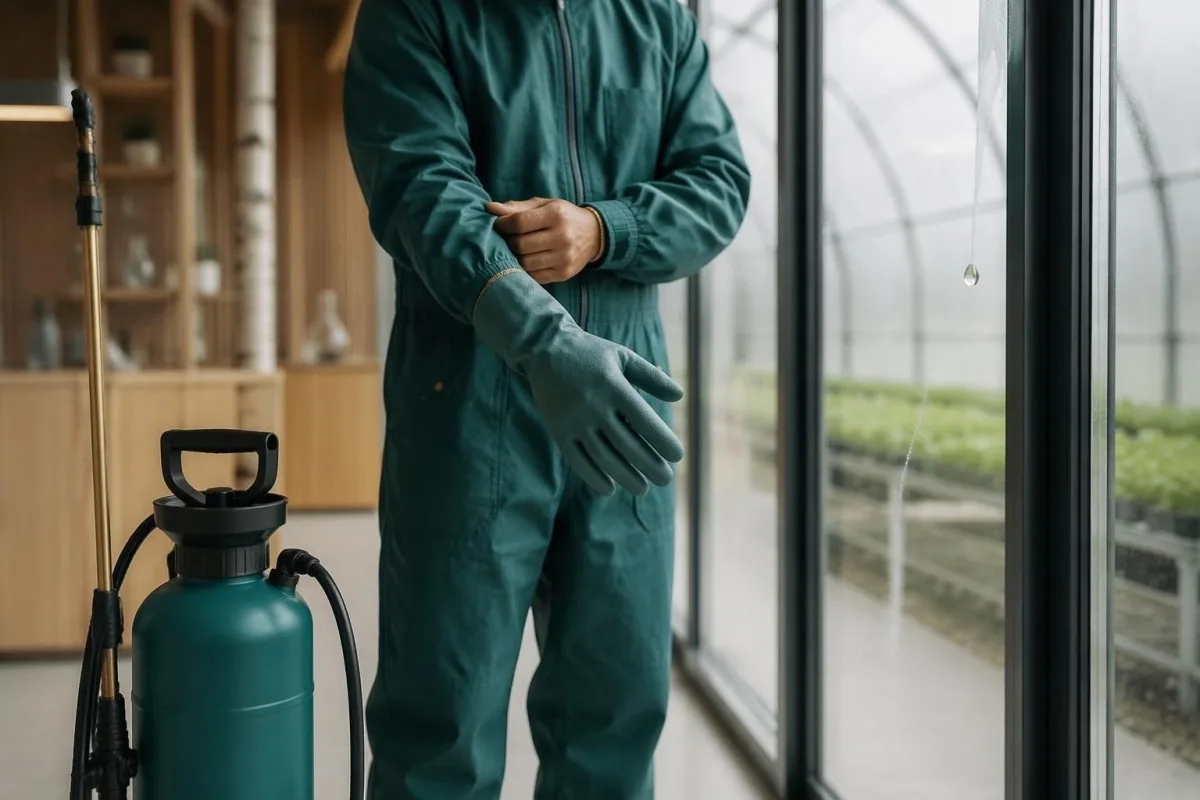
Skin contamination can continue delivering pesticide after spraying stops. A soaked sleeve, leaking glove, or contaminated boot can act as an exposure reservoir for several hours; leaving the work area without removing contaminated clothing may stop inhalation while allowing substantial absorption through another route.
The product formulation matters as much as the active ingredient. A hypothetical 10-minute exposure to diluted spray is not equivalent to 10 minutes handling concentrate, and solvents may add irritation or aspiration risk; a photograph of the original label helps clinicians identify both the pesticide and its formulation.
An initially symptom-free interval is not proof of safety. Some organophosphates require metabolic activation, and lipid-soluble compounds can redistribute over time; emergency teams may recommend observation extending into 24–48 hours or longer, depending on the specific product and clinical course rather than a universal stopwatch.
Exposure history also helps separate poisoning mechanisms. Several people developing headache in an enclosed equipment shed should prompt consideration of engine exhaust as well as pesticide exposure; our carbon monoxide test guide explains why carbon monoxide requires a different laboratory measurement from either of the 2 cholinesterase assays.
Ano ang dapat mong gawin bago dumating ang mga emergency responder?
Move away from the source only if you can do so safely, call emergency services, and prevent further contamination. Do not enter a contaminated space to rescue someone without appropriate protection; exposed eyes should be rinsed with clean lukewarm water for 15–20 minutes.
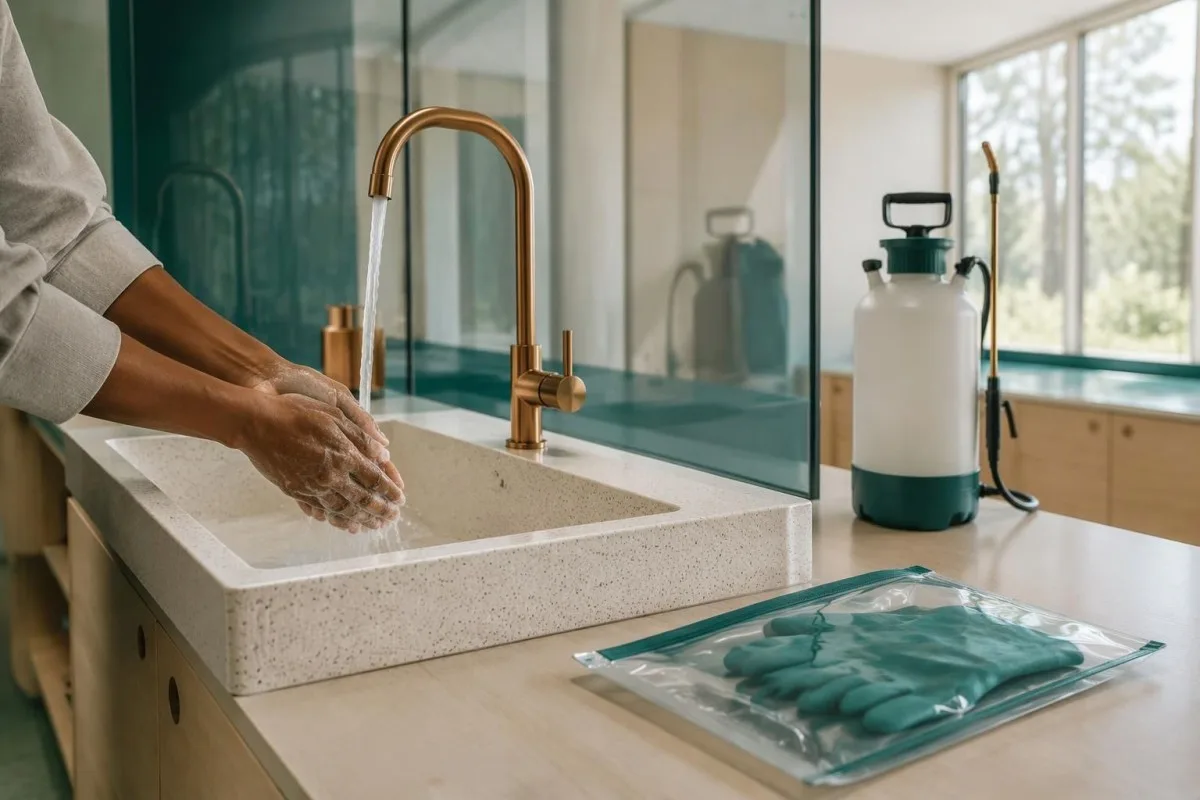
Protecting the helper prevents a second poisoning. Avoid direct contact with contaminated clothing, liquid pesticide, or vomit, and follow dispatcher instructions about suitable protection; ordinary thin examination gloves are not reliably resistant to every pesticide formulation, so no 1 glove type should be assumed universally safe.
If feasible without delaying help, remove contaminated clothing and place it in 2 bags or a securely sealed container away from others. Wash exposed skin with soap and plenty of water, avoid vigorous scrubbing, and do not apply bleach, solvents, or chemical neutralizers; tell responders what washing has already occurred.
Do not induce vomiting or give home remedies, food, drinks, or charcoal unless a poison specialist specifically directs you. If the person becomes unresponsive or stops breathing normally, follow the emergency dispatcher's resuscitation instructions; identify pesticide contamination so the dispatcher can address rescuer safety during those first minutes.
Bring a label photograph rather than an open or leaking container into a car or emergency department. A reading of 98% on a home pulse oximeter is not permission to delay care; our breathing test limitations explain why laboratory and oxygen measurements answer different respiratory questions.
Paano sinusuri sa ospital ang pagkalason sa organophosphate?
Organophosphate poisoning diagnosis is primarily clinical: clinicians combine exposure history, the cholinergic symptom pattern, respiratory assessment, and examination. Red-cell acetylcholinesterase and plasma cholinesterase provide supporting evidence, but treatment cannot depend on either of these 2 tests returning first.
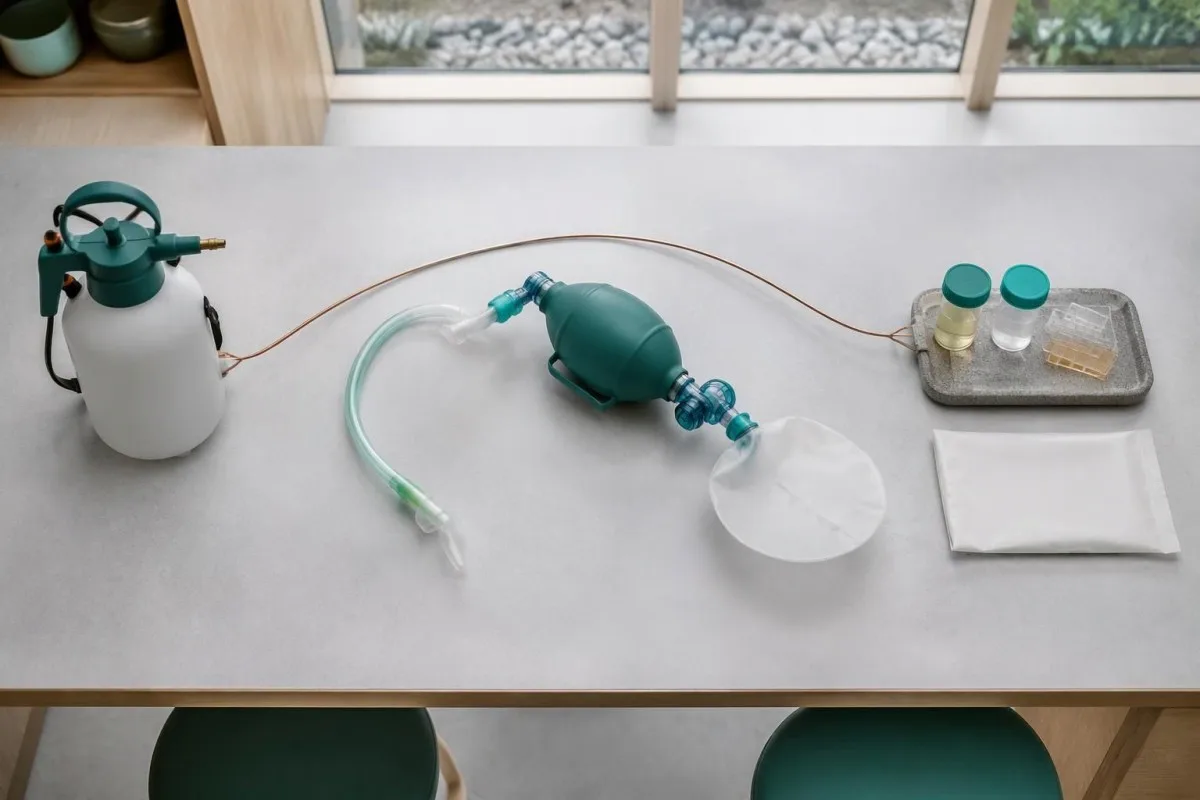
A routine toxicology screen does not reliably detect organophosphate pesticides. Standard urine drug panels usually target selected medicines or recreational substances, not pesticide enzyme inhibition; similarly, heavy metal testing measures a different exposure category and cannot substitute for the 2 relevant cholinesterase assays.
The examination looks beyond pupils and pulse. Clinicians assess airway secretions, breathing effort, chest sounds, strength, mental status, blood pressure, and ECG findings; a patient with a pulse of 110 beats/min can still have cholinergic poisoning because hypoxia, stress, and nicotinic effects may counteract a slower pulse.
Other tests identify complications rather than prove the pesticide identity. Blood gases, electrolytes, glucose, kidney function, and sometimes chest imaging help assess ventilation, dehydration, aspiration, and alternative diagnoses; a glucose below 70 mg/dL, for example, can independently contribute to confusion and also needs prompt correction.
Eddleston et al. (2008), in The Lancet, emphasize early resuscitation and clinical management rather than waiting for biochemical confirmation. We follow the same separation between education and urgent clinical decisions in our mga pamantayan sa nilalamang medikal: 1 explanatory report cannot replace bedside reassessment.
Ano ang sinusukat ng pagsusuri sa red-cell acetylcholinesterase?
Red-cell acetylcholinesterase testing measures the activity of an enzyme on red-cell membranes that resembles acetylcholinesterase at nerve synapses. Reduced activity supports exposure to a cholinesterase inhibitor, but this specialized assay is separate from the red-cell count reported in a routine CBC.

Red-cell acetylcholinesterase generally tracks relevant neural enzyme inhibition better than plasma butyrylcholinesterase does. That relationship is imperfect, however: the pesticide, treatment timing, assay method, and individual biology affect interpretation, so even a result reported at 20% of baseline cannot independently determine an airway treatment plan.
Laboratories may report red-cell activity in U/g hemoglobin, units per packed-cell volume, or other method-specific units. A hypothetical result of 12 U/g hemoglobin cannot be compared directly with another laboratory's result expressed in U/L; those are 2 different denominators, not interchangeable versions of the same number.
AChE activity is not an acetylcholine receptor antibody test. Ang myasthenia blood test guide concerns antibodies associated with a different cause of weakness; ordering an AChR antibody panel would not answer the same question as either of the 2 cholinesterase activity assays.
Red-cell activity can remain depressed after clinical recovery because mature red cells have an approximate lifespan of 120 days, although recovery also depends on reactivation and new-cell production. Kantesti AI can help explain the reported units afterward, but persistent suppression alone does not establish ongoing respiratory danger or justify self-directed treatment.
Bakit maaaring mababa ang plasma cholinesterase kahit walang pagkalason?
Plasma cholinesterase usually means butyrylcholinesterase, also called pseudocholinesterase, a liver-produced enzyme. Its activity may fall after organophosphate exposure, but liver dysfunction, inherited enzyme variants, pregnancy, poor nutrition, and some medicines can also lower it; 1 low value is not a standalone diagnosis.
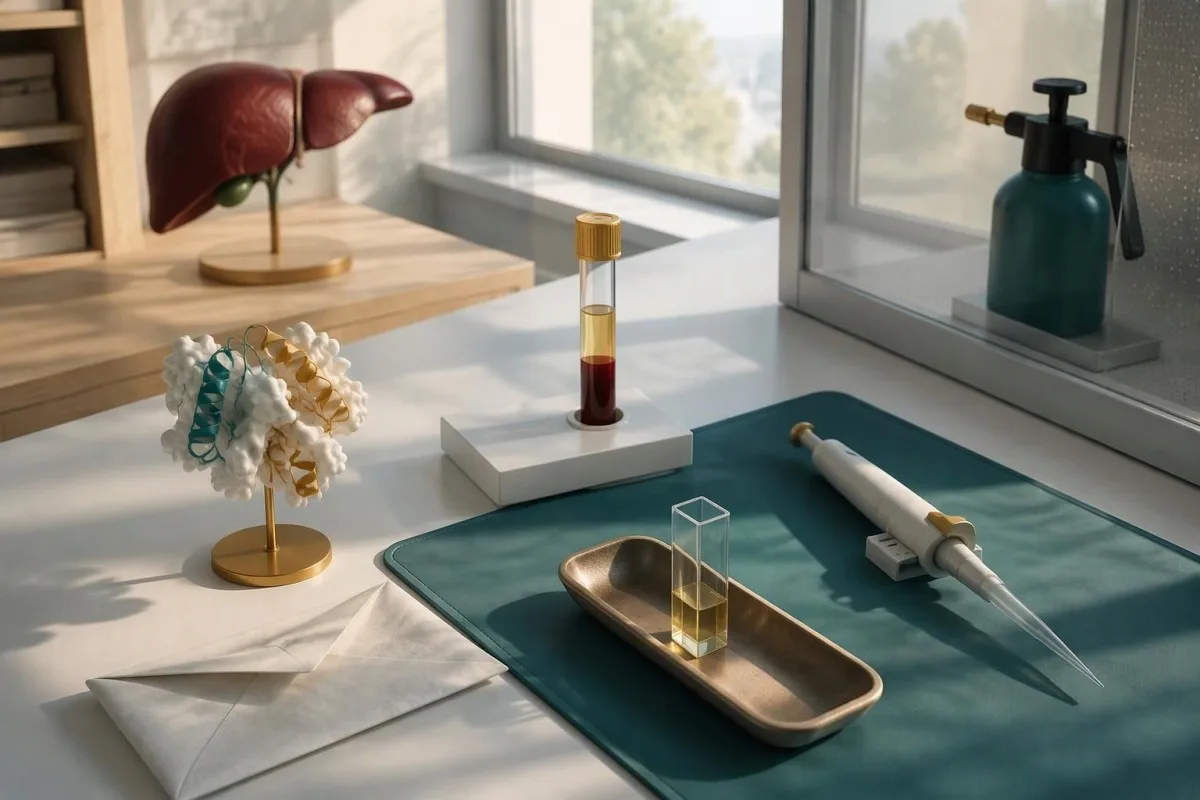
Plasma butyrylcholinesterase is often more accessible than red-cell acetylcholinesterase. The ease of testing makes it useful, but the depth of suppression does not reliably mirror severity for every pesticide; 2 people with the same plasma activity may have very different breathing, strength, and consciousness findings.
A low pre-existing level changes the interpretation of an exposure result. For example, a hypothetical adult with a stable activity near 3,000 U/L before and after an incident needs a different explanation from someone whose activity falls from 8,000 to 3,000 U/L; the history distinguishes persistent low production from a new decline.
Inherited butyrylcholinesterase deficiency has implications for anesthesia, not just pesticide interpretation. Ang dibucaine number explanation describes a test of enzyme inhibition characteristics rather than simply activity; low activity can prolong the action of certain anesthetic muscle relaxants, including succinylcholine.
A plasma result should therefore be read with at least 2 contexts: the acute exposure and the person's usual health. Liver tests, albumin, medication history, and any prior anesthesia-related prolonged paralysis may help explain a persistently low result; a clinician should decide which follow-up tests are needed rather than treating every low value as poisoning.
Paano binibigyang-kahulugan ng mga clinician ang mga resulta at baseline ng cholinesterase?
Cholinesterase testing is most informative when the current activity is compared with a reliable personal baseline using the same assay. There is no universal U/L cutoff that confirms or excludes poisoning across both enzyme tests, all laboratories, and all pesticide compounds.

Percentage reduction equals 100 × (baseline minus current activity) ÷ baseline. In a clearly hypothetical plasma example, a fall from 8,000 to 3,200 U/L gives 100 × 4,800 ÷ 8,000 = 60%; that describes biochemical change, not a validated rule saying a person has a particular clinical severity.
A population reference interval can hide a meaningful individual fall. A hypothetical worker whose activity decreases from 8,000 to 6,000 U/L has a 25% decline even if the second value remains inside the laboratory interval; our gabay sa paghahanda para sa baseline test explains why a usable comparison needs consistent methods and circumstances.
Sample timing and handling can change interpretation. If feasible without delaying care, clinicians obtain samples before oxime treatment and record the time of exposure, collection, and antidotes; 3 timestamps can help the laboratory evaluate apparent reactivation or disagreement between assays, while storage requirements must follow that laboratory's instructions.
Si Kantesti ay isang AI blood test interpretation platform that can explain supplied values, units, and reference intervals, but it cannot reconstruct a missing baseline. Our gabay ng teknolohiyang AI provides context for that distinction; 2 enzyme results without exposure timing remain incomplete evidence.
Bakit kailangang simulan ang paggamot bago makumpirma sa pagsusuri ng cholinesterase?
Treatment starts before laboratory confirmation because respiratory failure can develop faster than cholinesterase results return. Clinicians act on the exposure and examination; there is no safe universal waiting period of 1, 6, or 24 hours when symptoms suggest acute poisoning.

Atropine treats dangerous muscarinic effects without needing an enzyme value first. Excess airway fluid and bronchospasm interfere with oxygen movement, while neuromuscular weakness requires separate assessment; waiting for a sample to reach a specialist laboratory can delay treatment of all 3 breathing mechanisms.
Some organophosphate-enzyme complexes undergo aging, a chemical change that makes oxime reactivation ineffective. The timing varies from minutes to many hours or longer depending on the compound, so a blanket 6-hour cutoff is misleading; early specialist input is more useful than assuming every pesticide follows the same biochemical clock.
A normal or borderline result does not automatically overrule a convincing clinical picture. Very early sampling, assay limitations, exposure type, or treatment can complicate interpretation; the clinical team may repeat 1 or both assays while continuing respiratory support and reassessing alternative diagnoses rather than withholding care.
Other poisoning tests also require timing-aware interpretation, but their rules cannot be transferred wholesale to organophosphates. Our gabay sa tiyempo ng toxicity ng salicylate illustrates why 1 concentration can mislead; organophosphate care adds the separate problem that enzyme activity is not a direct pesticide concentration.
Anong mga emerhensiyang paggamot ang ginagamit sa pagkalason sa organophosphate?
Hospital treatment combines airway support, oxygen or ventilation when needed, atropine, and specialist consideration of an oxime such as pralidoxime. An adult atropine starting dose of 1–3 mg intravenously appears in the Eddleston et al. (2008) review; dosing and repeat administration require monitored clinical care.
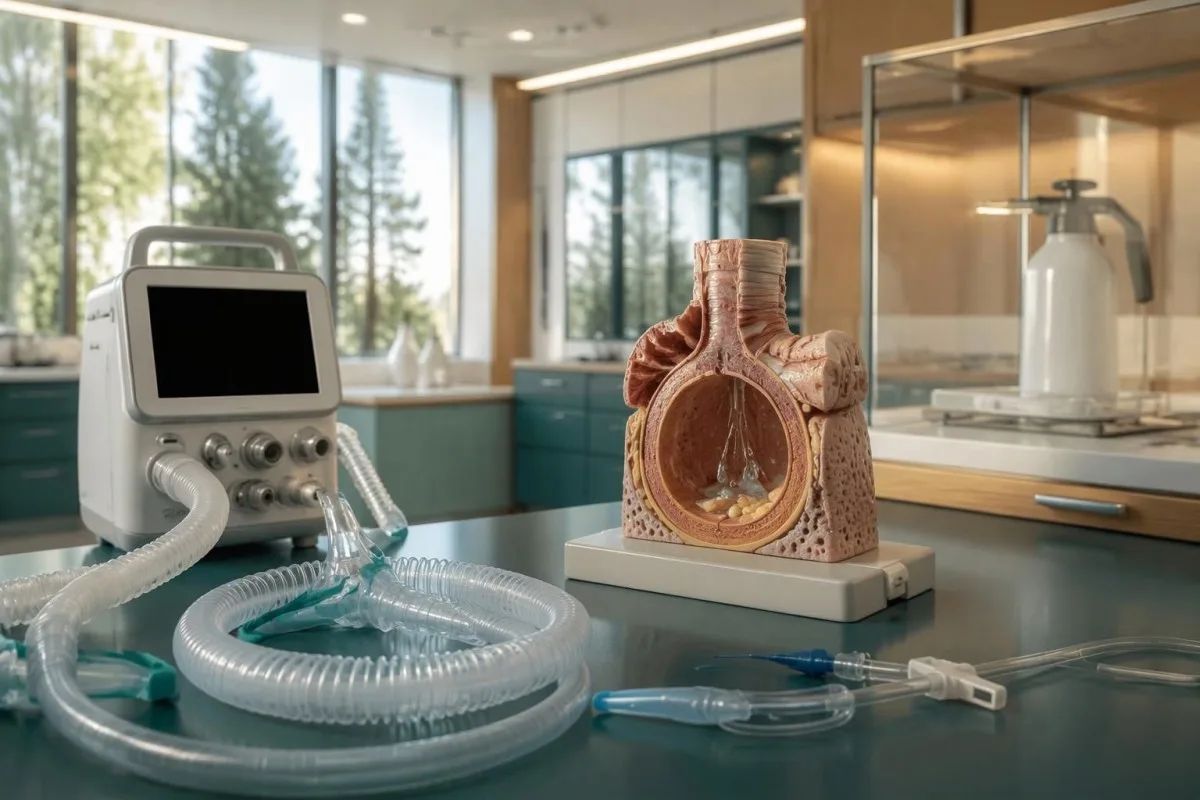
Atropine is titrated to clinical response, not a predetermined total dose. The 2008 Lancet review describes reassessment and dose doubling at intervals of about 3–5 minutes when required; improving chest secretions, oxygenation, and circulation matter more than forcing the pupils to dilate or the pulse to reach a particular number.
Ventilation may be needed even after secretions improve because atropine does not reliably reverse skeletal-muscle weakness. An arterial PaCO2 above 45 mmHg can indicate hypoventilation, although baseline lung disease and acid–base status matter; our paliwanag tungkol sa arterial blood gas separates ventilation from oxygen saturation.
Pralidoxime evidence is genuinely mixed and depends on the compound and clinical circumstances. Eddleston et al. (2009) conducted a randomized PLoS Medicine trial that did not establish improved survival with the studied regimen; this does not mean every oxime regimen is useless, but it explains why 1 universal treatment promise would be inaccurate.
Seizures may require benzodiazepines, and ongoing monitoring looks for aspiration, arrhythmias, and impaired perfusion. A lactate above 2 mmol/L can have several explanations and is not an organophosphate-specific marker; our lactate sampling guide explains why collection conditions also affect that complication-focused result.
Bakit maaaring bumalik ang panghihina 24–96 na oras pagkatapos malason?
Intermediate syndrome can cause neck, proximal limb, and respiratory muscle weakness roughly 24–96 hours after acute organophosphate poisoning. Certain organophosphates can also cause delayed neuropathy about 1–3 weeks later; these complications have different mechanisms and are not simply repeated diarrhea or sweating.

Improving saliva and chest secretions do not guarantee recovery of muscle function. A hypothetical patient who becomes unable to lift their head 48 hours after initial improvement needs immediate reassessment; intermediate syndrome can threaten breathing when the earlier muscarinic signs have largely settled (Peter et al., 2014).
Repeated bedside respiratory and strength assessments may be more informative than 1 reassuring plasma enzyme result. Neck flexion, shoulder and hip strength, cough effectiveness, swallowing, and respiratory measurements help clinicians detect evolving weakness; the treating team determines the assessment frequency according to severity and the specific pesticide.
Delayed neuropathy generally appears later than intermediate syndrome. New foot weakness, altered walking, tingling, or distal weakness over 1–3 weeks warrants medical evaluation; some compounds affect neuropathy target esterase pathways, which are not measured by either routine red-cell acetylcholinesterase or plasma butyrylcholinesterase activity.
Weakness after an exposure still deserves a broad differential diagnosis. Our mga babalang senyales ng agarang panghihina discuss another condition that can affect breathing; a new inability to walk, swallow, or breathe normally should trigger emergency care rather than waiting 24 hours for an outpatient repeat test.
Maaari bang magdulot ng mga katulad na sintomas ang ibang pestisidyo?
Yes—carbamate pesticides can produce a similar cholinergic syndrome, while pyrethroids, solvents, and other chemicals cause different or overlapping symptoms. The active ingredient matters more than the word pesticide; 2 products used for the same pest can require different diagnostic and treatment approaches.
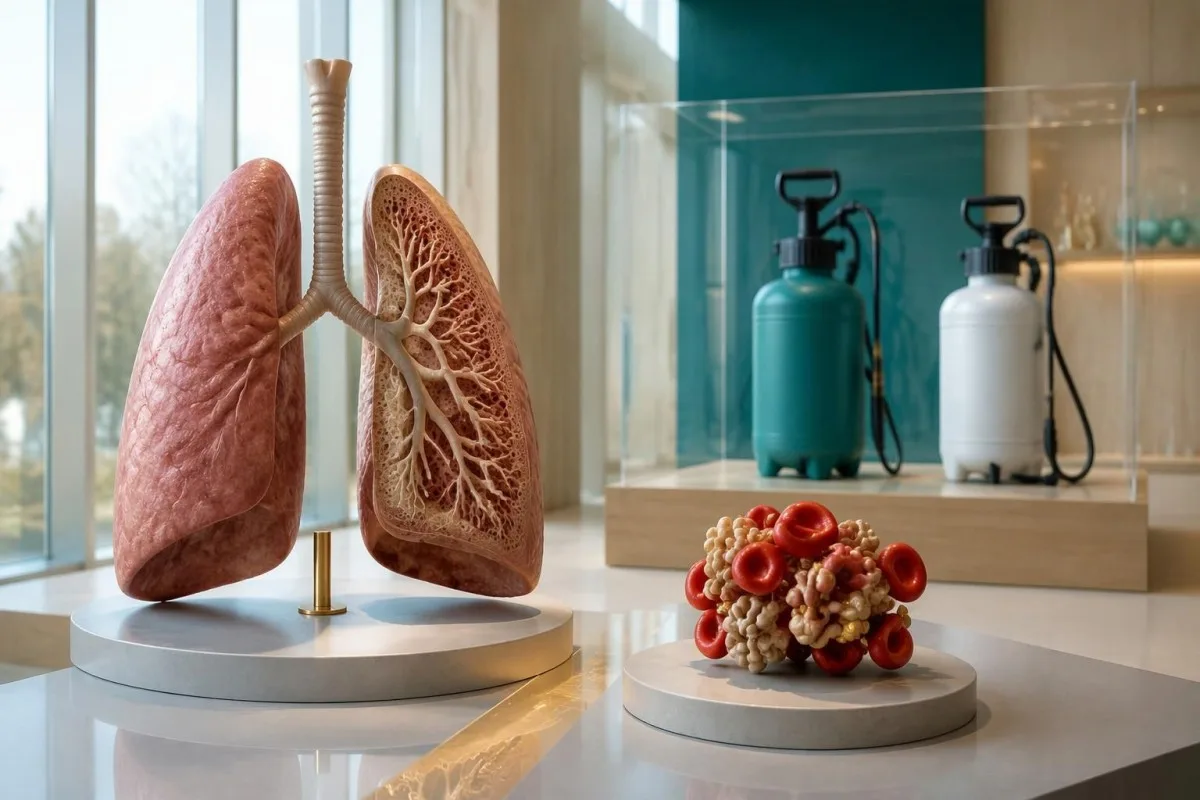
Carbamates also inhibit cholinesterase, but inhibition is generally more readily reversible. Their laboratory activity can recover more quickly, including during sample handling, so 1 near-normal result may not reflect the earlier clinical state; atropine may still be needed, while oxime decisions require product-specific toxicology advice.
Pyrethroid exposure can cause skin tingling, irritation, nausea, or neurological symptoms, particularly after substantial exposure. Those effects do not reliably produce the same enzyme suppression pattern as organophosphates; a hypothetical person with facial tingling but no excess secretions still needs product-based advice rather than assuming 2 symptom categories identify the chemical.
Some exposures impair oxygen carriage rather than inhibit cholinesterase. Selected pesticides or associated chemicals can cause methemoglobinemia, for which co-oximetry is relevant; our methemoglobin result guide explains why a pulse oximeter may remain near 85% despite a different underlying oxygen problem.
Alternative diagnoses include asthma, heat illness, hypoglycemia, opioid effects, and gastrointestinal infection. Exposure plus 3 cholinergic features is more suggestive than vomiting alone, but none of these combinations is a validated home diagnostic score; clinicians use the label, examination, and targeted testing to distinguish overlapping emergencies.
Anong mga follow-up na pagsusuri at pag-iingat sa lugar ng trabaho ang mahalaga?
Follow-up depends on symptoms, the pesticide involved, and how far enzyme activity has fallen from a personal baseline. Red-cell activity may remain depressed for weeks to months, so a single abnormal follow-up value does not by itself mean active poisoning or establish fitness to return to exposure.
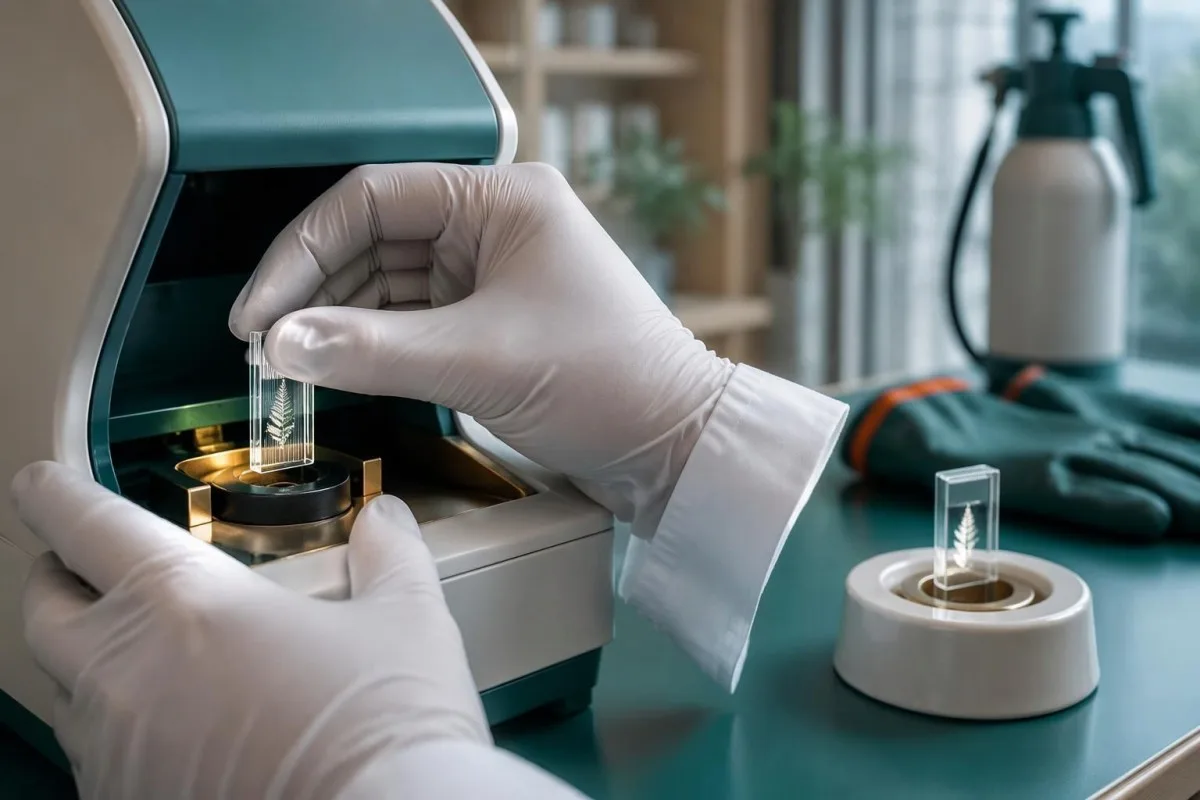
Occupational monitoring thresholds are preventive rules, not emergency diagnosis cutoffs. Local programs may use different percentage declines for medical evaluation, removal from exposure, and return to work; a 25% decline in a hypothetical report must be interpreted under the applicable protocol, with occupational health input rather than a universal online rule.
Return-to-work decisions require more than a laboratory increase. Symptoms, strength, respiratory function, product handling, protective equipment, and the cause of the original leak all matter; 2 improving measurements do not make an unchanged exposure source safe, and contaminated gloves or clothing should be handled according to pesticide-specific guidance.
Meaningful trends require comparable methods and documented timing. Ang aming gabay sa timeline ng blood test explains why illness, treatment, and laboratory changes can create apparent trends; for cholinesterase monitoring, record the dates of exposure, collection, and antidotes alongside both enzyme names and units.
At Kantesti, we encourage readers to keep emergency records and baseline results available for clinician-led follow-up, not to use an AI interpretation as occupational clearance. Remove unnecessary identifiers before sharing reports and review our gabay sa privacy at datos; 1 shared document should contain only information needed for its intended purpose.
Mga mapagkukunan ng pananaliksik at ligtas na mga paliwanag mula sa AI pagkatapos ng emerhensiyang pangangalaga
The organophosphate evidence cited here concerns clinical assessment, cholinesterase interpretation, delayed weakness, and antidote treatment—not AI-based emergency diagnosis. The 3 external medical publications listed below support those discussions; our 2 companion DOI resources address other laboratory topics and are not evidence for pesticide treatment.
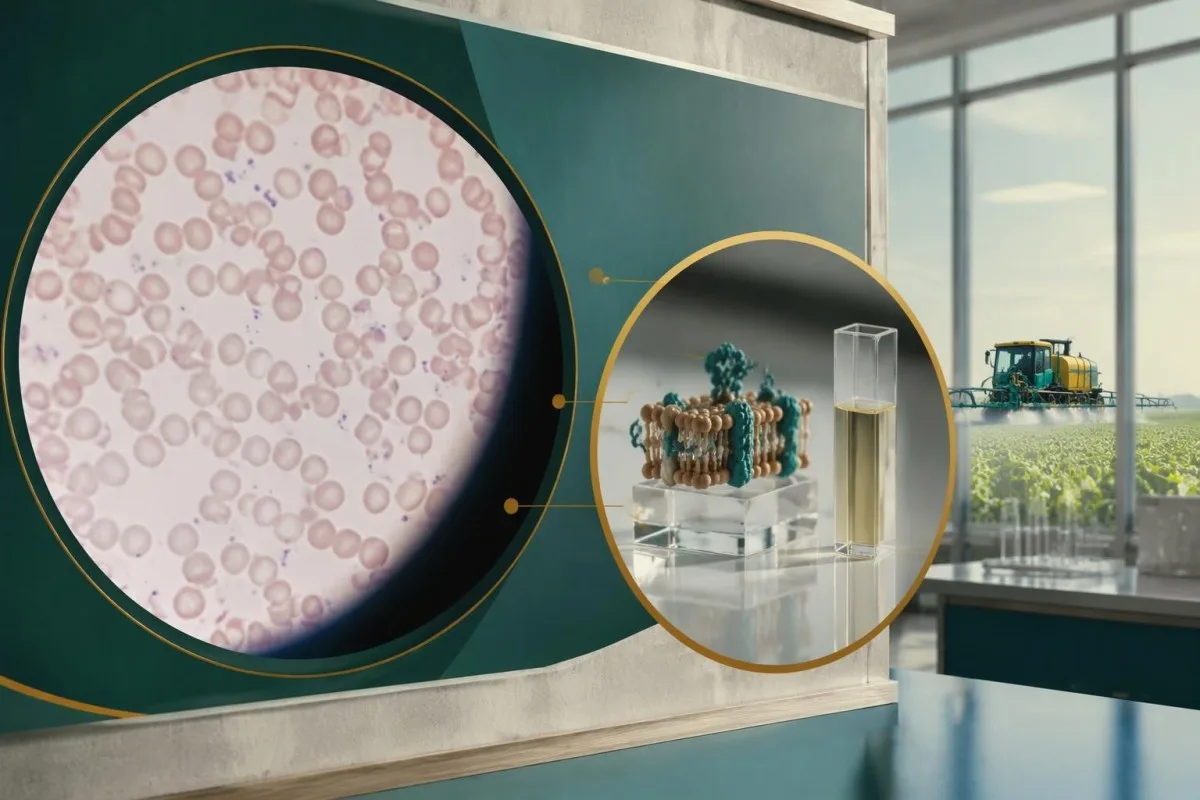
Clinical reviews and trials answer different questions. Eddleston et al. (2008) describe acute management, Peter et al. (2014) review clinical patterns and delayed syndromes, and Eddleston et al. (2009) test 1 pralidoxime regimen; none supplies a universal cholinesterase number that safely overrides an emergency examination.
Si Kantesti ay isang serbisyo ng AI lab test interpretation that can help translate laboratory terminology after emergency assessment, but it cannot observe breathing or measure muscle strength. Our impormasyon tungkol sa klinikal na pamamaraan should be read alongside that limitation; 2 enzyme values alone cannot establish that home observation is safe.
Iron studies answer a different biochemical question from cholinesterase testing. Ang aming iron panel explanation accompanies the first DOI resource below; iron concentration, transferrin saturation, and binding capacity are 3 related measurements, but none measures acetylcholinesterase inhibition or identifies the active ingredient in a pesticide.
Kantesti's second companion DOI publication concerns clotting tests, not poisoning confirmation. The clotting test guide discusses aPTT, D-dimer, and protein C—3 distinct tests that may be relevant to other clinical problems; their inclusion in our publication library must not be mistaken for direct organophosphate research.
Mga Madalas Itanong
Ano ang mga unang sintomas ng pagkalason sa organophosphate?
Maaaring kabilang sa mga maagang sintomas ng pagkalason sa organophosphate ang labis na pagpapawis, paglalaway, pagluha, pagduduwal, pagsusuka, pagtatae, maliliit na balintataw, at pagkibot ng mga kalamnan. Madalas magsimula ang mga sintomas sa loob ng ilang minuto hanggang ilang oras, ngunit maaaring maantala nang mahigit 24 na oras ang pagsisimula ng karamdaman dahil sa pagsipsip sa balat at ilang partikular na compound. Mas nakababahala ang kombinasyon ng pagkakalantad, mga sekresyon, at panghihina kaysa sa alinmang iisang sintomas. Nangangailangan ng agarang pagsusuri sa emergency room ang pinaghihinalaang pagkalason—huwag hintaying makuha ang resulta ng pagsusuri sa enzyme.
Kailan ako dapat tumawag sa mga serbisyong pang-emergency matapos malantad sa pestisidyo?
Tumawag sa mga serbisyong pang-emergency matapos malantad sa pestisidyo kung ang hirap sa paghinga, labis na paglalaway, panghihina, pagkibot ng kalamnan, pagkalito, kombulsyon, o paulit-ulit na pagsusuka ay nagpapahiwatig ng pagkalason. Nangangailangan din ng agarang payo ang malaking dami ng pestisidyong nainom, kahit wala pang mga sintomas. Tumawag sa 999 o 112 sa UK, 911 sa US, o sa lokal na numero para sa emerhensiya sa ibang lugar. Hindi nangangahulugang hindi lumalala ang pagkalason sa organophosphate ang normal na oxygen saturation, kabilang ang sukat na 97%.
Aling mga pagsusuri sa dugo ang nakatutulong sa pag-diagnose ng pagkalason sa organophosphate?
Ang acetylcholinesterase sa mga pulang selula ng dugo at butyrylcholinesterase sa plasma ang 2 pangunahing pagsusuri sa aktibidad ng enzyme na ginagamit upang makatulong sa pag-diagnose ng pagkalason sa organophosphate. Mas tumpak na sumasalamin ang aktibidad sa mga pulang selula ng dugo sa mahalagang pagsugpo sa enzyme sa mga nerbiyos, samantalang may ilang sanhi ng pagbaba ng aktibidad sa plasma na hindi nauugnay sa pagkalason. Hindi katumbas ng alinman sa mga pagsusuring ito ang karaniwang CBC o karaniwang pagsusuri ng droga sa ihi. Sinisimulan ng mga clinician ang kinakailangang emerhensiyang paggamot bago pa lumabas ang resulta ng alinman sa mga pagsusuri.
Maaari bang maalis ang posibilidad ng pagkalason dahil normal ang resulta ng cholinesterase?
A single normal cholinesterase result cannot reliably exclude poisoning when the exposure and examination are concerning. Timing, assay limitations, treatment, and the specific inhibitor can complicate interpretation of either of the 2 enzyme tests. A result within the population interval can also conceal a fall from a person's usual activity. Clinicians may repeat targeted testing while continuing treatment and investigating alternative diagnoses.
Nangangahulugan ba palagi ng pagkalason sa pestisidyo ang mababang cholinesterase sa plasma?
Hindi laging nangangahulugan ng pagkalason sa pestisidyo ang mababang cholinesterase sa plasma, dahil maaaring magpababa ng aktibidad nito ang kapansanan sa atay, mga minanang baryante, pagbubuntis, malnutrisyon, at ilang gamot. Lalong kapaki-pakinabang ang mga personal na sukat ng baseline upang matukoy kung matagal nang mababa ang halaga o kamakailan lamang itong bumaba. Ang isang halimbawang pagbaba mula 8,000 tungong 3,200 U/L ay kumakatawan sa 60% na pagbawas, ngunit hindi sapat ang porsiyentong iyon lamang upang matukoy ang klinikal na kalubhaan. Nananatiling mahalagang batayan sa interpretasyon ang mga sintomas at kasaysayan ng pagkakalantad.
Maaari bang magdulot ng panghihinang lumilitaw nang huli ang pagkalason sa organophosphate?
Maaaring magdulot ang pagkalason sa organophosphate ng intermediate syndrome na may panghihina ng mga kalamnan sa leeg, mga biyas, at paghinga humigit-kumulang 24–96 oras matapos ang talamak na yugto. Maaari ring magdulot ng delayed neuropathy ang ilang compound makalipas ang humigit-kumulang 1–3 linggo. Maaaring mangyari ang mga komplikasyong ito matapos bumuti ang paunang pagpapawis at mga paglalabas ng likido sa katawan. Nangangailangan ng agarang muling pagsusuring medikal ang bagong hirap sa paghinga, problema sa paglunok, o matinding panghihina; huwag hintaying maulit ang pagsusuri sa laboratoryo.
Ipaliwanag sa iyo ang resulta ng blood test
I-upload ang iyong ulat sa laboratoryo at ipapaliwanag ng AI ng Kantesti ang bawat biomarker sa payak na pananalita sa loob ng ilang segundo. Ginagamit ng mahigit 2 milyong tao sa buong mundo.
Mga Sanggunian
- Klein, T., Mitchell, S., & Weber, H. (2026). Gabay sa mga Pagsusuri sa Iron: TIBC, Saturation ng Iron at Kapasidad ng Pagbigkis. Kantesti AI Medical Research. DOI
- Klein, T., Mitchell, S., & Weber, H. (2026). Normal na Saklaw ng aPTT: Gabay sa D-Dimer at Pamumuo ng Dugo ng Protein C. Kantesti AI Medical Research. DOI
- Eddleston M et al. (2008). Management of acute organophosphorus pesticide poisoning. The Lancet. DOI
- Peter JV et al. (2014). Clinical features of organophosphate poisoning: A review of different classification systems and approaches. Indian Journal of Critical Care Medicine. DOI
- Eddleston M et al. (2009). Pralidoxime in acute organophosphorus insecticide poisoning—A randomised controlled trial. PLoS Medicine. DOI
- 2M+Mga sinuring pagsusuri
- 127+Mga bansa
- 100+Mga wika
Tungkol sa pangkat medikal


Mga Signal ng Tiwala ng E-E-A-T
Karanasan
Pinamumunuan ng manggagamot na klinikal na pagsusuri ng mga daloy ng interpretasyon ng mga pagsusuri sa laboratoryo.
Kadalubhasaan
Pokus sa laboratoryong medisina kung paano kumikilos ang mga biomarker sa kontekstong klinikal.
Pagka-awtoridad
Sinuri sa medikal na aspeto ni Dr. Thomas Klein, kasama ang mga kontribusyon nina Dr. Sarah Mitchell at Prof. Dr. Hans Weber.
Pagiging Mapagkakatiwalaan
Interpretasyong nakabatay sa ebidensya na may malinaw na mga susunod na hakbang upang mabawasan ang pag-aalarma.





Paunawang medikal
Ang artikulong ito ay para sa mga layuning pang-edukasyon lamang at hindi ito bumubuo ng medikal na payo. Palaging kumonsulta sa isang kwalipikadong tagapagbigay ng pangangalagang pangkalusugan para sa mga desisyon sa diagnosis at paggamot.
Inilathala · Makipag-ugnayan sa pangkat ng editoryal
Inilathala ng Kantesti Ltd, nakarehistro sa England at Wales, numero ng kumpanya. 17090423, London, United Kingdom.
