
プレアルブミン低値は栄養不良を証明するものではありません。炎症、肝機能、腎機能、体液バランスによって、食事摂取量とは関係なく結果が変わることがあります。有用な解釈では、この数値を体重の変化、筋肉量の減少、実際の摂取量、および検査の背景にある病気と関連づけます。

要点
- プレアルブミン低値 とは、血中タンパク質濃度が検査機関の基準範囲を下回っていることを意味します。12 mg/dLという結果だけでは栄養不良とは診断できません。
- プレアルブミンの基準範囲 は成人でおおむね20~40 mg/dL(0.20~0.40 g/Lに相当)ですが、検査機関によって基準範囲は異なります。
- 炎症 は、十分に食べていてもプレアルブミンの産生を低下させることがあります。半減期が約2~3日であるため、病気に関連した変化がすぐに現れます。
- CRPの背景情報 はプレアルブミン低値の説明に役立ちますが、結果を栄養状態に換算する、検証済みのCRP補正式はありません。
- 栄養不良の診断 GLIM基準では、栄養リスクのスクリーニング後に、表現型基準を少なくとも1つ、病因基準を少なくとも1つ満たす必要があり、タンパク質値の低値だけでは診断できません。
- 減量 6か月以内に5%を超える減量は、BMIが通常の健康体重範囲を上回っていても、GLIMの表現型基準に該当します。
- 栄養サポート は、確認されたニーズや摂食の障壁に対応する必要があります。NICEの一般的な推定値である25~35 kcal/kg/日は、誰にとっても適切な開始目標とは限りません。
- リフィーディングリスク は、長期間ほとんど摂取できていない場合、臨床的評価が必要です。10日を超えて栄養摂取がほとんど、またはまったくないことは、NICEが定める高リスク基準の一つです。
プレアルブミン低値は栄養不良を意味しますか?
プレアルブミン低値は栄養不良を伴うことがありますが、それだけで栄養不良を診断することはできません。 12 mg/dLという濃度は、炎症、肝臓での産生低下、摂取不足、またはそれら複数の要因を反映している可能性があります。栄養状態の評価には、体重、筋肉、摂取量、および基礎疾患の評価が必要です。

検査結果の異常フラグが示すのは一つのタンパク質の濃度であり、筋肉に蓄えられたタンパク質の量ではありません。2021年のASPEN見解書では、アルブミンとプレアルブミンは主に炎症を特徴づけるもので、栄養状態を示すものではなく、体内のタンパク質量や筋肉量の代用指標として用いるべきではないとされています(Evans et al., 2021)。低値でも、より注意深い臨床的対応が必要な人を特定できる場合があります。
仮に、普段どおり食事をしている成人が肺炎を発症し、プレアルブミンが11 mg/dLだったとします。別の成人は嚥下困難のため3週間ほとんど食べられず、同じ結果だったとします。同じ数値からは、どちらの理由が当てはまるのか、臨床医にはわかりません。どちらも評価を受けるべきですが、治療の優先事項は異なります。
Kantestiは、プレアルブミンが12 mg/dLという結果に対し、自動的に栄養不良と判定するのではなく、臨床的な背景を考慮する必要がある理由を説明するAI血液検査分析ツールです。当社の 組織と目的 目的には、臨床医の診察や管理栄養士の評価に取って代わるのではなく、検査情報をわかりやすくすることが含まれます。重要なのは、結果の原因は何か、また栄養上の問題を独立して裏づける根拠は何かという点です。
プレアルブミンの基準範囲は?
成人で一般的に用いられる プレアルブミンの正常範囲は、およそ20~40 mg/dLです。これは0.20~0.40 g/Lに相当します。年齢、測定法、検査室の基準集団によって基準範囲が異なるため、検査報告書に記載された基準範囲を優先してください。
基準範囲が異なっていても、必ずしもどちらかの検査室が誤っているとは限りません。報告書によっては15~36 mg/dL前後の基準範囲が使われるため、仮に18 mg/dLという値が一方の検査室では異常、もう一方では正常と判定されることがあります。いずれの判定も、それだけで栄養状態が十分かどうかを確定するものではありません。基準範囲は比較対象となる集団を示す一方、診断基準は臨床的に意味のある状態を特定する必要があります。
単位換算を行えば、境界域の異常フラグよりもはるかに大きな誤解を防げることがあります。 プレアルブミン200 mg/Lは20 mg/dL、0.20 g/Lに相当します。したがって、報告書に0.18 g/Lと記載されている場合は18 mg/dLであり、極端に微量という意味ではありません。2つの報告書を比較する前に、印字された数値だけで比べず、単位、検査室の基準範囲、採血時の状況を照合してください。
10 mg/dL未満の濃度は、多くの成人基準範囲を大きく下回りますが、プレアルブミン値だけに基づく普遍的な緊急対応の閾値や、栄養不良の重症度を示す検証済みの尺度はありません。 アルブミンと血清タンパク質ガイド は、血中を循環するタンパク質が栄養評価と同じものではない理由を説明しています。小児の結果は年齢に応じた解釈が必要です。以下の成人向け表を小児に適用しないでください。
| レベル | 範囲 | 意味 |
|---|---|---|
| 成人の一般的な基準範囲 | 20〜40 mg/dL | 一般的に用いられる基準範囲内。栄養不良を否定するものではありません。 |
| この基準範囲の例を下回る | 10–<20 mg/dL | Review inflammation, intake, liver function, kidney function, and fluid balance. |
| Markedly below this interval | 10 mg/dL未満 | Needs clinical explanation; not a stand-alone malnutrition grade or emergency cutoff. |
| Above this example interval | >40 mg/dL | May occur with reduced renal catabolism or medication effects; does not prove excellent nutrition. |
プレアルブミン検査では実際に何を測定しますか?
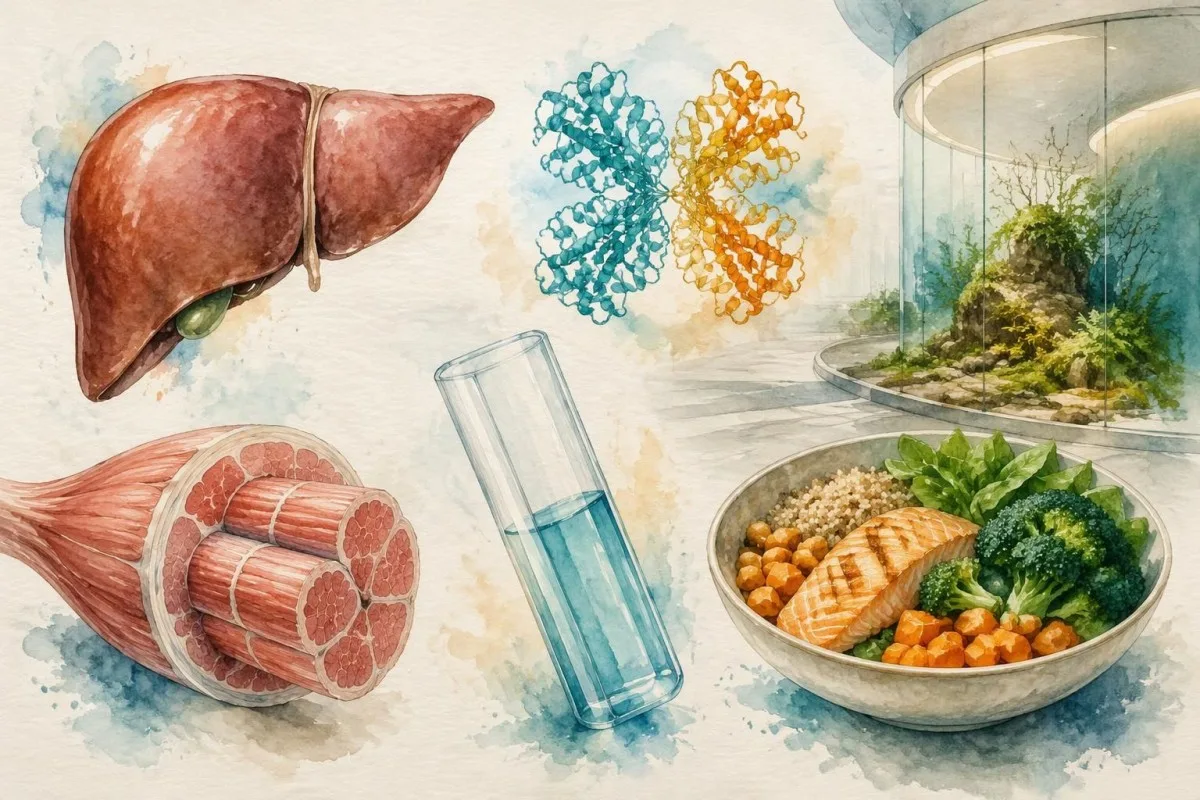
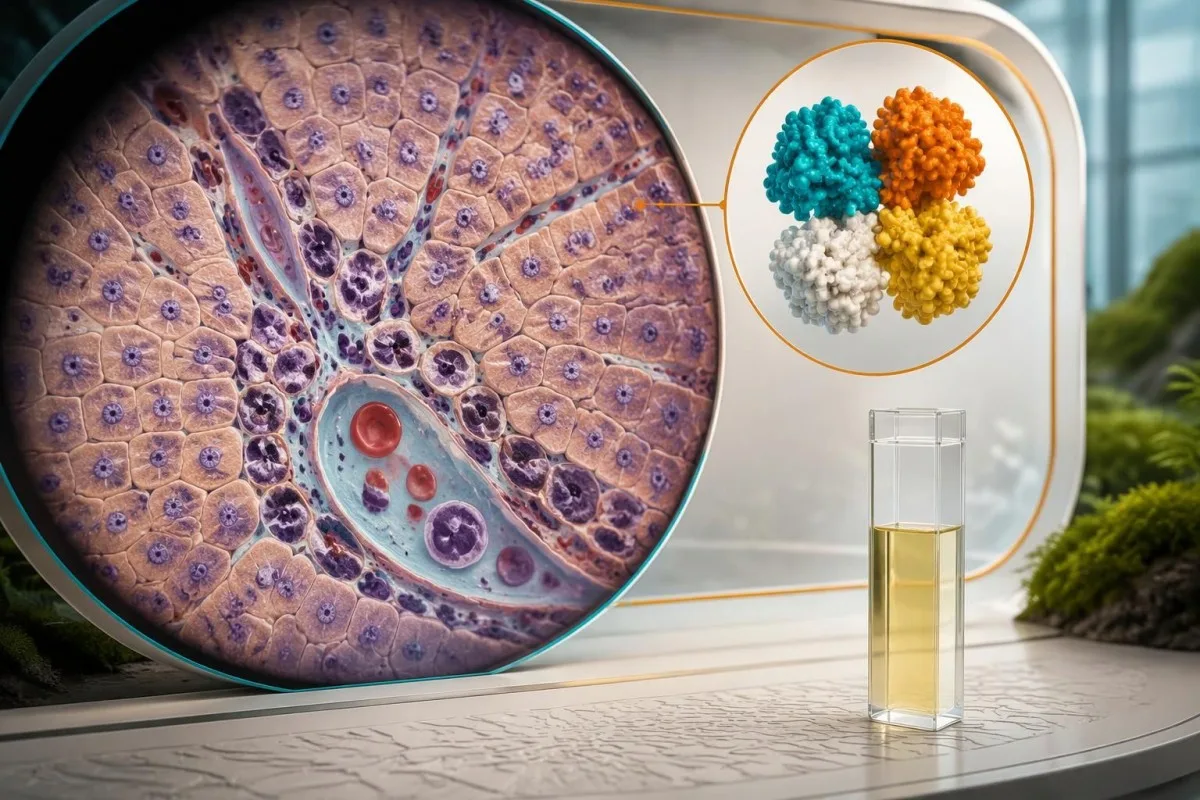
The prealbumin test measures トランスサイレチン, a transport protein produced mainly by the liver for circulation. Its approximately 2–3-day half-life allows relatively rapid changes, but a rapid response does not make it specific to food intake.
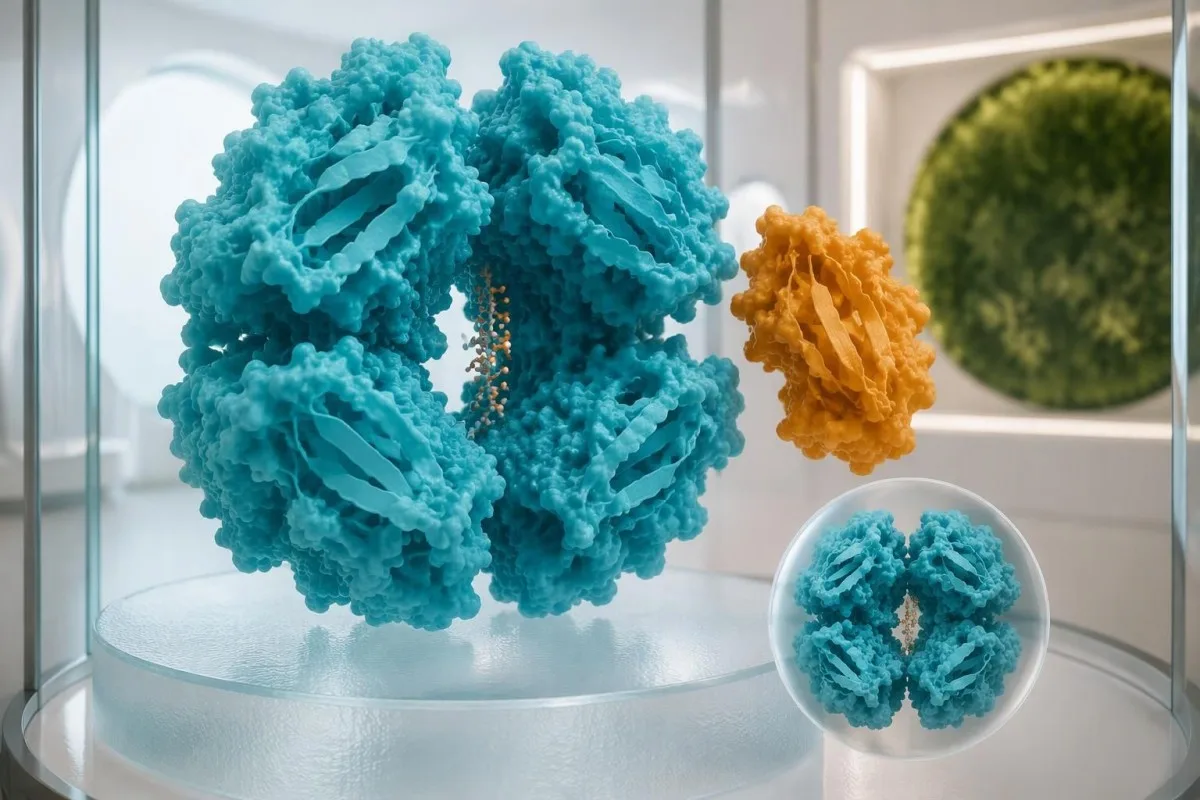
Prealbumin is not an immature form of albumin and does not turn into albumin. The name comes from its migration ahead of albumin during electrophoresis; albumin has a much longer circulating half-life, roughly 20 days, compared with about 2–3 days for prealbumin. These different turnover rates explain why the two results can move at different speeds during an illness.
Transthyretin normally forms a tetramer of 4 protein subunits and carries some circulating thyroxine, or T4. It also interacts with retinol-binding protein, which carries vitamin A; a low prealbumin concentration nevertheless does not independently diagnose either thyroid disease or vitamin A deficiency. Transport-protein concentration, hormone activity, and tissue nutrient stores answer different biological questions.
A low concentration is also different from finding a disease-associated variant in the TTR gene. A hypothetical prealbumin result of 14 mg/dL is not a genetic screening result and does not diagnose hereditary ATTR amyloidosis; that evaluation uses a separate clinical and genetic pathway. Our explanation of TTR variants and amyloidosis helps separate these easily confused meanings of the same protein name.
食べているのに、なぜ炎症でプレアルブミンが低下するのですか?
Prealbumin is a negative acute-phase protein: its circulating concentration often falls during inflammation as liver protein production changes. A hypothetical value of 10 mg/dL during severe illness can therefore occur even when recent calorie and protein intake have been adequate.
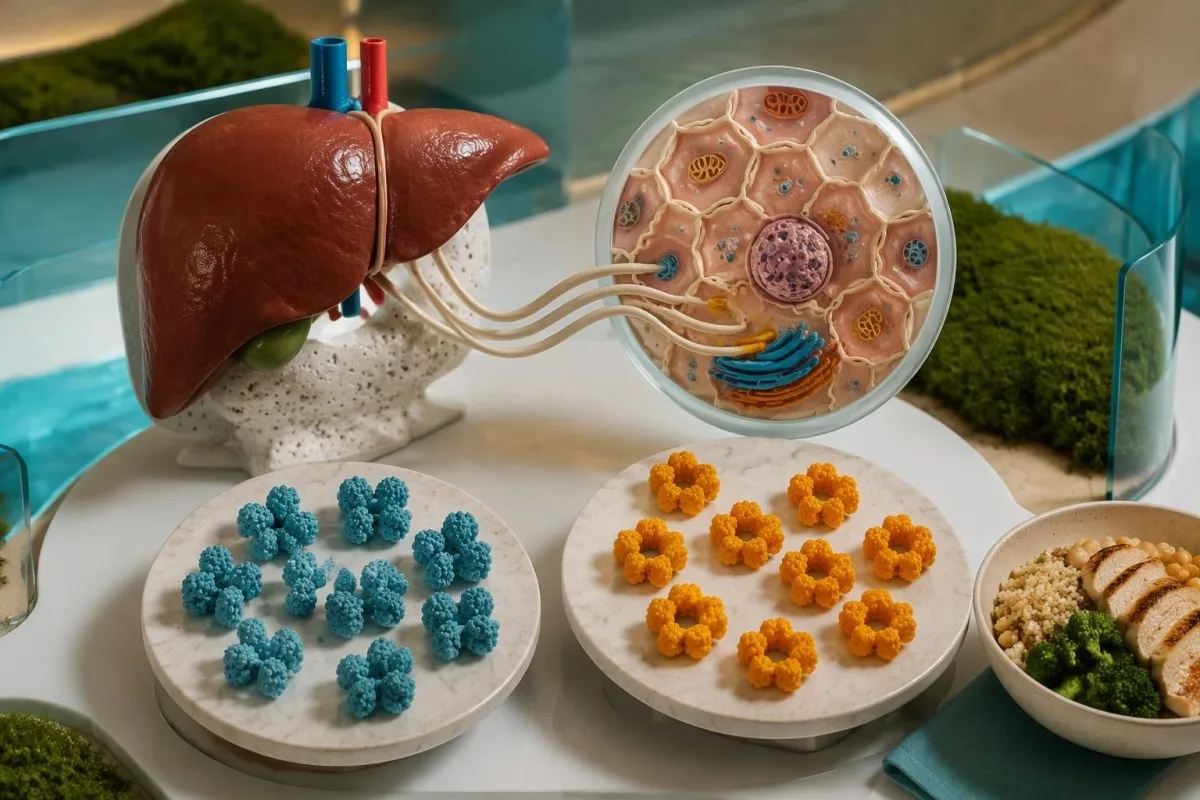
Inflammatory signaling changes what the liver produces rather than simply indicating that the patient skipped meals. Mediators including interleukin-6 promote the acute-phase response, while concentrations of proteins such as prealbumin can decline; its 2–3-day half-life makes that shift relatively quick. The IL-6 interpretation guide explains why timing and illness context matter, although IL-6 testing is not routinely needed to assess nutrition.
Inflammation can lower prealbumin independently of intake and also increase nutritional risk through appetite loss and catabolism. These are 2 overlapping processes, not competing explanations: a person may initially eat adequately yet lose muscle during prolonged illness because the body's metabolic demands and tissue breakdown have changed. Calling the result 'just inflammation' can therefore be as misleading as calling it proof of starvation.
Other negative acute-phase proteins may move in the same direction, so a combination of low prealbumin and low transferrin does not provide 2 independent confirmations of malnutrition. Their shared response to inflammation can create an apparently convincing pattern from the same underlying mechanism. Our guide to inflammation and low transferrin explains why clinicians examine the cause before interpreting several low transport proteins as dietary deficiencies.
プレアルブミンとCRPはどのように併せて読み取ればよいですか?
CRP helps identify inflammatory context, but it cannot correct prealbumin into a nutrition score. A hypothetical combination of prealbumin 12 mg/dL and CRP 90 mg/L strongly raises concern that an acute-phase response is influencing the protein result.
A normal CRP reduces evidence for a substantial systemic acute-phase response at that moment, but it does not prove that low prealbumin is dietary. Many laboratories use a CRP upper limit around 5 mg/L, while others use 10 mg/L; sampling timing, localized disease, and liver disease can complicate interpretation. There is no universal CRP cutoff below which prealbumin becomes a validated malnutrition test.
Discordant inflammatory markers should lead to questions about timing, symptoms, and treatment rather than a mathematical workaround. A hypothetical patient with prealbumin 13 mg/dL, CRP 4 mg/L, and a normal white cell count still needs an intake and weight history; clinicians may also investigate liver function or persistent symptoms. Our discussion of disagreeing infection markers explains why one reassuring marker cannot settle the whole clinical picture.
Kantesti AI can help readers distinguish a prealbumin result of 12 mg/dL from a CRP result of 90 mg/L and understand what each measurement contributes. Neither a prealbumin-to-CRP ratio nor dividing one value by the other is an accepted substitute for nutritional assessment. When CRP is missing, that uncertainty should remain visible—not be replaced by a confident dietary diagnosis.
肝疾患や腎疾患はプレアルブミンをどのように変化させますか?
Liver disease can reduce prealbumin production, while impaired kidney function can increase its concentration through reduced catabolism. A value of 15 mg/dL or 45 mg/dL therefore cannot be interpreted as poor or excellent nutrition without knowing the organ-function context.
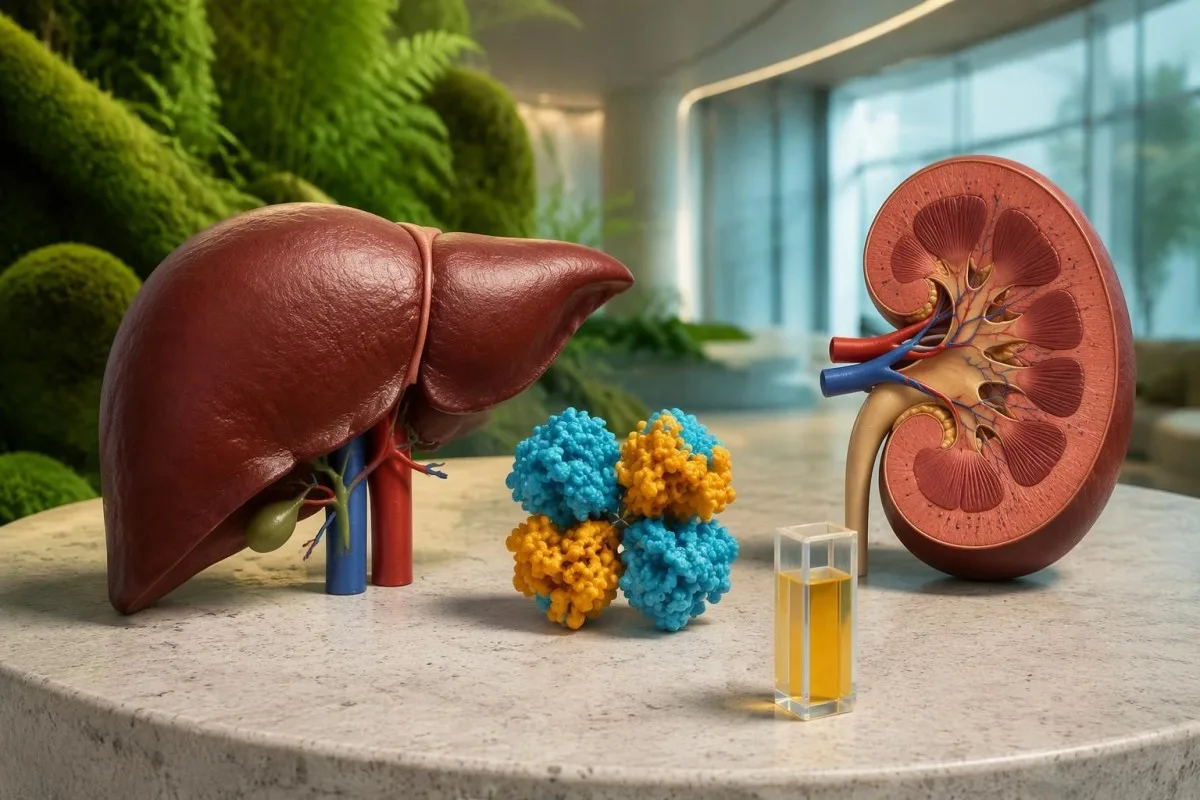
Reduced hepatic synthetic capacity is different from an isolated rise in a liver enzyme. A hypothetical ALT of 80 IU/L does not quantify how much prealbumin the liver can produce; clinicians consider the broader pattern, including albumin, bilirubin, coagulation results, history, and examination. The 肝硬変の検査所見の手がかり guide explains why apparently modest enzyme changes can coexist with more significant liver dysfunction.
Kidney disease can pull the result in more than one direction because reduced catabolism may raise prealbumin while concurrent inflammation or poor intake lowers it. A hypothetical adult with eGFR 25 mL/min/1.73 m² and prealbumin 38 mg/dL may still have clinically significant weight and muscle loss. Our guide to 低eGFRの警告サイン explains the kidney findings that deserve attention beyond this transport protein.
Protein loss in urine should be assessed directly rather than inferred from prealbumin. Urine albumin or protein measurements, serum albumin, and kidney evaluation answer questions that a prealbumin concentration of 16 mg/dL cannot resolve; nephrotic conditions do not produce a reliably predictable prealbumin pattern. The practical step is to bring renal results and liver results to the same appointment, especially before changing protein intake substantially.
輸液、薬剤、または測定上の問題で結果が変わることはありますか?
Fluid balance, some medicines, and method-specific assay interference can change prealbumin test results. A hypothetical decline from 22 to 16 mg/dL after major fluid administration may partly reflect dilution rather than a sudden change in nutritional reserves.
Prealbumin is a concentration measurement, so the amount of circulating fluid affects how the result is expressed. Rapid fluid retention can lower measured concentrations, while dehydration can raise them; a 3 kg weight increase over several days may represent fluid rather than new tissue. Clinicians therefore distinguish weight recovery from edema and avoid interpreting a falling protein concentration in isolation after resuscitation.
Corticosteroids can increase prealbumin concentrations, although the overall result also depends on the illness being treated. A hypothetical change from 18 to 25 mg/dL after corticosteroid treatment could reflect medication effects, reduced inflammation, nutritional changes, or a mixture of all 3. Record the medicine's name, dose, and start date rather than assuming every increase means that a nutrition plan succeeded.
An unexpected isolated result deserves a check of units, specimen quality, and the laboratory's interference notes before extensive dietary changes. A hypothetical prealbumin of 9 mg/dL alongside several unexpected assay findings may justify discussion with the laboratory; interference is method-dependent, not something every patient needs repeat testing for. Our explanation of inflammation and plasma zinc also shows why several low circulating nutrients or proteins may share a non-dietary explanation.
成人の栄養不良を実際に診断する基準は何ですか?
GLIM diagnoses adult malnutrition using at least 1 phenotypic criterion and 1 etiologic criterion after nutritional risk screening. Phenotypic criteria include weight loss, low BMI, or reduced muscle mass; etiologic criteria include reduced intake or assimilation, or inflammation and disease burden.

The international GLIM consensus uses unintentional weight loss greater than 5% within 6 months, or greater than 10% beyond 6 months, as a phenotypic criterion (Cederholm et al., 2019). A hypothetical change from 70 to 66 kg is approximately 5.7% loss, even if the person still appears well nourished. The timing and whether the loss was intended matter as much as the arithmetic.
GLIM's commonly used non-Asian low-BMI thresholds are below 20 kg/m² for adults younger than 70 and below 22 kg/m² for adults aged 70 or older, with population-specific adaptations. These are diagnostic-framework thresholds, not universal healthy-weight boundaries; reduced muscle mass can establish a phenotype even when BMI is higher. Neither BMI nor prealbumin alone captures how much functional tissue a person has lost.
Kantesti is an AI biomarker interpretation platform that explains why prealbumin of 14 mg/dL cannot replace GLIM's clinical criteria. Specific deficiencies can coexist with malnutrition, but a low folate result is a different diagnostic question from total calorie and protein adequacy; our guide to folate deficiency causes makes that distinction. A nutrition assessment should identify the syndrome and its cause, not collect abnormal laboratory flags as a substitute.
適切な栄養評価には何を含めるべきですか?
A useful nutrition assessment documents weight trajectory, actual intake, eating barriers, muscle changes, and disease burden. Reviewing the previous 1–6 months often reveals more than a single prealbumin concentration, particularly when fluid retention or a higher BMI hides tissue loss.

A higher BMI does not exclude malnutrition after substantial unintentional weight loss. A hypothetical adult weighing 80 kg who falls to 74 kg has lost 7.5%; at 1.65 m tall, the current BMI remains approximately 27.2 kg/m² despite that meaningful change. Clinicians ask whether clothing fits differently, strength has declined, and swelling is masking further tissue loss rather than judging nutritional status from appearance.
Reduced intake should be investigated as a symptom with a cause, not treated as a failure of motivation. Difficulty swallowing, painful eating, nausea, dental problems, limited food access, and medication effects require different solutions; a 3-day food record can help describe the pattern but does not diagnose malabsorption. Persistent swallowing problems may need evaluation such as the pathway described in our achalasia diagnostic guide.
Digestive investigations should follow symptoms and risk factors instead of being ordered because prealbumin is below 20 mg/dL. Chronic diarrhea with weight loss may warrant targeted evaluation for intestinal disease, whereas visible food fragments alone do not establish nutrient malabsorption. Our guide to stool inflammation tests explains what those tests can contribute; muscle assessment and intake history still remain necessary even when gastrointestinal testing identifies a cause.
プレアルブミンの再検査が実際に有用なのはどのような場合ですか?
Repeating prealbumin is useful only when the result will answer a defined clinical question. Its 2–3-day half-life does not justify routine testing every few days, and an increase cannot independently prove that nutrition treatment has restored muscle or body protein.

Prealbumin can rise as inflammation resolves even when food intake has changed very little. In a hypothetical recovery, prealbumin increases from 10 to 18 mg/dL while CRP falls from 120 to 8 mg/L over 10 days; the pattern supports a changing acute-phase response but cannot quantify how much nutrition contributed. Improved concentration is not equivalent to restored strength, healed tissue, or replenished lean mass.
If a clinician chooses to repeat testing, an interval such as 1–2 weeks after a meaningful clinical change may be reasonable, but it is not a universal guideline schedule. Record the illness course, fluid status, medication changes, intake, and laboratory method at both time points. Our guide to meaningful laboratory trends explains why the circumstances surrounding each measurement determine whether comparison is informative.
Kantesti can help organize dated prealbumin measurements, but 2 results cannot reveal unrecorded food intake or establish muscle recovery. ASPEN's 2021 position paper advises against using visceral proteins as nutrition markers, so clinical outcomes and documented intake should lead monitoring rather than a target prealbumin value (Evans et al., 2021). Ask what management decision would change before arranging another measurement.
プレアルブミンを上げるためにタンパク質の摂取量を増やすべきですか?
Increase nutrition when an assessment identifies inadequate intake or increased needs—not simply to push prealbumin above 20 mg/dL. A low result does not specify a protein dose, and kidney disease, severe illness, fluid restrictions, and refeeding risk can change the appropriate plan.
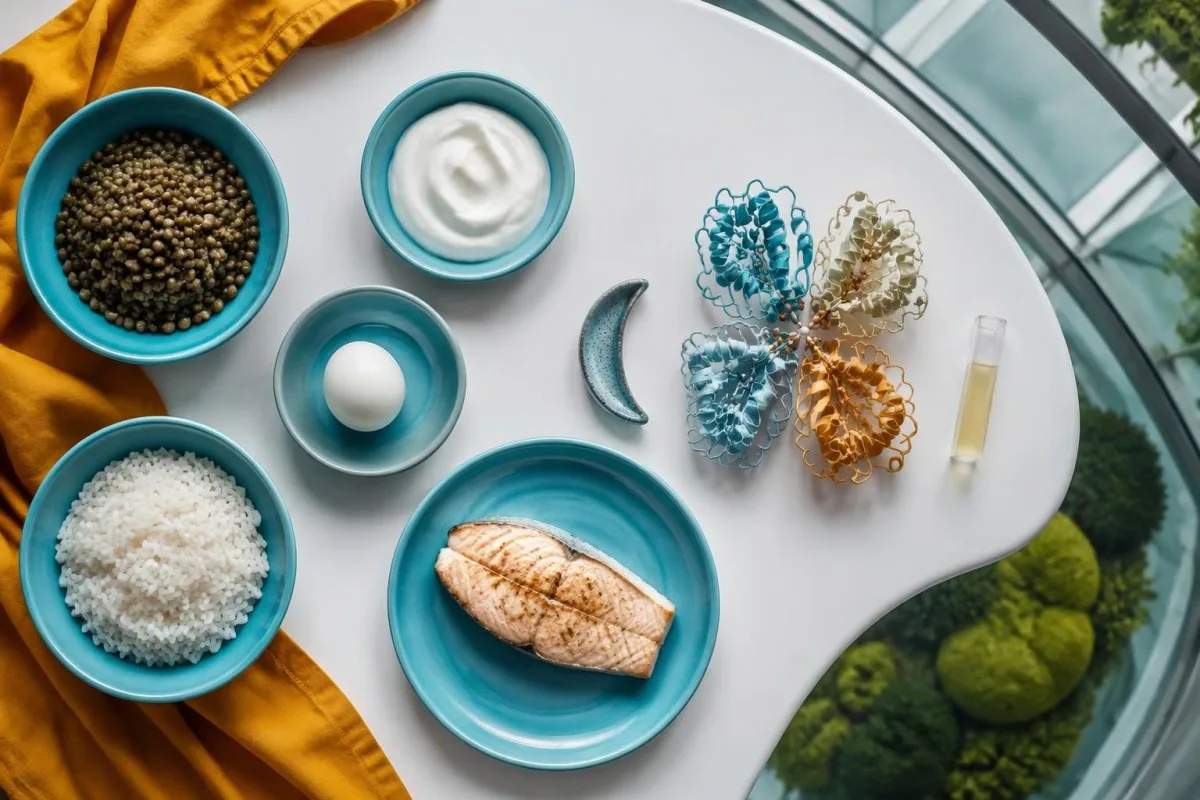
For adults requiring nutrition support who are not severely ill and are not at refeeding risk, NICE CG32 gives general estimates of 25–35 kcal/kg/day and 0.8–1.5 g protein/kg/day (NICE, 2006). These are planning ranges with clinical exceptions, not instructions for everyone with low prealbumin. The CG32 nutrition-support guidance also addresses fluid, electrolytes, micronutrients, and the route through which nutrition is delivered.
A hypothetical 60 kg adult would have an estimated range of 1,500–2,100 kcal/day and 48–90 g protein/day under those general assumptions. The wide range reflects different needs; it is not a reason to choose the highest protein intake automatically, particularly with kidney disease. Our discussion of 腎臓病食の安全な摂取上限 explains why an AI-generated plan still needs appropriate clinical constraints.
Food fortification or oral nutrition supplements may help when ordinary meals do not meet documented needs, but treating the eating barrier remains necessary. A hypothetical person managing only 50% of meals because of persistent nausea needs evaluation of the nausea as well as a feasible nutrition plan. There is no established prealbumin threshold that automatically requires protein powders, intravenous nutrition, or a particular supplement formulation.
摂取量不足や病気に緊急の対応が必要なのはどのような場合ですか?
Urgency comes from symptoms, prolonged inadequate intake, and metabolic risk—not the prealbumin number alone. NICE identifies more than 10 days with little or no nutrition as one high-risk criterion for refeeding problems, which require supervised nutrition restoration.
Seek urgent care for confusion, fainting, severe weakness, inability to keep fluids down, very little urine, or breathing difficulty, regardless of whether prealbumin is 8 or 28 mg/dL. Persistent vomiting or diarrhea can create dehydration and electrolyte problems before a transport-protein result becomes informative. Our digestive warning signs guide helps distinguish symptoms that need assessment rather than another nutrition-marker test.
Refeeding risk depends on history and clinical findings, not on a low prealbumin concentration. NICE lists BMI below 16 kg/m², unintentional weight loss greater than 15% over 3–6 months, more than 10 days of minimal intake, or low potassium, phosphate, or magnesium before feeding as individual high-risk criteria; combinations of less severe findings can also qualify. A normal initial electrolyte result does not guarantee that body stores are adequate.
For people who have eaten little or nothing for more than 5 days, NICE recommends initially introducing nutrition at no more than 50% of requirements for the first 2 days, with monitoring. High-risk plans may start at no more than 10 kcal/kg/day under experienced clinical supervision, with thiamine and electrolyte management (NICE, 2006). These figures explain why simply drinking several high-calorie supplements at once can be unsafe after prolonged restriction—they are not a home treatment protocol.
AIはプレアルブミンの安全な解釈にどのように役立ちますか?
AI can explain prealbumin terminology, organize related results, and identify missing context; it cannot diagnose nutritional status from a laboratory report alone. A result of 12 mg/dL needs information about illness, intake, weight, medications, and organ function before its meaning becomes clearer.
Kantesti is an AI blood test interpretation platform that helps explain why prealbumin of 12 mg/dL and CRP of 90 mg/L should be read as different measurements. Our AI技術の説明 describes the interpretation workflow; the safe clinical boundary remains the same whether the explanation is generated quickly or reviewed slowly. Software cannot palpate muscle, observe swallowing, or independently verify the meals someone actually consumed.
A useful interpretation separates measured facts from missing information instead of presenting one confident diagnosis. For example, a hypothetical report containing prealbumin 12 mg/dL but no CRP or weight history should describe those gaps and suggest discussion of nutritional screening, rather than assign a malnutrition grade. Check whether the explanation preserves your laboratory's units and reference interval before using it to prepare questions for an appointment.
Clinical standards should be judged against the specific task, not a broad accuracy claim that covers every medical decision. Even a correct interpretation of 20 mg/dL cannot establish nutrition adequacy without an assessment, and no software benchmark changes that limitation. Our 検証・監督フレームワーク is relevant to evaluating methodology; decisions about nutrition support, diagnosis, or urgent care remain matters for qualified healthcare professionals.
栄養評価におけるこうした限界を裏付けるのはどの文献ですか?
The clinical conclusions here rest on nutrition guidance, not on unrelated AI publications. The 2021 ASPEN position paper, the 2019 GLIM consensus, and NICE CG32 address different questions: protein-marker limitations, malnutrition diagnosis, and safe nutrition support.
ASPEN's 2021 paper explains why low visceral proteins should not serve as nutrition markers, while GLIM's 2019 consensus specifies the clinical criteria needed to diagnose malnutrition. Neither establishes a prealbumin-only diagnostic cutoff such as 10 or 15 mg/dL; these numbers can describe laboratory abnormalities without proving their cause. NICE CG32 adds practical safety guidance for nutrition support, including the separate assessment of refeeding risk.
Shared inflammatory effects also explain why a broader laboratory panel needs careful interpretation rather than simple abnormal-result counting. A hypothetical low prealbumin of 13 mg/dL alongside low transferrin may reflect one acute-phase mechanism; ferritin can move in the opposite direction during inflammation and complicate assessment of iron stores. Our 鉄分検査解釈ガイド explains why biochemical pattern recognition must remain connected to the clinical question.
Kantesti's 2 Figshare publications listed below concern women's health education and multilingual hantavirus decision support, respectively. They are included as separate research resources, not as evidence that prealbumin diagnoses malnutrition or that an AI nutrition plan improves clinical outcomes. Our 医療コンテンツ基準 explain the source-quality distinction readers should expect: a repository DOI identifies a publication, but it does not by itself establish peer review or relevance to this nutrition question.
よくある質問
プレアルブミン値が低いと、必ず栄養失調を意味しますか?
プレアルブミン値が低くても、必ずしも栄養失調を意味するわけではなく、それだけで診断することもできません。12 mg/dLという結果は、炎症、肝臓での産生低下、摂取不足、または複数の原因が重なっていることを反映している可能性があります。成人の栄養失調の評価では、意図しない体重減少、筋肉量、摂取または吸収、疾患の負荷を考慮します。GLIMの枠組みでは、栄養リスクのスクリーニング後に、表現型基準を少なくとも1つ、病因基準を少なくとも1つ満たす必要があります。
プレアルブミンの正常値はどのくらいですか?
成人のプレアルブミンの一般的な基準範囲は約20~40 mg/dL(0.20~0.40 g/L)です。検査機関によって基準範囲が異なる場合があるため、報告書に記載された範囲を優先してください。200 mg/Lは20 mg/dLに相当するため、単位が異なる報告書を比較する際には注意が必要です。基準範囲内の結果であっても栄養不良は否定できず、小児の結果は年齢に応じて解釈する必要があります。
十分に食べていても、炎症によってプレアルブミン値が低下することはありますか?
プレアルブミンは陰性急性期タンパク質であるため、最近の食事摂取量が十分でも、炎症によって低下することがあります。半減期は約2~3日と短いため、疾患時に肝臓でのタンパク質産生が変化すると、濃度も比較的速やかに変動します。CRPはこのような状況の把握に役立ちますが、栄養状態を補正するための検証済みのCRP補正式はありません。また、十分に食べていても、長期にわたる異化状態では疾患に伴う筋肉量の減少を完全に防ぐことはできません。
プレアルブミン値が10 mg/dL未満だと危険ですか?
プレアルブミン値が10 mg/dL未満の場合、多くの成人基準範囲を大きく下回りますが、それだけで緊急事態を示す基準値でも、検証済みの栄養不良の重症度分類でもありません。緊急性を判断するため、臨床医は基礎疾患、食事摂取量、体重の変化、臓器機能、症状を評価します。プレアルブミン値にかかわらず、錯乱、失神、水分を摂取しても保てない状態、尿量が極端に少ない状態、呼吸困難がある場合は、速やかな評価が必要です。摂取量が長期間にわたって極端に少ない場合は、急激に栄養を増やす前に、リフィーディング症候群のリスクについても評価が必要です。
栄養状態の改善により、プレアルブミン値はどのくらいの速さで改善しますか?
栄養療法が奏功していることを示す、信頼できるプレアルブミン改善の時間経過はありません。半減期は約2~3日ですが、炎症の軽減や薬剤・体液の影響の変化によってもプレアルブミン値は上昇します。したがって、仮に10から18 mg/dLに増加したとしても、それだけで栄養状態の回復を定量的に評価することはできません。モニタリングでは、記録された摂取量、体液バランスと併せて解釈した体重、筋機能、および基礎にある臨床状態を優先すべきです。
プレアルブミン値が低い場合、プロテインサプリメントを摂るべきですか?
プレアルブミン値が低いという結果だけでは、タンパク質サプリメントが必要だとは判断できず、安全な用量も決められません。重篤な疾患やリフィーディング症候群のリスクがなく、栄養サポートを必要とする成人の一部について、NICEは計画時の一般的な目安として、1日あたり体重1 kgにつきタンパク質0.8~1.5 gを示していますが、個々の必要量や制限は異なります。腎疾患、嚥下障害、長期間の著しい摂取不足によって、適切な計画が変わることがあります。検査値を上げようとするのではなく、実際の摂取量や栄養リスクについて、医療従事者または管理栄養士に相談してください。
血液検査結果の見方を確認しましょう
検査報告書をアップロードすると、KantestiのAIが数秒で各バイオマーカーを平易な言葉で説明します。世界中で200万人以上が利用しています。.
参考文献
- Klein, T., Mitchell, S., & Weber, H. (2026). 女性の健康ガイド:排卵、更年期、ホルモン関連症状。. Kantesti AI医学研究。. 掲載日
- Klein, T., Mitchell, S., & Weber, H. (2026). ハンタウイルスの早期トリアージに向けた多言語対応AI支援臨床意思決定支援:設計、エンジニアリング検証、5万件の血液検査の読み方レポートを用いた実環境での導入。. Kantesti AI医学研究。. 掲載日
- Evans DC et al. (2021). The Use of Visceral Proteins as Nutrition Markers: An ASPEN Position Paper. Nutrition in Clinical Practice. 掲載日
- Cederholm T et al. (2019). GLIM criteria for the diagnosis of malnutrition – A consensus report from the global clinical nutrition community. Clinical Nutrition. 掲載日
- National Institute for Health and Care Excellence (2006). Nutrition support for adults: oral nutrition support, enteral tube feeding and parenteral nutrition. NICE Clinical Guideline CG32.
- 200万以上分析対象の検査
- 127+国
- 100+言語
医療チームについて


E-E-A-T 信頼性シグナル
経験
医師主導による、検査結果解釈ワークフローの臨床レビュー。.
専門知識
臨床的な文脈においてバイオマーカーがどのように振る舞うかに焦点を当てた検査医学。.
権威
Thomas Klein医師による医学的レビュー。Sarah Mitchell医師およびHans Weber教授の協力。.
信頼性
アラームを減らすための明確なフォローアップ経路を備えた、エビデンスに基づく解釈。.


医療免責事項
この記事は教育目的のみを対象としており、医療助言を構成するものではありません。診断や治療の判断を行う際は、必ず有資格の医療提供者にご相談ください。.
公開 · 編集チームにお問い合わせください
Kantesti Ltdが発行。イングランドおよびウェールズで登録、会社番号. 17090423, 、英国ロンドン。.
