
Низький рівень преальбуміну не доводить наявність недостатнього харчування: запалення, функція печінки, функція нирок і баланс рідини можуть змінювати результат незалежно від споживання їжі. Для правильної інтерпретації результат зіставляють зі змінами ваги, втратою м’язової маси, фактичним споживанням їжі та захворюванням, на тлі якого проводили аналіз.

Ключові висновки
- Низький рівень преальбуміну означає, що концентрація білка в крові нижча за референтний інтервал вашої лабораторії; результат 12 мг/дл не підтверджує наявність недостатнього харчування.
- Норма преальбуміну у дорослих зазвичай становить приблизно 20–40 мг/дл, що відповідає 0,20–0,40 г/л, але лабораторії використовують різні референтні інтервали.
- Запалення може зменшувати вироблення преальбуміну, незважаючи на достатнє споживання їжі; період напіврозпаду приблизно 2–3 дні призводить до швидкої появи змін, пов’язаних із захворюванням.
- Контекст CRP допомагає пояснити низький рівень преальбуміну, але валідованої формули корекції за CRP для визначення харчового статусу за цим результатом не існує.
- Діагностика недостатнього харчування за GLIM потребує щонайменше 1 фенотипового критерію та 1 етіологічного критерію після скринінгу харчового ризику — одного лише низького рівня білка недостатньо.
- Втрата ваги понад 5% протягом 6 місяців є фенотиповим критерієм GLIM, навіть якщо BMI залишається вищим за звичайний діапазон здорової ваги.
- Підтримка харчування має відповідати задокументованим потребам і перешкодам у харчуванні; загальні оцінки NICE у 25–35 ккал/кг/день не є придатними початковими орієнтирами для всіх.
- Ризик рефідинг-синдрому потребує клінічної оцінки після тривалого мінімального споживання їжі; понад 10 днів із незначним або відсутнім харчуванням є одним із критеріїв високого ризику NICE.
Чи означає низький рівень преальбуміну, що у вас недостатнє харчування?
Низький рівень преальбуміну може спостерігатися при недостатньому харчуванні, але він не дає змоги встановити такий діагноз. Концентрація 12 мг/дл може свідчити про запалення, порушення вироблення в печінці, недостатнє споживання їжі або поєднання кількох чинників; оцінка нутритивного статусу потребує аналізу ваги, м’язової маси, харчування та основного захворювання.

Позначка в лабораторному звіті описує концентрацію одного білка, а не кількість білка, запасеного у ваших м’язах. У позиційному документі ASPEN за 2021 рік зазначено, що альбумін і преальбумін характеризують насамперед запалення, а не нутритивний статус, і їх не слід використовувати як показники білка в організмі чи м’язової маси (Evans et al., 2021). Низькі значення все ж можуть виявити людей, яким потрібна пильніша клінічна увага.
Розгляньмо гіпотетичний випадок дорослої людини, яка харчується як зазвичай, але захворює на пневмонію, і рівень преальбуміну в неї становить 11 мг/дл. Інша доросла людина з таким самим результатом могла дуже мало їсти протягом 3 тижнів через труднощі з ковтанням; однакове число не дає лікарям змоги визначити, яке пояснення правильне. Обидві людини потребують оцінки, але пріоритети лікування різні.
Kantesti — це аналізатор аналізів крові на основі ШІ, який допомагає пояснити, чому результат преальбуміну 12 мг/дл потребує клінічного контексту, а не автоматичного висновку про недостатнє харчування. Наша організація та мета мета — зробити лабораторну інформацію зрозумілою, а не замінити огляд лікаря чи оцінку дієтолога. Важливо з’ясувати, чим пояснюється результат і які незалежні дані підтверджують проблему з харчуванням.
Яка норма преальбуміну?
Поширений для дорослих нормальний діапазон преальбуміну становить приблизно 20–40 мг/дл, що відповідає 0,20–0,40 г/л. Перевагу слід надавати референтному інтервалу, наведеному у вашому звіті, оскільки межі залежать від віку, методу аналізу та референтної популяції лабораторії.
Різні референтні інтервали не обов’язково означають, що одна з лабораторій помиляється. У деяких звітах використовують інтервали близько 15–36 мг/дл, тому гіпотетичне значення 18 мг/дл в одній лабораторії може бути позначене як відхилення, а в іншій — ні; жодна з цих класифікацій сама по собі не підтверджує достатність харчування. Референтні інтервали описують групу порівняння, тоді як діагностичні критерії мають виявляти клінічно значущий стан.
Перерахунок одиниць може запобігти набагато серйознішому непорозумінню, ніж прикордонне відхилення. Преальбумін 200 мг/л дорівнює 20 мг/дл і 0,20 г/л; отже, результат 0,18 г/л означає 18 мг/дл, а не надзвичайно низьку концентрацію. Перш ніж порівнювати два звіти, звірте одиниці вимірювання, референтний інтервал лабораторії та умови забору зразка, а не лише надруковані числа.
Концентрація нижче 10 мг/дл значно нижча за багато референтних інтервалів для дорослих, але універсального порогового значення преальбуміну, яке саме по собі вказувало б на невідкладний стан, або валідованої шкали тяжкості недостатнього харчування не існує. У посібник з альбуміну та білків сироватки пояснюється, чому білки, що циркулюють у крові, не замінюють оцінку нутритивного статусу. Результати в дітей потребують інтерпретації з урахуванням віку; наведену нижче таблицю для дорослих не слід застосовувати до дітей.
| Рівень | Діапазон | Що це означає |
|---|---|---|
| Типовий інтервал для дорослих | 20–40 мг/дл | У межах одного поширеного референтного інтервалу; не виключає недостатнього харчування. |
| Нижче цього прикладу інтервалу | 10–<20 mg/dL | Review inflammation, intake, liver function, kidney function, and fluid balance. |
| Markedly below this interval | <10 мг/дл | Needs clinical explanation; not a stand-alone malnutrition grade or emergency cutoff. |
| Above this example interval | >40 mg/dL | May occur with reduced renal catabolism or medication effects; does not prove excellent nutrition. |
Що саме вимірює аналіз на преальбумін?
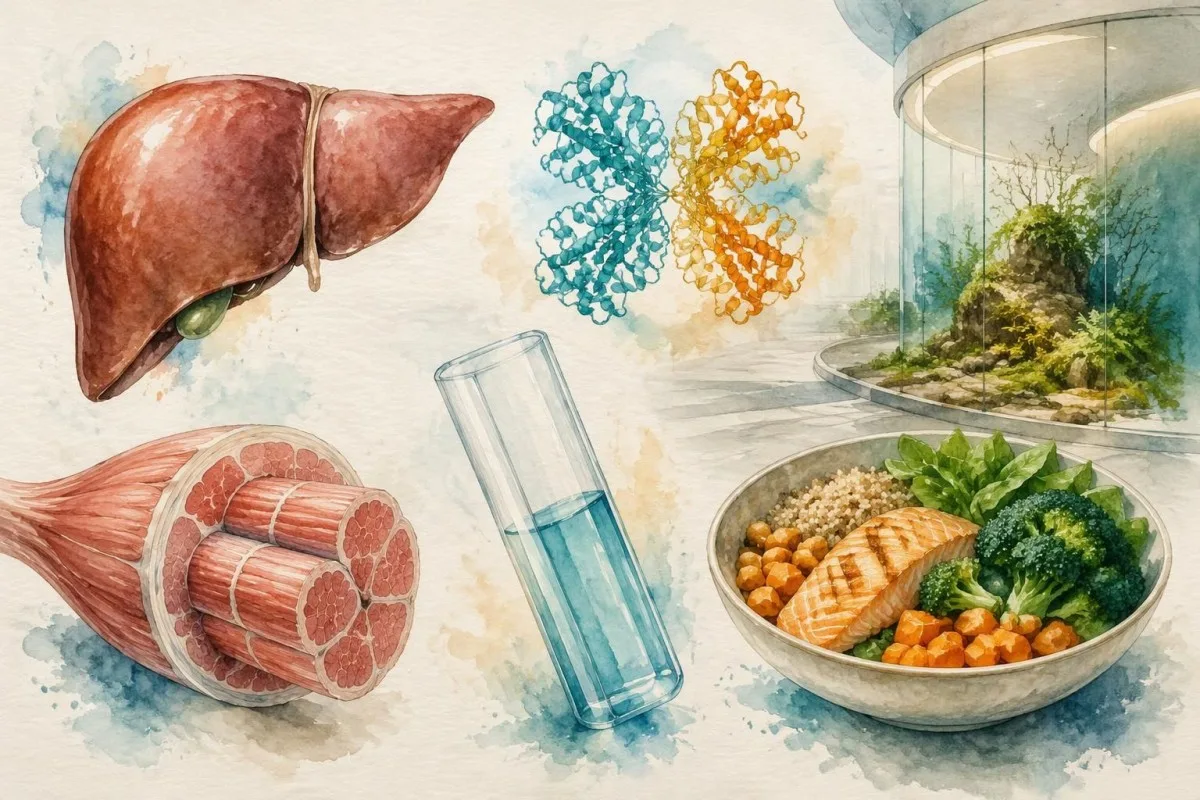
The prealbumin test measures транстиретином, a transport protein produced mainly by the liver for circulation. Its approximately 2–3-day half-life allows relatively rapid changes, but a rapid response does not make it specific to food intake.
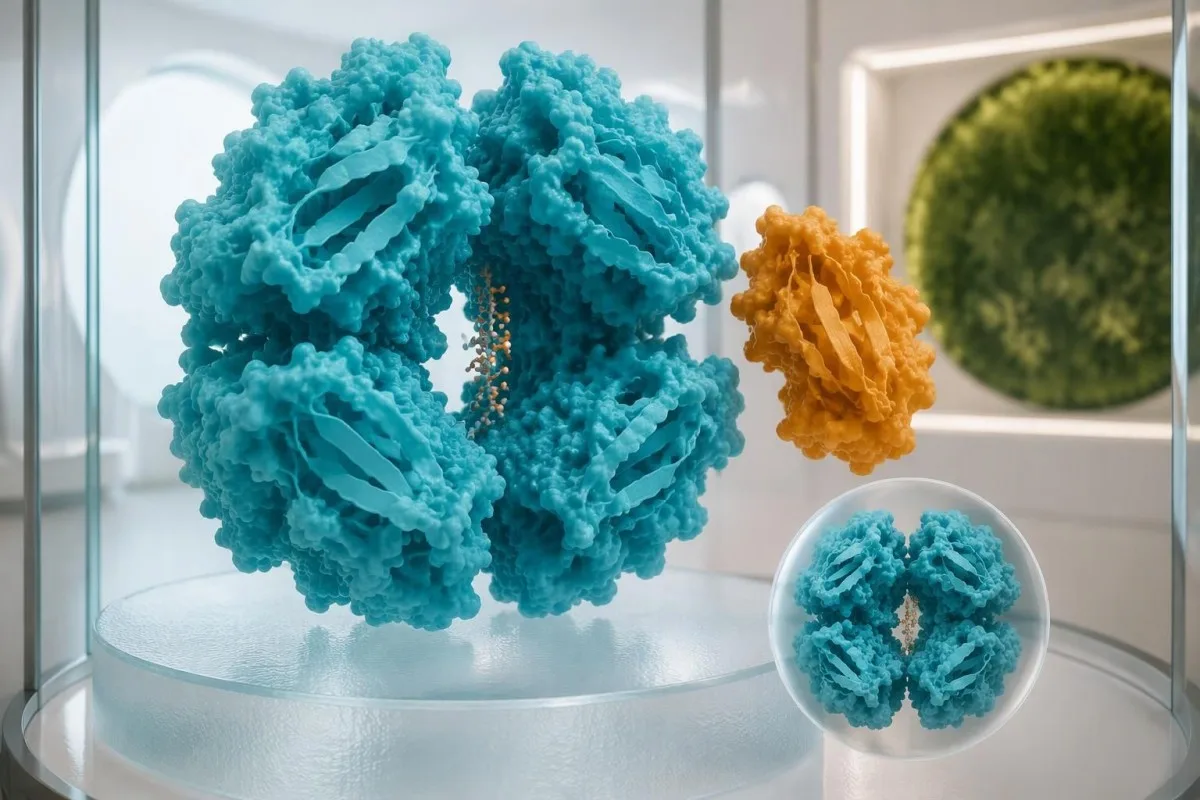
Prealbumin is not an immature form of albumin and does not turn into albumin. The name comes from its migration ahead of albumin during electrophoresis; albumin has a much longer circulating half-life, roughly 20 days, compared with about 2–3 days for prealbumin. These different turnover rates explain why the two results can move at different speeds during an illness.
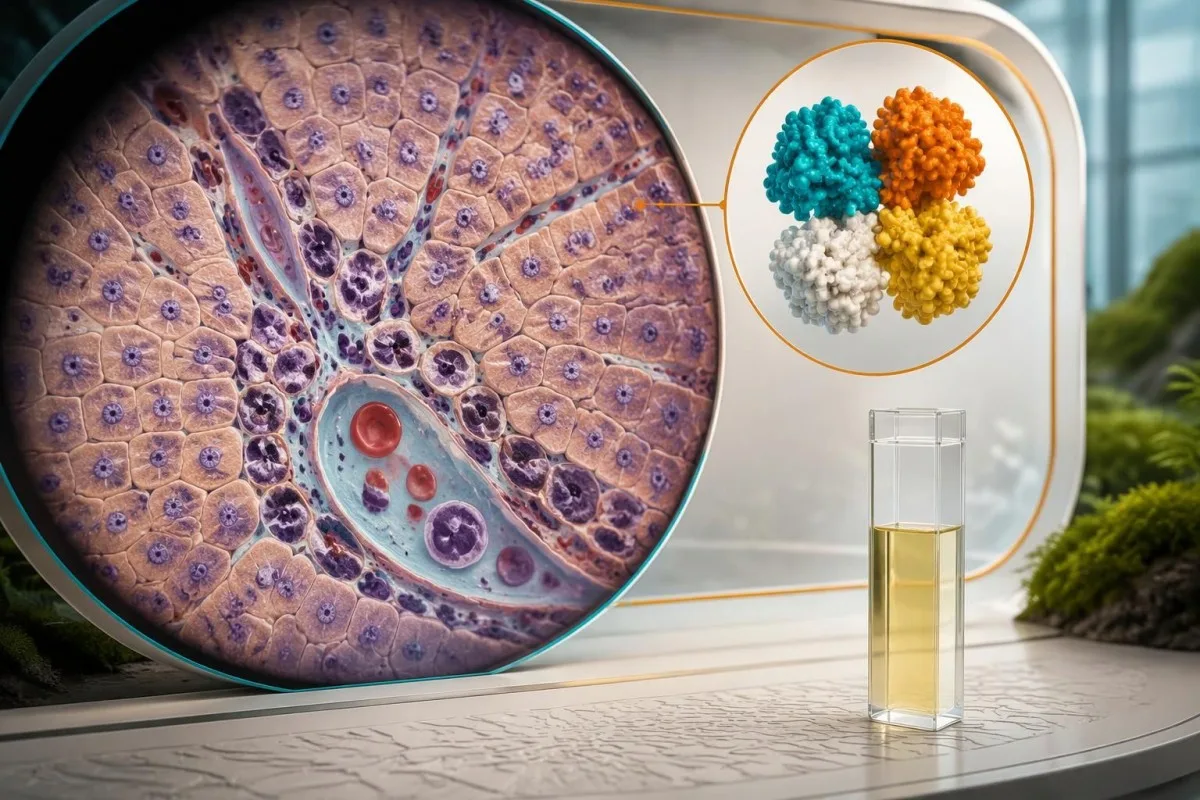
Transthyretin normally forms a tetramer of 4 protein subunits and carries some circulating thyroxine, or T4. It also interacts with retinol-binding protein, which carries vitamin A; a low prealbumin concentration nevertheless does not independently diagnose either thyroid disease or vitamin A deficiency. Transport-protein concentration, hormone activity, and tissue nutrient stores answer different biological questions.
A low concentration is also different from finding a disease-associated variant in the TTR gene. A hypothetical prealbumin result of 14 mg/dL is not a genetic screening result and does not diagnose hereditary ATTR amyloidosis; that evaluation uses a separate clinical and genetic pathway. Our explanation of TTR variants and amyloidosis helps separate these easily confused meanings of the same protein name.
Чому запалення знижує рівень преальбуміну, навіть якщо ви їсте?
Prealbumin is a negative acute-phase protein: its circulating concentration often falls during inflammation as liver protein production changes. A hypothetical value of 10 mg/dL during severe illness can therefore occur even when recent calorie and protein intake have been adequate.
Inflammatory signaling changes what the liver produces rather than simply indicating that the patient skipped meals. Mediators including interleukin-6 promote the acute-phase response, while concentrations of proteins such as prealbumin can decline; its 2–3-day half-life makes that shift relatively quick. The IL-6 interpretation guide explains why timing and illness context matter, although IL-6 testing is not routinely needed to assess nutrition.
Inflammation can lower prealbumin independently of intake and also increase nutritional risk through appetite loss and catabolism. These are 2 overlapping processes, not competing explanations: a person may initially eat adequately yet lose muscle during prolonged illness because the body's metabolic demands and tissue breakdown have changed. Calling the result 'just inflammation' can therefore be as misleading as calling it proof of starvation.
Other negative acute-phase proteins may move in the same direction, so a combination of low prealbumin and low transferrin does not provide 2 independent confirmations of malnutrition. Their shared response to inflammation can create an apparently convincing pattern from the same underlying mechanism. Our guide to inflammation and low transferrin explains why clinicians examine the cause before interpreting several low transport proteins as dietary deficiencies.
Як слід інтерпретувати результати преальбуміну та CRP разом?
CRP helps identify inflammatory context, but it cannot correct prealbumin into a nutrition score. A hypothetical combination of prealbumin 12 mg/dL and CRP 90 mg/L strongly raises concern that an acute-phase response is influencing the protein result.
A normal CRP reduces evidence for a substantial systemic acute-phase response at that moment, but it does not prove that low prealbumin is dietary. Many laboratories use a CRP upper limit around 5 mg/L, while others use 10 mg/L; sampling timing, localized disease, and liver disease can complicate interpretation. There is no universal CRP cutoff below which prealbumin becomes a validated malnutrition test.
Discordant inflammatory markers should lead to questions about timing, symptoms, and treatment rather than a mathematical workaround. A hypothetical patient with prealbumin 13 mg/dL, CRP 4 mg/L, and a normal white cell count still needs an intake and weight history; clinicians may also investigate liver function or persistent symptoms. Our discussion of disagreeing infection markers explains why one reassuring marker cannot settle the whole clinical picture.
Kantesti AI can help readers distinguish a prealbumin result of 12 mg/dL from a CRP result of 90 mg/L and understand what each measurement contributes. Neither a prealbumin-to-CRP ratio nor dividing one value by the other is an accepted substitute for nutritional assessment. When CRP is missing, that uncertainty should remain visible—not be replaced by a confident dietary diagnosis.
Як захворювання печінки та нирок змінюють рівень преальбуміну?
Liver disease can reduce prealbumin production, while impaired kidney function can increase its concentration through reduced catabolism. A value of 15 mg/dL or 45 mg/dL therefore cannot be interpreted as poor or excellent nutrition without knowing the organ-function context.
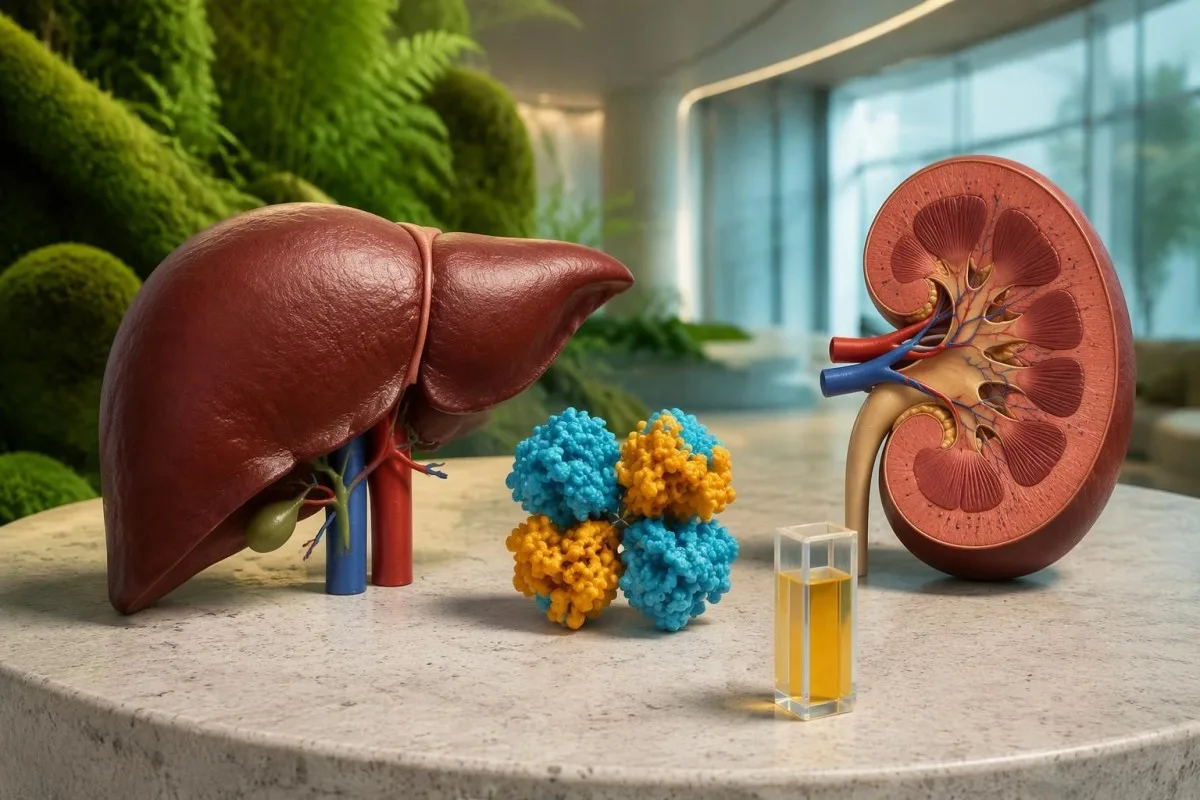
Reduced hepatic synthetic capacity is different from an isolated rise in a liver enzyme. A hypothetical ALT of 80 IU/L does not quantify how much prealbumin the liver can produce; clinicians consider the broader pattern, including albumin, bilirubin, coagulation results, history, and examination. The лабораторні ознаки цирозу guide explains why apparently modest enzyme changes can coexist with more significant liver dysfunction.
Kidney disease can pull the result in more than one direction because reduced catabolism may raise prealbumin while concurrent inflammation or poor intake lowers it. A hypothetical adult with eGFR 25 mL/min/1.73 m² and prealbumin 38 mg/dL may still have clinically significant weight and muscle loss. Our guide to попереджувальні знаки низького eGFR explains the kidney findings that deserve attention beyond this transport protein.
Protein loss in urine should be assessed directly rather than inferred from prealbumin. Urine albumin or protein measurements, serum albumin, and kidney evaluation answer questions that a prealbumin concentration of 16 mg/dL cannot resolve; nephrotic conditions do not produce a reliably predictable prealbumin pattern. The practical step is to bring renal results and liver results to the same appointment, especially before changing protein intake substantially.
Чи можуть рідини, ліки або проблеми з аналізом змінити результати?
Fluid balance, some medicines, and method-specific assay interference can change prealbumin test results. A hypothetical decline from 22 to 16 mg/dL after major fluid administration may partly reflect dilution rather than a sudden change in nutritional reserves.
Prealbumin is a concentration measurement, so the amount of circulating fluid affects how the result is expressed. Rapid fluid retention can lower measured concentrations, while dehydration can raise them; a 3 kg weight increase over several days may represent fluid rather than new tissue. Clinicians therefore distinguish weight recovery from edema and avoid interpreting a falling protein concentration in isolation after resuscitation.
Corticosteroids can increase prealbumin concentrations, although the overall result also depends on the illness being treated. A hypothetical change from 18 to 25 mg/dL after corticosteroid treatment could reflect medication effects, reduced inflammation, nutritional changes, or a mixture of all 3. Record the medicine's name, dose, and start date rather than assuming every increase means that a nutrition plan succeeded.
An unexpected isolated result deserves a check of units, specimen quality, and the laboratory's interference notes before extensive dietary changes. A hypothetical prealbumin of 9 mg/dL alongside several unexpected assay findings may justify discussion with the laboratory; interference is method-dependent, not something every patient needs repeat testing for. Our explanation of inflammation and plasma zinc also shows why several low circulating nutrients or proteins may share a non-dietary explanation.
За якими критеріями насправді діагностують недостатнє харчування у дорослих?
GLIM diagnoses adult malnutrition using at least 1 phenotypic criterion and 1 etiologic criterion after nutritional risk screening. Phenotypic criteria include weight loss, low BMI, or reduced muscle mass; etiologic criteria include reduced intake or assimilation, or inflammation and disease burden.

The international GLIM consensus uses unintentional weight loss greater than 5% within 6 months, or greater than 10% beyond 6 months, as a phenotypic criterion (Cederholm et al., 2019). A hypothetical change from 70 to 66 kg is approximately 5.7% loss, even if the person still appears well nourished. The timing and whether the loss was intended matter as much as the arithmetic.
GLIM's commonly used non-Asian low-BMI thresholds are below 20 kg/m² for adults younger than 70 and below 22 kg/m² for adults aged 70 or older, with population-specific adaptations. These are diagnostic-framework thresholds, not universal healthy-weight boundaries; reduced muscle mass can establish a phenotype even when BMI is higher. Neither BMI nor prealbumin alone captures how much functional tissue a person has lost.
Kantesti is an AI biomarker interpretation platform that explains why prealbumin of 14 mg/dL cannot replace GLIM's clinical criteria. Specific deficiencies can coexist with malnutrition, but a low folate result is a different diagnostic question from total calorie and protein adequacy; our guide to folate deficiency causes makes that distinction. A nutrition assessment should identify the syndrome and its cause, not collect abnormal laboratory flags as a substitute.
Що має включати належне оцінювання харчового статусу?
A useful nutrition assessment documents weight trajectory, actual intake, eating barriers, muscle changes, and disease burden. Reviewing the previous 1–6 months often reveals more than a single prealbumin concentration, particularly when fluid retention or a higher BMI hides tissue loss.

A higher BMI does not exclude malnutrition after substantial unintentional weight loss. A hypothetical adult weighing 80 kg who falls to 74 kg has lost 7.5%; at 1.65 m tall, the current BMI remains approximately 27.2 kg/m² despite that meaningful change. Clinicians ask whether clothing fits differently, strength has declined, and swelling is masking further tissue loss rather than judging nutritional status from appearance.
Reduced intake should be investigated as a symptom with a cause, not treated as a failure of motivation. Difficulty swallowing, painful eating, nausea, dental problems, limited food access, and medication effects require different solutions; a 3-day food record can help describe the pattern but does not diagnose malabsorption. Persistent swallowing problems may need evaluation such as the pathway described in our achalasia diagnostic guide.
Digestive investigations should follow symptoms and risk factors instead of being ordered because prealbumin is below 20 mg/dL. Chronic diarrhea with weight loss may warrant targeted evaluation for intestinal disease, whereas visible food fragments alone do not establish nutrient malabsorption. Our guide to stool inflammation tests explains what those tests can contribute; muscle assessment and intake history still remain necessary even when gastrointestinal testing identifies a cause.
Коли повторне вимірювання преальбуміну справді доцільне?
Repeating prealbumin is useful only when the result will answer a defined clinical question. Its 2–3-day half-life does not justify routine testing every few days, and an increase cannot independently prove that nutrition treatment has restored muscle or body protein.

Prealbumin can rise as inflammation resolves even when food intake has changed very little. In a hypothetical recovery, prealbumin increases from 10 to 18 mg/dL while CRP falls from 120 to 8 mg/L over 10 days; the pattern supports a changing acute-phase response but cannot quantify how much nutrition contributed. Improved concentration is not equivalent to restored strength, healed tissue, or replenished lean mass.
If a clinician chooses to repeat testing, an interval such as 1–2 weeks after a meaningful clinical change may be reasonable, but it is not a universal guideline schedule. Record the illness course, fluid status, medication changes, intake, and laboratory method at both time points. Our guide to meaningful laboratory trends explains why the circumstances surrounding each measurement determine whether comparison is informative.
Kantesti can help organize dated prealbumin measurements, but 2 results cannot reveal unrecorded food intake or establish muscle recovery. ASPEN's 2021 position paper advises against using visceral proteins as nutrition markers, so clinical outcomes and documented intake should lead monitoring rather than a target prealbumin value (Evans et al., 2021). Ask what management decision would change before arranging another measurement.
Чи слід збільшити споживання білка, щоб підвищити рівень преальбуміну?
Increase nutrition when an assessment identifies inadequate intake or increased needs—not simply to push prealbumin above 20 mg/dL. A low result does not specify a protein dose, and kidney disease, severe illness, fluid restrictions, and refeeding risk can change the appropriate plan.
For adults requiring nutrition support who are not severely ill and are not at refeeding risk, NICE CG32 gives general estimates of 25–35 kcal/kg/day and 0.8–1.5 g protein/kg/day (NICE, 2006). These are planning ranges with clinical exceptions, not instructions for everyone with low prealbumin. The CG32 nutrition-support guidance also addresses fluid, electrolytes, micronutrients, and the route through which nutrition is delivered.
A hypothetical 60 kg adult would have an estimated range of 1,500–2,100 kcal/day and 48–90 g protein/day under those general assumptions. The wide range reflects different needs; it is not a reason to choose the highest protein intake automatically, particularly with kidney disease. Our discussion of безпечні обмеження в дієті при захворюваннях нирок explains why an AI-generated plan still needs appropriate clinical constraints.
Food fortification or oral nutrition supplements may help when ordinary meals do not meet documented needs, but treating the eating barrier remains necessary. A hypothetical person managing only 50% of meals because of persistent nausea needs evaluation of the nausea as well as a feasible nutrition plan. There is no established prealbumin threshold that automatically requires protein powders, intravenous nutrition, or a particular supplement formulation.
Коли низьке споживання їжі та захворювання потребують невідкладної уваги?
Urgency comes from symptoms, prolonged inadequate intake, and metabolic risk—not the prealbumin number alone. NICE identifies more than 10 days with little or no nutrition as one high-risk criterion for refeeding problems, which require supervised nutrition restoration.
Seek urgent care for confusion, fainting, severe weakness, inability to keep fluids down, very little urine, or breathing difficulty, regardless of whether prealbumin is 8 or 28 mg/dL. Persistent vomiting or diarrhea can create dehydration and electrolyte problems before a transport-protein result becomes informative. Our digestive warning signs guide helps distinguish symptoms that need assessment rather than another nutrition-marker test.
Refeeding risk depends on history and clinical findings, not on a low prealbumin concentration. NICE lists BMI below 16 kg/m², unintentional weight loss greater than 15% over 3–6 months, more than 10 days of minimal intake, or low potassium, phosphate, or magnesium before feeding as individual high-risk criteria; combinations of less severe findings can also qualify. A normal initial electrolyte result does not guarantee that body stores are adequate.
For people who have eaten little or nothing for more than 5 days, NICE recommends initially introducing nutrition at no more than 50% of requirements for the first 2 days, with monitoring. High-risk plans may start at no more than 10 kcal/kg/day under experienced clinical supervision, with thiamine and electrolyte management (NICE, 2006). These figures explain why simply drinking several high-calorie supplements at once can be unsafe after prolonged restriction—they are not a home treatment protocol.
Як ШІ може допомогти безпечно інтерпретувати рівень преальбуміну?
AI can explain prealbumin terminology, organize related results, and identify missing context; it cannot diagnose nutritional status from a laboratory report alone. A result of 12 mg/dL needs information about illness, intake, weight, medications, and organ function before its meaning becomes clearer.
Kantesti is an AI blood test interpretation platform that helps explain why prealbumin of 12 mg/dL and CRP of 90 mg/L should be read as different measurements. Our пояснення технології ШІ describes the interpretation workflow; the safe clinical boundary remains the same whether the explanation is generated quickly or reviewed slowly. Software cannot palpate muscle, observe swallowing, or independently verify the meals someone actually consumed.
A useful interpretation separates measured facts from missing information instead of presenting one confident diagnosis. For example, a hypothetical report containing prealbumin 12 mg/dL but no CRP or weight history should describe those gaps and suggest discussion of nutritional screening, rather than assign a malnutrition grade. Check whether the explanation preserves your laboratory's units and reference interval before using it to prepare questions for an appointment.
Clinical standards should be judged against the specific task, not a broad accuracy claim that covers every medical decision. Even a correct interpretation of 20 mg/dL cannot establish nutrition adequacy without an assessment, and no software benchmark changes that limitation. Our framework валідації та нагляду is relevant to evaluating methodology; decisions about nutrition support, diagnosis, or urgent care remain matters for qualified healthcare professionals.
Які публікації підтверджують ці обмеження в оцінюванні харчового статусу?
The clinical conclusions here rest on nutrition guidance, not on unrelated AI publications. The 2021 ASPEN position paper, the 2019 GLIM consensus, and NICE CG32 address different questions: protein-marker limitations, malnutrition diagnosis, and safe nutrition support.
ASPEN's 2021 paper explains why low visceral proteins should not serve as nutrition markers, while GLIM's 2019 consensus specifies the clinical criteria needed to diagnose malnutrition. Neither establishes a prealbumin-only diagnostic cutoff such as 10 or 15 mg/dL; these numbers can describe laboratory abnormalities without proving their cause. NICE CG32 adds practical safety guidance for nutrition support, including the separate assessment of refeeding risk.
Shared inflammatory effects also explain why a broader laboratory panel needs careful interpretation rather than simple abnormal-result counting. A hypothetical low prealbumin of 13 mg/dL alongside low transferrin may reflect one acute-phase mechanism; ferritin can move in the opposite direction during inflammation and complicate assessment of iron stores. Our посібник з інтерпретації аналізів на залізо explains why biochemical pattern recognition must remain connected to the clinical question.
Kantesti's 2 Figshare publications listed below concern women's health education and multilingual hantavirus decision support, respectively. They are included as separate research resources, not as evidence that prealbumin diagnoses malnutrition or that an AI nutrition plan improves clinical outcomes. Our стандарти медичного контенту explain the source-quality distinction readers should expect: a repository DOI identifies a publication, but it does not by itself establish peer review or relevance to this nutrition question.
Поширені запитання
Чи завжди низький рівень преальбуміну свідчить про недоїдання?
Низький рівень преальбуміну не завжди свідчить про недостатнє харчування, і лише за ним неможливо встановити такий діагноз. Результат 12 мг/дл може бути наслідком запалення, зниження вироблення в печінці, недостатнього споживання їжі або кількох причин одночасно. Під час оцінювання недостатнього харчування в дорослих враховують ненавмисне зниження маси тіла, м’язову масу, споживання або засвоєння поживних речовин і тягар захворювання. Згідно з системою GLIM, після скринінгу ризику порушення харчового статусу необхідна наявність щонайменше 1 фенотипового та 1 етіологічного критерію.
Який рівень преальбуміну є нормальним?
Поширений референтний інтервал преальбуміну для дорослих становить приблизно 20–40 мг/дл, що відповідає 0,20–0,40 г/л. У деяких лабораторіях використовують інші інтервали, тому пріоритет має діапазон, указаний у вашому звіті. Значення 200 мг/л дорівнює 20 мг/дл, що важливо враховувати під час порівняння звітів із різними одиницями вимірювання. Результат у межах інтервалу не виключає недостатнього харчування, а результати для дітей потрібно інтерпретувати з урахуванням віку.
Чи може запалення знижувати рівень преальбуміну, якщо я достатньо харчуюся?
Запалення може знижувати рівень преальбуміну, навіть якщо останнім часом людина споживала достатньо їжі, оскільки преальбумін є негативним білком гострої фази. Його період напіврозпаду становить приблизно 2–3 дні, тому концентрація може змінюватися відносно швидко, коли під час хвороби змінюється вироблення білка печінкою. CRP може допомогти виявити цей контекст, але валідованої формули корекції CRP для оцінювання нутритивного статусу немає. Навіть достатнє харчування не повністю запобігає втраті м’язової маси, пов’язаній із хворобою, під час тривалого катаболізму.
Чи небезпечний рівень преальбуміну нижче 10 мг/дл?
Рівень преальбуміну нижче 10 мг/дл суттєво нижчий за багато референтних інтервалів для дорослих, але сам по собі не є порогом невідкладного стану чи валідованим ступенем тяжкості недостатнього харчування. Щоб визначити терміновість, лікарі оцінюють основне захворювання, споживання їжі, зміну ваги, функцію органів і симптоми. Сплутаність свідомості, непритомність, неможливість утримувати рідину в організмі, дуже мала кількість сечі або утруднене дихання потребують невідкладної оцінки незалежно від результату аналізу на преальбумін. Якщо людина тривалий час майже нічого не їла, перед швидким збільшенням обсягу харчування також необхідно оцінити ризик синдрому відновленого харчування.
Як швидко має покращитися рівень преальбуміну за умови кращого харчування?
Немає достовірного графіка покращення рівня преальбуміну, який доводив би ефективність нутритивної терапії. Хоча період його напіврозпаду становить приблизно 2–3 дні, рівень преальбуміну може зростати внаслідок стихання запалення або змін впливу медикаментів і рідини. Тому гіпотетичне підвищення з 10 до 18 мг/дл саме по собі не дає змоги оцінити ступінь нутритивного відновлення. Під час моніторингу слід надавати пріоритет задокументованому споживанню їжі, масі тіла з урахуванням балансу рідини, функції м’язів і основного клінічного стану.
Чи слід приймати протеїнові добавки при низькому рівні преальбуміну?
Сам по собі низький рівень преальбуміну не є підставою для призначення білкових добавок і не дає змоги визначити безпечну дозу. Для окремих дорослих, яким потрібна нутритивна підтримка, але які не мають тяжкого захворювання чи ризику синдрому відновленого годування, NICE наводить загальні орієнтири для планування — 0,8–1,5 г білка/кг/добу, однак індивідуальні потреби й обмеження різняться. Захворювання нирок, проблеми з ковтанням і тривалий період мінімального споживання їжі можуть змінити відповідний план. Обговоріть фактичне споживання їжі та ризик недостатнього харчування з лікарем або дієтологом, а не намагайтеся підвищити лабораторний показник.
Дізнайтеся, як читати аналіз крові
Завантажте лабораторний звіт, і ШІ Kantesti за лічені секунди пояснить кожен біомаркер простою мовою. Ним користуються понад 2 мільйони людей у всьому світі.
Посилання
- Klein, T., Mitchell, S., & Weber, H. (2026). Посібник зі здоров’я жінок: овуляція, менопауза та гормональні симптоми. Медичні дослідження ШІ Kantesti. DOI
- Klein, T., Mitchell, S., & Weber, H. (2026). Багатомовна система підтримки клінічних рішень на основі ШІ для раннього сортування пацієнтів із хантавірусною інфекцією: проєктування, інженерна валідація та впровадження в реальних умовах із використанням 50 000 інтерпретованих звітів про аналізи крові. Медичні дослідження ШІ Kantesti. DOI
- Evans DC et al. (2021). The Use of Visceral Proteins as Nutrition Markers: An ASPEN Position Paper. Nutrition in Clinical Practice. DOI
- Cederholm T et al. (2019). GLIM criteria for the diagnosis of malnutrition – A consensus report from the global clinical nutrition community. Clinical Nutrition. DOI
- National Institute for Health and Care Excellence (2006). Nutrition support for adults: oral nutrition support, enteral tube feeding and parenteral nutrition. NICE Clinical Guideline CG32.
- 2 млн+Проаналізовані тести
- 127+Країни
- 100+Мови
Про медичну команду


Сигнали довіри E-E-A-T
Досвід
Лікарський клінічний огляд робочих процесів інтерпретації лабораторних показників.
Експертиза
Лабораторна медицина з акцентом на те, як біомаркери поводяться в клінічному контексті.
Авторитетність
Медичну рецензію провів доктор Томас Кляйн за участю доктора Сари Мітчелл і професора, доктора Ганса Вебера.
Довірливість
Інтерпретація на основі доказів із чіткими шляхами подальших дій, щоб зменшити тривогу.


Застереження щодо медичної інформації
Ця стаття призначена лише для освітніх цілей і не становить медичної поради. Завжди консультуйтеся з кваліфікованим медичним працівником щодо рішень про діагностику та лікування.
Опубліковано · Зв’язатися з редакційною командою
Опубліковано компанією Kantesti Ltd, зареєстрованою в Англії та Уельсі під номером компанії. 17090423, Лондон, Велика Британія.
