البريألبومين المنخفض ما كيثبتش سوء التغذية: الالتهاب، ووظيفة الكبد، ووظيفة الكلي، وتوازن السوائل يقدرو يبدلو النتيجة بوحدهم، بلا ما تكون عندهم علاقة بكمية الماكلة. التفسير المفيد كيربط هاد الرقم بتغيّرات الوزن، ونقصان العضلات، وكمية الماكلة الفعلية، والمرض اللي تدار عليه التحليل.

أهم الخلاصات
- البريألبومين المنخفض كيعني باللي تركيز بروتين فالدورة الدموية أقل من المجال المرجعي ديال المختبر ديالك؛ النتيجة ديال 12 mg/dL ما كتثبتش سوء التغذية.
- المعدل الطبيعي ديال البريألبومين كيكون غالباً تقريباً بين 20–40 mg/dL عند البالغين، أي ما يعادل 0.20–0.40 g/L، ولكن المختبرات كتستعمل مجالات مرجعية مختلفة.
- الالتهاب يقدر ينقص إنتاج البريألبومين رغم الأكل الكافي؛ ونصف العمر ديالو اللي كيدوم تقريباً 2–3 أيام كيخلي التغيّرات المرتبطة بالمرض تبان بسرعة.
- سياق CRP كيساعد على تفسير البريألبومين المنخفض، ولكن ما كايناش معادلة تصحيح معتمدة ديال CRP كتقدر تحوّل النتيجة لتقييم للحالة الغذائية.
- تشخيص سوء التغذية حسب GLIM، خاص يكون على الأقل معيار ظاهري واحد ومعيار سببي واحد، من بعد التحري على خطر سوء التغذية—ماشي غير نتيجة منخفضة ديال البروتين.
- نقص فالوزن كثر من 5% فظرف 6 شهور كيتحسب معيار ظاهري ديال GLIM، حتى إلا كان BMI باقي فوق المجال المعتاد ديال الوزن الصحي.
- الدعم الغذائي خاصو يلبّي الاحتياجات الموثقة ويتعامل مع العوائق اللي كتصعّب الأكل؛ تقديرات NICE العامة ديال 25–35 kcal/kg/day ماشي أهداف مناسبة للبداية عند الجميع.
- خطر إعادة التغذية خاصو تقييم سريري من بعد مدة طويلة ديال الأكل القليل بزاف؛ أكثر من 10 أيام بأكل قليل أو بلا تغذية كيتحسب واحد من معايير NICE للخطر المرتفع.
واش البريألبومين المنخفض كيعني باللي عندك سوء التغذية؟
نقص البريألبومين يقدر يرافق سوء التغذية، ولكن ما كيقدرش يشخّصو. تركيز ديال 12 mg/dL يقدر يكون مرتبط بالالتهاب، أو بضعف إنتاج الكبد، أو بعدم كفاية الأكل، أو بمجموع ديال هاد العوامل؛ تقييم الحالة الغذائية كيتطلب تقييم الوزن والعضلات والأكل والمرض الأساسي.

إشارة المختبر كتوصف تركيز بروتين واحد، ماشي كمية البروتين المخزونة فالعضلات ديالك. الورقة التوجيهية ديال ASPEN لعام 2021 كاتقول إن الألبومين والبريألبومين كيعكسا بالأساس الالتهاب ماشي الحالة الغذائية، وما خاصهمش يتستعملو كمؤشرات بديلة على بروتين الجسم أو الكتلة العضلية (Evans et al., 2021). القيم المنخفضة تقدر مع ذلك تحدد الناس اللي محتاجين اهتمام سريري أكبر.
تخيّل شخص بالغ كياكل الوجبات المعتادة ديالو، ولكن كيطوّر التهاب رئوي وكيكون عندو البريألبومين 11 mg/dL. شخص بالغ آخر عندو نفس النتيجة يقدر يكون كلا قليل بزاف لمدة 3 أسابيع حيث البلع صعيب؛ نفس الرقم ما كيبينش للأطباء شنو هو التفسير الصحيح. بجوج خاصهم تقييم، ولكن أولويات العلاج مختلفة.
Kantesti هو محلل تحاليل الدم بالذكاء الاصطناعي كيساعد يشرح علاش نتيجة البريألبومين ديال 12 mg/dL كتحتاج سياق سريري وماشي تصنيف تلقائي على أنها سوء تغذية. ديالنا وهدفنا كتشمل تبسيط المعلومات المخبرية—ماشي تعويض فحص الطبيب أو تقييم اختصاصي التغذية. السؤال المفيد هو شنو كيوضح النتيجة وشنو هي الأدلة المستقلة اللي كتثبت وجود مشكل غذائي.
شحال هو المعدل الطبيعي ديال البريألبومين؟
مجال البريألبومين الطبيعي الشائع عند البالغين هو تقريباً 20–40 mg/dL، ما يعادل 0.20–0.40 g/L. المجال اللي كيبان فالتقرير ديالك هو اللي كيتعتمد عليه، حيث السن وطريقة التحليل والسكان المرجعيون ديال المختبر كيأثرو على الحدود.
اختلاف المجالات المرجعية ما كيعنيش بالضرورة أن شي مختبر غلط. بعض التقارير كتستعمل مجالات بحال 15–36 mg/dL، وبالتالي قيمة افتراضية ديال 18 mg/dL يقدر مختبر يعلّم عليها ومختبر آخر لا؛ حتى تصنيف بوحدو ما كيثبتش كفاية التغذية. المجالات المرجعية كتوصف مجموعة للمقارنة، أما المعايير التشخيصية فخاصها تحدد حالة عندها أهمية سريرية.
تحويل الوحدات يقدر يمنع سوء فهم أكبر بزاف من مجرد إشارة لنتيجة حدّية. البريألبومين ديال 200 mg/L كيساوي 20 mg/dL و0.20 g/L؛ يعني التقرير اللي كيبين 0.18 g/L كيعني 18 mg/dL، ماشي تركيز ضئيل بشكل غير عادي. قبل ما تقارن جوج تقارير، تأكد من الوحدات والمجال المخبري وظروف أخذ العينة، وما تقارنش غير الأرقام المطبوعة.
التركيز اللي أقل من 10 mg/dL كيكون أقل بزاف من بزاف ديال المجالات المرجعية عند البالغين، ولكن ما كاينش حد عالمي للبريألبومين بوحدو كيدل على حالة استعجالية، ولا مقياس موثّق لشدة سوء التغذية. الـ دليل الألبومين وبروتينات المصل كيوضح علاش البروتينات اللي كتدور فالدم ما كتقومش مقام تقييم الحالة الغذائية. نتائج الأطفال خاصها تفسير حسب السن؛ والجدول ديال البالغين اللي جاي ما خاصوش يتطبق على الأطفال.
| المستوى | النطاق | شنو كتعني |
|---|---|---|
| المجال المعتاد عند البالغين | 20–40 mg/dL | داخل مجال شائع الاستعمال؛ وما كينفيش سوء التغذية. |
| أقل من هاد المجال التوضيحي | 10–<20 mg/dL | Review inflammation, intake, liver function, kidney function, and fluid balance. |
| Markedly below this interval | <10 ملغم/ديسيلتر | Needs clinical explanation; not a stand-alone malnutrition grade or emergency cutoff. |
| Above this example interval | >40 mg/dL | May occur with reduced renal catabolism or medication effects; does not prove excellent nutrition. |
شنو كيقيس تحليل البريألبومين بالضبط؟
The prealbumin test measures الترانستيريتين, a transport protein produced mainly by the liver for circulation. Its approximately 2–3-day half-life allows relatively rapid changes, but a rapid response does not make it specific to food intake.
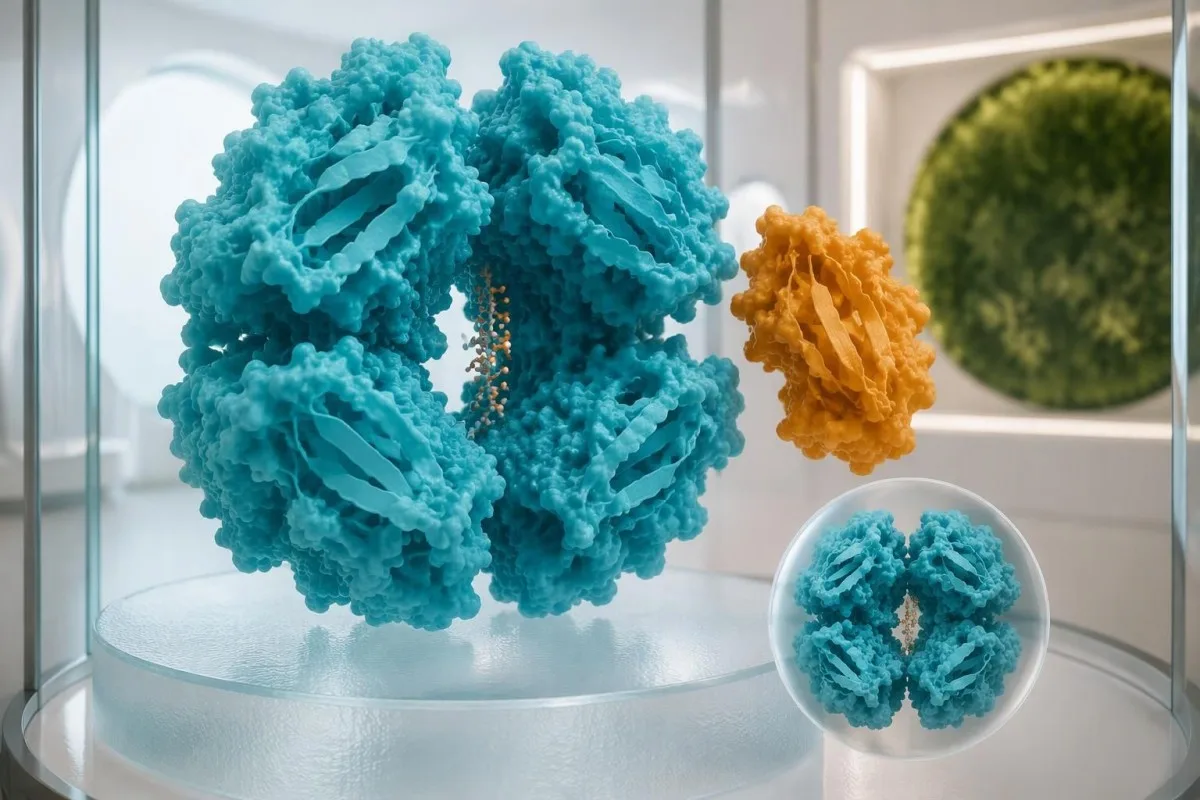
Prealbumin is not an immature form of albumin and does not turn into albumin. The name comes from its migration ahead of albumin during electrophoresis; albumin has a much longer circulating half-life, roughly 20 days, compared with about 2–3 days for prealbumin. These different turnover rates explain why the two results can move at different speeds during an illness.
Transthyretin normally forms a tetramer of 4 protein subunits and carries some circulating thyroxine, or T4. It also interacts with retinol-binding protein, which carries vitamin A; a low prealbumin concentration nevertheless does not independently diagnose either thyroid disease or vitamin A deficiency. Transport-protein concentration, hormone activity, and tissue nutrient stores answer different biological questions.
A low concentration is also different from finding a disease-associated variant in the TTR gene. A hypothetical prealbumin result of 14 mg/dL is not a genetic screening result and does not diagnose hereditary ATTR amyloidosis; that evaluation uses a separate clinical and genetic pathway. Our explanation of TTR variants and amyloidosis helps separate these easily confused meanings of the same protein name.
علاش الالتهاب كيهبط البريألبومين رغم الأكل؟
Prealbumin is a negative acute-phase protein: its circulating concentration often falls during inflammation as liver protein production changes. A hypothetical value of 10 mg/dL during severe illness can therefore occur even when recent calorie and protein intake have been adequate.
Inflammatory signaling changes what the liver produces rather than simply indicating that the patient skipped meals. Mediators including interleukin-6 promote the acute-phase response, while concentrations of proteins such as prealbumin can decline; its 2–3-day half-life makes that shift relatively quick. The IL-6 interpretation guide explains why timing and illness context matter, although IL-6 testing is not routinely needed to assess nutrition.
Inflammation can lower prealbumin independently of intake and also increase nutritional risk through appetite loss and catabolism. These are 2 overlapping processes, not competing explanations: a person may initially eat adequately yet lose muscle during prolonged illness because the body's metabolic demands and tissue breakdown have changed. Calling the result 'just inflammation' can therefore be as misleading as calling it proof of starvation.
Other negative acute-phase proteins may move in the same direction, so a combination of low prealbumin and low transferrin does not provide 2 independent confirmations of malnutrition. Their shared response to inflammation can create an apparently convincing pattern from the same underlying mechanism. Our guide to inflammation and low transferrin explains why clinicians examine the cause before interpreting several low transport proteins as dietary deficiencies.
كيفاش خاصنا نقراو البريألبومين وCRP بجوج؟
CRP helps identify inflammatory context, but it cannot correct prealbumin into a nutrition score. A hypothetical combination of prealbumin 12 mg/dL and CRP 90 mg/L strongly raises concern that an acute-phase response is influencing the protein result.
A normal CRP reduces evidence for a substantial systemic acute-phase response at that moment, but it does not prove that low prealbumin is dietary. Many laboratories use a CRP upper limit around 5 mg/L, while others use 10 mg/L; sampling timing, localized disease, and liver disease can complicate interpretation. There is no universal CRP cutoff below which prealbumin becomes a validated malnutrition test.
Discordant inflammatory markers should lead to questions about timing, symptoms, and treatment rather than a mathematical workaround. A hypothetical patient with prealbumin 13 mg/dL, CRP 4 mg/L, and a normal white cell count still needs an intake and weight history; clinicians may also investigate liver function or persistent symptoms. Our discussion of disagreeing infection markers explains why one reassuring marker cannot settle the whole clinical picture.
Kantesti AI can help readers distinguish a prealbumin result of 12 mg/dL from a CRP result of 90 mg/L and understand what each measurement contributes. Neither a prealbumin-to-CRP ratio nor dividing one value by the other is an accepted substitute for nutritional assessment. When CRP is missing, that uncertainty should remain visible—not be replaced by a confident dietary diagnosis.
كيفاش أمراض الكبد والكلي كتبدل البريألبومين؟
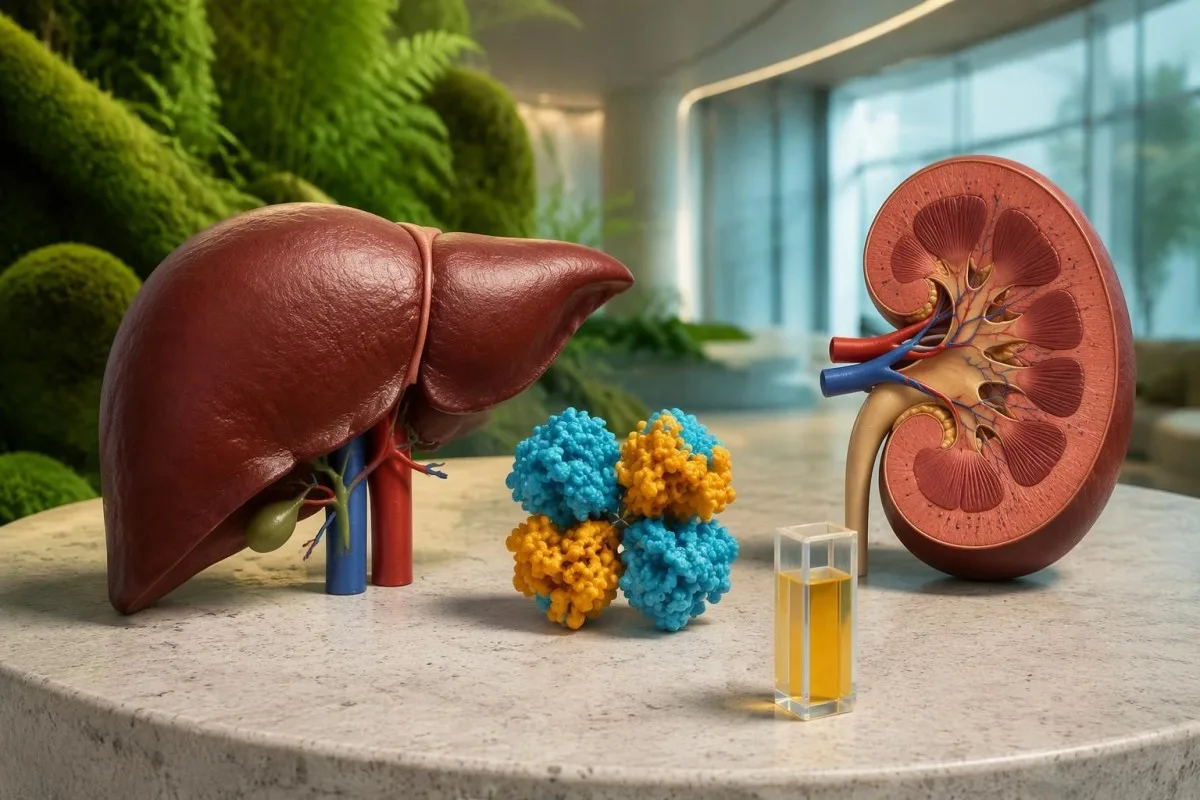
Liver disease can reduce prealbumin production, while impaired kidney function can increase its concentration through reduced catabolism. A value of 15 mg/dL or 45 mg/dL therefore cannot be interpreted as poor or excellent nutrition without knowing the organ-function context.
Reduced hepatic synthetic capacity is different from an isolated rise in a liver enzyme. A hypothetical ALT of 80 IU/L does not quantify how much prealbumin the liver can produce; clinicians consider the broader pattern, including albumin, bilirubin, coagulation results, history, and examination. The مؤشرات التحاليل المخبرية لتشمّع الكبد guide explains why apparently modest enzyme changes can coexist with more significant liver dysfunction.
Kidney disease can pull the result in more than one direction because reduced catabolism may raise prealbumin while concurrent inflammation or poor intake lowers it. A hypothetical adult with eGFR 25 mL/min/1.73 m² and prealbumin 38 mg/dL may still have clinically significant weight and muscle loss. Our guide to علامات تحذير انخفاض eGFR explains the kidney findings that deserve attention beyond this transport protein.
Protein loss in urine should be assessed directly rather than inferred from prealbumin. Urine albumin or protein measurements, serum albumin, and kidney evaluation answer questions that a prealbumin concentration of 16 mg/dL cannot resolve; nephrotic conditions do not produce a reliably predictable prealbumin pattern. The practical step is to bring renal results and liver results to the same appointment, especially before changing protein intake substantially.
واش السوائل، ولا الأدوية، ولا مشاكل التحليل يقدرو يبدلو النتائج؟
Fluid balance, some medicines, and method-specific assay interference can change prealbumin test results. A hypothetical decline from 22 to 16 mg/dL after major fluid administration may partly reflect dilution rather than a sudden change in nutritional reserves.
Prealbumin is a concentration measurement, so the amount of circulating fluid affects how the result is expressed. Rapid fluid retention can lower measured concentrations, while dehydration can raise them; a 3 kg weight increase over several days may represent fluid rather than new tissue. Clinicians therefore distinguish weight recovery from edema and avoid interpreting a falling protein concentration in isolation after resuscitation.
Corticosteroids can increase prealbumin concentrations, although the overall result also depends on the illness being treated. A hypothetical change from 18 to 25 mg/dL after corticosteroid treatment could reflect medication effects, reduced inflammation, nutritional changes, or a mixture of all 3. Record the medicine's name, dose, and start date rather than assuming every increase means that a nutrition plan succeeded.
An unexpected isolated result deserves a check of units, specimen quality, and the laboratory's interference notes before extensive dietary changes. A hypothetical prealbumin of 9 mg/dL alongside several unexpected assay findings may justify discussion with the laboratory; interference is method-dependent, not something every patient needs repeat testing for. Our explanation of inflammation and plasma zinc also shows why several low circulating nutrients or proteins may share a non-dietary explanation.
شنو هي المعايير اللي كتشخّص فعلاً سوء التغذية عند البالغين؟
GLIM diagnoses adult malnutrition using at least 1 phenotypic criterion and 1 etiologic criterion after nutritional risk screening. Phenotypic criteria include weight loss, low BMI, or reduced muscle mass; etiologic criteria include reduced intake or assimilation, or inflammation and disease burden.

The international GLIM consensus uses unintentional weight loss greater than 5% within 6 months, or greater than 10% beyond 6 months, as a phenotypic criterion (Cederholm et al., 2019). A hypothetical change from 70 to 66 kg is approximately 5.7% loss, even if the person still appears well nourished. The timing and whether the loss was intended matter as much as the arithmetic.
GLIM's commonly used non-Asian low-BMI thresholds are below 20 kg/m² for adults younger than 70 and below 22 kg/m² for adults aged 70 or older, with population-specific adaptations. These are diagnostic-framework thresholds, not universal healthy-weight boundaries; reduced muscle mass can establish a phenotype even when BMI is higher. Neither BMI nor prealbumin alone captures how much functional tissue a person has lost.
Kantesti is an AI biomarker interpretation platform that explains why prealbumin of 14 mg/dL cannot replace GLIM's clinical criteria. Specific deficiencies can coexist with malnutrition, but a low folate result is a different diagnostic question from total calorie and protein adequacy; our guide to folate deficiency causes makes that distinction. A nutrition assessment should identify the syndrome and its cause, not collect abnormal laboratory flags as a substitute.
شنو خاص يكون فالتقييم الغذائي المتكامل؟
A useful nutrition assessment documents weight trajectory, actual intake, eating barriers, muscle changes, and disease burden. Reviewing the previous 1–6 months often reveals more than a single prealbumin concentration, particularly when fluid retention or a higher BMI hides tissue loss.

A higher BMI does not exclude malnutrition after substantial unintentional weight loss. A hypothetical adult weighing 80 kg who falls to 74 kg has lost 7.5%; at 1.65 m tall, the current BMI remains approximately 27.2 kg/m² despite that meaningful change. Clinicians ask whether clothing fits differently, strength has declined, and swelling is masking further tissue loss rather than judging nutritional status from appearance.
Reduced intake should be investigated as a symptom with a cause, not treated as a failure of motivation. Difficulty swallowing, painful eating, nausea, dental problems, limited food access, and medication effects require different solutions; a 3-day food record can help describe the pattern but does not diagnose malabsorption. Persistent swallowing problems may need evaluation such as the pathway described in our achalasia diagnostic guide.
Digestive investigations should follow symptoms and risk factors instead of being ordered because prealbumin is below 20 mg/dL. Chronic diarrhea with weight loss may warrant targeted evaluation for intestinal disease, whereas visible food fragments alone do not establish nutrient malabsorption. Our guide to stool inflammation tests explains what those tests can contribute; muscle assessment and intake history still remain necessary even when gastrointestinal testing identifies a cause.
فوقاش كتكون إعادة تحليل البريألبومين مفيدة فعلاً؟
Repeating prealbumin is useful only when the result will answer a defined clinical question. Its 2–3-day half-life does not justify routine testing every few days, and an increase cannot independently prove that nutrition treatment has restored muscle or body protein.

Prealbumin can rise as inflammation resolves even when food intake has changed very little. In a hypothetical recovery, prealbumin increases from 10 to 18 mg/dL while CRP falls from 120 to 8 mg/L over 10 days; the pattern supports a changing acute-phase response but cannot quantify how much nutrition contributed. Improved concentration is not equivalent to restored strength, healed tissue, or replenished lean mass.
If a clinician chooses to repeat testing, an interval such as 1–2 weeks after a meaningful clinical change may be reasonable, but it is not a universal guideline schedule. Record the illness course, fluid status, medication changes, intake, and laboratory method at both time points. Our guide to meaningful laboratory trends explains why the circumstances surrounding each measurement determine whether comparison is informative.
Kantesti can help organize dated prealbumin measurements, but 2 results cannot reveal unrecorded food intake or establish muscle recovery. ASPEN's 2021 position paper advises against using visceral proteins as nutrition markers, so clinical outcomes and documented intake should lead monitoring rather than a target prealbumin value (Evans et al., 2021). Ask what management decision would change before arranging another measurement.
واش خاصك تزيد فالبروتين باش يطلع البريألبومين؟
Increase nutrition when an assessment identifies inadequate intake or increased needs—not simply to push prealbumin above 20 mg/dL. A low result does not specify a protein dose, and kidney disease, severe illness, fluid restrictions, and refeeding risk can change the appropriate plan.
For adults requiring nutrition support who are not severely ill and are not at refeeding risk, NICE CG32 gives general estimates of 25–35 kcal/kg/day and 0.8–1.5 g protein/kg/day (NICE, 2006). These are planning ranges with clinical exceptions, not instructions for everyone with low prealbumin. The CG32 nutrition-support guidance also addresses fluid, electrolytes, micronutrients, and the route through which nutrition is delivered.
A hypothetical 60 kg adult would have an estimated range of 1,500–2,100 kcal/day and 48–90 g protein/day under those general assumptions. The wide range reflects different needs; it is not a reason to choose the highest protein intake automatically, particularly with kidney disease. Our discussion of الحدود الآمنة للنظام الغذائي ديال الكلى explains why an AI-generated plan still needs appropriate clinical constraints.
Food fortification or oral nutrition supplements may help when ordinary meals do not meet documented needs, but treating the eating barrier remains necessary. A hypothetical person managing only 50% of meals because of persistent nausea needs evaluation of the nausea as well as a feasible nutrition plan. There is no established prealbumin threshold that automatically requires protein powders, intravenous nutrition, or a particular supplement formulation.
فوقاش كيحتاج نقص الماكلة والمرض اهتمام مستعجل؟
Urgency comes from symptoms, prolonged inadequate intake, and metabolic risk—not the prealbumin number alone. NICE identifies more than 10 days with little or no nutrition as one high-risk criterion for refeeding problems, which require supervised nutrition restoration.
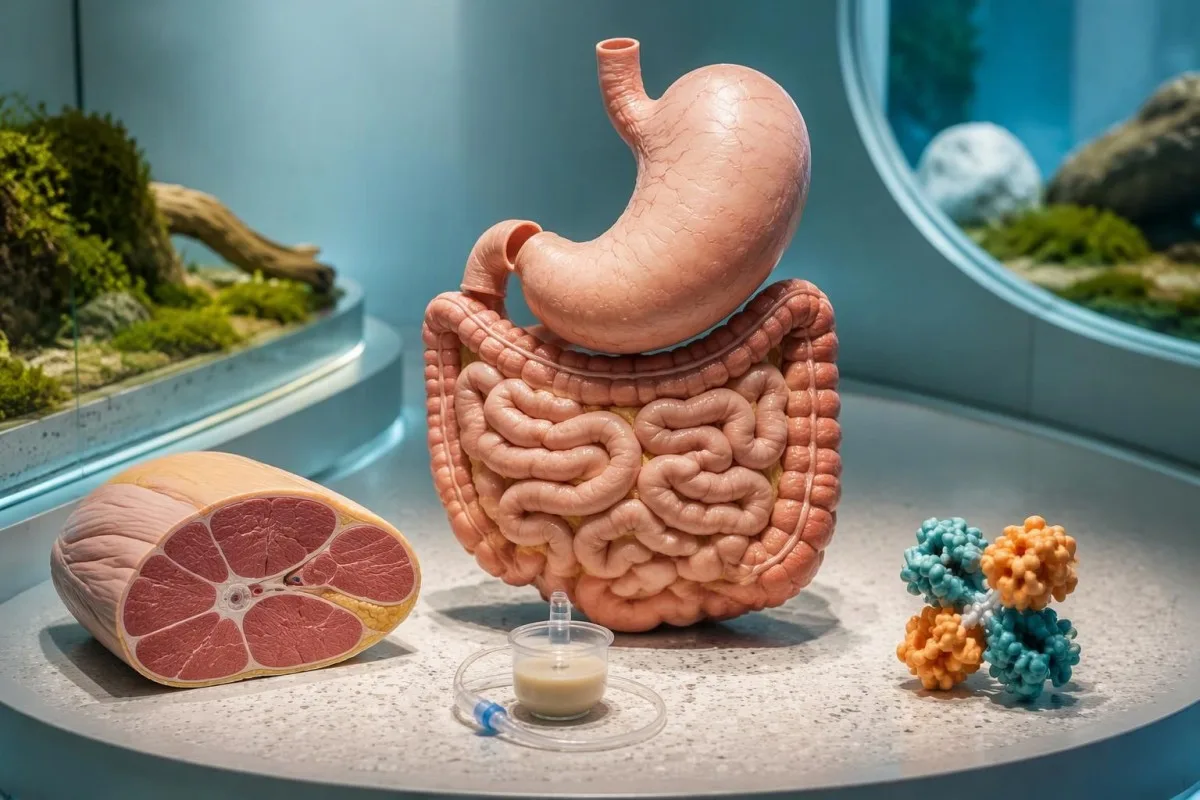
Seek urgent care for confusion, fainting, severe weakness, inability to keep fluids down, very little urine, or breathing difficulty, regardless of whether prealbumin is 8 or 28 mg/dL. Persistent vomiting or diarrhea can create dehydration and electrolyte problems before a transport-protein result becomes informative. Our digestive warning signs guide helps distinguish symptoms that need assessment rather than another nutrition-marker test.
Refeeding risk depends on history and clinical findings, not on a low prealbumin concentration. NICE lists BMI below 16 kg/m², unintentional weight loss greater than 15% over 3–6 months, more than 10 days of minimal intake, or low potassium, phosphate, or magnesium before feeding as individual high-risk criteria; combinations of less severe findings can also qualify. A normal initial electrolyte result does not guarantee that body stores are adequate.
For people who have eaten little or nothing for more than 5 days, NICE recommends initially introducing nutrition at no more than 50% of requirements for the first 2 days, with monitoring. High-risk plans may start at no more than 10 kcal/kg/day under experienced clinical supervision, with thiamine and electrolyte management (NICE, 2006). These figures explain why simply drinking several high-calorie supplements at once can be unsafe after prolonged restriction—they are not a home treatment protocol.
كيفاش يقدر الذكاء الاصطناعي يعاون فتفسير البريألبومين بأمان؟
AI can explain prealbumin terminology, organize related results, and identify missing context; it cannot diagnose nutritional status from a laboratory report alone. A result of 12 mg/dL needs information about illness, intake, weight, medications, and organ function before its meaning becomes clearer.
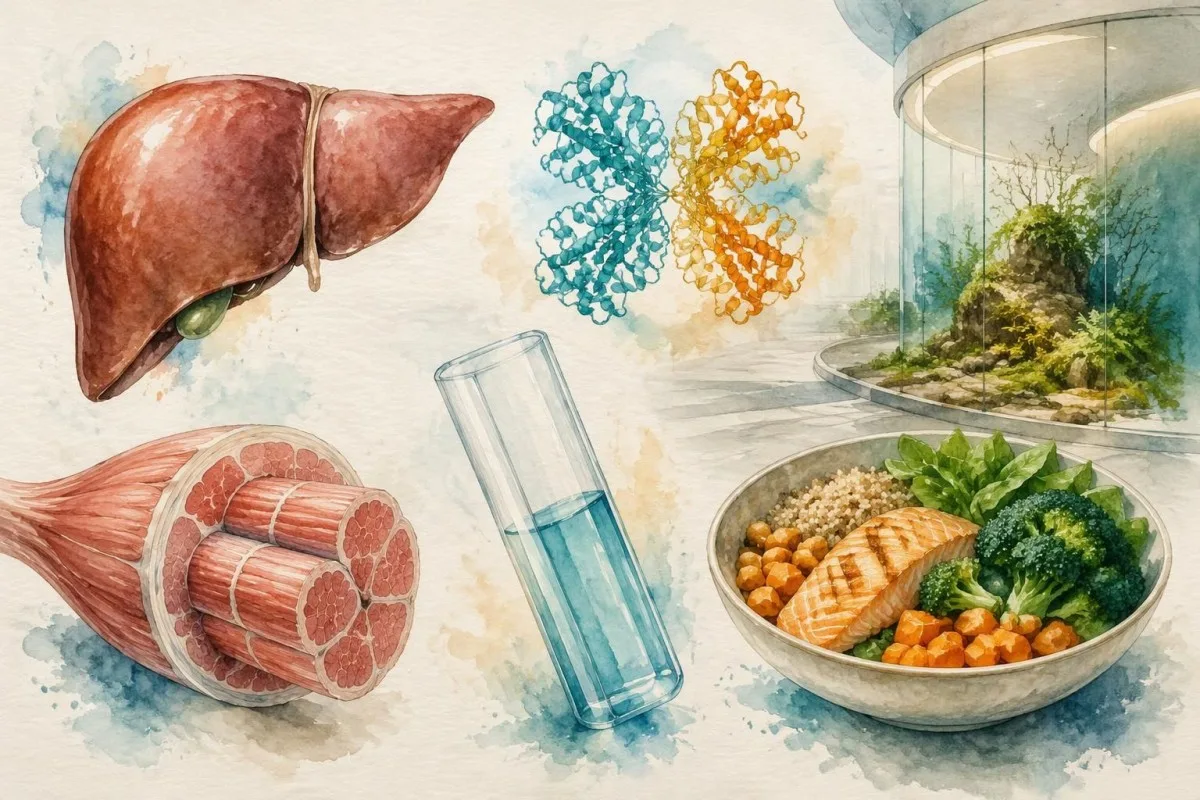
Kantesti is an AI blood test interpretation platform that helps explain why prealbumin of 12 mg/dL and CRP of 90 mg/L should be read as different measurements. Our شرح تقنية الذكاء الاصطناعي describes the interpretation workflow; the safe clinical boundary remains the same whether the explanation is generated quickly or reviewed slowly. Software cannot palpate muscle, observe swallowing, or independently verify the meals someone actually consumed.
A useful interpretation separates measured facts from missing information instead of presenting one confident diagnosis. For example, a hypothetical report containing prealbumin 12 mg/dL but no CRP or weight history should describe those gaps and suggest discussion of nutritional screening, rather than assign a malnutrition grade. Check whether the explanation preserves your laboratory's units and reference interval before using it to prepare questions for an appointment.
Clinical standards should be judged against the specific task, not a broad accuracy claim that covers every medical decision. Even a correct interpretation of 20 mg/dL cannot establish nutrition adequacy without an assessment, and no software benchmark changes that limitation. Our إطار التحقق والإشراف is relevant to evaluating methodology; decisions about nutrition support, diagnosis, or urgent care remain matters for qualified healthcare professionals.
شنو هي المنشورات اللي كتدعم هاد الحدود فالتغذية؟
The clinical conclusions here rest on nutrition guidance, not on unrelated AI publications. The 2021 ASPEN position paper, the 2019 GLIM consensus, and NICE CG32 address different questions: protein-marker limitations, malnutrition diagnosis, and safe nutrition support.
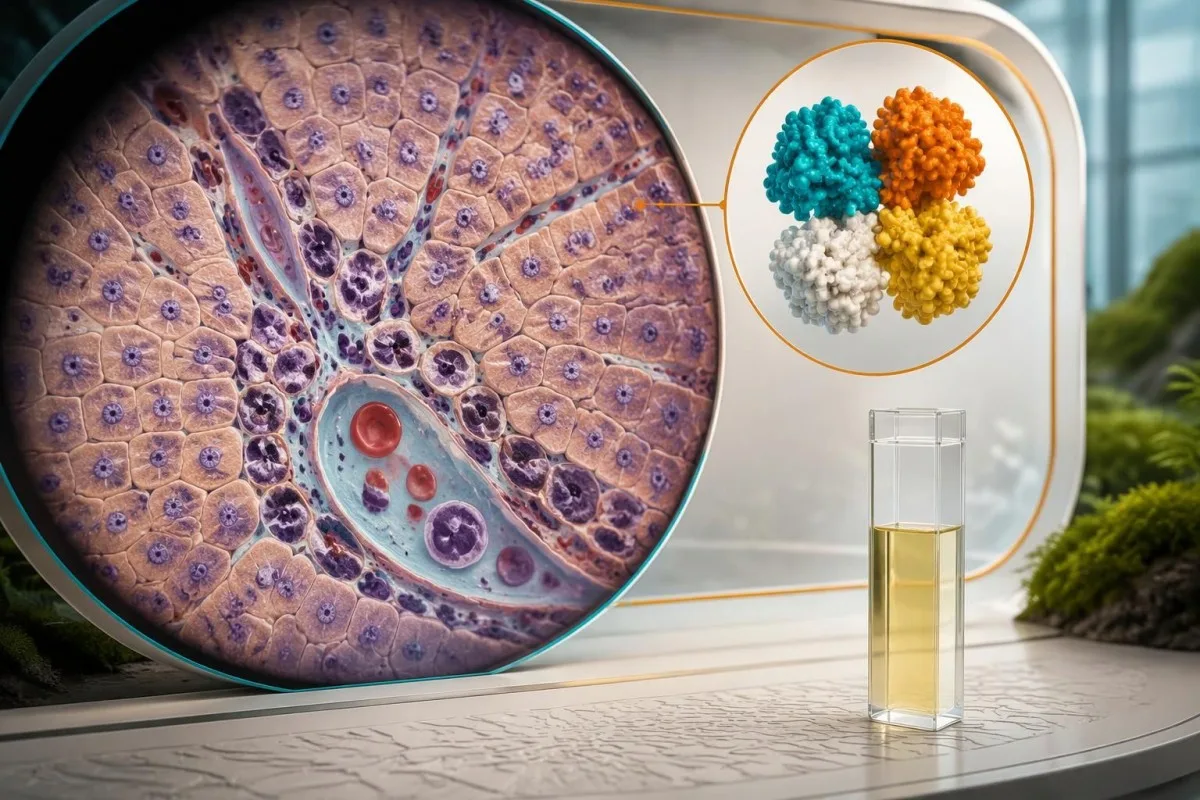
ASPEN's 2021 paper explains why low visceral proteins should not serve as nutrition markers, while GLIM's 2019 consensus specifies the clinical criteria needed to diagnose malnutrition. Neither establishes a prealbumin-only diagnostic cutoff such as 10 or 15 mg/dL; these numbers can describe laboratory abnormalities without proving their cause. NICE CG32 adds practical safety guidance for nutrition support, including the separate assessment of refeeding risk.
Shared inflammatory effects also explain why a broader laboratory panel needs careful interpretation rather than simple abnormal-result counting. A hypothetical low prealbumin of 13 mg/dL alongside low transferrin may reflect one acute-phase mechanism; ferritin can move in the opposite direction during inflammation and complicate assessment of iron stores. Our دليل تفسير دراسات الحديد explains why biochemical pattern recognition must remain connected to the clinical question.
Kantesti's 2 Figshare publications listed below concern women's health education and multilingual hantavirus decision support, respectively. They are included as separate research resources, not as evidence that prealbumin diagnoses malnutrition or that an AI nutrition plan improves clinical outcomes. Our معايير المحتوى الطبي explain the source-quality distinction readers should expect: a repository DOI identifies a publication, but it does not by itself establish peer review or relevance to this nutrition question.
أسئلة متكررة
واش نقص البريألبومين كيعني ديما سوء التغذية؟
انخفاض البريألبومين ما كيعنيش ديما سوء التغذية، وما كيقدرش يشخّصو بوحدو. نتيجة ديال 12 mg/dL تقدر تعكس الالتهاب، أو نقص إنتاج الكبد، أو عدم كفاية المدخول الغذائي، أو عدة أسباب مجتمعة. تقييم سوء التغذية عند البالغين كياخذ بعين الاعتبار فقدان الوزن غير المقصود، والكتلة العضلية، والمدخول الغذائي أو الاستيعاب، وعبء المرض. إطار GLIM كيتطلب معيار ظاهري واحد على الأقل ومعيار سببي واحد على الأقل، من بعد الفحص ديال مخاطر سوء التغذية.
شنو هو المستوى الطبيعي ديال البريألبومين؟
النطاق المرجعي اللي كيتستعمل غالباً عند البالغين بالنسبة للبريألبومين هو تقريباً 20–40 mg/dL، اللي كيعادل 0.20–0.40 g/L. بعض المختبرات كتعتمد نطاقات مختلفة، لذلك النطاق اللي مطبوع فالتقرير ديالك هو اللي خاص يتعتمد. القيمة ديال 200 mg/L كتعادل 20 mg/dL، وهادشي مهم ملي كتقارن تقارير بوحدات مختلفة. النتيجة اللي داخلة فالنطاق ما كتنفيش سوء التغذية، والنتائج عند الأطفال خاصها تتفسر حسب العمر.
واش الالتهاب يقدر ينقص البريألبومين إلا كنت كناكل كفاية؟
الالتهاب يقدر ينقص البريألبومين حتى إلا كان تناول الماكلة مؤخراً كافي، حيث البريألبومين بروتين كينقص فمرحلة الالتهاب الحاد. ونصف العمر ديالو، اللي كيتراوح تقريباً بين يومين و3 أيام، كيخلي التركيز ديالو يقدر يتبدل بسرعة نسبياً ملي كيتغير إنتاج البروتينات فالكبد أثناء المرض. يقدر CRP يساعد فالتعرف على هاد السياق، ولكن ما كايناش صيغة مُعتمدة لتصحيح CRP باش يتقيّم الوضع الغذائي. وحتى الأكل الكافي ما كيمنعش بشكل كامل فقدان العضلات المرتبط بالمرض خلال الهدم المطوّل.
واش مستوى البريألبومين أقل من 10 mg/dL خطير؟
الپريألبومين اللي كيكون أقل من 10 mg/dL كيبقى هابط بزاف مقارنة مع بزاف ديال النطاقات المرجعية عند البالغين، ولكن ماشي عتبة طوارئ بوحدو وماشي تصنيف مُعتمد لشدة سوء التغذية. الأطباء كياخدو بعين الاعتبار المرض اللي كاين، وكمية الماكلة، والتغيّر فالوزن، ووظائف الأعضاء، والأعراض باش يحددو درجة الاستعجال. التشوش، والإغماء، وعدم القدرة على الاحتفاظ بالسوائل، وقلة البول بزاف، أو صعوبة التنفس، كيتطلبو تقييماً مستعجلاً مهما كانت نتيجة البريألبومين. وحتى قلة الأكل لفترة طويلة كتحتاج تقييماً لاحتمال خطر متلازمة إعادة التغذية قبل الزيادة السريعة فالتغذية.
شحال خاص البريألبومين باش يتحسّن منين كتولي التغذية أحسن؟
ما كاينش جدول زمني موثوق لتحسّن البريألبومين يثبت أن العلاج الغذائي خدام. ورغم أن نصف العمر ديالو كيتراوح تقريباً بين يومين و3 أيام، يقدر البريألبومين يطلع بسبب تراجع الالتهاب أو تغيّر تأثيرات الأدوية والسوائل. لذلك، ارتفاع افتراضي من 10 لـ18 mg/dL ما يقدرش بوحدو يقيس التعافي الغذائي. خاص المراقبة تركّز على المدخول الغذائي الموثّق، والوزن مع الأخذ بعين الاعتبار توازن السوائل، ووظيفة العضلات، والحالة السريرية الأساسية.
واش خاصني ناخد مكمّلات البروتين إلا كان عندي البريألبومين ناقص؟
نتيجة منخفضة ديال prealbumin بوحدها ما كتأكدش باللي كاينة حاجة لمكمّلات البروتين، وما كتحددش جرعة آمنة. بالنسبة لبعض البالغين اللي محتاجين دعم غذائي وما عندهمش مرض خطير ولا خطر متلازمة إعادة التغذية، NICE كتعطي تقديرات عامة للتخطيط: 0.8–1.5 g protein/kg/day، ولكن الاحتياجات والقيود كتختلف من شخص لآخر. أمراض الكلي، ومشاكل البلع، وقلة الأكل لمدة طويلة يقدرو يبدلو الخطة المناسبة. ناقش شحال كتاكل فعلياً وخطر سوء التغذية مع طبيب أو اختصاصي تغذية، بلا ما تحاول ترفع الرقم ديال التحليل.
خذ شرح لنتائج تحليل الدم ديالك
حمّل تقرير التحاليل ديالك، وكيشرح AI ديال Kantesti كل مؤشر حيوي بلغة بسيطة فثواني. كايستعملوه أكثر من 2 مليون شخص فالعالم.
مراجع
- كلاين، ت.، ميتشل، س.، و ويبر، هـ. (2026). دليل صحة المرأة: الإباضة، وانقطاع الطمث، والأعراض الهرمونية. الأبحاث الطبية ديال Kantesti AI. DOI
- كلاين، ت.، ميتشل، س.، و ويبر، هـ. (2026). دعم القرار السريري بمساعدة الذكاء الاصطناعي متعدد اللغات للفرز الأولي لحالات فيروس هانتا: التصميم، والتحقق الهندسي، والتطبيق الواقعي عبر 50,000 تقرير مُفسَّر لتحليل الدم. الأبحاث الطبية ديال Kantesti AI. DOI
- Evans DC et al. (2021). The Use of Visceral Proteins as Nutrition Markers: An ASPEN Position Paper. Nutrition in Clinical Practice. DOI
- Cederholm T et al. (2019). GLIM criteria for the diagnosis of malnutrition – A consensus report from the global clinical nutrition community. Clinical Nutrition. DOI
- National Institute for Health and Care Excellence (2006). Nutrition support for adults: oral nutrition support, enteral tube feeding and parenteral nutrition. NICE Clinical Guideline CG32.
- 2 مليون+الاختبارات المُحلَّلة
- 127+بلدان
- 100+اللغات
نبذة عن الفريق الطبي


إشارات الثقة E-E-A-T
خبرة
مراجعة سريرية يقودها الأطباء لسير عمل تفسير التحاليل.
خبرة
تركيز طب المختبر على كيفية سلوك الـ biomarkers في السياق السريري.
السلطة
راجعها طبياً الدكتور Thomas Klein، بمساهمات من الدكتورة Sarah Mitchell والأستاذ الدكتور Hans Weber.
الجدارة بالثقة
تفسير قائم على الأدلة مع مسارات متابعة واضحة لتقليل الإنذار.


إخلاء المسؤولية الطبية
هذه المقالة لأغراض تعليمية فقط ولا تشكل نصيحة طبية. استشر دائمًا مقدم رعاية صحية مؤهلًا لاتخاذ قرارات التشخيص والعلاج.
نُشر · تواصل مع فريق التحرير
منشور من طرف Kantesti Ltd، مسجل في إنجلترا وويلز، رقم الشركة. 17090423, ، لندن، المملكة المتحدة.
