
Nizka raven prealbumina ne dokazuje podhranjenosti: vnetje, delovanje jeter, delovanje ledvic in ravnovesje tekočin lahko neodvisno od vnosa hrane spremenijo rezultat. Uporabna razlaga povezuje vrednost s spremembami telesne teže, izgubo mišične mase, dejanskim vnosom hrane in boleznijo, zaradi katere je bila preiskava opravljena.

Ključne ugotovitve
- Nizka raven prealbumina pomeni, da je koncentracija beljakovine v krvi nižja od referenčnega območja vašega laboratorija; rezultat 12 mg/dL ne potrjuje podhranjenosti.
- Normalno območje prealbumina je pri odraslih običajno približno 20–40 mg/dL, kar ustreza 0,20–0,40 g/L, vendar laboratoriji uporabljajo različna referenčna območja.
- Vnetje lahko zmanjša tvorbo prealbumina kljub zadostnemu prehranjevanju; zaradi njegove približno 2–3-dnevne razpolovne dobe se spremembe, povezane z boleznijo, pojavijo hitro.
- Kontekst CRP pomaga pojasniti nizko raven prealbumina, vendar ni potrjene formule za korekcijo glede na CRP, ki bi rezultat pretvorila v oceno prehranskega stanja.
- Diagnoza podhranjenosti po merilih GLIM zahteva po presejanju prehranskega tveganja vsaj 1 fenotipsko merilo in 1 etiološko merilo – ne zgolj nizkega rezultata beljakovine.
- Izguba telesne teže več kot 5 % v 6 mesecih je fenotipsko merilo GLIM, tudi kadar BMI ostane nad običajnim razponom zdrave telesne teže.
- Prehranska podpora mora upoštevati dokumentirane potrebe in ovire pri prehranjevanju; splošne ocene NICE v višini 25–35 kcal/kg/dan niso primerne začetne ciljne vrednosti za vsakogar.
- Tveganje ponovnega hranjenja zahteva klinično oceno po daljšem obdobju minimalnega vnosa; več kot 10 dni z malo ali brez prehrane je eno od meril NICE za visoko tveganje.
Ali nizka raven prealbumina pomeni, da ste podhranjeni?
Nizke vrednosti prealbumina lahko spremljajo podhranjenost, vendar je z njimi ni mogoče diagnosticirati. Koncentracija 12 mg/dL lahko odraža vnetje, zmanjšano tvorbo v jetrih, nezadosten vnos ali več dejavnikov hkrati; prehransko stanje je treba oceniti glede na telesno težo, mišično maso, vnos hrane in osnovno bolezen.

Laboratorijska oznaka se nanaša na koncentracijo ene beljakovine, ne na količino beljakovin, shranjenih v mišicah. Stališče združenja ASPEN iz leta 2021 navaja, da albumin in prealbumin predvsem odražata vnetje, ne pa prehranskega stanja, zato ju ne bi smeli uporabljati kot nadomestna kazalnika telesnih beljakovin ali mišične mase (Evans et al., 2021). Nizke vrednosti lahko kljub temu pomagajo prepoznati ljudi, ki potrebujejo natančnejšo klinično obravnavo.
Predstavljajmo si odraslo osebo, ki uživa običajne obroke, a zboli za pljučnico in ima prealbumin 11 mg/dL. Druga odrasla oseba z enakim izvidom je morda zaradi težav s požiranjem 3 tedne zaužila zelo malo hrane; enaka številka zdravnikom ne pove, katera razlaga velja. Obe osebi je treba oceniti, vendar se prednostne naloge pri zdravljenju razlikujejo.
Kantesti je analizator krvnih preiskav z umetno inteligenco, ki pomaga pojasniti, zakaj je pri rezultatu prealbumina 12 mg/dL pomemben klinični kontekst, namesto da bi samodejno označili podhranjenost. Naš organizacija in namen namen vključuje pojasnjevanje laboratorijskih podatkov – ne pa nadomeščanja zdravniškega pregleda ali ocene dietetika. Koristno vprašanje je, kaj pojasnjuje rezultat in kateri dokazi neodvisno potrjujejo prehransko težavo.
Kakšno je normalno območje prealbumina?
Običajni razpon za odrasle za prealbumin je približno 20–40 mg/dL, kar ustreza 0,20–0,40 g/L. Prednost ima referenčni interval na vašem izvidu, saj na meje vplivajo starost, metoda merjenja in referenčna populacija laboratorija.
Različni referenčni intervali ne pomenijo nujno, da je en laboratorij v zmoti. Nekateri izvidi uporabljajo intervale okoli 15–36 mg/dL, zato lahko hipotetična vrednost 18 mg/dL v enem laboratoriju odstopa, v drugem pa ne; nobena od teh oznak sama po sebi ne potrjuje ustrezne prehranjenosti. Referenčni intervali opisujejo primerjalno populacijo, diagnostična merila pa morajo opredeliti klinično pomembno stanje.
Pretvorba enot lahko prepreči veliko večje nesporazume kot mejna oznaka. Prealbumin 200 mg/L je enak 20 mg/dL in 0,20 g/L; izvid z vrednostjo 0,18 g/L torej pomeni 18 mg/dL, ne pa izjemno nizke koncentracije. Pred primerjavo dveh izvidov uskladite enote, laboratorijski interval in okoliščine odvzema, namesto da primerjate zgolj natisnjene številke.
Koncentracija pod 10 mg/dL je znatno nižja od številnih referenčnih intervalov za odrasle, vendar ne obstaja univerzalni prag za nujno ukrepanje, ki bi temeljil samo na prealbuminu, niti potrjena lestvica resnosti podhranjenosti. Ta vodnik po albuminu in serumskih beljakovinah pojasnjuje, zakaj beljakovin v obtoku ni mogoče enačiti s prehransko oceno. Pediatrične izvide je treba razlagati glede na starost; spodnje tabele za odrasle ne uporabljajte pri otrocih.
| Raven | Razpon | Kaj pomeni |
|---|---|---|
| Običajno območje za odrasle | 20–40 mg/dL | Znotraj enega pogosto uporabljenega intervala; podhranjenosti ne izključuje. |
| Pod spodnjo mejo tega primernega intervala | 10–<20 mg/dL | Review inflammation, intake, liver function, kidney function, and fluid balance. |
| Markedly below this interval | <10 mg/dl | Needs clinical explanation; not a stand-alone malnutrition grade or emergency cutoff. |
| Above this example interval | >40 mg/dL | May occur with reduced renal catabolism or medication effects; does not prove excellent nutrition. |
Kaj preiskava prealbumina dejansko meri?
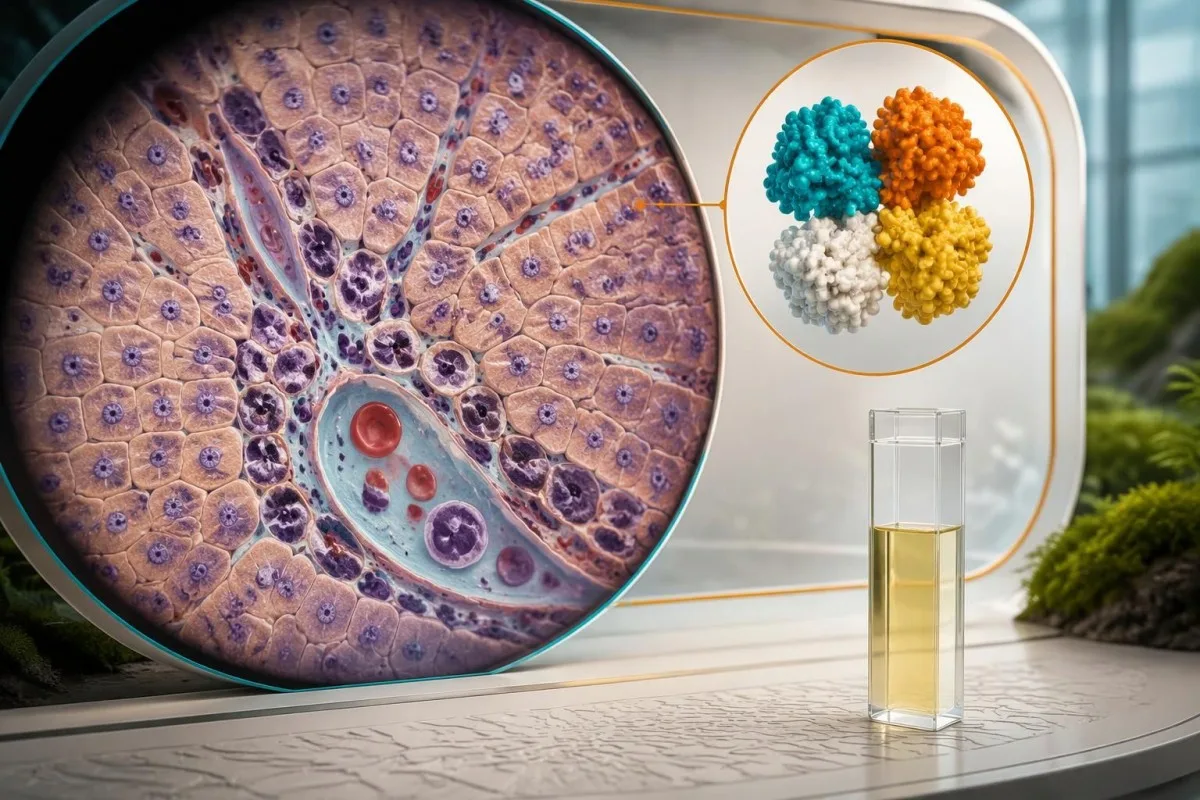
The prealbumin test measures transtiretinin, a transport protein produced mainly by the liver for circulation. Its approximately 2–3-day half-life allows relatively rapid changes, but a rapid response does not make it specific to food intake.
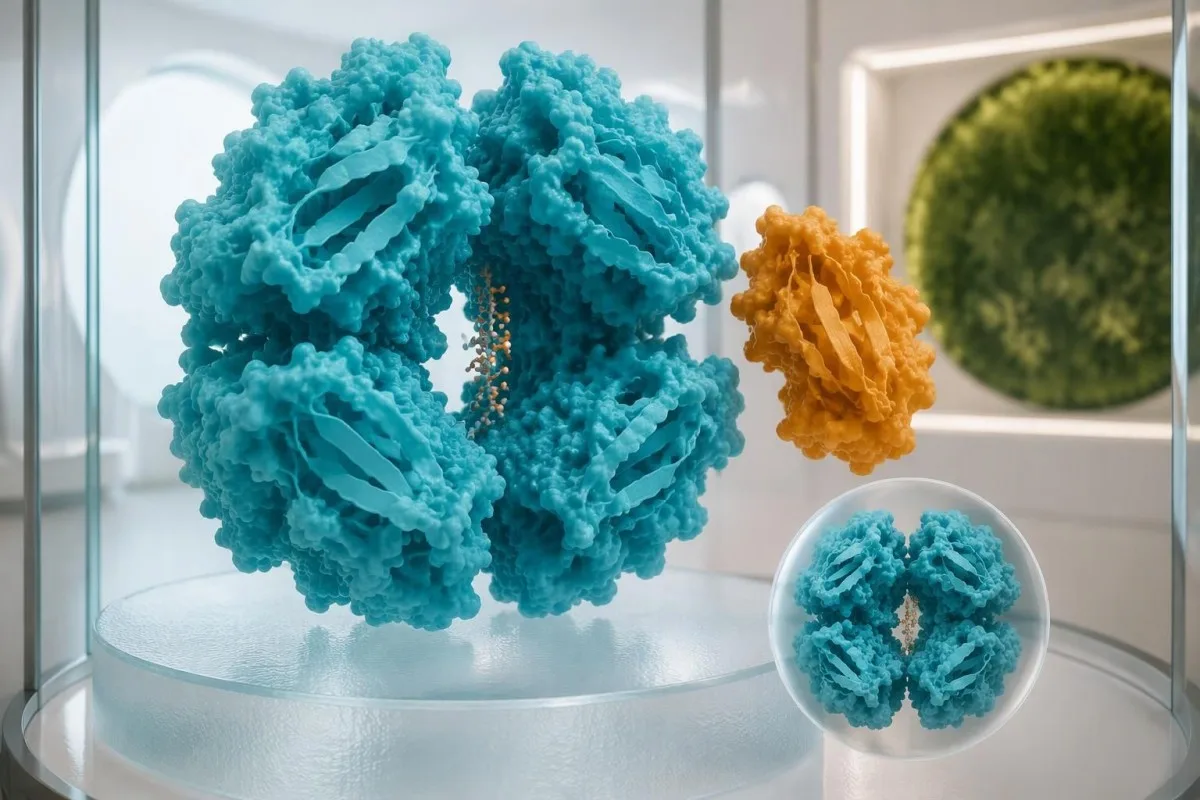
Prealbumin is not an immature form of albumin and does not turn into albumin. The name comes from its migration ahead of albumin during electrophoresis; albumin has a much longer circulating half-life, roughly 20 days, compared with about 2–3 days for prealbumin. These different turnover rates explain why the two results can move at different speeds during an illness.
Transthyretin normally forms a tetramer of 4 protein subunits and carries some circulating thyroxine, or T4. It also interacts with retinol-binding protein, which carries vitamin A; a low prealbumin concentration nevertheless does not independently diagnose either thyroid disease or vitamin A deficiency. Transport-protein concentration, hormone activity, and tissue nutrient stores answer different biological questions.
A low concentration is also different from finding a disease-associated variant in the TTR gene. A hypothetical prealbumin result of 14 mg/dL is not a genetic screening result and does not diagnose hereditary ATTR amyloidosis; that evaluation uses a separate clinical and genetic pathway. Our explanation of TTR variants and amyloidosis helps separate these easily confused meanings of the same protein name.
Zakaj vnetje zniža raven prealbumina kljub prehranjevanju?
Prealbumin is a negative acute-phase protein: its circulating concentration often falls during inflammation as liver protein production changes. A hypothetical value of 10 mg/dL during severe illness can therefore occur even when recent calorie and protein intake have been adequate.
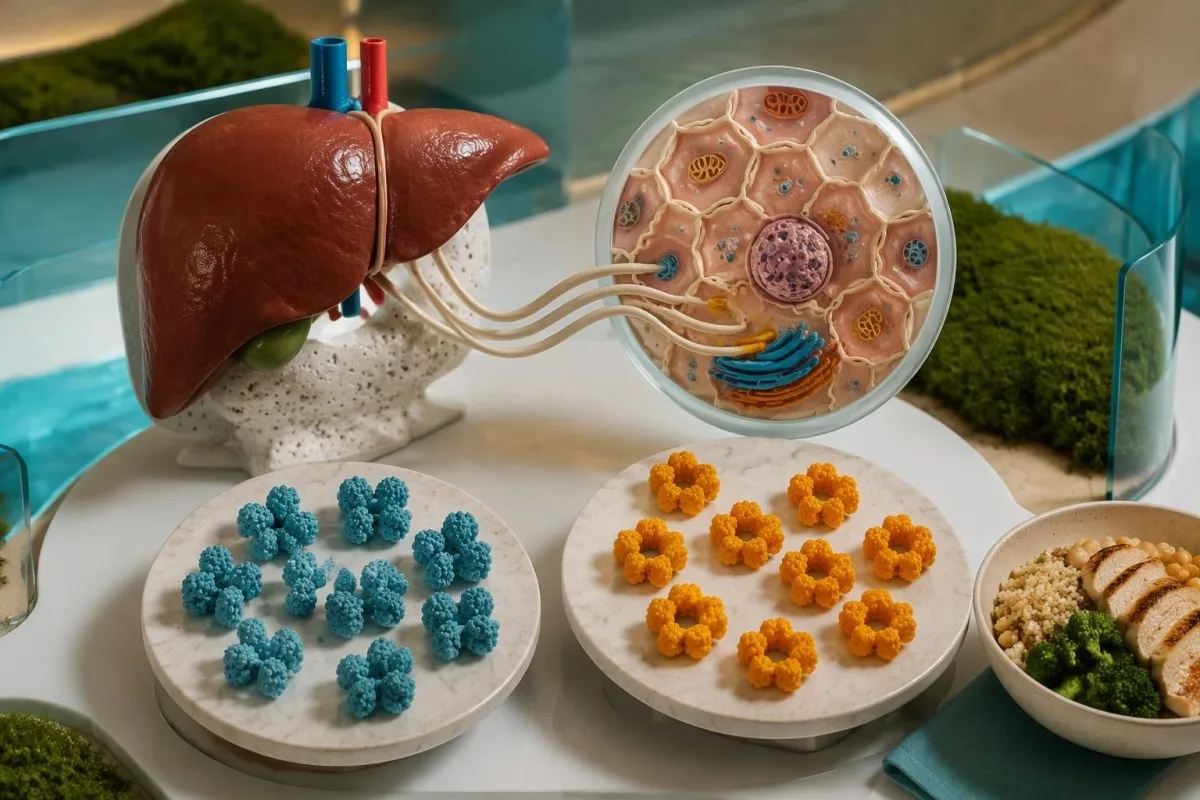
Inflammatory signaling changes what the liver produces rather than simply indicating that the patient skipped meals. Mediators including interleukin-6 promote the acute-phase response, while concentrations of proteins such as prealbumin can decline; its 2–3-day half-life makes that shift relatively quick. The IL-6 interpretation guide explains why timing and illness context matter, although IL-6 testing is not routinely needed to assess nutrition.
Inflammation can lower prealbumin independently of intake and also increase nutritional risk through appetite loss and catabolism. These are 2 overlapping processes, not competing explanations: a person may initially eat adequately yet lose muscle during prolonged illness because the body's metabolic demands and tissue breakdown have changed. Calling the result 'just inflammation' can therefore be as misleading as calling it proof of starvation.
Other negative acute-phase proteins may move in the same direction, so a combination of low prealbumin and low transferrin does not provide 2 independent confirmations of malnutrition. Their shared response to inflammation can create an apparently convincing pattern from the same underlying mechanism. Our guide to inflammation and low transferrin explains why clinicians examine the cause before interpreting several low transport proteins as dietary deficiencies.
Kako je treba rezultate prealbumina in CRP razlagati skupaj?
CRP helps identify inflammatory context, but it cannot correct prealbumin into a nutrition score. A hypothetical combination of prealbumin 12 mg/dL and CRP 90 mg/L strongly raises concern that an acute-phase response is influencing the protein result.
A normal CRP reduces evidence for a substantial systemic acute-phase response at that moment, but it does not prove that low prealbumin is dietary. Many laboratories use a CRP upper limit around 5 mg/L, while others use 10 mg/L; sampling timing, localized disease, and liver disease can complicate interpretation. There is no universal CRP cutoff below which prealbumin becomes a validated malnutrition test.
Discordant inflammatory markers should lead to questions about timing, symptoms, and treatment rather than a mathematical workaround. A hypothetical patient with prealbumin 13 mg/dL, CRP 4 mg/L, and a normal white cell count still needs an intake and weight history; clinicians may also investigate liver function or persistent symptoms. Our discussion of disagreeing infection markers explains why one reassuring marker cannot settle the whole clinical picture.
Kantesti AI can help readers distinguish a prealbumin result of 12 mg/dL from a CRP result of 90 mg/L and understand what each measurement contributes. Neither a prealbumin-to-CRP ratio nor dividing one value by the other is an accepted substitute for nutritional assessment. When CRP is missing, that uncertainty should remain visible—not be replaced by a confident dietary diagnosis.
Kako bolezni jeter in ledvic spreminjajo raven prealbumina?
Liver disease can reduce prealbumin production, while impaired kidney function can increase its concentration through reduced catabolism. A value of 15 mg/dL or 45 mg/dL therefore cannot be interpreted as poor or excellent nutrition without knowing the organ-function context.
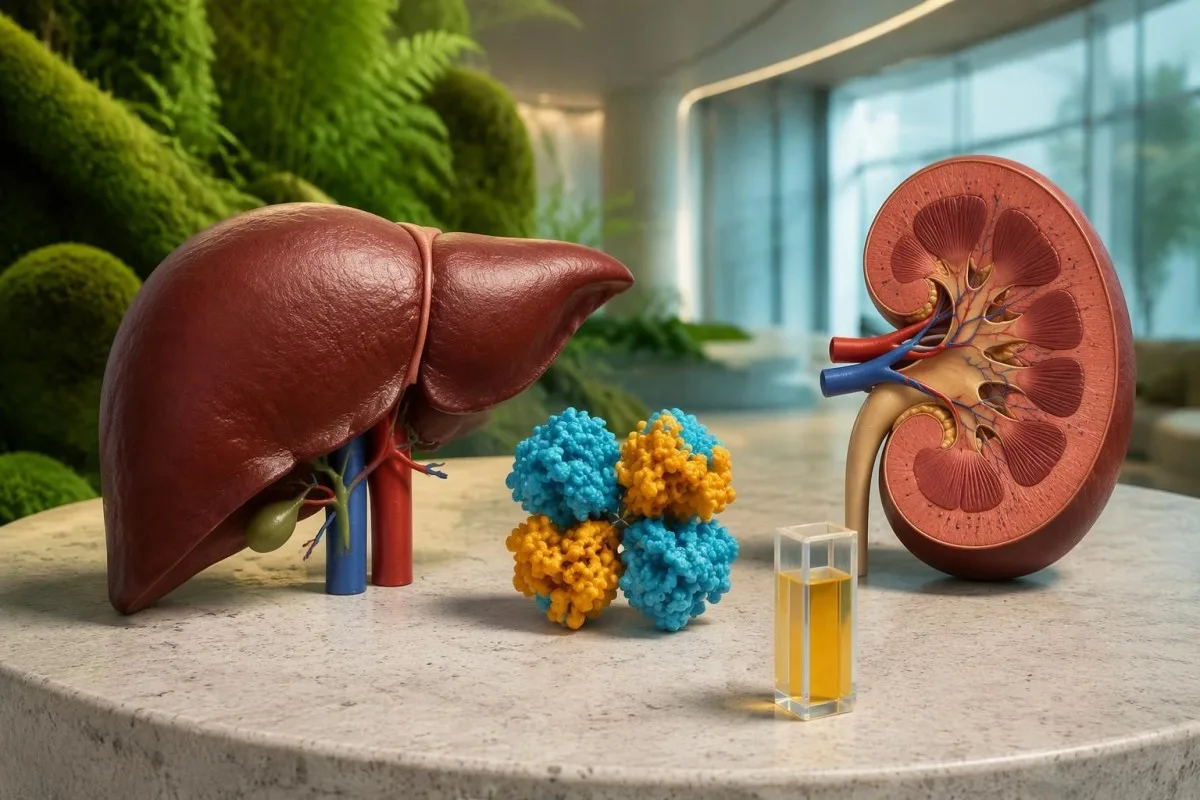
Reduced hepatic synthetic capacity is different from an isolated rise in a liver enzyme. A hypothetical ALT of 80 IU/L does not quantify how much prealbumin the liver can produce; clinicians consider the broader pattern, including albumin, bilirubin, coagulation results, history, and examination. The laboratorijski pokazatelji ciroze guide explains why apparently modest enzyme changes can coexist with more significant liver dysfunction.
Kidney disease can pull the result in more than one direction because reduced catabolism may raise prealbumin while concurrent inflammation or poor intake lowers it. A hypothetical adult with eGFR 25 mL/min/1.73 m² and prealbumin 38 mg/dL may still have clinically significant weight and muscle loss. Our guide to opozorilnih znakov nizkega eGFR explains the kidney findings that deserve attention beyond this transport protein.
Protein loss in urine should be assessed directly rather than inferred from prealbumin. Urine albumin or protein measurements, serum albumin, and kidney evaluation answer questions that a prealbumin concentration of 16 mg/dL cannot resolve; nephrotic conditions do not produce a reliably predictable prealbumin pattern. The practical step is to bring renal results and liver results to the same appointment, especially before changing protein intake substantially.
Ali lahko tekočine, zdravila ali težave pri analizi spremenijo rezultate?
Fluid balance, some medicines, and method-specific assay interference can change prealbumin test results. A hypothetical decline from 22 to 16 mg/dL after major fluid administration may partly reflect dilution rather than a sudden change in nutritional reserves.
Prealbumin is a concentration measurement, so the amount of circulating fluid affects how the result is expressed. Rapid fluid retention can lower measured concentrations, while dehydration can raise them; a 3 kg weight increase over several days may represent fluid rather than new tissue. Clinicians therefore distinguish weight recovery from edema and avoid interpreting a falling protein concentration in isolation after resuscitation.
Corticosteroids can increase prealbumin concentrations, although the overall result also depends on the illness being treated. A hypothetical change from 18 to 25 mg/dL after corticosteroid treatment could reflect medication effects, reduced inflammation, nutritional changes, or a mixture of all 3. Record the medicine's name, dose, and start date rather than assuming every increase means that a nutrition plan succeeded.
An unexpected isolated result deserves a check of units, specimen quality, and the laboratory's interference notes before extensive dietary changes. A hypothetical prealbumin of 9 mg/dL alongside several unexpected assay findings may justify discussion with the laboratory; interference is method-dependent, not something every patient needs repeat testing for. Our explanation of inflammation and plasma zinc also shows why several low circulating nutrients or proteins may share a non-dietary explanation.
Katera merila dejansko določajo diagnozo podhranjenosti pri odraslih?
GLIM diagnoses adult malnutrition using at least 1 phenotypic criterion and 1 etiologic criterion after nutritional risk screening. Phenotypic criteria include weight loss, low BMI, or reduced muscle mass; etiologic criteria include reduced intake or assimilation, or inflammation and disease burden.

The international GLIM consensus uses unintentional weight loss greater than 5% within 6 months, or greater than 10% beyond 6 months, as a phenotypic criterion (Cederholm et al., 2019). A hypothetical change from 70 to 66 kg is approximately 5.7% loss, even if the person still appears well nourished. The timing and whether the loss was intended matter as much as the arithmetic.
GLIM's commonly used non-Asian low-BMI thresholds are below 20 kg/m² for adults younger than 70 and below 22 kg/m² for adults aged 70 or older, with population-specific adaptations. These are diagnostic-framework thresholds, not universal healthy-weight boundaries; reduced muscle mass can establish a phenotype even when BMI is higher. Neither BMI nor prealbumin alone captures how much functional tissue a person has lost.
Kantesti is an AI biomarker interpretation platform that explains why prealbumin of 14 mg/dL cannot replace GLIM's clinical criteria. Specific deficiencies can coexist with malnutrition, but a low folate result is a different diagnostic question from total calorie and protein adequacy; our guide to folate deficiency causes makes that distinction. A nutrition assessment should identify the syndrome and its cause, not collect abnormal laboratory flags as a substitute.
Kaj mora vključevati ustrezna prehranska ocena?
A useful nutrition assessment documents weight trajectory, actual intake, eating barriers, muscle changes, and disease burden. Reviewing the previous 1–6 months often reveals more than a single prealbumin concentration, particularly when fluid retention or a higher BMI hides tissue loss.

A higher BMI does not exclude malnutrition after substantial unintentional weight loss. A hypothetical adult weighing 80 kg who falls to 74 kg has lost 7.5%; at 1.65 m tall, the current BMI remains approximately 27.2 kg/m² despite that meaningful change. Clinicians ask whether clothing fits differently, strength has declined, and swelling is masking further tissue loss rather than judging nutritional status from appearance.
Reduced intake should be investigated as a symptom with a cause, not treated as a failure of motivation. Difficulty swallowing, painful eating, nausea, dental problems, limited food access, and medication effects require different solutions; a 3-day food record can help describe the pattern but does not diagnose malabsorption. Persistent swallowing problems may need evaluation such as the pathway described in our achalasia diagnostic guide.
Digestive investigations should follow symptoms and risk factors instead of being ordered because prealbumin is below 20 mg/dL. Chronic diarrhea with weight loss may warrant targeted evaluation for intestinal disease, whereas visible food fragments alone do not establish nutrient malabsorption. Our guide to stool inflammation tests explains what those tests can contribute; muscle assessment and intake history still remain necessary even when gastrointestinal testing identifies a cause.
Kdaj je ponovna meritev prealbumina dejansko koristna?
Repeating prealbumin is useful only when the result will answer a defined clinical question. Its 2–3-day half-life does not justify routine testing every few days, and an increase cannot independently prove that nutrition treatment has restored muscle or body protein.

Prealbumin can rise as inflammation resolves even when food intake has changed very little. In a hypothetical recovery, prealbumin increases from 10 to 18 mg/dL while CRP falls from 120 to 8 mg/L over 10 days; the pattern supports a changing acute-phase response but cannot quantify how much nutrition contributed. Improved concentration is not equivalent to restored strength, healed tissue, or replenished lean mass.
If a clinician chooses to repeat testing, an interval such as 1–2 weeks after a meaningful clinical change may be reasonable, but it is not a universal guideline schedule. Record the illness course, fluid status, medication changes, intake, and laboratory method at both time points. Our guide to meaningful laboratory trends explains why the circumstances surrounding each measurement determine whether comparison is informative.
Kantesti can help organize dated prealbumin measurements, but 2 results cannot reveal unrecorded food intake or establish muscle recovery. ASPEN's 2021 position paper advises against using visceral proteins as nutrition markers, so clinical outcomes and documented intake should lead monitoring rather than a target prealbumin value (Evans et al., 2021). Ask what management decision would change before arranging another measurement.
Ali bi morali povečati vnos beljakovin, da bi zvišali raven prealbumina?
Increase nutrition when an assessment identifies inadequate intake or increased needs—not simply to push prealbumin above 20 mg/dL. A low result does not specify a protein dose, and kidney disease, severe illness, fluid restrictions, and refeeding risk can change the appropriate plan.

For adults requiring nutrition support who are not severely ill and are not at refeeding risk, NICE CG32 gives general estimates of 25–35 kcal/kg/day and 0.8–1.5 g protein/kg/day (NICE, 2006). These are planning ranges with clinical exceptions, not instructions for everyone with low prealbumin. The CG32 nutrition-support guidance also addresses fluid, electrolytes, micronutrients, and the route through which nutrition is delivered.
A hypothetical 60 kg adult would have an estimated range of 1,500–2,100 kcal/day and 48–90 g protein/day under those general assumptions. The wide range reflects different needs; it is not a reason to choose the highest protein intake automatically, particularly with kidney disease. Our discussion of varne meje prehrane pri bolezni ledvic explains why an AI-generated plan still needs appropriate clinical constraints.
Food fortification or oral nutrition supplements may help when ordinary meals do not meet documented needs, but treating the eating barrier remains necessary. A hypothetical person managing only 50% of meals because of persistent nausea needs evaluation of the nausea as well as a feasible nutrition plan. There is no established prealbumin threshold that automatically requires protein powders, intravenous nutrition, or a particular supplement formulation.
Kdaj je treba zaradi majhnega vnosa hrane in bolezni nujno ukrepati?
Urgency comes from symptoms, prolonged inadequate intake, and metabolic risk—not the prealbumin number alone. NICE identifies more than 10 days with little or no nutrition as one high-risk criterion for refeeding problems, which require supervised nutrition restoration.
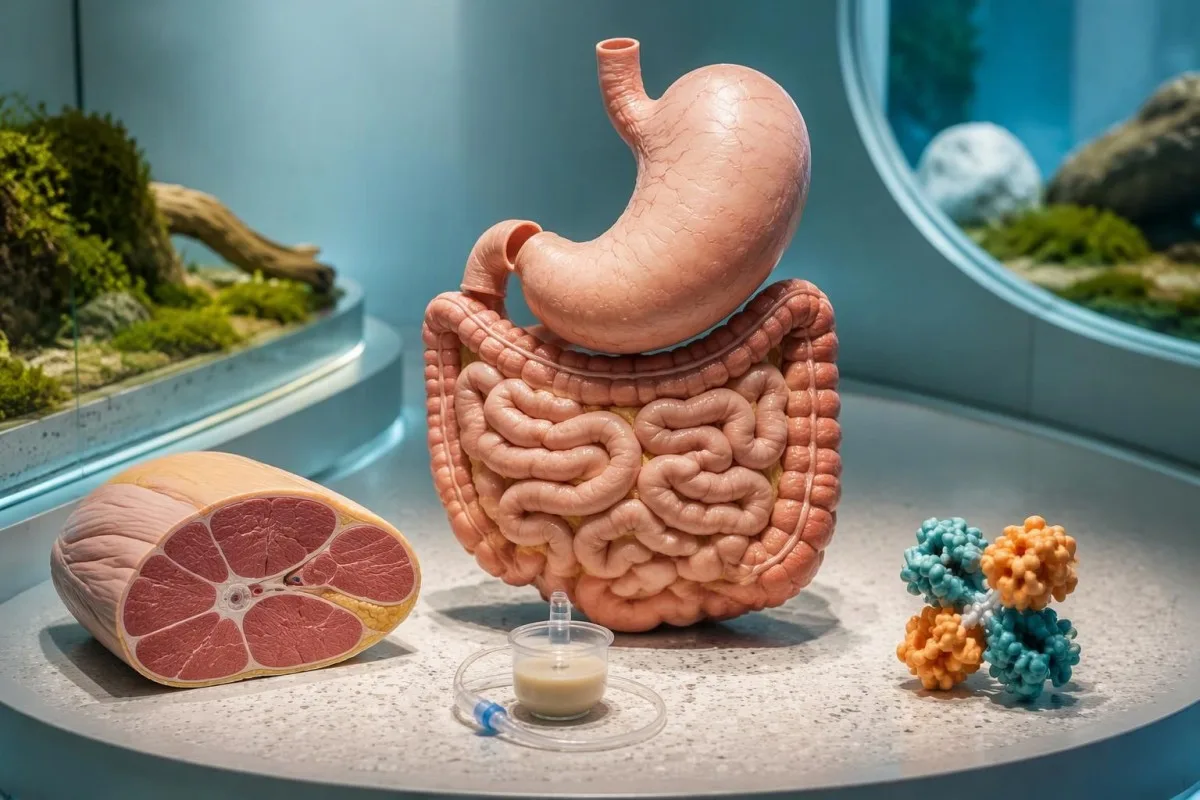
Seek urgent care for confusion, fainting, severe weakness, inability to keep fluids down, very little urine, or breathing difficulty, regardless of whether prealbumin is 8 or 28 mg/dL. Persistent vomiting or diarrhea can create dehydration and electrolyte problems before a transport-protein result becomes informative. Our digestive warning signs guide helps distinguish symptoms that need assessment rather than another nutrition-marker test.
Refeeding risk depends on history and clinical findings, not on a low prealbumin concentration. NICE lists BMI below 16 kg/m², unintentional weight loss greater than 15% over 3–6 months, more than 10 days of minimal intake, or low potassium, phosphate, or magnesium before feeding as individual high-risk criteria; combinations of less severe findings can also qualify. A normal initial electrolyte result does not guarantee that body stores are adequate.
For people who have eaten little or nothing for more than 5 days, NICE recommends initially introducing nutrition at no more than 50% of requirements for the first 2 days, with monitoring. High-risk plans may start at no more than 10 kcal/kg/day under experienced clinical supervision, with thiamine and electrolyte management (NICE, 2006). These figures explain why simply drinking several high-calorie supplements at once can be unsafe after prolonged restriction—they are not a home treatment protocol.
Kako lahko umetna inteligenca pomaga pri varni razlagi rezultatov prealbumina?
AI can explain prealbumin terminology, organize related results, and identify missing context; it cannot diagnose nutritional status from a laboratory report alone. A result of 12 mg/dL needs information about illness, intake, weight, medications, and organ function before its meaning becomes clearer.
Kantesti is an AI blood test interpretation platform that helps explain why prealbumin of 12 mg/dL and CRP of 90 mg/L should be read as different measurements. Our razlaga tehnologije umetne inteligence describes the interpretation workflow; the safe clinical boundary remains the same whether the explanation is generated quickly or reviewed slowly. Software cannot palpate muscle, observe swallowing, or independently verify the meals someone actually consumed.
A useful interpretation separates measured facts from missing information instead of presenting one confident diagnosis. For example, a hypothetical report containing prealbumin 12 mg/dL but no CRP or weight history should describe those gaps and suggest discussion of nutritional screening, rather than assign a malnutrition grade. Check whether the explanation preserves your laboratory's units and reference interval before using it to prepare questions for an appointment.
Clinical standards should be judged against the specific task, not a broad accuracy claim that covers every medical decision. Even a correct interpretation of 20 mg/dL cannot establish nutrition adequacy without an assessment, and no software benchmark changes that limitation. Our okvir za validacijo in nadzor is relevant to evaluating methodology; decisions about nutrition support, diagnosis, or urgent care remain matters for qualified healthcare professionals.
Katere publikacije podpirajo te omejitve pri prehranski oceni?
The clinical conclusions here rest on nutrition guidance, not on unrelated AI publications. The 2021 ASPEN position paper, the 2019 GLIM consensus, and NICE CG32 address different questions: protein-marker limitations, malnutrition diagnosis, and safe nutrition support.
ASPEN's 2021 paper explains why low visceral proteins should not serve as nutrition markers, while GLIM's 2019 consensus specifies the clinical criteria needed to diagnose malnutrition. Neither establishes a prealbumin-only diagnostic cutoff such as 10 or 15 mg/dL; these numbers can describe laboratory abnormalities without proving their cause. NICE CG32 adds practical safety guidance for nutrition support, including the separate assessment of refeeding risk.
Shared inflammatory effects also explain why a broader laboratory panel needs careful interpretation rather than simple abnormal-result counting. A hypothetical low prealbumin of 13 mg/dL alongside low transferrin may reflect one acute-phase mechanism; ferritin can move in the opposite direction during inflammation and complicate assessment of iron stores. Our vodnik za interpretacijo železovih študij explains why biochemical pattern recognition must remain connected to the clinical question.
Kantesti's 2 Figshare publications listed below concern women's health education and multilingual hantavirus decision support, respectively. They are included as separate research resources, not as evidence that prealbumin diagnoses malnutrition or that an AI nutrition plan improves clinical outcomes. Our standardi za medicinske vsebine explain the source-quality distinction readers should expect: a repository DOI identifies a publication, but it does not by itself establish peer review or relevance to this nutrition question.
Pogosta vprašanja
Ali nizka vrednost prealbumina vedno pomeni podhranjenost?
Nizka raven prealbumina ne pomeni vedno podhranjenosti in je sama po sebi ne more diagnosticirati. Rezultat 12 mg/dL lahko kaže na vnetje, zmanjšano tvorbo v jetrih, nezadosten vnos ali več vzrokov hkrati. Pri oceni podhranjenosti odraslih se upoštevajo nenamerna izguba telesne mase, mišična masa, vnos ali absorpcija hranil ter breme bolezni. Okvir GLIM po presejalnem pregledu prehranskega tveganja zahteva vsaj 1 fenotipsko in 1 etiološko merilo.
Kakšna je normalna raven prealbumina?
Pogosto uporabljeni referenčni interval za prealbumin pri odraslih je približno 20–40 mg/dL, kar ustreza 0,20–0,40 g/L. Nekateri laboratoriji uporabljajo drugačne intervale, zato ima prednost razpon, naveden na vašem izvidu. Vrednost 200 mg/L je enaka 20 mg/dL, kar je pomembno pri primerjavi izvidov z različnimi enotami. Rezultat znotraj intervala ne izključuje podhranjenosti, rezultate pri otrocih pa je treba razlagati glede na starost.
Ali lahko vnetje zniža prealbumin, če jem dovolj?
Vnetje lahko zniža prealbumin, tudi če je bil nedavni vnos hrane zadosten, saj je prealbumin negativna beljakovina akutne faze. Njegova razpolovna doba, ki znaša približno 2–3 dni, omogoča razmeroma hitre spremembe koncentracije, ko se med boleznijo spremeni tvorba beljakovin v jetrih. CRP lahko pomaga prepoznati to okoliščino, vendar ni potrjene formule za preračunavanje CRP pri oceni prehranskega stanja. Zadosten vnos hrane tudi ne prepreči popolnoma izgube mišične mase zaradi bolezni med dolgotrajnim katabolizmom.
Ali je raven prealbumina pod 10 mg/dL nevarna?
Prealbumin pod 10 mg/dL je občutno pod številnimi referenčnimi intervali za odrasle, vendar sama po sebi ne predstavlja praga za nujno stanje ali potrjene stopnje resnosti podhranjenosti. Zdravniki ocenijo osnovno bolezen, vnos hrane, spremembo telesne mase, delovanje organov in simptome, da določijo stopnjo nujnosti. Zmedenost, omedlevica, nezmožnost zadržati tekočino, zelo malo urina ali težave z dihanjem zahtevajo nujno oceno ne glede na izvid prealbumina. Ob dolgotrajnem minimalnem vnosu hrane je treba pred hitrim povečanjem prehranskega vnosa oceniti tudi tveganje za sindrom ponovnega hranjenja.
Kako hitro naj bi se prealbumin izboljšal ob boljši prehrani?
Ni zanesljive časovnice izboljšanja prealbumina, ki bi dokazovala učinkovitost prehranske terapije. Čeprav je njegova razpolovna doba približno 2–3 dni, se lahko raven prealbumina zviša zaradi umiritve vnetja ali sprememb učinkov zdravil in tekočin. Hipotetičnega zvišanja z 10 na 18 mg/dL zato ni mogoče uporabiti kot samostojno merilo prehranskega okrevanja. Pri spremljanju je treba dati prednost dokumentiranemu vnosu hrane, telesni teži, ovrednoteni ob upoštevanju ravnovesja tekočin, mišični funkciji in osnovnemu kliničnemu stanju.
Ali naj jemljem beljakovinska prehranska dopolnila zaradi nizke ravni prealbumina?
Samo nizek rezultat prealbumina ne pomeni, da so potrebni beljakovinski dodatki, niti ne določa varnega odmerka. Za izbrane odrasle, ki potrebujejo prehransko podporo in nimajo hude bolezni ali tveganja za sindrom ponovnega hranjenja, NICE navaja splošno oceno za načrtovanje vnosa 0,8–1,5 g beljakovin/kg/dan, vendar se individualne potrebe in omejitve razlikujejo. Ustrezni načrt se lahko spremeni zaradi bolezni ledvic, težav s požiranjem ali dolgotrajnega minimalnega vnosa hrane. O dejanskem vnosu hrane in prehranskem tveganju se posvetujte z zdravnikom ali dietetikom, namesto da bi poskušali zvišati laboratorijsko vrednost.
Poskrbite, da vam razložijo rezultate krvnih preiskav
Naložite svoj laboratorijski izvid in AI Kantesti bo v nekaj sekundah preprosto razložil vsak biomarker. Uporablja ga več kot 2 milijona ljudi po vsem svetu.
Reference
- Klein, T., Mitchell, S., & Weber, H. (2026). Vodnik po zdravju žensk: ovulacija, menopavza in hormonski simptomi. Kantesti AI Medical Research. DOI
- Klein, T., Mitchell, S., & Weber, H. (2026). Večjezična klinična podpora pri odločanju z umetno inteligenco za zgodnje triažiranje hantavirusa: zasnova, inženirska validacija in uvedba v realnem okolju pri 50.000 razloženih izvidih krvnih preiskav. Kantesti AI Medical Research. DOI
- Evans DC et al. (2021). The Use of Visceral Proteins as Nutrition Markers: An ASPEN Position Paper. Nutrition in Clinical Practice. DOI
- Cederholm T et al. (2019). GLIM criteria for the diagnosis of malnutrition – A consensus report from the global clinical nutrition community. Clinical Nutrition. DOI
- National Institute for Health and Care Excellence (2006). Nutrition support for adults: oral nutrition support, enteral tube feeding and parenteral nutrition. NICE Clinical Guideline CG32.
- 2 milijona+Analizirani testi
- 127+Države
- 100+Jeziki
O zdravstveni ekipi


E-E-A-T zaupanja vredni signali
Izkušnje
Zdravniški klinični pregled delovnih postopkov za interpretacijo laboratorijskih izvidov.
Strokovno znanje
Laboratorijska medicina s poudarkom na tem, kako se biomarkerji obnašajo v kliničnem kontekstu.
Avtoritativnost
Zdravstveno pregledal dr. Thomas Klein, s prispevki dr. Sarah Mitchell in prof. dr. Hansa Webra.
Zanesljivost
Interpretacija na podlagi dokazov z jasnimi nadaljnjimi potmi za zmanjšanje alarmiranja.


Zdravstvena omejitev odgovornosti
Ta članek je namenjen izobraževalnim namenom in ne predstavlja medicinskega nasveta. Za odločitve o diagnozi in zdravljenju se vedno posvetujte z usposobljenim izvajalcem zdravstvenih storitev.
Objavljeno · Obrnite se na uredniško ekipo
Izdala družba Kantesti Ltd, registrirana v Angliji in Walesu, matična št. 17090423, London, Združeno kraljestvo.
