A fructosamine test reflects average glucose over roughly 2 to 3 weeks and can be more trustworthy than A1c when red-cell lifespan has changed. It is especially useful after blood loss, transfusion, hemolysis, during pregnancy, or when glucose readings and A1c simply do not match.



- Fructosamine test measures glucose attached mainly to albumin over the prior 14 to 21 days.
- Fructosamine normal range is commonly about 205 to 285 µmol/L, but the reporting laboratory range always takes priority.
- A1c unreliability is likely when red-cell survival is shortened by hemolysis, blood loss, transfusion, or erythropoietin treatment.
- Pregnancy changes red-cell turnover, so a normal A1c can miss clinically meaningful recent glucose rises.
- Conversion estimate: fructosamine 285 µmol/L roughly corresponds to an A1c near 6.5%, but this is an estimate rather than a diagnostic replacement.
- Low albumin can make fructosamine falsely low because there is less circulating protein available for glycation.
- CGM or finger-stick data should overrule a discordant A1c when symptoms or repeated glucose values suggest hyperglycemia.
- Urgent symptoms such as vomiting, deep rapid breathing, confusion, or positive ketones need same-day clinical assessment, not another long-term glucose marker.
What the fructosamine test actually measures
A fructosamine test measures glycated serum proteins, chiefly albumin, and reflects average glucose over the preceding 2 to 3 weeks. It is most useful when an A1c result is mathematically correct but biologically misleading because the patient's red cells have not lived their usual 90 to 120 days.
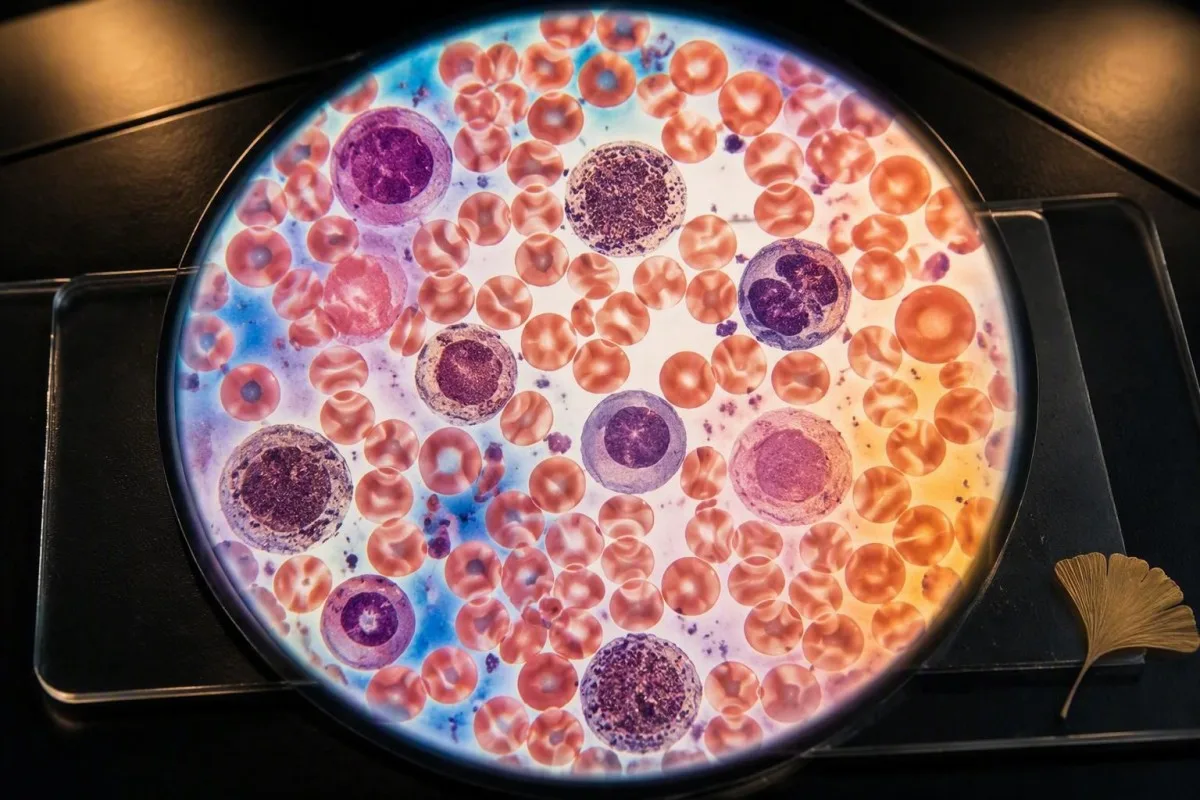
Glucose attaches non-enzymatically to proteins in circulation. Albumin turns over far faster than hemoglobin, with a functional half-life of about 14 to 20 days, which is why fructosamine responds to a medication, diet, steroid, or illness change weeks sooner than A1c.
A fructosamine concentration is reported in µmol/L, not percent. In clinical practice, I use it as a trend marker: a fall from 340 to 285 µmol/L after 3 weeks is meaningful even when the A1c has barely moved.
Kantesti is an AI blood test analyzer that places fructosamine beside glucose, albumin, CBC indices, kidney markers, and prior results rather than treating one number as a diabetes verdict. That contextual reading matters because low albumin can change the result without improving glucose control; our biomarker reference guide explains the wider panel.
Why the name can be confusing
Fructosamine does not measure dietary fructose and does not diagnose fructose intolerance. The name refers to stable ketoamine compounds formed when glucose binds serum proteins; fasting is usually unnecessary unless other ordered tests require it.
Why A1c can be wrong despite a good laboratory assay
A1c becomes inaccurate when red cells survive for substantially less or more than their usual lifespan, because A1c depends on how long hemoglobin has been exposed to glucose. A low A1c can therefore coexist with repeated high glucose readings.
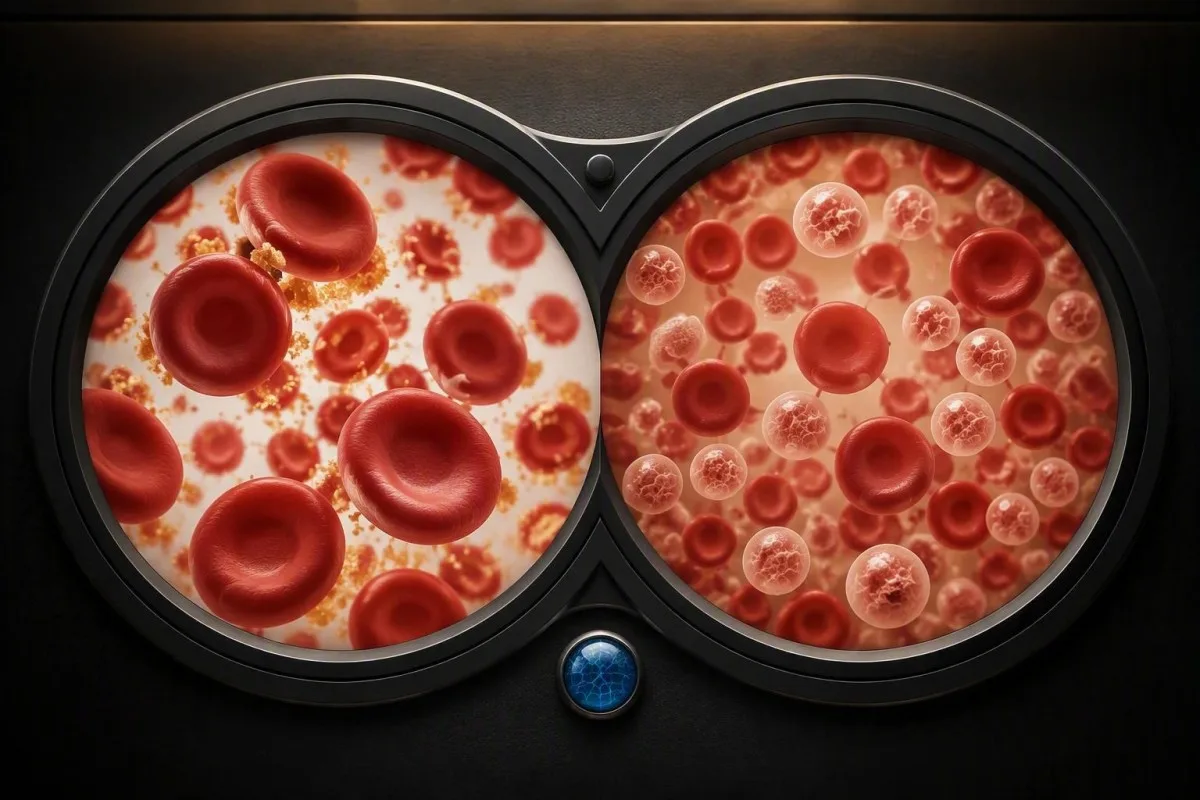
A red cell that is removed after 45 days has accumulated roughly half the glucose exposure of one circulating for 90 days. The laboratory has not made an error; the A1c has answered a different question than the clinician intended.
The 2024 American Diabetes Association standards advise using plasma glucose criteria when A1c and glucose are discordant or when conditions alter the A1c-glycemia relationship (American Diabetes Association Professional Practice Committee, 2024). A fasting plasma glucose of 126 mg/dL (7.0 mmol/L) or higher on repeat testing remains diagnostic in the appropriate setting.
Iron deficiency can sometimes raise A1c modestly without a parallel rise in glucose, while hemolysis generally lowers it. I review MCV, RDW, ferritin, reticulocytes, bilirubin, and medication history together; our guide to when HbA1c is dangerous puts the usual risk bands in context.
Red-cell conditions that make A1c inaccurate
Hemolytic anemia, sickle cell disease, acute blood loss, and treatment that rapidly makes new red cells can falsely lower A1c. Iron deficiency, vitamin B12 deficiency, and some states with prolonged red-cell survival can push A1c upward, although the size of that effect varies.
Hemolysis is the classic trap. A patient with glucose values near 190 mg/dL and an A1c of 5.8% may have an elevated reticulocyte count, indirect bilirubin, or LDH suggesting rapid red-cell replacement rather than unusually good glucose control.
Hemoglobin variants cause two separate problems: altered red-cell survival and, with certain assays, analytic interference. Modern laboratories often flag a variant, but not all methods are equally affected; Sacks et al. (2023) recommend considering alternative markers when the result does not fit the clinical picture.
Microcytosis does not prove iron deficiency, and thalassemia trait is common in many populations. A low MCV pattern deserves clarification before anyone changes diabetes medicine solely because an A1c looks unexpectedly high.
A useful CBC clue
An RDW rising above about 14.5% during anemia treatment often signals mixed red-cell ages. That transition period is precisely when fructosamine or continuous glucose monitoring can be more interpretable than A1c.
Recent blood loss, donation, and transfusion
A1c can be unreliable for roughly 2 to 3 months after a substantial blood loss or red-cell transfusion because circulating hemoglobin now represents a changed population of cells. Fructosamine is usually a cleaner short-term alternative if albumin is stable.

After a major gastrointestinal bleed, delivery-related blood loss, surgery, or repeated donation, the marrow releases younger cells with less glycation. In my experience, an A1c may look reassuring for weeks while capillary readings are clearly above target.
Transfused donor cells bring an unknown glucose history and can move A1c in either direction. There is no universal day when A1c suddenly becomes valid again; waiting about 3 months after the last transfusion is a practical rule when clinical circumstances permit.
Pair fructosamine with fasting or post-meal glucose during that interval. Our article on A1c after transfusion explains why the result should be treated as uninterpretable rather than simply “low.”
Pregnancy: why short-term glucose markers matter
Pregnancy shortens average red-cell survival and changes glucose physiology quickly, so A1c may underestimate recent hyperglycemia. Fructosamine can show a 2- to 3-week trend, but it does not replace pregnancy-specific glucose testing or monitoring.
Insulin resistance commonly accelerates after about 20 weeks' gestation, while A1c is still weighted toward prior weeks. A value below 6.0% does not exclude gestational diabetes, particularly when fasting glucose is repeatedly 92 mg/dL (5.1 mmol/L) or above.
For gestational diabetes diagnosis, the oral glucose tolerance test—not fructosamine and not A1c—remains the validated tool. The pregnancy glucose tolerance test is generally performed at 24 to 28 weeks unless earlier risk factors justify earlier testing.
Albumin naturally falls with plasma-volume expansion in pregnancy, which may lower fructosamine independently of glucose. This is one of those areas where context matters more than a conversion chart; clinicians may use glycated albumin, CGM, or structured self-monitoring instead.
When fructosamine is inaccurate too
Fructosamine is less reliable when albumin or total serum protein is markedly abnormal, especially below about 3.0 g/dL albumin. Nephrotic-range protein loss, advanced liver disease, severe thyroid dysfunction, and recent intravenous albumin can distort the result.
Because albumin carries most of the signal, low albumin can make fructosamine look falsely low. A fructosamine of 240 µmol/L in someone with albumin 2.2 g/dL is not equivalent to 240 µmol/L in someone with albumin 4.3 g/dL.
Advanced chronic kidney disease creates a more complicated picture: A1c may be lowered by anemia, erythropoietin, and shortened cell survival, while fructosamine may be altered by low albumin or protein loss. The best choice is individualized, often with CGM and documented glucose values alongside the CKD staging markers.
Sacks et al. (2023) describe glycated albumin and fructosamine as useful adjuncts rather than universal substitutes for A1c. If liver synthetic function is impaired, check albumin, bilirubin, INR, and the clinical history before translating any fructosamine number into an A1c estimate.
Fructosamine normal range and estimated A1c
The usual fructosamine normal range is approximately 205 to 285 µmol/L in adults, although each laboratory must provide its own reference interval. Values above 285 µmol/L generally indicate higher average glucose exposure during the last 2 to 3 weeks.
A commonly used approximation is estimated A1c = 0.017 × fructosamine in µmol/L + 1.61. By that calculation, 285 µmol/L approximates 6.5%, 317 µmol/L approximates 7.0%, and 375 µmol/L approximates 8.0%; these are communication aids, not diagnostic thresholds.
Kantesti is an AI blood test interpretation platform that flags when the published fructosamine range conflicts with albumin, total protein, or the patient's earlier glucose values. This reduces a frequent error: applying a conversion formula to a result obtained during protein loss or late pregnancy.
A single fructosamine result has more analytic and biologic noise than many people expect. Compare results through the same laboratory when possible, and consider whether illness, steroids, or a deliberate glucose-management change occurred within the prior 21 days; see our glucose range guide for practical fasting and post-meal context.
Fructosamine vs A1c: how to read a mismatch
A high fructosamine with a low or normal A1c usually points to recent glucose deterioration or shortened red-cell survival. A low fructosamine with a high A1c may reflect recent improvement, prolonged red-cell survival, or low protein-related measurement limits.

First, check timing. Starting prednisone 14 days ago can raise fructosamine promptly, whereas A1c may remain near baseline because it still includes months before steroid exposure.
Second, inspect the CBC and protein markers. A low A1c plus hemoglobin 9.6 g/dL, reticulocytes 6%, and fructosamine 330 µmol/L is much more suggestive of shortened red-cell survival than of excellent diabetes control.
Third, use direct glucose data to settle the question. A lab trend timeline should include illness dates, transfusion, steroid dose, iron treatment, pregnancy week, fasting status, and whether readings are capillary or CGM-derived.
How to prepare for a fructosamine test
Fructosamine testing usually requires no fasting and is performed on a routine serum sample, often by a colorimetric assay. Preparation is mainly about documenting conditions that affect albumin and recent glucose exposure.

Ask whether albumin and total protein will be measured on the same day. That small addition is clinically valuable when the fructosamine result is near a decision threshold or when kidney, liver, thyroid, or nutritional issues are possible.
Do not try to “improve” the result by eating unusually little for 48 hours. Fructosamine captures the prior 14 to 21 days, and abrupt changes can create a misleadingly favorable snapshot without reflecting the regimen you can maintain.
High-dose vitamin C may interfere with some fructosamine methods, though the issue is assay-dependent. Bring a supplement list and review supplement-related lab changes with the ordering clinician rather than stopping prescribed therapy on your own.
Using fructosamine after medication or lifestyle changes
Fructosamine is useful about 2 to 3 weeks after a meaningful diabetes treatment change because it reacts faster than A1c. It is particularly practical after starting insulin, changing a GLP-1 medicine, tapering steroids, or recovering from acute illness.
A practical interval is 2 to 4 weeks after a change, provided albumin is stable. Testing at 5 days is usually too early, while waiting 12 weeks defeats the main advantage over A1c.
I have seen patients become discouraged by an A1c that barely shifts after three weeks of sustained improvement. A fructosamine decrease of around 30 to 40 µmol/L over that period can provide credible early feedback, though daily glucose patterns remain more actionable.
Use one marker consistently during an unstable period. Our 90-day A1c improvement plan is useful once red-cell conditions have stabilized; until then, fructosamine and direct glucose data may tell the more honest story.
Situations where neither marker should be used alone
A1c and fructosamine should not be used alone during severe illness, rapid protein loss, unstable anemia, or suspected type 1 diabetes decompensation. Plasma glucose, ketones, symptoms, and sometimes CGM provide more immediate clinical information.
In diabetic ketoacidosis, a fructosamine result can be high but cannot tell you whether the current situation is dangerous. Blood glucose above 250 mg/dL (13.9 mmol/L) with moderate or large ketones, vomiting, or deep rapid breathing needs urgent assessment.
Protein-losing kidney disease may lower fructosamine through urinary albumin loss, while severe hypoalbuminemia in liver disease has a similar effect. The albumin changes of pregnancy offer a milder example of why a protein-dependent marker requires protein context.
A normal result never overrules symptoms. Thirst, unexpected weight loss, recurrent infections, blurred vision, or frequent urination with random glucose 200 mg/dL (11.1 mmol/L) or higher should prompt timely medical review.
When high glucose needs urgent care instead of repeat testing
Seek urgent same-day care for glucose above 300 mg/dL (16.7 mmol/L) with vomiting, abdominal pain, confusion, marked drowsiness, rapid breathing, or positive ketones. A fructosamine test is a retrospective marker and cannot safely triage an acute metabolic emergency.
People using insulin who have persistent glucose above 250 mg/dL should follow their sick-day plan, check ketones if advised, hydrate as medically appropriate, and contact their diabetes team. Do not take extra insulin unless you have an agreed correction plan.
Low glucose is urgent too. A reading below 54 mg/dL (3.0 mmol/L), loss of consciousness, seizure, or inability to swallow requires emergency action; our hypoglycemia warning guide covers immediate safety steps.
Dr. Thomas Klein's practical rule is simple: investigate marker disagreement in a stable patient, but treat symptoms and real-time glucose first. The number that matters in an emergency is the current glucose, not the average.
Putting fructosamine in the context of the whole panel
Fructosamine is most informative when reviewed with albumin, total protein, CBC, reticulocytes, glucose, eGFR, liver tests, and the timing of clinical events. A single isolated result cannot distinguish a glucose problem from a protein-turnover problem.
Kantesti is an AI-powered blood test analysis tool that compares short-term fructosamine with red-cell indices and serum proteins, then highlights the assumptions behind an A1c interpretation. Our system can identify an A1c-fructosamine mismatch, but it does not diagnose hemolysis, diabetes type, or medication safety without clinical review.
Kantesti AI also preserves trends across reports, which is particularly helpful when a transfusion, iron infusion, pregnancy, or kidney-function change creates a temporary period where A1c cannot be trusted. The technical approach and safeguards are described in our AI technology guide.
As of September 11, 2026, our medical reviewers continue to recommend confirmation with the treating clinician when a glucose marker would change therapy. You can read how our methods are assessed in clinical validation, including why an automated interpretation should support—not replace—care.
Questions to ask when your A1c and glucose do not agree
Ask whether red-cell turnover, albumin concentration, a hemoglobin variant, recent transfusion, pregnancy, or a medication change could explain the mismatch. The best next test depends on which assumption behind A1c has failed.
Useful questions include: “Has my hemoglobin changed?” “Do I have evidence of hemolysis?” “Was my albumin normal when fructosamine was measured?” and “Should I use CGM or structured post-meal checks for the next 2 weeks?” A reticulocyte count can be particularly revealing when A1c is unexpectedly low.
Dr. Thomas Klein advises bringing a dated list of steroid use, iron or erythropoietin treatment, blood donation, transfusion, pregnancy week, and home glucose readings. That timeline often resolves apparent laboratory contradictions faster than repeating A1c without context.
Kantesti's clinicians and data teams work under physician oversight; meet the people behind that review through our Medical Advisory Board. For broader context about our organization and privacy-focused work, see About Kantesti.
Research notes and related hematology context
The strongest evidence supports fructosamine as an adjunct when A1c is unreliable, not as a wholesale replacement for A1c in routine care. The interpretive gap is usually caused by altered red-cell lifespan or abnormal serum proteins, two biology problems that require different solutions.
Koga et al. (2013) reviewed fructosamine and glycated albumin as intermediate-term glycemic markers and emphasized their value where A1c is affected by hemoglobin or red-cell factors. Their review also supports the caution repeated throughout this article: albumin metabolism is not a minor technicality.
For readers investigating red-cell turnover, our reticulocyte and LDH research guide offers useful background. Formal related publications include Kantesti LTD. (2026). B Negative Blood Type, LDH Blood Test & Reticulocyte Count Guide. Figshare. https://doi.org/10.6084/m9.figshare.31333819. ResearchGate: https://www.researchgate.net/; Academia.edu: https://www.academia.edu/.
Kantesti LTD. (2026). Diarrhea After Fasting, Black Specks in Stool & GI Guide 2026. Figshare. https://doi.org/10.6084/m9.figshare.31438111. ResearchGate: https://www.researchgate.net/; Academia.edu: https://www.academia.edu/. These publications do not establish a diabetes diagnosis; they provide related laboratory-context education.
Frequently Asked Questions
What is a normal fructosamine level?
A typical fructosamine normal range is approximately 205 to 285 µmol/L, although laboratories use different assays and must report their own interval. A result above 285 µmol/L usually suggests higher average glucose during the preceding 2 to 3 weeks when albumin is normal. Albumin below about 3.0 g/dL can lower fructosamine independently of glucose, so the two values should be interpreted together. Fructosamine is not used by itself to diagnose diabetes.
What fructosamine level equals an A1c of 7%?
A fructosamine value near 317 µmol/L is often estimated to correspond to an A1c of about 7.0% using the equation A1c = 0.017 × fructosamine + 1.61. This conversion is approximate and becomes less reliable with low albumin, protein loss, pregnancy, liver disease, or thyroid disease. A measured glucose record or CGM trend remains more reliable when A1c and fructosamine disagree. Clinicians should not use a conversion estimate as the sole reason to change medication.
When is A1c inaccurate?
A1c can be inaccurate after recent major blood loss, transfusion, hemolytic anemia, erythropoietin treatment, or conditions that alter red-cell survival. These states commonly produce a falsely low A1c because younger red cells have had less time to accumulate glucose exposure. Iron deficiency and vitamin B12 deficiency can sometimes raise A1c modestly without equivalent hyperglycemia. The 2024 ADA standards recommend plasma glucose criteria when A1c and glucose are discordant.
Is fructosamine better than A1c in pregnancy?
Fructosamine can be useful in pregnancy because it reflects roughly 14 to 21 days and is not directly dependent on red-cell lifespan, which changes during pregnancy. It is not better as a diagnostic test for gestational diabetes: a pregnancy oral glucose tolerance test at 24 to 28 weeks remains the standard approach. Falling albumin from normal pregnancy plasma-volume expansion can make fructosamine appear lower. Many diabetes-in-pregnancy teams rely most heavily on fasting and post-meal glucose monitoring or CGM.
Do I need to fast for a fructosamine test?
Most people do not need to fast for a fructosamine test because it reflects glycation over the prior 2 to 3 weeks rather than the most recent meal. Fasting may still be requested if glucose, lipids, or other fasting tests are ordered at the same visit. Tell the laboratory or clinician about vitamin C supplements, recent albumin infusion, kidney protein loss, and liver disease. Those factors can affect interpretation even though they do not require fasting preparation.
Can fructosamine diagnose diabetes?
Fructosamine is not a standard diagnostic test for diabetes because validated diagnostic thresholds are less established than those for A1c, fasting plasma glucose, or oral glucose tolerance testing. Diabetes diagnosis usually relies on A1c of 6.5% or higher, fasting plasma glucose of 126 mg/dL or higher, a 2-hour glucose of 200 mg/dL or higher, or random glucose of 200 mg/dL or higher with classic symptoms, usually with confirmation. Fructosamine is most useful for monitoring recent control when A1c is unreliable. A clinician should interpret it with glucose values and albumin.
Get AI-Powered Blood Test Analysis Today
Join over 2 million users worldwide who trust Kantesti for instant, accurate lab test analysis. Upload your blood test results and receive comprehensive interpretation of 15,000+ biomarkers in seconds.
📚 Referenced Research Publications
Klein, T., Mitchell, S., & Weber, H. (2026). B Negative Blood Type, LDH Blood Test & Reticulocyte Count Guide. Kantesti AI Medical Research.
Klein, T., Mitchell, S., & Weber, H. (2026). Diarrhea After Fasting, Black Specks in Stool & GI Guide 2026. Kantesti AI Medical Research.
📖 External Medical References



⚕️ Medical Disclaimer
This article is for educational purposes only and does not constitute medical advice. Always consult a qualified healthcare provider for diagnosis and treatment decisions.
E-E-A-T Trust Signals
Experience
Physician-led clinical review of lab interpretation workflows.
Expertise
Laboratory medicine focus on how biomarkers behave in clinical context.
Authoritativeness
Written by Dr. Thomas Klein with review by Dr. Sarah Mitchell and Prof. Dr. Hans Weber.
Trustworthiness
Evidence-based interpretation with clear follow-up pathways to reduce alarm.