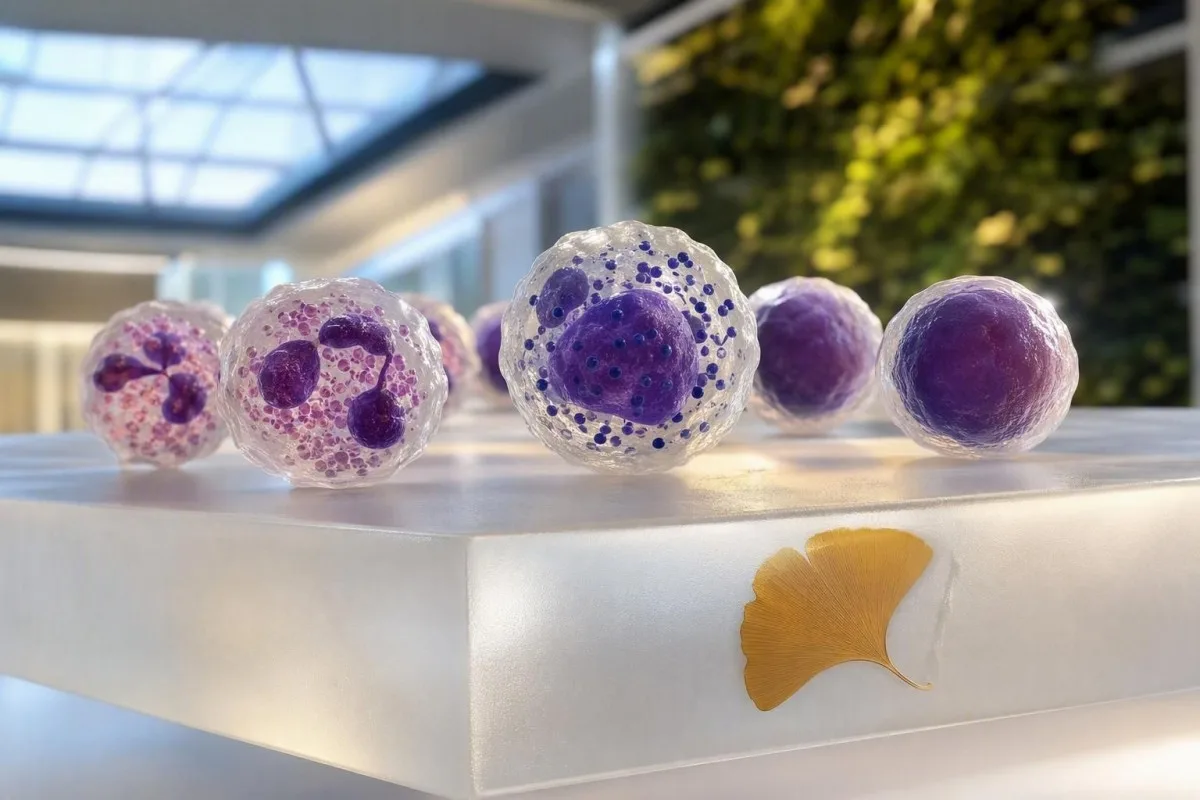
De fleste voksne har et absolut antal basofile granulocytter på 0,00–0,10 × 10⁹/L (0–100/µL), mens procentdelen normalt er 0–1%. En mildt usædvanlig procentdel afspejler ofte ændringer i andre hvide blodlegemer; det absolutte antal basofile granulocytter er det resultat, der normalt styrer opfølgningen.


- Absolutte basofiler normalt er 0,00–0,10 × 10⁹/L (0–100/µL) hos voksne og er mere klinisk anvendelige end en procentdel alene.
- Basofilers procentandel er almindeligvis 0–1% af hvide blodlegemer, men det kan stige, når neutrofile granulocytter eller lymfocytter falder, selvom det absolutte antal er normalt.
- Børn bruger ofte den samme praktiske øvre grænse på 0,10 × 10⁹/L efter spædbarnsalderen, men laboratoriets aldersspecifikke interval har forrang.
- En gentaget CBC om 2–8 uger er rimelig for isoleret, mild basofili efter en allergi, infektion eller medicinændring.
- Vedvarende basofili over 0,20 × 10⁹/L fortjener klinisk vurdering, især med forhøjede hvide blodlegemer, anæmi, splenomegali eller konstitutionelle symptomer.
- Hurtig gennemgang er berettiget ved markant leukocytose, uforklarligt vægttab, nattesved, feber eller tidlig mæthedsfornemmelse under venstre ribben.
- Nul basofile granulocytter på en automatiseret differentialtælling er almindelig og har normalt ingen klinisk betydning.
- Kantesti AI aflæser basofiler sammen med totale hvide blodlegemer, eosinofile, blodpladetal, hæmoglobin og tidligere resultater frem for at behandle ét flag som en diagnose.
Absolutte basofile granulocytter kontra basofilprocent
Absolutte basofiler på 0,00–0,10 × 10⁹/L er generelt normale hos voksne, hvorimod en basofilprocentdel på 0–1% kun er en del af det totale antal hvide blodlegemer. Når de to ikke stemmer overens, lægger klinikere normalt mere vægt på det absolutte resultat.
En procentdel kan se høj ud simpelthen fordi en anden type hvide blodlegemer er lav. For eksempel giver 1,5% basofiler med et antal hvide blodlegemer på 3,0 × 10⁹/L et absolut antal på kun 0,045 × 10⁹/L – godt inden for mange voksne intervaller. Derfor fortæller et procentuelt flag alene sjældent hele historien.
Beregningen er ligetil: totale hvide blodlegemer × basofilprocentdel ÷ 100. Et hvidt blods tal på 12,0 × 10⁹/L og basofiler på 2% giver 0,24 × 10⁹/L, hvilket er en reel stigning. For den bredere kontekst, se vores guide til hvad en CBC indeholder.
Kantesti er en AI blodprøveanalysator som omregner procenter til klinisk sammenlignelige absolutte tal, når den oprindelige rapport indeholder en differentialtælling. Efter min erfaring forhindrer denne ene omregning en hel del unødvendig alarm efter et rutinemæssigt helbredstjek.
Hvorfor det absolutte tal er mere stabilt
Automatiserede analysatorer tæller tusindvis af cellulære hændelser, men basofiler er normalt sjældne – ofte færre end 1 ud af 100 hvide blodlegemer. Små analytiske og biologiske skift kan derfor bevæge procentdelen mere mærkbart end det absolutte tal.
Praktiske referenceintervaller for basofile granulocytter efter alder
De fleste laboratorier bruger et absolut basofilt referenceinterval på 0,00–0,10 × 10⁹/L fra barndom til voksenalderen, men nyfødtintervaller kan være bredere. Brug intervallet trykt ved siden af dit eget resultat, fordi referencegrænser afhænger af analysatormetoden og det lokale sunde befolkningsgrundlag på laboratoriet.
For spædbørn i de første leveuger accepterer nogle pædiatriske laboratorier absolutte basofiler op til ca. 0,20–0,40 × 10⁹/L. Det neonatale immunsystem tilpasser sig hurtigt, så voksen-cutoffs bør ikke pålægges et nyfødt resultat uden pædiatrisk input.
Fra ca. 1-årsalderen anvender mange afdelinger en praktisk øvre grænse nær 0,10 × 10⁹/L eller 100/µL. Et resultat på 0,11 × 10⁹/L hos et trives barn med et normalt totalt antal hvide blodlegemer er normalt et spørgsmål om gentagelse og kontekst, ikke en nødsituation.
CLSI EP28-A3c forklarer, hvorfor laboratorier etablerer eller verificerer deres egne referenceintervaller frem for at låne et universelt interval (CLSI, 2010). Vores neutrofil aldersintervaller guide viser det samme princip for en anden differentialtælling.
Forståelse af basofil-enheder i britiske, amerikanske og internationale rapporter
Et basofilantal på 0,10 × 10⁹/L svarer til 100/µL, så rapporter med forskellige enheder kan beskrive det samme resultat. Britiske fuldblodstællinger rapporterer ofte ×10⁹/L, mens amerikanske laboratorier almindeligvis bruger celler/µL eller K/µL.
For at konvertere ×10⁹/L til celler/µL, multiplicer med 1.000. Dermed svarer 0,05 × 10⁹/L til 50/µL; 0,25 × 10⁹/L svarer til 250/µL. En rapport, der viser 0,0, kan være afrundet til én decimal i stedet for at bevise, at der bogstaveligt talt ingen basofiler er.
En værdi angivet som 0,2 K/µL svarer til 0,20 × 10⁹/L. Den forskel er vigtig, fordi 0,2% og 0,2 K/µL er helt forskellige målinger. Patienter blander dem regelmæssigt sammen, når de sammenligner rapporter fra to lande.
Hvis din rapport angiver FBC i stedet for CBC, er komponenterne stort set de samme; vores forklaring af britisk fuldblodstælling oversætter den almindelige terminologi.
Hvorfor antallet af basofile granulocytter stiger eller falder
Mild basofili ledsager oftest allergi, kronisk inflammation, bedring efter en infektion eller et medicinrelateret immunsystemskift. Et lavt antal eller nul basofiler er normalt ikke meningsfuldt, fordi disse celler cirkulerer i meget små mængder.
Basofiler bærer receptorer for IgE og kan frigive histamin og andre mediatorer efter allergeneksponering. Sæsonbetinget allergisk rhinitis, kronisk urticaria, astma og nogle hudsygdomme kan forekomme sammen med en lille stigning, selvom et normalt antal ikke udelukker eller bekræfter nogen af dem.
Hypothyroidisme, inflammatorisk tarmsygdom, reumatologiske lidelser og nogle kroniske infektioner kan også være forbundet med basofili. Det nyttige spørgsmål er ikke “hvilken sygdom forårsager dette?”, men “hvilke andre signaler er til stede?”—CRP, eosinofile, symptomer, medicinhistorik og udviklingen betyder alt sammen noget.
Et forhøjet IgE og eosinofilantal kan understøtte et allergisk mønster, mens isoleret kløe kan kræve en bredere gennemgang; vores artikel om blodprøver for kløende hud forklarer de praktiske begrænsninger ved CBC-test.
Hvornår skal du gentage en CBC for basofile granulocytter?
Gentag en CBC om 2-8 uger ved en mild, isoleret basofil stigning efter en midlertidig udløser, forudsat at du har det godt, og resten af tællingen er betryggende. Gentag hurtigere, normalt inden for dage til 2 uger, når det totale antal hvide blodlegemer stiger, eller der er flere unormale celletyper.
For et absolut basofilantal på 0,11–0,20 × 10⁹/L efter en forkølelse, opblussen af høfeber, vaccination eller et kort steroideforløb, foretrækker jeg ofte en rolig gentagelse frem for en kaskade af test. Prøv at bruge det samme laboratorium, og noter nylig sygdom, ny medicin, rygeændringer og steroideksponering.
Forsøg ikke at “forbedre” antallet før en retest. Væskebalance er fornuftigt, men kosttilskud, antihistaminer, kortikosteroider og intens udholdenhedstræning kan ændre den bredere differential. Vores tidslinjeguide for blodprøver beskriver almindelige timing-effekter.
Kantesti er en AI blodprøvefortolkningsplatform som sammenligner den aktuelle differential med tidligere CBC'er og markerer en konsekvent stigning anderledes end en enkeltstående markering. En tendens over 3-6 måneder er ofte mere informativ end et enkelt decimaltal.
Sådan forbereder du dig på en pålidelig basofil-gentestning
Basofil-testning kræver normalt ikke faste, men en gentagelse af CBC er mest fortolkbar, når du ikke er akut syg, og indsamlingsforholdene er ens. Sigt efter normale væsker, almindelige måltider og en rutinemæssig dag snarere end ekstreme ændringer.
Undgå at planlægge en ikke-akut retest under feber, en betydelig allergisk udbrud eller dagen efter en usædvanlig hård udholdenhedsbegivenhed, hvis målet er at etablere en baseline. Akutte stresshormoner og væskeforskydninger kan påvirke flere hvide celle-undersæt i timer til dage.
Fortæl klinikeren eller blodprøvetageren om systemiske kortikosteroider, lithium, epinephrin-holdige behandlinger, nylig biologisk terapi og ethvert nyt kosttilskud. Steroider sænker oftere cirkulerende basofiler og eosinofiler, så et “normalt” resultat, mens du tager dem, repræsenterer måske ikke din ubehandlede baseline.
Prøvekvalitet betyder stadig noget. Klumpede EDTA-prøver og forsinket analyse kan gøre automatiserede differentialer mindre pålidelige; hvis flere CBC-værdier ser mærkelige ud sammen, gennemgå hvornår en ny prøvetagning er nødvendig.
CBC-mønstre, der gør forhøjede basofile granulocytter mere signifikante
Basofili er mere bekymrende, når absolutte basofiler overstiger 0,20 × 10⁹/L og forekommer med vedvarende hvide blodlegemer over 11,0 × 10⁹/L, anæmi, trombocyttændringer eller umodne celler. Kombinationen – ikke basofiler alene – bestemmer, hvor hurtigt klinikere undersøger.
En 44-årig, jeg gennemgik, havde basofiler på 0,28 × 10⁹/L, hvide celler på 16,4 × 10⁹/L, blodplader på 610 × 10⁹/L og tidlig mæthed. Det mønster berettigede en hæmatologisk undersøgelse samme uge; det individuelle basofilresultat gav ikke diagnosen, men det var en vigtig ledetråd.
Basofili sammen med høje neutrofiler og spleniske symptomer kan forekomme ved myeloproliferative neoplasier, herunder kronisk myeloid leukæmi. European LeukemiaNet anbefaler molekylær testning og specialistvurdering, når det kliniske billede og blodtællingsmønsteret rejser den mulighed (Hochhaus et al., 2020).
En perifer blodudstrygning kan skelne ægte differentialændringer fra analyseusikkerhed og kan vise venstreforskydning eller atypiske celler. Læs mere om blodkræft CBC-veje uden at antage, at en unormal tælling betyder kræft.
Symptomer og resultater, der kræver omgående lægehjælp
Søg akut medicinsk vurdering for basofili med feber, gennemblødende nattesved, uforklarligt vægttab, nye blå mærker, åndenød, alvorlig træthed eller fylde i den øvre venstre del af maven. Disse symptomer forårsages ikke af et mildt forhøjet basofilresultat i sig selv; de signalerer, at det bredere kliniske billede kræver vurdering.
Et samlet hvidt antal over 30 × 10⁹/L, hurtigt stigende værdier eller synlige umodne granulocytter på en rapport bør diskuteres hurtigt med den ordinerende kliniker. Svær hovedpine, synsændring, brystsmerter eller neurologiske symptomer kræver akut undersøgelse uanset basofilantallet.
De fleste mennesker med 0,11–0,20 × 10⁹/L basofiler og ingen symptomer behøver ikke akut behandling. Alligevel er dette et af de områder, hvor kontekst betyder mere end tallet, især hvis tidligere resultater var 0,02 × 10⁹/L, og den nye tælling stiger.
Hvis du også har åndenød eller bleghed, kan de medfølgende hæmoglobin- og blodpladeværdier have større umiddelbar betydning; se vores guide til blodprøver ved åndenød.
Hvad lave basofile granulocytter eller et resultat på nul betyder
Et basofilresultat på 0,00 × 10⁹/L er normalt og kræver sjældent gentagelse alene. Basofiler kan være under analysatorens rapporteringsgrænse, fordi de naturligt er sparsomme i cirkulationen.
Akut stress, infektion, graviditet, hyperthyroidisme og kortikosteroidbehandling kan alle midlertidigt reducere cirkulerende basofiler. Der er dog ingen anerkendt symptom-syndrom forårsaget af isolerede lave basofiler, i modsætning til klinisk signifikant neutropeni.
Det analytiske problem er let at overse: Hvis kun få basofiler tælles, kan rutinemæssig prøvevariabilitet forvandle 0,01 × 10⁹/L til 0,00 × 10⁹/L ved en efterfølgende prøvetagning. Dette er ikke nødvendigvis en biologisk ændring.
Dr. Thomas Kleins praktiske råd er at ignorere et lavt basofil-flag, når resten af CBC er intakt, og der ikke er relevante symptomer. Vores dedikerede guide forklarer basofiler på nul.
Basofile granulocytter under graviditet og i senere liv
Graviditet og aldring har ikke en enkelt speciel basofil-grænse; rapportør-laboratoriets interval og det samlede hvidcelle-mønster forbliver den bedste reference. Graviditet øger almindeligvis det samlede antal hvide blodlegemer gennem neutrofiler, hvilket kan få basofil-procenten til at se lavere ud uden en reel basofil-reduktion.
Under graviditet kan et samlet antal hvide blodlegemer på 12–15 × 10⁹/L være fysiologisk, især senere i svangerskabet, så procentuel fortolkning bliver endnu mindre pålidelig. Et absolut basofil-tal forbliver at foretrække, men bekymrende symptomer tilsidesætter stadig et referenceinterval.
Hos ældre voksne fortjener et nyt, vedvarende basofil-tal over 0,20 × 10⁹/L opmærksomhed, fordi medicinbyrden og knoglemarvsforstyrrelser bliver mere almindelige med alderen. Dette gør det ikke diagnostisk; det sænker blot tærsklen for at se på CBC-trenden og blodudstryget.
For andre graviditetsspecifikke fortolkningsfælder, se graviditetsblodprøvens røde flag.
Medicin, allergier og basofil-svingninger
Allergisymptomer kan falde sammen med mildt forhøjede basofiler, mens systemiske kortikosteroider ofte sænker dem inden for få dage. Intet af disse mønstre bekræfter en allergidiagnose eller beviser, at en medicin er ansvarlig.
Antihistaminer blokerer primært histaminreceptorer; de normaliserer ikke pålideligt et basofil-tal. Oral prednisolon og andre systemiske glukokortikoider kan omfordele hvide blodlegemer, ofte nedsætte eosinofiler og basofiler, mens cirkulerende neutrofiler øges.
Lithium er en mindre almindelig, men nyttig medicin-ledetråd, fordi den kan øge produktionen af hvide blodlegemer. Biologiske lægemidler, kemoterapi og immunmodulerende behandlinger bør aldrig stoppes på grund af et enkelt CBC-resultat – spørg det ordinerende team, hvordan resultatet passer ind i deres monitoreringsplan.
Et forhøjet basofil-tal sammen med hvæsen, nældefeber, ansigtsophævelse eller svimmelhed bør håndteres som et symptomproblem, ikke et laboratoriepuslespil. Vores guide til højt IgE forklarer, hvor allergimarkører hjælper, og hvor de vildleder.
Hvad klinikere kontrollerer efter vedvarende basofili
Vedvarende absolut basofili giver normalt anledning til en gentaget CBC, manuel gennemgang af blodudstryg, medicin- og symptomgennemgang, derefter målrettet testning, hvis det samlede antal hvide blodlegemer eller andre cellelinjer er unormale. Brede kræftpaneler er ikke det sædvanlige første skridt ved en lille isoleret stigning.
Det første forgrening er, om resultatet er isoleret. En stabil hæmoglobin, blodplader, antal hvide blodlegemer og et normalt blodudstryg understøtter stærkt en konservativ plan; anæmi, trombocytose, leukocytose eller splenomegali skubber vurderingen i en anden retning.
Når en myeloproliferativ lidelse er plausibel, kan klinikere anmode om BCR::ABL1-test, JAK2-test, laktatdehydrogenase, urat og specialistgennemgang. Valent et al. beskriver vedvarende basofili som et meningsfuldt fund i klassificeringen af basofile og myeloiske neoplasier (Valent et al., 2022).
Kantesti's neurale netværk identificerer kombinationer, der fortjener gennemgang, men diagnosticerer ikke leukæmi ud fra en CBC. Vores medicinske valideringsmetode forklarer, hvorfor laboratorieinterpretation skal bevare klinisk overblik.
Sådan sporer du basofile granulocytter uden at overreagere
En meningsfuld basofil trend er en vedvarende retningsbestemt ændring på tværs af sammenlignelige CBC'er, ikke en enkelt bevægelse fra 0,04 til 0,08 × 10⁹/L. Med en referencegrænse for voksne på 0,10 × 10⁹/L forbliver begge værdier inden for intervallet på trods af at de er numerisk forskellige.
Gem absolutte antal, procentdel, samlet antal hvide blodlegemer, neutrofiler, eosinofiler, hæmoglobin, blodplader, dato, nylig sygdom og medicin efter hver prøveudtagning. Denne lille journal giver din kliniker mere brugbar information end skærmbilleder af isolerede advarselslamper.
Kantesti er en AI-drevet værktøj til analyse af blodprøver anvendt i 127+ lande til at sammenligne CBC-resultater longitudinelt, samtidig med at kildelaboratoriets angivne interval bevares. Dr. Thomas Klein anbefaler at gennemgå mindst to sammenlignelige resultater, før man tillægger en grænseværdi for en differentiel ændring betydning.
En nyttig regel: hvis det absolutte antal forbliver under 0,10 × 10⁹/L, er det samlede antal hvide blodlegemer stabilt, og du føler dig godt tilpas, er rutinemæssig opfølgning ved din næste planlagte blodprøve normalt tilstrækkelig. Brug vores guide til forskel i blodprøver til at bedømme, om en ændring sandsynligvis er reel.
Spørgsmål at stille ved en opfølgende konsultation
Det bedste opfølgende spørgsmål er: “Hvad er mit absolutte basofilantal, og hvad ellers ændrede sig på CBC'en?” Denne formulering retter samtalen mod de variabler, der faktisk ændrer den kliniske risiko.
Spørg, om antallet er nyt, vedvarende, stigende eller sandsynligvis reaktivt; om en udtstrygningsgennemgang er nødvendig; og hvornår den næste CBC skal tages. Medbring en liste over nylige infektioner, allergisymptomer, medicin, kosttilskud, rejser og familiehistorik med blodsygdomme.
Hvis du har et absolut antal over 0,20 × 10⁹/L plus forhøjet samlet antal hvide blodlegemer, så spørg, om hæmatologisk input er relevant. Hvis antallet kun er lidt over intervallet og isoleret, så spørg, hvilken ændring der ville udløse tidligere testning i stedet for at antage det værste.
Kantesti's lægegennemgåede uddannelsesstandarder overvåges via vores Medicinsk Rådgivende Udvalg. Fra den 30. august 2026 er den sikreste tilgang fortsat enkel: fortolk det absolutte antal, bekræft vedholdenhed, og handl hurtigere kun, når det bredere mønster berettiger det.
Ofte stillede spørgsmål
Hvad er det normale basofilantal hos voksne?
Det almindelige referenceinterval for absolutte basofile granulocytter hos voksne er 0,00–0,10 × 10⁹/L, hvilket svarer til 0–100 celler/µL. De fleste laboratorier rapporterer en basofilprocent på 0–11 %, selvom procenten kan være misvisende, når det samlede antal hvide blodlegemer ændrer sig. Referenceintervallet, der er angivet af dit eget laboratorium, har forrang, fordi metoder og lokale referencepopulationer varierer. Et isoleret resultat på 0,11 × 10⁹/L kræver normalt kontekst eller en planlagt gentagelse snarere end akut behandling.
Er 2% basofile høje?
En basofil procentdel på 2% er over mange laboratoriers procentintervaller, men det er ikke nok til at vurdere risiko uden det samlede antal hvide blodlegemer. Med 4,0 × 10⁹/L hvide blodlegemer svarer 2% til en absolut basofil-tælling på 0,08 × 10⁹/L, hvilket ofte er normalt. Med 15,0 × 10⁹/L hvide blodlegemer svarer de samme 2% til 0,30 × 10⁹/L og kræver klinisk vurdering. Find altid den absolutte basofil-tælling, før du fortolker procentdelen.
Hvornår skal jeg gentage en CBC for høje basofiler?
En gentagelse af CBC efter 2–8 uger er almindeligvis rimelig ved mild isoleret basofili på omkring 0,11–0,20 × 10⁹/L efter en sygdom, en allergisk opblussen eller medicinændring. Gentag hurtigere, når det samlede antal hvide blodlegemer stiger, basofilantallet er over 0,20 × 10⁹/L, eller hæmoglobin og blodplader også er unormale. Brug det samme laboratorium, når det er muligt, da analysemetoder og referenceintervaller varierer. Feber, vægttab, nattesved, blå mærker eller fylde i øvre venstre del af maven begrunder en hurtig medicinsk vurdering snarere end at vente på en rutinemæssig retest.
Er basofile granulocytter af nul farlige?
Et basofilantal på 0,00 × 10⁹/L er normalt ikke farligt og kræver generelt ingen opfølgning, hvis resten af CBC er normal. Basofiler er sjældne celler, så en rutinemæssig automatiseret differentialtælling kan rapportere nul, fordi det detekterede antal falder under afrunding eller rapporteringspræcision. Kortikosteroider, akut stress, graviditet og infektioner kan midlertidigt sænke cirkulerende basofiler. Klinikere diagnosticerer ikke immundefekt ud fra isolerede lave basofiler.
Kan allergier forårsage forhøjede basofiler?
Allergiske tilstande kan forekomme sammen med let forhøjede basofile granulocytter, fordi basofile granulocytter deltager i IgE-relaterede immunresponser og frigiver mediatorer som histamin. Et højt antal basofile granulocytter beviser ikke, at allergi er årsagen, og mange mennesker med signifikante allergisymptomer har normale antal basofile granulocytter. Antal over 0,20 × 10⁹/L, der persisterer, efter at allergisymptomerne er aftaget, bør gennemgås med den samlede CBC. Eosinofile granulocytter, total IgE, hud symptomer og medicin eksponering kan give mere nyttig kontekst.
Hvilken basofilværdi indikerer leukæmi?
Ingen enkelt basofil-tælling diagnosticerer leukæmi, men vedvarende absolut basofili over 0,20 × 10⁹/L med leukocytose, anæmi, trombocyt abnormiteter, umodne granulocytter eller spleniske symptomer bør der foretages medicinsk vurdering. Basofili kan forekomme ved kronisk myeloid leukæmi og andre myeloproliferative neoplasier, men reaktive årsager er fortsat mere almindelige ved lette isolerede stigninger. Klinikere kan bestille et udstryg og målrettet molekylær testning såsom BCR::ABL1 kun, når det bredere mønster understøtter det. En normal total hvidt blodcelletal og stabil CBC ændrer bekymringsniveauet væsentligt.
Få AI-drevet blodprøveanalyse i dag
Bliv en del af over 2 millioner brugere på verdensplan, som har tillid til Kantesti for øjeblikkelig og præcis analyse af laboratorieprøver. Upload dine blodprøveresultater, og få en omfattende forstå blodprøveresultater af 15,000+-biomarkører på få sekunder.
📚 Refererede forskningspublikationer
Klein, T., Mitchell, S., & Weber, H. (2026). Blodtype B negativ, guide til LDH-blodprøve og retikulocyttælling. Kantesti AI Medical Research.
Klein, T., Mitchell, S., & Weber, H. (2026). Diarré efter faste, sorte pletter i afføringen og GI-guide 2026. Kantesti AI Medical Research.
📖 Eksterne medicinske referencer
Clinical and Laboratory Standards Institute (2010). Definition, etablering og verificering af referenceintervaller i det kliniske laboratorium. CLSI EP28-A3c.
⚕️ Medicinsk ansvarsfraskrivelse
Denne artikel er kun til undervisningsformål og udgør ikke lægelig rådgivning. Rådfør dig altid med en kvalificeret sundhedsprofessionel for beslutninger om diagnose og behandling.
E-E-A-T Trust Signals
Erfaring
Lægefagligt ledet klinisk gennemgang af arbejdsgange til laboratorietolkning.
Ekspertise
Fokus på laboratoriemedicin på, hvordan biomarkører opfører sig i klinisk kontekst.
Autoritet
Skrevet af Dr. Thomas Klein med gennemgang af Dr. Sarah Mitchell og Prof. Dr. Hans Weber.
Troværdighed
Evidensbaseret fortolkning med klare opfølgningsspor for at reducere alarm.