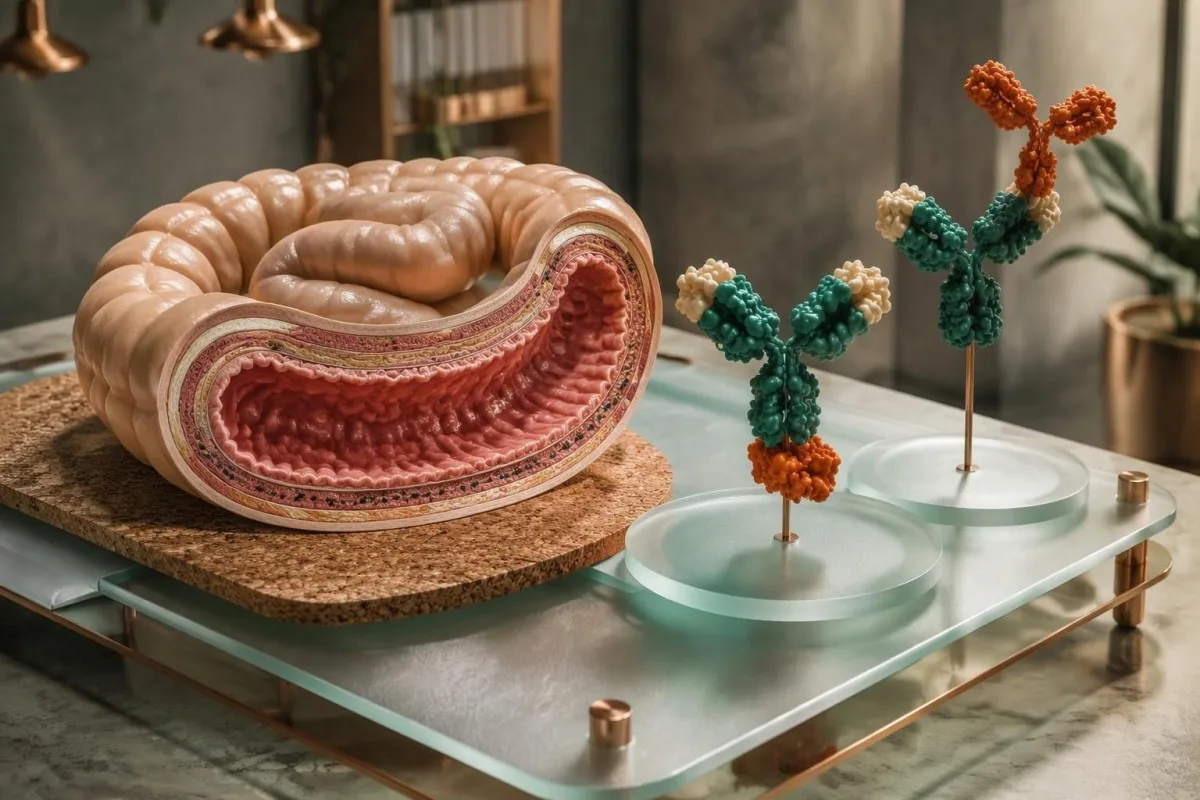
İnfliksimab səviyyəsi testi İBD-yə nəzarətin itirilməsini izah etmək üçün dərman konsentrasiyasını anticisimlərlə birlikdə qiymətləndirir. Əhəmiyyətli anticisimlər olmadan dərman səviyyəsinin aşağı olması qeyri-kafi ekspozisiyanı göstərir; davamlı olaraq yüksək anticisimlərlə birlikdə dərman səviyyəsinin aşağı olması immun vasitəli klirensi göstərir. Kifayət qədər ekspozisiyaya baxmayaraq aktiv iltihab mexanistik uğursuzluq ehtimalını yaradır — lakin yalnız iltihab, düzgün nümunə götürülməsi və müalicə məqsədinə uyğun hədəf təsdiqləndikdən sonra.

Əsas nəticələr
- Cütləşdirilmiş nəticələr qeyri-kafi infliksimab ekspozisiyasını anticisimlərlə əlaqəli klirensdən fərqləndirir; heç bir nəticə təkbaşına simptomların niyə təkrarlandığını sübut etmir.
- İnfuziyadan əvvəl nümunə götürülməsi laboratoriya nümunəsinin növbəti venadaxili infuziya başlamazdan əvvəl götürülməsi deməkdir, 2 gün sonra deyil.
- Saxlayıcı müalicə üçün göstəricilər fərqlənir: 2017-ci il AGA təlimatı reaktiv monitorinq üçün ən azı 5 µg/mL tövsiyə etmiş, ekspert konsensusu isə saxlayıcı müalicə üçün 5–10 µg/mL müəyyən etmişdir.
- İnfliksimabın aşağı səviyyəsi anticisimlər olmadıqda daha sürətli klirensi, bağırsaqdan zülal itkisini, dozanın gecikdirilməsini və ya dozalar arasındakı intervalın həddindən artıq uzun olmasını göstərə bilər.
- İnfliksimaba qarşı anticisimlər ən vacibdir, o zaman ki, davamlı olsun, həmin analiz üçün əhəmiyyətli dərəcədə yüksək olsun və dərman səviyyəsi çox aşağı və ya aşkarlanmayan olsun.
- Ehtimal olunan mexanistik uğursuzluq adekvat ekspozisiyaya baxmayaraq, IBD-nin obyektiv şəkildə aktiv olmasını tələb edir; dərmanın ən aşağı səviyyəsinin 8 µg/mL olduğu halda ishal bunun mövcudluğunu təsdiqləmir.
- Analiz vahidləri bir-birini əvəz etmir: infliksimab üçün 1 µg/mL, 1 mg/L-ə bərabərdir, lakin anticisimlərin U/mL və AU/mL vahidləri universal şəkildə çevrilə bilməz.
- Müalicədə dəyişikliklər sizin IBD komandanızla birlikdə edilməlidir; cavab itkisi olan bəzi seçilmiş hallarda infliksimabdan imtina edilməzdən əvvəl 10–15 µg/mL ekspozisiya səviyyəsinə nail olmaq məqsədəuyğun ola bilər.
İnfliksimab səviyyəsi testi əslində nəyi göstərir?
Bir infliksimab səviyyəsi testi dövr edən infliksimabı, adətən dərmana qarşı anticisimlərlə, birlikdə ölçərək, qeyri-kafi ekspozisiyanı və ya immun vasitəli dərman klirensini araşdırır. Aşkarlanan anticisimlər olmadıqda 2 µg/mL nəticəsi ilə davamlı yüksək anticisimlər fonunda 2 µg/mL nəticəsi fərqli suallar doğurur; bu nəticələrin heç biri dərmanın mütləq dayandırılmalı olduğu mənasına gəlmir.
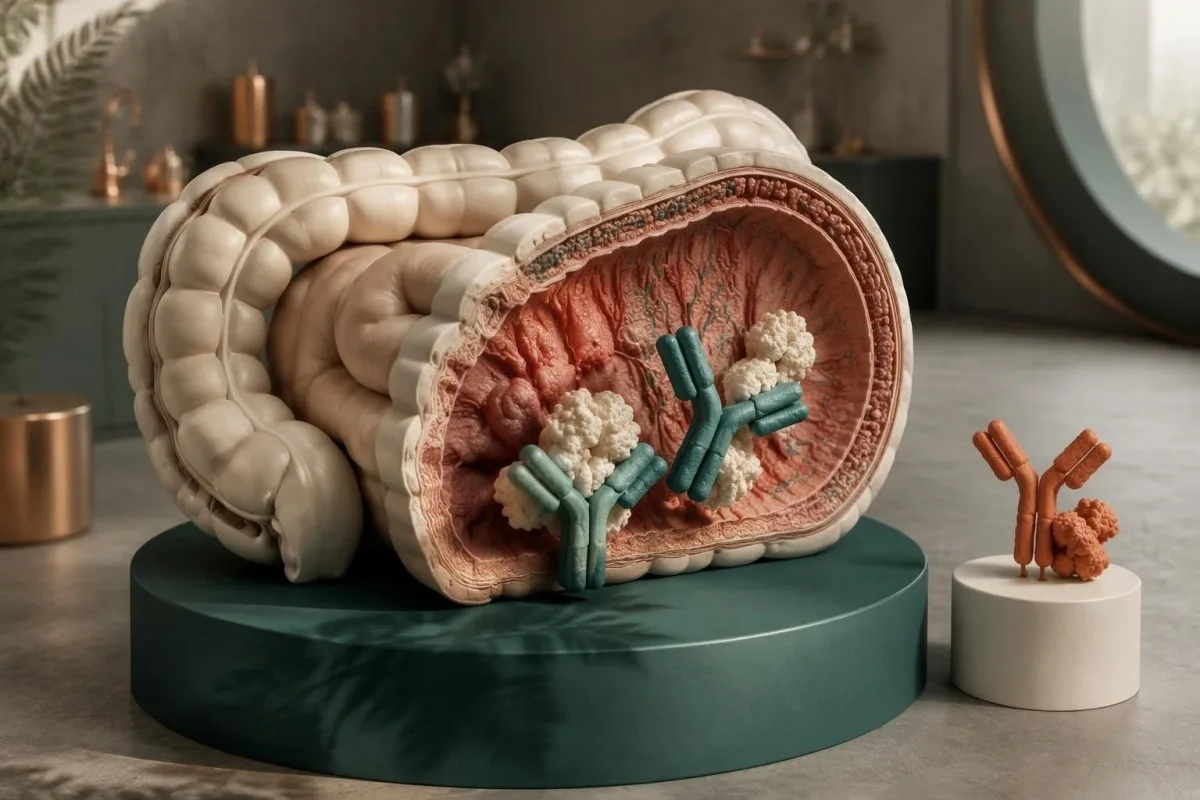
Reaktiv terapevtik dərman monitorinqi simptomların pisləşməsi və ya xəstəliyin aktiv olduğuna dair sübutlar səbəbilə aparılan testdir. Görünən remissiya zamanı proaktiv monitorinqdən fərqlənir: xəstəliyin kəskinləşməsi sənədləşdirildikdə hipotetik 4 µg/mL ən aşağı səviyyə araşdırmanı əsaslandıra bilər, lakin endoskopiya və nəcis markerləri sağalmanın davamlı olduğunu göstərdikdə fərqli müzakirə tələb edə bilər.
İnfliksimab bloklayır şiş nekrozu amilini, adətən TNF kimi qısaldılır; konsentrasiya testi bağırsaqdakı hər TNF siqnalının zərərsizləşdirilib-zərərsizləşdirilmədiyini ölçmür. Serumda 7 µg/mL nəticəsi dövriyyədəki dərmanı ölçür, bağırsağın hər zədələnmiş seqmentindəki dərman aktivliyini və ya bağırsağın sağalma dərəcəsini deyil.
Praktik şərh üçün ən azı 3 göstərici nəzərə alınır: dərman konsentrasiyası, anticisimlərin nəticələri və xəstəliyin obyektiv aktivliyi. Əvvəlki cavab da əhəmiyyətlidir — 18 ay nəzarət altında qaldıqdan sonra simptomların qayıtması ikincili cavab itkisini göstərir, halbuki ilkin müalicə zamanı nəzarətin heç vaxt əldə olunmaması induksiya mərhələsindəki ekspozisiya və müalicə mexanizmi ilə bağlı fərqli suallar doğurur.
Kantesti bir AI qan testi analizatoru oxuculara infliksimabla bağlı qoşalaşdırılmış nəticələri 1 laboratoriya göstəricisini dozaya dair göstəriş kimi qəbul etmədən anlamağa kömək edən. Platformamız Böyük Britaniyada qeydiyyatdan keçmiş Kantesti LTD şirkəti tərəfindən idarə olunur; Şirkət № 17090423; bu barədə məlumat təşkilatımızda terapevtik dərman monitorinqini dəstəkləyən klinik sübutlardan ayrıdır.
İnfliksimabın minimal səviyyəsi nə vaxt ölçülməlidir?
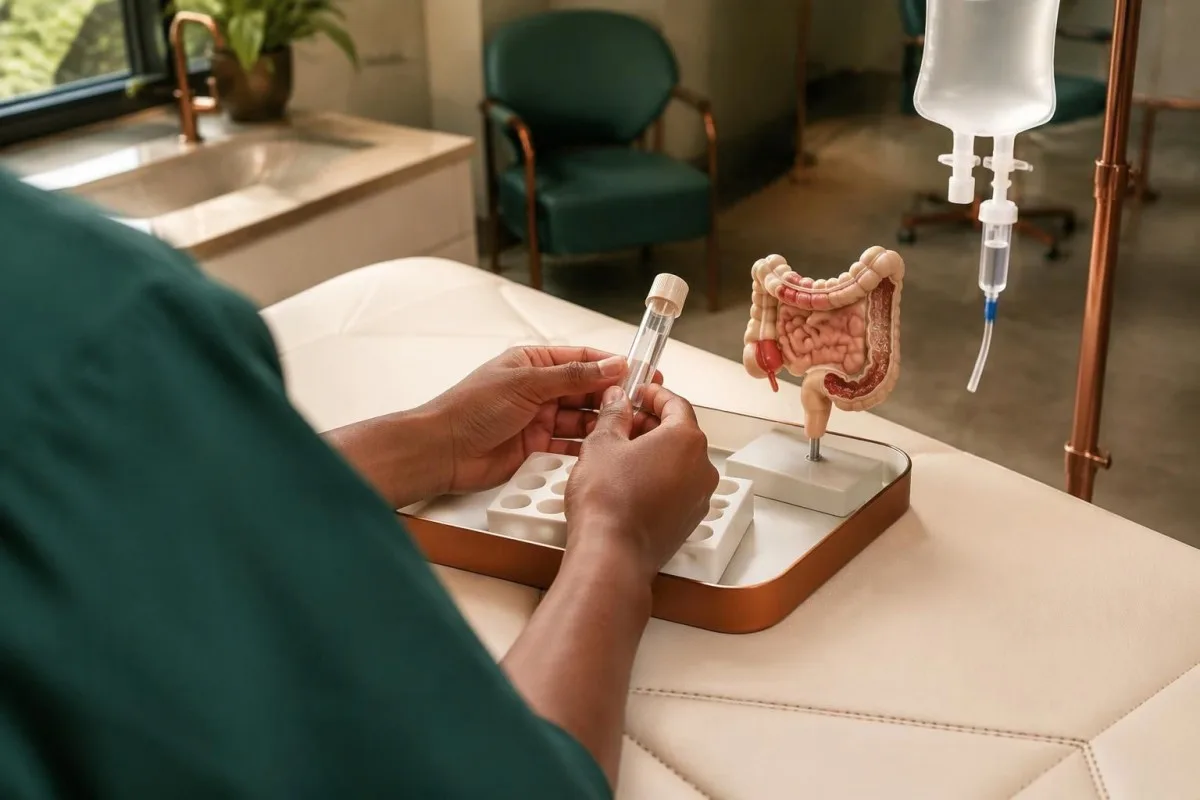
İntravenoz infliksimabın ən aşağı səviyyələri növbəti infuziya başlamazdan dərhal əvvəl, konsentrasiya dozalanma intervalında ən aşağı həddə yaxın olduqda ölçülməlidir. İnfuziyadan 2 gün sonra götürülən nümunə ən aşağı səviyyəni göstərmir və infuziyaöncəsi saxlayıcı müalicə hədəfləri ilə birbaşa müqayisə edilməməlidir.
Nümunənin götürülmə vaxtı müalicənin effektivliyində heç bir dəyişiklik olmadan nəticənin zahiri mənasını dəyişə bilər. Məsələn, infuziyadan az sonra götürülmüş hipotetik 18 µg/mL nəticəsi və növbəti infuziyadan əvvəl götürülmüş 3 µg/mL nəticəsi eyni dozalanma dövrünü təsvir edə bilər — iki müstəqil müalicə vəziyyəti arasında qəfil pisləşməni deyil.
Nəticəni şərh etməzdən əvvəl əvvəlki infuziyanın tarixini, mg ilə faktiki dozanı, planlaşdırılmış intervalı və nümunənin götürülmə vaxtını qeyd edin. 8 həftəlik infuziya 10-cu həftəyədək gecikdirilərsə, alınan konsentrasiya dərmansız keçən daha uzun intervalı əks etdirir; bu nəticə ilkin 8 həftəlik cədvəlin kifayət qədər ekspozisiya təmin edib-etmədiyi sualına dəqiq cavab verə bilməz.
Collection from a line recently used to administer infliximab can contaminate the specimen and produce a misleadingly high result. Ask the infusion service about its collection protocol, and tell it if sampling occurred after treatment started; the timing principles resemble other pre-dose medication tests, although their targets differ.
Fasting is generally not required for the infliximab concentration itself, but another test ordered during the same visit may have preparation requirements. Our ilk götürmə hazırlıq təlimatı explains how to document medication timing; for this test, an accurate infusion timeline usually matters more than an 8-hour fast.
İnfliksimabın hansı səviyyəsi kifayət hesab olunur?
Leykemiya üçün no universal adequate infliximab trough for every patient, disease phenotype, assay, and treatment phase. The 2017 AGA guideline suggested at least 5 µg/mL during reactive maintenance monitoring, while a 2021 expert consensus described maintenance concentrations of 5–10 µg/mL and higher exposure in selected loss-of-response situations.
The AGA benchmark of at least 5 µg/mL is a clinical decision aid, not a healthy-population reference range (Feuerstein et al., 2017). Infliximab is a prescribed biologic: an untreated person normally has no circulating infliximab, so a laboratory's therapeutic interval should never be read like the normal range for sodium.
The TAXIT trial enrolled 263 adults with stable responses and optimized intravenous infliximab toward 3–7 µg/mL before randomized follow-up. Its primary remission endpoint did not improve with concentration-based dosing, although some secondary outcomes favored that approach; this explains why the historical 3–7 µg/mL window is useful context rather than a universal modern target (Vande Casteele et al., 2015).
Cheifetz et al. (2021) recommended considering exposure of 10–15 µg/mL before discontinuing infliximab for secondary loss of response in selected patients. This is expert consensus, not proof that everyone should be escalated to 15 µg/mL; fistulas, endoscopic goals, disease severity, safety, and prior optimization affect whether that reasoning applies.
A concentration of 12 µg/mL is not automatically toxic, and a concentration of 4 µg/mL does not automatically require escalation in an asymptomatic patient with documented healing. Unlike the narrower toxicity discussions around some digər minimum-monitorinq dərmanları, infliximab has no single established serum toxicity cutoff that dictates action.
| Səviyyə | Diapazon | Nə deməkdir |
|---|---|---|
| Historical TAXIT optimization window | 3–7 µg/mL | Studied in adults with stable responses; not a universal threshold for active disease or fistula healing. |
| AGA reactive maintenance benchmark | At least 5 µg/mL | Suggested in the 2017 guideline for reactive monitoring; interpret alongside objective activity and the assay. |
| Expert-consensus maintenance range | 5–10 µg/mL | Described by the 2021 consensus; the appropriate goal varies with disease phenotype and desired outcome. |
| Selected loss-of-response reassessment | 10–15 µg/mL | Exposure experts suggest considering before abandoning treatment in selected cases; not a routine target or toxicity range. |
Anticisimlər olmadan infliksimab səviyyəsi niyə aşağı olur?
Low infliximab levels with no significant antibodies usually suggest pharmacokinetic underexposure: too little drug remains available over the dosing interval. A trough of 1.5 µg/mL can reflect faster clearance, intestinal protein loss, a delayed infusion, or insufficient dose or frequency—not necessarily failure of TNF blockade as a treatment mechanism.

Severe intestinal disease can increase infliximab clearance and allow protein, including therapeutic antibody, to be lost through the bowel. A hypothetical patient with albumin of 28 g/L and a trough of 1 µg/mL therefore needs assessment of disease burden and protein loss, not just a question about whether the infusion was attended.
Low albumin is associated with faster infliximab clearance, but it is not a direct measure of drug binding or an instruction to apply a free-drug correction. Albumin of 30 g/L and 40 g/L may provide different clearance context; our serum zülallarının interpretasiya bələdçisi explains why inflammation, liver synthesis, nutrition, and loss must be distinguished.
Infliximab is mainly broken down through protein-catabolic pathways rather than cleared unchanged by the kidneys. A creatinine of 90 µmol/L cannot predict the infliximab trough, and the medicine should not be interpreted using small-molecule renal dosing assumptions; body size, inflammatory burden, and treatment interruptions may be more informative.
Kantesti AI helps place a low trough alongside reported albumin, CRP, and infusion timing; 1 result cannot identify the clearance pathway by itself. Low albumin should not automatically trigger protein supplements, because inflammation also changes circulating proteins—as explained in our guide to inflammation and transferrin.
Dərman səviyyəsinin aşağı olması və anticisimlərin aşkarlanması nəyi göstərir?
Low or undetectable infliximab with persistent high antibodies suggests immune-mediated pharmacokinetic failure: antibodies can accelerate clearance, neutralize drug activity, or both. A trough below an assay's 0.5 µg/mL quantification limit with a substantial antibody result is more concerning than a weak antibody signal alongside a maintained drug concentration.
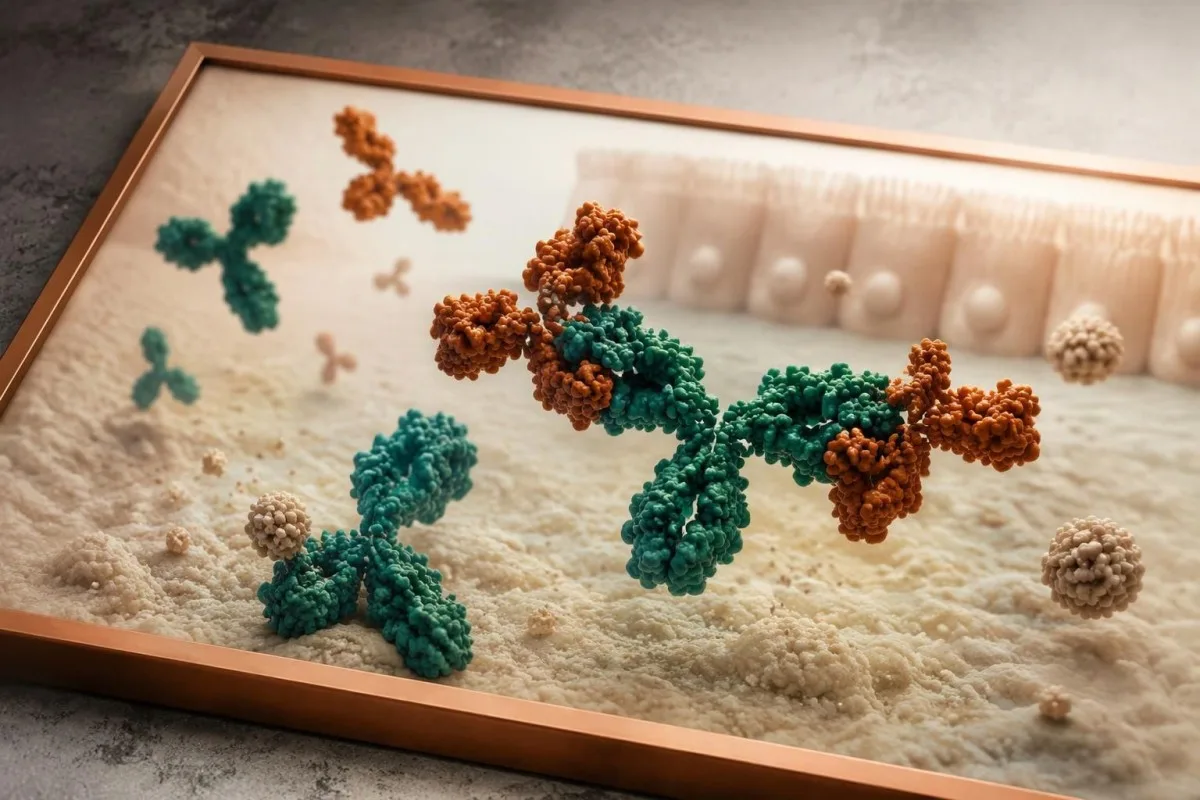
Anti-infliximab antibody tests usually detect binding antibodies; they do not all directly measure neutralizing activity. A positive result of 20 U/mL therefore identifies an assay-defined antibody signal, not a universal percentage of blocked infliximab or a precise prediction of how much benefit remains.
Antibody persistence and magnitude influence whether dose optimization is likely to recover exposure. Cheifetz et al. (2021) described low-titer antibodies as below 10 U/mL for the homogeneous mobility shift assay specifically; that threshold must not be transferred to an ELISA reporting AU/mL or to another laboratory's calibration.
A single low antibody result may be transient or become less clinically relevant after supervised treatment optimization. Repeating paired drug and antibody testing can distinguish a 1-time signal from a rising pattern, but severe disease or an infusion reaction may require action before a second result is available.
Antibodies to infliximab are not the same as antibodies against your own bowel, and they do not by themselves diagnose an immediate allergy. Our explanation of pozitiv antikor nəticəsi növləri helps separate these concepts; breathlessness or faintness during an infusion still requires immediate attention regardless of the antibody number.
Kifayət qədər minimal səviyyə nə vaxt mexanistik uğursuzluğu göstərir?
Ehtimal olunan mexanistik uğursuzluq means objectively active IBD persists despite sufficient infliximab exposure for the treatment goal. A trough of 8 µg/mL with confirmed active colitis may raise this possibility, but selected patients need further exposure optimization before clinicians conclude that another inflammatory pathway should be targeted.
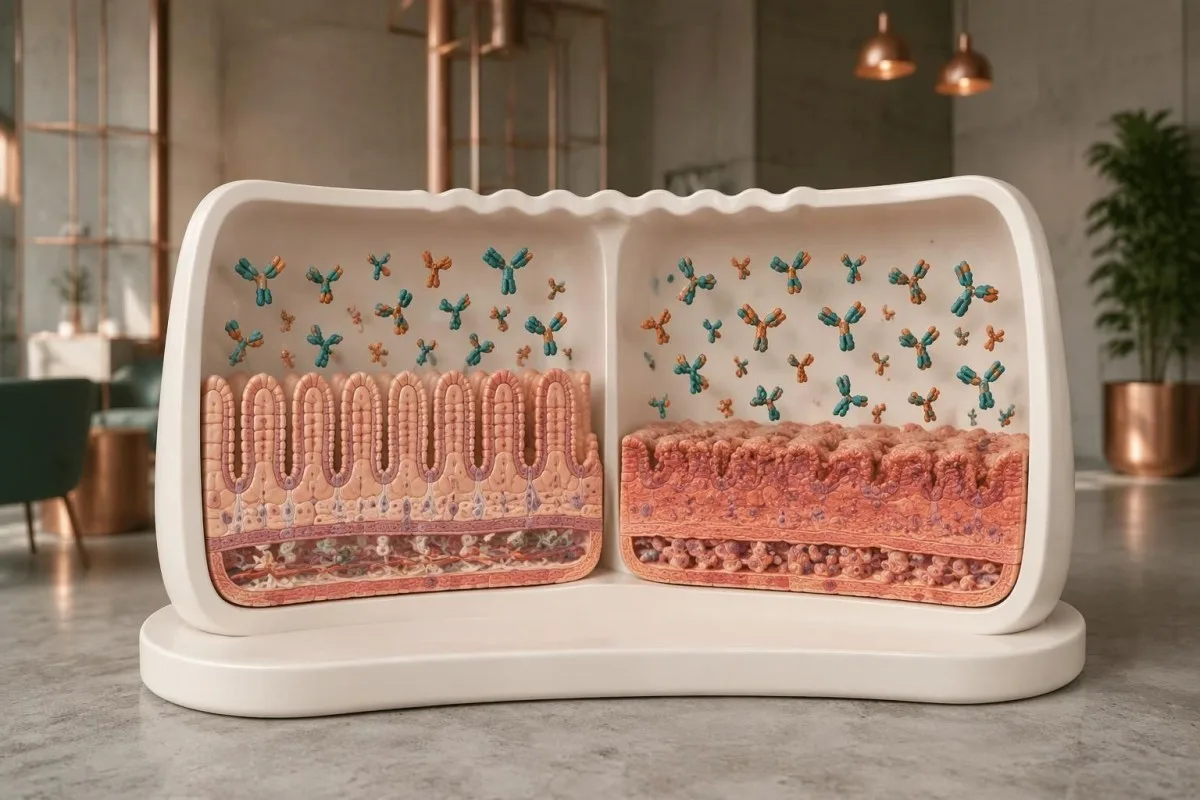
An adequate serum concentration cannot prove that TNF is the only pathway driving a person's current disease. Persistent endoscopic activity with a trough of 12 µg/mL is more supportive of a mechanism problem than the same concentration with normal objective testing and symptoms from bile acid diarrhea.
Calling treatment failure at exactly 5 µg/mL can be premature when the goal is fistula control or substantial endoscopic improvement. The 10–15 µg/mL reassessment discussed in the 2021 consensus provides a safeguard against abandoning an under-optimized treatment, but it is not a requirement to escalate every patient with symptoms.
Objective evidence also has limits: CRP of 3 mg/L does not exclude active IBD, especially in people whose CRP has remained low during previous flares. Borderline stool results need context and sometimes repetition; our guide to sərhəddəki dışkı kalprotektini explains why an isolated intermediate value should not determine a biologic switch.
The strongest case for changing mechanism combines 3 findings: documented inflammation, adequate exposure on a correctly timed sample, and an inadequate clinical response despite appropriate optimization. Structural complications, such as a fixed Crohn's stricture, can also cause symptoms that neither more infliximab nor a different biologic will reliably reverse.
İnfliksimab səviyyəsi kifayət qədər olduqda anticisimlər müsbət ola bilərmi?
Antibodies can be detected while infliximab remains measurable or adequate, particularly with drug-tolerant assays. A trough of 7 µg/mL and a weak positive antibody result do not automatically mean treatment failure; the assay, antibody trend, and evidence of disease activity determine how much weight that finding deserves.

Drug-tolerant methods can identify antibodies in samples containing infliximab that would interfere with some drug-sensitive methods. This greater analytical sensitivity may reveal early or low-level immunogenicity, but 1 newly detected signal does not necessarily establish clinically meaningful loss of response.
A qualitative positive result contains less information than a quantitative result with the assay's cutoff and units. A report reading only positive cannot distinguish a value just above a 10 AU/mL cutoff from a much larger signal; our guide to keyfiyyət və kəmiyyət testləri explains what each format can establish.
Compare antibody trajectories using the same laboratory method whenever feasible. Hypothetical results of 12, 15, and 13 AU/mL across 3 correctly timed visits may carry a different implication from 12, 80, and 200 AU/mL, although analytical variability and clinical findings still prevent interpretation from trend alone.
Kantesti bir AI qan analizi nəticələrinin şərhi platforması that helps distinguish a reported antibody cutoff from a treatment target. When the report lacks the method or units, our interpretation should preserve that uncertainty rather than labeling 1 positive result as proof that infliximab has stopped working.
Laboratoriya üsulları və anticisim vahidləri niyə əhəmiyyətlidir?
Infliximab and antibody results are method-dependent, so values from different assays are not always interchangeable. Infliximab 1 µg/mL equals 1 mg/L, but antibody results in U/mL, AU/mL, or ng/mL do not have a universal conversion because laboratories use different standards, detection limits, and approaches to drug interference.
An assay may report free or functionally available drug differently from another method that detects a broader pool of circulating drug. Two laboratories can therefore produce somewhat different concentrations from similar specimens; a change from 6 to 8 µg/mL after switching methods may not represent a true gain in exposure.
Below the quantification limit means the assay cannot reliably assign a numerical concentration below its validated boundary. A report of less than 0.4 µg/mL is not proof of exactly 0 µg/mL, and greater than 100 U/mL cannot tell you whether the true antibody result is 110 or 1,000 U/mL.
Some laboratories use reflex antibody testing only when the drug concentration falls below a preset threshold. If antibodies were not tested because infliximab was 9 µg/mL, the result is not equivalent to antibodies negative; ask whether the antibody field says not performed, not detected, or below detection.
Kantesti's report interpretation should retain the assay name, units, and collection context instead of silently converting 20 AU/mL into another method's scale. Our klinik metodologiya haqqında məlumat explains the distinction between technical interpretation and clinical decision-making; no AI explanation removes the need to confirm an unusual result with the reporting laboratory.
Həkimlər təkrarlanan simptomların İBD ilə bağlı olduğunu necə təsdiqləyirlər?
Returning symptoms do not necessarily mean returning intestinal inflammation; clinicians combine stool markers, CRP, infection testing, endoscopy, and imaging as appropriate. Three loose stools daily with a trough of 6 µg/mL can arise from active IBD, an intestinal infection, bile acid diarrhea, or a functional bowel disorder.
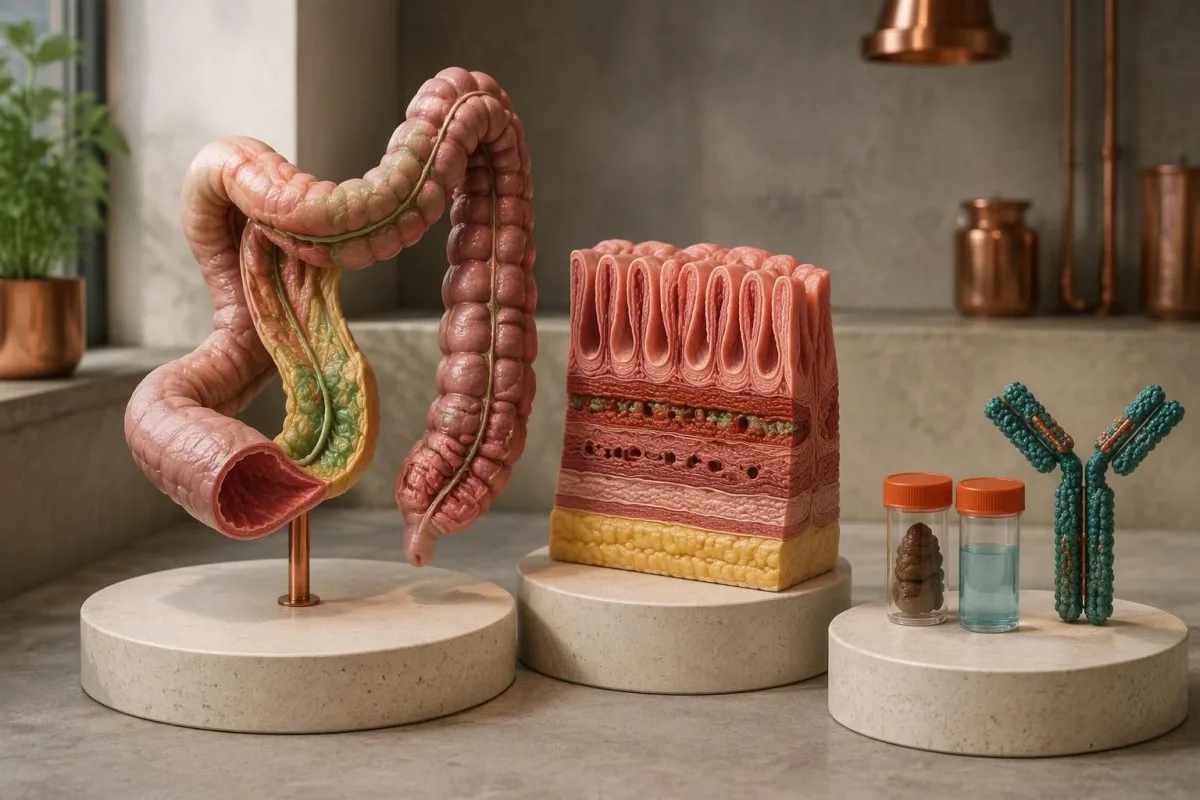
Fecal calprotectin and lactoferrin assess intestinal inflammatory activity rather than infliximab exposure. A hypothetical calprotectin of 800 µg/g adds different information from a trough of 2 µg/mL; our stool inflammation marker comparison explains why paired disease and drug measurements answer separate clinical questions.
C. difficile testing can be necessary during new or worsening diarrhea, even without recent antibiotics. A positive screening test and negative toxin result require contextual interpretation, not automatic classification as an IBD flare; our guide to uyğun gəlməyən C. difficile nəticələri describes why 2 test components can disagree.
Bile acid diarrhea is particularly relevant after ileal disease or resection and can persist despite controlled inflammation. A person with a trough of 10 µg/mL and reassuring objective IBD assessment may need a different evaluation; our explanation of SeHCAT retention results covers one diagnostic route where that test is available.
Bloating, gas, and altered stool frequency can also reflect bacterial overgrowth or carbohydrate malabsorption. At least 2 explanations can coexist with IBD, so a satisfactory trough should not end the assessment; our SIBO breath test guide explains preparation and limitations rather than treating breath testing as proof of every symptom's cause.
İBD komandası aşağı ekspozisiyaya necə reaksiya verə bilər?
Low exposure without substantial persistent antibodies may lead an IBD team to increase the infliximab dose, shorten the dosing interval, or address a treatment interruption. A common adult intravenous maintenance schedule is 5 mg/kg every 8 weeks after induction, but any adjustment requires individualized prescribing and reassessment of disease activity.
For a hypothetical 70 kg adult, 5 mg/kg corresponds to 350 mg before local preparation or rounding rules. Shortening an unchanged dose from every 8 weeks to every 6 weeks increases average drug administered per unit time by about 33%; the trough increase cannot be predicted as exactly 33% because clearance is not constant.
Increasing the dose and shortening the interval are not pharmacokinetically identical strategies. A larger dose changes peak exposure, while a shorter interval reduces time for concentrations to decline; a hypothetical patient whose symptoms repeatedly return during week 7 may prompt a different discussion from someone symptomatic throughout all 8 weeks.
A useful reassessment checks both exposure and the treatment outcome rather than declaring success because the trough rose. If infliximab increases from 2 to 9 µg/mL but calprotectin remains 900 µg/g and endoscopic disease persists, the new result has narrowed the explanation without necessarily improving the underlying disease.
The timing of repeat testing depends on severity, the revised schedule, and the clinical question; waiting 3 months is not appropriate for every deteriorating patient. Our dərman təhlükəsizliyi trendi təlimatı explains why comparable dates and methods matter, but an app should never independently recommend extra infusions.
Müalicənin dəyişdirilməsi və ya kombinə edilmiş müalicə nə vaxt nəzərdən keçirilir?
Persistent high antibodies with low drug may favor changing treatment, while adequate exposure with confirmed active IBD may favor switching to a different mechanism. Low-level immunogenicity can sometimes be addressed through supervised optimization or an immunomodulator, but a result of 15 U/mL alone cannot determine which option offers the best benefit-risk balance.
Switching within the anti-TNF class can make sense when infliximab previously controlled disease but antibody-associated clearance now prevents adequate exposure. Switching to another mechanism becomes more persuasive when inflammation persists with adequate exposure; these are 2 different failure patterns, not interchangeable reasons to choose the next medicine.
An immunomodulator such as azathioprine or methotrexate may reduce immunogenicity in selected circumstances, but adding one introduces additional monitoring and adverse-effect risks. Before azathioprine, TPMT testing and safety assessment can inform prescribing; TPMT and NUDT15 assessment do not replace ongoing CBC and liver monitoring, even when baseline results are normal.
If a person already takes a thiopurine, metabolite testing can help clarify exposure or a metabolism pattern before assuming combination therapy has failed. For example, 2 patients prescribed the same mg dose may have very different metabolite findings; our thiopurine treatment pattern guide explains why prescription dose alone is incomplete.
Restarting infliximab after a long interruption deserves a separate safety discussion because immunogenicity and infusion reactions can complicate re-exposure. A treatment gap of 6 months is not equivalent to a routine 1-week scheduling delay; never restart, add an immunomodulator, or stop an existing medicine based solely on an online interpretation.
İnduksiya, fistulalar, uşaqlar və inyeksiyalar hədəfləri dəyişirmi?
Treatment phase, disease phenotype, age, and formulation can change the relevant exposure goal; intravenous maintenance targets should not be copied into every setting. Standard adult intravenous induction commonly uses 5 mg/kg at weeks 0, 2, and 6, and those early concentrations are interpreted differently from an established 8-week maintenance trough.

The 2021 expert consensus described induction goals of approximately 20–25 µg/mL at week 2, 15–20 µg/mL at week 6, and 7–10 µg/mL at week 14 (Cheifetz et al., 2021). These are consensus exposure goals influenced by disease phenotype and outcome, not interchangeable minimums from one definitive randomized trial.
Perianal fistula outcomes may require higher exposure than symptom control in uncomplicated luminal disease, but observational associations do not establish a universal healing threshold. A fistula still draining at 10 µg/mL may also need imaging, drainage of an abscess, or procedural care; raising the trough cannot substitute for addressing an undrained collection.
Children can have different clearance and dosing requirements, particularly with lower body weight or severe disease. An adult maintenance benchmark of 5 µg/mL should not become a parent-directed dosing rule; our discussion of Uşaqlar üçün AI interpretasiyası explains why pediatric specialist context and age-appropriate interpretation remain necessary.
Subcutaneous infliximab produces a different concentration-time profile from intermittent intravenous infusions, and availability and prescribing schedules vary internationally. A concentration of 15 µg/mL during injection treatment should not be labeled excessive merely because an intravenous report lists 3–7 µg/mL; the formulation, actual regimen, and sampling convention must be specified.
Cütləşdirilmiş nəticələr klinik mülahizələri necə dəyişir?
Paired results guide the next question rather than dictate a prescription: low drug without antibodies suggests underexposure, low drug with persistent antibodies suggests immunogenicity, and adequate drug with inflammation raises possible mechanism failure. The following 4 examples are entirely hypothetical; the concentrations are illustrative, not personalized treatment recommendations.
Example 1: a 34-year-old with Crohn's disease has a true trough of 1.8 µg/mL, no detected antibodies, albumin of 29 g/L, and calprotectin of 1,100 µg/g. This pattern supports underexposure in active disease; confirming the infusion schedule and considering supervised optimization are more logical than immediately declaring TNF blockade ineffective.
Example 2: a 46-year-old with ulcerative colitis has infliximab below 0.4 µg/mL and antibodies above the laboratory's 100 U/mL reporting limit on 2 visits. Assuming the assay defines that antibody signal as substantial, persistent immunogenicity is plausible; simply increasing the dose may be less successful than a clinician-directed treatment change.
Example 3: a 28-year-old has a trough of 11 µg/mL, no significant antibodies, and repeatedly active colitis on endoscopy despite appropriate optimization. Example 4: a 61-year-old has the same 11 µg/mL trough but reassuring endoscopy and diarrhea after ileal resection; the first pattern raises mechanism failure, whereas the second prompts investigation of non-inflammatory causes.
Kantesti bir Süni intellektlə işləyən qan testi analizi aləti that helps organize these distinctions when the report and treatment details are supplied. Our AI texnologiyası izahı describes how laboratory context informs interpretation; if a 2-week-old report lacks sampling timing, the missing information must stay visible rather than being guessed.
Təkrar müayinə üçün özünüzlə nə gətirməli və hansı sübutlar tətbiq olunur?
Bring the complete report, infusion timeline, and objective disease results to your IBD review; these 3 evidence streams make paired drug-antibody testing actionable. Seek earlier care for severe deterioration rather than waiting for the next trough, and distinguish infliximab-specific clinical research from general educational publications about accompanying laboratory abnormalities.
A useful review record includes the previous 2 infusion dates, actual dose, collection timing, assay name, antibody units, and recent CRP, albumin, and fecal calprotectin. Add symptom timing, steroid use, recent antibiotics, and missed doses; ask whether the proposed change addresses insufficient exposure, immunogenicity, active non-TNF disease, or a non-inflammatory explanation.
Contact your clinical team promptly for worsening diarrhea with dehydration, persistent vomiting, new significant bleeding, or fever of 38°C or higher while immunosuppressed. Severe abdominal pain with distension, fainting, or inability to keep fluids down may require emergency assessment; during an infusion, sudden breathing difficulty or collapse requires immediate staff attention, not interpretation of an antibody report.
Kantesti provides educational interpretation, not independent biologic prescribing, and our məsuliyyətli AI prinsiplərimiz explain that boundary. A reassuring trough of 10 µg/mL does not establish that an infusion is safe during an acute illness; the treating service must assess symptoms, examination findings, and any necessary investigations.
The 2 Zenodo publications listed below address accompanying laboratory interpretation, not infliximab target validation: our RDW və qırmızı qan hüceyrəsi təlimatı concerns anemia patterns, while our BUN və kreatinin bələdçimiz concerns renal and hydration context. These educational deposits are not evidence for anti-drug antibody cutoffs; the AGA guideline, TAXIT trial, and biologic-monitoring consensus supply the directly relevant clinical references.
Tez-tez verilən suallar
Aşağı infliksimab səviyyəsi nə deməkdir?
Aşağı infliksimab səviyyəsi dövr edən dərman ekspozisiyasının həmin müalicə mərhələsi və məqsəd üçün seçilmiş həddən aşağı olması deməkdir; bu, infliksimabın dayandırılmalı olduğu anlamına avtomatik olaraq gəlmir. Əhəmiyyətli anticisimlər olmadan, həqiqi saxlayıcı müalicə dib səviyyəsinin 2 µg/mL olması dərmanın daha sürətlə klirensini, bağırsaqdan zülal itkisini və ya dozanın və ya dozalararası intervalın yetərsiz olmasını göstərə bilər. Dərman səviyyəsinin aşağı olması və əhəmiyyətli anticisimlərin davam etməsi isə immun vasitəli klirensə işarə edir. İBX komandanız nəticəni xəstəliyin obyektiv aktivliyi, infuziyanın vaxtı və analiz üsulu ilə birlikdə şərh etməlidir.
İBX üçün yaxşı infliksimab minimal səviyyəsi nə qədərdir?
İBX olan hər kəs üçün uyğun olan vahid infliksimab qalıq konsentrasiyası yoxdur. AGA-nın 2017-ci il təlimatı müalicəyə reaktiv monitorinq zamanı ən azı 5 µg/mL səviyyəsini tövsiyə edib, 2021-ci il ekspert konsensusu isə saxlayıcı müalicə üçün 5–10 µg/mL konsentrasiyasını qeyd edib. Cavaba ikincili itki olan bəzi pasiyentlərdə müalicədən imtina etməzdən əvvəl 10–15 µg/mL səviyyəsində yenidən qiymətləndirmə aparmaq lazım gələ bilər. İnduksiya, fistulalar və dərialtı müalicə fərqli kontekst tələb edir; buna görə də laboratoriya intervalı universal dozalanma hədəfi deyil.
İnf infliksimab səviyyəmi nə vaxt yoxlatdırmalıyam?
For intravenous infliximab, a trough sample should be collected immediately before the next infusion begins. A sample obtained 2 days after an infusion is not comparable with routine pre-infusion targets. Record the last infusion date, dose, scheduled interval, and actual collection time, especially if an 8-week appointment was delayed. Subcutaneous infliximab has a different exposure profile, so sampling should follow the prescribing team's and laboratory's instructions.
İnfliksimaba qarşı anticisimlər yox ola bilərmi?
İnfliksimaba qarşı aşağı səviyyəli anticisimlər bəzən aşkarlanmayan və ya klinik baxımdan daha az əhəmiyyətli ola bilər, lakin dərman səviyyəsi çox aşağı olduqda davamlı və yüksək səviyyəli anticisimlərin öhdəsindən gəlmək daha çətindir. 2021-ci il ekspert konsensusunda aşağı titrli anticisimlər bir homogen hərəkətlilik dəyişməsi analizində 10 U/mL-dən aşağı kimi təsvir edilib; bu hədd bütün laboratoriya metodlarına tətbiq edilə bilməz. Həkim nəzarəti altında dozanın optimallaşdırılması və ya immunomodulyator seçilmiş pasiyentlərə kömək edə bilər, digərlərinin isə müalicəsini dəyişməsi lazım gələ bilər. Təkrar cütləşdirilmiş testlər anticisimlərin davamlı olub-olmadığını aydınlaşdıra bilər, lakin pasiyentlər müalicəni özbaşına dəyişməməlidirlər.
Səviyyə normal olsa belə, infliksimab təsirini itirə bilərmi?
İnfliksimab, dövriyyədəki konsentrasiyası adekvat olduğu halda belə, obyektiv olaraq aktiv İBX-ni nəzarətə götürə bilməyə bilər; bu isə mümkün mexanistik uğursuzluq ehtimalını yaradır. 10 µg/mL səviyyəsində minimal konsentrasiya bağırsağın sağalmasına zəmanət vermir və TNF-nin xəstəliyi hərəkətə gətirən yeganə yol olduğunu təsdiqləmir. Mexanizmi dəyişməzdən əvvəl həkimlər iltihabı təsdiqləyir, struktur və ya infeksion ağırlaşmaları qiymətləndirir və məruzqalmanın konkret müalicə məqsədi üçün adekvat olub-olmadığını nəzərdən keçirirlər. Obyektiv müayinələrin qənaətbəxş nəticələr verdiyi halda ishalın səbəbi iltihabla əlaqəli olmaya da bilər.
0 Yüksək infliksimab səviyyəsi təhlükəlidirmi?
0 Yüksək infliksimab konsentrasiyası avtomatik olaraq təhlükəli deyil və bütün İBX xəstələrinə tətbiq olunan, müəyyən edilmiş vahid serum toksikliyi həddi yoxdur. 15 µg/mL nəticəsi induksiya, fistulanın müalicəsi və ya dərialtı terapiya zamanı, adi venadaxili saxlayıcı müalicə zamanı olduğundan fərqli şərh edilə bilər. Təhlükəsizlik yalnız konsentrasiyadan deyil, ümumi müalicə rejimindən, infeksiyalardan, infuziya reaksiyalarından və digər klinik göstəricilərdən asılıdır. Nəticəni sizə müalicə təyin edən komanda ilə müzakirə etmədən infuziyanı buraxmayın və ya dozanı azaltmayın.
Nə üçün laboratoriyanı dəyişdikdən sonra infliksimab anticisimlərinin nəticələri dəyişdi?
Laboratoriyalar dəyişdirildikdən sonra infliksimaba qarşı anticisimlərin nəticələri dəyişə bilər, çünki analizlər kalibrləmə, vahidlər, aşkarlama hədləri və dövr edən dərmana tolerantlıq baxımından fərqlənir. 20 AU/mL nəticəsini universal şəkildə U/mL və ya ng/mL-ə çevirmək mümkün deyil. Dərmana tolerant metod infliksimabın səviyyəsi hələ də ölçülə bildikdə, dərmana həssas analizdə aşkarlanmayan anticisimləri aşkar edə bilər. Mümkün olduqda tendensiyaları eyni metoddan istifadə etməklə müqayisə edin və refleks test qaydasına əsasən buraxılmaq əvəzinə anticisim testinin həqiqətən aparılıb-aparılmadığını soruşun.
Qan analizinin nəticələrini necə oxumaq
Laboratoriya hesabatınızı yükləyin, Kantesti-nin AI-si isə saniyələr ərzində hər biomarkeri sadə dildə izah etsin. Dünyada 2 milyondan çox insan istifadə edir.
İstinadlar
- Klein, T., Mitchell, S., & Weber, H. (2026). RDW qan testi: RDW-CV, MCV və MCHC üzrə ətraflı bələdçi. Kantesti AI tibbi araşdırmaları. DOI
- Klein, T., Mitchell, S., & Weber, H. (2026). BUN/Kreatinin Nisbəti İzahı: Böyrək Funksiyası Testi Bələdçisi. Kantesti AI tibbi araşdırmaları. DOI
- Feuerstein JD et al. (2017). American Gastroenterological Association Institute Guideline on Therapeutic Drug Monitoring in Inflammatory Bowel Disease. Gastroenterology. DOI
- Vande Casteele N et al. (2015). Trough concentrations of infliximab guide dosing for patients with inflammatory bowel disease. Gastroenterology. DOI
- Cheifetz AS et al. (2021). A Comprehensive Literature Review and Expert Consensus Statement on Therapeutic Drug Monitoring of Biologics in Inflammatory Bowel Disease. The American Journal of Gastroenterology. DOI
- 2M+Təhlil edilmiş testlər
- 127+ölkələr
- 100+Dillər
Tibbi komanda haqqında


E-E-A-T Etibar Siqnalları
Təcrübə
Həkim rəhbərliyi ilə laborator şərh iş axınlarının klinik icmalı.
Ekspertiza
Biomarkerlərin klinik kontekstdə necə davrandığına dair laboratoriya təbabəti diqqəti.
Səlahiyyətlilik
Dr. Thomas Klein tərəfindən tibbi baxımdan nəzərdən keçirilib; Dr. Sarah Mitchell və Prof. Dr. Hans Weber töhfə veriblər.
Etibarlılıq
Aydın izləmə yolları ilə həyəcanı azaltmağa yönəlmiş sübuta əsaslanan şərh.





Tibbi məsuliyyətdən imtina bildirişi
Bu məqalə yalnız təhsil məqsədlidir və tibbi məsləhət təşkil etmir. Diaqnoz və müalicə qərarları üçün həmişə ixtisaslı səhiyyə işçisi ilə məsləhətləşin.
Dərc edilmişdir · Redaksiya komandası ilə əlaqə saxlayın
İngiltərə və Uelsdə qeydiyyatdan keçmiş Kantesti Ltd tərəfindən nəşr olunub, şirkət №. 17090423, London, Birləşmiş Krallıq.
