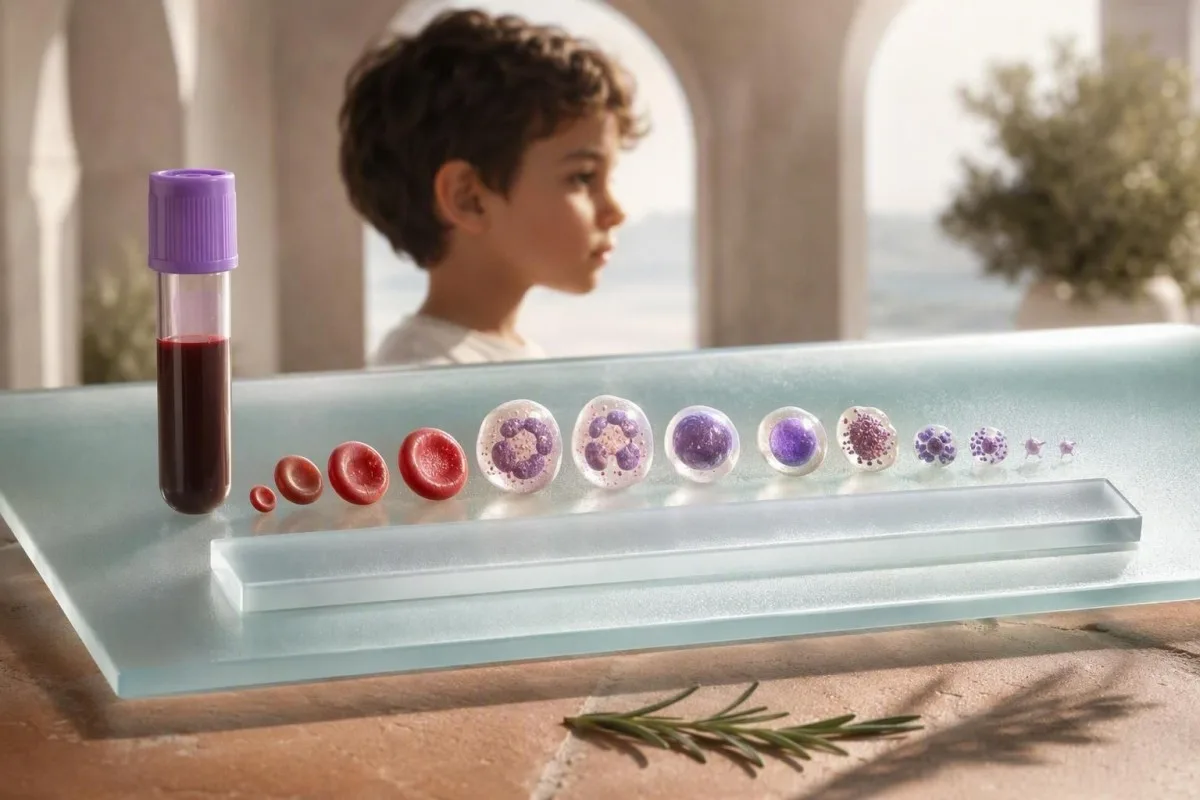
ШІ може організувати результати лабораторних досліджень дитини та пояснити незрозумілі терміни, але він не може замінити педіатра, який знає вік дитини, її модель росту, дані огляду та симптоми.


- Пряма відповідь: ШІ може інтерпретувати патерни аналізів крові для дітей як освітній додаток, але педіатр повинен приймати діагностичні рішення та рішення щодо лікування.
- Вікові діапазони: Кількість лімфоцитів, яка є очікуваною у віці 2 років, може бути позначена як висока за референтним інтервалом для дорослих.
- Важливість статевого дозрівання: Лужна фосфатаза може перевищувати 300 МО/л під час росту кісток без захворювання печінки.
- Невідкладні симптоми: Труднощі з диханням, сплутаність свідомості, судоми, синюшні губи, сильне зневоднення або дуже погане самопочуття дитини потребують невідкладної медичної допомоги незалежно від звіту ШІ.
- Якість зразка: Гемоліз, затримка обробки та агрегація тромбоцитів у пробірках з ЕДТА можуть призвести до помилкових результатів вмісту калію, ЛДГ або тромбоцитів.
- Значення тренду: Порівняння результатів з однієї лабораторії протягом тижнів або місяців часто є більш корисним, ніж реагування на один граничний результат.
- Жодного самолікування: Батьки не повинні починати прийом заліза, вітаміну D, лікування щитоподібної залози або добавок електролітів, керуючись лише тлумаченням результатів лабораторних досліджень в Інтернеті.
- Конфіденційність: Звіт про дитину слід завантажувати лише за згодою батьків або законних опікунів та з ретельним видаленням непотрібних ідентифікаторів.
Що ШІ може і не може зробити з аналізом крові дитини
ШІ може інтерпретувати результати аналізу крові у дітей лише як структуроване пояснення, а не як діагноз або заміну педіатричного огляду. Він може визначити позначене значення, перевести одиниці вимірювання, описати поширені причини та сформулювати запитання для лікаря; він не може оцінити гідратацію, стадію розвитку, результати огляду або наскільки хворою виглядає дитина. Станом на 6 вересня 2026 року це розмежування залишається межею безпеки, яку я найчастіше обговорюю з батьками.
Я доктор Томас Кляйн, і під час клінічного огляду я бачив, як нормальний CBC (загальний аналіз крові) у малюка викликав зайву тривогу, коли застосовувалися дорослі діапазони. Результат за межами друкованого діапазону не є автоматично аномальним для дитини, оскільки багато звітів за замовчуванням використовують широкі або розроблені для дорослих позначки. Розумний медичний звіт ШІ повинен вказувати, який референтний інтервал він використовував, і направляти сім’ї до лікаря, який призначив аналіз.
Кантесті – це Аналізатор крові зі штучним інтелектом розроблений для організації лабораторних даних та пояснення закономірностей простою мовою; для педіатричних звітів наш результат слід розглядати як початок розмови з педіатром, а не як дозвіл діяти самостійно. Гарячковий 18-місячний малюк з обнадійливим звітом все одно може потребувати огляду в той же день, якщо він млявий, важко дихає або погано п’є.
Інтерпретація результатів лабораторних досліджень онлайн найбільш корисна, коли вона перетворює хаотичний PDF на практичні запитання: Чи голодувала дитина? Чи була нещодавня вірусна інфекція? Чи перетинає зріст або вага відсотки? Батьки також можуть переглянути наші перевірки безпеки медичних звітів ШІ перед тим, як покладатися на будь-яке автоматизоване пояснення.
Чому дітям потрібні вікові лабораторні референтні інтервали
Діти потребують референтних інтервалів, відповідних віку, статі, стадії статевого дозрівання, методу аналізу та іноді гестаційного віку. Число може суттєво змінюватися між дитинством, шкільним віком та підлітковим віком, поки дитина почувається добре.
Гемоглобін новонароджених зазвичай становить приблизно від 14 до 22 г/дл, тоді як типовий діапазон для дітей віком від 1 до 5 років становить приблизно від 11,0 до 13,5 г/дл; лабораторії встановлюють власні перевірені інтервали. Фізіологічне падіння після народження очікується, але той самий гемоглобін 9 г/дл потребує різної оцінки терміновості у здорової 2-місячної дитини, ніж у блідої, тахікардійної 8-річної дитини.
Абсолютна кількість лімфоцитів також залежить від віку. Кількість близько 4.0 × 10⁹/л може бути звичайним у дитини дошкільного віку, але перевищувати багато дорослих діапазонів, тому диференційований аналіз слід читати за віком, а не тільки за відсотками; наш посібник щодо кількості лімфоцитів за віком пояснює різницю.
Солдін та колеги описали, як фізіологія розвитку робить педіатричні інтервали суттєво відмінними від дорослих значень багатьох аналітів (Soldin et al., 2005). На практиці мені потрібен власний інтервал лабораторії, а потім точний вік дитини на момент збору — а не загальний веб-діапазон.
Як ріст і статеве дозрівання змінюють лабораторні результати
Ріст і статеве дозрівання можуть змінювати лужну фосфатазу, гемоглобін, феритин, ліпіди та статеві гормони настільки, що це може імітувати захворювання за дорослим звітом. Час стрибка росту дитини часто пояснює більше, ніж один позначений номер.
Під час швидкого кісткового росту, лужна фосфатаза (ALP) може перевищувати 300 МО/л і залишатися в межах норми для віку, оскільки активність остеобластів висока. Підвищена ALP з нормальною білірубіном, GGT, кальцієм, фосфатами, симптомами та анамнезом росту — це зовсім інша картина, ніж холестатичне захворювання печінки; дивіться наше пояснення ALP після кісткового росту.
Статеве дозрівання додає ще один шар. Гемоглобін часто зростає у хлопчиків, коли тестостерон збільшує вироблення еритроцитів, тоді як у підлітків, які менструюють, може розвинутися залізодефіцитна анемія з феритином нижче 15 нг/мл ще до падіння гемоглобіну. Педіатричні серцево-судинні настанови NHLBI 2011 року також визнають, що рівень ліпідів варіюється залежно від дозрівання та повинен оцінюватися за педіатричними показниками (Expert Panel, 2011).
Кантесті – це Платформа для розшифровки аналізу крові AI що може показати ці застереження щодо розвитку, але він не може надійно визначити стадію Теннера з лабораторного PDF. Клініцист може обґрунтовано запитати про менструації, швидкість росту, дієту, спортивні тренування, прийом ліків та сімейний час статевого дозрівання перед інтерпретацією гормональної панелі або панелі заліза.
Чому результати новонароджених та недоношених дітей потребують спеціалізованого перегляду
Результати лабораторних досліджень новонароджених та недоношених дітей не слід інтерпретувати лише за допомогою загальних вихідних даних ШІ, оскільки нормальна фізіологія змінюється годинами та днями після народження. Білірубін, глюкоза, кальцій, гематокрит та скринінг щитоподібної залози потребують контексту неонатального періоду, що залежить від часу.
Загальна концентрація білірубіну 12 мг/дл (205 мкмоль/л) може потребувати спостереження або невідкладного лікування залежно від постнатального віку в годинах, гестаційного віку, годування, ризику гемолізу та швидкості підвищення. Ось чому для прийняття рішень щодо жовтяниці новонароджених використовуються номограми, специфічні для певного віку в годинах, та клінічна оцінка, а не один універсальний поріг.
Рівень глюкози в плазмі нижче 47 мг/дл (2,6 ммоль/л) часто використовується як операційний поріг у протоколах для новонароджених з групи ризику, але лікування залежить від симптомів, годування, повторного вимірювання та місцевих неонатальних рекомендацій. Результат проколу п'ятки також може відрізнятися від результату плазми, отриманого негайно обробленої в лабораторії.
Батьки повинні ставитися до повідомлення про аномальний скринінг новонароджених як до шляху швидкого контакту, а не як до проблеми для онлайн-досліджень. Наш огляд маркерів скринінгу новонароджених пояснює, чому деякі результати потребують контакту в той самий день, тоді як інші потребують планового повтору.
Як читати CBC дитини, не панікуючи
Загальний аналіз крові дитини корисний, коли його розглядають як комплексний показник: гемоглобін, MCV, ретикулоцити, лейкоцитарну формулу, тромбоцити, симптоми та динаміку слід розглядати разом. Ізольований високий або низький показник рідко дає діагноз.
Гемоглобін нижче 11,0 г/дл у маленької дитини часто викликає підозру на дефіцит заліза, харчування, ризик впливу свинцю, хронічне запалення, гемоглобінопатію та крововтрату; MCV та феритин допомагають звузити коло питань. Феритин може виглядати хибно обнадійливим під час інфекції, оскільки він підвищується як реагент гострої фази.
Абсолютний лічильник нейтрофілів нижче 1,5 × 10⁹/л у багатьох випадках називається нейтропенією, але терміновість ситуації різко змінюється залежно від віку, походження, тривалості, лихоманки та глибини зниження. Здорова дитина з ANC 1,2 × 10⁹/л після вірусу — це не та ж клінічна ситуація, що й дитина з лихоманкою та ANC нижче 0,5 × 10⁹/л; читайте наш посібник з визначення діапазону нейтрофілів.
Коли я переглядаю CBC після гастроентериту, я перевіряю, чи гемоконцентрація пояснює помірно високий рівень гемоглобіну або кількість тромбоцитів, перш ніж припускати проблему з кістковим мозком. Повторний аналіз після одужання часто безпечніший, ніж широке тестування, якщо тільки синці, стійка лихоманка, біль у кістках, втрата ваги або значне блідість не змінюють ризик.
Чому обробка зразків може ввести в оману ШІ та клініцистів
Поганий забір або затримка обробки можуть спотворити результат аналізу крові дитини ще до того, як його побачить людина чи алгоритм. Гемоліз, складний забір, тривале накладання джгута та неправильна пробірка можуть настільки спотворити результати, що викличуть помилкові тривоги.
Гемоліз вивільняє внутрішньоклітинний калій та LDH у зразок, тому високий рівень калію з маркером гемолізу може потребувати термінового повторного аналізу, а не негайного лікування. Однак дитина зі слабкістю, пальпітаціями, хворобами нирок або проблемами на ЕКГ все одно потребує швидкої клінічної оцінки; попередження про зразок не доводить, що калій нешкідливий.
Злипання тромбоцитів, пов'язане з ЕДТА, може призвести до штучно низької кількості тромбоцитів, іноді нижче 100 × 10⁹/л, незважаючи на нормальні показники тромбоцитів у дитини. Огляд лабораторного мазка крові або повторний аналіз у пробірці з цитратом можуть прояснити цю поширену преаналітичну пастку; наша стаття про — лабораторія повідомляє тромбоцити показує, чому лише цифра може вводити в оману.
Kantesti’s Інструмент для аналізу результатів аналізу крові на основі AI може виявити внутрішні неузгодженості та видимі коментарі лабораторії, але не може перевірити пробірку або спостерігати складний процес забору. Батьки повинні фотографувати весь звіт, включаючи коментарі щодо якості зразка, часу забору та референтних діапазонів — а не лише позначену сторінку.
Як температура, зневоднення та віруси тимчасово змінюють тести
Гостре захворювання може тимчасово змінити рівень глюкози, натрію, креатиніну, кількість лейкоцитів, CRP, феритину та печінкових ферментів у дітей. Результат під час лихоманки часто слід порівнювати з повторним аналізом після одужання, а не вважати його базовим показником дитини.
Блювота та знижене споживання їжі можуть призвести до згущення гемоглобіну та сечовини, тоді як сильна діарея може знизити рівень бікарбонатів та порушити баланс натрію або калію. Рівень натрію нижче 130 ммоль/л, особливо при сплутаності свідомості, сильному головному болю, судомах або повторній блювоті, потребує термінової медичної оцінки, а не онлайн-пояснень.
CRP підвищується та знижується швидше, ніж ESR, але жоден з тестів сам по собі не визначає конкретну причину. Рівень CRP 40 мг/л може спостерігатися при вірусних або бактеріальних інфекціях, пошкодженні тканин та запальних захворюваннях; зовнішній вигляд дитини, тривалість лихоманки, огляд, а іноді й посіви мають більше значення, ніж один маркер.
Практичне правило доктора Томаса Кляйна просте: записуйте день хвороби, ліки, споживання рідини та температуру поруч із результатом. Цей невеликий запис робить лабораторні зміни між візитами набагато простішими для інтерпретації педіатром.
Симптоми, які переважають будь-який заспокійливий звіт ШІ
Термінові симптоми мають пріоритет над результатами AI-звіту, що виглядають нормально, оскільки лабораторні панелі не виключають багатьох педіатричних невідкладних станів. Дитина, яка задихається, важко прокидається, має сині губи, судоми або ознаки сильного зневоднення, потребує негайної допомоги.
Зверніться за невідкладною допомогою для дитини з висипом, який не блідне при натисканні, у поєднанні з лихоманкою, ригідністю потиличних м'язів, постійним сильним головним болем, зміненою поведінкою або поганою перфузією, такою як холодні плямисті руки та помітно зменшене сечовиділення. CBC або CRP не можуть безпечно виключити ранній сепсис, менінгіт, апендицит, діабетичний кетоацидоз або алергічну надзвичайну ситуацію.
При ризику діабету блювота з глибоким або швидким диханням, біль у животі, сонливість або помірні/великі кетони потребують термінової оцінки. Рівень глюкози в крові 200 мг/дл (11,1 ммоль/л) з класичними симптомами підтверджує оцінку на діабет, але оцінка кетоацидозу вимагає визначення глюкози, кетонів, електролітів, кислотно-лужного стану та присутності лікаря.
Результат не може оцінити роботу дихання або капілярне наповнення. Батьки, стурбовані симптомами з боку грудної клітки, можуть скористатися нашим посібником з термінових аналізів крові та симптомів для контексту, але не повинні чекати автоматичного аналізу, коли дитина виглядає серйозно хворою.
Ліки, вітаміни та добавки, які змінюють педіатричні лабораторії
Поширені ліки та добавки можуть змінювати або впливати на педіатричні лабораторні тести, тому AI потребує повного списку ліків, щоб уникнути помилкових пояснень. Часто прикладами є біотин, кортикостероїди, протисудомні засоби, залізо, вітамін D та нещодавні внутрішньовенні вливання.
Високі дози біотину можуть перешкоджати деяким імуноаналізам і давати помилкові результати аналізів щитоподібної залози або гормонів; батьки повинні повідомити лікаря про засоби для волосся, нігтів або мультивітаміни. Доза має значення: звичайне споживання їжі відрізняється від добавок, що містять від 5 000 до 10 000 мікрограмів щодня.
Приймати залізо не слід лише тому, що дитина виглядає втомленою або має низький нормальний рівень феритину. Занадто багато заліза може бути шкідливим, а діагностичне дослідження відрізняється для дефіциту заліза, ознак таласемії, хронічного запалення та впливу свинцю; наш посібник із дослідження заліза показує, чому насичення трансферину та феритин інтерпретуються разом.
Лікування вітаміном D є ще однією галуззю, де важливий контекст. Концентрація 25-гідроксивітаміну D нижче 20 нг/мл (50 нмоль/л) часто вважається дефіцитною, але дозування для дітей залежить від віку, розміру тіла, дієти, ризику мальабсорбції, кальцію та місцевих рекомендацій — а не від загального плану харчування ШІ.
Чому тенденції зазвичай безпечніші, ніж один педіатричний результат
Повторні результати з тієї самої лабораторії часто є більш інформативними, ніж один граничний педіатричний показник. Тенденції можуть виявити одужання, зміни, пов'язані з ростом, вплив ліків або стійкий патерн, який потребує консультації фахівця.
Зміна рівня феритину з 8 до 28 нг/мл після лікування під керівництвом лікаря розповідає чіткішу історію, ніж один результат 18 нг/мл, особливо якщо CRP знизився одночасно. Для аналізів щитоподібної залози зміна TSH має значення лише тоді, коли враховано час збору, метод аналізу, хворобу та дотримання режиму прийому ліків.
Кантесті – це сервісі інтерпретації тестів AI які можуть розмістити історичні звіти поруч і вказати на значні зміни, але система ніколи не повинна стверджувати, що тенденція доводить діагноз. Аналітична варіація лабораторії та нормальні біологічні коливання можуть пояснити невеликі зміни, особливо поблизу порогового значення.
Збережіть оригінальні PDF-файли та занотуйте, чи мала дитина лихоманку, інтенсивні заняття спортом, голодування, стрибок росту або зміну лікування. Наш настанова щодо результатів у динаміці детально описує деталі, які роблять повторне тестування клінічно придатним.
Що батькам слід врахувати перед використанням онлайн-інтерпретації лабораторних даних
Батьки повинні завантажити повний звіт, точний вік, стать, присвоєну при народженні, де це доречно, дату та час забору, а також власні референтні інтервали лабораторії. Обрізані скріншоти без одиниць вимірювання або коментарів до зразків є поширеним джерелом небезпечного аналізу медичних звітів за допомогою ШІ.
Корисна подача включає вік дитини в роках і місяцях, тенденцію зростання та ваги, якщо це доречно, нещодавні захворювання, статус голодування, поточні ліки, добавки та клінічне питання, яке призвело до тестування. Не включайте повну адресу дитини, дані школи або непотрібні ідентифікатори.
Kantesti AI підтримує завантаження звітів кількома мовами та може надати пояснення приблизно за 60 секунд, але швидкість не є клінічним дозволом. Наш чекліст завантаження PDF особливо корисний для десяткових ком, блідих фотографій, дублікатів панелей та невідповідностей одиниць вимірювання.
Якщо у звіті зазначено ‘критичний’, ‘телефонний результат’, ‘терміновий огляд’ або міститься запит лабораторії на негайне повторне взяття, спочатку зв’яжіться з сервісною службою. Онлайн-інтерпретація не повинна затримувати шлях ескалації лабораторії.
Питання, які слід взяти зі звіту ШІ до педіатра
Найбезпечніше використання звіту ШІ – генерувати сфокусовані запитання для клініциста, а не план лікування. Запитайте, чи діапазон для дітей, чи відповідає шаблон нещодавній хворобі або росту, і чи потрібен повторний тест.
Хороші запитання включають: ‘Яке значення є найважливішим?’ ‘Чи використовує ця лабораторія інтервал, що відповідає віку?’ ‘Чи слід повторити його, коли моя дитина буде здорова?’ і ‘Який симптом змусить вас звернутися до нас раніше?’ Ці запитання корисніші, ніж запитувати, чи кожен прапорець означає хворобу.
Для низького гемоглобіну запитайте, чи ретикулоцити, MCV, феритин, насичення трансферину, дієта та родинний анамнез змінюють диференціацію. Для високого АЛТ запитайте про нещодавні вірусні захворювання, ліки, траєкторію ваги, травми м'язів і чи потрібні повторні АЛТ та АСТ; наш пояснення АЛТ надає батькам словниковий запас, не замінюючи оцінку.
Якщо відповідь ШІ та дитячий клініцист не збігаються, інтерпретація клініциста повинна мати пріоритет, оскільки він бачить дитину перед собою. Друга педіатрична думка є доцільною, коли аномалії зберігаються, пояснення залишається неясним або симптоми не відповідають запропонованому плану.
Правила конфіденційності та згоди для лабораторних звітів дітей
Звіт лабораторії дитини є конфіденційною інформацією про стан здоров'я, і ним слід ділитися лише батькам або законним опікунам, використовуючи сервіс, що дбає про конфіденційність. Сім'ї повинні розуміти, хто може отримати доступ до звіту, як довго він зберігається та як працюють запити на видалення.
Видаліть шкільні ідентифікатори, домашні адреси та непов'язану інформацію про сім'ю перед завантаженням звіту. Зберігайте дату збору, назву лабораторії, референтні інтервали та коментарі клініциста, оскільки видалення цих деталей може зробити педіатричну інтерпретацію менш безпечною.
Kantesti AI використовує відповідну GDPR, зосереджену на конфіденційності обробку даних, але опікуни все одно повинні ретельно вирішувати, чи є онлайн-аналіз доцільним для ситуації дитини. Спільний доступ до родини повинен бути обдуманим і обмеженим; наш посібник з спільного доступу до результатів для сім'ї охоплює практичні рішення щодо згоди.
Підлітки заслуговують на голос у тому, як їхня інформація про здоров'я надається, особливо щодо конфіденційних тестів. Місцеві правила щодо конфіденційності та згоди відрізняються, тому сім'ї повинні запитати лікуючу службу, як результати будуть повідомлені батькам та молодій людині.
Як має виглядати безпечний нагляд ШІ за педіатрією
Безпечна педіатрична інтерпретація ШІ повинна розкривати свої обмеження, зберігати вихідні лабораторні дані, визначати термінові червоні прапори та направляти користувачів на людський клінічний огляд. Вона ніколи не повинна діагностувати дитину за одним аналізом, призначати ліки або заспокоювати сім'ї від звернення за невідкладною допомогою.
Точність має кілька рівнів: правильне читання PDF, відповідність аналітів та одиниць вимірювання, вибір відповідного інтервалу та інтерпретація патерну в клінічному контексті. Навіть на вигляд точна транскрипція може призвести до небезпечного висновку, якщо пропущено стадію пубертату 14-річної дитини, лихоманку або історію прийому ліків.
У Kantesti наша медична команда переглядає межі безпеки та мову ескалації; читачі можуть бачити наш підхід до клінічна валідація та клініцисти на Медична консультативна рада. Kantesti — це Платформа для інтерпретації біомаркерів AI що має зробити наступну клінічну розмову чіткішою, а не замінювати її.
Мій головний висновок після 15 років практики простий: використовуйте ШІ, щоб зрозуміти звіт, зберегти тенденцію та підготувати запитання. Використовуйте педіатричного клініциста, щоб вирішити, що означає результат для цієї конкретної дитини, сьогодні.
Часті запитання
Чи може штучний інтелект інтерпретувати результати аналізів крові у дітей?
ШІ може інтерпретувати результати аналізів крові у дітей як навчальний інструмент, але не може безпечно діагностувати чи лікувати дитину без клінічної оцінки педіатром. Для оцінювання результатів у дітей потрібні вікові референтні інтервали, урахування періоду статевого дозрівання, симптомів, даних огляду та якості зразка. Наприклад, рівень ЛФ понад 300 МО/л може бути очікуваним під час стрибка росту, тоді як такий самий результат у дорослого може потребувати іншої оцінки. Батькам слід використовувати пояснення ШІ, щоб підготувати запитання для лікаря, який призначив аналіз.
Чому референтні діапазони аналізів крові для дорослих є неприйнятними для дітей?
Дорослі лабораторні референтні діапазони є непридатними для дітей, оскільки рівні гемоглобіну, лімфоцитів, лужної фосфатази, креатиніну, гормонів та багатьох інших аналітів змінюються в процесі розвитку. У дитини дошкільного віку абсолютна кількість лімфоцитів у нормі може становити близько 4,0 × 10⁹/л, що у звіті для дорослих може бути позначено як підвищене значення. Рівень білірубіну в новонароджених також потребує інтерпретації з урахуванням віку в годинах, а не за одним універсальним показником. За можливості слід використовувати власний педіатричний референтний інтервал лабораторії та точний вік дитини.
Коли мені слід звернутися по невідкладну медичну допомогу, а не чекати на результати лабораторних аналізів, згенеровані ШІ?
Негайно зверніться по невідкладну медичну допомогу, якщо дитині важко дихати, у неї посиніли губи, виникли судоми, сплутаність свідомості, її важко розбудити, спостерігається тяжке зневоднення або вона має серйозно хворий вигляд. Концентрація натрію нижче 130 ммоль/л у поєднанні з неврологічними симптомами або блювання з глибоким диханням і кетонами також потребують термінового медичного огляду. Нормальні результати CBC, CRP або звіт про стан здоров’я, створений ШІ, не можуть виключити багато невідкладних станів. Симптоми та зовнішній вигляд дитини мають пріоритет над інтерпретацією лабораторних результатів онлайн.
Чи може складне взяття крові спричинити хибні патологічні результати аналізів у дітей?
Так, складний забір зразка може спричинити хибно патологічні результати у дітей. Гемоліз може хибно підвищити рівні калію та ЛДГ, тоді як агрегація тромбоцитів під впливом ЕДТА може призвести до хибно низької кількості тромбоцитів, іноді нижче 100 × 10⁹/л. Лабораторія може додати примітку про гемоліз або агрегацію, а повторний забір зразка чи дослідження мазка крові допоможе уточнити результат. Родини не повинні самостійно вважати відхилений показник справжнім або хибним без консультації з медичним фахівцем.
Чи повинні батьки давати препарати заліза або вітамін D після лабораторного звіту ШІ?
Батькам не слід починати давати препарати заліза або високі дози вітаміну D лише на підставі лабораторного звіту, згенерованого ШІ. Рівень феритину нижче 15 нг/мл може свідчити про дефіцит заліза, але інфекція може підвищувати рівень феритину, а анемія має й інші причини, які потребують іншого лікування. Рівень 25-гідроксивітаміну D нижче 20 нг/мл часто потребує ведення під наглядом лікаря; дозування визначають з урахуванням віку, маси тіла, рівня кальцію, харчування та анамнезу. Надлишок заліза й вітаміну D може завдати шкоди.
Отримайте аналіз крові з підтримкою ШІ вже сьогодні
Приєднуйтесь до понад 2 мільйонів користувачів у всьому світі, які довіряють Kantesti для миттєвого та точного аналізу лабораторних тестів. Завантажте результати аналізу крові та отримайте комплексну інтерпретацію біомаркерів 15,000+ за секунди.
📚 Дослідження з посиланнями на публікації
Klein, T., Mitchell, S., & Weber, H. (2026). Довідник з сироваткових білків: аналіз крові на глобуліни, альбумін та співвідношення A/G. Медичні дослідження ШІ Kantesti.
Klein, T., Mitchell, S., & Weber, H. (2026). Керівництво до аналізу крові на комплемент C3 C4 та титр ANA. Медичні дослідження ШІ Kantesti.
📖 Зовнішні медичні посилання
⚕️ Медична відмова від відповідальності
Ця стаття призначена лише для освітніх цілей і не становить медичної поради. Завжди консультуйтеся з кваліфікованим медичним працівником щодо рішень про діагностику та лікування.
Сигнали довіри E-E-A-T
Досвід
Лікарський клінічний огляд робочих процесів інтерпретації лабораторних показників.
Експертиза
Лабораторна медицина з акцентом на те, як біомаркери поводяться в клінічному контексті.
Авторитетність
Написано доктором Томасом Кляйном за редакційного перегляду докторки Сари Мітчелл і професора доктора Ганса Вебера.
Довірливість
Інтерпретація на основі доказів із чіткими шляхами подальших дій, щоб зменшити тривогу.